Endless Circle

Here’s another poem by the lesser-known American poet Genevieve Taggard. Taggard was sometimes classed with a group of woman poets of the first part of the 20th century, all of whom suffered from the rise in the 1920s of “High Modernism” that held that longer poems with elevated metaphors referencing prior literature and art were the mark of seriousness in poetry.

Robert Frost* was able to hold out against this to some degree, but most female poets had a harder time of it. Three poets I’ve presented here multiple times: Edna St. Vincent Millay, Sara Teasdale, and Elinor Wylie all suffered from this change in the culture. Before this change in our last century’s Twenties, they were all prize-winning American poets, and all had achieved a reasonable degree of readership and fame. Somewhere nearing 100 years ago, all of these figures started to be classed as writers of unserious work: merely pretty verse. By the second half of the century when I went to school none were taught in my classes. Not part of the canon.

The poet, professor, and blogger I’ve referenced here earlier this year, Lesley Wheeler, recalls the term “The Songbird Poets,” which exclusive of it’s dismissiveness seems apt to me. The whole idea of poetry as song rather than an impressive castle of elaborate and complex images was in retreat—but all of them could write the kind of short poem that sings off the silent page. I can’t resist turning up the volume on them for this project.

Was their gender part of the downward reassessment? No need to make too fine a point about it: yes. To the degree that the critics and canon formers had an objective criteria, it was to see an excess of emotional content in their work, and they wished for a poetry where rote sentimentality was reduced or eliminated entirely and where overt emotional language was replaced by states revealed in those complex and often academic images.

But one can’t take emotional content out of art, whose whole Unique Selling Proposition is to transfer the experience of experience between one mind and another.  Those who’ve followed our yearly April dive into that High Modernist checkpoint T. S. Eliot’s “The Waste Land”  know that it has a harrowing emotional core, so harrowing that Eliot himself seemed embarrassed by it later in his career. By the time I was introduced to it in the second half of the 20th century this aspect of that medley of lyric poems was absent in the syllabus.

I maintain that song, the word-music of a poem, its structure, order, and how it rhymes its observations, can (just as much as some cool classical image formulating an objective correlative) powerfully contain and convey emotion. “The Songbird poets” were vastly underappreciated for the complexity of their examination of emotion and the human condition. Let us judge these means again as we look at Taggard’s poem. We may be able to look at these works and see what the previous generations couldn’t appreciate: The form her verse takes here is integral to the impact of this poem.

Endless Circle Text


This is a poem that holds itself in a mysterious balance, a Mobius loop of a story fulfilling its title. My reading of it is that it’s a love and death poem that portrays neither as final by its spare and graceful text. As I understand it, it opens with lovers under a tree, who by the second stanza have aged and edged into a death, a transition they mark “laughing and leaping” as if rebirth into youth.

The first verse is then repeated, and I’m feeling it ambiguously. Are they a new generation of young lovers under a tree, fated to love and weep, or has the poem’s singer moved on to a new love, a new desire fated to end in weeping—or are our lovers buried under the tree now, their spirits recalling life?

I don’t always know where the musical accompaniment ideas come from for this project. Sometimes I realize after the fact that I’ve been channeling some musical idea subconsciously. After I finished the mix on my performance of Genevieve Taggard’s “Endless Circle”  I suddenly realized that I may be musically recalling The Incredible String Band, a Scottish group from the weirder fringes of “The Sixties.” I admired their asymmetrical and unafraid to wander song structures and their wide-ranging combinations of various instruments, but I’m always hesitant to recommend them to others because their vocals are (like mine often are) more than a little pitchy.

If that part of my music here bothers you, today’s piece will then. This piece called out to be sung, even if mine is the only voice I have available to sing it today. The player to hear “Endless Circle”  is below.


*William Carlos Williams also fought against this, but he seemed to have felt this academic turn hurt his work’s standing. Marianne Moore is a conspicuous example of a woman who was able to buck the trend by writing every bit as cool and hermetic as any of the Modernist men. Frost himself seemed to write fewer of the short lyrics that his early books featured and turned to longer blank-verse narratives. And another Parlando Project favorite, Carl Sandburg, mixed in longer, more Whitmanesque epics, and turned to his Lincoln biography.

Over in the British Isles I don’t think things worked out quite the same. Why this might be is too long a subject for this post, much less a footnote.

**If you want to read a long impression of what it’s like to listen to an Incredible String Band Sixties album with an open mind and an ambiguous conclusion you could click here: “Makes Syd Barrett sound like Neil f’ing Diamond” it says. Or if you’re too young for that writer’s simile to hit home, think of the weirdest chronic-infused hip-hop mix tape you could imagine, only it’s played by two white guys and their girlfriends on a shed-load of acoustic instruments instead of samples and loops, and autotune clearly hasn’t been invented yet. Or if you’re brave, you could take the adventure and listen to one of their records yourself. Yes, an excess of “canyons of your mind” hippie naivete in the lyrics too, something that Taggard’s form and concision here contrasts with, but there may still be some charm in their work since there’s little danger of it taking over the world these days.

Three More Cinquains

Once more, let’s travel back to 1914.

For several months, as summer 1913 turns to ’14 through autumn and winter, a 35-year-old woman is creating the manuscript for her first book-length collection of poetry. Creating a book-length manuscript is always a challenging task, and regardless of whatever realistic expectations the author might have for its reception, hope is normally the fuel for this. First collections are like that, as a poet figures out how to introduce themselves to strangers.

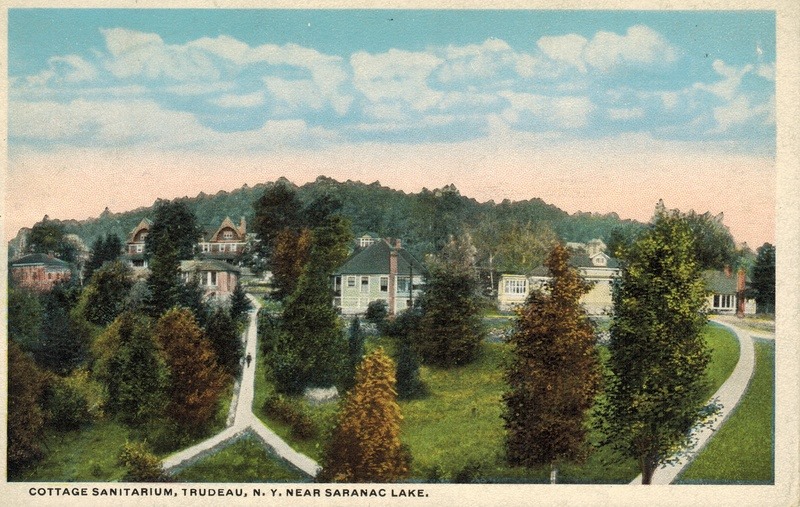
But this woman, Adelaide Crapsey, is also producing her final collection of poetry, and she likely knows that. She’s not working in her study or at some granted writer’s retreat, but at a sanitarium* where she’s suffering through the last stages of tuberculosis which has spread to her brain. If 1914 is The Year that Imagism Broke, it’s also the year that she will die.

Saranac Lake Cottage Sanitarium circa 1918

“There are many paths away from here. How long are any of them?” Du Fu


The book that she is working on will be published in 1915, and it will be the place where she’ll introduce her own poetic form, the cinquain. The cinquain is a short five-line verse form, primarily iambic, that uses an increasing series of syllables: two in the first line, four in the second, six in the third, eight in the fourth, and then back to two in the final line. Some have noted that the increase creates an expectation of growth or expanding sense, only to have the ending come up short and terse. I’m not the first to see this as a symbol of Crapsey’s life and art itself.

Still it’s remarkable that Crapsey chose such a small, tight form into which to pour her thoughts on illness and approaching death. Some might choose a short but loose form to conserve energy; others might turn rangey trying to get all their last expressions in. Crapsey seems to find in the form’s limits the borders within to hold her place.

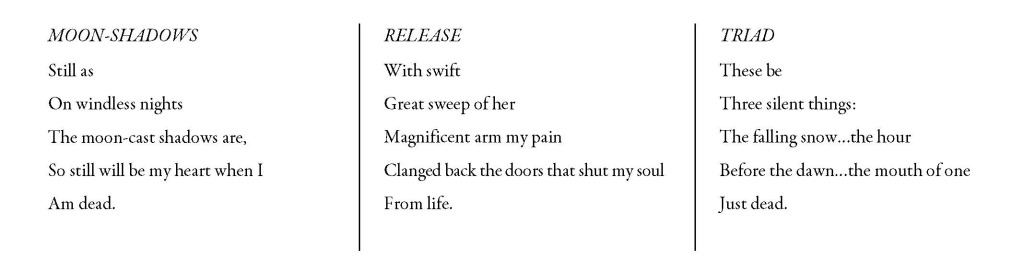
Three More Cinquains from Crapsey

Here are the three cinquains I used today. Illness and the eventual passage of dying is something we all share. Crapsey used tiny poems to bear vivid witness.


In the early 20th century world of Modernist American poetry, her tragic story lent a degree of publicity to the posthumously published book, but it was a small fire which soon burnt out. As I mentioned last time, extremely short poems and the direct lyric impulse is not where Modernism headed after the 1920s—but in the long run, we can still access these poems the only way that poetry can be reached: by directly taking them inside us. These cinquains don’t ask for a large place.

For my performance of three more of Crapsey’s cinquains of 1913-1914 I composed music for strings which sounds acoustic even though there is some spare, bell-like Rhodes electric piano and a cello line that is treated with a strong resonant echo that I think adds some poignance. I don’t know where this melody and counterpoint came from, but as I tried and played some string lines on my MIDI guitar it came to me quickly, as if out of the air. You can hear it with the player below.


*Looking to see what I could find about a Saranac Lake sanitarium I found a fascinating story about a small upstate N. Y. town that welcomed tuberculosis patients for palliative therapy in the early 20th century. Other literary residents after Crapsey included novelists Allan Seager and Walter Percy. On first reading “sanitarium” I had visualized a large dreary hospital building, but the setting appears to be surprisingly humane. Coincidentally, the remaining buildings were sold a few weeks ago.

A Misplaced Landmark in Modernist Poetry Part 3

Were you surprised or puzzled when I introduced this series on the Spoon River Anthology  by comparing it to the later bleak Modernist landmark “The Waste Land?”  I would have been. Not only is it often (usually?) left out of recent timelines of significant events in Modernist poetry’s emergence, the single epitaphs I recalled from it, the book’s “greatest hits,” were more similar to the ones I’ve presented so far here than to the bulk of Spoon River.  My first two Spoon River  posts: “Cooney Potter”  and “Fiddler Jones”  are ostensibly wistful, and while Cooney’s notice of the driving of his family and himself to increase his wealth and holdings has darker undertones, he’s telling this in the context of regret and guilt. He might even be exaggerating his faults.

Other unrepresentative Spoon River  “greatest hits” include the glowing and mildly tragic elegy for the putative love of the young Abe Lincoln’s life “Anne Rutledge,”  and “Lucinda Matlock*”  the stoic toting up of a full life by a pioneering settler who tells us she outlived (in a dual sense of the word) her troubles. The book’s opening introductory poem, “The Hill”  in its death-comes-to-us all catalog of outcomes remains elegiac. We might expect bittersweet with a strong flavor of nostalgia in the whole book. That’s how I’d cataloged Spoon River  informally in my mind.

SpoonRiverAnthology_cover

File under horror, not reminiscence


Reading the Spoon River Anthology this month has changed my understanding of it. Overall, the view of life and values in it is far more bitter than sweet. Many epitaphs are accounts of cruelty or unmitigated evil. Most relationships can be summed up (and are) as a grudge of one sort or another. It’s a harrowing read in its entirety if you are paying attention all the way through. With only a hint of the supernatural in it, it’s a horror story,  the mitigating moments and elements only relief before another crime or creep comes around the corner.

Today’s piece is perhaps the most chilling one in the entire book, as cold as a lynching poem—** and with gender replacing race, that’s approximately what it is. As I said when introducing last April’s sections of “The Waste Land”   this is not material for everyone.  It’s not poetry that soothes, reassures, or delights its attentive reader.  Masters is going to tell the story in first person, a somewhat unusual choice, and the narrator is going to fiercely understate in but 12 lines. Here’s a link to the text of “Minerva Jones” to follow along with.

As I said when introducing last April’s sections of “The Waste Land”   this is not material for everyone.  It’s not poetry that soothes, reassures, or delights its attentive reader.

We learn that Minerva Jones*** thinks of herself as the village poetess, and that some part of the village loves to taunt her, perhaps for her pretension, perhaps for lack of conventional femininity, perhaps just because she stands out as not conforming. Her father in his separate epitaph says he’s taunted for being Welsh and poor, so add that to her “crimes.”

And then she’s attacked by a village ne’re-do-well “Butch” Weldy, motivated by and/or knowing he’ll be excused by the village because of the above supposed transgressions of Minerva’s. We are given absolutely no details of the attack, another authorial choice. Many, and I, read this attack as rape. I think Masters intends that assumption. The choice to include no details of the attack itself could be discussed at length. It could be revealing of the speaker’s shame or decorum. It could be mental shock transcending even death. It could even be a level of what could be published at that time. Does that choice add or detract from the power of the poem? I suspect that varies from reader to reader. Think here of one of the core practices of Imagism:**** that one leaves out the core ineffable thing so that it may still be invoked by what is included.

Minerva tells us her attacker “left me to my fate with Doctor Meyers.” Here the story-telling gets more fractured and confusing, as this telling alone indicates that she sought medical treatment after the attack ends. However, in the context of other Spoon River poems that touch on this incident, the most likely reading is that a pregnancy resulted from this rape and her visit to Dr. Meyers was weeks later and for the purpose of seeking an illegal abortion.

At this point I’m more willing to say that Masters has made a narrative error, or at least disassociated one of the most powerful images in the entire book from its vivid context. Only by reading the other epitaphs dealing with this episode would it be clear to the reader that when Minerva Jones says in her sparse account: “And I sank into death, growing numb from the feet up/Like one stepping deeper and deeper into a stream of ice” that Masters has her acutely describing the feelings of a body undergoing hemorrhagic shock as she bleeds out in Dr. Meyers office. If one can distance oneself from the empathetic horror we may feel of the incident Masters is describing, these two lines are also Imagist: immediate, not mere decoration:

Anything that follows such a cruel situation and powerful lines must trail away. The next two lines have the power of pathos, posed as a question, not a command, and then the final two lines break with Imagist rules by stating emotions directly. After all the elision of the poem, many will forgive Masters for the value of these lines’ contrast with the cold account.

What happens next? Does Masters resolve this story? As they used to say in the days before binge referred to media consumption: stay tuned.

I too made a curious choice in performing “Minerva Jones.”  I could have gone with a big orchestral sound, something I’ve been exploring this summer. Then I’ve been thinking I’m missing the element here of loud “rawk” with guitars and band. And synthesizer/electronic sounds are almost a stereotypical way to express horror. Even solo acoustic guitar would be a conventional choice—many traditional ballads are as cold and bleak in their description of violence.

Totally out of the blue, and perhaps not correctly, I chose to instead use something out of my not-quite-jazz side. Dampened drums in a solid backbeat, always a good signifier of fate, a fretless bass line in a rolling walk, a chord progression sketched on piano that subtly violates expected cadences and harmonies, and then the guitar top line emphasizes the G-flat that adds stress to the harmonic structure. Like Masters, I fiercely understated. Did it work? The player is below.


*Rutledge is one of a handful of real people with real names included in the Anthology, but a great many others are thinly disguised real people from Masters hometowns or Chicago (some of whom weren’t dead, and recognized themselves), Matlock for example is his paternal grandmother at whose farm Masters spent time at in his childhood.

**Several times here I’ve considered poems about American lynchings for presentation. I’ve so far pulled back, and the why of that is complex. Dealing with the emotions brought forward in the Minerva Jones story walloped me, and I had to step away unable to continue work on this for a while.

***Is she related to Fiddler Jones I asked last time? Possibly, but I can’t recall that being established in the book, while Minerva’s connection to other epitaphs is made explicit. If she is, then there’s possibly a comment on how poetry is treated by the town (and presented by Masters) and music. Music is a recognized good, poetry something between an oddity or a fault. Two professions are probably overrepresented in the small town of Spoon River, mirroring Masters’ own life: poets (there are at least three) and lawyers and judges (I lost track, but there are many).

****While writing the Spoon River  poems, Masters once called his work “Imagiste” indicating that he thought the term fitting. Pound’s “A Few Don’ts by an Imagiste”  along with F. S. Flint’s short report on “Imagisme”  was published in Chicago-based Poetry in the spring of 1913 as Masters was thinking about how to shape his Illinois material; and though this has been less remembered later on, Chicago colleague Carl Sandburg was committed to using Imagist principles.

I’m indebted for some of this detail about Masters’ process to the only full-length Edgar Lee Masters biography extant: Herbert K. Russell’s 2005 book.

There Will Come Soft Rains

A single work of art can inspire and be reformed by others as it lives—or rather, if it lives, as there is no choice in the matter. No work of art once it has escaped its creator lives for one moment more except by this process.

There’s a fair chance that someone coming upon this post via search for its title will believe it’ll be about Ray Bradbury’s work of the same name, and I will touch on that story, but short as Bradbury’s 1950 story is, this project is about the compression, sound, and stepping-order of words, as in poetry; and Bradbury’s story is also not clearly free for us to reuse. But Sara Teasdale’s poem, “There Will Come Soft Rains”  meets all our requirements.

There Will Come Soft Rains - Wood

Ray Bradbury’s story that used Teasdale’s title was adapted by Wally Wood for a Weird Tales comic book. Read the whole thing here.

.

I’ve presented Teasdale’s words here several times, and it’s possible that I could have discovered her work (as I have many others) because of the Parlando Project. But it just so happens, I discovered Teasdale on a Tom Rapp record, long before this project began. Rapp sang Teasdale’s “I Shall Not Care”  in company with a passage of Shakespeare. Yes, as a short-lyric poet, Teasdale can stand up in that kind of company.

I probably need to turn in my SciFi credibility badge, but I don’t recall reading Bradbury’s famous story before today, so I now know Bradbury’s story because of Teasdale’s poem.*  I’m sure this is in reverse of many.

I suspect Bradbury is also the vector by which Teasdale’s poem was included in the Fallout  video-game universe. As with Bradbury’s “Soft Rains,”  Fallout  is set in a midcentury-modern sense of the future, and it’s not hard to fit Teasdale’s 1918 poem into that. Indeed, many read Teasdale’s poem and assume that it’s explicitly post-apocalyptic. However, Teasdale wrote and published this poem near the end of World War I, and the poem’s final sentence conditions itself with a “would,” however definite it is about that natural world’s indifference to mankind’s existence and its wars. She could  only be speaking of the landscapes of the WWI battlefields—settings that still bear the scars of the trenches, tanks, bombs, and burial grounds of that war still a century later. WWI’s depersonalized industrial warfare, aerial bombardment, and chemical weapons did open up some thoughts of wider casualties from modern war, even in a pre-atomic age.

Teasdale’s WWI poem is now read as something of a pioneer in presenting that idea of an apocalyptic post-war future. Several years later, but still pre-World War II, came H. G. Wells Things to Come  a novel and then movie, and Stephen Vincent Benét’s story “By the Waters of Babylon,”  and that later could have been part of the inspirational universe Bradbury drew from for his own story that adds another I to the post World War series.

All these: Teasdale’s poem, and Bradbury’s, Benét’s, and Wells’ prose, explicitly use war’s casualties as the measurement of mankind and his civilization’s impermanent nature. Today we might add our insults on nature itself as another potential cause for self-destruction.

So today, let’s revisit Teasdale’s spring poem of indifferent beauty. It’s short, as is my musical presentation of it. The player to hear it is below.** After you click on it, can I remind you, just as briefly, that this project would appreciate more readers and listeners. I’ve focused my energies on researching, creating, and writing about these pieces—and so a great deal of the audience growth over the past few years has come from folks like you passing on the word about this.


.

*One thing that puzzles me is the explicit days that Bradbury sets his story in, their calendar-ness framing his narrative: August 4th and 5th. Bradbury’s story (set in the year 2026) seems very much based on the particulars of the 1945 atomic bombings of August 6th and 9th that ended WWII, and I see that the dates were subject to some rethought on his part (the original publication had the story begin on April 28th.) Teasdale only set her poem in spring, but in his specificity did Bradbury want to imply some the-last-days-another-choice-could-be-made point in choosing August 4 and 5?

**You don’t see any audio player? Your Bradburian household computer hasn’t failed, it’s just that some ways of reading this blog won’t show such a player. You can hear my musical performance of the Teasdale poem with this link in that case.

To His Coy Mistress

I can’t remember exactly when I first encountered Andrew Marvell’s “To His Coy Mistress,”  but it was far enough back that I earnestly identified with the poem’s narrator and his desires to find or convince a romantic partner.

That poem I read then is not the poem I read today, but even back in my misty youth I probably appreciated the wit of it along with the point of its argument. When I took a quick look at how “To His Coy Mistress”  is currently viewed, I see that appreciation for the poem’s wit and artifice has increased in the past few decades. It may not be possible to determine just how invested Marvell was in convincing the lady in question versus showing off his poetic chops, or even how sincere he was in his variation on the classic “carpe diem” argument that if you don’t go to bed with me, now!,  that you (currently comely love object) clearly  don’t realize that you’ll be a rotting corpse soon.

How romantic that! Here’s a box of candy too—by the way, do you know that such foods high in sugar and fat will likely lead to cardiovascular and other diseases—not to mention tooth decay and gum disease? No? Well, let me tell you….

I’m not sure how often throughout history that real and actionable knickers came flying off at this idea—but poets love it. If love, death, and beauty are the  poetic stuff, any chance to mix all three is impossible to resist.

I normally feel I have to come up with some supposition to perform one of these pieces, and what I decided here was that as a polemic, Marvell’s poetic swain means it. Which doesn’t mean he isn’t going to have some fun talking about it. Even my teenager/reader could smile at that exaggeration of the delay of traveling to India to look for jewels first,*   but did I appreciate then the auction-like absurdity bidding up the hotness of his sweetie? Do I hear a hundred years? Two-thousand! Do I hear a-three…a-three…a-three—thirty-thousand,  sold!!

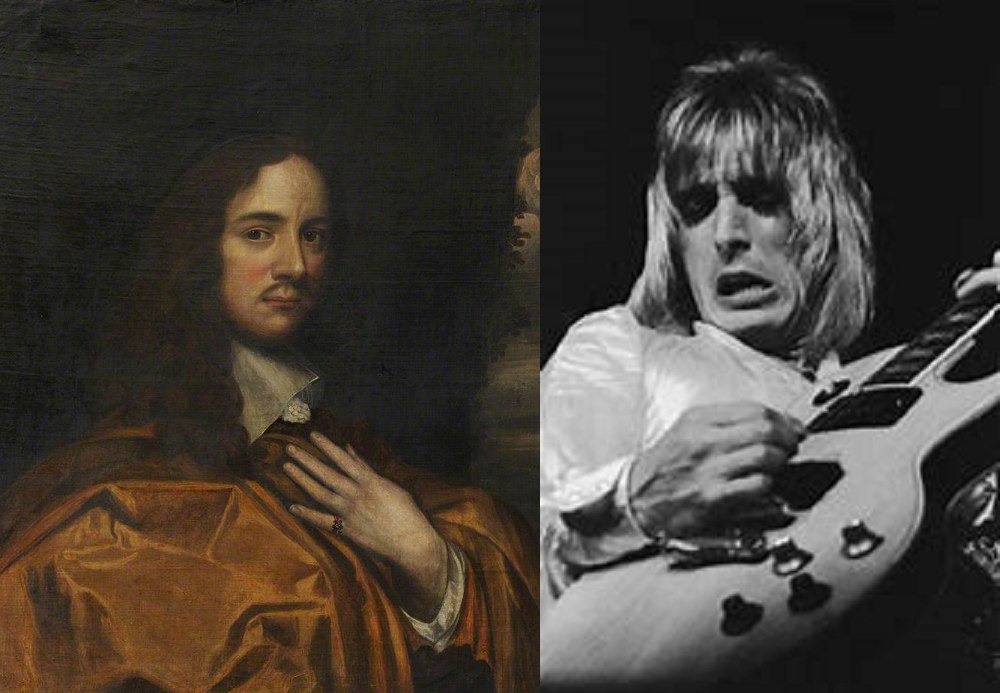
Andrew Marvell and Mick Ronson-two chaps from Hull

Random blokes from Hull: Andrew Marvell and Mick Ronson. Ronson looks like he just saw the cartoon below; Marvell, like he just burped.


But I think he’s serious with the unforgettable and oddly accented “At my back I always hear/Time’s wingèd chariot hurrying near.” And deflowering worms and cremated dusty lust may be over the top, but he’s not beneath crypt-keeper humor in this.

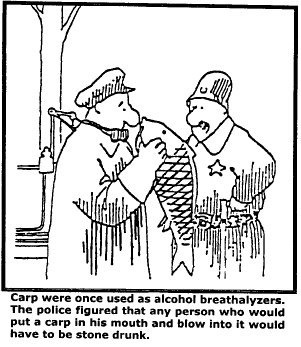
Carp Breathalyzers!

Carpe Diem! I think this is taken from a Dick Guindon cartoon. There are those who think that Dick Guindon was one of the greatest one-panel newspaper cartoonists ever. We call some of them Minnesotans.


As the poem rushes to its conclusion, I think some of the urgency passes beyond the bar of exaggeration for humorous effect. The poem’s last two couplets, which I think sincere, are as strong in my estimation as the more famous and remembered ones earlier in the poem.

For all of Marvell’s “To His Coy Mistress”  “poetry’s greatest hits” status, isn’t it odd that we don’t remember what I think are the poem’s four strongest lines, the ones that the poem ends with? Is it all about the chase and not what happens when we catch?

Here’s the player to hear my performance of Marvell’s poem with the LYL Band:


*It wasn’t until this month as I worked on this that I found out what the poem’s companion to the Indian Ganges trip,  “by the tide of Humber,” was on about. Turns out that the Humber is an estuary/river near Hull in northeastern England. It happens to be where Andrew Marvell was from, as well as (a few centuries later) Mick Ronson, the guitarist/arranger for David Bowie.

The Trees are Down

I indicated when I first presented a poem by Charlotte Mew this month that I’d talk more about her life, but what I know is so limited and sad that I’ll try to condense things.

She was born into a family that had more than its share of illness and mortality. Three siblings died in childhood, two were institutionalized for insanity. Her father died “without making adequate provision for his family” according to the Wikipedia article, leaving her mother and surviving sister to try to scrape by in late 19th Century London. She appears to have been socially awkward and eccentric. Eventually her mother died, and then her sister, with Mew ending up being the final caretaker for both. After the death of that final sister, Mew herself was unable to care for herself. She was institutionalized and committed suicide by the decidedly unromantic method of drinking Lysol.

There is so much unanswered detail in her story. For example, the two surviving sisters are said to have vowed not to marry for fear that the insanity might be hereditary. My now largely forgotten medical knowledge/experience wonders what the exact elements were of these early deaths and the cluster of undifferentiated mental illness. Quick, idle thoughts fall to something like Huntington’s Disease.

Anyway, during her life Mew was something of a writer’s writer. Thomas Hardy and Virginia Woolf both championed her and apparently got her a government stipend for support. She was not prolific, and she didn’t write grand poetic epics or found a new school of poetry or critical theory. Still from the first time I read her poems this year I was easily struck by how different they often were. In her era there were a lot of Modernist poets who were shockingly different then—and who often still retain easily seen uniqueness today. Gertrude Stein, E. E. Cummings, Mina Loy, Tristan Tzara, Marianne Moore, Wallace Stevens, H. D., and William Carlos Williams made individual showy breaks away from fusty tradition in the time Mew was writing her poetry.

But Mew wasn’t really a Modernist as they were, not in any card-carrying sense. Her breaks from poetic orthodoxy were sometimes subtle and sometimes seem artless in both the good and bad senses of that term.*

Today’s piece “The Trees are Down”  is a good example. Although I didn’t include it in the reading, it starts with a biblical epigraph from Revelation:  “—and he cried with a loud voice: Hurt not the earth, neither the sea, nor the trees—” What follows starts off as if it’s miscategorized prose, as casual as a diary entry, a letter, or blog post. But it soon adopts a subtle rhythm, something like F. S. Flint’s “unrhymed cadences,” with a little symphony of sound verbs and some mixed in background sound from the workmen felling trees.

A Plane Tree in London

A London plane tree. Poetic enough…


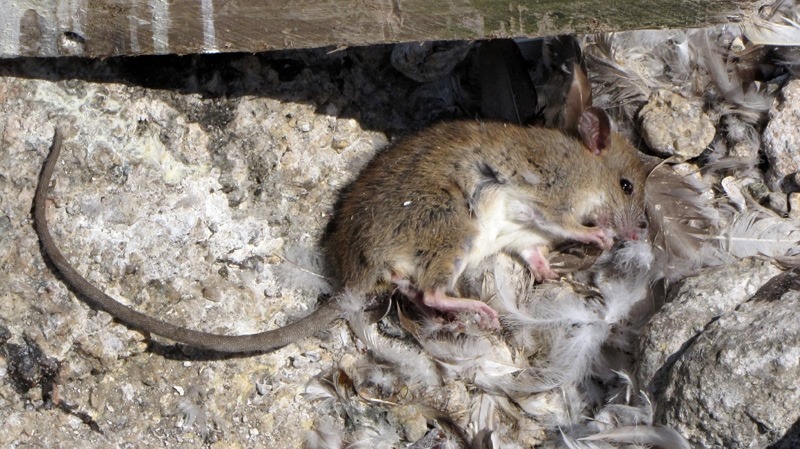
But Mew will turn from this abruptly, rather than developing that sound and theme, almost literalizing the cliché “red herring.” She recalls finding a dead rat—not at the site of the tree work, not recently—just a rat’s carcass once encountered some “long past spring.” And she remembers thinking that even this “god-forsaken thing” should be alive in spring.

rat carcass

…not quite as romantic as a majestic tree.


Then she leaves this odd aside and begins a passage of irregular rhyme and near rhyme, once more looping in a sample of the workmen’s cries (“Down now!”). Nearly every phrase has end-rhyme, but we are made to wait seven phrases for a rhyme between “fine grey rain” and her return to that seemingly unconnected dead rat with a remark that except for this strange connection with the rat carcass and the death of the trees “I might never have thought of him again.”**

And then she changes once more, back to the unrhymed cadences mode as she begins to introduce her final theme. Her cadence strengthens in her last stanza, and she closes with the introduction again of a series of end-rhymes. She makes her closing case so clearly that I feel no need to make any paraphrase. That case borders on the sentimental I suppose, and I’d guess that any of the few reading “The Trees are Down”  in Mew’s own time would see it as that in their context.

Today, when we encounter those same words Mew wrote, we might contextualize them differently. First, we may not be expecting Mew to sound like a fine regular poet with even meters and regular rhymes. Nor are some of us requiring she make it new in some bold way that makes a revolutionary show of novel ways of speaking and writing. We’re are more likely than readers in Mew’s time to be comfortable with poets speaking in unique and personal but merely human terms about events up unto death. The strange anecdote of the dead rat controls the sentimentality of the death of the great and stalwart trees. We may even see a subtext here, one we’ve come to increasingly realize: that of men callously controlling and seeking to reign over and reign in nature.

In the same way that we now read what had once been seen as inconsequential “relationship issues” in the poetry of Millay or Teasdale and see important social dynamics, we might read “The Trees are Down”  now a hundred years later and see an ecological perspective.

To hear the LYL Band perform Charlotte Mew’s “The Trees are Down”  use the player below.


*Harold Monro, who published Mew’s first book of poetry in 1916, tried to describe this difficulty in Mew’s je ne sais quoi “No argument, or quotation, can prove that the poetry of Charlotte Mew is above the average of our day. She writes with the naturalness of one whom real passion has excited; her diction is free from artificial conceits, is inspired by the force of its subject, and creates its own direct intellectual contact with the reader. Her phraseology is hard and concentrated.” For a modern appreciation of Mew’s style see Molly Peacock here.

**I wonder if Mew, an upright human towering over the dead rat is being compared with the those-who-are-about-to-die trees towering over the humans beneath them.

Gacela of the Dark Death

Here’s a piece using a fresh translation I made this month of a Spanish poem by Federico García Lorca. I’m sure there’s much to say about Lorca from those that know his work better than I do. That group of Lorca admirers includes many other artists whose work I respect, so it’s about time to present something by him here.

I’m told that a Gacela is a traditional Spanish form, but that Lorca’s poem follows the form only in spirit. Because Lorca was executed during the Spanish Civil War, not long after this poem was written, some view it as reflecting his experience of the war, but I get the impression that death elements were present in Lorca’s work even before the war. While encountering this poem in order to translate and perform it, I came to believe there’s a compound commentary on human mortality and more here.

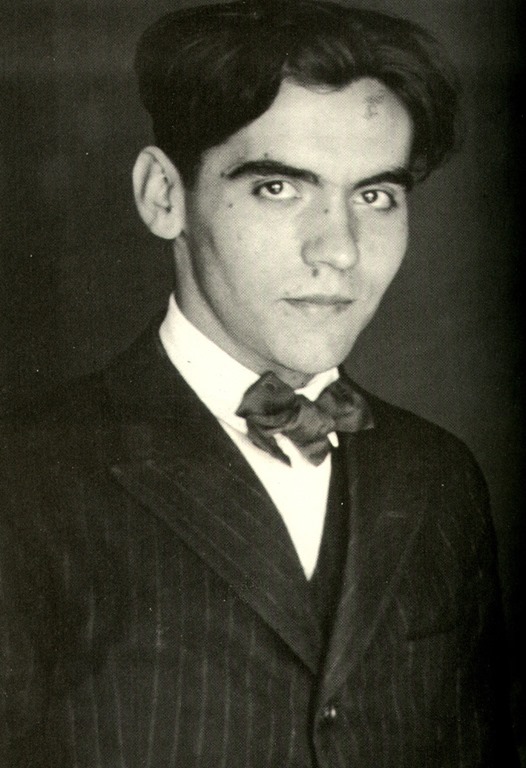
Federico_Garcia_Lorca

Federico García Lorca, a poet with open heart dreams


The poem opens and closes with a refrain that ends with a strong, bloody, and yet ambiguous last line carrying the image of a boy wanting to cut his heart. I chose not to overdetermine that image because I believe its ambiguity should remain. It could be an image of desire, or of self-harm, or emotional outreach—so let it be any or all of those things.

The middle portion of the poem, which I chant rather than sing, has a tone in my reading that has humorous elements, even if that seems to go counter to other readings of the text I found. When this section starts with what sounds like folk aphorisms about the dead, I take them as dark humor. In the next line “No quiero enterarme de los martirios que da la hierba” I decided for the only time in my translation to intentionally make the image stronger to American readers, by making the hierba, the grass, “leaves of grass” to connect to Whitman and his great image forged in the American Civil War. I can’t be sure, but I spent a long time on that stanza’s moon with a snake’s mouth image, “la luna con boca de serpiente” and what with the punch line about that mouth always working before dawn got me asking the question if this was a vampire image, which I decide to refer to sideways by determining that fangs were what serpent’s mouth means. Consistently in this stanza Lorca is giving us death images, but he’s also saying he doesn’t want to hear them.

I think the next stanza is meant to be humorous too, starting off with the wanting to sleep (perchance to dream?) for a moment to maybe as long as a  century—but “pero que todos sepan que no he muerto,” “let everybody know I’m not dead” as I translate it. Yes, like Hamlet he wants to compare sleep and death, but he’s playing with it. I’m at a loss if the “pequeño amigo del viento oeste,” “little friend of the west wind” is referencing something. It sounds almost like a children’s story or lullaby. I think this stanza’s concluding line is so wonderful that it transcends mood and attitude: “soy la sombra inmensa de mis lágrimas,” “I am the immense shadow of my tears.”

This stanza’s concluding line is so wonderful that it transcends mood and attitude: “soy la sombra inmensa de mis lágrimas,” “I am the immense shadow of my tears.”

The final chanted stanza before we return to the sung refrain also seems to me to be playing with death. Are we meant to take the insects here as accomplices of the grave’s earth? But this sounds like a boyish schoolyard dispute “He threw ants at me!” And what’s with the scorpion claw? As a northern North American I don’t deal with actual scorpions (hey, tropic readers, let me tell you about black flies…) but isn’t it the stinger that’s the weapon? I’m left wondering if there’s some idiom here that I just don’t know, even some kind of schoolboy pestering like unto a “noogie.”

And then the poem returns to a variation of the refrain, mysterious, beautiful, and I think serious. As to the intent of the poem, I felt I could perform the mystery and commit to the humor I found in the middle section without knowing the poem’s heart entirely. I think you can listen to it the same way. It is a darkly playful meditation on death? A comment on the outbreak and casualties of a civil war? Or is it a longing for childhood life and adventurous dreams? Or a love poem to a young man in Lorca’s life at the time the poem was written? Walt Whitman could sing all those things together, so why couldn’t Lorca?

I felt I could perform the mystery and commit to the humor I found in the middle section without knowing the poem’s heart entirely. I think you can listen to it the same way.

Musically, I sought to contrast the two refrain sections from the poem’s middle one. I was going to play my nylon string guitar for a Spanish flavor on this. Sadly, when I opened its case this week I found that its bridge had come completely off the top. Oh well, my battered Seagull Folk guitar had to stand in. My orchestration brings a bassoon part forward.

You can hear my performance of my English translation of Federico García Lorca’s “Gacela of the Dark Death”  with the player gadget below.

Looking for a Way to Go

The year 2018 marches on, as we pass onward past Thanksgiving toward December. I’m quite thankful for the opportunity to continue this project. Time-consuming though it is to do these pieces, it also continues to fascinate me and (one hopes) it also continues to surprise and entertain you. For me there’s considerable enjoyment in trying out or finding out something new, thinking about something, or playing something, different.

Another blog that gives me those pleasures is My Year in 1918,  where its author has been immersing herself in the publications of that epochal year. Her recent thankfulness post looked at some 1918-era people she has run into on that nearly year-long project. As Thomas Hardy put it in his poem of this era, it was a time of the breaking of nations, but as Mary Grace McGeehan looks over her year of 1918, she highlights a few that were mending and mitigating.

Though they may no longer be as well-known, some of McGeehan’s list you and I might recognize: W. E. B. Du Bois, Jane Adams. Others, such as women’s suffrage activist Anna Kelton Wiley and bra designer Mary Phelps Jacob were unknown to me. Three writers get a nod, all three wrote poetry: Amy Lowell, William Carlos Williams and Dorothy Parker.

Dorothy Parker 1924

That plant looks like it could use a little water. Dorothy Parker at home in 1924.


Amy Lowell is a literary force I need to address sometime in my own project, though I’ve yet to absorb anything of her poetry. Though I overlooked Williams in my youth, he’s grown on me throughout this project as his public domain, pre-1923, work explores the lyric impulse with eyes whose perspective has been expanded by the Modernist explosion. The third, Parker, is a double surprise. I can see where My Year in 1918’s McGeehan will encounter her, as Parker was writing for magazines (one of My Year in 1918’s chief sources of material), but she’s not some inescapable pantheon writer. And though later in life she became a committed social activist, particularly in regard to African-American civil rights, her WWI self had yet to develop in this regard. But she’s a, a—oh, the never-immortal shame, the art that dare not speak its name—a humorist.

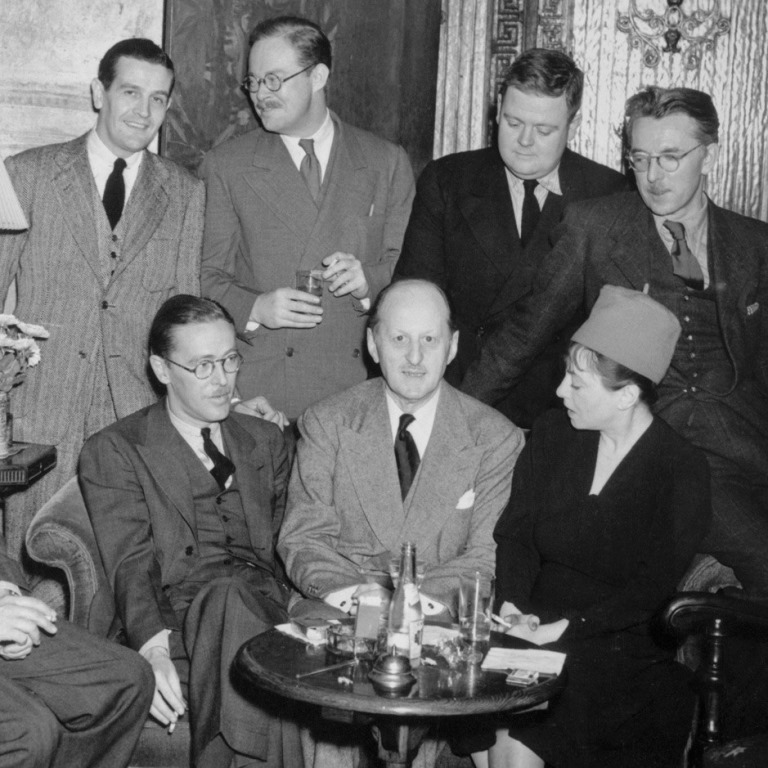
Algonquin Round Table

Parker with the Algonquin Round Table group of wits. We don’t know if they’re having lunch with those drinks, but it’s something of a sausage fest anyway.  I haven’t seen a caption naming those present, proof that humorists don’t make the pantheon. Besides Parker on the lower right, I think it’s Alexander Woollcott 2nd from left in the upper row, but I’m drawing a blank on the rest.


Humorists, whatever their skill and craft, tend to damage their reputations as literary figures. We like our literary titans dour and serious for the most part. They can scatter a little wit around for decoration or as weaponry, but to be celebrated for their merit—even if that’s all we end up really noting about them, their worthy merit—you need to rise above that. The assumption seems to be: if the point is to make you laugh, the point is ephemeral.

We think too little of humorists as agents of social change, or as participants in the Modernist artistic revolution of the early 20th Century. We do this even after Dada, even after Mark Twain’s now-recognized status as another American who broke Modernist ground before the 20th century.

To take Dorothy Parker seriously (not solemnly) you need to start by acknowledging that she’s fighting with two hands tied behind her back: she’s a woman before women were considered capable of human complexity, and she wants you to laugh at our folly. Parker survives at times wielding dark, survivors’ humor, the sensibility that remembers her poem “Resumé,”  a meme in verse about suicide. She might step on a few toes while doing that, and she’ll laugh about it.

Alternate voice here, Dave Moore, has appreciated Dorothy Parker for some time. Several years back the LYL Band covered Alan Moore’s “Me and Dorothy Parker,”  and here today is the LYL Band doing a Dave Moore original that expands on Parker’s observations on suicide in his own words.

Parker ended “Resumé”  with the punch-line “You might as well live.” I’d add, you might as well create art. After all, even in the worst-case, you’re only burning part of your life-time while struggling with joy and it’s opposite. If there’s no hope, you might as well hope.

Thanks again for reading and listening. Thanks to spreading the word about the Parlando Project. In the Internet world of millions of likes and shares, we’re a small thing, but I’m grateful for you helping keep this little thing going. The player for the LYL Band’s performance of Dave Moore’s “Looking for a Way to Go”  is below.


The most popular Parlando Project piece for Summer 2018 is…

Since I’ve been keeping track, one thing has been consistent with the most popular piece each season: it’s been by a poet not widely known or read in the United States. So previously we’ve seen on top after a season of your listening: my translation of Dada principal Tristan Tzara’s “The Death of Apollinaire,”  the better-known-in-the UK Edward Thomas’ “Adlestrop,”  the too-often overlooked Chicago Modernist Fenton Johnson’s “The Banjo Player,”  and “Frances,”  the teenage love poem by George Washington, whose career as a poet never really took off.

This has happened even though I’ve featured (multiple times) most of the popular canon of pre-1923 English-language poets touched by the Modernist movement of the 20th Century: Frost, Yeats, Sandburg, Millay, Pound, Williams and Eliot.

Pat yourself on the back: the listeners here are open to a variety of writing, and they don’t necessarily need to have a name they already know attached to the words.

Still, it’s surprising that it’s surprising that we have Emily Dickinson coming in at the top spot this past summer.

Dickinson (along with Frost and Yeats) seem to be special cases with The Canon, in that all three have retained some level of popular readership and presence in that still-existing oral-tradition of memorization, even into our current century, without being denigrated into the bin of “not-great poetry.”

Our Summer 2018 most liked and listened to audio piece is “Ample Make this Bed.”  Like many Dickinson poems it’s extraordinarily compressed, just eight lines—and like so many of her poems it invites us in and then mystifies us. Most of us have made a bed, and some of us have even been instructed in how to complete that task correctly. Here, with “Ample Make this Bed,”   we may get six lines into the eight and we haven’t left domestic normality other than the ironic satisfaction with a job, that if done excellently, will stand forever. Ah, if only any domestic housekeeping task can stand ‘till judgement day, rather than the few hours until it needs to be done again!

The poem’s final two lines are so modestly telling and beautiful. Until them, no rhyme—and then internal rhyme and end-rhyme rush in! And the synesthesia of “yellow noise,” an image which could have been informed by Dickinson’s mysterious medical syndrome which included photophobia, but needs no biographic detective work to strike us boldly.

Is “Ample Make this Bed”  about death, domestic drudgery, love, or the unstoppable passage of time? Emily Dickinson seemed to have taken care with her poetry, to make it ample and arranged to last until judgment day, so it’s likely intentionally undetermined—or mystically, exactly, all of those things united.

Musically, I’m quite proud of my music and performance of all the various parts with this one. If you missed it last July, why not go ahead and listen to it now. And if you like it, please let others know about what we do here.

Ample make this Bed

I’ve been unable to do as much as usual with this project for the past month for several reasons. One of those reasons was a trip to Massachusetts, which if this was a normal blog would have already generated posts of the travelogue sort. However, this project is about two palpable things, music and words (mostly poetry), that can’t handily be walked along, though you can tour their containers and neighborhoods. Perhaps that trip, in an indirect way, will generate pieces yet this summer.

I was finally able to visit Amherst and the house where Emily Dickinson lived nearly her entire life—and today’s piece uses words from one of Dickinson’s poems—but long-time listeners will know that Emily Dickinson is already a favorite source for words here.

No house, no state, not even any time or country can explain the genius of Emily Dickinson. For reasons of brevity, I’ll try to summarize by saying that she created and entirely new form of poetry, powerfully compressed, elusive and still approachable, and wholly without precedent. The things scholars can trace as influences can be found in her poetry, but no one else made Emily Dickinson poems out of that same stuff. And her poetry has largely not become obsolete. Over 150 years after it was written it still seems modern, maybe even more modern today than it seemed to the early 20th Century Modernists 100 years ago.

Dickinson Bedroom 3

Ample? The specific standing for eternity. Emily Dickinson’s restored bedroom in Amherst

I’m attracted to shorter poems that unpack into larger things, and “Ample make this Bed”  is that. It’s short even by Dickinson standards, eight lines, 34 words. If one pauses to puzzle at this meaning, the imagery of the grave is what comes to many reader’s mind. It can be read as a shorter companion to one of Dickinson’s most famous poems “Because I could not stop for Death,”  but with a bed replacing the longer poem’s subterranean dwelling. However, besides its greater concision, “Ample make this Bed”  is using another poetic form, one different from her longer poem.

“Ample make this Bed”  is an aubade.

An aubade is a poem where two lovers wish for the morning to never arrive. Since it is, in fact, arriving, they will deny it, wishing for their night together to remain forever. By using this traditional poetic trope, Dickinson has thrown a rich ambiguity into her 34 words. Although Christian religious belief has its variations, the traditional judgement day is the day of eternal salvation and the universe’s perfection. “Ample make this Bed”  compares the morning of divine perfection to the morning that separates the lovers in an aubade.

Is this a statement that the sensuousness of human love can be judged greater than eternal salvation? Or is it a puritan statement that any such love will face its final end and judgement? Could it even be both, balanced on a knife’s edge?

Look too at two of those 34 words describing possibilities of this bed. Its Mattress, where the body rests, may be straight. The body has a straightaway lifetime. The Pillow, where the mind inside the braincase rests, may be round, a circular line that doesn’t end.

Dickinson puts her poetic thumb on the scale with the most beautiful line in the poem: “Let no Sunrise’ yellow noise.” The poem has been puritan with its rhymes until this line, although elusive near-rhymes are present in the first stanza. Now it lets in richness, a rhyme internal to the line, before proceeding to the final perfect rhyme in the last line. Besides the line’s sound, the dawn of eternal judgement is— what?—so much noise. If Keats’ second inversion is so, then beauty is truth—and Dickinson may be indicating her thoughts on the matter.

Musically, I performed this in waltz time and I repeated the first stanza to add some sense of the eternal.  Most of you can hear the performance with the player gadget below, but some ways of reading this blog won’t show it. In those cases, use this highlighted hyperlink instead.