Today I’m going to wrap up my late summer series of fresh English translations of the early poems of French Surrealist Paul Éluard. Frankly, these poems are having trouble finding an audience – and in my suppositions, this is understandable. Earlier in the series I wrote (generalizing) that modern audiences have expectations of poetry – pre-requisites for our attention and valuation – and these early Éluard poems refuse to meet those expectations.* That’s a large part of what I like about them: their laughter at their refusal.
This abrupt ending means that I won’t get a chance this month to write more about what I know of Éluard’s life and how it might inform that refusal. I probably should know more about the details before writing such an account anyway, but the shortest summary would say: WWI vet therefore likely suffering its endemic PTSD, a leftist in a world where communist and fascist regimes are the current weather fronts, and an unruly, committed lover bilaterally lucky and unlucky in love. He would eventually write some grander poems, poems more full of the stuff that might please more readers and listeners, but this summer’s set of early refusenik poems are one way to confront the way of the world.
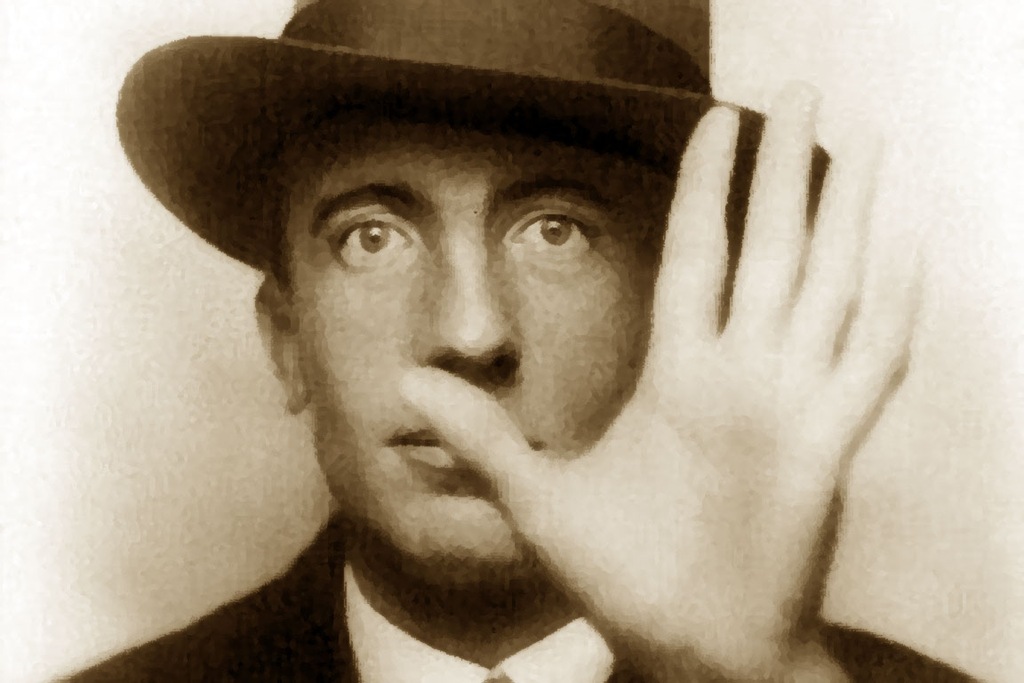
Paul Éluard, not a window-shutter hand.
.
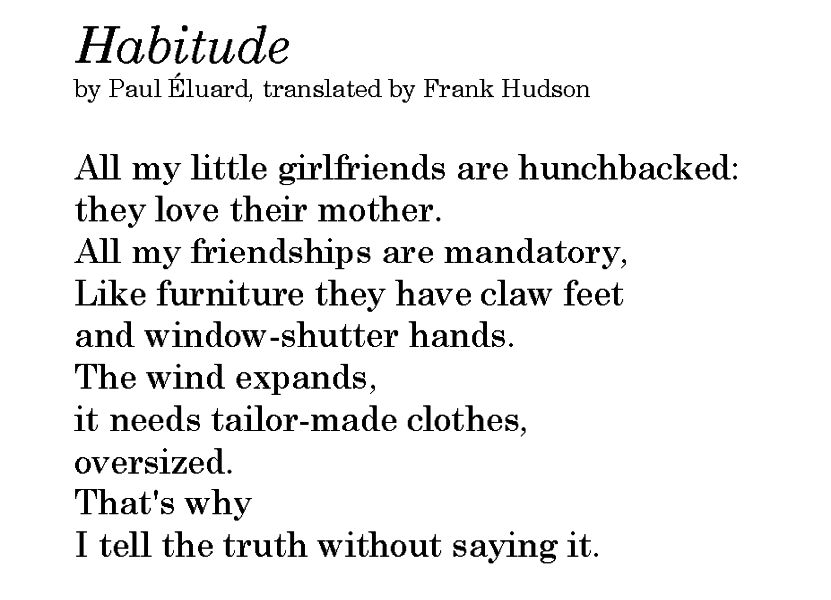
As performed, Éluard’s “Habitude” is so short that it’s one of the shortest pieces in the history of this Project. It says, I think, a few things about the rules of desire and constraints of propriety. Written when Éluard was helping found Surrealism, it shows how influential the absurdity of Dada was in that movement’s birth. The poem is just long enough to have a contrasting middle section, and I try to highlight that contrast by switching from speaking to singing in performance. The truth, that Éluard proclaims “without saying it” here is that he wants an open window and an ever-expanding wind rushing in.
Even with this foreshortened series, my translations here have likely increased the number of easily online-available English translations of Éluard’s early poetry by 50% or so.
.
I’m not sure what the next piece will be (I have several in various stages of completion), but your presenter values variety highly, so it’ll likely be different. This Project is “oversized” and off-the-rack clothes can’t contain it.
To hear my translation and performance of “Habitude” you can weigh the audio player that should be below – but Internet viewing doesn’t make that gadget mandatory, so I offer this highlighted link which will open a new browser tab with its own audio player.
.
*It’s also possible that my musical settings and performances might have been less worthwhile, or my being unable to refrain from connecting Éluard’s poems with present political and civic concerns in my recent posts was tiring or awkward to readers. I almost released another musical version of “Habitude” late last week, but I decided my singing on it – though my singing is always roughshod – wasn’t up to the impeccable standards of exquisite vocalizations you’ve come to expect here.
 Frank Hudson