Soon Be Gone

I start off talking about the words or context in which I experience the words, mostly poetry, that are used here. That goes on, and I notice that I’m getting near to—or even above—what I consider to be reasonable length for a blog post (around 1,000 words*) and I haven’t mentioned the music.

In the end I’ll often mutter a few things about the instruments used, urge you to listen—and roll the footnotes!

So, let’s start off today talking about the music for a little bit. I enjoy the variety of musical contexts I use for the words here. I have wide musical tastes, and yet there are still genres and sounds I haven’t yet used that I will use as this project continues to push toward 400 audio pieces. Inexpensive technology has offered an enormous audio palette to a composer/musician, unbelievable sounds and resources compared to what was available even to the commercially viable counterparts of my childhood. And yet all these possible variations are not used. How curious. How self-limiting.

Well, there are reasons for that. While I admire musicians that push out the boundaries of what they do, the marketplace often finds such efforts self-defeating, and I don’t know that they are misreading substantial audiences in their verdict on that. I’d like the audience for what the Parlando Project does to grow. Indeed, reflecting on the amount of effort that goes into this, it’s nutty that it continues at this level for an Internet audience a thousands-time smaller than pictures of a sandwich. But I’m also grateful for an audience that can at least tolerate my musical varieties on top of poetic varieties. That’s you. You’re rare. You’re not supposed to exist, and yet you do. That’s the audience this project deserves.

Perhaps a more important reason is that technology, tools, resources—while they can extend what an individual musician/composer can do—in the end revolve around the axis of the abilities of that musician/composer. I’m far from a virtuoso on any instrument, some days I’m not even competent on my core instrument, the guitar. And then there’s a key problem I work around constantly: I’m a poor singer.

I use spoken word, chant, talk-singing, altered timbres, but real, full-voiced, pitched singing of melodies escapes me. A beautiful resource I don’t have available! This limit constrains me, frustrates me—though it sometimes leads me to work on ways of integrating poetry and music other than the existing traditions of art song.**

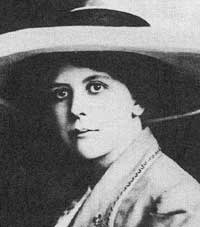
But some material must be sung. Today’s piece is one of those. “Soon Be Gone”  is imaginatively taken from an episode early in the adult life of my late wife, who left her Twin Cities hometown to follow a mountebank to southeast Iowa where he had a job offer to work as a radio announcer. It didn’t go well, or work at all really, and she traveled back north by north-west to home where she accepted my pretentions.

When I wrote “Soon Be Gone”  some years back, not long after she had died, and decades after the events, I made some choices. I think primarily from my grief, I wrote it from the view of the mountebank, who in the piece is reflecting immediately on his loss of her.

Soon Be Gone lyrics

“Hebrew sun?” If you’re facing north, one reads its daily path from right to left


The opening two lines of the bridge section before the final chorus are a variation taken from a translation of “The Song of Solomon”  which had a special meaning to my wife and I.***

As a lyric writer I often prefer to leave “the plot” of a song undetermined, and if it works “Soon Be Gone”  doesn’t require that the listener know those things. I mention this as a suggestion to writers here that compression and leaving out details could add a mysterious power to a song or poem. If your listener wants to connect, give them space to fall into your words.

farfisa where the action is

It’s an organ. And it’s LIVE! Forget the dance—run!


The difficult and ultimately imperfect task of recording the vocals for this piece aside, I did enjoy plugging my Telecaster into real cranked-up amps and doing the two-guitar weave at the center of this song. The other featured element here is a Farfisa combo organ**** (well, a virtual instrument recreation of one) which is a tip of the hat to Dave Moore who played one with the LYL band back in the 80s.

To hear the results, use the player below. I’ll be back with more poetry and “other people’s stories” soon.


*It takes time to create shorter posts about complex subjects, but I feel the author owes it to their audience. I’ve subscribed to about two-dozen blogs that I read whenever I get a break from this project, and nothing pains me more than a talented and perceptive blog author with more words than content. Although elaborative words strung together have their pleasures, I’m often in the mood to spend more time thinking and doing than reading. This is probably why I’m drawn to the compressed lyric form in poetry.

**I rather like art song settings of poems, though they often seem to me to be one solution to the problem of setting complex texts to music while there are others less explored (what we do here.) And since I can’t sing them, there’s little incentive for me to write complicated melodic lines for singers, which means that even if I had singers to write for I’d probably find that skill undeveloped on my part.

***For example, the 8th chapter in the King James Christian version which renders things this way: “Set me as a seal upon thine heart, as a seal upon thine arm: for love is strong as death….”

****It’s falling back into the mists of time, but a player of a small electronic organ shaped like an elongated suitcase and fitted with a folding or removable set of legs was once a common feature of rock’n’roll bands. They were often played through overtaxed guitar amplifiers with only one hand playing arpeggiated parts like I use here. This sort of thing is sometimes associated with “garage rock” combos of the early 60s styled like The Kingsmen, ? and the Mysterians, The Sir Douglas Quintet, or Paul Revere and the Raiders et al. But that trope survived into the “Rock” evolution later in the decade too: The Doors, Country Joe and the Fish, early Pink Floyd and Grateful Dead and so on.

The Farfisa was an Italian-made-and-designed brand used in this role. Later in my century Phillip Glass utilized Farfisa combo organs in creating his version of composed music built on repetitive and driving organ arpeggios. The timbre of those combo organs always had me listening to Glass’ early work anticipating that they would, at any moment, break into “96 Tears”  or “Light My Fire.”

Pods (Neponset)

I’d planned to move on from Carl Sandburg, but I couldn’t lose my train of thought.

This weekend I got a book I’d ordered, Christmas on the Farm  by illustrator and writer Bob Artley. Why such a book in the dog days of summer? Well, three weeks ago I attended a memorial service for an uncle of mine, Lew Hudson, who’d been a friend and co-worker of Artley decades back at the Worthington Daily Globe  newspaper, and I noted that Lew had written a preface for this book.

Artley’s book has charm aplenty. It’s a memoir of his winter childhood on a family farm in the 1920s. I decided I would use the stories in his book to try to locate the farm of his childhood. And thanks to our modern Internet-hosted maps I did, by following an illustration and accounts in the book that the farm was between Coulter and Hampton, north of the road to those towns, north of the railroad (it looks like it’s a rails to trails bike path now), and north of two farms on either side of Spring Creek. In personal memories we travel in time, but modern tech makes virtual travel in space objectively accessible.

It’s not exactly next door to the Iowa farm town where I grew up (60 miles away) but the countryside would be close. And the 30 years difference between his time and mine? Not so much to me these days.

That got me thinking about little Midwest towns, and I saw this short Sandburg poem in my notes from summer reading and I decided to work it up.

Last post I mentioned my theory that Sandburg’s Whitmanesque mode, those broad catalogs of observations in his longer poems, have caused him to be remembered as a 20th century imitator of Walt; and that did him no good, as the High Modernists were only grudging acknowledgers of Whitman’s breakthrough style. When long Sandburg poems overshadow the short ones, what he thoroughly intended to be Imagist poems are instead seen as slight, one-dimensional miniatures, not charged moments in time.

Map of Neponset in 1905

“Neponset, the village, clings to the Burlington railway main line”


So, let’s look and listen to “Pods”  as if it could be what Sandburg intended it to be. Yes, its core is  a natural, real, and present image, not written as a simile, just yoked together by poet’s observation. The village of Neponset is like a peapod on its railroad line, one of many, too easily cast as having no concernable uniqueness (the cliché is “as alike as peas in a pod”). Given that it’s written before commercial air travel, the passing passenger train is there to reinforce that Neponset is “flyover country.*” Notice that the poem avoids almost all adjectives and sentiments, so we should notice the one striking one it does use: those passing, unstopping trains are “Terrible.” How so?

Well, they’re loud, big, massive, and they shake the peapods on the vine, they even shake the town “slightly.” Are those trains modernity and time passing Neponset by? They and their sleepers in their cars might think that so. Yet, peapods will not mind, they will continue their cycle—so why not the like thing, the village? After all, the poem in its sparse word-count (39 words) wants to connect with a repeat of “slightly” and linked tremors that the earth (planet or ground? No matter, essence either way) is also shaken. The “movers and shakers” are really only shakers here, their moving is no different that the pea vine’s revolving cycle of seed to seed. The sleepers in the train are too peas in a pod.

Burlington Line The West Wind

Naw pard, ain’t thinking of going off on vacation. Gotta roundup those peas and drive’em to LeSeur.


Commenter rmichaelroman thought the Omaha-headed train passenger in Sandburg’s Limited  was like Shelly’s Ozymandias.”  In the case of “Pods”  we have Imagist peapods/townsfolk on the bough, but it’s not Pound’s Paris with Impressionist painters living off every Metro stop. Sandburg’s American train is in can’t-stop motion, but his poem is a little like an anti-matter version of Britain’s beloved “Adlestrop,”  with the peapods continuance standing for all the birds in Oxfordshire.

Musically, this one has lots of synths, though now that I’ve reminded myself how to play electric bass again, I used that instrument to form the vine of this tune. There are two electric guitars on this track, but their signals are so modified that even I find it hard to pick them out from the keyboard synth parts. Vocally, I decided to let the last few lines, our passing trains, our unaware sleepers podded in their Pullman cars, repeat their cycles. Here’s the text of Sandburg’s poem, and the player to hear the performance of it is below.


*Why does Sandburg want us to know the limited (a train that makes stops at only the large cities) is going to “the Rockies and the Sierras?” Why not Chicago or Los Angeles or San Francisco, or even (as in another Sandburg limited train poem) Omaha? I wasn’t sure. Unlike the Midwest’s rolling hills, these are places of majestic natural heights invisible to Illinois townsfolk. Are these Mount Olympian ideals? I know that train companies were promoting trips to these scenic areas as vacation destinations, so our passengers may be more carefree in their travels than those remaining in the rural town. This could also be Sandburg the journalist fact-checking Sandburg the poet? The Burlington Route didn’t have through service to the West Coast, and Chicago (where this limited would have originated) is only 120 miles from the little village of Neponset, and so not exotically far away.

Travel to the mountains

No time or money for a train ride to the mountains? Early 20th century VR: the stereoscopic viewer!


And then I found this story, linking Sandburg to the village of Neponset and a job selling stereoscopic scenic pictures of far-away lands.

Black Horizons

How did you like that last Carl Sandburg piece? It’s about as majestic as Sandburg goes, what with its extensive catalog of life in its fullness and emptiness. It seemed to me about right to mark the anniversary of this project’s launch, and my late wife, and my son, and my wife and family, and my country, and you. And I much enjoyed making the large-scale orchestra music for it.

But if it catches you in the wrong mood or with a different and certain analysis of life it can seem a bit too new-agey, suffused as it is with non-denominational spirituality.

Sandburg is best taken in large and varied portions. He has many moods and is open-hearted in a way that many poets are not.*  Before I reminded myself I should do an anniversary piece earlier this week, I had another Sandburg poem I wanted to present, but I put “Black Horizons”  on hold and completed “For You.”  These two selections this week can be taken together to form a better picture of Sandburg.**

Sandburg can offer you balm and clarifying anger, and today’s piece is much closer to the later pole. Published in 1922, there’s not much I can think needs updating or footnoting to explain. You can read it, hear it, speak it yourself this month in 2019 and feel it as freshly as when it was written.

Carl Sandburg Rocks Out

Brothers and Sisters, the time has come for each and every one of you to decide whether you are going to be the problem or whether you are going to be the solution! You must choose Brothers, you must choose! It takes five seconds, five seconds of decision, five seconds to realize your purpose here on the planet! It takes five seconds to realize that it’s time to move, it’s time to get down with it! Brothers, it’s time to testify and I want to know, are you ready to testify? Are you ready? I give you a testimonial: Carl Sandburg!” ****


Musically, no orchestra today, just drums and percussion, fretless electric bass, acoustic guitar and voice. I tried to add a little color to my I, iii, IV, vi repeating cadence by flatting the 7th in the bass line, after watching Rick Beato on YouTube analyzing some Nirvana songs’ harmonic complexities.***  In a more ideal performance I think the piece would work great with a choir or audience singing the refrain.

The player to hear my performance of Carl Sandburg’s “Black Horizons”  is below (unless you’re reading this on an iPhone with the WordPress app—in which case, switch to a web browser to see the audio player, or you can subscribe to the audio pieces alone through most podcast services such as Apple Podcasts.)


*Why would that be? In literary circles by the middle of my century, poetry was the literary art devoted to complex, sometimes nearly unfathomable, emotional and perceptive states. A poet I heard read last night used a word “Apophasis,” which means describing something by what it is not, surrounding it with words that are not it. That term also describes a great deal of Modernist poetry. Poetry did this, at least in part, because so much tired verse of the preceding century or two repeated the same few emotional tropes until poets were tired of them. The great models of High Modernism made poetry a cult of misdirection, irony, personae, parody, and beautiful hermeticism. That poetry had power, if to a smaller audience, and one thing this project tries to do with music and performance is inject it with audible expression to illuminate the complex humanity in it.

**Yet they leave something out, the shorter, more purely Imagist Sandburg, a mode of his that I personally love and think deserves to be better remembered. That Sandburg has all the elusiveness and compression that Modernism propounded as a remedy to the overblown “listen to me play the cathedral organ stops of poetic sentiments” poetry it was rebelling against. For examples of the subtle Sandburg see this well-known poem and this deserves-to-be-better-known one.

Because of the more direct and Whitmanesque Sandburg, those Imagist poems are misread. They’re assumed to be slight, in a way that A Station in the Metro,” “The Red Wheelbarrow  or Oread  aren’t.

***My son has been learning Nirvana bass lines this year, which is stuff I can’t teach him because I only understand such things long enough to use them and because I lack the mimetic talent to transcribe existing pieces well. While recording this I discovered, to my horror, that I’d more or less forgotten how to play fretless bass while working on orchestration.

****Yes, it takes only seconds to decide. Revolution implies it takes only a little bit longer to implement that realization. We’re nearly 250 years into the American Revolution, and we’re still working on it. Sandburg’s poem is almost 100, and we’re still working on it. “The Sixties” are mostly 50 years old, and we’re still working on it. That’s your choice: still working on it, or giving up working on it.

For You

Here’s a poem by Carl Sandburg, whose poems can be returned to for their light illuminating justice and injustice, but also because he will give you endurance and compensating love.

Injustice is large, it is ancient. Love is short as life, but nearer to us, and like the palm of a nearby hand it can blot out an immense but distant mountain. If enough hands are raised together, the most foreboding mountain can not only be obscured, it can be leveled.

Carl Sandburg and Marilyn Monroe raising books

How many in favor of more music and poetry?


Today marks the third year since the official launch of this project. My goal when I started was to create 100 to 120 audio pieces using various words, mostly other people’s words, and mostly poetry, combined with original music, music I planned to be as varied as I could make it. Today’s piece is the 360th of these.

That number amazes me, even though/because I have been there creating each of those music/words combinations. It means that nearly every day in the past three years I have been—or I have been avoiding—searching for and selecting words, composing music, playing and recording that music and then presenting some thoughts on that encounter with you.

I started as a guitar player, and in this time I’ve become nearly a functional bass player and found ways to allow my naïve keyboard skills to direct music making from that direction too. My abilities to integrate bowed strings and orchestral instruments into these pieces has grown, something that I’ve been indulging in a bit this month.

During this time my son has grown from a grade-schooler to the doors of high school. I think he still finds this activity a little odd, and as far as I know he never reads these posts, only hears the audio pieces in their halting steps of creation. He might recognize it later. Many of the posts here were written with him as the audience in mind.

My wife has been patient and forgiving of the time I spend on this, for which I am grateful. These few words are not thanks enough.

Dave Moore (you’ll hear from him again here soon) has of course been an important inspiration and help in the overall project.

And you, readers and listeners and fellow bloggers, are a large part of why this project has continued. This project has no revenue, no grants, no sponsoring institution. The reason it has continued past the first 120 pieces has been your response and assistance in spreading the word about it. You weren’t the reason I started this, but you’re the largest reason I continue with this project. Your likes, links and sharing help keep it going.

Renee at Powerderhorn

Renée Robbins. A memory too strong to forget and too heavy to carry. “Whisper, Oh beginners in the hills. Tumble, Oh cubs…”


So why did I start this project officially in August? I was thinking of my late wife, Renée Robbins, a caring person who helped and befriended many. I lack the personal skills to do what she did in that regard, but I can, in my idiosyncratic way assist the writers I present here. If poetry is a living art, it lives not just in the mind and memory, but in the moment and the ear. Thanks for your moments and your ears.

Earlier this year I presented part of the title poem from Sandburg’s Smoke and Steel  collection, the first poem in that book of his. Today’s piece is the concluding one in the same book. As I mentioned above I’ve been working on larger orchestral arrangements with woodwinds, horns, and string sections lately, and that’s what I’m using here. I’m kind of moving through different orchestral colors in this short piece to match the range of Sandburg’s catalog in his poem.

The player gadget to hear Carl Sandburg’s “For You”  is below. If you want to read the text of the poem, it’s available here.


An exchange from the Prologue to Kora In Hell

William Carlos Williams Kora in Hell  is an unusual book. Its subtitle: Improvisations  promised me more than it delivered. Improvised or semi-improvised poetry, that true Jazz poetry where the author composes on the spot from themes or from spontaneous inspiration is something I admired and—to a degree—practiced in my youth. The improvisations of Williams’ book are usually classed as prose poems, but I don’t find much music in them nor a sense of surprise or discovery. They do reflect the influence of Dada and Cubism, and if I could hold my attention on them longer, they might still bring some pleasure and illumination to me—but so far I haven’t been able to do that. But nearly half the book as published is prologue and that was more rewarding to read.

One can get a real sense in the prologue to Kora in Hell  of where Williams found himself a century ago when it was written. There’s a lot of self-assertion, a lot of names dropped, a lot of debates on poetry and art where Williams as the author of the piece gets to be not just a debate participant, but the moderator, editor, and director of the debate. Poets Ezra Pound, Mina Loy, Wallace Stevens, Marianne Moore, T. S. Eliot, H. D. and Alfred Kreymborg make their appearance. In visual arts Duchamp, Man Ray, and Charles Demuth are referenced. Earlier this year I also noted that a forgotten Modernist poet and editor Orrick Johns has one of his poems quoted in the prologue without attribution.*

The point Williams seems to be making over and over again in the prologue is that he is just as important, connected, valid and artistically insightful as any of these. One can easily view this assertion in a multi-valent way. Williams could easily have felt isolated and left out, now resident in New Jersey and earning his living with a bourgeois job** as a physician. And however genteelly it’s couched, most artists must engage in self-promotion—it’s unlikely that any ego-less man or woman ever set out to write a poem or paint a picture. And the point he’s making, that he, Williams, has something worth considering has  since been validated by the canon-setters.

In the case of two poets, Pound and H.D., Williams has a personal history, having known them in his college years. And it’s an exchange of letters with H.D. excerpted by Williams in the prologue to Kora in Hell  that I used for today’s audio piece. In her letter H.D. is offering gentle advice regarding something Williams has written. She’s noticed some stuff that seems derivative and that she feels doesn’t represent Williams’ individual inspiration. She sets that observation in the context of a writer’s calling and the sacredness (in her view) of the artistic enterprise.

HD and WCW

Two initial American Modernist poets: H.D. and W.C.W.


Williams, the home team here, gets to respond in the bottom of the inning and he shrugs briefly before thundering. He doesn’t really address the substance of H. D.’s feedback so much as he jumps on the “sacred” sentiment it’s couched in. Sacred in Williams’ mind is associated with singular artistic criteria, the kind of thing that Eliot and the New Critics of High Modernism are starting to create in a revised standard version—and he’s again’ it. When Williams says “There is nothing sacred about literature, it is damned from one end to the other” it sounds as a ringing iconoclastic statement, but what does he mean? Is he saying “There’s so much crap around that folks think is great art, so who should care what little mistakes us Modernist innovators make.” Or is it something else? Is he perhaps saying something akin to a maxim I repeat here often, that “All artists fail.” Is Williams claiming that to attempt some impossible sacredness, forgetting that the artist will fail, will harm the work from that intention?

There is nothing sacred about literature, it is damned from one end to the other.

He then closes, in a sentence as musical as anything in the prose poems that follow, with a Dada litany. A half a century later, another Dada-influenced artist who influenced me, Frank Zappa, would phrase the same principles when he said his artistic rule was AAAFNRA, “Anything, anytime, anywhere for no reason at all.”

I’ll have more to say on this in a follow-up post, but this is long enough for one sitting and it’ll give me a little space to talk about the music in today’s piece. I got to use two new components in composing this. The opening section features a fine pipe organ virtual instrument from Garritan. In a vary real sense, the pipe organ was the first, wholly mechanical, embodiment of the synthesizer, and I personally can’t play or compose for it without thinking of Michael Barone and his long-running radio show “Pipe Dreams” featuring that instrument. The orchestra sounds are from Sonuscore’s The Orchestra which is a novel approach to orchestral virtual instruments. My initial encounter with using The Orchestra mirrors most other reviewers: it makes adding orchestra colors simpler than most while giving indications that it can be used deeply if one gets under the hood of the default ensembles.

This may be a good time to explain how I use virtual instruments here, and particularly orchestral instruments. I’m thinking that many of our casual listeners when they hear Dave or myself chanting or singing away with everything from a string trio to larger ensembles that I’m just dropping in some loops or samples from a recording. There’s a good deal of that done on the Internet with poetry and I won’t knock it.*** After all, I subscribe to the maxim of Duke Ellington’s that Peter Schickele sustained “If it sounds good, it is good.” However, because I consider myself, despite my limitations, a quasi-musician and an intentional composer, I choose not to do that. Those string and orchestra parts are played,  on little plastic keyboards or with a guitar MIDI interface. Sophisticated musicians probably already know that because even while using orchestral instruments my harmonic framework is either based on rock’n’roll/blues and their common “three-chord trick” or on older drone/modal folk music traditions.

So the opening H.D. section of today’s piece is a three-chord trick, something that any garage band or punk musician would understand. And the William Carlos Williams part that follows is simpler yet harmonically, based on just C to D major chords, though the color notes of the electric guitar solo extend that slightly. When someone asks what kind of music I write I’m at a loss for useful words. I’ve said extended folk music and I’ve said punk orchestral.

To hear me present the epistolary dialog between H. D. and W.C.W, use the player below.


*As I said when presenting John’s “Blue Undershirts,” it’s possible that Williams, who praised the lines he quoted and used a similar though extended expression in his anthology staple “The Red Wheelbarrow,” might have thought that Kreymborg wrote them, since he quotes them while praising Kreymborg.

**I have no idea of Williams’ intent in that “day job” choice—or even how good or bad he was as a physician—but given the latency and indirectness of writers and artists impact on their fellow human beings, such work may be a useful adjunct to the writing life. I myself spent nearly 20 years of my working life in the lower levels of nursing. As I told my wife recently in a moment of clarity, I figured that if I couldn’t help myself at least I could be some help to others. Young artists: consider this.

***I must also mention modern hip-hop production which has developed a class of composers who are very adept in using samples, bits of recordings, and timbral eclecticism in a way that if someone had described it in the mid-20th century it would have seemed the very essence of an elite and esoteric avant garde, and thanks to a blessed (as in The Beatitudes) audience, and a good dose of the ever-popular folk music elements: intoxicants, sex and violence, they’ve made widely-heard popular music with it. This strikes me, along with Bob Dylan completing the Modernist revolution in poetry, as the most significant and surprising artistic events of my cultural lifetime.

And Thus in Nineveh

Here’s more of our “Before they were Modernists” series, another by Ezra Pound from his 1908 pre-Imagist collection A Lume Spento.  “And Thus in Nineveh”  is a curious short poem, kind of a humble brag where the speaker starts right out saying “I am a poet” but then goes on to assess that craft in a mixed manner.

In the following lines the poem’s speaker, perhaps Pound himself at this point in his young life, takes the personae of a poet in the ancient middle eastern city of Nineveh and makes these claims:

Poetry does not belong to the speaker. I at first took this as a reference to poetry being inspired by the muses, where the poet’s job is as an attentive transmitter of that, but on further reflection I think he’s claiming more that to be a poet is a sort of civic job.

The populace’s attention to poetry is mixed. They will celebrate a poet at their death, they seem to sort of expect poetry to be around, even plentiful, but in the auditorium where poetry is sung, they might just doze off.

Love-among-the-ruins-Sir-Edward-Burne-Jones

“Surely someday the citizens of Nineveh will recognize the sublime beauty of your ironic yet rootsy banjo sonatas.”


Other poets are judged to some degree to be better than our speaker. The poet’s humble-brag makes a show of agreeing with that, those better poets are more subtle (perhaps not as vigorous and direct?) and their song has a “wind of flowers” (literally, flowery, all fragrance and filigree?) while our poet’s work is “wave-worn” (sturdy and long-tested).

And in a final claim, the poet says that the reason he’ll be remembered in the end is that his poetry is more full of life and experience than those “better” poets.

In summary, the poem claims that the true poet, or at least Pound’s expectations of himself at this point early in his career, has a calling, a job he’s been asked to do by a culture that may not consistently pay attention to his efforts. If he perseveres, he will only get his due appreciation at death when his efforts will be summed up.

The language is deliberately archaic again (Pound is still under the pull of the Pre-Raphaelites) and it’s distanced in another way by being set in the exotic Middle East, quite possibly in ancient times. This too may be part of the Pre-Raphaelite influence: Middle Eastern scenes and Biblical stories were a common subject for the painters in that movement. Why were the two particular proper names chosen? I’m not sure. Nineveh is legendary as an ancient city, but not the only choice there. I thought of Nineveh as the city that the Biblical prophet Jonah was supposed to go and speak to when he chickens-out and whale-belly-ins. If Pound thought of that too, then it could be more subtext for the idea that that poet personae should persist in heeding his calling. Raama is also a name mentioned in the Bible.

Jonah leaving the whale by jan bruegel

“You using prophets for bait? I’ve been having good luck with leaches, I’ll stick with those.”


I myself went through a period in my youth when I elevated the writer’s profession into something between prophet and preacher. That has a clarity, a purity, that is far too simple. However earnest and self-aware Pound was when he wrote this, what attracted me to it now much later in my life was the idea implied in the middle of the poem: that art’s job is asked for by a culture that knows somehow its value while commonly forgetting that.

Maybe there’s a new level in the final couplet of today’s poem? By persisting in working on art we are as deluded as an intoxicated person, we see our work through “beer goggles,” and all possibilities look more beautiful then, than in the cold light of day. We “drink of life as lesser men drink wine.”

Foolish? Well, so be it. This is the fool we choose to be.


The musical setting today is a languid mix of guitars, fretless bass, and vibraphone. The player to hear my performance of Pound’s “And Thus in Nineveh”  is below. The full text of the poem can be found here.


Conversion

Whose fault is it when a poem is hard to comprehend, to understand? The first thought may be that it’s the fault, or even intent, of the author. Communication via written language has its weaknesses, but we know from our day to day lives that it can convey information successfully. Poetry, particularly poetry of literary repute, has a reputation for frustrating expectations of understanding.

For thoughtful people there should be second thoughts on this matter. If a writer, a poet, asks for a certain level of engagement, knowledge, curiosity, and openness are they always being unfair? I’m willing to grant they can  ask too much, but asking too little of an audience of readers has costs as well. Here’s a principle worth remembering as you approach poetry (or other arts): poetry isn’t about ideas, it’s about the experience of ideas. Experience isn’t permanent, one-sided or clearly binary. If we for an instant experience something as a simple truth, a moment of clarity, poetry can express that—but properly comprehended simple truths exist in a contradictory and changing world. Sometimes we can misunderstand a simple poem as much as a more esoteric and confusing one.

Early English Modernist poetry, particularly those poets around the Imagists, wanted to explore these things. It may surprise you, but many of its pioneers before WWI made a choice for clarity, for simplicity. It did to me. I came to the early works late, already steeped in the poetry of the post-WWI High Modernists: Wallace Stevens, T. S. Eliot, Paul Eluard and Dada and Surrealist associated writers. But look at the pre-WWI work of some English modernists, like this poem by T. E. Hulme, a poem that has been identified as the first Modernist poem in English, Autumn.”*

Autumn

A touch of cold in the Autumn night—
I walked abroad,
And saw the ruddy moon lean over a hedge
Like a red-faced farmer.
I did not stop to speak, but nodded,
And round about were the wistful stars
With white faces like town children.

Does it seem strange to you that such a poem could change things? It’s so un-assuming, so easily grasped. Two homey images that require nothing in the way of pre-requisites to visualize, though it may be helpful to be as Hulme was, a rural person who had migrated from the fields of his childhood.**  If one pauses and looks again, notice what’s not here: length, words naming emotions instead of objective description (save the single “wistful” which carries power in its exception) and rhyme. A not strict, but appreciable meter appears gradually with the final three lines, but the previous four are free

Today’s audio piece presents another poem by T. E. Hulme, one that isn’t easily understood at all. Hulme often wrote his pieces to demonstrate the theories of Modern English poetry he wanted to bring to the fore critically, and like “Autumn,”  the rest of his extant work has a radical clarity. Hulme scholar and professor Oliver Tearle reports that today’s piece “Conversion”  may have literally been a blackboard example of a revamped kind of poetry. If so, those looking at the chalk marks may have been as puzzled then as we are now.

“Conversion”  starts off conventionally enough: a walk in nature, and hyacinths are in bloom. It’s beautiful and fragrant. We are altogether conventional here, save for the free verse. Then the next two lines are a clear image, but not necessarily an expected one: imaginarily our poet is drugged and kidnapped. In Hulme’s era a rag soaked in some ether or chloroform was a standard illustrated weekly/pulp fiction trope for this, but flowers as an agent is not unprecedented either (Midsummer Night’s Dream)  and in the poem the scent of the flowers is associated with this. For all Hulme’s Modernist intent, this does seem to follow a lot of fairy story plots from Tam Lin to “La Belle Dame sans Merci.”  The two lines that end the kidnap incident are uncharacteristically sound rich for Hulme: “Motionless and faint of breath/By loveliness that is her own eunuch.” It’s like Yeats or de la Mare broke into the poem for a moment.

What happens next? I’m not sure anyone can explicate the final three lines in a way that we all will say “ah hah!” to. Did Hulme’s inspiration fail him? Are we just not paying enough attention? Even Tearle, the man for whom I’m indebted for introducing me to Hulme, seems puzzled.

I have a theory, one that greater scholarship or historical knowledge than I have might bolster. The word “eunuch”  in the poem is our fuse. Eunuch in the context of Hulme’s time would likely bring to mind the Ottoman Empire and the exotic non-Christian Middle East. Exoticism is a complex thing, elements of fascination and sublimated desires are part of it, as are, alas, stereotypes and racism. But one common trope in the European mind of the time was the kidnapping and sexual enslavement of women in eunuch-run harems of Ottoman rulers. My guess is that’s what Hulme is referring to here, and that it might have been familiar enough to his time and audience to assume the reference would be understandable even in this highly condensed poem. The poem’s hard to explain title “Conversion” could also be fit to this idea.

Victorian abduction and harem images

Mysterious Victorian abductions, non-Christians portrayed as evil so that Europeans can look at pictures of ladies breasts.


That still makes the final three lines hard to follow. Is Hulme’s personae in the poem female, or is this a male-male cross-cultural bondage fantasy? Does it end with the death of the personae or just being carried away in quasi-erotic bondage? Come on Hulme, you may be using some unenlightened xenophobic twaddle for your image here but give us a clue!

“Final river” (Tearle reads the mythological river Styx here, and domo arigato Dr. Tearle) “without sound” seems to lean to drowning death. The one thing I came up with trying to figure this out is the apocryphal tale of the 17th century Turkish Sultan Ibrahim (“The Mad”) who was said to have had his harem of 280 concubines thrown into the Bosphorus to drown, a punishment that otherwise would be fit for a peeping Tom-Turk spying on the ruler’s harem.***  But by now I’m feeling like Wylie Coyote standing on thin air trying to explain those sparse final lines.

Drop all the guesses and dodgy cultural stereotypes, even if we blame the author for them, and “Conversion”  may still work to some degree, after all what I think the images set out to do is to convey that the apprehension of beauty can involuntarily change one by confusing our priors. The philosophic idea is not instantly clear, its images are problematic and opaque, but the words and the sounds of them intrigue. This “Beauty will be convulsive or not at all” as André Breton later wrote.

Of our three London-based “School of Images” pioneers, only Pound would later write “High Modernist” poems with such knotty allusive problems. F. S. Flint drifted out of poetry after WWI, and Hulme was killed in that war. Pound admired Hulme considerably, and T. S. Eliot spoke highly of him too. Those two may have chosen to follow the Hulme of “Conversion”  more than the Hulme of “Autumn.”

Well, this is a long post, and once more I’ve run out of room to talk much about the music and performance of the piece. I decided to make the musical setting discontinuous to reflect the confusion of the narrative and I hope I’ve brought out the mystery and lyricism of Hulme’s poem in my performance. The woodwind instrument featured at the start and finish of the piece is a virtual instrument version of the duduk, a gorgeous-sounding free-reed instrument that might be found around the shores of the Black Sea. I also couldn’t resist blowing a chorus on the Telecaster, an exotic instrument as old as I am, designed by a radio repairman on our western shores. The player gadget is below. Text of Hulme’s “Conversion”  can be found in Terle’s post on the always Interesting Literature blog.


*Like the “first rock’n’roll song” or “the first rap record,” there are probably lots of candidates, but it’s still helpful to have a marker to say about it: “This is different, and points to how things can be changed.”

**One cultural-particular is present: in the sunburnt face and white colored children of its two images, it’s not melaninanicly universal, but the particular in the case of poetry can still speak to us. Around the time Hulme wrote this, Charlie Patton was probably singing the floating blues verse that Son House later recorded “My black mama’s face shines like the sun…”

***”Michael Cohen, I like grand viziers who don’t get caught. I’ve got to get me some of the best people.

Grace Before Song

Here’s the next in our occasional series “Before They Were Modernists,” a performance of “Grace Before Song”  by Ezra Pound. Like F. S. Flint’s poem from last time, Pound’s poem comes from the poet’s first book, in this case: A Lume Spento  created before Pound and a small group of London-based writers settled on the set of ideas they were to call Imagism, sparking off modern English poetry.

In the A Lume Spento  poems Pound appears to vacillate, at least in character, on the value of his poetry, and like Flint he’s showing the influence of William Butler Yeats and the Pre-Raphaelites who had influenced Yeats. The Pre-Raphaelite ideal was to look further back culturally than the 19th century for inspiration, so in A Lume Spento  the soon to be “Make It New” Pound is often referencing Dante and medieval Provencal troubadour poetry.

Even if A Lume Spento  as a collection was a retrospective statement of where Pound thought he was as the 20th century got underway, “Grace Before Song”  seems to have stuck with Pound. It led off  A Lume Spento  and it retained its position in his later 1920 selection of early works Personae.

A Lume Spento and young Pound

Choose your own adventure: Hipster wants you to see his book of poetry referencing Dante…


How does Pound present his task and the poet’s task in “Grace Before Song?”

First off, it’s a prayer, starting by addressing itself to a godhead. And there’s an element of modesty or at least fatalism/submission in it, beautifully so I think (even with the inverted/archaic syntax): “our days as rain drops in the sea surge fell.” That image is further developed by requesting that his song at least be fresh rain (“white drops upon a leaden sea”) and reflective, however briefly, of some higher reality (“Evan’scent mirrors every opal one”). The poem ends stressing that briefly part. In “Grace Before Song”  Pound is expressly no Shakespeare making claims for the immortality conveyed by art.

If we think of the later Modernist Pound as an iconoclast, this early Pound presents himself as either the pious poet, explaining the world of God to man, or as the aesthete who believes beautiful artistic creation justifies itself as an expression of higher orders. From what I understand Pound at this point was more the later using the mask, the personae, of the former—but either stance opens the poet up to disappointment when their work is ignored by the “grey folk” of those leaden seas.

And in 1908, Pound is largely ignored. American publishers aren’t interested, and A Lume Spento  was self-published in Venice in a tiny edition of 150 copies. The Wikipedia article on the book says Pound arrived in Italy with $80 to his name and spent $8 getting the book printed on some odd-lot paper in Venice. An inflation calculator says $80 is a bit over $2200 in current dollars, but the tithe to his art indicates the level of faith (self or otherwise) Pound had at this time. And then there is the account that Pound thought about chucking the page proofs in a Venice canal—now there’s a story that makes white drops into a leaden sea a concrete image!

My “studio B” (a 12’ x 12’ room where I write these posts and do much of the non-LYL Band recording) is now fully operational again, so I put it to work on this one. The cello part that sits in the arrangement over the low strings is from a new virtual instrument re-creation of the Mellotron that I obtained this month when it went on sale. Long time listeners here will know how much I love the Mellotron, which doesn’t sound like “real” strings, but does sound like a real Mellotron.

You can listen to my performance of “Grace Before Song”  using a player gadget* you should see below.


*I’ve just been made aware that the WordPress app for IOS doesn’t display the player, leaving those of you who read these posts on the iPhone WordPress app puzzled as to what I’ve referred to above. If you’d like to hear the audio pieces you can see them in the mobile version of Safari, but this is a good time to remind those who like to listen to the audio that the Parlando Project audio pieces by themselves are available as a podcast on most podcast apps including Apple podcasts or on Spotify in Spotify’s podcasts section. Just search for “Parlando Where Music and Words Meet” to find them.

A Song of Change

I’m going to return to an old favorite of this project, a poet who helped change modern English poetry and yet is largely forgotten: F. S. Flint.

Long-time readers (or those of you that have taken a stroll through the archives here) might remember the highlights. Born in 1885 a London slum kid for whom Dickensian would not be a literary adjective but a biographical point. Had to leave school to go to work at age 13. Found a trade as a typist—a male colleague to the bed-sit typist in Eliot’s “The Waste Land.”  Went to night school. Found out he had a knack for languages. By the time he reached his 20s in the first decade of the 20th Century he had read and translated many of the then modern French poets and helped propagate their techniques in English.

By the same time he’d also teamed up with Ezra Pound and T. E. Hulme, the two men who are now largely credited with inventing Imagism, the initial Modernist poetry movement of the 20th century. It’s hard for me to tell, but at the time Flint seemed to be more of an equal partner to those two, though Pound and Hulme had famously extravagant and promotional personalities which Flint may have lacked. I’m not enough of a scholar to be sure of this, but to the creation of “The School of Images” Pound seems to have brought his take on classical Chinese poetry, which he thought was particularly imagistic by typographic definition because it was written in ideograms. Hulme brought a philosophic conviction that existing poetic language and imagery was corrupted by worn out 19th century images and an over-wrought romantic outlook to reality. Flint brought forward the idea of “free verse” or vers libre as the French were calling it. He called his English take on this “unrhymed cadences.”

None of those ideas had to happen. Images in the poetry of the time usually didn’t tell the story, they at best illustrated it and worst decorated it all too conventionally. Reflecting concrete and immediate reality as opposed to a rarified and “elevated” expression of the sublime was not a recognized poetic value. And good poetry was supposed to march to strict meters, uniform stanzas, and generally rhyme.*   I’m not sure what alternate universe could be imagined if these poets hadn’t made their claims for these new ideas as being the way for their new century to go. Quite possibly it’d be a different poetic universe.

The Notorius School of Imagists

Change is Now: Flint, Pound and Hume replace Hillman, McGuinn and Clarke on the Byrds** album cover.


Pound gets his due on this, and has the poetic works to be included in anthologies to show his work. Hulme is largely forgotten save for footnotes, but then his entire poetic works could be printed on a postcard. Flint is even more left out than Hulme, but he wrote enough poems to be worth revisiting—so why aren’t they?

I don’t think most academic literary critics think Flint’s poems are very good. Even I, who feels a fondness for the man, is not immediately struck by some of them as I look through his published work. He’s not generally a lush and showy poet. Like Hulme many of his images can be so plainspoken that you don’t notice at first that they are images. And as befitting the man who seems to have brought the sense of a freer music to Imagism, many of his poems work better orally than on the page. That makes him a great candidate for the Parlando Project, even in this early pre-Imagist work of his.

And so Flint also fits in an occasional series I’d like to expand on this summer: “Before They Were Modernists.” My E. E. Cummings piece from last time was the first in that, a Spenserian stanza from the man who eventually spilled the entire font case over his free-verse pages, yet even in that wholly conventional looking stanza form of “Summer Silence”  one can see E. E. Cummings later exuberances in places.

Today’s piece, Flint’s “A Song of Change”  is from his first collection, 1908’s “In the Net of Stars” published while he was helping formulate the “Make it new!” Imagism—yet it’s a rhymed metrical piece. In another way it’s uncharacteristic of any later Modernist Flint I can recall reading: “A Song of Change”  had a very Yeats-like political-mysticism about it. Directness is the point of many Modernist Flint poems, and this one isn’t. One of the virtues of allusive and elusive poetry in the William Butler Yeats style is that we can relate it to various political and social situations, even current ones (and given Yeats’ sometimes troublesome political views that’s a double virtue).

A Song of Change as it appeared in Sept 2008 New Age

Here’s “A Song of Change” as it appeared in a Sept. 1908 issue of “The New Age.”  “German War Scare?” I’m sure that’ll blow over…


What was Flint addressing when he wrote this poem? Edwardian erasure of some of the old English countryside and shore? The passing of childhood? Some of the images seem more dire than that. A carpe diem poem about the briefness of life? Some lines can be read as if Flint had a vision of the rest of the 20th century, the two World Wars to come, or even our own 21st century concerns with planetary survival. So, does “A Song of Change”  deserve to be trotted out as often as Yeats’ “The Second Coming?”

That’s probably asking too much, to challenge Yeats outright on the field of lyrical political-mysticism. On the other hand, “A Song of Change”  does have its own beauty and a rich catalog of natural images to decorate it. I performed it with a folk-rock guitar-centered arrangement after spending some of this summer with synths and keyboards. The opening riff is fuzzed out guitar, not a buzzy synth, and two 12-string electric guitars weave through it. Though it reflects my own limitations (particularly as a vocalist) it has a sort of “Notorious Byrd Brothers”  vibe.

To hear my performance of F. S. Flint’s change song  use the player gadget below.


*A scattered set of 19th century Americans had already explored deviation from this. Whitman of course, who while still living was translated into French by an influential French vers libre poet Jules Laforgue. Stephen Crane with his own free verse collection of short poems “Black Riders.”  Just-published posthumously Emily Dickinson had her extreme compression and homey images, but still could be read as only sloppy with her meter and rhyme, though the first publications of Dickinson tried to regularize those “faults.”

**The unpictured David Crosby was all over the songs on this LP, but he’d just been fired from The Byrds. It’s been claimed that the horse in the 4th window was representing Crosby. One retort to that: if they’d wanted to represent the infamously cantankerous Crosby, they would have used a picture of the other end of the horse.

Summer Silence

I’m trying to get back into the swing of production of audio pieces here, so maybe the best way to get around that is to not “produce” an audio piece. Here’s a field recording I made just south of the Canadian border this month while working out music for E. E. Cummings’ early poem “Summer Silence.”

In normal times I’d probably have added a bass guitar part and perhaps some more instruments. Even the acoustic guitar and vocal that’s present would sound better for not being recorded on a cell phone—but it’s a fair representation of what I was aiming for in the piece and it doesn’t sound terrible or anything. If you listen carefully as the last note fades out you can hear some bird song in the background.

E E and John W Cummings

I can’t find out if they’re related: E. E. Cummings and Johnny Ramone (born John W. Cummings). Down sagging air with shimmering bars of sullen silver vs. relentless down-strokes of sullen barre chords.


On the printed page “Summer Silence”  looks awfully conventional for an E. E. Cummings poem. It was published when Cummings was a Harvard sophomore in 1913 in a college publication. And as printed there, it contains the sub-title “(Spenserian Stanza)”  as if this was possibly an academic exercise in trying Edmund Spenser’s old form. The poem reflects 19th century poetic language somewhat. Though the rhymed and metered lines follow the form, there’s a lot of enjambment and phrases beginning in the middle of the printed line, a hint of Cummings later more scattered pages. The imagery shows tendencies toward the Modernist/Imagist ideal. This might be the experience of a real night. The images in the poem aren’t presented as stock-photo stand-ins for what the poet wants to say even though there’s a bit of emotional adjective-overload here and there which the pure Imagist would excise: “Eruptive” and “sullen” for example.

Summer Silence as originally published

Today’s poem when first published in the Harvard Advocate in spring 1913 by the 19-year-old E. E. Cummings.


I don’t know that Cummings ever really abandoned those overt romantic and emotional expressions, a tendency to unabashed overstatement rather than pure Modernist show not tell. That’s part of why many like him while others down-rate him. In the end a set of words either work for you or they don’t. Aesthetic theories may give you a different way to look at them, but why should they take away any pleasure they give you?*

I had collected this poem in search of some summer poems to compose music with last month, but then particularly I was able to work on the music after a night with distant heat lightning over Lake Superior in July. This led me to interrogate the night with Cummings’ poem. Out on the edge of the lake the thunder in my night was distant, muffled by windows and walls, a broadcast on the edge of reception. Its intermittent bark highlighted the “panting silence” in-between lit by the avant garde of the heat lightning. My night had no stars, translated or not. Perhaps Cummings’ night had a storm front approaching a less cloudy night on his lake shore?

So, as tardy as I am with more complex productions recorded more formally, the drill for you my valued listener is the same: use the player gadget below to hear my performance of E. E. Cummings’ “Summer Silence.” 


*There are answers to that question. I used to know some of them, but I’m old now and have forgotten them. Theories and suggested other ways and contexts to look at poems are still fine with me though, adding another soul’s experience to the artistic transfer may enrich it.