The Story of Dave Moore and Fine Art

This month, I’m going to start a series here featuring the words and music of Dave Moore. This is different—and not—because long-time listeners will have heard Dave’s voice and words here from the beginning, but this time I’m going to expose a little more of Dave’s range of work. If you’ve come here expecting our usual eclectic mix of poetry from various eras with music, don’t worry, we’re not abandoning that (and there’s lots here, just look at the archives on the right), I’m just taking some time to present something different, and “something different” has been my aim since the start.

I’m going to try to put Dave’s stuff in context, at least the way I’ve seen it. I’ve known Dave for 50 years. He was writing poetry before I met him, and he’ll write things for the page to this day, but he became a songwriter and he has had a long-running one-panel comic for decades too. I’ll start by talking about the songs.

A little over 40 years ago Dave’s words were used for the lyrics of a third of the songs on one of the pioneering Twin Cities punk/new-wave/indie records: 1978’s Fine Art’s Fine Art.  Dave didn’t perform with the band, and as far as I know, he didn’t have any direct input on the music the band created for the songs. Fine Art existed from just before their only LP was recorded until around 1983.

That you haven’t heard of Fine Art is likely derived from several reasons. The biggest one is that they, unlike some later Twin Cities’ Indie bands, never made it nationally, but I remain puzzled as to how they have disappeared from the memories, books, and posts of those who have sought to cover the local Minnesota-based heroes that made and made up the late 1970s scene that produced The Replacements, Husker Du, and Soul Asylum, and even to some degree Prince, a scene that was then the platform under an even later generation of Twin Cities connected indies like Babes in Toyland, The Hold Steady, or the Jayhawks. Like other cities who experienced the eruption of indie bands in the late 70s and early 80s, the Twin Cities has its own selection of “They were so good and original, how come they never made it as national acts?” bands. The Suicide Commandos, The Suburbs*, and The Wallets were unforgettable to most who saw them locally, but their national/international profiles never really existed, and are now, like our weather will be soon, below zero. Fine Art, who have a good case to being seminal to the scene, who staked their own distinctive sound within it, are forgotten even locally, and that pains and puzzles me.

So, if you make it through this post, you’ll know more about the band Fine Art than anything you’ll be able to find in a book or on the web. In talking about why they didn’t make it into history, I’m going to try to sneak in why you should care about what they did.

OK, what were the problems and obstacles that explain why you haven’t heard of Fine Art, even though they helped break the ground for a significant Indie rock scene?

Their name, Fine Art, can be understood unironically. Their leader**, Colin Mansfield was a highly experimental guitarist, and his compositional ideas were not punk pure nor entirely pop accessible. A sizeable portion of the Twin Cities scene followed the early 80’s movement to make hardcore music which was intense not only in its volume and velocity, but in the kind of loose authenticity that later was called grunge.***   “Art rock” was another of the labels hung on “Progressive Rock,” and that was the enemy to this segment. Fine Art, particularly in it’s early days, could be just as much (or even more) a focused frenzy as, for example, Husker Du,**** but that band had a non-sequitur, non-significant name, and Fine Art’s name on a concert handbill may have suggested the wrong thing to some of the market.

They were song-oriented. Despite the continuing connoisseur appreciation for Grant Hart, Paul Westerberg, and Bob Mould as songwriters, the early TC live indie music scene then was not conducive to them. PAs, live board ops, and venues tended to make all the bands vocals unintelligible. On record, the songs come through, but Fine Art issued too few recordings: essentially one self-titled LP of an early version of the band before they were fully formed, and one EP, Scan,  that better represents the middle of the band’s life. I’m unaware of any other Minnesota band with the breadth and quality of material from this early ‘80s era which left so little recorded legacy—but then that proves my point I guess, how would I know if such other bands existed?

Fine Arrt 1980 Liz-Terri-Carol-Colin with period dancer

The Fine Art lineup in 1980 fronted by Terri Paul and Kay Maxwell, Colin Mansfield on the far right. Also visible is Liz, their bass player that year which gave the band a 50/50 male/female split.

Live shows. The power of Fine Art in a live show could be substantial, perhaps most intensely on a small stage in a small room, but despite having exceptional singers/front-women over the band’s lifetime, they didn’t always come over on the First Avenue mainstage, the largest venue to present indie acts by the early ‘80s. Their contemporary local heroes The Suburbs (who like Fine Art never limited themselves to hardcore punk-rock moves) would in this era have one of the most dynamic high-energy live shows I’ve ever seen. Last night I watched Sammy Hagar on TV relating what he thought the wisest words legendary concert promoter Bill Graham had imparted to him: “It isn’t the audience’s job to win you over, you have to win them over.” Sammy Hagar, then as now, wouldn’t be a cool re-teller of an always controversial promotor’s bromide, but Fine Art in all it’s incarnations, had a cool stage demeanor, putting out the best music they could devise without a smarmy sales pitch, but also never explicitly pulling the audience into their vision. This stance works more often after you’ve become famous, or (paradoxically) after you’ve become famous for not catering to audiences in an overt way, but it’s the more difficult shot to make, and Fine Art didn’t make its shot.

I was going to write even more dancing-architecture about Fine Art on stage when I discovered that there is available a good quality film of them just past the midlife of the band, performing at the famous 7th Street Entry small room in Minneapolis. This was a good lineup for the band musically, and the performance is about as open and inviting as any I recall seeing. The short film misses some of my favorite numbers, any 45 minute film would, and in particular it includes none of the songs that best showed singer Kay Maxwell’s more exploratory vocal work. But, apropos of my point above, this is about as open and warm as they got, even in a small club. Guitarist Colin Mansfield even smiles. On stage. While the camera is on him.*****

Fine Art in 1981 perform a set in First Ave’s small 7th Street Entry room. As per usual, I think Dave Moore may have written about a third of the lyrics in the songs here.

They didn’t tour. I can’t say for sure why they didn’t. Any bootstrap band has to commit to a “get in the van” leap even for an Indie tour. This means no income other than chancy part-of-the-door proceeds and increased costs even if only for gas and repairs. Hometown relationships will be sacrificed. And the logistics for a six-person band with two women are a much greater challenge than for say a three person trio male-bonding road trip. Realistically, if they had toured, would out-of-state audiences have reacted differently than Twin Cities ones? In some markets I think it’s possible, but far from assured.

Front women. Throughout almost the entire run of the band’s life it used dual female lead singers. This was unusual in this era, locally and nationally, but more so in Minnesota indie circles before the mid-‘80s. Gender mix at indie shows in this era from my memory showed a higher male attendance, and the tastemakers were almost entirely male. Early versions of the band paired Kay Maxwell with Terri Paul until Terri Paul left to marry Suburbs’ principal Chan Poling. Maxwell then was joined at the front of the stage by violinist/vocalist Jennifer Holt, who in turn left to form Tete Noires, another needs-to-be-remembered-more Twin Cities band that prefigured the Riot Grrl idea of the later ‘80s. In theory, you could expect CIS sex-appeal to be a marketplace-trumps-art plus, but remember Fine Art wasn’t a band that wanted to explicitly ingratiate itself with audiences, and the band’s songs almost never featured conventional or playful boy-girl romance or sexual come-ons. In fact, most Fine Art songs throughout the life of the band took a distinctly cool look at relationships and their frictions with individual autonomy, something that pop and rock music didn’t allow female singers to do much in the 70s.****** In this skeptical and examining regard, they were doing in the small Minnesota scene what some post-punk bands in England and the US coasts were doing, but it’s likely that Fine Art was developing this attitude independently. My guess is, that to the extent the young men of the Brent Kavanaugh generation heard the lyrics at a gig, or absorbed the stance portrayed by the singers on stage in a non-literary way, Fine Art wasn’t going to be their new favorite band. Would it be better if they listened? I certainly think so.

Fine Art on stage at the First Ave Mainroom early 1980s

Fine Art circa 1982 on the First Avenue mainstage:  Ken Carlson, Jennifer Holt, Kay Maxwell, and Colin Mansfield

Today as I think through these things I wonder what would have happened if I was rich and possessed a time machine, could I use cubic money and hindsight to change things? Could I have tried to break them as a recording act without local scene cred? No assurance in that. Try to move them to New York and ace out Blondie, but end up as The Shirts instead? Move to Athens Georgia and try to be the B52s, but end up as Pylon? I suspect the best fantasy bet would have been to move them to England, an even more imaginary gambit, but it was a scene more capable of breaking unusual bands because the extensive network of critics and music press there competed relentlessly to find unusual bands to champion.

OK, we’ve left Dave Moore for awhile here, so let’s circle back. Fine Art had women frontmen who handled the vocals. That means that Dave’s lyrics first were sung by women. A song like “Nailed,”  performed by Fine Art on their LP and regularly in concert afterward, is ostensibly a vampire blues that might have been the text from an issue of Tales From the Crypt,  takes on a different cast sung when sung by two women in harmony. Lines like “I gave you my body, and you took it too. Always thought you’d give it back—shows how much I knew” change in that context.

Here’s Dave Moore’s lyric “Nailed”  performed not by Fine Art, but by the LYL Band. Colin Mansfield wrote the music here, and we only approximated it. I’m doing the lead vocal, though Dave peeks through on backing vocals. If you watched the Fine Art/7th Street Entry video you may be able to put together a mental construct of what the “real thing” sounded like on a good night. Let me assure you, it was even better than what you are imagining.

——————————————

Because what’s more punk-rock than footnotes

——————————————

*The Suburbs are perhaps the most similar Twin Cities band to Fine Art in style. Their principal Chan Poling brought a broad outside musical background into his band as did Fine Art’s Colin Mansfield. And at their best, each band’s rhythm section was solid, and their approach to songwriting eclectic and unafraid of oddness. The Suburbs had the more dynamic live show though, even on a large stage, and the conventional all-male lineup presented a show that could be enjoyed without further thought by the plastic beverage cup waving male club goer. My impression was that the Suburbs were soon a very consistent live draw for any venue hosting them, and Fine Art never was that. Of course, all that talent and appeal didn’t mean that even The Suburbs made it past local hero standing.

A survivor band version of The Suburbs still exists, and Poling (who performs with them) has gone on to a successful career in music that continues to today.

**I don’t know exactly how the band was organized, but Colin Mansfield, along with his then wife Kay Maxwell and outstanding rhythm guitarist, the late Ken Carlson were the three members who participated in every version of the band, and though music and lyrics were contributed not only by Dave Moore but as well by the rest of the band, I always got the impression that Colin was the organizer and collator of that process. I’ve lost the thread with Colin over the years, but he transitioned to in the box electronic music later on, and unlike the Fine Art material, that later work is available.

***As a marker for this aesthetic, I’ll note that Soul Asylum first performed under the band name Loud Fast Rules. The Replacements, whose IP holders should see about the availability from Blackglama of the phrase “What becomes a legend most,” were able to gain attention as the ultimate in anti-showbiz casualness, where a sloppy show meant that they really meant it.

****Colin Mansfield from Fine Art produced Husker Du’s first demos and their initial single, which sounds less like later Husker Du and more like Fine Art. After Husker Du broke up, Colin and Du bassist Greg Norton formed a short-lived trio Grey Area.

*****In my experience Colin Mansfield was a pleasant, understated and helpful man, as well as quite a musician. I once suggested, from my position on being less than any of those things, that it might help if he looked more animated and moved by the music on stage, and he asked back if there wouldn’t be some visual value in all that sound coming out a still and undemonstrative musician. We both were probably right, but he was right from a position of greater talent and achievement.

******Here for example are some of the other songs from that LP issued at the band’s beginnings in 1978, and remember all vocally performed by women: “Don’t Tell Me That,” “Too Much Pride,” “I’ve Got to Protect Myself,” Rapist,”  and “Speak My Language.”  Ken Carlson wrote the first three, Andy Schirmer wrote the third, and only the last was written by one of the vocalists, Terri Paul. It’s an odd dynamic isn’t it? Songs of self-assertion, anger, skepticism toward love relationships as a system, sometimes inward turning pain, written largely by men to be sung from the viewpoint and voice of two women. I don’t know if this was planned, my suspicion is that was something of an accidental combination which the band allowed to happen and then grew to embrace. I never asked. I don’t even know if any of the band men thought of themselves as feminist, and it wouldn’t shock me if any of the women in the band would have stories where the men failed to show feminist understanding. Human beings, they’re like that.

Justice Denied in Massachusetts

Partly for the reason of sadness and disappointment with my country, and partly for disappointment with myself, it’s been difficult to focus on combining words and music recently. This is a value of one of the Parlando Project’s principles: Other Peoples’ Stories. When I cannot put the words together, I can listen and absorb someone else’s.

Yesterday, feeling particularly sad and angry, and holding it in so as to not harm with it, I went looking for someone else expressing what I could not express myself.

I looked first at Carl Sandburg, who after all was a committed political radical as well as a too-often overlooked Modernist. But with Sandburg’s expression love was almost always present—a good thing, but not in tune with my feelings. Sandburg may have been the right medicine, and I took some of him in on Friday for my health, but I didn’t want only medicine.

And then I found my howl, and strangely at that. I knew Edna St. Vincent Millay had written political poems, that in fact they had harmed her artistic reputation. The witty line I recall was that Millay’s anti-fascist poems did more to harm her artistic standing than Pound’s pro-fascist ones. Today’s words are from one of her early political poems: “Justice Denied in Massachusetts.”

I can see where the Olympian “New Critics” docked Millay on the basis of this one. It’s chock-full of that awkward backwards and inside out “poetic” syntax that reads like a stiff translation from another language. The early Modernists, even as they translated, were dead set against this—and they have a good point. Millay’s words here were hard to read with emotion, so stilted and undirect as they are as sentences. However, that could well be part of Millay’s point here (consciously or unconsciously), as the poem’s speaker is not speaking clearly; and for my benefit—however difficult it is to perform—she is speaking precisely in a confused mixture of disgust and disappointment. All the reverse/”poetic” syntax just makes it more twisted in at itself. A poet today might make this matter even more obscure with modern poetic syntax that also abjures plain speaking in the service of art, but in our current context we’d be expected to accept this as the way art talks.

One problem with political poems is that to the extent they speak to an issue they can become museum pieces tied to forgotten events. If they were to be effective, they could even be seeking that fate. Millay is writing here in the immediate aftermath of the execution of Sacco and Vanzetti—a particular cause—but for my purposes, this has little bearing on the matter. She is speaking to women and domestic and domesticated people such as myself. Only the title is tied to then current events—the feeling and her point, ties to our own.

“Let us go home, and sit  in the sitting  room.” New Critic Cleanth Brooks placed his entry in the contest for most bone-head review of all time by reading this refrain line and Millay’s poem as a straightforward resignation at the course of events, rather than the ironic statement of disgust that it is. I can only hope that the savvy observers of our country are similarly wrong, similarly misreading.

Millay stands for something

Mr. Brooks, you may notice that I’m not sitting, but standing for something.


My music for this is based around a G suspended chord, where the third of the chord, which would dictate if it’s minor or major, is omitted. This gives the chord a feeling of awaiting change, awaiting formation. At times the replaced note to the defining third is a tangy second, other times a more consonant fourth. Risking grandiloquence, but I feel our country is similarly suspended now, and the cadence is to be ours.

Here’s my performance of Edna St. Vincent Millay’s “Justice Denied in Massachusetts.”

To Autumn

October 4th is National Poetry Day in the U.K. this year, an event similar, though more condensed, to the National Poetry Month in April promoted out of the U.S.

No one’s revealed why April for the Poetry Month, though Chaucer and T. S. Eliot may have put in their votes, and the reasons for the fall date for Poetry Day could be arbitrary too. But autumn would have an emotional claim. Fall is changeable in weather, an underrated Spring of warm days and cold shuffling themselves. It has its long-established events: school years underway, harvests and harvest festivals, the closing of summer venues, Halloween, Veterans Day/Remembrance Day. Fall can also be an easy metaphor for approaching death, but poetry is one buffer we use to handle that subject anyway.

John Keats wrote one of his last and finest poems to the season almost 200 years ago in the autumn of 1819. It’s full of the strengths of Keats’ writing. Even in his time Keats was both praised and dismissed for the sensuousness of his poetry, and not a line goes by without some sensation of taste, touch, color and sound, and all that is contained in beautiful word music and an off-balance rhyme scheme that may couplet-rhyme two lines together, or tantalizingly wait two or four lines for the rhyme.

John Keats listening to the Nightingale on Hampstead Heath c1845 by Joseph Severn.

Look at that great single-track behind you John. In only 160 years someone will invent the mountain bike


Even if some of his words are 200-years-old antique, or for us Americans, peculiarly English, he crams all these sensations in his poem without them seeming forced, as if they were special or unnatural “poetic” things. Many of the sense words in this poem are of ordinary manual labor: load, bend, fill, set, reap’d, laden, press, and borne.

Where he is outrageously poetic is that this poem is an apostrophe. The entire poem is addressed, just as the title says, as if the season was a person: “To Autumn.”  A poet doing that today would, intentionally or otherwise, produce a humorous effect. Still, if we allow it, the second stanza gives us a leisurely fall, a farmer taking a break on a warm autumn day from rural labor, hiding in a barn, or taking a nap in a half-harvested field, but yet also returning to pressing cider from apples down to the last drop, and bearing away hand-gathered food on his head “like a gleaner.”

Gleaner is one of those antique words. It was a practice in some places to allow the poor and those without land to gather what leftover grain might be left in the fields after harvest. Just this week I was reading on the always Interesting Literature blog that Keats may have had this practice on his mind as gleaning had just been outlawed in England, and that other images in the poem may have had social resonances with Keats at the time.

The Gleaners by Francios Millet

Painters whose names suggest a subject for their painting: “The Gleaners” by François Millet


The poem’s final stanza retreats with distant banners flying, a symphony of extreme audio dynamic range. The infinitesimal sound of gnats flying is a choir. The wind crescendos and decrescendos. Lambs bleat loudly and then there is silence. Crickets arpeggiate for time. Birds whistle, twitter and leave in the sky, migrating away, and the poem ends.

Keats himself ends as a poet, this being one of his last works. He leaves for Italy in hopes it will help his tuberculosis, which it won’t. He’s dead in about a year.

My music for this today is acoustic guitar with bass and some orchestral parts: winds, a couple of cellos, a pair of violins. The player to hear it is just below.


Here’s a #nationalpoetryday bonus, featuring a very different British poetry from about a century later, T. E. Hulme’s “Autumn.”  Hulme was a too-little-known instigator of Modernist poetry in English, and like a lot of instigators he moved by opposition to previous schools. In particular, he disliked the English Romantic tradition of Keats, viewing it as too flowery, to full of images that were no longer real and which had become only conventional symbols.

Interestingly, in his “Autumn,”  Hulme’s central image is similar to Keats: instead of a farmer taking a break in his granary or napping in a field, he has a harvest moon looking over a hedge like “a red-faced farmer.”

Here’s my performance of Hulme’s “Autumn,”  which you can also listen to with the player gadget below. If you like this sort of thing, be sure to spread the word about what we do here at the Parlando Project.


A Poison Tree

Earlier this month I mused a bit about renowned poets’ “batting averages” when I use their words here, that the hall-of-famers and MVPs don’t always get the most likes and listens, that many of our most popular pieces use words from poets that are much lesser known. Of course, those levels of response may be secondary to the music Dave and I supply and our performances having their own range of attractiveness, or it could be that the subject matter of the popular lesser-known poems resonates in some way with audiences.

Perhaps it’s just random fate at play, but poet and artist William Blake never attracts much of an audience here, though he remains dear to my heart for his stubborn individual persistence and production. Blake is an 18th Century writer who looked backwards to Milton and Dante as much as he predicted the early 19th Century romantics. In America, he’s loved by some outsider poets such as Allen Ginsberg* and Patti Smith, but in England he may be encountered as the lyricist of a national anthem “Jerusalem.”   Compared to our founders of American Modernist verse, he can be in his “prophetic books” more long-winded than Whitman—and yet also as seaming simple and elusive as Emily Dickinson in his short lyrical poems. If you hear Blake as hard to value or difficult to appreciate quickly, you are likely hearing him right.

Take the piece that the LYL Band performs today, “A Poison Tree.”  It’s Dickinson-short, and like some Dickinson, if you give it only cursory attention, it seems like a simple moral tale. It certainly starts off like one. To paraphrase, I was mad at my friend, but we were open about it, and it all blew over; but with my enemy, I kept my anger a secret from him and it didn’t go away. This poem was even once published under an (ironic) title “Christian Forgiveness,”  and that may be what you expect to hear extoled. After its few moments this poem ends, it goes away, and that could be what you think you heard. But it’s stranger than that—unvarnished fairy-tale strange.

Blake A Poison Tree page

One nice thing about William Blake poems: I don’t have to hunt for illustrations

By the third verse the poet/speakers’ hidden, festering anger, has produced an apple, an Adam and Eve apple, a Snow White apple. Sure, magical realism, expected poetic imagery this. How’s the plot going to go on from here? Will he wicked-witch-trick the foe into eating the apple? Will he somehow reconsider his anger and resolve it? Will he somehow eat the apple himself by some misapprehension? Will he patent the apple’s genetic design and make so much money that the foe will be forever jealous?

Two lines into the third verse, it goes somewhere else than any of those easily comprehendible endings. The enemy sees that apple, that property of our poet/speaker. He wants it! He breaks into the speaker’s garden and steals it undercover of the night. Thus, the poison apple kills the foe. And the poems speaker sees this and is “glad.” Roll the credits, and anyone who’s been paying attention should walk out puzzled.

What the fruit!

Could Blake be saying that hidden anger is dangerous material, you need to be careful with it, as stuff could happen? Or is it a more elaborate allegory? Is Blake saying that our enemies will covet our anger, even if we think we are keeping it hidden, and the foe, seeking to seize this anger (perhaps it’s righteous or powerful) will kill themselves? Or, in the context of Blake’s overriding mythos—where the righteous, authoritarian deity, similar to the Old Testament Jehovah, is not simply good, and must be opposed—is Blake demonstrating that our festering anger will turn us into a trickster god who will allow the fall of man from Eden? Or is this a simpler anecdote about passive-aggressive sins, where the story is: well I was mad at him and he was my enemy after all, so why warn him off from my poison apple, he had it coming?

To those attracted to it, “A Poison Tree’s”  power derives from this mystery couched so simply. But if it only confounds you, that’s OK too. The Parlando Project tries to vary things—not to confound you, but because we’re attracted to a diversity of ways this can work or fail.

To hear the LYL Band perform Blake, use the player below.

*Allen Ginsberg sang Blake poems regularly, once issuing an LP of his performances with an eclectic group of accompanying musicians and performing them live. His unguarded and guileless performances of Blake were one influence for what I do here.

The Quadroon Girl

Remember back a few posts ago when the Parlando Project performed a question posed by poet Vijay Seshadri? He asked what poetry, or any art, can say about children in cages. There are many answers to that for poets. One obvious one: to say in your work that it is wrong and that you oppose it. One can argue that shouldn’t be avoided. Even if denunciation is simple and obvious, it could still be appropriate. Others will find simple denunciation worse than not sufficient, that it may only be signaling your self-removal from it.

Some will say, poetry or art is beside the point in such cases, to the barricades! or the voting booth! The former is easier to say than a poem, though harder to do successfully—so hard, that the consequences of power, due should the revolution succeed, can most always be avoided. The later seems so prosaic and lacking in artistic verve and purity that we shrug it off as too easy or uninspiring.

Seshadri ends up suggesting that poetry and art can express reality and some moral order vibrating in the universe in a compelling way, that this is the sharp edge of its weapon or scalpel. A good point. That’s what art does, it’s a way to transfer experience, including the experience of this. But his question about dealing with great and obvious evils in a poem is still difficult to answer successfully. It’s easier to write a successful poem, a small sound-machine made out of words, against menial human faults: ignorance, self-importance, narrow thinking, the ordinary follies.

Perhaps it’s those small faults, ones we all share, that accumulate, and lead to great evil.

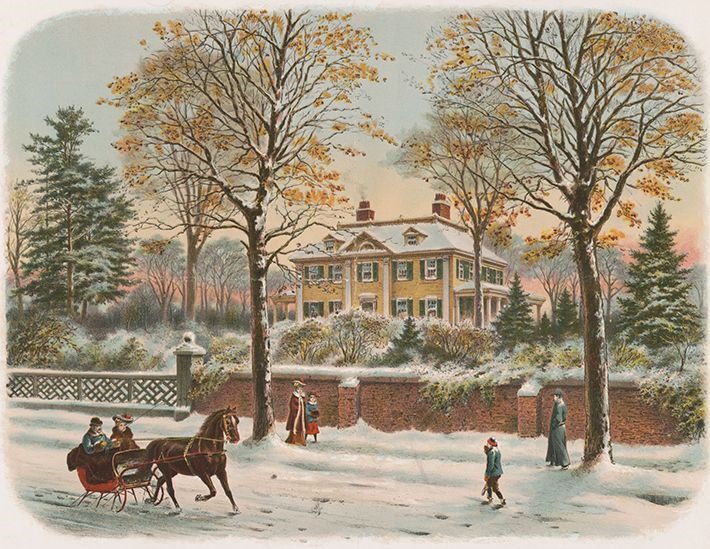
Henry Wadsworth Longfellow, that once hugely popular and now deeply unfashionable poet, seems to have tried but once to use his poetry to address great evil: a pamphlet of poems addressing slavery. His effort was not long-remembered, and it has not saved him from his fate to be cast off as a poet of undistinguished, conventional and sentimental verse, the very sort of thing that the Modernist movement needed to supersede.

Mpls Longfellow Statue 6!!

This eroded statue of Longfellow stands, missing its hands, in a little visited corner of an otherwise busy Minneapolis park, somehow saying something about how Longfellow is viewed today.

I’ve already performed one of those Longfellow poems on slavery: “The Witnesses.”  I could have performed “The Quadroon Girl”  instead, but I didn’t think I could. This is a level of evil so deep, compounding even the evil of slavery, that it is, paradoxically, a sort of sacred space. I didn’t think I was ready or worthy to go there.

I’m not going to further explicate “The Quadroon Girl”  here. Despite the shakiness of my singing, it’s better to listen to it, to follow the story as it unfolds. I’ve performed it exactly twice, and I don’t know if I could perform it again. The player is below.

The most popular Parlando Project piece for Summer 2018 is…

Since I’ve been keeping track, one thing has been consistent with the most popular piece each season: it’s been by a poet not widely known or read in the United States. So previously we’ve seen on top after a season of your listening: my translation of Dada principal Tristan Tzara’s The Death of Apollinaire,”  the better-known-in-the UK Edward Thomas’ Adlestrop,”  the too-often overlooked Chicago Modernist Fenton Johnson’s The Banjo Player,”  and Frances,  the teenage love poem by George Washington, whose career as a poet never really took off.

This has happened even though I’ve featured (multiple times) most of the popular canon of pre-1923 English-language poets touched by the Modernist movement of the 20th Century: Frost, Yeats, Sandburg, Millay, Pound, Williams and Eliot.

Pat yourself on the back: the listeners here are open to a variety of writing, and they don’t necessarily need to have a name they already know attached to the words.

Still, it’s surprising that it’s surprising that we have Emily Dickinson coming in at the top spot this past summer.

Dickinson (along with Frost and Yeats) seem to be special cases with The Canon, in that all three have retained some level of popular readership and presence in that still-existing oral-tradition of memorization, even into our current century, without being denigrated into the bin of “not-great poetry.”

Our Summer 2018 most liked and listened to audio piece is “Ample Make this Bed.”  Like many Dickinson poems it’s extraordinarily compressed, just eight lines—and like so many of her poems it invites us in and then mystifies us. Most of us have made a bed, and some of us have even been instructed in how to complete that task correctly. Here, with “Ample Make this Bed,”   we may get six lines into the eight and we haven’t left domestic normality other than the ironic satisfaction with a job, that if done excellently, will stand forever. Ah, if only any domestic housekeeping task can stand ‘till judgement day, rather than the few hours until it needs to be done again!

The poem’s final two lines are so modestly telling and beautiful. Until them, no rhyme—and then internal rhyme and end-rhyme rush in! And the synesthesia of “yellow noise,” an image which could have been informed by Dickinson’s mysterious medical syndrome which included photophobia, but needs no biographic detective work to strike us boldly.

Is “Ample Make this Bed”  about death, domestic drudgery, love, or the unstoppable passage of time? Emily Dickinson seemed to have taken care with her poetry, to make it ample and arranged to last until judgment day, so it’s likely intentionally undetermined—or mystically, exactly, all of those things united.

Musically, I’m quite proud of my music and performance of all the various parts with this one. If you missed it last July, why not go ahead and listen to it now. And if you like it, please let others know about what we do here.

Summer 2018 Parlando Top Ten, Part Two

Continuing on with our countdown of the most liked and listened to audio pieces during this past summer here at the Parlando Project, today we’ll look at the pieces that came in 7 through 5 as we move up the list to the most popular piece.

7. The Hunter. Maybe, with Internet audiences, it’s the cats? I’ve playfully included pictures of William Carlos Williams with said cats in a few posts, and Williams, who sometimes thought he was overlooked as an American Modernist while he was alive, seems to be holding an audience, even though his poetry doesn’t present itself with open, easily accessible sentiments. His even more difficult “St. Francis Einstein of the Daffodils  almost gave Williams two appearances here this summer, falling just a couple of places back from the top ten. Or maybe it’s the informal American language that he uses? Other American Modernist contemporaries of Williams: T. S. Eliot, Ezra Pound, or Wallace Stevens often liked to drop leaves from a Word of the Day calendar into their poems, while the New Jersey doctor generally didn’t. Maybe there’s something here with Williams like the cats: familiar and domestic, intriguing, but not seeking to please? After all he once said: “I didn’t ask you to understand anything, only to listen.”


6. The Apotheosis of Harlan Ellison. I’ve warned readers already that this summer’s top ten has too many pieces where I wrote the words, and that’s not representative of what this project is about—and so, here we have the second of three pieces in this summer’s top ten where I wrote the words I perform. Well, at least this one is about someone else, the long-time critic, writer and SciFi anthologist Harlan Ellison.


James the imagined  author vs Jimi the reader of SF

I talked about how Ellison helped encourage Octavia Butler, but what if avid SF reader Jimi Hendrix had decided to go the literary route?


5. Beloved. My words again, although as I tried to explain in the original post here including it, I was inspired by a statement Bobby McFerrin once made about music, how it touches you inside on that sensitive flap of skin named the eardrum. Given that news this past week has included stories about unwelcome touches, that metaphor goes both ways.


WCW with a baby

Excuse me, while I kiss this baby. If cats and William Carlos Williams brings in readers, how about W.C.W. and babies?


Back soon with numbers 4 through 2 in our look back at Summer 2018’s most liked and listened to combinations of words and music.

Sincerely, M. Cohen

As long-time readers here will know, the Parlando Project likes to vary what it does. Loud, immediate and approximate rock’n’roll, string quartets, folkie and electronica tinges combine with words that I look around for—different stories each time, most of them not mine.

Are we now going to vary from Bronze Age Chinese poetry collected to instruct politicians? Or from the W.H. Auden-who-can-bring-the-funk remarks of Jimi Hendrix’s ET visiting the Third Stone from the Sun and marveling at the chickens?

Well, maybe a little.

And so, we’re going to descend into parody today. Mad  magazine imprinted me on parody while young, and Weird Al Yankovic never did a thing to cure me, and here I am an old man who still can’t help making up travesty-lyrics to songs he hears, which distresses my son who likes to sing Billy Joel’s “For the Longest Time”  with his sincerely growing voice, while my questionable tenor tries to make that into a dissertation on salad vs. main-course silverware: “Fork with the Longest Tine.”

To the possible detriment of today’s piece, I didn’t choose anything as well known as one of Joel’s hits. In tryouts, just one of the folks I’ve sung today’s piece to even recalls the original song it references: Leonard Cohen’s “Famous Blue Raincoat.*”  That may say something of the fragmentary fame of Leonard Cohen in the United States. Back in the Sixties, a couple of his songs “Suzanne”  and “Bird on a Wire”  were fairly well known from cover versions, and his 21st Century song “Hallelujah”  has become even more well-known after being sung by John Cale, Jeff Buckley and Rufus Wainwright—but “Famous Blue Raincoat”  despite dozens of covers, just hasn’t penetrated the U.S. mind.**  There may be reasons for that. It doesn’t have a hooky chorus, even Leonard Cohen himself thought the lyrics were confusing, and to the degree it has an accessible plot it’s about a complicated love relationship far from the common I love her/him, or her/him has left me and I’m so sad or angry about that.***  My favorite part of the song was its uncommon ending, where it’s revealed to be a letter of sorts, signed with solemn irony “Sincerely, L. Cohen.”

M Cohen and L Cohen

A famous orange retainer and a famous blue raincoat.


And that was the hook for today’s parody. I thought of another Cohen living in New York City, who is a principal in another messy romantic entanglement, whose feelings about it are multivalent, and whose sincerity is a changing thing. You can hear “Sincerely, M. Cohen”  using the player below.


* If you want to hear Leonard Cohen’s “Famous Blue Raincoat”  first, you can see a lyrics video here.

** Am I depending on the Parlando reader/listeners outside the US this time, and yet assuming you have any interest in juicy U.S. scandals?

*** Ever wanted a coherent reading of the Cohen song? Here’s one of the best I’ve read.

Cold Is the North Wind, and Why Did Confucius Collect a Book of Songs Anyway?

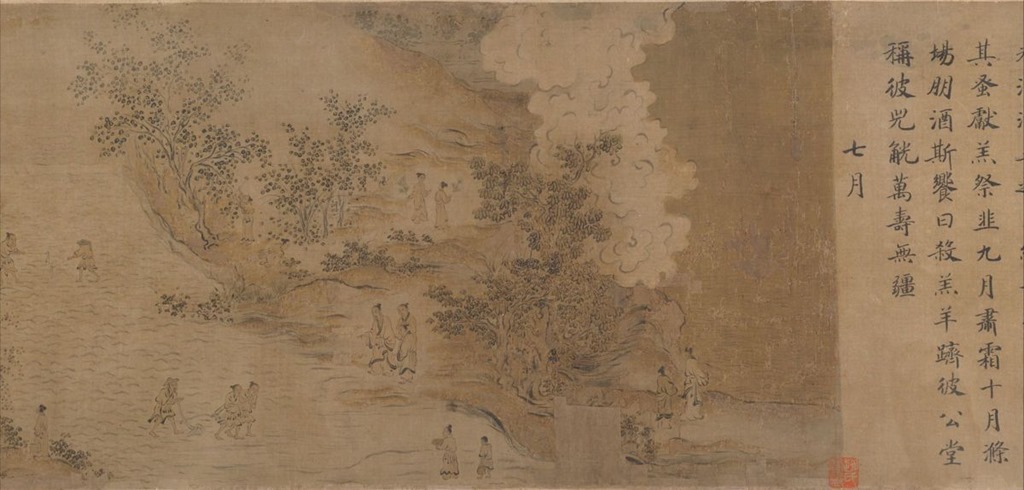
Here’s one more musical piece from the anthology of ancient Chinese poetry collected by Confucius and his school and known as the Confucian Odes  or The Book of Songs.

This one may be my favorite, though my performance of it dates to a time before I could find literal translations to check against the extant English ones. Perhaps even more so than our last piece, “Wild Plums,”  this presents itself as an expression of lover’s desire. You might find it similar to the Bible’s Song of Songs in that regard.

When I was young and looked at commentary on the Song of Songs,  I was surprised to find that some scholars believed it to be a spiritual metaphor rather than some too-hot-for-school love poetry. My take then: those scholars must be prudes.

With the Confucian Odes,  remember that the Confucians thought their collection of folk-poetry was not just a piece of cultural curation, but required reading for advanced participation in society—not just for poets or humanities majors, but also for politicians and bureaucrats, a class the Chinese Empire needed a great many of. There is commentary on “Cold Is the North Wind”  that says then that this song expresses a hardship or grievance experienced by some province or another, or that the lover’s desire is a metaphor for political concern. After you listen to “Cold Is the North Wind”  you may think that must be willfully obtuse. “What part of the ‘I’m lonely, it’s cold in this bed alone, and I want you right here, don’t they get?” you might be thinking.

In both cases, the Song of Songs  and “Cold Is the North Wind,”  I’ve come to a slightly different view. Poetry, sometimes when it’s at its best, binds the image and what it’s representing in a way that doesn’t privilege one over the other. William Carlos Williams’ Red Wheelbarrow  isn’t some symbol which we need to decode as a handy emoji for the usefulness of tools in ordinary work, and “Aha! We’ve solved the poetry puzzle for today!” it’s also a freaking red wheelbarrow in a chickenyard and it’s wet with rain in a way we can feel and see if we allow that. Separated lovers are separated lovers, and their ache we can feel, but that ache specific to that need and pleasure is something we can feel again in other intensities. And that act of listening to these words (or listening to them on the page) binds us to the poem in the way the poet binds the image to the things the image is like.

There’s something there for future bureaucrats and politicians.

There was a time, also in my youth, when we thought songs might be able to do that. Someone who listened to Bob Dylan, Aretha Franklin, John Coltrane, Patti Smith, or other Smiths and Jones would be changed not necessarily into record store clerks or musicians but into more empathetic people whose imaginations would be wider than the immediate space around them. To what degree were we wrong? One provisional answer: “not entirely.”

Chinese Throne

“So, I’m writing this tweet. What makes the best metaphor: low IQ, sick, ugly, dumb, dog, failing or FAKE? I’m a genius myself, but poetry is an elite WITCH HUNT, and I could use a little help casting this spell. What, you can use poetry to listen, not just to speak good?”

If there was a modern Confucian school sitting somewhere in the English-speaking world, what would they collect to instruct future government members and business functionaries?

The player to listen to my performance of “Cold Is the North Wind”  is below. If you’ve been checking out the archives of over 250 other combinations of various words and original music on the right, you might notice that “Cold Is the North Wind”  appeared here several years back, before the official launch of this blog. With today’s post, it will now be available to those that follow the audio pieces via Apple Podcasts, or through other podcast services.

Does the way you view this blog not show the player? Well, then this highlighted hyperlink can play the performance.

Wild Plums

Is love enough in dealing with matters of translation? I want to talk a bit about some issues with this, and while it may start out sounding esoteric, stay with me, I’ll end up as immediate as anything.

I’ve presented Chinese poetry here before. Collected classical Chinese poetry goes back to around the 10th Century BC, materials gathered from an oral tradition around 700 BC and written down by Confucius or his school, and also a later golden age in the 8th Century AD for literary Chinese poetry. In Western terms, that’s from the time of the Bronze Age Trojan War to the time of Homer to the European Dark Ages.

If you enjoy thinking about large amounts of time, consider those dates again, that’s 1,800 years between the time of the oldest Confucian Odes  (or the Book of Songs  as it is often called), and the time of Du Fu and Li Bai, and then over 1,200 years until now, a total of 3,000 years—enough time to get through that bookshelf of books I’ve put off reading to do this project. Or if you’re a listener and want to relate this to the oral culture of the Modern or the Bronze ages, in that 3,000 years span you could listen to every one of the 20 million tracks on Spotify 26 times each and still have time to go for a night walk in the country while trying and failing to count the stars.

Let us contemplate the differences inherent in that much time. How different was the culture of Du Fu’s time or his anonymous predecessors who sang the Book of Songs  before it was a book? I can’t even begin to compress those differences into a short post.

We sometimes speak about unchanging “human nature” when talking about such a great divide of time and place—and yet, then we turn the page (or flip to a new browser tab) and read about how technology and social changes may have significantly altered how humanity works in a decade or two. How much differently did a poet or a listener/reader evaluate, create, and experience poems then, compared to now?

Both of those conclusions could be true (essential, retained, human nature elements and change that is not slowing in velocity), each moving from opposite edges of the human experience in proportions hard to measure objectively from inside it.

Into this gap steps the translator (and in our case here, also the performer) who seeks to render the written record of these poems from a place so far away in time that great geographical distances seem minor. The task of translating a hundred-year-old poem from French to English is difficult enough—but this?

Should there be any surprise that many of these translations will seem inaccurate and differ significantly between themselves in their approximations, or that areas that would be understood by the poet or their more contemporary readers remain mysterious?

Greater scholarship and cultural knowledge than mine may help in these approximate efforts at translation and performance, but even then, one should understand the difficulties and likelihood of success. And yet I do it. I want to try to grasp this, however imperfectly, not because I am Du Fu, or his nearest like extant, but because his story is different.

I promised I’d eventually get immediate. Here’s the first level of the now: think of the occurrences in our times where a choice to use, perform, or even experience cultural expressions of our contemporaries will draw condemnation on the grounds of cultural appropriation, non-identical background tone-deafness, or of just plain laughable or painful ignorance on the part of the artist (that last often two sides of the same flaw).

Some of these are very practical objections. In financial (as opposed to artistic realms) cultural appropriation impacts people’s livelihoods. Yet there’s no Du Fu or other 8th Century Chinese man to perform his work with a closer understanding today. And Du Fu himself, as a neo-Confucian, probably realized that his appropriation of Confucius’ literary appropriation of the oral tradition Book of Songs  material would be different and inexact in his own way.

Even if we’re necessarily failing, creating in our errors a cultural “telephone game,*” if we do this humbly and with respect for our forebearers, ancient or contemporary, I believe it’s honorable work.

Wild Plums

Wild plums my wife found along the Mesabi Trail, leading me to today’s piece


Here’s a second here and now: I mentioned I was re-reading some translations of the Confucian Odes  because my wife sent me a copy of one of those poems in translation, the one I’ve reworked into today’s piece which I call “Wild Plums.”  This was a gift of love I received in gratitude—even if the composer/performer-with-a-pedantic-streak part of me wanted to know who translated it, and if I could find a literal raw translation for another perspective on the work.** And here I found this, which indicates that it was not intended originally in Chinese in the way the translation presents it in English. My guess is that the translator loved the word music they found in it, that repetition of the line “the plums are falling ,” and this lured them away from the original meaning.

As best the literal translation I linked above can transfer an original meaning to me, the woman who speaks in it is either claiming that she has so many suitors that a successful one will need to up his game to make the cut (a Bronze Age “No Scrubs”) or it’s a portrayal of an eligible woman who is being too picky about a husband and has driven suitable mates off.

So, the poem that my wife sent me is probably not accurately translated, and yet it expresses something that was engendered in the translator by it, and by the caroms of life that bounced off my wife and to me. And that poem’s yearning, and the music of it in English has its own beauty, like the love that brought it to me.

And so that is what I adapted and performed. I’ve even added some additional refrains to further emphasize the musicality of the piece. To listen to the LYL Band’s musical version of this very old poem in it’s more romantic guise, use the player below.


*Also called “Chinese whispers,” unintentionally helping me make my point.

**That my wife is willing to tolerate this dreadful mix of traits is one of her charms, she even found and sent the less romantic literal translation as well.

(footnotes because I love My Year in 1918 using them)