Parlando Spring 2018 Top 10-Part Three

We now come to the top half of our count-down of the most listened to and liked pieces during the past three months. But what if you’re new here, and you wonder what this Parlando Project does?

In short, we take various words, mostly poetry, combine them with original music, and perform them. My intent at the start was not to do this the same way each time, to vary our approach as much as we could. We’ve been doing this for a couple of years, and there are now over 220 Parlando Project pieces available here if you search through our archives. From time to time, as I look at what we’ve done, I seem to notice a “style” developing, and while I have no objection to that arising organically from my predilections and limitations as a musician, performer or composer, when I hear that I usually ask myself “What can I try that’s different?”

The poems are not always the famous ones, I like to mix in some “deep cuts,” but it just so happens that these three recently popular ones are all pretty well-known, but maybe we can bring something new to them?

In position number four we have Emily Dickinson’s “We Grow Accustomed to the Dark.”  Last time I talked about how I’m finding that Modernist poetry in English moved from a recognizable natural landscape freshly observed in it’s early poems to a more interior landscape, another darker country where new dialects of language and syntax seemed the natural tongue of that region. It may well be that WWI, with its unstoppable socially-accepted murders, was a cause for this change. The rise of Freud contributed too. But more than half-a-century before WWI, and decades before Freud published, Emily Dickinson, spurred by American Transcendentalism and her own individual genius, was exploring some of those same places.

When Dickinson gets furthest inside her own head and tries to use her mutation of mid-19th century language to describe it there, she can be inscrutable; but when she’s half-way there like in this little masterpiece, she’s exploring poetic areas that won’t be visited again until the 20th Century.

This is another of the pieces where I think my music works particularly well. Perhaps you’ll agree. Player below:


Funny how these count-downs seem to form a sequence. From Dickinson’s dark we move to the  third place piece, by that little-known poet William Shakespeare, with one of his sonnets about The Dark Lady, “My Mistress’ Eyes are Nothing Like the Sun.”  When we wasn’t supplying titles for late 20th Century Sting CDs, or writing a play here and there, Shakespeare wrote a collection of sonnets that are full of ideas woven of memorable phrases.
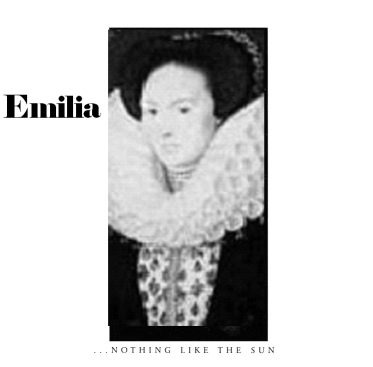
Emilia Lanier Nothing Like the Sun

Emilia Lanier, musician, poet and possibly Shakespeare’s Dark Lady.


I’ve always loved the sonnet, even shared a few of mine here. It just seems the perfect length for a lyric poem, long enough to develop two or three ideas costumed as images, but not so long that one will find them frayed and soiled at the cuffs before it’s done.

Hear my performance of Shakespeare’s Sonnet 130, “My Mistress’ Eyes are Nothing Like the Sun”  with the player gadget below.


And now we’re up to the second-most popular piece this past quarter, Marianne Moore’s “Poetry.”  Shakespeare’s poem in slot number three declares his love by saying the things his beloved isn’t. Poet Moore’s poem about poetry starts off famously by saying she “too dislikes it,” and goes on to tell us what she feels works an doesn’t work as poetry, including the poem’s other famous line about poetry’s goal, to show “imaginary gardens with real toads in them.” I think here again of those early Imagist poems, with their unromantic and ordinary things made into central images: T. E. Hulme’s red-faced farmer standing for the moon or Aldington’s poplar tree as a young woman or F. S. Flint finding the moon taking on the terror of a WWI Zeppelin raid. Toads all, ordinary nature, not the battalions of classical gods or the obligations of sentiment.

This piece’s popularity on Spotify continues steadily, as with “Sky”  from earlier in the count-down, I wonder if it’s the short, somewhat generic title that brings in curious listeners there.

My initial idea of the Parlando Project did not have my voice as the only reader, and the first voice you hear in this version of “Poetry”  is Dave Moore who’s been the voice in a number of pieces over the past two years. The other voices in this performance are two fine poets who’ve spent a lifetime raising toads to see what works in their gardens: Kevin FitzPatrick and Ethna McKiernan. Hear them read Marianne Moore’s “Poetry”  with the gadget below.


That leaves us only the number one to count-down, the most popular piece this past spring. It’s not a well-known poem, and it’s not by a well-known poet. See you back here soon for that.

Parlando Spring 2018 Top 10-Part One

As I’ve done most quarters, I like to look at the most played and liked pieces during the past season and report back here. Usually a few of the results surprise me, they aren’t always my favorite pieces or even the ones that I think came off best.

I do this in classic countdown fashion, so we start off with number ten and move in the next few days up to the number one. The audio pieces for the Parlando Project can be consumed a number of ways. Some listen to them here using the audio gadget on the blog, but others listen by subscribing to us through any of the leading podcast services. The audio pieces are the same, but the blog allows me to write about the pieces in a much richer manner than I can with any of the leading podcast services. However, if you, or someone you know might be interested in just the music and words, this is a handy way to get them on your phone or other handheld. So, if you just want the tuneage, search for Parlando – Where Music and Words Meet on iTunes, Spotify, Google Play Music, or any of the other podcast services. You should find our audio pieces in their podcast sections.

On to the countdown…

Coming in at number Ten is one of the two pieces from May that gathered enough likes and listens to make it, despite having a shorter time frame to do it in, “Letters to Dead Imagists and A Pact.”  I often like to look at who influences the writers we feature here, and this piece lets me do that with short poems from two poets: Carl Sandburg and Ezra Pound. Sandburg tips his hat first to Emily Dickinson and Stephen Crane, while Pound, rather grudgingly, acknowledges Walt Whitman. Despite being contemporaries with similar lifespans, despite both having connections to the American Midwest, despite Sandburg’s use of the early 20th Century Modernist/Imagist poetic practices as promoted by Pound; these are two very different men outside of their work with pen and typewriter. Interestingly, it’s Sandburg’s work that has an obvious Whitman influence though it’s Pound that points to him. Though Pound thought Whitman too careless in his craft, he’s the one that chose to give Whitman his due here.


Speaking of Imagists, at number Nine, we have the poet Hilda Doolittle and her “The Pool.”  Pound acted as a high-handed branding consultant would with  her, reading her poetry and then scrawling at the bottom of her manuscript her new brand: “H. D. Imagiste.” Doolittle writing henceforth as H. D. went on to a long career, and I’ve read that Hilda herself didn’t care much for the connotations of her family name anyway. Maybe that marketing advice helped, but early H. D. work like “The Pool” is  striking short poetry mixing concreteness and mystery, so maybe it was an inspired choice to use the short and less defined H. D. for a pen name.

Musically, I really like what I came up for this one too.


censor smelling woodcut

“Now is a time for carving…” Pound once decried “the exceedingly great stench” of Whitman’s poetry

At number Eight, let’s welcome to our stage the man who Pound said in our number-ten-holding poem “broke the new wood” in free verse poetry: Walt Whitman. What an odd image for Pound to use! In looking at why he might have chosen that image I found out that Pound’s family established itself in Wisconsin by building a thriving sawmill there, so it may be that Pound is liking Whitman to a pioneering lumberman, bold in seizing the ground and resources he found there, while Pound seems to say he pictures himself more as a William Morris style furniture craftsman or perhaps even as a skilled woodcarver.

Three Session men with Carolyn Hester

Straining at connections, because I love this photo so much: folksinger Carolyn Hester once recorded Whitman’s “O’ Captain,” but the 3 session men behind her appeared on many great folk records of the 60s: guitarist, Bruce Langhorne; bass player Bill Lee, father of filmmaker Spike Lee, and in the middle. the harmonica player with the shayna punim cheeks is known to trivia buffs as the father of Jakob Dylan, the leader of the 90’s band The Wallflowers.


Whitman’s “When Lilacs Last in the Dooryard Bloom’d”  is one of a pair of elegies Whitman wrote responding to the assassination of President Abraham Lincoln, and the one I prefer to the other: “O Captain! My Captain!”  regardless of the feelings some have for that other Whitman poem’s use in the movie Dead Poets Society.  Furthermore, Whitman’s lilacs here are one of the reasons that T. S. Eliot’s landmark of High Modernism “The Wasteland”  begins in spring with that very flower blooming “out of the dead land.”


We’ll have numbers Seven, Six and Five coming back here soon. So don’t touch that dial—wait, this is the Internet, you can touch the dial any time you want—but do check back, as we continue our countdown of the most listened to and liked audio pieces combining various words  with original music here over the past season.

And the most popular piece here last season was…

Musician jokes have a cruel streak, though most musicians love them.


“How can you tell if there’s a drummer knocking at your door?”

“Because his knocking speeds up and slows down, and he doesn’t know when to come in”


“Did you hear about the banjo player who played in tune?”

“Neither did I.”


“How do you get an electric guitarist to turn down?”

“Put sheet music in front of him.”


Here’s my favorite. A doctor, a lawyer, and a musician each win 100 million dollars in the lottery. The doctor is all smiles and says, “Oh, this is great! I don’t have to worry any more about arcane billing codes and insurance bureaucracy. I can just treat my patients!”

And the lawyer claps his hands on hearing, and says, “I’m going to just take all my cases pro bono and never again have to represent someone just because they can hire me.”

The musician though is downcast, he says, “Well, I guess I can keep gigging until the money runs out.”

The most popular piece for the Parlando Project this past Winter was Fenton Johnson’s “The Banjo Player.”  Johnson’s poem is essentially another musician joke, but one elaborated with some telling details observed from Johnson’s early 20th Century life.

The banjo is an African-American instrument, something often forgotten in my time until a few folklorists made efforts to set things straight. Fenton Johnson, born in 1888, just one year after Papa Charlie Jackson, knew that world before the guitar picker became the bluesman.

PapaCharlieJackson_GetAlong

Hype-man ad copy circa 1924 for the first ever to record self-accompanied blues .


Yes, he’s poking a little fun at his banjo player, but Johnson’s real case is for his value. It was a cold 20 and icy this March morning, and Johnson says the banjo player’s music is welcome “as the violets in March.”

And the section where I do a bit of a sticks and harmonica breakdown is the heart of the poem: children, who won’t even be able to pay the banjo player dimes like the adults in the saloon, love him like Santa Claus.

Here’s an irony darker than the joke of the banjo player who doesn’t know what a troubadour is. Fenton Johnson, Chicago’s pioneering Afro-American modernist poet had a life a bit like those three in the lottery joke. There was no 100 million, but he was born into an Afro-American family that had somehow accumulated some wealth. He was able to attend college. He dressed well, drove his electric motor car around the city. Like our joke’s doctor and lawyer, he wanted to use his good fortune and talents for good, to raise the status of Black Americans, the present task then for the early 20th Century “Talented Tenth.” And so, he established literary magazines, hoping to start a Chicago variation of the Harlem Renaissance, to promote the arts. But he was also like the musician in the lottery joke. Slowly, as literary magazines often do, those enterprises drained his efforts and his finances. He spent the last half of his life living on diminished means, his pioneering verse forgotten by all but a handful in Chicago.

There’s probably a good novel, play, or movie in Fenton Johnson’s story, but here at the Parlando Project we ask only that you listen for a few minutes to the compressed expression of poetry and some music, best as I can make it. The player is below.


Well that’s it for our look back that most liked and listened to pieces this past Winter. I’ll return soon with some new audio pieces.

March 2018 Parlando Top 10 Part 1

It’s time for that quarterly exercise where we look back for the most popular audio pieces here at the Parlando Project over the past season. I’m going to follow the format we used last time, and break the countdown into four episodes. I base the popularity on the number of likes following their posting here, and the streams the audio pieces received directly from the blog, or on iTunes, Spotify, or other podcast sources. Let’s start the count from the 10th most popular as we move up the list to number 1:

10. Rosemary

Even though these pieces were listened to in the Winter for most of our listeners*, Edna St. Vincent Millay’s words have a kind of spring-cleaning of the heart vibe, and so may be apropos for opening the windows and letting the curtains blow around—or at least they will in a few weeks when it warms up here in the northern part of the northern hemisphere. I awoke to 10 degrees Fahrenheit and snow and polished ice myself today.

I rather liked the music I wrote and performed for this one, just as I have liked going back to Millay to reassess the strengths she brought to poetry. Millay’s popular reading audience, once substantial, hasn’t completely disappeared, and there’s a welcome re-assessment of her poetry starting in academic circles.


9. Stopping by a Woods On a Snowy Evening

I’ve featured Robert Frost’s words quite a bit here, perhaps to atone for my dismissal of him when I was a teenager as the kind of worthy poetry in our schoolbooks that we needed to move beyond. Two things were key to my learning to love Frost: his uncanny ability to write lyrical verse that sounds natural, and my finally noticing the dry wit and stoicism that underlies most of his work.

Frost, alone of his American generation, has retained a level of popular appeal and critical approval. He’s double-edged in maintaining that. Some are captured by the surface of his poetry, hearing and maintaining in their memory the catchy moral-of-the-story “big choruses” of Frost. In this poem, it’s the “I have promises to keep, and miles to go before I sleep” at the ending. Others listen carefully to the verses, the parts other than the lines we most remember, the parts we can come back to and find that we’ve forgotten were there. When I came to work musically with this poem, I’d forgotten those. There’s no lovely woods to see in this dark night. He may be lost. He’s so dark and alone that he can hear snowflakes sweeping across snowbanks between the jingle of his rig’s harness bells.

Musically, I was obligated to add shaker bells percussion to stand for those harness bells, but then, more obscurely, I decided to add a South-Asian tambura drone for the sweep of snow.


amedeo-modigliani-pierre-reverdy

Modigliani’s portrait of Pierre Reverdy


8. Clear Winter

I was a terrible French student in my little Iowa high school and my little Iowa college. I seem to have no ability with languages, and less than no ability to handle those accents and the reforming of the mouth that makes speaking a foreign language possible. But I love poetry translation. I feel like a paleontologist removing the clods of sediment from a skeleton. Slowly, painstakingly, there it is, just as it was in its moment of sudden! But then my task shifts, and I must become the process of fossilization, to find the minerals of English that can fill in for the sinew and feathers of it’s original language.

I had a great time with the challenge of Pierre Reverdy’s “Clair Hiver.” I’m unsure of the accuracy of the “tea-kettle” section of my translation, but I fell in love with it, and could not abandon it, even if the light behind Pierre Reverdy’s eyes cannot reach the little anteroom behind mine.


*web stats I get for the streams tell me I have as many recent listeners in Australia as I have in Texas—and one listener in New Zealand. Bret, please tell Jemaine that there’s a lot of good stuff to read and listen to in the archives you’ll see listed by months on the right.

Parlando Project Winter 2017–the Most Popular Piece of the Last Season

The last few days I’ve been looking back over the past three months at the audio pieces that received the most listens and likes from visitors here, and we’ve now counted up to the post revealing the most popular piece.

But before I get to that, let me let newer visitors here know what the Parlando Project is. For the past few years I’ve been experimenting with the ways that words can be used along with music. Most of the words are going to be poetry, if only because I like shorter pieces for this, and poetry accommodates that desire most easily. The music? My goal is: as varied as we can make it. The “we” here are largely myself and Dave Moore, who I’ve played with as the LYL Band since the late 1970s. Dave also is the alternative voice of the Parlando Project, one that’s read or sung several popular pieces during the history of this project.

Dave and I have also been writers (Dave’s also a cartoonist) since our youth, but this project is not, in it’s greater part, about presenting our written work. Rather it’s about looking at a variety of other people’s experiences and expressions, reacting to them, and seeking to embody them in a way we hope you’ll find interesting.

Do we turn the poems into songs? Sometimes. Sometimes they were, or were meant to be, songs anyway (Tagore and Campion for example). But often we aim for something that is cast between spoken word and chant. As best as I can figure out, this is akin to what William Butler Yeats once aimed to do with poetry and poetic drama, and he thought William Blake, Sappho and the Celtic bards did the same. And for myself, in addition to those Yeats pointed to, it’s my spin on what Jack Kerouac, John Lee Hooker, Allen Ginsberg, and Patti Smith (along with others) did.

Rap/Hip Hop does this too, but as varied as those artists’ approaches are, most of their tactics I can’t make work for me. No disrespect, it’s just my limitations.

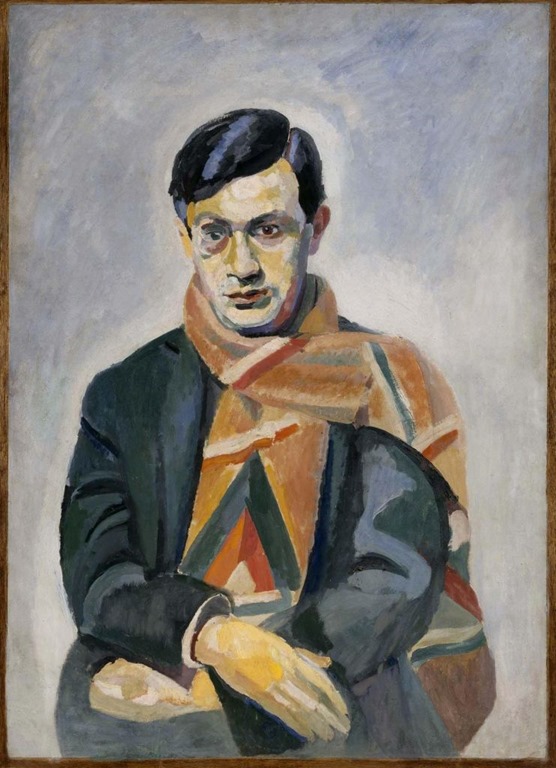
Well, here’s the Parlando Project’s most popular piece from the last three months: Tristan Tzara’s “The Death of Apollinaire.”  It was number 3 last September, so it’s been getting the listens since last summer, yet it’s not one I selected because it was well-known or sure to be popular.

Tristan Tzara by Robert Delaunay

Accessorizing with knitted wear was the most important artistic dictum of Dada

Tristan Tzara, one of the founders of Dada, is not that widely available in English, and even the subject of this elegy, the influential Polish-French writer and critic Guillaume Apollinaire, has a fame that doesn’t transfer with full brightness off the European continent. I did my own translation from Tzara’s French for this piece. And though I’ve attempted to do this, off and on, since my youth, translating Surrealist, much less Dada, poetry into English has it’s extra complications: to what degree is an image meant to be impenetrable and random, meaningless as a stance; and to what degree is it instead a shockingly fresh juxtaposition?

I have a prejudice for the later. When I am translating poetry I take it for a given that I will not be able to convey the auditory music of the original, though I try to retain the musical development of its statements, and above all, I try to find English words and idiom that will grab the English-speaking reader’s interest with vividness.  This approach has it’s dangers, as I’m not enough of a scholar of the lives of writers or of the their languages to make the most informed decisions, but in the case of “The Death of Apollinaire”  I feel this leads to a very effective and affecting statement about the death of an artist still suffering from his battle wounds just after the end of the WWI.

My limitations aside, I hope I was faithful to Tzara’s voice, and I hope you’ll find it moving too. You can listen to it with the player below.

New pieces will be coming soon, so come back and check, or hit that “Follow this Blog” button up near the top-right to get notices of new pieces.

The Parlando Project Winter 2017 Top 10 Part 3

Here we go, continuing our Top Ten countdown for the most popular audio pieces from the past Fall as counted by your likes and streaming listens. In the past two posts we’ve done numbers 10 through 5, so let’s move on to number 4.

One thing I enjoy about this project is that I can’t predict which pieces will get the most response, and in 4th place this past Fall we have my rendition of a excerpt from Gertrude Stein’s arch-Modernist “Tender Buttons.”  Not only was it popular last Fall, but it actually improved on its 8th place position from last Summer’s Top 10.

Stein’s experiments have to be seen as the forerunner of what came to be known decades later as “Language Poets”—poetry that reveled in the indeterminacy of our language, that exploited all the cracks and odd turns in our real everyday spoken syntax. This poetry can seem intimidating if one is pressed to extract a meaning immediately, but one value of the Parlando Project is that we’re free to perform the poetry with music and allow any straightforward meaning to take a back seat to the sound and flow of the words. And the poetry of “Language Poets” often gains some singular meanings when read aloud, because our everyday spoken syntax is nowhere near as clear as good written prose would be. We commonly understand meanings when words are  spoken from inflection and our groupings of words that no diagramed sentence can measure.

Musically, I doubled down on the Modernist tilt of Stein’s words by speaking them to my interpretation of the style of Don VanVliet who performed as “Captain Beefheart.” VanVliet took the vernacular freedom of Delta Blues music and expanded on it even further. His own lyrics, like his own music, like Gertrude Stein’s words, don’t seem to make sense at first, until you open up and let them in for awhile, until the off-center is normalized, and you begin to see the facets of the brilliant corners. That journey starts—maybe only starts—when you listen to this piece the first time.


At Number 3, we have another returning piece from last Summer, “On the Troop Ship to Gallipoli,”  based on my recasting of WWI poet Rupert Brooke’s late fragment, written down shortly before his death on the way to the front in Turkey. If the soldier’s death of Modernist instigator T. E. Hulme (whose “Trenches St. Eloi”  was earlier in our Top 10) cost him the opportunity to solidify his position as a founder of British Modernism, Brooke’s death gave him no chance to outgrow or adapt his 19th Century poetics to the new realities of warfare that WWI revealed to many others.  So, while maintaining my respect for Brooke’s experience as he wrote it down, I tightened and modernized his language and presentation to create the kind of poem Hulme, F. S. Flint, Ezra Pound, or Siegfried Sassoon would have written.

I tried to work the time-worn musical tactic of the slow build in my setting for this one. The final fuzzy musical strain in this is a conventional electric guitar played with an E-bow, a device that magnetically drives a string without plucking it, somewhat in imitation of what a real bow does on a bowed string instrument.


Robert Johnsons

One of these two guys cut a crossroads deal at midnight that let him use Shakespeare’s lyrics


At number 2 in our Top 10, we’re back to a piece that hasn’t made a Top 10 before. It just so happens that it’s another adaptation or free translation, this time by Elizabethan physician, poet, musician Thomas Campion. With “Let Us Live and Love”  Campion’s first stanza is a faithful enough translation of a poem by the Roman poet Catullus, but he then decided to develop his own path out of that beginning.

And so, by the second stanza Campion comes close to coining the Sixties’ slogan “Make Love not War” and he closes with a mighty invocation of love as the great illuminator of our darkness.

The Elizabethan age saw a flowering of lute player/composers. Many of them adapted the words of Elizabethan poets as well as writing and using their own poetry. One of Campion’s contemporaries was the great John Dowland, and another was a man named Robert Johnson. A perfectly common name, but a name that many people today associate with another singer/composer/stringed instrument player, the famous Delta bluesman.

So rather than using Campion’s own tune, I chose to set Campion’s words to my own Blues tune with slide guitar and harmonica.


That leaves only Number 1 to go. What piece was the most liked and listened to here last Fall? Check back tomorrow to find out.

The Parlando Project Winter 2017 Top 10 Part 2

Picking up from where we left off yesterday, here are the next three most popular audio pieces based on readers here hitting the like button along with the number of streams and downloads counted during this past fall.

Number 7 is Edna St. Vincent Millay’s “”Sonnet 43”.  I seem to be coming to a greater appreciation for Millay as I do this project. Like my long time favorite Carl Sandburg, Millay “suffered” from too much popularity in her heyday, and like Sandburg I believe that her popularity in non-academic circles at the least caused critics to feel that they need not bother to examine her work more closely.

I’ll admit, I was one of those that thought she sounded like someone trying to be a 19th Century poet when the 20th Century was well and truly underway. Now in the 21st Century, I find this less of a crime, and when I let go of that, I find I like this sonnet’s complex appreciation of love’s limits.

Musically I love that I was able to play a convincing arco bass using a MIDI-controlled virtual instrument for this one. Bowed string bass is like the snoring of the bear mother in a winter den to me, immense, and yet sweet and comforting.


Speaking of Carl Sandburg, his “Autumn Movement”  made it all the way to number 6, and that’s remarkable because it was only released on October 20th and thus had less than half of the Fall interval to pickup likes and listeners. I love the central autumn image in this one from Sandburg’s “Cornhuskers”  collection, and it reminds us that Sandburg, known also for his acutely observed Chicago poems and journalism, was from the very start of his career interested in conveying rural life as well.

Musically, this piece demonstrates how recently I had seen Bill Frisell in concert—and seeing him, and the musicians he plays with, is something I try to keep always recent in my experience. Of course, Bill Frisell has an immense amount of musical vocabulary under his fingers, and I don’t; but I tried to make the best of mine, which is all any musician can do.


Bill Frissell with books

Besides his music, I admire Bill Frisell’s interior decorating sense and, alas, his sartorial style.


Our number 5 piece in popularity this fall was T. E. Hulme’s report from “Trenches St. Eloi.”   Many of the Modernist soldier/poets who served in WWI grew not only to  hate war, but to distrust their country’s cause and justifications for their particular war. Hulme is something of a exception. As far as I can tell, he remained supportive of the British war effort in which he eventually lost his life. That doesn’t make “Trenches St. Eloi”  propaganda, for it’s far from blind to the horrors and difficulties of extended conflict. Hulme’s death shortened his career and helped mask his seminal contribution to modernizing British poetry.

Since starting this blog, I’ve been following the centenary of World War I off and on in the background, which meshes well with much of the material I can present here without running into rights issues, since modern public domain status cuts off at 1924. The material from the poets who served in the war or were otherwise touched by it, is, not unexpectedly, downbeat. Just as the Modernist revolution changed poetry, WWI changed how war was written about, breaking millenniums-long Homeric traditions of war heroes, that however flawed, were able to shape battles by their character, into stories of endurance like this one.

This is another one where the bass guitar gets to carry a lot of weight.


Thanks again for reading and listening. It’s been a huge amount of work this past year to bring you the Parlando Project pieces, hundreds of hours of reading, studying, translating, composing, playing, and recording these unique combinations of various words (mostly poetry) with various original music (as varied as Dave and I can make it). That wasn’t drudgery—far from it—it’s brought joy and amazement to me to see what’s out there that I haven’t heard or imagined before, and I hope some of that wonder and discovery comes through to the readers and listeners here, because it’s our goal to surprise and delight you, to show you new facets of poems or poets you thought you knew and to introduce you to some writers that didn’t get included in your textbooks.

Here’s what I ask you to do if we’ve succeeded in that, even if only for a piece or two out of the more than 160 pieces we’ve presented so far: let others know about it. Tap them on the shoulder, show them the URL, link us on your blog or on social media, stick an earbud in their ear. Every like, listen, link and comment helps me keep doing this. I know I should be a better promoter of this work, but frankly, I’m too engaged in the work itself to do as much as is needed.

And standby, the next three most popular pieces from the past fall will be posted soon.

The Parlando Project Winter 2017 Top 10 Part 1

I’m going to do the top 10 list a little differently for the past fall,  doing it in parts, so as to not overwhelm visitors here in one post with more audio pieces than you might have time to listen to. I’m also a bit pressed for time right now, and this fits with my schedule as well.

In traditional fashion, we’ll start with the 10th most popular audio piece from the past three months, and work our way up the list in popularity judged by your streams of the audio and likes on the blog.

Number 10, we have my looser translation of Rainier Maria Rilke’s “The Dark Interval,”  which is one of five pieces that are returning from our last Top 10 from September.  I translated this a few years back, making choices at the time (as translators must) as to what the author was getting at in the original German, and what English could most effectively reflect that. Knowing just a little bit more about Rilke, I think I’d make some different, better informed choices now, but the choices I made then do make for a particularly apt Winter poem with it’s opening skiing metaphor that was my most audacious choice. Rilke’s lines “I can speak in many voices/but this voice shuts up quick.” remain personally meaningful.

Musically, this is one of the short and pretty ones, so go ahead and listen.


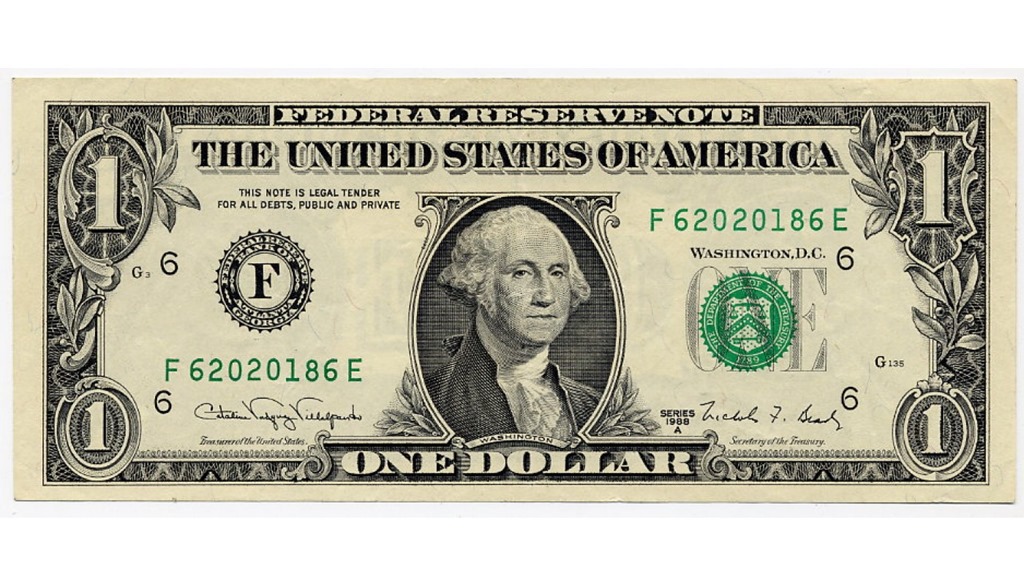
Number 9 finds the piece that remains a perennial on the Top 10 lists, a little angsty ditty written by a love-lorn teenager infatuated with a neighbor girl. Although he didn’t actually complete the piece, with it’s acrostic scheme that was to spell out the young woman’s entire name left abandoned partway through the last name, and even though he apparently didn’t get the girl, you have to admit it’s an ambitious move by a young poet or suitor.

I titled it with the love object’s first name “Frances.”  The guy went on to military and political success, capping it off eventually with popular success as a wordsmith here. You may have heard of him: George Washington


Rose3

“When the last rose of summer pricks my finger…” photo by Renee Robbins


Well, is it all going to be repeats from last time? No. At number 8 we have a newer piece, making it’s first appearance on a Top 10 here, William Carlos Williams’ “It Is a Small Plant.”

My late wife often found pleasure in looking at things closely. How intent and intense could her focus become, and what would that reveal? If she found out, she could never tell me exactly, only that she was drawn to do that. Many years ago, after her death, I took to digitizing the photographic slide prints that she took, some of which were as close to buds and flowers as her lens could focus, and the feeling of being behind her eyes, looking with her intent, fell over me.

Williams does something like that in his poem, which also cannot tell you straightforwardly what it apprehends, while the power of the seeing is overwhelming. I like the music I played for this one quite a bit, particularly the fretless bass part, an instrument that I took up this year, and have felt greatly rewarded by.


That’s all for today, but three more of the Top 10 will be posted here soon. And remember, we now have over 160 pieces posted, so if you’d like to see what else we’ve performed and interpreted, the Archives (to the right on the web page) will let you listen to other pieces.

The Spring 2017 Top 10

Since this is National Poetry Month in the US I’m hoping that I can exceed the usual 7 to 8 posts a month pace I’ve kept up here since the Parlando project began last August. The next audio piece should be up this weekend. For those who haven’t read the early posts here about what the Parlando project is, I usually summarize it as:

The Parlando Project is words (mostly, but not always poetry) accompanied by music (various kinds).

The Parlando audio pieces have been downloaded by podcast subscribers since launch almost 4,000 times. Given that we are now past the halfway point, I thought it might interesting to let you know what the “Top Ten” downloads have been so far. In Casey Kasem form, we’ll count it down upwards from 10 to 1. There are links in the list if you missed one of these audio pieces and the posts about them.

10. The Spring of Dead Things. One of the 3 pieces in the top 10 where I wrote the words. That’s OK with me, but one of the Parlando Project aims is “Other People’s Stories” which leads me to feature other people’s words more often than not. There’s lots of folks reading their own poetry out there, which is good in itself—but there’s lots of people reading their own poetry, so think there’s an unmet need for reading others work.

9. The Garden of Trust. One of my personal favorites. Weston Noble’s thoughts on the power of music, hard-won thoughts he expressed after a lifetime of work, touched me the moment I first read them, and my feeling only deepened when I found I was able to hear him express those beautiful thoughts in a recording made before his death. My thanks again to Luther College for allowing me to use this recording in my piece. If you want to sample one thing that the Parlando Project represents, and it really doesn’t represent one thing, start here.

8. I Felt A Funeral in My Brain. Writing the Parlando music and considering the words for performance has deepened my appreciation for Emily Dickinson, whose words we’ve featured more than any other writer, and I rather like my music for this one as well.

7. For John Renbourn Dying Alone. I hope some of the listeners to this piece who like acoustic guitar music find this a gateway to Renbourn’s music.

6. Arthur Koestler’s Death Song.  Although we’ve featured Dave Moore reading and singing his own work here, and there will be more of that to come later this year, his Top 10 appearance is for a piece where he wrote the words and music, though I performed it.

5. Eros. I sometimes wonder if this one gets a bonus from those searching for or intrigued by its title. Another one where I’m happy with how the recording and the music turned out. I remind myself that I should learn more about Emerson’s Transcendentalist revolution.

4. 2ebruary. There’s no telling what the “bonus” may be that’s lead more people to this piece. It could be the discussion of the movie “Patterson”  in the notes, or it could be the connection to bicycling. Or perhaps it’s the connection to Frank O’Hara’s “I do this, I do that” poems that I treasure and try to emulate. If you like this, I have another bicycle ride poem coming up later this spring.

3. Boris Pasternak’s February. We’re into the top 3 now.  I was remarking to Dave Moore during a break in our recording session yesterday, that February rather than April should have been picked as National Poetry Month, as the deep dark end of winter engenders more cruel monthly poetry. Pasternak gets to help prove that point here. One regret I have with what we’ve done so far with the Parlando Project is that I have not received permission to post our version of Margaret Atwood’s “February”  here.

2. Hymn To Evening. Speaking of things I treasure, hearing Phillis Wheatley’s story on the Freedom Trail in Boston is another one. Art is this thing that, unlike even persons, no one can own. Colonialism is a system that crosses oceans to take things from other lands for profit. Art is the system that sends out messages that can crisscross time and oceans with the information inside our breasts.

dollar-bill

we’re offering pictures of our #1 Parlando Project author for only one dollar


1. Frances. Interesting that two pieces from the colonial United States are 1 and 2, and that a piece with words by an young amateur poet tops the list. Maybe this is a tribute to the Pixies/Nirvana loud/soft arrangement trick in the music? Or that when it comes to subjects, love conquers all? Or that acrostics are about to become a thing?

Please continue to read and listen this month. I have a lot of planned pieces I’ll think you’ll like coming up here. Remember that the Parlando Project seeks variety in music and words, so you may hear things you like as well as not like as we go along, but stick with us as we want to continue to surprise you. I also want to thank those that have hit the like buttons on their favorite posts, and those who have hit the RSS button to follow this blog.