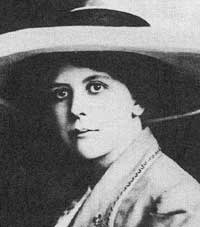
Poem 1 from Twenty Love Poems

Last post I said that Pablo Neruda’s departed lover was by definition absent by the time we got to the final love poem in his Twenty Love Poems and a Song of Despair.  I’ve now read the entire collection in an English translation, and I’d have to say that the lover is to a large degree absent throughout—not just in the sense that elements of a doomed romance are woven into the whole series, but in the sense that she isn’t really given a living presence.

Still, quiet, and dark are all attributes Neruda sees or applies to her.*  Erotic attention is  given, moments of apparent mutual intimacy are sketched, and most importantly to us as readers (as opposed to actual partners of Neruda) a range of striking imagery is used to represent her and the poem’s apprehension of his experience with her.

This last point may be crucial. Without it, this poetic series would be only another example of the syndrome of “The Male Gaze.” If that sort of thing, and the patriarchal power dynamics associated are a point of pain, this series of poems by the eventually Nobel Prize winning poet may not be for you.

Sexuality and its expressions, its inescapable intertwining with the rest of society’s hierarchies and prejudices, is not a simple thing. Twenty Love Poems’  popularity testifies that not everyone in the past 100 years sees it this way or is equally bothered by that element.

I’m willing to put Neruda on the stand, but only in our moot court, since he is now long dead, and no one now living likely had to try to negotiate an erotic relationship with him. He’s now become his writings, and his youthful lovers too have become the imagery that he preserved them as. Take that in the balance as we weigh the once living beings and their kindnesses, cravings and blindspots against the art that one of them has left.

“Poem 20”  in the series began by launching one last extravagant image about the love affair as it writes that there can be no more, but as I now turn to the opening of the series, the 19 year old Neruda is going to try numerous audacious images to describe his beloved and their relationship. They’re all going to be one-sided. She never speaks. Her emotions can be sometimes made out if one reads the poems in an Imagist manner (where emotional words are not used, but depicted with external description) but they are not the point of the series which is focused on the male speaker’s suffering, confusion, and dissatisfaction.

I’ve mentioned before that I fear that I may ere in my translations because my prime goal is to make vivid the images I discern in a poem. In Neruda’s “Poem 1,”  I differ from other translations I’ve read of it in that I see some images they have muted or made more abstract and “prettified.” I worried about my tendency here so much that I pulled back from some rawer translations I considered. This may be cowardice on my part—but the most noble explanation I can give is that to make a sure judgement on that level of tone I would need to be a fluent speaker of the source language and more familiar with the entirety of Neruda’s work.

Poem 1

Here’s the translation I mined from Neruda. “It’s much cheaper down in the South American towns where the miners work almost for nothing.”

.

Here are some brief notes on my experience of “Poem 1”  in making my fresh translation of it from the original Spanish.

The poem opens with an audacious image: the beloved is portrayed as an immense (if inhuman—not even animal, but mineral!) landscape. My reading is that Neruda is making an extended metaphor that erotically he’s engaged in mining his lover’s body. Are there subtexts here (I assume unintentional, but who knows) to foreign corporate exploitation of Chilean resources?

The first quatrain ends with what I read as a brag that lover-man Neruda is so potent that his lover could only conceive a son from his mining operation. See what I warned about? Either Neruda or I—or both of us—is risking risibility here.

In the second quatrain, Neruda recovers. This is flat-out marvelous and mysterious writing. Perhaps it benefits in that Neruda is no longer trying to describe his beloved, only himself here. In my translation task I worked a bit on what word to use for “túnel.” “Tunnel” is the obvious choice, but I never liked it as word-music when I tried it. I chose “cave” instead, preserving the anima subtext I sensed.

The third stanza, problematic again. It opens well, and as word-music compels. The “de leche ávida y firme” phrase is rendered by all the other translators in whatever their best Surrealistic/poetic manner finds. I’m more base it seems, and was struck by secondary Spanish meanings for “leche.” I could also have chosen the idiomatic meaning of smacking or bumping, even though other translators haven’t. Third line? If she was to speak: “Neruda, my absent eyes are up here!”   Fourth line. “Rosey pubis” is just bad, and I couldn’t justify linguistically my alternative.

OK, you in the back row. Stop snickering. Or otherwise we’ll stop with erotic poetry and go back to Longfellow right now!

Last stanza. How self-aware was Neruda when he wrote this?** As he refrains on woman and body, he goes and drops in the “my woman” formulation with it. Given that in the course of this series of poems or even the rest of this stanza, this isn’t going to be a long-term commitment, I’m not sure how he gets the deed and mineral rights on his beloved’s mortal corpus, but if you like you can just say that I’m 2020 anachronistically considering 1924. The final three lines make plain, even if it’s lovely verse, that, well: a man’s gotta ramble, I can’t be satisfied, and the problems of us little people don’t amount to a hill of beans in this crazy world.

Am I being unfair to Neruda? Even here as a 19-year-old he’s an accomplished poet who found an avid audience that bonded with what they received in his art. When reading his Twenty Love Poems and Song of Despair   I came across as many “wow!” lines as problematic ones, and I wasn’t bored. Not everyone looking for a lover, much less a love poet, is going to ask for the correct dialectic to get them through the night.

A possible defense is that this isn’t poetry as memoir (a common form today) and that the woman in the poem seems soul-less and silent because she is intentionally an abstracted metaphor. As I said when we started—whatever, she is now.

For my performance I chose not to go romantic for this as I did with “Poem 20”  last time. While there is a tender cello present, the main music is carried by pianos playing astringently. I performed it more as if it was a Browning-like dramatic monolog—for monolog it is. Feel free to hiss or sigh with the character of this very young dramatis personae.***  The text in Neruda’s original Spanish alongside another English translation is here. The player gadget to hear my performance is below. If you’re reading this in some blog reading software you may not see the player gadget, but this highlighted hyperlink should alternatively play the the performance.

.

*In “Poem 15”  the poet says to her “I like for you to be still: it is as though you were absent,/distant and full of sorrow as though you had died.” This may be taking a Goth stance a bit too far.

**In “Poem 14”  he shows a moment of sympathy, “How you must have suffered getting accustomed to me.”

***Former REM frontman Michael Stipe had one of those interviews via a standardized questionnaire recently. To the question “To whom would you most like to say sorry, and why?” he answered:

“Anyone I slept with before the age of 27…”

Poem 20 from Twenty Love Poems

This should be embarrassing to admit, but I’m not that familiar with Pablo Neruda’s poetry. This project is a great motivator to fill in such gaps. English translations from Chilean Neruda’s Spanish exist, but there may be no better way to become truly familiar with a poet than to translate them yourself.

As 2020 began, I saw a list of some works that came into public domain status on January 1st. Neruda’s Veinte poemas de amor y una canción desesperada (Twenty Love Poems and a Song of Despair)  was one of those 1924 books that are now free to perform and use.

Published when Neruda was 19, it has reached a large audience for a poetry collection: the Wikipedia article says it’s the “Best selling poetry book in the Spanish language ever” and gives overall sales as 20 million copies. These are poems of erotic love and desire, and that subject no doubt helps its popularity. I think it’s safe to assume that some of the sales would be love-token gifts.

Veinte Poemas Title Page

“If you see her, say hello. She might be in Tangier…” Pablo Neruda’s 1924 “Blood on the Tracks”


I’ve only translated one poem in the series completely: the final love poem. But on a cursory examination this collection of poems is an example of a genre that if presented as a sung recording would be called “a break-up album.” That is, it’s an expression of the author’s experience of a romantic relationship that has come to an end. It’s a common enough trope that many singer-songwriters have one in their catalog, and most of the rest could support a playlist to create one in effect.

A problematic element in the break-up album, sung or printed, is that the hard-end of a relationship tends to leave the writer who gets to document it a number of not always elevated states: self-pity, anger, hopelessness, revenge, grief, confusion, sorrow. By definition, the singer is “working through this.”

The former beloved likely appears, but they often don’t get a very well-rounded portrayal—the author’s pain is the side that gets sung. Sometimes you get Blood on the Tracks, and other times you get “Ballad in Plain D”  from Another Side of Bob Dylan. Where’s Neruda, who was a few months younger than the Dylan of Another Side when Twenty Love Poems was written, in this continuum? The poet’s beloved here is referred to mostly in the sense of her absence in this final poem. Not much is said about who did who wrong and in what ways, and by this it’s a universal poem.

Universal can risk banality. Against this danger Neruda arrays considerable musicality in his poem. It’s not a strict form like a villanelle, but repeating lines and phrases work like that form and remind us of the stuck-ness and the self-mantras at the end of a relationship. From my start at a couple of other poems in the series, the whole collection seems to be full of sensual imagery, but this last poem, so full of loss and lack, challenges this tactic.

Neruda wrestles with that right from the start, saying in one of the refrains that the dissolution has caused him to be able to write “the saddest lines” and he then immediately launches into some of the most elaborate images in this poem:

‘…The night is full of stars
And the dark stars on the horizon are shivering’
The night wind swirls the sky, singing.”


Yet the rest of the poem is not consistently in this voice. Alternating with the more striking images are lines you, I, or the next person might say at the end of a relationship. This may make the poem more inviting to those not ready for a full-on array of Surrealist images.

This also made it easier for me as a translator. I feel my task as a translator of surreal images is to make them vivid for speakers of contemporary English, and that leads me to feel I should understand even the most hermetic image to render it as well as I can. I’ll often spend a long time on just one phrase, one image. What is the poet’s mind, however disassociated from convention, sensing, seeing, in this?

As a performer, my other task was to invest this poem about the end of a passionate state with appropriate emotion. How much to understate? How much to state with extra conviction or extra doubt? What I lack in skills there I can try to shore up with music. The composition’s core is an acoustic guitar part that while it isn’t exactly based on a drone tone, doesn’t have the kind of progression that takes the listener on an irresistible linear route. I let my strings sing with the bass guitar part, an instrument that can portray a heart-sob better than most. Standing in for the stars, the night winds pushing clouds, the distant singer, and the lost beloved is a high melody part off in the right-channel distance.

The player gadget to hear this performance in English is below. If you’d like to hear the poem read in the original Spanish, you can find that here. Normally I’d provide the full text of the poem—in this case, my fresh English translation—but this one is rather long on the page. I’ll post it separately if I get some requests for it.


Thanks as always for reading and listening.

Endless Circle

Here’s another poem by the lesser-known American poet Genevieve Taggard. Taggard was sometimes classed with a group of woman poets of the first part of the 20th century, all of whom suffered from the rise in the 1920s of “High Modernism” that held that longer poems with elevated metaphors referencing prior literature and art were the mark of seriousness in poetry.

Robert Frost* was able to hold out against this to some degree, but most female poets had a harder time of it. Three poets I’ve presented here multiple times: Edna St. Vincent Millay, Sara Teasdale, and Elinor Wylie all suffered from this change in the culture. Before this change in our last century’s Twenties, they were all prize-winning American poets, and all had achieved a reasonable degree of readership and fame. Somewhere nearing 100 years ago, all of these figures started to be classed as writers of unserious work: merely pretty verse. By the second half of the century when I went to school none were taught in my classes. Not part of the canon.

The poet, professor, and blogger I’ve referenced here earlier this year, Lesley Wheeler, recalls the term “The Songbird Poets,” which exclusive of it’s dismissiveness seems apt to me. The whole idea of poetry as song rather than an impressive castle of elaborate and complex images was in retreat—but all of them could write the kind of short poem that sings off the silent page. I can’t resist turning up the volume on them for this project.

Was their gender part of the downward reassessment? No need to make too fine a point about it: yes. To the degree that the critics and canon formers had an objective criteria, it was to see an excess of emotional content in their work, and they wished for a poetry where rote sentimentality was reduced or eliminated entirely and where overt emotional language was replaced by states revealed in those complex and often academic images.

But one can’t take emotional content out of art, whose whole Unique Selling Proposition is to transfer the experience of experience between one mind and another.  Those who’ve followed our yearly April dive into that High Modernist checkpoint T. S. Eliot’s “The Waste Land”  know that it has a harrowing emotional core, so harrowing that Eliot himself seemed embarrassed by it later in his career. By the time I was introduced to it in the second half of the 20th century this aspect of that medley of lyric poems was absent in the syllabus.

I maintain that song, the word-music of a poem, its structure, order, and how it rhymes its observations, can (just as much as some cool classical image formulating an objective correlative) powerfully contain and convey emotion. “The Songbird poets” were vastly underappreciated for the complexity of their examination of emotion and the human condition. Let us judge these means again as we look at Taggard’s poem. We may be able to look at these works and see what the previous generations couldn’t appreciate: The form her verse takes here is integral to the impact of this poem.

Endless Circle Text


This is a poem that holds itself in a mysterious balance, a Mobius loop of a story fulfilling its title. My reading of it is that it’s a love and death poem that portrays neither as final by its spare and graceful text. As I understand it, it opens with lovers under a tree, who by the second stanza have aged and edged into a death, a transition they mark “laughing and leaping” as if rebirth into youth.

The first verse is then repeated, and I’m feeling it ambiguously. Are they a new generation of young lovers under a tree, fated to love and weep, or has the poem’s singer moved on to a new love, a new desire fated to end in weeping—or are our lovers buried under the tree now, their spirits recalling life?

I don’t always know where the musical accompaniment ideas come from for this project. Sometimes I realize after the fact that I’ve been channeling some musical idea subconsciously. After I finished the mix on my performance of Genevieve Taggard’s “Endless Circle”  I suddenly realized that I may be musically recalling The Incredible String Band, a Scottish group from the weirder fringes of “The Sixties.” I admired their asymmetrical and unafraid to wander song structures and their wide-ranging combinations of various instruments, but I’m always hesitant to recommend them to others because their vocals are (like mine often are) more than a little pitchy.

If that part of my music here bothers you, today’s piece will then. This piece called out to be sung, even if mine is the only voice I have available to sing it today. The player to hear “Endless Circle”  is below.


*William Carlos Williams also fought against this, but he seemed to have felt this academic turn hurt his work’s standing. Marianne Moore is a conspicuous example of a woman who was able to buck the trend by writing every bit as cool and hermetic as any of the Modernist men. Frost himself seemed to write fewer of the short lyrics that his early books featured and turned to longer blank-verse narratives. And another Parlando Project favorite, Carl Sandburg, mixed in longer, more Whitmanesque epics, and turned to his Lincoln biography.

Over in the British Isles I don’t think things worked out quite the same. Why this might be is too long a subject for this post, much less a footnote.

**If you want to read a long impression of what it’s like to listen to an Incredible String Band Sixties album with an open mind and an ambiguous conclusion you could click here: “Makes Syd Barrett sound like Neil f’ing Diamond” it says. Or if you’re too young for that writer’s simile to hit home, think of the weirdest chronic-infused hip-hop mix tape you could imagine, only it’s played by two white guys and their girlfriends on a shed-load of acoustic instruments instead of samples and loops, and autotune clearly hasn’t been invented yet. Or if you’re brave, you could take the adventure and listen to one of their records yourself. Yes, an excess of “canyons of your mind” hippie naivete in the lyrics too, something that Taggard’s form and concision here contrasts with, but there may still be some charm in their work since there’s little danger of it taking over the world these days.

The most popular Parlando piece for Fall 2019 is…

We’ve reached the top of our seasonal top 10 covering the pieces you most liked and listened to over the past three months, but before I reveal the top piece, let me cover one other area.

I know from growth in the audience that some of you are new to the Parlando Project. Because of that, every so often I should explain what this project does. We take words, mostly poetry, mostly other peoples’ words, not our own, and combine them with music we write and perform ourselves. Sometimes we sing the words, sometimes we don’t, sometimes we split the difference somehow.

By intent the poetry we use and the music we create for it varies. Most texts are used under public domain rules.*  What kind of music do we use? I try to make it a whole lot of different. I’ve never been able to answer the simple-sounding question “What kind of music do you like?” because the idea of liking one kind of music is just not in me. So be aware that you may run into music here that you don’t care for, either because of our limitations as musicians or your own tastes and expectations—and that may happen right after a piece you liked. The same applies to the words we use. There are over 400 examples of what we do here in our archives, so you can move on and look at another one anytime. If you wonder if we’ve presented a poem or author, search here and see.

OK, so who sits atop our Autumn 2019 hit parade? William Shakespeare that’s who. That’s no surprise considering that it’s his Sonnet 73 which begins “That time of year thou mayest in me behold” (but which I’ve always thought of as “Bare Ruined Choirs”  for its most famous image)—one of the longest-famed “autumn of one’s years” poems in English.

Shakespeare Sonnets1609 edition Title Page

Let England Shake-Speares. The title page of the first printing.


I wrote at some length about my experience of the poem in my original post here, but I’ll reiterate only one point: even though this poem resonates with many older people and older lovers in particular, it was written by a man in his early 30s. Consider all the exegesis of Shakespeare’s sonnets that seek to tweeze out his sexuality, incidents to fill out his biography, or the identity of the fair youth, the dark lady, or “who really wrote Shakespeare,” and consider that they were written after all by an actor and a famously prolific creator of opposite and varied characters. I too want to invest those sonnets with his experience, to believe that this great artist is letting me see his heart. How much is intentionally or unintentionally “real,” and how much is a good illusion? We may never know, but we have the art none-the-less.

Here’s the player to hear my performance of Shakespeare’s Sonnet 73 “Bare Ruined Choirs.”  And a sincere thank you for listening and reading this fall. I hope that some of the pieces we’ve presented have pleased you and illuminated some matter or another.


*This means that the poetry is usually from before 1924. I happen to like (and have grown to like even more via this project) a good deal of early 20th century Modernist poetry, but we’ll jump around to older stuff than that too. While we’ve done many of “Poetry’s Greatest Hits” over the years, I’ll use lesser-known poets and poems when they strike me as interesting.

Do the Dead Know What Time It Is?

Here’s a poem by 20th Century American poet and artist Kenneth Patchen performed with music which manually realizes some ideas often produced by machinery.

Patchen is one of the original poetry accompanied by jazz guys, an idea that is one of the tributaries to the Parlando Project, but the poem of his I use today isn’t one that sings off the page when you first look at it. The speech in it seems casual, as if one is overhearing someone talking.

“Do the Dead Know What Time It Is?”  has a very unusual structure. It’s one part a Robert-Browning-like dramatic monolog and another part seeming snippets of a bar-room conversation. But Patchen doesn’t separate these out into differentiated sections of a multipart poem, rather the two modes seem to be occurring at once, the louder monolog spoken by “the old guy” to the younger man and then the often whispered and interrupted conversation between the younger man and a woman who is trying to pick him up.

Here’s Patchen reading this poem with a jazz combo. I also just discovered that The Blue Aeroplanes did a version of it with a rock band decades ago.


I first thought: oh, what a great thing for a recording! I’ll put one in one stereo channel and the other on the other side—but then I thought better. The claustrophobic nature of these two conversations is part of the effect Patchen has designed.

As barroom stories go, the old guy’s story is a good one, even if the younger man is only half-listening—but the second, whispered one, is all about what isn’t exactly said. I could go on at length about how the two stories connect, what they say to each other in the structure of the poem Patchen made, even though the two conversations in the bar never actually join each other. I found the poem quite moving, but I’ll leave it to you to connect them.

Instead, let me dance about the architecture of the music today. I’ve been on a loud electric guitar kick lately, which may frustrate those of you that prefer the acoustic music, which will return in good time. Music structured like this piece is often constructed by loops stored and manipulated by computer software or by small solid-state devices that can capture a phrase and repeat it. Similarly, the original rappers’ DJs used turntable manipulation to repeat a section of a grooved record, a task that can now also be emulated digitally at the press of a button. There’s nothing wrong with these methods or machines.

Still, I most often try to play the repetitive parts you hear here. It’s not something I’m naturally good at, and I allow some imperfections to occur. Perhaps I do this because I became enamored of the hand-played repetitions that made up the composed music emerging in New York near the time I left for the Midwest—but it’s not Steve Reich or Phillip Glass* that today’s piece sounds most like. The proximal influence is a record album that came out in the early 1970’s called No Pussyfooting  by Eno and Robert Fripp. That record’s guitar textures were produced by mechanical means too, two tape recorders set several feet apart from each other so that the “looping” was really a long loop of tape between them that allowed measures played by the guitar to repeat and get gradually added to in approximately real time. This seemed magical then, but a tidy little box that sits on the floor and costs about $100 can do all that these days.

No Pussyfooting

It was hard to find a barber shop with a fresh tarot deck in the ‘70s


There are two guitars in my music here, but the one that sounds throughout most of the piece I’m playing with loud sustaining notes that I (unconsciously) made sound as if they are a repeating loop with variations even though it’s real-time, straight through playing emulating Robert Fripp’s sound on that record which made such an impression on me at the time. One never knows what ghosts will visit when I plug in a guitar.

You can hear that music combined with Patchen’s words with the player below. The full text of “Do the Dead Know What Time It Is?”  is available here.


*Reich did use tape loops as well as live through-played instruments. Seeing the small ensemble Phillip Glass toured with in the ‘70s: electric combo organs that sounded like “96 Tears”  and “Light My Fire”  along with a handful of wind instruments was amazing in a small space.

When I Peruse the Conquer’d Fame

Modernist American poetry has two parents, Emily Dickinson and Walt Whitman, but it’s been awhile since we’ve presented any Whitman here. Dickinson is a subversive Modernist, ironically skewing the expected tropes. Whitman on the other hand is the provocateur, the poet who is proud to say right out front everything he wishes to change.

As Whitman prepared his 1860 edition of his evolving Leaves of Grass,  he was about to cross a Rubicon of a sort. He had decided that erotic material needed to be added to his great collection. Since he wished to be all-inclusive and unabashed, starting with himself, that material would vary, but it would include expressions of male homosexual longing and relationships.

Whitman in 1860 - caricature from Harpers Monthly

Walt Whitman as caricatured in 1860 in Harper’s Weekly


Once again, my knowledge of the historical context here is not extensive, but some brief reading this weekend indicates that to the mid-19th century American audience, the homosexual elements of what Whitman was to publish was little or no more disturbing than the erotic element generally. For a man who was already wishing to revolutionize English poetry with his free-verse and universalist message including what would surely be considered shockingly fleshy writing about desire, longing, and connection was certain to complicate his goals for a wide audience. His leading ally within American High Culture, the Transcendentalist Ralph Waldo Emerson, counselled him to not include, or to greatly tone down that material.

Whitman didn’t take that council. The 1860 edition of Leaves of Grass  included a section, Calamus, that was full of love and desire between men. Emerson was right, that would complicate Whitman’s task of revolutionizing American poetry.

When Transcendentalist Thomas Wentworth Higginson* asked Emily Dickinson if she had read Whitman shortly thereafter, Dickinson replied: “You speak of Mr. Whitman. I never read his book but was told that he was disgraceful.” If one is of a speculative mind, one can imagine Emily Dickinson getting a plain brown wrapper delivery of Leaves of Grass  that she would never acknowledge.

This Monday is Veteran’s Day/Remembrance Day, and as he prepared the Calamus  poems Whitman was not a veteran or a survivor with war memories, as the American Civil War that would add another tremendous shaping force on his poetry was still more than a year off. Still he would write this moving comparison that I present today.

When I Peruse the Conquer'd Fame as published

Today’s poem as it appeared in the 1860 edition of “Leaves of Grass.”


“When I Peruse the Conquer’d Fame”  is a comparison of two things: fame and envy. Perhaps the fame part will strike you first, along with the implications of worth and value. The fame in the title most often comes to prominent men: victorious generals, Presidents who bask in their election and men who put their names on large buildings. The U.S. Presidents that Whitman would have had in mind then were bumbling ineffectual men, totally incapable of coming to grips with the immense and deadly crisis they were careening toward, but famous none the less.**  What generals would he have in mind? Napoleon or his adversaries perhaps, men who could shuffle the borders and crowned heads back and forth in tides.

And for comparison, Whitman sets out “the brotherhood of lovers.” Does he mean men who love men? As this is part of the homoerotic Calamus  poems section I think we need to accept that is significantly so. He goes on to praise the lovers who are steadfast in their love as aging and fate and even the numbing of time is arrayed against them.

This task of enduring love is not something unique to same-sex lovers, and I suspect that Whitman, the universalist, recognizes that too. But in his particular, he’s saying that unfaltering love which would not then be socially acknowledged is all the more extraordinary, though unknown compared to the war-heroes and political potentates.

Did Whitman, and I suppose myself in my choice to present this poem at this time, just dis veterans? That objection would assume that the two groups are mutually exclusive, at odds. That isn’t so. And if Whitman was here to answer he’d point out he spoke of Generals, Presidents, and rich men, not the soldiers he later comforted and whose wounds he dressed in the upcoming war.

And of course, in the U. S. today it’s Veterans Day, set aside for those who after their service may well have continued as or became those ardent lovers whatever their sexual orientation. We honor them for their service in the one regard, Whitman asks that we consider the second as well.

What of the other comparison, the one you may not have noticed, the one concerning envy? Whitman has chosen not to weigh his comparison between the two sets of roles only by their levels of objective fame, but specifically in the example of his own state of envy. He says he doesn’t envy those powerful and rich men—but of the “long and long” lovers, there he says he is bitterly envious.

Let me suppose Whitman was sincerely speaking here (he has almost no other mode in his poetry than sincerity). But there is an element in Leaves of Grass  where the poet speaking—“Walt Whitman” as the character in his great collection of poems—is meant to be an example, as his verse is an example, of an imperfect thing striving to find a different, better path to something new and not fully known. Whitman, like the best of Modernist art, like various America, like many veterans, ardent as a lover is running faithfully and with a heart open toward an affectionate and unknown future.

Once more I marshal the ranks of my marcato orchestral instruments for “When I Peruse the Conquer’d Fame”  into another “punk orchestral” piece. Harmonically, I’m working a three-chord trick here, just as if the composer/conductor’s podium was stocked with Ramones. Other than the use of a rock’n’roll drum set, the other unusual textures are mixed subtly into the low-end where there’s a contrabassoon line and Fender electric piano bass (ala Ray Manzarek). You can hear it with the player below.


*It’s possible that a canny Dickinson might have been telling Higginson what Higginson would want to hear, since Higginson, though au fait with political and social radicalism, was also of the opinion that Whitman was disgusting.

**Coincidentally, the U. S. President when the Calamus  poems including edition of Leaves of Grass  was published was James Buchanan, who may have been gay himself. Though Donald Trump has already selected Andrew Jackson as his favorite President, Buchanan may also prove to be indispensable to his legacy in that Buchanan has long been the consensus choice among historians as the worst-ever President of the United States.

Amy Lowell’s November

To my knowledge, there’s no situation, no case, in the Modernist revolution of English poetry quite like that of Amy Lowell, who for around a decade from 1915 to 1925 made herself a significant force in the popularization and dissemination of short free verse,*  yet was often derided by others writing in this style, and whose own concise verse was largely forgotten until this century.

That her name and place in Modernism survived at all, it was largely because of her brief connection with the original Imagists in London which led to a running feud with Ezra Pound. Pound said that Lowell’s promotion of the same poetic principles that he had been propounding was a descent into “Amygism.” It wasn’t just Pound, D. H. Lawrence said of her work “In everything she did she was a good amateur.” Witter Bynner, the literary-hoaxster who wanted to mock this form of Modernism tagged the overweight Lowell as the “hippopoetess.”

Young Amy Lowell

The young Amy Lowell. “Does this hat make my…oh, forget it…”


What was their beef? Was it that she was a woman and she was generally considered a lesbian? Even though the early-20th century Modernists often fail contemporary standards for wokeness, the Modernist movement included other women** and gay artists. Likewise, Lowell was eccentric, but that too was no mark of uniqueness in their artistic world.

I should make it clear, that even though I often write here of encountering writers from this era as I present their work, I’m not an expert or scholar on the era, and there’s a great deal I don’t know. But my quick read of the situation is that Lowell was seen by Pound and many of his cohort as a wanna-be. She came from a wealthy and prestigious family.*** She seems to have bought her way into some of her influence—but once again, wealthy arts patronage can’t be what makes Lowell unique. That was common then as it is now.

What made her unique is that she wasn’t content with being a patron, she believed herself a poet and a critic, and worked extraordinarily hard in her short career at exercising herself in those roles. Controversy may be good for short-term fame, but some of the most lauded poets of her time didn’t think much of her work as hierarchies and canons were being formed by those that outlived her death in 1925. Did they make their judgements cavalierly because they didn’t like her as a person or by reputation?

Let me cut to the chase: I don’t know. I’ve probably encountered a few Amy Lowell poems over the years, and none of them left an impression on me. But transient mood and expectation and the randomness of anthologized selections could account for that. As this project has come to use a lot of poetry from Amy Lowell’s contemporaries, I’ve figured that someday I should tackle one of hers if I found something I thought I could do something with. And this fall, her poem called “November”  was brought to my attention.****

November

I can’t find any good Internet links to this poem, so here it is.


What did I notice about it? “November”  follows the style of the early Imagists, including the one thing that I’ve come to recognize about early Imagist writing that later Modernism came to reject: the modesty and directness of its statements. You could knock Lowell and say that when she wrote this she had Pound, T. E. Hulme, F. S. Flint, H. D., and so on to model this poem on. But if you believe, as I’ve come to, that this mode of poetry was abandoned too soon for longer, more elaborate and esoteric statements, then continuing to use those valid methods is no crime.

The trick of this kind of compressed poem is how to be simple and subtle at the same time in some way that the reader will find a working expression of beautiful. After finding “November”  worthwhile, I quickly looked at a few other shorter Lowell poems and I’m not sure she consistently manages that, but I believe this one does. Even famous and much anthologized poems in the Imagist style can be read quickly as superficial “Is that all there is?” poems. Their simplicity asks for a engaged reader, not one blown-over by some kind of surface filigree.

As with our other autumn poems, this one touches some common tropes: leaves, bare branches, dark, rain. But Lowell keeps this fresh, where many other poems would seem to just be checking off the boxes. The leaves’ color is secondary, we are subtly asked instead to hear the sound of the crisp leaves rattling against the walls of the poet’s house. Yes, there are fallen leaves too, but they gather under the evergreen pines, sheltered there. The lilac bushes sound-move with the rich word “sweep” against the overhead starlight.

And that translates then to an interior scene where the sheltered poet is too under the lights, a lamp, writing, perhaps handwriting with a sweep of the hand. And another unshowy, but well-chosen, phrase says what the subject is: “The emptiness of my heart.”

Let’s pause there for a moment. Is that a simple epithet for longing? Yes it is, but there are others for that too that weren’t chosen, and “The emptiness of my heart” is more ambiguous than most, for it may indicate a feeling of unworthiness and unreciprocity too—but then to think to explore that, to write of it, to experience it in an autumn moment, is a self-reflection that a callused always cold and empty heart will never do.

The poem’s closing image, following up on that, gives us one more sheltered, or barely sheltered thing: the cat who “will not stay with me” and is huddled in a window casement.

In summary, there is considerable complexity of feeling encoded in these images without the emotions being explicitly named and listed, but rather invoked in the Imagist manner. And the poem hides its craft so that one may not notice it reading quickly, particularly the subtle repetitions in the three scenes. I chose in my performance to repeat the writer under the lamp scene once more at the end to emphasize that I heard that key point the other two scenes turn around.

Musically, I worked on this performance yesterday which was Joni Mitchell’s birthday, so I wanted to try something in an unfamiliar alternate tuning. And today is Bonnie Raitt’s birthday, so it was good that the one I settled on (G minor DGDGBbD) worked well when played with a bottleneck slide. You can hear how Amy Lowell worked with that music using the player below.


*A year after her death in 1925 she was awarded the Pulitzer Prize for poetry, and besides editing and helping to publish several anthologies of Modernist verse, she promoted it by popular lectures and articles in mainstream publications. Louis Untermeyer in his summarizing American Poetry Since 1900  published in 1923 says that “No poet living in America has been more fought for, fought against and generally fought about than Amy Lowell.” But to speak about her poetry (which he does praise) he writes first about her work as promoter and provocateur: “Her verve is almost as remarkable as her verse” indicating that the element of celebrity and controversy was already masking her actual poetry.

**Oddly, the path in the 20th century seems to have been to increasingly under-rate, value, and remember women poets of the Modernist era as the century went on. By the time I came along to encounter Modernism in school 50 years later it was a sausage-fest—but the 21st century is working to re-evaluate that. Canons and reputations are one thing, but every poem and its poet lives or dies each time a reader encounters it. That’s always a present act.

***Some of the Modernists came from what appear to be upper middle-class families, though of those, some had broken family ties and their financial support in some way. How much richer was Amy Lowell? I don’t know for sure, but I suspect noticeably so. Wealthy and gay poet Bynner had to reach for the body-shaming to find something to ridicule Lowell.

****Once more, I first saw this poem at the Interesting Literature blog.

Sonnet 73 “Bare Ruined Choirs”

Here’s one of the best-known of Shakespeare’s sonnets, which means it’s clearly one of “Poetry’s Greatest Hits.”

Since I’m not a real scholar or expert in such things, let’s take a look at it as if it was another of our presentations of lesser-known poems by little-known poets. You may want to follow along with the text, which can be found here. What might we see if we encounter it this way, without preconceptions?

The first thing one might notice is the antique language. In this case it’s not so much a case of “need to look that one up” words so much as it’s the olden-days tenses, pronouns and word forms: “mayst, ”thou,” “see’st,” “fadeth,” “doth,” “perceiv’st,” and “ere.” Given that the sonnet is a compressed form (this one uses 121 words) that might put one off. The syntax too, is not modern-day natural speech, but then when undertaking a sonnet even modern-day poets will sacrifice some of that for sound and compression of expression reasons.

If one is able to overlook those two things, or simply accept them as artifacts of the form and the time it was written, the next thing I notice is how much is stuffed into those 121 words. Tonight I’ll go to a meeting with three other poets, two of which are more accomplished than I am, with several published collections under their names. If I was to present to this group a poem with as many ideas and loosely linked tropes as Sonnet 73 (albeit with whatever level of skill I otherwise possess) they would likely be puzzled and displeased with it. Modern poetry is full of a great many styles, but many of them don’t try to push so much into so short a poem.

Let’s briefly look at those thoughts and the images by which we are to experience them. The first two lines open with a common autumn poem touchstone: the turning, falling, and fallen leaves. There are approximately 127 billion English language poems using autumn leaves by now, though there might have been only a few dozen in Shakespeare’s time. I think his image here is dual though, the left-leaves are compared to a balding head.

Chandos Portrait of Shakespeare

He’s not balding, he just has a large forehead. This disputed portrait has not been used to argue that Shakespeare was actually written by Larry Fine or translated from Klingon.

This image is further developed or morphed in the next two lines, including the image by which I always remember this poem: the now bare or near-bare branches bereft of the migratory and mate seeking/singing birds of earlier in the year liked to a ruined choir loft. Since choir lofts are elevated, and we’ve started with leaves equaling the now spare hair on a head, they are also the mind and voice which engenders such poetry and song.

Starting in the 20th Century some Shakespeare scholarship relates that ruined choirs image to the destruction and abandonment of Catholic abbeys and churches during his century. If so, Shakespeare has brought an undercurrent of the dangerous social change of his century into his short poem.*

Shakespeare doesn’t linger on that image, though it is so sharp it may have made his point. He next moves on to another image we now find common, the ending of a day related to the later parts of one’s life. His take is the variation (also used in some autumn poems) that there is extra beauty in the endingness, by implication it’s preciousness of limits, and from the luminous colors of sunset. He develops this a bit with an image that would have once seemed common, but has since fallen into disuse: that sleep is a model of death.

The final quatrain before the concluding couplet develops yet another image, one steeped in fire as one of the classical four elements. It’s antique physics, but observationally still rich for anyone that has ever dealt with burning wood: the speaker is the hot coals, hotter than the kindling fire of youth, or the early lapping flames. Since this is ostensibly a love poem, one can take this as another commonplace: fire equaling desire. My reading is that the love poem aspect is yet another layer of image, present, but not the only element, as it’s also about the artistic spirit that could create such a sonnet. The final line in the final quatrain is nearly the equal of the “bare ruined choirs” one. “Consumed by that which it was nourished by” is both a statement about the scientific nature of combustion; about desire, love, and it’s ending; and about the artistic impulse: that we must burn, fill and empty ourselves as if by weightless flame; that we will consume our time, our life-time.

The final couplet, as with many an English “Shakespearean” sonnet, jumps on to something else. In its guise as a love poem, it says that the lover must be extra passionate and devoted, because the poem’s speaker has limited time left and yet they still love them. What should we make of that? As a devotional interpersonal love-note, the thing the poem presents itself to be, it has emotional heft.** As a statement about the artistic drive, likewise. Every time one sets out to make something, we truly don’t know if it’s the last work we will do. As we age (I’m old, this is eminently personal with me) this becomes less and less a moot philosophical point. Treat the work as a lover, treat your lover as a work of art.

So, there’s a lot of territory in this poem. Even doing my best to present it with my performance there’s too much here to absorb in one listening, one reading, in one moment in one’s life. This is a reason why other kinds of poems may be better received. Many modern short poems seek to make one point, or tell a story with a plot rather than a complex instant that has no plot yet, or several plots happening at once. Those poems can work too, and work quickly.

Shakespeare seeks to lure us with his word-music, even now centuries later, even though he’s going to try to put a gallon of thought into a pint-sized poem, and even if he’s going to use a form of English we strain to hear as natural. “Bare ruined choirs where late the sweet birds sang” isn’t just an image, and an allusion to a piece of history that may be unfamiliar to us, it’s a lovely piece of sound. I could go on with other lines that have their compelling worth as sound: “When yellow leaves, or none, or few, do hang” or “Death’s second self, that seals up all in rest.” Can that word-music let us live with the 121 words long enough to get over the things which make us either hear this as “Shakespeare” the brand name or as an example of obsolescence?

I tried in my performance to illuminate the text and its sound as best I could. You can hear it with the player below. See no player? This alternate highlighted link will play it too.

*I’ve always loved the way Michael Wood presented the beginning of his series of TV programs on Shakespeare by saying he was born into what was a police state due to the whipsawing religious and geopolitical changes/wars/disputes England went through in the 16th century.

**By pointing out that this poem in my mind is expressing something about the experience of making art, I’m not prudishly seeking to eliminate the erotic reading. Many of the best images are bilateral. They aren’t just some thrown-off thing meant to decorate the poem with some cleverness or allusion. The thing used to represent the thing is real, maybe even more real than the thing it signifies. The thing signified enriches the image just as vice versa.

For an example of the erotic use of some similar imagery in a complex emotional landscape see this Edna St. Vincent Millay sonnet, a favorite of listeners here.

One piece of evidence that Shakespeare intends this as a complex set of images is that it was likely written when Shakespeare was in his 30s. Sure it reads “true” for this old man, but it’s not memoir as poetry. Memoir as poetry can work too, but I often feel that we’ve over-emphasized that mode.

Louise Bogan’s “Song”

One of the nice things about this project is that I’m still running into poets that were essentially unknown to me. This is like one of the joys of my youthful musical life: digging through used LP records or a bin of “cutouts” looking for an interesting title, some compelling cover art, or an intriguing song listed, and bringing home a record that as far as I could tell, no one else knew.

In theory this process is easier now, expansive catalogs of recordings available instantly for streaming, but I’m not sure if my son or anyone currently young will do a revised version of that. I suppose part of that was the imminence of the next object, the foot-square cardboard housing with or without wear, perhaps with someone’s name scrawled on the corner against sibling or dorm room misappropriation of the thing, or the shameful diagonal corner amputation, branding the still shrink-wrapped “cutout” record a failure of expectations.

But for poetry, particularly for poetry before 1924 that is in the public domain, there is no lost former ubiquity of sources for discovery of the less-known or passed by, and happily the Internet makes them near alike in availability: Robert Frost and Edna St. Vincent Millay—or Fenton Johnson and Charlotte Mew. And so I can come upon work by Louise Bogan who published just over 100 poems in a long 20th century lifetime where she was perhaps best known then as being the poetry editor of the New Yorker  magazine for a few decades.

Louise Bogan
Louise Bogan. I got nothin’ snarky to say today.


I’ve only started to sample her work, but she has a very interesting voice. One could compare her to Millay, and like Millay a complex examination of love and romance seems to be a prime subject, and like Frost she uses metrical and rhymed verse while having a thoroughly Modernist outlook.

Other than the vagaries of fate and the culture of her time, there’s no reason for her work not to be better known. Take today’s example. “Song”  is as condensed in expression as it’s title might lead you to expect. It’s a love song of a kind, but its kind isn’t conventional. Unlike some other poems of Bogan’s, there’s also not a single unusual poetic or high-culture signifying word in it. It could have been written yesterday, and it could be sung yesterday as a song for general non-literary or art-song consumption, streamed on Spotify* or iTunes.

And of course, thanks to the magic of the Parlando Project, it now is. Also thanks to the current limitations of the Project, I had to sing it, but then it’s better that it’s sung than not. If somewhere out there there’s a charismatic singer for this, that would be wonderful.

Bogan’s “Song”  is a request, a command, a begging cry, a lament, a report, a prayer, a need, a meditation, a love song. You can hear it with the player gadget below. The full text of “Song”  is here. You may note that I come in singing with stanza two in the version I present. I think of this song (as I performed it) as a repeating cycle capable of expressing all of those things above, so it can start with either stanza. I also repeated the opening lines of each stanza, a tactic ingrained in me by blues singers.


*Speaking of which Dept. The audio pieces featured here have been, from the beginning, available from the same places that you get podcasts, such as Apple podcasts and the like. Spotify also has podcasts in it’s app, and as of late this summer you can add Parlando Project pieces like this one to a Spotify playlist on the Spotify mobile app, which seems like a good way to spread the news about what the Parlando Project does.

For You

Here’s a poem by Carl Sandburg, whose poems can be returned to for their light illuminating justice and injustice, but also because he will give you endurance and compensating love.

Injustice is large, it is ancient. Love is short as life, but nearer to us, and like the palm of a nearby hand it can blot out an immense but distant mountain. If enough hands are raised together, the most foreboding mountain can not only be obscured, it can be leveled.

Carl Sandburg and Marilyn Monroe raising books

How many in favor of more music and poetry?


Today marks the third year since the official launch of this project. My goal when I started was to create 100 to 120 audio pieces using various words, mostly other people’s words, and mostly poetry, combined with original music, music I planned to be as varied as I could make it. Today’s piece is the 360th of these.

That number amazes me, even though/because I have been there creating each of those music/words combinations. It means that nearly every day in the past three years I have been—or I have been avoiding—searching for and selecting words, composing music, playing and recording that music and then presenting some thoughts on that encounter with you.

I started as a guitar player, and in this time I’ve become nearly a functional bass player and found ways to allow my naïve keyboard skills to direct music making from that direction too. My abilities to integrate bowed strings and orchestral instruments into these pieces has grown, something that I’ve been indulging in a bit this month.

During this time my son has grown from a grade-schooler to the doors of high school. I think he still finds this activity a little odd, and as far as I know he never reads these posts, only hears the audio pieces in their halting steps of creation. He might recognize it later. Many of the posts here were written with him as the audience in mind.

My wife has been patient and forgiving of the time I spend on this, for which I am grateful. These few words are not thanks enough.

Dave Moore (you’ll hear from him again here soon) has of course been an important inspiration and help in the overall project.

And you, readers and listeners and fellow bloggers, are a large part of why this project has continued. This project has no revenue, no grants, no sponsoring institution. The reason it has continued past the first 120 pieces has been your response and assistance in spreading the word about it. You weren’t the reason I started this, but you’re the largest reason I continue with this project. Your likes, links and sharing help keep it going.

Renee at Powerderhorn

Renée Robbins. A memory too strong to forget and too heavy to carry. “Whisper, Oh beginners in the hills. Tumble, Oh cubs…”


So why did I start this project officially in August? I was thinking of my late wife, Renée Robbins, a caring person who helped and befriended many. I lack the personal skills to do what she did in that regard, but I can, in my idiosyncratic way assist the writers I present here. If poetry is a living art, it lives not just in the mind and memory, but in the moment and the ear. Thanks for your moments and your ears.

Earlier this year I presented part of the title poem from Sandburg’s Smoke and Steel  collection, the first poem in that book of his. Today’s piece is the concluding one in the same book. As I mentioned above I’ve been working on larger orchestral arrangements with woodwinds, horns, and string sections lately, and that’s what I’m using here. I’m kind of moving through different orchestral colors in this short piece to match the range of Sandburg’s catalog in his poem.

The player gadget to hear Carl Sandburg’s “For You”  is below. If you want to read the text of the poem, it’s available here.