She is As Near to My Heart

Here’s another piece adopting words by Rabindranath Tagore, the Nobel Prize winning songwriter and polymath. Tagore is a remarkable man about whom I know only a little more than the average Western musician or writer. His life as a writer is only a small part of his impact in South Asia, but that alone is enough to bring your attention to him. Knowing as little as I do about Bengali literature, I take it from others that he’s exquisite in that language, and that, at the beginning of the 20th Century, he accomplished the same task for his culture that the modernist poets writing in English did, bringing a fresher, more colloquial language to poetry.

Tagore wrote in many forms of literature, but when his Nobel Prize was awarded, the only work available in English was a book of his lyrics, which he had self-translated into English prose—which makes him the first songwriter to win the Nobel for Literature. Tagore’s own prose translations do not fully hide the musical nature of the works, but they often sound somewhat stilted to this English language reader. I’ve adopted his words somewhat for this piece. It’s a love song.

Now for those that come here for talk about the words used, we’re going to diverge this time and talk instead about the music.

It’s likely that Tagore also wrote music for this, but I do not know his tune. My knowledge of South Indian music is limited as well, but like many Westerners, my introduction was Ravi Shankar records that were widely available in the Sixties. Ravi Shankar had become something of a cultural fad then via his association with A Beatle!  and the sideways belief that this music was “psychedelic.” That word, a neologism of the times, was formed from the Greek words for “mind” and “manifesting,” meaning music that could produce altered states of consciousness, inferring that it was like mind-altering drugs, and that it might be a suitable aural counterpart to imbibing in same. Looking back, I find this a quaint sort of categorization, as much music—and even the mind itself—can change one’s appreciation of consciousness, perhaps not with the whipsaw impact as the psychoactive drugs of the time, but powerfully enough.

Mark me down as a man who doesn’t know when to let go of a fad. Despite my listener-only naiveté about South Asian music, three things attracted me upon hearing those recordings, or viewing the small portions appropriated to Shankar in the rock concert films of the era:

The drone. This is a complex music based not on a progression of chords, but instead where the color changed not from a new chord or key, but with timbre, melodic scale, rhythm, and expression against a static, home chord or tone. I might have grabbed this from something else eventually (John Lee Hooker and Miles Davis were also there to tell me this about the same time) but Shankar and South Asian commonplaces like tampura and harmonium drones were where I first appreciated this.

The tabla. The rhythmic structure of South Asian music is as complex as any I know, and is its most “foreign” element. The rhythmic structures have extraordinarily long cycles, difficult to “count” in a mathematical toe-tapping sense. I have a fair to poor sense of rhythm myself, but I heard these complex rhythms “melodically,” not as marks on a grid, but as a string of events with a compelling line of sound. As expressive hand drums capable of vibrato, the tabla encouraged this.

The sitar. To this day, the strum of a sitar is the go-to sound-effect clip to say “hippie.” Which is a shame because it’s a remarkable instrument with many musical features exploited by its virtuosos. To my ear, and to many guitarists who wanted to approximate the impact of the sitar, the main things were the ability to provide its reinforcement of the drone with resonating strings, and the raised frets that allowed notes that were in fact a cluster of microtones sounded in close vibrato.


Ravi Shankar with Alla Rakha Khan on tabla and Kamala Chakravaty on tampura


For “She Is as Near to My Heart”  I approximated all these things with non-South Asian instruments. The song’s harmonic home point is an arpeggiated cluster consisting mainly of D, E, G, and A notes, giving a key center that is ambiguous, but that I thought of as A minor for my purposes. In place of the tabla, I used a syncopated 4/4 that is comfortable to our rhythmic toes, but to give it that tabla sound, I used congas and a drum machine with its own electronic approximation of the tabla’s pitch bend. For the sitar element I used a MIDI interface to play a digital instrument approximation of the real thing with a guitar. And over the top, well why not, some electric guitar where I mixed blues with some more sitar-sounding licks like psychedelic guitarists liked to do in the Sixties.

Squier Fat Nashville Telecaster

Not a sitar, but…


You can hear this using the player below. We’ll return soon with more talk about words next time.



Vegetable Swallow

As I started doing some translations of Tristan Tzara, the man who was most famous for being one of the “Presidents of Dada,” I was surprised in more than one way.

Like some writers I’ve presented here, Tzara was known to me only by reputation, as a name, and that reputation was not only as a founder of Dada, but of being the theorist of its most nihilist and avant-garde wing. Dada as Tzara spoke of it seemed to say: let’s destroy everything, and see what remains. Sounds like a pretty fearsome guy, and from my generation’s punk rebellion in music, his reputation reminded me of the those just past the first wave of punk that bought into a first principle of denigrating everything that came before. That could be a useful corrective, a way to clear the creative mind from everything you feel has come to a dead end, whether it was “Tales of Topographic Oceans”  or Tennyson; the horrors of WWI or the denigrations of Reagan and Thatcher. Such a stance, pure as it is, has dangers of discarding the baby with the bain-eau.

Tzara also provoked with ideas like his “How to Make a Dada Poem:”

Take a newspaper

Take some scissors.

Choose from this paper an article the length you want to make your poem.

Cut out the article.

Next carefully cut out each of the words that make up this article and put them all in a bag.

Shake gently.

Next take out each cutting one after the other.

Copy conscientiously in the order in which they left the bag.

The poem will resemble you.

And there you are–an infinitely original author of charming sensibility, even though unappreciated by the vulgar herd.

One can read this and miss the satire in it (particularly that last line); or one can read this laughing, and miss the value in this practice, variations of which were carried out throughout the rest of the 20th Century by Surrealists and Beats and unclassifiable modernists like John Cage. I, myself, independently discovered an analogous method as a teenager, and composing pieces by randomly opening a dictionary and blindly pointing with a finger at word after word. And Tzara did publish pieces that seemed to be just such an assemblage of words and phrases, for example Bilan.”

Bilan by Tzara

Never Mind the Boustrophedon, Here’s a Tzara Poem as published in Dada magazine


Not only is “Bilan”  typographically incoherent, the phrases are such things as “the bloody revenge of the liberated two-step” or “satanic horoscope dilates under your vigor.”

I believe this sort of thing can work: as a corrective, as a breaker of writer’s-block, as a reminder of the random and irrational component in creation, and as an insight into the dead and clichéd language which infests all societies. I think it works best in small doses when needed, and longer pieces based on it, or continued reliance on it, can be analogous to over-reliance on laxatives.

So that was the Tzara I assumed I would meet as looked for pieces to translate and use here with music: a man with little to say other than to point out with broken language that language is broken.

And to some degree that was reinforced as I looked at the few English translations available on the web of his work. Occasional beautiful lines, perhaps of accidental beauty, mixed with incoherent lines. Here is a link to an English translation of a Tzara poem “Vegetable Swallow,”  though its translator is never credited on the several sites which have it with identical wording. This is the same poem which I use in today’s piece, but with my own translation from the original French.

I’ll talk more about what I found as I translated Tristan Tzara in my next post here, but I’ll summarize by saying that I found problems in the translation I linked to, surprising problems that sometimes feel to me a bit like reading the “bad quarto” of Shakespeare. I could be wrong in my interpretation of Tzara’s “Vegetable Swallow (Hirondelle Végétale)”— I am neither a scholar of Dada nor anything even close to a fluent French speaker—but I don’t even like the translation of the title, though I have kept it, because it may be what an English speaker is likely to know the poem as.  “Hirondelle” is French for the species of bird, the swallow. I might have my own inevitable and anachronistic “Monty Python and the Holy Grail”  connection with the swallow, but in the title’s context along with the English word “vegetable,” one thinks of that scary and prescriptive phrase from childhood: “Eat your vegetables”—not how it’d be understood in French.

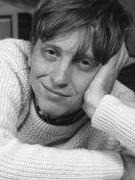
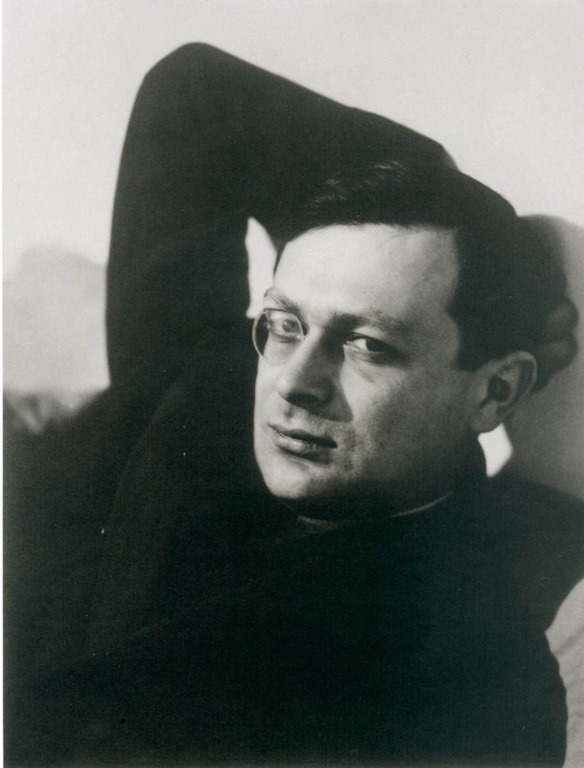
Tristan Tzara photograph by Man RayYoung Bill Gates grayscale

Steve Jobs would have told the young Bill Gates (on the right) to try a black sweater
Tristan Tzara (on the left, photo by Man Ray) would have suggested a monocle.

In my translation, Tristan Tzara is providing something more like a Surrealist’s Lover’s Rock lyric—more Paul Éluard than Dan Bern hilariously parodying Bob Dylan. Musically, I’m not attempting reggae though. I’m not even sure what genre to call my composition on this one, but it is,  like Tzara proclaims, “Swimming in disparate arpeggios.”

To hear it, use the player below.

At a Window

I was ready to post this new piece, Carl Sandburg’s At A Window,”  early yesterday when I had one of those days that come to challenge artists. Artists less fortunate than I can perhaps point to a single thing that holds them back, but with myself it’s often several smaller things.

I’m a habitual early morning reader of the news, a rhythm that may have started in my earliest teens when I delivered newspapers before school and continued through night-shifts in hospitals where I’d read the papers as they came out in the predawn hours. Nowadays, it’s not the papers I turn to for news, but Internet newsfeeds, and the pre-dawn hour was filled with the reports of another mass shooting profaning music, this time in Las Vegas. These events hurt me because I often spend as spend as much of my day as I can carve out making the music here in combination with the words that I combine with it. One of art’s purposes in my mind is to allow us to set aside momentarily the real consequences and strictures of life. Not necessarily to escape them—in fact, many times art allows us to examine them so that we can treat them as the reality of what they really are, because those strictures, even things we fear most, have their limitations, just as we do. And art can be the “R&D Department” of the soul and the repair of the world.

Thus, the hurt when those borders are crossed. Thus, the feelings of one’s work in an inadequate field.

Of course, my feelings on this matter are a small and abstract hurt, compared to the suffering of those more directly impacted. Small things closer to my heart feel larger than great things farther away. This is one of the limitations of our perception. Then my day continued with another unrelated hurt, closer yet to my heart, and I was reminded again of my limitations and imperfections.

Real hurt seems so large, art seems so small, and I feel like a poor worker in a field of playful trivia.

Which may be so, the limits of my perception may not be able to tell. However, I believe this is a common feeling for artists to have, and so if you create art, you may also have felt this. We try to do so much, and all we can see is so little. This is part of why the Parlando Project principle: “Other People’s Stories” has value. Speaking the words of others helps me by adding what their eyes and hearts have seen.

SONY DSC

“He is an observer with sympathy but without fear”

This morning, it turns out that Carl Sandburg, in the very piece I was working on this previous weekend, “At a Window,”  was speaking to this experience, though in my down-heartedness, I couldn’t hear him for a while. This short poem, appearing first in 1914 in Poetry  magazine alongside his “Chicago, hog butcher for the world…” poem which will overshadow it, waited patiently to speak into my ear. What good could a more than a 100-year-old poem have for me?

Poetry Magazine March 1914

Eight poems of Sandburg’s Chicago Poems debuted in this issue.

“At a Window”  says that even in shame and failure you must hunger for even more of the same. In the context of the sampling of Sandburg’s Chicago poems, which spoke so frankly about the situation of poor and working-class Americans, I think that window in the title means so many things. Yes, it means there is an imperative to look outside oneself as an artist. The dusk and shadows out the window lets one see little, but one must still look.

Will there be any consolation? Sandburg apparently had such consolation in his spouse, who championed his work, who he speaks of in the “Leave me a little love…” section. Perhaps you have such a champion in your life, perhaps you don’t. We are called in “At a Window’s”  conclusion to look out the window anyway. Perhaps the one who comes walking out of the dusk is yourself, to champion someone else?

To hear the performance of Sandburg’s “At a Window”  use the player below, and thank you for listening.

Millay’s Sonnet 43

Edna St. Vincent Millay was another poet who offered little to the “New Criticism” critics who largely set the canon for the 20th Century, even though her career, which covered the first half of the 20th Century, ran almost exactly through the same time as Eliot, Frost, Pound, William Carlos Williams, and Wallace Stevens, and even though she achieved significant readership and a level of awards and accolades while living.

What was their problem with Edna St. Vincent Millay? Well her popularity would be a negative in some lights. In this regard, critics are often no different than the record store clerks of my own day, whose estimation of any indie band would inevitably drop as soon as they achieved a widely-played record. And there’s the “her” and “she” problem. The level of disbelief of the idea of a woman artist probably varied among these critics, but literature was still a very male world at that time and unconscious prejudices are a given. But even if we skip those two, frankly illegitimate, factors, there is the issue of Millay’s plainspokenness.

St Vincent

Annie Clark performs as “St. Vincent,” Edna St. Vincent Millay is on the right. Google carefully!
Clark has said the stage name came from a NYC hospital, but if that’s so, it’s a remarkable coincidence.

Odd isn’t that? This value that you might rate highly in friend was held as low regard by the New Critics, who likely thought it common and unremarkable. A Millay poem typically says exactly what it means, right out. There may be images, but they might not pass Imagist muster. They aren’t stark omens whose meaning is felt and then deciphered, they may be more like the illustrative images the Imagists wanted to leave behind. Millay’s all tell and too little show for them.

And Millay’s language often seems stuck in the 19th Century too. Some lyrical poets like Yeats and Frost adopted Modernist tropes and were able to make their rhymed and metrical poems sound more like contemporary speech. Millay sometimes seemed to be reading from a somewhat musty library book when composing her poems.

The most extended image in “Sonnet 43”  is a bare winter tree, which could be a borrowed image, or a homage, and I choose to manifest the later in this performance.

Can our modern (post-modern) age free up some respect for Edna St. Vincent Millay? I think so. With contemporary poets, we now sometimes value plainspokenness. And the cluster of things that Millay spoke plainly and honestly about include love, sex, and desire.

This sonnet was published in 1920, it’s nearing a century old. If we slide over some of the 19th Century “poetic diction” (something I found easy enough to do when performing this) it’s as honest and as nuanced report on the state of a heart as anything written then or now.

And if one must have ambiguities for art’s sake, honesty can contain that too. Some read this poem as bitter, or a lonely-hearts club statement, or as regret for a life that Millay’s time would’ve called promiscuous. That’s not how I understood it to perform it. I think the speaker is recalling an active love life they rather enjoyed. They reveal themselves (honestly) as something of a sensualist. As the Petrarchan sonnet wraps up its octet, the speaker allows a touch of regret about those lovers who turned to the speaker at midnight “with a cry.” What did the speaker offer them? I think the closing lines say some “summer,” a summer that “sang in me”—that is, that summer is not something the speaker intentionally gave or offered, and the speaker doubts that the muses of that summer offering will still speak through her. William Carlos Williams—unlike Millay, following all the Imagist rules—touches also on the caprices of summer and fulfilled desires in It Is a Small Plant,”  but some are more accustomed to a male author speaking ambiguously about the honest incursions and boundaries of desire.

Perhaps this poem benefits with some listeners in being heard performed in a male voice? I can’t say for sure on that.

Among the 20th Century admirers of Millay’s verse were my father (who grew up on the 19th Century Longfellow and the like, so Millay’s 19th Century diction was no bar) and a distant cousinoid of mine, the modern American theater pioneer Susan Glaspell.

I rather like the musical accompaniment for this one. I worked quite a bit on the drum part trying to bring out different colors, and for the bass I was able to supplement the electric bass with some bowed contra-bass, which is one one of my favorite sounds in the world. Ironically, Millay started out wanting to be a concert pianist, and the top line here is one of my naïve piano parts. To hear me perform Edna St. Vincent Millay’s “Sonnet 43”  aka “What lips my lips have kissed…”  use the player below.

Somewhere or Other

Today’s audio piece is another by Christina Rossetti, connected through family with the Victorian art and literary movement that called itself the Pre-Raphaelite Brotherhood. In their painting and artwork, the Pre-Raphaelites often appeal to me. The paintings sometimes have a stunning, oversaturated palette; and they are fond of symbolic and esoteric subjects which fill the paintings with interesting details.

John Melhuish Strudwick  When Apples Were Golden and Songs Were Sweet

Eb Bb , Ab Eb , then Fm Fsus4 Fm, and Ab Eb Ebsus4 Eb—flat keys are murder
on guitar, just so Frank can play simple black key stuff on keyboards

Many associated with the PRB wrote poetry as well, but when I’ve gone looking for pieces I can present as part of the Parlando Project, the brothers in the brotherhood just didn’t do much for me. Surprisingly, the poet who did was Christina Rossetti.  I don’t recall if she was even included in the “New Criticism” curated English literature anthologies of my school-age youth. She isn’t a poet with a lot of flash and filigree. A poem like today’s has not a single arresting image, and its language is simple too.  Using the criteria of the Modernists who came to dominate the assessment of poetry in the 20th Century, this poem should have nothing to recommend it.

So, what does it have or do, why did I bother to write some music for it and perform it for you?   Well, first it has a refreshing modesty of expression. This is a song of longing from first to last, a universal human experience. And the subject of the longing, is it for an earthly partner, the age-old “when will the right one come along” wish? Or is it for an otherworldly, completing partner, a presence beyond the moon and stars? Despite Rossetti’s homey words, it could be either, and the alteration of “near or far” with “far or near” in the 2nd and 3rd verses encourages us to see it both ways.

If one must choose which supposition, I lean to the spiritual object, and if so, the image, such as it is, if off-screen here: earthly love may stand for the longing for religious meaning and connection. The last couplet, the dying leaves falling on “turf grown green” is strangely incoherent, and it reminds me of some of images or rebirth and salvation in British folklore, leading me that way.

But if could also be a song of simple earthly longing for a suitable partner. Adding music to Rossetti’s “Something or Other”  both adds decoration to the simple words and allows the listener to relax in that ambiguity without a need for an immediate conclusion.

John Melhuish Strudwick - Saint Cecilia

See, E flat is so easy on piano, even saints can play it.
Both of today’s paintings are by  Pre-Raphaelite John Melhuish Strudwick


Today’s music for Rossetti’s poem combines acoustic guitar with some cello and strings integrated with a couple of piano parts in the background. It’s another short one, so go ahead and use  the player below to listen to it.


Let Us Live and Love

A while back here there were several episodes where we discussed songwriters as literary figures, using the springboard of Bob Dylan getting the Nobel Prize for Literature. Dylan was the third songwriter to receive this award, preceded by William Butler Yeats and Rabindranath Tagore. But the Nobel prize is not really all that old, and the idea of the singer-songwriter is older. We know little about how the ancient Greeks performed their poetry, but accounts consistently say that it was accompanied by music, and in the case of at least Sappho of Lesbos, it’s specified that the lyricist played the lyre as well. Similarly in ancient Hebrew, David and his harp, or the west African griots and their Koras, and so on.

So, despite the idea that lyrics sung to music mark an inferior art, or that performing poetry to music is an affectation hardly to be endured, history says this was not always so. Of course, the way it’s done can please or not please, and it’s still possible that such performances are an obsolete form that we’ve now superseded with hugely popular and culturally significant poetry chapbooks and small press poetry collections—I kid! I kid!

Today’s piece is by just such a singer-songwriter, an Englishman born in 1567, Thomas Campion. He wrote his lyrics, wrote music for them, and was an accomplished lutenist, so the chances are that he was discovered by John Hammond and played the authentic Elizabethan blues music he misheard from 78 r.p.m. discs of Catullus. Well no, doubting Thomas, once more I Kyd.

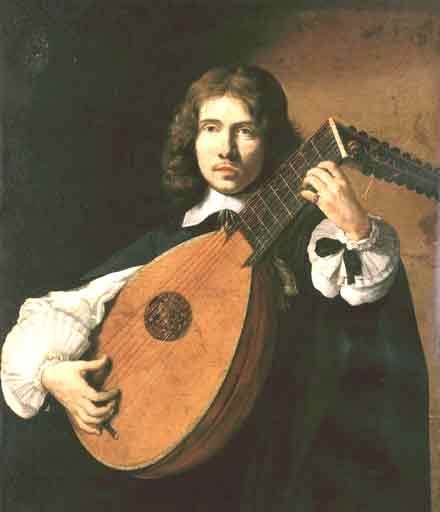
Thomas Campion with Lute

Poetic Campions compose. Thomas Campion with his lute.
If he looks glum it’s because it’s two centuries until Martin Guitars is established, and 350 years until the Telecaster.

He did write lovely songs, in a style I can’t come up with a way to present. “Let Us Live and Love”  was one. You can hear it sung beautifully to his tune here. So instead of exploring my counter-tenor range, I’m going to go with a sort of loose skiffley blues in my performance.

I’m going to lean on my blues audacity hard here, because the poem is addressed to the singer’s lover, Lesbia. Beavis and Butthead style giggles are breaking out in the back, I can hear you.  Turns out Campion took the lover’s name and the idea for his first verse of his lyric from a Latin poem by classic Roman poet Catullus, before taking off on his own thoughts on the matter. Classics scholars explain this by saying the Sappho of Lesbos’ association in classical times was more at a widely experienced lover, not necessarily a lesbian one.

Catullus Comforting Lesbia over the Death of Her Pet Sparrow and Writing an Ode

OK, OK, forget the one about you might as well have sex with me.
How about this, we’re all going to die, just like that bird, and…


Another category “Let Me Live and Love”  could be put in would be a “Carpe Diem” poem, which is not the Department of Natural Resources limit on the number of bullheads you can catch, but is more Latin meaning: “seize the day,” which in the case of poems usually doesn’t mean seize the day for fishing. Instead, Carpe Diem poems usually offer this proposition: “We’re all going to die, so you might as well have sex with me.” Seriously. Poets have actually made that seem like a smooth line.

The twist Campion puts on Carpe Diem is to bend it around a bit. His song has it that you already love me, and that makes the idea that we’re all going to die bearable. That’s at least a little more flattering.

To hear my performance of Campion’s “Let Us Live and Love”  use the player below.


The Heart of the Woman

There’s two things that attracted me to T. E. Hulme, the lesser-known Modernist poet and theoretician that I’ve featured a few times this summer. The first is the sense in his poetry and critical writings of the limits of humankind. The other is his poetry’s surprising modesty and restraint, something embodied in the very brevity of its poetic expression and his images linking the mundane and the cosmic.
 
This was a man who wanted to overthrow hundreds of years of poetic tradition, and a person whose stubbornness kept him in trouble with authority figures throughout his youth, and yet Hulme expresses himself in these spare lines, as if the first lesson he’s teaching himself is to know his own limits. This seems to be Hulme’s problem with Romanticism as he saw and opposed it: humankind is not limitless, though our imagination says otherwise.
 
Today’s piece, William Butler Yeats’ “The Heart of the Woman”  moves in opposition to that outlook, but not in opposition to that expression.
 
Here in North America, many in the southern region are spending this week either cleaning up from a massive hurricane or clenching their jaws in anticipation of an even larger one due to strike this weekend. Peaceful, Rousseauean nature this ain’t. Hobbes is is a weatherman.

Hurricaine Irma

“Come in she said, I’ll give you, shelter from the storm.”

Yeats’ poem is as measured and modest as one of Hulme’s, though it is rhymed and metrical. When one is a good as Yeats is at that, one hardly notices the form. 12 lines, not even a sonnet in length. Like Hulme, this is no great ode of endless argument. On the face of it, it’s a love song, a basic trope of Romanticism, the reason we talk about human attraction and pairing as “romantic.” Its images are centered on a couple embracing.

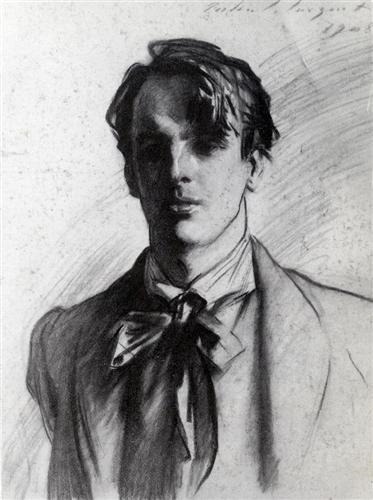
Yeats by Sargent
Why Mr. Yeats, I didn’t realize you were, well, dreamy, without your glasses

But look closely in those dozen lines. The woman who’s singing it, has left religion (“prayer and rest”) and family, and has followed a lover’s invitation into what is introduced as “gloom”. Merely the dark of night?

No, in Yeats’ lovely line, darkness is found inside the “Shadowy blossom” of her hair which will hide the lovers from the “bitter storm.” Now we are fully in the Romantic world, where our own darkness may be willful, wishful, blissful, ignorance of the “hiding hair and dewy (blurry) eyes.”

Are there any more Romantic and romantic three lines as Yeats’ final three that conclude this piece? If there are, I can’t recall any at the moment. That the simple murmurs of human breath can seem to equal a hurricane’s—is that glorious or folly or both?
 
In the spirit of defying human limits, this is the first time you’re going to hear me sing a Parlando Project piece acapella. And though Yeats’ poem doesn’t rule out the same romantic faith on the part of the “he” in this poem, I’m somewhat troubled by the idea that romantic devotion is presented here as female, from the poem’s title onward, so I’ll undercut that by singing this. My less-able singing voice is one reason that we chant or speak-sing a lot of Parlando Project material, but my young son’s carefree acapella singing is reminding me of the value in the singing voice. To hear “The Heart of the Woman,”  use the player gadget below.

Like John A Dreams

Today’s selection was also recorded a few years back, and is more conventionally in that “poet reading beat poetry while a band backs the poet up” school of performance. While that’s one of the influences that has led to the Parlando Project, I didn’t want to confine myself to that style, and if you’ve been following along here with what we’ve done over the past year, you’ve heard some of the other approaches we’ve taken.

As I’m in a busy end of August, I don’t have time for much commentary on this piece, but I don’t think it needs it either, which is part of why it’s here today.  This is a story set distinctly in South Minneapolis and the early 21st Century, and it talks obliquely about the time of falling in love with my wife. The Riverview Theater mentioned in the poem is still a going concern, a neighborhood single-screen movie house that shows movies near the end of their theatrical release without concentrating on any one cinema genre, leading to marquee billings like the one the poem mentions, a series of titles that often seem like little Dada poems to me.

Riverview Theater 1

Minneapolis’ Riverview Theater: Dada poem generator or movie house marquee?

  
Outside of the localism of the poem, the main obscurity in it is the title: “Like John A Dreams.”  That’s a reference to one of my favorite speeches in Shakespeare’s Hamlet.  In the play’s Act II, the hero Hamlet is asking why he cannot take action on the death of his father, and he rebukes himself as “Like John A Dreams, unpregnant of my cause, and I can say nothing…” John A Dreams was apparently a stock folk character in Shakespeare’s time, a foolish character who lived in his imagination and ignored more pressing reality—a character flaw all writers should be able to appreciate.

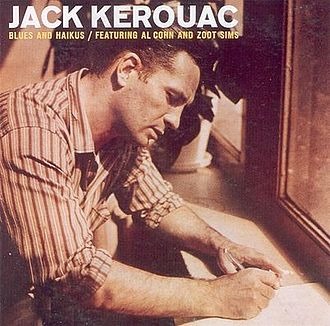
Blues and Haikus Jack Kerouac record cover

Parlando influence Jack Kerouac. “Beat poetry while a band backs the poet up”

Allen Ginsberg once recalled Jack Kerouac reading Hamlet aloud, and in particular this speech, with special emphasis in his voice when he landed on the “John A Dreams” charge.
 
So, if you’re a writer or other artist, Hamlet’s speech is for you. Your life is quite possibly bifurcated between that artistic thing you do and the life you press aside to do it. Art is often about making “and” choices. Life is often about making “or” choices.

To hear the LYL Band perform “Like John A Dreams,” use the player below.

The Nymph’s Reply to the Shepherd

There’s a long tradition of “the answer record” in pop music, where another artist responds to a hit record with an opposing viewpoint. Christopher Marlowe’s 1593 “The Passionate Shepherd to His Love”  (our last post) received a similar diss from Sir Walter Raleigh with his “The Nymph’s Reply to the Shepherd,”  which is today’s. Who will folk-rock the mic harder? Feel free to re-listen to Marlowe’s inning before considering Raleigh’s reply, Marlowe’s player is just below:

As I mentioned last time, these poems with their shepherds and lovers, called Pastorals, were proudly artificial, and set in a completely stylized and relaxed world of affection and sufficiency. You may find any desire to dwell in this unreal world strange and old-fashioned, but perhaps we imagine now another kind of locus amoenus/“pleasant place” to dream of going to, to escape the world.

Christian_Wilhelm_Ernst_Dietrich_-_A_pastoral_landscape_with_Diana_and_her_Nymphs,_1754

“Then he was all about rural handicrafts all of sudden. Was he even interested in me?”
“Well, it’s not like taking care of sheep is that hard. A child with a tambourine can do it!”

 
Raleigh’s “The Lie”  has already demonstrated here that Raleigh had no patience with romanticism. So, he’s primed to take on “The Passionate Shepherd,”  but he also notices another weakness in Marlowe’s argument: the Shepherd promises pleasures, presumably mutual pleasures to his lover, but he isn’t stopping there. He’s going to demonstrate his commitment by throwing an entire Etsy shop at her: beds of roses, caps, vests and belts made from woven wildflowers, wool dresses and wool lined slippers. And bling! Gold buckles, coral and amber buttons.

So, Raleigh composing the nymph’s reply has three arguments to make. All those hand-made crafts on offer? Doesn’t move me Shep. Outdoor animal husbandry? Not as romantic as you make it out to be in May, and those wool slippers better be warm if I’m going to be traipsing after some sheep come January. Lastly Shep, you’re all hot and bothered about me now, but just how lasting is all that? I appreciate the offer, but let’s just say I’m keeping the wool lined slippers and you can go try your line on some other nymph?

Wool Lined Slipper

I’m not even sure what a kirtle is, but I understand cold feet at night

Musically, this is another piece inspired by a 1960s folk-rock sound. I was thinking specifically about the musical style of Fred Neil’s Capitol records as I arranged this. I used a minor key chord progression somewhat related to the major key one I used for “The Passionate Shepherd,” and once again I sung this one. Raleigh, if downbeat, is just as lyrical as Marlowe in his answer. Marlowe has pretty lines like “By shallow rivers to whose falls/Melodious birds sing madrigals,” but Raleigh has “The flowers do fade, and wanton fields/To wayward winter reckoning yields.” So, use the player just below to hear Sir Walter Raleigh’s response in song.

The Passionate Shepherd to His Love

Let us leave the Modernists for a moment, for a trip to an imaginary land, a locus amoenus, a pleasant place, within whose bounds certain things hold true: love brings simple riches and complex pleasures ignorant of inconstant affection, and where the cares and complexities of cosmopolitan life, brutal prejudice, and other social constructions fade away.

Such a place can have many names. To the Surrealists it was the unfettered confusion of certain dreams. To the west coast optimists of the Sixties and their cross-Atlantic vibrationalists, it was a new Eden of decorated affection and open-mindedness. To a resident of fetid Elizabethan London, it was the pastoral, a demi-countryside where love was free and the rent non-existent. Shepherds, Pan and Panopticon, willed willing partners to their bowers. It seems like a nice place to visit—and in the mind, even more so.

Christopher Marlowe must have written this pastoral love poem sometime before he died in 1593 (baring any occult forces of the Twilight variety, or the posthumous inspirations that allow Oxfordians to confound Shakespeare’s later plays) but it wasn’t published until a few years after his death. It’s a full-throated exhortation in the pastoral style—with a slippery set of gold-buckled feet at the bottom of its argument as we’ll soon see, though that may not matter. Not only is it lovely sounding, even read flat on the page, the whole point of the imaginary pastoral world and the locus amoenus is that it isn’t real, that it’s the place we want to lie in and be lied to sweetly, within.

Marlowe and Peel

“And we will all the pleasures prove.”  The 19 year old Marlowe and the 29 year old Peel.


In the spirit of all this, today’s audio piece is one of the few Parlando Project selections where I sing, as you can’t really declaim “The Passionate Shepherd to His Love.”   Musically, I chose to use some of the production techniques popular among dreaming optimists in the Sixties, where John Peel’s Perfumed Garden  would be another locus amoenus, another imaginary place, where, in fetid times, we might want to go. This week, 50 years ago, John Peel performed his final  broadcast of that accidental and influential radio show.

To hear Marlowe’s“The Passionate Shepherd to His Love”  performed as if it was a cut being played on the Perfumed Garden, use the player that should appear below.