Merry Autumn

Over the years I’ve developed a tough-enough way to be cheerful and productive, my own “grant heart” to myself. Though on the face of it, it sounds glum, I’ve learned it by reading about artists or from artists talking about their work, and it goes by this cheerful motto: “All artists fail.”

All artists fail more than they succeed. Every. One. No artist is so broadly popular that everyone likes their work. Even those that might gain a plurality of some kind, for some time, that likes their work, will find most of that group “ignoring” them most of their lives, because our attention is so precious and limited as audiences. One’s privilege as an artist is to get to fail again. If you don’t like how you’re failing, fail better, or fail differently, fail more often.

And even those artists we think of as succeeding sometimes, sometime find themselves succeeding in misunderstanding or misapprehension.

How can this knowledge help us, grant us heart, and not crush us? Anyone who makes things should carry in themselves the conviction that the world needs more of what they do, even if they or the world don’t know it yet. We are making more of what needs to exist, though that may fail when the world doesn’t know what to make of it. It may fail because we are wrong about its necessity. And it can fail because of how we choose to manifest our art.

Are we good enough to manifest our art so that it will not fail all the time? If our desire, our artistic conviction, is somewhere around helping heal the world and cleanse it’s perceptions, you may take that as beside the point. Decades ago, in the early days of the modern emergency medical system, I once helped receive a patient in cardiac arrest as they arrived at an ER, delivered by a volunteer ambulance corps. The man in the back of the rig, still in the human heat and confusion of the moment, said that he would have performed CPR, but that his certification for CPR had expired.

Well, you have to try, even though CPR then, as I suspect it does now, mostly fails. Art, even good art, usually changes our perceptions for only moments, leaving us nearly as deaf, blind and numb afterward. If art can heal the world, it’s a long course of treatment, and its healing is imperceptibly slow.

So, if you want to make art, want to write or make music, take heart and make sure your goal is to cleanse perception or heal the world. Add to your goals one more precept, to try to not bore the audience when it grants you it’s precious attention. If you want to create art because you want to succeed, consider a lottery ticket instead.

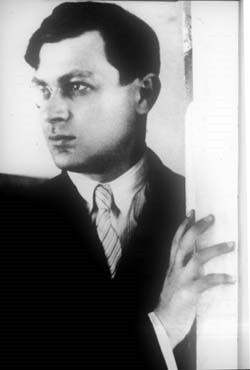
What a roundabout way to get to Paul Laurence Dunbar’s Thanksgiving poem “Merry Autumn.”  How did the poet Dunbar “fail?” The child of two enslaved African-Americans, raised by a mother who learned to read to help educate her son, Dunbar was able by the age of 21 to gather some appreciation for his poetry, which spoke in three voices. Voice one was that of an accomplished 19th century poet who spoke like the East Coast “Fireside Poets” such as Longfellow, using a middle-Atlantic diction that may sound slightly old fashioned to us, but was the established voice of poetry in America at the time. We in the 21st Century may hear the peculiarities of that voice from our vantage point in time, but it would probably have not seemed like a dialect at all to his contemporaries. He also wrote in two other American dialects, and dialects were a great American literary fad of the late 19th Century. We might rarely encounter the remnants of this fad in Mark Twain or some other regionalist writers nowadays, but the idea of using written English to represent the different pronunciation and syntax of a big country before broadcast media was an artistic and commercial success of the time. Dunbar’s poems, then, also “spoke” in an informal, less-educated Midwestern dialect, and in what was considered as the southern black dialect of the time.

Dunbar Live!

“Ich bin nur einer meiner vielen Munde und jener, welcher sich am frühesten schliesst.”


It’s hard to say how accurate this black dialect was. Dunbar’s mother likely would have spoken in it. Even though we’re speaking about speaking of just a bit more than a century ago, it may come down to the same informed guessing that allows actors to perform Shakespeare in “original pronunciation” productions. And Dunbar’s transcribed accuracy aside, how it would be read by fellow African-Americans and how it would be read by Americans of European extraction would likely have differed greatly. On the page, his Afro-American dialect poems can look/sound like the black-face makeup minstrel-show dialect performed by successful white entertainers who perfected cultural appropriation for laughing audiences. The humble-brag of the Afro-American dialect poems may be abstractly similar to the tropes of the his Midwestern regionalist dialect language, but in the end, it was not “read” as similar by the predominate culture.

What did a young Dunbar think of all this as he wrote his poems in either of these languages? I do not know, but his dialect pieces were something he was praised for by the cultural critics of the time, and they no doubt aided his marketability. He eventually expressed despair at the concentration of the attention on the Afro-American dialect poems. Perhaps he had wanted to say that he’s all of these things: a black man, a Midwesterner, and a man who could sing a middle-Atlantic song as sweet as Longfellow or Whittier, and instead he was seen as the man to represent only the borough of his race in the eyes of those who did not share his experience. He had to try. He “failed.” Today we may be grateful for his failure.

Today’s piece “Merry Autumn,”  doesn’t show Dunbar’s later despair. It’s largely in the “Fireside Poets” mode, though he drops into informal Midwestern idiom once or twice. And following the precept to not bore the listener who lends their attention, he takes a contrarian stance toward the old poetic trope of Autumn symbolizing death and a fall to winter.

I sing it here with a folk-music type melody, an acoustic guitar, and some strings for accompaniment. Use the player below to hear it. Thanks for taking the time to listen!


Arrival

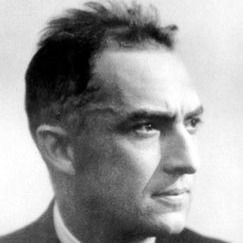
Today’s words are from William Carlos Williams. Unlike our last post, I wouldn’t call this a love poem. Oh, I believe there’s an assignation between two people in the opening section of this poem, but affection seems missing and the desire, if present, seems to be questioned—no, that’s not quite right—the questioning of desire is silent, present in its absence.

William Carlos Williams 1

Poet and physician William Carlos Williams casts a cold, clinical eye on desire

This is another poem I came across at the Interesting Literature blog, where it was included in a round-up of seduction poems. We’ve visited a few of that type of poem here as well, with shepherds, nymphs, a merchant’s wife, and Williams’ fellow physician-poet Thomas Campion making invitations—but this isn’t really a proposition, any more than it’s a love poem.

Williams’ poem is not titled something like “Come Live with Me and Be My Love”,  it’s titled “Arrival.”  So yes, an assignation, but one with a schedule like a train or airplane flight, or as we’ll soon see, like a season. Is there desire in the unhooking of the dress? In modernist, Imagist style, that emotion is not stated, but the passive voice and sparsest of descriptions argues that it’s there and is not there.

After the poem finds itself, as many of us have or will find ourselves one day, in a “strange bedroom,” a sea change occurs. The woman in the dress has disappeared. In her place: an autumn tree, disrobing its leaves because the season is felt arriving. Again, desire is not mentioned—it wouldn’t be mentioned, this is an Imagist “show not tell” poem—but this image is also passive and rote.

I’ll let you feel and figure out the image of the final few lines yourself. The now naked woman as bare winter tree? Or is her presumably male companion’s body being synecdoched?

Merlin Dulcimer

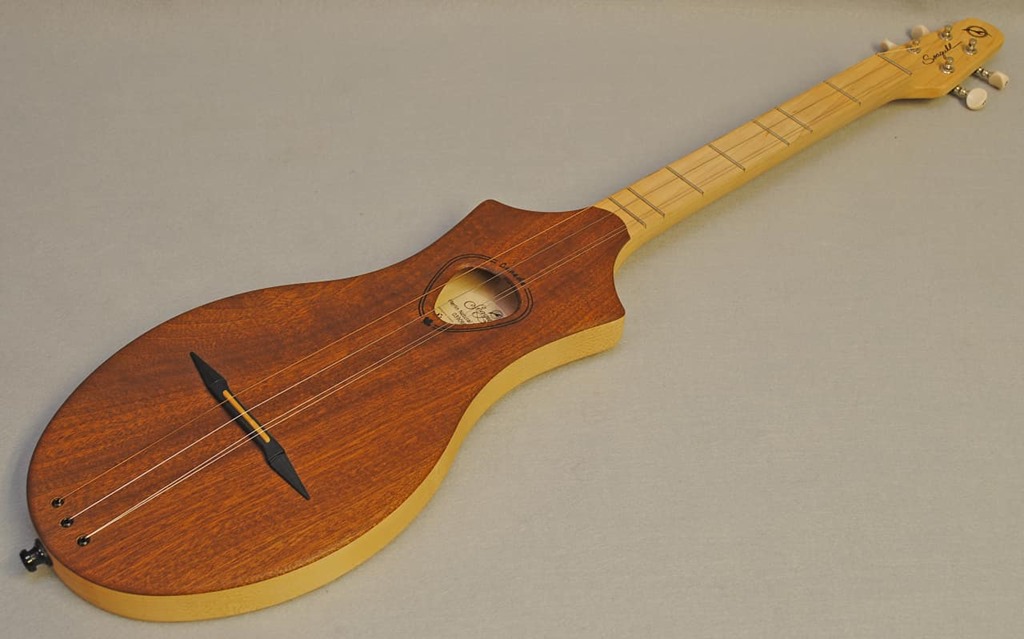
“A dulcimer in a vision once I saw” The Seagull Merlin dulcimer I played on this.

What of the music today? The instrument that sounds something like a mandolin is an Appalachian dulcimer, a simple American instrument; but one, like the sitar used in the last post’s audio piece, that has drone strings. The music is modal too, based around D Dorian. On the percussion side I remain attracted lately to little instruments, so there are shakers, maracas, a cabasa, congas, a chime tree, even some finger snaps in this. I could say that this is a connection to William Carlos Williams’ Puerto Rican heritage, but really, it’s something that is pleasing me musically this month.

Here’s the piece, use the player gadget below to hear it. No gadget to be seen?  This highlighted hyperlink will also play it.

Did you like it? Want to help spread the word about this ongoing project to mix various words (mostly poetry) with various music? Hitting the like button here helps, but what does the most to bring this to the attention of new readers and listeners is to mention and share this blog on your own blog or on social media.

Want the audio pieces to listen to later? You can subscribe to the Parlando Project podcast on Itunes, Google Play Music, Stitcher, or wherever you get your podcasts.

October November

By title this would be the perfect piece for today, though it does not describe the axis of these months this year in the upper Midwest, which is cold, gray, blustery, and threatening sleet or snow. So, this is not the day or night for sitting on arbor-seats in some garden, and the blazon leaves have already succumbed to a snow storm last week.

But never mind the weather, it’s an early enough poem from Hart Crane to have fallen into public domain, so that I can use it here. “October-November”  shows only a little of Crane’s eventual poetic style, but that means it might be a good way to introduce him.

Hart Crane and the Bridge

Would you like to buy a poem about this bridge? Crane in Brooklyn.

Crane’s just a bit younger than the other early 20th Century modernists, but you can see similarities to some of the branches of modernism we’ve already climbed out on. Like Tzara or the Surrealists he loves extravagant images; but though he is utterly romantic, there’s a certain classicism to many of the images he uses, just as H.D. or Eliot would. On the other hand, like the Futurists, he loves to touch on what was then modern technology. Like Edna St. Vincent Millay or Yeats his music can sound older than his subjects. Crane is a master of Elizabethan-style iambic meter and he doesn’t avoid the old habits of poetic diction. You can even see links in Crane to the original American Modernists: the ecstatic pronouncement of a new world and a new version of humanity like unto Walt Whitman and the concisely packed and puzzling lines of conclusion that Emily Dickinson could use.

But what you see most in Hart Crane, although it’s only hinted at in this early poem written when he was a teenager, is extraordinary, stunning, eloquence at the phrase level, lines with heart-stopping lyricism. Like Shakespeare, Dickinson or the writer of Ecclesiastes, a Crane poem may hold gnomic and gorgeous sounding lines, even if they are as inexplicable as what they sum up. One could write dozens of books or poems with titles taken from lines in Crane poems, though few have done so.

There’s more to say about Hart Crane, perhaps another post that tells about how the Modernists he lived and worked among never fully accepted him, but let me leave that for another day.

“October-November”  is simpler than later Crane, just a pair of images of sun dappling a garden as if it’s still summer followed by a fully delirious autumn night. I sense a growing intensity as this short poem proceeds, and tried to reflect that in the music I composed and played for this one, extending that ecstatic line in the instrumental section at the end.

One last ironic Halloween tie-in: Crane’s father invented Life-Savers, a candy that are now available in a rainbow diversity of sugared flavors that one might find in a ghost’s or skeleton’s bag at the end of tonight; but when invented, Life Savers was more of a breath mint line, successfully sold to cover up the vices of drink and tobacco on the breath. The thing that remains its essence? The round shape, the hole in the center, like the floating ring made to be tossed to a drowning person.

1917_Life_Savers_ad

Like a kid in a candy store. The Crane family business.

In 1932, a 32 year-old Hart Crane vaulted over the railing of the ocean liner carrying him back to New York City. One witness says they looked after, and “saw Crane, swimming strongly, but never again.” Perhaps his leap was too far and his swimming direction away from them, but there is no account of a round, perforated life preserver being tossed in after him before he disappeared and died.

To hear my performance of “October-November,”  use the player below.

Autumn Movement

I’ve been a bit long-winded in the past few posts, so a short-winded post about today’s piece. The words are another poem from Carl Sandburg, this time from his 1919 collection “Cornhuskers.”  There’s not very many words to it, a warning that there are not many leaves left here in the upper Midwest.

Cornhuskers cover

They were listening in London, and Sandburg’s “Cornhuskers” won him the Pulitzer prize.

I can compress talking about those words because I’ve already talked about Sandburg on the previous occasions when I’ve used his words here. In his poems of this era, he’s as perfect an imagist as any of the expatriates mixing up modernism in London and Paris around the same time.

Many of the Sandburg poems I’ve used previously have been from his landmark “Chicago Poems”  collection, but Sandburg, a child of middle, rural Illinois, spent time across the Midwest in his youth, from urban centers to the farms and small towns. The poem I use today, “Autumn Movement,”  is from that rural setting.

Images for autumn and fall foliage have been mined forever, which makes Sandburg’s key image here as unusual, even a century later, as T. E. Hulme’s red-faced farmer appearing as the harvest moon in his British autumn poem. Sandburg has the red and yellow of autumn leaves in a farm field vista as a yellow scarf with the copper color of a literally red-necked woman. So nearly has this skin color become an epithet, that few would think of using it today, as honest an image as it is.

Today’s audio piece is musically ars longa to the vita brevis of the words. I’ve been telling myself to allow space compositionally, and then going ahead anyway and filling things up like a compulsive cluttered room with only paths between piles of old newspapers. So, for this one, the drums (which are often quiet and spare) are the densest element. I added a simple bass line played on my fretless bass, a theme played on a Telecaster, and a digital synthesizer part that is a mix of four different patches played together rather than filling up the space with multiple synth parts. Give it a listen with the player  below. Or if you don’t see the player, you can use this highlighted hyperlink to play it.

Autumn

100 years ago, a WWI German artillery shell ended the life of T. E. Hulme, the man who sparked off what we now know as modern English poetry. I was going to say “invented,” but that’s a dodgy word in art as much as in science. Hulme borrowed ideas from several places, and adapted poetic tactics the French and some Americans had already made use of. But we can still say he started things off because he collected the tinder and cordwood in the Poet’s Club in London in the first years of the 20th Century, and the spark was applied by suggesting that everything he thought poets were doing since, well, just about the Renaissance, was wrongheaded. Too flowery. Too ornamented. Too “romantic,” an error he believed made them think of mankind as exalted and godlike.

Hulme, interested in visual art as much as he was in literature, thought the new literary direction should be visual. Cold hard images, direct and vivid, not abstract, were to be the new order, but these images could even be homey and simple (as long as they retained that vividness), not the sort of thing that signaled high culture in the British poems of the past couple of centuries. He was very certain of this, and he either made a convincing case in person or provided the theoretical underpinnings through first or second-order influence to the soon to be mighty modernists: Pound, Eliot, Yeats, H.D., and Frost.

Bust of Hulme
Bust of T. E. Hulme by Jacob Epstein, another member of the early 20th Century artistic “American Invasion” to England

Hulme illustrated his ideas with short poems. I’m not altogether sure how seriously he took these writings, but I find they have three attractive attributes. First, for all the bluster and pugnaciousness that he propounded his theories, the poems are very unassuming. In subject, they often seem to follow one of the principles I try to follow in the Parlando Project: “Other people’s stories.” Second, they are short, and I am attracted to the variety of expression that can succeed in short poetry. And lastly, they are the first. They have that charm, the same charm I might apprehend looking at a Chuck Statler music video, an Apple I or MITS Altair personal computer, an early horseless carriage, or the pictograms on a cave wall. The other beginners looked at this, and said “why not?” Ezra Pound related to Hulme’s ideas in formulating “Imagism.” T. S. Eliot either saw or was reinforced in his ideas for a new classicism in poetry in Hulme’s work.

What would be striking about today’s piece, Hulme’s “Autumn,”  in 1908 when it was published?

It’s “free verse.” No rhyme, no regular metrical scheme. Besides some French poets, American Walt Whitman had done this, but this was still rare, and rarer still in England. The last part of Hulme’s “Autumn”  is still musical however, essentially iambic, and sound echoes, if not rhyme, are present in “wistful stars with white faces.”

Hulme’s two substantial images in “Autumn”  are extraordinarily unpretentious, particularly the first one: “the ruddy moon” at sunset leaning “over a hedge/Like a red-faced farmer.” Compare this to Shelley’s “To the Moon” where the moon is “of climbing heaven” and is addressed as “Thou chosen sister of the Spirit” or Wordsworth’s “With How Sad Steps, O Moon” which is “running among the clouds a Wood-nymph’s race”—and these are examples from good poems of the 19th Century, not the more forgettable lot.

Over at the Interesting Literature blog, where I discovered Hulme, it is pointed out that Hulme, who was from a rural district, also had a ruddy complexion. Perhaps Hulme is looking at himself when he sees the ruddy moon, or his hometown in the moon, but we don’t need to know this subtext to sense the nostalgic comfort in this scene. Except for “cold” near the beginning, which is a sensation as well as an emotion, the only other emotion that is “told” rather than “shown” in the poem is the adjective “wistful” applied to the stars.

Did Hulme toss this off, just to say “Look! You can write a poem like this.” I don’t know, but that’s beside the point. As a person myself who has emigrated from a small rural town, Hulme’s “Autumn”  works as well or better than a grander poem in a more florid manner.

What would Hulme have done if he hadn’t insisted in serving his country in WWI, or if that shell had landed on some other poor soul? That, no one can tell.

Ascenseur pour l'échafaud cover

Like Pound, Eliot,  H. D., Frost, and Epstein, Miles Davis was another American making new art abroad.


For today’s performance, I was struck by rehearing a portion of Miles Davis’ soundtrack to “Ascenseur pour l’échafaud”  earlier this week when a piece of it, “L’ Assassinat de Carala,”  appeared unexpectedly in Ken Burns and Lynn Novick’s “Vietnam”  documentary series.. Performed by Davis with a mostly French pickup band over a couple of days during a short stay in France, it’s something of a radically simple first of it’s own, as Davis essays a spare style with less harmonic movement, a style that he was soon to use with a company of more experienced and exceptional improvisers in his epochal “Kind of Blue” recording. Other than Davis’ own trumpet, the featured instrument on “Ascenseur pour l’échafaud”  is Pierre Michelot’s bass. In my music for “Autumn”  I made more use of the drums as well as the bass, as the only “trumpet” I could use was a synthesized approximation of the timbre of the real thing. There’s another first here: the first drum solo on a Parlando Project piece. To hear T. E. Hulme’s “Autumn”  as I performed it, use the gadget below.


From Sunset to Star Rise

Today was the Autumn Equinox, which some use to mark the beginning Fall. Where I live it was very hot and muggy, hardly autumn-like at all, and even the reasonable breeze could not budge the heat. I went bicycling with my son, promising him ice-cream, which he accepted as adequate exchange, and picked up cold sandwiches for our supper, but in-between I worked on the setting for this piece, yet another by Christina Rossetti.

I wasn’t intending to return to Rossetti so soon, and I’m not sure how I ran into this poem, but it meshes so well with some others I featured here this month about summer and attitudes to love. I just couldn’t deny it.

Going beyond the last Rossetti poem of longing we featured here, or William Carlos Williams with his observation of nature’s dispassionate summer, or Edna St. Vincent Millay’s notice of a missing summer muse of comfort in herself, this one is more distressed. The speaker is depressed and is showing her friends away—it’s a fairly pure piece of Victorian melancholia. Will her friends notice she’s not keeping her garden up and bring her round some tea and biscuits? One hopes so.

Christina Rossetti charcol

Christina Rossetti: sadness that none-the-less sings in a lovely way

I know little of Christina Rossetti’s life, if she suffered from depression, or if this reflects a more temporary mood; but in whatever case, she fashioned a finely crafted lyric to present the experience. I find this sort of thing often in English poetry, sadness that none-the-less sings in a lovely way. Here is America we grew up some Blues, and we tend more to bargain with despair, or call it names and begin to insult its absurdity.

The title is a bit of puzzle to me, though. “From Sunset to Star Rise”  has something of a “It’ll get better” connotation. Was she trying to remind herself of some wisdom that could come from this, or that there is some mystery yet to work out?

Musically I wrote this on acoustic guitar and the full arrangement retains the acoustic guitar part with some disconsolate drums and slowly building synth parts. To hear it, use the player gadget below.

The Death of Apollinaire

This is an elegy, not a love poem, but then an elegy is a love poem that replaces the focus masking the complexity of love with the common mystery of death. Even the images and incidents can have an eerie similarity, as an absence may be at the center of either.

The author of today’s piece, Tristian Tzara, is as much as anyone the founder of Dada—if that absurdist movement can structurally support a founder. Like much of the early 20th Century modernist movement, the horrors and changes of WWI accelerated Dada’s development. Proudly anarchistic and rejecting the whole lot of social norms and artistic traditions, Dada was at turns playful and bitter about a European world order that that was itself disordering everything on the continent though modern warfare.

Tristan Tzaratzara_by_picabia

When I look inside the back of my guitar amp,  do I find? Picabia’s portrait of Leo Fender, or a tube socket schematic?

As we’ve learned in earlier posts here, a whole generation was mobilized as part of The Great War. The teenage Tzara, residing in neutral Switzerland, escaped this, but he apparently tried to gain funds from both sides’ propaganda arms to fund Dada activities—which would be just the kind of audacious prank that Dada loved.

The subject of today’s piece, Guillaume Apollinaire, was a slightly older member of that WWI generation who should have gone on to even greater things after the war. As I mentioned last time, he had invented the name for Surrealism, the modernist movement that was a post-war outgrowth of Dada. Before that, he had also invented the term Cubism. In France during this time, Apollinaire seemed to know, and was admired by, everyone: composers, writers, painters, theater artists, the whole lot of this vibrant cultural scene.

Swept up into the military by the war, Apollinaire was seriously wounded at the front and weakened by his wounds, he died during the great flu outbreak of 1918.

Apollinaire with WWI head wound

Apollinaire, his war-wound bandages “pendaient avec leur couronne”

His death then leads to Tzara’s elegy, today’s piece. Given Tzara and Dada’s reputation, I was worried as I started to translate this. Translation, particularly for someone like me who is not a fluent speaker of other languages, is already fraught with issues, but doubly so with writers who can use arbitrary absurdist phrases intentionally. When is something unclear, and when is it meant to be so? That’s a question you ask a lot with these writers. I have a prejudice for vibrancy, and if I feel there’s a good image or English phrase hidden in an unfamiliar language’s idiom, I will generally seek to bring it out, but I also realize that I’m fully capable of misunderstanding the writer’s intent.

With Tzara’s “The Death of Apollinaire”  I grew to believe that this was a sincere elegy for this much-loved artist among artists, and so, translated and performed it as such. Yes, it has its absurd images, but I chose to translate them with clarity in mind. Apollinaire died in November, and so I took the mourning images as a series of late autumn images, and presented them as such. I had the most puzzlement with the line “et les arbres pendaient avec leur couronne” which can be simply left as an unusual combination: a (presumably, shiny metal) crown hanging in a tree-top.  As I looked at “couronne” it appears that it’s used also for a laurel wreath crown, and for a funeral wreath too, and for a while thought “wreath” or “funeral wreath” would be the best translation. And then I considered the botanical meaning of “crown” applied to trees, and the follow-up line “unique pleur” made me think of the last leaves in autumn, a rather conventional image—but a great deal of what makes that conventional in English is the popular song “Autumn Leaves”  written originally in French by Surrealist Jacques Prévert!  My translation: “And the trees, those still with hanging leaves” takes liberties with Tzara’s words, in hopes that I might have divined his image. I’m more confident in how I translated the last line, “un beau long voyage et la vacance illimitée de la chair des structures des os” which I proudly think is superior to other English translations.

Musically, today’s performance is a mix of 12-string guitar in Steve Tibbett’s tuning, with electric guitar and bass. As always, there’s a handy player below so that you can hear it. If you like a piece you hear here, go ahead and hit the like button, but it’s even more important in bringing this work to others attention to share it on your favored social media platform. Thanks for reading and listening, and double thanks for sharing!

Frost’s October

Early on here I mentioned that I didn’t care for Robert Frost when I was young. When I first was introduced to him he was still alive, but the very image of an old man. I think of him on a cold, windy and monochrome day reading at John Kennedy’s inauguration ceremony, more than 80 years old, more than 70 years older that I was then.

Teachers introduced him as moralist:

“What does this poem tell us?” “What does he mean by the ‘road not taken?” The teachers would ask.

And as a formalist:

“Free verse is like playing tennis without a net.” That was his most famous quote not taken from a poem. All that wild bohemian, beatnik stuff–that’s like cheating!

Meaning in poetry can be problematic. It’s not that poets can’t express original observations or analysis of things, but poetry’s preference for brevity tends to make poems more like a hint than an instruction manual. I wonder how many students ended up hating poetry, thinking the poetry the teacher wanted them to interpret and “understand” was tricking them with irony and obscure metaphor. Frost, as he was taught when I was young, was “meaningful”—but worse than that, he seemed to be held up as someone whose poems were meant to teach good behavior and noble thoughts. As a teenager, I already felt I already had all I needed of that.

It was only a few years ago that I was looking for poems to set to music and sing, and to my surprise came upon the Frost of a hundred years before, the writer of short poems that just sang off the dry page. This sort of thing is very hard to do in English. I know, I’ve struggled to do it. What Frost could do wasn’t just tennis with the net strung up, this was playing grand slam tournament tennis while dancing classical ballet!

So here’s an example of Frost doing that: “October” written in 1913. Frost is a master here of singing vowels. This is less a poem than a singing mediation. Meaning? Well, yes this is one of many poems that look at October as the time of approaching Winter. That this is not a strikingly original thought is not really an issue, because the poem isn’t about the thought, it’s about the moment of that thought, common to many of us, and how to hold ourselves inside that thought. The real, valuable, “meaning” is in the sound and the way of saying it.

Musically I tried to serve that feeling of meditation, and once more I have a tambura drone grounding the melody lines. Dave Moore, who you may have heard reading other pieces here, is playing the keyboard part, which I call your attention to because I think it’s a fine performance on his part.

To hear that performance, click on the gadget below.