A reminder to regular readers of this blog

I’m traveling some this month, including another visit to London. This will reduce my production of new audio pieces at times. When I return, there are plans to see what Dave Moore and the LYL Band can bring forth, but in the short-term there’s likely to be additional setup work that goes into that. I’m mostly twice a week with new pieces here, but there may be some longer intervals.

Did you perhaps check-in looking to see if anything’s new? “Literature is news that stays news” said Ezra Pound. Although I learn things as I do this, this is not a blog with an over-arching narrative, and most pieces here can be read and listened to in any order. You can try the blog search box to hunt for poets, or just browse through the archives listed by month on the right.

Another piece of business. Why, for a blog that keeps talking about Modernists are there no modern authors? Don’t get me started! For all intents and purposes, U.S. law prevents me from using anything written after 1923. In theory, I might be able to get permission from rights holders. In practice they largely ignore me when I try to figure out who that might be—or I’m knocking on the wrong door. Luckily, I find the early Modernists still have a lot to show and teach us, but still…

There is another sunshine Part 3

OK, here are my Sunshine Blog nominations. I haven’t warned these bloggers (bad form?), and therefore, there’s no obligation—they’ve brought me much enjoyment and information anyway.

Tribrach

This is an aggregation site that gathers links from around the web about poetry or presenting poems online, with only occasional personal asides. Through Tribrach, I’ve been alerted to articles I agree with, to articles that tell me about something I don’t know, and to articles that I don’t agree with much at all—and those last two really can inspire new work! Also Tribrach beats Parlando in the “little-known word for blog title” contest.

On Books On Music

Doesn’t post as often as some blogs, but every single post is a sharply written, well thought out review of a book on a musician or musical topic, usually somewhere in the rock genre. It’s tipped me to some good books, and the writing is first rate and knowledgeable.

And here’s what I understand are the rules and such.

  • Thank the person who nominated you in a blog post and link back to their blog.
  • List the rules and display the Sunshine Blogger Award logo in your post.
  • Answer the questions sent by the person who nominated you.
  • Nominate new blogs to receive the award and ask them questions about their blog and/or themselves.

And here are my questions for the bloggers, tweaked from the ones that I received:

1. What inspired you to start blogging?

2. What is your favorite post on your blog?

3. If you know, what is the most popular post on your blog, and why do you think that happened?

4. What is your favorite book or poem about music?

5. You have a magical grant and can put one writer and one musician or band (living or dead, magical!) in a studio to produce a piece of work. You’re the producer, but you’ll have great audio engineers to assist you. Who’d you combine?

6. You can go back in time. When and where would you travel? Who’d you want to locate there to show you around? (Virgil’s been taken already, sorry).

The title I’ve been using for these three Sunshine Blogger posts comes from what may be the second poem Emily Dickinson wrote, before she had fully formed her voice, reminding us that before Emily Dickinson could give us Emily Dickinson, she was just Emily Dickinson.

Thanks again to Daze & Weekes, the bloggers I named, and all the bloggers out there reflecting, recalling, shining.

sunshine

There is another sky, ever serene and fair

There is another sunshine Part 2

As I warned everyone yesterday, I seem to like Daze & Weekes Sunshine Blogger questions a little too much. Longest post ever…

1. What inspired you to start blogging?

The Parlando Project started out as a podcast, which I wanted to be just the short audio pieces combining various words (mostly poetry) with as varied music as Dave and I could produce, presenting just the piece itself, without chit chat. The Parlando Project is available on all the leading podcast sources, it still can be consumed that way, even though it’s not a podcast as the form is now expected to be. In contrast, I loved how pop music radio operated in my youth, when bang bang you’d hear 3 minute records by Aretha Franklin, The Zombies, Slim Harpo, The Beatles, Sam the Sham and the Pharaohs, James Brown and Bob Dylan all jumbled together without any defenses of their value other than the glorious, various, numerous sound that came out of the speaker grill.

But, some folks will want to know something about the pieces, and rather than rambling on mic about them, the “show notes”/ blog entries began to get more elaborate as the project went on. Last summer I started to think of the blog as the main thing instead of the adjunct thing.

2. What is your favourite post on your blog?

My favorite (losing u, and crossing the ocean—which sounds like the germ of a might-be-too-half-clever song)? The blog post is one of my shortest, and the audio piece doesn’t even have my voice, but The Garden of Trust  is the Parlando Project piece that moves me the most. I’d tear up when I was mixing it.

By far the most popular piece has been George Washington’s teenage love poem, “Frances.”  Why? Illuminati web-bots boosting Washington’s hits? Angsty teenagers? Xerxes fans looking for a break from Purim?

3. Who are the top 3 bands/musicians that most inspire and influence you as a musician?

Oh, this is so painful. The list should be more like 300. Even though the blog is about “Where Music and Words Meet,” I must rein back from talking about music on the blog or I’d wear a reader out. Doesn’t everyone understand that the book and movie “High Fidelity”  is a documentary and has no funny parts whatsoever?

Artists—just as important in some regard to me—will be left off! You ask three, so I’ll focus on musicians associated with words that motivated me most generally, and not singer-songwriters.

Frank Zappa. I met him and talked with him for a bit more than an hour in 1970. Reformed me artistically from a romantic to something else in that short of a time. I don’t completely share Zappa’s Dadaist sensibility, which is something like Dave Moore’s, but I need that to buffer my tragicomedy, even when it offends me. Here was a guy who didn’t separate R&B, rock, jazz, and “classical”/serious composed music. There was nobody who did that before him, and there’s nobody that’s done it since, so I try to do it at a lower level.

The Patti Smith Group. I could fill a list somewhere between 50 and 100, of artists who combined music with spoken/chanted word and poetry, therefore influencing the Parlando Project in doing the same; but if I had to pick one, it’d be the PSG. I’d read Patti Smith on the page before the PSG, and so I was already primed, but their first single and LP galvanized me when they came out. Taken together they are predominately spoken/chanted word records with co-equal music that’s not just a background sound bed. Obviously, there’s a sensibility there that comes from Patti Smith, but I’m saying the Patti Smith Group not just Patti Smith. Lenny Kaye from the first poetry readings with just Smith and Kaye on electric guitar had to invent something new with whatever musical chops he had on hand. I still think “What would Lenny Kaye do?” when working with a poet, and the younger Smith’s ecstatic vocal style, along with the other modes she added since then, is something I still aspire to.

John Coltrane. In regard to musical chops on any instrument, I’m not John Coltrane’s left pinky. I even have trouble faking saxophone lines. I like his later free jazz recordings in small doses, and appreciate the concept, but I can’t listen to it for hours, but when I’m most troubled or down on myself, listening to prime era John Coltrane just sets me vibrating with him on a molecular level. If I had to suggest a syllabus for a course on being an artist (any field) I’d suggest a John Coltrane biography or two. To me they’re like reading the life and sermons of the Buddha must be to Buddhists. It’s this, and his uncanny ability to speak wordlessly on his instrument, that makes me include him as a music/words influence.

Apologetically, I’ve just realized that none of these are musicians who are invariably easy to listen to; that they all have more detractors and “does nothing for me” listeners than fans. Two out of the three even offend on purpose when they wish too. That’s not representative of the whole of my musical influences, or how I want art to always work—but these are three who moved me to do work. If you want to stream a musician you haven’t heard of until you read it on a blog, then I suggest Bill Frisell, Steve Tibbetts, or Dean Magraw, all of whom have a breadth and beauty to their work I try to emulate, both as a guitarist and in my use of percussion.
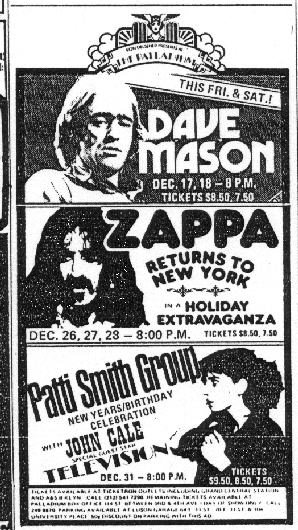
Mason Zappa Cale Patti Smith Television bill
That last show in particular sure looks worth $9.50


4. If you could have a drink with any poet (alive or dead), who would it be?

Once more my love of variety makes for a hard choice. Often if asked, it would be the poet I’m trying to interpret with performance and music on that day! That said, I’ll say Emily Dickinson. I’d so want to tell her “You’re going to win! You and the immoral Mr. Whitman are going to be the founders of American poetry. Every single day, people are going to read and be pleasantly puzzled by your little verses, and esteemed writers will look at what you did and wonder how you could invent such a new way to speak poetically.” I’d want her to answer all the Sunshine Blogger questions and more, and finally, though we’d be challenging bladder capacity by then, I’d want her to dish.
sunshine

Alas, Emily Dickinson has no blog and can’t  be nominated


5. If you could go back in time, when and where would you travel?

Easy first part. I’d target the first two decades of the 20th Century. I’ve always been drawn there for some reason, even though it’s not a period that gets much attention generally. That feeling has only intensified from my need to draw largely on works in the Public Domain (pre-1923) for the Parlando Project. Modernism in a lot of delicious flavors was breaking out all over, and in every art. Politically, a challenging time of vast inequality, but also a time of great hope that change was at hand. So, like time-travelers everywhere I’m going to expect to be reasonably well-off—but where to land?

If New York City, a chance to observe the melting pot at its most brimming. Visit the 1913 Armory Show to watch the onlookers’ new eyes seeing for the first time the paintings by the new eyes? Hobnob with the political, social and artistic radicals, some of them recently emigrated from my own family’s base in south-eastern Iowa like my “cousin” Susan Glaspell. Maybe fake a letter of introduction from my grandparents and ask Susan to show me around the Provincetown Playhouse and Greenwich Village? Meet Edna St. Vincent Millay.

Or Chicago? Meet Carl Sandburg and his young family. Swing by the offices of Poetry magazine and suggest to Harriet Monroe that she should read my blog (grin) for tips on hot new writers. Ride with Fenton Johnson in his electric motor car, and refrain from telling him he isn’t going to win and that there’s nothing I can tell him with my extra century of knowledge that can change the racial ignorance and prejudice of America between his time and now.

Or Paris. Meet Apollinaire, Reverdy, Picasso, Satie, and—oops! my French speaking skills are non-existent. OK, next.

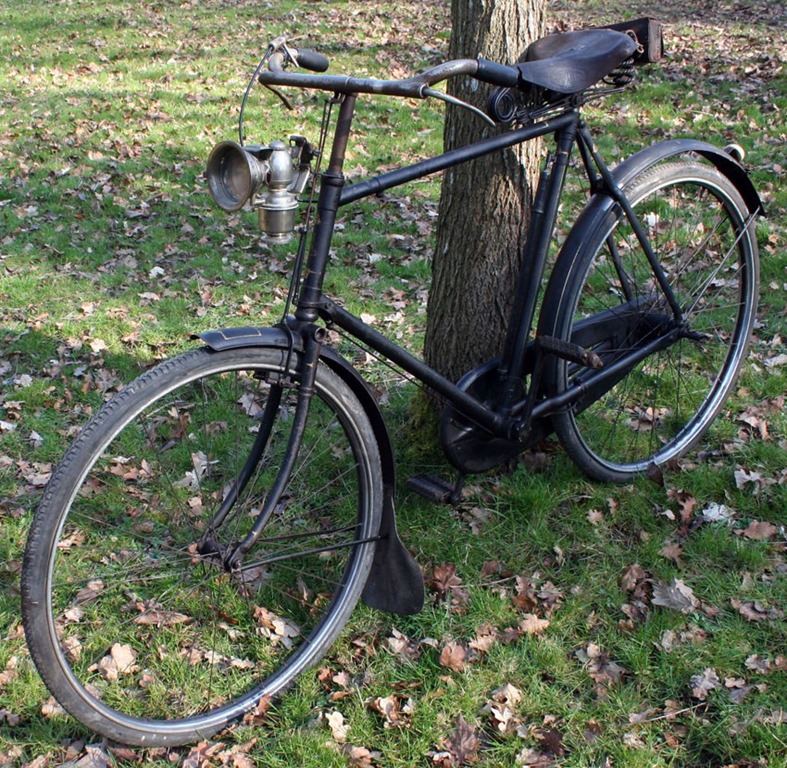
London. That’s it! Frost! Pound! Yeats! HD! Florence Farr! George Bernard Shaw! Crash the Poets Club to meet T. E. Hulme and hope I don’t get on his bad side. Sit close to F. S. Flint as a cover and act like I know him. Ask Flint about Herbert Read. Learn to play the Yeats’ psaltery and find out exactly what the Yeats-desired music “chanted, not sung” style sounded like. Slip Rupert Brooke a can of Deep Woods Off and suggest he look up Pound. Visit with Rabindranath Tagore in Hampstead. And the clincher for London? Buy a Raleigh bicycle with a Sturmey Archer 3 spd hub and a kerosene headlamp and ride around town. Why is that the clincher? I’m an introvert. Sadly, I might never make those social connections, even after traveling through time, but the bike ride would be worth it.

1910_Raleigh
Yeats, Pound, HD, Frost, & Flint…tally ho and toodle pip!

Next up, my Sunshine Blogger questions and nominations.

There is another sunshine

The Parlando Project has been nominated for the Sunshine Blogger award. And what’s extra neat is that the nomination comes from another blog, Daze & Weekes, where I’ve experienced the splendor of a modern life in England seasoned with tidbits from the medieval to the Victorian. Julian of Norwich! The Devil Spits! Snails! David Bowie and Shelley: mirrors of the gigantic shadows which futurity casts upon the present! Lovely music! Posh crisps only!


sunshine


There are rules / duties with this:

• Thank the person who nominated you for the blog post and link back to their blog.

• Answer the questions the blogger asked you.

• Nominate other new blogs to receive the award and compose new questions for them to answer.

• List the rules and display the Sunshine Blogger Award logo in your post and/or on your blog.

Here are the questions five from Daze & Weekes:

What inspired you to start blogging?

What is your favourite post on your blog?

Who are the top 3 bands/musicians that most inspire and influence you as a musician?

If you could have a drink with any poet (alive or dead), who would it be?

If you could go back in time, when and where would you travel?

Oh my! Asking me questions is dangerous, as I assume someone is interested in the answers and I tend to go on and on, until I find myself embarrassed. Though I value brevity in expression as a reader (thus, poetry), I am so ready to violate that value when talking. So I wrote answers and then tried to make them shorter. And tried again. Music, poetry, they value concision. With effort, I can honor that. But the past, well, it only gets bigger, and men and women become souls confined there, where we can only visit, were we must visit.

Answers to the questions and my nomination business tomorrow. Thanks for reading (no listening today) and thanks once again to Daze & Weekes for the kind words.

Vegetables dream of responding to you

OK, let’s reveal where the words from the last post, Poetry in Translation,  came from and what I know about their context—but stick around, as this is going to relate back to those 20th Century theories about how poetry works. If you haven’t listened yet read and listened to Poetry in Translation,  this would be a good time to scroll down and do so.

Earlier this month I was making some tea and talking to my son in the kitchen. He asked about what kind of tea I was making. I picked up the box to show him, Tazo Peachy Green tea. I noticed there was something more than an ingredients list and those filled-circle graphs of how much caffeine was stuck inside the individually bagged dried leaves. So, I broke into my Parlando Voice, improvising line break pauses as the early 20th Century Modernists have ingrained in me, and read it to him:

Poetry in Translation from Tazo Peach Tea

Modernist verse in the supermarket?

My son, now a teenager, is making sure that he’s nobody’s fool. “They must be smoking that tea, not drinking it.”

We both laughed.

Modernists a century ago would have liked this. “Found Objects” and use of commercial ready-mades in art and Dada japes were ingrained in Modernism during its avant garde phase. I’d have fit right in at the Cabaret Voltaire in 1916 if I was to have read this wacky and rapturous advertising copy from the tea box while Hugo Ball played piano.

picasso-bulls-head
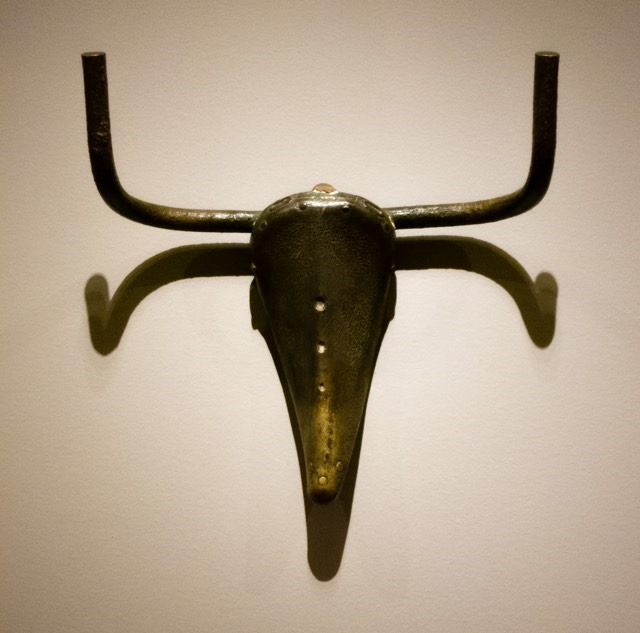
Some will see a Picasso sculpture, others will wonder if a bicyclist won’t be able to ride home

But as Modernism moved to the universities, and I. A. Richards’ and John Crowe Ransom’s “New Criticism” solution to the problem of unreliable interpretation became predominate by mid-century, things would change.

Simplifying wildly, the New Criticism suggested that the reader, not just poets and writers, needed to get under the hood and figure out what made poetry run. Inside every poem was the ideal poem, an expression of complex ideas or states of being placed there by it’s writer. The poems surface, though it may have some interest itself, was only the wrapper surrounding this more sublime poem. This bridged over the revolutions in poetic language, by making less important changes in the way poetry spoke, such as the widespread use of rhyme and free verse. John Donne, John Keats, Gerard Manley Hopkins, T. S. Eliot, Wallace Stevens—the different music of the words made no difference, the rich images portraying important thoughts could be studied side-by-side.

Imagery became poetry, more or less (yes, meter and sound were still attended to, but they dropped in importance). The original Modernists, including the Imagists, sought to kill off centuries of ingrained and tired imagery that had become merely decorative, and replace it with more integral and concrete images, palpable things. But just as when one finally cleans out a closet, time passing will clutter it again. If images contain the soul of poetry, and if deep reading is the best and proper way to encounter a poem, then complex and hermetic images will offer more of the poetic experience.

There’d been something of a cult of great poetry before, often based on important subject matter or the extent of readership, but as the New Criticism ascended to orthodoxy, the ideal of great poetry became stronger and used new criteria. Poems with densely jammed complex imagery requiring close reading and educational training to comprehend were great. Poems that didn’t do this were highly suspect—and likely harmful, in that they did not reinforce this new critical understanding of the soul of poetry.

As I said last time, this is how I was taught to understand poetry in the midcentury.

How can we return to the box of tea with its peach singing to the cucumber of its deathless desire? The midcentury New Critics presumed the supremacy of the poem and the poet’s intent. Later in the 20th Century new literary theorists arose, and the subjective experience of the reader became the place where the poem existed. The poem means what you think it means, which may be different from what another reader thinks it means. Meanings extracted from even the merest of texts could still be complex and valid. The intent of the author is not important, they could well be mistaken.

Now our singing peach isn’t a joke at the expense of exalted literature, it’s an expression of the woo of consumer culture signifying exotic essence through the appropriation of an ancient amphitheater dramatizing barely sublimated vegetable desires. Or it may be something a tired copywriter churned out on Friday afternoon before leaving work and picking up takeout on the way home to feed the kids.

As I said, I’m simplifying, but for the mid-century New Critics the poem existed objectively deep inside the poem where the poet put it. For the late 20th Century Deconstructionists and their contemporaries, the poem existed subjectively in its readers experience of it and the structures around that.

Coming up, is there a reconciliation between those two views? How will the 21st Century view what poetry is and where the poem lives? Will the cucumber and the peach find a meaningful relationship before they are dried and bagged?

Don’t worry if you’re missing the usual music and words meeting up here, we’ll return to that soon enough too. I promise variety, not predictability. To tide you over, here’s Dave Moore and the LYL Band running through his song, set in the late 19th Century, called “The Green Fairy.” 

Help grow the audience and alternative ways to get the Parlando Project

I enjoy making these pieces and talking about the process that leads to them. If you’ve ever come across a post here and pleasantly thought “I didn’t know that,” well, I likely had that same experience, sometimes just a few days before you did. Similarly, if you’ve ever listened to one of the audio pieces and enjoyed music and words illuminating each other; well, I’ve spent hours composing, playing, recording, and mixing it—heard parts of it up to a hundred times—and I enjoyed doing that. I’m not bragging there. As my own “producer” I’m well aware that I’m pushing my limits as a musician in making these pieces—but why go to the trouble if you aren’t making music that you, the musician, want to hear?

Well yes, I know one answer to that question, but we’re not a commercial enterprise. We don’t do sponsorships or ads. I do this to hear these poets and writers in a new way and because I’m attracted to the stories surrounding the words. But when I do those things, I’m often thinking about you too,  listeners and readers, the folks who pay us not with money, but with your attention.

I can’t say enough about how much I appreciate that.

As we near 200 audio pieces published, I’m looking for that audience to increase this year. I know we’re quirky, but so’s this modern world. Variety has been a goal from the start, so I expect that some episodes/posts/pieces will be more interesting than others to any individual reader/listener. I intentionally do that, because I find there’s often no delight without surprise.

So how can you help this audience grow?

Well, read and listen, though you’re already doing that, and you don’t need to do anything more.

Hit the like button if you like something. It’s a little thing, it’s become an Internet cliché, but it may help some for folks finding us, and it always gives me a good feeling when I see those icons at the bottom of the post.

Subscribe. There’s another term that’s become cliché, but there’s no cost or obligation to do it. I use the subscribe feature for blogs I’ve found interesting even for a portion of their posts, because it helps me find those posts of interest more easily.

Subscribe part 2. The Parlando Project started out as a podcast, where the audio pieces you see at the bottom of most posts can be automatically downloaded to your smartphone, tablet, or computer. Again, there’s no subscription cost. As a reader of this blog you’re “insiders,” and you get more information on the audio pieces, but we still have more listeners via the podcast than listener/readers here on the blog. The podcast audio is the same as what you get on the blog, but it comes to a subscriber automatically. You can find the Parlando Project on Apple Podcasts/Itunes, Stitcher, Google Play Music, player.fm, and many other podcast sources/apps.

Subscribe part 3. Since the beginning of 2018 we’re on Spotify, though with a footnote. The Parlando Project is in Spotify’s podcasts section, which is gradually being rolled out to the various Spotify apps. Only the most recent Parlando Project pieces are in Spotify’s listing, but it looks like you can add a Parlando Project audio piece to a Spotify playlist.

Yes, I’ve considered getting at least some of the audio pieces on “regular” Spotify or other popular streaming music services, but so far the costs and time to do that are stopping me.

Use the social media buttons. At the end of each post there are buttons to use a variety of social media platforms. The time producing the Parlando Project keeps me from all but minimal time on these platforms myself, but when someone does do this, it seems to help other people find us.

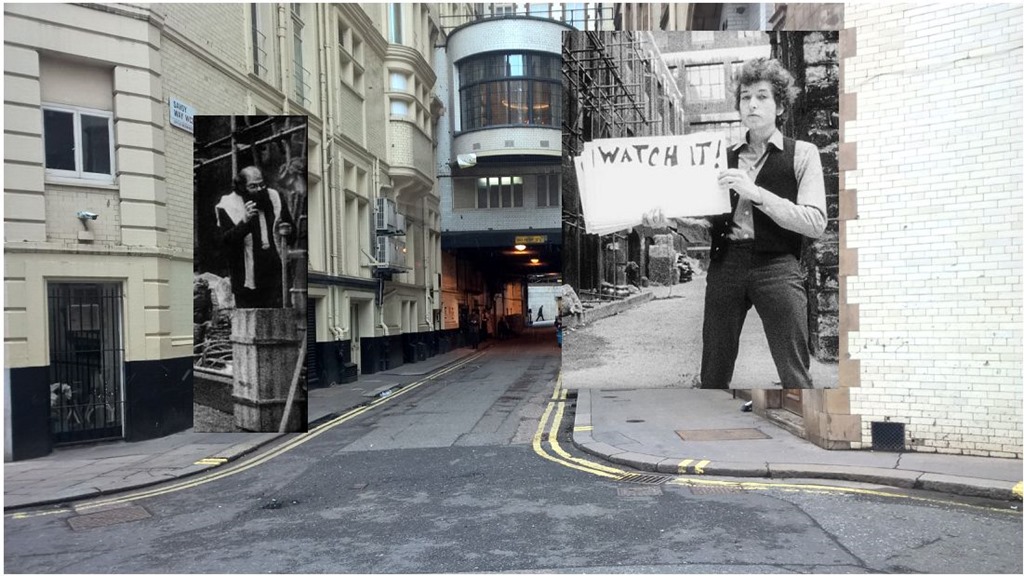
There. Now back to what we do regularly. Here’s one of the first audio pieces posted here back in 2016. “Angels in the Alley”  is a bit longer than what’s become our average, and I like to think our audio quality is getting better since then too;  but “Angels in the Alley”  is also more of a narrated spoken word story than others. What’s the  story? The death of English poet and artist William Blake, and how it connects with this famous rock’n’roll video clip. Ever wonder what Allen Ginsberg is gesturing about in the background at 1:35 into this?


And here’s the LYL Band with one theory:

I mention Rupi Kaur in an attempt at getting more followers

I refer to it less, but this ongoing Parlando Project actually causes me to spend more time with music—composing, playing, recording, and mixing it—than with the words. The words, of course, are mostly poetry, as condensed expression is so often found there mixed with musical devices in word form.

I’m not alone in thinking there’s a natural connection there. Perhaps that’s why you’re reading this, rather than a blog on cinema, graphic novels, or the interesting things I did last night. From what comments I get, the words, mostly poetry, are the larger draw and concern—or it may be that it’s easier to talk about words and their potential messages than it is about music.

But speaking now of America and the English-speaking musical world, what if it largely functioned in this manner…. Insert woozy musical cue here indicating we’ve moved away from our mundane current world into some speculative alternate reality as a new voice takes over this blog:


Music is a sublime art, which alas is much ignored and misunderstood by most people. Oh yes, there are occasional times when folks seem to pay some attention to what they think is music, but in fact it’s not really music they are listening to. For someone younger than I, it seems it’s always been so. How did this happen?

In my youth there were people who listened to a highly commercial aggregation of “musicians” who went under the name “The Beatles.” In their unsophisticated way The Beatles would bash away for a couple of minutes, never showing the development and dynamic range of actual music, and then they’d publish their “songs” on recordings that would be played on abysmal “record players” that were aptly named because they could only spin the vinyl record at something approximating the correct speed and could only transduce the rude noise to an even cruder racket. The Beatles, to be honest, weren’t the worst of those “pop musicians”—they were Stravinsky compared to some others in their field—clearly actual musical quality was beside the point.

Perhaps I shouldn’t object too much now to this commercial enterprise once undertaken by those naive or craven young men back in the 1960s, but what happened next was worse. Some actual musicians and musical critics started to give them big heads, and as a result, even worse crimes were committed. Throwing aside centuries of established artistic criteria, these commercial appeasers called what The Beatles and “pop musicians” were doing music. They would search for even a hint of actual compositional intent or accomplishment in these works, and praise them if they could pretend they found it.

Soon, The Beatles started to tack on elements used by actual musicians in their recordings. It was all transparently fake, and perhaps I should find it strange that even audiences ignorant of what real music is and can accomplish allowed it was art rather than pathetic pretense. And so, they presented recordings with string quartets, when none of them knew so much as which side of the bow to apply to the strings. They made fraudulent representations of actual music, using paid studio technicians who modified their feeble attempts at playing music so that they sounded profound to those “listeners” who didn’t know any better.

And now as I survey what could otherwise be our musical landscape and see young people who “listen” to what they “think” is “music” while playing their “video games”, dancing their interminable “dancing,” “streaming” it on their “phones” ( that they actually don’t use to make phone calls on), while “Tweeting” and “Instagraming” with tiny screen keyboards that make it hard to enclose every other word with quote-marks like an intelligent person.

I said I should be surprised. I take that back. In a world that has given us Donald Trump and Brexit and inconsistent intra-city train service, we cannot count on most people to have an authentic understanding of what they’re missing when they call such things music.

7-8th of Alban Berg is invisible

Now you know.


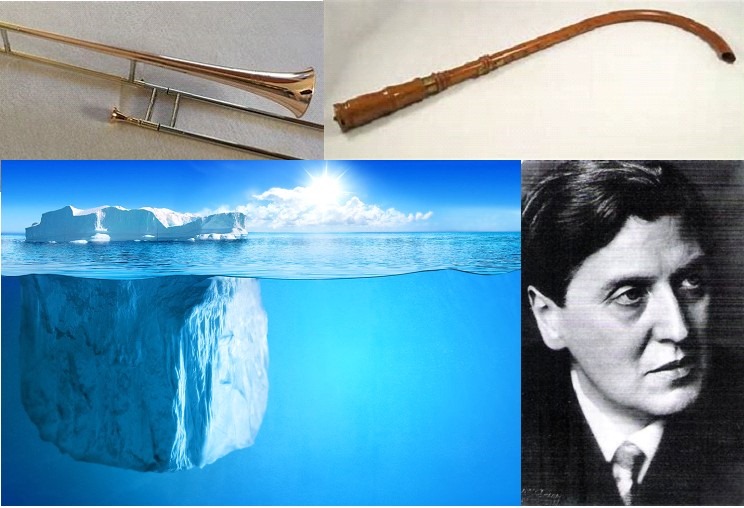
But let us, the intelligent critics who understand art and its important criteria, acknowledge the consequences of this commercial folly. Now we have people claiming to be musicians who do not play instruments, save perhaps for something called a synthesizer (a name like something from Aldous Huxley), a sequencer (gene therapy?), or drum machines (oh, such industrial nomenclature invades art in our year of Ford). They don’t know that 7/8ths of an Alban Berg is invisible, they can’t tell their krummhorn from their sackbut. When asked to defend this false and phony “art,” audiences say they “enjoy” it.

And while this pretense continues, actual musicians—people who create and perform complex compositions that take years of study to create, and nearly as many years of study to understand, are ignored.

Since when did enjoyment have anything to do with the sublime art of music?


Reprise that spooky musical cue that says we now return to our real world, and to Parlando – Where Music and Words Meet. Yes, our real world has musical snobs and exclusive musical passions, but in general, those haven’t harmed the ubiquity of music in our culture. Yes, musicians who produce music that challenges your expectations, usually have a harder time finding an audience, but a broad-based, vibrant musical culture has always allowed some of them to sneak in to a wider listenership, not prevented it. And musicians tend to be sensualists more than aesthetic puritans.

What can poets and literary critics learn from musicians?


(As to the title and occasion for this satire, an article has caused some discussion lately in poetry circles.)

In Praise of Not Great Poetry

I’m about to make a point that seems to me to be nearly self-evident, yet I feel the need to make it because I sense a conflicting opinion is the premise behind some commonly made judgements about poetry.

Poetry of course is only one of many arts. In our time, it is one of the arts that feels it needs to justify itself more often. Poetry feels like it’s neglected, marginalized, underappreciated, and there are reasons for it to think so.

Does music do this? One can find defenses for the value of music, yes, but these cries are not the same. Similarly, the other arts that use words: prose of various kinds, cinema, live drama—people will defend their value, but not with the elephant of marginalized dread that advocates of poetry feel they must deal with.

Why is that? I’m going to use a loaded word to describe the cause, one that is likely not quite right, but one that I can’t find a short pithy substitute for: snobbery. There may be a better word. I mean, really, it’s more at a misapplied kind of elitism, but elitism is an even more misunderstood and misused word.

Roman Hruska

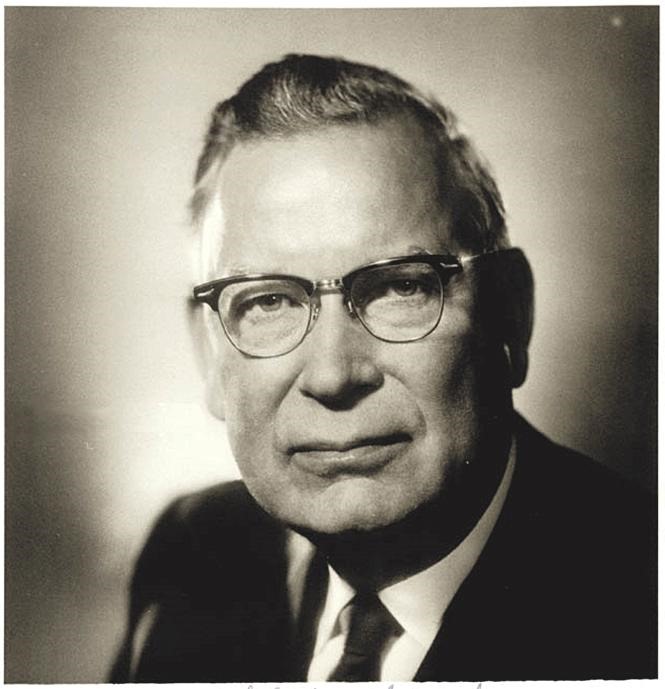
Roman Hruska. Is this is a picture of a great modern poet, or a leading voice of
“The New Criticism” who established the 20th Century ideals of great poetry?


Roman L. Hruska was a doctrinaire Midwestern conservative who served in Congress in the middle of the 20th Century. His place in history is constrained to one quote. Hruska’s infamous rhetorical thrust, meant to defend a Supreme Court appointment before the Senate for confirmation, was so mockable that it helped defeat that candidate.

I rise today knowing that what I’m about to say risks the same fate.

Here’s what Hruska said about Harold Carswell, who as candidate for the High Court, had been attacked as a mediocre jurist. “Even if he were mediocre, there are a lot of mediocre judges and people and lawyers. They are entitled to a little representation, aren’t they, and a little chance?”

That too is a misunderstanding of elitism. It is elitism to want the best leaders, the best judges. It is also elitism to desire all kinds of difficult and challenging arts. Given that elitism is sometimes thrown around as an insult in our century, let me be clear, I support that idea. It’s good to desire the best, to even take risks for the best, particularly in the arts, which have fewer direct consequences, and therefore can serve as a “research and development” department for outlooks and thoughts that we may want to experiment with a bit before we apply them to surgery or criminal law.

What does this have to do with poetry’s pervasive feeling of marginalization?

In the last century, poetry continued on an artistic and critical path that diverged from the other musical and literary arts. When any serious critical and institutional focus on the poetic arts were called for, poetry divested itself of all of it’s non-elite branches and expressions. Song lyrics? Not poetry. Popular poems, the kind once memorized by schoolchildren? Not real  poetry. Humorous poems? Humor, not poetry. Verse that is predominantly interesting because it’s musical speech? No. You don’t understand, poetry is about complex language examining difficult to express matrixes of experience. Thoughts and experiences from marginalized or particular speakers? Well, nice that they can speak up these days, but, please, it’s not poetry. Hip Hop/rap? Oh, come on! Get serious.

I can agree with what some literary critics and gatekeepers observe about these forms of expression, but not their judgement.

I too can be bored and uninterested in things that may fall into those “It’s not  poetry” bins. I can also be bored and uninterested in some page poetry which is credentialed and endorsed as serious mainstream literary poetry—you know, the stuff that’s poetry.  I can even change my mind about what I find interesting and worth my attention. I see new things in the work. I live new experiences. And sometimes when I’m listening to some musical speech, I’m seeking a pleasure or relief that’s hard to detail as criteria for greatness.

What if we considered all narrative prose that wasn’t a contender for the greatest novel ever written as, well, not prose. I enjoy a detective novel once in a while. Short stories can be sublime. Should I remind myself as I enjoy them that they are inferior in some criteria for a great novel? I find interest in some of the most austere or minimal modern serious music, but if every time I hear a good three-minute tune that makes a conventional set of chords seem inevitable all over again, should I feel ashamed that I think that’s music?

Can what is “not great” inform something greater? Many of the early Modernists seemed to think so—but it need not be applied like a newspaper clipping to a cubist collage or a folk tune to a symphony, it can be part of a vital continuum of human expression without needing elevation or even a judgment of hierarchy over all else.

I believe it’s a mistake for poetry, so concerned with it’s potential vital contribution to human culture, to feel that it can best survive by severing its cerebral head, leaving its ass and its elbow to wander around as “not poetry.”

Thanks Owing

A holiday for it, so this is due.

yard turkeys

Have you changed out your summer flamingos for autumn yard turkeys yet?

“The Parlando Project,” my 2015 dream to present over a hundred audio pieces combining various words (mostly poetry) with various music, has now reached 155 officially published pieces. For those who’ve taken some of your attention and spent it listening to me present my take on the words of others, primary thanks is due to you. Despite the amount and variety of material I present here, I respect that your attention is precious. Thank you!

Thanks even to the unintended. The strange movements of technology and trade have allowed highly flexible musical instruments to become available at low prices. Most of what I use to make this did not exist one hundred years ago, and in the past few decades, the cost of these instruments, software and recording technology has declined into broad affordability.

Similarly, the Internet, so easy to dismiss for its mundane temptations, has made the availability of artistic materials “ubiquitous everywhere” that tautologies are sold.

Both of these things, the music technology and the Internet, are so enabling of creative work that it seems almost sinful to me to not apply my human imagination to them. But, as with many things, avoiding one sin leads to the commission of others. So, thanks also to my family for the forbearance that has allowed this project to get the amount of time and attention it asks for.

Thanks to Dave Moore, who lets me take a break from presenting my voice uninterrupted , and whose words are presented in some of the most listened-to pieces presented here.

Thanks to the Modernists of  100 to 150 years ago, who showed us fresh ways to use language, and shared their complicated hearts, heart’s beats, and apprehending eyes. Thanks also to their foresight to publish their work before 1924, so that we’re free to demonstrate to the still living what they did. Alas, the leading sadness in this project for me has been the large number of works by no longer living writers whose work you and I cannot speak publicly, because our copyright laws forbid it.

No new audio piece today, instead, here’s one of the first officially released pieces of the Parlando Project, words adapted from Dave Moore. I view it as being about the people left even farther behind than the signed artists of famous paintings. It’s called “Netherlands.”

I’ll let it be a reminder that there is a whole lot of material available here now, so using the Search… box or just click-wandering through the Archives months on the right will allow you to listen to more of the variety that Dave and I do.

Subscribing to the blog either through the “Follow” button near the top, or on the WordPress Reader, will let you know about new posts as they occur, or if you just want an easy way to get the new audio pieces for listening to them off-line, you can do that by subscribing to the “Parlando – Where Music and Words Meet”  podcast on  iTunes, Google Play Music, Player.FM, Stitcher, or wherever you get podcasts. The “Parlando – Where Music and Words Meet”   podcast is free of course. [note: I’d previously mentioned using the little orange RSS buttons to subscribe to the blog, and for those who have an RSS-aware app they will  still work, but the Follow button I’ve just added today makes this easier for most.]

Here’s the player to listen to “Netherlands”

The Most Anthologized American Poems of the Modern Era

Here’s a list of poets and poems, along with the year they were written:

Top 20 Poems List


OK, you probably already read the title of the post, so you know what they are.

This list comes from an article I bookmarked this summer that intrigued me, and today I returned to it because I’m thinking a bit about “The Canon”—those poems and poets that are judged by some generalized panel of experts as being worthy.

The whole The Canon thing is full of controversy, with complaints that it doesn’t include enough of what some favor in terms of poetic expression, or that it’s too-much a dead white man’s club; but part of what makes that discussion worthwhile is that The Canon is how almost all of us got introduced to poetry as an adult practice. Somewhere in our school years, we will be asked to open a textbook, and there on the pages will be some “great poems” that we will be asked to grapple with. Some of us will be puzzled that we can’t figure out how to do the sums of what these poems mean; and some of us will want to emulate them, to steal a little of their vision of existence, and some will hope to someday gain for ourselves something like that esteem in the eyes of others, to be, in our words, on a page in an anthology.

Sure, we may have already encountered nursery rhymes, Dr. Seuss, and perhaps some song lyrics, but these poems are the adults, writing the adult things. Poetry sections of literature classes can be as fraught with adolescent frisson as sex ed.

The article I was intrigued by was written by Emily Temple and posted on Lithub. It’s a painstakingly counted-up list, collated from twenty anthologies of poetry. The selection of anthologies has some problematic focus: half of them were specifically focused on American poetry, and nearly half (eight) were anthologies of modern or contemporary poetry. Still, the work to make this list must have been considerable, and I don’t know any similar, but better, efforts to use instead. For this post, I’ve decided to take even more shortcuts, over and above relying on Temple’s work, so bear that in mind.

I’m going to focus on the “Top 20,” the poems that appear in nine or more of the twenty anthologies. While this doesn’t eliminate the anthology-weighting to modern Americans, I think it means that these 20 poems and their authors are safely in “The Canon” as constituted in our current century. Here are a few scattered, short, observations about these most of the most anthologized modern American poems.

I had read and/or remembered reading all but three of the poems. (“Musee des Beau Arts,” “Skunk Hour,”  and “Love Calls us to the Things of This World”).  I suspect anyone who’s been interested in American poetry for a few decades would come in around that.

I sometimes worry that I’ve concentrated here too much on works from the first quarter of the 20th Century, and particularly those connected to the “Imagist” revolution in the center of that time. From this list, I shouldn’t. Nearly half the list (nine) is from this period, and if one was to play the “Kevin Bacon game” with Ezra Pound concerning these, your number is always zero to one, or you’re Wallace Stevens. I use so much from this era because I have trouble even finding the time to seek the rights to present a piece still in copyright, but also because I happen to find that era fascinating—and it turns out as far as modern American poetry is concerned, it’s still the core of The Canon.

However, even though the Parlando Project is closing in on 140 pieces, we’ve only done two of these top twenty poems (“The River Merchant’s Wife,”  and a small portion of “The Waste Land.”)

What era other than the Teens and Twenties of the 20th Century was over-represented? The Fifties, four selections, and you could consider Gwendolyn Brooks’ 1960 “We Real Cool”  sneaking in as a fifth.

Dead White Man’s Club? Not as bad as it was when I was in school. Not Dead White Males: 7 out of 15 authors if I count William Carlos Williams’ second-generation Puerto Rican heritage and don’t count that Richard Wilbur, though white and male, and still alive. The Canon is always historical, always trailing the contemporary. It’s not 7 out of 20 because five authors had two works in the Top 20. If someone does this article in 2117, or even 2067, I wager the pale dead males will be less than 50%. This is an easy bet (I won’t be around to collect from after all) but also because if we take the short-term acclaim of literary awards for new work in the past few years, I informally believe we’re already at that level. I know some will object to even mentioning these distinctions for various reasons. That’s a big topic, another time. If one wants to make an argument for tokenism from either side of that debate, that only the white males got double selections in the Top 20 would be your data point.

UPDATE:  not to belabor the White Males count, but as I pointed out when we presented “The River Merchant’s Wife” back in July, the authorship of that poem in a complex subject. It is  a translation of classical Chinese poet Li Bai. Pound’s Chinese translations are acknowledged to be of the looser variety however. If we split that one 50/50 we’re halfsies on White Males.

Here’s one that was interesting to me as I think about another issue: how old were the authors when the wrote their “Top 20 poem?” Go ahead, guess….

You didn’t look ahead, did you?

I guessed low. I was of the impression that poetry was a young person’s game, and many of the poems I’ve used here were written by authors below the age of 30. Turns out the average was a fraction over 40 years old, with Elizabeth Bishop at 65 and Wallace Stevens for his second selection at 75 making appearances for the Medicare set. The youngsters? Eliot at 27, Pound at 28 and 30, Auden and Moore at 32, Dickinson and Plath at 33. One oddity? Despite the average of a bit over 40, no one wrote a Top 20 poem in their 50s. If you’re under 30, don’t despair, as I did, thinking “John Keats died at 25, and what have I accomplished.” If you’re a poet in your 50s, consider a career in the insurance industry and plan on being Wallace Stevens.

This is another of the posts here that I’m tagging “About” that are not occasioned by a new Parlando Project audio piece. For those who can’t wait for the next piece mixing various words (mostly poetry) with original music, here’s that “included in 10 out of 20 anthologies” hit “The River Merchant’s Wife: A Letter”  done up Parlando Project style. Use the player below to hear it.