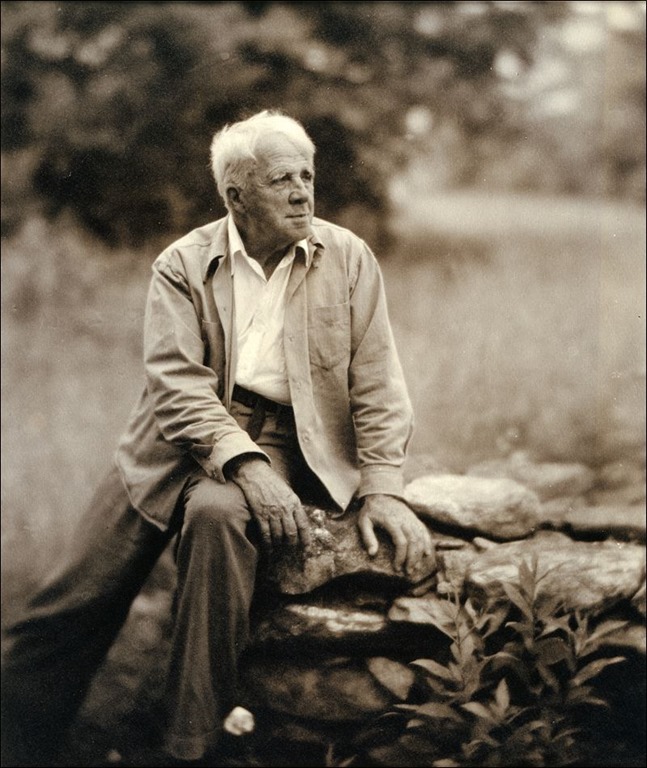
from Tennyson’s Ulysses

Here’s a piece to celebrate the announced discovery of the oldest intact shipwreck, a 2,400-year-old Greek ship discovered in the Black Sea with its mast, rudder, and even a rower’s bench still in place. This can’t be fully romanced into being Ulysses’ ship—it’s centuries newer—but it does give us an object, beyond the stories, to remind us of ancient sea voyages.

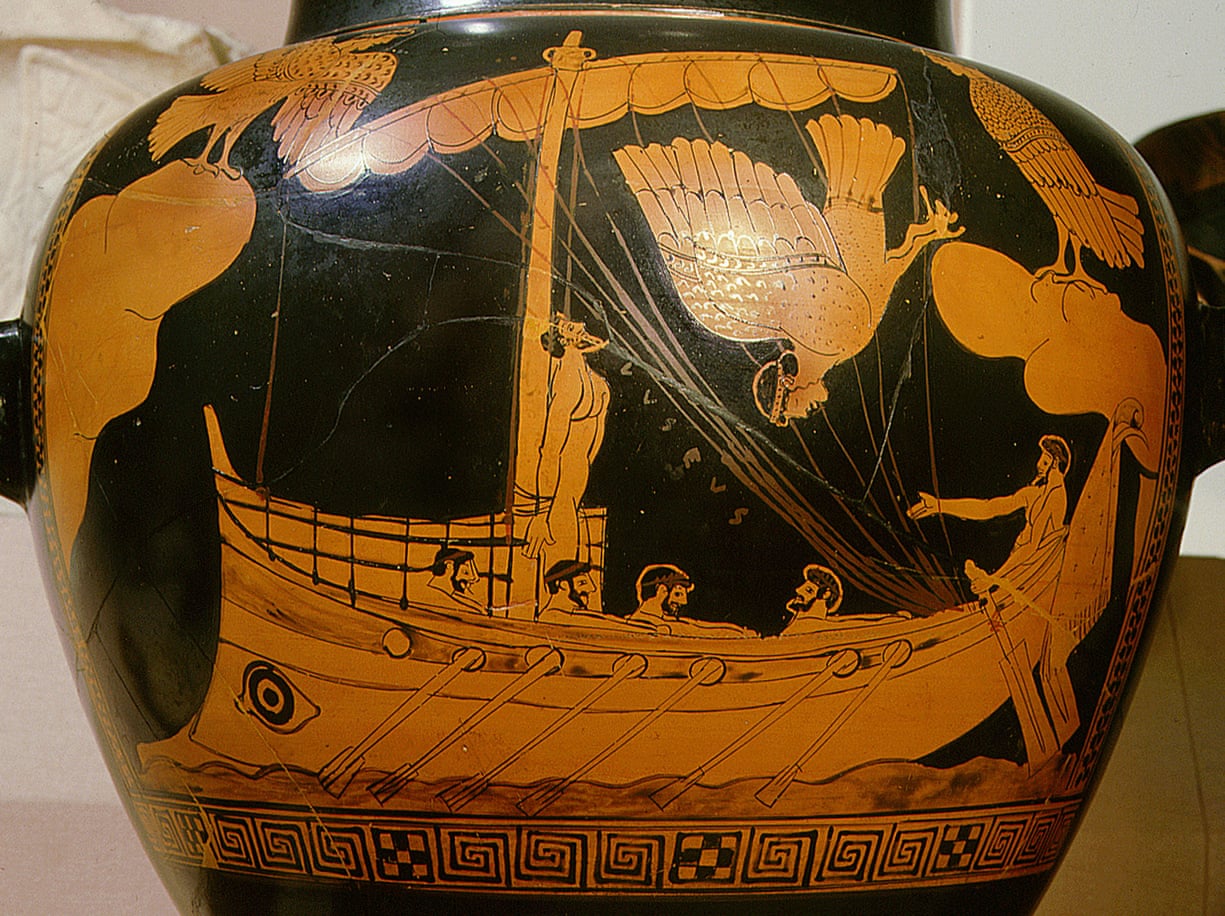
“Tales of brave Ulysses, how his naked ears were tortured by the sirens sweetly singing.” This vase depicts a ship like the one in the shipwreck.

Tennyson’s Ulysses is one of his best-known shorter works, and one I was a bit surprised to find still survives on the seabed of modern teaching syllabuses. I expect that many will read “Ulysses”  as a complement to Tennyson’s American contemporary Longfellow’s “Morituri Salutamus”  which we’ve featured here, as a pledge from one who is old and past their expected prime to continue to strive. After all, the most quoted section, the one I used, starts right off declaring “You and I are old.”

Well for someone my age or Dave’s—that is to say, old—this understanding might seem natural.*   Indeed, as we recorded this last week, we too were not “that strength which in the old days.” But if one looks at Tennyson’s “Ulysses,”  both biographically and mythologically, there are some surprises to be found.

Would you be surprised to learn, as I was, that this was not some later work by a long-lived poet (as Longfellow’s “Morituri Salutamus” was),  but instead the work of a 25-year-old? Odd that in our modern times, where we often expect authenticity in our poets, were the poem is expected to be biographically true to the author’s own experience. But of course, it isn’t rare for younger people to feel old and to feel an age is past. Tennyson chose to make his poem’s speaker aged because it did represent something he felt after the death of his close friend Arthur Hallam (the same friend that his book-length epic elegy “In Memoriam A. H. H.”  was dedicated to).

If one looks at the poem and sets aside preconceptions, you may find, even in its oft-quoted concluding exhortations I used, an undercurrent from this inspiration. Not only is this Ulysses a hero well-past the age of his greatest physical vigor, he’s demonstrating in his concluding speech two other characteristics. He’s looking backward to look forward. He recalls his Homeric feats, acts that in that story literally had heroes that “Strove with Gods.” He reminds his crew, in effect, “Look, we are the generation that knew Achilles personally, not the modern folk who only read about him.” Which brings us to the subject of his crew, the men he’s addressing in this exhortation. Homer’s Odyssey  is clear on what happens to them, after deadly battle followed by deadly mistakes: they were all killed, long before this poem begins. Like Tennyson after the death of his friend, those who know, those who shared and could testify to Ulysses soul, are gone. So, when he asks to set sail in that boat, there will be no rowing soldiers on those benches sitting well in order, except in his soul.

So, he’s crazy? Deluded? After all, he’s plainly talking to those that aren’t there. Well this is a poem, a work of art. Ulysses might never have existed, or might not have existed in the way we know him if not for Homer, who also might not have existed. And Tennyson and his friend Hallam? We can pretty well know they existed, even if anyone who could say of the eventually long-lived Tennyson “who we knew” is now dead, and so closely equal to the imagined. This is a poem about the hereness of the not-here.

I was telling my son the other day, “Death is the leading cure for immortality,” but sometimes the cure doesn’t take. I can’t say that the LYL Band’s performance of this part of “Ulysses”  is immortal, but we do strive to seek to find and not to yield. Hear it here:

Did you not see a player gadget above? Some ways of reading this blog won’t show it, so here’s a highlighted hyperlink that will also play the piece.

.

*An example of the waterworks potential for this poem when read by Helen Mirren, making Stephen Colbert cry.

Justice Denied in Massachusetts

Partly for the reason of sadness and disappointment with my country, and partly for disappointment with myself, it’s been difficult to focus on combining words and music recently. This is a value of one of the Parlando Project’s principles: Other Peoples’ Stories. When I cannot put the words together, I can listen and absorb someone else’s.

Yesterday, feeling particularly sad and angry, and holding it in so as to not harm with it, I went looking for someone else expressing what I could not express myself.

I looked first at Carl Sandburg, who after all was a committed political radical as well as a too-often overlooked Modernist. But with Sandburg’s expression love was almost always present—a good thing, but not in tune with my feelings. Sandburg may have been the right medicine, and I took some of him in on Friday for my health, but I didn’t want only medicine.

And then I found my howl, and strangely at that. I knew Edna St. Vincent Millay had written political poems, that in fact they had harmed her artistic reputation. The witty line I recall was that Millay’s anti-fascist poems did more to harm her artistic standing than Pound’s pro-fascist ones. Today’s words are from one of her early political poems: “Justice Denied in Massachusetts.”

I can see where the Olympian “New Critics” docked Millay on the basis of this one. It’s chock-full of that awkward backwards and inside out “poetic” syntax that reads like a stiff translation from another language. The early Modernists, even as they translated, were dead set against this—and they have a good point. Millay’s words here were hard to read with emotion, so stilted and undirect as they are as sentences. However, that could well be part of Millay’s point here (consciously or unconsciously), as the poem’s speaker is not speaking clearly; and for my benefit—however difficult it is to perform—she is speaking precisely in a confused mixture of disgust and disappointment. All the reverse/”poetic” syntax just makes it more twisted in at itself. A poet today might make this matter even more obscure with modern poetic syntax that also abjures plain speaking in the service of art, but in our current context we’d be expected to accept this as the way art talks.

One problem with political poems is that to the extent they speak to an issue they can become museum pieces tied to forgotten events. If they were to be effective, they could even be seeking that fate. Millay is writing here in the immediate aftermath of the execution of Sacco and Vanzetti—a particular cause—but for my purposes, this has little bearing on the matter. She is speaking to women and domestic and domesticated people such as myself. Only the title is tied to then current events—the feeling and her point, ties to our own.

“Let us go home, and sit  in the sitting  room.” New Critic Cleanth Brooks placed his entry in the contest for most bone-head review of all time by reading this refrain line and Millay’s poem as a straightforward resignation at the course of events, rather than the ironic statement of disgust that it is. I can only hope that the savvy observers of our country are similarly wrong, similarly misreading.

Millay stands for something

Mr. Brooks, you may notice that I’m not sitting, but standing for something.


My music for this is based around a G suspended chord, where the third of the chord, which would dictate if it’s minor or major, is omitted. This gives the chord a feeling of awaiting change, awaiting formation. At times the replaced note to the defining third is a tangy second, other times a more consonant fourth. Risking grandiloquence, but I feel our country is similarly suspended now, and the cadence is to be ours.

Here’s my performance of Edna St. Vincent Millay’s “Justice Denied in Massachusetts.”

The most popular Parlando Project piece for Summer 2018 is…

Since I’ve been keeping track, one thing has been consistent with the most popular piece each season: it’s been by a poet not widely known or read in the United States. So previously we’ve seen on top after a season of your listening: my translation of Dada principal Tristan Tzara’s The Death of Apollinaire,”  the better-known-in-the UK Edward Thomas’ Adlestrop,”  the too-often overlooked Chicago Modernist Fenton Johnson’s The Banjo Player,”  and Frances,  the teenage love poem by George Washington, whose career as a poet never really took off.

This has happened even though I’ve featured (multiple times) most of the popular canon of pre-1923 English-language poets touched by the Modernist movement of the 20th Century: Frost, Yeats, Sandburg, Millay, Pound, Williams and Eliot.

Pat yourself on the back: the listeners here are open to a variety of writing, and they don’t necessarily need to have a name they already know attached to the words.

Still, it’s surprising that it’s surprising that we have Emily Dickinson coming in at the top spot this past summer.

Dickinson (along with Frost and Yeats) seem to be special cases with The Canon, in that all three have retained some level of popular readership and presence in that still-existing oral-tradition of memorization, even into our current century, without being denigrated into the bin of “not-great poetry.”

Our Summer 2018 most liked and listened to audio piece is “Ample Make this Bed.”  Like many Dickinson poems it’s extraordinarily compressed, just eight lines—and like so many of her poems it invites us in and then mystifies us. Most of us have made a bed, and some of us have even been instructed in how to complete that task correctly. Here, with “Ample Make this Bed,”   we may get six lines into the eight and we haven’t left domestic normality other than the ironic satisfaction with a job, that if done excellently, will stand forever. Ah, if only any domestic housekeeping task can stand ‘till judgement day, rather than the few hours until it needs to be done again!

The poem’s final two lines are so modestly telling and beautiful. Until them, no rhyme—and then internal rhyme and end-rhyme rush in! And the synesthesia of “yellow noise,” an image which could have been informed by Dickinson’s mysterious medical syndrome which included photophobia, but needs no biographic detective work to strike us boldly.

Is “Ample Make this Bed”  about death, domestic drudgery, love, or the unstoppable passage of time? Emily Dickinson seemed to have taken care with her poetry, to make it ample and arranged to last until judgment day, so it’s likely intentionally undetermined—or mystically, exactly, all of those things united.

Musically, I’m quite proud of my music and performance of all the various parts with this one. If you missed it last July, why not go ahead and listen to it now. And if you like it, please let others know about what we do here.

Summer 2018 Parlando Top Ten, Part Three

I’m going to move on up the countdown of the most liked and listened to pieces during the past summer, but first a short summary about what the Parlando Project does, and an even more compressed explanation of why we do it.

The Parlando Project combines various words, mostly written by others, most often poetry, with original music. I am Frank Hudson. I write, arrange, play, and record most the music here. I don’t do that because I’m a great composer, or even an average musician. I do this because it’s the most cost-effective and time-efficient way to create this much music this quickly.

Other musicians contribute parts, and another voice, Dave Moore, relieves you from hearing my voice every time. Ideally there’d be more pieces with more musicians, and more variety of voice; but such an ideal world would require a great deal of organization, maybe even funding and the organization it takes to seek that. The pieces could be better realized, but when I look at the history of such more professional and polished presentations, it seems likely that there would be many fewer pieces. Take a random walk through the archives on the right here: the Parlando Project is now marching toward 300 pieces combining those various words with music. I’m unaware of any not for profit group who’s made available anything like this many poetry plus original music encounters.

Why do I do this? Because I’m still excited by those encounters. Most often these words have been designated to pages, and in some cases, little-read pages. They are the condensed observations of many human beings, potentially vivified by silent music there in the inky words. How can I wake them up and dress them in those other musical sounds that don’t speak in words? You’re listening here, you know that can be intriguing, and so I will not say more now on this.

Why do I do this? Because I’m still excited by those encounters. Most often these words have been designated to pages, and in some cases, little-read pages. They are the condensed observations of many human beings, potentially vivified by silent music there in the inky words.

Now let’s resume our countdown as we get to some of the pieces you liked and listened to the most these past three months.

4. The Destruction of Sennacherib. For around 100 years students in the English-speaking world usually got a strong dose of the British Romantic poets as part of literature classes: Keats, Coleridge, Shelley, Blake and George Gordon, Lord Byron. Here’s the weird thing about that: not a one of these men seem to be good classroom examples for young scholars. Messy, often foreshortened lives; lots of sex, drugs, and what was rock’n’roll before there were Afro-Americans with electric guitars and re-voiced saxophones.

Take this little piece, sure it’s a Bible story, but a field strewn with corpses isn’t exactly happy Schoolhouse Rock fun-time, regardless of the unstoppable flow of Byron’s verse even without adding the instrumental music.


Shelley Shelley and Byron

Mary Goodwin Shelley thinks of doing something different with her hair.  Hit the riff harmonized in fourths: “We all came out to Cologny, on the Lake Geneva shoreline. To make stories with Lord Byron. We didn’t have much time…”


3. Fire and Sleet and Candlelight. Elinor Wylie was heavily influenced by those British Romantics and lived through events that echoed the scandals of Shelly and Byron in her own foreshortened life. Did this help her compose this tale of a life as a series of troubled trials and tests? One could easily suppose this to be so. Still, this piece’s title and something of the life as a trial by fire narrative strongly references an old and pious English Christian folk-hymn, the “Lyke Wake Dirge.”  Combining frightening with beautiful is not an easy thing to do, so it takes more than merely having the life-experience to create something like this.

This audio piece is an example of why I realize these pieces so often by playing all the parts myself. Actually collecting the equivalent of a chamber orchestra and a place to record them would take more than a full summer’s work alone.


2. Morituri Salutamus. There turned out to be a lot of daylight between the other pieces and the top two this past quarter. And this one is the greatest surprise, as its words are taken from a longer homecoming-speech-as-poem by that now most un-fashionable poet Henry Wadsworth Longfellow.

Still, I could relate to this section, which is the opposite of those romantic “live fast, die young, publish posthumously” proposals of the troubled romantics. “Morituri Salutamus”  is the cry of an aged artist refusing to quit, hampered by unavoidable age instead of youthful self-sought excess.

I have no idea of the age-demographics of listeners here, so I don’t know if that was the hook for “Morituri Salutamus”  this summer. Regardless of the pull of taking in experiences as wildly and widely as possible as a way to more intense artistic expression, I’ll admonish younger readers here that the primary duties of an artist are to survive and to actually do the work that survival allows. Like homecoming and graduation speeches in general, this matter is likely eye-rollingly obvious and simplistic to the bravest young listeners. That’s OK, I’ll be back tomorrow with the piece that was even more popular and modern than Longfellow.

Summer 2018 Parlando Top Ten, Part Two

Continuing on with our countdown of the most liked and listened to audio pieces during this past summer here at the Parlando Project, today we’ll look at the pieces that came in 7 through 5 as we move up the list to the most popular piece.

7. The Hunter. Maybe, with Internet audiences, it’s the cats? I’ve playfully included pictures of William Carlos Williams with said cats in a few posts, and Williams, who sometimes thought he was overlooked as an American Modernist while he was alive, seems to be holding an audience, even though his poetry doesn’t present itself with open, easily accessible sentiments. His even more difficult “St. Francis Einstein of the Daffodils  almost gave Williams two appearances here this summer, falling just a couple of places back from the top ten. Or maybe it’s the informal American language that he uses? Other American Modernist contemporaries of Williams: T. S. Eliot, Ezra Pound, or Wallace Stevens often liked to drop leaves from a Word of the Day calendar into their poems, while the New Jersey doctor generally didn’t. Maybe there’s something here with Williams like the cats: familiar and domestic, intriguing, but not seeking to please? After all he once said: “I didn’t ask you to understand anything, only to listen.”


6. The Apotheosis of Harlan Ellison. I’ve warned readers already that this summer’s top ten has too many pieces where I wrote the words, and that’s not representative of what this project is about—and so, here we have the second of three pieces in this summer’s top ten where I wrote the words I perform. Well, at least this one is about someone else, the long-time critic, writer and SciFi anthologist Harlan Ellison.


James the imagined  author vs Jimi the reader of SF

I talked about how Ellison helped encourage Octavia Butler, but what if avid SF reader Jimi Hendrix had decided to go the literary route?


5. Beloved. My words again, although as I tried to explain in the original post here including it, I was inspired by a statement Bobby McFerrin once made about music, how it touches you inside on that sensitive flap of skin named the eardrum. Given that news this past week has included stories about unwelcome touches, that metaphor goes both ways.


WCW with a baby

Excuse me, while I kiss this baby. If cats and William Carlos Williams brings in readers, how about W.C.W. and babies?


Back soon with numbers 4 through 2 in our look back at Summer 2018’s most liked and listened to combinations of words and music.

Summer 2018 Parlando Top 10

It was an odd summer traffic-wise for the audio pieces of the Parlando Project, with listens quite slow in the first half of the season, and then picking up to the point that August listens were a near record. That increase in traffic (new listeners?) may be why we had no older, pre-summer audio pieces that made this season’s Top 10 (though one, Poetry,”  made a valiant run at it).

As we’ve done the last few Top 10 lists, we’re going to count down in trios until we get to number 1, starting with number 10.

10. Crushed Before the Moth.  The Bill James style stat-freak in me has threatened to do a poet/listener batting-average post on which writers seem to get the most and least response. Without really running the numbers, my impression is that Emily Dickinson, who like Frost and Yeats retains a general readership as well as scholarly cred, still doesn’t always hit it out of the park in listens when the audio pieces use her words.

I’m reminded here of one of my favorite bits of baseball trivia, what pair of brothers hit the most major league home runs? The true baseball fan will have many candidates to choose from. The three DiMaggios? (Dom was a very good player, and some have heard of Joe). Or the Alou trio (who once made up an entire outfield of brothers). Or Boyers, Boones or Alomars. But the answer is Hank and Tommy Aaron. Hank had 756 home runs, Tommy crushed only 13—but add it up, and the Aarons come out on top not just alphabetically.

Emily Dickinson’s sister-in-law and confidant, Susan, is not a famous poet, but she shows a bit of the same Emily Dickinson flare in her poem we used for this. Emily has that Hank Aaron level achievement, but Susan had her at bats too.


9. Seventeen Almost to Ohio.   In the several years I’ve been doing this, I still love how pieces arise obliquely as I look for material and research its context. At the end of July, I was looking for more info on Mina Loy, the fascinating Modernist whose work was forgotten for decades and now seems to be attracting increasing scholarly interest. This led me to a tape made in 1960 of Loy being interviewed about her work. The interviewer, Paul Blackburn has now entered that vale of forgottenness himself, but besides being a serious poet with a strong interest in the audio value of poetry, he was a promoter of other poets, so I naturally feel an affinity for him. The Loy interview tape has moments of interest, even though Loy seems distracted and at times uninterested in her own long-past work, and Blackburn, true to our Other Peoples’ Stories ethos, encourages her, but doesn’t fill the gaps by yapping-on himself about, well, himself—as I fear I would have done. Yet, for a minute or two, he does  do that, and this ad lib description of hitchhiking trip from his own youth was so striking I had to form it into what it sounded like to me, a beautiful little poem. It’s one of my favorite pieces from last summer as well as for the listeners here.


My Wars Are Laid Away in Books

Like side-trips? Want to read how a poet who’s fallen into the Forgottenness Zone still bumps around after being laid in books? Edie Jarolim, the teller of this tale, blogged it here — and the more extensive version of her story is here.


8. Plum Tree Blossoms on 40th Street.  The vast majority of the words used here for the audio pieces are not mine. That’s by intent. Both Dave Moore and I have written since our teens, but when I started the Parlando Project I thought that the special jump, the bridging of a gap, that occurs when you perform a piece and others listen may be intensified if the performer too is making the jump across the gap to the writer, just as they are asking the audience to do. This summer’s top 10 will violate that principle three times, probably more than it should.

A number of things I’ve written this year have focused on memory and time, and how they can be experienced in odd ways. How we can intensely experience a past event as if it’s still going on in its full dimensionality, or in “Plum Tree Blossoms on 40th Street,”   how we may fill in sensory information and intensity in remembered events long after they have happened, even though at the time they were occurring they seemed mundane. The routine of biking to school is to my son is just another day to him now, but it can be transformed into something else much later. Artists believe they can access that special intensity and meaning instantly, without nostalgia and the confining frame of memory, and that may be a necessity for their work to be created—but in another sense, what’s the hurry?

One Summer Morning, Which Isn’t

Here’s an audio piece that begins in the midst of a common life event: when a son leaves home to go off on his own independence. While this leave-taking could be for a job, or for military or other service, in the modern world, it might well be for college.

Other than its late summertime setting, and the odd moment when the son in this story is thinking of something he’s read in a book as much as what his father is saying as he leaves, there’s nothing in it that indicates the child is leaving for school. Perhaps the son (or the reader) at the start thinks that such a leave-taking will be the story of “One Summer Morning, Which Isn’t,”  but eventually things open to a broader story.

Many who read an earlier version of this were puzzled by the title. “Why isn’t it,  that, one summer morning?” they ask. I once revised the title to answer the puzzlement, but today’s version instead revises the text of the piece to try to better convey what I wanted to get at under its original title. Even that first morning in the opening is seen from two very different perspectives, and as the story expands I try to show that leaving-takings are, strangely, always present, they are not only a moment or a single day. Am I successful in that effort? I’m not sure. It’s gone through some revisions over six years, and by now I’m not even sure it’s a poem, or if it isn’t more of a compressed short story. Well, the new draft is done, and it’s ready for you to hear it performed.

Jaguar for Surfing Sounds

Listen! Gidget, Listen! You hear the grating roar
Of pebbles which the waves draw back, and fling
At their return, up the high strand,
Begin, and cease, and then again begin,
With tremulous cadence slow, and bring
The eternal note of sadness in.
Matthew “Hodaddy” Arnold


Today’s music is fairly spare: electric guitar, bass, and drums. Yes, that bass line, close but not identical, is meant to remind you of another piece of music, back before Steely Dan. The electric guitar is an inexpensive version of the Fender Jaguar. Just before the 4 minute mark on the track, that weird high wind-chimey sound is something available from its design: notes that can be plucked on the strings between the bridge and the tailpiece. I was reminded of this trick while listening in a car ride with my son when an old Sonic Youth track came on the radio earlier this month.

To hear “One Summer Morning, Which Isn’t,”  use the player below.

Summer For

Here is a short piece about an intense memory experience, where you believe you are fully re-experiencing something from earlier in your life. This is not déjà vu, and I don’t even know if there is any similar widely used term with plentiful accent marks over top the letters for this. And since this is a subjective experience, I can’t say for sure how common it is; but for me it happens fairly often. In these moments I’m not merely remembering something, I feel I’m re-living it, with access to the entire sensory experience—but the experience is felt by a mixture of the past me mixed with the present me.

This can be pleasant or not, but it always feels spooky to me. Subjectively (there’s that word again) it feels like the nature of time itself is being exposed, that the concept that time passes could be an illusion, that all time is happening now. Or that time may move in a boustrophedon manner wrapping back and forth next to itself.

as the oxen turns

Boustrophedon writing runs left to right, then wraps back right to left and so on “as the oxen turns” when plowing. Conceptually, what if time doesn’t run forward, but wraps back next to itself, or even over itself? Cue the hippy-trippy background music now. Also, be careful about stepping in the bovine exhaust.


I suspect some of you are going “Oh wow, that’s heavy.” Some “That’s some mystical B.S. there!” Others may wonder if chemical intoxicants are involved (short answer: nope). Some of you may even be puzzled about what I’m talking about, not having had the experience, or having had it and not stopping to fully encounter it.

Still, this is a subject that poetry allows, because, like all arts, poetry is about sharing the subjective human experience. Now-a-days this sometimes goes by the rubric “sharing one’s own truth.” I’m not fond of that phrase, though I believe compassionate people use it with good motives. Somewhere I’ve picked up the first principle of objective truth, even though that cannot be knowable out to all its edges, even if it must be handled with approximations.

So, I will make no Blakean claims of mystical revelation with “Summer For,”  but you may still find this an interesting experience to share for three minutes, along with some skittering acoustic guitar accompaniment. The player to hear it is right below.

Crushed Before the Moth

Increasingly, I am comprehending the miracle of Emily Dickinson. Fifty years before Ezra Pound and T. E. Hulme constructed a compressed modern poetry replacing conventional imagery with fresh and direct observation, a woman in a rural town in the woods of Massachusetts had already practiced their innovations over a thousand times.

Through a series of happy accidents, Dickinson’s poetry was preserved and published at the end of the 19th Century, just before the Imagists launched their Modernism—but even then, she was still like one of those unexploded bombs dug up by a construction crew decades after the war. Even after publication, the framing of her poetry still obscured it. Her posthumous editors cleaned up her punctuation and gave the poems titles, and on the page they looked so normal. As these were poems by an Emily, they were clearly the work of a woman, and so they were read as women were generally understood, even when not pressed between the boards of a poetry book. And Dickinson herself designed her poems to draw you in with their modest length, their frequent use of pious hymn meters and stanzas, their homey rhymes. Even into my mid-20th Century lifetime, it was perfectly possible to be aware of Emily Dickinson’s poetry and not be awed.

“Hey Joe, there’s a big chunk of metal buried way down in the mud! Here, listen when I give it a bit of a whack with my pipe wrench…”

UXB2

They still run across stuff like this from WWII around Europe. Decades old, and they can still go “Boom!”


Some early 20th Century Modernists looked more closely, and maybe saw some of what was there. Carl Sandburg straight-out called her an Imagist in a poem. I am unaware of how much attention the other early Modernists gave to Dickinson, but just on a promotional level, it might not be advantageous to talk much about poems written decades ago when your brand is “Make it new!” Remember too how Pound jabbed at Walt Whitman in his tribute poem: Walt Whitman you were a hacker out there in some unharvested forest, I’m a fine wood-carver able to bring out the finest detail. Dickinson’s near-rhymes and loose but familiar meters may have been read as imperfections to Modernism.

It took the last quarter of the 20th Century for Emily Dickinson to finally be seen, and we are still seeing more now as we look closer. What if, back in the mid-19th Century when Dickinson was creating this unprecedented expression, one had been able to talk with her about it? The value of writers’ groups, seminars, and MFA programs is not universally acknowledged, but most think these things at least have some effect on those who participate.

It just so happens, that occurred. Dickinson’s letters to Thomas Higginson give us some of her ideas, but as I read that correspondence I see Dickinson adopting masks, some playfully, some for protection. And Higginson, as varied as he was, was not, as far as I know, a poet, and therefore there was no chance that he would use Dickinson as a model for his own writing. But Dickinson’s long-time friend, neighbor, and sister-in-law Susan Gilbert Dickinson was a writer who dabbled in poetry.

Susan Gilbert Dickinson

Like Emily, Susan Gilbert was smart, was allowed some access to education, and wrote poetry


No other person saw as much of Emily Dickinson’s poetry while she was still alive as Susan. It’s also probable that no other person other than Emily Dickinson’s sister Lavinia (who seems to have had no artistic interests) was as intimate with the author. There is even speculation that there was an erotic bond between Susan and Emily. Besides the pant, pant passages in the letters between them, Emily praises Susan’s intelligence and cultural companionship. Given what must have been the loneliness of Emily Dickinson’s creative innovation, amplified by the cultural limitations for women in her time, we may all owe a debt of gratitude to Susan Gilbert in helping sustain Emily Dickinson.

Today’s piece uses a poem by Susan Gilbert Dickinson that shows some of the same elements one finds in Emily Dickinson’s poetry. Given that the prolific Emily Dickinson experimented with her expression, if “Crushed Before the Moth”  was slipped into some complete poems of Emily Dickinson volume it would not seem entirely out of place.

What elements of “Crushed Before the Moth”  are Dickinsonian? A short line length (six syllables, though not Emily’s familiar 6/8/6/8 hymn stanza). Alternating rhymed lines with unrhymed, though here first and third not second and fourth, and the rhymes are all perfect rhymes except the final “moth.” Even the use of a Bible verse (Job 4:19) is not unprecedented in Dickinson, who though a religious dissenter, was steeped in a Christian religious culture.

The poem begins, just as many of Emily’s poems will, with a close observation of nature. In Job, the moth is only a passing metaphor, in Susan’s poem it’s an actual moth, looked at closely enough to see the texture of its body in the evening. The moth is treated here as an Imagist would. It’s not some intellectual counter, a rote symbol only standing for something else, but an actual animal in an actual evening. The second stanza continues in the same vein, the moth the morning after, though with more characterization.

The concluding three lines, though they contain the only Emily-like slant rhyme, are the least like Dickinson’s poetry. That kind of envoi ending with a clear and orthodox moral lesson is not something Emily would write in her mature poetry, and the “Is this thy stronger host” line sounds unnatural and stilted.

Still, this might be the first poem ever written that imitates Emily Dickinson’s strengths and innovations. That Susan Gilbert Dickinson was a more orthodox Christian than her friend, and like all of us, not the genius that Emily Dickinson was, doesn’t keep her “Crushed Before the Moth”  from being an effective poem.

I’m back to acoustic guitar for today’s performance of this piece, which is available using the player below.

Seventeen Almost to Ohio

Two threads lie here, waiting to be woven together. One thread: those young pre-WWI Modernists, the other: writers in old age.

Young: Mina Loy, Alfred Kreymborg, Glaspell and Cook of the Provincetown Playhouse, early in their careers, workers shaping modern literature—though none of them are remembered much now. Older poets: Longfellow, Donald Hall, and even Sarojini Naidu, Dave Moore and I, all speaking for carrying on past youth. Longfellow of course is no longer read for his intrinsic value, Naidu’s poetry is not read in the West, and Donald Hall concludes in his late-life essays, that he, like the majority of poets who receive prizes, notice and ample publication in their time, will be unread 20 years after their death. Moore and I of course are in a different, more perilous, class of ranked achievement. If Hall is right, Dave and I can look forward to equaling prize winner and American Poet Laurette Donald Hall’s status (unread, forgotten) in only 20 years!

There’s your writer’s affirmation for today.

What happened to those bright young Modernists? Cook died young. Kreymborg, that pre-WWI networking avant garde-ist, had a long post-war career judged by literary critics as undistinguished. Glaspell had an increasingly difficult second half of a career, though she won a Pulitzer Prize for drama in 1931 for a play that few praise now, the sort of late plaudit that sometimes comes to pioneers when prize committees compensate for overlooking earlier achievements. Like Hall, Mina Loy lived into her 80s, but unlike Hall, the last half of her life seems fallen from any career path. So, even before she died in 1966, she’d already achieved Hall’s 20-years-past-death status.

In 1960, Loy was 77 and living in the Western US when young poet Paul Blackburn was sent to interview her. A creaky hundred-minute tape exists of the encounter. Loy’s memory of things a half-century old seems spotty by this time, and this once eloquent poet grasps for words, even her own words, when asked to read her still modern sounding verse from her youth. Her readings are flat, though she occasionally is stirred by remembrance of the times and places when the poems were written. Once or twice she humble-brags or finds sincere surprise at how clever she had been. Listening, I wanted her to claim outright the fierceness she had shown back then. Instead, she seems an old 77, tired and distracted.

Mina Loy Paul Blackburn

Mina Loy in later life by Jonathan Williams, Paul Blackburn 1966 by Elsa Dorfman


Blackburn is patient, and he rarely man-splains or talks over Loy, something I would be all too prone to do if I was the man holding the microphone. He seems to genuinely admire Loy’s poetry as he seeks to add to a record of a career that was forgotten then, and he wants her to know that in 1960, at least one reader “gets” what she wrote in 1914.

Just past one hour in the recording, something extraordinary happens. Blackburn, touched by one of Loy’s recovered memories, a feeling perhaps amplified by additional visual clues he would have in the room that are not imprinted on the audio tape, exchanges with Loy a memory from his own youth during the second instead of the first world war.

I have taken that story, much as Blackburn expressed it that day in 1960, with some minimal editing and shaping for the words of today’s audio piece.

Of course, we’ve now largely forgotten Paul Blackburn as a poet too, following Hall’s law. Blackburn died too young, and more than 20 years ago, but his story struck me as a tightly expressed spontaneous poem. What was this: a poem he had already written, one he was paraphrasing from memory for Loy? Was it a poem he was thinking of writing as he interviewed the aged poet, perhaps thinking the tape recorder could serve as well as a notebook jot to put a first draft down? Was Blackburn simply a practiced poet who could orally improvise from his skills a well-shaped improvisation?

Whichever, I think it’s beautiful. His story combines looking back at youth and a landscape that is no more, with Dante’s Inferno moved forward to Greatest Generation Pittsburg, and it has a closing that contains a remarkable Imagist jump into synesthesia. I call my arrangement of Blackburn’s anecdote told to Loy “Seventeen Almost to Ohio.”

Today’s music, like the interview, is restrained: contrabass, a pair of cellos, piano, and percussion. I strove in my  performance and arrangement to do justice to Paul Blackburn’s story. To hear it, use the player below.