Five Ways of Looking at “The Waste Land”

I’ve seen some takes celebrating the centenary of the publication of Eliot’s Modernist landmark poem “The Waste Land”  this month. To the smallish degree that Twitter recognizes poetry, there have been several threads there — and general arts and literature sections of publications and websites have taken notice as well. I think this notice is greater in the UK,* since the poem has more purchase in Eliot’s adopted homeland than in the US, but long-time readers here know that I spent five years serially performing the whole thing as part of my annual National Poetry Month observance.

Some of the notices disappoint me a little. Maybe I think of it too much as a poem I “own” in the same way you may feel about another poem you’ve kept in your consciousness over time. I was going to write, and may still write, a personal memoir piece on how the poem entered and mixed with me over the years — but those same long-time readers will know that isn’t my most common mode. Instead, I think it’s more important that you take some art, poetry and/or music, inside yourself. I’m here by my intent and your accident to raise the shades or turn on a light.

More than the centenary pieces themselves, what most causes me to rise to write this month is a response that commonly follows where comments or replies are allowed. Let me create a composite example of that: “The Waste Land’  is an over-intellectualized bunch of incomprehensible nonsense that requires footnotes to understand.**”

This may be how the poem first struck you, or the way school caused you to see and discard it. Let me open some shutters and offer five ways of looking at “The Waste Land”  that may allow you to see it with fresh eyes.

1. It was written after a great war in which nearly everyone in England knew casualties—and after a great deadly flu pandemic.  English culture had trouble confronting this, and the man who wrote “The Waste Land”  was in depressive crisis usually without the emotional capacity to confront these events, personal and national. Miraculously, the poem’s art is none-the-less that confrontation.

2. The poem doesn’t require you to understand some secret encoded message, it isn’t constructed to ask you to do that, at least immediately. Instead, it’s an intensely musical composition with various voices, motifs, and tones. Its words and images can gather more specific meaning over time, yes, but the experience is still saturated with the variety of voices and their moods.

3. If you think of Eliot as all the voices in the poem, then the poem plays with gender and sexuality more than you might expect.  The speaker in the poem is male, female, indeterminate, and in the case of Tiresias, canonically intersex. This in 1922 people! Some read the poem as misogynist, a logical deduction from Eliot himself being easily indicted as a misogynist. Yet I didn’t find it so. The men and women in the poem are degraded, damaged and distressed more or less equally. I do see two plausible gender inequality issues in the imagery woven in the poem: sexual violence in the underlying Philomena-related refrains which we may read as a female-role specific event; and if we read the final section as mostly in the male poet’s voice then only one character, a man presumably, Eliot himself presumably, is allowed to emerge from the waste land and into some consoling resolution. If I ever write my long personal piece I’ll go further into those things. In summary: I found that I could read, experience and perform the poem with sympathy and shared grief for those sufferings regardless of the faults of Eliot.***

4. Eliot, a smart, talented, but also wounded and limited soul could not have made this poem himself.  Ezra Pound and his wife Vivienne Haigh-Wood were necessary editors and midwives. While I resonate with “The Waste Land”  I’m not particularly connected to Eliot’s work in general, though the musicality of it can charm me. “The Waste Land”  may be an example of how muses speak through, despite the limits of authors. And just this year it occurred to me why so many of the poem’s words are paraphrases or quotes—used musically as samples might be if this was a hip hop record. The new thought that came to me: the damaged and constricted Eliot couldn’t (or wouldn’t) allow himself to write those words in his closed-in depression.**** I think that later in his life, the emotional expression of “The Waste Land”  frankly scared Eliot.

5. Want a demonstration of the points made above, that “The Waste Land”  wants to primarily convey emotions, not sense?  That it becomes vivid when performed, like music? That its voices are gender-fluid in their variety? This highly recommended Fiona Shaw video below is better than a raft of scholarly papers or old-men’s Internet posts in empirically demonstrating the poem’s impact. It does ask 35 minutes of your attention however.


You can find all of my musical performance of “The Waste Land” here, but this 20 minute section may best show what I hoped to achieve.

.

I plan to return with more musical pieces and encounters with other poems here shortly with a focus on Halloween, ghosts, and the gothic.

.

*For example, there was a new documentary this week broadcast on the BBC which I cannot yet see since I’m a US resident. I posted an earlier version of this piece on Twitter myself, but the Twitter audience and algorithm is smaller for me than this blog. Want another blog post with an incisive take on the critical blind-spots in representing “The Waste Land?”   Lesley Wheeler’s recent take caused me to jump in a bit too hot and barking in my shared frustration with those cold, shiver and sliver of humanity, appreciations of “The Waste Land.”

**The infamous footnotes — which I now explain in a footnote — were a makeshift tactic to lengthen the poem for hardcover publication. They may have also helped a closed-off fellow like Eliot cover the emotional tracks of the poem his name was now on, but even Eliot later admitted they weren’t the secret decoder ring to his poem.

***Plausibly, I should be more concerned with authorial intent, or how some misogynist or anti-Semite could view or perform the poem differently from me. The points that gender, joyless power-unequal sexual acts, and sexual violence are integral to the events and imagery of the poem is incontrovertible to me, and were overlooked or down-played by the “let’s find the secret scholarly message” critics for decades until queer and feminist readings emerged. Saying above that you can appreciate the poem without stopping for deeper analysis isn’t denying that deeper thought and examination isn’t worthwhile. Even given the professional format of many scholarly papers, I read some of them and out from me comes a “Yes! Someone else finds, sees, feels this too.” Lesley Wheeler again gives us links to one such set of papers from a 2020 conference. Oh, and if the idea of how one can personally resonate with poetry, how it can change how poetry works, her most recent book, Poetry’s Possible Worlds,  written for interested readers and requiring no scholarly pre-requisites is recommended.

****If you’ve ever suffered depression, you may relate to this.
Yeats’ Coat

Let me briefly slip, Wordsworth-like, into reverie, and note that “Oft, when on my couch I lie in vacant or in pensive mood…” I turn to the vast daffodilian array of scanned material available from a brief Internet search. I’d been thinking about Irish poets after reading this exchange between poets Ann Grá and Sean Thomas Dougherty.  Grá asked “What’s the best way to improve one’s active writing vocabulary?” Dougherty’s answer? “Read Irish poets. Everything will improve. Including life.” Irish poets mentioned — and William Butler Yeats enters the chat. You may have noticed that I led-off last time by remembering a Yeats poem about a friend whose work has come to nothing. This all entered into seeking another Yeats poem to perform this week. I came upon this one. Poetry workshop devotees, note that I read it even though it has just about the most generic title imaginable: “A Coat.”

But here’s the neat thing: I was able to read it in its first American publication, situated exactly with added meaning and context in a scanned copy of a 1914 number of Harriet Monroe’s Chicago-based Poetry  magazine. Poetry,  the magazine, was fairly new. Yeats reputation was well-established — so publishing a tranche of new Yeats poems was likely “a get” for Monroe rather than a breakthrough for an emerging poet. With rhyming coincidence, the selection of 11 Yeats’ poems begins with that one from last time “To a Friend Whose Work Has Come to Nothing,”  and ends with today’s: “A Coat.”   These poems are followed by a short editor’s note from Monroe who writes of the resistance from cultured readers to the Modernist verse her less than two-year-old magazine had received, singling out the objections to Carl Sandburg’s Chicago poems* she’d published. Then as I read the scanned magazine, and without even a page-break, the indispensable English-language Imagist Mephistopheles, Ezra Pound, pops up from the hellmouth trap-door with a review of Yeats new verse.

Then, as often now, what sits on the page as if it’s an objective bit of selected poetic criticism is really an insider comment from those who already know each other in some way.** Pound reviews “A Coat”  specifically in his piece, just a few pages past the poem’s American unveiling. “Is Mr. Yeats an Imagiste?” Pound is rhetorically asked. “No,” Pound answers himself, “but he has written des Images as have many good poets before him.” In writing here about Yeats then current poetry Pound praises the directness of style and unfussy language and syntax the Irish poet is now using. He mentions that Yeats’ earlier poetry with a more 19th century music and setting has attracted followers and imitators in their now 20th century, but perhaps the imitators miss some of its vitality — so much so that Pound wonders if the reader would “Rather read Yeats in the original” than these bad copies. Pound’s conclusion? “I’ve not a word against the glamour as it appears in Yeats’ early poems, but we have had so many other pseudo-glamours and glamourlets and mists and fogs since the nineties that one is about ready for a hard light.”

So, why do Irish writers have something to teach us other English speakers about using our language. First off, as a colonized and exploited country, they may look at the language from a critical parallax. If it’s the language of your colonizer, your oppressor, you may want to ask what English words should  do, and you have reasons to be warry of what they can  do.***  And I have a second idea, less fully-formed, that the whole mists and fogs of Celtic folklore, to which Yeats added his own caldrons of turn-of-the-20th-century magic and occult stuff, offer a conscientious poetic distiller a chance to speak the shades of the ineffable vividly in their poetry because their folkloric traditions and magikal folderol have already saturated their personal needs for glamorous elaboration. Other poets embroidered robes, either traditional or ceremonial, will get caught in such, but if one can escape, you have the contrast of a new clarity. This clarity is different — you have the experience of having worn the long robe, and now the new Eden.

Adam-Eve

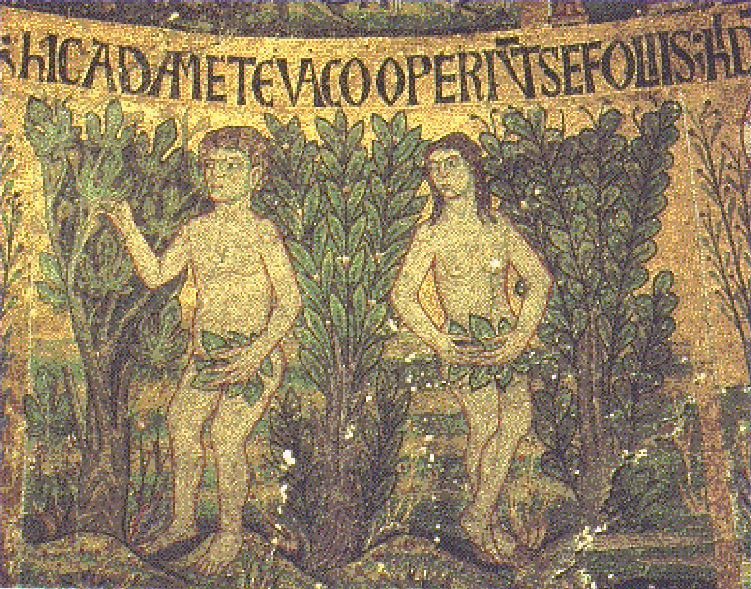
Eve ate from the tree of knowledge, then Adam explained plant-based couture  Eve wonders why she suddenly knows the Latin genus Toxicodendron.

.

Today’s performance of Yeats’ “A Coat”  has music for solo acoustic guitar, something that I’ve fallen back to often this past summer. The final guitar performance turned out to be an exercise in the various timbres I could pull from the guitar. The tuning and chord voicings used had several two and even three-string unisons which resonate and sustain, and then some contrasting pizzicato muted notes. You can hear it with a player gadget below — or if you don’t see that, with this backup highlighted link.

.

*Reading Monroe’s 1914 account reminds me of just how alien Sandburg’s poetry must have seemed to an early 20th century ear. To my 21st century ear and mind, I can more easily find the music in it, and I treasure now his Imagist “direct treatment of the thing” being applied to ordinary life, workers, immigrants, and the cultural powers that obfuscated that with elaborate English language.

**The American Pound and the Irish Yeats were both in London at this time. It’s likely that Pound himself was the conduit by which the new Yeats poems found their way into Monroe’s magazine. London then was the locus of the new Imagist ideals which stressed simplicity. Poets who wrote primarily in metrical and rhymed forms then, such as Yeats, Frost, Hardy, and Edward Thomas absorbed or resonated with this new, fresh, directness as a poetic effect.

***Though for various reasons this project has limitations on using modern English-language poetry, it strikes me that contemporary American poetry benefits from similar parallaxes. I was going to supply a catalog of those groups who know English as having been used as the language of an oppression, but it occurs that anyone who’d go with this thought can already supply their own catalog.

Write Me Down

Some things others wrote this week brought to my mind an early post on this blog that has had thousands of web visits over the years: my presentation of William Butler Yeats’ “To A Friend Whose Work Has Come to Nothing.”   Back in 2017 when I performed that Yeats’ poem I couldn’t help but wonder: who was the friend, what was the work that had come to nothing? I probably spent several hours researching that over a couple of days* and came up with the name of the man, the nature of his project, and the final fate of each. The man came to an abrupt end soon after Yeats wrote his poem, yet the project that was his aim eventually became partially successful. You can read that early Parlando Project post via this link.

When I looked back at that post, I found that I had spent the first half of it honestly dealing with the problematic nature of poetry as a method of communication. One can draw an auditable bottom line from those issues: most poets have few readers, many have nearly none. Furthermore, thoughtful, intelligent, deep engagement from those poetry readers would be from a subset of those small groups. That being so, the question of why do poets persist occurs, and that has no simple answer — but one element of that is that the act of writing has an ineffable magic. The very act of saying and recording, even what will rarely and barely be understood, has a power.**

Fall Collage 4B

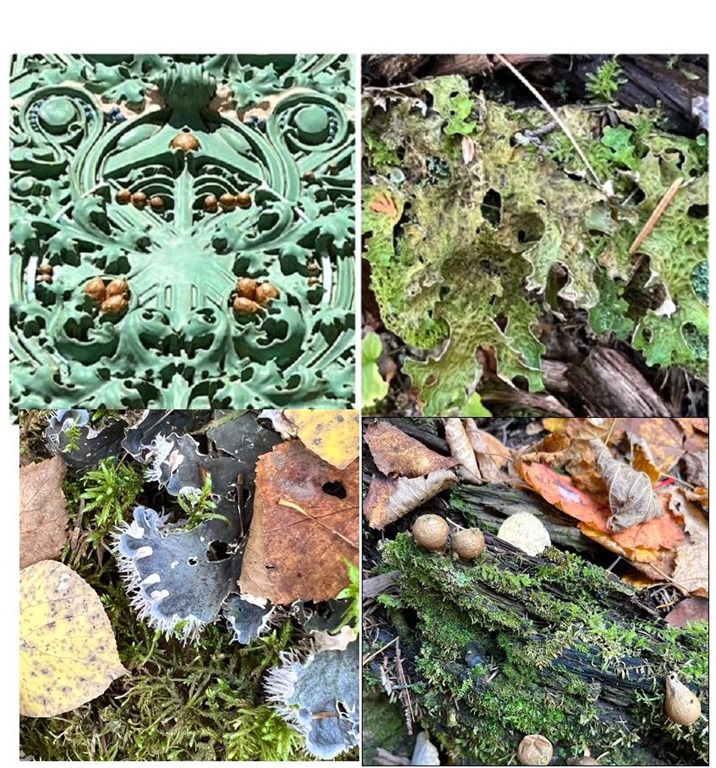
Art & Nature: a Louis Sullivan building ornament with various fall fungi and lichens. Photos by Heidi Randen.

.

Around the time I performed Yeats’ poem and wrote about my encounter with it here, I wrote a poem of my own which was not successful in performance to the level that I could present publicly. Since the Parlando Project is primarily about presenting other people’s words not my own, it was easy to set this one aside. This past summer I found that old poem as I cleaned up the song-sheets in my studio space, and I considered a new performance of it. Given the way life is postponing my efforts still, finding out what a new performance would sound like took over a week, but I completed a version today. That poem, now song, “Write Me Down,”  is about the challenges, duties, connections, and consolations of life. I fear “Write Me Down”  is a confusing multi-faceted catalog of those things. The handful who read it years ago when new found it uncompelling and impenetrable, but I haven’t had heart or mind to revise it since. But here’s today’s point again: as the title might indicate, it says something too about the motivations to write things down, even poetry, to manifest them for an uncertain audience. We poets have great imagination! We can imagine an honest and merciful judge will read us, and we can do so even where our imagination retains other limits: where and while we don’t know how long we will work with our life, and we don’t know how close to nothing it will come to. We can only know the love in the work.

You can hear my performance of “Write Me Down”  with a graphical player below if you see that, or with this backup highlighted link. Thanks, as always, for reading and listening.

.

*I was only able to find the significant details that Yeats left out of his poem to make it a more universal and general statement after work with Google’s index of published and not yet public domain books that was part of an ill-fated project that I understand was stopped due to copyright issues. I wish I had noted the book or books where I found that info, but the kind of in-between-life research that I found time to do, and my own general sloppiness, kept me from recording that. I regret that, and have tried later to make a point of linking others’ research that I’m grateful to have found.

**The direct inspiration for this piece’s words as I recall is a blessing associated with Rosh Hashanah new year’s celebration: “Shana Tova Tikateivu,” which means “May you be inscribed in the book of life for a good year.”

Leonard Cohen’s Jukebox

I first encountered Leonard Cohen in one of those so serious  Sunday arts, religion, and culture shows that broadcast TV felt required to provide around the past mid-century. As he was consistently able to do throughout his life, Cohen was able to articulately weave a good deal of provocative thought into an interview. I was struck, and took to reading and listening to Cohen from that point on.

I was young then, and Cohen’s eloquence was novel to me. In the many decades since, I have heard others work the provocative angle in interviews, but never with the same level of quality as in Cohen’s spiel. Poetry, religion, music, politics, and more could enter into his answers — and often when the question didn’t determine which of those things would be in his response.

I cannot find any online video of that exact Sunday TV show from The Sixties, but his 1966 CBC interview is an example of what a Cohen interview would be like.

.

To some that could seem pretentious. And that is a risk: a lot of provocative interviewees when challenged are bluffing. Asked to show their cards, they will throw the cards and the table in the air, or will fold into muffled defensiveness. Cohen seems to have never done that. He always had, seeming at hand, another answer, deeper or funnier, or more provocative. And those Sixties interviews are even more remarkable in that many current televised interviews are prepared: a demi-scripted performance where the interviewer is tasked to ask questions prepared beforehand, so that the interviewee can be setup to tell their clever story or give a canned pitch for their current work, cause, or situation. My sense is that Cohen wouldn’t have followed such a scheme even if it was expected of him then.

Did you “huh?” at that “funnier” in the above litany? Maybe it’s the baritone voice or the unrestrained gothic concerns; to many superficial observers Cohen has always seemed the uncut expression of despair and sorrow — but with a little sex in it. Yet absurdity and satire were always part of his expression. Those looking for the correct and proper level of seriousness, those with the least sense of humor and the highest expectations for consonant entertainment, are the most likely to miss that element in Cohen.

This a longer-form documentary on Cohen from the mid-60s. Watch the first 3 minutes and ask yourself if songwriting might have lost a talent to stand-up comedy if Cohen had emerged a couple of decades later.


.

Today’s piece is a short passage from Cohen’s first novel, The Favorite Game, though the words (and I) perform it much like a poem in the Parlando Project manner with The LYL Band. I thought of this older performance today because I recently had a restless dream which had a jukebox in it, and that caused me to think of the disappearance of this phonebooth appliance that directly connected one to the sound of a voice for a coin in public places. How strange that seems now, with our earbuds and all-you-can-bear-to listen-to streaming. Cohen calls out the mechanism’s comic mystery in this passage, and you can hear it without a dime or quarter with the player gadget below — or if you don’t see that player, with this highlighted link.

.

They Flee From Me

Somewhere in the early 16th century, a member of the English royal court Thomas Wyatt wrote a love poem, or rather a poem of lost love. Like Shakespeare’s sonnets, no one knows if it’s autobiographical, but ever since I first read it as a teenager I’ve thought it feels real. Maybe after this many centuries that’s good enough.

If so, then “They Flee From Me”  is an example of the presentness poetry gives us. Begin reading (or listening), as I did decades ago, and one moves through the rich conceit of the poem’s first stanza where the poet fancies he’s feeding some animal, likely a deer kept for private sport hunting in some rich nobleman’s deer park. If one knows that situation, then the tender animal lured inside by the kind-seeming human offering it food may put one in a piteous mood. Poor thing. It doesn’t know what the situation is, what the structure is of a nobleman’s deer park. You’re there to show that nature can be purchased and ruled — and you’re there to be killed at will.

Thomas Wyatt

Although a later engraving, this is thought to be an accurate portrait of Thomas Wyatt. Wyatt also introduced the sonnet to English language poetry.

.

Poetry and its metaphors can do that, it can be clever, show us, if we pay attention, something we otherwise might have overlooked. What if we move on to the next stanza? The poem’s speaker seems to make a shrug at the first stanza’s piteous situation. Then three lines in, something else vivid happens. We may never have visited a royal deer park or lived in the particulars of Tudor royal prerogatives, but something occurs that we, now, here, may have exact sense memories of. It’s no longer a deer now, and the hands are no longer someone feeding the doomed deer kept in half-natural captivity. The hands are a woman’s. She’s embracing a lover, loosening her clothes. Anyone who knows desire knows this scene and may feel the ardor, today as in the 16th century. Like the deer being hand-fed, it feels tender, feels mutual — but that first stanza has warned us.

Last time we had Emily Dickinson bid goodbye to some fairy creature or garden animal under the stars with a line that would one day be used by Bob Dylan: “You’ll go your way, and I’ll go mine.” Wyatt’s final stanza — is that a shrug at the parting or a generous admission of non-ownership of the two lovers to each other? We are left with final lines after we know the lovers have parted ways. The poem’s speaker tells us they feel “kindly served,” and what does she deserve — as fond a set of memories perhaps? If so, we can leave this poem casually and think kindly of long-separated loves in our lives with good wishes for theirs.

But the poet went to the trouble of setting up the captive deer in the first stanza. Do they mean to go beyond a pun of deer and hart and dear and heart? Are we still to liken the poet’s situation (or the woman’s) to that hand-fed deer as they wrap things up. “Nice park, nice grub, and they bring it right to you!” that deer might have thought, but we know why the deer are kept. If we leave the fancies of poetry and move onto the lives that give it blood, I’ll end with one supposition that’s been made about “They Flee From Me”  — that the poem is autobiographical for Wyatt, and that the woman is Anne Boleyn. Boleyn, one of King Henry VIII’s doomed queens, was executed explicitly for, well, slipped gowns and how like you this. Wyatt was also arrested and imprisoned in this matter, but his connections with the King’s fixer Thomas Cromwell trumped the charges.

Accept that, and the final two lines are then not so much a graceful farewell, but a deeply bitter assessment of deadly political power.

My music today could not be made in Wyatt’s time. I used acoustic guitar while the lute was more Tudor style. Then there’s a conventional cello part, but on top of that is an unusually articulated viola part which I meant to sound more like South-Asian bowed strings. To match that viola, there’s a tambura and harmonium underlayment in the music. To hear my performance of “They Flee From Me”  you can use the player below, or if you don’t see that, you can use this highlighted link that will open a player if you don’t see one.

.

A Murmur in the Trees

I said, when I was listening to the Tell It Slant Festival’s marathon reading of all of Emily Dickinson’s poems, that I was jotting down lesser-known Dickinson numbers which I might perform in the Parlando Project manner. Well, here’s one of them.

If you’ve followed my various Dickinson performances over the years you may have seen me emphasize Dickinson’s visionary aspects, her outlooks gothic and satiric (often combined), and sometimes her abstract poems of philosophic thought. One thing I noted again during the marathon was that she can be a very acute and intimate poet depicting pain. She’s all that. But sometimes she’s more at playful. Today’s piece, “A Murmur in the Trees,”  for example.

It’s glancingly a nature observation poem, but fancies have taken it over by half-way in, as a fairy tale seems to break out. The opening stanza sets things at night, and perhaps we are in the Dickinson garden (where Emily, predicting an REM song to come, sometimes did gardening tasks at night). There’s a noise, the title’s murmur, in the trees.

The second stanza breaks with a line of alluring consonance that remains a mystery to me, the “A long — long Yellow — on the lawn.” Sunset’s last light beams or dawn’s first ones? Filtered moonlight? And then we are told, something like little footsteps are heard.

The third stanza portrays little fairies or gnomes trooping home, the fourth, robins that could be strange birds who wear nightgowns and sleep in “Trundle beds” or Robin Goodfellow with wings. The poet’s speaker, presumably Emily herself, reminds us these are not metaphors in this moment for normal animals, since what she observes “would never be believed.” She finishes by saying that she won’t test the credibility of her observations anyway because she’s in league with those she’s observed, she’s promised “ne’er to tell” what her night garden contained. The final two lines return to mystery — if nightgown-wearing birds or gnomes, or the both of them hanging out together aren’t ambiguous enough — by saying “Go your way — and I’ll go Mine — No fear you’ll miss the road.” What’s the road? Are they birds seasonally approaching their autumn migration time where Dickinson is famously staying put? If we take that aspect, Dickinson appreciates they know a road away where she may not. Or is the road that other mystery, the “long Yellow on the lawn?” Fairies* are said to have paths (not to be obstructed) that are often difficult for regular humans to detect, but sometimes different colored grass or vegetation is said to be a sign of fairy roads. Is that the long yellow in the grass?

Fairy Birds or Tiny Gnomes

Actual photograph of enchanted birds attempting a marathon reading of all 1789 Dickinson poems. Meanwhile, tiny gnomes have paths and “houses unperceived” if you look hard enough in your night garden.

.

The little song I made from Dickinson’s “A Murmur in the Trees”  can be heard with the graphical player below. No sign of the player? No fear you’ll miss the road, there’s this backup highlighted link  that will open a player to play it.

.

*This second reading assumes some understanding of Celtic or British Isles folklore on Dickinson’s part. I’m not sure what is known of that possibility. There were Irish immigrants in Dickinson’s Amherst, eventually some as domestic workers at the Homestead.

A sampling of some of the Emily Dickinson performances the Parlando Project has done over the years

Since I’ve spent hours this week soaking up all the Emily Dickinson spirit I can absorb, it’s time to see if I can let some of that experience overflow here today. Maybe someday I’ll count which poets’ words I’ve used the most in the Parlando Project, but since this is an ongoing thing we’d only see the on-going horserace. Still, I suspect Emily Dickinson would be at or near the top — and that’s even though I at first sorta-kinda avoided using Emily Dickinson poems.

It was decades ago when an American Literature professor H. R. Stoneback remarked to me that you could sing most of Emily Dickinson poems to the tune of “The Yellow Rose of Texas.”  Others may recall the same being said but “Amazing Grace”  or “The Theme to Gilligan’s Island”   being called for the tune. The point is that singing Emily Dickinson has been done, and I wanted to seek out new combinations of words and various music.

But Emily waited for me, eventually showed me the variety of her rhythms, and well, once you’ve entered the mind-space of Dickinson you may just want to wander around a bit. So here’s a sample of what we do, seven of the Emily Dickinson poems I’m recalling that I’ve combined with original music today —  and as a bonus, three others that are directly Emily Dickinson connected, but more obscure. After all, the Parlando Project does Poetry’s Greatest Hits, but we like the deep cuts too. The bold faced headings below are links to the earlier posts when we presented the piece where you can read more about my encounter with the poems

“We Grow Accustomed to the Dark.”    I enjoyed expanding on both the undercurrent of dread and then the Three Stooges level tree-bonk in this one. Earlier this year for National Poetry Month I created a video for this classic performance, and that’s linked in the post you can reach with the bold-faced heading/link. I’ve always thought this one of my most successful pieces.

.

“May Flower.”   I sometimes catch in Dickinson’s Transcendentalism a whiff of 1960’s Psychedelia, so I went with a Syd Barrett-era Pink Floyd feel for this setting. Writer Sherman Alexie earlier this year wondered what an Emily Dickinson cover band would be like. I sent him a link to this. His response? “Oh, wow, I was making a little joke about rock star Emily and here you’ve been making it real. That little beauty has a Zeppelin/13th Floor Elevators vibe. Way cool!”  The bold heading above will give you  another National Poetry Month poetry “lyric video” for this which also tries to tie Emily’s “Sixties” with “The Sixties” of our last century.

.

“It sifts from leaden sieves.”   I love this poem of snow sifting in a field’s stubble, and in the original post I posit it could be Emily looking out her famous bedroom window at the farm field that was once across the road from the Dickinson Homestead.

.

“Soul Selector Blues”  (my adaptation of “A Soul Selects Her Own Society”)  I have converted several literary poems into the Afro-American Blues song form. For this one I even tried to degrade the recording’s sound to that of a worn 78 RPM record. My goal here? Once you’ve heard this Dickinson poem as if it was a tune for a classic blues-woman singing her self-determination, you’ll never read it on the page the same way again.  “Close the valves of my attention. Like a stone!”

.

“Answer July.”  Instead of borrowing from American Blues, this one has a sitar part. Not authentic South-Asian sitar, or so I’ll plead in terms of cultural appropriation — more like Alex Chilton and the Box Tops “Cry Like a Baby.”  In the original post I mention my recent pet theory that Emily Dickinson may have picked up legal concepts and lingo from the lawyers in her family, and in this poem she seems to be humorously applying courtroom situations to the seasons.

.

“Bloom — is Result — to meet a Flower.”    Some of my pieces have used orchestral instruments, but some are just solo acoustic guitar. This one is more the latter.

.

This Word Is Not Conclusion.”   A good one to end a list or collection.

.

Emily Dickinson Experience

The Tell It Slant Festival is increasing my Emily Dickinson Experience this week.

.

And then here are those three connected poets I promised.

A poem by Susan Gilbert Dickinson, the sister-in-law, neighbor, and frequently proposed lover of Emily Dickinson, “Crushed Before the Moth.”   I still have much to learn about her, but when I visited the Emily Dickinson Museum a few years back, the part of the tour into the next-door home of Susan and Emily’s brother Austin surprised me with it’s impact. Whatever the details of their relationship, we know Susan was intimate with Emily’s poetry, so it’s interesting to see what her verse is like.

.

Thomas Wentworth Higginson was a remarkable man who Dickinson sought out for feedback on her poems, and who was one of the initial posthumous editors of her verse. This project has led me to learn more about Higginson, who’s often played as a version of “the record-label man who refused to sign the Beatles.”  I found that he’s much more than that, though I don’t know much about this poem which may have been a youthful composition. The poem is called and is about “June.”

.

And finally, another too easily dismissed classmate of Dickinson who wanted to and finally managed to publish Emily Dickinson while she was alive, Helen Hunt Jackson. Did you know Jackson was a early campaigner for American Indigenous rights?  That’s a long story, but here’s Jackson’s short poem “Poppies on the Wheat.”

.

The Emily Dickinson Tell It Slant Festival

Productivity on this Project has been lowered this week for what seems to be a good reason. I’ve been attending online some of the Tell It Slant Emily Dickinson Festival put on by the Emily Dickinson Museum in Amherst. My focus from their offerings? So far I’ve heard every session of their multi-day, 15-hour, reading of all of Dickinson’s 1789 poems.

These marathon public reading sessions are wonderful, more rewarding than I would have predicted. Their format is to read from the Ralph Franklin edition of Dickinson’s poems, organized in a best estimate of order of composition, with a revolver of readers reading one poem, and then on to the next reader without pause. Online during weekdays, it’s been a Zoom thing, with the reader’s face appearing as they read in turn from their own office or home, and with the poem’s complete text appearing on-screen at the same time. The readers vary in voices and coldly-judged reading skill* — but this is a feature not a bug. You get a sense of humanity breathing the words of Emily Dickinson, and as it’s online, the readers and listeners aren’t even all in America as they celebrate this American poet.**

This process really impresses one with the immensity of Dickinson’s verse. There are often surprises with lesser-known poems catching my interest in-between the “greatest hits.” Dickinson’s various moods and voices come out, reinforced by the various readers approaches. In the side-chat text window, folks (and sometimes myself) react as the progress through the 1789 reaches their favorite poems.

In summary, even though I’ve read — and then spent the time to internalize and perform many Dickinson poems — this marathon reading has overwhelmed me with the facets and power of Dickinson’s work.

Tell It Slant 1

I’ve spent most of my Project time here this week.

.

There are still events this weekend, including two final sessions of the marathon reading, though I think the readers may be at a public event rather than in their homes and offices on the weekend. Here’s the event’s schedule and sign up site: The Tell It Slant Poetry Festival 2022 Schedule – Emily Dickinson Museum

Thanks to all the readers and the organizers. Want a musical piece? Here’s my expression of another Emily Dickinson poem that asks us to consider the slant. Player gadget below. Can’t see the gadget? This link then.

.

*I’ve worked for a radio network with experienced and skilled voices that expect/achieve a consistent performance when speaking with microphones, so I appreciate those easy-to-take-for-granted skills. But the variety of the readers in this marathon are a modifier of multitudes. Think of the difference between a professional, polished studio music recording and an informal get-together of an assortment of enthusiast musicians. Each has its flavor. The majority of the volunteer readers are as least as good technically as I would be in their role.

**These readers are volunteers. There are indications that one can just sign up to read, but the general level of reading skill I’ve seen indicates at least some self-selection is going on. Maybe 75% of the readers are women and there was only a smattering of people of color. This isn’t a gotcha note on my part. First of all, an all-woman roster could have expressed Dickinson’s range — after all Dickinson herself did — but modern English-language poetry has such a range BIPOC voices that I’d like to see more shades of faces volunteering and reading. I wouldn’t be surprised if the organizers feel the same way.

The most popular Parlando Project piece, summer of 2022

They tell us: yesterday was the last hot day of the year, with temps peaking above 90 F. The summer night ended, like a fair or exhibition with fireworks lightning and booming thunder, and the coolness of fall seems to have arrived today. The urban trees here have just a touch of autumn colors on the edges of avant-garde branches. A city’s pretense is that it is artificial, a human-made place, but the trees are here to remind us.

Late September Days cartoon

The above cartoon presented without further comment.

.

I’ve said that when I look at what pieces were the most liked and listened to each quarter that the results often surprise me. The Parlando Project takes words (mostly poetry) and combines them with various original music. For practical reasons,* the poetry we use is largely in the public domain, poets whose reputation has usually settled to a stable level. We’ve done many pieces from such poets that retain readership into our century: Dickinson, Frost, Yeats, Stevens, William Carlos Williams, Eliot, Millay. I also enjoy reviving work by poets that once had considerable readership, but who have fallen out of favor or esteem: Longfellow, Teasdale, Sandburg for example. And there are poets that have higher profiles in the UK than here in the US: Edward Thomas and Thomas Hardy. And there’s my translations or adaptations of work outside of English: Du Fu, Li Bai, Rimbaud, Rilke.** That’s a big world of material, and my attempts good, bad, and indifferent are up in the archives for all to hear. But then there are the wildcards, the poets that only indefinitely reached and failed to retain much regard.

Apparently, Robert Gould Fletcher is one of those. He was identified early on as an Imagist, a form of early English language poetic Modernism that I think has values worth revisiting. Curious, I dipped into a couple of his many books from the first half of the 20th century and found a short nature poem that intrigued me. As I worked to set it to music my city had a summer storm whose aftermath was a striking yellow/green/brown sky tint. In the heat of that evening I started to recast Fletcher’s poem, producing a result that’s a “after a poem by” or “inspired by” work — but it wouldn’t exist without Fletcher.

Despite Fletcher’s non-existent current literary standing and my own low profile as a poet, “Yellow Air”  was the most listened too and liked during our past warm summer. I wouldn’t have predicted that, which is a pleasure.

You can see Fletcher’s original text and the full text of my subsequent version along with guitar chords which you might use if you want to sing it yourself by clicking on this link to the original post. Or you can hear it straightaway with the player below.

.

*Submitting writers may know how slow and inconsistently editors will respond. Well, I found the response asking for permission to present poems here was even worse. If an unsought grant was ever to fall from the sky for this Project, I’d ask first for someone to bug and cajole rights holders for the rights to present more recent poems here.

**How much have we done this? Over 600 times! And all of the results are still available here via the archives. If you just want to sample the music more rapidly without my comments on the encounters with the text, the most recent 100 or so are available as podcasts on Apple podcasts or most other places that offer podcasts. Note that the Parlando Project podcasts are just that: the typically less than five-minute audio piece. From time to time I’ve considered a more conventional talking-about-stuff podcast, but I’m unconvinced the interest would replay the work on top of the research, composing, and recording effort that goes into this Project.

Abbreviated Summer 2022 Parlando Top Ten

There were fewer audio pieces presented this past summer, so I’m going to abbreviate our traditional Top Ten review of the past season to reflect that — but I still kind of like this part of the Project, as I get to see what pieces got the most response. Like the Parlando Project in general, the most popular pieces tend to be quite various, and it’s often the pieces I’d least expect that bubble to the top. As a proper Top Ten, we’ll look at them as a countdown, starting with the 10th most liked and listened to one and ending with the most. The bold headings are links to the original posts in case you’re new here and would like to read what we said then.

Very briefly here are the pieces that make up numbers 10 through 6.

10. Arthur Hoehn by Frank Hudson. In the summer doldrums I felt free to include more of my own words. This is a short elegy for a classical music DJ who worked the overnight hours. I’m quite proud of the final lines of this one.

.

9. Staying the Night at a Mountain Temple by Li Bai. Another of my loose translations of a Tang Dynasty classical Chinese poem. I based my translation on my understanding of Li Bai’s (his name is also rendered as Li Po) general outlook. An example here of how I work with orchestral instruments.

.

8. Stratocaster by Frank Hudson. Really, this project is usually concerned with other people’s words, but this sideways ode to an ingenious radio repairman whose swoopy electric guitar design was enshrined in the Museum of Modern Art got a good amount of response.

.

7. The Dick and the Dame by Dave Moore. Alternate voice and keyboard player here Dave Moore says some of this is adapted from Robert Coover, but this really holds together as a poetic liturgy for pulp noir. Also I got to wail on guitar.

.

6. Let us be Midwives by Sadako Kurihara (translated by Richard Minear). This was my piece for past August’s Hiroshima Day, a short tale of the huddled human aftermath of the first atomic bombing. Is there a word for sad/hopeful? If so, that’s this poem.

.

don't underestimate 800

Getting ready to lock up my bike late this summer, and my attention is drawn to a message on top of the post.

.

Now let’s move on to the top 5 and say just a bit more about each of them.

5. From Cocoon forth a Butterfly by Emily Dickinson. We’ve done lots of Dickinson poems here over the years. Though we did this one in summer, it talks about harvest time. While poetically condensed, Dickinson observes harvest workers and the proverbially productive bee and contrasts them with a no doubt lovely, but also somewhat unoccupied butterfly. Is Dickinson, the poet, the butterfly? I’m not so sure. My understanding is that Dickinson’s domestic duties in her mid-19th century household, while less than those of poorer families, were also not insignificant. Is the butterfly then poetry, or the poem she’s written, or a fancied life of a full-time artist which she wasn’t? Dickinson ends with this point: at the end of it all, however joyful or laborious, is the Sundown, which is Extinguished. Like the Preacher in Ecclesiastes, I’m thinking she sees vanity in the whole scene.

.

4. To Whom It May Concern (Carry Them Away) by Kevin FitzPatrick. Dave and I both admired Kevin’s poetry and outlook, even if neither of us wrote like him — but then as I said elsewhere here this summer, too few poets write like Kevin. Here’s a short poem written entirely in another’s voice, whose words Kevin the poet recognizes deserve repeating, deserve attention, deserve concern. If I don’t write like Kevin, that essence, that principle, is part of what I do here with the Parlando Project.

.

3. Palingenesis by Henry Wadsworth Longfellow. Poets today read Dickinson (should) and Whitman (must), but few literary poets will admit to reading Longfellow now. Dickinson and Whitman are great rebels, geniuses of make it new. Longfellow worked in traditions, replanting them in America. If you want to rebel with your attention and consider Longfellow, I’d suggest the shorter lyrics. Was this lyric referencing Longfellow’s wife who died too young in his arms? I can’t say for sure, but I used it to reference my late wife who also died too young more than 20 years ago.

.

2. Generations by Frank Hudson. This is a tiny poem in a tidy setting. I’ve been noting recently the lack of perspective in many older persons’ views of the young. Old people are supposed to supply that perspective, to know from intimately observing things over longer time that stuff thought new is just a variation or a carrying forward of the flow of society. Instead, I see all too many who want to proclaim some past got it right and the present is a decadent signal of end times. So, in this short piece I cast myself as the sage of advice to the young, but with a twist.

.

What was the most popular piece this summer? Come back tomorrow for the answer.