Acting

I often wonder when reading opinions when someone stops or starts thinking.

Opinions generally come from two states. One is intuitive emotion the other is from reason, a thoughtful weighing of something or another. In the case of the former, thought has little to do with it. We know something is wrong, wonderful, disgusting, laudatory, whatever from something we feel innately. The child saved from the burning building, the willful act of unnecessary violence—but we feel intuitively about more complex and controversial things too: the results of an election, the worth of some work of art. In the case of art, many of us are comfortable with expressing that intuitive response, we like it or we don’t, we don’t know why, and don’t really care to know why. However, in politics and public policy, that sort of response can seem irresponsible. Furthermore, mere internalized like or dislike is no good for recruiting others to your side.

The other state, the opinion generated from thought, from some comparison of the options and a reasoned judgment brought forth on the results seems admirable. The problem is that too much thought seems to stop as soon as some conclusion can be reached.  There’s no second thought on the thought, no deeper examination of one’s assumptions. There’s a worth to this—speed is a value in decisions not about art after all—and the nature of thought and questions is for them to be never-ending. At some point, one has to stop thinking to ever reach a working conclusion.

I opened this morning’s local paper and saw a man from Crosby Minnesota moved to think about political matters and how they intersect with art. Meryl Streep, a famous movie actor, has expressed political opinions about a TV actor—let me look this up, oh yes—Donald Trump, who has taken up politics and found himself with a prominent new job in the public policy field.

The man from Crosby feels he has found an important thought in this Meryl Streep matter, and his thoughts are expressed as a couple of questions and answers:

“Who wrote those words for her? After all, her whole life has been one of just reading and acting out the words creative thinkers have written for her. She has been good at it, but how can someone who has never had a thought of her own criticize others who have?”

Did he answer his questions too quickly? Did he not expand his inquiry enough?

So, assuming we think about something, when do we stop thinking? We have to stop sometime, but stopping too soon can leave us with meager conclusions and less rewarding art.
 
For that matter, when do we stop practicing our art? In 2013 a local actor (Kate Eifrig) made a decision to stop acting because she felt that continuing was harmful to her. She gave an interview about her decision, which I felt it was an honorable and insightful one, and this audio piece with the LYL Band performing the music was the result. The first sentence is a quote from her interview, which I then developed into the rest of Acting.
 
One thing she may not have accounted for in making her decision: while as an actor she would have been allowed to serve in a political office like Helen Gahagan, Arnold Schwarzenegger, Al Franken, Ronald Regan, Fred Grandy, Jesse Ventura, George Murphy, or Fred Thompson; but she would not, by our man from Crosby’s accounting, be qualified to comment on political matters.

Lincoln shot

I object to this too, but don’t compound it by saying something at the Golden Globes!

In one limited way I agree with the man from Crosby. While thought, sometimes even considerable thought, goes into acting and performing; the performance itself is not a thoughtful process: for it is entering into, embodying, a thought, often someone else’s thought. That is a visceral, not intellectual experience whatever thought went before it.

I would ask one more question, reformulating the man from Crosby’s rhetorical question to a familiar piece of folk wisdom: how can someone who has never lived someone else’s thought criticize others?

To hear the LYL Band perform Acting, use the gadget below.
This One’s for David Jones

Names are funny things. I was recently watching an old TV show from 1969 where Janis Joplin sat on the talk-show couch with a young British-accented rock critic named Michael Thomas. A Platonic dialog of sorts broke out on that show. Janis, the more intellectual than she liked to pretend singer, proposed that rock critics fundamentally obfuscated the experience of music. Thomas, self-evidently aware that he was a member of said tribe, tried to counter that all he was doing was presenting in words the same subjective experiences that Joplin said were the essence of music.

He could have said more, said that he was providing meaning and context for those experiences. She could have replied that meaning was beside the point, or at least meaning was beyond the point of the approximate trivialities that he writes. They could have agreed that experience was the greater part of the meaning of art, but that something remains, and can be changed and reflected upon after the experience and in doing so they could come to the conclusion of poet William Wordsworth, that it’s “Emotion reflected in tranquility.”

But they didn’t say that—commercial breaks stopped the dialog just as it was getting interesting, but I wondered about that guy, Michael Thomas. What had he written? Did he evolve a unique understanding of music as he developed as a critic? There he was, young and good looking, a member of the generation that was going to, like most generations, reform and reconstruct our culture. How did his individual story turn out?

I found a couple of magazine articles online he had written by the time of this TV appearance. Elaborate little hip-bourgeois celebrity profiles of no great import—but then most magazine articles are like that. And he was fairly early in writing about “Rock,” that more serious outgrowth of rock’n’roll that was still new in 1968. There as a lot everybody had to learn then. So, what did he learn?

Turns out there’s no way to tell. Wikipedia has over two dozen Michael Thomases listed on its disambiguation landing page, and none of them are him. Rolling Stone’s archives list a few articles by Michael Thomas, the earliest written in 1970 seem to be by the same man, while the last under the byline are about buying stereo equipment at the end of the same decade.  After that? More than 35 years of nothing I can find on the web. If I want to catch up on what, for example, Jaan Uhelszki did after writing about music in the Seventies, it’s pretty easy. Michael Thomas—not so much.

Like I say, names are funny things. My name is shared by several. There’s a Frank Hudson with some elaborately decorated big-rig trucks. There’s a hand-made English furniture-making firm with my given name. If I narrow it down to music and poetry, I’m still not unique. There’s a jingoist Australian poet, and a  fine Travis-picking Kentuckian guitar player. I’d like to think I might be related to that last one, after all I have some family tree roots from around there, and we both seem to play Seagull guitars at times.

Frequent keyboardist and alternate voice here, Dave Moore has his own eponymous issues, but let’s cut to another name issue.

In 1964 a young English guy wanted to get into the performing business as a singer. Lots of folks did in those days. His first recording, a single with his teenage blues band Davie Jones and King Bees came out that year. He kept plugging away at English pop-blues to no great success, until 1967, when he had a problem.

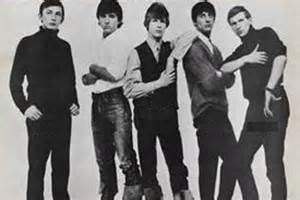
Davie Jones and the King Bees unlabeled

Davie Jones is the teenager in the middle


Well, he had a couple of problems. First, no one was buying any of this records; but secondly, his performing name Davie Jones, the informal diminutive of his given name David Jones, was more-or-less the same name as the performing and birth name of much more successful performer and teen heart-throb: Davy Jones of the Monkees. So, he changed his performing name to David Bowie and remained unsuccessful for a couple more years without being confused with the Monkee or the roughly 100 other David Joneses on the Wikipedia disambiguation page.

Eventually, he got his first hit. Eventually he started changing more than his name. Eventually he helped change our culture, making some dazzling records along the way. There was an immediate experience, and then something remained to be reflected on over time.

A year ago, he died. The official launch post of the Parlando Project here last August was the tribute I choose for Bowie, my setting of Carl Sandburg’s “Stars Songs Faces” that the LYL Band recorded the day after Bowie died. Now for our 41st official Parlando Project post, here’s Dave Moore’s self-written tribute “This One’s for David Jones.” Dave recorded this the same session as we did “Stars Songs Faces.”  It’s a rockin’ little number, because it seems like it’s been a bit since we rocked out. If you see it, you can click on the gadget below to hear it, or if there’s no visible gadget, this highlighted hyperlink will work too.

Butterly

We’re approaching the halfway point in the Parlando Project’s first year, and my plans for 2017 are to feature more 21st century words, when and if I can get permission from publishers/authors to use them here. Today’s audio piece features words from the first “external” 21st Century author to be used here: Philip Dacey.

Philip Dacey

Philip Dacey


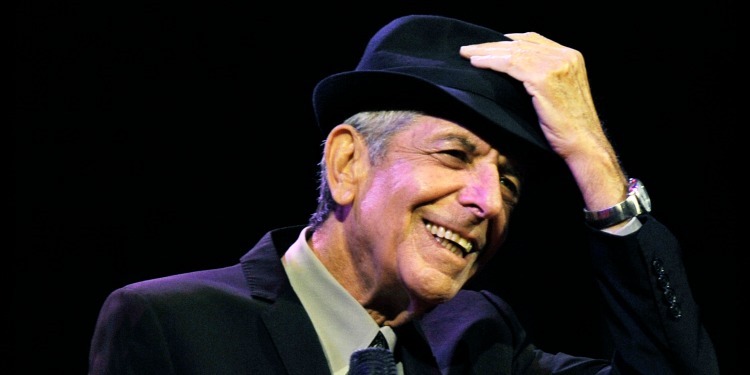
This year has been much commented upon for the death of musician/lyric writers, two great cultural stylists and movers, David Bowie and Prince, foremost among them.  It would be careless to extend the list of 2016’s lost musician/poets for fear of who would drop off the bottom for reasons of length. After all, Merle Haggard or Phife Dog or Greg Lake mean as much or more to some listeners as Prince or Bowie. For me personally, two Fall 2016 musician/poet deaths hit me with specific force: Leonard Cohen and Mose Allison. You might have guessed that, for this is the place “Where Music and Words Meet”—though both are better composers than generally realized, both Cohen and Allison were known for their lyrics.

CORRECTION Obit Leonard CohenMose Allison

A Cohen and a Mose

But that’s not exactly why. You see Mose Allison and Leonard Cohen shared a writing sensibility that I particularly prize: they’re funny as hell. “Funny as hell”—not as merely the common idiom— “Funny as hell,” in that both saw clearly the fallen human limitations and made us laugh at it. Laughter can be a good teacher, and as the profoundly comic blues sensibility tries to teach us, even what we can’t learn or think our way out of can be better endured knowing that it’s not right, that it’s incongruous, illogical, unexpected—in other words, that it’s funny.

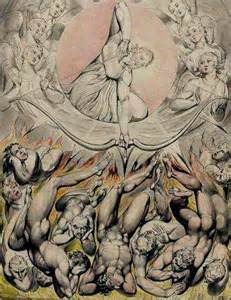
The importance of our musician/poets may be falling in the 21st Century, though the speed of that decent is hard to judge, as we, their human society, are falling too. And if we look below we see the poets of the past: Dickinson, Whitman, Keats, Blake, Frost, Sandburg, Yeats, Eluard and all their heavenly host, and Shakespeare, Sapho, Basho, Homer, Li Bai, and many more that we cannot name and have never heard. We are falling toward all of them.

Blake Fallen Angels

not Phil Dacey


And Philip Dacey falls with us, and he smiles “Look, we are all falling.”

Dacey too is funny as hell. So if you are coming to this podcast from a musician/poet listenership, you could think of Philip Dacey as a Midwestern Leonard Cohen without all the sackcloth and ashes; or that Dacey is Mose Allison without the constantly modulating piano. And there’s another difference: Dacey’s poems find forgiveness more consistently and honestly than Cohen or Allison, or most any other writer.

We are all falling, and Philip Dacey falls with us, and he says “I’ll bet there is an end to this fall, but who knows?”

Butterly: Upon Mistyping Butterfly is a love poem based on simple mistake (as love sometimes is). Phil, like Leonard Cohen—but like Phil—wrote a great many love poems. This one is uncomplicated (as love sometimes is). Mose Allison, wrote far fewer love songs, though I can think of one that is goofy and joyful, like these words of Dacey’s.

It’s not a coincidence that I put my remembrance of Philip Dacey as one of the first Parlando posts, because when I heard that Phil had died I was working on gathering, performing, and producing material for the Parlando Project. I’m grateful for the permission to present the LYL Band performing my reading of this poem of Phil’s. If you like this, you may want to seek out one of Philip Dacey’s books or read more about him online at the philipdacey.com web site. If you’d like a taste of how Phillip Dacey presented his poems, there is a 30-minute video of a late reading by him here.

To hear the LYL Band perform Butterly: Upon Mistyping Butterfly, click on the gadget you’ll see below.

User Agreement for this Poem

Ok, did everyone read those “click here to read” user agreements for their new gift gadgets, software, and computers?  Good, because we’re going to have a little fun with them this time.
 
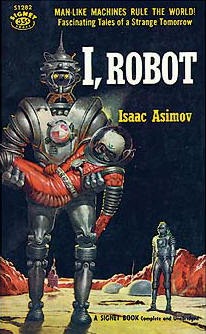
I suppose the purpose those ubiquitous agreements is to disabuse the user of any assumptions they may have about that new thing they now “own”.  Will it work? Can you do with it what you will? Will it be fair and understanding to you? Does the software or device know about Asimov’s laws of robotics—even though those laws won’t be written down for another 41 years? Have I given up my money, privacy and self-respect for the price of a free app? The agreement will let you know that the answer to all but the last question is “no.”

I_Robot_-_Runaround

He didn’t click “Accept”


It occurs to me that poets have been doing the same thing for a long time, intrinsically restricting their subject’s and reader’s rights in various ways, but they don’t even bother with the user agreement. So, let’s fix this right now!

Today’s audio piece, User Agreement for this Poem, spells out those expectations with the LYL Band providing the musical setting. To hear it, you can click on the gadget that will appear below. Please click, but acceptance is optional.

In The Drear-Nighted December

200 years ago this month a 21 year old surgical resident decided to give up his studies to become a doctor and to instead concentrate on the writing of poetry. An interesting decision. He had already rolled up a considerable education debt, and while it’s possible that poetry’s earnings potential might have been greater in 1816 than today, greater than zero is not a high bar.

So how prudent was our young not-to-be surgeon? He had tried his hand at poetry and had published a couple of poems in magazines before his decision. Hmm. Not a great prospectus you might think. In a rough translation for our time, it’s as if the young student had ditched his studies and loan debt for a shot at touring as an indie-rocker, even though he’s only played in his dorm room and doesn’t have a band.

His friends thought he had promise. In the forthcoming year, and with their help, he would find a publisher for his first volume of poems, but his work was mostly unnoticed, and where noticed, the reviews were at best mixed. One reviewer had rich fun with this impudence:

“The spectacle of an able mind reduced to a state of insanity…. It is a better and easier thing to be a starved apothecary than a starved poet; go back to the shop, Mr. John, back to `plasters, pills and ointment boxes.'”

Another reviewer offered this judgement

“We regret that a young man of vivid imagination and fine talents should have fallen into so bad hands as to have been flattered into the resolution to publish verses, of which a few years hence he will be glad to escape from the remembrance.”

We know how this turns out, more times than not: the young fool will be unable to sustain a long career in the arts—and yes, that was the case here. The young surgeon turned poet was to have a career of less than 5 years—but that was because of his early death at age 25. Yup, he dies two years too young to make the 27 club. Our surgeon turned poet was John Keats.

Besides talent, and desire that was the equivalent of foolishness, Keats worked very hard reading poetry, thinking about it, and writing it in those less than five years, producing some of the best lyric poetry in English.

In my own twenties, this encouraged and discouraged me. On one hand, it said I could write and read fearlessly as a young poet in the first half of my twenties; and on the other, as I measured what I had accomplished, I often admonished myself: John Keats died at 25.

Almost exactly one year after he broke from medicine for poetry, John Keats wrote the words for this piece In the Drear-Nighted December. He wrote it after struggling for much of the year to write his first long piece, Endymion, a neo-classical epic in heroic couplets that he never thought he got right.

This is something many writers experience. You struggle mightily to create something. Something big, something impressive. You bring all your craft to it, but it doesn’t quite work. You finish it, or otherwise set it aside, and in the aftermath out pops another smaller-seeming thing that is much more perfect. It’s like the muse says to you “You don’t control me and direct this, and here’s the proof.”

What has Keats done here? First off, those words cannot be read and not sung. This kind of silent melody is not easy to do in English, yet here is the young Keats doing it brilliantly. His images? I’m deep in a minus 17 degree F. Minnesota afternoon as I write this this. His trees with their “sleety whistle,” those branches glued with ice, once flowing water frozen like mineral crystals—I know these things, but Keats has said them well to remind me that we both know.

Keatslifemask

John Keats encased in Carbonite by Jabba the Bad Reviews

And then his sublime last verse, so beautiful I could not help but repeat it. In two verses Keats has setup an nice lyric that doesn’t stray far from convention. To paraphrase: “Hey, look at nature in winter. Doesn’t look like it does in spring or summer at all. Even though we conscious beings know (more than dumb water and trees) that these trees will bud and the brook water will flow again, nature doesn’t care.” Now the third verse: “How smart are we compared to non-conscious nature? We will ‘writhe’ in pain as things are taken from us (and though unspoken: since the image has been of a repeating natural cycle, this will happen again and again). This is not a poem that says “Suffering? Don’t worry, spring will come again.” This is poem that says suffering will come again, as surely as winter. “The feel and not to feel it, when there is none to heal it.” What a line: “The feel and not to feel it!”

A good song for winter solstice, so to hear the LYL Band perform In the Drear-Nighted December, click the play button the player gadget that will appear below.

I Heard of Emerson and Wagons

“Hitch your wagon to a star”. We all know what it means, and we’re wrong.

Well, maybe we’re not exactly wrong: it’s human to draw a variety of meanings from what other humans communicate. The Emily Dickinson poem in the last post is perfect example. I don’t know exactly what Dickinson was trying to say in I Felt a Funeral in My Brain, but the strength of the language and music of her saying of it compels anyway. Poems, particularly short poems, often benefit from this kind of ambiguity. They become, in effect, several poems, poems that are experienced differently—even by the same reader—at each reading. In the end those varied readings become a kind of unstable hologram, a poem that the reader can see around corners in. I think that’s one of the benefits of these Parlando project recordings. You can listen to the words without making singular understanding the all-important goal as you enjoy the musical setting, and you can repeat the process of hearing them. A poem is not an important email from your boss that you must understand correctly immediately.

An essay on the other hand does prioritize clarity. “Hitch your wagon to a star” is from one of Emerson’s essays, and Emerson is a very clear essayist. You can read the published version of the essay, Civilization, where the famous quote appears here.

For the moment, I’m going to pass on Emerson’s racialist and sometimes racist views which saturate much of the first half of that essay. If you are an Indigenous American or a Central African, you may be so revolted by this section that anything Emerson says later may be lost on you. TLDNR: despite some nods to North African, Arabian, Buddhist, and Icelandic (Iceland! Was Emerson predicting Sigur Rós, Jóhann Jóhannsson and Björk?) cultures; civilization is kind of white, temperate zone, coastal U.S./European thing. Gee Ralph, checked your white privilege much lately?

In the second half of the essay, Emerson develops another point. He starts by saying “Civilization depends on morality.” What expectations does that sentence give you? Anytime you read that sentence in the last 50 years, you know what comes next:  a catalog of received, traditional, probably religious, precepts that the author will no-doubt find are being violated frequently by a fallen mankind who is ignoring this at their peril. You expect him to say “Stop screwing around with traditional morality, or civilization is doomed.” Is this what you get?

Nope. He’s soon launching into a rhapsody about the telegraph, and since he doesn’t mention that great mid-19th century technology by name, you could almost dump it word for word into the last part of the 20th century as praise for the Internet. As he talks about the telegraph’s “invisible pockets” you almost think he must be about to invent TCP/IP protocols more than a hundred years early! Instead of the Moral Majority, you get Emerson the Steam Punk.

And then he moves on to describe a then common Massachusetts technology, a mill that was powered by ocean tides, and at his observation of this, he says:

“Now that is the wisdom of a man, in every instance of his labor, to hitch his wagon to a star, and see his chore done by the gods themselves. That is the way we are strong, by borrowing the might of the elements.”

From there Emerson develops the thought that a natural morality of utility, justice, civil order and freedom is—like the geo-thermal power of tides—an undeniable force for progressive change and improvement.

This section of Emerson’s essay is still a complex and novel approach. Emerson’s fellow Transcendentalist Theodore Parker condensed this thought in a way that Martin Luther King often cited:

“The arc of the moral universe is long, but it bends toward justice.”

Is this not proof of the maxim? Emerson in the middle of the 19th century, suffering from the ignorance and misapprehensions of racialism and racism, yet works for abolition of slavery and his philosophy helps inspire others a hundred years later to bring about long-delayed progress?

So that’s why I say we misunderstand “Hitch your wagon to a star.” Emerson would approve the gist of our misunderstanding: that it’s good to set goals high—but that’s not what he meant. What he meant on striking the coinage was more like “align yourself with the natural moral laws of the universe and your struggle for change gains great power.”

Radio Flyer Wagon

Today’s audio piece, I Heard of Emerson and Wagons recounts my mother telling me to “Hitch your wagon to a star” when I was a child. She, like most of us, meant it in the “dream big” way, and in that busy-parent way “yes, that’s nice. Dream big, but I’m busy right now.”  In this piece, the young me is puzzled by just which big dream is the right one—just the thing that Emerson thought he was, in fact, offering guidance on.

To hear the LYL Band perform I Heard of Emerson and Wagons, just click on the gadget that will appear below.


To A Locomotive In Winter

A few years back there was a little Internet brouhaha about a woman who looked like she was talking on a cell phone as she was filmed walking down a street in 1928. “Proof of time travel?” asked the rhetorical askers “In 1928 there’d be no cell phones for 50 years, so she has to be from the future.”

time-traveler-cell-phone
About time we get cracking on Bluetooth don’t you think?

We’ve been talking here recently about Ralph Waldo Emerson, Emily Dickinson, and Walt Whitman, three 19th century Americans. As far as we know, none of them used cell phones, and their considerable accomplishments may have been easier insomuch as they didn’t have to worry about PokéStop locations. But maybe they were time-travelers none-the-less?

One of the remarkable things about Emily Dickinson was that she seemed to be writing 20th Century poetry in the middle of the 19th Century. Oh sure, skeptics will say, she was a genius, and through her genius became influential to later writers. Typical debunkers!

Walt Whitman too, often seems a prophet and precursor of a new age, but maybe he wasn’t a prophet? Maybe he was just reporting from the future, and he knew all his bets were sure things. How else can you explain Whitman’s podcast on gender equality streamed here?

Today’s piece, Whitman’s To a Locomotive In Winter, was written sometime between 1874 and 1876, but it reads like a “Futurist” poem written 40 years later. The early 20th Century Futurists embraced technology and sought to bring it into the arts. Poems, paintings, sculpture and musical works celebrating bicycles, airplanes, motor cars and trains were their stock in trade. Was Whitman a time traveler from 1914 who had read the Futurist Manifesto?

futurism_meccanica_pannaggi_speeding_train

Thee for my recitative!

Another American who paid attention to the Futurists (besides time-traveler Walt Whitman) was George Antheil, a composer, who by the 1920’s was trying to engineer machines to make music. He had this idea that he could realize a musical composition by syncing more than one player piano together so that an even greater mechanized noise could be exactly made. By the 1940s, perhaps after hearing Whitman’s podcast on women’s strength, he was in Hollywood and hooked up with actress Hedy Lamarr—no, that kind of hook up. You see Hedy had this idea for a radio-guided torpedo. One problem: if you used radio to guide it, you could use radio to jam it. What if the control signals could use random radio frequencies Lamarr wondered? How would the controller and torpedo stay in sync? Antheil had the solution, the same thing you used to control player pianos: a roll of punched tape. The tape would tell the radios to switch frequencies in perfect time with each other. You couldn’t jam that jam because the radio frequency could hop at some sick number of beats per minute.

George Antheil with machines

Maybe I should have just developed MIDI instead?


Antheil and Lamarr tried to interest the US War Department on this. Those square faces listened to this idea of randomization and said “No dice!”

hedy lamarr

Not interested in my remote-controlled, frequency hoping torpedo? Can I tell you I invented Fizzies too?


Antheil and Lamarr patented their idea, but after rejection no one cared. Then decades later folks are trying to setup CDMA, the core technology for cell phone transmission. The engineers dig up that patent in a pre-existing-art search—or were Lamarr and Antheil time travelers who had been reading the cell phone engineers’ PowerPoint decks? Maybe that woman in the 1928 street scene is the elderly Hedy talking on a cell phone with Walt Whitman?

So back to Whitman then, and To A Locomotive in Winter, and to time travel. In this piece, Whitman time travels forward to 1956, to Chess studios in Chicago. Earl Phillips kicks off the loping beat. Hubert Sumlin, Willie Dixon and Hosea Lee Kennard fall in. The band is playing a drone their bandleader had heard Charlie Patton play back around World War I, but the bandleader is letting this strange traveler, this gray bearded old white man who says he’s from the over-soul, from the Emersonian universal mind. The bandleader has had to deal with racism for almost half the 20th Century, has had to figure that out as a practical matter, he’s seen enough to not ever be surprised. Walt Whitman steps to the mic…

Walt-Whitman-001

No sweetness debonair of tearful harp or glib piano thine


You’ll need to click on the gadget below to hear the LYL Band portray that that event.


Leaves of Grass

Alas, it’s been a busy week or so with family reasons, and I’ve had to leave Walt Whitman from the last post with his hymn to revolutionary violence hanging out there in one channel.

If you’ve heard the last post’s audio piece, The Blood Of Strangers, recall in that other channel was the tender and exact testimony of someone caught up in gunfire that believes it’s all for a cause. Whitman didn’t write that account, but he could and would speak like that as well. This is Whitman’s great value: he really wanted to write the all of the world. That means foolishness, evil, selfishness, loss as well as tenderness, steadfastness, love—and to write too of all those middle things that are neither: lust, mystery, liberty.
 
Whitman’s use of language is also all over the place. Every reader will find some of Whitman unbearable (as I find his France section I used in The Blood of Strangers) and some sublime.

Rather than write an essay about those qualities of Whitman I’ll offer instead a link to Randall Jarrell’s great discussion of Whitman, of whom he says:

“only a man with the most extraordinary feel for language, or none” (could write as Whitman does.)

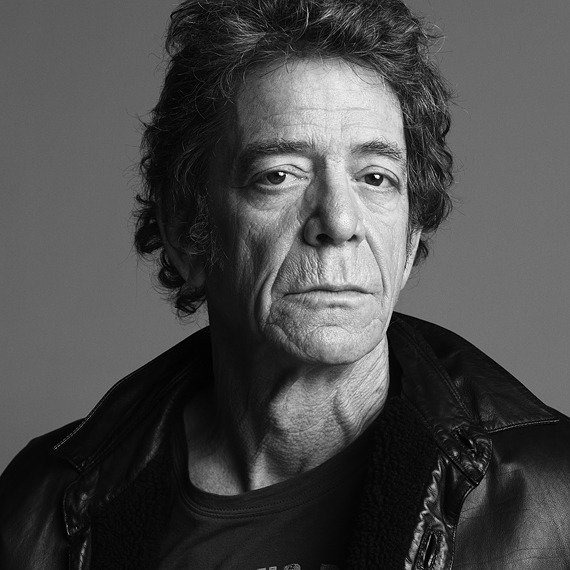
The stance that Whitman takes of someone observing the world in its totality, not coldly, but with frank, almost corny at times, emotion, is one that continues to bear poetic fruits. I don’t know that Lou Reed ever pointed to Whitman, but there are times he echoes that outlook powerfully.
 
Earlier this month, as I recorded some new material, I found myself performing Mark Kozelek’s “The Greatest Conversation in the History of the Universe” in its rambling entirety. I like doing things like this. “The Greatest Conversation” is a very particular individual experience, and that work’s catalog of events and opinions I only halfway share—and that’s what I like. Mark Kozelek can embody Mark Kozelek, and it’s not exactly effortless, for being ourselves is not effortless; but none-the-less, Mark probably feels a familiarity as he finds those thoughts in himself. I, on the other hand, must figure those particulars out, find some common ground with them, translate them into performance. Kozelek’s work in “The Greatest Conversation,”  consciously or not, is also Whitmanesque. Essentially his tale of New York City is as close to Whitman’s experience of New York City in the 19th Century as it is to my experience of New York City in the 20th century. Which is to say: different and the same. As I recorded and spoke as Kozelek, I felt Whitmanesque.

young-whitmanLou ReedMark Kozelek (8)

Three blades. Of grass?

 
Because I do not know yet how to go about getting clearance for sharing work still in copyright to use with the Parlando project, you will not hear the LYL Band’s version of “The Greatest Conversation” today. However, you can hear the original Sun Kil Moon and Jesu version here. NSFW warning: “The Greatest Conversation” contains F bombs and a short account of a sexual encounter.

Walt Whitman could have easily embodied Kozelek, he could have embodied Lou Reed or Laurie Anderson too. He would have tried to embody Muhammad Ali as well. This piece uses one of the best-known sections of Leaves of Grass. In it, Whitman stakes his claim to a universality, a universality so broad it transcends death. The music is from the LYL Band again. To hear, click on the gadget you will see just below.

The Blood of Strangers

As we go forward, following Leonard Cohen’s suggestion “Let Us Compare Mythologies,” I’m going to take you to another very dark place. If Siegfried Sassoon was hesitant to publish the last piece Christ and the Soldier, I too am somewhat hesitant to publish this piece, The Blood of Strangers. For The Blood of Strangers to work it must achieve its aim to be provocative. Let’s take that word seriously: it means to provoke you, it means to make you uncomfortable.

That’s one of the things art can choose to do, but it does not give me any lasting pleasure to do so. As an attempted artist I do not believe I must have any greater insight to things than you do, but the nature of art is to try convey things vividly, and in this case I’m going to convey two viewpoints on revolutionary violence.

A year ago, only hours after the terrorist attack on the rock concert at the Bataclan in Paris France, I was scheduled to record as part of the work of making this Parlando project combining spoken word and music. As a musician, I felt compelled to address this event simply and parochially because the attack intentionally targeted music. I chose to use two texts to examine that event: excerpts from a first-person account by Isobel Bowdery, a member of the audience attacked that night, and a section of Walt Whitman’s Leaves of Grass.

Bowdery’s account is to my mind extraordinary, even more so for having been composed so shortly after the attack. Whitman, in contrast, had much more time with his text, as he famously worked and reworked Leaves of Grass over his lifetime. The Whitman piece I used “France”  first appeared in Whitman’s 1860 third edition of Leaves of Grass and was retained in the final edition of 1891. Moreover, Whitman is particularly writing about the French Revolution, events already over 60 years old.

I believe I need say no more about Bowdery’s eloquent words. They are close enough to our time as to speak for themselves. Whitman’s are more problematic.

Modern American poetry has a father and a mother. Its mother is Emily Dickinson; its father is Walt Whitman. As a child, I can’t help but sometimes take after both parents. The Parlando project has already presented work of Dickinson, but this is the first piece we’ve published using Whitman—and this may be an unfortunate introduction, for Whitman’s France is a somewhat mythologized but unwavering appreciation of violence and revenge in the furtherance of a cause. Near the start I told you that I would not tell you what to think of this, but in the just-hours-past the Bataclan attack I was appalled at Whitman.

I suggest at this point, assuming you are prepared to visit a dark place, that you listen to The Blood of Strangers now and have your own experience of it. Musically this is another piece that takes after The Velvet Underground, a band I’ve talked about before this. My intent in speaking the two texts at the same time was not only a homage to a tactic the Velvets used, it was aimed at breaking up the flow of either text so that you will not experience them in isolation from each other, or as a logical “Point Counterpoint” debate, but rather a simultaneous experience in two different frames. The last half of the piece is an “instrumental” where The LYL Band gets to synthesize their feelings in the aftermath of that attack speaking only with music. Link alternative for those whose way of reading this supress the audio player gadget.

OK, if you’re still reading, what can I say in defense of Whitman?

Whitman Leaves of Grass Table

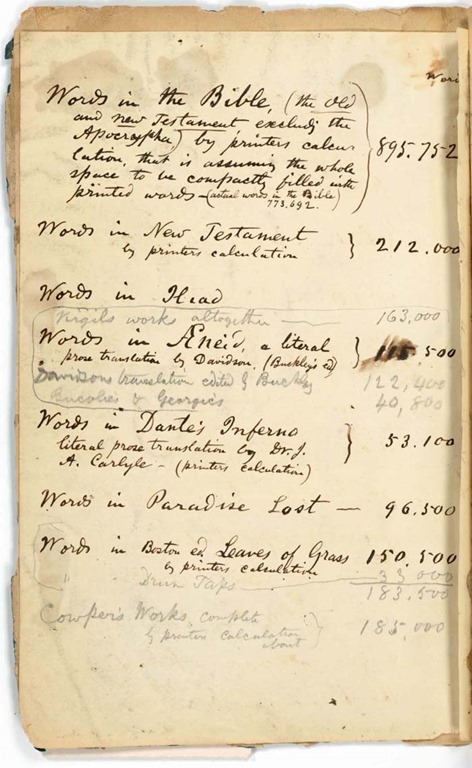
Whitman wanted Leaves of Grass to be all-inclusive. That was one of his core ideas. And this piece, France, was only one small part of this great, lifelong work. In his own copy of the 1860 edition that introduced this piece, he wrote down a table of the word counts of that edition of Leaves of Grass compared to other epic poetic works, proudly noting that he had already exceeded the word counts of the Bible, the Aeneid, Dante’s Inferno, and Paradise Lost. His radical inclusiveness wanted to take in all manner of despised and un-praised things in his great work. Although writing 60 years after the end of the French Revolution, he is writing on the eve of America’s great blood bath, the Civil War. So, as he continued to work on Leaves of Grass, where he kept and expanded the piece called France, he was intimately acquainted with the results of gunfire and bombs. I often thought of that Whitman, the wound-dresser, when I myself was applying bandages or tending to the ill and injured. Whitman famously declared:

Do I contradict myself? Very well, then I contradict myself, I am large, I contain multitudes.

Christ and the Soldier

Tomorrow is called Veterans Day in the United States, but originally it was Armistice Day, celebrated on the day that World War I ended. WWI was a dark dividing line between all that came before and after. Books have been written about only one or two aspects of what changed, but a whole shelf of books could not tell all.

And this year is the hundredth anniversary of one year in that dark dividing line, 1916, when those that thought war was simple, or had to be simple, brought the 20th Century efficiency of the assembly line to killing in the battle of the Somme, where over one million men were killed or wounded.

One of the soldiers in that battle was a poet, Siegfried Sassoon. Last time we took a look at a funny and pious story from World War II, The Deck Of Cards, and had a little irreverent fun with the form of that story in my parody. In this piece, Sassoon’s Christ and the Soldier, the humor is very dark. I’ve heard that it was dark enough that Sassoon did not, or could not, publish it until the war was over.

As usual, I’m largely going to let he piece speak for itself. One thing I like about it is its use of dialog. For some reason, most poems eschew dialog entirely, and I think poetry misses out on a useful device by avoiding it. Musically it’s a mode that the LYL Band visits often, combining organ or piano with electric guitar. I play the guitar part on my Jaguar, a guitar that was once associated with “surf music” but has since had a revival in indie-rock circles. I play it often because its short scale and spring-softened action are friendly to my arthritic fingers.

To hear Christ and the Soldier, click on the gadget that should appear below, but some ways of viewing this blog won’t show it. In those cases, this highlighted hyperlink is another way to play the performance.