On Being Asked for a War Poem

Today’s post returns to the issue we touched on last month with “Acting.” What is an artist’s proper role regarding politics and social issues? And why do artists who engage in politics draw especial condemnation for doing so?

This may be the wrong question. Does anyone ask, what’s the proper role of a lawyer, real estate tycoon, school teacher, doctor or fry cook in politics? None that I’ve heard of lately. My working answer to this possibly disingenuous question is going to be long, so if you can, bear with me.

Probably the only other profession that has its participation in politics questioned in any way would be clergy, and I think there are a pair of oddly similar issues with artists and clergy speaking on politics.

Artists, at least good ones, by their nature tend to be “progressives.” Please, if you can, skip by any associated political stances you attach to that label, it’s honestly the best word I could come up with. By “progressives,” I mean that artists naturally seek change, novelty, and the advancement of new ideas even if they are built on older ones. Scientists and technologists have a similar bent, but artists like to think of themselves as ahead of even the sciences in this regard. Religious leaders, teachers, preachers, tend to be “conservative.” Please apply the same caution to that word as I asked for “progressives.” By conservative, I mean that they see the values in cultural traditions as possibly being given by supernatural forces that are of a higher order than mere human thought, or at the very least, that traditions are time-tested in such a way that they need to be honored, and to extent that seems reasonable to them, for those traditions to remain unchanged.

Are there “conservative” artists. Yes, they are. It’s quite possible to be artistically progressive (important for good artistic work) and politically conservative. Shakespeare presents himself as conservative politically, but was a culture changing artist. And it’s easy for me to think of some 20th century artists who are not “conservative” but “reactionary,” Ezra Pound for one. Caution again, just a label, let me explain: I use reactionary as a label here to denote people who believe that some important elements have failed to have been conserved, and that change is necessary to return to that state or set of values that no longer effectively exist.
 
Are there religious “progressives.” Yes indeed. Remember that religious people overwhelmingly believe that certain values are given by superhuman forces, ones that exceed what humans themselves might honor. There has always been a large part of religious thought that says that mankind is “fallen” and so therefore is in constant need for change toward the good, a good that might never be properly illuminated by fallen human thought.
 
So for both our “conservative” label (clergy) and “progressive” label (artists) we’re talking associated tendencies, not absolute dictates. Humans are complicated after all; but I think that’s one thing that strangely joins concerns about artists and clergy in the political arena. Opponents to conservative clergy and progressive artists see these groups as respectively prejudiced, temperamentally oriented toward resistance to necessary change or moving toward too broad and untested change. In this outlook, their self-selected temperaments that lead to their professions blind them, and so they aren’t viewing things fairly or deeply enough because of who they are. One proof we can see in this is that it’s rare for conservatives to criticize conservative artists in politics, or for progressives to criticize religious leaders who champion progressive causes. The belief here would be that those who go against natural tendencies in their professions must be significantly immune to that issue of characteristic prejudice.

You might next think or ask: well doesn’t a fry cook or a real-estate tycoon have their own prejudices based on their livelihoods? What’s different about artists or clergy?

My answer to that moves to another thing those two professions have in common: they are both pretty much in the same business. When a religious leader gives a spell-binding sermon, or a writer moves us to tears, when a religious visionary tells us what the angels said to them, or the musician brings sounds together in a way that moves us, when the crowd rises as one, with one hosanna on their lips, does it matter here who is at the front of the house?
 
What is important to our question comes after these remarkably similar experiences. Are we in that crowd, and yet not moved to rise in praise like the others? Is there often a let-down, however vague and hard to explain afterward? A way in which we feel unworthy, a way in which we feel we thought we were changed and yet we are not changed? Do we ever feel tricked: fearing, or perhaps even knowing, that the artist or preacher has engineered this with the techniques of their craft, techniques that might work regardless of the content they convey?

Now what if the person at the front of the room is not an artist or a preacher, but a political figure? Don’t all the same things apply?

So all this is a prelude to a very short, yet puzzling piece, with words by William Butler Yeats: “On Being Asked for a War Poem.”

Why puzzling? Yeats is good example of an artist engaged both in spiritual concerns and politics. In the struggle for Irish independence, Yeats was a leader in the idea that Irish cultural independence as a pre-requisite for political independence. If skeptical of armed rebellion, Yeats consistently pushed for what eventually became the independent Republic of Ireland and he become a Senator after Irish independence. One of Yeats inspirations, Percy Bysshe Shelley had famously said “poets are the unacknowledged legislators of the world.” Yeats in effect revised Shelley’s passage by striking “Unacknowledged!”

 William Butler Yeats

Couldn’t make it in the NBA, but an artist engaged in politics

What would you expect from such a man in regards the use of his art for political purposes? You’d guess he’d be all in. Well, he was asked, just like the title says. Edith Wharton asked for a poem from Yeats for book meant to raise funds for Belgian war victims during WWI, and this was his response, which indeed was printed and therefore served its charitable purpose. Here is the entire poem:

“I think it better that in times like these
A poet’s mouth be silent, for in truth
We have no gift to set a statesman right;
He has had enough of meddling who can please
A young girl in the indolence of her youth,
Or an old man upon a winter’s night.”

So why is Yeats seeming to refuse to put his artist’s shoulder to the wheel and write a “war poem,” as so many others did? Well first, Ireland’s position in WWI was complicated, as it was not yet independent. Ireland’s colonial ruler, England, was engaged. The ancient principle of “the enemy of my enemy is my friend” might make an Irish nationalist (at the least) abstain from taking sides.
 
He goes beyond that however, on the face of it saying that a poet—“a poet,” unqualified, not “this poet,” or “given that I’m a colonial subject against my will, don’t ask me for poetry about your war.” Poets, he says, have “no gift to set the statesman right.”

I don’t know what was inside Yeats’ mind, nor am any kind of expert on his work, but in thinking about these things, about how the artist, the clergy, and at times that statesmen, are all in the same line of work; an alternative reading has come to me.

That pronoun “He” that starts the fifth line, why did Yeats not make the antecedent clear? Most readers believe that the “He,” the one who’s suited to pleasing an indolent young girl or an “old man upon a winter’s night”—that last, a character who could be that frightened and lonely farmer in Frost’s poem we recently featured here—is the poet, or a poet performing his rightful role. If so, it’s a surprisingly modest, even dismissive, statement of a poet’s worth. However, the last noun before that pronoun “He” isn’t the poet, it’s the “statesmen.” English syntax rules indicate that “statesmen” could likely be the “He.”  If I write “Frank went to a Minnesota Timberwolves basketball game, saw Karl Anthony Towns, and he scored 42 points.” We know that I couldn’t score 42 points, even in an empty gym, not because of my athletic ineptitude, but because we usually think the pronoun refers to the last applicable noun before it.

karl-anthony-towns

Not the author of this post, but he can play some ball

So did Yeats slyly mean to say that a statesman, like the poet, like the artist in general, is engaged in the same game, fooling the youth and the feeble old?
 
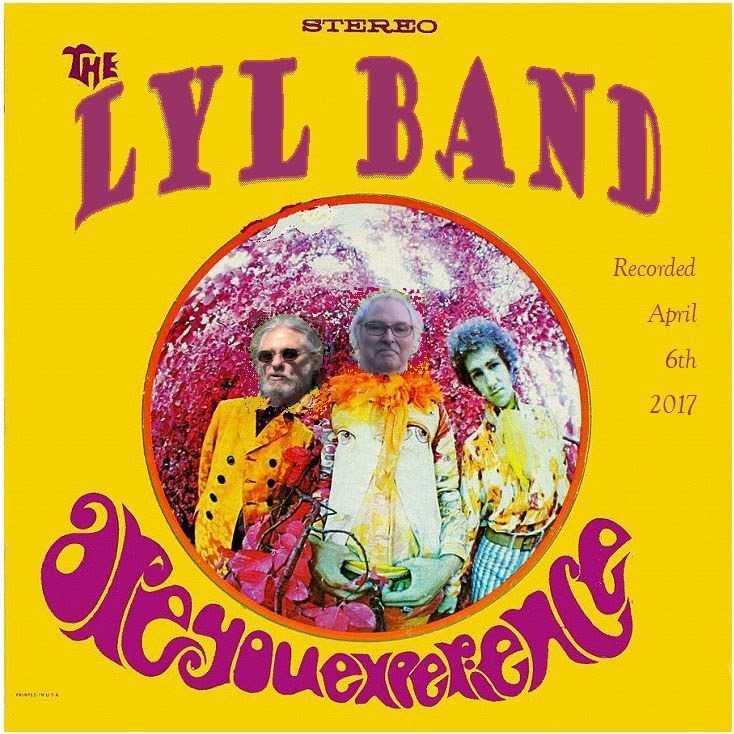
I have more to say about artists with political opinions in the upcoming week, but to hear the LYL Band and William Butler Yeats  “On Being Asked for a War Poem” use the player below.


Today’s post, as I’m reminded specifically today about the clergy and political action by his life, is dedicated to Lester Moore, the father of Dave Moore. You’ve heard Dave reading and playing keyboards here (including the various keyboards in today’s piece).

Cold Minneapolis Nights

Eric Burdon and the Animals had a considerable run of hit singles in the 1960s. To the degree that we remember that output today, it’s to recall songs that Burdon’s voice made famous, though they were written by outside writers: “House of the Rising Sun,” “We Gotta Get Out of this Place,” “Don’t Let Me Be Misunderstood.” All great songs, all great performances, but what’s forgotten are the songs Burdon himself wrote.

That’s not an accident. Eric Burdon as a writer was often topical, writing about social and cultural events while they were current, before the ink had dried on things; and he was heart-on-his sleeve sincere, without protective layers of irony that made Jagger/Richards or Ray Davies harder to pin down. These things sometimes make his writing seem dated or naïve, but I think folks don’t value his commitment to immediacy enough. And then there’s Burdon’s steady stance against racism, something he never gets enough credit for.

new animals

No joke. Eric Burdon and the New Animals


Fifty years ago Burdon and the Animals visited San Francisco and he commented favorably on the warm climate and the altruism; and while charmed by the chemically-enhanced visionary culture they found there, Burdon noted issues with police/public interaction and recommended that the American Dream should include Indians too. That bit of reportage was a top-ten hit record in the US and the UK.

To me, a lot of the charm of that record is its spoken word opening, a deadpan “Dragnet” parodying recital of the worth of experiencing San Francisco. Spoken word—sounds like a Parlando Project idea!

So this is my rough parody* of warm summer “San Francisco Nights” written in and for the cold winter city of Minneapolis. It’s 9 degrees F. as I write this, and the temp is dropping overnight. Snuggle someone if you’ve got the chance.

As Blue Oyster Cult once reminded us: “This Ain’t the Summer of Love”. To hear my Minnesota take on snow emergencies, tow trucks, and chilblains click on the play gadget below.


* Yes, I know Drew Carey did another San Francisco Nights parody, using Cleveland in his version. He got Joe Walsh to play guitar on his, so obviously better than my one-take approximation—but he skipped the opening narration, and that’s the best part!

Bonus Emily Dickinson links


Here’s someone that notes that the sublime Randall Munroe of ekcd.com had some fun with Emily Dickinson. Her post also reminds us of the Gilligan’s Island theme connection. I do like that Munroe has fun with the possibility that Emily was a bit of bad-ass, which the poetry says she was.

This video has lots of laughs, particularly for the introverts among us.

And for those who would note that the comic characterization in that video isn’t true to Emily Dickinson, here one that’s true to Dickenson’s power, still has a some jokes, while noting that use of hymn meter. Wish I could talk that fast and coherently.

Emily Dickinson

Bad-ass? No, just keep thinking I’m only a dainty lovelorn lady.

No Parlando Project music links on this one, but we’ll be back with more on Winter soon.

Winter is Good

Here in the upper Midwest we are now in the middle of winter, and so are in a various ambivalence about it. Part of us doesn’t like the burden of winter, part of us wants to taunt it, and show that we can still have the upper hand over it, and some of us, those who don’t want to stop reading the book of nature, can find a cold, white chapter to puzzle over and admire.

I’ve already spoken here about how Minneapolis was settled as something of a colonial outpost of New England. The author of the words for this episode, Emily Dickinson was a lifelong New Englander, steeped in Transcendentalist thought, so we know she’s read that Winter chapter.

Just before dawn this morning, I jumped on my winter bicycle and took a ride to my favorite breakfast café.  It was seasonable, 20 degrees Fahrenheit and snowing, the streetlight globes surrounded with particulate halos of pelting snow. My tires were crunching the snow, the big knobs of their tread like typewriter keys imprinting the blank pavement’s page. It really was quite beautiful, if obscure of meaning. Summer rain saturates us, inebriates us. Snow surrounds us, but we are never more than a transient part of it, unable to understand its dance.

Roughneck in snow closeup

Winter is good – his Hoar Delights!  Also, there is tea and a frittata involved.


Emily Dickinson’s words are featured here a lot because she’s a great lyric poet and her words fit with music almost without effort. I learned decades ago that Dickinson favored “hymn meter,” that 8,6,8,6 syllable verse that makes much of Dickinson singable to the melodies of “Amazing Grace” or the “Gilligan’s Island” theme song. For “Winter is Good” I decided to throw out that pattern, turning some lines into refrains and marrying it to a melody similar to the Christmas carol “Joy To the World” instead.

Dickinson’s second verse is a doozy. Just 17 words in her text, but it twists so wildly. “Generic as a Quarry”—there’s winter’s white page I suppose. “And hearty – as a Rose-“ not sure where we go there. Dickinson was an avid gardener, and she no doubt missed her summer plants, but my best guess is just rosy cheeks.  And finally, the concluding two lines “Invited with asperity/But welcome when he goes.” A jokey finish that seems like it’s singing the old joke about the pleasure of hitting oneself on the head with a hammer because it feels so good when you stop.

Our various ambivalence aside, that’s what the Winter chapter in the book of nature says to us Northerners, our words arise and are recovered over by the white page; our music only the spaces between silence, soon to be drifted in.

To hear the LYL Band play this hymn to winter with words by Emily Dickinson, click on the gadget below.

A Rustle of Feathers

As promised, here’s my “bird in the house” piece presented as a companion to Dave Moore’s episode from yesterday.

I wrote this about a decade ago. I was going through a bit of a rough spot in my life then, and just as the words place the narrator in the piece, I was alone in a house in the wintertime, acutely aware of the sounds in winter.  In that house, with no other human sounds but my own, I found myself thinking of my aged father, now widowed, living alone as well. In a somewhat morbid, gloomy mood I thought of unwitnessed death, of my father, or myself, dying alone.

Just as in the dream reported in Dave’s piece “The Bird Dream,” the trapped bird image came to me as I wrote the words for “A Rustle of Feathers.”

Odd that that trapped bird image occurred to both of us thinking of our aged parents. I don’t know if this is a common image or archetype, something that waits in our common human unconsciousness, waiting for a writer’s words to awaken. “A Rustle of Feathers,” with it’s aged narrator in an otherwise empty house acutely alert to sounds, shares a bit of the mise-en-scène of Robert Frost’s A Old Man’s Winters Night”  that was presented here earlier this month. Possibly I had read the Frost poem somewhere in my youth, but I don’t believe it was present in my unconscious as I wrote this; but shortly after I wrote “A Rustle of Feathers,” I did think that Edgar Allan Poe’s The Raven”a poem widely known to Americans of my generation—might have been a subliminal influence.

The Raven and Poe

Yes, I am using a plucked feather as a pen—but it’s a goose’s quill—so get out of my house!

Musically I was thinking a bit of a Johnny Cash feel as I composed the music, but I’m not sure that much of that came through in the final result. The guitar sound is a lovely example of a Fender Telecaster using both it’s pickups.

Well the muses keep dancing, and they are hard to keep in our narrow field of vision. The piece got written, and now it’s here for you to listen to. Just click on the gadget that appears below to hear it.

The Bird Dream

You can be in my dream, if I can be in yours. Bob Dylan said that.

You may have noticed that blog post frequency has fallen off a bit this month. Well besides the usual struggle of an upper Midwest winter, both alternative Parlando Project reader Dave Moore and I have had some extra tasks this month. I’ve been helping transition my mother-in-law to new living arrangements, and Dave has been working on editing a book of his father’s sermons.

Today’s post  is a piece that Dave wrote a few years back about his parents, and his father’s experience after Dave’s mother had died.  Like many good stories, it seeks to find meaningful connections in the flow of coincidental events.

And speaking of coincidence or archetypes or something, I wrote another piece myself a few years back. Though I did not mention it explicitly, my piece was also engendered by thinking of my father now living alone after my mother had died. Both pieces used the image of a bird trapped in a house.

I’ll not attach any more meaning than that to this. Today’s piece is Dave Moore’s story, read by Dave. Click on the gadget below to hear his story. Tomorrow I’ll post mine.

Acting

I often wonder when reading opinions when someone stops or starts thinking.

Opinions generally come from two states. One is intuitive emotion the other is from reason, a thoughtful weighing of something or another. In the case of the former, thought has little to do with it. We know something is wrong, wonderful, disgusting, laudatory, whatever from something we feel innately. The child saved from the burning building, the willful act of unnecessary violence—but we feel intuitively about more complex and controversial things too: the results of an election, the worth of some work of art. In the case of art, many of us are comfortable with expressing that intuitive response, we like it or we don’t, we don’t know why, and don’t really care to know why. However, in politics and public policy, that sort of response can seem irresponsible. Furthermore, mere internalized like or dislike is no good for recruiting others to your side.

The other state, the opinion generated from thought, from some comparison of the options and a reasoned judgment brought forth on the results seems admirable. The problem is that too much thought seems to stop as soon as some conclusion can be reached.  There’s no second thought on the thought, no deeper examination of one’s assumptions. There’s a worth to this—speed is a value in decisions not about art after all—and the nature of thought and questions is for them to be never-ending. At some point, one has to stop thinking to ever reach a working conclusion.

I opened this morning’s local paper and saw a man from Crosby Minnesota moved to think about political matters and how they intersect with art. Meryl Streep, a famous movie actor, has expressed political opinions about a TV actor—let me look this up, oh yes—Donald Trump, who has taken up politics and found himself with a prominent new job in the public policy field.

The man from Crosby feels he has found an important thought in this Meryl Streep matter, and his thoughts are expressed as a couple of questions and answers:

“Who wrote those words for her? After all, her whole life has been one of just reading and acting out the words creative thinkers have written for her. She has been good at it, but how can someone who has never had a thought of her own criticize others who have?”

Did he answer his questions too quickly? Did he not expand his inquiry enough?

So, assuming we think about something, when do we stop thinking? We have to stop sometime, but stopping too soon can leave us with meager conclusions and less rewarding art.
 
For that matter, when do we stop practicing our art? In 2013 a local actor (Kate Eifrig) made a decision to stop acting because she felt that continuing was harmful to her. She gave an interview about her decision, which I felt it was an honorable and insightful one, and this audio piece with the LYL Band performing the music was the result. The first sentence is a quote from her interview, which I then developed into the rest of Acting.
 
One thing she may not have accounted for in making her decision: while as an actor she would have been allowed to serve in a political office like Helen Gahagan, Arnold Schwarzenegger, Al Franken, Ronald Regan, Fred Grandy, Jesse Ventura, George Murphy, or Fred Thompson; but she would not, by our man from Crosby’s accounting, be qualified to comment on political matters.

Lincoln shot

I object to this too, but don’t compound it by saying something at the Golden Globes!

In one limited way I agree with the man from Crosby. While thought, sometimes even considerable thought, goes into acting and performing; the performance itself is not a thoughtful process: for it is entering into, embodying, a thought, often someone else’s thought. That is a visceral, not intellectual experience whatever thought went before it.

I would ask one more question, reformulating the man from Crosby’s rhetorical question to a familiar piece of folk wisdom: how can someone who has never lived someone else’s thought criticize others?

To hear the LYL Band perform Acting, use the gadget below.

This One’s for David Jones

Names are funny things. I was recently watching an old TV show from 1969 where Janis Joplin sat on the talk-show couch with a young British-accented rock critic named Michael Thomas. A Platonic dialog of sorts broke out on that show. Janis, the more intellectual than she liked to pretend singer, proposed that rock critics fundamentally obfuscated the experience of music. Thomas, self-evidently aware that he was a member of said tribe, tried to counter that all he was doing was presenting in words the same subjective experiences that Joplin said were the essence of music.

He could have said more, said that he was providing meaning and context for those experiences. She could have replied that meaning was beside the point, or at least meaning was beyond the point of the approximate trivialities that he writes. They could have agreed that experience was the greater part of the meaning of art, but that something remains, and can be changed and reflected upon after the experience and in doing so they could come to the conclusion of poet William Wordsworth, that it’s “Emotion reflected in tranquility.”

But they didn’t say that—commercial breaks stopped the dialog just as it was getting interesting, but I wondered about that guy, Michael Thomas. What had he written? Did he evolve a unique understanding of music as he developed as a critic? There he was, young and good looking, a member of the generation that was going to, like most generations, reform and reconstruct our culture. How did his individual story turn out?

I found a couple of magazine articles online he had written by the time of this TV appearance. Elaborate little hip-bourgeois celebrity profiles of no great import—but then most magazine articles are like that. And he was fairly early in writing about “Rock,” that more serious outgrowth of rock’n’roll that was still new in 1968. There as a lot everybody had to learn then. So, what did he learn?

Turns out there’s no way to tell. Wikipedia has over two dozen Michael Thomases listed on its disambiguation landing page, and none of them are him. Rolling Stone’s archives list a few articles by Michael Thomas, the earliest written in 1970 seem to be by the same man, while the last under the byline are about buying stereo equipment at the end of the same decade.  After that? More than 35 years of nothing I can find on the web. If I want to catch up on what, for example, Jaan Uhelszki did after writing about music in the Seventies, it’s pretty easy. Michael Thomas—not so much.

Like I say, names are funny things. My name is shared by several. There’s a Frank Hudson with some elaborately decorated big-rig trucks. There’s a hand-made English furniture-making firm with my given name. If I narrow it down to music and poetry, I’m still not unique. There’s a jingoist Australian poet, and a  fine Travis-picking Kentuckian guitar player. I’d like to think I might be related to that last one, after all I have some family tree roots from around there, and we both seem to play Seagull guitars at times.

Frequent keyboardist and alternate voice here, Dave Moore has his own eponymous issues, but let’s cut to another name issue.

In 1964 a young English guy wanted to get into the performing business as a singer. Lots of folks did in those days. His first recording, a single with his teenage blues band Davie Jones and King Bees came out that year. He kept plugging away at English pop-blues to no great success, until 1967, when he had a problem.

Davie Jones and the King Bees unlabeled

Davie Jones is the teenager in the middle


Well, he had a couple of problems. First, no one was buying any of this records; but secondly, his performing name Davie Jones, the informal diminutive of his given name David Jones, was more-or-less the same name as the performing and birth name of much more successful performer and teen heart-throb: Davy Jones of the Monkees. So, he changed his performing name to David Bowie and remained unsuccessful for a couple more years without being confused with the Monkee or the roughly 100 other David Joneses on the Wikipedia disambiguation page.

Eventually, he got his first hit. Eventually he started changing more than his name. Eventually he helped change our culture, making some dazzling records along the way. There was an immediate experience, and then something remained to be reflected on over time.

A year ago, he died. The official launch post of the Parlando Project here last August was the tribute I choose for Bowie, my setting of Carl Sandburg’s “Stars Songs Faces” that the LYL Band recorded the day after Bowie died. Now for our 41st official Parlando Project post, here’s Dave Moore’s self-written tribute “This One’s for David Jones.” Dave recorded this the same session as we did “Stars Songs Faces.”  It’s a rockin’ little number, because it seems like it’s been a bit since we rocked out. If you see it, you can click on the gadget below to hear it, or if there’s no visible gadget, this highlighted hyperlink will work too.

An Old Man’s Winter Night

This is the most difficult set of words to read coherently that I’ve presented so far in the Parlando Project. Robert Frost’s “An Old Man’s Winter Night” looks on the page like any other chunk of blank verse (“blank verse:” unrhymed iambic pentameter). Shakespeare wrote whole sections of plays with this rhythm, and the walking one/two with a backbeat of an iamb has a forward propulsion that leads the reader to flow through the words.

The problem is, that even the most iron-lunged and fleet-tongued rapper has to pause for breath sometime. In general, it helps to pause for meaning, where the break for breath adds meaning. However, in the Parlando project I’m seeking to merge the words with music, and the musical cycles also suggest pauses.

Robert Frost larger

I saida hip hop,
The hippie to the hippie
The hip hip a hop, and you don’t stop

“An Old Man’s Winter Night” was tough because I decided on a cycle of chords for the music, rather than basing the harmony around a drone, or simply “through composing” the music to follow the words without a repeating structure. I made that choice unconsciously, but I think I was responding to Frost. The poem seems to repeat itself, and my sense of the syntax was that the sentences seemed to start and begin again, like unto the central incident in the poem of an old person in a room not remembering why he had gone to that room. So the problem was: where to break the cycle of the circular speaking, keeping to cycling verses of chords, while helping the listener understand the meaning.

I got it almost right I think. I was further inspired as I worked by being in the midst of a Midwest below-zero cold snap while recording this.

I normally do not base my readings on others, though it might have helped me to listen to other solutions to my reading problem. Only after committing to the version you’ll now hear, did I listen to Robert Frost’s own reading of his poem and another good reading which does an excellent job of bringing out the meaning. Of those two, Frost aims to bring out the music in his rhythms, but it’s not a perfect reading. Authors have an advantage, in that they likely know the poem’s meaning—but they are also disadvantaged by that—since they know, they cannot always choose what the listener will need to have emphasized. By combining “An Old Man’s Winter Night” with music, I have another advantage over Frost’s own reading: I don’t have to follow the word’s rhythms closely to bring out the music.

“An Old Man’s Winter Night” embodies aged rural loneliness, something that even today’s modern communications can do little to ameliorate. For those of my generation who only remember Robert Frost as an old man, I’d like to point out that Frost first published this when he was 44. Frost beautifully describes being alone, separated, cut off; evoking all the surrounding emotions of that situation—yet he doesn’t once mention loneliness or any of those allied emotions by name. A great trick to pull off, don’t you think?

To hear my reading combined with music, use the gadget that appears below.

Homeopathic Hometown

Today’s piece recounts a common Midwestern experience, returning on a holiday to the much smaller town where one grew up.

For my post WWII generation, these smaller towns retained in our youth much of the vibrancy they had gathered in the first half of the 20th Century. The American rural world was larger then. Car travel was still not universal. Small farming and small manufacturing and small schools hadn’t been efficiently improved to larger sizes. Mass media, which seemed so large and potentially dangerous then, amounted to radio, newspapers, magazines and eventually a trio of gray and silver TV stations as the little rounded screens hovered into homes like flying saucers. So these little autonomous towns continued, 1950 like 1920.

How many of us, old now, can still, in memory, walk down main streets of their towns and small cities of their youth, seeing the storefronts, and hail silently the adult walkers and lost peers who might be walking there too? As I meet and talk to people near my age whose childhood was in larger cities, I find that they too had similar memories of neighborhoods. These neighborhoods were in effect, villages inside their cities—but this piece is about small Iowa towns in particular.

When we grew up, went to college, or left for adventure, marriage, or other work, we left a town and a time. When we went back to these towns, to visit our parents, our parents and our towns are found changed, not into coral bones and pearls, but into places slowly emptier and less vital. The storefronts empty and the eyes less bright; the houses, faded with dead paint and backs swayed.

Full fathom five thy father lies.
Of his bones are coral made.
Those are pearls that were his eyes.
Nothing of him that doth fade,
But doth suffer a sea-change
Into something rich and strange.

Eventually, it is as if the thread of memory has been unraveled from a large ball of yarn, and now the ball is no more.

In this way, our hometowns disappear, becoming gradually diluted of everything we could return to. Today’s piece “Homeopathic Hometown” is about this. Homeopathy is the theory that you can dilute a medicine until it, like our hometowns, retains nothing—or next to nothing—of the the medicine, and yet the solution will somehow “remember” the medicine and its effects.

That of course is how nostalgia works. We remember our personal version of the hometown, and find there is a hole between the molecules as we revisit our hometown. I suspect those without the specific gravity of our memories live now in a different appreciation for the place. It will take time for their own dilution to complete.

Bowie Low

Iowa! What am I doing in Iowa instead of Berlin?
I wanted to see late 20th Century decay, but, hog lots?


Musically, I was trying to emulate here the sound and feel of the David Bowie/Brian Eno “Berlin Trilogy” when I wrote and recorded this in 2015, about a year before David Bowie would suffer his own sea-change. Much of what sounds like keyboard syths in the mix is instead “normal” guitar filtered and delayed. I think the mix works especially well with headphones or earbuds on this one.