The Summer 2017 Parlando Project Top 10

The subtitle of the Parlando Project is “The Place Where Music and Words Meet”. As I mentioned last night, this project, which combines words sourced from a variety of sources with a variety of music, has now reached 100 available audio pieces since it’s official launch 11 months ago. Note that stress on variety. In terms of writers, I have my favorites, and the short format of our audio pieces strongly favors poetry, but the Parlando Project has featured words taken from other sources as well, and some of the poets featured were unknown to me until I ran across them looking for material, and I’m trying to vary the music as much as I can. Sometimes our pieces are as simple as acoustic guitar and voice, as in our most recent post The Oven Bird.  Some pieces have full arrangements with multiple instruments, and some feature spontaneous performances by the LYL Band, a folk-rock band that’s been playing a rough and ready mix of electric instruments and literate lyrics since the early days of Minneapolis punk rock.

We’ve gotten thousands of downloads and streams so far, and though I don’t have the time to thank everyone personally for the likes and the shares, it’s been your passing on the existence of our audio pieces that has grown our audience from a few hundred downloads to thousands. I don’t have time for a social media presence myself. Researching, writing the majority of the music, as well as arranging, producing and recording these 100 pieces has taken an untold number of fascinating hours, but it leaves me little time to promote this work myself. So I’m very grateful for you, the readers/listeners who have done so.

Since we last did did a Top 10 in the spring, that growth in listenership has meant that there is only one returning piece since that list a few months ago. Which piece has the staying power?  Lets start off the countdown in the traditional order, with #10.

10. Adlestrop – a late surge brought this piece with words by fateful British poet Edward Thomas into the top 10, just beating out Zalka Peetruza  and Spring Grass  as the final slot shifted back and forth this week. Adlestop’s   download rate is noteworthy too in that its the newest post to make this list.  Listening to this hazy slide guitar piece I still recall my own muggy summer unscheduled lay-over in Kingham a year ago, but that’s a private moment, though I feel somehow I’ve shared it with Thomas thanks to his words. In a more public way, this poem gains resonance from it’s connection to Robert Frost’s The Road Not Taken and to the Centenary of WWI.


9. Grass – speaking of WWI,  here’s the first of two placings of a Carl Sandburg piece on this Summer’s Top 10. My private memory is performing this with the LYL Band, spontaneously as usual, with no rehearsal or warning as I read Sandburg’s words, and having us stop on a dime for line that starts “What place is this…” as Grass  approaches Sandburg’s ending. For other listeners, particularly those with friends, families, and even ancestors lost to war, Sandburg’s piece asks a powerful  question of forgetfulness.


8. Intro to The Waste Land – One could say this continues our WWI Centenary theme, as T.S. Eliot deals with his personal depression in the context of the aftermath of The Great War in this poem, but it was instead intended as part of our April “National Poetry Month” celebration, which I will always link to the poem’s famous opening line “April is the cruelest month.”  This is one of my composed pieces musically, were I get to write and perform all the parts myself, which means I get to fully realize my personal “vision” of the music (something the listener needs to care not a bit about) and to therefore be responsible for all my own mistakes.  My personal memories of The Waste Land  are two-fold, one a memory of reading it for the first time in college, and though mystified, feeling an intense musical thrust in what Eliot wrote, and then to a time more than a decade ago when I felt just past my lowest ebb emotionally and then performed the last sections of The Waste Land  spontaneously with the LYL Band, and found it as musical as I expected it would be, but also was surprised at how it expiational performing it was. Publically, the downloads of this have been steady, and have continued long past #NPM in April, so it’s either due to your sharing of it, or the poem’s continued fame.


7. To A Friend Whose Work Has Come To Nothing – Irish poet William Butler Yeats is another writer whose work we’ve mined for more than one piece here. One thing I learned while looking at material for this blog was that Yeats too believed that poetry performed with music was a necessary combination. Another investigation, brought on specifically by this piece, was to find out just who the friend was whose work had been thwarted, and what that work was. This has been another piece with a steady listening rate since posted. My guess is that the experience Yeats was telling us about is common to many, and whenever it is encountered it is not easily forgotten. Weeks after this was posted, I watched the former FBI director James Comey testify before Congress, and thought if Yeats was his friend, he would have said the same things in verse to him.


6. Clark Street Bridge – Carl Sandburg gets his second appearance on this Top 10 with this wistful story of day and night on this busy downtown Chicago river bridge. As a personal experience I got to see the Clark Street Bridge this spring on a visit to Chicago, and though the current bridge is almost 100 years old, it’s not the one Sandburg watched and wrote of. Another thing I learned during my trip: his night scene with silver singing stars equal in number to all the broken hearts in Chicago contained a larger number than I would have estimated from modern urban nights, as the poem was written before the widespread adoption of all-night electric lights. What are, or could,  the listeners be attracted to? Well, broken hearts remain as numerous as the stars in a dark sky for sure, and Chicago has taken Sandburg to it’s heart; despite, or because, he says that that heart is broken.


5. The Death of Col. Bruce Hampton – I’ve written a number of direct tributes to musicians that I’ve featured here, but this is the most popular.  Particularly now as the main lot of musicians fall back into the lower levels of the “gig economy” they gave their name to without additional payment, I see them as retaining the heroism of artists in general, who do what they do to general indifference, but now with a much lower chance of professional earnings. This is the only piece in this Top 10 where I wrote the words and the music, but that’s about the right amount, as the Parlando Project is about appreciating “Other People’s Stories” after all. The defensive shells and double-ended poison stingers that artists grow don’t always lead to happy lives, but those who knew Bruce Hampton have grateful things to say about him as a person and collaborator. And by chance, he got to come to the end his life with some of those folks thanking him, while he encouraged the creation of even more spontaneous art. I assume that’s the reason for so many people listening to this piece.


4. These Fought – Here’s one I’m a little surprised about. Ezra Pound may have done more than any other person to create modern poetry, but he’s less read today than many he influenced and championed. And though other modernists dabbled in between-the-wars nationalism and racial theories, Pound became America’s most notorious fascist apologist. And this piece, posted around Memorial Day is an uncompromising denial of the honor in the sacrifices of WWI. If you like your poetry feel-good and inspirational, if you like your poets cuddly and full of civic pride, this piece is not your choice. The LYL Band tries to equal Pound’s fierceness in this performance.


3. Love and Money – Unlike many other poetry and spoken word blogs, we feature other people’s words almost all the time in the Parlando Project. Of course, there’s nothing wrong with self-expression, but in following the Project’s dictum “Other People’s Stories,” we don’t do that often. Perhaps in consolidating that stated aim with the catalog of thought-provoking words that Dave has written over the years, many of the Dave Moore pieces I’ve posted so far have been performances where I perform Dave’s words–a mixed blessing that–because, to steal an old Columbia Records ad from the 1960s “No one sings Dave Moore like Dave Moore.” I was sold on this one the moment I heard Dave sing the first line of this piece as we spontaneously performed it, and there’s no way I could do it justice.  The popularity of “Love and Money”  probably has the same private and public reasons, it’s just a good song. Oh, and Dave’s pounding electric clavichord performance might have something to do with it too.


2. Up-Hill – Here’s an example of a poet I knew close to nothing about before looking for material in the public domain to adopt for Parlando performance. Having a long time love of the Pre-Raphaelite painters and knowing that poetry and poets were part of their artistic circle, I went looking for Pre-Raphaelite poems that I could relate to musically. I kept striking out. I really wanted to find something by Algernon Charles Swinburne, because, well, “Algernon Charles Swinburne”. Is there any name that says more clearly that you don’t give a damn about sounding cleanly modern and approachable? Only Ezra Pound’s invented persona “Hugh Selwyn Mauberley” comes close. Alas, I could find nothing I felt I could inhabit–and then I came upon some of Christina Rossetti’s shorter poems. Read this on the page just once, and you know it’s crying out to be sung. Perhaps Up-Hill  draws listeners because it’s a Christian religious poem, but Rossetti’s writing personally connects with me because it’s imagery and expression is so non-abstract and modest.


1. Frances – Here’s the only repeat from last Spring, and it’s still on top, with almost double the total listens since released of the any of the others on this list. I released Frances  on a lark to mark US President’s Day last February. I suspect it got picked up and linked somewhere more popular than other pieces that have been linked from here, but I haven’t been able to find out where. Here’s an example of how relatively popular it’s remained, long after it’s author’s, the first US President George Washington’s, birthday this winter: it was the 8th most listened to piece from the Parlando Project in May, still 19th in June, and currently it’s the 13th most listened to song in July, with a hundred alternatives competing with it. What accounts for this? Well it’s a love song for one thing. Maybe it’s the pared back Pixies soft/loud arrangement? It’s a mystery.


So that completes the Summer 2017 Top 10. I plan to do another one next Fall.  If you’ve got a favorite you’ve found here, do what someone must have done with Frances, and go ahead a link to it to see if it can get more listeners.

Implications of Fireworks

Today in the United States is Independence Day, a day celebrated with summer cookouts and fireworks explosions. Like many obligatory holidays in our modern age, what we are celebrating becomes obscure. Yes, Americans know it’s Independence Day, but what we think of as we celebrate is a mélange of things.

What makes up this celebratory mixture? We celebrate the warmth of summer, particularly here in the northern parts of the US where eating outside is a special season. Our children are celebrating what still seems like an endless summer away from school. Stores have banners of firecrackers and flags luring shoppers who have the day off from work. And we celebrate a diffuse patriotism affordable because America is a preeminent, powerful nation. Our modern patriotism is not short of convictions—far from it, our country is prominently divided by convictions—but that too is possible by the relative wealth and power of today’s America.

signing the declaration

“Yes, treason against the crown and the divine right of kings, and we could all hang tomorrow,
but  can I add a part about dispensing with the noisemakers? I could use a little sleep tonight.”

But the event we are celebrating is a sharp and definite thing. 241 years ago a group of Americans started an anti-colonial movement, and in the furtherance of that, they soon were to found the first modern republic. Those who did this many years ago perhaps did not know, or even think of themselves as anti-colonialists. Some merely had issues with particular colonial authorities and decisions. Some were indeed bound up in an immense evil of colonialism, human slavery exploiting yet other peoples and nations. Still, we should seek to understand them as their idea became understood through the Declaration of Independence they signed today: that the rights of kings and empires were not heaven’s design—rather, human rights were.

And as their rebellion against kings and empires evolved, it strikingly lead—not to the setup of a new king, or a new, locally-sourced strongman—but to a new form of government, a republic. Once again, these were not perfect men—their government “Of the people, for the people” was at first for white male men of property—but they were men of such devotion to the republican idea that they would not let even the worthiest of their lot become king. That was unprecedented, and even in all the time since, not one in ten or one in a hundred rebellions immediately ends in such a way.

I know not all who read this are Americans, but those are the two remarkable things that we celebrate here in my country today. And of these two things, the second is the most rare, and the thing we must take care to carry within us: that winners are not rightfully kings.

That reminds me, there was another Independence Day tradition, one that has fallen by the wayside: the patriotic speech in the town square. I guess I’ve just revived that. Today’s audio piece is based on another text by Dave Moore, but it’s my music and performance of it. When I asked Dave about “Implications of Fireworks”  a few years back, he indicated it was more or less a diary of his impressions of a July 4th he had experienced. As filtered by Dave’s mind that day, those holiday explosions, cracks, and meat smoke brought different, less celebratory, feelings. If our independence was won with cannon and gun fire—if it’s maintained today by the same, and also with bombs made of seeds of sunfire—it is also must be maintained by, and be for, something more than that.

To hear my performance of Dave Moore’s “Implications of Fireworks” use the player below.

Wally Wood

Back when I was kid there was something we were taught to be concerned about, our “vocation.” This was somewhat like the perennial question “What do you want to be when you grow up?” but with a religious and spiritual aspect.

As the word “vocation” suggests, we, while still children, were asked to consider our calling, what task God would ask us to do with our lives. Yes, there as an expectation inherent in that, that some of us would find that we had been called by God to become Christian clergy, but at least in my small town and church, this was not set out as the answer most of us were to find. It was assumed that each of us would obtain a distinct answer fitting to our talents and the universe’s needs.

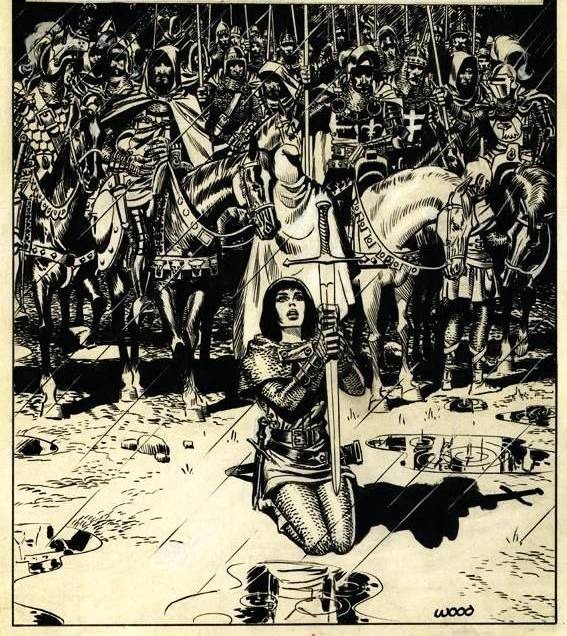
Jesus BaptismWally Wood's Joan

Religious paintings depict a calling as a clear and vivid action,, like in a comic book

The folks who provided religious instruction in my town were practical people, and I couldn’t picture any of them expecting us children to be visited by spirit birds, or hear mystic voices to lead our country into battle. Rather they expected a small inner voice to whisper to us that we should be family farmers, or mechanics, or nurses and so forth. In my family, I could look to a grandfather who I never knew, who was called to the Christian ministry, or to an uncle who followed his father’s path, or to the more complex stories of my parents, whose vocational path I’ll defer talking about for reasons of space now. It never occurred to me, but I could have asked my teachers or myself about my great-grandfather and namesake, who would have had to have been called to be a common laborer by this scheme. Somehow this talk of calling and vocation seemed a bit grand a process for that.

I never knew what to answer that question with until my late teens when I decided that I would be a poet. That’s certainly a grandiose enough answer for this religiously-infused process, but even in my naïve youth I knew that meant I’d be doing something else beside that with my lifetime. So, a calling, but no answer to what I wanted to be when I grew up.

Most decisions to become an artist of any kind expose a person to things that will mess up one’s life. First off, you are going to do something that is likely unlikeable—you are going to privilege your own interpretations of our common life as somehow more valuable than modest silence or undecorated space. Even successful artists most often have a majority of people judging what they produce as not worthy of their time, or generically replaceable by something similar but different from what you do. And these odds of rejection, combined with the concentration of effort needed for much artistic work, make many artists defend their self/center with self-centeredness.
  
So there, as so often here in the Parlando Project, I’ve violated one of the principles that I set out to follow: I’ve spent time here with my story, talking about myself. Alternate Parlando Project presenter Dave Moore avoided this in today’s episode “Wally Wood”  which Dave gave the longer title “Wally Wood’s Co(s)mic Philosophy.”

Here’s what Dave had to say about the piece:

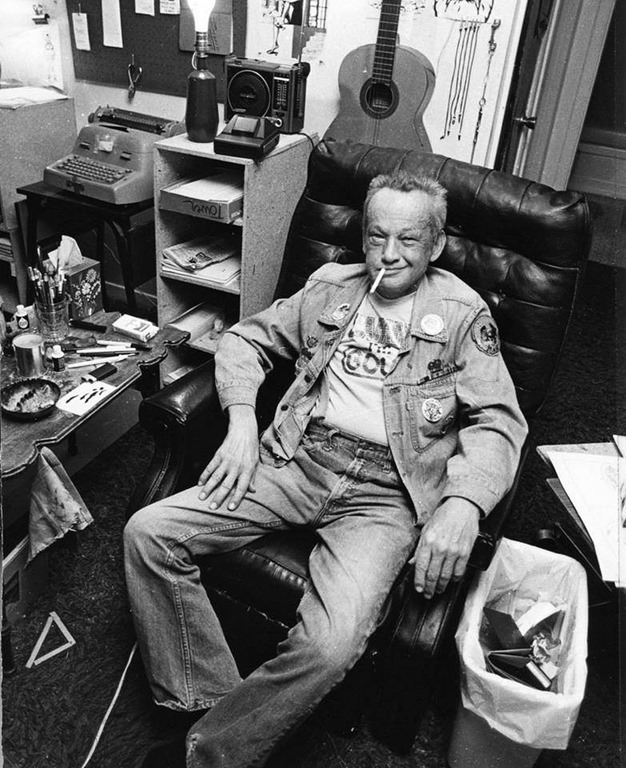
“Wallace Wood was one of the great comic book artists of the fifties and sixties.  His detail work for EC Comics and Mad is still astounding to look at.  Like many, he was also an alcoholic, and increasingly bitter as he aged.  His words in the song are from a late interview in some fanzine.

I can’t draw, so far be it from me to draw conclusions about success or happiness.  Or the scope of a talented artist’s frustrated Fifties ambitions.  What strikes me most are the words ‘And yet’ after a pause.  No matter what he says, no matter how things ‘work out,’ it was worth it for me and all the thousands of others who enjoyed his work.  Go look him up, you won’t forget him.”

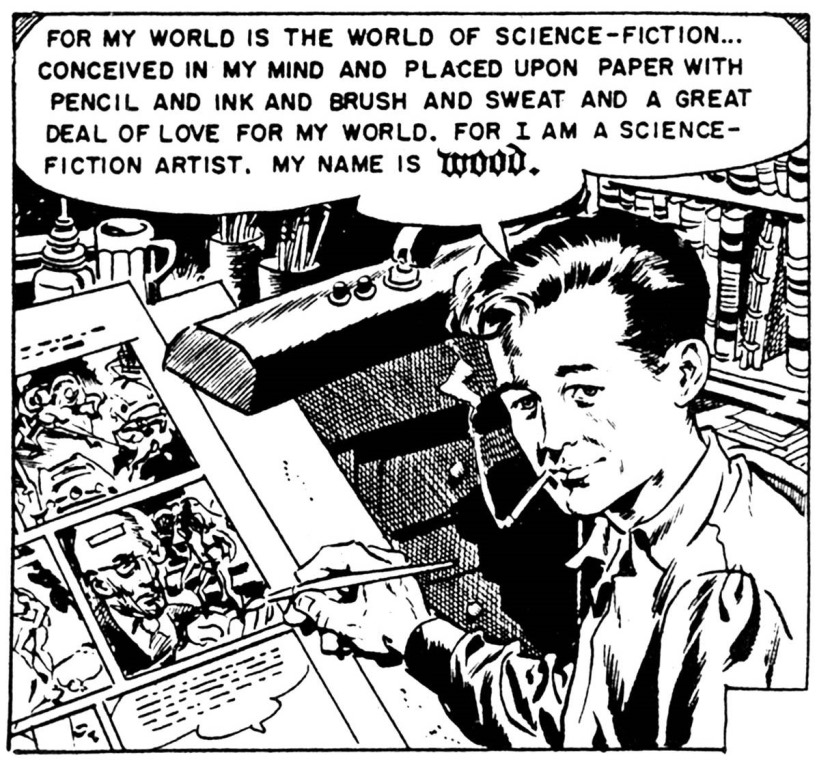
Wally Wood Self PortraitWally Wood - Art Ain't Pretty

Wally Wood, combustible master of line

What did Wally Wood add the “And yet” to? Listen and find out, using the player below.

Love and Money

Poetry turn-offs? There are lot of them. There’s the fatiguing stretching of language that can wear one out. There can be an air of paradoxical “Let me tell you what I think/you wouldn’t understand” attitude. While modernism has greatly reduced this, there remains an expectation of grand subjects treated solemnly—but then the modernism that gives us a wider choice of diction and subjects, also may hand us a confounding abstraction of words that refuse to work the way we’re accustomed to having words work.

Every one of these things has kept me from enjoying poems, and yet I’ve committed every one of these annoyances myself with my own writing. But what if we could relax, what if we could be told right at the outset that you won’t be tested on the meaning of the poem?

As it turns out, our culture has done that. We call this experience of poetry, without any need to immediately stand and deliver meaning, song lyrics.

With the Parlando Project we often test this theory by applying music to some well-known poetry meant for the page. This pulls the poetry off its silent ink and puts a human voice in it, letting you hear the sound and tenor of the words—but the music adds something else we’ve been culturally trained to do by decades of modern songwriting: it lets us experience the meaning of phrases within the song lyric in a subconscious, non-linear way. As listeners to songs, we sometimes grab the chorus or “the hook” first, and only later begin to appreciate how the verses are shading the experience of the refrain, and in-between times, the music lets us unselfconsciously tap our foot or shake a tail-feather.

Slave freedom paper2

Find the cost of freedom. In this case, a bit less than $172.

I hear alternative Parlando voice, Dave Moore’s “Love and Money”  less as a page poem and more as a song. Over various listens, I think I have drawn some tentative meaning from it. When I first heard the opening lines, I thought I was hearing part of an Afro-American slavery story, where freed slaves sometimes found themselves obligated to buy the rest of their family, because in that outrageous framework, property rights were the only rights that might be honored. As the song progresses, it’s jumps elsewhere, including a verse clearly set in this century. I hear the concluding verse as back in times of slavery, or some equivalent evil time, but the journey from beginning to end exists with a refrain that “our only chance comes down to love and money” and a wicked interlocking riff between Dave Moore’s electric clavinet part and my own Telecaster guitar.

So go ahead and listen to Dave Moore’s “Love and Money”  by using the player below. You won’t be asked to write an essay on it or anything.

The First Cuts are the Deepest

Earlier this month I posted the Parlando Project audio pieces that were the most listened to as of the start of this Spring. Turns out it’s a pretty good mix of what Dave and I are trying to do with this combination of music and words. However, in looking at the stats for the Parlando pieces, it looks as if a lot of readers and listeners are coming in partway into the project, starting around the beginning of this year. That’s fine. I think I’m getting a little better as I work intensively on the goal of 100 Parlando Project pieces by August of this year, but I think some of the early pieces are missing the listenership they otherwise might have gotten if I’d posted them later.

Since we’re still in National Poetry Month (#npm17), it stuck me that this might be a good time for some of our audience to catch up. So here are a few of the 2016 Parlando Project “deep cuts” from last year that you might want to check out:

Stars Songs Faces.  I wrote the music for this Carl Sandburg poem as my tribute to David Bowie in January of 2016, and it was the piece I choose to kick-off Parlando. Although I’m not the first to write music for these Sandburg words, I still like what I did, and the LYL Band performance realizes my intention well. This piece also reminds me that it’s been awhile since I posted a Carl Sandburg-based piece here. I’m working on one this week, but the orchestration is not going as well as I’d like it to yet.

The Prairie.  One of things I enjoy most about coming up with material for the Parlando Project is finding things in the public domain poetry cannon that I’d never read or even heard of. This is one of them. William Cullen Bryant was not on my radar until Dave Moore visited the Mississippi river valley mounds last year and began to write about them himself. This audio piece is on the longer side, which may account for the lower number of listens.

The Green Fairy.  Here’s a good piece written and performed by Dave Moore that hasn’t been listened to as much as some other pieces he’s written here. My notes in the accompanying post were written in mystery about the actual intent of Dave’s words. I’ve probably got some other poets’ intent wrong too, but remember that’s one of the points of the Parlando Project: you can appreciate poems when they are accompanied with music just as one appreciates song lyrics (or even music without words at all), as bits and pieces of language that sound good, or as lines or phrases that attach themselves to you with little pieces of meaning without any requirement that you understand the whole thing.

This is the Darkness.  I ascribe the lower listenership on this one to the dark tone. And indeed it might be an odd piece to listen too in the late Spring as days get longer and eventually warmer here in the upper Midwest. None-the-less, living around the 45th Parallel Minnesotans and Canadians should understand this.

Christ and the Soldier.  When I was my son’s age, I was following a day-to-day summary in the newspaper, a series called “100 Years Ago in the Civil War”  which covered the events just out of memory of the living in the American Civil War.  And now, since 2014, I’ve been informally following the centenary of World War I, which has similarly passed out of the memory of the living.  Siegfried Sassoon’s poem is a biting comment on WWI from a veteran of that war’s trenches. You know that old saying “There are no atheists in a foxhole?” Sassoon has a more complex view.

Mr Nelson

It often takes a while to know who has died.

When Prince died a year ago, the shock-wave for fans was breath-taking, the air went out of the room, and for each of them there was something that went missing when they got the word: the promise of new music, a memory of concert or a night of dancing, a period of their youth now seemingly past all reliving, and probably a dozen or more other private things.

If it seemed impossible that Prince had died, it was because it was impossible that he had lived. About him it could be said that he could dance like James Brown, sing like Marvin Gaye, play guitar like Jimi Hendrix, write a song like Curtis Mayfield—and arrange it all, and play it all, and record it all for himself or other artists. He was the most astonishingly broad musical artist of our time.

And he did this over and over, for decades, to the point that no one could ever really keep up with all he did. I suspect the longer time we now have will allow us to discover, in his work, things that are still overlooked, ideas that he had that somehow weren’t understood, things we skipped over because we thought Prince should be doing something else.

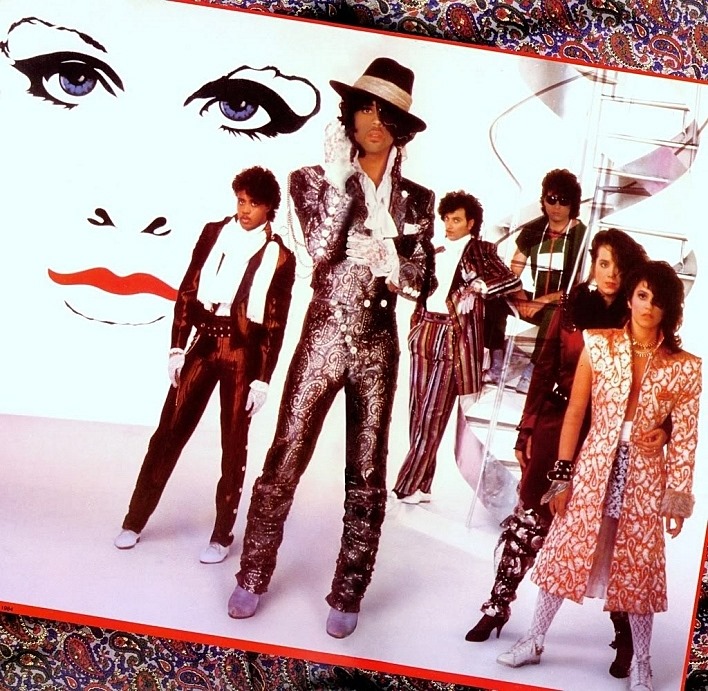
Tonight, as I write this, I’m struck by one other thing: has there been enough recognition that Prince was in the vanguard of bringing women instrumentalists into the context of the rock band? Let’s propose a rock band gender integration variation of the Bechdel Test: name a successful band with two prominent women instrumentalists before The Revolution that wasn’t a “all-girl band.1” Every example that comes to mind (and it’s not like there are hundreds of them) stops the count of women players at one. I can think of only two 2, and neither achieved a modicum of the cultural prominence of Prince’s band.

Prince and the Revolution

It’s a little known fact that Prince was about two feet taller than the rest of the Revolution.


And he did it again performing with his late career power trio, 3rdEyeGirl.

That’s just a part of his career of course—but please, this isn’t some kind of rote identity politics thing, or merely a piece of trivia like “Name a band with two left-handed Canadians?”. This is half the human race!

With the Parlando Project I get to audaciously tackle the work of a lot of great writers. I use their words unashamedly and try to find something I can relate to you about their work. For some reason, perhaps because Prince Rogers Nelson embarrasses me as musician, I’ve been hesitant to post this episode, and to share this modest musical piece The LYL Band wrote and performed about his leaving.

But I’m going to do it anyway. The best parts of this piece “Mr. Nelson”  are the work of Dave Moore: most of the words and the electronic piano part. Footnotes at the end of this post for the obsessives. The audio player for “Mr. Nelson” is right below this. You can dance if you want to.


County Joe MacDonald and his All Star BandJoy of Cooking

Guy in the middle isn’t Prince.                  Joy of Cooking, pioneers.

 
1 I exclude the “all-girl band” not to denigrate the talents of those who performed in them, or because a band somehow needs men to be valid, but because however intended, the result in the 20th Century cultural context was seen largely for its novelty value.

2 The two bands I can think of: Joy of Cooking and the Country Joe MacDonald led “Paris Sessions” era All-Star Band.

Experience

Here’s another piece by Dave Moore. Dave plays almost all of the keyboards on the LYL Band music you hear here on this blog, and without his contributions I’d get tired of hearing my own voice all the time myself. Today’s audio piece “Experience”  started out intended as a poem, as Dave explains:

“My friend Ethna mentioned the Common Good Books poetry contest, which paid cash, on the theme of experience.

Naturally the next word in my mind was prurience, which in this version I ‘eschew.’ although I changed the printed version to ‘avoid.’  Still, I love the roll of ‘eschew prurience.’

I set out to state that every moment is an experience, and most of them are accidents, which constitutes the glory of the show.  But – But seriously…
When I brought this lyric to a LYL session, I draped it around a tune, trying to see how the words spilled over the dam.  Thus edified, I tinkered with it some before submitting to Common Good.

Of course, I lifted ‘life is but a joke’ from Dylan’s ‘All Along the Watchtower,’  but it worked so well in the stanza (is it a chorus?) of philosophy. I chose to leave the ‘do’ and ‘done’ lines as ironic music which states the case.

So, am I experienced?  Conclusively, I can say yes or no.”

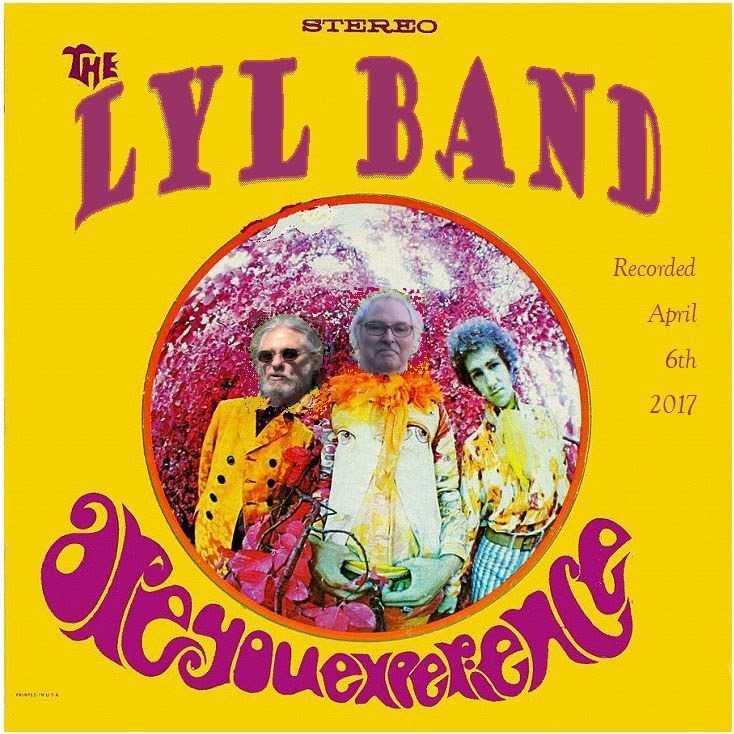
LYL Are You Experience Faces

“For those of another generation, he’s all but to make fun of,
but they do not understand the experience…”  Eric Burdon

Experience is an interesting topic for this book store’s contest. William Blake titled one of his collections of short lyrics “Songs of Experience,”  after which I cannot think of the word without thinking of Blake—but Blake also put much store in the auguries of innocence. Ralph Waldo Emerson toured the country as a speaker, but his contemporary Emily Dickinson famously constricted her travels as she grew up. Emerson’s mind worked best traveling widely, as in his essays. Dickinson mind produced compressed words pinned in a matrix of her famous dashes, and it’s Dickinson’s poetry that we are more likely to turn to today.  “Like a dream, experience is being where you are” Dave says.

Vinyl lovers, don’t be mislead by the cover shown above, The LYL Band’s version of Dave’s “Experience”  doesn’t feature Stratocasters on fire, which is not say that we won’t do that later. Use the player below to listen to “Experience,”  or some innocent instrument might get hurt.

How We Make the Parlando Project Pieces

I started work on the Parlando Project early in 2016 by learning how distribute audio pieces via web-based player I could embed here in this blog and also through “Podcasting” where audio is listed for download on directories such as iTunes, Google’s Play Store, Player.fm and the like. Throughout the spring and early summer of that year I worked with Dave Moore to record some pieces to “bank” for a launch I planned for August 6th.

Frank-Dave thoughts CLEANED

Dave and I look exactly like this today. Or we could if studied how to use Photoshop.


Dave and have written alongside each other for a great many years and played music together since 1979 in various line ups of the LYL Band. Adding the Parlando pieces to what we played seemed a natural outgrowth. Generally our approach to recording is very casual, particularly by modern standards. A great many things are not just first takes, they are only takes,  where the non-composer is working from a lead sheet on a piece they haven’t heard before. This is the same process favored by Miles Davis and Bob Dylan, comparisons that too much favor us as musicians, but the effect on the kind of playing that results is  there, even at our level.

First off, mistakes are inevitable, but you learn to try to understand mistakes quickly and try to find their hidden intentions. You listen intensely, because you have no other choice, there is no routine, learned,  part to fall back on. Arrangements just happen. The results are not polished, but in the best ones you can feel the excitement in the room when listening. And we give ourselves a punchers’ chance. In a 2 hour session we might record somewhere between 10 and 15 pieces. Most of them will be wild punches that don’t land, or strike only a glancing blow, but you only need to connect once.

Not everything we record is for the Parlando Project. Some things are for our own purposes and include material we do not have the rights to share with you.

Other pieces, the ones I record and play myself, follow a different path. I can think and work more compositionally if I choose, writing and considering parts. I record them myself, playing all the parts in turn. This is the modern way to go about it. I can achieve, within my limits as a musician, what I want to achieve. The cost is that I cannot achieve what I do not think I want to achieve, which can only happen when other musicians are involved.

I’ve looked for words to use for pieces continuously during this period. Since I have no knowledge on gaining usage rights for published work, almost everything Dave or I didn’t write here comes from works that are out of copyright and in the public domain. This process has been one of the unintended joys of the Parlando project, as I’ve learned more about writers I knew only in highlights like Yeats and Sassoon, and discovered writers I knew almost nothing about like Wheatley and Tagore. I’ve revisited old favorites of mine in Blake, Sandburg, and Dickinson, but also dipped my toes into translation with Du Fu and Pasternak.

As of yesterday’s post, we’re up to 67 pieces available here since the launch. My goal is 100 by the August 2017 anniversary. I’d estimate I’ve put perhaps a thousand hours into the Parlando Project since the start of 2016, all to produce less than 5 hours of audio combining surprising words with music as varied as I can compose and play. My goal is to introduce you to old work you thought you knew, new work that you will be happy to know, and to use the combination of music and words to create something uniquely powerful.

As we celebrate National Poetry Month I’m setting an April goal to have the most active month here in terms of the number of posts, of new audio pieces to stream, and of numbers of downloads. The audience grew substantially in March as folks are discovering us in various ways. If you’ve found something of value here, you can help us out by linking to your favorite piece on your blog, on Facebook, or on Twitter this month.

The Spring 2017 Top 10

Since this is National Poetry Month in the US I’m hoping that I can exceed the usual 7 to 8 posts a month pace I’ve kept up here since the Parlando project began last August. The next audio piece should be up this weekend. For those who haven’t read the early posts here about what the Parlando project is, I usually summarize it as:

The Parlando Project is words (mostly, but not always poetry) accompanied by music (various kinds).

The Parlando audio pieces have been downloaded by podcast subscribers since launch almost 4,000 times. Given that we are now past the halfway point, I thought it might interesting to let you know what the “Top Ten” downloads have been so far. In Casey Kasem form, we’ll count it down upwards from 10 to 1. There are links in the list if you missed one of these audio pieces and the posts about them.

10. The Spring of Dead Things. One of the 3 pieces in the top 10 where I wrote the words. That’s OK with me, but one of the Parlando Project aims is “Other People’s Stories” which leads me to feature other people’s words more often than not. There’s lots of folks reading their own poetry out there, which is good in itself—but there’s lots of people reading their own poetry, so think there’s an unmet need for reading others work.

9. The Garden of Trust. One of my personal favorites. Weston Noble’s thoughts on the power of music, hard-won thoughts he expressed after a lifetime of work, touched me the moment I first read them, and my feeling only deepened when I found I was able to hear him express those beautiful thoughts in a recording made before his death. My thanks again to Luther College for allowing me to use this recording in my piece. If you want to sample one thing that the Parlando Project represents, and it really doesn’t represent one thing, start here.

8. I Felt A Funeral in My Brain. Writing the Parlando music and considering the words for performance has deepened my appreciation for Emily Dickinson, whose words we’ve featured more than any other writer, and I rather like my music for this one as well.

7. For John Renbourn Dying Alone. I hope some of the listeners to this piece who like acoustic guitar music find this a gateway to Renbourn’s music.

6. Arthur Koestler’s Death Song.  Although we’ve featured Dave Moore reading and singing his own work here, and there will be more of that to come later this year, his Top 10 appearance is for a piece where he wrote the words and music, though I performed it.

5. Eros. I sometimes wonder if this one gets a bonus from those searching for or intrigued by its title. Another one where I’m happy with how the recording and the music turned out. I remind myself that I should learn more about Emerson’s Transcendentalist revolution.

4. 2ebruary. There’s no telling what the “bonus” may be that’s lead more people to this piece. It could be the discussion of the movie “Patterson”  in the notes, or it could be the connection to bicycling. Or perhaps it’s the connection to Frank O’Hara’s “I do this, I do that” poems that I treasure and try to emulate. If you like this, I have another bicycle ride poem coming up later this spring.

3. Boris Pasternak’s February. We’re into the top 3 now.  I was remarking to Dave Moore during a break in our recording session yesterday, that February rather than April should have been picked as National Poetry Month, as the deep dark end of winter engenders more cruel monthly poetry. Pasternak gets to help prove that point here. One regret I have with what we’ve done so far with the Parlando Project is that I have not received permission to post our version of Margaret Atwood’s “February”  here.

2. Hymn To Evening. Speaking of things I treasure, hearing Phillis Wheatley’s story on the Freedom Trail in Boston is another one. Art is this thing that, unlike even persons, no one can own. Colonialism is a system that crosses oceans to take things from other lands for profit. Art is the system that sends out messages that can crisscross time and oceans with the information inside our breasts.

dollar-bill

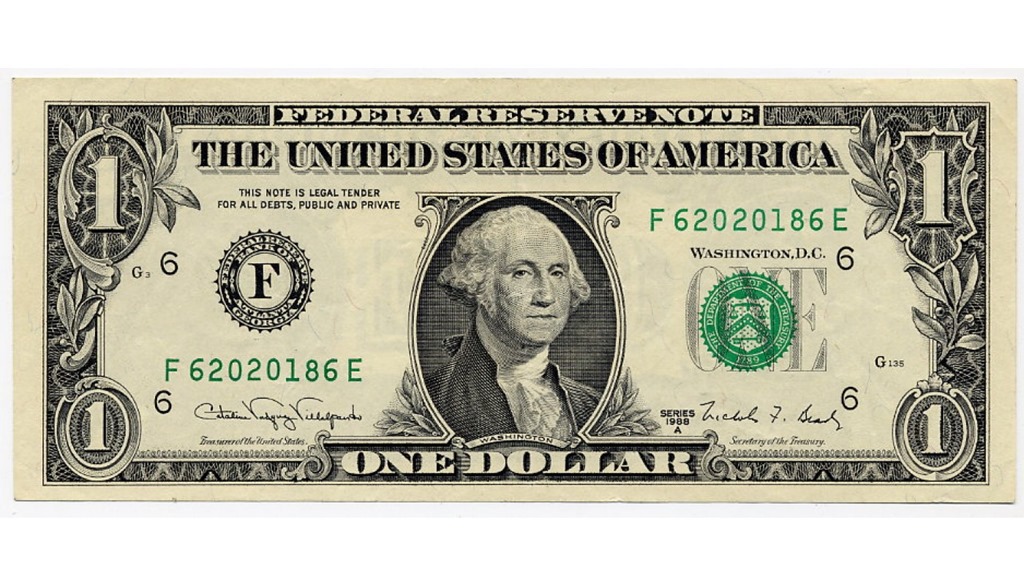
we’re offering pictures of our #1 Parlando Project author for only one dollar


1. Frances. Interesting that two pieces from the colonial United States are 1 and 2, and that a piece with words by an young amateur poet tops the list. Maybe this is a tribute to the Pixies/Nirvana loud/soft arrangement trick in the music? Or that when it comes to subjects, love conquers all? Or that acrostics are about to become a thing?

Please continue to read and listen this month. I have a lot of planned pieces I’ll think you’ll like coming up here. Remember that the Parlando Project seeks variety in music and words, so you may hear things you like as well as not like as we go along, but stick with us as we want to continue to surprise you. I also want to thank those that have hit the like buttons on their favorite posts, and those who have hit the RSS button to follow this blog.

I’ll Tell You How the Sun Rose

After our short trip to Chinese translation, let’s return again to Emily Dickinson, who is observing another morning.

This LYL Band performance of “I’ll Tell You How the Sun Rose”  is a bit imperfect. Alternative Parlando Project reader Dave Moore takes the lead here, but he and I are singing instead of our usual recitative, and we’re caught at the top of our singing range as well. Dave even bobbles a word in the line “The hills untied their bonnets.” So, yes, this leads to some imperfection—but this lyric is so perfect that perhaps it can carry us along anyway.

I suggest you listen to this piece now and then read my discussion of what I see in it afterward. Dickinson, like a good melody, doesn’t require understanding before enjoyment. The player to hear it is at the bottom of this post.

“I’ll Tell You How the Sun Rose”  begins with a homespun 19th century village dawn, and the singer starts right off almost bragging that they can tell us how the sun comes up. As proof, Dickinson unleashes a string of lovely, singing metaphors for sunrise, looking down from the dawn only once to let us see the squirrels running about as if with the news of the day. She concludes this section with finest simplicity: “That must have been the sun!”

Isn’t that a strange way to sum up dawn? It comes up and it’s already past tense, like Meng Haoran’s morning in the last post, and Dickinson comments on this common splendor as if she’s a surprised alien from another planet who has never seen the sun. Her boast that she can tell us “how the sun rose”—something she and all of us should already know, set in nothing more special than a prosaic town—becomes instead a small, whispered, apprehended wonder.

In the second section, Dickinson shifts gears so smoothly that no matter how many times you read or hear this poem you will never notice. There is a little engagement of the gears as she says of sunset “I know not,” unlike our first gear’s “I’ll tell you;” but we’re soon on to a rural scene with the sun rays like children climbing up and then down a stairway over a hedge or fence row (a stile).  At that point, there’s a bustle in your hedgerow as the dusk becomes a grey robed “dominie,” a strange and archaic word perhaps even in Dickinson’s 19th century, and a sure stumper for any modern English speaker.

A dominie is a Latin word meaning the leader of a congregation, a minister, a pastor—and ‘pastor” is derived from the word for shepherd—and that’s just what our grey dusk becomes as it leads the children of the dawn, now dusk, away like a flock, closing the bars, closing the gate, so that they cannot return.

Some readers are so charmed by Dickinson’s first section that they feel it is pedantic to think that this sunset section is describing a passage to death, “The undiscovered country from whose bourn, no traveler returns,” so no wonder that Dickinson moved from “I’ll tell you” to “I know not.”

That dominie seems so removed from the pleasant village of the first section, so foreign. Another subtle word choice contrasts the two sections. There’s only 88 words in this piece, and five of them are colors. “Rose” puns for dawn pink in the first line and then dawn is “amethyst,” a word for both purple and a semi-precious stone. The sunray children are “yellow”, and our strange dominie is dusky “gray.” The stile sunset stairway that the sunray children are climbing is “purple.” So out of our five colors, one of them is roughly the same color. In the first section, it’s semi-precious and wondrous, but in the second it’s just purple—a ruling, royal color perhaps—but those sunset ray children’s steps are ruled over not ruling, not shining like the amethyst steeples of the dawn.

stile sunset

Putting on the stile


Did you listen to the performance of “I’ll Tell You How the Sun Rose”  before reading all this? I feel a bit here as if I’m acting  like that dominie myself, leading you past the plain and beautiful dawn, over the stile, and closing the gate to simply hearing the sound and the manner of expression of Dickinson. Too often we make too much of the meaning of poetry, and particular the deeper meaning of poems. Just as Meng Haoran’s poem from last time can be understood well enough to be enjoyed by children, this poem too can be enjoyed as compressed observation. Perhaps it’s because I am an old man, one who has tried to write and make music for many years, that I care to see what is underneath the sun rays, to look over the stile, and to find what is inside Emily Dickinson’s expression.

To hear the LYL Band perform “I’ll Tell You How the Sun Rose,”  use the player below.