Our Halloween series continues with the voice, music, and words of Dave Moore today as I present his piece “Sam and the Ghosts.” And as bonus autumn content, this one takes place in a garden just past harvest time.
I haven’t kept a garden in decades, but Dave and long-time friend of this blog Paul Deaton do. They remind me that at about this latitude north, October is the time to have removed the final products and to prepare the bed for the interval until spring planting time returns.
I may not have done this for decades, but this process goes back — way back. Folks were planting crops in the Midwest long before colonization. The mound builders here, like the earthworks and standing-stone raisers in the British Isles, fed themselves on the invention of agriculture. So in that way, every garden — that small geographical gesture — is a memorial. William Blake said the rebellious angels of art must need to drive their plows over the bones of the dead. I don’t think he was speaking of colonization or commerce when making that point, but his maxim is true reportage anyway. Whether we are speaking of poetry or music or tomatoes, were we plant has likely been tilled before by dead people. Isn’t it proper then that we should honor them before we make our gestures in the soil?
The song sheet Dave handed me the day we recorded this song a few years back.
.
In Dave’s poem which he made song, Sam* has forgotten this. Some ghosts remind him. In his poem they are ghosts of settlers. Outside of the poem, they are people created by Bob Dylan.** Those definite levels in history are not the beginning, not the end. Who knows who ran the land from where the settlers’ family left to come to America? Then we do know who lived the land, and were so harshly displaced before the settlers’ opportunity. Who knows, maybe Hollis Brown’s farm is no longer farmland now after some other money has changed hands. How many songwriters are tilling Bob Dylan’s land?
Every seed you plant came from somewhere before you plant it. Every land has ancestors. Every garden is, or should be, a memorial. Winter will bury our gardens, turn our blank pages to blank pages again, and we wait and expect for spring.
The ancestors expect for spring too. We are that spring. The gaps of expecting are where the ghosts live.
To hear the LYL Band perform with Dave Moore singing his song “Sam and the Ghosts” you can use the graphical player below if you see it. No player? This highlighted link is your alternative.
.
*Neither Dave nor I can resist a pun. For extra Halloween-relevance points, Dave has named his gardener “Sam Hane.”
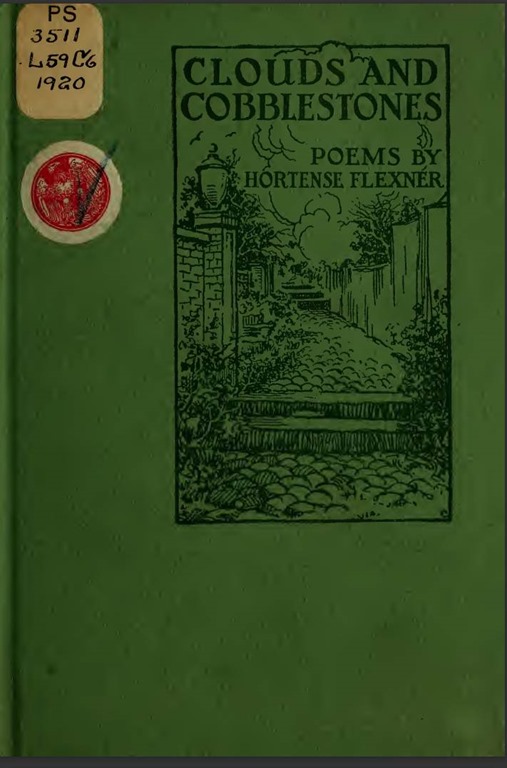
Today’s words are from a poet who’s been forgotten, but this one poem seems to have outlived all her other work largely because it’s a fine short ghost poem with a definite shiver from an ambiguous ending. The poem was called “All Souls’ Night, 1917,” and it was first published in 1920 in the author Hortense Flexner’s first collection Clouds and Cobblestones. That book’s acknowledgements indicate “All Souls’ Night” was never accepted by any of the many publications Flexner had published in toward the beginning of her career, and a selected poems published shortly after Flexner’s death in 1972 does not include it. So it was never her most famous or noteworthy poem while she lived.
Why did I hear of it, why is it out there on the Internet in 2022 to be read? Because of its eerie qualities “All Souls’ Night” has made a number of contemporary lists of Halloween poems.* To read or hear it once is likely to impress you of its value as such, and you can read it here with this link, or listen to my brief musical performance below. Our discussion has spoilers, so read or listen first. My performance is only 2 minutes.
I’ve looked at clouds and cobblestones from both sides now, and still somehow…
.
Now that you’ve experienced “All Souls’ Night,” let’s suppose you’re interested in at least a few questions that the poem might bring to mind after you read its 12-lines with their unambiguous chill. Yes, there’s a window here — just as there was in Sara Teasdale’s nursery last time — but either side of this window’s glass has questions.
Outside the window, there’s a date 1917 ending the original title. The poem internally mentions nothing about World War I which was ongoing that year and would still be a universal memory when the poem was published. Several other poems Flexner wrote and published around this time deal with the war, and one short play of hers, Voices, that was produced on Broadway in 1916, is about the despairs of war.**
Given that WWI is no longer in most any living soul’s memory, I’ve chosen to drop the 1917 in today’s title, as have some of the re-publishers of fantasy or Halloween poems that are featuring it. Outside this poem’s window we only know there are “hosts of lovers, young in death.” Maybe it’s me, but when I first read the poem, I thought the many lovers would be pairs, many of the lovers throughout time who are now dead and stayed in their passionate youth, and the poem does not directly disabuse that notion. But in the 1917 WWI context, one presumes the dead were soldiers, freshly dead. Whatever Flexner’s intent, I think the former has, potentially, greater impact today, even with our current European war. Can we simultaneously allow how Flexner might have intended her ending to be read, and allow how you or I as a modern audience can see the two groups or characters in this poem?
In the poem’s ending, the poem’s speaker, in a warm room next to a fireplace on the other side of the window asks that their warming fire should be allowed to die down, to eliminate the warmth and light on their side of the glass. It’s implied the poem’s speaker is there with others, a party perhaps, as the fire has been set for cheer in the poem’s opening line. With the onrushing crowd of ghosts outside, the insiders are now told at the end: hush, dim the light, turn the room cold so that the ghosts are unaware of them. This is an ambiguous statement if you think about it.
It can be read three ways I think. One, this is simply self-preservation, the ghosts might be vengeful toward the living. In the WWI context the dead might blame them for starting or not stopping the war. Or the folks inside may be smug, and the ghost lovers are their opposite. The insiders may be saying those outside lovers are the not-the-elect living, and that they would steal the warmth, which the insider speaker concludes they will not be able to use, being they are creatures who didn’t stay living and warm. Or lastly the poem’s statement may be one of pity: we shouldn’t be happy, we shouldn’t flaunt our warmth and light to those dead who now can have none of those things.
If, in the WWI context, Flexner has the ghost lovers to be likely the partners of the not dead inside, then the last reading is the most likely. But the reality of any of those readings is that the cheer, the warmth, and the joy inside the glass must cease. At least for the night, the light and temperature must equalize to death-like on either side of the window. That is the poems genius: it’s chilling on both sides.
At the time of the performance, I went more with the middle reading in my internal approach. I was tempted by that contrast, even if my reading isn’t correct, perhaps because I see so much in our current culture where the other is cast as undeserving. Their desires are a distorted, improper grabbing for joys, things they haven’t earned as members of “the elect.”
This touches on religious beliefs, so one more factor: the poem references All Souls’ Day, a Christian religious holiday. I’m not sure if Flexner wishes to put a religious overlay on her poem, other than an occasion for ghosts. The Flexner family were 19th century German Jewish immigrants to America, and beside Hortense, there are several notable members. The foremost Flexner was her uncle, Abraham Flexner who I see credited with (among other things) the founding of the Institute for Advanced Study at Princeton, the eventual American home of Albert Einstein. Abraham was raised Orthodox, but became an agnostic. I have no info on what religious customs Hortense Flexner may have been knowledgeable about.*** All Souls Day as a traditional Roman Catholic holiday was devoted to praying for those dead not in heaven, in purgatory, and was separate from All Saints Day, which was reserved for the saints who got right into heaven. Protestant Christianity dispensed with those twin holiday distinctions and more or less considered it one holiday.
OK, here’s the part about my short musical performance of “All Souls’ Night.” I got out the virtual orchestral instruments again and started writing orchestral string parts to go with acoustic guitar. To help with the ghostly air there are two non-acoustic instrument tracks that are mixed at an almost subliminal level: a somewhat overdriven electric piano and a suitably unreal synth patch. You can hear it with the graphic player were it’s seen, or with this backup highlighted link. I still have other pieces planned for our Halloween series this year, so check back or click Follow to experience them.
.
*Poets.org, a long-time online poetry repository, has “All Soul’s Night, 1917” as it’s only Hortense Flexner poem, and references it under themes where a search might find it, but I may never know what the Ur-source is for this poem’s revival.
**Don’t think big time. There were more theaters then, and the Broadway theater where it was produced was The Princess, which sat only 299, and we don’t know how long the run was. I have watched a low budget amateur performance of Voices. It’s an earnest to a fault two-hander with a young French WWI-experiencing girl and another mysterious character who turns out to be Jeanne D’Arc.
***I went down a happy rabbit hole reading about the Flexners. Hortense was a feminist and a suffrage activist, college educated and eventually a literature professor at two of the “Seven Sisters” women’s Ivy League schools. She’s also some kind of relative to Kenneth Flexner Fearing, a lefty poet who became a pulp-noir novelist around mid-century.
Let me briefly slip, Wordsworth-like, into reverie, and note that “Oft, when on my couch I lie in vacant or in pensive mood…” I turn to the vast daffodilian array of scanned material available from a brief Internet search. I’d been thinking about Irish poets after reading this exchange between poets Ann Grá and Sean Thomas Dougherty. Grá asked “What’s the best way to improve one’s active writing vocabulary?” Dougherty’s answer? “Read Irish poets. Everything will improve. Including life.” Irish poets mentioned — and William Butler Yeats enters the chat. You may have noticed that I led-off last time by remembering a Yeats poem about a friend whose work has come to nothing. This all entered into seeking another Yeats poem to perform this week. I came upon this one. Poetry workshop devotees, note that I read it even though it has just about the most generic title imaginable: “A Coat.”
Then, as often now, what sits on the page as if it’s an objective bit of selected poetic criticism is really an insider comment from those who already know each other in some way.** Pound reviews “A Coat” specifically in his piece, just a few pages past the poem’s American unveiling. “Is Mr. Yeats an Imagiste?” Pound is rhetorically asked. “No,” Pound answers himself, “but he has written des Images as have many good poets before him.” In writing here about Yeats then current poetry Pound praises the directness of style and unfussy language and syntax the Irish poet is now using. He mentions that Yeats’ earlier poetry with a more 19th century music and setting has attracted followers and imitators in their now 20th century, but perhaps the imitators miss some of its vitality — so much so that Pound wonders if the reader would “Rather read Yeats in the original” than these bad copies. Pound’s conclusion? “I’ve not a word against the glamour as it appears in Yeats’ early poems, but we have had so many other pseudo-glamours and glamourlets and mists and fogs since the nineties that one is about ready for a hard light.”
So, why do Irish writers have something to teach us other English speakers about using our language. First off, as a colonized and exploited country, they may look at the language from a critical parallax. If it’s the language of your colonizer, your oppressor, you may want to ask what English words should do, and you have reasons to be warry of what they can do.*** And I have a second idea, less fully-formed, that the whole mists and fogs of Celtic folklore, to which Yeats added his own caldrons of turn-of-the-20th-century magic and occult stuff, offer a conscientious poetic distiller a chance to speak the shades of the ineffable vividly in their poetry because their folkloric traditions and magikal folderol have already saturated their personal needs for glamorous elaboration. Other poets embroidered robes, either traditional or ceremonial, will get caught in such, but if one can escape, you have the contrast of a new clarity. This clarity is different — you have the experience of having worn the long robe, and now the new Eden.
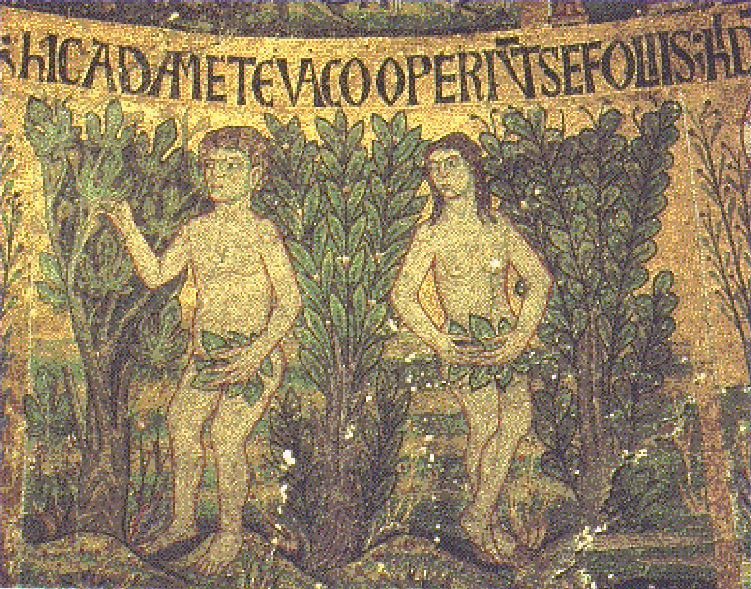
Eve ate from the tree of knowledge, then Adam explained plant-based couture Eve wonders why she suddenly knows the Latin genus Toxicodendron.
.
Today’s performance of Yeats’ “A Coat” has music for solo acoustic guitar, something that I’ve fallen back to often this past summer. The final guitar performance turned out to be an exercise in the various timbres I could pull from the guitar. The tuning and chord voicings used had several two and even three-string unisons which resonate and sustain, and then some contrasting pizzicato muted notes. You can hear it with a player gadget below — or if you don’t see that, with this backup highlighted link.
.
*Reading Monroe’s 1914 account reminds me of just how alien Sandburg’s poetry must have seemed to an early 20th century ear. To my 21st century ear and mind, I can more easily find the music in it, and I treasure now his Imagist “direct treatment of the thing” being applied to ordinary life, workers, immigrants, and the cultural powers that obfuscated that with elaborate English language.
**The American Pound and the Irish Yeats were both in London at this time. It’s likely that Pound himself was the conduit by which the new Yeats poems found their way into Monroe’s magazine. London then was the locus of the new Imagist ideals which stressed simplicity. Poets who wrote primarily in metrical and rhymed forms then, such as Yeats, Frost, Hardy, and Edward Thomas absorbed or resonated with this new, fresh, directness as a poetic effect.
***Though for various reasons this project has limitations on using modern English-language poetry, it strikes me that contemporary American poetry benefits from similar parallaxes. I was going to supply a catalog of those groups who know English as having been used as the language of an oppression, but it occurs that anyone who’d go with this thought can already supply their own catalog.
Some things others wrote this week brought to my mind an early post on this blog that has had thousands of web visits over the years: my presentation of William Butler Yeats’ “To A Friend Whose Work Has Come to Nothing.” Back in 2017 when I performed that Yeats’ poem I couldn’t help but wonder: who was the friend, what was the work that had come to nothing? I probably spent several hours researching that over a couple of days* and came up with the name of the man, the nature of his project, and the final fate of each. The man came to an abrupt end soon after Yeats wrote his poem, yet the project that was his aim eventually became partially successful. You can read that early Parlando Project post via this link.
When I looked back at that post, I found that I had spent the first half of it honestly dealing with the problematic nature of poetry as a method of communication. One can draw an auditable bottom line from those issues: most poets have few readers, many have nearly none. Furthermore, thoughtful, intelligent, deep engagement from those poetry readers would be from a subset of those small groups. That being so, the question of why do poets persist occurs, and that has no simple answer — but one element of that is that the act of writing has an ineffable magic. The very act of saying and recording, even what will rarely and barely be understood, has a power.**
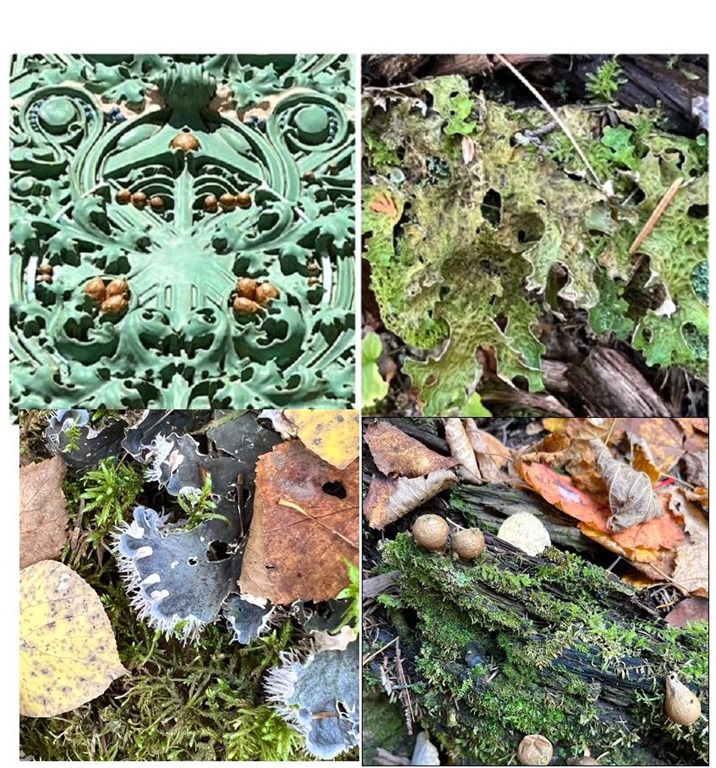
Art & Nature: a Louis Sullivan building ornament with various fall fungi and lichens. Photos by Heidi Randen.
.
Around the time I performed Yeats’ poem and wrote about my encounter with it here, I wrote a poem of my own which was not successful in performance to the level that I could present publicly. Since the Parlando Project is primarily about presenting other people’s words not my own, it was easy to set this one aside. This past summer I found that old poem as I cleaned up the song-sheets in my studio space, and I considered a new performance of it. Given the way life is postponing my efforts still, finding out what a new performance would sound like took over a week, but I completed a version today. That poem, now song, “Write Me Down,” is about the challenges, duties, connections, and consolations of life. I fear “Write Me Down” is a confusing multi-faceted catalog of those things. The handful who read it years ago when new found it uncompelling and impenetrable, but I haven’t had heart or mind to revise it since. But here’s today’s point again: as the title might indicate, it says something too about the motivations to write things down, even poetry, to manifest them for an uncertain audience. We poets have great imagination! We can imagine an honest and merciful judge will read us, and we can do so even where our imagination retains other limits: where and while we don’t know how long we will work with our life, and we don’t know how close to nothing it will come to. We can only know the love in the work.
You can hear my performance of “Write Me Down” with a graphical player below if you see that, or with this backup highlighted link. Thanks, as always, for reading and listening.
.
*I was only able to find the significant details that Yeats left out of his poem to make it a more universal and general statement after work with Google’s index of published and not yet public domain books that was part of an ill-fated project that I understand was stopped due to copyright issues. I wish I had noted the book or books where I found that info, but the kind of in-between-life research that I found time to do, and my own general sloppiness, kept me from recording that. I regret that, and have tried later to make a point of linking others’ research that I’m grateful to have found.
**The direct inspiration for this piece’s words as I recall is a blessing associated with Rosh Hashanah new year’s celebration: “Shana Tova Tikateivu,” which means “May you be inscribed in the book of life for a good year.”
They tell us: yesterday was the last hot day of the year, with temps peaking above 90 F. The summer night ended, like a fair or exhibition with fireworks lightning and booming thunder, and the coolness of fall seems to have arrived today. The urban trees here have just a touch of autumn colors on the edges of avant-garde branches. A city’s pretense is that it is artificial, a human-made place, but the trees are here to remind us.
The above cartoon presented without further comment.
.
I’ve said that when I look at what pieces were the most liked and listened to each quarter that the results often surprise me. The Parlando Project takes words (mostly poetry) and combines them with various original music. For practical reasons,* the poetry we use is largely in the public domain, poets whose reputation has usually settled to a stable level. We’ve done many pieces from such poets that retain readership into our century: Dickinson, Frost, Yeats, Stevens, William Carlos Williams, Eliot, Millay. I also enjoy reviving work by poets that once had considerable readership, but who have fallen out of favor or esteem: Longfellow, Teasdale, Sandburg for example. And there are poets that have higher profiles in the UK than here in the US: Edward Thomas and Thomas Hardy. And there’s my translations or adaptations of work outside of English: Du Fu, Li Bai, Rimbaud, Rilke.** That’s a big world of material, and my attempts good, bad, and indifferent are up in the archives for all to hear. But then there are the wildcards, the poets that only indefinitely reached and failed to retain much regard.
Apparently, Robert Gould Fletcher is one of those. He was identified early on as an Imagist, a form of early English language poetic Modernism that I think has values worth revisiting. Curious, I dipped into a couple of his many books from the first half of the 20th century and found a short nature poem that intrigued me. As I worked to set it to music my city had a summer storm whose aftermath was a striking yellow/green/brown sky tint. In the heat of that evening I started to recast Fletcher’s poem, producing a result that’s a “after a poem by” or “inspired by” work — but it wouldn’t exist without Fletcher.
Despite Fletcher’s non-existent current literary standing and my own low profile as a poet, “Yellow Air” was the most listened too and liked during our past warm summer. I wouldn’t have predicted that, which is a pleasure.
You can see Fletcher’s original text and the full text of my subsequent version along with guitar chords which you might use if you want to sing it yourself by clicking on this link to the original post. Or you can hear it straightaway with the player below.
.
*Submitting writers may know how slow and inconsistently editors will respond. Well, I found the response asking for permission to present poems here was even worse. If an unsought grant was ever to fall from the sky for this Project, I’d ask first for someone to bug and cajole rights holders for the rights to present more recent poems here.
**How much have we done this? Over 600 times! And all of the results are still available here via the archives. If you just want to sample the music more rapidly without my comments on the encounters with the text, the most recent 100 or so are available as podcasts on Apple podcasts or most other places that offer podcasts. Note that the Parlando Project podcasts are just that: the typically less than five-minute audio piece. From time to time I’ve considered a more conventional talking-about-stuff podcast, but I’m unconvinced the interest would replay the work on top of the research, composing, and recording effort that goes into this Project.
There were fewer audio pieces presented this past summer, so I’m going to abbreviate our traditional Top Ten review of the past season to reflect that — but I still kind of like this part of the Project, as I get to see what pieces got the most response. Like the Parlando Project in general, the most popular pieces tend to be quite various, and it’s often the pieces I’d least expect that bubble to the top. As a proper Top Ten, we’ll look at them as a countdown, starting with the 10th most liked and listened to one and ending with the most. The bold headings are links to the original posts in case you’re new here and would like to read what we said then.
Very briefly here are the pieces that make up numbers 10 through 6.
10. Arthur Hoehn by Frank Hudson. In the summer doldrums I felt free to include more of my own words. This is a short elegy for a classical music DJ who worked the overnight hours. I’m quite proud of the final lines of this one.
.
9. Staying the Night at a Mountain Temple by Li Bai. Another of my loose translations of a Tang Dynasty classical Chinese poem. I based my translation on my understanding of Li Bai’s (his name is also rendered as Li Po) general outlook. An example here of how I work with orchestral instruments.
.
8. Stratocaster by Frank Hudson. Really, this project is usually concerned with other people’s words, but this sideways ode to an ingenious radio repairman whose swoopy electric guitar design was enshrined in the Museum of Modern Art got a good amount of response.
.
7. The Dick and the Dame by Dave Moore. Alternate voice and keyboard player here Dave Moore says some of this is adapted from Robert Coover, but this really holds together as a poetic liturgy for pulp noir. Also I got to wail on guitar.
Getting ready to lock up my bike late this summer, and my attention is drawn to a message on top of the post.
.
Now let’s move on to the top 5 and say just a bit more about each of them.
5. From Cocoon forth a Butterfly by Emily Dickinson. We’ve done lots of Dickinson poems here over the years. Though we did this one in summer, it talks about harvest time. While poetically condensed, Dickinson observes harvest workers and the proverbially productive bee and contrasts them with a no doubt lovely, but also somewhat unoccupied butterfly. Is Dickinson, the poet, the butterfly? I’m not so sure. My understanding is that Dickinson’s domestic duties in her mid-19th century household, while less than those of poorer families, were also not insignificant. Is the butterfly then poetry, or the poem she’s written, or a fancied life of a full-time artist which she wasn’t? Dickinson ends with this point: at the end of it all, however joyful or laborious, is the Sundown, which is Extinguished. Like the Preacher in Ecclesiastes, I’m thinking she sees vanity in the whole scene.
.
4. To Whom It May Concern (Carry Them Away) by Kevin FitzPatrick. Dave and I both admired Kevin’s poetry and outlook, even if neither of us wrote like him — but then as I said elsewhere here this summer, too few poets write like Kevin. Here’s a short poem written entirely in another’s voice, whose words Kevin the poet recognizes deserve repeating, deserve attention, deserve concern. If I don’t write like Kevin, that essence, that principle, is part of what I do here with the Parlando Project.
.
3. Palingenesis by Henry Wadsworth Longfellow. Poets today read Dickinson (should) and Whitman (must), but few literary poets will admit to reading Longfellow now. Dickinson and Whitman are great rebels, geniuses of make it new. Longfellow worked in traditions, replanting them in America. If you want to rebel with your attention and consider Longfellow, I’d suggest the shorter lyrics. Was this lyric referencing Longfellow’s wife who died too young in his arms? I can’t say for sure, but I used it to reference my late wife who also died too young more than 20 years ago.
.
2. Generations by Frank Hudson. This is a tiny poem in a tidy setting. I’ve been noting recently the lack of perspective in many older persons’ views of the young. Old people are supposed to supply that perspective, to know from intimately observing things over longer time that stuff thought new is just a variation or a carrying forward of the flow of society. Instead, I see all too many who want to proclaim some past got it right and the present is a decadent signal of end times. So, in this short piece I cast myself as the sage of advice to the young, but with a twist.
.
What was the most popular piece this summer? Come back tomorrow for the answer.
Long time readers may recall that I’ve made a personal practice of pausing and noting on each September 18th the anniversary of the day that American guitarist Jimi Hendrix died. This observation has taken various forms over the years, though plugging in and playing electric guitar has usually been one of them. Playing music would seem to be an appropriate way to observe the passing of player that we wish was still able continue playing and composing music.
The Stratocaster I’ll play later today is heard at the very end of today’s story audio. The original lineup of Television rehearses circa 1974, Lloyd is the guitarist in the center. On either side are the two poet/musicians who founded that band: Richard Hell and Tom Verlaine, Billy Ficca is the drummer. Hendrix in the lower right.
.
However, today I’ve decided to do something different, a bit opposite really. There’s a story I’ve heard in interviews and through various tellings that includes another guitarist whose playing I admire. That guitarist, Richard Lloyd,* while still an uncelebrated teenager and nascent guitarist, met Jimi Hendrix. I’ve always thought it was one of the great rock’n’roll stories, so I decided to tell it to you in my own words. No music this time, just me telling the story, audio-book style.
You can hear it below with a graphical audio player. No player visible? This highlighted link will play it.
.
*Lloyd was a guitarist in a great New York City based rock group Television, whose debut album Marquee Moon stands toe-to-toe with Patti Smith’s Horses as an expression of the remarkable originality that launched what we now call Indie Rock. He went on to record solo records and contribute to other records, notably Matthew Sweet’s Nineties landmark Girlfriend. Lloyd has a 2017 autobiography Everything Is Combustible ISBN: 9780997693768 (or ISBN10: 0997693762). One line I remember from a Richard Lloyd guitar tutorial went something like this. “So the student said, I don’t know much, I’ve only been playing for a few months.” Lloyd replied “No, if you’ve played guitar for a few months, that’s over 2,000 hours! You should be able to develop a lot of skills in that much time.”
I’m usually not very articulate about my own work, and part of the benefit of this Project’s aim to largely present other people’s poetry is that I can better express my experiences with others’ work than my own. This may be why I am envious of those who can speak effectively about their own art.
More than a dozen years ago I was reading an interview with a novelist Willy Vlautin who also wrote songs and performed with an Americana/Indie rock band called Richmond Fontaine. In explaining his art this is what Vlautin had to say:
It’s sort of a gamble, one’s life. Where will you fall, what are your weaknesses, will they kill you? If you’re hurting, will people help you or take advantage of you? Will the people you love, love you when you need them to? The mistakes you make, they could ruin you, set you off on a bad run. Hell, I think about all that all the time. Nothing makes me sadder than someone hurting and then being done wrong or worse by someone who’s aware of that.”
As you might imagine, Vlautin was not writing cheerful stuff,* but the observation about the human condition, its fears, and the dangers of how others can react to failings in ways deserved and undeserved seemed honest. Humankind differs somewhat on what constitutes crimes and failings, and the hierarchy (lowerarchy?) of such acts and outcomes, but we seem constitutionally subject to the reaction that the bad or unlucky person deserves their fate — or here’s the odd intensifier — deserves more and more bad outcomes, stacked on in order to prove or instruct them in how bad their choice or fate was.**
It seems to me that Vlautin takes this internally as well, or at least wants us to consider that. That’s something I resonate with myself. The fear, much less the result, of failing someone I care about is nearly disabling for me. I fear this enough that I will not do things for others, little things, things others find routine, because I fear doing them badly.
Reading Vlautin’s interview answer soon caused me to write this sonnet all those years ago, combining Vlautin’s thoughts with my own on these matters, the result merging sins of omission with sins of commission, confronting the fears of both as honestly as I could.
Just as with the last piece here, I found that sonnet among the thousands of song-sheets I went through late this summer from my studio space. Unlike the last one, I think Dave and I attempted to perform this poem as a song years back to little success. After finding the song-sheet, I did a revision of the words and changed the music a little bit. This afternoon I had just over an hour in my studio space to record it. I focused on simple accompaniment, just acoustic guitar to maximize my chances of getting a completed performance, and that worked well enough that you can hear it below. Because the piece’s outlook is stark, the spare music may help reflect that.
There are direct quotes from Vlautin in my sonnet, also some subtle changes to his phrases, and then too my own interpolations.
.
A player gadget is below for many of you, but some ways of viewing this blog will suppress that, so I also offer this highlighted link which will open a new tab to play it.
.
*In another interview he says he had pictures of John Steinbeck and the Jam on his childhood bedroom wall. His brother bought him his first guitar and told Willy to “Write about what hurts and haunts you. That’s pretty much what I’ve done ever since. Along the way, I somehow forgot to write about the girls and the parties.”
**Perhaps a small part of the choice to pull this piece out of the pile today has to do with the bizarre news that a couple of governors have decided that some folks suffering from poverty, fear, and abuse should be secretly trundled off in busses to other states in the course of increasing their suffering or insecurity — and with the further aim of using their arrival to instruct other governors or mayors to do what, I’m not sure. Articles indicate that one beef the two governors have with the other jurisdictions is that they aren’t making others already there from similar situations in these other states more fearful and uncomfortable. Am I to infer the theory here is that making folks more uncomfortable, less secure, and more confused will improve their luck and the wisdom of their choices? Or that the other governors or mayors will by this action understand that the two “put’em in busses and dump them outstate” governors are demonstrating their better administrative acumen?
I’m presenting a song of summer desire today even as that season ebbs away, but first a little catching-up on the status of this Project for those who follow it regularly.
I planned to produce fewer Parlando Project pieces this summer for a number of reasons. It’s become harder to find composing and recording time, or to focus when it can be found. Audiences drop off markedly every summer anyway, and I had some long-put-off tasks that I thought needed to be attended to. Those tasks? Not even half complete, but a couple of things got done.
I felt I needed to replace the nine-year-old computer I use to write what you read here as well as the final audio mixing and polish for things recorded in my studio space.* I wanted to keep to a reasonable cost for this replacement, but I also wanted to spec it so that it could last in the roles I use it for, for the rest of whatever this Project’s lifespan will turn out to be. To accomplish this I stayed with my usual tactic over the past 30 years in selecting parts and assembling the replacement computer myself. I did a Ship of Theseus build using some old parts I had, which reduced the cost.** This new machine is now in service once I installed, configured and re-registered a whole bunch of software that this computer needs to run.
Another task? For more than a year I’ve wanted to deal with nearly 3000 song sheets that had accumulated in my studio space where I record with others as well as my own acoustic instrument recording. Poet, keyboard player, and alternate voice of this Project Dave Moore has been amazingly creative this century, and when I record with him I most often get sheets of lyrics with some hand-written chord symbols. You’ve heard a smattering of his original compositions here, but over the past two decades we’ve attempted hundreds of pieces of his. I’ve nearly matched Dave, as the more than 600 completed pieces I’ve released here show. With orchestral instrument scores I don’t notate by hand, working instead on the computer — but my guitar-based pieces tend to be not-unlike Dave’s, except that my paper sheets usually have neater printed chord symbols. Still, there’s my marginalia of chord voicings and capo positions etc. Thus, the thousands of sheets of paper. Late this summer I sorted through the whole bunch, determining the half or so that would be good to convert to computer storable files, and then scanning them.
Today’s piece is a result of that second large task, as I was often running into pieces on the paper sheets that I hadn’t thought of in years — and even a few that I don’t recall even attempting to perform. “Summer She Has No Lover” was a sonnet that was written in 2010. I’d written it as a literary page poem but seeing it in the studio space pile of papers made me think that I must have once considered creating music for it — and so that’s what I proceeded to do. The recording was quickly done (studio space time is still limited), but I think the results convey something of the flavor of the piece as our summer ends.
Sonnet means “little song” and so why not sing it? “Bechirp” is my own word.
.
You can hear my song performance of “Summer She Has No Lover” with the graphic player gadget below, and if you can’t see that, with this backup highlighted link. I can’t say what level of productivity I will be able to wring out of this autumn for the Parlando Project, but my present intent is to increase the number of pieces and posts from what I was able to do this summer, so look for new pieces soon. Another question remains to be answered: will I have time to do more complex compositions? We’ll just have to see.
.
*The old one was still working fairly well, but some components on computer motherboards can start to fail after a decade or so of service. I’d intended to accomplish its replacement early in the summer, but to show that expected service life is worth considering ahead of failure, I had to replace an aging water heater and washing machine that both stopped working in June and July.
**Given that this Project is assuming a Venn diagram audience that has interests in poetry and often non-commercial musical genres, it’s probably pushing it to think that anyone reading this is interested in computer parts too, and choices here are just as controversial as music and poetry can be among the cognoscenti. I decided it would reduce costs and still be safe for future roles by using an 11th generation Intel I7, and an ASUS Z590-Plus motherboard which uses the inexpensive/widely available DDR-4 memory and PCIe 4 solid-state-storage drives, and for video I bought a Nvidia Quadro card which is not worthwhile for gaming that I don’t do, but which can drive up to 3 QHD screens if I ever upgrade to those in the future. I went for 32 gigs of RAM and a 1 TB PCIe 4 SSD. The one truly “lux” component I bought was a Seasonic power supply, based on good experiences with them over the years. Total: $785.95. I was able to use an existing Antec Silencer case that weighs as much as an e-bike, an existing CD-DVD drive, and a year-old mechanical hard drive used for audio and video project storage which I simply moved over from the incumbent computer. My keyboard, mouse, and screen remain unchanged.
How much did Emily Dickinson want her poetry to be understood? I can’t be sure, but I suspect she wanted it to be both puzzling and understood.* While she didn’t publish to any extent in her lifetime, she did send by mail or otherwise share poems with friends. The conventions of Dickinson’s 19th century America may be different, but it’s possible that not everyone understood each poem, or even welcomed the arrival of those poems’ enclosure, but these acts indicate that she had elements in her poetry that asked for a public place for her work.
The posthumous publication of a large selection of her poems in a series of books at the end of the 1800’s did find ample volunteer readers though. Selected from her handwritten manuscripts by outside editors and somewhat regularized, they were also presented with tacked-on titles and within subject sections like“Time and Eternity,” which however criticized by current scholars helped frame her work for her first posthumous readers.
There’s a certain kind of Dickinson poem, often with a touch of gothic whimsy, that most easily attracts a general readership. Others feature proto-Imagist observations that continue to delight readers. While there were other American poets of Dickinson’s time who had a substantial non-academic readership, now more than a century-and-a-half later, few read any other than Dickinson and Whitman.**
Having a general readership should discount no one’s literary merit, but snobbery may ask to have its say. If Dickinson is a poet admired and even read by those who are otherwise unattracted to poetry, this can be introduced as evidence against her worth as a true poet.
Given that, I have been noticing someone on behalf of the Emily Dickinson Museum has been regularly posting short Dickinson poems on Twitter asking for those who come upon them what their interpretation of these poems are. Few of the Dickinson poems this Twitter docent shares are the well-known “Greatest Hits” of Dickinson. Many are eight short lines, and those lines are often full of Dickinson’s oddest syntax and metaphysical musings. Being asked for an on-the-spot interpretation freezes many a reader as much as an armed robbery would — but at least in such a street encounter one likely knows where one’s wallet and valuables are. While I’m old enough to have grown accustomed to my own misreading of subtle poems that my fears of embarrassment are diminished, even I am hesitant to offer a Twitter reply. And this is true even though I’ve already performed some of Dickinson’s poems of that sort. What this series of Twitter posts demonstrates most vividly I think is that a great deal of Dickinson, though a time-tested popular poet, verges on incomprehensibility. So why did Dickinson write such poems?
My theory is that Dickinson was seeking to record in these cryptic short pieces certain moments of personal insight. Why take the time to versify them then? There’s evidence that Dickinson had a musical mind, and containing them such may have been a combination of the matrix of natural “music of thought” and the practical mnemonic virtues of verse. Dickinson was known to write short poems down on household scrap paper, indicating that thought was going on during domestic workdays. Perhaps I’ve come up with this mentally-drafted commonplace-book theory in that I spent some of my ordinary working life composing poetic stanzas in my head that were informed by things I was seeing and thinking while my hands were occupied. Such work is not necessarily “public poetry,” though in Dickinson’s case it now can be viewed by us strangers far removed by Dickinson’s time and place. Here’s her poem. You can be one of those strangers.
In memory of my feelings. Dickinson’s austere compression here.
.
So what was Dickinson on about with her poem known by its first line: “From Us She wandered now a Year?” I’m not sure, and I’m sort of comfortable with that. What is clear? It doesn’t have the attraction of imagery. “Wilderness” is totally undescribed, not rising to the level of an image, and “feet’ and “eye” are the only other concrete nouns in the entire poem. There’s no clear sense of where or when this poem occurs. While there’s some sense of separation or change as of the first phrase, the poem evokes no clear-cut emotional tone. “She” and “Us/We” are vague characters, though I read the latter as a general evocation of humanity. Dickinson’s eccentric capitalization invites us to consider many words as philosophic entities, not a “wish you were here” note about a traveling friend.*** Thomas Wentworth Higginson and Mabel Loomis Todd, her posthumous editors, put this poem in that “Time and Eternity” section, and invented a title “Invisible” for it, which indicated they didn’t know what she was on about either.
Do I have an impression? I think the poem’s “She” is Transcendentalist Nature, which as I understand Transcendentalism is essentially the revered manifestation of the true universe and any Creator. “Wandered now a year” is the unstoppable progression of seasonal time which goes forward over any barren obstacle that might stop a corporal creature (Wilderness) or without any memorial break for death or state of nothingness (Ethereal Zone). The second stanza says we cannot not fully understand this, though we may have some autumnal intimation at some part of this cycle, where we “took” (in) this “Mystery.”****
I could be wrong, but a worthy enough meaning. Still, the overall effect remains its stark unsensual expression. Few of the normal pleasures of poetry are found in these eight lines. No imagery, no statement of the senses meant to invoke feelings in the reader (other than mystification perhaps). Word-music alone is there in Dickinson’s hardwood-seat pew hymn-meter, the thing she used to write her own hymn book. This is a highly intellectualized and discorporate poetry, but as I said at the beginning, I don’t know if Dickinson intended us to read it. If not, then Dickinson’s feelings and experiences being left-out are beside the author’s point. After all, she herself may have sufficiently felt them, and this artifact is meant only to evoke that memory for herself. I, this other human today, have this overall emotion evoked: awe at the dexterity of her mind.
Today’s performance has music I composed and played in my “punk orchestral” style along with 12-string guitar. I’m using simple musical structures for the orchestral instruments, but I tell myself I can do so in the same way that guitar combo bands using a few root-V chords can none-the-less communicate something. It’s a brief poem that I represent in a short musical piece you can hear below with the graphical player, or in its absence this alternative highlighted link.
.
*This is a common, if not always acknowledged goal of poets: to be worthy not just of a reading, not just of some understanding, but to be worthy of a deeper and more careful and caring reading. That’s a lot to ask for words, even beautiful sounding words.
**I considered adding Poe to this exceptions list. Despite my own efforts, I doubt I could make a case for Longfellow retaining 21st century readership.
***Possible that there’s a specific lower-case “she” and this poem is more simply a “missing you” poem? I’ll offer this aside my theory, that if Dickinson felt that toward specific shes then it could occur to her to personify a manifestation of at least a conceptual Godhead as “She.” It’s possible to be thirsty and thoughtful.
****Sandy Denny’s song “Who Knows Where the Time Goes” would be an example of a more elaborate and sensuous expression of the same sort of thought. It’s also a feeling I tend to get each fall, which may help spur my Septober Energy, where I set out to harvest what creative energy I have.



 Frank Hudson