Helen Heaven

Let’s leave off those modernists of the era around WWI for a while, and move to a few songs about some midcentury mods. This is the time when popular culture mutated into something recognizable as ours, as it still is into this 21st Century.

Somewhere in this second decade of the 21st Century a new modernism is likely being born, but I do not know it yet. Back in the early 1950s people expected something new, perhaps as much or more than we expect change today in 2017. As it turns out, we may have not gotten all the change we thought we were due.

Today’s piece is the opening song in a song-cycle about one woman who had a moment in this moment of change in the early 1950s in Los Angeles/Hollywood. The woman was a second-generation Finnish-American, Malia Nurmi, who created a character that for a short time, just about a year, captivated TV audiences in Southern California with a strange take on sexuality and various horror tropes, blending in a beatnik/Dada critique of “normal” as a reaction to the unthinkable. The character was named “Vampira.”

Somewhere in the later 1960s it became a commonplace to view the 1950s as an era of calm, peace, satisfaction and complacency, and this characterization has only increased over time. But this was also the era just after a cataclysmic war ended with atom bombs, a horror that eventually moved from reality, to nightmares, to repressed acceptance, to forgetfulness and finally now again to present fears. This was the decade of a forgotten, brutal, war in Korea. This was an era when society tried to put back into the bottle the broadening social roles for women and Afro-Americans that WWII had allowed. This was the time that revealed the horrible efficiency of the extermination and slave labor camps, and the decade in which the utopian dream of Communism exposed its shames and shams. This was a deeply uneasy time when some feared everything “normal” was a dream and others saw clearly the waking hours outside the dream.

All of which makes this campy TV quipster host who created the makeup, costume and persona of Vampira seem inadequate to address this. Well, what is? As we move to celebrate Halloween, that strangest of holidays, where we make fun of our inability to escape fear, death, and too much candy, let’s reconsider her.

Helen Heaven - Aimee Semple and Maila Nurmi as Vampira

Media in black and white: Aimee Semple used religion, Maila Nurmi used Vampira

“Helen Heaven”  has words written by Dave Moore, the alternate voice and writer/musician here at the Parlando Project, along with music written and performed by myself. This piece is the first song in the Vampira song-cycle, contrasting the LA-based white-dressed pop-religious phenomenon Aimee Semple McPherson with Nurmi/Vampira’s dark negative.

To hear “Helen Heaven” use the player you should see just below this.

Autumn Movement

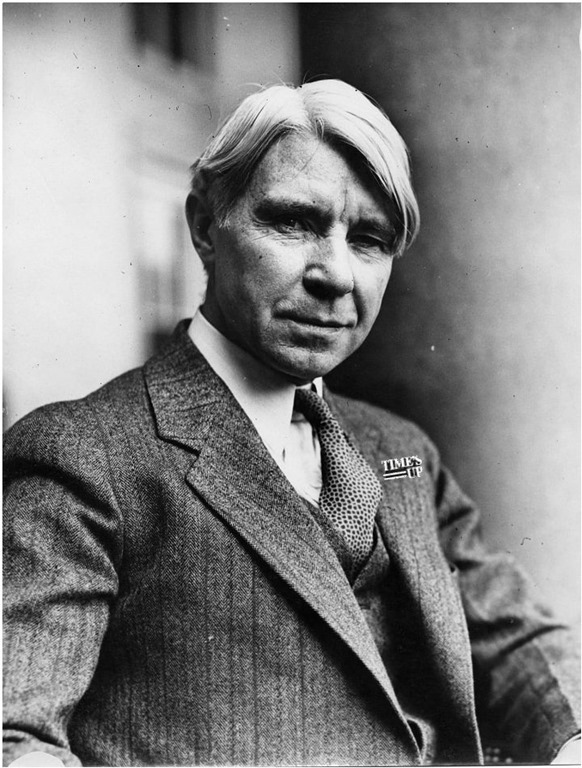
I’ve been a bit long-winded in the past few posts, so a short-winded post about today’s piece. The words are another poem from Carl Sandburg, this time from his 1919 collection “Cornhuskers.”  There’s not very many words to it, a warning that there are not many leaves left here in the upper Midwest.

Cornhuskers cover

They were listening in London, and Sandburg’s “Cornhuskers” won him the Pulitzer prize.

I can compress talking about those words because I’ve already talked about Sandburg on the previous occasions when I’ve used his words here. In his poems of this era, he’s as perfect an imagist as any of the expatriates mixing up modernism in London and Paris around the same time.

Many of the Sandburg poems I’ve used previously have been from his landmark “Chicago Poems”  collection, but Sandburg, a child of middle, rural Illinois, spent time across the Midwest in his youth, from urban centers to the farms and small towns. The poem I use today, “Autumn Movement,”  is from that rural setting.

Images for autumn and fall foliage have been mined forever, which makes Sandburg’s key image here as unusual, even a century later, as T. E. Hulme’s red-faced farmer appearing as the harvest moon in his British autumn poem. Sandburg has the red and yellow of autumn leaves in a farm field vista as a yellow scarf with the copper color of a literally red-necked woman. So nearly has this skin color become an epithet, that few would think of using it today, as honest an image as it is.

Today’s audio piece is musically ars longa to the vita brevis of the words. I’ve been telling myself to allow space compositionally, and then going ahead anyway and filling things up like a compulsive cluttered room with only paths between piles of old newspapers. So, for this one, the drums (which are often quiet and spare) are the densest element. I added a simple bass line played on my fretless bass, a theme played on a Telecaster, and a digital synthesizer part that is a mix of four different patches played together rather than filling up the space with multiple synth parts. Give it a listen with the player  below. Or if you don’t see the player, you can use this highlighted hyperlink to play it.

The Emperor of Ice Cream

I was reminded of this poem, and Wallace Stevens in general, while writing about the 20 most anthologized modern American poems recently. It’s odd that I needed to be reminded of Stevens. His poems were always present in the anthologies of my school years, back in the last century, along with Frost (who I disliked when I was young), William Carlos Williams (who I didn’t understand), and Eliot (who I liked for his verbal music without much understanding). There must have been something about Stevens that attracted me, as when I recall the poems I wrote in my youth, they more often looked and sounded like Stevens than those others. There’s a wit of a very contrarian kind that’s all over Stevens’ work, so I’m sure that was a big part of it, but I think it was also Stevens’ verbal music that pulled me in, and unlike Eliot’s, I (subconsciously) imitated Stevens.

I later read that Stevens walked to his famously conventional job as an insurance executive every day, and composed his poems in his head as he walked. This makes sense, as I did the same thing, with the two-footed meter of walking informing the rhythm from the soles of the feet up, rather than from the head down. Another thing about writing while walking: the music of that rhythm carries you into a more hypnotic and subconscious space were lines that sound good and fit to the beat are carried and held into memory more than carefully considered phrases that one would compose at the keyboard or with thoughtful pen in hand—and that same flow can knit together the unlike before thought can reject it.

If you take Stevens’ particular perverse wit, and meld it with composition of poems while walking, you have the recipe for a Wallace Stevens poem like this one.

The title of “The Emperor of Ice-Cream”  has that impish quality. It seems to be light-hearted. Who’s his consort, the Dairy Queen? Is his uncle the King of Burgers? Did he know Prince? Queen Be? Duke, Duke, Duke, Duke of Gelato. And the poem starts off as if we are in a variation of the nursery rhyme “Old King Cole, he was a merry old soul” by calling for the strongest man to crank the ice cream maker.

A digression: do 21st Century people even know what an ice-cream maker is? It’s a bucket, no larger than one used to mop the floor, filled with ice that surrounds a smaller metal canister with a hand-crank-driven paddle screwed into the top. Salt is poured onto the ice, melting it so that it can get the canister colder than zero centigrade, as the crank is turned to churn the mixture of sugar and cream. As the process continues, the contents of the canister thickens and the force needed to turn the paddle increases. Even with a strong man cranking, the resulting ice cream will be softer than the concrete brick of modern ice cream, as that is a creature of refrigeration unknown in Stevens’ youth; but the cool, rich, sweet taste would also be all the rarer then too.

Ice Cream Maker Ad

“Call the roller of big cigars, the muscular one” churning that 2 gallon one would take a mighty man


So back to the poem. We have the strong cigar-maker man churning, amidst young, common, unmarried women and boys bringing flowers. The resulting ice cream demonstrates Stevens comically expanded vocabulary, it’s “concupiscent,” lustfully good!  Freud may have famously insisted that “a cigar is sometimes just a cigar,” but a multitude of Blues metaphors contemporary to Stevens would agree, this is a lusty scene.

And the title reappears. Pleasure, broadly drawn, is the ruler of all!

So far Stevens has only been perverse in the weird “Old King Cole”  language of the revelry, capped off with a word that most of us can’t even pronounce, much less spell or define.

Bang! Into the next stanza. I had always thought “dresser of deal” was flowery poetic diction for “we need to deal with” the situation in this next scene, but it’s more of Stevens’ vocabulary quiz. “Deal” is an archaic term for cheap pine wood. The exquisite detail of the missing drawer pulls, so much like the shabby second-hand dressers of the bedrooms of my pre-IKEA youth, yields to the fullness of the scene: it’s a room with a dead body.

Digression again: my son bursts into the room where I am writing this. He has just heard a robocall barking “If you or your loved one is over 65, they have a 1 in 3 chance of falling. Don’t let that fall be their last. Press 1 to…” He’s laughing, and continues “…hear about our warning-thingy scam…”

I follow on with my additions “…and press 2 if you want him to die anyway since he’s not allowing you any screen time today….and 3 if you are hard-of-hearing and WOULD LIKE US TO REPEAT THIS MESSAGE LOUDER.”

Back to the solemn dead body, cold and dumb, being covered with a sheet from the dresser of deal that is poignantly too short to cover the feet. Stevens leaves the light on, we need to see this clearly. And the title returns, now a refrain, and in this new context, the ruler of all offers only fleeting pleasures that one strives for, passes through, and melts away. The poem ends.

Stevens arrives at the insurance company offices. He strolls in past the receptionist, arrives at his office. Warren G. Harding is President. He asks his secretary to take this dictation. Obedient to her accustomed role, she folds back the steno pad, pencil in hand. Did she care for his poetry that she transcribed? That would be immaterial, she has only to listen.

Wallace Stevens Walking

Strolling Wallace Stevens in the 1920s. Cane in one hand, thesaurus in the other?


Two scenes. Two passing stations on a walk perhaps, or a flight of memories as lines emerge along steps. Only one more perversity to note, a puzzling line that looks like a typo: “Let be be finale of seem.” Let the steps the author is taking when he wrote this be our guide. One stride: “Let be”, then a double-time step: “be finale,” another step: “of seem.” I had never figured this line out, but someone on the Internet named Daniel E. Burke pointed me to this letter Stevens wrote in 1939. If Stevens had caught a crack in the sidewalk causing a hitch in his step, the line might have been more clearly composed as “Let being  be the finale of seem,” but the Hartford sidewalks were too-well maintained, and Stevens never cared to be understood anyway, only listened to.


I had meant to write more about the music I composed for this one, but I’ve run way too long again. I wanted prominent drums to represent the flow of time, a cello to represent the melancholy death thread and a jaunty acoustic guitar part representing the swiving partiers of the first part. Assessing the performance I first thought I should redo or remix it to keep the cello and the guitar to their respective stanzas, but then I rethought that too. Shouldn’t they both be present in each scene to give the flavor of Stevens’ perverse combination? To hear my performance of “The Emperor of Ice-Cream”  use the player below.


Old Michaelmas Day

As long-time readers will know, I only write a small portion of the words used in the audio pieces here. That’s not because I couldn’t—Dave and I have written poetry for about as long as we’ve written music—but because the Parlando Project is, in part, an exercise in how I react to and present “Other People’s Stories.” Trying to get inside the experience of other writers, trying to find a way to inhabit their words, this is one of the objects of what I do.

I’m not against self-expression exactly. If I was, I’d have fewer other writer’s selves to express after all, but the nature of what one artist draws out of someone else’s expression is interesting to me.

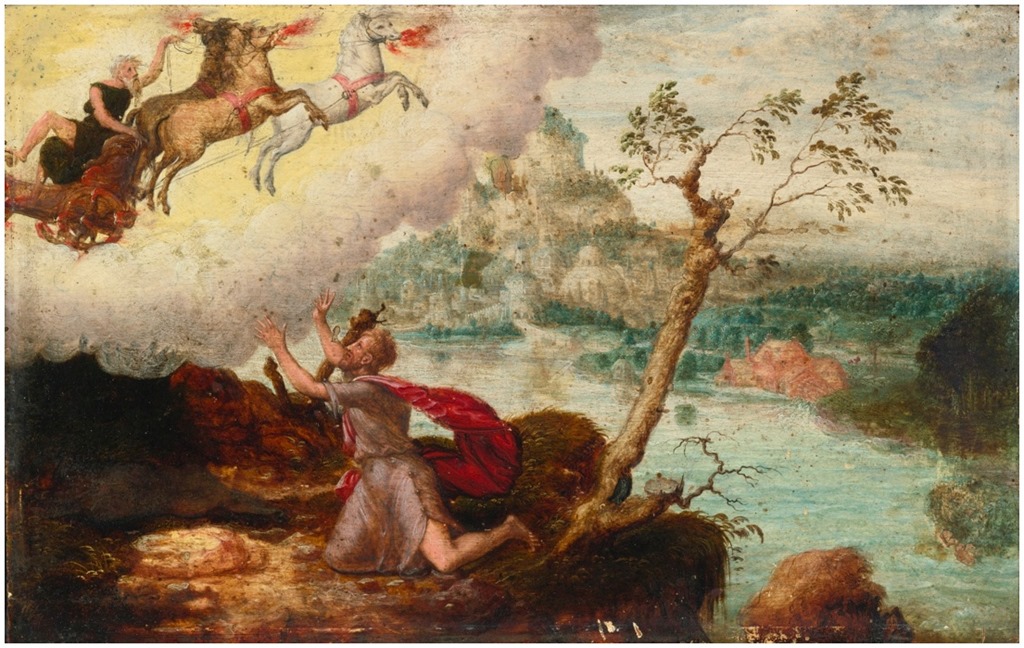
I wrote the words to today’s piece, “Old Michaelmas Day,”  thanks to a blog post on another blog I follow. Earlier this month, I was struggling with a more complex musical part for Hardy’s “The Self-Unseen”  when I took a break and read a new post over at the Daze and Weekes  blog. It’s there that I read of a marvelous British Isles folk tradition having to do with Saint Michael’s Day (Michaelmas). Michael is one of the Archangels, the warrior among them who cast a rebellious Satan out of heaven. Since he’s an immortal angel, he has no birth or martyrdom day to celebrate, so his day on the old church calendar is supposed to be the very day he cast Satan down.

Bonifacio St Michael Vanquishing the Devil

Let up Mike, I’ve had enough! Just don’t let me land on any prickly bushes OK?

But here’s where the myth gets interesting for me. In the Northern Hemisphere his day (September 29th on the Julien calendar, and either October 10 or 11th, depending on who’s counting, on the modern calendar) comes in the harvest season. In the British Isles variation on this, falling Satan lands on a prickly blackberry bush, and so mad at the prickles, or whole casting-down thing, he spits and or pees on the blackberries. And so, after Michaelmas, blackberries are no longer fit to be eaten, on the grounds of folklore, and all this expectoration and micturition.

It just so happens that my friend, and the better poet, Kevin Fitzpatrick has a great poem about blackberry harvesting, and in that poem Kevin refers back to a poem by Seamus Heaney, also about blackberry picking. So, from another blogger’s post, about another country’s folk-legend with the Devil’s happenstance landing, and my memory of a friend’s poem, adding perhaps even a bit of Thomas Hardy or Seamus Heaney stuck in my ear, this piece was born.

In such a way, “Other People’s Stories” gets honored, even in the breach.

The Thomas Hardy piece got done, though I decided to go with a simpler folkie musical accompaniment there. For “Old Michaelmas Day”  the music is more complicated, as it uses my more modern orchestral/electronic instrument ideas. The music consists of a conventional drum set and a series of staccato violin notes, bookended with some low, sustained piano notes in the left channel with higher register Rhodes electric piano on the right. And then, sweeping through it all, a close cluster of orchestra sounds, treated with constant and fast audio manipulation so that it sounds almost like a strange organ stop. As with many of my modern orchestra/electronic pieces it sounds like it uses “loops,” but also like many of my pieces, it doesn’t. Loops are easy to create and compose with using computers: import or create a few bars of a motif, and just tell the software to repeat as necessary. But in “Old Michaelmas Day” all the notes are played, with differences in timing, and with the notes themselves changing (albeit, there are only a small number of pitches used in the keyboard and violin parts).

This piece is another short one, so even if you don’t usually listen to music in this mode, give it a try, as even if you don’t like it, it won’t bother you very long. The player gadget appears at the end of this post. If you do like it, please help spread the word about the things we’re doing here, particularly on your blog, or on Facebook or other social media. No audio player gadget?  This highlighted link will open a new tab with an audio player then.

The Self Unseeing

Today’s piece is our first proper piece by English poet Thomas Hardy. In America Hardy may be better known as a novelist, though he considered himself a poet first and last. When Hardy began writing poetry in the 19th Century, William Wordsworth was but a decade dead, and at the end of his career in 1928, T. S. Eliot’s “The Wasteland”  was several years old. So, Hardy’s career starts at the tail-end of the English Romantic revolution, and proceeds through the Modernist Explosion of the early 20th Century.

In some particularities of locales and events, Hardy’s poetry can seem of the 19th Century; but his language, direct, colloquial, and unfusty, seems as modern as the 20th Century modernists. Indeed, modernists from Robert Frost to Phillip Larkin found much to admire in Hardy. Setting many of his poems in the rural areas of western England diffuses the placement of some Hardy poems on a timeline, as the more rapid pace of cosmopolitan change does not mark them as sharply.

The Hardy Tree

“Strap yourself to a tree with roots”
Gravestones moved by Thomas Hardy when progress impinged on a country graveyard.


Today’s Thomas Hardy piece is “The Self-Unseeing,”  published in 1901, right in the turning of those centuries that Hardy spans. This is another poem brought to my attention by the Interesting Literature  blog, and I cannot improve on the excellent analysis of the poem there.

In “The Self-Unseeing”  there’s a visit, in a mix of memory and reality, to a long-ago childhood house, a mental voyage many of us can do, assuming we can ride out the emotional waves. Given the fires, floods, earthquakes and winds of the past couple of months across our continent, some will be being taking this visit now wholly in memory.

Thomas_Hardy's_heart

Bury my heart in Stinsford.


So, that’s it for analysis of the poem this time, but we’ll offer some music to go along with it: strummed acoustic guitars and bass, and a vocal that’s a bit more to the “sing” side of our usual talk-singing.  To hear it, use the player that should appear below. If you like the variety of what we’re doing here, combining various words with various music, please help us by sharing links to here, hitting the like button, or otherwise letting folks know. Thanks!


The Return of the Exiles

It’s been too long since we featured one of the looser live performances of the LYL Band here at the Parlando Project, and with the interval, it’s also been too long since alternate voice Dave Moore has been featured. Given that we’re running up to Halloween, and that Dave has a long-standing interest in fantasy and scifi, it’s time to redress that.

Today’s piece is Dave’s adaptation of a short story by Anglo-Irish writer Lord Dunsay from Dunsay’s fantasy collection “The Book of Wonder”. The story is called “The Return of the Exiles.”

Avebury stone circle

Yes, it’s Avebury, not Stonehenge. Poetic license applied for.


Lord Dunsay is one of those writers who had a long successful career during the first half of the 20th Century, but who now gets mentioned more as an inspiration than read as a writer. His Wikipedia entry has one of the longest lists of writers who’ve acknowledged him as an influence that I’ve run across. Everyone from Tolkien to Gaiman has tipped their hat to Dunsay.

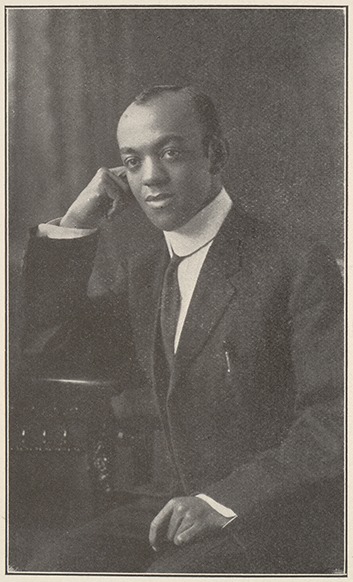
Lord Dunsay

Dunsay served in both World Wars and the Boer War.


Besides writing, Dunsay appears to have served in three wars. One hopes that future soldier-writers will be able to avoid reaching that achievement.

Dave adapted the short story to make it more musical, but his telling is generally faithful to the original. One detail retained, that I personally liked, is that our narrator is on a bicycle journey as the story begins.

To hear “The Return of the Exiles” use the player that should appear below.

Poems In Unrhymed Cadence

In 1899, as the 19th Century was leaving in Victorian London, a 13-year-old boy from a large poor family left school and went to work at whatever jobs that could be found. An unremarkable story.

After several years, and some job security as a civil service typist, he could enroll at a workingman’s night school. This story too, unremarkable.

Men and women with stories like this often go on to form families, start small businesses; or slip into slightly better jobs, finding what opportunities are left unguarded or unattended by those who started further up the economic ladder (or wall). Working diligently, they sometimes become the mothers and grandfathers of poets and scholars, preachers and social reformers. That’s not the way this story goes however.

This teenager moved quick, and found out he had a talent for language, not only his own native English, but German, Spanish, Russian, Dutch, and French too—they all came under his control. He accelerated himself beyond the speed of night school, and in a matter of a couple of years, our young man became a poet and a leading proponent in his time for avant-garde French poetry. And then he began meeting with some other poets in the cafes of London.

This man was F. S. Flint. It would be easy to pair him with one of those artists he was making talk and friendship with: T. E. Hulme. Neither had privileged backgrounds, and both are too little known, read, and studied today. In 1909, ten years after this boy had left school at 13, the meetings in these cafes included not only Flint and Hulme, but Ezra Pound, H. D., Florence Farr, William Butler Yeats, and Robert Frost. What they were plotting was a poetic revolution—one that would succeed, and become the dominant strain of English poetry for the rest of their century.

Although all of them had avowed influences, often ancient ones—English and Celtic bards and Latin, classical Chinese and Greek poets—they were resolved to “make it new” in Pound’s famous motto. They all wanted to change the language and the sound of English poetry, and since words and music are what make up poetry, they wanted to change everything about it.

In terms of language, the thoughts centered around removing decades, even centuries, of encrusted dead metaphors that no longer had any meaning. The imagery in the new poems would need to be fresh, different, vital and intrinsic to the poem, not mere decoration. Extensive, romantic effusions of feelings would be replaced with palpable images.

The “School of Images” was coalescing. By some accounts it was Flint who suggested tacking the suffix“-ist”, (in French “-iste”) to “image” to brand the movement.

In terms of poetry’s music, there was less agreement. Yeats and Farr were trying to invent a new kind of chanted poetry to music. Frost and Yeats would write some of the most accomplished metrical poetry ever written in English, but with a naturalness that made it disappear into unfussy verbal music. Pound remained interested in combining music as in the days of the medieval troubadours. Hulme talked of “chords” harmonically struck in the mind when an image was right. Flint, along with Hulme, thought French vers libre, “free verse” without rhyme and strict meter, was the mode to use. Flint called his verbal music “unrhymed cadences.”

And that’s where today’s piece comes in. In these three loosely-linked and lovely London-based poems, Flint demonstrates what he means, and this sort of breath-based line has echoed in much English poetry since.

The three poems or sections that make up Flint’s “Poems in Unrhymed Cadence”  seem connected to me, though the middle (swan) section had been published previously in a much more verbose version a few years before. I’ve only been a London visitor—Flint grew up there—but I personally associated the scenes throughout with Hyde Park/Kensington Gardens, with the silver birch trees, swans, lilies, and other flowers mentioned. However, the third section specifically mentions aspen trees, which I don’t believe are in Hyde Park or Kensington Gardens.

Hyde ParkKensington Gardens

Hyde Park and Kensington Gardens in London—swans didn’t pose for me, no aspen trees in sight.


Following the three Imagist rules (which were first written down by Flint), the images are direct and exactly presented, the words are spare and free of unnecessary elaboration, and the “To compose in the sequence of the musical phrase” rule is something of a restatement of Flint’s “cadence.” Like most imagist poems—and even though these poems unmistakably reflect a mood—there is less spelling out of emotions by their abstract names that would have been customary before. It’s only at the end of the second (swan) section that the first of these, “sorrow,” is spoken, and when the third, final section unleashes “afraid,” “anguish” and “pain,” the images have set this emotional summary in a real physical, sensory place first.

F S Flint

The only picture I can find of F. S. Flint


Musically, once again I don’t know what to call the music I wrote and performed for F. S. Flint’s set of poems. There are several orchestral parts and percussion, but the lead instrument that eventually emerges is a sitar. Since in the 21st Century chicken tikka masala can be said to be the British National dish, my limited skills on this instrument of virtuosos can be forgiven.

To hear it, use the player below.


Vegetable Swallow

As I started doing some translations of Tristan Tzara, the man who was most famous for being one of the “Presidents of Dada,” I was surprised in more than one way.

Like some writers I’ve presented here, Tzara was known to me only by reputation, as a name, and that reputation was not only as a founder of Dada, but of being the theorist of its most nihilist and avant-garde wing. Dada as Tzara spoke of it seemed to say: let’s destroy everything, and see what remains. Sounds like a pretty fearsome guy, and from my generation’s punk rebellion in music, his reputation reminded me of the those just past the first wave of punk that bought into a first principle of denigrating everything that came before. That could be a useful corrective, a way to clear the creative mind from everything you feel has come to a dead end, whether it was “Tales of Topographic Oceans”  or Tennyson; the horrors of WWI or the denigrations of Reagan and Thatcher. Such a stance, pure as it is, has dangers of discarding the baby with the bain-eau.

Tzara also provoked with ideas like his “How to Make a Dada Poem:”

Take a newspaper

Take some scissors.

Choose from this paper an article the length you want to make your poem.

Cut out the article.

Next carefully cut out each of the words that make up this article and put them all in a bag.

Shake gently.

Next take out each cutting one after the other.

Copy conscientiously in the order in which they left the bag.

The poem will resemble you.

And there you are–an infinitely original author of charming sensibility, even though unappreciated by the vulgar herd.

One can read this and miss the satire in it (particularly that last line); or one can read this laughing, and miss the value in this practice, variations of which were carried out throughout the rest of the 20th Century by Surrealists and Beats and unclassifiable modernists like John Cage. I, myself, independently discovered an analogous method as a teenager, and composing pieces by randomly opening a dictionary and blindly pointing with a finger at word after word. And Tzara did publish pieces that seemed to be just such an assemblage of words and phrases, for example Bilan.”

Bilan by Tzara

Never Mind the Boustrophedon, Here’s a Tzara Poem as published in Dada magazine


Not only is “Bilan”  typographically incoherent, the phrases are such things as “the bloody revenge of the liberated two-step” or “satanic horoscope dilates under your vigor.”

I believe this sort of thing can work: as a corrective, as a breaker of writer’s-block, as a reminder of the random and irrational component in creation, and as an insight into the dead and clichéd language which infests all societies. I think it works best in small doses when needed, and longer pieces based on it, or continued reliance on it, can be analogous to over-reliance on laxatives.

So that was the Tzara I assumed I would meet as looked for pieces to translate and use here with music: a man with little to say other than to point out with broken language that language is broken.

And to some degree that was reinforced as I looked at the few English translations available on the web of his work. Occasional beautiful lines, perhaps of accidental beauty, mixed with incoherent lines. Here is a link to an English translation of a Tzara poem “Vegetable Swallow,”  though its translator is never credited on the several sites which have it with identical wording. This is the same poem which I use in today’s piece, but with my own translation from the original French.

I’ll talk more about what I found as I translated Tristan Tzara in my next post here, but I’ll summarize by saying that I found problems in the translation I linked to, surprising problems that sometimes feel to me a bit like reading the “bad quarto” of Shakespeare. I could be wrong in my interpretation of Tzara’s “Vegetable Swallow (Hirondelle Végétale)”— I am neither a scholar of Dada nor anything even close to a fluent French speaker—but I don’t even like the translation of the title, though I have kept it, because it may be what an English speaker is likely to know the poem as.  “Hirondelle” is French for the species of bird, the swallow. I might have my own inevitable and anachronistic “Monty Python and the Holy Grail”  connection with the swallow, but in the title’s context along with the English word “vegetable,” one thinks of that scary and prescriptive phrase from childhood: “Eat your vegetables”—not how it’d be understood in French.

Tristan Tzara photograph by Man RayYoung Bill Gates grayscale

Steve Jobs would have told the young Bill Gates (on the right) to try a black sweater
Tristan Tzara (on the left, photo by Man Ray) would have suggested a monocle.

In my translation, Tristan Tzara is providing something more like a Surrealist’s Lover’s Rock lyric—more Paul Éluard than Dan Bern hilariously parodying Bob Dylan. Musically, I’m not attempting reggae though. I’m not even sure what genre to call my composition on this one, but it is,  like Tzara proclaims, “Swimming in disparate arpeggios.”

To hear it, use the player below.

At a Window

I was ready to post this new piece, Carl Sandburg’s At A Window,”  early yesterday when I had one of those days that come to challenge artists. Artists less fortunate than I can perhaps point to a single thing that holds them back, but with myself it’s often several smaller things.

I’m a habitual early morning reader of the news, a rhythm that may have started in my earliest teens when I delivered newspapers before school and continued through night-shifts in hospitals where I’d read the papers as they came out in the predawn hours. Nowadays, it’s not the papers I turn to for news, but Internet newsfeeds, and the pre-dawn hour was filled with the reports of another mass shooting profaning music, this time in Las Vegas. These events hurt me because I often spend as spend as much of my day as I can carve out making the music here in combination with the words that I combine with it. One of art’s purposes in my mind is to allow us to set aside momentarily the real consequences and strictures of life. Not necessarily to escape them—in fact, many times art allows us to examine them so that we can treat them as the reality of what they really are, because those strictures, even things we fear most, have their limitations, just as we do. And art can be the “R&D Department” of the soul and the repair of the world.

Thus, the hurt when those borders are crossed. Thus, the feelings of one’s work in an inadequate field.

Of course, my feelings on this matter are a small and abstract hurt, compared to the suffering of those more directly impacted. Small things closer to my heart feel larger than great things farther away. This is one of the limitations of our perception. Then my day continued with another unrelated hurt, closer yet to my heart, and I was reminded again of my limitations and imperfections.

Real hurt seems so large, art seems so small, and I feel like a poor worker in a field of playful trivia.

Which may be so, the limits of my perception may not be able to tell. However, I believe this is a common feeling for artists to have, and so if you create art, you may also have felt this. We try to do so much, and all we can see is so little. This is part of why the Parlando Project principle: “Other People’s Stories” has value. Speaking the words of others helps me by adding what their eyes and hearts have seen.

SONY DSC

“He is an observer with sympathy but without fear”

This morning, it turns out that Carl Sandburg, in the very piece I was working on this previous weekend, “At a Window,”  was speaking to this experience, though in my down-heartedness, I couldn’t hear him for a while. This short poem, appearing first in 1914 in Poetry  magazine alongside his “Chicago, hog butcher for the world…” poem which will overshadow it, waited patiently to speak into my ear. What good could a more than a 100-year-old poem have for me?

Poetry Magazine March 1914

Eight poems of Sandburg’s Chicago Poems debuted in this issue.

“At a Window”  says that even in shame and failure you must hunger for even more of the same. In the context of the sampling of Sandburg’s Chicago poems, which spoke so frankly about the situation of poor and working-class Americans, I think that window in the title means so many things. Yes, it means there is an imperative to look outside oneself as an artist. The dusk and shadows out the window lets one see little, but one must still look.

Will there be any consolation? Sandburg apparently had such consolation in his spouse, who championed his work, who he speaks of in the “Leave me a little love…” section. Perhaps you have such a champion in your life, perhaps you don’t. We are called in “At a Window’s”  conclusion to look out the window anyway. Perhaps the one who comes walking out of the dusk is yourself, to champion someone else?

To hear the performance of Sandburg’s “At a Window”  use the player below, and thank you for listening.

Autumn

100 years ago, a WWI German artillery shell ended the life of T. E. Hulme, the man who sparked off what we now know as modern English poetry. I was going to say “invented,” but that’s a dodgy word in art as much as in science. Hulme borrowed ideas from several places, and adapted poetic tactics the French and some Americans had already made use of. But we can still say he started things off because he collected the tinder and cordwood in the Poet’s Club in London in the first years of the 20th Century, and the spark was applied by suggesting that everything he thought poets were doing since, well, just about the Renaissance, was wrongheaded. Too flowery. Too ornamented. Too “romantic,” an error he believed made them think of mankind as exalted and godlike.

Hulme, interested in visual art as much as he was in literature, thought the new literary direction should be visual. Cold hard images, direct and vivid, not abstract, were to be the new order, but these images could even be homey and simple (as long as they retained that vividness), not the sort of thing that signaled high culture in the British poems of the past couple of centuries. He was very certain of this, and he either made a convincing case in person or provided the theoretical underpinnings through first or second-order influence to the soon to be mighty modernists: Pound, Eliot, Yeats, H.D., and Frost.

Bust of Hulme
Bust of T. E. Hulme by Jacob Epstein, another member of the early 20th Century artistic “American Invasion” to England

Hulme illustrated his ideas with short poems. I’m not altogether sure how seriously he took these writings, but I find they have three attractive attributes. First, for all the bluster and pugnaciousness that he propounded his theories, the poems are very unassuming. In subject, they often seem to follow one of the principles I try to follow in the Parlando Project: “Other people’s stories.” Second, they are short, and I am attracted to the variety of expression that can succeed in short poetry. And lastly, they are the first. They have that charm, the same charm I might apprehend looking at a Chuck Statler music video, an Apple I or MITS Altair personal computer, an early horseless carriage, or the pictograms on a cave wall. The other beginners looked at this, and said “why not?” Ezra Pound related to Hulme’s ideas in formulating “Imagism.” T. S. Eliot either saw or was reinforced in his ideas for a new classicism in poetry in Hulme’s work.

What would be striking about today’s piece, Hulme’s “Autumn,”  in 1908 when it was published?

It’s “free verse.” No rhyme, no regular metrical scheme. Besides some French poets, American Walt Whitman had done this, but this was still rare, and rarer still in England. The last part of Hulme’s “Autumn”  is still musical however, essentially iambic, and sound echoes, if not rhyme, are present in “wistful stars with white faces.”

Hulme’s two substantial images in “Autumn”  are extraordinarily unpretentious, particularly the first one: “the ruddy moon” at sunset leaning “over a hedge/Like a red-faced farmer.” Compare this to Shelley’s “To the Moon” where the moon is “of climbing heaven” and is addressed as “Thou chosen sister of the Spirit” or Wordsworth’s “With How Sad Steps, O Moon” which is “running among the clouds a Wood-nymph’s race”—and these are examples from good poems of the 19th Century, not the more forgettable lot.

Over at the Interesting Literature blog, where I discovered Hulme, it is pointed out that Hulme, who was from a rural district, also had a ruddy complexion. Perhaps Hulme is looking at himself when he sees the ruddy moon, or his hometown in the moon, but we don’t need to know this subtext to sense the nostalgic comfort in this scene. Except for “cold” near the beginning, which is a sensation as well as an emotion, the only other emotion that is “told” rather than “shown” in the poem is the adjective “wistful” applied to the stars.

Did Hulme toss this off, just to say “Look! You can write a poem like this.” I don’t know, but that’s beside the point. As a person myself who has emigrated from a small rural town, Hulme’s “Autumn”  works as well or better than a grander poem in a more florid manner.

What would Hulme have done if he hadn’t insisted in serving his country in WWI, or if that shell had landed on some other poor soul? That, no one can tell.

Ascenseur pour l'échafaud cover

Like Pound, Eliot,  H. D., Frost, and Epstein, Miles Davis was another American making new art abroad.


For today’s performance, I was struck by rehearing a portion of Miles Davis’ soundtrack to “Ascenseur pour l’échafaud”  earlier this week when a piece of it, “L’ Assassinat de Carala,”  appeared unexpectedly in Ken Burns and Lynn Novick’s “Vietnam”  documentary series.. Performed by Davis with a mostly French pickup band over a couple of days during a short stay in France, it’s something of a radically simple first of it’s own, as Davis essays a spare style with less harmonic movement, a style that he was soon to use with a company of more experienced and exceptional improvisers in his epochal “Kind of Blue” recording. Other than Davis’ own trumpet, the featured instrument on “Ascenseur pour l’échafaud”  is Pierre Michelot’s bass. In my music for “Autumn”  I made more use of the drums as well as the bass, as the only “trumpet” I could use was a synthesized approximation of the timbre of the real thing. There’s another first here: the first drum solo on a Parlando Project piece. To hear T. E. Hulme’s “Autumn”  as I performed it, use the gadget below.