Poetry in Translation

I remember reading about this some years back, and found it fascinating then. In my memory it was the American poet and critic John Crowe Ransom who was the teacher, but in searching this week for more detail, the perpetrator named was English poet and critic I. A. Richards. My memory still says Ransom did something similar, but let’s stay with Richards since I can verify it.

The time frame is the 1920s. The Modernists (due to painful copyright laws, the newest poets whose work can be freely used here by the Parlando Project) had begun their ascendency into the mainstream of English language poetry. But the Victorian era, including the later work of the Romantics and the whole of the William Morris/Pre-Raphaelite revival that preceded the Modernist revolution was not that long ago, within the memory of teachers and critics alive then, like the post WWII era or “The Sixties” would be today. The Romantics had been a revolution in how poetry speaks, and those that followed them took different paths from that revolution, and now the Modernists proposed a counter-revolution, once more changing how poetry speaks.

Had poetry, in some Platonic ideal state, it’s essence, changed; or had only the language and form it took to express its inner nature changed?

In such at time, the question of aesthetics, of what constitutes poetry and what are (or should be) its goals and effects, would naturally come to the fore. If one is a teacher, one might examine this by teaching, and so Richards devised an experiment. He gave students at Cambridge, a leading English university, a packet of poems which were without the names of their authors or any context about when they were written—they were even without their titles—and asked the students to write about them, to interpret them. I’m not sure if he presupposed what the results would be, but summaries of the experiment report he was surprised at the results. Their interpretations were poor, and often included what he knew to be misinterpretations. The students often resorted to personal experiences or rote sentimentality to explain the poems. As a result, the interpretations of the poems varied considerably as they missed their mark in different directions.

You might think, “Well, duh!” In subsequent theories of literature all these effects have been explained and codified in multiple ways, but at the time, in the 1920s, this was a new finding. Richards thought this showed a failure of literacy, defined as a kind of higher literacy; not the inability to read basic English, but to read and understand the kind of associative and musical language used by poetry. He spent his life trying to remedy this by teaching. In 1979, while in his eighties, he was still teaching, in China, when he fell ill and died. He wrote a book, titled “Practical Criticism”  setting out ways to properly read and derive the effects of a poem.

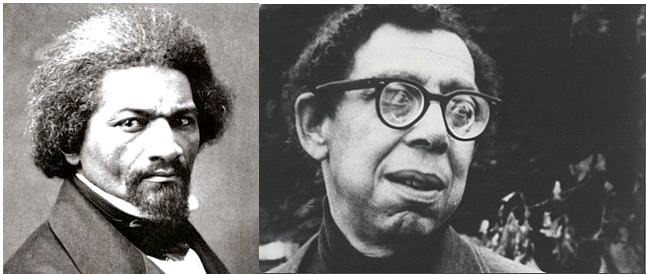
John Crowe Ransom and I A Richards

Know your Modernists: John Crowe Ransom, I. A. Richards, and two other blokes who don’t know from The New Criticism


But the way I heard of the experiment (and this may have been a subsequent experiment, inspired by Richards, perhaps by Ransom) the packet of unattributed poems given to students to interpret included a range of “not great poetry,” pop poetry as printed in mass-market publications as well as the work of more esteemed poets. And the result was the students couldn’t reliably distinguish the great poets from the hacks.

The challenge of the new poetic language of the Modernists, and the experience of teachers like Richards and Ransom demonstrated in this experiment with unattributed poems, lead to what was called “The New Criticism.”

When, a generation later, I began to encounter poetry in school, “The New Criticism” was by far the predominant idea of how poetry should be taught. At the end of my scattered schooling, new theories were arising, Deconstructionism and the like, and I can still recall professors muttering about its willful misunderstandings and mistaken goals as I struggled for money to pay for one more class that would fit into my work schedule.

Now in this century, I know less what happens in schools, but I sense culturally we’re concerned increasingly with the poet as the container that holds the poem and its experience. Some worry about “Identity Politics” and its correlate would be “Identity Poetry,” where the background, ethnic and otherwise, of the poet is integral to the poem. I’m too busy making art to have a coherent philosophy on this. I can easily envision problems arising from a division of poetry into ever smaller spheres where only the right combinations of ingredients can make or appreciate some work. On the other hand, I’m also suspicious of the motives of anyone who claims to hate Identity Politics or Identity Poetry, while showing no interest otherwise in smashing the walls and peeling off the labels from artists for whom those “stick to that” labels and barriers may not be self-chosen.

Oh my, what a long introduction to today’s audio piece! In honor of Richards and Ransom and their experiments, here’s a piece I call “Poetry in Translation”  for the purposes of the experiment. I’m not going to give you any more context for the poem used, the author’s name or their ethnic identity. I assure you I’m not in this for “gotcha” or obscure literary one-upmanship. It’s short, so give it a listen and see what you think. I’ll be back later this week with more.

Poets and Presidents Day

I don’t know if we’ll ever have a person who spent serious time as a writer as U.S. president. Yes, most write—or co-write to some degree—books leading up to their candidacy, and some kind of post-term memoir is now expected; but I’m speaking of a sustained and serious attempt at literary writing.

In my lifetime we had one prominent candidate (Eugene McCarthy) who did write poetry in the mid-century modernist style, and a substantial “leading up to their candidacy” book of political history from John Kennedy, though there is controversy about how much of “Profiles in Courage”  was ghost-written. Jimmy Carter has published books of poetry after leaving office, but at least so far as I’ve sampled his poetry, it hasn’t stuck with me.

Other democracies may have better examples. Vaclav Havel in the Czech Republic, and that winner of the Nobel Prize for Literature with a side job, Winston Churchill. Farther back there are more chief executives who could fill a shelf with their own books: Disraeli, Theodore Roosevelt.

Overall, I’m not sure that “men of letters” (a gender-neutral term doesn’t seem to jibe with that archaic phrase) are, as a class, good candidates for the Presidency. Writing is the perfect example of a one-person enterprise. To do it well takes a lot of effort, but most always it involves the writer setting themselves on that course by convincing themselves of it’s necessity and then carrying on with little assistance, at least until the publishable stage is reached. Leadership and coalition–building aren’t needed in those tasks. Vision is helpful in either field; but if we are to be honest with our selves, democracies only set much value in that in times of crisis.

washington.lincoln.apotheosis

“I extend this laurel, and hearty handshake…”


Though neither sought to publish, the two Presidents whose birthdays have been merged into Presidents Day do have poems to their credit. George Washington, as a love-struck teenager penned an incomplete acrostic poem that was to spell out the name of the subject of his affections. Last year the Parlando Project turned it into an angsty soft-loud expression of that youthful boldness-fear, one that, surprisingly, remains the most popular audio piece we’ve ever done.  Here’s the player for “Frances,”  Washington’s love poem:


Abraham Lincoln, the great American orator and leader, wrote a three-section poem in his 30s while recalling the hometown of his early youth. We set part of this to music for his birthday earlier this month. It’s quite sad, in a mode that was somewhat common in 19th Century literature, but there’s reason to think that Lincoln wasn’t just striking a pose. It’s now commonly believed that he suffered from some level of depression in his adulthood. To hear Lincoln’s “My Childhood Home I See Again,”  use the player below.

Help grow the audience and alternative ways to get the Parlando Project

I enjoy making these pieces and talking about the process that leads to them. If you’ve ever come across a post here and pleasantly thought “I didn’t know that,” well, I likely had that same experience, sometimes just a few days before you did. Similarly, if you’ve ever listened to one of the audio pieces and enjoyed music and words illuminating each other; well, I’ve spent hours composing, playing, recording, and mixing it—heard parts of it up to a hundred times—and I enjoyed doing that. I’m not bragging there. As my own “producer” I’m well aware that I’m pushing my limits as a musician in making these pieces—but why go to the trouble if you aren’t making music that you, the musician, want to hear?

Well yes, I know one answer to that question, but we’re not a commercial enterprise. We don’t do sponsorships or ads. I do this to hear these poets and writers in a new way and because I’m attracted to the stories surrounding the words. But when I do those things, I’m often thinking about you too,  listeners and readers, the folks who pay us not with money, but with your attention.

I can’t say enough about how much I appreciate that.

As we near 200 audio pieces published, I’m looking for that audience to increase this year. I know we’re quirky, but so’s this modern world. Variety has been a goal from the start, so I expect that some episodes/posts/pieces will be more interesting than others to any individual reader/listener. I intentionally do that, because I find there’s often no delight without surprise.

So how can you help this audience grow?

Well, read and listen, though you’re already doing that, and you don’t need to do anything more.

Hit the like button if you like something. It’s a little thing, it’s become an Internet cliché, but it may help some for folks finding us, and it always gives me a good feeling when I see those icons at the bottom of the post.

Subscribe. There’s another term that’s become cliché, but there’s no cost or obligation to do it. I use the subscribe feature for blogs I’ve found interesting even for a portion of their posts, because it helps me find those posts of interest more easily.

Subscribe part 2. The Parlando Project started out as a podcast, where the audio pieces you see at the bottom of most posts can be automatically downloaded to your smartphone, tablet, or computer. Again, there’s no subscription cost. As a reader of this blog you’re “insiders,” and you get more information on the audio pieces, but we still have more listeners via the podcast than listener/readers here on the blog. The podcast audio is the same as what you get on the blog, but it comes to a subscriber automatically. You can find the Parlando Project on Apple Podcasts/Itunes, Stitcher, Google Play Music, player.fm, and many other podcast sources/apps.

Subscribe part 3. Since the beginning of 2018 we’re on Spotify, though with a footnote. The Parlando Project is in Spotify’s podcasts section, which is gradually being rolled out to the various Spotify apps. Only the most recent Parlando Project pieces are in Spotify’s listing, but it looks like you can add a Parlando Project audio piece to a Spotify playlist.

Yes, I’ve considered getting at least some of the audio pieces on “regular” Spotify or other popular streaming music services, but so far the costs and time to do that are stopping me.

Use the social media buttons. At the end of each post there are buttons to use a variety of social media platforms. The time producing the Parlando Project keeps me from all but minimal time on these platforms myself, but when someone does do this, it seems to help other people find us.

There. Now back to what we do regularly. Here’s one of the first audio pieces posted here back in 2016. “Angels in the Alley”  is a bit longer than what’s become our average, and I like to think our audio quality is getting better since then too;  but “Angels in the Alley”  is also more of a narrated spoken word story than others. What’s the  story? The death of English poet and artist William Blake, and how it connects with this famous rock’n’roll video clip. Ever wonder what Allen Ginsberg is gesturing about in the background at 1:35 into this?


And here’s the LYL Band with one theory:

We Grow Accustomed to the Dark

It’s hard to escape the pull of Emily Dickinson here in the Parlando Project, and I keep finding that her poems ask for that unheard music in them to be made audible. So much is remarkable about Dickinson. She’s so original in poetic expression, and yet she’s kept a substantial audience of readers from the time of her first posthumously published collection in the late 19th Century.

Here’s yet another striking fact about her: she wrote over a thousand poems, the majority of her poetic work, roughly around the time of the American Civil War, in a burst of creativity less than a decade long. Can one even imagine what that might have been like? For this means that, on average, over twice a week a new Emily Dickinson poem, a new and unprecedented type of poetry, emerged from her pen.

Emily Dickinson's desk

Where she created a new way to write American poetry over a thousand times


She shared them somewhat, some of them anyway, with family and friends. She informally bound many of them into little booklets. But did she know what she was accomplishing? What faith drove her creativity?

Today’s words are drawn from a Dickinson poem she wrote halfway into that burst. Unlike some Dickinson poems, the “plot” of the poem is easy enough to follow, and it concludes with a moral, like a conventional poem of moral uplift might. However, like a lot of good art, the experience and meaning of it changes as you bring your own time and times to it.

“We Grow Accustomed to the Dark”  starts off in that pre-electric outdoors that we last talked about with Frost’s Stopping by a Wood on a Snowy Evening.”  On a new moon or overcast night, that old dark is darker than any we routinely experience in modern urban America. Yet, then or now, eyes indeed adjust, and make better use of what weak light may be present. Dickinson next changes the scene and speaks of “Evenings of the Brain” where even moon and starlight are extinguished. Other than Dickinson’s near, but not quite, “slant rhymes,” this is a conventional poem up to this point. But wait there’s a small warning that she’s not going to develop this conventionally. Those evenings inside the brain are a larger thing than the whole of the outdoor night.

Her next metaphor is not Victorian sentiment, but outright slapstick farce. Moving forward in the dark earnestly, the nobly brave—smack!  Faceplant themselves into a tree trunk.

This brings ambiguity to her concluding moral. Is becoming accustomed to the dark a good thing? We think we’ve adjusted. We think we’ve steeled ourselves to “Brave”—or maybe we’ve just added that outer darkness to our brain, and we agree to pretend it’s normal. “Life steps almost straight” she concludes. Somehow, at least this week, as I watch our dark world, I don’t think Dickinson intends this as a consolation.

For today’s music I tried to underscore that from the first note. I wrote this orchestral piece based around an F minor to D progression that should leave the listener unsettled from the start. I chose to experiment with this cadence after reading Alex Ross’ short piece about pioneering Afro-American composer Florence Price earlier this month. If you’re new to the Parlando Project, let me remind you that our goal is to present the words with music as varied as I can make it. If you like one kind of music that works one way, we may puzzle you with what we do in any single piece. If so, try another. We are fast approaching 200 audio pieces in our archives, so take a listen around a few of them.

To hear my performance of Dickinson’s “We Grow Accustomed to the Dark”,  use the player below. Please remember that this Project continues because listeners and readers pass the word around about it.  Mentioning us, tweeting about us, linking to us, telling a friend about us, helps grow the audience and encourages our efforts.


Lines to a Nasturtium

As I’ve all but promised, here’s a piece using another poem by the deserving-greater-notice early 20th Century poet Anne Spencer. It may even be appropriate for Valentine’s Day—though if so, it’s a somewhat complicated valentine. If we think of Spencer’s poem as a valentine, “Lines to a Nasturtium”  is a fancy one, but the doily lace on this valentine has strange knots in it.

I was going to present it first, before “Dunbar,”  but I felt I didn’t understand it well enough, and after living with it for a couple of weeks, I’m still not sure I’ve found its bottom. It’s beautiful and more than a bit mysterious. My son caught me laughing today as I read an account of James Weldon Johnson, who helped bring Spencer’s poems to publication in the 1920s, sharing a selection of them with the acerbic critic H. L. Mencken. Mencken’s reply? “Tell that woman to put beginnings and ends to her poems. I can’t make head or tails of them, but they’re good.” Yes, I had to laugh, but that’s sort of how I feel right now in regards to this set of words. It’s as gorgeous as the flowers it uses as images, but there’s a puzzling pair of lines “But I know one other to whom you are in beauty/Born in vain;” I feel I should be able to suss out who the “one other” and the “you” are, and I just can’t be sure.

A sensual but philosophical ode to beauty? An early claim to the beauty of women of color against Euro-centric ideals? A Robert Browning-like soliloquy regarding a potential love rival? For awhile this morning, trying to follow the antecedents to that “one” and “you” in the text, I was leaning on that later, but then I was reminded that Spencer thought the entire last part of her poem, under it’s published sub-title “A Lover Muses,” was decorative enough to have it painted on a cabinet door in her kitchen.

A Lover Muses on her kitchen door

Come on, in my kitchen—Spencer’s poem on the door


I don’t want mysteries of meaning to get in the way of enjoying Spencer’s work any longer, so let’s just listen to it today. Use the player below.


My Childhood Home I See Again

Tomorrow is celebrated in the United States as Abraham Lincoln’s Birthday—or rather, it was in the past. In 1971, a uniform Monday holiday, often called President’s Day, centralized what had been in the past dual, separate, celebrations of Washington’s Birthday and Lincoln’s.

Washington (as poet Phillis Wheatley’s motto for him said) was first in war and first in peace, and we owe him a great debt for being the rare revolutionary leader that did not try to crown his success with dictatorship. But Lincoln’s achievements are every bit Washington’s equal; though his central achievement, a US government that no longer enforced chattel slavery throughout the country has in recent decades been somewhat obscured for complex reasons.

But here at the Parlando Project, where we combine music with words, Lincoln gets extra props for being as great a wordsmith as any US Chief Executive. While taking the various roads that lead to this piece I read his famous Gettysburg Address, or rather refreshed myself with the words in manuscript form, for as a child I had memorized it.

At this site it’s possible to trace the slight revisions that Lincoln applied draft by draft to polish this concise statement of dedication. And the same site linked to another site that let me read (for the first time) Edward Everett’s main speech at the same Gettysburg dedication.

Perhaps you’ve heard the story of how the two speeches that day in 1863 contrasted. It’s no legend. Everett’s speech lasted over two hours. Lincoln’s could have fitted his into a linked series of five Tweets today, and it takes a couple of minutes to read. Go ahead, read as much of Everett’s speech as you can. It’s the kind of grand utterance that could have caused the 19th Century to invent TLDNR 140 years sooner.

So, Lincoln could fashion a memorable, resonant phrase and express complex things concisely. That’s the kind of literary talent that leads one to ask if he wrote poetry. He did, but as far as we know, there’s not very much of it. He wrote some occasional, short, light verse. His serious poetic works consist of an attributed poem with a narrator speaking of suicide, and a three-part poem recalling his hometown.

Abe Lincoln in 1847

Abe Lincoln in his mid-30s, 1847, around the time he wrote today’s words.


It’s from the first part of that later Lincoln poem that I created today’s piece, “My Childhood Home I See Again.”  It was published anonymously through the efforts of a friend of his in 1847. Lincoln was in his troubled 30s when his longer poems were written, and he seems to have been suffering from depression, the depth and length of which is subject of much discussion among historical scholars.

The parts I used from “My Childhood Home I See Again”  tell much the same story as English poet Thomas Hardy’s The Self Unseeing,”  but Lincoln’s poem is more melancholy, even if he tries to make some pretense of it being only wistful. By the final couplet, Lincoln’s own words put in him the situation of George Saunders’ “Lincoln in the Bardo.”   I suppose one could also compare Lincoln and Hardy’s poems to my own pieceHomeopathic Hometown.”

For today’s music I used an acoustic guitar and my semi-acoustic Jack Casady bass guitar for the main accompaniment. I try to stay away from instrument-geekery most of the time here, but that bass was actually designed by the musician, it’s not some “paint it a different color and slap on a decal” marketing gimmick. I love its sound, as you may be able to tell from the mix today. To hear too much (or just enough) bass guitar, and Lincoln’s sad words as I set them to music, use the player below.


Dunbar

Here’s a piece using an outwardly modest poem by a modest poet, Anne Spencer. It spoke so quietly to me, that at first I overlooked it when I was reading James Weldon Johnson’s seminal “The Book of American Negro Poetry”  anthology, which included it. Just a few weeks later I saw a small story online about her exemplary life as a behind-the-scenes civil-rights activist, which mentioned that she was also a poet.

From it’s title we know she is following one of the Parlando Project mottos: “Other Peoples’ Stories.” When the poem utters its refrain “Chatterton, Shelley, Keats, and I…” that “I” is to be understood as Paul Laurence Dunbar, who was at that time a decade dead at the age of 33, but who was still the most famous Afro-American poet.

Long-time readers here have already met up with Dunbar, and Shelley and Keats require little introduction to those acquainted with English verse. That first name, Chatterton may draw a blank however.

Thomas Chatterton was the most famous failure in 19th Century English literature. A poor boy with pluck he had tricked his way into a modicum of fame by pretending to be the discoverer of a tranche of medieval poetry by a Thomas Rowley. To keep the pot boiling and to engage in the roiling politics of the day, he wrote journalism and opinion pieces under more than one pseudonym, as well as further literary works. The gig economy of his time was not kind to Chatterton. At the height of his career, he would earn about $9 in current dollars for his longer articles. In contrast, writers of our last post’s Burma Shave’s jiggles were paid over $800 in today’s money.

So how does Chatterton make it onto Anne Spencer’s words for Dunbar?

Chatterton was doing all this as a teenager. Fatherless, broke, starving, seemingly at the end of his resources, he took a fatal dose of arsenic and died in his garret. He wasn’t yet 18.

Death of Chatterton by Henry Wallis

Morbid it might be, but “The Death of Chatterton” was a popular and often reproduced 19th Century painting
Given its time, social media was not blamed for his death, but political and class prejudice was.

.

A few decades later, the British Romantics grab on to Chatterton’s case as the perfect example of rejection of the beautiful by the unperceiving. Keats, who was himself tagged as a low-born pretender writing “Cockney poetry” in “uncouth language,” wrote a sonnet to Chatterton. The too-little-appreciated-in-his-short-life Percy Bysshe Shelley, exiled from his culture for radical political and social views, writes “Adonais,”  the now famous ode on the death of Keats at age 25. In it, Chatterton is met on a heavenly throne “Rose pale, his solemn agony had not yet faded from him” as he greets the now dead Keats/Adonais.

Note here the unperceiving in each case has something to do with politics and class prejudice.

And now we return to Anne Spencer. At age 11, the legend has it she was barely literate, six years later she was the valedictorian of her graduating class. Two years later she married and settled in Lynchburg Virginia. Eventually she wrote while raising children and working as a school librarian. In 1918, she helped found the local chapter of the NAACP. Her home became a waystop for numerous notable Afro-Americans traveling in Virginia (“Jim Crow” laws would have segregated public accommodations). James Weldon Johnson (one of the founders of the NAACP) was one of those visitors, and finding that Anne wrote poetry, he helped her work get first published in 1920.

whites only smaller

Two “Whites Only” signs from the Diane and Alan Page collection.
Homes like Spencer’s were important facilitators for Black American travel.

.

Spencer was nearly 40 years old before that first publication. Clearly not the live fast/die young sort. In 1922 when Johnson published the first ever anthology of Afro-American verse, Spencer was included, along with the obvious choice of Dunbar himself. Concluding his introduction to that collection, Johnson said of Spencer’s verse that she was “The most modern and least obvious in her methods.”

“Dunbar”  demonstrates that. Shelley’s “Adonais”  is hundreds of lines. Spencer’s “Dunbar”  is five. Shelley will tell it, repeating and restating his theme in stanza by stanza of glorious English Romantic verse. Spencer’s “Dunbar”  sits quietly, in the midst of this history of poets who died young, whose voices were muffled by prejudice before they were stilled by death. It’s just one chorus. She groups them, tells us Paul Laurence Dunbar found himself with them, a statement of quiet, powerful, assertion.

Perhaps you need to know this history to appreciate the power of that, that “Chatterton, Shelley, Keats, and I” isn’t some arbitrary listing, a line that happens in a small poem talking about a poet—but it’s good to know history, it’s good to have a Black History month, it’s good to know that Keats and Shelley, who now are hallowed in our textbooks, weren’t greeted as worthy poets by their times. It’s good to know that one woman around a hundred years ago in segregated Virginia, quietly but eloquently wrote, and steadfastly worked, to assert a different world.

To hear my performance of Anne Spencer’s “Dunbar,”  use the player below. Don’t see a player? This highlighted hyperlink will also play it.

Shattered Visage

The place of short epigramic poetry in our culture, and just a touch of Percy Bysshe Shelley, combine in today’s piece.

When people seek to stop the expansion of poetry in definition or in practice they will aim and fire at certain targets. If you look closely and slowly, you may see the bullet holes with their worn, rusting lips frozen in mid-kiss.

“Song lyrics? When you see them on the page, you can surely tell they aren’t poetry. And what about advertising jingles then?”

I’ll reply that it’s true that we don’t know if Sappho was a copywriter for hire, or worked independently—and frankly, the advertising jingle has passed into disuse anyway. One benefit of aging is that one can remember lost, golden ages when the rustic bards of old sang along the roads.

I speak of course of that mid-20th Century, Midwestern American Greek Anthology presented by Burma Shave. We know only the fragments of their work that scribes have preserved in illuminated HTML, but did these jingles really harm mid-20th Century poetry much?

I think not.

Here was the scheme: an insurgent company that made shaving cream in Minneapolis Minnesota took to the idea of a series of small signs, enjambed with the broken lines of an epigramic poem, signed-off at the last sign with the company’s logo: its name in white flowing script. Cars sauntered on narrower roads in those days, roads that went farther between cities that had yet to leak out suburbs and housing projects. Car radios were an option not ticked off by every frugal buyer, and the boredom on the two-lane was an advertiser’s opportunity. Huge billboards, the epics of the roadside, might have pressed the budget of the Burma Shave company, but those little signs in series were another matter. Poetry, then as now, is a bargain.

Burma_Shave_Signs_by_highway

Poetry in motion, Burma Shave signs in use, circa 1940.


And to us, the naïve backseat riders with no tablets or Gameboys, we could hope then the horizon might give us that initial red sign and line of verse, followed by their episodic reveal, their enforced caesurae.

Perhaps the poems imagery or significance did not equal Elizabeth Bishop or Wallace Stevens, but the experience—yes!—was exactly what poetry should deliver. It comes on us, with expectation, but unpredictably. It reveals itself, in time marked with intervals that tell us it is indeed time. And in the end, it pleases us in a way that the passage of a mere Pioneer Seed Corn placard or another end-of-lane mailbox cannot.

Its motives may not have been artistically pure, but we didn’t care.

Commercial motives are as fragile as Olympian ones. Around 1960, Burma Shave was sold, and the brand discontinued. The placement of new signs stopped, and only in places where no one cared to groom the roadside did they remain to gradual ruin.

Years later I would move to Minneapolis, and eventually I would fall in with some folks who created a literary magazine that wanted to celebrate the inescapable, unpretentious—yes, sometimes commercial—main drag down Phaeton’s east-west path of the city. They called the magazine “The Lake Street Review.”  Down that street I would often bike or drive past a nondescript building, just before the freight-railroad tracks, just before the shopping-and-buying mall built were Minneapolis-Moline once built tractors. When it was built, this building had been a church, but as the area became industrial in the early 20th Century, the building became, for awhile, the headquarters, the factory, the Parnassus of Burma Shave.

Save the (Burma) Shave

The ex-Burma Shave building on Lake Street as it appeared in the 21st Century


I don’t know if any of us knew that. I only found out as they planned to tear it down, which they did. As the workman did a workman’s job, in the midst of the ditch of lathe and beams, a red sign with cursive white letters was found at the end: “Burma Shave.”

Weckage of Burma Shave Building

“on the pedestal, these words appear…” After the Burma Shave building was torn down.


Musically, the LYL Band performed “Shattered Visage”  a couple of years ago, but I share it now after this week’s presentation of Shelley’s “Ozymandias.”  As I said Monday, I read “Ozymandias”  without bringing out the pathos in the the impermanence of human achievements, choosing instead to emphasize time’s judgement on tyrants, but in “Shattered Visage”  my parody turns to the former. One other link to “Ozymandias:”  remember Horace Smith, the second-place sonneteer who also wrote an “Ozymandias?”  He entered into literary circles with a spoof he authored along with his brother, where they imitated all the most famous poets and orators of their time, including Lord Byron, who supplied an admiring blurb when the collection was published.

To listen to “Shattered Visage,”  use the player below.


Ozymandias

I came upon Percy Bysshe Shelley and this poem like many have, a teenager with a school poetry anthology on my desk. It is a good teaching poem, what with its readily accessible irony—and so, “Ozymandias”  came to me, nestled with poems by Keats and Byron, within the handy “The Romantics” chapter.

Stepping outside the poetry, even briefly, into biography, I found them a glamourous bunch of young men to my teenaged heart. The original “live fast, die young, leave a beautiful corpse” crew. Political and sexual revolutionaries, aesthetes with groupies. Should I study them, or seek to be them? Well the former was on offer, the latter harder to obtain for someone of my looks and stature.

Oxford-University_Shelley_Memorial

One Romantic depiction of Shelley’s drowned corpse, which looks better than some of us do alive.


In the 1960s Byron, Keats and Shelley were the rock stars in my textbooks. To the generation before the coming of the 20th Century Modernists, they seemed that too, even if “rock star” wasn’t yet a metaphor in the shops. So, Tennyson and the Pre-Raphaelites wanted to be Byron, Keats and Shelley too. In America, Edna St. Vincent Millay and Paul Laurence Dunbar showed that you didn’t have to be male or white to feel that urge. Even unique figures like Rabindranath Tagore were touched by their model.

Well, despite the notoriety, the tangled amorous relationships, and the requirement of a tragic early death—yes, in spite of this—in the end the romantic, idealist stance doesn’t remove the poet from the mundane tasks of writing poetry any more than drugs and sex remove from a rock star the need to come up with, well, some music once in a while.

Such is the case here of “Ozymandias.”  Did this poem strike Shelley’s poetic soul in a flash of hashish inspiration while adventuring in the Middle East? Well, no. If we were to continue the musical analogies, it instead came from a silent, slow-motion, written-poetry equivalent of a Battle of the Bands, a Rap Battle, or a songwriter’s Song Pull, a friendly contest undertaken with another poet, Shelley’s contemporary Horace Smith. They both were working off the same short passage from 1st Century BC Greek historian Diodorus, which gives both of them the plot. Here’s Smith’s “Ozymandias:”

Horace Smiths Ozymandias

Horace Smith’s version of “Ozymandias.” Not found in schoolbooks.


After they finished their competing works, I wonder how Smith felt. If one goes to poetry for meaning, these two poems make near the same point. Imagery-wise, Shelley’s choice and portrayal of the broken statue on a barren desert does have better selection of detail. And Smith, trying to make his rhyme, has one particularly awkward line, the one ending “holding the Wolf in chace” (“chace” is an Old-French word that was once used in English to mean hunt). But where Shelley kills it here, is his word-music. If you look at Shelley’s manuscript of “Ozymandias”  you can see some of how he worked on these things, so they wouldn’t be “lifeless things.”

Art is not a competition. Criteria are slippery things, and what works in one poem, fails in another. Even day to day, within our own singular selves, what we seek from, or need from, art differs—but Smith’s “Ozymandias”  was rightfully eclipsed by Shelley’s.

In my music and performance of “Ozymandias”  I went counter to other presentations I’ve heard. The poem’s lyricism and the later 19th Century acceptance of Shelley as a portrayer of ideal beauty has masked the Shelley that was a political radical and iconoclast. As a result, many read it lightly, bringing out its sonic beauty or its pathos. I don’t know how Shelley, the radical, would want it read, but I’ve always felt that the traveler who’s telling this tale knows all too well, in non-historic terms, about living under a hand that mocked them with a sneer of cold command.

Therefore, I emulated the spirit of another English iconoclast, Kevin Coyne, for this piece. I love the probably apocryphal story of Coyne being approached about replacing Jim Morrison in The Doors, that rock star/poet hybrid. In Coyne’s telling, he turned them down because he “didn’t like the leather trousers.”  To hear my sans culottes performance of “Ozymandias,”  with more disgust at tyranny and less pathos at time’s ravages, use the player below.


I mention Rupi Kaur in an attempt at getting more followers

I refer to it less, but this ongoing Parlando Project actually causes me to spend more time with music—composing, playing, recording, and mixing it—than with the words. The words, of course, are mostly poetry, as condensed expression is so often found there mixed with musical devices in word form.

I’m not alone in thinking there’s a natural connection there. Perhaps that’s why you’re reading this, rather than a blog on cinema, graphic novels, or the interesting things I did last night. From what comments I get, the words, mostly poetry, are the larger draw and concern—or it may be that it’s easier to talk about words and their potential messages than it is about music.

But speaking now of America and the English-speaking musical world, what if it largely functioned in this manner…. Insert woozy musical cue here indicating we’ve moved away from our mundane current world into some speculative alternate reality as a new voice takes over this blog:


Music is a sublime art, which alas is much ignored and misunderstood by most people. Oh yes, there are occasional times when folks seem to pay some attention to what they think is music, but in fact it’s not really music they are listening to. For someone younger than I, it seems it’s always been so. How did this happen?

In my youth there were people who listened to a highly commercial aggregation of “musicians” who went under the name “The Beatles.” In their unsophisticated way The Beatles would bash away for a couple of minutes, never showing the development and dynamic range of actual music, and then they’d publish their “songs” on recordings that would be played on abysmal “record players” that were aptly named because they could only spin the vinyl record at something approximating the correct speed and could only transduce the rude noise to an even cruder racket. The Beatles, to be honest, weren’t the worst of those “pop musicians”—they were Stravinsky compared to some others in their field—clearly actual musical quality was beside the point.

Perhaps I shouldn’t object too much now to this commercial enterprise once undertaken by those naive or craven young men back in the 1960s, but what happened next was worse. Some actual musicians and musical critics started to give them big heads, and as a result, even worse crimes were committed. Throwing aside centuries of established artistic criteria, these commercial appeasers called what The Beatles and “pop musicians” were doing music. They would search for even a hint of actual compositional intent or accomplishment in these works, and praise them if they could pretend they found it.

Soon, The Beatles started to tack on elements used by actual musicians in their recordings. It was all transparently fake, and perhaps I should find it strange that even audiences ignorant of what real music is and can accomplish allowed it was art rather than pathetic pretense. And so, they presented recordings with string quartets, when none of them knew so much as which side of the bow to apply to the strings. They made fraudulent representations of actual music, using paid studio technicians who modified their feeble attempts at playing music so that they sounded profound to those “listeners” who didn’t know any better.

And now as I survey what could otherwise be our musical landscape and see young people who “listen” to what they “think” is “music” while playing their “video games”, dancing their interminable “dancing,” “streaming” it on their “phones” ( that they actually don’t use to make phone calls on), while “Tweeting” and “Instagraming” with tiny screen keyboards that make it hard to enclose every other word with quote-marks like an intelligent person.

I said I should be surprised. I take that back. In a world that has given us Donald Trump and Brexit and inconsistent intra-city train service, we cannot count on most people to have an authentic understanding of what they’re missing when they call such things music.

7-8th of Alban Berg is invisible

Now you know.


But let us, the intelligent critics who understand art and its important criteria, acknowledge the consequences of this commercial folly. Now we have people claiming to be musicians who do not play instruments, save perhaps for something called a synthesizer (a name like something from Aldous Huxley), a sequencer (gene therapy?), or drum machines (oh, such industrial nomenclature invades art in our year of Ford). They don’t know that 7/8ths of an Alban Berg is invisible, they can’t tell their krummhorn from their sackbut. When asked to defend this false and phony “art,” audiences say they “enjoy” it.

And while this pretense continues, actual musicians—people who create and perform complex compositions that take years of study to create, and nearly as many years of study to understand, are ignored.

Since when did enjoyment have anything to do with the sublime art of music?


Reprise that spooky musical cue that says we now return to our real world, and to Parlando – Where Music and Words Meet. Yes, our real world has musical snobs and exclusive musical passions, but in general, those haven’t harmed the ubiquity of music in our culture. Yes, musicians who produce music that challenges your expectations, usually have a harder time finding an audience, but a broad-based, vibrant musical culture has always allowed some of them to sneak in to a wider listenership, not prevented it. And musicians tend to be sensualists more than aesthetic puritans.

What can poets and literary critics learn from musicians?


(As to the title and occasion for this satire, an article has caused some discussion lately in poetry circles.)