To A Locomotive In Winter

A few years back there was a little Internet brouhaha about a woman who looked like she was talking on a cell phone as she was filmed walking down a street in 1928. “Proof of time travel?” asked the rhetorical askers “In 1928 there’d be no cell phones for 50 years, so she has to be from the future.”

time-traveler-cell-phone
About time we get cracking on Bluetooth don’t you think?

We’ve been talking here recently about Ralph Waldo Emerson, Emily Dickinson, and Walt Whitman, three 19th century Americans. As far as we know, none of them used cell phones, and their considerable accomplishments may have been easier insomuch as they didn’t have to worry about PokéStop locations. But maybe they were time-travelers none-the-less?

One of the remarkable things about Emily Dickinson was that she seemed to be writing 20th Century poetry in the middle of the 19th Century. Oh sure, skeptics will say, she was a genius, and through her genius became influential to later writers. Typical debunkers!

Walt Whitman too, often seems a prophet and precursor of a new age, but maybe he wasn’t a prophet? Maybe he was just reporting from the future, and he knew all his bets were sure things. How else can you explain Whitman’s podcast on gender equality streamed here?

Today’s piece, Whitman’s To a Locomotive In Winter, was written sometime between 1874 and 1876, but it reads like a “Futurist” poem written 40 years later. The early 20th Century Futurists embraced technology and sought to bring it into the arts. Poems, paintings, sculpture and musical works celebrating bicycles, airplanes, motor cars and trains were their stock in trade. Was Whitman a time traveler from 1914 who had read the Futurist Manifesto?

futurism_meccanica_pannaggi_speeding_train

Thee for my recitative!

Another American who paid attention to the Futurists (besides time-traveler Walt Whitman) was George Antheil, a composer, who by the 1920’s was trying to engineer machines to make music. He had this idea that he could realize a musical composition by syncing more than one player piano together so that an even greater mechanized noise could be exactly made. By the 1940s, perhaps after hearing Whitman’s podcast on women’s strength, he was in Hollywood and hooked up with actress Hedy Lamarr—no, that kind of hook up. You see Hedy had this idea for a radio-guided torpedo. One problem: if you used radio to guide it, you could use radio to jam it. What if the control signals could use random radio frequencies Lamarr wondered? How would the controller and torpedo stay in sync? Antheil had the solution, the same thing you used to control player pianos: a roll of punched tape. The tape would tell the radios to switch frequencies in perfect time with each other. You couldn’t jam that jam because the radio frequency could hop at some sick number of beats per minute.

George Antheil with machines

Maybe I should have just developed MIDI instead?


Antheil and Lamarr tried to interest the US War Department on this. Those square faces listened to this idea of randomization and said “No dice!”

hedy lamarr

Not interested in my remote-controlled, frequency hoping torpedo? Can I tell you I invented Fizzies too?


Antheil and Lamarr patented their idea, but after rejection no one cared. Then decades later folks are trying to setup CDMA, the core technology for cell phone transmission. The engineers dig up that patent in a pre-existing-art search—or were Lamarr and Antheil time travelers who had been reading the cell phone engineers’ PowerPoint decks? Maybe that woman in the 1928 street scene is the elderly Hedy talking on a cell phone with Walt Whitman?

So back to Whitman then, and To A Locomotive in Winter, and to time travel. In this piece, Whitman time travels forward to 1956, to Chess studios in Chicago. Earl Phillips kicks off the loping beat. Hubert Sumlin, Willie Dixon and Hosea Lee Kennard fall in. The band is playing a drone their bandleader had heard Charlie Patton play back around World War I, but the bandleader is letting this strange traveler, this gray bearded old white man who says he’s from the over-soul, from the Emersonian universal mind. The bandleader has had to deal with racism for almost half the 20th Century, has had to figure that out as a practical matter, he’s seen enough to not ever be surprised. Walt Whitman steps to the mic…

Walt-Whitman-001

No sweetness debonair of tearful harp or glib piano thine


You’ll need to click on the gadget below to hear the LYL Band portray that that event.


Slim Harpo Marx

Let’s a take a break from Whitman’s attempt to embody everything in his poetry and turn to a Dave Moore written piece where two Americans become one.  Dave might comment here later and bring more insight into his composition, but for now I’ll speak as myself.

I encountered Slim Harpo and Harpo Marx at roughly the same time, somewhere in the early 1960s. Slim Harpo then was a part-time bluesman (full time job: ran a trucking company) who was able to occasionally get records saturated with a humid southern feel onto pop charts where I could hear them.

I was young, and I knew little about where music came from. I also knew little about how it could be separated out into bins with labels stuck on the front of them, like “blues.” So, I didn’t know Slim Harpo was “blues” until sometime later. I’d never heard Muddy Waters, Howlin’ Wolf, Robert Johnson, BB King, Memphis Minnie, Bo Carter, or even any of the jazz-tinged blues divas like Bessie Smith—but I had heard Slim Harpo. He was right there on the Midwestern teenage radio in the early Sixties, just like Bobby Vee or the Shirelles. After dark, when the lone local teenage station would fade out by law to allow “clear channel” stations to bounce off the stars and the wire I’d run out my window to an apple tree, I’d hear KOMA in Oklahoma and WLS in Chicago spin records as late I could stay up.

Harpo Marx and the Marx Brothers came in via another late-night broadcasting practice: the late movie. TV stations then would run old movies at the end of their broadcast day, after the local news. The Marx Brothers movies were only around 30 years old at the time, but they seemed set in another century. In the Marx Brothers movie-world fresh off the boat European immigrants mixed it up with society matriarchs dressed like empresses, and leather helmeted varsity football players and professors in Victorian beards were collaged together.

Which was farther away: the Marx Brothers 1930s or Slim Harpo’s Jim Crow Louisiana happening in my time?

Somehow it didn’t matter that Slim Harpo was a near 40-year-old Louisiana African-American, or that the Marx Brothers were steeped in a disappeared immigrant vaudeville culture, or that either of them were ambassadors from the country of adult sexuality that I had yet to visit.

Did a poem ever speak to you before you could understand it? At night, Harpo Marx and Slim Harpo spoke to me, and neither exactly needed words to say what I heard.

Dave Moore’s piece “Slim Harpo Marx” fuses those two characters. Let me be clear, I realize this is a dangerous melding. In the course of “Slim Harpo Marx” an Ashkenazi German-American imitating a mute Irishman becomes one with an African-American born into a region retaining French colonial overtones. Is that harp Celtic, or a Germanic Hohner harmonica, a “Mississippi Saxophone?” Dave thinks that’s funny. If cultural appropriation is evil, well…

As Americans, we largely came here from pogroms, poverty, thwarted revolutions, and refused authority. Those here first from Europe got to rob the native peoples—and worse. Those here first got to declare the foundational republic of the modern world—and establish an economy buttressed with human slavery. Those here later got to both benefit from the appropriations of these tragedies—and suffer the disapprovals of those who were here sooner. That lesser Marx brother, Karl Marx, said “History repeats itself, first as tragedy, second as farce.”

Karl, Karl, you say that like it’s a bad thing.

Harpism Cover

The words and music this time are by Dave Moore. He usually performs the words too, but for reasons to embarrassing to recount, this version has my reading. To hear “Sim Harpo Marx” click on the gadget that will appear below.

Leaves of Grass

Alas, it’s been a busy week or so with family reasons, and I’ve had to leave Walt Whitman from the last post with his hymn to revolutionary violence hanging out there in one channel.

If you’ve heard the last post’s audio piece, The Blood Of Strangers, recall in that other channel was the tender and exact testimony of someone caught up in gunfire that believes it’s all for a cause. Whitman didn’t write that account, but he could and would speak like that as well. This is Whitman’s great value: he really wanted to write the all of the world. That means foolishness, evil, selfishness, loss as well as tenderness, steadfastness, love—and to write too of all those middle things that are neither: lust, mystery, liberty.
 
Whitman’s use of language is also all over the place. Every reader will find some of Whitman unbearable (as I find his France section I used in The Blood of Strangers) and some sublime.

Rather than write an essay about those qualities of Whitman I’ll offer instead a link to Randall Jarrell’s great discussion of Whitman, of whom he says:

“only a man with the most extraordinary feel for language, or none” (could write as Whitman does.)

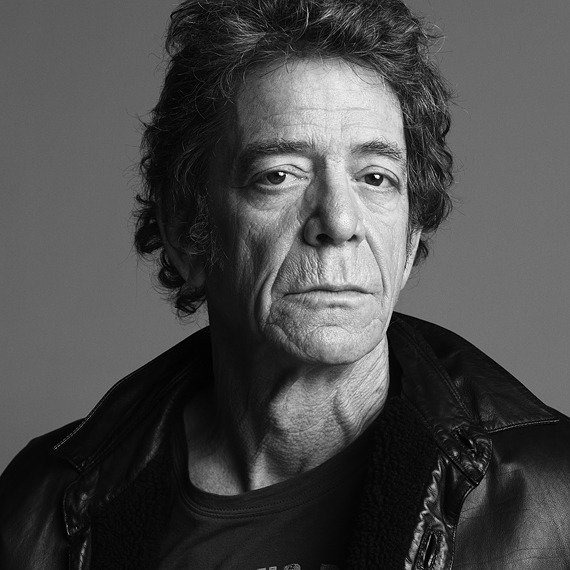
The stance that Whitman takes of someone observing the world in its totality, not coldly, but with frank, almost corny at times, emotion, is one that continues to bear poetic fruits. I don’t know that Lou Reed ever pointed to Whitman, but there are times he echoes that outlook powerfully.
 
Earlier this month, as I recorded some new material, I found myself performing Mark Kozelek’s “The Greatest Conversation in the History of the Universe” in its rambling entirety. I like doing things like this. “The Greatest Conversation” is a very particular individual experience, and that work’s catalog of events and opinions I only halfway share—and that’s what I like. Mark Kozelek can embody Mark Kozelek, and it’s not exactly effortless, for being ourselves is not effortless; but none-the-less, Mark probably feels a familiarity as he finds those thoughts in himself. I, on the other hand, must figure those particulars out, find some common ground with them, translate them into performance. Kozelek’s work in “The Greatest Conversation,”  consciously or not, is also Whitmanesque. Essentially his tale of New York City is as close to Whitman’s experience of New York City in the 19th Century as it is to my experience of New York City in the 20th century. Which is to say: different and the same. As I recorded and spoke as Kozelek, I felt Whitmanesque.

young-whitmanLou ReedMark Kozelek (8)

Three blades. Of grass?

 
Because I do not know yet how to go about getting clearance for sharing work still in copyright to use with the Parlando project, you will not hear the LYL Band’s version of “The Greatest Conversation” today. However, you can hear the original Sun Kil Moon and Jesu version here. NSFW warning: “The Greatest Conversation” contains F bombs and a short account of a sexual encounter.

Walt Whitman could have easily embodied Kozelek, he could have embodied Lou Reed or Laurie Anderson too. He would have tried to embody Muhammad Ali as well. This piece uses one of the best-known sections of Leaves of Grass. In it, Whitman stakes his claim to a universality, a universality so broad it transcends death. The music is from the LYL Band again. To hear, click on the gadget you will see just below.

The Deck of Cards, or The Old Weird America Part 2

Returning to the other side of that post WWII Tex Ritter record I discussed yesterday, let’s look at The Deck of Cards. I think I probably first heard this as the Wink Martindale version from 1959 which was the third or fourth time a version of The Deck of Cards had charted on some hit parade somewhere, and as the Wikipedia link shows, it would return again and again, which should not surprise us, since the story dates back to the 18th century.

I rather liked the piece when I heard it as a child. First off it was spoken not sung, so it stood out from all the singers on the radio, and the piece’s narrative twist, that the threatened poor and irreverent man would show himself to be learned and pious, is the kind of twist that can keep a piece of folk material current for centuries. As I said in the last post, no one in the mid-20th century folk revival would have ever considered The Deck of Cards an authentic folk song—but like our supposed irreverent soldier—it is, and not what folks presumed it to be.

Did this record specifically influence the Parlando project to mix music and spoken/chanted words? Not at any conscious level. The popular spoken word record with music just was around in my childhood. Yet, as one starts to do concentrated work in some area you may begin to notice all kinds of things that must have taught you some possibilities.

The plot of The Deck of Cards follows the rhythm of a joke: tension, danger, expectation; then unexpected twist, release of tension, pleasure. So, it’s not surprising then that some of the renditions of this old tale passing through the folk process twist it again to parody, and so here’s mine. It’s based loosely on that rough Robyn Hitchcock version, even uses a couple of his lines, but is mostly mine. If you don’t know the 1948 Tex Ritter version, you can hear it first by clicking here. You should listen to Tex, you can’t have irreverence without reverence. Or you can hear T Texas Tyler’s version which predates Tex Ritter’s by a few months here.

Oddly enough, I performed a straight rendition of the 1948 text the same day that the LYL Band recorded this parody, but you won’t hear that here when you click on the gadget that should appear below.

Frank Eli Hudson and Rye Whiskey

It’s election day in the United States, a day of great hope and fear. Yesterday I was on the shore of a great lake and the sunrise was a perfect unbroken horizon of a bright line with pink above that, and then graduations to blue rising up over our heads as high as we wished to look. At our feet, the lake waves came from wherever they come from and broke on the stone ballots cast on the beach.

We are riding a great wave of change sweeping from wherever it comes from to wherever it goes. I feel our country has become both more perceptive and more blind,  in what is too close to equal amounts. I do not know what part of that proportion of blindness is mine or yours. Perhaps until we see, if we ever see, we will not know.
 
We’ve talked about myths here before, our big stories that explain ourselves. When Homer sang his myths he was said to be blind, and myths are often blind. When John Keats read Homer in Chapman’s translation, he wrote about it in a fine sonnet almost exactly 200 years ago, but oops! he put the wrong explorer on that Pacific-viewing peak. So clearly a mistake that a friend pointed it out to Keats immediately, but in the end, it harms the poem in only that simple and clear “wrong guy, Johnny!” way. People who know about these things might note that Chapman’s translation of Homer, published 400 years ago this year, is a bit loose as well. Homer’s music is always very hard to translate, but they say that Chapman added some additional material dear to his own philosophy.

Let’s just leave it at this for now: little or big deviations from the truth make up many, perhaps all, myths, those explanations of ourselves. We grow blind and perceptive at the same time.This piece, Frank Eli Hudson and Rye Whiskey, is as much true as my proportion of blindness and perception can make it now.

My appreciation of what was called “folk music” in the US in the mid 20th Century was founded on an appreciation for “authenticity.” “Authenticity” is a particularly hard to define myth. If I can distill it briefly, “Authenticity” believes that certain emotions and feelings are more perceptive, closer to the truth of things. So, to portray those emotions and to share them through art allows one’s audience to see and share the truth of things. The 20th Century American folk music circles search for authenticity is not much different from hard-core punk later in the century (the two musical movements have many parallels).

I saw the folk song Rye Whiskey though that shared myth of authenticity, just as the piece recounts. On the page, and as performed by many folk-revival singers, Rye Whiskey seems to call on harrowing emotions. However, for a time this year it occurred to me to see what I could find out about my great-grandfather for whom I was named, A decade-old report from an uncle that he liked the song Rye Whiskey was one thing I knew.
 
Around this time a co-worker thought my son, who likes math, would be interested in some sets of numbers relating to a deck of playing cards. I told the co-worker that some of that material was used in a hit song of my youth, The Deck of Cards. Turns out The Deck of Cards was a hit not once, but several times, and that Tex Ritter had been one of the earliest to have a successful cover recording of it.

On the other side of Tex’s A Deck of Cards was Rye Whiskey, a  that song that was part of Tex’s repertoire for a long time, going back at least into the 1930s. I can’t say for sure where Frank Eli Hudson heard Rye Whiskey, but Tex Ritter would be an odds-on favorite.

The Deck of Cards was not “authentic” folk music. Robyn Hitchcock once did a parody of it that is hilarious. And Tex’s version of Rye Whiskey?  Well, listen to the piece as played by the LYL Band to hear what I found about how my great-grandfather, authentically living in that “Old Wierd America” that Greil Marcus writes about, might have experienced this song. The gadget to play Frank Eli Hudson and Rye Whiskey should appear below.


After you’ve heard my tale, here are some versions of Tex Ritter singing this authentic American folk song.

The Day Lou Reed Died

Unlike jokes, you can explain a poem without killing it. Explanations may wound or amputate the poem a bit, but sometimes the dissection reveals things you couldn’t see before. My rule here on the Parlando project is to generally not explain the poem or the music, to let you experience it as it unfolds. But I like to break rules, so today I break this one. If you’d like to hear the The Day Lou Reed Died before the explanation, go ahead and click the gadget you’ll see at the end of this and then come back to this.

I started writing The Day Lou Reed Died on that day, exactly three years ago, but it took me about a month to come up with version you hear here. I did the music shortly after finishing the words, playing all the parts myself.

The poem takes a rhetorical stance of negation. It tells you what it thinks using the dark illumination of telling you what it doesn’t think. The first part parodies Frank O’Hara wonderful poem on Billie Holiday’s death, which is full of details of life in New York City in the high 1950’s. In that same section I remind the listener that Lou Reed was part and not part of that time, a man (like myself) a generation younger than O’Hara. Like O’Hara apparently, it was a surprise and not a surprise for me to hear of Reed’s death while planning for a social occasion. Holiday, like Reed, was known to be sick, but there was no public death watch.

The next section is a list, continuing the rhetorical negation. I start right off with saying I’m not thinking of Andy Warhol, whose connection to Lou Reed’s first band, the Velvet Underground, was something of a platinum-blond albatross around its neck. The assumption was that Warhol was the mastermind behind the Velvet Underground, which slighted the real innovators inside the band (Lou Reed and John Cale), and it allowed folks to contextualize the band, as many of Warhol’s pieces were then, as a put-on, a commercial parody of real art. As the list goes on I use the Warholian tactic of linking to a variety of commercial Andies, humorous in their inapplicableness to Lou Reed. I end the list with two unlike entries: the title of a famous avant-garde film and then “androgyny” to turn the incongruity one more time, as we might well associate Lou Reed with either.

The next section “I put on the indie rock station” starts, like the unexpected death announcement, with an actuality of the day I experienced. I expected them to be playing a lot of Lou Reed songs if not a full-fledged format change to all Lou Reed. Instead there was nothing—but so influential was the Velvet Underground to indie-rock, that as each song began I wondered if this was going to be a Lou Reed song or a cover version of one. No one put it better than Brian Eno did when he said:

The first Velvet Underground record sold only a few thousand copies, but everyone who bought a copy started a band.

This section was my way of saying the same thing, while noting that Lou Reed’s death did not get the public attention that David Bowie or Prince’s deaths a few years later did.

And the social event I was preparing for in the first section? The wedding reception for two women who had married that year after same-sex marriage became legal in my state. I try to recount the great sweep of change in my lifetime in this section. The young Lou Reed helped pioneer portrayal of gay, bi and trans people in his songs. The emergence of that portrayal in Reed’s art is a complex subject I’ll largely skip here, as it would take too long. In short, at least at first, Reed associated his gay characters with the demi-monde he sought to portray in other aspects. Like the term demi-monde I just used, this was something of a 19th century, or early 20th century way of looking at things—but I use it because those of Reed’s age (or mine) grew up in a world in which the culture and still living authority figures were from before WWI or its aftermath.

And at this reception, there were many children, grade school age and younger, and to keep them occupied there was a gymnasium dance floor and, a boombox and some rented lights. Their parents were dancing with these children, and as the swirling lights drifted over these single-digit-age dancers my mind recalled the young adult faces attending the Sixties “Exploding Plastic Inevitable” happening that was the public debut of the Velvet Underground, documented on the back cover of their first record. As much as an old man can while dancing, I figured the actuary tables on these children. Some of them may well live into the 22nd century. From a world where homosexuality was unspoken, to a world in which it was roundly denounced, “treated” and imprisoned, to a world where there is a homey, pot-luck Midwestern wedding reception, to a world I will never see or be able to predict almost 90 years from now. This is the arc of our culture and our experience of and as living artists.

1966

Exploding Plastic Inevitable

2013

Dancers in pin spots

The last section has gotten a rise out of a few people. What I wrote is somewhere between subtle and a mistake I fear. Staying with the negative rhetorical tactics I’ve used throughout the poem. I say:

As artists are inessential to art,
Art is inessential to change.
As beauty and justice pass through us,
Let us stop, and feel this
Beating through our veins.

More than one has heard those lines and missed that it’s a two-part equation. Are artists inessential to art? No, in that obviously living artists are necessary to make art. But also, yes, in that we know that art continues to have impact past the lifespan of the artist. Perhaps in that 22nd century someone will still listen to the work of Lou Reed. The second part says this artist/art comparison is equal (“as”) to art is to change. So, to the same degree that living artists are necessary to art, art also creates change; but in the passage of time in which immortality may allow art to outlive artists, that change will become something that is no longer “change” as it becomes part of everyday life.

As good an ending as “And everyone and I stopped breathing” then? Probably not, but I’m trying. And Frank O’Hara didn’t play no electric guitar.

Yogi Berra

Does humor belong in music, poetry, baseball?

Looking over the pieces the Parlando project has presented so far, I think we’re a little over-representing the romantic and the tragic. It’s easy for the page-poet to fall into that kind of thing. After all, there we sit with a mute page and all the time until a piece of paper rots in front of us. It’s time to get serious. It’s time to set down those final things, time to let the future know we have felt the tragic pangs of life.

Oh, and it’s a lot easier to go that route. Say sad things badly, muff the music, grab at the easy statements that this is so hard—no matter—we’re overcome with tragedy and within our just-past-real visions. Such imprecision is to be forgiven, even expected. After all, we suffered for our art, now it’s your turn.

That’s something live spoken-word poetry balances better than page-poets I think. In any case, page-poets and critics favorable to them, will make that case for me while marking down live spoken-word poetry as relying too much on humor; but when you have an audience in front of you the need to entertain, to connect, to make it worth their while, is hard to escape.

So as baseball fans look forward to the start of the World Series this week, we present this piece about Yogi Berra who participated in 21 World Series, meaning that the man was in almost a fifth of all Word Series ever played since 1903. As time passes, fewer remember him as one of the greatest baseball players of all time, a deadly serious student of the game, yet his rhetorical gift for humorously expressing the quantum state in many a duality lives on, and that’s what this piece celebrates.

The voice and author of Yogi Berra is Dave Moore. Musically, the LYL Band just lets it rip and avoids making any wrong mistakes or playing harmonica. To hear it, click on the gadget that should appear just below.

On First Hearing Blonde On Blonde

Earlier here you’ve heard me proclaim that Bob Dylan changed how folks wrote songs. Before Bob Dylan circa 1964, no one wrote songs like Bob Dylan. Afterward, the things he did (portrayal of fragmented personal experience, florid and unlimited imagery, a questioning attitude toward accepted beliefs) were everywhere, until by today we may have forgotten (or for younger generations, never knew) that these things were once “Dylanesque.” And because songs with lyrics were the primary way late 20th century people experienced poetry, that revolution impacted the culture generally.

Of course, page-poets had already done those things. Some European poets worked with these concepts decades before Bob Dylan. American modernists of the first part of the 20th century did these things too, and in American English. And the Beats, Dylan’s slightly older siblings, knew those achievements and applied them to the post WWII American landscape.

So, take away the Nobel prize! Dylan had influences! And his revolution was maybe the fourth time around!

No. First off, the page-poets did not generally ally their words with music. Yes, I know there were exceptions to this “generally” statement—and I think those exceptions deserve more notice and listening—but that’s my point, those exceptions didn’t get much of an audience. As the Parlando project seeks to demonstrate, poetry gains resonance when paired with music. The inherent abstractness of music allows listeners to more easily accept abstractness and difficulty in words, so those producing the more difficult, abstract or hermetic writing needed music even more.  Add to that music’s ability to amplify and re-cast emotions, and Dylan’s linking of those page-poet concepts to music meant his was a new force.

So, I say the very thing that causes some to say Dylan should not be considered a literary hero: that he is a songwriter, is one very good reason he is just such an authentic hero.

And here’s another reason. We sometimes like to pride ourselves in finding what we believe are the first movers of things. In songwriting, Dylan is just such a first mover, but if we take his words or his music in separation, he is not the first mover. However, as to impact, it makes less difference who did something first compared to who got the experience to the audience, the listener, and/or the reader at the time and way they were primed to hear it. So, if we artificially separate Dylan’s words and music we can say they weren’t the first, we can even believe they were not the “best,” however we figure that out, but that combination of words and sound was a revolution that succeeded in ways that previous efforts didn’t. It’s romantic to mourn failed revolutionaries, but let’s not let our mourning obscure the power of successful ones.

While I wrote this post’s audio piece “On First Hearing Blonde on Blonde,” it is not the sort of work I usually put here. It’s a recounting of personal experience, something that is already over-represented in poetry and particularly in spoken word poetry. That can be a valid kind of poetic expression,  but there’s no lack of it elsewhere, and as a creator I’m instructed by my experience as a reader that most poems about the writer’s personal experience fail for several iatrogenic reasons, such as the writer’s inability to fully see and question their own assumptions, an approach to individualization that can cut the writer off from their connection to and balance with the rest of the world,  or even the simple ability to judge what another person will be interested in.

If I work out getting permissions for more current work by other authors, there will be more poems spoken in a personal voice here, but I believe they will gain from being selected by someone else, and spoken by someone else, not by the poet themselves. That’s one of my Parlando principles: “Other People’s Stories.”

“On First Hearing Blonde on Blonde” is published here, not because it’s a tale about myself, but because it tries to convey that listener experience that occurs when the listener is primed to hear something. Will someone who listens to Bob Dylan’s “Blonde on Blonde” record album, as suggested by the Nobel Secretary last week, hear a different album than I heard nearly 50 years ago? On one hand, surely they will. Every ear in every time is always its own. On the other hand, I could give you answers—I just typed and erased some now—but instead I leave you with wishes for more, and perhaps better, questions.

Next post we move on from Bob Dylan. Which is about right. After all, even Bob Dylan got tired of being Bob Dylan, several times in fact.

To hear the LYL Band and the audio spoken word piece “On First Hearing Blonde on Blonde,” click on the gadget that should appear below. We recorded the basic tracks the afternoon the Nobel Prize for Dylan was announced. Yes, the Dave Moore mentioned in the piece is the same Dave Moore whose voice and keyboard playing has been heard here.


Under The Harvest Moon

Early in 1964 the then 22-year-old Bob Dylan and some friends decided to go on a road trip, and so they all piled into a new Ford station wagon. The group had (or developed along the way) some objectives. Some sight-seeing. Dropping off some donated clothes for mine workers. A couple of scheduled concerts (one sold-out, the other had to be re-sited to a smaller venue due to lack of ticket sales). They probably had some generalized youthful expectations of adventure, the “whatever comes our way” feeling. Bob Dylan was also expressly trying to change his songwriting.

Bob Dylan, the performer, was not yet widely known, but Bob Dylan, the songwriter, was a going concern. That summer his song “Blowin’ in the Wind” had sailed up the pop charts when sung by another group, and other performers lined up to record the song.

Bob Dylan was writing a lot of songs; in quantity alone, amazing to those in the know at the time, and yet “Blowin’ the in the Wind” seemed to be a different kind of song. What was its difference? It was clearly a song about social issues, the sort of topic that never challenges the dominance of desire and partying as popular song subjects–but also it dealt with those issues in a metaphoric way. That was not unprecedented. For example: Pete Seeger and Lee Hayes “If I Had A Hammer” was written in 1949 and had also been a hit that summer for Trini Lopez, and that song used verse by verse metaphors in a similar way—but still this poetic approach was not common for topical songs.

Around the same time Bob Dylan wrote “Blowin’ in the Wind,” he wrote another song, one with even more uniqueness: “A Hard Rain’s A-Gonna Fall.” How unique? Nearly seven minutes long for starters. Instead of the neat metaphors of “Blowin’ in the Wind” or “If I Had a Hammer” marching in ordered procession, the images come rushing out as if they are escaping for their lives rather than being marshalled for presentation. Social issues aren’t being addressed in “A Hard Rain’s A-Gonna Fall,” they’re being hit with a fragmentation bomb. It doesn’t aim to be another polemic so much as to convey the experience of the polemic forming. It doesn’t try to convince you of its opinion so much as to entice you into having a passionate opinion.

There was no song like “A Hard Rain’s A-Gonna Fall” before Bob Dylan wrote it, and afterwards you can see holes from its shrapnel everywhere. The man who could write “Blowin’ in the Wind” could be a successful songwriter. The man who could write “A Hard Rain Is A-Gonna Fall” could win the Nobel Prize for Literature, even if that would take a while.

That previous summer, poet Allen Ginsberg was at a party. Someone puts on Bob Dylan’s LP, the first side. The side begins with “Blowin’ In the Wind” and ends and “A Hard Rain’s A-Gonna Fall,” and as that last song plays Ginsberg says he wept, because “It seemed that the torch had been passed to another generation. From earlier bohemian, or Beat illumination. And self-empowerment.”

But back to our 1964 car trip. How much of this does this 22-year-old Dylan know? Who can tell. The best supposition is that he knew he was onto something and he wanted to do more of it. So in the back seat of the car he has a portable typewriter—the mechanical, steam-punk laptop of the day—and throughout the trip he’s writing songs. Principally he’s writing “Chimes of Freedom.” Again, who can tell, but I think a lot of creatives would empathically suspect he was feeling a heady mix of excited and relieved that he could do it again.

Their car trip gets to North Carolina. Dylan says they must visit a poet who lives around there somewhere. Not only does Dylan’s era and car lack laptop computers, they lack smartphone apps and GPS.  So they stop and ask a local.  This is how Dylan biographer Anthony Scaduto tells the story:

“Where’s Carl Sandburg’s place?” (Dylan) asked the tall gangling mountain man in coveralls. “You know, the poet.” The mountain man considered that for a while. “You mean Sandburg the goat farmer?” he asked.
“No, I mean Sandburg the poet.”
“Don’t know about no poet. There’s a Sandburg has a goat farm. Wrote a book on Lincoln. Little guy. Littler than you, even. If that’s the one, take this road two miles up there, turn left after the little bridge, can’t miss it.”

So here’s the 22-year-old Bob Dylan, the man who is about to take his own jangled and re-mixed reception of modernist poetry and societal criticism and collide it with guitars and transistor radios in an unprecedented way, and who does he want to see?  The 85-year-old Carl Sandburg.

Accounts of what happened next differ, and may not matter if we consider only that one thing, that Dylan wanted to see Sandburg.

I’ve talked about this before here. Everyone who influenced us had an influence. It’s a great long chain across time. Dylan was influenced by Woody Guthrie, Woody was influenced by Carl Sandburg. Sandburg was influenced by Walt Whitman. Whitman was influenced by William Cullen Bryant. Bryant was influenced by Homer.  And now going forward from 1964: Every rapper’s flow that jumps from one thought and observation to the next without catching its breath, every indie-rock song that decides to show the oblique confusion and emotion of confronting experience without boiling it down to conclusions, every self-penned ballad where the singer insists we hear how specifically she or he saw things comes (however indirectly) through Bob Dylan’s lyrical revolution.

So after all that introduction, here’s a short autumn-themed piece with words written by Carl Sandburg with music I did myself. Like Dylan’s later work, Sandburg’s “Under the Harvest Moon” unflinchingly addresses issues of love and death.

A small anecdote about the process of recording this piece.. As I set up to do the basic track for “Under the Harvest Moon” the power went out, and stayed out most of the afternoon. I so wanted to “try out” the composition, as much as I could, so I dug out and old hand-held digital recorder and a 12 string guitar and recorded the vocal and acoustic guitar track in a dimly lit room. As happens fairly often with musician’s demo tracks, I liked the demo well enough to keep it. Later when power came back on I added bass, an electric guitar part and the string –section part of the final track. To hear the resulting “Under the Harvest Moon” click on the gadget below.


Blues Summit in Chicago 1974

Let’s continue for a one more episode on the theme of the musician, but since here in the Parlando project we believe music and poetry to be naturally joined, let us go there though a poet.

Decades ago, in a small Midwestern classroom, a teacher wrote on the chalkboard “It is better to read (or study) Homer than to be Homer.” I do not remember the teacher’s name. I do not remember who was the author of this epigram–though I have vague memories that the teacher wrote that down too—and no amount of modern web searches have ever been able to give me the source of it. But except for that one ambiguous word (“read” or “study”) I have never forgotten that line. Perhaps what helped me remember the line is the teacher gave us no context. I simply encountered what they had written on the blackboard.

Though I’m going to violate that impact here in regards to that epigram, I endorse it with the Parlando project’s audio and podcast element, where the audio pieces are meant to stand alone without resume or external authority. None-the less, if any readers here do know where the Homer epigram I remember came from, I’d like to know.

What I took that line to mean is not just that the life of an artist may be difficult or cursed by troubles; but the revelation, emotional resonance, and sensuousness of art when it is experienced, can easily be greater than the costs of its creation. Greater for even one reader. Greater than the author’s own understanding of that which is so close to them that they may not see all its sides and size.

So here’s a meditation on that idea. I wrote it after watching a re-broadcast of the initial episode of PBS television’s Soundstage which shares this piece’s title. I believe the producers of the TV show wanted to reproduce a somewhat similar gathering of older and younger blues musicians that resulted in an excellent LP called Fathers and Sons recorded in 1969. Musically, what they captured wasn’t at that record’s level alas, but it was well-filmed and that alone makes it worth watching, for there are small, moving, privileged moments between the musicians captured on camera. About halfway through watching it myself, I found myself noting that almost every musician on that stage is now dead, and it didn’t matter if they were the younger generation or the old guard. Some of the old guard outlived the young guns.

That’s part of the nature of a working musician’s life: there may not be a full measure of it.

And then I looked at the close-in audience filmed at the same time. Since they were my contemporaries I felt I could see through the period clothes and hair styles and make some rough but fairly accurate estimate of their class membership and likely demographic future.

Let’s just narrow our focus to one musician. If you could step back in time, would you ask Michael Bloomfield if it was worth it? “Hey Mike, I’m from the future and I know you’re going to die at 37. Would you rather have stayed in college now knowing that?”  How complex that question is for just that one instance, and equally complex in different ways for each of the musicians on that stage. I suspect some days they’d say “yes” and some days “no”—and much of the time they’d say (in so many words) that your question was beside the point.
 
Now ask yourself:  would you rather Mike Bloomfield had a longer life or you had recordings like Highway 61 Revisited, Super Session, or East/West to listen to? Assuming you weren’t Mike’s friend or relative, and that you know and have experienced his art, then honestly your answer is likely: you’d take the records.

And those college students in the bleachers? Maybe some of them became doctors, nurses, teachers, faithful and helpful friends. Maybe one day one of them will write something on a chalkboard like that epigram I read decades ago, and I will not be able to remember their name.

So to play The LYL Band performing  my piece “Blues Summit in Chicago 1974” click on the gadget below.