I Was Reading About Jesse James

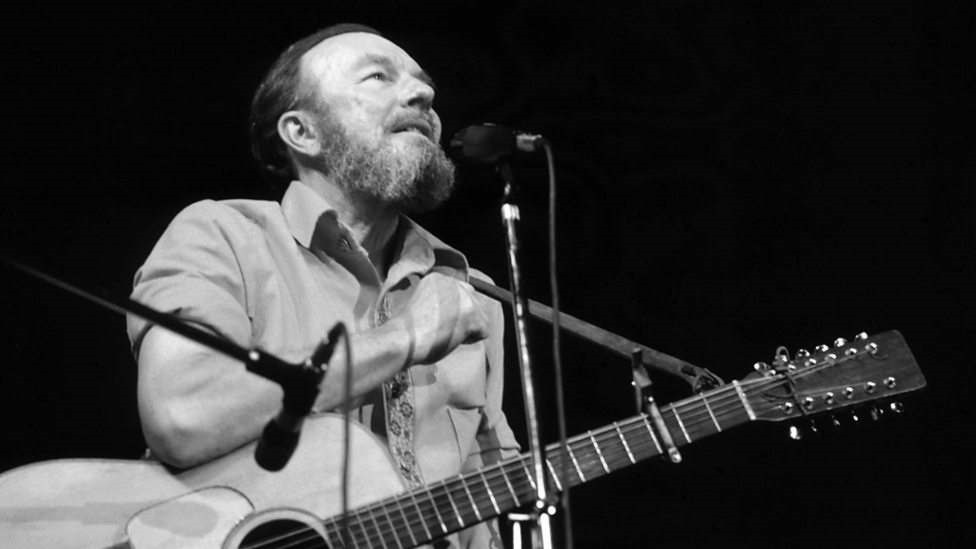
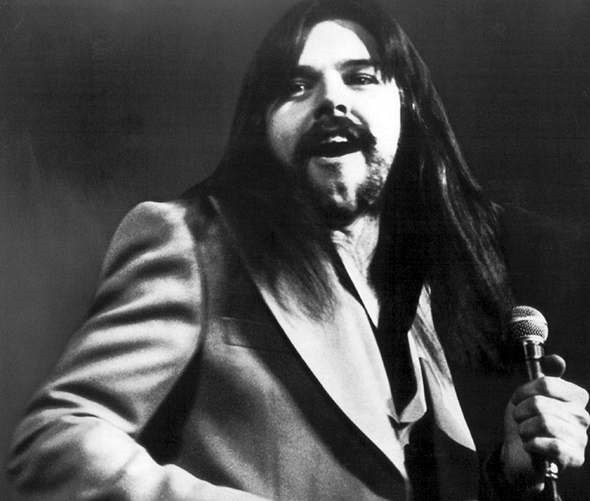
When I was growing up and learning songs from Jerry Silverman’s folk songbooks, there was song called “Jesse James”  included in many collections and sung by a wide variety of singers—and any song that has been sung by the Kingston Trio and Nick Cave, by Van Morrison and the Pogues, by yes, by both Peter Seeger and Bob Seger, has to be the very definition of a “folk song.”

Pete SeegerBob Seger

Both these guys have sung thoughtful songs, but sometimes you need to think beyond the song yourself


Though “Jesse James”  takes some of its spirit from older English ballads celebrating legendary medieval populist outlaw Robin Hood, this American song is more about betrayal (James was killed by a gang associate in his own living room) and about telling us what an all-around bad-ass James was. We’re told he “killed many a man” (never why or how, though bravery is claimed) and that he robbed banks and railroads (but he “gave to the poor” and would “never rob a mother or a child”).

You can see how this sort of thing has a wide appeal. A tale of revenge on the rich and the powerful appeals to many, and banks and railroads were particular targets of late 19th and early 20th century rural populism, but the emotional core of the folk song “Jesse James”  is the betrayal and assassination.  No matter what the variation in the lyrics, there’s lots of mention of James’ cowardly assassin Robert Ford betraying the man who trusted him, shooting him in the back.

Woody Guthrie took “Jesse James’”  structure and melody and produced an incisive, though less popular, version of his own called “Jesus Christ”  which cast Jesus as a rebellious populist betrayed by a disciple—though it had to do without the “killed many a man” factor. So popular is the original “Jesse James”  ballad, that Guthrie likely knew that Jesse James’ action-hero rep would rub-off on his populist Jesus.

So, it was with interest that I followed up on the reality of Jesse James. One can assume that most heroes have feet of clay, portions of their behavior that show faults or inconsistency, but it turns out Jesse James doesn’t have feet of clay—the whole man is made of half-baked clay mixed with ample fresh dung as filler.
 
He’s a nasty piece of work. True, his character shows audacity, but that’s not the same thing as bravery. There’s no evidence I’m aware of that he ever killed an armed man who was opposing him, but lots of connections to killings of prisoners and bystanders. It was somewhat true that seeking cash through his robberies was a side-point to him, but his main motivation was to extend, defend, or to restore human slavery, or to take broad revenge on those who sought to end his career seeking those aims.

If there’s a defense for his actions, it would be some listing of the bad things done by his opponents, but then monsters often breed monstrous actions against them. It’s an argument against monsters, not a defense of the actions themselves.

Today’s piece “I Was Reading About Jesse James”  starts by asking you to think about this. I thought about trimming the piece’s instrumental coda shorter, but I have left it in. Consider the last half to be time for you to begin to ask those questions yourself. To hear the LYL Band ask those questions to music, use the player below.


The Death of Col Bruce Hampton

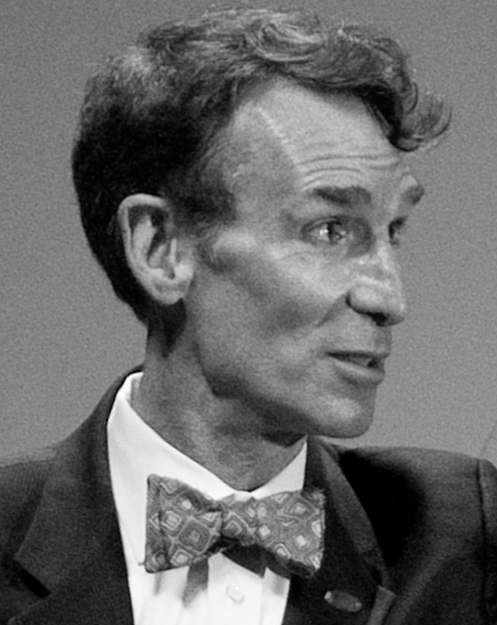
It’s probably one of the best quotes in the history of music criticism: “I’ve heard that Wagner’s music is better than it sounds.” The man who said it was a 19th Century American humorist Bill Nye. No, not the Science Guy, the other Bill Nye.

Bill Nye SG greyscaleEdgarwbillnye

The Nye on the right summed up challenging music in a sentence.


Nye’s great one-liner points out that unfamiliar music may gather approval of those who appreciate its novel approach while leaving a puzzlement as to what pleasure may be derived from it. In the late 19th Century, Richard Wagner’s music was radical. It was heard by many as having stretched the harmonic bonds of symphonic music past enjoyable boundaries. Nowadays Wagner is more in danger of seeming preposterously old-fashioned. He’s just the thing to let you know that Elmer Fudd is a fuddy-duddy when he breaks out into re-purposed Wagner and sings “I Shooot a Waaabittt!” in cartoons. Wagner’s music hasn’t changed, but fashions, expectations and experience have changed.
 
Back around 1970 a band from Atlanta Georgia called “Hampton’s Grease Band” released their only album. The story is told that it sold the second fewest copies ever in the history of their record label, who dropped them right after its release. There are reasons for that. Most cuts were over 10 minutes long. The music was eclectic and the beats eccentric—but what really unsold the record to many audiences were the vocals and lyrics by Bruce Hampton, who rasped like a southern Captain Beefheart with an outlook that mixed Dixie and Dada in quantities you didn’t want to get near enough to the caldron to measure.

This stuff still sounds avant-garde, but Hampton kept evolving after this band’s failure. He self-applied the conventional southern honorific “Col.” to his name, but he always kept a big streak of weird in his music, and by the 90’s another musical movement he helped form made odd music with obscure lyrics and long improvised instrumental passages commercially viable. The usual label for the groups who played this music was “jam bands.”

I could write more about jam bands, but since I need to move on, I’ll say that they were an attempt to invent jazz as if jazz had never existed before. By this I don’t mean to say they were wholly ignorant of jazz or prejudiced against it; what I mean to say is that they created as if they were starting the idea of jazz all over, more or less from scratch. Just as the Pre-Raphaelite Brotherhood thought they could start medieval religious paining all over again or William Morris’ Art and Crafts movement sought to start an artisan practical crafts industry out of nothing, they didn’t seek to learn from and extend the existing practices so much as to do a complete reboot.

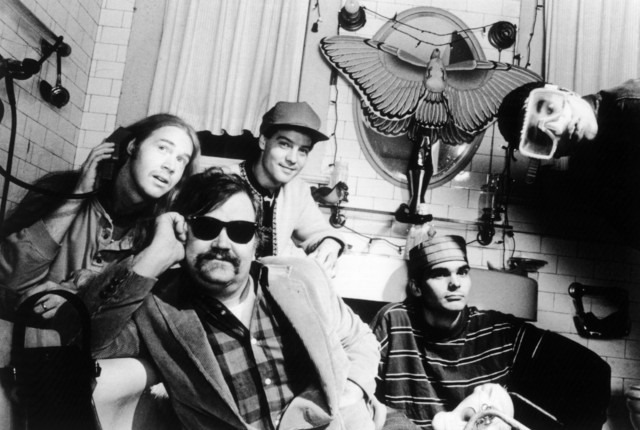
Bruce Hampton and band

Everything but the kitchen sink—ah, maybe we need to include that too.


Now we’re back in the hipster territory that I’ve been discussing in the last few posts. Depending on which generation and which sub-cultural alignment you have, jam bands can be an example of an ignorable genre of music that can only be endured for extra-musical reasons, or an organic expression of music that refuses to be contained and regimented by the formulas of other commercial music. It’s that double-edged nature of the hipster label people throw around as if a label was an analysis. Are they “hip” to something novel that has unconventional value, or are they bogus “-sters” consumed by useless difference for its own sake? And if you’ve read the other posts this month, you’ll realize I’m not just talking about one generation or one sub-culture here.

My guess is that’s it’s always some of both, and the exact proportions cannot be discovered while it’s happening.  Perhaps, like improvised music itself, it has to happen for sober judgements to be made later.

And how can one tell who’s the poser and who’s the sculptor of something new? Persistence is one test. Remember William Blake’s great proverb on persistence: “If a fool would persist in their folly, they would become wise?” Here’s Bruce Hampton on patience and persistence:

I’ve gotten everything I’ve ever wanted – 20 years after I wanted it. And that’s been perfect for me to not get things when I want them because I’m not ready for them when I want them.

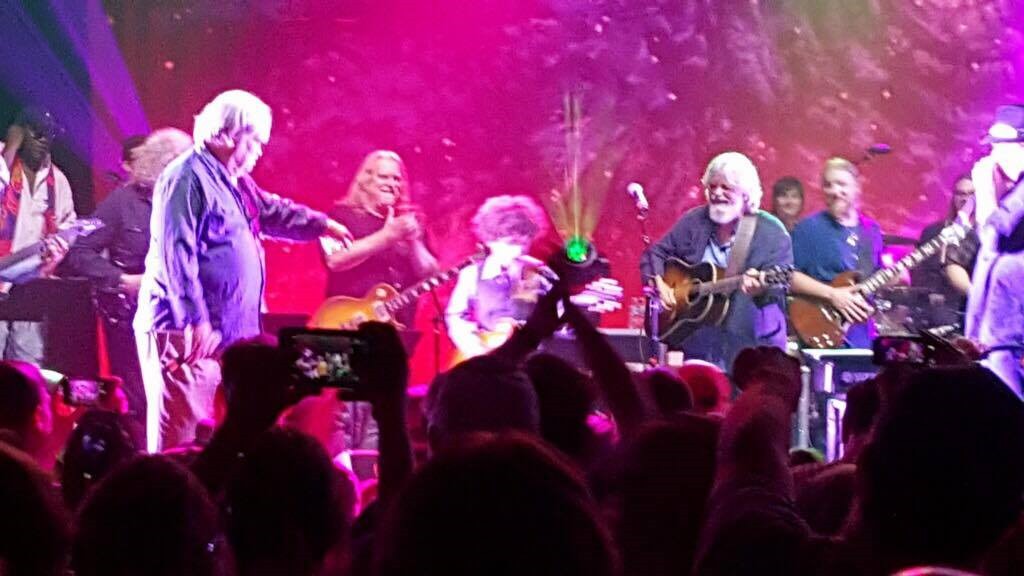
Today’s audio post, “The Death of Col. Bruce Hampton”  presents an sincere account of the unusual death of Bruce Hampton earlier this month: on stage, performing at a tribute to his 50 years of making adventurous music, surrounded by scores of other musicians who learned from him. You may still find his music better than it sounds. He played and sang a lot notes over a lot of time. Some of them were right, and some of them were wrong for the right reasons.

bruce-hampton last jam

Col. Bruce Hampton at his last concert says keep playing


To hear my audio piece “The Death of Col. Bruce Hampton”  use the player below.
The First Cuts are the Deepest

Earlier this month I posted the Parlando Project audio pieces that were the most listened to as of the start of this Spring. Turns out it’s a pretty good mix of what Dave and I are trying to do with this combination of music and words. However, in looking at the stats for the Parlando pieces, it looks as if a lot of readers and listeners are coming in partway into the project, starting around the beginning of this year. That’s fine. I think I’m getting a little better as I work intensively on the goal of 100 Parlando Project pieces by August of this year, but I think some of the early pieces are missing the listenership they otherwise might have gotten if I’d posted them later.

Since we’re still in National Poetry Month (#npm17), it stuck me that this might be a good time for some of our audience to catch up. So here are a few of the 2016 Parlando Project “deep cuts” from last year that you might want to check out:

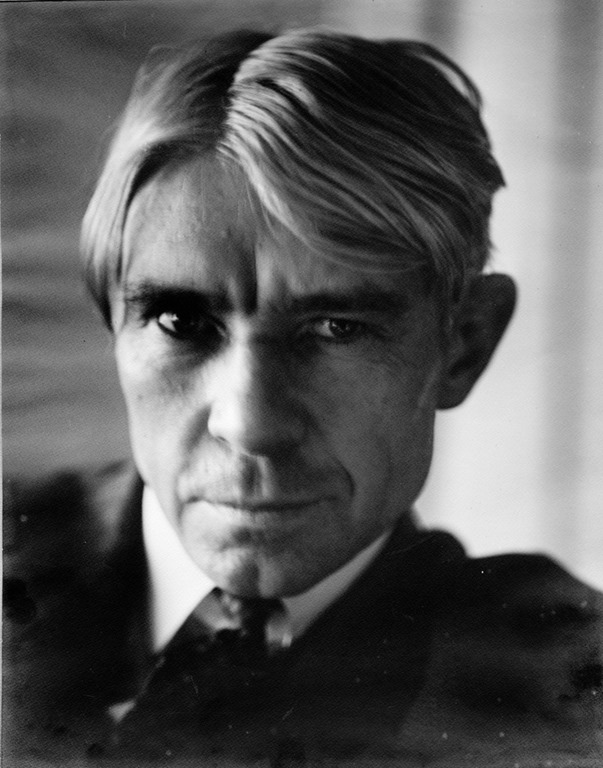
Stars Songs Faces.  I wrote the music for this Carl Sandburg poem as my tribute to David Bowie in January of 2016, and it was the piece I choose to kick-off Parlando. Although I’m not the first to write music for these Sandburg words, I still like what I did, and the LYL Band performance realizes my intention well. This piece also reminds me that it’s been awhile since I posted a Carl Sandburg-based piece here. I’m working on one this week, but the orchestration is not going as well as I’d like it to yet.

The Prairie.  One of things I enjoy most about coming up with material for the Parlando Project is finding things in the public domain poetry cannon that I’d never read or even heard of. This is one of them. William Cullen Bryant was not on my radar until Dave Moore visited the Mississippi river valley mounds last year and began to write about them himself. This audio piece is on the longer side, which may account for the lower number of listens.

The Green Fairy.  Here’s a good piece written and performed by Dave Moore that hasn’t been listened to as much as some other pieces he’s written here. My notes in the accompanying post were written in mystery about the actual intent of Dave’s words. I’ve probably got some other poets’ intent wrong too, but remember that’s one of the points of the Parlando Project: you can appreciate poems when they are accompanied with music just as one appreciates song lyrics (or even music without words at all), as bits and pieces of language that sound good, or as lines or phrases that attach themselves to you with little pieces of meaning without any requirement that you understand the whole thing.

This is the Darkness.  I ascribe the lower listenership on this one to the dark tone. And indeed it might be an odd piece to listen too in the late Spring as days get longer and eventually warmer here in the upper Midwest. None-the-less, living around the 45th Parallel Minnesotans and Canadians should understand this.

Christ and the Soldier.  When I was my son’s age, I was following a day-to-day summary in the newspaper, a series called “100 Years Ago in the Civil War”  which covered the events just out of memory of the living in the American Civil War.  And now, since 2014, I’ve been informally following the centenary of World War I, which has similarly passed out of the memory of the living.  Siegfried Sassoon’s poem is a biting comment on WWI from a veteran of that war’s trenches. You know that old saying “There are no atheists in a foxhole?” Sassoon has a more complex view.

To A Friend Whose Work Has Come To Nothing

Given that poetry contributes the great majority of the words to the half of the  Parlando Project “Where Music and Words Meet,” it’s reasonable to suspect, if you are reading this, that you like poetry. That’s too bad. Even during the National Poetry Month and #npm17 that were are talking about this April.

You see, poetry is often a frustrating thing. That high-flown language may be artful, but it’s an earful too. If you were seeking directions to escape some emergency, would you want your rescuer to choose the most precise and beautiful words, words that say more about what a clever speaker your rescuer is than about which way you must turn and where the dangers are?

Do you love the dense allusions and surprising metaphors of poetry? Do you admire the narrative fracturing and careful examination of the shattered facets that expose the common lie of ordered stories? The next time you are searching for how to work some complex gadget or system, do you want your tutorial or manual to scatter its tale in novel ways?

Speaking of too simple statements, here’s one: that there are people who simply like poetry. No, most people who like poetry sometimes, hate poetry sometimes; just as most people who like music, hate music sometimes. The intensity of the like times does not decrease the intensity of the hate times. I think it’s important that poetry tries to capture the allusiveness of things. I continue to admire some poems I don’t really understand—that’s what the music is for, both the poem’s own music and the external music we apply to the words here at the Parlando Project. But there are times when you just want a poet to come out and say what they’re getting at.

The words to today’s episode, by William Butler Yeats, are clear in their meaning. “To A Friend Whose Work Has Come To Nothing”  is an example of “occasional verse,” a poem written in response to an event. In this case, almost everyone has forgotten the event, but the sentiments of the poem apply broadly anyway. Yeats has such a musical way of expressing himself, he could have flown off on some obscure path and we might have followed him anyway. As it turns out, the things he leaves out here, the particulars of the dispute, probably help the poem survive as a general piece of council.

Still, I’m a curious and literal sort. Who was the “Friend Whose Work Has Come To Nothing,” and what was the work? It was written about and perhaps to a man named Hugh Lane who wanted to donate his substantial modern art collection to a museum he proposed that Ireland should fund. And the man who would lie unashamed to oppose this? A newspaper publisher who opposed the gallery.

Hugh Lane

Yeats gave him good advice, but he didn’t tell him to not get on that boat.

What happened to Hugh Lane, whose work had come to nothing? About a year after Yeats wrote this poem, Lane went down when the Lusitania  was torpedoed during WWI. And his art collection? His will seemed to leave it to the British National Gallery after his proposal to fund the Irish museum failed, but Ireland disputed this will, and later in the 20th Century, after Lane’s and Yeats’ deaths, Lane’s collection was again on display in Dublin Ireland. So eventually, in prosaic history and after the work of some lean solicitors, Lane’s work succeeded.

Dublin City Gallery

The Dublin City Gallery where most of Hugh Lane’s collection ended up

Today’s audio piece is brief, so take a listen to the LYL Band performing “To A Friend Whose Work Has Come To Nothing” by clicking on the player below or with this highlighted hyperlink.

.

Intro to The Waste Land

Readers of these posts may recall a discussion of the theory that Emily Dickinson’s reclusive nature in later adulthood was caused by epilepsy and that her poem “I Felt a Funeral In My Brain”  may have been describing the auras experienced around epileptic seizure events.  I think it’s an interesting idea, a plausible one, but I also warned against reductionist explanations for art.

Even recognizing that danger, I’m about to risk that sort of thing again, for what I think are good reasons.

Is T.S. Eliot’s “The Waste Land” introduced to students later and less often now than it was in my youth? If so, I suspect this is because “The Waste Land”  does not present itself as a friendly introduction to poetry. It seems proudly obscure. There’s no frank self-expression in it where a recognizable author/speaker tells us about their life and outlook. Instead, there’s a flurry of voices and characters that are barely, if even that, introduced.  And there’s no interesting story, no fable or tale with a twist that carries us along. There’s a shortage of obvious similes, no “fog comes on little cat’s feet” to introduce metaphor.

In my youth, all these shortcomings of “The Waste Land”  as a teaching tool were overlooked because it was a landmark in the rise of Modernism, that defining artistic movement of the first half of the 20th Century, and because it was full of the stuff that made up a Liberal Education: foreign phrases, cosmopolitan settings, wide-ranging cultural references to other literary works from across time.

Waste Land title page

I always find that a little Latin and Greek on the title page helps perk up the reader.

And now? The odds are that if T.S. Eliot was to stand up at a Moth story-telling stage or a slam poetry event and deliver “The Waste Land”  in whole or in part, that boos, snores, or some variety of non-pleasurable puzzlement would result. We are inured to a different kind of poetry, confused enough, bothered enough, by modernity and its incessant messages that Eliot’s fragments shored up against ruins seems to offer us no balm, no pleasure of recognition.

I’ll offer two keys, two aspects of “The Waste Land”  that can allow you entry into it. The first is: it’s intensely musical. The imagery, outside of “The Waste Land’s” overriding dry vs. wet scheme, never strays far from sounds, and all those unintroduced voices are like new strains in a composition. No wonder the Parlando project is drawn to it, because we believe that one can appreciate poetry without understanding its meaning, in the same way that you can appreciate music without being able to somehow explicate it.

The second entry point, the one that risks being reductionist, is that this is a poem written by someone suffering from depression. Whatever voice is speaking in the poem, it is heard and reflected out the mouth of someone who feels it has all gone wrong, someone who cannot fully trust any other feeling other than that—other than the emotion of fear that that is the reality that any other feeling would mask. Although it must sacrifice the music, the incandescent reading of the “The Waste Land”  by Fiona Shaw illuminates this aspect.

Today’s episode is just a part of the first part of “The Waste Land,”  but it’s the part the begins in April, our National Poetry Month. I don’t know if Eliot intended to refer to Chaucer’s “Canterbury Tales” prologue (our last episode), but it sure seems to rhyme. The opening of Eliot’s series of tales has, like Chaucer’s prologue, rain, flowers, journeys and travelers; and later in the poem Eliot will in bring birdsongs and churches. And Chaucer, who begins singing in Spring merriment, introduces at the end of the prologue the promise of “Strange strands,” and tells us that the pilgrims may be taking the pilgrimage because they have been sick.

Fiona Shaw’s il miglior fabbro performance of the whole “The Waste Land” will take almost a half-hour to view. My audio piece for today will take less than 3 minutes and has music. To compare to the “Prologue to the Canterbury Tales”  check out the previous post here. If you want to hear Nobel Prize winner Bob Dylan taking a run at the same part of “The Waste Land”  as I performed—and making his own connection to Walt Whitman’s “When Lilacs Last In the Dooryard Bloomed”  in Eliot’s opening lines, you can hear that here. But give mine a try first, using the player gadget that appears at the end of this post. Thanks for the likes and shares over the past few months, and as part of April’s #npm17, feel free to link to this blog or share this post on social media.

Prologue to the Canterbury Tales

One way to get experience is to seek it through the directed travel of a pilgrimage. Many religious traditions include the idea of a such journeys, and one side-effect of a shared destination is the mingling of travelers from diverse setting-off points along the trail.

In the Middle Ages, in England, one pilgrimage had the greatest potential to bring a diverse group together, the pilgrimage to the Cathedral of Canterbury where the sainted Thomas Becket had been assassinated. A series of stories ostensibly told by various tellers together for this trip became the great early work of English literature: Geoffrey Chaucer’s “The Canterbury Tales.”

April is National Poetry Month in the US, and though this celebration’s founders give no exact reason for April being chosen, two widely known poems explicitly start in April, and whether it’s cause or effect, I think of these poems when I think of April and National Poetry Month. The oldest of these, is today’s post “The Prologue to the Canterbury Tales”  which begins:

“Whan that aprill with his shoures soote
The droghte of march hath perced to the roote”

Now I know I’ve let slip too many typos in these notes before today, but that’s not a particularly bad day at the keyboard—instead, it’s Chaucer’s version of English as spoken in the 15th Century. It’s a challenge to read this in the original pronunciation, though I once was delighted when a skilled classical music DJ mic checked at 5:45 AM one morning with a perfect rendition of this Prologue in Middle English. I’m not going to attempt the same; today’s episode uses a modern English version for clarity, and in consideration of my thicker tongue.

Musically I’m not in the Middle Ages or in Canterbury for this piece either. I’m going to use the 12-string guitar once more. There is no shrine here in the Twin Cities of Minnesota, but for some reason three of best players of this troublesome priest of an instrument came to prominence here: “Spider John” Koerner, Leo Kottke, and Steve Tibbetts. For this episode, the 12 String’s musical tale is told in the character of Steve Tibbetts—or rather a modest imitation on my part using Tibbetts’ distinct stringing of the 12 string, which uses octave strings only on the two lowest courses of the 12 string with unison string pairs on the rest.

Cortez 12 string Tibbetts Stringing Closeup

More thick strings, fewer skinny ones, setting up a 12-string Tibbetts-style

.

To hear the 12 string strung that way, and to hear about the English April in Chaucer’s report, use the player that appears below. Don’t see the player? Well, this highlighted hyperlink will also play it.


.

The Lake Street Testament

The most popular TV show of my youth was a strange yet derivative series called “The Beverly Hillbillies.”  The basic device of this comedy was as old as Shakespeare’s rude mechanicals, and as common as 19th and 20th Century perennials like hillbilly plays, Ma and Pa Kettle films and even minstrel shows.

Beverly Hillbillies Confederates

Both of these statements are true:
A. The Beverly Hillbillies support your 2nd Amendment rights
B. They are portrayed as fools who constantly misunderstand the modern urban world


They all work the same way, and the joke never seems to grow old: rural folks are stupid, prone to exaggerating for comic effect all errors in human logic. They are above all inexperienced, leading to all kinds of misunderstandings; and they are peculiar in their language: misuse of words or odd pronunciations are rife. Abstractly, this is the ore of comedy gold, but culturally these traits are being applied to an “other,” a group that can safely be made fools of to demonstrate the audience’s superior understanding.

One trap of that kind of comedy: the dumber the writer thinks the audience is, the dumber the writer believes he must make the characters, until they lack all worth, delight and surprise. While one could worry about such authors violating political correctness, the worse danger to the authors’ career is for the audience to figure out that they are being played for rubes through a play about fools.

I was young when “The Beverly Hillbillies”  was going strong, and living in a very small town in a rural state, but I found this show funny. I never occurred to me that my own inexperience might be blinding me to the idea that I could be part of this bumpkin class, at least in some people’s eyes. My little town was progressive, proud of its school, and besides I didn’t think like those silly folks, I knew full well that richer folks’ houses could have a swimming pool in the back yard and that they were called just that, not See-Meant Ponds.

But my youth and my small town were  a course of inexperience. I was forever mispronouncing words and authors’ names because I had never heard them spoken—I had only seen them written on the page. I was, and yet wasn’t, those stock comic characters.
 
Is there any value in small towns? I believe there is. I’ll give you one example before I move on: in small towns there is no surplus of conscripts, everyone needs to do their part. Slacking doesn’t mean someone else does it, it means it doesn’t get done, and there’s no escaping that knowledge. I’m afraid that in my old age and life in a big city, I’ve become just such a slacker.

And there’s one other value to such a youth: going from a smaller, less varied place to a larger and more diverse one gives an eye a very sharp lens to look at things. I’m not sure movement the other way works as well. If one looks in the big end of the telescope, everything you point the small end at looks tiny and indistinct. It’s no accident that a very large group of writers follows that biographic path from town to city.
 
All this leads to today’s piece, “The Lake Street Testament,”  which is an urban story through and through.
 
The path of a long build up like this to a short ending is another comic staple: the Shaggy Dog Story. Earlier here you’ve seen me write about the essentially comic dimensions of the human condition, particularly when talking about Leonard Cohen, Mose Allison, and Phil Dacey. This piece takes that thought into this religious season and puts it on Lake Street, which is a main commercial east/west street through the center of Minneapolis, as urban a road as exists anywhere.

Lake Street

Lake Street in Minneapolis Minnesota. No palm trees, no movie stars.


The audio player below will let you hear the story of “The Lake Street Testament.”

Theater of the Seasons

Monday night here in Minnesota it snowed. As I took my pre-teen son to school in the morning, he looked at the inch of fresh snow on the spring ground and said “Mother Nature is drunk. Shut her down!”

I rode my winter bike to breakfast that morning, and the trees overhanging the street were shedding overnight ice chunks that their budding branches were rejecting in the morning. As this shrugging hail fell on my ski helmet, it bounced off with a “ping!” like marbles or ping pong balls, and popped onto the icy street like broken ornaments.  A few hours later, in the late afternoon, I rode again to the grocery store in considerable sunlight. The streets were dry and I was in shorts and a T shirt.

studded tires and slush on the patio tables

Plenty of patio seating available for Tuesday breakfast


Minnesotans have a well-worn phrase for our edition of the book of nature. It’s not a hand-bound collection of poems like our New Englander Emily Dickinson’s, but a play script. “The Theater of the Seasons” we call it. Famously, we try to hide emotions here, but we sure do enjoy a little drama with our weather forecasts, keeping an eye peeled for news of storms that can kill or injure you. Sitting in the upper Midwest we can receive weather sweeping up from the Gulf of Mexico or dropping down from the Northwest Territories. So, particularly in Spring and Fall, the Theater of the Seasons plays in repertory here in Minnesota.

Today’s audio piece is short, less than 2 minutes long, and it’s called“Theater of the Seasons,”  expanding on that phrase a bit. I think you’ll enjoy it. The player gadget appears at the end of the post, as usual.

As part of this blog’s participation in National Poetry Month, we’re trying to provide even more audio pieces like this that you can stream. If you know someone who might enjoy words combined with music like this, why not take this month to let them know about us and our Parlando Project, or share this or another favorite on your own blog or chosen social media site.

How We Make the Parlando Project Pieces

I started work on the Parlando Project early in 2016 by learning how distribute audio pieces via web-based player I could embed here in this blog and also through “Podcasting” where audio is listed for download on directories such as iTunes, Google’s Play Store, Player.fm and the like. Throughout the spring and early summer of that year I worked with Dave Moore to record some pieces to “bank” for a launch I planned for August 6th.

Frank-Dave thoughts CLEANED

Dave and I look exactly like this today. Or we could if studied how to use Photoshop.


Dave and have written alongside each other for a great many years and played music together since 1979 in various line ups of the LYL Band. Adding the Parlando pieces to what we played seemed a natural outgrowth. Generally our approach to recording is very casual, particularly by modern standards. A great many things are not just first takes, they are only takes,  where the non-composer is working from a lead sheet on a piece they haven’t heard before. This is the same process favored by Miles Davis and Bob Dylan, comparisons that too much favor us as musicians, but the effect on the kind of playing that results is  there, even at our level.

First off, mistakes are inevitable, but you learn to try to understand mistakes quickly and try to find their hidden intentions. You listen intensely, because you have no other choice, there is no routine, learned,  part to fall back on. Arrangements just happen. The results are not polished, but in the best ones you can feel the excitement in the room when listening. And we give ourselves a punchers’ chance. In a 2 hour session we might record somewhere between 10 and 15 pieces. Most of them will be wild punches that don’t land, or strike only a glancing blow, but you only need to connect once.

Not everything we record is for the Parlando Project. Some things are for our own purposes and include material we do not have the rights to share with you.

Other pieces, the ones I record and play myself, follow a different path. I can think and work more compositionally if I choose, writing and considering parts. I record them myself, playing all the parts in turn. This is the modern way to go about it. I can achieve, within my limits as a musician, what I want to achieve. The cost is that I cannot achieve what I do not think I want to achieve, which can only happen when other musicians are involved.

I’ve looked for words to use for pieces continuously during this period. Since I have no knowledge on gaining usage rights for published work, almost everything Dave or I didn’t write here comes from works that are out of copyright and in the public domain. This process has been one of the unintended joys of the Parlando project, as I’ve learned more about writers I knew only in highlights like Yeats and Sassoon, and discovered writers I knew almost nothing about like Wheatley and Tagore. I’ve revisited old favorites of mine in Blake, Sandburg, and Dickinson, but also dipped my toes into translation with Du Fu and Pasternak.

As of yesterday’s post, we’re up to 67 pieces available here since the launch. My goal is 100 by the August 2017 anniversary. I’d estimate I’ve put perhaps a thousand hours into the Parlando Project since the start of 2016, all to produce less than 5 hours of audio combining surprising words with music as varied as I can compose and play. My goal is to introduce you to old work you thought you knew, new work that you will be happy to know, and to use the combination of music and words to create something uniquely powerful.

As we celebrate National Poetry Month I’m setting an April goal to have the most active month here in terms of the number of posts, of new audio pieces to stream, and of numbers of downloads. The audience grew substantially in March as folks are discovering us in various ways. If you’ve found something of value here, you can help us out by linking to your favorite piece on your blog, on Facebook, or on Twitter this month.

Biking on the Greenway with My Son and Bob Stinson

Minnesota goes wild in spring when it finally gets warm, and so today, which promises to touch 70 degrees, will surely display this. Like the day described in today’s episode, I’ll probably go for a bike ride with my young son, and we’ll ride on The Greenway, a several-mile-long reclaimed railroad cut that runs, as time does, east and west through the middle of Minneapolis.

Raising a child as a musician, writer, and sometime bohemian brings extra questions. Do you want your child to follow the most conventional and unquestioning path? Certainly not. You encourage them to question things, even allowing that this will encourage them to question you. You look at your own life backwards as you look at theirs coming forward, and wish them adventures, but only so much. You know there will be hardships and wrong choices, but you hope only enough to be instructive. As an artist you may worship art, but you’re not sure you’re comfortable with them adopting all the tenants of that religion.

Today’s piece “Biking on the Greenway with My Son and Bob Stinson”  speaks of this from the seat of a bicycle.

Bob Stinson was the animating force in The Replacements, an ‘80s alt-rock band that never tried to split the difference between insouciance and not giving a @#*&. As a guitarist he was an anarchist, and the band accidentally worked like the NY Dolls, the Kinks, or the Rolling Stones, with a great front man who had the lyrical wit and the staggering lead guitarist who embodied the music’s soul.

replacements on the greenway

The Replacements sit and wait for The Greenway bike path to come through. Bob Stinson, middle left.
The guy on the left is an artist. The guy on the right played in Guns and Roses. The guy on the middle right, writes songs.

The Replacements’ front man, Paul Westerberg, was quickly indicted as a fine rock’n’roll songwriter, which damaged the band because songwriting implies loitering with intent to commit James Taylor. The band rebelled by making sure that a regimented presentation of a set of songs was not the aim. On any given night, this could be inspiring or a shambles: Dada or do-do. Being blotto on stage to the point you couldn’t hide it was almost a requirement, and for no member of the Replacements more than for Bob Stinson.

Eventually the dichotomy demanded an ostomy, and Bob Stinson was asked to leave the band he founded. Things did not go well for Bob without his artistic outlet, and chemical dependency played out its run until he died, his body worn out at 35.

Self-destruction aside, you can see that as path of purity. Chasing after success and an ego-driven desire to rise above others can harm too. The addict and the monk believe they have two different gods, but the penitents have the same scourge. Negation and creativity; deny this, so that that can emerge, is part of the religion of art.

Music, Minneapolis, and life are different now 30 years later, and that’s the place my child and I now live in. Somewhere 30 years on from today will be the place they will live in, no longer young, if they survive rebellion and conformity, if they find the balance between the worship of the self and self-destruction.

This is National Poetry Month, so in the spirit of the Replacements, this is a post more about music, and the music in “Biking on the Greenway with My Son and Bob Stinson”  is not all that polished, tossed off by the LYL Band in one take. Still, you might enjoy clicking on the player below and listening to it. If you don’t see a player, this highlighted link will open a new tab with its own audio player.