Somewhere or Other

Today’s audio piece is another by Christina Rossetti, connected through family with the Victorian art and literary movement that called itself the Pre-Raphaelite Brotherhood. In their painting and artwork, the Pre-Raphaelites often appeal to me. The paintings sometimes have a stunning, oversaturated palette; and they are fond of symbolic and esoteric subjects which fill the paintings with interesting details.

John Melhuish Strudwick  When Apples Were Golden and Songs Were Sweet

Eb Bb , Ab Eb , then Fm Fsus4 Fm, and Ab Eb Ebsus4 Eb—flat keys are murder
on guitar, just so Frank can play simple black key stuff on keyboards

Many associated with the PRB wrote poetry as well, but when I’ve gone looking for pieces I can present as part of the Parlando Project, the brothers in the brotherhood just didn’t do much for me. Surprisingly, the poet who did was Christina Rossetti.  I don’t recall if she was even included in the “New Criticism” curated English literature anthologies of my school-age youth. She isn’t a poet with a lot of flash and filigree. A poem like today’s has not a single arresting image, and its language is simple too.  Using the criteria of the Modernists who came to dominate the assessment of poetry in the 20th Century, this poem should have nothing to recommend it.

So, what does it have or do, why did I bother to write some music for it and perform it for you?   Well, first it has a refreshing modesty of expression. This is a song of longing from first to last, a universal human experience. And the subject of the longing, is it for an earthly partner, the age-old “when will the right one come along” wish? Or is it for an otherworldly, completing partner, a presence beyond the moon and stars? Despite Rossetti’s homey words, it could be either, and the alteration of “near or far” with “far or near” in the 2nd and 3rd verses encourages us to see it both ways.

If one must choose which supposition, I lean to the spiritual object, and if so, the image, such as it is, if off-screen here: earthly love may stand for the longing for religious meaning and connection. The last couplet, the dying leaves falling on “turf grown green” is strangely incoherent, and it reminds me of some of images or rebirth and salvation in British folklore, leading me that way.

But if could also be a song of simple earthly longing for a suitable partner. Adding music to Rossetti’s “Something or Other”  both adds decoration to the simple words and allows the listener to relax in that ambiguity without a need for an immediate conclusion.

John Melhuish Strudwick - Saint Cecilia

See, E flat is so easy on piano, even saints can play it.
Both of today’s paintings are by  Pre-Raphaelite John Melhuish Strudwick


Today’s music for Rossetti’s poem combines acoustic guitar with some cello and strings integrated with a couple of piano parts in the background. It’s another short one, so go ahead and use  the player below to listen to it.


Let Us Live and Love

A while back here there were several episodes where we discussed songwriters as literary figures, using the springboard of Bob Dylan getting the Nobel Prize for Literature. Dylan was the third songwriter to receive this award, preceded by William Butler Yeats and Rabindranath Tagore. But the Nobel prize is not really all that old, and the idea of the singer-songwriter is older. We know little about how the ancient Greeks performed their poetry, but accounts consistently say that it was accompanied by music, and in the case of at least Sappho of Lesbos, it’s specified that the lyricist played the lyre as well. Similarly in ancient Hebrew, David and his harp, or the west African griots and their Koras, and so on.

So, despite the idea that lyrics sung to music mark an inferior art, or that performing poetry to music is an affectation hardly to be endured, history says this was not always so. Of course, the way it’s done can please or not please, and it’s still possible that such performances are an obsolete form that we’ve now superseded with hugely popular and culturally significant poetry chapbooks and small press poetry collections—I kid! I kid!

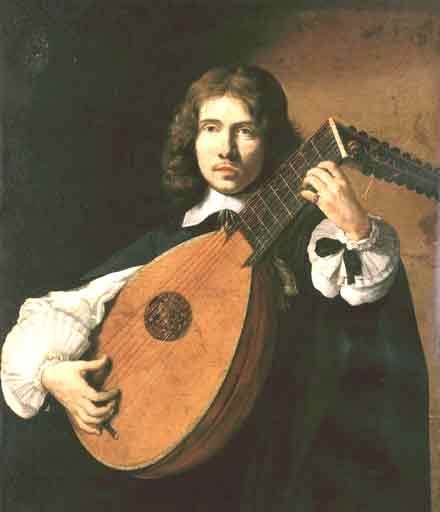
Today’s piece is by just such a singer-songwriter, an Englishman born in 1567, Thomas Campion. He wrote his lyrics, wrote music for them, and was an accomplished lutenist, so the chances are that he was discovered by John Hammond and played the authentic Elizabethan blues music he misheard from 78 r.p.m. discs of Catullus. Well no, doubting Thomas, once more I Kyd.

Thomas Campion with Lute

Poetic Campions compose. Thomas Campion with his lute.
If he looks glum it’s because it’s two centuries until Martin Guitars is established, and 350 years until the Telecaster.

He did write lovely songs, in a style I can’t come up with a way to present. “Let Us Live and Love”  was one. You can hear it sung beautifully to his tune here. So instead of exploring my counter-tenor range, I’m going to go with a sort of loose skiffley blues in my performance.

I’m going to lean on my blues audacity hard here, because the poem is addressed to the singer’s lover, Lesbia. Beavis and Butthead style giggles are breaking out in the back, I can hear you.  Turns out Campion took the lover’s name and the idea for his first verse of his lyric from a Latin poem by classic Roman poet Catullus, before taking off on his own thoughts on the matter. Classics scholars explain this by saying the Sappho of Lesbos’ association in classical times was more at a widely experienced lover, not necessarily a lesbian one.

Catullus Comforting Lesbia over the Death of Her Pet Sparrow and Writing an Ode

OK, OK, forget the one about you might as well have sex with me.
How about this, we’re all going to die, just like that bird, and…


Another category “Let Me Live and Love”  could be put in would be a “Carpe Diem” poem, which is not the Department of Natural Resources limit on the number of bullheads you can catch, but is more Latin meaning: “seize the day,” which in the case of poems usually doesn’t mean seize the day for fishing. Instead, Carpe Diem poems usually offer this proposition: “We’re all going to die, so you might as well have sex with me.” Seriously. Poets have actually made that seem like a smooth line.

The twist Campion puts on Carpe Diem is to bend it around a bit. His song has it that you already love me, and that makes the idea that we’re all going to die bearable. That’s at least a little more flattering.

To hear my performance of Campion’s “Let Us Live and Love”  use the player below.


The Heart of the Woman

There’s two things that attracted me to T. E. Hulme, the lesser-known Modernist poet and theoretician that I’ve featured a few times this summer. The first is the sense in his poetry and critical writings of the limits of humankind. The other is his poetry’s surprising modesty and restraint, something embodied in the very brevity of its poetic expression and his images linking the mundane and the cosmic.
 
This was a man who wanted to overthrow hundreds of years of poetic tradition, and a person whose stubbornness kept him in trouble with authority figures throughout his youth, and yet Hulme expresses himself in these spare lines, as if the first lesson he’s teaching himself is to know his own limits. This seems to be Hulme’s problem with Romanticism as he saw and opposed it: humankind is not limitless, though our imagination says otherwise.
 
Today’s piece, William Butler Yeats’ “The Heart of the Woman”  moves in opposition to that outlook, but not in opposition to that expression.
 
Here in North America, many in the southern region are spending this week either cleaning up from a massive hurricane or clenching their jaws in anticipation of an even larger one due to strike this weekend. Peaceful, Rousseauean nature this ain’t. Hobbes is is a weatherman.

Hurricaine Irma

“Come in she said, I’ll give you, shelter from the storm.”

Yeats’ poem is as measured and modest as one of Hulme’s, though it is rhymed and metrical. When one is a good as Yeats is at that, one hardly notices the form. 12 lines, not even a sonnet in length. Like Hulme, this is no great ode of endless argument. On the face of it, it’s a love song, a basic trope of Romanticism, the reason we talk about human attraction and pairing as “romantic.” Its images are centered on a couple embracing.

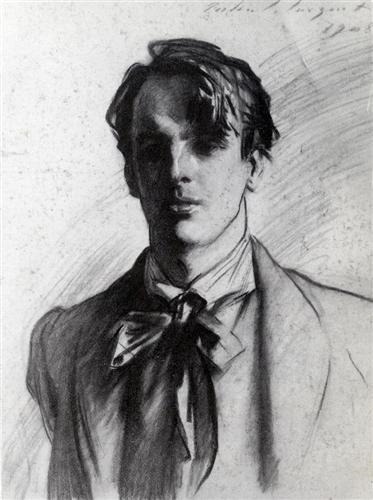
Yeats by Sargent
Why Mr. Yeats, I didn’t realize you were, well, dreamy, without your glasses

But look closely in those dozen lines. The woman who’s singing it, has left religion (“prayer and rest”) and family, and has followed a lover’s invitation into what is introduced as “gloom”. Merely the dark of night?

No, in Yeats’ lovely line, darkness is found inside the “Shadowy blossom” of her hair which will hide the lovers from the “bitter storm.” Now we are fully in the Romantic world, where our own darkness may be willful, wishful, blissful, ignorance of the “hiding hair and dewy (blurry) eyes.”

Are there any more Romantic and romantic three lines as Yeats’ final three that conclude this piece? If there are, I can’t recall any at the moment. That the simple murmurs of human breath can seem to equal a hurricane’s—is that glorious or folly or both?
 
In the spirit of defying human limits, this is the first time you’re going to hear me sing a Parlando Project piece acapella. And though Yeats’ poem doesn’t rule out the same romantic faith on the part of the “he” in this poem, I’m somewhat troubled by the idea that romantic devotion is presented here as female, from the poem’s title onward, so I’ll undercut that by singing this. My less-able singing voice is one reason that we chant or speak-sing a lot of Parlando Project material, but my young son’s carefree acapella singing is reminding me of the value in the singing voice. To hear “The Heart of the Woman,”  use the player gadget below.

Like John A Dreams

Today’s selection was also recorded a few years back, and is more conventionally in that “poet reading beat poetry while a band backs the poet up” school of performance. While that’s one of the influences that has led to the Parlando Project, I didn’t want to confine myself to that style, and if you’ve been following along here with what we’ve done over the past year, you’ve heard some of the other approaches we’ve taken.

As I’m in a busy end of August, I don’t have time for much commentary on this piece, but I don’t think it needs it either, which is part of why it’s here today.  This is a story set distinctly in South Minneapolis and the early 21st Century, and it talks obliquely about the time of falling in love with my wife. The Riverview Theater mentioned in the poem is still a going concern, a neighborhood single-screen movie house that shows movies near the end of their theatrical release without concentrating on any one cinema genre, leading to marquee billings like the one the poem mentions, a series of titles that often seem like little Dada poems to me.

Riverview Theater 1

Minneapolis’ Riverview Theater: Dada poem generator or movie house marquee?

  
Outside of the localism of the poem, the main obscurity in it is the title: “Like John A Dreams.”  That’s a reference to one of my favorite speeches in Shakespeare’s Hamlet.  In the play’s Act II, the hero Hamlet is asking why he cannot take action on the death of his father, and he rebukes himself as “Like John A Dreams, unpregnant of my cause, and I can say nothing…” John A Dreams was apparently a stock folk character in Shakespeare’s time, a foolish character who lived in his imagination and ignored more pressing reality—a character flaw all writers should be able to appreciate.

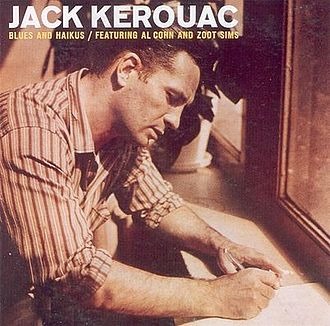
Blues and Haikus Jack Kerouac record cover

Parlando influence Jack Kerouac. “Beat poetry while a band backs the poet up”

Allen Ginsberg once recalled Jack Kerouac reading Hamlet aloud, and in particular this speech, with special emphasis in his voice when he landed on the “John A Dreams” charge.
 
So, if you’re a writer or other artist, Hamlet’s speech is for you. Your life is quite possibly bifurcated between that artistic thing you do and the life you press aside to do it. Art is often about making “and” choices. Life is often about making “or” choices.

To hear the LYL Band perform “Like John A Dreams,” use the player below.

The Nymph’s Reply to the Shepherd

There’s a long tradition of “the answer record” in pop music, where another artist responds to a hit record with an opposing viewpoint. Christopher Marlowe’s 1593 “The Passionate Shepherd to His Love”  (our last post) received a similar diss from Sir Walter Raleigh with his “The Nymph’s Reply to the Shepherd,”  which is today’s. Who will folk-rock the mic harder? Feel free to re-listen to Marlowe’s inning before considering Raleigh’s reply, Marlowe’s player is just below:

As I mentioned last time, these poems with their shepherds and lovers, called Pastorals, were proudly artificial, and set in a completely stylized and relaxed world of affection and sufficiency. You may find any desire to dwell in this unreal world strange and old-fashioned, but perhaps we imagine now another kind of locus amoenus/“pleasant place” to dream of going to, to escape the world.

Christian_Wilhelm_Ernst_Dietrich_-_A_pastoral_landscape_with_Diana_and_her_Nymphs,_1754

“Then he was all about rural handicrafts all of sudden. Was he even interested in me?”
“Well, it’s not like taking care of sheep is that hard. A child with a tambourine can do it!”

 
Raleigh’s “The Lie”  has already demonstrated here that Raleigh had no patience with romanticism. So, he’s primed to take on “The Passionate Shepherd,”  but he also notices another weakness in Marlowe’s argument: the Shepherd promises pleasures, presumably mutual pleasures to his lover, but he isn’t stopping there. He’s going to demonstrate his commitment by throwing an entire Etsy shop at her: beds of roses, caps, vests and belts made from woven wildflowers, wool dresses and wool lined slippers. And bling! Gold buckles, coral and amber buttons.

So, Raleigh composing the nymph’s reply has three arguments to make. All those hand-made crafts on offer? Doesn’t move me Shep. Outdoor animal husbandry? Not as romantic as you make it out to be in May, and those wool slippers better be warm if I’m going to be traipsing after some sheep come January. Lastly Shep, you’re all hot and bothered about me now, but just how lasting is all that? I appreciate the offer, but let’s just say I’m keeping the wool lined slippers and you can go try your line on some other nymph?

Wool Lined Slipper

I’m not even sure what a kirtle is, but I understand cold feet at night

Musically, this is another piece inspired by a 1960s folk-rock sound. I was thinking specifically about the musical style of Fred Neil’s Capitol records as I arranged this. I used a minor key chord progression somewhat related to the major key one I used for “The Passionate Shepherd,” and once again I sung this one. Raleigh, if downbeat, is just as lyrical as Marlowe in his answer. Marlowe has pretty lines like “By shallow rivers to whose falls/Melodious birds sing madrigals,” but Raleigh has “The flowers do fade, and wanton fields/To wayward winter reckoning yields.” So, use the player just below to hear Sir Walter Raleigh’s response in song.

The Passionate Shepherd to His Love

Let us leave the Modernists for a moment, for a trip to an imaginary land, a locus amoenus, a pleasant place, within whose bounds certain things hold true: love brings simple riches and complex pleasures ignorant of inconstant affection, and where the cares and complexities of cosmopolitan life, brutal prejudice, and other social constructions fade away.

Such a place can have many names. To the Surrealists it was the unfettered confusion of certain dreams. To the west coast optimists of the Sixties and their cross-Atlantic vibrationalists, it was a new Eden of decorated affection and open-mindedness. To a resident of fetid Elizabethan London, it was the pastoral, a demi-countryside where love was free and the rent non-existent. Shepherds, Pan and Panopticon, willed willing partners to their bowers. It seems like a nice place to visit—and in the mind, even more so.

Christopher Marlowe must have written this pastoral love poem sometime before he died in 1593 (baring any occult forces of the Twilight variety, or the posthumous inspirations that allow Oxfordians to confound Shakespeare’s later plays) but it wasn’t published until a few years after his death. It’s a full-throated exhortation in the pastoral style—with a slippery set of gold-buckled feet at the bottom of its argument as we’ll soon see, though that may not matter. Not only is it lovely sounding, even read flat on the page, the whole point of the imaginary pastoral world and the locus amoenus is that it isn’t real, that it’s the place we want to lie in and be lied to sweetly, within.

Marlowe and Peel

“And we will all the pleasures prove.”  The 19 year old Marlowe and the 29 year old Peel.


In the spirit of all this, today’s audio piece is one of the few Parlando Project selections where I sing, as you can’t really declaim “The Passionate Shepherd to His Love.”   Musically, I chose to use some of the production techniques popular among dreaming optimists in the Sixties, where John Peel’s Perfumed Garden  would be another locus amoenus, another imaginary place, where, in fetid times, we might want to go. This week, 50 years ago, John Peel performed his final  broadcast of that accidental and influential radio show.

To hear Marlowe’s“The Passionate Shepherd to His Love”  performed as if it was a cut being played on the Perfumed Garden, use the player that should appear below.


L’Amoureuse

I promise you, we will end up today very close to the love song of the last episode, though we will travel a ways before we get there.

I’ve not featured any French writers yet with the Parlando Project, but as this summer has used the words of many 20th Century English poets, we may be overdue for that, as the start of that century found some of them looking to the French for some new ways to write.

French poets started to go “modern” before the British poets, around the same time that Emily Dickinson and Walt Whitman were making their own breaks with past practice in America, so they had a head start, and their avant-garde was way past the supply lines of conventional narrative and sentiment by the time the 20th Century really got rolling.  The absurd casualties of WWI, largely fought in France and its neighboring countries, and so deadly to some of the generation of men doomed to fight in it, only accelerated the modernist direction away from the kind of meaning you might find in a political speech or battle plans.

This summer, 50 years ago, the Polish-French writer Guillaume Apollinaire coined a new word to describe a new way to approach the world in words: “Surrealism.” A few years later, his term was taken up by a group of artists who went about trying to practice a new idea, presented in 1924 as if it was a political manifesto, to write and create from:

“…The actual functioning of thought. Dictated by thought, in the absence of any control exercised by reason, exempt from any aesthetic or moral concern.”

  The Surrealists went on from there, going in various directions, becoming less an idea and more of a brand—but stop and think for a moment, that original idea, isn’t it powerful? The idea that there is a reality that we agree not to apprehend, not to speak of, that we constantly reframe our thoughts to, isn’t that idea political as well as aesthetic?
 
You take the idea of Surrealism, add music to it, and later that century you get Bob Dylan. You take the idea of Surrealism, apply it to the current reality, and you are woke, not from the dream, but to the dream that should not be denied.

Today’s piece uses the words of one of the French Surrealists, Paul Éluard. Éluard, like many of the British poets of this era, was another veteran of WWI. One story of his war service was that, since he was a writer, his military superiors assigned him to the office tasked with writing the official letters to the relatives of the casualties, and such was the efficiency of modern war that he sometimes needed to write 150 of them a day. After a year of this, he asked to be sent to the frontline trenches.

Alphaville Capital of Pain book

Jean-Luc Godard’s film “Alphaville.”  “I love you” could be the ending.

 
I have exposed you several times this month to pieces about the horrors of war and slavery, but I also told you we must travel a ways to get to today’s piece. After the war, as a founding Surrealist, Éluard produced verse with strange images and seemingly arbitrary combinations—Surrealist tactics to break the conventions—but his great subject, against the night, pain, and suffering, was love. Perhaps after those 150-letters-a-day forced march, he too wanted to look to war’s opposite.

Paul Eluard and Gala 2

Paul Éluard and the beloved, Gala. Eyelids not visible in this picture.

“L’Amoureuse”  (The  Beloved) is one of Éluard’s most famous early works, and uses my English translation of his words. The LYL Band performance of it was recorded live several years ago. To hear it, use the player below.

She is Sleeping on the Boundaries of the Night

I said I would change things up last time, and by stepping back a few years, today’s piece does that.

How much different is “She is Sleeping on the Boundaries of the Night”  from the last few posts? First off, we’ve left off from war. This is a love poem. Death appears in it only briefly passing—so fast it passes, as it can in a poem, you might not even notice it. And rather than being a piece by another poet, the words here are mine. We live here at the Parlando Project with the idea of presenting “other people’s stories,” but I also want variety, so I’ll make the exception this time, and present part of my story.
 
One of the modernist/Imagist ideas that Ernest Hemmingway liked to use in his early stories was to leave an essential detail out of story, and then to strive to write it so well that the power of that detail would become present subliminally.

Lovers Tryst

In a classical aubade lovers are always awaking in a field and forgetting to check for contact dermatitis

“She is Sleeping on the Boundaries of the Night”  is an aubade, a traditional form of love poetry. An aubade features lovers awaking at dawn, and the poet lamenting that their night is over, so they must now part for their un-enchanted days. What do I think is different in my aubade?

Sixteen years ago, my wife died after a short and painful illness, not yet 44 years old. I cannot tell you all that means, but one thing I experienced in my grieving process was the question of where one goes from that stopped thing. After all, you are definitively stopped, you have no momentum in any direction, unlike in the normal flow of life. You can stay stopped, or move off in any direction.

I moved, and was moved, in the direction of falling in love again. There are some difficulties in that direction, knowing of love’s inescapable impermanence. Like the lover in an aubade, I knew now, deep in my soul and body, that love means that parting is intensified.

In the end, “She is Sleeping on the Boundaries of the Night”  is a love poem that hardly mentions death. I was trying to do that modernist/Imagist thing. Is death still there?

Alas, the other thing that I left out, is that other person, lying beside the speaker, stuffed with dreams no doubt with all the richness, sadness and choices of their life. My love poem fails, as some do, in that respect. Can it remain unsaid my partner chose to move, and move me, as well?

Today’s piece is musically a bit different as well—there’s an antique 20th Century beat box rhythm used for one thing. To hear the LYL Band perform “She is Sleeping on the Boundaries of the Night”  use the player gadget that should appear below.

Triad

I find it a wonderful “Parlando – Where Music and Words Meet” coincidence that one of Christina Rossetti’s sonnets and one of David Crosby’s songs share a title, “Triad.”

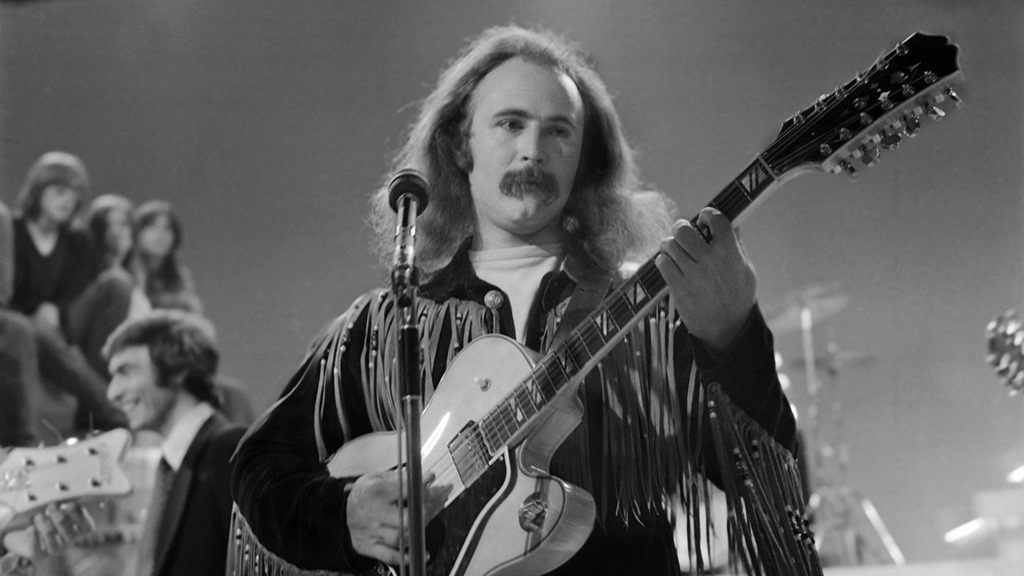
David Crosby is a musician and songwriter who first came to prominence in The Byrds and then as part of another triad, Crosby Stills and Nash. When I first came upon his songwriting many years ago, I was attracted to his distinctive abstract melodic and harmonic sense. Almost no one before, and few since, wrote music for songs that sound like his did then, with the exception of some Joni Mitchell tunes. Lyrically Crosby styled himself as unconventional as well. His “Triad”  is a blissful ode to free love—well at least free love as long as David Crosby is the one explaining how things will be.

David Crosby

David Crosby’s song starts by asking “You want to know how it will be?” and then he mansplains it


Christina Rossetti was a pioneering British 19th century female poet. Her biographical triad was that she had two brothers William Mitchell Rossetti and Dante Gabriel Rossetti, also writers, who went on to form the Pre-Raphaelite Brotherhood. Hmmm, “Brotherhood”—I wonder if girls get to join? Not officially, though she was used a model in some of their paintings.

Girlhood of Mary

Her brother Dante used Cristina Rossetti as the model for the Virgin Mary, far right.


Christina Rossetti’s “Triad”  is a not-so-happy look at romantic love, and the writer is none-so-sure how it should be either. Rossetti draws her portrait of three women who once sang together. One the stereotypical harlot, one the blue spinster, one the smooth compliant wife. Each of them finds the dead end of the limited paths available for passionate women. Conventionality decrees the hot harlot is shamed and the cold virgin dies for love, but Rossetti steps outside conventionality to tell us that the “temperate” spouse grew gross in her compromise until left with the devastating line droning “in sweetness like a fattened bee.” How much has changed since Rossetti’s Victorian England in this regard? Some things, not all things. New Rules are still rules, look at who makes them.

Musically here with our “Triad”,  the LYL Band somewhat refer to the psychedelic vibe of Crosby’s musical style to accompany Rossetti’s sad and lovely words. To hear it, use the player that appears below.

Frances

Here a piece based on a short, incomplete poem written by a teenager who went on to do other things. You can tell he’s a clever young man. He’s infatuated with a neighbor girl, but there’s no such thing as texting yet—no such things as telephones either. Thankfully, love songs are a well-established technology, so he sets to work on one.

To make sure that she knows he’s serious about her, and not the other young ladies he’s been seen cavorting with, he decides it’s not just going to be a poem, it’s going to be an acrostic. The first letter of each line will, if read downward, spell out her full name.
 
If John Lennon had wanted to write “Oh Yoko” as an acrostic, it wouldn’t have added much difficulty to his verse. Alas, our teenager’s object of affections is Frances Alexander. Well it could have worse, if he was a teenager who wanted to write a love song to the New Zealand singer who performs as Lorde, and wanted to use her full name, he’d have to write a 27 line poem to Ella Marija Lani Yelich-O’Connor.

He only needs 16 lines to prove his love.

GW Poem

OK, he’s finished the “Frances” part, now onto “Alexander”


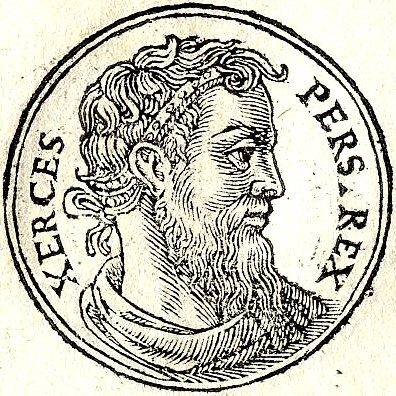
He gets to line 11. Gotta start with “X.” He grabs onto Xerxes, the famous Persian leader and general to fill out his acrostic, but one line later he runs out of gas and just drops the poem before finishing.

Xerxes_I

Our poet got his face on some money too


Didn’t finish the poem, didn’t get the girl, but our teenager like Xerxes became a famous general and eventually his country’s leader. He’s got a birthday coming up on the 22nd, but they celebrate our boy George Washington’s birthday as a US holiday today.

In writing the music for this piece, I decided to just take Washington’s words seriously. Even if the sentiments he uses are somewhat conventional (the “my love outshines the sun” trope was old enough that Shakespeare made fun of it more than 200 years before Washington got to it). Love songs sometimes make no effort to be original, and if done well, the human commonness of the experience of love becomes the point.  Here, even if he was following his acrostic plan, young Washington takes a darker turn as he starts the second part of his poem, and I tried to bring that out in my version. To hear it, use the player below.