Let’s open the scrapbook we’ve been talking about this month and look to see what it shows us about the beginnings of its central subject: the guitarist and singer Lawrence “Hank” Hazlett who’ve we know was a sometime member of a Jazz guitars-with-standup-bass quartet The Cats and the Fiddle. From previous posts in this series we know the Cats started in Chicago with a group of musicians that knew each other from high school. In 1937, while group members were not yet out of their teens, they left Chicago for Los Angeles and Hollywood where they managed to perform in a couple of small movies as themselves while also snagging a few appearances as extras in larger budget motion pictures. In 1939, back in Chicago, they get a contract with Bluebird records and start recording their material, most of which are short, self-written and self-accompanied songs, featuring Swing-Era hep-cat outlook, humor, and slang. Signed to the William Morris talent agency, they begin touring nationally.
I have not seen this picture elsewhere outside of the scrapbook. It shows the act as still represented by William Morris. The shadowy photography here of a dark skinned face in the lower left doesn’t make it certain, but this could be a rare promo shot of Hank Hazlett with the WWII-era Cats without their leader Austin Powell.
.
As far as the scrapbook’s scope goes, Hazlett barely appears before joining the Cats midway in the combo’s career. The earliest thing the scrapbook has on him is a well-worn U.S. Employee Service Applicants Identification Card for Lawrence Hazlett. The card gives his address as 5159 Prairie Ave, but there’s no visible city. That address exists in the L.A. area near Lennox and W. Century Blvd., but also in Chicago’s Bronzeville — so we could place Hazlett in either city the Cats were active in during the late 1930s. The card has him 5’ 10” in height, 147 pounds, and there’s a filled-in blank that has the number 24 — I’m guessing that’s his age. Given that Marv Goldberg has Hazlett as being born in 1911 in St. Louis, that would make the card’s issuance as around 1935, and from that approximate date the card could be a government form related to unemployment insurance or the New Deal WPA.* There are two blanks to enter in “ssification” which I read as classification, a P. and S., with that second filled in as a “Jr. Artist.”
Anyone know more about this kind of ID card?
So, here we have the earliest thing I know for sure about the scrapbook’s leading man: a slip of paper from before the Cats and the Fiddle existed that says Hazlett may have pursued a career in art circa 1935.
Histories of the Cats and the Fiddle tell us that in 1943, Austin Powell, the most often featured lead vocalist of the all-singing and all-playing quartet was drafted. This would be a serious blow to the group. Recordings were scant during the war years, but the act was touring and likely had gigs to meet. Hank Hazlett is selected as Powell’s replacement. Like Powell he played guitar, and evidence suggests he may have been at least Powell’s equal on that instrument.** I also assume he was a good singer with some on-stage showmanship. We don’t know where Hazlett joined up with the Cats, but it’s likely in Chicago or L.A. We have one other document in the scrapbook with a firm date around this time, a W2 for the year 1944 which shows Hazlett earned $125 from Loews Inc, M.G.M Pictures of California giving Hazlett’s address then as 912 E. 27th St. in L.A. This might have been for work as a movie extra or musician.
Extra in a movie? Soundtrack work? Movie theater appearance?
.
There are clippings and a few photos documenting the 2-3 years Hazlett was a member and touring with the Cats and the Fiddle in the scrapbook. Here are a few of them.
Some of the places and bills as Hazlett toured with the Cats and the Fiddle 1943-46. In the upper-center photo that’s Hazlett on the left playing a guitar that may be the one in the promo shot above.
.
The hypnotist Capt. De Zita’s work? Typo on the headline and dubious hype that the Cats and the Fiddle are appearing in person in L.A. for the first time in 1944
.
In 1946, Austin Powell is mustered out and returns to the group that is still working though not breaking through to upper levels of fame. Having the original lead singer back doesn’t seem to revive their career fortunes, though the act will continue until 1950. As far as anyone knows, Hazlett’s tenure with the Cats and the Fiddle ends when founding and featured member Powell comes back.
Hazlett seems to remain a professional musician though. There are new promo pictures made, taken by a Chicago-based photo studio for a new act: upright bass, piano, and Hazlett on guitar: the Hank Hazlett Trio. What we can see of them in the scrapbook is our topic for next time.
.
*I’m thinking more likely the WPA. The Works Progress Administration was a unique New Deal program to counter the Great Depression. In sites around the country it gave jobs to workers, writers, actors, musicians, and artists to produce or teach various projects and works of art. I know little about Hazlett’s family or situation growing up, even how long he was in St. Louis, his stated birthplace. His place of death was Los Angeles in one report I’ve seen, so he may have some connections there. It’s only a feeling, but I’m guessing he may have had a middle-class Black family with exposure to arts and culture before we find him in the scrapbook as a nationally touring musician.
Time for me to lay out all I know of the story of a 1930s and ‘40s Black American Jazz vocal quartet: The Cats and the Fiddle. Last time in this February series, I reminded moderns that so much in my parent’s and grandparent’s time revolved around neighborhoods. That’s going to continue today as I tell about some kids who shared a location. Previously we’ve seen the Cats and the Fiddle appearing in small-time Hollywood pictures in the Thirties, which might give you the idea that they were a well-established band with hit records and thriving career. That’s not the case. They were young, from out of town — and though they did have a few years of performing under their belts, they were likely around 20 years old. How’d they get there? Where did they go?
The Cats and the Fiddle didn’t start in Southern California. The original quartet were classmates at Wendell Phillips High School, an important school in Chicago’s Black South Side. Last February here we featured Fenton Johnson, an ambitious Black poet who graduated from Phillips decades before the Cats’ founders attended, but some other folks could have passed the band members in the hallways in their day: Nat King Cole and just possibly singer Dinah Washington. Cole was likely the same age — Washington 5-6 years younger but there was a Junior High section at the school.* Oh, let’s not totally leave off poetry — poet Gwendolyn Brooks was the same age as Cats members, and Phillips High School was one of three Chicago area high schools she attended. The thought that these teenagers, poets, singers, musicians, and songwriters, might have taken inspiration from each other, or some other, lesser known commonalties is intriguing.
While in High School the future Cats were in two different bands, the Harlem Harmony Hounds and another group which was — at least at times — performing as Four Dark Flashes. No, the first band had nothing to do with Harlem, these were Chicago kids. There’s a round-up of Cats and the Fiddle history available online put together by Marv Goldberg. He’s found a reference to the Harlem Harmony Hounds as early as summer of 1932, which says they were appearing on radio station WCFL in Chicago.**
The Four Dark Flashes appeared to have traveled some. In October 1936 they were listed as playing the Casino Theater in Toronto Canada, a 1,200-seater which would have just opened earlier that year. If they were all Barksdale’s age, they’d be 16 or so, and traveling out of the country during the school year. This would indicate that some of the Cats-to-be had dropped out of school early to pursue music. ‘36 was likely the year the Four Dark Flashes group lost a fourth, their lead singer. Harmony Hound Austin Powell singer and guitarist was the handy neighborhood replacement to join Ernie Price (tenor guitar), James Henderson (tipple), and Chuck Barksdale (bass). The whole group sang, and beside Barksdale holding down the upright bass, the fretted stringed instrument combinations of 6-string guitar, tipple, and 4-string tenor guitar might shift from song to song.
In October 1937 we get the first mention of Cats and the Fiddle as an act that Goldberg has found. The famous Chicago Black newspaper The Defender wrote that “Four Cats and a Fiddle” were booked to play the Dome Club in Bismarck, North Dakota along with a Bessie Mitchell.
OK, who’s asking “What are a bunch of teenage hep-cat Black musicians doing in Bismarck ND in 1937?” I don’t know. I can find nothing about the Dome Club there, but chances are slim that there were enough Afro-Americans in Bismarck in 1937 to support a Black entertainment establishment. Another Afro-American vocal act with guitar accompaniment, the four Mills Brothers from Ohio, had gotten on nationwide radio, and though their hit records are a smoother sweeter sound and have none of the jive talk found in the early Cats’ lyrics, it’s possible that our group of teenagers had a set-list of tunes tailored for white audiences. The Chicago Defender, when announcing the act’s road gig on its pages says the Cats had “one of the greatest floorshow acts in the game.” Promotional hype supplied by the Cats themselves? Or had they already done some show-stopping appearances in Chicago? Were upper Midwesterners plausibly ready for something like that “Killin’ Jive” hard-swinging Jazz aimed for Black audiences?
Then on November 20th the Pittsburg Courier (another Black newspaper) says The Cats and the Fiddle, consisting of the quartet of guys and a Bessie Sutton are playing at the Airplane Club Café in Denver this week. Not sure why anyone is concerned about this in Pittsburg, unless that Bessie is from there. What kind of venue was the Airplane Club Café? The only thing I can find is this picture of a matchbook once offered for sale on eBay.
The young Jazz guitar & vocal combo was going places. Lenny Kravitz’ grandma not pictured. (just checking to see if you get to the footnotes)
.
That pair of odd Fall ’37 notices bill a Bessie Mitchell and a Bessie Sutton as being with the Cats. It’s unclear if they are one or two different people, and if they are full-fledged members of the band or a separate act that might use the Cats as road show accompanists.*** If neither Bismarck or Denver seem like a common tour stop for a locally-known Chicago Afro-American combo in 1936, swing Jazz had a generalized popularity that was testing racial barriers. It’s also possible that clubs expected the Mills Brothers and got something a bit wilder, or that Bessie or Bessies were the headliners.
Where can we put our Cats on the map next? On January 13th, as 1938 has begun, Goldberg finds them in another Black newspaper, the Los Angeles California Eagle. The paper names the original four schoolmates and a Willis Rogers as members and they go on to say the group will “go far in pictures.” Once more I provisionally assign PR from the group to that prediction. I wondered if the late ‘36 Bismarck and then Denver gigs were just part of a “play your way to pay your way” tour to get to the American west coast. I’m just enough of a trainspotter type to wonder about passenger train service from Chicago to Bismarck to Denver to LA.
Want to figure their transit route with me? Chicago to Bismarck to the Pacific Northwest coast. Sure, the North Coast Limited. A lower Midwest route from Chicago to Denver with connections to LA? Yes, those are options on the Union Pacific Overland Route. But Bismark to Denver? Your faithful researcher looked. You’d likely have to go back to Minneapolis from Bismarck, and then from Minneapolis to Denver before going on to Southern California from Denver. But what’s the alternative? They could have driven, though I know nothing about their family’s financial resources to buy a car, and there’s the season of that traveling: modern indie band road dogs would dread a late Fall tour itinerary from Chicago to North Dakota then off to Denver before a jaunt to LA, when if LA is your goal from Chicago, a southernly “Route 66” highway beckoned. So, if the three dates Goldberg lists are accurate, I think of these four or five ambitious young Midwestern musicians zig-zagging like water bugs on train routes aiming for Hollywood. Yes, I’m grasping here at details, hoping that like a detective they lead to solutions to greater mysteries. The mysteries remain.
You’ve seen the high points of that movie career in the earlier installments of this series. For Afro-Americans in the mid-1930s that would be low-budget all-Black cast and audience pictures, novelty appearances in B movies, and possible work as extras or as a musician for soundtracks. Seems pretty meager when I list those opportunities, but to look at it another way it wasn’t that far from what bigger Black musicians were getting in the movie industry then. Racism and segregation were still unavoidable, overt issues, but Jazz as a rising popular music was softening some barriers in that decade. And it was the Great Depression. Black unemployment was even higher than the general unemployment rate. Appearing as “native” extras on a studio backlot might be demeaning, but even that level of employment meant a paycheck.
Still, they were all about 20-years-old, and they didn’t even have a record contract— yet. And our intrepid group still seems to be traveling back to Chicago from Hollywood.
Lawrence Cohn, who wrote liner notes for a 1976 reissue of the Cats and the Fiddle recordings, tells that Cats were visiting outstanding guitarist Tampa Red’s apartment in Chicago in the spring of 1939 after their spate of 1938 movie appearances, when Red introduced them to Lester Melrose. Melrose was A&R for Bluebird, RCA Victor’s “race records” label for artists of color. In the 1930’s and ‘40s, Bluebird was making good money on a variety of Blues related vocal records, often featuring small combo accompaniment, catchy rhythms, and double-entendre lyrics. Melrose worked out of Chicago where he collected a lot of Black talent for the label.****
How well did the Cats records do? Middling at best. Their closest approach to a hit was a ballad recorded on their first studio session in the summer of ’39, “I Miss You So” — but as WWII was about to break out in Europe, no one knew yet how big the young Cats could be. Cohn compares them to the Ink Spots, a vocal combo who started having big hits on Columbia Records around this time. He tells us the Cats and the Fiddle were repped by William Morris (the same talent agency as the Ink Spots) who started booking them all around the country to see what kind of career they could have. The subsequent gigs Goldberg tracks are mostly at Black audience theaters, but they include the big ones, the ones the most successful Black stars would play.
In America, WWII was still two years away. Victor records recorded more than two-dozen songs as they toured. That maybe-kinda hit “I Miss You So” wasn’t issued until 1940, and it wasn’t representative of their typical fast-tempo jive-slang songs.
Then the war came, and the previously stable, self-contained quartet group of high-school-pals started to churn. Henderson (who wrote “I Miss You So”) died shortly after the record came out. The bass-fiddle guy Barksdale died in ‘47, but was in and out of the lineup from ’41 on. Henderson and Barksdale were replaced by ex-Harmony Hound members Herbie Miles and George Steinback. In the midst of this ’40s churn Tiny Grimes was in the group for a couple of years, even wrote a tune or two for them. Grimes would leave the Cats to play with Art Tatum and Charlie Parker, and along with Charlie Christian, he would help popularize instrumental bebop styles for the guitar. Grimes left our vocal act because by then it wasn’t paying much, and he didn’t think it was going anywhere. A musician’s recording strike and a shellac shortage greatly reduced the issuance of records during the ’40s, and the audience mix for live shows must have changed some due to the overseas war. Amidst all this, Austin Powell, the most prominent singer and songwriter in the Cats was drafted. Hank Hazlett, a guitarist originally from St. Louis, was brought in when Powell went into the armed forces. Hazlett would play with the Cats from ’43 until late 1945. Powell was de-mobbed in Spring ’46, and the somewhat tattered group was still recording and playing, but to smaller and smaller returns. In 1950 the Cats and the Fiddle disintegrated, though surviving individual ex-members continued to be involved in music.
Lawrence Cohn was a highly knowledgeable man about this era, and he worked on a number of important late 20th century reissues of classic Blues and Jazz recordings. When in 1976 RCA collected most of the Cats and the Fiddle’s recordings in a double LP, Cohn wrote the liner notes, yet he only rises to faint praise there. He thinks the songs sound too samey. He says their musicianship was mediocre at best. In the end he’s left with the idea that their humor might be viewed as a corrective to the (in his opinion) too serious and artsy Jazz around when he wrote the notes. This sour summation ends Cohn’s notes:
In general this kind of happy jazz and pop combination disappeared, along with most of the melodic kind of jazz, during the Fifties and Sixties when rock and roll replaced the earlier style of music, and when jazz became politicized. A lot of people stopped going out when this kind of music was not being presented. Perhaps this release may in some small way facilitate its return.”
So besides knocking the Cats, Cohn seems to want to take some shots at the Spiritual and Black Arts Jazz musicians contemporary with his notes. I apparently like those musicians more than he did, and I like the Cats and a Fiddle more too. As to the Cats’ musicianship, I’m of the school that says the essential is that the players did a good job putting their own songs over, and that’s what counts more than an academic skills comparison. Barksdale was good enough for Coleman Hawkins when playing outside of the Cats. Tiny Grimes could trade riffs with Charlie Parker. Austin Powell was still gigging and recording with Louis Jordan and his Tympani 5 until the end of the 1950s, apparently playing not only guitar, but sax and piano.
Decades after Cohn, Australian critic Bruce Elder got the job to write up the Cats and the Fiddle for the current music streaming service Apple Music. Writing there Elder says
If anything, the Cats & the Fiddle were ahead of their time, producing a bolder form of R&B than critics were prepared to accept at the time, such as ‘That’s All I Mean to You,’ which likely would have slotted in perfectly a decade later, but in 1940 just seemed like style-less noise with a swing beat.”
Being slammed as “Style-less noise, with a…beat.” Does that sound like a description of something else that would come around after the Cats broke up post-WWII? Self-contained combos who play their own instruments with guitars mixed to the foreground, brisk tempos, uninhibited stage performances, energetic, youthful, close-harmony singing, witty lyrics that might wink with some “the squares won’t know what we’re talking about” slang?
I’m leading you to say “Rock’n’Roll.” I suspect older readers will be the first to follow that lead with that response, as I find many listeners in middle-age (and younger) think of the later evolution of what gets called Rock — or now, Classic Rock — as a more overdriven electric guitar thing, backbeat drums with less swing laying down the beat, with lead singers often singing alone only with occasional backing vocals. I used to shake my head (and type someone’s-wrong-on-the-Internet posts) in my 20th century Usenet days when the admittedly problematic Rock’n’Roll Hall of Fame would select some (usually Black) harmony vocal group for enshrinement and posters would object that’s Do Wop, or Soul, or something, but not real Rock. I’d try to remind them that Rock’n’Roll originated as a diverse mongrel genre, and that groups who approached music with an outlook, energy, and vocal blend like the Cats, were all over the first decade or so of Rock’n’Roll. These Black high-school students from the South Side of Chicago had an idea and put some audacious energy into propagating it.
About thirty years after the Cats and the Fiddle took their warning-track fly ball swing for the fences, this group of plaid suited white rubes — who looked exactly like you’d expect to find them at the Dome club in Bismarck North Dakota — got to have their moment in a low budget Hollywood movie. This is how they looked and sounded:
On discovering this band in a rural roadhouse, the film’s hero enthusiastically shouts “It isn’t boogie. It isn’t jive. And it isn’t swing. It’s kind of all of them.”
.
*I’m basing age estimates for the original Cats members on a military draft registration record Marv Goldberg indicates he’s seen for original member bassist Charles Barksdale, documenting that he was born January 11th, 1918. Nat King Cole and the Cats were seen again in Hollywood, as Black extras playing South American natives in the Myrna Loy/Clark Gable romcom Too Hot to Handle. Dinah Washington was playing in Chicago with the Cats and the Fiddle as her backing band for the gig when the club owner dragged Lionel Hampton to hear her and nationwide fame for that great singer ensued.
**This radio show was said to be weekly, and other references led Goldberg to think the show lasted until January 1935. WCFL’s history is interesting. Nathan Goldfried’s book WCFL, Chicago’s Voice of Labor has it that it’s “the first and longest surviving labor radio station in the nation, beginning in 1926 as a listener-supported station owned and operated by the Chicago Federation of Labor…” and that ““The station emphasized popular entertainment and labor and public affairs programing, seeking during its earlier decades to help organize workers, increase public awareness and support for the union movement, and enhance public awareness and culture.”
***Entering into wild/just plausible territory: Bessie Mitchell was the birth name of actor Roxie Roker’s mother, musician Lenny Kravitz’ grandmother, and actor Zoe Kravitz’ great-grandmother. She would have been in her mid-20s in 1937, but I have no info that she was ever in entertainment at all, or connected with the Chicago scene.
****Bluebird recording artists included Memphis Minnie, Big Bill Broonzy, Jazz Gillum, Memphis Slim, Victoria Spivey, Arthur Crudup, and LeRoy Carr. Melrose reportedly passed on Muddy Waters — Waters said Melrose was looking for a sweeter style of music than he and his post WWII generation played. One thing I wonder regarding Melrose likely having some responsibility for how big a promotional “push” might be given the Cats. Members of the Cats and the Fiddle from the start wrote most of their own material. Melrose often engaged in the pernicious practice of taking co-writer’s credit on records by acts he shepherded, cutting himself in on that element of royalty monies. At least on the Victor reissue LP I have, Melrose is never listed as having a songwriting contribution.
We’ve come to the end of our Black History Month series on early 20th Century Black Chicago poet Fenton Johnson. Let me try to wrap things up with a few summary points — which as I’ll warn again, are preliminary and include speculation on my part. Long post, so the headings may help you if parts of this are of more or less interest.
Was Fenton Johnson able to achieve his goals during his lifetime?
No. He seems to have had very high goals however. He wanted a general readership for his poetry across racial lines, he wanted to be part of the solution to “the racial problem” in America. For an Afro-American poet of his time being able to publish several book length collections, or to receive any notice for his poetry should mark him as achieving something. But those books were all self-published and likely had a small audience. It’s unlikely that he had anything like Paul Laurence Dunbar’s audience in the Black community, and his white cross-over audience was small. These are estimates: but it’s clear he didn’t “break-through” with either audience — and his political platform seems unremarkable and no more successful than early 20th Century America was in general when addressing racial discrimination and oft-times violent white supremacy.
Why did he fail in that?
Remember one of this Project’s mottos: “All Artists Fail?” Even the most successful will be misunderstood and will be downrated for cause by some, will have a limit to their reach even if popular or well-ranked. But even if we don’t rate him against a perfect score, he didn’t succeed to the level of Dunbar, and he was superseded by his successors in the Harlem Renaissance such as Langston Hughes in Black or white readership. My guess: he overrated the audience value of his verse and likely highly overrated the value of his prose/journalism. It’s easy to suppose that he was a bright young man seeing himself in the eyes of youth protected at least at first by the loving support his family was able to give him, but not necessarily with the eyes of a skilled careerist or marketer. His early poems have more value than his contemporaries judged, but some of that value was too deeply coded for some to appreciate in the pre-WWI era. Judging from the small portion of his journalist-writing I’ve read, his efforts there may have displaced his stronger talents. His later poems? James Weldon Johnson’s evaluation of Fenton Johnson in the 1931 version of The Book of American Negro Poetry points out that FJ was uniquely despairing for an Afro-American poet, and contrasts him with Claude McKay’s famous poem “If We Must Die” from the same era as “Tired,” discerning that McKay at least says we can, we should, fight back. One thing that is odd about Fenton Johnson, he’s unsparing about deprivations of rights and dignity for Black Americans in his poetry while maintaining this public face in his presentation of “we just need to listen to each other and work together.” Even onward into the era of Jim Crow and the Great Depression he might have been both too down-beat and too optimistic.
Further supposing on my part: Johnson seems to have been discouraged around 1920 by the evident failure of his audacious goals, and there’s a report that the self-funding from family sources had dried up. I don’t know how dire his life was after 1920, but his pre-WWI Black middle-class status might have changed in ways that refocused his life and added new obstacles. A lot of modern poets reach their heights in writing quality and audience in middle age, which was about the time Johnson’s poetry stops being published.
The Harlem Renaissance has been informally extended to include writers who weren’t NYC located in retrospect, but Frank Marshall Davis and Margaret Walker from between-the-wars Chicago indicated that patronage support and publishing contracts were not at New York levels in Chicago then. Yes, there was a Chicago Renaissance in Black writing, but that came after Johnson stopped publishing.
If Johnson’s early attitudes continued, he may have had a disconnect with some Black literary cultural outlooks that followed WWI. I’ve yet to find anything linking him directly to Temperance/Prohibition, but he writes often enough about alcohol as the marker of a fallen state. He seems to have retained a religious component until he stopped writing — and even the religious have been known to disdain those whose religion differs only slightly from their own, as much or more than non-believers. And lastly, Johnson is explicitly adamant that he’s against “the Bolsheviks,” and commented to friends that this was hurting him in literary circles.
If he’s just some poet who didn’t rise to an undeniable level of success, why read him?
I think there’s unqualified value in the best of Johnson’s poetry. Historically, reading even his lesser-known poems can tell us something about what a smart Black man in this “bridge era” was thinking and writing.
Johnson is precedent-setting in the use of Afro-American musical forms in poetry. This particularly endears him to me. This element alone is highly important culturally and should cause him to be more widely considered. He was active in an era when our resources for Afro-American speaking and musical expression are scarce, so there’s some musicological interest on top of literary value.
You were so down on his political essays. Would you rather he was some kind of radical who might have been tied to between wars dictators? Or hassled by the Red Squads?
No. They were just disappointing in their slack writing and surface allegiance to common political stances without any vivid insights. The man I see in his poems is much sharper than the essayist I’ve read so far. It’s possible that that writing was insincere, that he’s trying to market himself, probably to white audiences who might help fund him. Was he conscious of this split in himself? I can’t say. One may think of one of Dunbar’s best-known poems “We Wear the Mask.”
After he stopped publishing poetry, his friendships in Chicago included those who would be aligned with more leftist politics. As with his non-extant post-1920 poetry, his political analysis might have continued to evolve.
Even some relatively unsuccessful writers influence those who come later. Is Johnson one of those?
Incomplete, but there may be something there. Although his post-WWI poems are few, they were anthologized, and anthologies are still a place younger writers find ideas of the possibilities of their own poetic voice. This Project is an anthology of a kind, and I’ve tried to add that his “spirituals” are worthy of re-evaluation.
This month, I was able to read two accounts of the next generation of Black midwestern poets (Margaret Walker and Frank Marshall Davis) who lived in pre-WWII Chicago, knew Johnson, and mention Johnson’s connection with other writers in this period when Johnson was no longer publishing. Davis (who is himself a bridge between the pre-WWII Black poets and the post WWII Black Arts Movement) admired Johnson and found his work validating his own. Little that I know beyond that, but at least by association there’s a possibility that a later-in-life Fenton Johnson may have influenced these other writers first or second-hand, even after he ceased publishing himself.
AFAIK, this is the only known photo of Fenton Johnson, from when he was in his 20s. We have more photos of Emily Dickinson or Robert Johnson.
.
Summing Up, and A Musical Piece for Today
In closing, there’s still more for me to find out about Fenton Johnson, even if it’s likely that I (or any “we’s” reading this and sharing my curiosity) will never find out other details that would illuminate him. We have those final poems before he “went dark” as far as literature is concerned, and I’ll maintain that his earlier work has qualities worth re-assessing. Yes, he’s a case of someone who dreamed big, maybe spread himself too thin, maybe his self-regard was blind, maybe he underestimated the resources and skills needed — all that “reach exceeds his grasp” stuff. And he certainly had to deal with generalized and persisting cultural undervaluing of Afro-Americans — so this isn’t a simple case of hubris. His most famous poem, that despairing “Tired” remains on various printed pages silently waiting to be found — but there’s an unwritten poem that sums Fenton Johnson up for me: “Tried.”
His most famous poem, that despairing “Tired” remains on various printed pages silently waiting to be found — but there’s an unwritten poem that sums Fenton Johnson up for me: “Tried.”
For today’s musical piece I’ll give you something sung by Dave Moore. It’s called “When the Dream Outruns the Real.” Dave didn’t write it about Fenton Johnson, but it is about anyone who tries, dreams, and doesn’t make it. Here’s what I think is cool about what Dave wrote and sang: it’s not a rote put-down. Easy to laugh at the over-reachers, easy to mark it all down to vanity. The Qoheleth in Ecclesiastes preaches that “All is vanity.” Could that mean we laughers are vain too? You can hear The LYL Band perform this with the audio player below, or with this backup highlighted link.
.
Here’s my sketchy and incomplete timeline of what I know of Fenton Johnson’s career.
1888
Born in Chicago on May 7. An only child and his parents are middle-class. There seems to have been at least some modest wealth in other branches of his family. According to his later friend Arna Bontemps, he starts writing at age 9.
Circa 1905
At least one play was produced in Chicago while he’s a high school student. There are scattered other mentions of Johnson writing plays, but I’ve found nothing about what they were about or if there was much notice of them.
1906
His early model, Afro-American writer Paul Laurence Dunbar dies. Around the same time he graduates from Wendell Phillips High School in Chicago. Attends Northwestern University and the University of Chicago, does post-graduate work at Columbia University in NYC circa 1914.
1910
Briefly teaches at a HBCU, Simmons College in Kentucky, founded by the Baptist church.
1909
He submits a manuscript (handwritten on lined paper from the scanned copy I’ve seen) to Doubleday as a non-fiction diary, though it’s fiction. It survived, though unpublished. Titled a “A Wild Plaint,” the main character in the story commits suicide due to the stresses of his Afro-American life. I have not read this yet.
1913
Self-publishes his first book, a poetry collection A Little Dreaming which has a wide variety of poems in subject matter and styles reflecting mainstream 19th century poetry modes as well as dialect poetry. Dedicated to a relative who may have helped finance its printing.
1915
Returns to Chicago, presumably ending his education. Self-publishes his second book Visions of the Dusk. Dedicates it to Albert Shaw, a well-known white reviewer who had given a favorable review to his first book.
1916
Founds The Champion magazine in Chicago and is listed as its editor. It’s uncertain how many issues are published. One issue does exist as a scanned complete copy. I just found it online, though I haven’t read it yet. Also in 1916 comes a third volume of self-published poetry, Songs of the Soil, which concentrates on his dialect verse.
1918
Founds The Favorite Magazine. Again, it’s unsure how many issues there were, but it may have been as few as two. Published Three Negro Spirituals: “How Long, O Lord,” “Who is That A-Walking in the Corn,” and “The Lost Love” in the June issue of Chicago’s influential Poetry magazine.
1919
Publishes his best-known poem,“Tired,” in the January issue of The Others. The Others circulation is small, but it’s an influential landmark little magazine focusing on the new American avant-garde poetry
Publishes five poems in the February issue of The Others: “Aunt Hannah Jackson” “Aunt Jane Allen,” “The Gambler,” “The Barber,” “The Drunkard”
Publishes “The Artist” and “Dreams” in The Others April-May issue.
1920
Self-publishes two short books: For the Highest Good and Tales of Darkest America. The former is a reprint-collection of pieces from The Favorite Magazine and they are largely anodyne Republican party material. The latter is a short stories collection which sustains some interest while not demonstrating that Johnson is a great undiscovered short-fiction writer.
Around this year Johnson seems to have another ready manuscript of new poems, but is apparently unable to find a commercial publisher and family funds to self-publish another book are denied.
1921
Published Two Negro Spirituals: “A Dream” and “The Wonderful Morning” in the December issue of Poetry magazine.
1922
James Weldon Johnson publishes the first anthology of Afro-American poetry at the dawn of the Harlem Renaissance. He includes five of Fenton Johnson’s poems including “Tired,” marking down Fenton Johnson as someone to be remembered in future surveys of Black verse. JWJ says little about FJ in his preface, saying he “gives promise of greater work than he has yet done.” Fate laughs: FJ is no longer publishing poetry. Nearly a decade later JWL publishes a new edition of A Book of American Negro Poetry and has more to say about FJ then, notes his work is uniquely despairing.
1925
The Cabaret Girl, a play he wrote was staged at Chicago’s Shadow Theatre. I know nothing about the work, nor of any other public work by Fenton Johnson after this.
Works for the Federal Writers’ Project part of the WPA. Others recall he was also in the “South Side Writer’s Group” of Afro-American writers including Richard Wright, Arna Bontemps, Margaret Walker, Theodore Ward, and others. The young Gwendolyn Brooks may have been connected to this group’s later incarnations.
Margaret Walker says she worked with WPA/FWP in Chicago while a senior at Northwestern. She reports Nelson Algren, Jacob Scher, James Phelan, Sam Ross, Katherine Dunham, Willard Motley, Frank Yerby, Richard Wright, Arna Bontemps, Sterling A Brown, and Fenton Johnson were also in the Chicago WPA.
Personal note: my relative Susan Glaspell was also associated with the Chicago FWP during the Great Depression. I don’t know how officially or unofficially the FWP was racially segregated, so there’s no guarantee my relative and Johnson even knew of each other. I know of no work of interest ascribed to Fenton Johnson from the FWP, at least as yet.
1958
Fenton Johnson dies in Chicago on September 17. Some of his papers etc. reported destroyed in a basement flooding event. Arna Bontemps was his literary executor.
Given that there’s no full biography for Fenton Johnson, and that it would be difficult to produce one with reliable levels of detail at this late date, this post is going to resort to a measure of speculation. Reader beware: I’m not a fully engaged scholar, and my knowledge of American and Afro-American history for the early 20th century is only a little better than average. Still, I want to write this post during Black History Month to give a fuller picture of this interesting, if lesser-known, literary figure incorporating some additional information that has become available to me.
From my earliest encounters with Johnson’s work last decade, I’d read that he founded two magazines around 1920 that seemed to be concerned with political issues. What was he writing there? What were his political alliances, his political and social opinions? The possible range of positions here are wide — the early 20th century was a dynamic period, including one of the periodic “backlash” swings in American commitment to racial equality, while it was also an era where the “make it new” artistic movements included many in the arts who explicitly aligned themselves with radical political change. Just as to be a Modernist poet likely led them to make common cause with other Modernists in drama, painting, music, sculpture, etc, — the Modernists were often drawn to new, radical, political movements. A whole spectrum of such alignments were on offer: everything from revolutionary Communism spurred by the recent Soviet Russian Revolution, to Catholic Worker or Democratic Socialism, to anarchism, to various kinds of American Lost (Confederate) Cause racism, to the new violent reactionary nationalist cadres that came to be known as Fascism.
No matter what your personal political convictions are, looking into the alignments of Modernists in the first half of the 20th century is land-mine territory if you believe that the poets you read must have steadfastly maintained recognizably similar political beliefs to your own. Some of them even traced apostate paths making them bipolar pariahs!
For a moment let’s revisit Fenton Johnson’s most famous poem, “Tired.”
A little-appreciated aspect of Johnson’s most famous poem: it’s written in a persona. The speaker is clearly not Johnson himself.
.
Published in an avant-garde poetry magazine in 1919, it could have been written 50 years later, and it would have fit right in. Dashikis, big Afros, raised left fists, and conga drums would sit well in between this poem’s lines — and frankly, lines like “I’m tired of building up somebody else’s civilization” still sound a radical critique today. In Johnson’s biographic summary for the Chicago Literary Hall of Fame it’s said that Others editor/founder Kreymborg called Johnson “The first radical poet.” James Weldon Johnson* wrote slightly more specifically that Fenton Johnson was “One of the first Negro revolutionary poets” when he expanded his opinion of him in a revised 1931 edition of his landmark The Book of American Negro Poetry.
Oh, I thought, if I could only read Fenton Johnson in his short-lived The Favorite Magazine which was said to have included essays on his political and social opinions circa 1919 when he’s also publishing his revolutionary poetry in Others! I’m not sure how many issues there were of this magazine (it may have been a few as two), but as far as online materials there’s only a handful of lo-res scans showing clippings (not even entire pages) of The Favorite Magazine that I’ve found. What I did find was a good PDF scan of Johnson’s book For the Highest Good, from 1920 which seems to be his attempt to save and further distribute selections from that magazine.
Whatever my expectations might have been, the result was disappointing. The titular essay is the most informative. It’s a summary of his expressed credo that “Co-Operation Will Solve the Race Problem.” The rest of this very short book reads like hack-journalism in an obsequious mode. Politically it’s closely aligned with the Republican party.** Three essays in the short book are spent extolling the party, an obscure Republican politician/journalist, and the then current Republican mayor of Chicago, the famously corrupt William Hale Thompson.*** Johnson is adamant at declaiming his firm opposition to “Bolshevism.” His economic and labor platform seems to be (like his platform for racial and civil rights problems) mutual cooperation as well. Labor and Business need to work together he urges. One of the hard-to-read lo-res scanned clippings from the actual magazine praises Madame C. J. Walker for advancing the Afro-American cause through her business success.
If one was looking for an unsparing prose analysis that would seem to match the underlayment of his poetry, this isn’t that. If in his poetry he might aim to be, might be seen as, a Superman — as a Clark Kent he’s not only mild-mannered, he’s not even much of a reporter. I’m somewhat familiar with Republican party positions in this era, and this reads to me to be a restatement of their positions and political platform, with Johnson extending its labor/capital stance to the long-suffering crisis of Black second-class citizenship. The scanned copy that produced the PDF I read captures this piece of marginalia: an author’s dated, handwritten note to the new U. S. Vice President Calvin Coolidge dated Nov. 15, 1920. A stamp a couple of pages in, shows that if this was presented and was to be conveyed in some way to Coolidge, it was passed off to the Harvard University Library on November 27th, only a few days later. I was disappointed at the lack of substance in the book’s contents, but still a little sad to read that once again Johnson’s estimate of his salience was passed off.
Johnson’s handwritten note on the flyleaf of “For the Highest Good.”
.
My speculation, my judgement so far with gaps known and unknown: in his poetry Johnson remains the revolutionary he was made out to be. And I am not sure that his public political face represented his thoughts and emotions in totality. Was all this (to simply paraphrase) “I’m here to put my Black shoulder to the wheel to move forward mainstream (Republican) politics” persona just a way to get over, to cross-over, to get him a larger platform (or at least pay the rent?) Or where the more radical critiques portrayed in his poems “man on the street” personas — not representative of Johnson’s own sincere beliefs, but rather warnings of why a more moderate approach must actually produce change?
And there’s another possibility to speculate on: by the middle of the 1920s Johnson’s literary work seems to have gone dark. While there was another, 1920s, poetry collection planned by Johnson that likely extended the work that was printed in Others, it apparently found no publisher, and as of yet I know of no other writings that might show Johnson’s political analysis evolving or uncloaking. The 1930s produced another wave of political consciousness for writers. During that decade he apparently was employed with the New Deal WPA Writer’s project, but this could have been just a way to find a survival income during the Great Depression. Johnson lived past WWII and into the dawn of yet another wave of activism for Afro-American full citizenship. Some of the people who associated with him in the Chicago scene from the Thirties onward, and who were aware of his poetry, had less-accommodationist stances. I’ll plan to talk a little bit about them next time.
Instead of another selection from Fenton Johnson’s poetry, I’ll offer this work of another Afro-American 20th century poet today, one James Marshall Hendrix. Jimi Hendrix gets all his proper respect as a revolutionary of guitar, but way less than he deserves as a songwriter. In his “Up from the Skies” he gives us an Afro-Futurist (or is it Afro-Historicist) monolog about facing a world he’s both a foundational part of and estranged from.**** The LYL Band can’t hope to duplicate Hendrix’s performance, but with this variation we performed last fall on the anniversary of Hendrix’s passing-on, I tried to bring forward the SF story his lyric tells — a story that, as famous as Hendrix genius-electric-guitarist was, was maybe as under-read as Fenton Johnson.
.
*James Weldon Johnson was a polymath who among other things was a leading Black civil rights activist of his time, a literary figure himself, and an anthologist who helped make sure Fenton Johnson’s name was recorded as an Afro-American poet of note. Despite the shared last name, they are not related. As far as I know, neither JWJ nor Kreymborg ever met Fenton Johnson much less discussed politics or his poetic aesthetics with him.
I’ll mention here that there is a contemporary author also named Fenton Johnson. I reached out to him yesterday, and he’s aware of the coincidental name, and has even thought of writing a Fenton Johnson on Fenton Johnson piece.
**The early 20th century Republican party shares little but the name with the current political faction. On the matter of Afro-American civil rights it was, however faintly, still “The Party of Lincoln,” and many of the more ardent Black advocates were at least nominally Republicans. They were also the party more associated with business interests, government reform, moral probity and alcohol regulation. At least in his writing, Johnson seems earnestly on the side of moral probity.
One speculation, Johnson may have hoped for a political patronage job either in Chicago or in Washington. His early model, poet Paul Laurence Dunbar, had received such an appointment.
***Anyone who’s seen the play or movie The Front Page, the uproarious farce of Chicago newspapering in this era, may remember the inept and corrupt mayor who was worrying about the effect of his stances on the black vote. That’s Thompson in the eyes of Hecht and MacArthur.
****When the wry alien stranger monologist in Hendrix’s song says “I have been here before, in the days of ice,” I wonder if Hendrix, who was aware of his mother’s First Nation’s heritage, was accidently, subconsciously, or intentionally thinking of the ice-age nomads who crossed over into North America. It’s a common trope to wonder what Hendrix the guitar hero would have done if only he’d not suffered the accidental sleeping pill overdose in 1970. May I offer an alternative: what if he’d grown to more fully consider his Afro-American and Indigenous heritage as a writer and Science Fiction aficionado?
There’s a great deal that remains unknown about the poet I’ve been featuring here this month: Fenton Johnson — but then again, there are some things that I’ve been able to learn about him since I first began performing his poetry as part of this Parlando Project in 2018. Today’s piece, though late in my month-long series on this pioneer American Black poet, comes around to where I first encountered Johnson: as a Modernist, free-verse poet.
The previous posts this month are from two book-length collections Johnson published in 1913 and 1915. While it’s only speculation, it’s not uncommon for poets to collect work done over a few years, particularly for a first book. Accounts I’ve read say Johnson wrote poetry (and at least one locally produced play) while a student, so it’s plausible that some of the poems included in his poetry books could have been written even earlier in the century. English-language Modernist poetry started to be published around 1909. Within the next decade we see new forms begin to spread out based on concision, fresh imagery, unusual or prismatic scene-focus, and freer and non-regular rhyme and meter. Americans are conspicuous in this new movement. In 1912 Ezra Pound published his famous ultra-short poem “In a Station of the Metro.” Living overseas, Pound starts promoting the new style as the foreign editor for the new Poetry magazine, and he submits to them short poems by Hilda Doolittle (freshly renamed as H. D.) In 1913 Pound and F. S. Flint compile “A Few Don’ts by an Imagiste” which was published as a manifesto of the new style in Poetry. The next year Midwesterners Carl Sandburg started publishing the new free-verse style in Chicago and Edgar Lee Masters placed his initial Spoon River epitaph poems in Reedy’s Mirror out of St. Louis. In 1915, T. S. Eliot, another American ex-pat, publishes Prufock, and in New York a young poet Alfred Kreymborg gathers his friends to start a small literary magazine explicitly dedicated to the new forms. He titles it, in honor of the insurgent outsiders, “Others.” These others included William Carlos Williams, Wallace Stevens, Marianne Moore, Man Ray, Mina Loy, Orrick Johns, and Lola Ridge, all of whom were U.S. East Coast based. Also in Others: Pound, Sandburg, and Eliot — and eventually, our Black man from Chicago, Fenton Johnson.
If Fenton Johnson is lesser-known, it’s possible he’d be on an even greater level of historical obscurity if he hadn’t been published in Others. Sitting here in 2024, I can retroactively maintain that some poems from Johnson’s books of 1913 and 1915 are proto-Modernist through using Afro-American oral and musical forms, even though the bulk of his books are like the poems I shared early this month: poems in 19th century forms.* From what I can see, Johnson’s work came to the attention of New York based Afro-American focused cultural critics and anthologists not because of those two book collections, but because of how strikingly different this 1919 free-verse little-magazine published poetry was, and the visibility of the cutting-edge Others to NYC-based critics. When James Weldon Johnson created his first-of-its-kind collection The Book Of American Negro Poetry in 1922 he included several poems by Fenton Johnson — but instead of the paragraph or two praising their strengths offered for many of the poets in his introduction, he says only this: “Fenton Johnson is a young poet of the ultra-modern school who gives promise of greater work than he has yet done.**” I read that hands-off briefness as meaning “Well, he’s doing something different, some are noting that, so I include him.” Despite that lack of enthusiasm by this early Black anthologist, one of the included poems, “Tired,” has become Fenton Johnson’s most anthologized poem — the one that to this day is included in many Afro-American poetry anthologies. Besides being an early Afro-American to write in free verse, “Tired’s” prominence and Johnson’s mysteriousness has also given Johnson the air of a fierce political radical. In the next post in this series, I’ll tell you what I’ve found out about that.
Since it’s such a striking poem, and because “Tired’s” free verse has become the predominant literary poetic style as the century progressed, that mode of Johnson’s poetry remains fixed in cultural memory to represent him. You can view a “lyric video” of my musical performance of “Tired” at this link. All of Johnson’s 1919 Others poems (eight in total) are also in free verse, and today I’ll present two of them combined in one performance: short poetic portraits of a pair of older Black women that would be invisible to the society and the culture. “Others” indeed.
Here’s how the two poems appeared in the February 1919 issue of Others
.
This time my accompanying ensemble is a rock quintet. You can hear it with the audio player gadget likely available below. No player? This highlighted link is a backup, and if you click it, it will open a new tab with its own audio player.
.
*Other Afro-American poets retained traditional metrical-syllabic and rhyming prosody used by Johnson’s original model Paul Laurence Dunbar. Jamaican Claude McKay who moved to the US after WWI published excellent formal verse, as did the younger poet Countee Cullen. Other less-remembered Black poets of this WWI through the 1920’s era worked largely in the older, established prosody. Just as Fenton Johnson was early in adapting Afro-American preaching and musical styles into his poetry, his early use of free verse predates the Harlem Renaissance.
**In a later 1931 edition there are apparently more extensive remarks by Johnson on Johnson, but I have yet to find anything other than excerpted quotes — but from those excerpts it seems James Weldon Johnson was troubled by what he saw as radicalism and despair in Fenton Johnson’s poetry.
Over this February I’ve presented a variety of early poems by the lesser-known Black Chicago poet Fenton Johnson. Johnson self-published two book-length collections of his verse in the years before WWI, and he’s an interesting Afro-American poetic bridge between the turn of the century Paul Laurence Dunbar and the poets like Langston Hughes who emerged in the 1920s.
I try to remind myself that one of my goals in these posts is to make things accessible with fewer pre-requisites than a lot of other writing about poetry. Effective poetry can have a degree of timelessness, but I’ve come to believe Johnson was pioneering poetic expressions that we might forget haven’t always been available — so let me briefly explain today some more context that makes Johnson’s work especially interesting.
Dunbar and Johnson’s poems that use conventional late-19th century English language verse are a demonstration that Afro-American poets could utilize established prosody and forms while reflecting their own experiences; but then, as awkward as some of it seems to me,* Dunbar and Johnson’s dialect poems helped further something Mark Twain and other dialect writers were bringing to literature: a sense that the common vernacular had it’s own poetic diction that could have value. By the time we’ve moved onto Johnson’s dialect mode in a poem like “Mistah Witch” we’re getting something that is Afro-American in both sound and sense. My estimation of how valuable “Mistah Witch” was as an expression increased many-fold in my journey to performance of it this month. More than anything in dialect that I can recall from reading Dunbar, Johnson’s “Mistah Witch” reflected the Blues poetry that I treasure in Langston Hughes and song lyricists that will follow. Was there a direct flow-line of this innovation? Did Hughes know of Johnson’s work?**
Today’s piece is another example of Fenton Johnson’s prescience. Within his first two collections Johnson included poems reflecting Afro-American preaching modes to tell pointed versions of Biblical stories. He often called them “spirituals,” and in Visions of the Dusk where “The Prodigal Son” is printed, he introduces that section saying this:
These songs we offer, not as genuine Negro spirituals, but as imitations. We attempt to preserve the rhythm and the spirit of the slaves, and to give literary form and interpretation to their poetic endeavour. Here and there we have caught a phrase the unlettered minstrels used; here and there we have borrowed of that exquisite Oriental imagery the Africans brought with them.”
Note the careful and crafted way Johnson frames this section, thinking perhaps of the broad “crossover” audience he desired. To extrapolate: You might enjoy this even if you think of Black people as less smart, he pardons. It might seem strange, but strange might be exotic like other “foreign” things that interest you from farther lands, he offers.
Afro-American spirituals as a song-form emerged in the late 19th century as a popular concert music. White audiences found them moving — and to the best of my understanding, they often came to those feelings in a non-condescending way. For the Black intelligentsia, as late as the between-the-World-Wars “Jazz Age,” spirituals were used as an example of successful and laudatory Black musical expression, while Blues and Jazz might be held at arm’s length as too reflective of baser contexts.
Johnson’s spirituals don’t sound to me like the anonymously-authored choral concert music that has come down to us as spirituals. We have sheet music from before Afro-American artists were generally recorded in the 1920s, but those printed scores don’t show something substantially like the word-music I see portrayed in Johnson’s spirituals. What I do hear in Johnson’s Literary Spirituals — something recoverable once later recordings entered our historic record — is Afro-American preaching modes.*** This style of preaching is musical, and it will (like Johnson) make quick jump-cuts to other ways of seeing an element of the story being portrayed.
Though it appears in the table of contents as “The Prodigal Song,” here’s Johnson’s poem as it appeared in his 1915 collection Visions of the Dusk
.
As it turns out, this is a strong and versatile poetic form. It continues to be a significant part of the Afro-American strain in American literature. Although we “hear” it through Johnson’s silent printed pages, and also through his particular mind and ear, these poems are valuable in preserving some of this tradition.
Johnson, largely based out of Chicago, was well-placed to observe this. Not only because of Chicago’s diverse Black community including many “Great Migration” internal-immigrants from across the American south, but because Chicago seems to have been a key center in the development of the more overtly musical strain from this tradition, Afro-American Gospel music.****
My performance of Johnson’s “The Prodigal Son” is not exactly Black Gospel — I’m not sure it’s anything genre-wise really — but it’s more my independent attempt to perform the wide-ranging text of the poem with the musical resources I could bring to bear on it this month. “The Prodigal Son” is easier to see as a Modernist poem than the more formal, redolent of the 19th century verse I started with this February. It uses a free sense of phrasing in its meter. It uses near-rhyme subtly but has no fixed rhyme scheme. And look at how the poem’s narrative cuts cinematically: starting with a specifically northern speaker in a blustery Chicago winter, to a jump to the Biblical parable of the wastrel son who is seen returning home and the father calling for a welcoming feast, followed by what?***** Not a homecoming to a BCE Middle-Eastern farm settlement, but heaven, cast with Biblical notables — yet, the feast of welcoming does occur.
As the poem moves on, a litany of the particular sufferings of American chattel slavery are movingly condensed, in this section echoing the abolition/Underground Railroad folk song “No More Auction Block.” This welcome heaven/home will have no drivers’ whips, no bread and water diets, no more auction block separating families.
Johnson has one more final jump cut, one in time and place: we end at the River Jordan as the River Lethe (the river addressed in “Waters of Forgetfulness” earlier this month), and at the end we find that our poem’s singer hasn’t yet arrived to what the middle of the poem has described. This, the concluding metaphor for America: if we’re a nation of immigrants — including kidnapped ones, and ones driven here beyond their wills — we may find ourselves still awaiting arrival to the fulfilled landing of that promise.
My performance, as I said above, doesn’t really use Gospel music elements. Not only would that be a challenge to my singing constraints, I haven’t found the time to build a more grand musical ensemble that this poem could be said to deserve. I hope the sparse voice and acoustic guitar presentation you can hear below does it some justice. You can hear it with the audio player you should see below. No player? This highlighted link is a backup.
.
*I’m not alone in finding this part of their work troublesome. I can’t say how white audiences of their time might have viewed it, but the air of minstrel show stereotypes must have been hard to escape. When performing blues tunes in vernacular I’ve made the choice to not put on vocal black-face — in part because I’d be bad at it — but also because it can’t (for me) escape that burnt-cork shading, even though I’ll retain informal/colloquial syntax.
**Likely Hughes would have known at least Johnson’s later post WWI work as they published in the same journals and were included in early Afro-American poetry anthologies together. But independent observation of less-documented Black musical expression contemporary to them both (though this was not yet widely recorded for posterity) would have been easy for the two of them. There’s no reason I’m aware of to think that Hughes used Johnson as a model, but it’s fair speculation that reading Fenton Johnson, even incidentally, could have validated or confirmed to Langston Hughes that he was onto something worthwhile.
***In the between-wars era, besides “live” sermons in church or over the radio, we have commercial recordings issued by the same “race records” companies that would have pressed Blues songs — recorded sermons which likely reflect what Johnson could have heard prior to WWI from a slightly earlier generation of Afro-American preachers.
****Did Fenton Johnson influence Thomas Dorsey and contemporaries who helped formulate Black Gospel music in Chicago in the 1920s? I have no evidence, not even a likely. I’m reduced to those expressions from bad cryptozoology and UFO documentaries: “What if…” and “Could it be possible….” Weak stuff. Common inspirations is the real likely here — but with Johnson’s poetry we do have interesting examples of how this was emerging.
*****This is one of my favorite parables, because its narrative point is that the other sons are totally non-plussed by the father wanting to welcome the ne’er-do-well who’s been off carousing with outsiders, finding non-productive failure, and generally sinning. Other sons: “We had to stick around with you pops, doing all this righteous stuff day after law-following-day. Where’s our bar-b-que old man?” The point Jesus and Johnson then make from this: you celebrate the ending of suffering, and that goodness is its own reward.
This Monday, Labor Day in the U. S., is a legal holiday which arose from the idea of a day to celebrate workers. Some see this holiday as being in conflict with May 1st, International Workers Day, but I myself have no beef with having two days to celebrate work and those that do it.
Poets and poetry are not, as a rule, oversaturated with attention to labor. Creative work such as writing is, in itself, labor — but the wages are so scant for poetry that it’s hard to see it as allied with such. Currently television and movie writers are on strike, but poets have little in the way of wages and rights to negotiate. If the weekend and the 8-hour workday were obtained through labor struggle, it’s hard to imagine poets picketing for a full honorarium for the 12-line sonnet, or chapbooks for sale on every bookstore shelf that stocks James Patterson books.
What I find less forgivable is that poets don’t write about labor as much as I think is due. Poetry’s Greatest Hits will tell us about mystery, death, love, war, dreams, desire, loneliness, family, friendships, every facet of our non-commercial relationship with nature, all the panoply of pain and joy. What poetry won’t speak of much is the third or so of our lives spent making or getting a paycheck.* And I don’t think the situation for the subject of labor is getting better. Farm work, even if romanticized into shepherd tropes or the like, supplies many of the poems in the canon that speak of work. As the percentage of Americans engaged in, or even living among others engaged in that line of work decreases, we see fewer of those poems.
Around Labor Day or May Day, I often find myself dipping into the work of Carl Sandburg. Despite his less than illustrious education, not of the Ivy League but more a Row-Crop League college with hobo semesters, and attendance in The Front Page era of journalism, rather than sessions abroad and drawing room soirees. Sandburg was by intent a thoroughgoing Modernist artist, making it new as much as any of the early 20th century Americans, but his Modernist solutions and prosody get little respect currently. Maybe they’re right, though I find Sandburg can be effective for my purposes. Judge those things as you might, he does pay attention to labor and laborers as colleagues. He can portray all kinds of struggle in doing so, but also endurance, achievement, and harbored joy.
Before I get on to the piece I found in Sandburg to celebrate Labor Day, let me suggest a rough analog of the Bechtel Test. Let me call it the Sandburg Test. To be clear, it’s not my suggestion that every poem has to be about work, about the things we do for our daily bread. But, if we are viewing an anthology or substantial poetry collection from a poet, to pass the Sandburg Test it has to have poems that deal with work in some substantial way. How does the speaker or characters in the poem relate to work? What are they doing that work for? What is it in presenting them that portrays something about life? What are the mysteries, sensations, and systems of that work?
What Sandburg poem did I choose? I picked a selection from the 6th part of a longer, multipart poem, “The Windy City.” This one is sort of an extended revisiting of Sandburg’s Greatest Hit “Chicago,” sometimes remembered as a boosterish paean to the great Midwestern American city, which it’s not — “Chicago” is a poem about a city and a workforce in struggle. “The Windy City” on the other hand is more mystic, and the section I chose is essentially a labor hymn. Physicists tell us that the things we see about us, solid things apparently, are in fact full of moving atoms and vibrating particles, their close motion making solidity. Sandburg’s windy city is such. The labor we celebrate on Monday, and do most every other Monday, is the gusty current that makes our world.
Looks solid enough, but it’s made of something as transitory as work. Carl Sandburg looks out on mid-century Chicago.
.
My music for today’s piece is in my punk orchestral mode: simple musical structures making use of orchestra instruments and a few interlopers. You can hear it along with Sandburg’s words with a player gadget below. No gadget? Here’s a highlighted link, that’ll open even on Labor Day to present you with an alternative audio player. Want to read more of from the poem from which I selected today’s passage? Here’s a link to that.
Thank you for reading and listening. Thank you for the work you do when you’re not doing that. Yes, you may be paid for that, well or not, but our lives and communities are made out of that work. How can that not be mystical?
.
*My diagnosis of this avoidance is that poets may still feel an expectation that they should either be full-time poets earning a living from their poems, or if not that, rich enough to not need a “day job.” Their day jobs then are not poetic, and so don’t appear in their poems. Poets with academic jobs are a considerable middle case however. I suspect administrative policies and faculty politics still don’t seem poetic. Perhaps office-based work in bureaucracies is harder to press into non-humorous verse than the village smithy or a steel-drivin’ man?
As we continue into the last week of National Poetry Month I’m going to remind casual readers here that poetry is not only beauty or amazement, even if during this month we often emphasize those qualities. Yesterday’s piece by Chicago’s Carl Sandburg was about a lovely evening, about a generalized bonhomie with love, music, and moonlight. Today’s poem is by Sandburg’s Chicago contemporary Fenton Johnson and it’s about abject dejection and bitterness. It’s called “Tired” and it’s strong stuff, even today more than a hundred years after it was written.*
As you might expect, it was controversial when first published, even among Johnson’s fellow Afro-American writers. Some didn’t care for the poem’s prosey free verse. Some thought it’s despair unseemly or unreflective of the demonstrated willingness of Afro-American’s to struggle and overcome. Here’s how James Weldon Johnson,** a multi-talented Black American who republished “Tired” in his pioneering anthology The Book of American Negro Poetry, judged Fenton Johnson:
He disregarded the accepted poetic forms, subjects, and language, adopted free verse, and in that formless form wrote poetry in which he voiced the disillusionment and bitterness of feeling the Negro race was then experiencing. In some of this poetry he went further than protests against wrong or the moral challenges that the wronged can always fling against the wrongdoer; he sounded the note of fatalistic despair. It was his poetry written in this key that brought him recognition. The central idea of this poetry was startling. Doubtless its effect was in some degree due to the fact that it was an idea so foreign to any philosophy of life the Negro in America had ever preached or practiced. Fenton Johnson is the only Negro poet who has ever sounded this precise note.”
There doesn’t seem to be any good summary available to me about what Fenton Johnson himself thought about his poetic methods, or his political beliefs — but after reading a range of his published verse accessible to me I believe “Tired” to be a “persona poem,” presenting one of a series of characters,*** not the author speaking their own memoir as poetry, not a summary of correct political stances, but one of a variety of examples: some comic, some ironic, and none quite as despairing as the speaker in “Tired.” My theory: much like Sandburg and other early Midwestern Modernists such as Edgar Lee Masters, Fenton Johnson wanted to show a range of outlooks and modes of expression.
Do James Weldon Johnson, or others who’ve wrapped Fenton Johnson with the label of bitter and despairing, know better? You and I should consider that. Still, even when they speak of Fenton Johnson’s work in mixed terms, that testifies to the shear condensed power of “Tired’s” expression and how it struck them as it might still strike you today.
Sandburg’s “Back Yard” celebrated immigrants, and Chicago’s Afro-American population in 1919 included a lot of interstate Black immigrants fleeing a Jim Crow South.
.
As National Poetry Month continues, still three ways to hear this piece. There’s a graphical audio player below for many, and this highlighted link if you don’t see that — and our April bonus, a lyric video with more 100-year-old photographs like those in our contrasting-mood Carl Sandburg “Back Yard” video last time.
.
*As with “Zeppelins” from earlier this month I thought it best to put warnings on the video description so the casual watcher doesn’t come upon the depiction unawares.
**These two Johnsons aren’t related, but it makes references to the pair in this post more longwinded.
***The “Last Chance Saloon that haunts “Tired” appears for example as a place of musical conviviality in another character poem of Johnson’s that I’ve performed here “The Banjo Player”. A third Fenton Johnson poem I’ve performed is his masterful recasting of a spiritual sermon “A Dream.” Feel free to click the hyperlinks for those two to get a wider view of Johnson’s poetry.
Here’s a poem written by a second-generation immigrant about immigrants, and about Chicago in 1916, or my present city neighborhood of immigrants, or summer, summer nights — and it’s about love and affection, and about the moon that we’re all immigrants from when we fall in love.
The child of an immigrant who wrote this was Carl Sandburg, a man highly identified with the city of Chicago because he broke-out as a poet there and called his first collection, where this poem appeared, Chicago Poems. Though Carl got around and had traveled before and after this time in his life, he’s settled here in this poem, happy in the poem that night in summer Chicago hearing the accordion, watching the courting, thinking of a neighbor thinking of cherries growing in their backyard.*
How much is different in my Minneapolis neighborhood now? It’s hard to say. I live a more separated life than Sandburg did then I suspect. Yet, I hear the Mexican music at night drifting down from a block north on summer weekends. A hajib-wearing African-born woman is shuffling her children into a minivan a few doors south as I ride by on my bicycle. A Central American refugee father would wait with me for the school bus to drop off our children when my teenager was in grade-school. The stuffed-muffled boom of car stereos has seemingly had its peak, but I still hear them occasionally. Sitting on my porch reading in the summer, the scattered parade on the sidewalks falls in with families, many accounting with babies in slings and front-packs, or strollers, and then they or their siblings go on to toddling, to walking, to scooting on bikes without pedals.
The moonlight though? Some of our silver lights now are downcast close-in little screens. Oh, we still see the moon — but streetlights and houselights, business lights and car lights, more-or-less wash out the moonlight.
But, but, we cannot wash away the moon.
How do we know love emigrates from the moon? Oh, because it’s above all of us, widely appreciated and sometimes almost touchable, other times slim and sliced and out of reach. Because it waxes and wanes yet is always there, even behind clouds. Because it speaks the language all of us speak when we’re speechless. Every person who falls in love is a new immigrant from the moon.
Even though I think this performance wants to slip away from 1916 Chicago, I couldn’t help but put a lot of period Chicago photos in the video.
.
We’re still in our April National Poetry Month mode, so three ways to listen to my performance and music for Carl Sandburg’s poem “Back Yard:” a player appears below for some, an alternative highlighted link is here for backup, and we have the new lyric video above. Oh, did Carl write all the words you’ll hear in my performance? Seems like a few others’ words crossed the border to join in the night. If you happen to have some headphones or earbuds handy, this song’s mix will make it worth getting those out.
.
*The poem’s cherry tree in the backyard gives me reason for a thought, not knowing much about immigrant communities in pre-WWI Chicago. I know the tenement neighborhood of New York’s Lower East Side, and there aren’t likely trees or backyards there. Minneapolis might well have had trees in poorer working-class neighborhoods, even if the housing in some areas would be ramshackle. When Sandburg lived in Milwaukee before coming to Chicago, his wife raised urban chickens, and it’s just possible that this poem is a Milwaukee poem bound in a book named for Chicago.
This Friday is International Jazz Day, and for a project that subtitles itself “Where Music and Words Meet,” it’s a little odd that I talk less about the musical half of what we do. My project assumes that poetry, even on the page, can be defined as words that want to sing. What manner of tune fulfills that desire? It varies.
Early in this project it became apparent that I was going to feature a lot of early 20th century verse as it was the newest poetry that was clearly available for reuse. This was the time when literary Modernism came to English language poetry, greatly expanding the tactics that could be applied to poetry, and it came in too with an idea that much of what had become expected of poetry was tired and worn out, inauthentic and false.
Almost simultaneously, a very similar movement was happening in music. Though largely segregated from European Modernist composers in person, Afro-Americans were developing at the turn of the century a twisted helix of musics that came to be called Blues and Jazz. Differentiating between those two things is a complex matter. Blues is a nearly inescapable element of Jazz, and Blues is more substantially a vocal music, and so Blues needed a poetry from the start. That means that Blues song lyrics are the Modernist revolution as originally expressed by American Black people, though because of their context and place in American culture this was not understood as such. Like Modernist poetry, Jazz and Blues too demonstrated freedom to use new tactics, and they too wanted to replace tired and false musical tropes.
Poets, even those who intend for their work to be published and read on the page, can’t help but be informed by the music they know and admire. Earlier this month I’ve speculated on Emily Dickinson’s use of 19th century hymn-song meter and a possible connection for her deviation from strict poetic forms informed by her own improvisations on piano. By 1920 we had a Modernist Jazz music coming to America’s attention, and literary Modernist verse, though not without its naysayers, had reached an American audience too. It’s like flame and gasoline, isn’t it? When are they going to meet?
I can’t say what the first Jazz Poem was, or who wrote it. If it was composed by an Afro-American it may have been unnoticed, unpublished, and unrecorded (save by the oral tradition and the folk process which didn’t keep their names). Some of the traditional folk-blues lyrics seem to date from the turn of the century, but they were not printed as poetry then — and even as vocal recordings, the oft-cited first blues record, Mamie Smith’s “Crazy Blues,” dates from 1920.* The recording history of Jazz predates that a bit, with the all-white but still claiming “Original” Dixieland Jass Band’s broadly comic “Livery Stable Blues” coming out in 1917, and that’s sometimes cited as the earliest Jazz record. Two poems already featured here: Ray Dandridge’s “Zalka Peetruza” and Fenton Johnson’s“The Banjo Player”were available in 1922 for James Weldon Johnson’s Book of American Negro Poetry.** The former’s “tom tom” beat and the later’s Modernist free verse could make them Jazz Poetry. Some articles cite Langston Hughes’ “The Weary Blues” of 1925 as the first Jazz Poem, and it is unquestionably a Jazz Poem, but even Langston Hughes had some issues to overcome with it. Back in our February focus on Locke’s The New Negro anthology of 1925, recall that the elders mentoring and gatekeeping The Harlem Renaissance weren’t yet welcoming Jazz into high culture and were unsure of its effect on their project to elevate America’s appreciation of their race.
No, not that Prince’s band. A 1915 example of proto-Jazz and Blues being integrated into society dance music.
.
Which brings us to the underrated Modernist figure of Carl Sandburg,*** the white Midwesterner who had won the Pulitzer prize for his free-verse poetry in 1919 while being based in Chicago. In 1920 he publishes a follow-up collection, Smoke and Steel containing today’s poem called “Jazz Fantasia.” This too is clearly Jazz Poetry. It appears to be portraying an instrumental performance, and while unlike Hughes’ poem it quotes no Blues lyrics, it’s clearly a Jazz performance with its imitation of horn sounds, the husha, husha, hush of brush work on the high hat, and their sandpaper swish on the snare, the tin can of cowbell, and the knocking pan-metal ring of stick hitting rim.
If not Blues form as such, two details from Sandburg’s 1920 words (here’s a link to the full text of the poem) stand out to me. Half-way in, there’s a car, a cop, and… “bang-bang!” Striking to hear a still modern pain in a 100-year-old poem isn’t it! And the poem’s conclusion makes a case for the breadth of Jazz expression infrequently made in the fad for Jazz during the Jazz Age: that it wasn’t only frantic music with comic musical effects suitable for careless youth further forgetting their cares, but that it could also portray some green night lanterns and the boats ceaselessly beating against the current.
It was imperative to me that today’s musical performance for International Jazz Day must use some approximation of Jazz. I play no brass instruments and I find them hard to approximate with virtual instruments articulated by keyboards, so you’ll hear an anachronistic, more modern, Jazz trio: drums as featured in Sandburg’s poem, guitar, and bass. The player gadget for this may appear below — and if it doesn’t, this highlighted hyperlink will also play my performance of Sandburg’s “Jazz Fantasia.”
.
*In 1903, Afro-American composer W. C. Handy encountered a Blues playing guitarist in Tutwiler Mississippi, noted he was singing a Blues song with recognizable Blues lyrics. He thought the music was “The weirdest thing he’d ever heard” but by smoothing it off and adopting it to the composed brass band and society dance music he was familiar with, he made use of those Blues elements.
**Other examples of Jazz Poetry influenced writers I’ve managed to sneak in here are Kenneth Patchen who read to Jazz music, Le Roi Jones/Amiri Baraka, a poet who also wrote widely about Jazz, and even words by Laurie Anderson who was influenced by fellow Chicagoan Ken Nordine who had released several LP records he called “Word Jazz.” The music on Laurie Anderson’s recordings doesn’t read as Jazz to most, but focus instead on her voice and you’ll hear that same ‘50s cool jazz phrasing.
***I often make the case here that Sandburg’s poetry contains some admirable examples of the compressed and spare Imagist aesthetic, but besides poetry he’s intimate with the rise of photography as an art via his wife’s brother Edward Steichen, he was reportedly the first daily newspaper cinema critic in Chicago, and he was an important popularizer of American folk music.
And speaking of Langston Hughes achievement, Hughes’ early poetry often sounds unmistakably to me like he had “heard” Sandburg and taken some of his riffs into his own heart to be further extended by Hughes’ personal familiarity with the Afro-American experience.
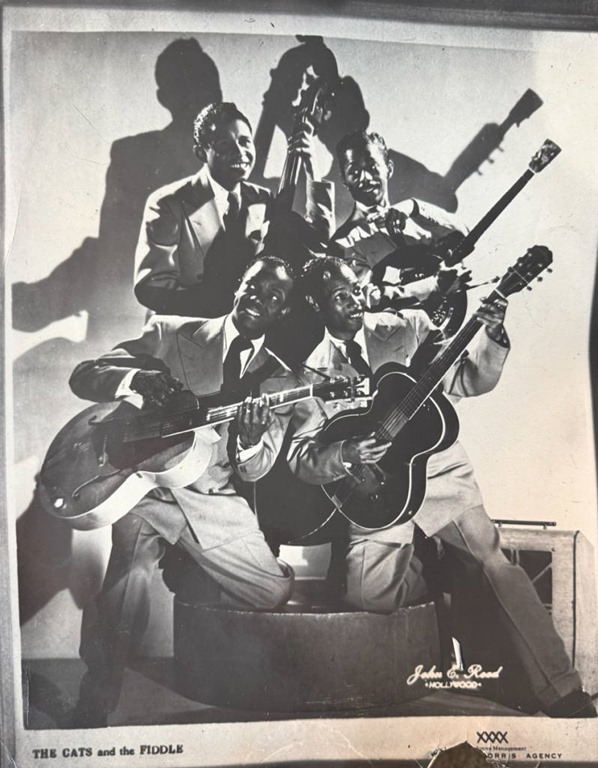

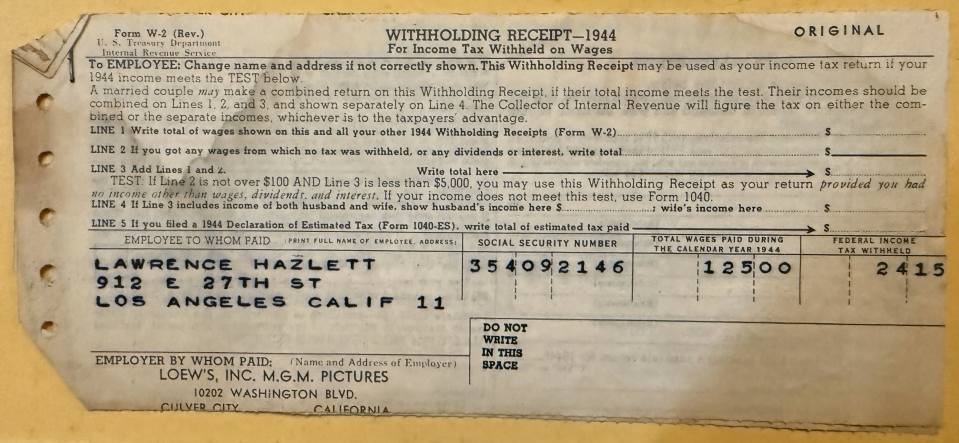


 Frank Hudson