Artists Hunting Monsters

The motto of the Parlando Project is “The Place Where Music and Words Meet,” but in practice it has been the place where music and poetry meet.  However, just as I want variety in the music used (within the limits of the musician’s talents) I don’t plan to always use poetry for the texts here. Today’s post is an example. I’m going to use a short public speech, but as I have done with poetry in other episodes, I’m going to treat the words as if they are specifically meaningful, and I’m going to treat those words as if they want to sing.

We are also continuing the investigation of artists and politics, something I’ve touched on several times already this winter.

A few days ago, a cast of actors received an award, and the actor acting as spokesmen for the cast delivered the acceptance speech. Though not entirely a political speech, it was received as one, and it was almost certainly intended to make a political point.

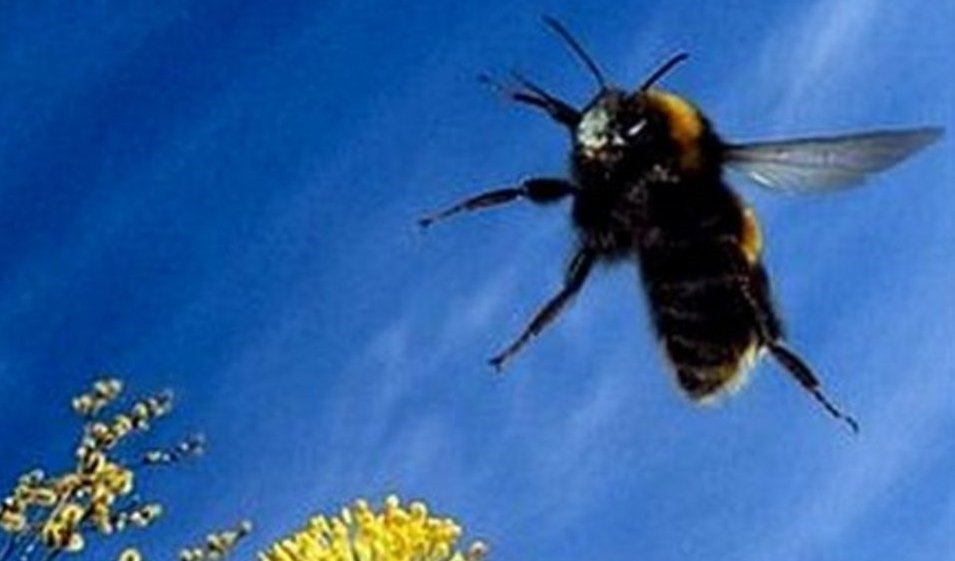
The actor, David Harbour, was speaking for the cast of a series available on Netflix called “Stranger Things.” That show is a sort of bumblebee. Like the famously un-aerodynamic bee, it shouldn’t fly, but it does.“Stranger Things” is a show that uses tropes of 1980s movies and books to tell a story set in that same decade. It should be a winking meta exercise where you spend more time noting the references than to the story itself, or a dreary “I’ve seen this one before” drama that plays as an unoriginal re-hash of ready-made plot points and incidents. Perhaps for some viewers it is one of those things, but for many viewers it’s an ingenious contradiction of all the ways it could fail, doesn’t, and instead flies.

bumblebee flying2

I read on the Internet this is supposed to work!

As an actor, Harbour was part of that levitation. In his acceptance speech, he makes a choice as doomed to fail as the concept of “Stranger Things.”  In his awards-banquet tuxedo, standing in front of an audience of actors, he gives his acceptance speech more-or-less in the person of his character, a gruff, down-on-his-heels Midwestern town sheriff.

What’s the percentages on this working? First off, actors are not their characters, often not even close. Humphrey Bogart wasn’t a grizzled tough guy, he was the son of a cardiac surgeon who grew up upper-middle class. John Wayne was a football player and son of a dirt farmer, not a cowboy or a military man. Actors themselves would know this more than anyone else. Secondly, whatever audience size “Stranger Things” has, that audience isn’t everyone. Will folks who haven’t watched “Stranger Things” get your message if it references tropes from your series?

Well, like the series, like the bumblebee, Harbour’s speech worked in the room none-the-less. You can view that short speech and the reaction here.

In turning this speech into today’s post, “Artists Hunting Monsters,” I changed a few things. First off, the video I first saw after the event did not include his prelude to the words I ended up using. In the part I didn’t have while composing, Harbour talks eloquently about his view of an artist’s role today. In editing the words I did have, sifting them down, and dressing them with music, I choose to universalize his rhetoric to the degree I could, so that even those who haven’t seen “Stranger Things” would have access the message; and in so doing, I changed things to address the role of artists in general, not only the actors that were his present audience.

I’m once more going to violate a principle I thought I would hold to here, and “explain” the text. Harbour, and my selection and recasting of his text, says that an artists’ job, an artist’s calling, is to offer succor to the disenfranchised: to show with our artifice, truth; with our play fighting, successful struggle; with our imagined detectives, the underlying monster.  It’s a call to arms for artists to pick up blunted stage-swords and to deploy magnifying metaphors against oppressive decisions, systems and persons.

How did I speak with the music? Well, I won’t be so bold as to dance about that architecture. The main melodic line is a guitar played with an Ebow, a device that drives an individual guitar string into a cycle of feedback where it sustains with increasing volume until the device is moved away from the string. As the name implies it, it can mimic the sound of a bowed instrument, but that increasing volume feedback loop takes some finesse to manage. The secondary electric guitar line that emerges about halfway into the piece is a guitar feeding back with an amplifier, an even more chaotic effect. I was playing that part live in the main tracking session with bass, drums, and keyboards and was trying to get to the feedback “spot” with the guitar, but mics and other stuff were in the way, and it wasn’t until the track was nearly over that I finally got it to howl properly. And so, I was “hunting monsters” during the main tracking session for recording this piece.

Ebow on Telecaster

This guitar D string is about to find out how bumblebees fly

Before we leave the music part, did you know that the way the bumblebee flies is the way those guitar strings vibrate?

There are still questions left to examine on the role of the arts, and more Parlando Project expressions of music meeting up with words to be posted here in the upcoming months. If you would like to be notified about these new pieces when they are posted, you can click  the little orange “RSS – Posts” icon down on the right side of this post. To hear the LYL Band perform “Artists Hunting Monsters”, use the player you should see just below.

The Day Lou Reed Died

Unlike jokes, you can explain a poem without killing it. Explanations may wound or amputate the poem a bit, but sometimes the dissection reveals things you couldn’t see before. My rule here on the Parlando project is to generally not explain the poem or the music, to let you experience it as it unfolds. But I like to break rules, so today I break this one. If you’d like to hear the The Day Lou Reed Died before the explanation, go ahead and click the gadget you’ll see at the end of this and then come back to this.

I started writing The Day Lou Reed Died on that day, exactly three years ago, but it took me about a month to come up with version you hear here. I did the music shortly after finishing the words, playing all the parts myself.

The poem takes a rhetorical stance of negation. It tells you what it thinks using the dark illumination of telling you what it doesn’t think. The first part parodies Frank O’Hara wonderful poem on Billie Holiday’s death, which is full of details of life in New York City in the high 1950’s. In that same section I remind the listener that Lou Reed was part and not part of that time, a man (like myself) a generation younger than O’Hara. Like O’Hara apparently, it was a surprise and not a surprise for me to hear of Reed’s death while planning for a social occasion. Holiday, like Reed, was known to be sick, but there was no public death watch.

The next section is a list, continuing the rhetorical negation. I start right off with saying I’m not thinking of Andy Warhol, whose connection to Lou Reed’s first band, the Velvet Underground, was something of a platinum-blond albatross around its neck. The assumption was that Warhol was the mastermind behind the Velvet Underground, which slighted the real innovators inside the band (Lou Reed and John Cale), and it allowed folks to contextualize the band, as many of Warhol’s pieces were then, as a put-on, a commercial parody of real art. As the list goes on I use the Warholian tactic of linking to a variety of commercial Andies, humorous in their inapplicableness to Lou Reed. I end the list with two unlike entries: the title of a famous avant-garde film and then “androgyny” to turn the incongruity one more time, as we might well associate Lou Reed with either.

The next section “I put on the indie rock station” starts, like the unexpected death announcement, with an actuality of the day I experienced. I expected them to be playing a lot of Lou Reed songs if not a full-fledged format change to all Lou Reed. Instead there was nothing—but so influential was the Velvet Underground to indie-rock, that as each song began I wondered if this was going to be a Lou Reed song or a cover version of one. No one put it better than Brian Eno did when he said:

The first Velvet Underground record sold only a few thousand copies, but everyone who bought a copy started a band.

This section was my way of saying the same thing, while noting that Lou Reed’s death did not get the public attention that David Bowie or Prince’s deaths a few years later did.

And the social event I was preparing for in the first section? The wedding reception for two women who had married that year after same-sex marriage became legal in my state. I try to recount the great sweep of change in my lifetime in this section. The young Lou Reed helped pioneer portrayal of gay, bi and trans people in his songs. The emergence of that portrayal in Reed’s art is a complex subject I’ll largely skip here, as it would take too long. In short, at least at first, Reed associated his gay characters with the demi-monde he sought to portray in other aspects. Like the term demi-monde I just used, this was something of a 19th century, or early 20th century way of looking at things—but I use it because those of Reed’s age (or mine) grew up in a world in which the culture and still living authority figures were from before WWI or its aftermath.

And at this reception, there were many children, grade school age and younger, and to keep them occupied there was a gymnasium dance floor and, a boombox and some rented lights. Their parents were dancing with these children, and as the swirling lights drifted over these single-digit-age dancers my mind recalled the young adult faces attending the Sixties “Exploding Plastic Inevitable” happening that was the public debut of the Velvet Underground, documented on the back cover of their first record. As much as an old man can while dancing, I figured the actuary tables on these children. Some of them may well live into the 22nd century. From a world where homosexuality was unspoken, to a world in which it was roundly denounced, “treated” and imprisoned, to a world where there is a homey, pot-luck Midwestern wedding reception, to a world I will never see or be able to predict almost 90 years from now. This is the arc of our culture and our experience of and as living artists.

1966

Exploding Plastic Inevitable

2013

Dancers in pin spots

The last section has gotten a rise out of a few people. What I wrote is somewhere between subtle and a mistake I fear. Staying with the negative rhetorical tactics I’ve used throughout the poem. I say:

As artists are inessential to art,
Art is inessential to change.
As beauty and justice pass through us,
Let us stop, and feel this
Beating through our veins.

More than one has heard those lines and missed that it’s a two-part equation. Are artists inessential to art? No, in that obviously living artists are necessary to make art. But also, yes, in that we know that art continues to have impact past the lifespan of the artist. Perhaps in that 22nd century someone will still listen to the work of Lou Reed. The second part says this artist/art comparison is equal (“as”) to art is to change. So, to the same degree that living artists are necessary to art, art also creates change; but in the passage of time in which immortality may allow art to outlive artists, that change will become something that is no longer “change” as it becomes part of everyday life.

As good an ending as “And everyone and I stopped breathing” then? Probably not, but I’m trying. And Frank O’Hara didn’t play no electric guitar.