Summer 2018 Parlando Top 10

It was an odd summer traffic-wise for the audio pieces of the Parlando Project, with listens quite slow in the first half of the season, and then picking up to the point that August listens were a near record. That increase in traffic (new listeners?) may be why we had no older, pre-summer audio pieces that made this season’s Top 10 (though one, Poetry,”  made a valiant run at it).

As we’ve done the last few Top 10 lists, we’re going to count down in trios until we get to number 1, starting with number 10.

10. Crushed Before the Moth.  The Bill James style stat-freak in me has threatened to do a poet/listener batting-average post on which writers seem to get the most and least response. Without really running the numbers, my impression is that Emily Dickinson, who like Frost and Yeats retains a general readership as well as scholarly cred, still doesn’t always hit it out of the park in listens when the audio pieces use her words.

I’m reminded here of one of my favorite bits of baseball trivia, what pair of brothers hit the most major league home runs? The true baseball fan will have many candidates to choose from. The three DiMaggios? (Dom was a very good player, and some have heard of Joe). Or the Alou trio (who once made up an entire outfield of brothers). Or Boyers, Boones or Alomars. But the answer is Hank and Tommy Aaron. Hank had 756 home runs, Tommy crushed only 13—but add it up, and the Aarons come out on top not just alphabetically.

Emily Dickinson’s sister-in-law and confidant, Susan, is not a famous poet, but she shows a bit of the same Emily Dickinson flare in her poem we used for this. Emily has that Hank Aaron level achievement, but Susan had her at bats too.


9. Seventeen Almost to Ohio.   In the several years I’ve been doing this, I still love how pieces arise obliquely as I look for material and research its context. At the end of July, I was looking for more info on Mina Loy, the fascinating Modernist whose work was forgotten for decades and now seems to be attracting increasing scholarly interest. This led me to a tape made in 1960 of Loy being interviewed about her work. The interviewer, Paul Blackburn has now entered that vale of forgottenness himself, but besides being a serious poet with a strong interest in the audio value of poetry, he was a promoter of other poets, so I naturally feel an affinity for him. The Loy interview tape has moments of interest, even though Loy seems distracted and at times uninterested in her own long-past work, and Blackburn, true to our Other Peoples’ Stories ethos, encourages her, but doesn’t fill the gaps by yapping-on himself about, well, himself—as I fear I would have done. Yet, for a minute or two, he does  do that, and this ad lib description of hitchhiking trip from his own youth was so striking I had to form it into what it sounded like to me, a beautiful little poem. It’s one of my favorite pieces from last summer as well as for the listeners here.


My Wars Are Laid Away in Books

Like side-trips? Want to read how a poet who’s fallen into the Forgottenness Zone still bumps around after being laid in books? Edie Jarolim, the teller of this tale, blogged it here — and the more extensive version of her story is here.


8. Plum Tree Blossoms on 40th Street.  The vast majority of the words used here for the audio pieces are not mine. That’s by intent. Both Dave Moore and I have written since our teens, but when I started the Parlando Project I thought that the special jump, the bridging of a gap, that occurs when you perform a piece and others listen may be intensified if the performer too is making the jump across the gap to the writer, just as they are asking the audience to do. This summer’s top 10 will violate that principle three times, probably more than it should.

A number of things I’ve written this year have focused on memory and time, and how they can be experienced in odd ways. How we can intensely experience a past event as if it’s still going on in its full dimensionality, or in “Plum Tree Blossoms on 40th Street,”   how we may fill in sensory information and intensity in remembered events long after they have happened, even though at the time they were occurring they seemed mundane. The routine of biking to school is to my son is just another day to him now, but it can be transformed into something else much later. Artists believe they can access that special intensity and meaning instantly, without nostalgia and the confining frame of memory, and that may be a necessity for their work to be created—but in another sense, what’s the hurry?

Sincerely, M. Cohen

As long-time readers here will know, the Parlando Project likes to vary what it does. Loud, immediate and approximate rock’n’roll, string quartets, folkie and electronica tinges combine with words that I look around for—different stories each time, most of them not mine.

Are we now going to vary from Bronze Age Chinese poetry collected to instruct politicians? Or from the W.H. Auden-who-can-bring-the-funk remarks of Jimi Hendrix’s ET visiting the Third Stone from the Sun and marveling at the chickens?

Well, maybe a little.

And so, we’re going to descend into parody today. Mad  magazine imprinted me on parody while young, and Weird Al Yankovic never did a thing to cure me, and here I am an old man who still can’t help making up travesty-lyrics to songs he hears, which distresses my son who likes to sing Billy Joel’s “For the Longest Time”  with his sincerely growing voice, while my questionable tenor tries to make that into a dissertation on salad vs. main-course silverware: “Fork with the Longest Tine.”

To the possible detriment of today’s piece, I didn’t choose anything as well known as one of Joel’s hits. In tryouts, just one of the folks I’ve sung today’s piece to even recalls the original song it references: Leonard Cohen’s “Famous Blue Raincoat.*”  That may say something of the fragmentary fame of Leonard Cohen in the United States. Back in the Sixties, a couple of his songs “Suzanne”  and “Bird on a Wire”  were fairly well known from cover versions, and his 21st Century song “Hallelujah”  has become even more well-known after being sung by John Cale, Jeff Buckley and Rufus Wainwright—but “Famous Blue Raincoat”  despite dozens of covers, just hasn’t penetrated the U.S. mind.**  There may be reasons for that. It doesn’t have a hooky chorus, even Leonard Cohen himself thought the lyrics were confusing, and to the degree it has an accessible plot it’s about a complicated love relationship far from the common I love her/him, or her/him has left me and I’m so sad or angry about that.***  My favorite part of the song was its uncommon ending, where it’s revealed to be a letter of sorts, signed with solemn irony “Sincerely, L. Cohen.”

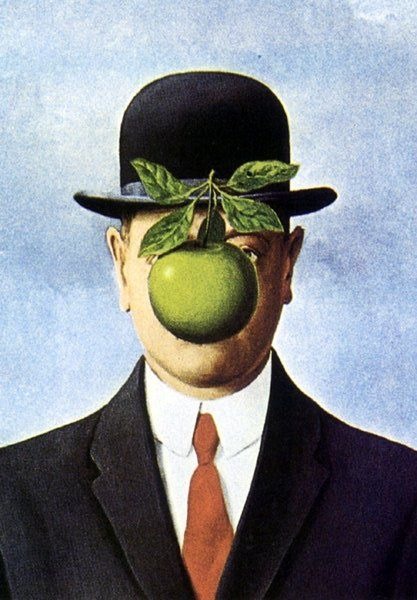
M Cohen and L Cohen

A famous orange retainer and a famous blue raincoat.


And that was the hook for today’s parody. I thought of another Cohen living in New York City, who is a principal in another messy romantic entanglement, whose feelings about it are multivalent, and whose sincerity is a changing thing. You can hear “Sincerely, M. Cohen”  using the player below.


* If you want to hear Leonard Cohen’s “Famous Blue Raincoat”  first, you can see a lyrics video here.

** Am I depending on the Parlando reader/listeners outside the US this time, and yet assuming you have any interest in juicy U.S. scandals?

*** Ever wanted a coherent reading of the Cohen song? Here’s one of the best I’ve read.

Jimi Hendrix 2018

Even though music takes half the time and focus of this project, I find myself talking about it hardly at all, which is probably unfair here “Where Music and Words Meet.” So, today I’m going to talk more about music. If that’s not your interest, I’m still going to ask you to keep reading, as beside the music nerditry, I’m going to touch on other things.

It was my first concert, and so of course it must be memorable. It was at the big amphitheater in Des Moines, a place where about two decades later Ozzy Osbourne would have a memorable encounter with a bat. I was a young teenager, it was the Sixties, and my dad was going along for the concert with me, driving the two-lane roads from our little farm town, just the two of us in the usually crowded Plymouth station wagon with fighter plane wings and sparkle-threaded upholstery that was already tearing in places. I believe he asked me if I wanted to go.

Perhaps this was meant to be a father-son bonding experience. Maybe he’d noticed that I had this somewhat solitary interest in music, but I have my doubts. I had no demonstrable musical talents, and the only music I made was singing, which I did off-key. My father had a pleasant voice—my mother said it was as good as Perry Como’s—and I had heard him singing occasional solos or leading a congregation in church. I don’t think we talked much about it before, after, or during the nearly two hour drive that day.

Like I said, he asked me if I wanted to go. I was warned, or perhaps it was a stipulation if I accepted, that the concert would be long, and I’d have to be patient.

We went to our seats, far back from the stage, and I remember the slope of the seating and our height in the building as being oddly scary to me. I couldn’t shake the feeling that if I leaned forward in my seat I might tumble over the rows in front of me all the way down to the floor hundreds of feet below.

I came to see why I’d been warned about the concert’s length. It was perhaps two to three hours long, more than twice the length of a church service. I fidgeted some, but I also wanted to listen and understand the music, a performance by a massed choir and an accumulated orchestra of Handel’s Messiah.

In 1970 Jimi Hendrix died in someone else’s flat in the early morning hours of September 18th London time, of an accidental overdose of unfamiliar sleeping pills and wine. That’s a long time ago and stories differ, but it’s likely that a contributing factor was the ignorance, intoxication, or uncaring nature of that someone else. Like Handel, Hendrix had emigrated to England in his twenties to find success there. How complicated this was for Handel I don’t know, but I can speculate a bit with Hendrix.

When David Bowie died, a good deal was made of his ability to reinvent himself as a performer and artist multiple times. Of course artists invent themselves, at least most of the good ones do, but it is rarer to do that more than once or twice. But then in our twenties, artists or not, we all invent ourselves and find some accommodation in the world that we live in. To pull that change off even once should be remarkable, though some inventions are more striking and original than others.

Jimi Hendrix didn’t invent himself into moving to London, a couple of British citizens colluded to offer this to him. At the time Hendrix was having trouble with his invention of himself as a musician. His musical ideas were developing rapidly, and he had experience with the showmanship side of entertainment, if for no other reason than a short stint working in the band behind Little Richard, one of the most outrageous performers ever to tread the boards. Putting those two things together would be an invention, one he probably intended.

Britain poured gasoline on that fire, and I’ve always found some of that gasoline offensive. How much did the sideshow “Wild Man of Borneo” exotic-negro thing figure into his rise there? I’ll refrain from judging too much. After all Hendrix’s stage show at the time was not subtle, and the scene at the time expected spectacle not so much from elaborate stage sets and technical tricks as we see today, but from human movement and actions. My personal reading is that he wanted not so much the attention his act and stage persona invoked, but the safety of that ceremonial mask that would hide the fragility of its inventor. In off-stage interviews, even in his between song-patter, that inventor, still somewhat unsure of the work, would emerge.

In less than a year he took that still forming invention back to the US: the uninhibited, no-boundaries performer combined with the flash guitarist, and it sort of worked there too after the alchemy of his London sojourn. Not everyone was convinced state-side however. Early rock critic Robert Christgau capped off an often-perceptive report from the Monterey Pop Festival with this review of Jimi Hendrix’s American debut:

Hendrix is a psychedelic Uncle Tom. Don’t believe me, believe Sam Silver of The East Village Other: “Jimi did a beautiful Spade routine.” Hendrix earned that capital S. Dressed in English fop mod, with a ruffled orange shirt and red pants that outlined his crotch to the thirtieth row, Jimi really, as Silver phrased it, “socked it to them.” Grunting and groaning on the brink of sham orgasm, he made his way through five or six almost indistinguishable songs, occasionally flicking an anteater tongue at that great crotch in the sky. He also played what everybody seems to call “heavy” guitar; in this case, that means he was loud. He was loud with his teeth and behind his back and between his legs, and in case anyone still remembered The Who, Hendrix had a capper. With his back to the audience, Hendrix humped the amplifier and jacked the guitar around his midsection, then turned and sat astride his instrument so that its neck extended like a third leg. For a few tender moments he caressed the strings. Then, in a sacrifice that couldn’t have satisfied him more than it did me, he squirted it with lighter fluid from a can held near his crotch and set the cursed thing afire. The audience scrambled for the chunks he tossed into the front rows. He had tailored a caricature to their mythic standards and apparently didn’t even overdo it a shade. The destructiveness of The Who is consistent theater, deriving directly from the group’s defiant, lower-class stance. I suppose Hendrix’s act can be seen as a consistently vulgar parody of rock theatrics, but I don’t feel I have to like it. Anyhow, he can’t sing.”

That paragraph should hang next to the reviews of John Keats’ poetry in the all-time bone-head review hall of infamy, and yet Christgau has so much honesty that he makes it available on his website to this day, along with his later opinions. But it does point out a problem, that combining extreme showmanship with musicianship is an unstable combination. Music may be inherent to humanity, but for most audiences (including most music reviewers) the eyes ace out the ears in the race to the mind.

Hendrix himself was troubled by his invention and its reception. He may have wanted the mask of the showman at first, but that need seemed to fade as he asked himself what Jimi Hendrix 2.0 should be. It may have been presumptuous for Christgau to call him a “Psychedelic Uncle Tom,” but Hendrix’s Afro-American audience was slow to build. What seemed to be the forefront of his invention, the combination of the flamboyant showmanship with striking musicianship wasn’t entirely new, even if for most white audiences of his time it had stopped with Chuck Berry, who had never risked expressing the sexuality in Hendrix’s version—but there was something else there. Hendrix was inventing modern Afro-Futurism.

In saying that I’m going to (unfairly) ignore Sun Ra, and some of the occult religions and Rosicrucian-like beliefs that preceded Hendrix. That’s a big subject, but one I’ll ignore here not just for length, but because I don’t know how much Hendrix knew of these predecessors as he developed his next invention. Hendrix was living and intermittently performing in New York in the mid-Sixties during Sun Ra’s New York residency period, so I would think Hendrix might well have known something of Sun Ra, even seen him perform, but that’s not for certain. I’ve never seen Sun Ra mentioned by Hendrix, and none of the inconsistently available Sun Ra recordings are included in Hendrix’s known record collection. It’s also a reasonable belief that more of you may be reading this because I have Jimi Hendrix in the title than Sun Ra, and that says something about Hendrix’s eventual impact compared to the incomparable Sun Ra.

It’s likely that Hendrix’s source, besides his own imagination, was Science Fiction of the Fifties and Sixties. In order to be an Afro-Futurist you have to be intrigued with the future and other worlds, worlds like the vision in that rare barely-ironic Steely Dan song that says, “Any world that I’m welcome to, is better than the one that I came from.” Unlike Sun Ra or later Afro-Futurists, Hendrix didn’t express this vision with costumes; or with meaningful stage props as George Clinton would. Instead he expressed it with his least understood and appreciated talent, as a songwriter and lyricist—and that’s why Hendrix’s Afro-Futurism could be news to you, decades after his death. The cult of “Jimi Hendrix, the greatest rock guitarist ever” has a side-effect, it obscured his lyrics, which were often buried in the mix per Hendrix’s wishes (he shared Christgau’s opinion of his own singing voice).

What if James Marshall (Jimi) Hendrix had expressed his SciFi interests with an electric typewriter instead of an electric guitar?
Here the LYL Band unmasks Hendrix’s lyrics to a song from his first LP.

One obsession in the Cult of Jimi is the question of “What would have happened if he had survived the night of misadventure 48 years ago?” He could have become a mid-level act beloved by other electric guitarists or those who appreciate musical originality like unto Jeff Beck, or he could have easily succumbed to the Seventies’ decent into poly-drug abuse and contractual obligation albums hammered out between hits on the pipe. Many guitar-nerds see Hendrix moving to the jazz-fusion genre that was forming at the time of his death, and speak longingly of the collaborations with Miles Davis and Gill Evans that were being mooted in 1970. But on the evidence of his last recordings, he seemed to be doubling down on the Afro-Futurism with his great lost album First Rays of the New Rising Sun.

Last night I watched Black Panther  with my son, who had seen it on release and who wanted to show the movie to me. During the scene near the end, when the two warring kings are watching the sun over Wakanda my own soundtrack in the back of my head was still playing Hendrix’s New Rising Sun.

More than fifty years after taking the drive to Des Moines to see Handel’s Messiah, I was visiting London and went to Mayfair and a block of flats there. You enter and pay your admission at a desk in a somewhat cramped entryway, but upstairs is the expansive apartment that George Frideric Handel used as his home as well as his composition and rehearsal studio in the 18th Century.

And further on, you come into a second, smaller 20th Century apartment, decorated in a way I could remember from my youth, with inexpensive gee-gaws and accessories, a hi-fi given its special place, a home altar to the music it played.

This is the place Hendrix lived in for a little over a year while based out of London, the place that must have been even more precious to him that it does to any visitor grasping at their nostalgia for “Swinging London.” Many of you have a place like that in your own memories. Your first apartment, or the first place you lived in with a partner, that place where you invented yourself, or some first version of yourself. But Hendrix had an extraordinarily unsettled childhood, passed from relative to relative, a half a step from foster homes, maybe a single step from homelessness. He’d washed out of the army, couch-surfed a life as an unnoticed musician. Not only was this his first place of his own, it may have been a first candidate for “home” in his life, perhaps the only such place.

As it turned out, being an Afro-American big-deal in the small world of Sixties pop music could not supply that home, but his lyrics and the Afro-Futurism that he helped engender are rich with the dreams and visions of it.

Cold Is the North Wind, and Why Did Confucius Collect a Book of Songs Anyway?

Here’s one more musical piece from the anthology of ancient Chinese poetry collected by Confucius and his school and known as the Confucian Odes  or The Book of Songs.

This one may be my favorite, though my performance of it dates to a time before I could find literal translations to check against the extant English ones. Perhaps even more so than our last piece, “Wild Plums,”  this presents itself as an expression of lover’s desire. You might find it similar to the Bible’s Song of Songs in that regard.

When I was young and looked at commentary on the Song of Songs,  I was surprised to find that some scholars believed it to be a spiritual metaphor rather than some too-hot-for-school love poetry. My take then: those scholars must be prudes.

With the Confucian Odes,  remember that the Confucians thought their collection of folk-poetry was not just a piece of cultural curation, but required reading for advanced participation in society—not just for poets or humanities majors, but also for politicians and bureaucrats, a class the Chinese Empire needed a great many of. There is commentary on “Cold Is the North Wind”  that says then that this song expresses a hardship or grievance experienced by some province or another, or that the lover’s desire is a metaphor for political concern. After you listen to “Cold Is the North Wind”  you may think that must be willfully obtuse. “What part of the ‘I’m lonely, it’s cold in this bed alone, and I want you right here, don’t they get?” you might be thinking.

In both cases, the Song of Songs  and “Cold Is the North Wind,”  I’ve come to a slightly different view. Poetry, sometimes when it’s at its best, binds the image and what it’s representing in a way that doesn’t privilege one over the other. William Carlos Williams’ Red Wheelbarrow  isn’t some symbol which we need to decode as a handy emoji for the usefulness of tools in ordinary work, and “Aha! We’ve solved the poetry puzzle for today!” it’s also a freaking red wheelbarrow in a chickenyard and it’s wet with rain in a way we can feel and see if we allow that. Separated lovers are separated lovers, and their ache we can feel, but that ache specific to that need and pleasure is something we can feel again in other intensities. And that act of listening to these words (or listening to them on the page) binds us to the poem in the way the poet binds the image to the things the image is like.

There’s something there for future bureaucrats and politicians.

There was a time, also in my youth, when we thought songs might be able to do that. Someone who listened to Bob Dylan, Aretha Franklin, John Coltrane, Patti Smith, or other Smiths and Jones would be changed not necessarily into record store clerks or musicians but into more empathetic people whose imaginations would be wider than the immediate space around them. To what degree were we wrong? One provisional answer: “not entirely.”

Chinese Throne

“So, I’m writing this tweet. What makes the best metaphor: low IQ, sick, ugly, dumb, dog, failing or FAKE? I’m a genius myself, but poetry is an elite WITCH HUNT, and I could use a little help casting this spell. What, you can use poetry to listen, not just to speak good?”

If there was a modern Confucian school sitting somewhere in the English-speaking world, what would they collect to instruct future government members and business functionaries?

The player to listen to my performance of “Cold Is the North Wind”  is below. If you’ve been checking out the archives of over 250 other combinations of various words and original music on the right, you might notice that “Cold Is the North Wind”  appeared here several years back, before the official launch of this blog. With today’s post, it will now be available to those that follow the audio pieces via Apple Podcasts, or through other podcast services.

Does the way you view this blog not show the player? Well, then this highlighted hyperlink can play the performance.

Wild Plums

Is love enough in dealing with matters of translation? I want to talk a bit about some issues with this, and while it may start out sounding esoteric, stay with me, I’ll end up as immediate as anything.

I’ve presented Chinese poetry here before. Collected classical Chinese poetry goes back to around the 10th Century BC, materials gathered from an oral tradition around 700 BC and written down by Confucius or his school, and also a later golden age in the 8th Century AD for literary Chinese poetry. In Western terms, that’s from the time of the Bronze Age Trojan War to the time of Homer to the European Dark Ages.

If you enjoy thinking about large amounts of time, consider those dates again, that’s 1,800 years between the time of the oldest Confucian Odes  (or the Book of Songs  as it is often called), and the time of Du Fu and Li Bai, and then over 1,200 years until now, a total of 3,000 years—enough time to get through that bookshelf of books I’ve put off reading to do this project. Or if you’re a listener and want to relate this to the oral culture of the Modern or the Bronze ages, in that 3,000 years span you could listen to every one of the 20 million tracks on Spotify 26 times each and still have time to go for a night walk in the country while trying and failing to count the stars.

Let us contemplate the differences inherent in that much time. How different was the culture of Du Fu’s time or his anonymous predecessors who sang the Book of Songs  before it was a book? I can’t even begin to compress those differences into a short post.

We sometimes speak about unchanging “human nature” when talking about such a great divide of time and place—and yet, then we turn the page (or flip to a new browser tab) and read about how technology and social changes may have significantly altered how humanity works in a decade or two. How much differently did a poet or a listener/reader evaluate, create, and experience poems then, compared to now?

Both of those conclusions could be true (essential, retained, human nature elements and change that is not slowing in velocity), each moving from opposite edges of the human experience in proportions hard to measure objectively from inside it.

Into this gap steps the translator (and in our case here, also the performer) who seeks to render the written record of these poems from a place so far away in time that great geographical distances seem minor. The task of translating a hundred-year-old poem from French to English is difficult enough—but this?

Should there be any surprise that many of these translations will seem inaccurate and differ significantly between themselves in their approximations, or that areas that would be understood by the poet or their more contemporary readers remain mysterious?

Greater scholarship and cultural knowledge than mine may help in these approximate efforts at translation and performance, but even then, one should understand the difficulties and likelihood of success. And yet I do it. I want to try to grasp this, however imperfectly, not because I am Du Fu, or his nearest like extant, but because his story is different.

I promised I’d eventually get immediate. Here’s the first level of the now: think of the occurrences in our times where a choice to use, perform, or even experience cultural expressions of our contemporaries will draw condemnation on the grounds of cultural appropriation, non-identical background tone-deafness, or of just plain laughable or painful ignorance on the part of the artist (that last often two sides of the same flaw).

Some of these are very practical objections. In financial (as opposed to artistic realms) cultural appropriation impacts people’s livelihoods. Yet there’s no Du Fu or other 8th Century Chinese man to perform his work with a closer understanding today. And Du Fu himself, as a neo-Confucian, probably realized that his appropriation of Confucius’ literary appropriation of the oral tradition Book of Songs  material would be different and inexact in his own way.

Even if we’re necessarily failing, creating in our errors a cultural “telephone game,*” if we do this humbly and with respect for our forebearers, ancient or contemporary, I believe it’s honorable work.

Wild Plums

Wild plums my wife found along the Mesabi Trail, leading me to today’s piece


Here’s a second here and now: I mentioned I was re-reading some translations of the Confucian Odes  because my wife sent me a copy of one of those poems in translation, the one I’ve reworked into today’s piece which I call “Wild Plums.”  This was a gift of love I received in gratitude—even if the composer/performer-with-a-pedantic-streak part of me wanted to know who translated it, and if I could find a literal raw translation for another perspective on the work.** And here I found this, which indicates that it was not intended originally in Chinese in the way the translation presents it in English. My guess is that the translator loved the word music they found in it, that repetition of the line “the plums are falling ,” and this lured them away from the original meaning.

As best the literal translation I linked above can transfer an original meaning to me, the woman who speaks in it is either claiming that she has so many suitors that a successful one will need to up his game to make the cut (a Bronze Age “No Scrubs”) or it’s a portrayal of an eligible woman who is being too picky about a husband and has driven suitable mates off.

So, the poem that my wife sent me is probably not accurately translated, and yet it expresses something that was engendered in the translator by it, and by the caroms of life that bounced off my wife and to me. And that poem’s yearning, and the music of it in English has its own beauty, like the love that brought it to me.

And so that is what I adapted and performed. I’ve even added some additional refrains to further emphasize the musicality of the piece. To listen to the LYL Band’s musical version of this very old poem in it’s more romantic guise, use the player below.


*Also called “Chinese whispers,” unintentionally helping me make my point.

**That my wife is willing to tolerate this dreadful mix of traits is one of her charms, she even found and sent the less romantic literal translation as well.

(footnotes because I love My Year in 1918 using them)

Jade Flower Palace

National news and household events continually waylay my attention. Dejected gutters, palace intrigues throwing glances on complicated and duplicitous political alliances, and a middle-schooler with the sniffles—how can one weigh these things against this small but welcomed audience here for music combined with (mostly) poetry?

And so, I found myself short of material as I got ready to record with the LYL Band this week, a problem that the domestic, the national, and the poetic world combined to answer.

My wife had sent me a poem from the Confucian Odes  recently, a loving gesture gratefully received, and as beautiful as it was, I wondered about the poem and its English translation because of my work here. As the news sticks its tongue out at me with screen-edge notifications (mutterings about the Emperor and his possible private derangement issuing from the far-off capitol) I read again some of those Confucian Odes,  an ancient anthology designed to instruct not just scholars or poets, but politicians and bureaucrats.

What an odd idea. I suppose distributive requirements in American colleges still require some exposure to literature for those who will eventually serve in those roles, but this anthology was considered core material in Imperial China. And the Confucian Odes  are not grand works of moral or civic uplift, rather they are compressed, tiny reports of humble activities, decisions, and situations. They sometimes imply or depict correct behavior, but they don’t explicitly end with a moral. Their lesson may be, in the largest part, that the reader must study them and find the lesson in the everyday.

How different would our emperor or his retainers be if this was their schooling?

One collection I read mixed in later classical Chinese poems with some of the Odes.  It was here that once more I was pulled in by Du Fu, one of those aspiring bureaucrats who was steeped in those odes, but who lived centuries later at a time his country was in rebellion and upheaval. The Confucian ethos elevates faithful service, but who was to be served was shifting with the tide of rebellion. Reading Du Fu’s poems from the 8th Century as a small-part-citizen witnessing an empire disrupted in folly can have eerie resonances.

Late Thursday night, worried about material to record the next day, I began to translate Du Fu’s “Jade Flower Palace.”

Du Fu and his Memes

If time is boustrophedon, wrapping back next to itself, then Du Fu may still be with us.


I could not find a clean literal translation of the original ideograms for the entire poem, only for about half the lines. I was able to find three previous English translations, which I could at least triangulate for the parts I didn’t have the raw stuff for.

Looking at what I had, I noticed that Du Fu was making constant juxtapositions, comparisons of contrast. Even the opening lines had water pushing and wind sighing and reflecting. That seems conventional, even a commonplace like “oh no, the wind and rain” in an English folk ballad, but it’s followed by a jump to rodents running through a roof, so close to a translation of the English idiom “bats in the belfry.” I decided to take Du Fu as intentional here. Events may seem to push you, or you may sigh and accept them, but “Rats are running in the rafters.” The ruin is real, and for that matter, your mind may reflect that too.

What follows is partOzymandias  without Shelly’s political radicalism, and part ghost story. A ruined palace, once as lush as Mar-a-Lago, haunted by ghosts. I was puzzled by the “green ghost fires” referred to in this section, what with my limited knowledge of Chinese culture. Those three words are wonderous, but I still don’t know exactly what Du Fu is describing. Are there actual fires, lit as protection from ghosts (akin to the tradition of ghost lights in theaters)? Why green? Is it brightly colored moss or overgrowth in the ruins? Is Du Fu seeing luminous ghosts (instead of hearing them as he does later in the poem)? I can’t tell. Looking at some online material on Chinese ghosts, I see that this end of August/beginning of September period is sometimes celebrated as “ghost month” in China, and various things are done both to connect with or protect oneself from various spirits. Offerings, such as burning a pile of currency may be left out. I have no idea if that goes back to Du Fu’s time, but in our current world, the thought of a burning pile of greenbacks to keep one safe from long dead rich people sure seems like a vivid image. And water is running over the palace’s roadways. Just what is the sea level of Mar-a-Lago if global warming isn’t only a political question?

Green Ghost Fires

“Green ghost fires” The “ghost light” on the dark Fitzgerald Theater stage and money being burned as part of the Chinese Ghost Festival


As you listen to “Jade Flower Palace”  perhaps you’ll want to pay notice to Du Fu’s subtle use of juxtapositions. More so than the other translations I read, I sought to bring those forward in mine. Translators seem to differ on Du Fu’s final lines, and that was a part where I didn’t have a literal translation to draw from. As midnight approached, I left two alternatives for my decision of what the final line should be to follow “There are many paths away from here.” It could be “How long are any of them?” or “None of them go on forever.” In the morning I decided that I would keep both, another juxtaposition.

In the performance on Friday I used this as our band warm up, where we loosen up our old and demented fingers, a cold first take. I repeated the first two lines once more at the end both to emphasize that they should be heard as more than commonplaces, and as a reminder (to invert a proverb of mysterious origin) that history isn’t necessarily instructed by rhyme, but repeats.

To hear the LYL Band perform Du Fu’s “Jade Flower Palace,”  use the player below.

The Temple of Summer

I spent Saturday riding my bicycle on the Mesabi Trail and visiting Hibbing, the Minnesota Iron Range hometown where Bob Dylan grew up non-ferrous.

To the visitor, the landscape there has a strangeness. Since the late 19th Century, open pit iron mining has been the industry of the region. An open pit mine is not the kind of underground tunneling and mole-dark pick-axe work you might visualize when you hear the word “mine.” Instead it is the removal of cubic miles of earth with explosives and huge shovels, work my wife describes as “making your own Grand Canyon.” The iron gives exposed rock and dirt a Martian red hue, and this colossal earthwork of generations of open pit mines has added extra hills, ridges, gorges, and small lakes. Though trees and brush eventually regrow and give these acts of men something of the appearance of nature, some hills retain the terraces where the trucks drove, giant Northern ziggurats or Mayan temples, now sprouted with pines—the Hanging Gardens of Bob Dylan.

postcard mesabi iron range

“Making your own Grand Canyon”


Since Bob Dylan grew up here, the strangeness of this landscape may not have impressed him in his youth, but an adulthood away might have eventually revealed its uniqueness. It is a singular place on a Labor Day weekend where one can see the mark of daily labor sculpted in a giant tableau.

How many of us can say the same for our labors? Children are raised, daily cares are met, that meeting makes a decision, a sick person is comforted and will live another couple of decades, the number of widgets on the planet increases infinitesimally, a project that will impact things for a few years is completed. In contrast, in the land around Hibbing, Virginia, and Mountain Iron, vistas are forever altered to mark a work life.

Virginia MN Bridge view

A view from the highest bridge in Minnesota spanning part of a no longer active open pit mine now filled with water outside the town of Virginia. The landscape you are viewing is man-made, not a natural feature.


An artist’s work, for all the literary pretentions to immortality, is at least as ephemeral as other work. The work is finished, and the earth has not changed its face. The work is read, seen, heard by its handful, and it melds at best into a memory in some part of those.

So, punch a clock or not, these are the same jobs, the same work. The poem, the performance, the painting, no less, no more, the product effort of applied human energy as any other work.

Occasionally, someone gets to be a Bob Dylan, and the vistas change. Leonard Cohen said that giving Bob Dylan a Nobel Prize is like pinning a medal on Mount Everest for being the highest mountain. I stood next to my bike on the state’s highest bridge spanning a man-made gorge and thought, maybe somehow, even subconsciously, this landscape gave Bob the idea.

Iron Range Truck

“Cruising down the highway in a Greyhound bus/All kinds of children they was hollerin’ at us…”


Today’s audio piece will not remind you of the Bard of Hibbing, as it is a fuzzy epitaph using Mellotron instead of giant earth-moving trucks to get its rocks off me. Here’s wishing all Parlando Project listeners a lanquid fall into the fluffiest possible snowbank. As you exit the Temple of Summer, listening to the music using the player below, I remind you that the Parlando Project appreciates your attention, but still needs listeners and readers. If you can, let others know what we’re doing here, and if you’re new to us, you may want to check out our archives with 250 other audio pieces combining various words with original music.

Gone, Gone Again

Let’s return to sing the poetry of a man who’s far better known in Great Britain than in the United States, Edward Thomas. Thomas had a remarkably short run as a poet, only writing verse for about two years after befriending and sharing thoughts about writing and the observation of the countryside with Robert Frost during the latter’s stay in England just before WWI.

Thomas was no longer young when he started writing poetry, and he had scratched out a living as a freelance writer for several years before he met Frost. None-the-less, two years is a very short time to develop as a poet, and today’s piece “Gone, Gone Again”  may show some rougher places commensurate with a poet who hasn’t fully developed his game.

As I worked with “Gone, Gone Again” as an audio piece with music, some of its odd poetic faults continued to jab at me, but as is sometimes the case with the Parlando Project, I grew to appreciate the poem and Thomas’ unique read on time and life more fully from the effort spent with it.

The poem’s meter is awkward and uneven, the rhyme unpredictable. A casual reader could hear it as doggerel. As the poem reaches its conclusion, with the only perfectly rhymed quatrain in the piece, the sentence seems twisted in order to make the rhymes.

How much of this is intended and how much of this is a beginner struggling with the verse? Who can say. From working with it, I think the rhyme scheme that refuses to be—well, a scheme—is likely intended. It does keep you off balance, but I think it’s effective. The meter with its odd steps, is likely just as intentional, though I’m still not sure it works as well for the performer or listener. Even in the performance you’ll hear today I didn’t reproduce Thomas’ text correctly, rounding off a few of the rough spots, and revising the last line of the fifth verse. Another musician who has worked with a great many poems, including a number by Thomas, gracefully manages to sing this poem unaltered, though I’m now somewhat attached to my “mistaken” changed line.

grass gowing inside 3

Thomas wrote “Grass growing instead” which would be consistent with a house abandoned an unknown time ago, but I sang “Grass growing inside,” which while a strong image determines it for long ago.


What then comes from repeated readings, or from the time I had to spend with this poem in order to turn it into a song? Thomas is playing with time. He starts off with a common trope: and end of summer poem. How many of us are having this same thought, “Where did the summer go?” Almost as if he’s leaving his own critical note, Thomas’ second stanza says right out, “Not memorable.”

And then he adds: “Save I saw them go.” Already, the poem starts its turn into a poem about survivor’s guilt.

In the next verse, we’ve gone from a ballad stanza style rhyme scheme, to a verse that starts with a rhymed couplet, followed by an unrhymed couplet. You really feel the lack of rhyme every time you sing or say “The Blenheim oranges/Fall grubby from the trees.” The curious pendant in me had to find out what a Blenheim orange is. It can’t be an orange, can it? As the sentry in Monty Python’s Holy Grail  reminds us: “Found them? In Mercia? The coconut (like the orange) is tropical! This is a temperate zone.”

The Blenheim orange is instead an English apple variety. Blenheim orange is a flavorful name though. It’s even an alternate title under which the poem is sometimes published. Assuming intention, Thomas may have chosen it not just because the apple is named the same as an imposing palace in Oxfordshire, but because the palace, and presumably the name of the apple as well, comes from a battle that was already 200 years ago when Thomas wrote his poem, a key engagement in the European War of Spanish Succession.

This may be too subtle by half, a College Bowl or Jeopardy-level question about history that almost everyone in the audience will miss.

Here’s where the play with time part returns. The poem next visits an abandoned house site, a trope that Thomas’ friend Robert Frost would go to more than once in his own rural poems.

Thomas is writing his poem in the context of WWI. During his entire poetic practice, he was grappling with the question if he, nearing 40 years old, should volunteer for battle service in WWI. He’s considering this well past any illusions of a grand battle adventure. He’s well aware that modern warfare has turned technology into an efficient killing machine, in his disconcertingly brutal phrase, turning “young men to dung.”

How long as this house been abandoned? Since the war of Spanish Succession? Since the outbreak of WWI (which might be the cause that river barge traffic is absent and those apples falling unpicked)?

Here the poem completes its turn: a compressed meditation on the losses of the cycle of life with or without the fortunes of war, four warm months started us off, May to August; now life is four as well “Youth, love, age, and pain.”

Thomas’ conclusion is stoic, fatalistic. The final verse’s schoolboys are a rich image, at once nihilistic vandals and the reduction of reason and textbook learning to emptiness. In Thomas’ time, WWI has broken the world, and he eventually decides that the call of duty, however irrational, is the only way to take part in the mending and solace of tradition.

I talk-sing this for the most part, but it’s a fairly full orchestration that I mixed in the background of the acoustic guitar/folk music song I wrote for this. The strings are quiet, but I let an oboe, trumpets and a fluegelhorn come a bit forward at times. The virtual instrument versions of brass instruments don’t sound as authentic as strings and keyboard virtual instruments do, but I wanted a bit of that flavor in there anyway. To listen to “Gone, Gone Again (The Blenheim Oranges)”  use the player below.

One Summer Morning, Which Isn’t

Here’s an audio piece that begins in the midst of a common life event: when a son leaves home to go off on his own independence. While this leave-taking could be for a job, or for military or other service, in the modern world, it might well be for college.

Other than its late summertime setting, and the odd moment when the son in this story is thinking of something he’s read in a book as much as what his father is saying as he leaves, there’s nothing in it that indicates the child is leaving for school. Perhaps the son (or the reader) at the start thinks that such a leave-taking will be the story of “One Summer Morning, Which Isn’t,”  but eventually things open to a broader story.

Many who read an earlier version of this were puzzled by the title. “Why isn’t it,  that, one summer morning?” they ask. I once revised the title to answer the puzzlement, but today’s version instead revises the text of the piece to try to better convey what I wanted to get at under its original title. Even that first morning in the opening is seen from two very different perspectives, and as the story expands I try to show that leaving-takings are, strangely, always present, they are not only a moment or a single day. Am I successful in that effort? I’m not sure. It’s gone through some revisions over six years, and by now I’m not even sure it’s a poem, or if it isn’t more of a compressed short story. Well, the new draft is done, and it’s ready for you to hear it performed.

Jaguar for Surfing Sounds

Listen! Gidget, Listen! You hear the grating roar
Of pebbles which the waves draw back, and fling
At their return, up the high strand,
Begin, and cease, and then again begin,
With tremulous cadence slow, and bring
The eternal note of sadness in.
Matthew “Hodaddy” Arnold


Today’s music is fairly spare: electric guitar, bass, and drums. Yes, that bass line, close but not identical, is meant to remind you of another piece of music, back before Steely Dan. The electric guitar is an inexpensive version of the Fender Jaguar. Just before the 4 minute mark on the track, that weird high wind-chimey sound is something available from its design: notes that can be plucked on the strings between the bridge and the tailpiece. I was reminded of this trick while listening in a car ride with my son when an old Sonic Youth track came on the radio earlier this month.

To hear “One Summer Morning, Which Isn’t,”  use the player below.

Leonard Bernstein’s 100th

Just a few words here to note this. I am not a studied musician or composer, and I’m not even passionately drawn to Bernstein’s own work in these areas. Why I pause to mention him has more to do with the particular role he took in introducing composition to young people of my generation.

He did this both with live events (most of which were in cities far from my little rural farm town) and with broadcast shows. He’s the first person who presented himself in greys between rolling bar-lines on my rounded TV screen telling me that actual human beings created these imposing orchestra pieces, and not only that, there were human beings from my own country who did that, and even more strangely, living people who still did this.

Why should this have been news? I don’t know for sure. And is that still news, information not yet widely known? I can’t say. But Leonard Bernstein did let me know that, sitting on the the floor of my mid-century childhood’s home. I can still recall him introducing American Modernist Charles Ives’ music to me, so many years ago.

Here’s an hour-long TV broadcast from over 50 years ago with Bernstein presenting Ives and his music.

I believe this is the program where I first heard Ives


If you’d like just a taste on how Bernstein introduced Ives, here’s a slightly later talk that is only a couple of minutes long


Bernstein links Ives words and music together in his explanation.