March 2018 Parlando Top 10 Part 3

We return with the next three in the count-down of the most listened to and liked audio pieces of last Winter. Like last time, all poets who worked in the 19th Century, but in this group, all men.

Two out of the three today are from the British Isles. In may be no surprise, given its head start in English literature, that Britain is an outsized contributor both in words to be used and the Parlando Project’s reader/listenership.

I’ll be taking my second, short low-budget trip to London this month, and I’m frankly not sure what I will find this time, other than planning a side-trip to Margate to see the Turner art museum there and its small exhibition commemorating Eliot’s “The Wasteland” which was partially written in Margate. I’ll no doubt re-visit the Blake room at the V&A, and who knows, maybe I should try to find that alley beside the Savoy Hotel?

JMW Turner Waves Breaking on a Lee Shore at Margate

The London forecast calls for rain, hopefully not JMW Turner stormy though!

4. Ring out Wild Bells

When I posted this for New Year’s I noted Tennyson’s level of fame when alive, something that even the most popular Instagram poet cannot reach now. What I found out afterward was even more intriguing, that this section of his long poem “In Memoriam A.H. H.”  has become a tradition in Sweden to be read at the turn of the year, sort of how the Times Square ball-drop is ceremoniously repeated in New York, or how Guy Lombardo would once appear with his Royal Canadians near the top of the hour on TV to play a Scottish tune.

As evidence of Tennyson’s fame, I noted that my little Iowa hometown had a major street named for him when it was platted back in the 19th Century. Eventually the town and it surrounding farms were settled largely by Swedish immigrants. The Tennyson and bell-ringing tradition in Sweden started in 1927, long after the town was founded and settled, but wouldn’t it have been good in the town’s heyday if the farmers, shopkeepers, and schoolchildren had gathered on the sides of the street on New Years Eve to hear a poem?

Instagram poets get knocked for the shortness of their verse and it’s focus more on remediation than demonstrating literary skill. Tennyson built “In Memoriam”  into a book length series of poems, but his focus too was on remediation, in his case, of grief.


3. The Wild Swans at Coole

Yeats was Irish, and for decades I’ve met monthly with a group of poets the majority of whom were Irish-Americans. Yeats seems to have seamlessly transported himself between the 19th and 20th Centuries, changing so smoothly that he could not be observed changing. Somewhere around the turn of those centuries he decided that poetry should be chanted (not sung) to music, and yet we seem to know little about how exactly that sounded. Contemporary reports (and that’s what we have, there are no recordings I’m aware of) were decidedly mixed, even derisive, and Yeats eventually set that quest aside. The recordings of Yeats reading that we do have are from decades later, and in them there may still be traces of that concept audible in his, by then unaccompanied, reading style.

Yeats warns listeners that his chant may not necessarily enchant.

Reports also tell us that Yeats suffered from a difficulty carrying a tune, much as I do. His chanted, not sung, idea did not come from that he tells us, rather it came because conventional art song had too much ornament and melodic elaboration, deducting from the inherent music in the words.

In the course of the Parlando Project I take various stabs at what Yeats was trying to do, recreation in the literal sense, trying to create from the ancient and natural connection between music and poetry some combination that doesn’t privilege one over the other. Sometimes it’s spoken word, sometimes it’s “talk-singing,” and sometimes I think it necessary to sing.

I avoid apologizing for my musical shortcomings. It never mitigates anything anyway, and I’ve always found the humble-brag distasteful. I’ve hesitated at—and decided against—releasing performances most often because of failures of my singing voice. This performance came close to staying in the can. At times it works, not from my skills, but because there’s a certain match in the failings in the voice and the meaning of the poem.


2. My Childhood Home I See Again

One last 19th Century poet, an American. Long-time readers here will know that US President George Washington’s teenage love poem “Frances”  has been a surprisingly persistent “hit” with listeners here. It didn’t make the Top 10 this season, but we now have another Presidential/Poetical contender in Abraham Lincoln. If Washington was all youthful alt-rock persistence, Lincoln is more goth, with a downcast you-can’t-go-home-again tale of all he finds missing when he re-visits his hometown in his thirties.

Lincoln’s “My Childhood Home I See Again”  was very close to the popularity of the Number 1 this season. If didn’t count the substantial Spotify plays the Number 1 received, Lincoln would have topped this season’s list.

I posted this for what was once a common U.S. holiday, Lincoln’s Birthday. Also on this season’s Top 10 are the Tennyson New Year’s post and Rossetti’s Christmas song posted on Christmas Eve. Not sure if this is a trend, but listeners did like the holiday poems this winter.


Tomorrow, the most popular audio piece.

March 2018 Parlando Top 10 Part 2

An artist named Linnea Hadaway made a book earlier this year. It had no words in it. She said it had no words because it was about listening.

Today is International Women’s Day, an arbitrary thing like all special days, months and years. I can hear some grumbling off in the distance as some read this: “Another one of those special-interest things. I go to poetry and music to get away from that faddish nonsense.” There’s consistency in that opinion: if one is upset at “identity politics,” dividing the world in halves is just as deplorable as dividing it into tenths or smaller.

Are there dangers in division? There certainly are. But I don’t see these sorts of things as division, but as requesting attention—and attention is what art, and this Parlando Project is about. You see, life is incarcerated in the ultimate special interest group, the ultimate identity, political and otherwise: our own selves. Breaking the cellular barrier to spill our selves, or enticing us into opening a tiny pore to stare across at the skin holding another self inside another world, the still unexplored world we share, is the whole of art.

There is no apportionment so small as to be smaller than that. There is no way out but the way of art, to pay attention. Our ears cannot see, they can only listen.

No planning in this, but the next three audio pieces in our Top 10 count-down of the most liked and listened to pieces this past winter use words written by women.

Carrington 3

Surrealist Leonora Carrington captures the Parlando Project recording another audio piece


7. We Grow Accustomed to the Dark

I think I’ve used more Emily Dickinson pieces for words here than any other writer. I didn’t plan it that way. I’m not sure that Dickinson planned it that way either. Obviously, she meant what she did, assiduously creating and collating the more than a thousand short and engagingly enigmatic poems that we now see as a cornerstone of American poetry.

But as a careerist she’s a mess. She showed some of her work to friends and family, but like most friends and family they probably saw them as artifacts of the ordinary Emily, that stubborn particular. Perhaps they understood or didn’t understand her poems better than we do; but we, her current readers, believe it’s the later.

She had a lucky break with Thomas Wentworth Higginson, the critic and social activist who answered her letter and saw something there. Even in the intellectual ferment of Transcendentalist New England, how many would have? The posthumous publication he shepherded, made possible the Dickinson we have today. But did he understand her art? We, as posterity, think otherwise.

So, like the woman in “We Grow Accustomed to the Dark”  Dickinson pressed on, walking, almost straight, and like the bravest, aware that the comedy of striding face-first into a tree was possible.


The Emily DIckinson Internal Difference

I was there! What a concert! The music was good too.

6. A Certain Slant of Light

I didn’t think about this while writing the music for and performing “A Certain Slant of Light”  and “We Grow Accustomed to the Dark,”  but these two Emily Dickinson poems are companion pieces. The Dark poem is more clear, even comedic, the Light poem more mysterious.

In my original post I decided to not talk about what I think the poem means. In some ways, I think that’s true to the poem’s “Where the Meanings, are.” I had fun with the mock psychedelic rock poster I created to illustrate it, but I think the core experience of the poem is the same that some were seduced into having by ingesting drugs, the insight that the universe’s meaning may be unknowable and its substitute only available by fiat.

Cure the cod-sitar sounds, and stereotyped sparkle-eyed hippie whooshing “Oh, Wow!” Of course, we must laugh. This is an insight available even to the young that can apparently be induced by mere intoxication.

But it’s true. It may be easier to see the borders of truth if one comes upon it without chemical aids; but even true, it’s an insight that’s hard to integrate into an active life and compassion. Dickinson integrated it with these little packets of poems. “None may teach it,” she says, but I can let you see my experience of it.


5. In the Bleak Midwinter

And one slot higher in the countdown, a woman who isn’t Dickinson, but is roughly her contemporary, English poet Christina Rossetti. Her’s is a Christmas and Christian poem, faith is her fiat; and a shaped and received story is her poems plot.

As this post talks about division, opposites—and how, if one distrusts them, one must cross them, sometimes listening, rather than shouting at them to come down—“In the Bleak Midwinter”  is all about divisions and opposites, and where they fail to hold.

In the moment of Rossetti’s beautiful song, even if earth is iron and water stone, heaven cannot contain God, nor can the earth sustain winter or meagre poverty.

I remember someone asking one of the earnest folk-singers of my generation (alas, I can’t remember who) if a song could change the world. Their reply was something like, “Of course not, but during the time the song is being sung the world is changed.” Perhaps an argument for longer songs, better memories, or us slowly learning how to integrate the experience of art into the rest of our lives.


I plan to return tomorrow with the next three in our Top 10 count-down of the most popular pieces over the past Winter.

March 2018 Parlando Top 10 Part 1

It’s time for that quarterly exercise where we look back for the most popular audio pieces here at the Parlando Project over the past season. I’m going to follow the format we used last time, and break the countdown into four episodes. I base the popularity on the number of likes following their posting here, and the streams the audio pieces received directly from the blog, or on iTunes, Spotify, or other podcast sources. Let’s start the count from the 10th most popular as we move up the list to number 1:

10. Rosemary

Even though these pieces were listened to in the Winter for most of our listeners*, Edna St. Vincent Millay’s words have a kind of spring-cleaning of the heart vibe, and so may be apropos for opening the windows and letting the curtains blow around—or at least they will in a few weeks when it warms up here in the northern part of the northern hemisphere. I awoke to 10 degrees Fahrenheit and snow and polished ice myself today.

I rather liked the music I wrote and performed for this one, just as I have liked going back to Millay to reassess the strengths she brought to poetry. Millay’s popular reading audience, once substantial, hasn’t completely disappeared, and there’s a welcome re-assessment of her poetry starting in academic circles.


9. Stopping by a Woods On a Snowy Evening

I’ve featured Robert Frost’s words quite a bit here, perhaps to atone for my dismissal of him when I was a teenager as the kind of worthy poetry in our schoolbooks that we needed to move beyond. Two things were key to my learning to love Frost: his uncanny ability to write lyrical verse that sounds natural, and my finally noticing the dry wit and stoicism that underlies most of his work.

Frost, alone of his American generation, has retained a level of popular appeal and critical approval. He’s double-edged in maintaining that. Some are captured by the surface of his poetry, hearing and maintaining in their memory the catchy moral-of-the-story “big choruses” of Frost. In this poem, it’s the “I have promises to keep, and miles to go before I sleep” at the ending. Others listen carefully to the verses, the parts other than the lines we most remember, the parts we can come back to and find that we’ve forgotten were there. When I came to work musically with this poem, I’d forgotten those. There’s no lovely woods to see in this dark night. He may be lost. He’s so dark and alone that he can hear snowflakes sweeping across snowbanks between the jingle of his rig’s harness bells.

Musically, I was obligated to add shaker bells percussion to stand for those harness bells, but then, more obscurely, I decided to add a South-Asian tambura drone for the sweep of snow.


amedeo-modigliani-pierre-reverdy

Modigliani’s portrait of Pierre Reverdy


8. Clear Winter

I was a terrible French student in my little Iowa high school and my little Iowa college. I seem to have no ability with languages, and less than no ability to handle those accents and the reforming of the mouth that makes speaking a foreign language possible. But I love poetry translation. I feel like a paleontologist removing the clods of sediment from a skeleton. Slowly, painstakingly, there it is, just as it was in its moment of sudden! But then my task shifts, and I must become the process of fossilization, to find the minerals of English that can fill in for the sinew and feathers of it’s original language.

I had a great time with the challenge of Pierre Reverdy’s “Clair Hiver.” I’m unsure of the accuracy of the “tea-kettle” section of my translation, but I fell in love with it, and could not abandon it, even if the light behind Pierre Reverdy’s eyes cannot reach the little anteroom behind mine.


*web stats I get for the streams tell me I have as many recent listeners in Australia as I have in Texas—and one listener in New Zealand. Bret, please tell Jemaine that there’s a lot of good stuff to read and listen to in the archives you’ll see listed by months on the right.

My Mistress’ Eyes are Nothing Like the Sun

Last time we made some fun of Shakespeare’s honest love poem, his Sonnet 130, “My Mistress’ Eyes are Nothing Like the Sun.”  Well today, let’s give it it’s due.

The fun was that if was a poem meant to attract or hold a lover, it’s, well, not complementary—but there’s no evidence internal to the poem or external to what little we know about its writing, that says that was its intent. It’s one of Shakespeare’s sonnets that was written to “the Dark Lady.” Great title that. We may feel put off if the meaning of a poem isn’t clear to us right away, but in love and biography, most of us love a mystery. Let’s examine that mystery a bit.

First bit of mystery: it’s not clear exactly how autobiographical the typical Elizabethan poet, such as Shakespeare, intended their poetry to be. The idea of art as a mode of direct self-expression has become increasingly more common in the past 200 years, but it wasn’t necessarily the mode of the 16th Century poet. Showing off one’s language skills and elaborate allegorical metaphors while speaking of popular and entertaining subjects scored points in the game then, and it was less about biography that rhymed.

Poets of that era liked to revisit the same subject over and over, because playing on the same topical court let them measure themselves against each other. And so it was when writing a series of sonnets about love troubles.

But no author can avoid the personal entirely. This has lead to the detective game to identify the “Dark Lady.”

A leading solution is Emilia Bassano Lanier. Like a lot of Elizabethans, a fascinating character of which only scattered but intriguing facts are known. She may have been Jewish, North African, or Italian. Family described as “black” in Elizabethan times. Had connections to the same theater and artistic world that Shakespeare did in London. Musical family. Her father helped Queen Elizabeth with her lute when she was a young girl. Emilia wrote the first book of poetry published by an Englishwoman, and she seems remarkably independent and kick-ass. She even makes it onto the lists of the people who “really wrote Shakespeare.”

Nicholas Hillard possible Emily_Bassano
This may be a portrait of Emilia Bassano Lanier

Shakespeare wouldn’t be the first writer to use a person they knew as a model for a literary character as an in-joke that his crowd would get, or just as a handy way to gather a matrix of characteristics. And yes, Shakespeare and Lanier might have been a thing.

It’s fairly clear that Sonnet 130 is another answer record/dis cut like our dueling shepherd poems from the same era. However biographical or invented, the poet is telling us that as far as his love is concerned, all the bullcrack about white skin, golden hair, and rosey cheeks doesn’t get his motor running. There is that breath “reeks” thing in his poem, but I’m not sure it was automatically funky in Shakespeare’s time. The word comes from the Middle English word for smoke or steam—so not necessarily stinky breath, just not literally like perfume.

Elsewhere in the “Dark Lady” sonnets Shakespeare praises “black beauty.” Was the Dark Lady Black in the modern sense of the term? I don’t know if we can say for sure. Sub-Saharan Africans were in England in those times, including a trumpeter who was part of Elizabeth’s father’s court.

Meeting of Henry VIII and King Francis 1 c1520 with John Blanke shown

Birth of the Crewel? Henry VIII and the king of France take in a WWF tag team match.
In the upper left of this tapestry, on trumpet, is John Blanke, also spelled Blak

Was Shakespeare “answering” one particular poem? One doesn’t have to look far for targets, but some point to a poem set to music by William Byrd “Of Gold All Burnished:”

Of gold all burnished, brighter than sunbeams,
Were those curled locks upon her noble head
Whose deep conceits my true deserving fled.
Wherefore mine eyes such store of tears outstreams.
Her eyes, fair stars ; her red, like damask rose ;
White, silver shine of moon on crystal stream ;
Her beauty perfect, whereon fancies dream.
Her lips are rubies ; teeth, of pearls two rows.
Her breath more sweet than perfect amber is ;
Her years in prime ; and nothing doth she want
That might draw gods from heaven to further bliss.
Of all things perfect this I most complain,
Her heart is rock, made all of adamant.
Gifts all delight, this last doth only pain.

The poem’s 9th line might be a mondegreen, as it makes sense if the last words aren’t “amber is,” but the perfume “ambergris.” Who wrote the words? That’s not stated in the book which published Byrd’s piece in 1589, but a modern musician and relative of Emilia has put forth the idea it’s a poem by Emilia Bassano Lanier, though I can’t access any cite for his evidence.

Maybe I should have tried to make a lute sound here for the music, but it’s 12-string guitar, bass, a small string section and just a bit of recorder back in the mix for Sonnet 130. To hear it, use the player.

Already a Broken Heart

Are there more poems about love than any other topic? I’ve done no study, but I think that’s likely.

Now, are the majority of the most prestigious poems about love? I strongly suspect they are not. If one looks at the top of the list compiled from mostly American modern poetry anthologies completed by Emily Temple for LitHub, less than a quarter are love poems—and this is so even if one loosely counts poems like “Prufrock” as love songs on the misdirection of the title.

Another thing I would expect to find, if one focusses on the poems concerning love, is that most that remain are about how love has gone wrong.

Perhaps that can be laid to the principle in Tolstoy’s famous line about families “Happy families are all alike; every unhappy family is unhappy in its own way.” Perhaps there is more varied material in love’s absences and discontents.

The Lovers by René Magritte

Why yes, I agree these pillowcases seem to have adequately high thread count, but I was shopping for a duvet cover.


Can this relative rarity have other causes? Could it also be that it’s harder to write a good love poem? Mere gushing has its limits, as true as it may be to love’s initiation. Honest love poems have their dangers, as they ride on a delicate balance point. My favorite episode of the BBC Elizabethan-era sitcom “Upstart Crow” has Shakespeare trying to explain that sonnet 130 “My mistress’ eyes are nothing like the sun” is a good love poem. Sitcom Shakespeare explains:

“Conventionally, love sonnets are ridiculously flattering. They make absurdly overblown claims for the beauty of their subjects. Well, we wouldn’t want that, would we? The love I show you in my startlingly innovative 130th sonnet is greater, because it recognizes your flaws.”

“Next time bring me sweets.”

No spoilers here. “Who The Bard! Me the Bard!”


And then there’s the episode’s ending when Kit Marlowe defends Shakespeare on a morals charge with a surprising legal defense. I won’t spoil that.

“Already a Broken Heart”  is my own attempt at an honest love poem/love song. If even sitcom Shakespeare has troubles with honest love sonnets, I won’t claim success. Furthermore, I’m hesitant about the performance, as I’m asking my singing voice, the only one I have available in my production process, to do things it’s not good at. Sometimes I hear it as honest, and other times I hear it as insufficient. A better singer or singers could do much more with this.

Use the player below to hear “Already a Broken Heart.”


Before the Feast of Shushan

Choosing to make even one arbitrary choice can be a great aid to creativity. After all, though many of us are driven by various and powerful urges to create art, the choice to do that is arbitrary itself.

Today’s piece comes from several, singular, arbitrary decisions.

Coming upon the author of today’s words was a two-step process that has no A and B to it. First, knowing that the change from the 19th to the 20th Century impacted everyone, I wanted to see how African-American writers moved across this change. I was already somewhat familiar with how they moved musically in this era, a momentous cultural act that made American music, to an impressively disproportionate degree, Afro-American music. I was less familiar with the early 20th Century Afro-American poets. I started with Wheatley and Dunbar, as many did then. As our copyright laws effectively forbid me to utter on the Internet most any work written past 1922, I was heartened to find James Weldon Johnson had published a collection of Afro-American poetry just before that.

I read it, and Anne Spencer’s contributions included there didn’t grab me.

That too is arbitrary isn’t it? The poetry (or music, or anything) that can impress you on first encounter is only one element of how it might work.

Then a few weeks later I read a small piece online highlighting a long life of service and art that Anne Spencer had lived across part of the 19th Century and ¾ of the 20th. That moved me immediately. I re-read her poetry.

Did I appreciate her poetry more because she seems to have been such an admirable person? I tell myself, no, that by the time I combine it with music and place it on the Internet, few listeners will have any inkling of that. But I’ve just told you how I encountered her, and yes, that has arbitrary elements.

How did Spencer decide to write “Before the Feast of Shushan?”  Were there arbitrary choices? If you’ve followed me so far, you’d suspect there were. The subject is taken from the Hebrew scriptures, and she could have encountered it in any Bible at the start of the book of Esther.  In the sum of cultural appropriation, those ancient Semites have been borrowed from an impressively disproportionate amount, haven’t they?

As I finished the audio piece around sundown last night, it was the beginning of Purim, the Jewish holiday based on the events in Esther.  For a large portion of my life I lived in what could arbitrarily have been called a Jewish household; but family and religious traditions are varied, and I never took part in celebrating Purim. From what I gather that might include elements like unto a Jewish Halloween, with costumes, food, parties, and burlesquing of evil. My wife once summed Purim up as “They wanted to kill all of us. They failed. Let’s eat!”

But Spencer took her story from the beginning of Esther,  a part I’d forgotten, and shouldn’t have. The book of Esther  is a woman-centered book, but before the heroine comes on stage, the first woman we meet is Vashti. Go ahead, and read Vashti’s story if you’d like, but here’s the summary. Xerxes/ Ahasuerus (the former is his Greek name) is ruler of a great world-spanning empire. He’s throwing a multi-day party to surpass all before or since. All his princes, bros and vassals are enjoying the week-long open bar at his palace in Shushan full of absolutely top-line, first-rate stuff his power has obtained. At some point in this sausage-fest, Xerxes (rhymes with jerk-sees) figures what this party needs is for his queen to show up wearing the crown he’s bestowed on her, so everyone can see what a fox he has for a Queen, as she’s a certain 10, if the Persians had been using a base-ten system back then. Some commentary even suggests that his command is to be understood for her to show up wearing only the crown.

Vashti refuses the emperor’s command. Xerxes, a stable genius type, modestly agrees to ask his advisors what to do, no doubt so that he can blame them if anything goes wrong, and they tell him that this is a huge  deal. Not only has the Emperor been disobeyed—it’s like someone didn’t clap at his speech, only worse—because if this gets out, every wife will feel that she can disobey her husband.

O Banquete de Assuero (c. 1490)

In the archway, Xerxes ponders what’s up with Vashti not wanting to show everyone how hot she is


Clearly, this won’t do. Vashti is cast off, and that arbitrary action sets in motion the rest of the story of the book of Esther  that results in the celebration of Purim.

The Bible itself offers no commentary on this. The book of Esther  is also unusual in that there is not even one mention of God in it. You are asked to decide yourself.

Anne Spencer doesn’t want us to forget Esther’s  opening, and in “Before the Fest of Shushan”  she writes a very Robert Browning-like monolog for Xerxes to speak. As Xerxes would want it, no one else gets a word in edgewise. Browning was one of the eminent Victorians that Spencer had read in her 19th Century dominated youth, and because it hews so closely to Browning as an influence, it’s considered one of Spencer’s first poems.

Spencer’s prequel scene (it’s “Before the Feast…”) has Xerxes in an explicitly randy mood and he’s somewhat puzzled that Vashti seems to want something more. Spencer’s is a more intimate scene that the coldly political world of the book of Esther.  Likely written before 1920, it shows that Anne Spencer had a clear feminist eye. At that time, if Spencer had overcome the hindrances widely used to deny Afro-Americans the right to vote, granted on paper in 1870, she still would have been prevented from voting—because, she was a woman.

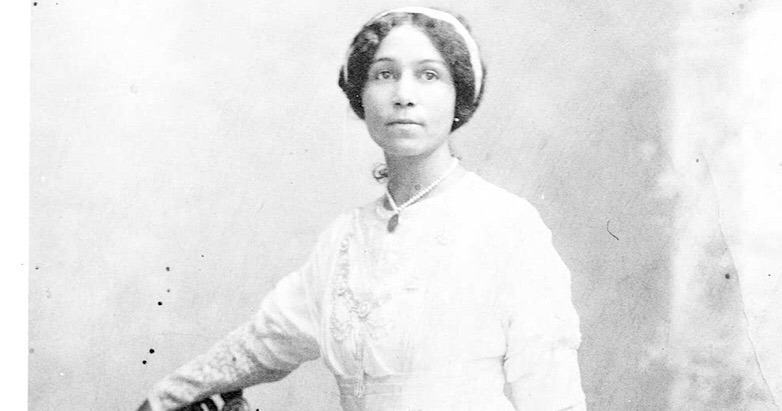
Anne Spencer Wedding Picture

Anne Spencer’s wedding portrait, at the beginning of the 20th Century, 1901.


Arbitrary choices—useful sometimes in art. Likewise, they might help people to create businesses or new testable scientific propositions. In art we might own up to them, examine them. Can we do the same in life?

I made an arbitrary choice to lay off the string parts for today’s audio piece—organ, piano and acoustic guitar instead. To hear “Before the Feast of Shushan”  use the player.


The Fox

My son, now a teenager, is aware that I have a blog, and that it deals with poetry somehow. Limited by his parents in his computer time, and pressingly interested in the other things he’s discovered, he doesn’t listen to it.

But he does want to be helpful. Earlier this month he suggested by asking: “Have you used any poetry by Kahlil Gibran? Have you heard of him?” One of my son’s teachers is from Lebanon, where Gibran was born, and Gibran has come up as a famous Lebanese-American.

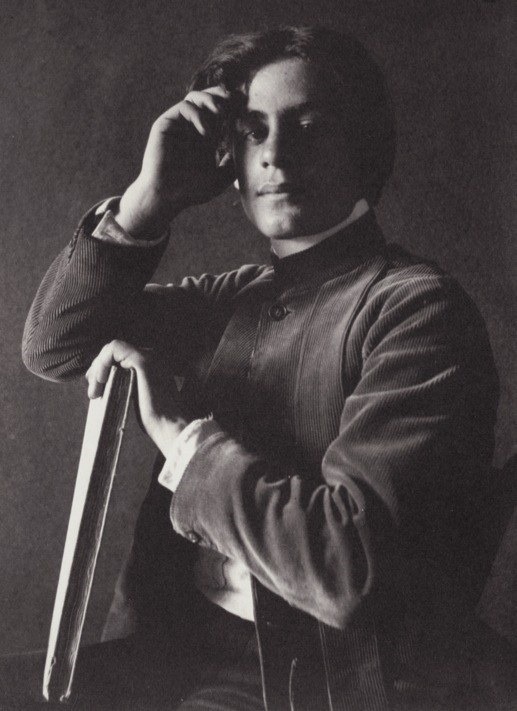
Khalil Gibran by Fred Holland Day

Note the art portfolio, the young Gibran’s aims were as a visual artist


Had I heard of him? Yes, I recall buying a copy of “The Prophet”  as a somewhat older teenager in a bookstore. I think the edition may have included a now disputed quote comparing him to William Blake, and that may have accounted for my purchase then.

Over the decades since it was published in 1923, my decision to purchase “The Prophet”  has been replicated millions of times. It’s an extraordinarily popular book, and not one that achieved its popularity by a burst of sales, but by remaining intriguing to readers for 95 years. Nor am I alone in seeking to combine Gibran with music, as it’s been done more than once already, with everything from a borrowed Gibran line making it into John Lennon’s “Julia”  to the as far as I know unacknowledged connections to Queen’s masterpiece The Prophet’s Song.”

I remember reading that copy of Gibran’s “The Prophet”  in an hour or so later that day. My dorm-roommate read my copy too, but I remember he was puzzled that I had read through it so fast.

Unlike many readers of “The Prophet”  I had some background. As a young person I had substantial interest in various kinds of occult, spiritual and mystic writings. Gibran in “The Prophet”  didn’t impress me as being very good of type. The stilted sort-of King James Version English seemed effected, the matter it tried to convey seemed newspaper horoscope vague, and the typical trope used to express that matter was a litany of everything is it’s opposite.

That was my opinion as an 18-year-old. It has changed slightly as I briefly revisited Gibran this month in search of something I might want to use. First, I have a much greater appreciation for the struggles of those that try to bridge the culture and language of their birth to the culture and language of their new homes, and in the sections of Gibran that dial-back the hazy mysticism I can now read some elements of humor and satire that I missed on first encounter. I wonder how Gibran’s works in Arabic read to a native speaker. Did he present a different face and voice there than he did to English speakers in America? And what I’ve seen of his artwork does have a Blakean tinge, a combination of classical line with esoteric and romantic subject matter.

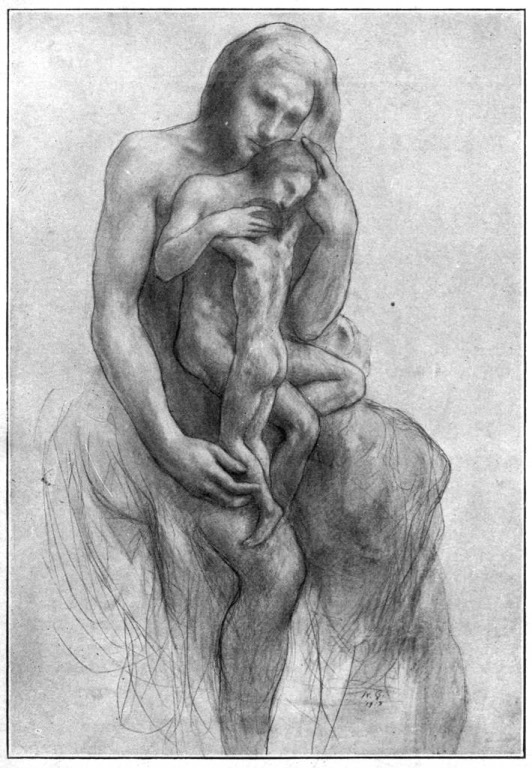
Illustration_from_The_madman by Gibran

One of Gibran’s illustrations for “The Madman”


Today’s audio piece, “The Fox”  comes from Gibran’s first English language collection “The Madman.”  As parables go, it’s quite applicable to the daily grind of creating these pieces. It may not be the camel I set out for, but hopefully it’s a delectable mouse.


There is another sunshine Part 3

OK, here are my Sunshine Blog nominations. I haven’t warned these bloggers (bad form?), and therefore, there’s no obligation—they’ve brought me much enjoyment and information anyway.

Tribrach

This is an aggregation site that gathers links from around the web about poetry or presenting poems online, with only occasional personal asides. Through Tribrach, I’ve been alerted to articles I agree with, to articles that tell me about something I don’t know, and to articles that I don’t agree with much at all—and those last two really can inspire new work! Also Tribrach beats Parlando in the “little-known word for blog title” contest.

On Books On Music

Doesn’t post as often as some blogs, but every single post is a sharply written, well thought out review of a book on a musician or musical topic, usually somewhere in the rock genre. It’s tipped me to some good books, and the writing is first rate and knowledgeable.

And here’s what I understand are the rules and such.

  • Thank the person who nominated you in a blog post and link back to their blog.
  • List the rules and display the Sunshine Blogger Award logo in your post.
  • Answer the questions sent by the person who nominated you.
  • Nominate new blogs to receive the award and ask them questions about their blog and/or themselves.

And here are my questions for the bloggers, tweaked from the ones that I received:

1. What inspired you to start blogging?

2. What is your favorite post on your blog?

3. If you know, what is the most popular post on your blog, and why do you think that happened?

4. What is your favorite book or poem about music?

5. You have a magical grant and can put one writer and one musician or band (living or dead, magical!) in a studio to produce a piece of work. You’re the producer, but you’ll have great audio engineers to assist you. Who’d you combine?

6. You can go back in time. When and where would you travel? Who’d you want to locate there to show you around? (Virgil’s been taken already, sorry).

The title I’ve been using for these three Sunshine Blogger posts comes from what may be the second poem Emily Dickinson wrote, before she had fully formed her voice, reminding us that before Emily Dickinson could give us Emily Dickinson, she was just Emily Dickinson.

Thanks again to Daze & Weekes, the bloggers I named, and all the bloggers out there reflecting, recalling, shining.

sunshine

There is another sky, ever serene and fair

There is another sunshine Part 2

As I warned everyone yesterday, I seem to like Daze & Weekes Sunshine Blogger questions a little too much. Longest post ever…

1. What inspired you to start blogging?

The Parlando Project started out as a podcast, which I wanted to be just the short audio pieces combining various words (mostly poetry) with as varied music as Dave and I could produce, presenting just the piece itself, without chit chat. The Parlando Project is available on all the leading podcast sources, it still can be consumed that way, even though it’s not a podcast as the form is now expected to be. In contrast, I loved how pop music radio operated in my youth, when bang bang you’d hear 3 minute records by Aretha Franklin, The Zombies, Slim Harpo, The Beatles, Sam the Sham and the Pharaohs, James Brown and Bob Dylan all jumbled together without any defenses of their value other than the glorious, various, numerous sound that came out of the speaker grill.

But, some folks will want to know something about the pieces, and rather than rambling on mic about them, the “show notes”/ blog entries began to get more elaborate as the project went on. Last summer I started to think of the blog as the main thing instead of the adjunct thing.

2. What is your favourite post on your blog?

My favorite (losing u, and crossing the ocean—which sounds like the germ of a might-be-too-half-clever song)? The blog post is one of my shortest, and the audio piece doesn’t even have my voice, but The Garden of Trust  is the Parlando Project piece that moves me the most. I’d tear up when I was mixing it.

By far the most popular piece has been George Washington’s teenage love poem, “Frances.”  Why? Illuminati web-bots boosting Washington’s hits? Angsty teenagers? Xerxes fans looking for a break from Purim?

3. Who are the top 3 bands/musicians that most inspire and influence you as a musician?

Oh, this is so painful. The list should be more like 300. Even though the blog is about “Where Music and Words Meet,” I must rein back from talking about music on the blog or I’d wear a reader out. Doesn’t everyone understand that the book and movie “High Fidelity”  is a documentary and has no funny parts whatsoever?

Artists—just as important in some regard to me—will be left off! You ask three, so I’ll focus on musicians associated with words that motivated me most generally, and not singer-songwriters.

Frank Zappa. I met him and talked with him for a bit more than an hour in 1970. Reformed me artistically from a romantic to something else in that short of a time. I don’t completely share Zappa’s Dadaist sensibility, which is something like Dave Moore’s, but I need that to buffer my tragicomedy, even when it offends me. Here was a guy who didn’t separate R&B, rock, jazz, and “classical”/serious composed music. There was nobody who did that before him, and there’s nobody that’s done it since, so I try to do it at a lower level.

The Patti Smith Group. I could fill a list somewhere between 50 and 100, of artists who combined music with spoken/chanted word and poetry, therefore influencing the Parlando Project in doing the same; but if I had to pick one, it’d be the PSG. I’d read Patti Smith on the page before the PSG, and so I was already primed, but their first single and LP galvanized me when they came out. Taken together they are predominately spoken/chanted word records with co-equal music that’s not just a background sound bed. Obviously, there’s a sensibility there that comes from Patti Smith, but I’m saying the Patti Smith Group not just Patti Smith. Lenny Kaye from the first poetry readings with just Smith and Kaye on electric guitar had to invent something new with whatever musical chops he had on hand. I still think “What would Lenny Kaye do?” when working with a poet, and the younger Smith’s ecstatic vocal style, along with the other modes she added since then, is something I still aspire to.

John Coltrane. In regard to musical chops on any instrument, I’m not John Coltrane’s left pinky. I even have trouble faking saxophone lines. I like his later free jazz recordings in small doses, and appreciate the concept, but I can’t listen to it for hours, but when I’m most troubled or down on myself, listening to prime era John Coltrane just sets me vibrating with him on a molecular level. If I had to suggest a syllabus for a course on being an artist (any field) I’d suggest a John Coltrane biography or two. To me they’re like reading the life and sermons of the Buddha must be to Buddhists. It’s this, and his uncanny ability to speak wordlessly on his instrument, that makes me include him as a music/words influence.

Apologetically, I’ve just realized that none of these are musicians who are invariably easy to listen to; that they all have more detractors and “does nothing for me” listeners than fans. Two out of the three even offend on purpose when they wish too. That’s not representative of the whole of my musical influences, or how I want art to always work—but these are three who moved me to do work. If you want to stream a musician you haven’t heard of until you read it on a blog, then I suggest Bill Frisell, Steve Tibbetts, or Dean Magraw, all of whom have a breadth and beauty to their work I try to emulate, both as a guitarist and in my use of percussion.

Mason Zappa Cale Patti Smith Television bill
That last show in particular sure looks worth $9.50


4. If you could have a drink with any poet (alive or dead), who would it be?

Once more my love of variety makes for a hard choice. Often if asked, it would be the poet I’m trying to interpret with performance and music on that day! That said, I’ll say Emily Dickinson. I’d so want to tell her “You’re going to win! You and the immoral Mr. Whitman are going to be the founders of American poetry. Every single day, people are going to read and be pleasantly puzzled by your little verses, and esteemed writers will look at what you did and wonder how you could invent such a new way to speak poetically.” I’d want her to answer all the Sunshine Blogger questions and more, and finally, though we’d be challenging bladder capacity by then, I’d want her to dish.

sunshine

Alas, Emily Dickinson has no blog and can’t  be nominated


5. If you could go back in time, when and where would you travel?

Easy first part. I’d target the first two decades of the 20th Century. I’ve always been drawn there for some reason, even though it’s not a period that gets much attention generally. That feeling has only intensified from my need to draw largely on works in the Public Domain (pre-1923) for the Parlando Project. Modernism in a lot of delicious flavors was breaking out all over, and in every art. Politically, a challenging time of vast inequality, but also a time of great hope that change was at hand. So, like time-travelers everywhere I’m going to expect to be reasonably well-off—but where to land?

If New York City, a chance to observe the melting pot at its most brimming. Visit the 1913 Armory Show to watch the onlookers’ new eyes seeing for the first time the paintings by the new eyes? Hobnob with the political, social and artistic radicals, some of them recently emigrated from my own family’s base in south-eastern Iowa like my “cousin” Susan Glaspell. Maybe fake a letter of introduction from my grandparents and ask Susan to show me around the Provincetown Playhouse and Greenwich Village? Meet Edna St. Vincent Millay.

Or Chicago? Meet Carl Sandburg and his young family. Swing by the offices of Poetry magazine and suggest to Harriet Monroe that she should read my blog (grin) for tips on hot new writers. Ride with Fenton Johnson in his electric motor car, and refrain from telling him he isn’t going to win and that there’s nothing I can tell him with my extra century of knowledge that can change the racial ignorance and prejudice of America between his time and now.

Or Paris. Meet Apollinaire, Reverdy, Picasso, Satie, and—oops! my French speaking skills are non-existent. OK, next.

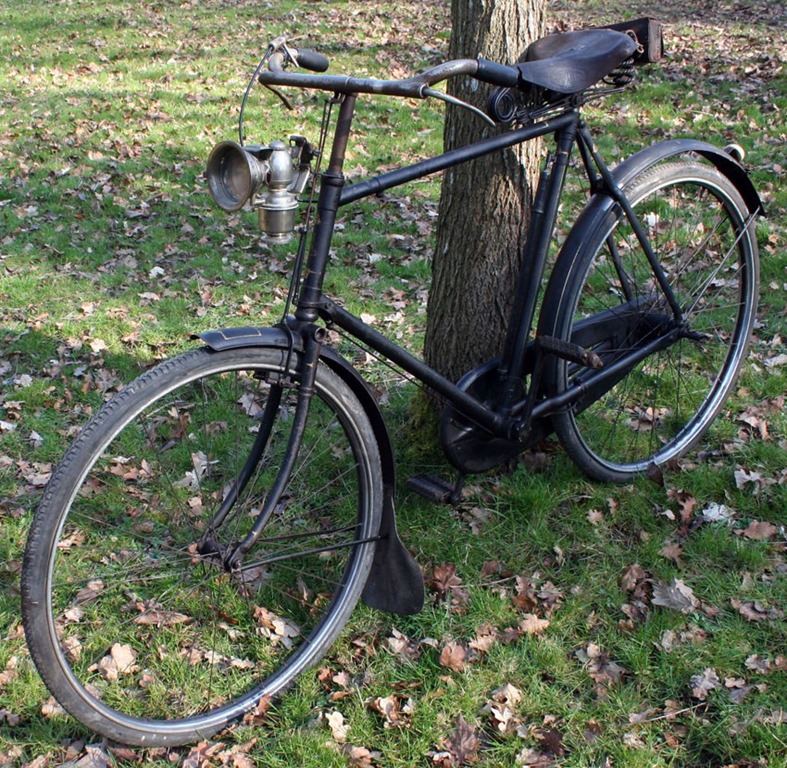
London. That’s it! Frost! Pound! Yeats! HD! Florence Farr! George Bernard Shaw! Crash the Poets Club to meet T. E. Hulme and hope I don’t get on his bad side. Sit close to F. S. Flint as a cover and act like I know him. Ask Flint about Herbert Read. Learn to play the Yeats’ psaltery and find out exactly what the Yeats-desired music “chanted, not sung” style sounded like. Slip Rupert Brooke a can of Deep Woods Off and suggest he look up Pound. Visit with Rabindranath Tagore in Hampstead. And the clincher for London? Buy a Raleigh bicycle with a Sturmey Archer 3 spd hub and a kerosene headlamp and ride around town. Why is that the clincher? I’m an introvert. Sadly, I might never make those social connections, even after traveling through time, but the bike ride would be worth it.

1910_Raleigh
Yeats, Pound, HD, Frost, & Flint…tally ho and toodle pip!

Next up, my Sunshine Blogger questions and nominations.

There is another sunshine

The Parlando Project has been nominated for the Sunshine Blogger award. And what’s extra neat is that the nomination comes from another blog, Daze & Weekes, where I’ve experienced the splendor of a modern life in England seasoned with tidbits from the medieval to the Victorian. Julian of Norwich! The Devil Spits! Snails! David Bowie and Shelley: mirrors of the gigantic shadows which futurity casts upon the present! Lovely music! Posh crisps only!


sunshine


There are rules / duties with this:

• Thank the person who nominated you for the blog post and link back to their blog.

• Answer the questions the blogger asked you.

• Nominate other new blogs to receive the award and compose new questions for them to answer.

• List the rules and display the Sunshine Blogger Award logo in your post and/or on your blog.

Here are the questions five from Daze & Weekes:

What inspired you to start blogging?

What is your favourite post on your blog?

Who are the top 3 bands/musicians that most inspire and influence you as a musician?

If you could have a drink with any poet (alive or dead), who would it be?

If you could go back in time, when and where would you travel?

Oh my! Asking me questions is dangerous, as I assume someone is interested in the answers and I tend to go on and on, until I find myself embarrassed. Though I value brevity in expression as a reader (thus, poetry), I am so ready to violate that value when talking. So I wrote answers and then tried to make them shorter. And tried again. Music, poetry, they value concision. With effort, I can honor that. But the past, well, it only gets bigger, and men and women become souls confined there, where we can only visit, were we must visit.

Answers to the questions and my nomination business tomorrow. Thanks for reading (no listening today) and thanks once again to Daze & Weekes for the kind words.