The Summer 2017 Parlando Project Top 10

The subtitle of the Parlando Project is “The Place Where Music and Words Meet”. As I mentioned last night, this project, which combines words sourced from a variety of sources with a variety of music, has now reached 100 available audio pieces since it’s official launch 11 months ago. Note that stress on variety. In terms of writers, I have my favorites, and the short format of our audio pieces strongly favors poetry, but the Parlando Project has featured words taken from other sources as well, and some of the poets featured were unknown to me until I ran across them looking for material, and I’m trying to vary the music as much as I can. Sometimes our pieces are as simple as acoustic guitar and voice, as in our most recent post The Oven Bird.  Some pieces have full arrangements with multiple instruments, and some feature spontaneous performances by the LYL Band, a folk-rock band that’s been playing a rough and ready mix of electric instruments and literate lyrics since the early days of Minneapolis punk rock.

We’ve gotten thousands of downloads and streams so far, and though I don’t have the time to thank everyone personally for the likes and the shares, it’s been your passing on the existence of our audio pieces that has grown our audience from a few hundred downloads to thousands. I don’t have time for a social media presence myself. Researching, writing the majority of the music, as well as arranging, producing and recording these 100 pieces has taken an untold number of fascinating hours, but it leaves me little time to promote this work myself. So I’m very grateful for you, the readers/listeners who have done so.

Since we last did did a Top 10 in the spring, that growth in listenership has meant that there is only one returning piece since that list a few months ago. Which piece has the staying power?  Lets start off the countdown in the traditional order, with #10.

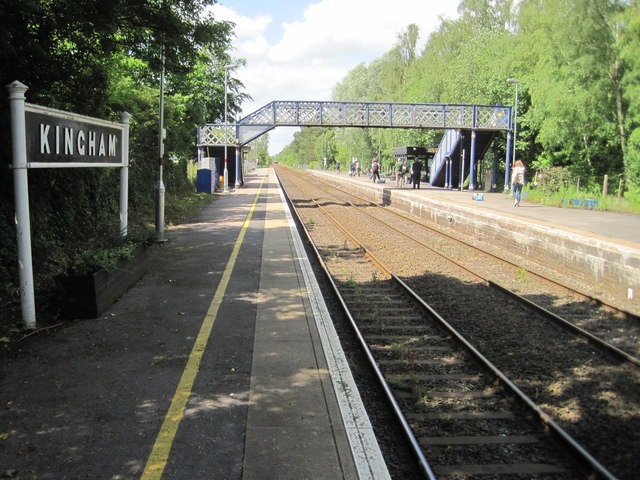
10. Adlestrop – a late surge brought this piece with words by fateful British poet Edward Thomas into the top 10, just beating out Zalka Peetruza  and Spring Grass  as the final slot shifted back and forth this week. Adlestop’s   download rate is noteworthy too in that its the newest post to make this list.  Listening to this hazy slide guitar piece I still recall my own muggy summer unscheduled lay-over in Kingham a year ago, but that’s a private moment, though I feel somehow I’ve shared it with Thomas thanks to his words. In a more public way, this poem gains resonance from it’s connection to Robert Frost’s The Road Not Taken and to the Centenary of WWI.


9. Grass – speaking of WWI,  here’s the first of two placings of a Carl Sandburg piece on this Summer’s Top 10. My private memory is performing this with the LYL Band, spontaneously as usual, with no rehearsal or warning as I read Sandburg’s words, and having us stop on a dime for line that starts “What place is this…” as Grass  approaches Sandburg’s ending. For other listeners, particularly those with friends, families, and even ancestors lost to war, Sandburg’s piece asks a powerful  question of forgetfulness.


8. Intro to The Waste Land – One could say this continues our WWI Centenary theme, as T.S. Eliot deals with his personal depression in the context of the aftermath of The Great War in this poem, but it was instead intended as part of our April “National Poetry Month” celebration, which I will always link to the poem’s famous opening line “April is the cruelest month.”  This is one of my composed pieces musically, were I get to write and perform all the parts myself, which means I get to fully realize my personal “vision” of the music (something the listener needs to care not a bit about) and to therefore be responsible for all my own mistakes.  My personal memories of The Waste Land  are two-fold, one a memory of reading it for the first time in college, and though mystified, feeling an intense musical thrust in what Eliot wrote, and then to a time more than a decade ago when I felt just past my lowest ebb emotionally and then performed the last sections of The Waste Land  spontaneously with the LYL Band, and found it as musical as I expected it would be, but also was surprised at how it expiational performing it was. Publically, the downloads of this have been steady, and have continued long past #NPM in April, so it’s either due to your sharing of it, or the poem’s continued fame.


7. To A Friend Whose Work Has Come To Nothing – Irish poet William Butler Yeats is another writer whose work we’ve mined for more than one piece here. One thing I learned while looking at material for this blog was that Yeats too believed that poetry performed with music was a necessary combination. Another investigation, brought on specifically by this piece, was to find out just who the friend was whose work had been thwarted, and what that work was. This has been another piece with a steady listening rate since posted. My guess is that the experience Yeats was telling us about is common to many, and whenever it is encountered it is not easily forgotten. Weeks after this was posted, I watched the former FBI director James Comey testify before Congress, and thought if Yeats was his friend, he would have said the same things in verse to him.


6. Clark Street Bridge – Carl Sandburg gets his second appearance on this Top 10 with this wistful story of day and night on this busy downtown Chicago river bridge. As a personal experience I got to see the Clark Street Bridge this spring on a visit to Chicago, and though the current bridge is almost 100 years old, it’s not the one Sandburg watched and wrote of. Another thing I learned during my trip: his night scene with silver singing stars equal in number to all the broken hearts in Chicago contained a larger number than I would have estimated from modern urban nights, as the poem was written before the widespread adoption of all-night electric lights. What are, or could,  the listeners be attracted to? Well, broken hearts remain as numerous as the stars in a dark sky for sure, and Chicago has taken Sandburg to it’s heart; despite, or because, he says that that heart is broken.


5. The Death of Col. Bruce Hampton – I’ve written a number of direct tributes to musicians that I’ve featured here, but this is the most popular.  Particularly now as the main lot of musicians fall back into the lower levels of the “gig economy” they gave their name to without additional payment, I see them as retaining the heroism of artists in general, who do what they do to general indifference, but now with a much lower chance of professional earnings. This is the only piece in this Top 10 where I wrote the words and the music, but that’s about the right amount, as the Parlando Project is about appreciating “Other People’s Stories” after all. The defensive shells and double-ended poison stingers that artists grow don’t always lead to happy lives, but those who knew Bruce Hampton have grateful things to say about him as a person and collaborator. And by chance, he got to come to the end his life with some of those folks thanking him, while he encouraged the creation of even more spontaneous art. I assume that’s the reason for so many people listening to this piece.


4. These Fought – Here’s one I’m a little surprised about. Ezra Pound may have done more than any other person to create modern poetry, but he’s less read today than many he influenced and championed. And though other modernists dabbled in between-the-wars nationalism and racial theories, Pound became America’s most notorious fascist apologist. And this piece, posted around Memorial Day is an uncompromising denial of the honor in the sacrifices of WWI. If you like your poetry feel-good and inspirational, if you like your poets cuddly and full of civic pride, this piece is not your choice. The LYL Band tries to equal Pound’s fierceness in this performance.


3. Love and Money – Unlike many other poetry and spoken word blogs, we feature other people’s words almost all the time in the Parlando Project. Of course, there’s nothing wrong with self-expression, but in following the Project’s dictum “Other People’s Stories,” we don’t do that often. Perhaps in consolidating that stated aim with the catalog of thought-provoking words that Dave has written over the years, many of the Dave Moore pieces I’ve posted so far have been performances where I perform Dave’s words–a mixed blessing that–because, to steal an old Columbia Records ad from the 1960s “No one sings Dave Moore like Dave Moore.” I was sold on this one the moment I heard Dave sing the first line of this piece as we spontaneously performed it, and there’s no way I could do it justice.  The popularity of “Love and Money”  probably has the same private and public reasons, it’s just a good song. Oh, and Dave’s pounding electric clavichord performance might have something to do with it too.


2. Up-Hill – Here’s an example of a poet I knew close to nothing about before looking for material in the public domain to adopt for Parlando performance. Having a long time love of the Pre-Raphaelite painters and knowing that poetry and poets were part of their artistic circle, I went looking for Pre-Raphaelite poems that I could relate to musically. I kept striking out. I really wanted to find something by Algernon Charles Swinburne, because, well, “Algernon Charles Swinburne”. Is there any name that says more clearly that you don’t give a damn about sounding cleanly modern and approachable? Only Ezra Pound’s invented persona “Hugh Selwyn Mauberley” comes close. Alas, I could find nothing I felt I could inhabit–and then I came upon some of Christina Rossetti’s shorter poems. Read this on the page just once, and you know it’s crying out to be sung. Perhaps Up-Hill  draws listeners because it’s a Christian religious poem, but Rossetti’s writing personally connects with me because it’s imagery and expression is so non-abstract and modest.


1. Frances – Here’s the only repeat from last Spring, and it’s still on top, with almost double the total listens since released of the any of the others on this list. I released Frances  on a lark to mark US President’s Day last February. I suspect it got picked up and linked somewhere more popular than other pieces that have been linked from here, but I haven’t been able to find out where. Here’s an example of how relatively popular it’s remained, long after it’s author’s, the first US President George Washington’s, birthday this winter: it was the 8th most listened to piece from the Parlando Project in May, still 19th in June, and currently it’s the 13th most listened to song in July, with a hundred alternatives competing with it. What accounts for this? Well it’s a love song for one thing. Maybe it’s the pared back Pixies soft/loud arrangement? It’s a mystery.


So that completes the Summer 2017 Top 10. I plan to do another one next Fall.  If you’ve got a favorite you’ve found here, do what someone must have done with Frances, and go ahead a link to it to see if it can get more listeners.
Adlestrop

Remember that “Reverse British Invasion” that happened 50 years before the Beatles landed in New York in 1964, when American modernist poets landed in London just before the outbreak of WWI?

One of those American poets was Robert Frost, and he soon struck up a friendship with an British writer Edward Thomas. Thomas was in his mid-30s by then, and he was writing this and that for whoever would pay, but he was not writing poetry. Frost and Thomas enjoyed walks about the Cotswolds together. Frost was encouraging Thomas to write poetry. On his part, on the walks Thomas would often puzzle at which country lane to take a crossroads, and Frost noted that.

Last summer I had the opportunity to take my own ramble about the Cotswolds with my wife. My itinerary was mixture of bicycling with some linkages between sections via train. During the biking part of the journey we often found ourselves lost. Just as with Thomas and Frost back in 1914, there seemed to be few straightforward crossroads and few road makers on the country lanes.  It was the hottest summer week in recent record in England that year, and at one train station stop the arrival of our train kept falling farther and farther back off-schedule as the trains were slowed and sometimes stopped by the fear that the heat would buckle the rails.

Well there was nothing we could do about it. We spent the next hours just sitting in the Kingham railway station in the heat we were somewhat accustomed to, watching the wind play with the trees and foliage, listening to the birds.

Kingham rail station

A few hours listening to the trees, breeze and birds at Kingham


This month in 1914, Edward Thomas had a train ride that stopped “unwontedly” in at the small Cotswold village of Adlestrop. Despite being a beginner at poetry, Thomas seemed to immediately grasp the modernist concepts, perhaps because he had no outmoded Georgian and Victorian habits to break.  His June experience lead him to write today’s piece, named after this village rail stop: “Adlestrop.”

adlestrop station sign

No rail stop in Adlestrop today, just this sign and bench remain. The present stop in Kingham is 3 miles away.


Thomas’ “Adelstrop”  has most of the markers of a modernist poem as Frost was writing them. It’s metrical, but not so strictly as to call to much attention to that. It’s rhymed, but again, the rhymes are not showy. There are no “hey look at me, I’m a clever simile or metaphor for something” tropes. In the place of that is the clean presentation of an exactly observed moment in time, peaceful, off the clock, yet clearly set in a time when the countryside’s nature and the train were in equilibrium. Thomas didn’t know it, but the moment in the poem gathered context after he wrote it, his village train-stop happened only a few weeks before WWI broke out, and England and Europe would be changed forever.

Robert Frost had returned to America, but he sent his friend a poem he had just written, one that was inspired by their Cotswold walks together, The Road Not Taken.”   Frost’s poem famously ends with the lines:

Two roads diverged in a wood, and I—

I took the one less traveled by,

And that has made all the difference.

It’s been Frost’s fate that his irony and dry wit, as well as his uncompromising assessment of human nature, has often been missed by his readers. I first read “The Road Not Taken”  and thought, as do many to this day, that this was a simple homily— a boast that taking one’s own, perhaps less popular path, is the road to success and happiness. But read again, more closely, Frost was gently making fun of his friend’s indecision, Thomas’ puzzling at if there are meaningful differences between the two choices in their rambles.

Thomas, though himself a discerning poet, missed Frost’s intent as well. He thought it was reminder of the necessity of making correct decisions, and he warned his friend that readers would misunderstand it. At the same time, Thomas was mulling his decision regarding enlistment in the British army, which was grinding up men at a prodigious rate against the weapons of modernist war. He enlisted, and within a few weeks of deployment in France, he was killed by a bullet through the chest.

Sometimes when I compose music for one of these pieces, I find at the end that I have written something that reminds me of another piece of music, one I can’t quite place. Often when I solve this internal puzzle there is a mysterious connection revealed. The music I played and recorded for Edward Thomas’ “Adlestrop” reminds me a bit of the Edgar Broughton Band song Evening Over Rooftops”—and the hidden connection for all that (different but shared) flanged and phased melody over an insistent strum,  is that like Thomas’ fine poem, they both are hymns to the eternal moment.

To hear my performance of “Adelstrop,”  use the player below. And another reminder that you can use the social media share buttons here to let other people know what the LYL Band and myself are doing here at the Parlando Project.


Grass

In the last post, I presented Ezra Pound’s rant about the society that lead so many to their deaths in WWI, deaths that included several of his own modernist artistic circle. Taking it personally, Pound exclaims that their “fortitude as never before” for change and their “frankness as never before,” lead only to equally great “disillusions”. He sees lies and liars leading others into the war and their sacrifices, and only liars as triumphing.

Speaking repeatedly about liars and lies and illusions, Pound’s “These Fought” would not be a very popular choice for a Memorial Day speech then, just as it probably would not be one now. If you agreed with him, you might enjoy his precise inventory of folly. If you didn’t, you’d say he was unappreciative of his friends (and so many others) sacrifice, and that his disbelief in the stated high motives for the war could be mere cynicism. I can hear what some voices must have said then (and would say now): “You can complain about what is imperfect, perhaps even foolish, but what’s your solution, other than to stand to the side and write poems?”

Alas for Pound, he did propose a solution. It was a solution chosen by many others disappointed after WWI, a fresh modernist conflation of race hate, nationalism, technology and authoritarianism, the fascism that lead to WWII.

Commonwealth-war-graves-WWI-cemetery-Belgium

What place is this? Where are we know?

Today’s episode: “Grass”  by Carl Sandburg is just as pure a modernist, imagist poem as any by Pound, but it’s statement about the sacrifices of war is more indirect.

Sandburg has a reputation as a clear-spoken poet who makes his points straightforwardly, as if plain words mean simple thought. I believe this is mistaken. Sandburg’s mind was not a simple, unicameral mind.  Sandburg was leading multiple lives at once during the WWI era. He was writing, sometimes under a pseudonym, for radical leftist/labor IWW publications, while writing for the mainstream Chicago dailies, while writing modernist poems. When Sandburg was protesting the jailing of IWW antiwar activists, and writing today’s compressed, Imagist, “Grass,”  Sandburg had also published a long, Whitmanesque populist and blood-thirsty poem “Four Brothers” lauding the urge of Americans to go overseas and put the German Kaiser’s head on a pike. “Grass”  too has its echoes of Whitman—not the martial revolutionary Whitman, but the Whitman who wrote of grass as “the beautiful, uncut hair of graves.”

So, this is a complicated and perhaps self-conflicted man who is writing this, and when we move in “Grass”  from the catalog of history’s deadly battles, ending with two great battles of WWI, Sandburg’s poem takes a turn.

In two years or ten years, what is this sacrifice? In“Grass”  the places of these battles become nowhere. Is this a hopeful statement, that after this “War to End All Wars,” we will now be able to forget war? Is this an anti-war statement that would say, as the radical Sandburg or Ezra Pound would have said: that after all such strife, the liars and those that run things will continue to run things anyway, as if the war settled nothing? Is it a statement of reconciliation to come, when elderly soldiers from opposing sides meet and speak of their common experience and equally lost comrades? Is this a statement of the democratic socialist Sandburg, that the forces of inevitable Marxist proletarian revolution will come and obsolete all that was before? Or is it a cool and detached statement that all human efforts are transient?

I don’t think it’s an accident that this divided man wrote a poem about the sacrifice of war that lets it be all those things.

To hear the LYL Band present Carl Sandburg’s “Grass,”  use the player below.


These Fought

The lives, outside of art, of artists bear only a mysterious resemblance to their work. The concentration of time that must be brought to creating work drains many a writer’s life of incident. And so, an artist like Emily Dickinson can lead an outwardly constrained life while creating an inward empire. Or the man who would eventually be charged with the establishment of the first modern democratic republic could be, as a teenage poet, a love-struck supplicant. Nor does general good character align with artistic success—saints can write bad poetry and flawed people may write good poetry.
 
Today’s post features the words from an American who as much as any single person launched Modernist poetry in English. His associates and admirers, added to his detractors and opponents, make up an encyclopedia of 20th Century English literature. In the first part of the 20th Century, some of them would be profoundly influenced by his artistic ideas, and some would even be directly edited or personally mentored by him. One hundred years ago, in 1917, Carl Sandburg would say of him:

“All talk on modern poetry, by people who know, ends up with dragging in Ezra Pound somewhere. He may be named only to be cursed as wanton and mocker, poseur, trifler and vagrant. Or he may be classed as filling a niche today like that of Keats in a preceding epoch. The point is, he will be mentioned.”

Pound would live more than another half a century after this, his literary revolution flowing outward until few could see back to its instigator. And there’d be reasons his influence would be discounted: by the end of WWII, when Modernism, no longer insurgent, was about to become the established artistic order, Ezra Pound was a 60-year-old man confined in an outdoor steel cage open to the elements, awaiting to be charged as a war traitor with a likely sentence of execution.

Ezra Pound Booked for Treason

This guy is most responsible for English literary modernism, but that’s not what got him arrested.


The customary quiet and inward life of a writer, even an unnoticed one, looks good in comparison.

Though this treatment was inhumane, and the charge not without controversy, it was not unsubstantiated. Pound had spent the years leading up to WWII making common cause with the European Fascists that the United States eventually fought in that war, and when that war was being fought, he broadcast eccentric propaganda in his native English in service of his adopted country of Italy and Mussolini. Furthermore, his attraction to the Fascist cause was not an accident, a casual side-effect of his adopted country of residence. Pound wholehearted seemed to believe in the crackpot and yet deadly racist theories bolstering Fascism.
 
Remember earlier this month when we talked about the popular folk song celebrating Jesse James, versus the reality of James’ life as a racist terrorist?  Pound lacked the actual bloody hands of a Jesse James, but not the thought behind them.

So much more could be said on this, but that would take more room that we have today, and besides your thoughts and judgements on matters like this, as I said when talking about Jesse James, are more important than mine. Not only are they more numerous, but you are likely younger than me, and will get to use those judgements on things like this to guide your life.

Today’s audio piece, “These Fought,”  was written by Pound at the height of his fame and good influence—not after WWII, after WWI. Unlike some younger Modernists, Pound did not actually fight in WWI, but situated in England during that war, he saw the patriotic recruitment and the creation of cases for the war, a war that soon became mechanized slaughter beyond all previous imaginings, and he lost friends in that staggering slaughter. So, in “These Fought”  Pound caustically calls out the cases for the slaughter, and leads us to note that bravery in fighting WWI, or fortitude in opposing it, were in some sense equal in valor and, alas, equal in success.

To hear the LYL Band perform this, use the player below.

The First Cuts are the Deepest

Earlier this month I posted the Parlando Project audio pieces that were the most listened to as of the start of this Spring. Turns out it’s a pretty good mix of what Dave and I are trying to do with this combination of music and words. However, in looking at the stats for the Parlando pieces, it looks as if a lot of readers and listeners are coming in partway into the project, starting around the beginning of this year. That’s fine. I think I’m getting a little better as I work intensively on the goal of 100 Parlando Project pieces by August of this year, but I think some of the early pieces are missing the listenership they otherwise might have gotten if I’d posted them later.

Since we’re still in National Poetry Month (#npm17), it stuck me that this might be a good time for some of our audience to catch up. So here are a few of the 2016 Parlando Project “deep cuts” from last year that you might want to check out:

Stars Songs Faces.  I wrote the music for this Carl Sandburg poem as my tribute to David Bowie in January of 2016, and it was the piece I choose to kick-off Parlando. Although I’m not the first to write music for these Sandburg words, I still like what I did, and the LYL Band performance realizes my intention well. This piece also reminds me that it’s been awhile since I posted a Carl Sandburg-based piece here. I’m working on one this week, but the orchestration is not going as well as I’d like it to yet.

The Prairie.  One of things I enjoy most about coming up with material for the Parlando Project is finding things in the public domain poetry cannon that I’d never read or even heard of. This is one of them. William Cullen Bryant was not on my radar until Dave Moore visited the Mississippi river valley mounds last year and began to write about them himself. This audio piece is on the longer side, which may account for the lower number of listens.

The Green Fairy.  Here’s a good piece written and performed by Dave Moore that hasn’t been listened to as much as some other pieces he’s written here. My notes in the accompanying post were written in mystery about the actual intent of Dave’s words. I’ve probably got some other poets’ intent wrong too, but remember that’s one of the points of the Parlando Project: you can appreciate poems when they are accompanied with music just as one appreciates song lyrics (or even music without words at all), as bits and pieces of language that sound good, or as lines or phrases that attach themselves to you with little pieces of meaning without any requirement that you understand the whole thing.

This is the Darkness.  I ascribe the lower listenership on this one to the dark tone. And indeed it might be an odd piece to listen too in the late Spring as days get longer and eventually warmer here in the upper Midwest. None-the-less, living around the 45th Parallel Minnesotans and Canadians should understand this.

Christ and the Soldier.  When I was my son’s age, I was following a day-to-day summary in the newspaper, a series called “100 Years Ago in the Civil War”  which covered the events just out of memory of the living in the American Civil War.  And now, since 2014, I’ve been informally following the centenary of World War I, which has similarly passed out of the memory of the living.  Siegfried Sassoon’s poem is a biting comment on WWI from a veteran of that war’s trenches. You know that old saying “There are no atheists in a foxhole?” Sassoon has a more complex view.

To A Friend Whose Work Has Come To Nothing

Given that poetry contributes the great majority of the words to the half of the  Parlando Project “Where Music and Words Meet,” it’s reasonable to suspect, if you are reading this, that you like poetry. That’s too bad. Even during the National Poetry Month and #npm17 that were are talking about this April.

You see, poetry is often a frustrating thing. That high-flown language may be artful, but it’s an earful too. If you were seeking directions to escape some emergency, would you want your rescuer to choose the most precise and beautiful words, words that say more about what a clever speaker your rescuer is than about which way you must turn and where the dangers are?

Do you love the dense allusions and surprising metaphors of poetry? Do you admire the narrative fracturing and careful examination of the shattered facets that expose the common lie of ordered stories? The next time you are searching for how to work some complex gadget or system, do you want your tutorial or manual to scatter its tale in novel ways?

Speaking of too simple statements, here’s one: that there are people who simply like poetry. No, most people who like poetry sometimes, hate poetry sometimes; just as most people who like music, hate music sometimes. The intensity of the like times does not decrease the intensity of the hate times. I think it’s important that poetry tries to capture the allusiveness of things. I continue to admire some poems I don’t really understand—that’s what the music is for, both the poem’s own music and the external music we apply to the words here at the Parlando Project. But there are times when you just want a poet to come out and say what they’re getting at.

The words to today’s episode, by William Butler Yeats, are clear in their meaning. “To A Friend Whose Work Has Come To Nothing”  is an example of “occasional verse,” a poem written in response to an event. In this case, almost everyone has forgotten the event, but the sentiments of the poem apply broadly anyway. Yeats has such a musical way of expressing himself, he could have flown off on some obscure path and we might have followed him anyway. As it turns out, the things he leaves out here, the particulars of the dispute, probably help the poem survive as a general piece of council.

Still, I’m a curious and literal sort. Who was the “Friend Whose Work Has Come To Nothing,” and what was the work? It was written about and perhaps to a man named Hugh Lane who wanted to donate his substantial modern art collection to a museum he proposed that Ireland should fund. And the man who would lie unashamed to oppose this? A newspaper publisher who opposed the gallery.

Hugh Lane

Yeats gave him good advice, but he didn’t tell him to not get on that boat.

What happened to Hugh Lane, whose work had come to nothing? About a year after Yeats wrote this poem, Lane went down when the Lusitania  was torpedoed during WWI. And his art collection? His will seemed to leave it to the British National Gallery after his proposal to fund the Irish museum failed, but Ireland disputed this will, and later in the 20th Century, after Lane’s and Yeats’ deaths, Lane’s collection was again on display in Dublin Ireland. So eventually, in prosaic history and after the work of some lean solicitors, Lane’s work succeeded.

Dublin City Gallery

The Dublin City Gallery where most of Hugh Lane’s collection ended up

Today’s audio piece is brief, so take a listen to the LYL Band performing “To A Friend Whose Work Has Come To Nothing” by clicking on the player below or with this highlighted hyperlink.

.

On Being Asked for a War Poem

Today’s post returns to the issue we touched on last month with “Acting.” What is an artist’s proper role regarding politics and social issues? And why do artists who engage in politics draw especial condemnation for doing so?

This may be the wrong question. Does anyone ask, what’s the proper role of a lawyer, real estate tycoon, school teacher, doctor or fry cook in politics? None that I’ve heard of lately. My working answer to this possibly disingenuous question is going to be long, so if you can, bear with me.

Probably the only other profession that has its participation in politics questioned in any way would be clergy, and I think there are a pair of oddly similar issues with artists and clergy speaking on politics.

Artists, at least good ones, by their nature tend to be “progressives.” Please, if you can, skip by any associated political stances you attach to that label, it’s honestly the best word I could come up with. By “progressives,” I mean that artists naturally seek change, novelty, and the advancement of new ideas even if they are built on older ones. Scientists and technologists have a similar bent, but artists like to think of themselves as ahead of even the sciences in this regard. Religious leaders, teachers, preachers, tend to be “conservative.” Please apply the same caution to that word as I asked for “progressives.” By conservative, I mean that they see the values in cultural traditions as possibly being given by supernatural forces that are of a higher order than mere human thought, or at the very least, that traditions are time-tested in such a way that they need to be honored, and to extent that seems reasonable to them, for those traditions to remain unchanged.

Are there “conservative” artists. Yes, they are. It’s quite possible to be artistically progressive (important for good artistic work) and politically conservative. Shakespeare presents himself as conservative politically, but was a culture changing artist. And it’s easy for me to think of some 20th century artists who are not “conservative” but “reactionary,” Ezra Pound for one. Caution again, just a label, let me explain: I use reactionary as a label here to denote people who believe that some important elements have failed to have been conserved, and that change is necessary to return to that state or set of values that no longer effectively exist.
 
Are there religious “progressives.” Yes indeed. Remember that religious people overwhelmingly believe that certain values are given by superhuman forces, ones that exceed what humans themselves might honor. There has always been a large part of religious thought that says that mankind is “fallen” and so therefore is in constant need for change toward the good, a good that might never be properly illuminated by fallen human thought.
 
So for both our “conservative” label (clergy) and “progressive” label (artists) we’re talking associated tendencies, not absolute dictates. Humans are complicated after all; but I think that’s one thing that strangely joins concerns about artists and clergy in the political arena. Opponents to conservative clergy and progressive artists see these groups as respectively prejudiced, temperamentally oriented toward resistance to necessary change or moving toward too broad and untested change. In this outlook, their self-selected temperaments that lead to their professions blind them, and so they aren’t viewing things fairly or deeply enough because of who they are. One proof we can see in this is that it’s rare for conservatives to criticize conservative artists in politics, or for progressives to criticize religious leaders who champion progressive causes. The belief here would be that those who go against natural tendencies in their professions must be significantly immune to that issue of characteristic prejudice.

You might next think or ask: well doesn’t a fry cook or a real-estate tycoon have their own prejudices based on their livelihoods? What’s different about artists or clergy?

My answer to that moves to another thing those two professions have in common: they are both pretty much in the same business. When a religious leader gives a spell-binding sermon, or a writer moves us to tears, when a religious visionary tells us what the angels said to them, or the musician brings sounds together in a way that moves us, when the crowd rises as one, with one hosanna on their lips, does it matter here who is at the front of the house?
 
What is important to our question comes after these remarkably similar experiences. Are we in that crowd, and yet not moved to rise in praise like the others? Is there often a let-down, however vague and hard to explain afterward? A way in which we feel unworthy, a way in which we feel we thought we were changed and yet we are not changed? Do we ever feel tricked: fearing, or perhaps even knowing, that the artist or preacher has engineered this with the techniques of their craft, techniques that might work regardless of the content they convey?

Now what if the person at the front of the room is not an artist or a preacher, but a political figure? Don’t all the same things apply?

So all this is a prelude to a very short, yet puzzling piece, with words by William Butler Yeats: “On Being Asked for a War Poem.”

Why puzzling? Yeats is good example of an artist engaged both in spiritual concerns and politics. In the struggle for Irish independence, Yeats was a leader in the idea that Irish cultural independence as a pre-requisite for political independence. If skeptical of armed rebellion, Yeats consistently pushed for what eventually became the independent Republic of Ireland and he become a Senator after Irish independence. One of Yeats inspirations, Percy Bysshe Shelley had famously said “poets are the unacknowledged legislators of the world.” Yeats in effect revised Shelley’s passage by striking “Unacknowledged!”

 William Butler Yeats

Couldn’t make it in the NBA, but an artist engaged in politics

What would you expect from such a man in regards the use of his art for political purposes? You’d guess he’d be all in. Well, he was asked, just like the title says. Edith Wharton asked for a poem from Yeats for book meant to raise funds for Belgian war victims during WWI, and this was his response, which indeed was printed and therefore served its charitable purpose. Here is the entire poem:

“I think it better that in times like these
A poet’s mouth be silent, for in truth
We have no gift to set a statesman right;
He has had enough of meddling who can please
A young girl in the indolence of her youth,
Or an old man upon a winter’s night.”

So why is Yeats seeming to refuse to put his artist’s shoulder to the wheel and write a “war poem,” as so many others did? Well first, Ireland’s position in WWI was complicated, as it was not yet independent. Ireland’s colonial ruler, England, was engaged. The ancient principle of “the enemy of my enemy is my friend” might make an Irish nationalist (at the least) abstain from taking sides.
 
He goes beyond that however, on the face of it saying that a poet—“a poet,” unqualified, not “this poet,” or “given that I’m a colonial subject against my will, don’t ask me for poetry about your war.” Poets, he says, have “no gift to set the statesman right.”

I don’t know what was inside Yeats’ mind, nor am any kind of expert on his work, but in thinking about these things, about how the artist, the clergy, and at times that statesmen, are all in the same line of work; an alternative reading has come to me.

That pronoun “He” that starts the fifth line, why did Yeats not make the antecedent clear? Most readers believe that the “He,” the one who’s suited to pleasing an indolent young girl or an “old man upon a winter’s night”—that last, a character who could be that frightened and lonely farmer in Frost’s poem we recently featured here—is the poet, or a poet performing his rightful role. If so, it’s a surprisingly modest, even dismissive, statement of a poet’s worth. However, the last noun before that pronoun “He” isn’t the poet, it’s the “statesmen.” English syntax rules indicate that “statesmen” could likely be the “He.”  If I write “Frank went to a Minnesota Timberwolves basketball game, saw Karl Anthony Towns, and he scored 42 points.” We know that I couldn’t score 42 points, even in an empty gym, not because of my athletic ineptitude, but because we usually think the pronoun refers to the last applicable noun before it.

karl-anthony-towns

Not the author of this post, but he can play some ball

So did Yeats slyly mean to say that a statesman, like the poet, like the artist in general, is engaged in the same game, fooling the youth and the feeble old?
 
I have more to say about artists with political opinions in the upcoming week, but to hear the LYL Band and William Butler Yeats  “On Being Asked for a War Poem” use the player below.


Today’s post, as I’m reminded specifically today about the clergy and political action by his life, is dedicated to Lester Moore, the father of Dave Moore. You’ve heard Dave reading and playing keyboards here (including the various keyboards in today’s piece).

Christ and the Soldier

Tomorrow is called Veterans Day in the United States, but originally it was Armistice Day, celebrated on the day that World War I ended. WWI was a dark dividing line between all that came before and after. Books have been written about only one or two aspects of what changed, but a whole shelf of books could not tell all.

And this year is the hundredth anniversary of one year in that dark dividing line, 1916, when those that thought war was simple, or had to be simple, brought the 20th Century efficiency of the assembly line to killing in the battle of the Somme, where over one million men were killed or wounded.

One of the soldiers in that battle was a poet, Siegfried Sassoon. Last time we took a look at a funny and pious story from World War II, The Deck Of Cards, and had a little irreverent fun with the form of that story in my parody. In this piece, Sassoon’s Christ and the Soldier, the humor is very dark. I’ve heard that it was dark enough that Sassoon did not, or could not, publish it until the war was over.

As usual, I’m largely going to let he piece speak for itself. One thing I like about it is its use of dialog. For some reason, most poems eschew dialog entirely, and I think poetry misses out on a useful device by avoiding it. Musically it’s a mode that the LYL Band visits often, combining organ or piano with electric guitar. I play the guitar part on my Jaguar, a guitar that was once associated with “surf music” but has since had a revival in indie-rock circles. I play it often because its short scale and spring-softened action are friendly to my arthritic fingers.

To hear Christ and the Soldier, click on the gadget that should appear below, but some ways of viewing this blog won’t show it. In those cases, this highlighted hyperlink is another way to play the performance.