The lives, outside of art, of artists bear only a mysterious resemblance to their work. The concentration of time that must be brought to creating work drains many a writer’s life of incident. And so, an artist like Emily Dickinson can lead an outwardly constrained life while creating an inward empire. Or the man who would eventually be charged with the establishment of the first modern democratic republic could be, as a teenage poet, a love-struck supplicant. Nor does general good character align with artistic success—saints can write bad poetry and flawed people may write good poetry.
Today’s post features the words from an American who as much as any single person launched Modernist poetry in English. His associates and admirers, added to his detractors and opponents, make up an encyclopedia of 20th Century English literature. In the first part of the 20th Century, some of them would be profoundly influenced by his artistic ideas, and some would even be directly edited or personally mentored by him. One hundred years ago, in 1917, Carl Sandburg would say of him:
“All talk on modern poetry, by people who know, ends up with dragging in Ezra Pound somewhere. He may be named only to be cursed as wanton and mocker, poseur, trifler and vagrant. Or he may be classed as filling a niche today like that of Keats in a preceding epoch. The point is, he will be mentioned.”
Pound would live more than another half a century after this, his literary revolution flowing outward until few could see back to its instigator. And there’d be reasons his influence would be discounted: by the end of WWII, when Modernism, no longer insurgent, was about to become the established artistic order, Ezra Pound was a 60-year-old man confined in an outdoor steel cage open to the elements, awaiting to be charged as a war traitor with a likely sentence of execution.
This guy is most responsible for English literary modernism, but that’s not what got him arrested.
The customary quiet and inward life of a writer, even an unnoticed one, looks good in comparison.
Though this treatment was inhumane, and the charge not without controversy, it was not unsubstantiated. Pound had spent the years leading up to WWII making common cause with the European Fascists that the United States eventually fought in that war, and when that war was being fought, he broadcast eccentric propaganda in his native English in service of his adopted country of Italy and Mussolini. Furthermore, his attraction to the Fascist cause was not an accident, a casual side-effect of his adopted country of residence. Pound wholehearted seemed to believe in the crackpot and yet deadly racist theories bolstering Fascism.
So much more could be said on this, but that would take more room that we have today, and besides your thoughts and judgements on matters like this, as I said when talking about Jesse James, are more important than mine. Not only are they more numerous, but you are likely younger than me, and will get to use those judgements on things like this to guide your life.
Today’s audio piece, “These Fought,” was written by Pound at the height of his fame and good influence—not after WWII, after WWI. Unlike some younger Modernists, Pound did not actually fight in WWI, but situated in England during that war, he saw the patriotic recruitment and the creation of cases for the war, a war that soon became mechanized slaughter beyond all previous imaginings, and he lost friends in that staggering slaughter. So, in “These Fought” Pound caustically calls out the cases for the slaughter, and leads us to note that bravery in fighting WWI, or fortitude in opposing it, were in some sense equal in valor and, alas, equal in success.
To hear the LYL Band perform this, use the player below.
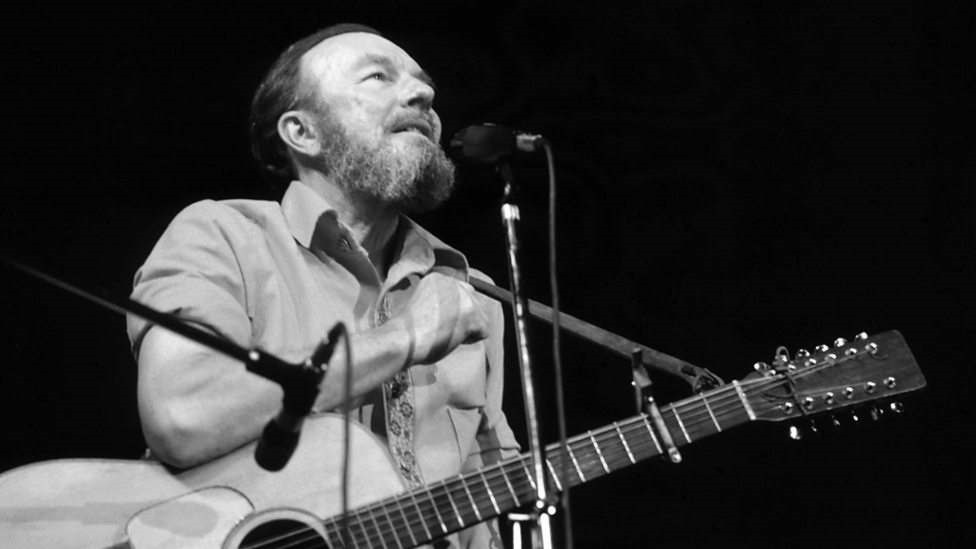
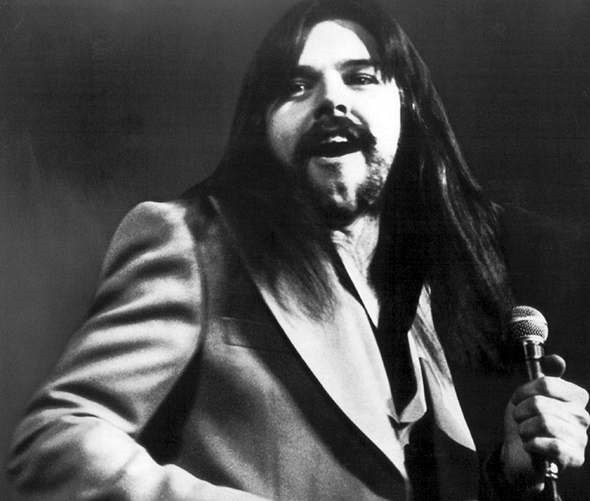
When I was growing up and learning songs from Jerry Silverman’s folk songbooks, there was song called “Jesse James” included in many collections and sung by a wide variety of singers—and any song that has been sung by the Kingston Trio and Nick Cave, by Van Morrison and the Pogues, by yes, by both Peter Seeger and Bob Seger, has to be the very definition of a “folk song.”
Both these guys have sung thoughtful songs, but sometimes you need to think beyond the song yourself
Though “Jesse James” takes some of its spirit from older English ballads celebrating legendary medieval populist outlaw Robin Hood, this American song is more about betrayal (James was killed by a gang associate in his own living room) and about telling us what an all-around bad-ass James was. We’re told he “killed many a man” (never why or how, though bravery is claimed) and that he robbed banks and railroads (but he “gave to the poor” and would “never rob a mother or a child”).
You can see how this sort of thing has a wide appeal. A tale of revenge on the rich and the powerful appeals to many, and banks and railroads were particular targets of late 19th and early 20th century rural populism, but the emotional core of the folk song “Jesse James” is the betrayal and assassination. No matter what the variation in the lyrics, there’s lots of mention of James’ cowardly assassin Robert Ford betraying the man who trusted him, shooting him in the back.
Woody Guthrie took “Jesse James’” structure and melody and produced an incisive, though less popular, version of his own called “Jesus Christ” which cast Jesus as a rebellious populist betrayed by a disciple—though it had to do without the “killed many a man” factor. So popular is the original “Jesse James” ballad, that Guthrie likely knew that Jesse James’ action-hero rep would rub-off on his populist Jesus.
So, it was with interest that I followed up on the reality of Jesse James. One can assume that most heroes have feet of clay, portions of their behavior that show faults or inconsistency, but it turns out Jesse James doesn’t have feet of clay—the whole man is made of half-baked clay mixed with ample fresh dung as filler.
He’s a nasty piece of work. True, his character shows audacity, but that’s not the same thing as bravery. There’s no evidence I’m aware of that he ever killed an armed man who was opposing him, but lots of connections to killings of prisoners and bystanders. It was somewhat true that seeking cash through his robberies was a side-point to him, but his main motivation was to extend, defend, or to restore human slavery, or to take broad revenge on those who sought to end his career seeking those aims.
If there’s a defense for his actions, it would be some listing of the bad things done by his opponents, but then monsters often breed monstrous actions against them. It’s an argument against monsters, not a defense of the actions themselves.
Today’s piece “I Was Reading About Jesse James” starts by asking you to think about this. I thought about trimming the piece’s instrumental coda shorter, but I have left it in. Consider the last half to be time for you to begin to ask those questions yourself. To hear the LYL Band ask those questions to music, use the player below.
John Renbourn, the English guitarist, and the subject of our last episode, once introduced a song in concert by saying he was now going to play an English song, “It’s a nice little melody—alas, there are just not that many good English ones.” As we said last episode, John’s repertoire was vast, so he had many musical traditions to draw from and could pick and choose. I mention this only in passing today, because when it comes to music, musicians accept no borders.
In the US today we have an odd holiday, St. Patrick’s Day, where we broadly and vaguely celebrate—well, not missionary saints. Instead many engage in an approximate celebration of Irishness, where amongst the dyed green rivers and dyed green beers, the “Kiss me I’m Irish” T-shirts, and the saucy leprechauns on everything, there is some occasional notice given to Celtic culture.
Indiana Jones : “Snakes. Why’d it have to be snakes?”
Alas, I have nothing prepared to be dyed green. I expect we’ll revisit Irish writers’ words soon enough though.
Instead I have a piece by the LYL Band’s keyboard player and alternate reader Dave Moore titled “He Hit Me First.” I think his words speak well enough for themselves, so I’m not going to add much here to them. When I asked him if the words were written about a particular incident, he told me that it was inspired by working on a book
Lester Moore: preacher, Dave’s father
collecting some of his father’s sermons. Looking over a pre-publication proof of that book, and the sermons Dave decided to include there, I don’t see where Dave used any exact words from his father, Lester Moore, in He Hit Me First; but I do see how Lester Moore’s inclination and approach informed it. Here’s a few words from a sermon Lester Moore delivered in 1981:
Christianity conquered an empire that was more cruel than Hitler’s Auschwitz. And it was done by Christians who were willing to live the love that God gave them in the model of Jesus.
I sometimes wonder why it is that we still fail to see this. Christians who offer love in today’s world are called ‘soft-headed.’ But what happens when we bluster and threaten in today’s world? Are we nearer peace today because we speak in militant tones?
Psychologists tell us that we get a REACTION equal to the ACTION in the emotional world just as we do in the physical world. When we shake our fist at someone, we get a fist right back. So, who is soft-headed?
Love does not turn its back on evil. It does not pretend that evil does not exist. Love stands firm and insistent. It is disciplined and ready to sacrifice. It cares about what happens to people, whether it has to do with freedom or hunger or health or hope.”
This is a complex subject, and I’ve only given Lester Moore a few words for his position. Knowing the action/reaction pair he speaks of, I anticipate one response, something I could summarize as “That’s all very nice, but in the real world, you may want those fists, that military, those soldiers to protect your music, poetry, and preachers.”
I will note only that Lester Moore earned a Purple Heart, Bronze Star and Silver Star serving in WWII, before he took up the ministry and eventually gave this sermon.
To hear Dave Moore’s He Hit Me First, use the player gadget below.
Today’s post returns to the issue we touched on last month with “Acting.” What is an artist’s proper role regarding politics and social issues? And why do artists who engage in politics draw especial condemnation for doing so?
This may be the wrong question. Does anyone ask, what’s the proper role of a lawyer, real estate tycoon, school teacher, doctor or fry cook in politics? None that I’ve heard of lately. My working answer to this possibly disingenuous question is going to be long, so if you can, bear with me.
Probably the only other profession that has its participation in politics questioned in any way would be clergy, and I think there are a pair of oddly similar issues with artists and clergy speaking on politics.
Artists, at least good ones, by their nature tend to be “progressives.” Please, if you can, skip by any associated political stances you attach to that label, it’s honestly the best word I could come up with. By “progressives,” I mean that artists naturally seek change, novelty, and the advancement of new ideas even if they are built on older ones. Scientists and technologists have a similar bent, but artists like to think of themselves as ahead of even the sciences in this regard. Religious leaders, teachers, preachers, tend to be “conservative.” Please apply the same caution to that word as I asked for “progressives.” By conservative, I mean that they see the values in cultural traditions as possibly being given by supernatural forces that are of a higher order than mere human thought, or at the very least, that traditions are time-tested in such a way that they need to be honored, and to extent that seems reasonable to them, for those traditions to remain unchanged.
Are there “conservative” artists. Yes, they are. It’s quite possible to be artistically progressive (important for good artistic work) and politically conservative. Shakespeare presents himself as conservative politically, but was a culture changing artist. And it’s easy for me to think of some 20th century artists who are not “conservative” but “reactionary,” Ezra Pound for one. Caution again, just a label, let me explain: I use reactionary as a label here to denote people who believe that some important elements have failed to have been conserved, and that change is necessary to return to that state or set of values that no longer effectively exist.
Are there religious “progressives.” Yes indeed. Remember that religious people overwhelmingly believe that certain values are given by superhuman forces, ones that exceed what humans themselves might honor. There has always been a large part of religious thought that says that mankind is “fallen” and so therefore is in constant need for change toward the good, a good that might never be properly illuminated by fallen human thought.
So for both our “conservative” label (clergy) and “progressive” label (artists) we’re talking associated tendencies, not absolute dictates. Humans are complicated after all; but I think that’s one thing that strangely joins concerns about artists and clergy in the political arena. Opponents to conservative clergy and progressive artists see these groups as respectively prejudiced, temperamentally oriented toward resistance to necessary change or moving toward too broad and untested change. In this outlook, their self-selected temperaments that lead to their professions blind them, and so they aren’t viewing things fairly or deeply enough because of who they are. One proof we can see in this is that it’s rare for conservatives to criticize conservative artists in politics, or for progressives to criticize religious leaders who champion progressive causes. The belief here would be that those who go against natural tendencies in their professions must be significantly immune to that issue of characteristic prejudice.
You might next think or ask: well doesn’t a fry cook or a real-estate tycoon have their own prejudices based on their livelihoods? What’s different about artists or clergy?
My answer to that moves to another thing those two professions have in common: they are both pretty much in the same business. When a religious leader gives a spell-binding sermon, or a writer moves us to tears, when a religious visionary tells us what the angels said to them, or the musician brings sounds together in a way that moves us, when the crowd rises as one, with one hosanna on their lips, does it matter here who is at the front of the house?
What is important to our question comes after these remarkably similar experiences. Are we in that crowd, and yet not moved to rise in praise like the others? Is there often a let-down, however vague and hard to explain afterward? A way in which we feel unworthy, a way in which we feel we thought we were changed and yet we are not changed? Do we ever feel tricked: fearing, or perhaps even knowing, that the artist or preacher has engineered this with the techniques of their craft, techniques that might work regardless of the content they convey?
Now what if the person at the front of the room is not an artist or a preacher, but a political figure? Don’t all the same things apply?
So all this is a prelude to a very short, yet puzzling piece, with words by William Butler Yeats: “On Being Asked for a War Poem.”
Why puzzling? Yeats is good example of an artist engaged both in spiritual concerns and politics. In the struggle for Irish independence, Yeats was a leader in the idea that Irish cultural independence as a pre-requisite for political independence. If skeptical of armed rebellion, Yeats consistently pushed for what eventually became the independent Republic of Ireland and he become a Senator after Irish independence. One of Yeats inspirations, Percy Bysshe Shelley had famously said “poets are the unacknowledged legislators of the world.” Yeats in effect revised Shelley’s passage by striking “Unacknowledged!”
Couldn’t make it in the NBA, but an artist engaged in politics
What would you expect from such a man in regards the use of his art for political purposes? You’d guess he’d be all in. Well, he was asked, just like the title says. Edith Wharton asked for a poem from Yeats for book meant to raise funds for Belgian war victims during WWI, and this was his response, which indeed was printed and therefore served its charitable purpose. Here is the entire poem:
“I think it better that in times like these A poet’s mouth be silent, for in truth We have no gift to set a statesman right; He has had enough of meddling who can please A young girl in the indolence of her youth, Or an old man upon a winter’s night.”
So why is Yeats seeming to refuse to put his artist’s shoulder to the wheel and write a “war poem,” as so many others did? Well first, Ireland’s position in WWI was complicated, as it was not yet independent. Ireland’s colonial ruler, England, was engaged. The ancient principle of “the enemy of my enemy is my friend” might make an Irish nationalist (at the least) abstain from taking sides.
He goes beyond that however, on the face of it saying that a poet—“a poet,” unqualified, not “this poet,” or “given that I’m a colonial subject against my will, don’t ask me for poetry about your war.” Poets, he says, have “no gift to set the statesman right.”
I don’t know what was inside Yeats’ mind, nor am any kind of expert on his work, but in thinking about these things, about how the artist, the clergy, and at times that statesmen, are all in the same line of work; an alternative reading has come to me.
That pronoun “He” that starts the fifth line, why did Yeats not make the antecedent clear? Most readers believe that the “He,” the one who’s suited to pleasing an indolent young girl or an “old man upon a winter’s night”—that last, a character who could be that frightened and lonely farmer in Frost’s poem we recently featured here—is the poet, or a poet performing his rightful role. If so, it’s a surprisingly modest, even dismissive, statement of a poet’s worth. However, the last noun before that pronoun “He” isn’t the poet, it’s the “statesmen.” English syntax rules indicate that “statesmen” could likely be the “He.” If I write “Frank went to a Minnesota Timberwolves basketball game, saw Karl Anthony Towns, and he scored 42 points.” We know that I couldn’t score 42 points, even in an empty gym, not because of my athletic ineptitude, but because we usually think the pronoun refers to the last applicable noun before it.
Not the author of this post, but he can play some ball
So did Yeats slyly mean to say that a statesman, like the poet, like the artist in general, is engaged in the same game, fooling the youth and the feeble old?
I have more to say about artists with political opinions in the upcoming week, but to hear the LYL Band and William Butler Yeats “On Being Asked for a War Poem” use the player below.
Today’s post, as I’m reminded specifically today about the clergy and political action by his life, is dedicated to Lester Moore, the father of Dave Moore. You’ve heard Dave reading and playing keyboards here (including the various keyboards in today’s piece).
Tomorrow is called Veterans Day in the United States, but originally it was Armistice Day, celebrated on the day that World War I ended. WWI was a dark dividing line between all that came before and after. Books have been written about only one or two aspects of what changed, but a whole shelf of books could not tell all.
And this year is the hundredth anniversary of one year in that dark dividing line, 1916, when those that thought war was simple, or had to be simple, brought the 20th Century efficiency of the assembly line to killing in the battle of the Somme, where over one million men were killed or wounded.
One of the soldiers in that battle was a poet, Siegfried Sassoon. Last time we took a look at a funny and pious story from World War II, The Deck Of Cards, and had a little irreverent fun with the form of that story in my parody. In this piece, Sassoon’s Christ and the Soldier, the humor is very dark. I’ve heard that it was dark enough that Sassoon did not, or could not, publish it until the war was over.
As usual, I’m largely going to let he piece speak for itself. One thing I like about it is its use of dialog. For some reason, most poems eschew dialog entirely, and I think poetry misses out on a useful device by avoiding it. Musically it’s a mode that the LYL Band visits often, combining organ or piano with electric guitar. I play the guitar part on my Jaguar, a guitar that was once associated with “surf music” but has since had a revival in indie-rock circles. I play it often because its short scale and spring-softened action are friendly to my arthritic fingers.



 Frank Hudson