Light

What is lost when poetry is translated? Robert Frost thought it outright: “Poetry  is what is lost in translation.” Those who’ve read my notes here on the Parlando project know that I hold that poetry is words that want to sing. Those sound effects of the flowing sound of words, the call and response of rhyme, the beats of the dancing syllables—all that music can hardly be asked to make it past the visa-check at the translation station on languages’ borders.

In recent posts here I translated two poems from classical Chinese. As a non-Chinese speaker, I could not even hope to convey what musical effects the originals had.  To better see this as English speakers, let us look the other direction, and think about what Emily Dickinson’s “I’ll Tell You How the Sun Rose” (featured in our last post) would lose if we were to translate it to classical Chinese.

Would Dickinson’s poetic music carry over? In English we have the movement of the common meter/ballad meter in her poem, a beat that is ingrained in those who sing common Christian hymns or know secular songs using this meter in the folk and popular music fields.  Since this is a common form in our culture, we are primed to move to this meter, and rich associations may arise from other times we have felt the same beat. All that is most likely lost in translation.

There’s a pun in the first line. The sun “rose” and is pink. Puns won’t likely make it across the border.

Dickinson rhymed her poem. Translators sometimes choose to create rhyming poems in their destination language, but adding this degree of difficulty to the task may cause other defects in translation as the rhyme is sought.

English sometimes has an advantage when one translates to and from it, because it is the language of a much-invaded island, which was then taken up by a polyglot country across the ocean. English as we know it today is full of words with Latin and Germanic origin, echoes of French, Spanish, German, and even more. Occasionally, puns or even rhymes can be saved when the foreign language has these connections. And metric rules for accents and syllables can be somewhat portable across the European range.

But what if we were to translate from English to classical Chinese? I’ll take an audacious shot at Dickinson’s first verse. The English gloss from the ideograms resulting might go like this:

Tell Sun Rise
Ribbon Sequence
Towers Wet Purple-Quartz
Squirrel Messengers
Hills Unpinned Hats
Birdsong Started
Soft Talk Inside
Sun Recognized

Well, there’s something still there isn’t there, even if we as English speakers see the losses. What remains is Dickinson’s attention to an ordinary event with extraordinary details. And there’s some musical structure remaining: parallelism, theme and variation that doesn’t rely on beats or syllables that can still peak through.

Today’s episode is an English translation from the original Bengali by its own author, Rabindranath Tagore. Despite having attended school in England, despite familiarity with English as a resident of a then colonial province of the British Empire, despite some rumored editorial assistance from renowned English language poet William Butler Yeats, and despite Tagore’s well-attested to genius, “Light”  was published in English in 1912 as a prose translation.

tagore-einstein2

Some amateur violin player (left) meets up with Rabindranath Tagore (right)

 
Paradoxically this may be due to the original’s musicality. I’ll have more to say on Tagore next time, but for now just know that Tagore was a composer and songwriter, and that his songs are widely known and appreciated by millions of Bengali speakers.
 
So, to try to restore some of the impact originally present in this piece, I composed and played a rather dense musical accompaniment for Tagore’s translated words. I did this in ignorance of if Tagore had his own melody for this poem in Bengali. Besides animation and illumination of his English prose, I aimed to combine some of my appreciation his native region’s music and Western electric guitar based music. To hear Rabindranath Tagore’s “Light”  with my music and performance, use the player below.

A Spring Morning

Imagine a world where what you thought was poetry was entirely different. A world where short poems could be as celebrated as longer literary works. A world where the most admired poems could be clear as can be about what is happening in the poem (the poem’s plot) with no elaborate obfuscation in the language; and yet the meaning, the thought and feelings the author means to convey, may remain allusive enough that the poem’s meaning seems to change over time as your experience grows. Imagine a world where poems can seem to have no metaphors at all, poems that don’t so much interpret the book of nature, but seem to be a page from that book itself.

That’s what Chinese poetry seems like to me.

It’s a refreshing change from the Western canon. I can see why a grumpy modernist like Ezra Pound, who wanted to sweep away the rot of his culture, would find it influential. Or why the forefathers of the “beat generation” in the western United States looked further west than California for a way to apprehend reality on the page.

I’m no scholar of Chinese poetry. These are the feelings of someone who likes what he reads and finds lessons in translating it.

For today’s post, I’m going to go over how I work on these translations with the aim of stripping away the mystery. I’ll use a short poem by Tang Dynasty poet Meng Haoran “A Spring Morning.”  It seems to be a good first task for Chinese translation, and the original poem is apparently known almost to the level of a nursery rhyme in Chinese.

Meng Haoran

Texas guitarist Billy Gibbons…whoops, no, this is Meng Haoran


I do not read Chinese, however, it’s now possible to find glosses of many poems literally translated from the original ideograms. Here’s what “A Spring Morning”  looks like when each of its lines five characters is translated into an English word :

Spring sleep not wake dawn
Everywhere hear cry bird
Night come wind rain sound
Flower fall know how many

The first problem is there is no punctuation, nor anything like English syntax. Still that’s an interesting way to approach a poem, where in English we are often trying to find the word to fit our flow of thoughts and music, but in working from this gloss we have the words, or at least “a word,” but need to find the flow instead.

I decided to render the first line as: “I slept late this spring morning, awaking just after dawn.” keeping the season (spring) and the more specific time of past the daybreak moment. I added late, which is not in the glosses’ words, because I thought the poem needed some reason why past the dawn was significant when I connect it with the third line.

The second line required less thought: “From everywhere I hear birds calling out.” The main choice here was the word I’d use for the sound of the birds. “Cry” used in the gloss has connotations of sorrow in English (not always, for example “war cry”) and I didn’t want to tip my hand toward sorrow in this line. And in Spring I know these bird calls, they are in fact just that: birds calling out for potential mates, birds setting up their territories, birds that want to say something to other birds.

The third line I write as: “Last night I tossed and turned in the sound of the wind and the rain.” This gives a reason for why the poet slept late, adds a note of drama and, in a particularly personal choice I made, alludes to a traditional English song refrain “Oh no, the wind and the rain.”

Now the final line: “Who knows how many petals have fallen?” Here seeing other people’s English translations helped, as it otherwise might not be clear that this is a question. In a vacuum one might render this as “I know how many flowers fell.” And that ending has validity, essentially saying “(in such a storm as last night) I know for sure how much my lovely spring blooms are going to be damaged.” Others who know more about Chinese idiom have chosen to make this a question, so I’ll trust that, and this makes the concluding thought more like “(I’m worried about the damage of Spring storms. but it was night and I was asleep) and no one can change the way Spring does this, blooming and storming, so it’s a mystery to you and me.”

Overall, notice how this modest four-line poem, suitable for children, encapsulates a sophisticated thought, one that young children wouldn’t need to understand yet.  It shows us Spring, as a sleeper sleeps past the now earlier dawn, through a rain storm that grows and destroys (compare our nursery rhyme “April showers bring may flowers” meaning “you might get wet, but it’s good for flowers” vs. this Chinese storm), alludes subtlety to the love and war of birds, and concludes with a wise line that says our ability to comprehend this cycle of growth and destruction, change and renewal, is limited. To a child, that last line may mean no more than the thrust vectors that allow that “a cow jumped over the moon;” but to an older adult, it reminds us more, that we will never know.

For the music to accompany “A Spring View”,  I used some drums playing an odd rhythmic figure, fretless electric bass, electric guitar, and two soft synthesizer voices: a washed out horn and another which is supposed to suggest a Chinese flute, which unlike Bob Dylan I did not take from a dancing child. Today’s audio piece is very short, and to play it use the gadget below.

Spring View

I’m often attracted to Chinese poetry, and I’m not sure why. Perhaps it’s the deceptive simplicity to the images, that hardly seem like images at all if one expects the showy metaphors used by many western poets. The concision of many of the most admired Chinese poems can be shocking. And to me there seems to be a radically flat broadness to the way some of the poets consider society and politics. Like a lot of my favorite UK folk songs, the tales of royalty and servants, peasants and generals, saints and drunkards seem to treat them all with the same even diction and consideration.

From what I read, Du Fu is highly regarded as poet in Chinese culture. He wrote in the 8th Century, about the time someone in Europe was compiling Beowulf  between long drinks of mead out of cups made from skulls. Du Fu’s time was a chaotic one, with the Chinese kingdom falling into rebellion and civil war. “Spring View”  is his response after his side had lost the battle and he was in disgrace.

Du Fu

Du Fu:  the red trucker cap or the pink pussy hat?


In translating Du Fu’s “Spring View,”  I thought of our own times, particularly here in the United States, three months now into some kind of change. Alas for Du Fu, I became so enamored of seeing our own current events in his lament that halfway through I started to get more “free” with my translation, until by the time I reached the final line, I chose to conclude on a different thought altogether from the original. Consider it a theme and variation composition.

I do not read Chinese, but here is Du Fu’s “Spring View”  as written:

春望

国破山河在
城春草木深
感时花溅泪
恨别鸟惊心
烽火连三月
家书抵万金
白头搔更短
浑欲不胜簪

Musically this piece uses 12 string acoustic guitar, an instrument I love to struggle with. The overtones and extra harmonics of the 12 strings are the attraction, and the danger too, as they can clash a bit. Some musicians work very hard to try to even out the intonation of those notes to minimize this, leading to one of my favorite music jokes. Question: how long does it take to tune a 12 string guitar? Answer: Nobody knows.

JF30-12

“Every politician should be issued a 12 string, because you never really tune it, you just negotiate with it.”


My approximate ear has come to embrace the somewhat woozy sound of the 12 string for much the same reason that loud electric musicians may choose to welcome feedback or that electronic musicians select the detuned effects of things like ring modulators.

To hear Spring View (after Du Fu)  use the player below.


To John Renbourn Dying Alone

A perennial question asked of songwriters is “Which comes first, the music or the words?” Here with the Parlando Project, the words often were written centuries before the music; but with the pieces where I write both the words and music, the method is for the music to come first with the words.

By that I mean, I tend to compose the words first, but the words emerge for me as melodies do, as a series of sounds that may precede any idea of their meaning. And even when I sit down to write “about” something, the improvisation of their melody can lead me to change what I am writing, even in the end, change what I believe I think about something.

While it’s a good assumption that my methods may come from my visceral attraction to music and poetry, this sense that the act of writing shapes, even reshapes, the thought is a common finding among writers. Have you ever thought yourself, “I didn’t know what I thought about this until I wrote about it?”

So where do melodies come from, whether they are melodies played on a string or melodies played on words? The answer, after millennia of human thought and knowledge gathering, is “We don’t know.” That area of knowing that it is, but not knowing why, is the genesis of myth.

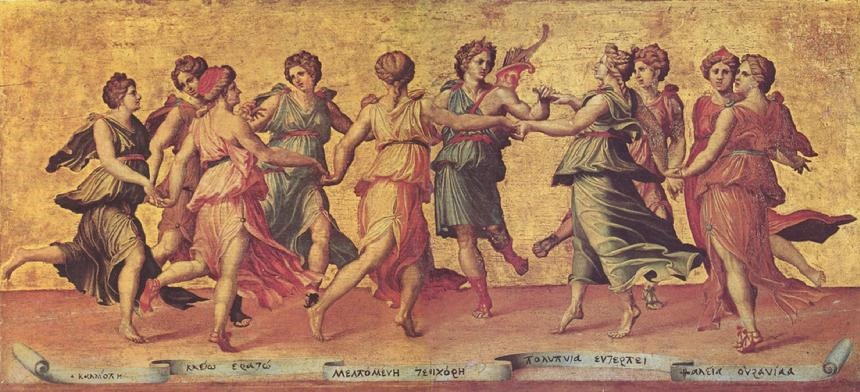
The classical Greeks and their Roman inheritors ascribed these creative incidents to “the muses”—nine goddesses that could engender music or poetry in humans. Their stories told of the bad ends that would come to those who would mock the muses by claiming they could practice the arts without them.
This sort of thing gradually fell out of favor. Shakespeare in his 38th sonnet claims his beloved is as good or better a muse as one of the nine classical muses, and by the 19th century his humanistic idea that another human could serve as a muse to an artist became the common myth.

Nine Muses and Apollo

No, you didn’t count wrong. I think the 10th dancer is Apollo, wearing the knee-length number.


So, what use then is this old myth, the idea of an inexplicable outside source that informs artistic expression? Here’s one use I’m attracted to: it lets the artist relax a little bit about their efforts. Ever try to be inspired? That rarely works. Even the inspiration tricks that worked once, twice or twenty times may wear out and bring nothing. Have you ever been impelled with an idea, shape, thought, or melody when it’s inconvenient and unexpected? Ever beat yourself up when the ideas and expression just won’t come? Using the myth, the metaphor, of the muses you can get a handle on these things. This does not mean you don’t work at art. This doesn’t mean that discipline isn’t a valuable artistic trait. This doesn’t mean you sit on the mountain top and dawdle. Worshiping and honoring the muses just means if you sit on the mountaintop and nothing comes up, you might try the valley next time, but that “nothing” is not your fault. If you look for inspiration 365 days a year and it only comes around a dozen times, that’s a dozen more times than it would come if you never looked. If you look for inspiration only a dozen times a year, it will take 30 years to do what you could have done in one.

That is a long introduction to today’s piece “To John Renbourn, Dying Alone.”  John Renbourn was very good British guitarist and singer. Beginning in the 1960s, and with a small and wondrous circle of his contemporaries, he was fearlessly eclectic: blues, jazz, traditional British Isles folk music, American Appalachian ballads, 19th century broadsides, Asian music, modern singer-songwriters, or Renaissance tunes—all that could show up at a John Renbourn concert, or on one of his recordings.

John Renbourn

John Renbourn. The picture is silent because he could be playing anything on that guitar.

 
Two years ago this month, he didn’t show up to demonstrate once again his amalgamation of music at a scheduled date in a Scottish club. He was not mocking the muses—it was soon found that he had died alone in his modest home.

The day I heard the news, I hoped his suffering had been brief, or if not brief, useful. I thought of him like Frost’s solitary man in “An Old Man’s Winter’s Night,”  or my father imagined in “A Rustle of Feathers,”  or my own dear friend John who had died alone at home a few years earlier. I thought of John Renbourn and wished to apply this myth, this lie, of the muses to this man. An artist like John Renbourn, who informed us with his art, listened better to the muses than most any of us.

You can listen to my audio piece “To John Renbourn, Dying Alone”  by using the player below.

Bar Tryst Late Winter

I’ve been on the serious side for the last few episodes, but this time it’s going to just be a late night, late winter jam called “Bar Tryst, Late Winter.” I wrote the words to this one—at least I think I did.
 
Do you know the story of how the song “Me and My Uncle” came to be? It’s a great cowboy song, recorded and sung by many people, including The Grateful Dead. Sometime in 1964 or so a songwriter named John Phillips who had toured to no great acclaim during the American Hootenanny pop-folk era in the early Sixties got a royalty check for writing this song. Seems Judy Collins has recorded it on a live album, and his first thought was to set the record straight. He got in touch with Judy Collins and told her that the writing credit must have been a mistake, that he didn’t know anything about any such song.

Collins then proceeded to tell the surprised Phillips that both of them had both been at an after-concert party in 1963 where a heady mix of intoxicants were present. During this night she had heard him compose this song on the spot. Luckily someone had run a tape recorder during the party, and from that tape she had learned the song.

Judy Collins

Such a good song-finder, she could find songs the songwriter didn’t know about!

 
Well, Judy Collins was not involved in my story, but it’s more or less the same. Sometime early this century I was looking through some old notebooks from the 1970s where I had written some things, and there on a page in my handwriting was this piece. Not only had I had no recollection of writing it, I had no recollection of any night quite like it describes. It’s possible I imagined the scene, using elements of things I had experienced,  It’s even possible that I didn’t write it, but why would I transcribe something of that length in the midst of other things I was writing?

Shortly after rediscovering it, I recorded this live take with the LYL Band and a drum machine. The guitarist I was playing with at that time was Andy Schultz who pulled out a lot of improvement in my playing as we wove lines between the two of us. Like the composition of the words used here, I can’t always tell when I listen to recordings from this time which of us played which guitar line back then.

To hear the LYL Band perform “Bar Tryst, Late Winter,” use the player gadget below.

Potential Graveyard

Our last episode featured words by Phillis Wheatley, whose story I first heard about in a graveyard.

I was taking a walking tour in Boston, and there was a lot for the guide to talk about as we strolled through the Granary Burying Ground near one end of Boston Common, the cemetery where many of the instigators of the American revolution are buried. That’s where I heard Phillis Wheatley’s story.

Granary Tombstone Boston

the Granary Burying Ground, Boston Massachusetts


There’s no tombstone for Phillis Wheatley there, and no record of where she was buried, though it could have been there. So, we don’t even know her graveyard, but we know her story.

Only a few days after wrapping up the work on the Phillis Wheatley episode, I happened to catch Viola Davis’ Oscar acceptance speech. Like David Harbour’s speech earlier this year, it compressed an artist’s calling into a few well-chosen words, and so, I set about creating today’s audio piece.

I trimmed and recast Davis’ words a little, turning it from her own pledge and testimony, to an artist’s pledge than we all can take:

There’s one place that all the people with the greatest potential are gathered – that’s the graveyard.

People ask me, what kind of stories do you want to tell?

I say exhume those bodies, exhume those stories,

the stories of the people that dream big and never saw those dreams to fruition,

people who fell

in love

and lost.
Become an artist

They are the only profession that celebrates what it is to live a life.
Here’s to August Wilson, who exhumed, and exalted, the ordinary people.

There are only a few words here, but the opening sentence announces itself strongly, while going—to my take on it—in two directions. “There’s one place that all the people with the greatest potential are gathered—and that’s the graveyard.” In that magnificent sentence, we may think of all the potential that’s totaled up short in every graveyard: potential lost due to life’s duration, lost due to injustice, lost to just bad luck, potential never reached for the many human failings. One of the most common of those human failings is to just not try, and when we fail to try, the graveyard is where that potential will end up.

This direction, where the sentence could go, is not where Davis takes us however. She reminds us: there, in those graveyard lives is that precious struggle, the part-ways reach, all the somedays that someday may see victories. We should “exhume those stories,” she says.

And then Davis’ makes a daring statement. Art “is the only profession that celebrates what it is to live a life.”

Can that be so? Certainly, historians and social scientists collect and analyze information about lives too—but perhaps they must step beyond that role to light the footlights that art does. Art is the transference of the emotions and the perceiving inner being between people.  Only at that level of communication can the celebration of what it means to live a life be reached. That’s what we do when we create art, or when we consume it actively.

Davis repeats her specific charge to artists, as she praises the creative acts of August Wilson, the writer and playwright: art’s radical empathy empowers and obligates artists to tell other people’s stories.

Writers listen to her here, listen to her evoke August Wilson: even your story is not your story. It’s your great-grandparent’s story, perhaps it will be your great-grandchild’s story. The graveyard, the grocery store and the stars are full of stories. Allow them to ask you to tell them.


Viola Davis delivered her words much better than I could, but today’s Parlando Project piece “Potential/Graveyards” adds the music I composed and played to go with my recasting of them., To hear this short piece, use the player below.
 

Frances

Here a piece based on a short, incomplete poem written by a teenager who went on to do other things. You can tell he’s a clever young man. He’s infatuated with a neighbor girl, but there’s no such thing as texting yet—no such things as telephones either. Thankfully, love songs are a well-established technology, so he sets to work on one.

To make sure that she knows he’s serious about her, and not the other young ladies he’s been seen cavorting with, he decides it’s not just going to be a poem, it’s going to be an acrostic. The first letter of each line will, if read downward, spell out her full name.
 
If John Lennon had wanted to write “Oh Yoko” as an acrostic, it wouldn’t have added much difficulty to his verse. Alas, our teenager’s object of affections is Frances Alexander. Well it could have worse, if he was a teenager who wanted to write a love song to the New Zealand singer who performs as Lorde, and wanted to use her full name, he’d have to write a 27 line poem to Ella Marija Lani Yelich-O’Connor.

He only needs 16 lines to prove his love.

GW Poem

OK, he’s finished the “Frances” part, now onto “Alexander”


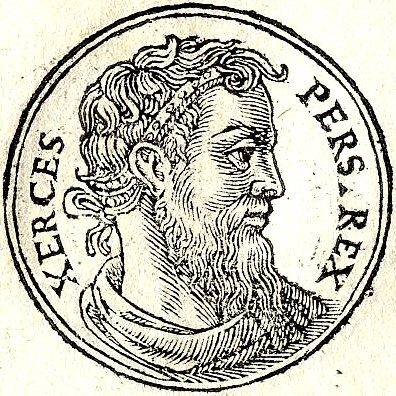
He gets to line 11. Gotta start with “X.” He grabs onto Xerxes, the famous Persian leader and general to fill out his acrostic, but one line later he runs out of gas and just drops the poem before finishing.

Xerxes_I

Our poet got his face on some money too


Didn’t finish the poem, didn’t get the girl, but our teenager like Xerxes became a famous general and eventually his country’s leader. He’s got a birthday coming up on the 22nd, but they celebrate our boy George Washington’s birthday as a US holiday today.

In writing the music for this piece, I decided to just take Washington’s words seriously. Even if the sentiments he uses are somewhat conventional (the “my love outshines the sun” trope was old enough that Shakespeare made fun of it more than 200 years before Washington got to it). Love songs sometimes make no effort to be original, and if done well, the human commonness of the experience of love becomes the point.  Here, even if he was following his acrostic plan, young Washington takes a darker turn as he starts the second part of his poem, and I tried to bring that out in my version. To hear it, use the player below.


Boris Pasternak’s February

A couple of posts back I mentioned that we’d meet Yeats “rook-delighting heaven” again as we visit some more expressions of the month of February. Well, here’s one, Boris Pasternak’s “February.”

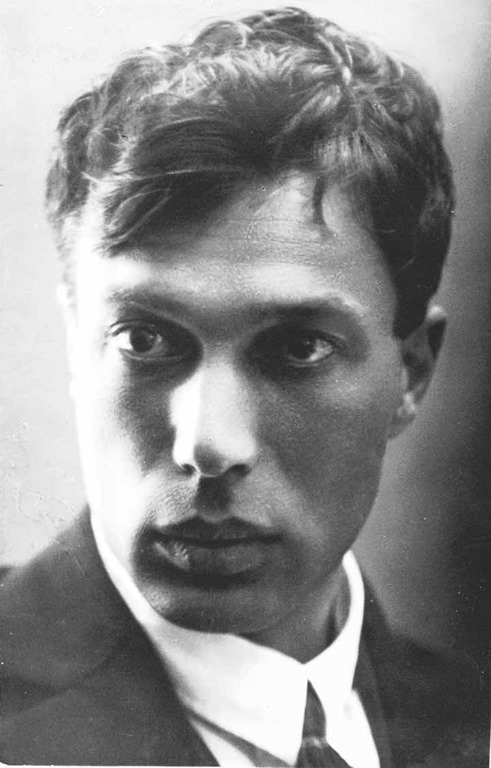
Coincidently, it appears that Pasternak wrote his “February” within a few months one way or another of Yeats’ “A Cold Heaven.” And both poets put ravens in these poems, though Yeats’ crows show up early, and Pasternak’s drop in near the end.  Though Yeats wrote his “A Cold Heaven”  in more temperate Ireland, it resonated with a Northern Midwesterner like me with its burning ice and unwarming sun. Pasternak, presumably familiar with a colder climate more like my own, sets the thermostat on his February to an early spring melt; but this is a muddy, sodden spring. His black spring holds cold rains, mud, and slush—more like a real early spring than a happy-butterflies-and-wildflowers May spring.

Young Boris Pasternak

Bluesman?


I’m not fluent in Russian, but the challenge of translating this lyrical poem from Russian to English has attracted many. As I recall, when I tried to put together the text for this performance, I used several of those as gloss, tempered with Internet translator apps fed the Russian. I know nothing of Russian diction, so I aimed for an informal American diction, and unlike some translators, I didn’t try to keep the original poem’s rhyme scheme in English—after all, I knew I’d be supplying music for this.

I believe the music I choose here, bluesy rock’n’roll, while American, is fitting. I hear Pasternak here singing the Russian Blues: blues like unto our great American music of endurance, and rock’n’roll that cares only to seek the state he speaks of in the last two lines:

The more haphazard, the more true, the poetry that sobs its heart out.

So I’ll be putting this post up, and then I’ll go out in our haphazard too-early spring February myself. I too will head out past the noise of city church bells, past the cars, biking to the edge of my city where I’m going to buy George Saunders sad new novel.

Renee Self Portrait in Mirror cropped

Today’s episode is dedicated Renee Robbins, who once was lost on the edge of Moscow herself, the last passenger remaining at the end of a bus route. She found her way back long enough for us to know her.

To hear the LYL Band perform Boris Pasternak’s “February” use the player that appears below.

2ebruary

I decided on my own that Yeats’ piece in the last post was about February, but I have some other pieces that say, right out, in their own words, that they are about our current month. Here is one, “2ebruary.”

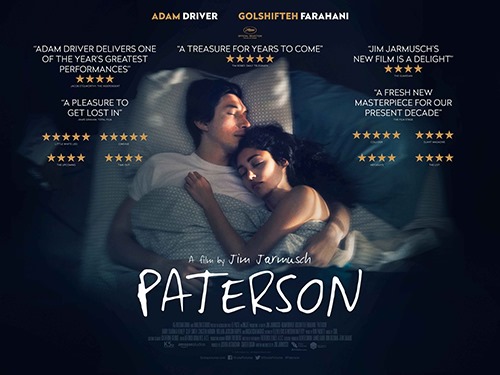
Earlier this month I saw Jim Jarmusch’s film, Paterson.”  This movie succeeds, in its modest and appropriate way, to do something impossible: to film poetry, or more exactly, the composition of literary work. It does this two ways: by having a writer, its central character, portrayed as a regimented, routinized person, grounded in a particularized working-class city and job; and then by having him compose “aloud in his head” his work against this background.

Paterson Poster

this movie has no light-sabers

This is a wonderful choice. The city, the routine clock of the days, the job, become the metrical, musical background for the flowerment of the writer’s consciousness that becomes the poems.

Though the movie is set in the New Jersey city of it’s title, the filmmaker refers often to the “New York School” of poetry, using the poems of Ron Padgett to stand-in for the work of the film’s main character.

The New York School uses a lot mid-20th Century Modern ideas, combining them into various combinations, depending on the individual writer associated with the movement. Some of it can be obscure and abstract, taking off from the same ideas that launched abstract expressionism in painting around the same time. But some also find a tenderness and wonder in the abstract patterns of urban existence, a Pop Art with a depth beneath its surface able to hold a beating heart.  At a point in the film, the main character opens his noon lunchbox to eat, and to write down the intermediate state of his morning’s writing aloud in his head, and there like a Thermos, nestled above an orange and a sandwich, is Frank O’Hara’s “Lunch Poems.” It has to be there.

Lunch Poems Cover

Don’t loose your Lunch Poems

O’Hara wrote in a great many styles, but this slim chapbook features several poems that someone once called his “I do this, I do that” poems. where O’Hara walks about, seemingly composing aloud in his head amidst daily tasks. These are my favorites, because, like “Paterson,” these poems seem to be about their own grounded creation in a city of routines, reflected inside the moist, encased, flowing mind of their writer.

Today’s piece “2ebruary” takes off from that Frank O’Hara mode, as I often like to do, though I’m an old man, writing in another century, in the Midwest, not New York City, and my old joints creak best on a bicycle.

Schwinn IG5 outside Turtle Bread in Winter slush smaller

a scene from today’s piece, breakfast not included


“2ebruary” is a short bicycle journey thinking of history, and past the events that are turning into history that we can still change. I take a pause, as every American should, to note that American culture is made from those who came here carrying something from elsewhere. And Midwestern culture? For many, those packing trunks are hardly great-grandparent’s-age-old, at the eldest.

At one point in the journey, I note those that had no trunks when they came to America, they had only their chattel bodies and souls—and even of those two things, the former had been appropriated by others for handy profit. What could they unpack? Well for one thing: the largest and grandest part of our American music. Our history is short compared to many nations, but it contains mighty things like this. We who are joining that history, already in progress, can turn it one way or another. Which way do you choose to turn?

To hear the LYL Band perform “2ebruary” use the gadget below.


A Cold Heaven

We’ve already met Irish poet William Butler Yeats with a brief poem earlier this month. Now his words return with a piece suitable for the aftermath of Valentine’s Day, for “A Cold Heaven” is the tale of a rejected valentine. It’s also fitting, because Valentine’s Day comes in the midst of late-winter. February, as Margaret Atwood put it, is a “month of despair, with a skewered heart in the centre.”

Here in the northern Midwest it was a “seasonable” 19 degrees F. this morning, and hardy ice has outlived any soft covering snow. There is a promise of a thaw this weekend, but that will only recall mud and the detritus of what the snow once remembered inside it.

Critics from more temperate climes praise Yeats for his oxymoron here of “ice burned,” but up north we know that’s just what happens to skin in the cold, with no need for poetic intercession. And my back yard, my cities’ parks, and our central greenway have been home to that “rook-delighting heaven” he speaks of as well. Strange isn’t it, that the bird of death is so smart, so intentional, so sure, and yet inscrutable.

In “A Cold Heaven,” Yeats’ winter and his death-omen birds lead to a missed and misunderstood, “crossed” love; and he takes the blame: if not for the season, for the failed love. Like so many, and without the succor of chocolate or flowers, he is left in the rejected lovers worshipful, davening stance, “rocking to and fro.”

But he is a poet still! “A Cold Heaven” breaks itself in two with an image that is also a pun: “Riddled with light.” Yes, we Northerners know that winter light. Brighter than summer, and paradoxically the sign of a piercingly cold day. He knows his love’s in vain, and yet no amount of blame that he can assign himself—even if he exhausts “all sense and reason” to catalog that blame—can account for the failure of his love. What can solve this “riddle?”

Yeats begins again, with a majestic “Ah!” only to take us on a short ghost story, the spirit of his love in purgatory, in bardo, naked as a corpse or as a lover, wandering and asking why clear skies, clear answers, seem like punishment.

So to all those whose valentines were not accepted yesterday: peace. Such riddling has no end to its depths. I know this: that hole is too deep to be plumbed, just know that it’s deep. The correct prayer for such things is unknown.

Yeats and Gonne

Look, maybe she’s just not that into you…

As a performance, “A Cold Heaven” had some challenges because Yeats makes use of enjambment, where lines break in the middle of sentences; and where the meaning too, often forks, seeming to mean one thing before the line break and another afterward. Since I like to let the lines “breathe,” so that the music can interject, and so that the words’ impact can sit a little bit before the next line, I resorted to repeating a few words. There are also a couple of other audio tricks in the piece. The string parts, particularly at the beginning have a “backwards tape” articulation where the sound swells from louder to silence, in the reverse of the normal decay of strings, which I hope signifies the drop into the past in Yeats’ text.

To hear “A Cold Heaven” use the player gadget you should see just below this.