Sonnet 18

We’ve made it to more than 90 posts into the Parlando Project without doing any Shakespeare, which I believe may be some kind of record. It’s not an intentional slight, it’s just that we’ve been busy with other words.

I grew up in a little Iowa town named Stratford, the same name as Shakespeare’s birthplace, and this coincidence instituted by land speculators a hundred years or so before, impressed on me the importance of poetry. This was not the only misapprehension of my youth, but it was long lasting one, as here I am countless decades later, delighting in words being costumed in music.

Avon RiverBoone River

Two summer’s days: one of these is the Avon river through the forest of Arden in England,
and the other is the Boone river near Stratford Iowa in the U.S.


Today’s episode uses the words from Shakespeare’s Sonnet 18, “Shall I compare thee to a summer’s day.”  Like many Shakespeare pieces, there are lots of performances of it around, which is one the of the values of Shakespeare—you can contrast your performance against others. Many performers of Sonnet 18  like emphasize the wit in it; and wit there is, with it twisting around the idea of comparing one’s beloved with the beauties of nature, which is developed further as the idea that the inconstancies of nature necessarily include aging and death.

Others like to embody the sensual in the poem, the lush language. The third line ends with “the darling buds of May,” a phrase, good enough to be swiped for the name of a fine Welsh 90’s indie-rock band. I don’t think you can escape from that musical language. The entire second quatrain uses near and exact rhymes for each line, a sound that rubs and slides against the ear.

I made two choices in emphasis that differ from others. First, I wanted to bring out the brag in this. The speaker in this poem, who the author is at the least pretending to be, is claiming that he can make his beloved immortal by the power of his verse. No small claim—but in Shakespeare’s case, it’s not bragging if you can do it. And to add to the swagger, I stressed the beat a bit more than I might usually. I made the speaker a little less coy, a little less playful, and little more assured that he’s more than the “upstart crow” that he was seen as by some early in his career when he was writing his sonnets.

Musically I declined to use my main instrument, the guitar, this time. Once I had the drums and bass down, I thought they were enough to support the words on their own, so I added only some scattered piano chords to help outline the harmony.

To hear my performance of Shakespeare’s “Sonnet 18, Shall I compare thee to a summer’s day”  use the audio player that appears below. Today’s piece is quite short, less than two minutes long, so it’s a good way to sample what the Parlando Project is doing. If you like it, we have more than 90 other audio pieces available here using various words combined with various music.


Adlestrop

Remember that “Reverse British Invasion” that happened 50 years before the Beatles landed in New York in 1964, when American modernist poets landed in London just before the outbreak of WWI?

One of those American poets was Robert Frost, and he soon struck up a friendship with an British writer Edward Thomas. Thomas was in his mid-30s by then, and he was writing this and that for whoever would pay, but he was not writing poetry. Frost and Thomas enjoyed walks about the Cotswolds together. Frost was encouraging Thomas to write poetry. On his part, on the walks Thomas would often puzzle at which country lane to take a crossroads, and Frost noted that.

Last summer I had the opportunity to take my own ramble about the Cotswolds with my wife. My itinerary was mixture of bicycling with some linkages between sections via train. During the biking part of the journey we often found ourselves lost. Just as with Thomas and Frost back in 1914, there seemed to be few straightforward crossroads and few road makers on the country lanes.  It was the hottest summer week in recent record in England that year, and at one train station stop the arrival of our train kept falling farther and farther back off-schedule as the trains were slowed and sometimes stopped by the fear that the heat would buckle the rails.

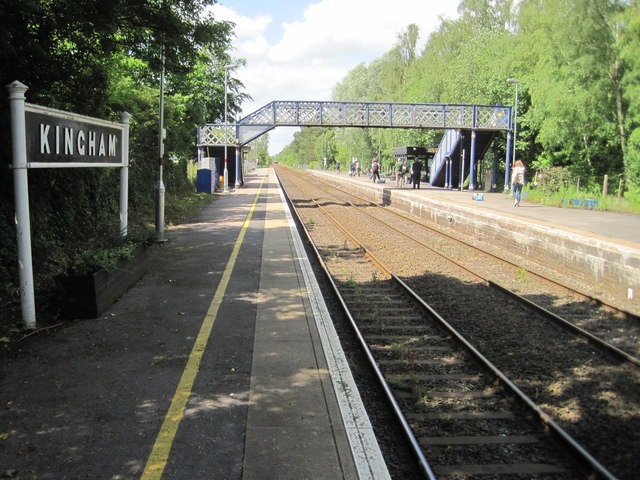
Well there was nothing we could do about it. We spent the next hours just sitting in the Kingham railway station in the heat we were somewhat accustomed to, watching the wind play with the trees and foliage, listening to the birds.

Kingham rail station

A few hours listening to the trees, breeze and birds at Kingham


This month in 1914, Edward Thomas had a train ride that stopped “unwontedly” in at the small Cotswold village of Adlestrop. Despite being a beginner at poetry, Thomas seemed to immediately grasp the modernist concepts, perhaps because he had no outmoded Georgian and Victorian habits to break.  His June experience lead him to write today’s piece, named after this village rail stop: “Adlestrop.”

adlestrop station sign

No rail stop in Adlestrop today, just this sign and bench remain. The present stop in Kingham is 3 miles away.


Thomas’ “Adelstrop”  has most of the markers of a modernist poem as Frost was writing them. It’s metrical, but not so strictly as to call to much attention to that. It’s rhymed, but again, the rhymes are not showy. There are no “hey look at me, I’m a clever simile or metaphor for something” tropes. In the place of that is the clean presentation of an exactly observed moment in time, peaceful, off the clock, yet clearly set in a time when the countryside’s nature and the train were in equilibrium. Thomas didn’t know it, but the moment in the poem gathered context after he wrote it, his village train-stop happened only a few weeks before WWI broke out, and England and Europe would be changed forever.

Robert Frost had returned to America, but he sent his friend a poem he had just written, one that was inspired by their Cotswold walks together, The Road Not Taken.”   Frost’s poem famously ends with the lines:

Two roads diverged in a wood, and I—

I took the one less traveled by,

And that has made all the difference.

It’s been Frost’s fate that his irony and dry wit, as well as his uncompromising assessment of human nature, has often been missed by his readers. I first read “The Road Not Taken”  and thought, as do many to this day, that this was a simple homily— a boast that taking one’s own, perhaps less popular path, is the road to success and happiness. But read again, more closely, Frost was gently making fun of his friend’s indecision, Thomas’ puzzling at if there are meaningful differences between the two choices in their rambles.

Thomas, though himself a discerning poet, missed Frost’s intent as well. He thought it was reminder of the necessity of making correct decisions, and he warned his friend that readers would misunderstand it. At the same time, Thomas was mulling his decision regarding enlistment in the British army, which was grinding up men at a prodigious rate against the weapons of modernist war. He enlisted, and within a few weeks of deployment in France, he was killed by a bullet through the chest.

Sometimes when I compose music for one of these pieces, I find at the end that I have written something that reminds me of another piece of music, one I can’t quite place. Often when I solve this internal puzzle there is a mysterious connection revealed. The music I played and recorded for Edward Thomas’ “Adlestrop” reminds me a bit of the Edgar Broughton Band song Evening Over Rooftops”—and the hidden connection for all that (different but shared) flanged and phased melody over an insistent strum,  is that like Thomas’ fine poem, they both are hymns to the eternal moment.

To hear my performance of “Adelstrop,”  use the player below. And another reminder that you can use the social media share buttons here to let other people know what the LYL Band and myself are doing here at the Parlando Project.


Zalka Peetruza

Here’s a piece with words by a poet I knew nothing about until this year, and still  now know next to nothing about: Ray G. Dandridge. Born in 1882, Dandridge grew up and lived his life in Cincinnati Ohio, and I read that he was sometimes called “The Paul Laurence Dunbar of Cincinnati,” presumably because he shared the Afro-American ancestry of Dayton, Ohio’s Dunbar.

Dandridge was bit younger than Dunbar and he lived and wrote for twenty years after Dunbar’s death, but he remains less well-known and less read today than Dunbar, perhaps because he seems to have never traveled outside of Cincinnati. In his youth, he was partially paralyzed by polio, and he supplemented what he could earn writing by taking orders for the local coal company.

Perhaps Dunbar’s best-known poem is We Wear the Mask,”  a supple lyric that sings the—at the least—duality of needing to present a composed face while living with the realities of racism. Today’s episode, “Zalka Peetruza, Who Was Christened Lucy Jane”  is one of Dandridge’s best-known poems, and it also deals with this burden of duality, but Dandridge takes on another layer of intersectionality by making his subject a black woman. Dandridge’s Zalka has found herself, rechristened as a non-American exotic, dancing “near nude” yet wearing even more layers of Dunbar’s mask.

Josephine Baker1

Perhaps Josephine Baker made the exotic mask work for her?

For my performance of Ray G. Dandridge’s “Zalka Peetruza, Who Was Christened Lucy Jane”   I fired up a turgid synthesizer patch to carry much of the lead line over a swaggering beat, and you can hear  it by using the player that appears below. If you like this you can make use of the social media sharing buttons to let others know what we’re doing here at the Parlando Project.

Frutiger

Here at the Parlando project we say we’re where music and words meet.  Sometimes words sing without overt musical notation. Sometimes music speaks to you without speech. And since Dave and myself also play the music heard here, it gets to speak for us, we get to say this music. Every musician, whatever their level of talent, skill, and knowledge gets to experience this.

Today’s piece, “Frutiger”  is an elegy for an artist, Adrian Frutiger, a typographer who created typefaces, the shapes of letters we might use to spell out words. Typography is an unusual art in that we may invest in words a great deal of meaning but the actual ink-shapes that present them on a sign or a page may seem immaterial to that process. Like the music we sometime forget to hear in words, those little carved paintings of letters may disappear below our attention, but their legibility, and even their subtle pointilliste shadings in blocks of text, are still part of our experience of printed words.

Frutiger’s most widely used typeface design bears his own name, and it often chosen for signs because its letter forms excel in legibility during inclement weather or from a distance. For example, one of the Frutiger typeface’s  distinguishing features is use of square dot on top of the lower case i, which gives it a tiny advantage in the necessary discernable gap between the letter and the dot. In the words of the “Frutiger”  piece, I call that out as if the square dot was a diamond rotated (“diamond” just brings in more meaning) and lets me vaguely pun on the Eye of Providence.

Frutiger Sample

A line from today’s piece “Frutiger” in the like-named typeface

Three minutes in, and this little elegy’s words are over, but I start a guitar solo. At two minutes in length, that solo will be shorter than the spoken word part, and it was only indirectly called forth by those words.

That solo says what? Loss? Anger? An urgent and puzzled prayer? A man using his limited musical skills? A patient LYL Band allowing it to occur?

All I can say is that says what I was feeling that day, and today.

To hear today’s audio piece “Frutiger,”  use the player that appears below.


Grass

In the last post, I presented Ezra Pound’s rant about the society that lead so many to their deaths in WWI, deaths that included several of his own modernist artistic circle. Taking it personally, Pound exclaims that their “fortitude as never before” for change and their “frankness as never before,” lead only to equally great “disillusions”. He sees lies and liars leading others into the war and their sacrifices, and only liars as triumphing.

Speaking repeatedly about liars and lies and illusions, Pound’s “These Fought” would not be a very popular choice for a Memorial Day speech then, just as it probably would not be one now. If you agreed with him, you might enjoy his precise inventory of folly. If you didn’t, you’d say he was unappreciative of his friends (and so many others) sacrifice, and that his disbelief in the stated high motives for the war could be mere cynicism. I can hear what some voices must have said then (and would say now): “You can complain about what is imperfect, perhaps even foolish, but what’s your solution, other than to stand to the side and write poems?”

Alas for Pound, he did propose a solution. It was a solution chosen by many others disappointed after WWI, a fresh modernist conflation of race hate, nationalism, technology and authoritarianism, the fascism that lead to WWII.

Commonwealth-war-graves-WWI-cemetery-Belgium

What place is this? Where are we know?

Today’s episode: “Grass”  by Carl Sandburg is just as pure a modernist, imagist poem as any by Pound, but it’s statement about the sacrifices of war is more indirect.

Sandburg has a reputation as a clear-spoken poet who makes his points straightforwardly, as if plain words mean simple thought. I believe this is mistaken. Sandburg’s mind was not a simple, unicameral mind.  Sandburg was leading multiple lives at once during the WWI era. He was writing, sometimes under a pseudonym, for radical leftist/labor IWW publications, while writing for the mainstream Chicago dailies, while writing modernist poems. When Sandburg was protesting the jailing of IWW antiwar activists, and writing today’s compressed, Imagist, “Grass,”  Sandburg had also published a long, Whitmanesque populist and blood-thirsty poem “Four Brothers” lauding the urge of Americans to go overseas and put the German Kaiser’s head on a pike. “Grass”  too has its echoes of Whitman—not the martial revolutionary Whitman, but the Whitman who wrote of grass as “the beautiful, uncut hair of graves.”

So, this is a complicated and perhaps self-conflicted man who is writing this, and when we move in “Grass”  from the catalog of history’s deadly battles, ending with two great battles of WWI, Sandburg’s poem takes a turn.

In two years or ten years, what is this sacrifice? In“Grass”  the places of these battles become nowhere. Is this a hopeful statement, that after this “War to End All Wars,” we will now be able to forget war? Is this an anti-war statement that would say, as the radical Sandburg or Ezra Pound would have said: that after all such strife, the liars and those that run things will continue to run things anyway, as if the war settled nothing? Is it a statement of reconciliation to come, when elderly soldiers from opposing sides meet and speak of their common experience and equally lost comrades? Is this a statement of the democratic socialist Sandburg, that the forces of inevitable Marxist proletarian revolution will come and obsolete all that was before? Or is it a cool and detached statement that all human efforts are transient?

I don’t think it’s an accident that this divided man wrote a poem about the sacrifice of war that lets it be all those things.

To hear the LYL Band present Carl Sandburg’s “Grass,”  use the player below.


Clark Street Bridge

Returning now to our discussion of Modernism, that early 20th Century artistic movement that gave the artistic environment we are still grappling with. While it was a world-wide movement, reacting to world-wide changes in technology and society—for the first time, Americans were at its forefront.

But not all the Americans were residing in America.

Back in 2014, when there was a brief 50-year anniversary flurry of coverage of the Beatles “British Invasion” of the US, I played one of favorite games. So, if we were to think in 2014 of the way things have changed since 1964, what would a person in 1964 be looking back at from the same 50 year interval from their time?

Turns out they could have been looking at not a “British Invasion” of musical groups, the Beatles et al—but an “American Invasion” as Ezra Pound, T.S. Eliot, H.D., Gertrude Stein, Robert Frost, and Ernest Hemmingway all were residing in England or Europe around this time. Pound in particular, was busy making alliances and promoting his vision of Modernism, which he called “Imagist.”

Imagists, at least at the start, put a high value on concision. Pound was just as concise in Imagism’s manifesto, reducing it to three rules:

Direct treatment of the “thing”, whether subjective or objective.

To use absolutely no word that does not contribute to the presentation.

As regarding rhythm: to compose in sequence of the musical phrase, not in sequence of the metronome.

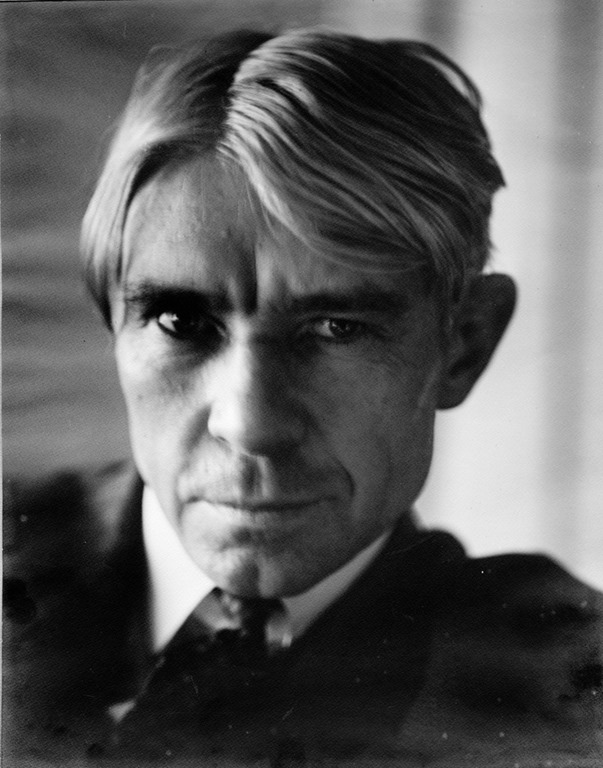
Youn SandburgEzra_Pound_by_EO_Hoppe_1920

Images of Imagists: Sandburg on the left, Pound on the right. You can say that again.

Not all the Imagists were residing overseas however. Back in the specifically American city of Chicago, Carl Sandburg was to combine these Modernist/Imagist precepts with Socialist politics and activist journalism. He worked so hard at this that he essentially split himself into different people. There was Carl Sandburg the Imagist poet who hung out at the then new Poetry Magazine offices, where the poetry discovered by their European Editor, Pound, was funneled into America. But he was also a journalist working for the legendary Chicago daily press portrayed in “The Front Page”.  At the same time, he was also associating with equally legendary American IWW radicals and anarchists, writing for their publications, sometimes under a pseudonym. Was he hiding his identity, or just saying that the agitator was a different personality?

Visualize that American comic-book secret-identify hero, say Superman. By day the “mild-mannered reporter for a great metropolitan newspaper…” by night fighting for “Truth, Justice, and the American Way…” as a crusading radical Socialist—but wait, there’s something more—he’s not just those two, he’s trying to create Modernist poetry as well. And pay the rent. Which is his true secret identity?

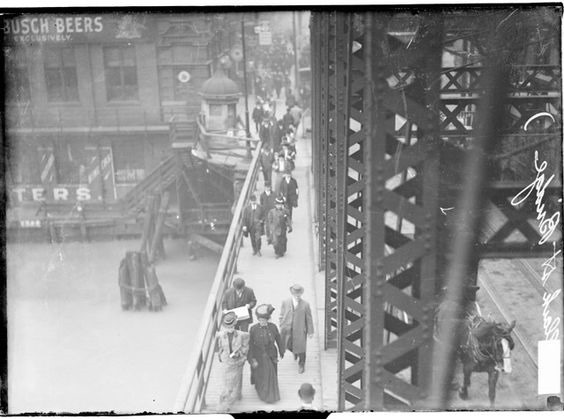
Clark Street BridgeClark Street Bridge Today

Chicago’s Clark Street Bridge, then and now: “No more dust and wagons.”  Are the voices still unheard?


Today’s audio piece, Carl Sandburg’s “Clark Street Bridge”  is an orthodox Imagist poem by this un-orthodox, tripartite man. The subject “thing” is definite as the downtown Chicago river bridge in its title. Its rhythm is as legato and singing as the absent voices singing at it’s end. It starts with its busy turn-of-the century black’n’white newsreel footage of crammed wagons and walkers, then takes us to the dog-watch night: only three scattered people interrupt the foggy mist and the brightest stars above the urban river. In this mist and shadows, reporter Sandburg takes off his double-breasted suit, but then, stay-at-home Imagist poet Sandburg takes off also his poets’ tights and doublet, and now, naked as a radical above the dark Chicago river he hears the “voices of dollars” in the city’s heartless commerce, the “drops of blood” from the men and women who animate it, and the gigantic chorus of the resulting “broken hearts,” as many as all the stars, as heavily present as the mist, and as unheard as either.

As I’ve often found with Sandburg, others have set his poetry to music, but no matter, I press on. My music for “Clark Street Bridge”  started with an un-relenting long-measure typewriter-like drum part which I hoped would stand for hoof and foot beats. I tried to pair the guitar part and the reading of the words, and finally, I laid a legato bass part underneath it all to stand for those voices softer than the stars and mist. To hear it, use the player below.

I Was Reading About Jesse James

When I was growing up and learning songs from Jerry Silverman’s folk songbooks, there was song called “Jesse James”  included in many collections and sung by a wide variety of singers—and any song that has been sung by the Kingston Trio and Nick Cave, by Van Morrison and the Pogues, by yes, by both Peter Seeger and Bob Seger, has to be the very definition of a “folk song.”

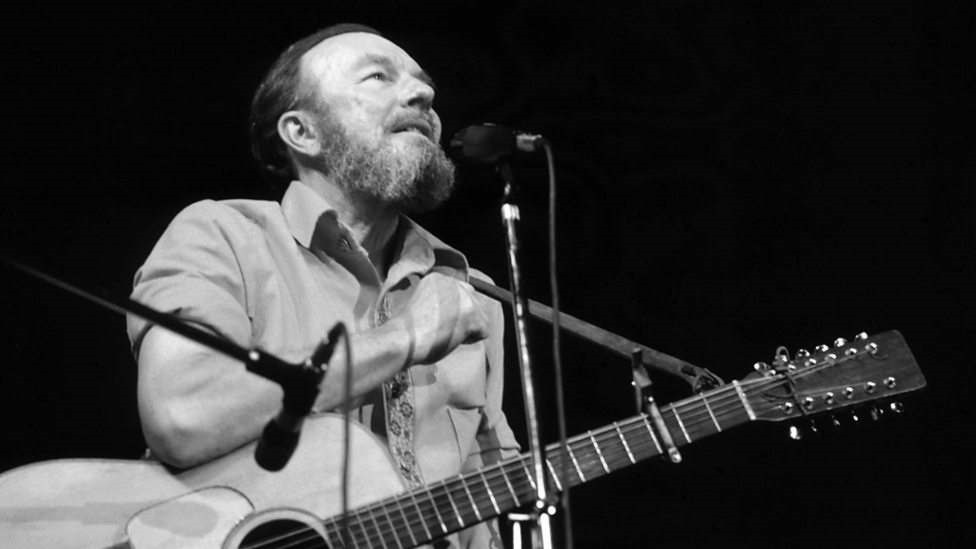
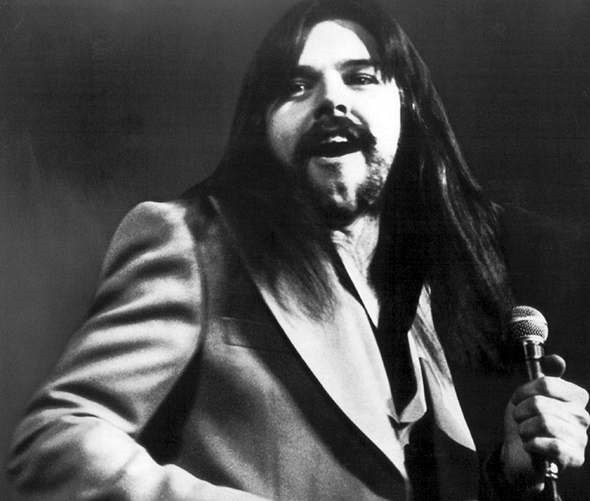
Pete SeegerBob Seger

Both these guys have sung thoughtful songs, but sometimes you need to think beyond the song yourself


Though “Jesse James”  takes some of its spirit from older English ballads celebrating legendary medieval populist outlaw Robin Hood, this American song is more about betrayal (James was killed by a gang associate in his own living room) and about telling us what an all-around bad-ass James was. We’re told he “killed many a man” (never why or how, though bravery is claimed) and that he robbed banks and railroads (but he “gave to the poor” and would “never rob a mother or a child”).

You can see how this sort of thing has a wide appeal. A tale of revenge on the rich and the powerful appeals to many, and banks and railroads were particular targets of late 19th and early 20th century rural populism, but the emotional core of the folk song “Jesse James”  is the betrayal and assassination.  No matter what the variation in the lyrics, there’s lots of mention of James’ cowardly assassin Robert Ford betraying the man who trusted him, shooting him in the back.

Woody Guthrie took “Jesse James’”  structure and melody and produced an incisive, though less popular, version of his own called “Jesus Christ”  which cast Jesus as a rebellious populist betrayed by a disciple—though it had to do without the “killed many a man” factor. So popular is the original “Jesse James”  ballad, that Guthrie likely knew that Jesse James’ action-hero rep would rub-off on his populist Jesus.

So, it was with interest that I followed up on the reality of Jesse James. One can assume that most heroes have feet of clay, portions of their behavior that show faults or inconsistency, but it turns out Jesse James doesn’t have feet of clay—the whole man is made of half-baked clay mixed with ample fresh dung as filler.
 
He’s a nasty piece of work. True, his character shows audacity, but that’s not the same thing as bravery. There’s no evidence I’m aware of that he ever killed an armed man who was opposing him, but lots of connections to killings of prisoners and bystanders. It was somewhat true that seeking cash through his robberies was a side-point to him, but his main motivation was to extend, defend, or to restore human slavery, or to take broad revenge on those who sought to end his career seeking those aims.

If there’s a defense for his actions, it would be some listing of the bad things done by his opponents, but then monsters often breed monstrous actions against them. It’s an argument against monsters, not a defense of the actions themselves.

Today’s piece “I Was Reading About Jesse James”  starts by asking you to think about this. I thought about trimming the piece’s instrumental coda shorter, but I have left it in. Consider the last half to be time for you to begin to ask those questions yourself. To hear the LYL Band ask those questions to music, use the player below.


The Death of Col Bruce Hampton

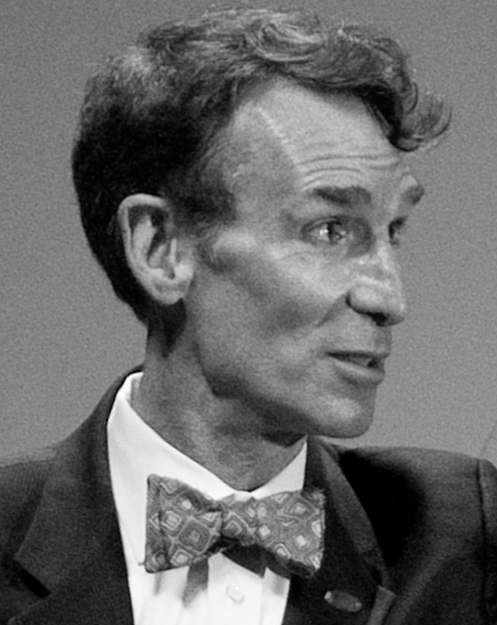
It’s probably one of the best quotes in the history of music criticism: “I’ve heard that Wagner’s music is better than it sounds.” The man who said it was a 19th Century American humorist Bill Nye. No, not the Science Guy, the other Bill Nye.

Bill Nye SG greyscaleEdgarwbillnye

The Nye on the right summed up challenging music in a sentence.


Nye’s great one-liner points out that unfamiliar music may gather approval of those who appreciate its novel approach while leaving a puzzlement as to what pleasure may be derived from it. In the late 19th Century, Richard Wagner’s music was radical. It was heard by many as having stretched the harmonic bonds of symphonic music past enjoyable boundaries. Nowadays Wagner is more in danger of seeming preposterously old-fashioned. He’s just the thing to let you know that Elmer Fudd is a fuddy-duddy when he breaks out into re-purposed Wagner and sings “I Shooot a Waaabittt!” in cartoons. Wagner’s music hasn’t changed, but fashions, expectations and experience have changed.
 
Back around 1970 a band from Atlanta Georgia called “Hampton’s Grease Band” released their only album. The story is told that it sold the second fewest copies ever in the history of their record label, who dropped them right after its release. There are reasons for that. Most cuts were over 10 minutes long. The music was eclectic and the beats eccentric—but what really unsold the record to many audiences were the vocals and lyrics by Bruce Hampton, who rasped like a southern Captain Beefheart with an outlook that mixed Dixie and Dada in quantities you didn’t want to get near enough to the caldron to measure.

This stuff still sounds avant-garde, but Hampton kept evolving after this band’s failure. He self-applied the conventional southern honorific “Col.” to his name, but he always kept a big streak of weird in his music, and by the 90’s another musical movement he helped form made odd music with obscure lyrics and long improvised instrumental passages commercially viable. The usual label for the groups who played this music was “jam bands.”

I could write more about jam bands, but since I need to move on, I’ll say that they were an attempt to invent jazz as if jazz had never existed before. By this I don’t mean to say they were wholly ignorant of jazz or prejudiced against it; what I mean to say is that they created as if they were starting the idea of jazz all over, more or less from scratch. Just as the Pre-Raphaelite Brotherhood thought they could start medieval religious paining all over again or William Morris’ Art and Crafts movement sought to start an artisan practical crafts industry out of nothing, they didn’t seek to learn from and extend the existing practices so much as to do a complete reboot.

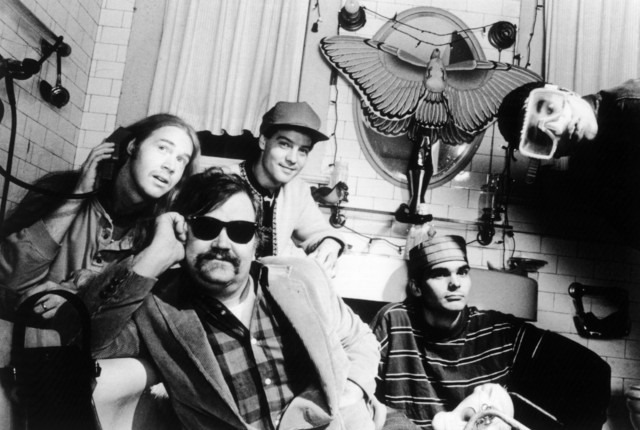
Bruce Hampton and band

Everything but the kitchen sink—ah, maybe we need to include that too.


Now we’re back in the hipster territory that I’ve been discussing in the last few posts. Depending on which generation and which sub-cultural alignment you have, jam bands can be an example of an ignorable genre of music that can only be endured for extra-musical reasons, or an organic expression of music that refuses to be contained and regimented by the formulas of other commercial music. It’s that double-edged nature of the hipster label people throw around as if a label was an analysis. Are they “hip” to something novel that has unconventional value, or are they bogus “-sters” consumed by useless difference for its own sake? And if you’ve read the other posts this month, you’ll realize I’m not just talking about one generation or one sub-culture here.

My guess is that’s it’s always some of both, and the exact proportions cannot be discovered while it’s happening.  Perhaps, like improvised music itself, it has to happen for sober judgements to be made later.

And how can one tell who’s the poser and who’s the sculptor of something new? Persistence is one test. Remember William Blake’s great proverb on persistence: “If a fool would persist in their folly, they would become wise?” Here’s Bruce Hampton on patience and persistence:

I’ve gotten everything I’ve ever wanted – 20 years after I wanted it. And that’s been perfect for me to not get things when I want them because I’m not ready for them when I want them.

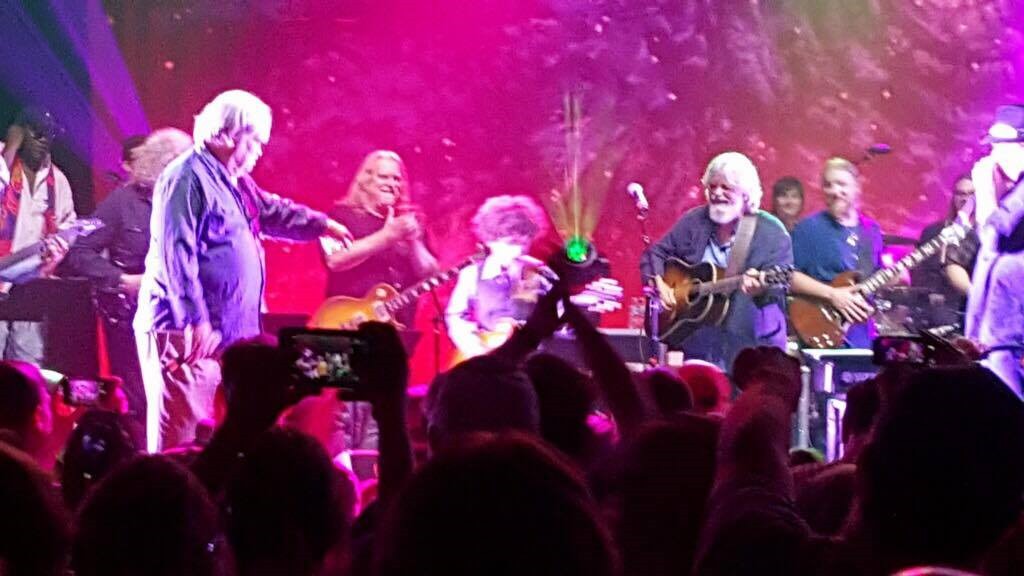
Today’s audio post, “The Death of Col. Bruce Hampton”  presents an sincere account of the unusual death of Bruce Hampton earlier this month: on stage, performing at a tribute to his 50 years of making adventurous music, surrounded by scores of other musicians who learned from him. You may still find his music better than it sounds. He played and sang a lot notes over a lot of time. Some of them were right, and some of them were wrong for the right reasons.

bruce-hampton last jam

Col. Bruce Hampton at his last concert says keep playing


To hear my audio piece “The Death of Col. Bruce Hampton”  use the player below.

The First Cuts are the Deepest

Earlier this month I posted the Parlando Project audio pieces that were the most listened to as of the start of this Spring. Turns out it’s a pretty good mix of what Dave and I are trying to do with this combination of music and words. However, in looking at the stats for the Parlando pieces, it looks as if a lot of readers and listeners are coming in partway into the project, starting around the beginning of this year. That’s fine. I think I’m getting a little better as I work intensively on the goal of 100 Parlando Project pieces by August of this year, but I think some of the early pieces are missing the listenership they otherwise might have gotten if I’d posted them later.

Since we’re still in National Poetry Month (#npm17), it stuck me that this might be a good time for some of our audience to catch up. So here are a few of the 2016 Parlando Project “deep cuts” from last year that you might want to check out:

Stars Songs Faces.  I wrote the music for this Carl Sandburg poem as my tribute to David Bowie in January of 2016, and it was the piece I choose to kick-off Parlando. Although I’m not the first to write music for these Sandburg words, I still like what I did, and the LYL Band performance realizes my intention well. This piece also reminds me that it’s been awhile since I posted a Carl Sandburg-based piece here. I’m working on one this week, but the orchestration is not going as well as I’d like it to yet.

The Prairie.  One of things I enjoy most about coming up with material for the Parlando Project is finding things in the public domain poetry cannon that I’d never read or even heard of. This is one of them. William Cullen Bryant was not on my radar until Dave Moore visited the Mississippi river valley mounds last year and began to write about them himself. This audio piece is on the longer side, which may account for the lower number of listens.

The Green Fairy.  Here’s a good piece written and performed by Dave Moore that hasn’t been listened to as much as some other pieces he’s written here. My notes in the accompanying post were written in mystery about the actual intent of Dave’s words. I’ve probably got some other poets’ intent wrong too, but remember that’s one of the points of the Parlando Project: you can appreciate poems when they are accompanied with music just as one appreciates song lyrics (or even music without words at all), as bits and pieces of language that sound good, or as lines or phrases that attach themselves to you with little pieces of meaning without any requirement that you understand the whole thing.

This is the Darkness.  I ascribe the lower listenership on this one to the dark tone. And indeed it might be an odd piece to listen too in the late Spring as days get longer and eventually warmer here in the upper Midwest. None-the-less, living around the 45th Parallel Minnesotans and Canadians should understand this.

Christ and the Soldier.  When I was my son’s age, I was following a day-to-day summary in the newspaper, a series called “100 Years Ago in the Civil War”  which covered the events just out of memory of the living in the American Civil War.  And now, since 2014, I’ve been informally following the centenary of World War I, which has similarly passed out of the memory of the living.  Siegfried Sassoon’s poem is a biting comment on WWI from a veteran of that war’s trenches. You know that old saying “There are no atheists in a foxhole?” Sassoon has a more complex view.

To A Friend Whose Work Has Come To Nothing

Given that poetry contributes the great majority of the words to the half of the  Parlando Project “Where Music and Words Meet,” it’s reasonable to suspect, if you are reading this, that you like poetry. That’s too bad. Even during the National Poetry Month and #npm17 that were are talking about this April.

You see, poetry is often a frustrating thing. That high-flown language may be artful, but it’s an earful too. If you were seeking directions to escape some emergency, would you want your rescuer to choose the most precise and beautiful words, words that say more about what a clever speaker your rescuer is than about which way you must turn and where the dangers are?

Do you love the dense allusions and surprising metaphors of poetry? Do you admire the narrative fracturing and careful examination of the shattered facets that expose the common lie of ordered stories? The next time you are searching for how to work some complex gadget or system, do you want your tutorial or manual to scatter its tale in novel ways?

Speaking of too simple statements, here’s one: that there are people who simply like poetry. No, most people who like poetry sometimes, hate poetry sometimes; just as most people who like music, hate music sometimes. The intensity of the like times does not decrease the intensity of the hate times. I think it’s important that poetry tries to capture the allusiveness of things. I continue to admire some poems I don’t really understand—that’s what the music is for, both the poem’s own music and the external music we apply to the words here at the Parlando Project. But there are times when you just want a poet to come out and say what they’re getting at.

The words to today’s episode, by William Butler Yeats, are clear in their meaning. “To A Friend Whose Work Has Come To Nothing”  is an example of “occasional verse,” a poem written in response to an event. In this case, almost everyone has forgotten the event, but the sentiments of the poem apply broadly anyway. Yeats has such a musical way of expressing himself, he could have flown off on some obscure path and we might have followed him anyway. As it turns out, the things he leaves out here, the particulars of the dispute, probably help the poem survive as a general piece of council.

Still, I’m a curious and literal sort. Who was the “Friend Whose Work Has Come To Nothing,” and what was the work? It was written about and perhaps to a man named Hugh Lane who wanted to donate his substantial modern art collection to a museum he proposed that Ireland should fund. And the man who would lie unashamed to oppose this? A newspaper publisher who opposed the gallery.

Hugh Lane

Yeats gave him good advice, but he didn’t tell him to not get on that boat.

What happened to Hugh Lane, whose work had come to nothing? About a year after Yeats wrote this poem, Lane went down when the Lusitania  was torpedoed during WWI. And his art collection? His will seemed to leave it to the British National Gallery after his proposal to fund the Irish museum failed, but Ireland disputed this will, and later in the 20th Century, after Lane’s and Yeats’ deaths, Lane’s collection was again on display in Dublin Ireland. So eventually, in prosaic history and after the work of some lean solicitors, Lane’s work succeeded.

Dublin City Gallery

The Dublin City Gallery where most of Hugh Lane’s collection ended up

Today’s audio piece is brief, so take a listen to the LYL Band performing “To A Friend Whose Work Has Come To Nothing” by clicking on the player below or with this highlighted hyperlink.

.