How We Make the Parlando Project Pieces

I started work on the Parlando Project early in 2016 by learning how distribute audio pieces via web-based player I could embed here in this blog and also through “Podcasting” where audio is listed for download on directories such as iTunes, Google’s Play Store, Player.fm and the like. Throughout the spring and early summer of that year I worked with Dave Moore to record some pieces to “bank” for a launch I planned for August 6th.
Frank-Dave thoughts CLEANED

Dave and I look exactly like this today. Or we could if studied how to use Photoshop.


Dave and have written alongside each other for a great many years and played music together since 1979 in various line ups of the LYL Band. Adding the Parlando pieces to what we played seemed a natural outgrowth. Generally our approach to recording is very casual, particularly by modern standards. A great many things are not just first takes, they are only takes,  where the non-composer is working from a lead sheet on a piece they haven’t heard before. This is the same process favored by Miles Davis and Bob Dylan, comparisons that too much favor us as musicians, but the effect on the kind of playing that results is  there, even at our level.

First off, mistakes are inevitable, but you learn to try to understand mistakes quickly and try to find their hidden intentions. You listen intensely, because you have no other choice, there is no routine, learned,  part to fall back on. Arrangements just happen. The results are not polished, but in the best ones you can feel the excitement in the room when listening. And we give ourselves a punchers’ chance. In a 2 hour session we might record somewhere between 10 and 15 pieces. Most of them will be wild punches that don’t land, or strike only a glancing blow, but you only need to connect once.

Not everything we record is for the Parlando Project. Some things are for our own purposes and include material we do not have the rights to share with you.

Other pieces, the ones I record and play myself, follow a different path. I can think and work more compositionally if I choose, writing and considering parts. I record them myself, playing all the parts in turn. This is the modern way to go about it. I can achieve, within my limits as a musician, what I want to achieve. The cost is that I cannot achieve what I do not think I want to achieve, which can only happen when other musicians are involved.

I’ve looked for words to use for pieces continuously during this period. Since I have no knowledge on gaining usage rights for published work, almost everything Dave or I didn’t write here comes from works that are out of copyright and in the public domain. This process has been one of the unintended joys of the Parlando project, as I’ve learned more about writers I knew only in highlights like Yeats and Sassoon, and discovered writers I knew almost nothing about like Wheatley and Tagore. I’ve revisited old favorites of mine in Blake, Sandburg, and Dickinson, but also dipped my toes into translation with Du Fu and Pasternak.

As of yesterday’s post, we’re up to 67 pieces available here since the launch. My goal is 100 by the August 2017 anniversary. I’d estimate I’ve put perhaps a thousand hours into the Parlando Project since the start of 2016, all to produce less than 5 hours of audio combining surprising words with music as varied as I can compose and play. My goal is to introduce you to old work you thought you knew, new work that you will be happy to know, and to use the combination of music and words to create something uniquely powerful.

As we celebrate National Poetry Month I’m setting an April goal to have the most active month here in terms of the number of posts, of new audio pieces to stream, and of numbers of downloads. The audience grew substantially in March as folks are discovering us in various ways. If you’ve found something of value here, you can help us out by linking to your favorite piece on your blog, on Facebook, or on Twitter this month.

Biking on the Greenway with My Son and Bob Stinson

Minnesota goes wild in spring when it finally gets warm, and so today, which promises to touch 70 degrees, will surely display this. Like the day described in today’s episode, I’ll probably go for a bike ride with my young son, and we’ll ride on The Greenway, a several-mile-long reclaimed railroad cut that runs, as time does, east and west through the middle of Minneapolis.

Raising a child as a musician, writer, and sometime bohemian brings extra questions. Do you want your child to follow the most conventional and unquestioning path? Certainly not. You encourage them to question things, even allowing that this will encourage them to question you. You look at your own life backwards as you look at theirs coming forward, and wish them adventures, but only so much. You know there will be hardships and wrong choices, but you hope only enough to be instructive. As an artist you may worship art, but you’re not sure you’re comfortable with them adopting all the tenants of that religion.

Today’s piece “Biking on the Greenway with My Son and Bob Stinson”  speaks of this from the seat of a bicycle.

Bob Stinson was the animating force in The Replacements, an ‘80s alt-rock band that never tried to split the difference between insouciance and not giving a @#*&. As a guitarist he was an anarchist, and the band accidentally worked like the NY Dolls, the Kinks, or the Rolling Stones, with a great front man who had the lyrical wit and the staggering lead guitarist who embodied the music’s soul.

replacements on the greenway

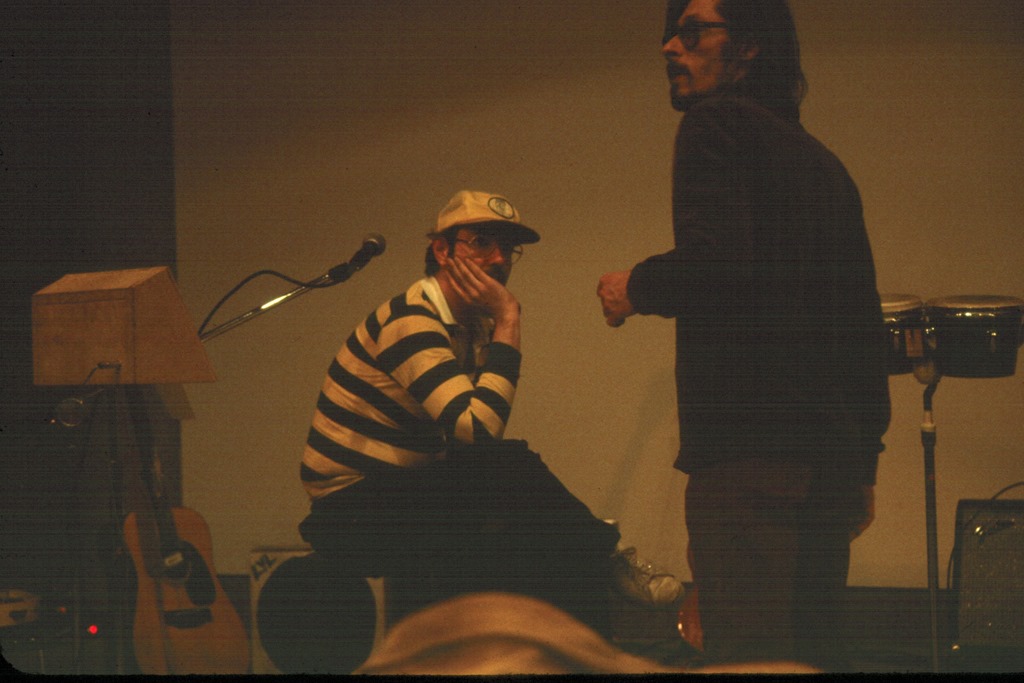
The Replacements sit and wait for The Greenway bike path to come through. Bob Stinson, middle left.
The guy on the left is an artist. The guy on the right played in Guns and Roses. The guy on the middle right, writes songs.

The Replacements’ front man, Paul Westerberg, was quickly indicted as a fine rock’n’roll songwriter, which damaged the band because songwriting implies loitering with intent to commit James Taylor. The band rebelled by making sure that a regimented presentation of a set of songs was not the aim. On any given night, this could be inspiring or a shambles: Dada or do-do. Being blotto on stage to the point you couldn’t hide it was almost a requirement, and for no member of the Replacements more than for Bob Stinson.

Eventually the dichotomy demanded an ostomy, and Bob Stinson was asked to leave the band he founded. Things did not go well for Bob without his artistic outlet, and chemical dependency played out its run until he died, his body worn out at 35.

Self-destruction aside, you can see that as path of purity. Chasing after success and an ego-driven desire to rise above others can harm too. The addict and the monk believe they have two different gods, but the penitents have the same scourge. Negation and creativity; deny this, so that that can emerge, is part of the religion of art.

Music, Minneapolis, and life are different now 30 years later, and that’s the place my child and I now live in. Somewhere 30 years on from today will be the place they will live in, no longer young, if they survive rebellion and conformity, if they find the balance between the worship of the self and self-destruction.

This is National Poetry Month, so in the spirit of the Replacements, this is a post more about music, and the music in “Biking on the Greenway with My Son and Bob Stinson”  is not all that polished, tossed off by the LYL Band in one take. Still, you might enjoy clicking on the player below and listening to it. If you don’t see a player, this highlighted link will open a new tab with its own audio player.

The Spring 2017 Top 10

Since this is National Poetry Month in the US I’m hoping that I can exceed the usual 7 to 8 posts a month pace I’ve kept up here since the Parlando project began last August. The next audio piece should be up this weekend. For those who haven’t read the early posts here about what the Parlando project is, I usually summarize it as:

The Parlando Project is words (mostly, but not always poetry) accompanied by music (various kinds).

The Parlando audio pieces have been downloaded by podcast subscribers since launch almost 4,000 times. Given that we are now past the halfway point, I thought it might interesting to let you know what the “Top Ten” downloads have been so far. In Casey Kasem form, we’ll count it down upwards from 10 to 1. There are links in the list if you missed one of these audio pieces and the posts about them.

10. The Spring of Dead Things. One of the 3 pieces in the top 10 where I wrote the words. That’s OK with me, but one of the Parlando Project aims is “Other People’s Stories” which leads me to feature other people’s words more often than not. There’s lots of folks reading their own poetry out there, which is good in itself—but there’s lots of people reading their own poetry, so think there’s an unmet need for reading others work.

9. The Garden of Trust. One of my personal favorites. Weston Noble’s thoughts on the power of music, hard-won thoughts he expressed after a lifetime of work, touched me the moment I first read them, and my feeling only deepened when I found I was able to hear him express those beautiful thoughts in a recording made before his death. My thanks again to Luther College for allowing me to use this recording in my piece. If you want to sample one thing that the Parlando Project represents, and it really doesn’t represent one thing, start here.

8. I Felt A Funeral in My Brain. Writing the Parlando music and considering the words for performance has deepened my appreciation for Emily Dickinson, whose words we’ve featured more than any other writer, and I rather like my music for this one as well.

7. For John Renbourn Dying Alone. I hope some of the listeners to this piece who like acoustic guitar music find this a gateway to Renbourn’s music.

6. Arthur Koestler’s Death Song.  Although we’ve featured Dave Moore reading and singing his own work here, and there will be more of that to come later this year, his Top 10 appearance is for a piece where he wrote the words and music, though I performed it.

5. Eros. I sometimes wonder if this one gets a bonus from those searching for or intrigued by its title. Another one where I’m happy with how the recording and the music turned out. I remind myself that I should learn more about Emerson’s Transcendentalist revolution.

4. 2ebruary. There’s no telling what the “bonus” may be that’s lead more people to this piece. It could be the discussion of the movie “Patterson”  in the notes, or it could be the connection to bicycling. Or perhaps it’s the connection to Frank O’Hara’s “I do this, I do that” poems that I treasure and try to emulate. If you like this, I have another bicycle ride poem coming up later this spring.

3. Boris Pasternak’s February. We’re into the top 3 now.  I was remarking to Dave Moore during a break in our recording session yesterday, that February rather than April should have been picked as National Poetry Month, as the deep dark end of winter engenders more cruel monthly poetry. Pasternak gets to help prove that point here. One regret I have with what we’ve done so far with the Parlando Project is that I have not received permission to post our version of Margaret Atwood’s “February”  here.

2. Hymn To Evening. Speaking of things I treasure, hearing Phillis Wheatley’s story on the Freedom Trail in Boston is another one. Art is this thing that, unlike even persons, no one can own. Colonialism is a system that crosses oceans to take things from other lands for profit. Art is the system that sends out messages that can crisscross time and oceans with the information inside our breasts.

dollar-bill

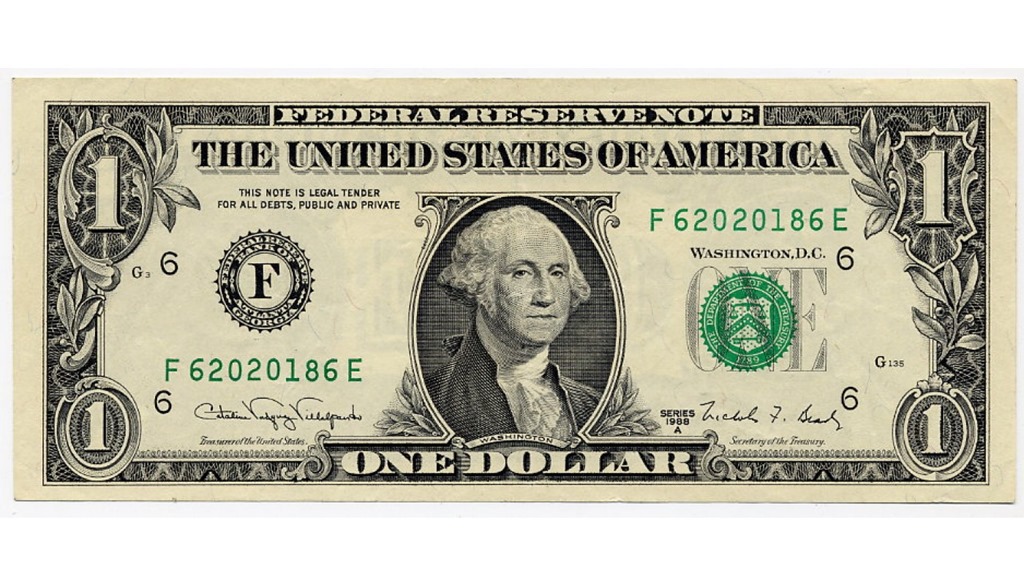
we’re offering pictures of our #1 Parlando Project author for only one dollar


1. Frances. Interesting that two pieces from the colonial United States are 1 and 2, and that a piece with words by an young amateur poet tops the list. Maybe this is a tribute to the Pixies/Nirvana loud/soft arrangement trick in the music? Or that when it comes to subjects, love conquers all? Or that acrostics are about to become a thing?

Please continue to read and listen this month. I have a lot of planned pieces I’ll think you’ll like coming up here. Remember that the Parlando Project seeks variety in music and words, so you may hear things you like as well as not like as we go along, but stick with us as we want to continue to surprise you. I also want to thank those that have hit the like buttons on their favorite posts, and those who have hit the RSS button to follow this blog.

Song of the Wondering Aengus

William Butler Yeats, when he spoke admiringly about the ubiquity that songwriters like Rabindranath Tagore could achieve, had already made his forays into setting his poems to music. As a sometime playwright, and a founder of the Abbey Theater in Ireland, he was already familiar with the dimensions performers can bring to words. Around the turn to the 20th Century he began to forthrightly seek to combine his poetry with music. Working in collaboration with musicologist and luthier Arnold Dolmetsch and performer Florence Farr he had a psaltery (a stringed instrument like a lyre or small harp) constructed, and Farr (a fascinating figure in her own right) then performed Yeats poems with it.

FarrPsaltry

Farr with the psaltery showing Joanna Newsom how to rock it

Yeats and Farr’s performance style was not a conventional art song setting of the poet’s words sung to a melody. Yeats explicitly rejected that (even though his words have often been set to melodies in the years since). Rather he thought the words were best chanted or intoned in a rhythmic and somewhat elongated speech.  Such performances are controversial then, and I would suppose they would be controversial now as well. George Bernard Shaw called Farr’s chanting “A nerve-destroying crooning,” but Ezra Pound and other early 20th century modernists took note, and they were influenced by these performances to add a more incantatory and musical element to their poetry.

Now let us break in our story for about half a century.

In the late 1950s an actor and folk singer Burl Ives recorded an album of Irish songs, and one of them was “The Wondering of Old Angus”, a Yeats poem sung to melody that Ives claimed he learned from Sara Allgood, another actor who had performed with the Abbey Theater group and would have likely known of the Farr performances. Around the same time, another folk singer, Will Holt began singing the Yeats poem to a very similar melody, using Yeats’ title “The Song of the Wandering Aengus.”  Then in 1962, Judy Collins, having learned the song from Holt, made it the title song of her album “Golden Apples of the Sun,”  which is where I first heard it.

No one seemed to know where the tune Ives, Holt, and Collins used came from. Those knowledgeable in traditional Irish tunes do not recognize it. Some credited Holt for it. However, early in the 21st Century a man named Bill Kennedy writing in the folk-song forum mudcat.org linked the tune to a transcription made by Dolmetsch accompanying a Yeats essay “Speaking to the Psaltery”  re-published in the Saturday Evening Post in 1907. The tune there of course was not meant to be sung, as Yeats discussed in this essay, but it is recognizably the one used by Ives, Holt, and Collins in their singing renditions.

So the tune may well be Yeats’ own, or perhaps it was composed by Farr or even Dolmetsch. Since the words are Yeats’, I’m going to call it, and make him the composer; and if so, that makes Yeats yet another singer-songwriter (along with Tagore and Dylan) to have won the Nobel prize.

But he didn’t sing it, nor did he intend the words to be sung. Since we at the Parlando project are working in something like the same vein, here’s a version, using more or less that tune, but chanted not sung as Yeats suggested. Instead of the psaltery, I used fretless electric bass, some bowed strings and Mellotron to elaborate the tune. To hear it, use the player below, though neither Bernard Shaw nor I will be responsible for any nerve destruction.


NOTE: I just noticed that I miss-typed “The Song of the Wandering Aengus” into “The Song of the Wondering Aengus” here. Oh my. This could be nerve destruction, or my hurry to get ready for a recording session this afternoon. Well, he is wondering after all!

Maiden with a Lamp

When it was announced that Bob Dylan had been awarded the Nobel Prize for Literature there was a substantial reaction asking if songs could be literature—no, that’s not right, I’m mischaracterizing much of the reaction I read as if it was an honest inquiry into this question. No, the reaction I read was more of a conclusion that songs could not be literature, and so this Nobel award to Bob Dylan was a break with tradition, a loosening of standards.

This is complex subject, one I’ll probably return to, as I have much to say on this; but missed in the hoopla and questioning was this fact:  Bob Dylan was the second singer/songwriter to win the Nobel Prize for Literature.

In 1913 Rabindranath Tagore was awarded the Nobel Prize, the committee citing:

“Because of his profoundly sensitive, fresh and beautiful verse, by which, with consummate skill, he has made his poetic thought, expressed in his own English words, a part of the literature of the West”.

In 1913 when the prize was given, Tagore had only one such work they could be talking about: “Gitanjali,”  a 1912 collection of his song lyrics that Tagore had translated himself from Bengali into English prose poems.

Gitanjali title page 1912

The title page of the original English edition


Tagore is a fascinating man and artist, with achievements in so many fields that you might think I’m making him up. He wrote every kind of literature, started a university, seriously pursued modern painting, and gave Gandhi the title “Mahatma.” But he was no dabbler at songwriting, having written over 2000 songs. He’s even the only composer to score a hat trick for national anthems, having written the national anthems of India, Bangladesh and Siri Lanka.  His songs are so pervasive in Bengali culture that his thousands of songs have become their own genre.

tagore with Gandhi

“Let me lay it on you Mohandas: it means ‘Great Soul.”  Also, there’s this girl in Detroit who I’m going to call the Queen of Soul.”

Poet William Butler Yeats wrote enviously in his introduction to Tagore’s “Gitanjali”  of the power of songs:

“These verses will not lie in little well-printed books upon ladies’ tables, who turn the pages with indolent hands that they may sigh over a life without meaning, which is yet all they can know of life, or be carried by students at the university to be laid aside when the work of life begins, but, as the generations pass, travelers will hum them on the highway and men rowing upon the rivers.”

This spring as I read Tagore’s “Gitanjali,”  I hoped to find there on the page what is promised in Yeats’ introduction and what would normally be guaranteed by such acclaim. I failed at this. I couldn’t find it. The English of the prose translations seemed so archaic, the expression stilted, the voice vague. From accounts I’ve now read, this seems to be an acknowledged problem; and it appears that, for whatever reasons, Tagore purposely framed his translated work in an incomplete way. In the longer term, I will seek some of the newer translations. In the short term, I stood back and remembered something.

Song. These are songs.

Not only are they missing their music, but songs, like plays, are works for individual voices and talents to embody. Their creators are not claiming the real, complete thing exists on the page, that they are performing them mutely with ink on the white page. No, they expect, demand, that someone step in them, surmise their meaning, fill the blank white space with emotions, and speak them.

All art is like this really. Songs admit it. Songwriters generously say: I need you to fill these things, your humanity is better than any of my approximations.

So, today’s episode is the second of my attempts to bring something to a piece from Tagore’s “Gitanjali”  using his original prose translations, as that’s all I have for now.  With the last post here, “Light,”  I tried to meet Bengali music partway, but this time I’m staying firmly in the Western side, maybe even a bit on the Country and Western side. As I read this piece on the page I heard it as sounding like one of those weird Lee Hazelwood arrangements from a few decades ago, but since I was producing this myself, I had to sing the Nancy Sinatra part as well.
 
If you wonder about the floating light ceremony mentioned in the song I call “Maiden with a Lamp,”  it may be this one.

To hear me perform my vaguely C&W version of “Maiden with a Lamp,” use the player below.


Light

What is lost when poetry is translated? Robert Frost thought it outright: “Poetry  is what is lost in translation.” Those who’ve read my notes here on the Parlando project know that I hold that poetry is words that want to sing. Those sound effects of the flowing sound of words, the call and response of rhyme, the beats of the dancing syllables—all that music can hardly be asked to make it past the visa-check at the translation station on languages’ borders.

In recent posts here I translated two poems from classical Chinese. As a non-Chinese speaker, I could not even hope to convey what musical effects the originals had.  To better see this as English speakers, let us look the other direction, and think about what Emily Dickinson’s “I’ll Tell You How the Sun Rose” (featured in our last post) would lose if we were to translate it to classical Chinese.

Would Dickinson’s poetic music carry over? In English we have the movement of the common meter/ballad meter in her poem, a beat that is ingrained in those who sing common Christian hymns or know secular songs using this meter in the folk and popular music fields.  Since this is a common form in our culture, we are primed to move to this meter, and rich associations may arise from other times we have felt the same beat. All that is most likely lost in translation.

There’s a pun in the first line. The sun “rose” and is pink. Puns won’t likely make it across the border.

Dickinson rhymed her poem. Translators sometimes choose to create rhyming poems in their destination language, but adding this degree of difficulty to the task may cause other defects in translation as the rhyme is sought.

English sometimes has an advantage when one translates to and from it, because it is the language of a much-invaded island, which was then taken up by a polyglot country across the ocean. English as we know it today is full of words with Latin and Germanic origin, echoes of French, Spanish, German, and even more. Occasionally, puns or even rhymes can be saved when the foreign language has these connections. And metric rules for accents and syllables can be somewhat portable across the European range.

But what if we were to translate from English to classical Chinese? I’ll take an audacious shot at Dickinson’s first verse. The English gloss from the ideograms resulting might go like this:

Tell Sun Rise
Ribbon Sequence
Towers Wet Purple-Quartz
Squirrel Messengers
Hills Unpinned Hats
Birdsong Started
Soft Talk Inside
Sun Recognized

Well, there’s something still there isn’t there, even if we as English speakers see the losses. What remains is Dickinson’s attention to an ordinary event with extraordinary details. And there’s some musical structure remaining: parallelism, theme and variation that doesn’t rely on beats or syllables that can still peak through.

Today’s episode is an English translation from the original Bengali by its own author, Rabindranath Tagore. Despite having attended school in England, despite familiarity with English as a resident of a then colonial province of the British Empire, despite some rumored editorial assistance from renowned English language poet William Butler Yeats, and despite Tagore’s well-attested to genius, “Light”  was published in English in 1912 as a prose translation.

tagore-einstein2

Some amateur violin player (left) meets up with Rabindranath Tagore (right)

 
Paradoxically this may be due to the original’s musicality. I’ll have more to say on Tagore next time, but for now just know that Tagore was a composer and songwriter, and that his songs are widely known and appreciated by millions of Bengali speakers.
 
So, to try to restore some of the impact originally present in this piece, I composed and played a rather dense musical accompaniment for Tagore’s translated words. I did this in ignorance of if Tagore had his own melody for this poem in Bengali. Besides animation and illumination of his English prose, I aimed to combine some of my appreciation his native region’s music and Western electric guitar based music. To hear Rabindranath Tagore’s “Light”  with my music and performance, use the player below.

I’ll Tell You How the Sun Rose

After our short trip to Chinese translation, let’s return again to Emily Dickinson, who is observing another morning.

This LYL Band performance of “I’ll Tell You How the Sun Rose”  is a bit imperfect. Alternative Parlando Project reader Dave Moore takes the lead here, but he and I are singing instead of our usual recitative, and we’re caught at the top of our singing range as well. Dave even bobbles a word in the line “The hills untied their bonnets.” So, yes, this leads to some imperfection—but this lyric is so perfect that perhaps it can carry us along anyway.

I suggest you listen to this piece now and then read my discussion of what I see in it afterward. Dickinson, like a good melody, doesn’t require understanding before enjoyment. The player to hear it is at the bottom of this post.

“I’ll Tell You How the Sun Rose”  begins with a homespun 19th century village dawn, and the singer starts right off almost bragging that they can tell us how the sun comes up. As proof, Dickinson unleashes a string of lovely, singing metaphors for sunrise, looking down from the dawn only once to let us see the squirrels running about as if with the news of the day. She concludes this section with finest simplicity: “That must have been the sun!”

Isn’t that a strange way to sum up dawn? It comes up and it’s already past tense, like Meng Haoran’s morning in the last post, and Dickinson comments on this common splendor as if she’s a surprised alien from another planet who has never seen the sun. Her boast that she can tell us “how the sun rose”—something she and all of us should already know, set in nothing more special than a prosaic town—becomes instead a small, whispered, apprehended wonder.

In the second section, Dickinson shifts gears so smoothly that no matter how many times you read or hear this poem you will never notice. There is a little engagement of the gears as she says of sunset “I know not,” unlike our first gear’s “I’ll tell you;” but we’re soon on to a rural scene with the sun rays like children climbing up and then down a stairway over a hedge or fence row (a stile).  At that point, there’s a bustle in your hedgerow as the dusk becomes a grey robed “dominie,” a strange and archaic word perhaps even in Dickinson’s 19th century, and a sure stumper for any modern English speaker.

A dominie is a Latin word meaning the leader of a congregation, a minister, a pastor—and ‘pastor” is derived from the word for shepherd—and that’s just what our grey dusk becomes as it leads the children of the dawn, now dusk, away like a flock, closing the bars, closing the gate, so that they cannot return.

Some readers are so charmed by Dickinson’s first section that they feel it is pedantic to think that this sunset section is describing a passage to death, “The undiscovered country from whose bourn, no traveler returns,” so no wonder that Dickinson moved from “I’ll tell you” to “I know not.”

That dominie seems so removed from the pleasant village of the first section, so foreign. Another subtle word choice contrasts the two sections. There’s only 88 words in this piece, and five of them are colors. “Rose” puns for dawn pink in the first line and then dawn is “amethyst,” a word for both purple and a semi-precious stone. The sunray children are “yellow”, and our strange dominie is dusky “gray.” The stile sunset stairway that the sunray children are climbing is “purple.” So out of our five colors, one of them is roughly the same color. In the first section, it’s semi-precious and wondrous, but in the second it’s just purple—a ruling, royal color perhaps—but those sunset ray children’s steps are ruled over not ruling, not shining like the amethyst steeples of the dawn.

stile sunset

Putting on the stile


Did you listen to the performance of “I’ll Tell You How the Sun Rose”  before reading all this? I feel a bit here as if I’m acting  like that dominie myself, leading you past the plain and beautiful dawn, over the stile, and closing the gate to simply hearing the sound and the manner of expression of Dickinson. Too often we make too much of the meaning of poetry, and particular the deeper meaning of poems. Just as Meng Haoran’s poem from last time can be understood well enough to be enjoyed by children, this poem too can be enjoyed as compressed observation. Perhaps it’s because I am an old man, one who has tried to write and make music for many years, that I care to see what is underneath the sun rays, to look over the stile, and to find what is inside Emily Dickinson’s expression.

To hear the LYL Band perform “I’ll Tell You How the Sun Rose,”  use the player below.

A Spring Morning

Imagine a world where what you thought was poetry was entirely different. A world where short poems could be as celebrated as longer literary works. A world where the most admired poems could be clear as can be about what is happening in the poem (the poem’s plot) with no elaborate obfuscation in the language; and yet the meaning, the thought and feelings the author means to convey, may remain allusive enough that the poem’s meaning seems to change over time as your experience grows. Imagine a world where poems can seem to have no metaphors at all, poems that don’t so much interpret the book of nature, but seem to be a page from that book itself.

That’s what Chinese poetry seems like to me.

It’s a refreshing change from the Western canon. I can see why a grumpy modernist like Ezra Pound, who wanted to sweep away the rot of his culture, would find it influential. Or why the forefathers of the “beat generation” in the western United States looked further west than California for a way to apprehend reality on the page.

I’m no scholar of Chinese poetry. These are the feelings of someone who likes what he reads and finds lessons in translating it.

For today’s post, I’m going to go over how I work on these translations with the aim of stripping away the mystery. I’ll use a short poem by Tang Dynasty poet Meng Haoran “A Spring Morning.”  It seems to be a good first task for Chinese translation, and the original poem is apparently known almost to the level of a nursery rhyme in Chinese.

Meng Haoran

Texas guitarist Billy Gibbons…whoops, no, this is Meng Haoran


I do not read Chinese, however, it’s now possible to find glosses of many poems literally translated from the original ideograms. Here’s what “A Spring Morning”  looks like when each of its lines five characters is translated into an English word :

Spring sleep not wake dawn
Everywhere hear cry bird
Night come wind rain sound
Flower fall know how many

The first problem is there is no punctuation, nor anything like English syntax. Still that’s an interesting way to approach a poem, where in English we are often trying to find the word to fit our flow of thoughts and music, but in working from this gloss we have the words, or at least “a word,” but need to find the flow instead.

I decided to render the first line as: “I slept late this spring morning, awaking just after dawn.” keeping the season (spring) and the more specific time of past the daybreak moment. I added late, which is not in the glosses’ words, because I thought the poem needed some reason why past the dawn was significant when I connect it with the third line.

The second line required less thought: “From everywhere I hear birds calling out.” The main choice here was the word I’d use for the sound of the birds. “Cry” used in the gloss has connotations of sorrow in English (not always, for example “war cry”) and I didn’t want to tip my hand toward sorrow in this line. And in Spring I know these bird calls, they are in fact just that: birds calling out for potential mates, birds setting up their territories, birds that want to say something to other birds.

The third line I write as: “Last night I tossed and turned in the sound of the wind and the rain.” This gives a reason for why the poet slept late, adds a note of drama and, in a particularly personal choice I made, alludes to a traditional English song refrain “Oh no, the wind and the rain.”

Now the final line: “Who knows how many petals have fallen?” Here seeing other people’s English translations helped, as it otherwise might not be clear that this is a question. In a vacuum one might render this as “I know how many flowers fell.” And that ending has validity, essentially saying “(in such a storm as last night) I know for sure how much my lovely spring blooms are going to be damaged.” Others who know more about Chinese idiom have chosen to make this a question, so I’ll trust that, and this makes the concluding thought more like “(I’m worried about the damage of Spring storms. but it was night and I was asleep) and no one can change the way Spring does this, blooming and storming, so it’s a mystery to you and me.”

Overall, notice how this modest four-line poem, suitable for children, encapsulates a sophisticated thought, one that young children wouldn’t need to understand yet.  It shows us Spring, as a sleeper sleeps past the now earlier dawn, through a rain storm that grows and destroys (compare our nursery rhyme “April showers bring may flowers” meaning “you might get wet, but it’s good for flowers” vs. this Chinese storm), alludes subtlety to the love and war of birds, and concludes with a wise line that says our ability to comprehend this cycle of growth and destruction, change and renewal, is limited. To a child, that last line may mean no more than the thrust vectors that allow that “a cow jumped over the moon;” but to an older adult, it reminds us more, that we will never know.

For the music to accompany “A Spring View”,  I used some drums playing an odd rhythmic figure, fretless electric bass, electric guitar, and two soft synthesizer voices: a washed out horn and another which is supposed to suggest a Chinese flute, which unlike Bob Dylan I did not take from a dancing child. Today’s audio piece is very short, and to play it use the gadget below.

Spring View

I’m often attracted to Chinese poetry, and I’m not sure why. Perhaps it’s the deceptive simplicity to the images, that hardly seem like images at all if one expects the showy metaphors used by many western poets. The concision of many of the most admired Chinese poems can be shocking. And to me there seems to be a radically flat broadness to the way some of the poets consider society and politics. Like a lot of my favorite UK folk songs, the tales of royalty and servants, peasants and generals, saints and drunkards seem to treat them all with the same even diction and consideration.

From what I read, Du Fu is highly regarded as poet in Chinese culture. He wrote in the 8th Century, about the time someone in Europe was compiling Beowulf  between long drinks of mead out of cups made from skulls. Du Fu’s time was a chaotic one, with the Chinese kingdom falling into rebellion and civil war. “Spring View”  is his response after his side had lost the battle and he was in disgrace.

Du Fu

Du Fu:  the red trucker cap or the pink pussy hat?


In translating Du Fu’s “Spring View,”  I thought of our own times, particularly here in the United States, three months now into some kind of change. Alas for Du Fu, I became so enamored of seeing our own current events in his lament that halfway through I started to get more “free” with my translation, until by the time I reached the final line, I chose to conclude on a different thought altogether from the original. Consider it a theme and variation composition.

I do not read Chinese, but here is Du Fu’s “Spring View”  as written:

春望

国破山河在
城春草木深
感时花溅泪
恨别鸟惊心
烽火连三月
家书抵万金
白头搔更短
浑欲不胜簪

Musically this piece uses 12 string acoustic guitar, an instrument I love to struggle with. The overtones and extra harmonics of the 12 strings are the attraction, and the danger too, as they can clash a bit. Some musicians work very hard to try to even out the intonation of those notes to minimize this, leading to one of my favorite music jokes. Question: how long does it take to tune a 12 string guitar? Answer: Nobody knows.

JF30-12

“Every politician should be issued a 12 string, because you never really tune it, you just negotiate with it.”


My approximate ear has come to embrace the somewhat woozy sound of the 12 string for much the same reason that loud electric musicians may choose to welcome feedback or that electronic musicians select the detuned effects of things like ring modulators.

To hear Spring View (after Du Fu)  use the player below.


The Spring of Dead Things

Last night my computer news feed informed me that Chuck Berry had died. As with any 90 year old of a certain fame, the obits with their career summaries were already considered and ready. There were many elements the obits needed to include, and they did their job.

Chuck_Berry_1957

“Whenever a thing is done for the first time, it releases a little demon”


Around 40 years ago I wandered into a group of Minnesota poets who called themselves The Lake Street Writer’s Group, because they all lived, as I did then, within a few blocks of this main Twin Cities east/west commercial street—but what attracted me to them was that they had considered The Chuck Berry Writer’s Group as a leading alternative to that name.

I was then (as I am sometimes still) an obscure little poet. I like my works short, but I don’t require them to be all that clear or straightforward. I like them to play with words, both in the sense of assembling and using words in new ways; but also in the sense that they play with words in the same way that musicians play instruments. Chuck Berry was a beautiful example of that.
Tomorrow is the first day of spring.  Here’s an example of my trying to do that.  We know how to write the traditional spring poem. Spring! New beginnings! Happy blooming flowers! That’s probably the most welcome and acceptable way to write a spring song, because the world needs hope—but is it the only way?

What does spring’s beginning really look like? A few posts back I presented Boris Pasternak’s “February,” where he described a winter thaw not as a promise of Easter Bunny spring, but as a mucky, crow-ridden, rotten-fruit invocation of tears. Early spring is the cyclical end of dying, but as the wheel reaches March 20th, death is still palpably there to be ended.

For death, Spring is change—and how do we often react to change, particularly change that is imposed on us externally? I decided to tell that slant, to speak from those winter corpses at spring’s beginning. After all, we don’t choose spring, it’s decreed to us by nature and any ruler of nature we believe in, and nature is not a book only of triumphs, it’s full of predation and predestination.

Robin Eating Worms smaller

“Nature is a Haunted House – but Art – a House that tries to be haunted.”


My audio piece “The Spring of Dead Things”  is not in the musical mode of Chuck Berry—it’s more to the emo stylings of Emily Dickinson—but as players of words, these Americans had their slant bells to ring. To hear mine, use the gadget that appears below.