Today’s piece for National Poetry Month is another Emily Dickinson: her gothic aubade “Ample make this Bed.” Word-music is subjective, but I find this one of the most poignant and lovely of her poems.
As with many Dickinson poems the meaning tantalizes, at once clear on the surface and tangled beneath. The trope it’s using, the aubade, is highly common in love poems. In the aubade, the lovers are faced with the dawn and do not want to leave their night. The poem’s loveliest line “Let no sunrise’ yellow noise” is as good as a line as ever graced this poetic form. Yet, Dickinson’s stance has a twist in that there’s an implication just below the surface* that the “bed” is instead a buried coffin, which the voice of the poem declares will not be occupied for a lover’s single night, but until the Last Judgement at the end of time (as per some Christian doctrine). Stop though, and consider — which is the metaphor and which the actual moment being portrayed? Is the bed our life, or our time after life?
I think this is another example of a gestalt drawing as a poem. We’re to behold either and both.
The classic gestalt face/vase drawing asks us to alternate “figure” and “ground.”
.
The paired bedding metaphors of the first two lines of the second stanza may be overlooked on one’s first or second, or even further readings, so audacious is that overall bed/coffin in the grave pairing. So, let’s examine them for a moment. How often have we tossed and turned in a restless night? Nothing is right. The mattress is too firm, or swayed and too soft. The gentle corners of the pillow jab us, and it’s neither high or low enough. The mattress/pillow lines remind us that contentment is like unto the grave.
Can we make the bed of our lives ample — or the sum of our lives totaled at final judgement? Are the lovers ever fully ample when judged at end? Oh but it is beautiful and poignant to think they might be, and honorable to try.
As National Poetry Month continues for this week, we have three ways again to enjoy this re-release of one of my favorite audio pieces from the six-year history of the Parlando Project. There’s our graphic player gadget below in many cases, but I’ve provided this highlighted link as an alternative since some ways you can view this blog won’t show the player. And there’s our poetry month bonus: the lyric video above.’
Ever wanted to visit an old school flame? Maybe not even for romance, just to catch up on what they’re doing, or to let them know what you’ve been up to? Well, in 1911 24-year-old Hilda Doolittle visited London to meet up with Ezra Pound who she knew from the University of Pennsylvania.
Pound was up to something alright. Along with a small group of men including F. S. Flint and T. E. Hulme, he was planning to tear down and repave English language poetry. No more stentorian Victorian third-generation copies of Romantic verse. No. No extra words. No dusty ornaments. Metaphors as decoration? No. Instead: direct treatment of the thing! Incongruous emotional language in tired verse? No. Strict rhythms and forced rhymes? No.
The group were poets, not just theorists, and they were trying to create yes poems to those no ideals.
Hilda showed Ezra some poems and asked what he thought of them. Pound was cat on mouse with that sort of offer, because there was no larger reserve of literary opinions in London at that time than Pounds’.
He liked them. He said Doolittle was already doing what they were formulating. And then with his characteristic audacity, he took his blue pencil to the bottom of Doolittle’s poems and wrote “HD, Imagiste.”
Branding!
Oh, and Pound was the overseas conduit for new poetry to Harriet Monroe’s Chicago-based Poetry magazine. Off he sent some of Doolittle’s poems with her new pen name applied.
Doolittle never liked her family name anyway. She kept the shortened name but dropped the French addition.
“The Pool” is one of the most anthologized of H. D.’s early short Imagist poems. One can think of it as a just as short, just as spare, contrast to William Carlos Williams’* “The Red Wheelbarrow.” “The Red Wheelbarrow” wants us to clearly see something mundane as meaningful, as beautiful. “The Pool” wants us to impressionistically see something mysterious obscured by water, never framed sharply. WCW seems comforted by and comfortable with the wheelbarrow and chickens. H.D. seems at least a little taken aback by what she sees in the pool, as does what she sees there (it “trembles.”) That it’s the subject of a poem tells us she’s fascinated by it, but we’re not sure she likes what she’s seeing. WCW’s rainwater on the wheelbarrow seems like magnifying-glass raindrops. H.D.’s pool water applies an obscuring filter.
What’s in the pool? Is it some alien-looking sea creature? See below for another possibility. And here’s a third.
.
Is this poem a riddle to be solved? If you like, it can be. One reading has it that what she sees is her own reflection, and the strings of the net she dips into the reflection make it “banded.” She can’t catch her reflection or fully understand herself, so the ending without naming the thing in the pool “reflects” that.
We’re still celebrating National Poetry Month, so three ways again to hear my musical setting and performance of H. D.’s “The Pool” today. There’s a graphical player below for some, and a brand-new lyric video above. Just want the audio, but don’t see a player? This highlighted link will open a new tab with its own audio player.
.
*It just so happens that there was a young medical student at that university too: William Carlos Williams. Yes, they all knew each other in college. And they continued to spar with each other afterward.
A little contrast here in poetic fame from Shakespeare to a poet who’s equally unknown under each of his names: Joseph Campbell/Seosamh MacCathmhaoil. Most of his poetry was published under that first name, not the Gaelic version, and so I’ll use it today, even though I’m always obligated to say “No, not that Power of Myth guy.” Over the years this project has promoted the idea that Campbell deserves wider recognition. Here’s a brief version of that case.
Belfast born, Campbell was active in the Irish cultural revival at the beginning of the 20th century, and like Yeats, he seems to have crossed paths with the London-based Modernist poets circle of T. E. Hulme, F. S. Flint, and Ezra Pound in the years before WWI. His involvement with the militant wing of Irish revolutionaries also grew during this time.* After Irish independence he lived in America for more than a decade, while continuing to promote Irish culture; but he seems to have stopped publishing his poetry after the establishment of the Irish Republic. Late in his life he returned to Ireland and died there in 1944 where his ghost continues the task of becoming largely forgotten — at best a footnote, and often not even that.
Well, most poets are forgotten, even in a country like Ireland that does a better job of revering them than most, but here are some things that attracted me to Campbell: he worked effectively in the folk-song part of the Irish cultural revival, collecting, writing, and adapting song lyrics.** And his take on page poetry included both that folk song tradition — and uniquely among his Irish generation — a handful of very early poems in the pioneering English-language Modernist style that would be called Imagism.
In fact, I’ll put today’s piece up against any of the more famous short Imagist poems widely anthologized, I think it’s a masterpiece of the form.
Here’s the lyric video of the performance.
.
I find “Night, and I Traveling” a hugely affecting example of direct presentation of a thing and a charged moment in time. Like Imagist poetry in general it does expect the reader to pay attention, as the poet did, and to supply from within themselves the emotional charge the presentation represents.
Campbell was a country walker in Ireland, and the door he observes while walking in the night is likely of a small rural dwelling, plausibly little more than a hut. The door is open. Perhaps the peat fire inside has gathered smoke. Perhaps the occupant is expecting someone to return. Let us also remember, this is more-than-a-hundred-year-old rural night. The ambient light he’s sees in the dark has a landscape context of moonlight at best. There’s a gleam of some porcelain dinnerware inside, perhaps the most valued possession in the hut, perhaps a dowry or wedding item. The poet hears the only occupant, a woman, singing, in the ambiguous, but I think rich phrase, “as if to a child.” Note this single simile in the poem. He could have written “to a child.” He did not, leaving the implication that I take: that there is no child — the child is dead or gone. Campbell passes on “into the darkness” and the poem ends.
Seven lines, and this poem slays me. How much is packed in there to an attentive reader: the poverty of the colonized Irish, the depopulation of those who needed to leave to survive, their meager treasure (part of which is song), the closely-held personal losses.
Yes, poetry such as this requires your attention to work. I ask for your attention to this poem and to Joseph Cambell.
There’s three ways to hear my performance of “Night, and I Traveling.” There’s an audio player below for many of you, and this highlighted hyperlink that will open a new tab with an alternative audio player is provided if you don’t see that. As part of our National Poetry Month observation, there’s a new lyric video above for those who’d like to see the words while the performance plays.
.
*This revolutionary involvement seems to have been the proximate cause of Campbell’s literary career stalling. In the aftermath of Irish Independence, the Irish Civil war broke out between factions of the new Irish state. Campbell ended up on the losing side and was imprisoned for a while. Despite my admiration for Campbell’s poetry, I’m not an expert on his life or the political issues of the Irish Civil war. But these events seemed to traumatize the writer, and it’s not hard to imagine that politics and associations from a sectarian war might have caused him to be written off by some in Ireland.
This Saturday is Shakespeare’s day: the day he died, and by counting roughly from his christening, the best estimate of his birthday — and so as I revisit the early years of the Parlando Project, it’s a good time to re-release my first performance of a work by Shakespeare. It’s one of his most famous sonnets, number 18, “Shall I compare thee to a summer’s day?”
Short poems, and sonnets are short poems, can have a prismatic character: shifting light, new facets. As I wrote when I performed it back in 2017, I then mostly picked up on the boasting nature of it. While it starts off flattering the “fair youth,” all that lovely flash is really about Shakespeare the wordsmith and prolog to the final turn where the poet brags that he’s going to make the youth immortal with his “eternal lines.”
I concluded back then: “It’s not bragging if you can do it.” Immortal is a bit beyond guarantee, but a few centuries is practically close enough to settle that matter.
This morning as I thought again about Sonnet 18, I see another side. Since this is April Poetry Month, I’m perhaps led to think more distinctly about poetry’s evidence for the worth of poetry. Read in that frame, one can take the opening line as more than a rhetorical flourish. It’s asking a real question about the worth of metaphor, a prime component of poetry’s way of experiencing.
If it’s a real question, then it’s all but asking “What’s the worth of a poem?” The fancy language that completes the sonnet’s first 8 lines give some reasons just by being a word-music aria on beauty. Any IRL summer’s day varies, changes — often away from our desired day. It’s been a cold, dark April where I live. I look forward to May or better yet June, when it’s warm, when snow and ice isn’t plausible, when I can go with bare arms and legs into air without it carrying off my body’s warmth. But then comes a week or more of humid highs-in-the-90s weather, and I’ll want a crisp spring or fall day, even with some spitting rain.
The poem says the fair youth it addresses isn’t like those inconsistent days: they’re always temperate and sunny. I call BS. It’s not possible to know if Shakespeare’s sonnets are poetry as memoir, real events from his life captured in verse, or if they are characters and situations created by a wide-ranging dramatist — but here, as in some other “fair youth” sonnets, I see inequalities of class and caste being exhibited. Do newly beloveds seem perfect, always compatible? I’ll grant that. I’ve been in relationships with some pretty good human beings over the years, but as a short speech in verse, this rhetorical portrayal of the perfect fair youth who in power analysis seems to be of a higher social standing than Shakespeare and his family, is (in character or reality) pandering to vanity, and I would consider it a wink and a nod to those who’d share Shakespeare’s aspiring-to-be-middle-class background that “we all know this.”
There’s a visual pun in my “Shall I compare thee to a summer’s day?” lyric video’s first dissolve.*
.
Have I spoiled this poem for those who have read it, or shared it, as a sincere poem of love? I hope not. But that’s the facet I see today of this famous sonnet — but I said above I was seeing Sonnet 18 as being about poetry’s worth. How’s that? First off, it gives pleasure. If the opening 8 lines flatter too much to make me read them without context, they are word-music. Sing me silly love songs! I think the poem’s conclusion to the opening question is “Yes! You should compare. Do make metaphors. Do sing word-music.” Some of these poems will be close-enough to be immortal. Some will be about as short-lived as the shortest relationship; some will have a combined readership of 1.5. Even if those poems are not immortal, the desire to make poetry and the hope of reading poetry with pleasure is immortal as “long as men (editorial comment: and women too you gender-exclusionist-pig Billy) can breathe or eyes can see.”
You can hear my 2017 performance three ways. There’s a new lyric video above, and for some of you an audio player gadget below. Just want to hear the audio of the performance but don’t see the player? This highlighted link will do that. Listening again to that performance recorded from the feeling of the poet bragging on his words, I think it also works to portray my feelings about the poem today.
.
*I value the audience this Project has: people like you who are interested in some pretty odd corners in a variety of poetry and a variety of music are rare. That’s not flattery, just fact. So, I have faith someone out there will laugh. The rest, forgive me the indulgence.
Here’s a sharp short poem about an alienated performer written by a little-known Afro-American poet who slots in between Paul Laurence Dunbar and Langston Hughes, Raymond G. Dandridge.* Given that most 20th century Afro-American poets get placed in the “Harlem Renaissance” shelf-section, it’s notable that all three of these Black poets have connections with Ohio. Dandridge lived his life in Cincinnati, Dunbar was from Dayton, and Hughes went to high school and started writing poetry in Cleveland.
Unlike Dunbar and Hughes, Dandridge never left Cincinnati, but “Zalka Peetruza (Who Was Christened Lucy Jane)” made it into some anthologies, and that’s where I came upon it in the early years of the Parlando Project. It’s a momentary portrait of a woman who has taken on a foreign sounding name to further her persona as an exotic dancer. Dandridge says she “danced, near nude,” but the poem doesn’t more fully explain the context. Moderns may wonder if this is a tawdry stripper kind of gig, but my ignorance of what Dandridge would have known and possibly seen as a young man in early 20th century Ohio, doesn’t give me enough of a clue.
The 19th and Early 20th century in America did have scandalous but putatively artistic dancing by scantily clad women, often playing exotic roles from myths, legends, or even the Bible. So, I just don’t know. What Dandridge does make plain is that our Zalka Peetruza is doubly alienated. She’s not presenting herself as Lucy Jane, a domestic Afro-American, and there’s no sign that she has agency or enjoyment in the eroticism of her act.** There are levels upon levels of alienation here: she’s pretending to not be an Afro-American, she’s performing without joy in the performance, without any understanding of her by the audience, and all this is in the situation of America’s racial caste system and overt early 20th century racism.
To illustrate the strange alienation of black dancers before white audiences, I was able to find some pictures of the Afro-American performers at Harlem’s famous Cotton Club whose audience was “whites only.”
.
Dunbar’s poem “We Wear the Mask” has become a famous general statement of Afro-American alienation. Dandridge’s poem is more specific and focused, but it gains its own power from that.
But wait, there’s one more level of alienation to deal with here. Raymond Dandridge was paralyzed from polio as a young man. He wrote this poem about a dancer when he himself was bedridden, able only to write after learning to use his left hand. From this stance, this situation, he wrote a poem about all the ways that dancer was alienated from being an authentic artist in America, and the moment of “shame” in that failure.
A newspaper illustration of how Dandridge wrote. Oddly, the illustrator shows him using his right hand.
.
There are three ways to hear my performance of “Zalka Peetruza (Who Was Christened Lucy Jane)” that I’ve re-released as part of our observance of National Poetry Month this April. Above is a new lyric video, and then below (for some) is a graphic audio player. If you just want to hear the audio of my performance and musical setting for Dandridge’s poem, and don’t see the player, there’s also this highlighted link.
.
*Silly things I wonder about sometimes. There are two other notable Black Dandridges. One that even comes up in web searches for Raymond G. is Ray E. Dandridge who was a slick fielding and hot hitting Negro Leagues 3rd baseman who was just a bit too old to benefit from the post Jackie Robinson integration of baseball. He did spend time in the high minors past his prime playing years with the Minneapolis Millers, who played a few blocks from where I write this. And then there’s Dorothy Dandridge, who was a mid-20th century Afro-American singer, dancer, and actor. I idly wonder if our poet was related to either. Ray E. was from Virginia, but Dorothy was from Cleveland.
**Nor does the poem’s speaker, who is perhaps Dandridge himself, admit to any positives to Zalka’s dance. The implications may be that he does not have, or that he’s not willing to talk about any erotic charge received from it — but I also suspect that there are elements here of the sexual exploitations of enslavement making the dance situation shame-prone. However, Dandridge is not shaming the dancer, only noting that she feels shame. The poem doesn’t tell us what took Zalka/Lucy Jane to this career, or even who the audience or employer is. I can only speculate.
Even with its most popular and well-known poems, poetry works, works its impact, one reader, one listener, at a time.
Doing this project leads me to read a lot of poems. I’ll go through whole collections, entire anthologies, looking for things that I suspect I can create music for. That sense, “This could work with music” is hard to quantify. I’ve noticed repetition and refrain will often cause a second look. Longer poems will need to presently suggest selections as I’m seeking sub-5-minute pieces. Yes, graceful lines that sing on the page for whatever reason will suggest music. An image or an incident vividly depicted that grabs me will ask me to stop and consider it. Oh, I don’t really know, can’t say for sure, how I select things for this. I’m happy with it being a mystery, and I hope you, reader/listener are too.
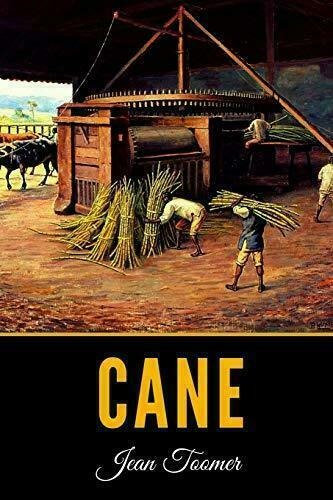
Sometimes that attraction is strong though. The moment I finished my first reading of Jean Toomer’s “Her Lips are Copper Wire” I knew I had to write music for it and do my best to realize it in performance. Perhaps I can’t say why that is. Little matter. The pull, the attraction, was undeniable.
This Surrealist love poem, like E. E. Cummings poem from last time, was written before the first Surrealist Manifesto, and is proof Americans could use English in this mode early in the Modernist era. Long time readers here will know I sometimes like to mesh in Blues and Jazz flavors with my music,* but Toomer, an early Afro-American Modernist, seemed to have already suggested that with this poem, so that I didn’t have to underline the point. I suppose it just strongly communicated the wonder of desire to me.
This poem was placed into Toomer’s Modernist masterpiece, the book-length mixed-form “Cane.”
.
It’s National Poetry Month, the reason I’m going through early Parlando Project pieces to present a more rapid posting schedule here this April. NPM tries to increase interest in poetry, but it’s hard to get a read on how significantly it achieves that. Arrayed against it is every poem someone didn’t “get” for whatever reason. Every poem that says only “Care about what I’m saying, even though you won’t understand,” poems without the bridge to “Here’s how you connect to this.” Every poem that bores us keeps us from poetry, and we are so easily bored. How many poems does it take to put up a wall against poetry, and will putting a poster on that wall dissolve the wall?
Is this the fault of the poets, their poetry? Is that the fault of us, the readers/listeners? Are there social structures that surpass us in enforcing this distance from the art? That’s a mystery. I don’t know the answer. But I know that once in awhile I come upon a poem like “Her Lips are Copper Wire,” and like another Surrealist love poet Paul Éluard I’m left compelled “to speak without having anything to say” — anything to say other than the words of this poem. That limerent pleasure is likely why you’re here, reading this, and listening to the performance of Toomer’s poem. Thanks to that mystery and you.
No lyric video today, but you can hear my performance of Jean Toomer’s poem with a player gadget below. Don’t see that? Well, this highlighted link will also do the job.
Today’s re-released Parlando piece from our early years is “Crepuscule” by American poet E. E. Cummings. This is certainly a passionate, ecstatic poem, isn’t it! Looking back at what I wrote about it in 2018, I was then taking the main meaning of the poem to be a portrayal of falling into a Surrealistic dream state. In the same post I confessed I hadn’t remembered that Björk had performed a version of this poem that seemed filled with erotic desire.
Rereading and reconsidering, I’m more unsure which is metaphor and which is meaning — and I think that’s often a good thing in poetry. We’re in one of those gestalt drawings created with a spell of words. We could be in the transport of desire, and it is like unleashing a spectacular dream: flowers are not just colorful, but burning with color. We will be still in bed, yet leaping with sleep-closed eyes. And so on.* It’s difficult to not feel the erotic pull of the text. For a dream, the mystery is very much of the flesh. Mouths, thighs, bodily curves, fingers, lips…is it dream as sex or sex as dream?
Three ways to hear my performance of E. E. Cummings “Crepuscle:” there’s a player gadget below for many, and there’s a backup highlighted link for the others. Want some dream images flowing behind the words of a lyric video? That video is above.
.
*The most mysterious line has lovely word-music: “with chasteness of sea-girls.” I’m assuming a reference to nereids, sea nymphs, but I’m unsure if the poet’s speaker is becoming one, or trysting with one, in the rush of their dream. If water spirits, perhaps gender fluidity is a subliminal?
It’s Easter and time to close my short Edward Thomas series for National Poetry Month with a short elegy written by a poet both less and more known than Thomas in the United States.
But before I get to that, let me fill in a few spaces in the Edward Thomas story. I ran into Thomas while researching Robert Frost’s stay in England before WWI. During this time three things happened that are part of our story: Frost published his first poetry collection in London (no one in American publishing was interested in Frost then). Frost was praised by Ezra Pound as an authentic new poetic voice and he finally gains attention in America. A man who made and kept few friends, Frost made one with Edward Thomas. Accounts have it that it was Frost himself who told Thomas that he was a poet who could and should write poetry, starting off the around two-year binge of poetry writing that comprises Thomas’ legacy today.
In the face of World War I, a war the old gods and abstracts seemed to cause and will onward — to the result of turning “young men to dung” as Thomas said last time — all that seemed beside the point. Thomas knew that, and knew that. He was philosophically a pacifist, an internationalist. None-the-less in 1915, in his late 30s and the sole breadwinner for his family,* he enlisted in the Artists Rifles. He had one other offer: Frost had asked Thomas and Thomas’ family to join him in America.
There’s this other famous point in the Frost-Thomas connection: what may be Frost’s most beloved poem, “The Road Not Taken” was written about his friend Thomas and their walks about in England. Frost meant to gently chide his friend’s intense observation and concern for choices on smallest evidence, though many who love the poem today take it as the motto for the importance of life choices. Some misremember Frost poem as “The Road Less Travelled By,” when in the text the poem’s speaker says the two roads were ‘really about the same.” Thomas’ two roads in the matter of the war were not “really about the same.”
Thomas chose to sign up with the Artists Rifles. You may think, “What an odd name? What’s up with that?” Well, it was what it sounds like. It was founded about 50 years earlier by some painters who wanted to start their own volunteer military unit. It saw action in some of the British colonialist battles before WWI, and in-between it was sort of a shooting club, a weekend-warrior kind of thing. Sound like an old-school-tie/old-boys club? I guess it was. Even during WWI it was invitation-only from existing members. So what happened with it during WWI? It produced junior officers, the kind of lieutenants and scouts that would account for the unit having some of the highest casualty rates in the war. So, there you have it: an exclusive club where the winnowing greeter is waving you in to the trenches and a mechanized manure-spreader of a war.
Busts of Mars and Minerva are featured in the unit’s insignia. “Artists Rifles” sounds kin to Sex Pistols or Guns & Roses, doesn’t it?
.
While still in England and in training with his unit, Thomas was able to mix with his circle of friends. He shipped out to France in 1917. He was killed a few weeks later, during what he thought was a lull in the battle. A late shell or sniper got him. He’d written about 100 poems, none of them published at the time of his death. His friends, other poets, wrote elegies. I know of at least three. Here’s a link to a post on another admirable blog, Fourteen Lines, which includes two of those elegies to Thomas.
One of them is by Robert Frost. Re-reading it again I think, Frost must have been so grief stricken that he’d forgotten to be Robert Frost. It’s filled with the kind of fustian crap, romanticism, and poetic diction that Frost the rhyming Modernist was all about throwing off. I tend to forget the poems that don’t give me strong pleasures, so maybe I’m overlooking something, but this elegy may be the worst poem Robert Frost ever wrote. By the time I got to “You went to meet the shell’s embrace of fire” I was through with Frost’s attempt.
Oh, if he could have concentrated on the concrete, the palpable. He may not have known it, but the records of the British military recorded the meagre personal effects found on Thomas’ body: a small notebook/journal, a watch, a compass, a copy of Shakespeare poems…and “Mountain Interval,” one of Frost’s poetry collections now published in an expanding career in the United States.
So, to end the story of Edward Thomas, who found himself as a poet in middle age writing about how England changed as war arrived, only to die in that war, I chose to perform the second one in Fourteen Lines’ post “Easter Monday (In Memoriam E. T.)” by Eleanor Farjeon. Farjeon, like yesterday’s Edna Clarke Hall, was a young woman enamored of Thomas** who like Frost and Hall enjoyed walks with Thomas in the countryside. While few Americans are familiar with any of Thomas’ poems,*** Farjeon wrote the lyrics to the hymn song “Morning Has Broken” which became famous on the back of a Yusef Cat Stevens 1971 performance, and as I write this it may be being sung in an Easter service in my country. So, many Americans know a Farjeon poem, but since Yusef Cat Stevens was known as a songwriter, most probably think he wrote the words.
Farjeon’s elegy for Thomas doesn’t’ make the mistakes Frost made. It begins as particular and offhand as Frank O’Hara’s masterpiece elegy “The Day Lady Died.” I don’t know if it’s intended, but after yesterday’s poem of Thomas’ “Gone, Gone Again” Farjeon picks up with Thomas’ love for apples, speaking of a package of English apples she’d sent to him at the front and of the budding apple trees in the orchard around her. Like “Morning Has Broken,” “Easter Monday” starts in Eden, and where can we go from there?
The oblique grief of her last line? What can I say…
I may or may not do a lyric video for this one, but you can hear my performance of Eleanor Farjeon’s “Easter Monday (In Memoriam E. T.)” two ways now. There’s a graphical player below for some, and for those without the ability to see that, this highlighted link.
.
*It hadn’t occurred to me, but some have pointed out that a steady paycheck, even if soldier’s pay, may have been one of Thomas’ motivations. His freelance writing work was always running to catch up with the bills.
**Thomas’ wife was open to these relationships, and was friends with Hall and Farjeon before and after Edward’s death. As I said last time, Edward Thomas’ emotional and love life would make a fascinating TV series.
***In England, Thomas is better-known. “Adlestrop” often ranks in best-loved poem surveys there.
We continue today our National Poetry Month series where we re-release some of our favorite performances from the early days of this Project in the hopes that more ears will be able to hear them. Today’s piece steps forward a couple of years from yesterday’s, where in “Adlestrop” British poet Edward Thomas had written with beautiful attention about the sweet nothingness of a day of peace while the precipitating event of World War I was only hours away.
Today’s poem, “Gone, Gone Again” (also known as “The Blenheim Oranges,”) was written about the same English landscape, only after the war had broken out. If “Adlestrop” is a poem about present nothingness, then “Gone, Gone Again” is a poem about absences. It starts with the calendar march of time until autumn, but now the boat landings* are unusually quiet and empty. Next Thomas notes the apple harvest** was not looked after. The apples have grubs, no orchardmen are looking after them, and instead of autumn harvest, they are simply falling to the earth to rot.
There’s a stanza that follows that starts by enigmatically referring to “When the lost one was here —” It seems impossible to determine who that is. It could be anyone missing their soldier overseas in the war, but one of Thomas’ biographers thinks it likely a young woman artist Edna Clarke Hall*** who had what was at least an emotional affair with Thomas. I wondered if the “lost one” could be American Poet Robert Frost, a man who never had many friends, but who had struck up a strong friendship with Thomas while Frost was in England before WWI. Frost had planned for Thomas and his family to emigrate to the United States so that they could continue their friendship, but then the war.
I’d guess the reason there isn’t more speculation on a possible particular “lost one” is that the same stanza ends on a couplet so strong that the opening two lines are overlooked. That couplet? “And when the war began/To turn young men to dung.”
The lyric video. There’s a picture there of the Blenheim apples to get citrus out of your mind, and when we get to the lost one, a photo of Edna Clarke Hall and then Frost.
.
The concluding four stanzas develop the theme of an abandoned house, something which rhymes with my own experience of abandoned farm houses in the American Midwest. The concluding stanza mourns the schoolboys who wantonly vandalize these absences, to which Thomas gives full and poetic attention.
I’ve always been happy with the music I composed and realized for this performance, including some parts for muted horns and woodwinds. I did mis-sing a number of Thomas’ words in the recorded take that was otherwise “the keeper.” I hope that won’t detract. On the other hand, one mistake I made I still consider an accidental improvement: “grass growing inside” in place of Thomas’ “grass growing instead” is not only a stronger image, it’s a better rhyme.
Three ways to hear my performance of Thomas’ “Gone, Gone Again:” a player gadget is below for regular browser viewers of this blog, others may need to avail themselves of this highlighted hyperlink — and we’re continuing our special National Poetry Month series extra feature yet once more: there’s a lyric video above.
.
*Quay is an uncommon word in American English. I learned it first from an avid Scrabble player, who probably triple-word-scored with it. A quay can be a seaside dock, but from some knowledge of the landscape Thomas wrote about, it’s likely a river or canal landing he speaks of. With the men overseas in the war, I’d assume the regular canal traffic in the English countryside would be reduced.
**Blenheim Oranges are a British apple type. It’s possible Thomas chose this particular apple not just because it was cultivated in the area of England he knew best, but because it’s named for an estate built for the victorious English leader in a battle fought centuries earlier in Blenheim Germany.
You’ll sometimes find Edward Thomas filed under “War Poets,” but his best-known poem “Adlestrop” is a unique peace poem that emerged from a journal entry written a few days before war broke out in Europe in 1914. In Thomas’ “Adlestrop”, nothing happens — the sweetest nothing.
This poem is lesser-known in America than it is in Britain, but its achievement deserves to be celebrated more generally. Now, I won’t knock the accomplishments of the World War I “War Poets,” but from the time of Homer it’s been assumed that the heightened events and sorrows of war can make powerful poetry. But to write poems about the day before a war, the minutes of mere inconvenience amid beauty so ordinary we will not burnish it on paper, that’s a rarer thing.
And now, with a new war being waged in Europe, the “Adlestrop” moment may have gained fresh power for us.
The new lyric video.
.
Adlestrop is, and was in 1914, a tiny English village in the Cotswolds. Edward Thomas did take a train ride a mere four days before Archduke Ferdinand was assassinated tripping off the first world war. He was journaling at the time, a busman’s holiday for a man who made his living freelance writing at a “bills-to-be-paid” rate.* In his journal he noted the heat and the sleepiness of the train station (which was outside of the town’s edge). An avid naturalist, he made exact notes of the plants there, and the birds. Oh, the birds. Thomas’ writing is always full of bird-song.
Here’s what he wrote on June 24th, 1914, the first draft of what would become the poem:
Then we stopped at Adlestrop, through the willows could be heard a chain of blackbirds songs at 12.45 and one thrush and no man seen, only a hiss of engine letting off steam.
Stopping outside Campden by banks of long grass willowherb and meadowsweet, extraordinary silence between the two periods of travel — looking out on grey dry stones between metals and the shining metals and over it all the elms willows and long grass — one man clears his throat — a greater than rustic silence. No house in view. Stop only for a minute till signal is up.”
The final poem, the one we know and perform below, was then written after the outbreak of the World War. It transforms that entry’s already poetic detail into that masterful poem of nothing, the sweetest nothing. The poem’s final zoom out to “Farther and farther, all the birds/Of Oxfordshire and Gloucestershire” seems an invention, a choral work derived from a smaller bird-song ensemble in the journal entry.
The performance features one of my better examples of melodic bottleneck electric guitar playing. You can hear this performance three ways: a player gadget below for some, this highlighted link for others, and a new lyric video that you’ll see the picture/thumbnail/link for above.
One other note: my own accelerated posting schedule for National Poetry Month 2022 is wearing me down a little this April. I have more pieces like “Adlestrop” that I plan to re-release yet, but it’s possible that I may reduce frequency in the second half of the month.
.
*Thomas wrote around a hundred poems in the just over one year that he worked at writing poetry. His work for hire productivity was prodigious too. One stat that is often noted was that he once reviewed 19 books in one week.



 Frank Hudson