Black History Month 2025: There is a house…

In the past few years I’ve enjoyed focusing here on Afro-American poets during the month of February. Last year, I dug in and did a bit more research on an understudied but fascinating Chicago poet Fenton Johnson, whose published work sits between the emergence and premature death of Paul Lawrence Dunbar and the Harlem Renaissance. Johnson became easily identifiable as a Modernist before his access to extant publications dried up in the 1920s, and I suggested last year that his poetry allows us to see —albeit silently on a page until I did some musical settings — into the formative years of Afro-American Gospel and Blues music before it made it onto recordings.

Here’s something I formulated for myself early in this Project as I found myself often looking at the rise of Modernism in the 20th century: a part of why Americans became highly significant innovators in Modernism has to do with Afro-Americans. Literary-only scholars might not focus on this inside their silo, but at the same time Pound, Eliot, Frost, Moore, Stevens, Millay, Williams, H.D., Sandburg, et al were reforming poetry, Afro-Americans were spearheading a revamped approach to music. Black poets like Johnson and Langston Hughes were hip to how those two things should be viewed together from the start, and after all, Modernism took root during the last decade called The Twenties under the banner of “The Jazz Age.”

That 2024 series on Fenton Johnson let me further express the musical part of the Parlando Project: “Where Music and Words Meet” — and it should also be obvious by now to regular readers that history is one of my interests. So, this February, like the Fenton Johnson series of last year, I’m going to get into the deep weeds a bit this on some lesser-known stuff.

I’m unable to schedule the Parlando Project work in a fully professional manner, so it’s likely you, if you follow along this month, will be going on a journey with me as I look into elements in real time. I may be revising myself before the finish, and if that gets awkward, let me say at the start that this isn’t some plotted-out documentary, I don’t know what all I’ll find. It’s likely going to be very first-drafty, so put on your reading sweater.

If this was an audio presentation, at this point there’d be one of those audio fades with reverb to suggest a passage of time now. From out of the echo my voice will be saying: “It all started in 1976 when I moved to Minnesota from New York…”

I was looking for a new start. It wasn’t entirely clear if I was going to continue intermittent attendance at college, which was both logistically and financially limited to me at the time. One advantage I had: doing nursing work in an Emergency Department was an easily transferable skill, I could go most anywhere that had a hospital, and maybe it would be good if where I moved also had a college. I settled on Minneapolis because I knew a couple living there from my Iowa college experience in The Sixties. One of that couple, Dave Moore has remained a friend (and contributor to the Parlando Project). Dave and his then wife had plotted out a plan for themselves. They were going to run a small mail-order used book business and needed a place to collect stock, store it, and run that business. They purchased (for an attractive low price) a large old house on Park Avenue in Minneapolis. Park Avenue was, in the last Gilded Age, a place where newly rich Minneapolitans built their mansions along a wide tree-lined street leading into the business center downtown. Now in 1976, this couple I knew were going in big on the sweat equity thing, rehabbing that house. The place, 3132 Park Avenue South, was built as a sort of a Junior-Grade Mansion. The 3rd floor, where the original owners had servant’s quarters would hold their stock of books which Dave was obtaining from aging bookstores that were beginning to close down or dump old stock. The other two floors would be their living space and nursery for the child they were planning to have. I could help a bit with the enterprise and rehab, and stay with them for a while.

It was a grand adventure. I had no builders skills, but mainly helped with the stripping of paint off the old woodwork and general lifting and toting. Work was already more than half done when I arrived. Dave told me that around mid-century the house had been turned into a set of small rentable spaces part-way between a rooming house and a set of apartments. Most of those changes had been removed already, and the book business part of things was more at my interests. For that, I’d go with Dave on trips to the basements of sole-proprietor bookstores, some closed, closing, or soon to close, to clean out old stock in their basements or back rooms. There was so much stuff from the 50s and the early 60s — before, you know, The Sixties.  From ruined books I collected a small batch of lurid pulpy covers on these expeditions. The packrat in me wished I’d grabbed more.

Pulp Joyce cover

It’s James Joyce’s birthday today. This cover from those ‘70s bookstore hauls was stuck up in my studio space for years. There’s no music directly for this essay today, but here a Joyce poem conveyed in the early years of this Project.

.

This house on Park Avenue is just a location for the drama, a set for one of the acts I want to present haphazardly this month. The whole play is not extant. It exists only in fragments, a bad quattro. How do we raise the curtain?

Dave knew I had an interest in old Blues music, and somewhere in an interval after I was staying at 3132 Park Avenue and maybe as late as when I moved into the rented part of a duplex next door a few years later, he gave me a tattered scrapbook found when they were cleaning out those rooming house remnants. I’ve learned a lot since that scrapbook came into my possession. Let’s take a look inside as this series continues.

John Sinclair writes two poems of Thelonious Monk

John Sinclair lived an eventful life. He’s likely still most well-known for his “10 years for two joints” marijuana sentence, and secondarily for his connection with Midwestern 1960s high-energy rock music as a manager and promoter. Maybe you know too of his founding of a White Panther Party, the quixotic attempt to translate the charismatic radicalism of the Black Panthers to young white hippies.

He was a provocative guy, and he seems to have had a promotional streak to go with that. As I often say about folks like Sinclair: no sane person can likely agree with everything he said and did. Feel free to feel about him however you did before you read this, but there’s a particular reason for a piece using his words today.

This is the last day of (U.S.) National Poetry Month, but it’s also International Jazz Day. The connection of poetry with Jazz seems to have gone back to the very beginnings of Jazz. While Jazz is a predominantly instrumental music, it grew out of a sung Afro-American music that got called Blues. Besides accompanying Blues singers, Jazz musicians often used instruments to evoke the vocal parts of Blues even when the singers weren’t present. And just as Jazz music can use abstract sounds to stand for speech, a lot of Jazz musicians infuse music into the way they talk about their life or their art. The formula of music + words is the formula of poetry.

Long time readers here may recall that I’ve made a point that lyrics in the Blues tradition are Afro-American Modernist verse, and that we can choose to frame them as such — but it’s not so novel for cultural historians to note Afro-American Jazz as an important part of Modernism in music.

Given these connections, it should be no surprise that Jazz Poetry is a long-standing flavor of American verse. Carl Sandburg and Langston Hughes wrote it early in their careers. Sandburg even sang Blues-adjacent songs. Beats adored Jazz, often thought it a literary model, and the mid-century commonplace of bohemians intoning poetry beside a Jazz combo is a influence on this Project that shouldn’t be hard to see. The Black Arts movement welded itself to Jazz too, its poetry often spoke of that music’s artists while Jazz music played.

It turns out that alongside the other things John Sinclair was, he was also a Jazz fan particularly intrigued by Jazz’s rebels. He wrote Jazz criticism, and Jazz poetry before doing anything else he was remembered for, and he kept writing that Jazz poetry throughout his life. When I read that Sinclair had died during the first week of this April’s National Poetry Month, I sought out some of that poetry of his.

The examples you can hear today may surprise you. They did me. For all Sinclair’s association with high-energy music and radical politics I expected some rantings of a passionate sort, strong declamations. He may have written some of that, but these two you can hear me perform were the ones that intrigued me the most. They might seem too casual to be poetry or even public speech, save for his intent to frame them so. They don’t even contain his own words for the most part. Instead, they are statements attributed to Jazz pianist/composer/bandleader Thelonious Monk.

Monk’s a unique creature, even in the highly individualized world of creative Jazz musicians. He was present at the creation of Bebop in NYC in the 1940s, but unlike many of that style’s pioneers there was puzzlement at his skills. To not put too fine a point on it, many connoisseurs weren’t sure he was a good musician. His piano technique was unorthodox, his note choices seemed odd-to-wrong even within the extension of harmonic language that Bebop was proposing. Was that a misunderstanding by (largely white) outside authorities? There’s more: Monk confounded other skilled Jazz musicians who thought he was erratic, not always a steadfast partner in their musical combos that could give the other soloists a predictable foundation to solo over. And on stage he would sometimes extend his eccentricities by leaving the keyboard to sort of dance and wander about the stage.

A remarkable thing happened over a decade or so of this limbo. His compositions became more and more accepted by other musicians, and with wider repetition what once seemed peculiar now seemed irresistibly catchy. Eventually they were deemed masterpieces. Other players started to understand Monk’s unique off-kilter phrasing and rhythm sense. And those odd stage antics became lovable, even if they also could have been worrying. As they would say today, Monk wasn’t neurotypical — and there’s been posthumous talk of schizophrenia-like psychosis. For a Black man working on the fringes of an increasingly marginalized art form in a mid-century America, that Monk eventually achieved so much is a monumental achievement.

Sinclair knew all this. I suspect he trusted you might know this too, and that’s why I’m taking your time to give you this capsule history of Monk. What Sinclair does collect and write down of what Monk says about his art and being an artist seems so modest — both for the poet and the musician. In the first poem, “recollections for allen ginsberg”  Monk claims in effect that he’s discovered the pluperfect American music as just being in this America, ready to be gathered and heard. And the lack of esteem and appreciation he’d received by fans, esteemed critics, and other musicians? The second poem Sinclair gathers (gathers like the Jazz that’s everywhere) and titles “worry later – san francisco holiday – for my mother”  says he intends to persevere trusting himself, eschewing worry about the lack of understanding. Why does he think that, how does he go on making art? The making itself: “my playing seems to work!” he says. Is he saying that he himself understands the achievement of his own work based on his goals, and so is glad he made it — or is he saying that the concreteness of making something that integrates into a something that didn’t exist before is the best therapy for a life that could otherwise be consumed with worry and doubt? My understanding is that he’s saying both.

A lyric video of today’s piece

.

The Valerie Wilmer that Sinclair credits for the Monk quote in the second poem made a series of invaluable photographs of Afro-American Jazz musicians toiling on in the creative fringes of music after their music became even more marginalized than it was in Monk’s time. Her book As Serious as Your Life  is a document of making that work and the musical artists it depicts.

My performance of Sinclair’s two poems features my best attempt at realizing a Monk-ish composition to accompany it. There are two unfinished drafts of this post where I tried to come to confessional terms with my feelings about that process of realizing the piece and my audacity to present myself in the context of real musicians with lives devoted to their craft. I decided to spare you all the breast-beating since I came to see that as boring. As a composer, I guess I could conclude with a variation of that Monk quote “I’ll tell you one thing: my composition seems to work.” You likely saw the video link above, but if you prefer just the audio, there’s a graphical audio player below, and this backup highlighted link for those who don’t see the player.

.

Mistah Witch: Pioneering Blues Poetry

Enjoy the Valentine’s candy if you have it, but this is a longer post, and we’re going to get into some uncomfortable stuff with this one. Yes racism, but then I’ll deal today with musicology and Modernist poetry too. The first is deadly in spirit and body, but then the latter two may often bring on the little death of boredom and indifference. This is why I respect you as an audience: poetry is a minority interest, mixing in the variety of musical styles I use here to the best of my subjective abilities will confound some of that audience, and then to discuss oppression — even the resistance to oppression which should be heartening — well, welcome rare, broad, and appreciated readers and listeners. Let us continue.

I said earlier in this year’s Black History Month series where I’m examining the early work of Chicago poet Fenton Johnson, that it may help us to orient ourselves into the time in which this young Black man in his twenties started writing and publishing. If we look at poetry and music, three big things are happening. They’re going to change how the 20th century, and even our own current century, approaches things.

The Fenton Johnson poetry I’ve presented so far this February has been in the 19th century tradition. It’s a style of poetry his school teachers would have taught him,* and like his chief model Paul Laurence Dunbar, he can speak for and about his fellow Afro-Americans using that mode of poetry. However, at this time something new is brewing in poetry. Over in England a small group of ex-pat Americans are joining forces with a couple of British poets/critics and a man from Belfast to create the first Modernist English poetry.** Few are noticing this yet, it takes a couple of years for it to get a foothold, but in 1909 the first poem in a style that would soon take to calling itself “Imagist” was published: “Autumn”  by British writer T. E. Hulme.

What makes that poem and the Imagist poems that follow Modernist? First off, it’s concise, it gets to the point. The language may combine things in unexpected ways, but it uses much more ordinary and day-to-day language to do it. Indeed, it revels in that — part of its freshness is that it wants to render sublime moments in the same way of speaking that something utterly mundane might be expressed. Its commitment to this is so strong that those mundane moments, the “unpoetic” ones, can be charged with a power. It doesn’t care to have the people in its poetry seem high-flown, they don’t have to be different more “poetic” creatures. Yet these same poems often have an important core of distrust for common or worn-out appreciations of reality. Emotions may be stated, yes, but many of the most vivid poems portray the landscape and the palpable things surrounding an emotion rather than hang signposts or explanatory placards of their feelings. Rhyme and meter could be used, but they aren’t the main point if they lead the poet to ignore these new things to emphasize.

While this is going on, Black Americans are forging a couple of new musical forms that are going to overthrow their nation’s music — and from there, impact the world’s. Because this happened before the full emergence of commercial music recording, some of this is literally un-recorded. Buddy Bolden and his like are playing instrumental music largely sounded on brass-band instruments along with pianos, where access to those instruments is available. Eventually that will be called Jazz. Many mark the first Jazz record as being issued in 1917, though Jazz existed before the recording.

At roughly the same time various strains of music with lyrics made by Afro-Americans are being extracted and refined from the ore of American folk music. I would maintain that the lyrical part of this sung music can be viewed as Afro-American Modernism. The songs love to get to the point of things, stripping away hypocrisy and pretense. They deal with disappointment and sadness, yes, but they most often deal with it in resiliency and wry resistance. Taking from the preexisting tactics of folk musics, they will borrow and reference each other’s individual songs — and like Modernism will soon take to doing, they will collage together unlike things and verses to jump from incident to incident. That sung music will eventually be called Blues, and because it’s a sung music, any instrument can be used for accompaniment, including cheap and portable ones. No Blues? No rock’n’roll, no country music as we came to know it, no rap.*** The first Blues recordings were done in the 1920s, but the first sheet music which might be classed as Blues dates to 1912, though again we know it existed unrecorded and off the books before this.

So, three things — all big, culture shaping stuff. In 1900 there’s no general cultural knowledge that these three things exist: English-language Literary Modernism, Jazz, and Blues. By the 1920s they all become part of the mainstream culture, however misinterpreted and misrepresented they may be. Modernist poetry might be thought of as self-consciously crude esoteric nonsense sticking its thumb into the eye of real poetic verse, while Jazz was thought of as hopped-up fast-tempo music to deaden the mind as rapidly as cheap liquor might, and Blues? That’s merely sad and sentimental music of resignation to fate.

This is Fenton Johnson’s world as a young man. The Harlem Renaissance writers that would come a decade or so later would still be dealing with this world. As we’ve seen in previous Black History Month series here, the Black cultural leaders of the first part of the 20th century were not yet fully on-board with Jazz or Blues, which they often felt reflected badly on their race. They did briefly note Fenton Johnson as a Black Modernist free-verse poet, but this happened in the Twenties as Johnson was withdrawing from writing new verse.

I was thinking of this as I read Johnson’s first collection of poems, no doubt written in the years before the book’s publication in 1913, and I come upon this short poem, “Mistah Witch”  printed in the phonetic dialect meant to represent unlettered Afro-American speech.

Mistah Witch as it appeared in A Little Dreaming

Here’s how it appeared published in Fenton Johnson’s “A Little Dreaming” in 1913

.

What matter of word music is this? I used my musicological knowledge along with literary thoughts as I examined it. It could be a folk-origin nursery rhyme or play song.***  It could just be a short supernatural poem, for we’ve seen last time that fantasy poems were a genre Johnson touched on in his more conventional verse. It may just be me, but I couldn’t help but read it as Blues Poetry — and a very early example of it too.

No, as printed it doesn’t use the Blues’ 12-bar structure or the three-line (two refrained or near refrained lines, and a response in the third line) stanza. Blues has never been purist about that, and early Blues often didn’t fit into regular musical forms. But I got a Blues sensibility from it. Mistah Witch may be mythologically, potentially, or actually, frightening, but the poem’s speaker seems to know Mistah Witch’s game, how he operates. I thought the poem’s sharpest line was (translated from the phonetic dialect) “Ain’t you tired of scaring me?” That implies Mistah Witch’s “magic” terror is weakening out of boredom and the rote nature of it for the speaker!

If Blues, like other Modernist poetry, likes to get to the point of things, it can also enjoy encoding its statements. The tactic is often: I’m going to speak something publicly, and part of the audience (the ones I want to let know we share an outlook) will get what I’m saying — while at the same time those that might not approve of my statement will be in the dark about what I’m talking about. The latter will just be puzzled or indifferent to what they don’t understand.

What could be encoded in “Mistah Witch?”

In plain talk: from the days of Fenton Johnson’s youth, through the years he began publishing his poetry, and continuing after his poetic work faded away, there was beside the slow incremental wear-and-tear of stereotypes and “civilized” discrimination an active and brutal threat of terroristic violence against Black Americans. Threats, attacks, lynching and (white) race riots are a part of American history that wasn’t talked about broadly out of a mixture of shame and “politeness.” *****   Blues doesn’t play that game, but a Blues singer (or a poet looking to find a broader audience) might encode a protest against that terror metaphorically. I did note that the poem concludes with telling us that Mistah Witch (“Mistah” signifying the frightener is someone the singer feels they must make a show of social respect to) has eyes like the sea — the bluest eye perhaps.

I’m not certain if that’s what Fenton Johnson is doing in “Mistah Witch,”  perhaps even unconsciously. I am planning to try to include some information that I have recently learned about Johnson’s political views later in this series. Musically I took Johnson’s original poem, and for this performance turned it more toward an irregular folk-Blues structure to reflect the Blues sensibility I saw in the poem.

And for those who want a little time-machine technical magic to travel back to those early Blues recordings often pressed cheaply for the “race records” market and worn with dust and the needles of heavy-armed Victrolas, I’ve included a Bonus Track today: a simulation of how the recording would sound in that context.

Here’s my rough’n’ready musical performance of Fenton Johnson’s “Mistah Witch” recorded with inexpensive modern equipment.

.

Here’s the simulated worn 78 RPM shellac record version.

.

*Johnson, unlike most Americans and even more so, most non-white Americans, had a first-rate college education, attending Northwestern and the University of Chicago.

**This group coalescing before the start of WWI included T. E. Hulme, from the less fashionable north of England who’d been expelled from Cambridge, F. S. Flint a self-made man of letters who risen from Victorian poverty, the Americans T. S. Eliot, Ezra Pound, and Pound’s former college sweetheart Hilda Doolittle, as well as Robert Frost, and the somewhat forgotten man from Belfast was Joseph Campbell. I count Frost as a Modernist, as I see his poetry aligning in its outlook with Hulme’s theories, differences in prosody aside. Remaining in America, William Carlos Williams, Carl Sandburg, and Edgar Lee Masters would also be early Modernists.

***Jazz musicians will often maintain that the Blues is essential to Jazz as well. In that sense, my reading is that they aren’t just talking about Blues musical structures and vocal inflections portrayed by instruments, but the Blues sensibility.

****Blues could and did use lines shared with those folk music forms.

*****In 1919 Johnson’s Chicago suffered a mass racially motivated riot. In 1909 downstate Illinois had a similar incident in Springfield. Smaller acts of terrorism against Afro-Americans were continuous in Johnson’s time. Black History Month isn’t just about that, history shouldn’t be a flat picture. That stuff is ugly — it was meant to be so — and that ugliness is part of the reason it was suppressed and untaught. But. But. But — you can’t fully comprehend the beauty of resistance to that without knowing the ugliness it opposed.

“Mistah Witch”  in my reading is racism, or white-supremacist terror in general, and it could be specifically referencing the original Klan terrorists who fancied themselves in their costumes as representing murderous ghosts and spirits.

May Music Find a Way. Spring 2022 Parlando Top Ten numbers 7-5

Tonight is Jazz Night here at the Parlando Project Top 10 countdown. I’m going to ask the folks who come here for the talk about words to murmur down quietly today as I speak about the music.

Funny how these quarterly counts sometimes become nice little “sets.” Both today and tomorrow’s segments as we countdown to the most popular piece this past spring are as good as any planned ones I could have devised. So, let’s get the musicians on stage!

7. Sonny Rollins, the Bridge, 1959 by Frank Hudson.  Remember that the bold-face headings at the start of each entry in this countdown are links to the original post presenting them, where you can read what I had to say about it then. I had a lot to say about this one back in January, and so even though this is a piece where I wrote both the words and music, today I’m going to talk about how this (and many of our Parlando Project musical pieces) was realized.

With significant accuracy I hesitate to call myself a musician. My home instrument is the guitar, but even there my knowledge is not something to brag about, my skillset a bit unusual, but limited, and my consistency not up to a professional (or even many dedicated amateurs’) level. But I have a secret weapon: I can choose to compose or improvise (spontaneous composition) the things I present here. My Jazz guitar chops are not strong, but the chordal part was something I was able to execute. Listening back today to the second guitar part I improvised for this I think it was a good day with the wind at my back for me.

In another world I’d more often use other musicians who could add their skills to this enterprise, but logistically and financially the one-man-band approach is what makes it possible for me to express the variety of different musical ideas that I present.

To hear this or the other musical pieces here, use the player that may appear below, or this highlighted link.

.

6. Lenox Ave Midnight, an Extension by Langston Hughes.  Another little miracle pulled from my limited, if a bit unusual, skill set? On a good day I can do a passible impression of a guitarist, but my keyboard playing is always naïve. The advantage I can find? Modern MIDI lets me use my mind where my fingers don’t know what to do. In a piece like this I figure out some kind of harmonic flavor by trial and error and my sketchy knowledge of music theory. I played that part and then improvised a right-hand part, editing on a MIDI “piano roll” to correct bad dynamics or altering notes I didn’t like. To an actual pianist this could be called “cheating.” To a composer, it’s called “composing.” You see, I use the term composer protectively, because I really do feel ashamed sometimes that I couldn’t play in real time with two hands the keyboard parts that to casual listeners make a sound like I could. And I think: to a real pianist realizing this simple composition would be a trifle. To me: achievement!

Near the end of this piece, to open up its musical world before I speak the two lines I added to Langston Hughes poem (the reason I call this piece “an extension”) I did something I rarely do here, which I personally try to avoid, because it really does feel like cheating to me. I used a couple of small loops of recorded melodic material from Apple Logic’s free-to-use loop library. My composer’s need here was that my simple and not very convincing saxophone part, that I did play on MIDI guitar, needed something to camouflage those issues.

Why does this bother me to do? After all sampled loops have been part of popular music since the hip-hop DJ’s started dropping riffs from vinyl records. Because I use “composer” as my excuse, my get-out-of-pretender-jail free card, I believe I (or at least some human present in the room with me in the creation process) should have played or scored the notes. I think the two short horn section loops used here sound fine, helped make this piece successful for listeners — but that’s why I feel guilty for using that tactic. Whoever played them, devised those short motifs, didn’t know what I was doing, wasn’t working in concert with my aims.

Now look, I don’t generally mind when other artists do this. Returning to words briefly now: I spent many an April here performing the words of Eliot’s “The Waste Land”  which includes — even more than I imagined — squadrons of quotations and paraphrases from pre-existing works. Selection, curation, recombination, and recontextualization are easily defined as creative acts. Maybe my qualms and self-imposed rules in this have a most self-interested reason: I worry that the casual listener here will think I’m just reading poems over pre-recorded music, when I’m proud that I had to write and play and record the majority of the music on this Project, one track at a time.

Player below, or link.

.

Sonny Rollins, inspiring to me, yet my distance from that discipline shames me

.

5. Autumn Movement by Carl Sandburg.  I stopped writing this post here yesterday, because what I had written so far seemed embarrassingly solipsistic, pretentious, and uninteresting to my audience, and yet also because some of the things I’m feeling as I write about my musical work are hard to condense into a reasonable length post — to be better, it would be even more. And so here we are at this, my presentation of a short nature poem by one of my heroes Carl Sandburg, illuminated by lovely music I made for it. How am I to feel about it tonight? Amazed that I, a non-musician, was able to make it? Or something that feels almost like shame or embarrassment that I present it publicly, when there are days I can’t play anything of any value? Knowing enough to know that what I know as a composer (little) and what I can bring to the composer as a player (limited). Knowing that at my age (old) there isn’t much lifetime to remedy those things.

This, though I cannot say I have sufficient understanding or skills, is where Jazz comforts me as no other art does. Jazz is always confronting the empty sky. Always a critique of silence — and able to the fears inside silence, now, not later, and with surprise and failure. There can be no surprise without failure. I’m a small man, it’s a big sky and a big silence. There are better musicians, better composers, but it’s a big sky and a big silence. This the musician’s and composer’s prayer: may music find a way.

Player below, or link.

.

Thoughts on Juneteenth: Jazz was born free, and everywhere is exchanged

I have no new musical piece for today’s American celebration of freedom’s restoration, Juneteenth. I made moves toward one, but things didn’t move fast enough. In my wayward search I’ve been spending more time thinking about the Mid-20th century period 1940-65 that I wrote about a few posts back. During that period the Afro-American art form Jazz moved from being a predominant popular music style (though often performed by non-Afro-American musicians) to a multi-valent art music that intelligently reflected young Black artists, their concerns, and their adaptations.

That transformation is a complex thing, and this’ll be a short post. Early this century Ken Burns’ Jazz  made the simplified case that this was a tragic arc.  Art-music is something a smaller portion of people listen to, live with, care about. I don’t buy that singular tragic summary any more than I buy the companion theory held by others that the audience’s advancing stupidity is to be blamed instead. I suspect these theories are subject to the downhill-to-hell-in-a-handbasket generational syndrome that is ever repeated throughout time. Not that there aren’t things worth observing, worth reviving attention to, worth taking back out of the toolbox for reuse in these sorts of reverence for the past! After all, I’ve spent a good deal of time in this project drawing attention to and finding worth in early 20th century Modernist poetry. So, moldy figs, check.

I’ve spent a good deal of time this month listening to mid-century Black American Jazz, some of it from the end of that mid-century quarter when “free jazz” was the new thing. It’s not everyone’s cup of expresso-in-a-small-club. In Burns’ Jazz,  several of the talking critics had it that these were the vandals that sacked Rome. Last night at dinner I tried to explain Albert Ayler to my spouse, who loves me enough to forgive that.*  Want a simple blurb from me now on Ayler? Most people will be unable to listen to many of Ayler’s recordings with pleasure without significantly understanding something of its intent and context. There’s an argument to be made that art should never resort to that. My belief: sometimes one needs to be baffled, needs to ask questions on the parade from ear to heart. In the Jazz  documentary, Stanley Crouch (the initial G is silent) would say of a player like Ayler “the emperor has no clothes.”  I’d say he’s stripped naked.

quote clip

Mid-Century was also an era when LP liner notes could be saying something. Here’s a bit written by Steve Young on 1965’s Black Arts/Free Jazz live album “The New Wave In Jazz.” I’m unable to find anything about what happened to this Steve Young.

.

So, it was Free Jazz in my ear as I approach this month’s American’s celebration of the restoration of freedom. Soon it’ll be American Independence Day. We Americans abundantly like the word freedom. Conceptually freedom is inherently a broad thing. People tore into the Capital crying freedom from votes they wished to disenfranchise. People were beaten on the Pettus bridge crying freedom to cast votes.

So, Freedom’s a broad thing. Freedom is like the meaning of life, self-evident and elusive. I think it’s to find your joy and to help others.

Here is today’s returning meeting of my original music and someone’s poetry, from one of the too-overlooked Afro-American artists of the last decade that was called The Twenties: Gwendolyn Bennett. She just called it “Song,”  as broad a title as freedom for a complex thing that is Black American music. You can play it with the player below if you see that, or with this highlighted link.

.

*I told her I’d just spent the day reading LeRoi Jones/Amiri Baraka and listening to free jazz from 1965. Poetry and 50-plus-years-ago free-jazz combined will interest a few people, less perhaps than even the small crowd for either of those things by themselves — that’s you folks reading this far — and she’d just spent her day helping sick people. Sing heavenly muses: that I clearly have a higher calling.

Completing my National Poetry Month daily posting with two beautiful pieces

It’s been quite the job of work to do daily posts with new lyric videos here this April in celebration of National Poetry Month, and I haven’t taken the time yet to see what impact those extra efforts have had. Though I was re-releasing already recorded audio pieces from the earliest years of this six-year Project this month, even the fairly simple lyric videos took more time than you might think — and then there was the selection of which pieces to present, as well as writing a few hundred words on what I currently thought of each of them.

Well, not only is today the last day of National Poetry Month, it’s International Jazz Day, and I felt I needed to make a nod to that today. So, let’s play two!

The first piece is, I think, one of the prettiest of the more than 600 performances we’ve presented: Carl Sandburg’s “Autumn Movement.”   Sandburg gets tagged as an urban poet, and of course he broke into the scene with Chicago Poems in 1914. But he grew up in a more downstate Illinois town, and traveled around the less urban areas of the country before spending the majority of his “now you’re famous” years on a small goat farm. “Autumn Movement”  is from his 1918 Cornhuskers collection, which as you might expect from its title is not all city living.*

Here’s Sandburg with farmland not skyscrapers

.

While “Autumn Movement”  is short in word-count, I did get to playing a bit as I tried my best to approximate in this piece the stylings of Bill Frisell with my Telecaster and fretless bass. Frisell, who can play more contexts more better than I can properly imagine, is usually labeled a Jazz guitarist. I’m not, labels or otherwise. I just have a lot of guts — but the result is  pretty.

As per our April thing, you have three ways to hear “Autumn Movement.”  You can use the player gadget just below. No gadget?  This highlighted hyperlink will do it too. And the lyric video is above.


.

And the bonus second piece? “Sonny Rollins, The Bridge, 1959”  is not an early performance (I performed and presented it earlier this year) but for International Jazz Day I thought it’d be good to have another piece that not only uses Jazz musical flavorings but actually deals with being a Jazz artist — or by easy extension, an American artist in any medium. If I’m not a proper Jazz composer or musician, I take great strength just from considering their achievements, their dedication, their originality. Given that most of the giants are Afro-Americans who’ve had a whole ‘nother level of obstacles and expectations to get over as serious artists — well, the mind boggles and the heart swells considering them.

And one more chorus: three ways to hear it: the graphical player just below this, the backup highlighted hyperlink, and the lyric video just a bit lower down on the page.

.

I hope this experiment has been enjoyable for the regulars here who may have joined the Parlando Project already in progress and who perhaps haven’t heard the earlier pieces — and it was my hope that it would also bring some new readers and listeners into the fold. If you’re one of those: welcome! I’m not predictable in what kind of poetry or music I’ll use, but I do consistently try to keep it interesting and varied, and I’d sure like to have you come along with me as I do that.

And here’s my ode to the inspiring Sonny Rollins in lyric video form

.

*I’ve always enjoyed the story of Bob Dylan seeking out Sandburg as the younger singer was just starting to reach a level of national fame in 1964. While trying to locate Sandburg, Dylan was unable to get the locals to recognize a “Sandburg the poet” he was seeking, but then they asked back if he was looking instead for “Sandburg the goat farmer.”

Robert Frost wrote a lot of poems about rural life, including many of his best and best remembered, but his contemporary Sandburg, Mr. City of the Big Shoulders, probably spent more time around actual farms and farming.

Her Lips are Copper Wire for National Poetry Month

Even with its most popular and well-known poems, poetry works, works its impact, one reader, one listener, at a time.

Doing this project leads me to read a lot of poems. I’ll go through whole collections, entire anthologies, looking for things that I suspect I can create music for. That sense, “This could work with music” is hard to quantify. I’ve noticed repetition and refrain will often cause a second look. Longer poems will need to presently suggest selections as I’m seeking sub-5-minute pieces. Yes, graceful lines that sing on the page for whatever reason will suggest music. An image or an incident vividly depicted that grabs me will ask me to stop and consider it. Oh, I don’t really know, can’t say for sure, how I select things for this. I’m happy with it being a mystery, and I hope you, reader/listener are too.

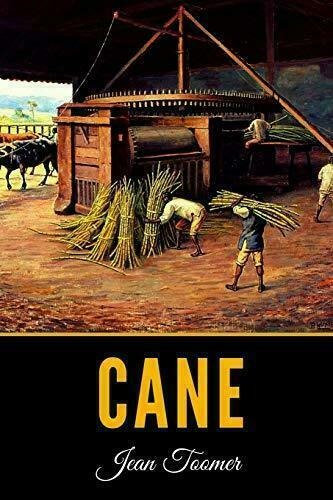
Sometimes that attraction is strong though. The moment I finished my first reading of Jean Toomer’s “Her Lips are Copper Wire”  I knew I had to write music for it and do my best to realize it in performance. Perhaps I can’t say why that is. Little matter. The pull, the attraction, was undeniable.

This Surrealist love poem, like E. E. Cummings poem from last time, was written before the first Surrealist Manifesto, and is proof Americans could use English in this mode early in the Modernist era. Long time readers here will know I sometimes like to mesh in Blues and Jazz flavors with my music,* but Toomer, an early Afro-American Modernist, seemed to have already suggested that with this poem, so that I didn’t have to underline the point. I suppose it just strongly communicated the wonder of desire to me.

Cane cover

This poem was placed into Toomer’s Modernist masterpiece, the book-length mixed-form “Cane.”

.

It’s National Poetry Month, the reason I’m going through early Parlando Project pieces to present a more rapid posting schedule here this April. NPM tries to increase interest in poetry, but it’s hard to get a read on how significantly it achieves that. Arrayed against it is every poem someone didn’t “get” for whatever reason. Every poem that says only “Care about what I’m saying, even though you won’t understand,” poems without the bridge to “Here’s how you connect to this.” Every poem that bores us keeps us from poetry, and we are so easily bored. How many poems does it take to put up a wall against poetry, and will putting a poster on that wall dissolve the wall?

Is this the fault of the poets, their poetry? Is that the fault of us, the readers/listeners? Are there social structures that surpass us in enforcing this distance from the art?  That’s a mystery. I don’t know the answer. But I know that once in awhile I come upon a poem like “Her Lips are Copper Wire,”  and like another Surrealist love poet Paul Éluard I’m left compelled “to speak without having anything to say” — anything to say other than the words of this poem. That limerent pleasure is likely why you’re here, reading this, and listening to the performance of Toomer’s poem. Thanks to that mystery and you.

No lyric video today, but you can hear my performance of Jean Toomer’s poem with a player gadget below. Don’t see that? Well, this highlighted link will also do the job.

.

*I’ll bring that musical influence to any text, breaking out Delta slide for T. S. Eliot, turning German Dada verse and Robert Frost into blues stanzas — and anachronistically seeing Emily Dickinson as a scratchy blues 78 record, or Henry Wadsworth Longfellow at a beatnik Jazz café.

Soul Selector Blues for National Poetry Month

Just suppose that back in the 1920s someone wanted to record a Blues song based on Emily Dickinson’s “A Soul selects her own Society,”  and so they waxed a 78 rpm platter at Paramount records “New York Recording Laboratories,” located back then in, well, Wisconsin.*

If they did, it might sound a little like this.

We offer this sort of nonsense as part of our celebration of National Poetry Month. Then again, maybe it’s not nonsense. Dickinson’s poem does fit into “Old Weird America” and its music shockingly well. Why’s that?

As best as can be determined, Dickinson wrote “A Soul selects her own Society”  during her highly-productive mid-19th century, but for a variety of reasons, this poem, like almost all the other poems that she wrote, wasn’t published until near the end of that century. Somewhat “regularized,” Dickinson’s poetry was bound then into book-length collections that sold well for poetry by an otherwise unknown author, partly due to the myth of her eccentric later-life used as hype for the verse, and because some of her poetry was disarmingly informal and approachable — at least on the surface.

Literary poetry gradually began to take notice of her. I presented Sandburg’s audacious mention of her in 1914 as an “Imagist” earlier this month, and over the course of the 20th century her work has eventually been judged as important as Whitman’s in presaging 20th century Modernism. Now, I daresay that if one was to survey living poets in 21st century America for what 19th century American poet they read, admire, and use as an influence, Dickinson would beat out Whitman — and those two would leave the rest of the field far arrears.

What else happened around the beginning of the 20th century, but took serious critics and culture a while to notice? Afro-American secular music — Blues and Jazz — which would come to significantly define American music internationally and become the dominant strain of our country’s music ever since. Americans were highly important in English language poetic Modernism.** Afro-Americans had their Modernist revolution to offer too, and a great deal was musical in this era.***

So, in another way, this unlikely pairing of Dickinson and Blues isn’t as odd as it seems.

Paramount’s “race records” ads scattered in this video, like other white-owned firms marketing to Black listeners, ran often in Black publications like the Chicago Defender. Outside of these ads, the Defender of the ‘20s largely ignored Blues as problematic. From examples I’ve seen the Paramount ads were less stereotyped than other “race records” companies’. Paramount did hire a Black consultant, Mayo Williams, who may be partly responsible for that.

.

Three ways to hear this performance of speculative fiction: a graphical player is below for a portion of you, but if your way of reading this blog doesn’t show that, this highlighted link will also do the job.  And the new lyric videos we’re doing this month is the third way to hear “Soul Selector Blues.”   Oh — it’s not your speakers or computer — it’s supposed to sound like a Paramount 78 RPM record!

.

*Port Washington Wisconsin to be exact. I’m not entirely sure why Paramount Records wanted to make it sound like it was in New York, perhaps for prestige, and despite the name they had no connection with the motion picture company Paramount either. What was a record company doing in Wisconsin anyway? Well, they made furniture (the upper Midwest was a timber source) and that led them to make cabinets for the new entertainment device, the phonograph. And if they made phonographs, why not seek another income stream from the “software,” the disks to be played on them?

If you choose to view today’s lyric video you’ll see a sampling of how they marketed to Black Americans variously (I can hear the meeting: “Who really knows what they like and will buy…”). High culture to gut-bucket, spirituals to sexual rebels (Ma Rainey’s “Prove It On Me” is about exactly what the illustration on its Paramount ad might lead you to think it was about). They had a pitch for your money and ears.

**Curiously, almost exactly 50 years before the “English Invasion” brought British rock’n’roll bands to the U.S., a small but influential group of Americans were over in England evangelizing poetic Modernism. Were The Beatles payback for Ezra Pound and T. S. Eliot?

***Even literary minded Afro-American writers, critics, and poets weren’t necessarily ahead of the curve in seeing Jazz music and Blues lyrics as an authentic Modernist revitalization of tired-out existing tropes at first. Langston Hughes and Carl Sandburg were exceptions a century ago in seeing this.

Winter 2020-21 Parlando Top Ten (abbreviated edition)

Given the everything I’d rate between losses, troubles, and mere distractions I’ve gone through since late last autumn, I’m not in a mood this week to do the traditional Parlando Top Ten list for the past season. These are the same issues in repertory that have reduced the number of new pieces I was able to present here during that time. You, the audience for this Project, have stayed with this: readership to this blog is growing, overall listenership to the audio pieces is slightly up. Thank you. Thank you. Thank you. There’s more than three of you — I mean to thank all of you three times.

I know some of you do like these quarterly Top Tens, and I enjoy them myself — if only just to see what pieces from the variety presented here got the most response. That said, let’s rush through the numbers 10 up to 6 for the record:

10. Song to the Dark Virgin by Langston Hughes

9. Winter Solstice Consolations by Frank Hudson

8. I died for Beauty —  but was scarce by Emily Dickinson

7. Oh, Maria by Ethna McKiernan

6. Letting Go the Wolves by Ethna McKiernan

You can see in those five pieces two from my memorial observance for the Irish-American poet McKiernan who I had the privilege to know and examine poetry with, and one from my February Black History Month celebration of Langston Hughes’ first poetry collection The Weary Blues.  There in the middle, there’s one by long-time Parlando Project favorite Emily Dickinson. And my own piece in that group talks about the loss of Ethna and also my March memorial subject who Dave Moore and I also knew and worked with: Kevin FitzPatrick. If you missed any of these, each of that above list is a link to my original blog posting and the audio performance of it, just as the following ones bolded titles are.

We join the countdown to the most listened to and liked piece then at number 5.

Tommy Thaw card 800

Spring, a rebuttal.

.

5. Velvet Shoes by Elinor Wylie. A lovely, graceful winter poem by a too-often-overlooked poet from “The Last Twenties” in our previous century. I like the music and performance I created for this one just as much as I did when I created it back around the beginning of 2022.

One would think I’d be through with snow experiences this far into spring, but my morning bike ride today was in big wet flakes and a cold enough north wind. Wylie’s velvet snow is more the dry January sort, but then appreciating snow for its beauty qualities may be best done in past-tense. If so, you may enjoy listening to this one in what I hope is a pleasant spring.

.

4. Lenox Avenue: Midnight by Langston Hughes. “The rhythm of life is a Jazz rhythm” says the first line of Hughes’ poem. I did my best to honor that injunction from one of the first Afro-American poets to unabashedly celebrate that musical form. Although I’m a vary unskilled keyboard player I was able to compose a satisfying two-handed part using MIDI as a scoring tool. I wanted a saxophone solo too, which you can hear a bit of in this performance, but I just couldn’t score or execute enough articulation to “make it.” The piece’s final horn section flourish is one of my rare surrenders to using a sampled musical phrase.

Of course, motif sampling is now an oft honored tactic in the ongoing Afro-American musical tradition, so perhaps I shouldn’t view it as a failure on my part. On the audacity front: I decided to extend Hughes’ lyric which ended with “And the Gods are laughing at us” with a newly written affirmation from after the poem’s time of 1926, one that says that the young art of Jazz and of young writer Langston Hughes’ has answered those gods.

.

3. Sonny Rollins, The Bridge 1959. Staying with Jazz for this one, though with my own words straight through. There are beliefs — some sincere, some insincere — that Afro-American history is but a sorrowful tale, a grievance and a pandering response. If you can heartily do so, I ask you to improvise your own expletive response to the call of that fearful theory, one with as much eloquence and melodic force as you can deliver. Now our response may not be Sonny Rollins level improvisation. That’s not a reason not to — after all, Sonny Rollins wasn’t sure his improvisations were Sonny Rollins’ level improvisations. That’s the story in this piece.

.

2. After Apple Picking by Robert Frost. I made my pitch that Robert Frost was verging on being a bluesman elsewhere this winter, but that piece didn’t make the Top Ten as this one did. His Black American contemporary Langston Hughes called his first book and a featured poem in it The Weary Blues,  but this poem of Frost’s could have that name too. Both Hughes’ Weary Blues and Frost’s end in sleep.

I seem to lack the concentration, or the assured concentration of blocks of time, to do arrangements as full as the one I created for Frost’s poem right now. But you can still enjoy this one.

.

1. Stones by Ethna McKiernan. One answer to lack of compositional time is to write solo instrument pieces, which for me usually means acoustic guitar. Of the several pieces I did to introduce more of you to McKiernan’s range of poetry, this was the one that by far got the most listens this winter — in fact, more listens than any piece has received for more than a year during its first season after posting.

Before I leave you to listen to it, I want to say that beyond soothing my grief at Ethna’s death, that performing those pieces which used her words this winter made her seem closer than our too casual life connection sometimes had us. Wherever we voyage, the same waves lap the same sounds on the walls of our boats.

.

Lenox Avenue: Midnight, an extension

Here’s another early Langston Hughes poem from The Weary Blues,  his collection which I’ve chosen to focus on during this Black History Month. Given Hughes’ esteemed position as part of the Harlem Renaissance and the long career that followed, it may be hard to remember that this is a poem by a young man, less than 25 years old. Of course, as I reminded myself as I tried to write the best poetry I could as a young person: famous British poet John Keats died at 25 — so there’s no reason for our Afro-American poet to wait to write either.*

Though it was Langston Hughes’ first book, The Weary Blues  doesn’t make much of a point of his youth. While the perennial youthful topics of wine, love, and song make their appearances in this collection’s poems, there’s little if anything I can recall that makes explicit pleading that the author is of a new generation with new perceptions. The way Hughes did signal that was in the way he deals with the “song” part of that triumvirate: Jazz and Blues were still considered disreputable musics of little substance. The decade of the last Twenties may have been called “The Jazz Age,” but that then novel music was mostly the music to dance, drink, and swive to.

So, when Hughes claims right from the start that “The rhythm of life is a jazz rhythm” he’s making a fresh claim in 1926, that it’s not just some musical fad that’s passing through, a speeded-up frivolity. Even if white musicians and dancers were quick to latch onto the jaunty high-BPM rush of Jazz, Hughes is ready to claim that broken desires and pain were in there too.

Does he mean lovesick blues, or the Afro-American experience here when he makes that claim? Both I think. That’s a hella-reason why Afro-American forms pervade American music to this day: Americans as a whole have a long and strong dissatisfied streak. Plenty of musics sourced from around the world are good for dancing and signaling your erotic availability. Same for songs of utter sadness. But Afro-Americans figured out how to make sublime musics out of a combination of the oppressions and absurdities of life.

In his poem, Hughes twice makes the claim “The gods are laughing at us” — and despite the repetition of that line, he is ambiguous about what we should think of that. Are the gods the society that ignores, belittles, and oppresses? Or are the gods the wise eternals who know that we humans live short lives approaching half-knowledge, an absurdity that leaves laughing as wisdom?

I think at midnight — perhaps after some youthful partying that’s implied as preceding this poem — it’s a vibrating mixture of both. Overtones, undertones, Hughes says.

Move by Heidi Randen 800

Overtones, undertones….Jazz in Hughes’ 1926 was still thought of as a way to shake your groove thing.

.

I often mention that my experience of the poems I use for texts here often changes in the process of making them into Parlando Project pieces. With this one, as I began to understand and express Hughes’ words I wanted to reply to the laughing gods in the original poem. So, I extended the original words with my own couplet: “Let them hear the laugh I return. / Let them understand the laugh I return.” Is that laugh and desire to the wise gods or the careless and oppressing system? Both. I’m far from 25, and that’s what I think reading and performing the young Hughes’ poem today.

Music in this piece is about as close as I can get to Jazz, though more of the Jazz of my youth than that of Hughes’ time. Yes, that fad was still going concern 40 years after Langston Hughes wrote his poem. I spent most of my time creating the piano part, which unlike a real pianist I have to compose by playing and selecting parts for each hand, but modern “virtual instruments” let me do stuff that Conlon Nancarrow had to hand-punch into player piano rolls to realize. I wanted a saxophone part too, but as I’ve already mentioned this winter, I can’t really get the articulations a good Jazz sax player relies on. My sax part sounded like an early student playing the most dismal society dance band number, and so I made the compromise I normally avoid and put in a short Gil Evans-ish horn section sample to enclose my sax part effectively.

You can hear Langston Hughes’ “Lenox Avenue: Midnight”  and my extension to it with the player gadget below, if you see one — or this highlighted link which will open a new tab to play it.

.

*Lesser-known early 20th century Afro-American poet Anne Spencer made the same point eulogizing Paul Lawrence Dunbar with her short poem.