The Banjo Player

“So, what are you going to do today?” my teenager asked me.

“Go and be of some use to the world.” I replied.

“How are you going to do that?”

“Write about Fenton Johnson.”

“No really, what are you going to do?”

“Write about Fenton Johnson.”

“Oh. I thought it was a joke or something when you said it.” They were mildly puzzled—but like most of us, most of the time, probably not interested in explanations. Fenton Johnson is not a figure of wide interest, even within the minority interest our culture finds in poetry. Perhaps at some later time they’ll read this, and it’s not an accident that I continue to write here aiming at someone just a bit older than they are.

Of course, I had meant that as something akin to a joke, because our lives and callings are all, taken whole, comic. The sport of fate and circumstance for good or ill should never be mistaken for judgement. Even the tragic is but darkly comic.
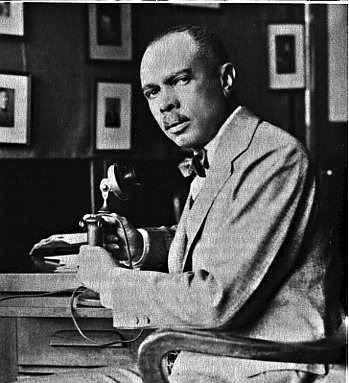
James Weldon Johnson on the phone

James Weldon Johnson: poetry anthologist and all-around American polymath, finds he can’t Tweet or post to Instagram  from his phone.

.

In 1922, when James Weldon Johnson (no relation to Fenton) sought to make up the first anthology of Afro-American poetry, he had similar hopes, though more grounded in his greater talent and effort. James Weldon Johnson, like Felton Johnson, was a rare college-educated man in the early 20th Century, and doubly-rare, both were Afro-American college graduates. Both Johnsons held to a responsibility their circumstance pressed upon them: to uplift their race and to heal and resist the ignorance of racial prejudice.

That second part, the resistance part, should feel familiar, as it’s an ongoing struggle many will feel a part of today. Prejudice of many kinds, injustice in so many cases, is still a pressing issue. The uplift part however may feel quaint.

In his preface to The Book of American Negro Poetry  James Weldon Johnson sets out the case that Black American poets should be able to rise to the highest levels of literary achievement, and while he’s not exactly apologetic about the poets his anthology will present, he’s also not a hype-man for what they have accomplished in 1922. Of Fenton Johnson, who he includes in his anthology, he says:

“Fenton Johnson is a young poet of the ultra-modern school who gives promise of greater work than he has yet done.”

Yet, as I look for the work of Fenton Johnson today, almost all the work I find are citations to the same pieces James Weldon Johnson included in 1922. What stunted Fenton’s career? A more extensive biography than may exist would seek to answer that question. The struggle for poetry’s place in national culture was hard enough throughout the 20th Century, add to that the challenges of racism. I do know that Fenton Johnson sought to ambitiously broaden his cultural impact by financing and editing magazines on Black arts and culture, and the failure of these publications to become sustaining was one setback.

James Weldon Johnson, surveying Black Arts in his 1922 preface for his pioneering Negro Poetry collection, speaks not at all of the visual arts (ironically, just as European Modernists were latching onto African art as an influence) and little of Black acting, despite his connections with the New York stage of the time, but he does speak prophetically about the impact of Afro-Americans on American music. Having only the evidence of the spirituals, cakewalk, ragtime, and the imperfect understanding in the cultured North in 1922 of what the newly discovered “Blues” might truly be about, JWJ professes that Afro-American music is already a predominant strain. Nearly a century since, we can only say that he was too modest in his view of the future, however audacious he might have seemed in 1922. American music, seen from outside our country, and in any honest assessment from inside our borders, is Afro-American music. I don’t want to slight the contributions in our country’s music from many cultures when I say that—they are significant—but all of them cannot help but reflect on, and reflect back, the impact of the descendants of those Africans brought here as cargo.

Which brings us to this Fenton Johnson poem included in James Weldon Johnson’s anthology. Here’s a link to the poem’s text. Its overall intent is humorous. You can hear the college man’s mix of condescension with an honest observer’s eye for detail. What makes its poetry an example of the “ultra-modern school?” Our last episode’s Johnson piece, “A Dream,”  was blank verse, even lines, even if the ironic asymmetry of its story is modern. The cadence of Johnson’s God Is in the All Time  is strong and regular. “The Banjo Player”  is free verse, conversational in rhythm. It jumps from the despair of the “Last Chance Saloon” mitigated by music, to the Kris Kringle promise of little children dancing and clapping to the banjo strum, finishing with a joke of the sophisticate.

Like the complex church music and rhetoric of “A Dream”  last time, I had trouble musically portraying the Gus Cannon/Papa Charlie Jackson vibe of the banjo playing bluesman. The banjo is just an instrument that I fight with, and no cheating of one-man-band multi-tracking could save me here I fear. Dom Flemons, Rhiannon Giddens, or someone better attuned to the banjo need to perform this.

I spent an afternoon yesterday depressed at my failure to fulfill the promise of Fenton Johnson’s piece. Could one more mix fix this? Nope.

I moped until I went to sleep.

And then my teenager asked me this question in the morning.

Stopping by a Woods with Bad Cellphone Service

For some time, I’ve disliked the way the idea of “generations” has been treated by the culture at large. Not the nugget of thought that’s in it, that cohorts of people in a particular time and place will share certain experiences, some of which will shape their outlook—but the nutty, pseudo-scientific way it’s been used. The balderdash that’s been added to “generations” includes the nonsense that there are some sharp and agreed on borders to them and that everyone inside of these sharp lines in time not only shares the same experience, but reacts to these things in the same way.

The crap labels we use like “Generation X” (Billy Idol and Richard Hell may have a lot to answer for, but let’s not hang this on them) or “Millennials,” (who could just as well be perennial grinders of grain for all the meaning I assign to that word) have become like unto the Sixties’ penchant for astrological signs. “Oh, you’re so Millennial” or “Members of Gen X think this way” have become the Moonchildren and Fire Signs of our age.

And of course, the borders of these deterministic generation containers are natural and inviolate—no, don’t look at them, as they will seem arbitrary and varied if you look too close. Are generations 12, 20, 30 years long? Don’t ask, as we don’t agree. And is someone born in 1946 exposed to the same set of experiences as someone born in 1963? Don’t look too close.

I bring this up, because this week I wrote a parody. And as humorists have been known to do, I went and used some generational stereotypes. I was pressed for time, those sorts of things are ready-mades, one or two people found it funny, if I use it humorously I’m making fun of it—Oh, I’m giving up. I’m ashamed.

Look, one of the good things about considering the experiences conveyed by writers whose words I use here, is that most have been dead for generations, no matter how long we define that term. Seems like they are each their own people, not clichés like “Victorians” or “the Lost Generation.”

New start. I had a serious thought as I started this. Earlier this month I revisited the well-known yet too-little-reconsidered Robert Frost poem “Stopping by a Woods on a Snowy Evening.”  As I thought about the experience Robert Frost was describing (if an actual country winter buggy ride, some think it occurred in 1909), I considered how different the night and the rural roadscape would have been then, compared to how we have informally remembered Frost’s poem. I thought the opening stanza of that poem, starting with Frost’s line that’s fallen into too-famous-to-think-about status: “Whose woods these are, I think I know,” could be describing a person who was lost in a darkening, rural pre-electric light, night—instead of a poet some of us remember as irresponsibly stopping to look at a well-lit Christmas-card pretty sight of a woods in snowfall.

I was thinking then: “Now I’d have not just the possibility of bright headlights, but a cellphone in my pocket that should tell me just where I am, no matter what poetic truth I’d be trying to express.”

And then I thought again about that phone. There are still areas, even in North America, without cellphone service. GPS signals don’t penetrate everywhere. Those maps in our apps are not without errors.

Cell Coverage vs Drake in Coat

Drake’s from Canada, but Minnesota and New England need cell coverage and warm coats too.


So, today’s piece, which I call “Stopping by a Woods with Bad Cellphone Service”  is actually a serious piece of winter travel safety advice, not a scurrilous piece of generational stereotyping, which I would never stoop to doing here.

Stopping by a Woods with Bad Cellphone Service lyrics

Here are today’s words, but you want to listen to the music don’t you?


But when you think of scurrilous, I hope you think of the LYL Band. It’s been awhile since I’ve had a piece that wasn’t created by that scrupulous and well-behaved group of musicians that is myself—recording it instrument by instrument, a track at a time. The LYL Band is an organization in the same way that a hockey fight or litter of kittens is organized, which is to say, barely, though we attack things with abandon playfully or otherwise. To hear us, use the player below.


The Death of Richard Wilbur, A Difficult Balance

It was only days ago here that I was remarking that Richard Wilbur was still alive while talking about the roughly half-portion of dead white men in a collated list of the most anthologized modern American poems. His poem “Love Calls Us to Things of This World”  written in the middle 1950s was one of that list, and one of the few I had no memory of having read.

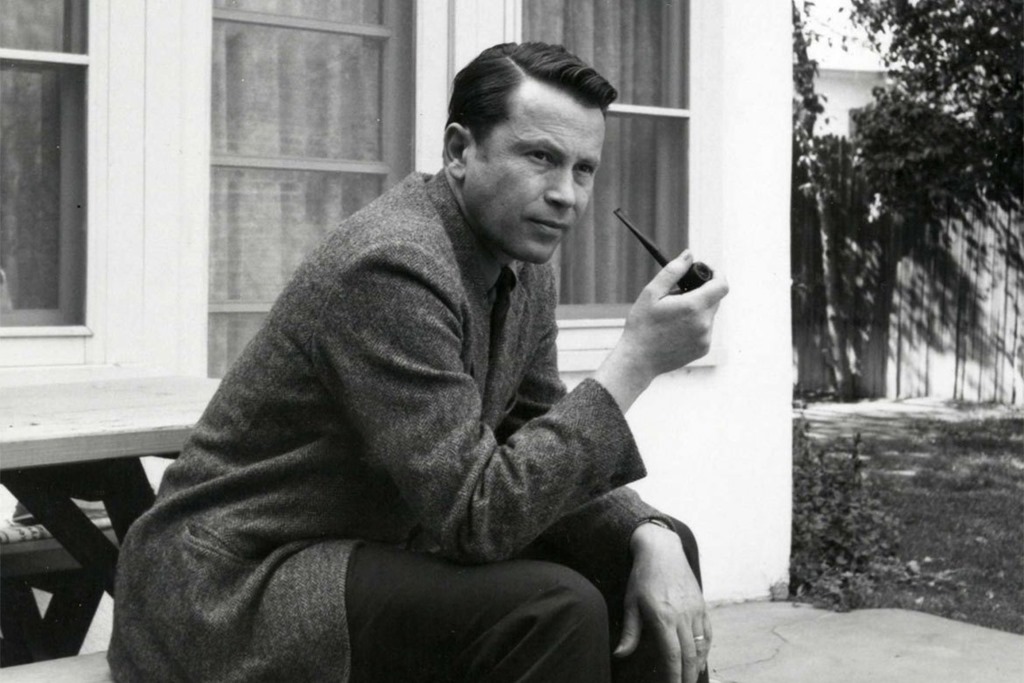
Richard Wilbur 1950s

The modest house, the pipe, the tweed jacket, the Brylcreem hair with the straightest furrow—
Richard Wilbur impersonating the 1950s so that we don’t have to


So of course I read it, and rather enjoyed it. You could do the same via the hyperlink. There are a few things in it that one might quibble about, the heightened language (even if that is undercut by its over-riding conceit, a meditation on hanging laundry) including words that stop the modern colloquial speaker, such as “halcyon,” and the brief but passing use of rape for an image which causes me a concerned pause and objection now. There need be nothing censorious about such thoughts, as they are about the writer with his peculiarities, his time, and his blinders. They might remind me of my own limits in these regards.

The obituaries point out a controversy over Wilbur that, like his poetry, I was not much aware of. He was increasingly thought out of touch with the later 20th Century with his, on the face of it, impersonal outlook, his wit in place of rage and heated vision, and his devotion to a classic verbal music of accentual/syllabic meter.

All that may be so. Like I said, I’m generally unfamiliar with Wilbur’s poetry. But let me bring up some possible approaches from our current century, now nearly matured to voting age, to query those opinions from the 20th Century. The first is, how much do we need our poets to act as the shaman and feel for us?  Does such a need say that we ourselves cannot feel or imagine adequately, or that we cannot validate or understand our feelings and visions until demonstrated by the artist? I do not know a complete answer for this. I know that artists expressions seem to have helped me clarify and understand visionary and intense things, but I also think that the lens of wit makes clear the limits of our perceptions and emotions. Is the ecstatic visionary who can make real and palpable the dark shapes outside the fire-circle the wise one, or is the wise one the one who sees clearly that we cannot see far into the darkness and are apt to stub our toes on rocks if we think otherwise? Can only the former move us to action, can only the later keep us from recognizing foolish action?

I don’t think I know the answers, though I do think I see some of the questions. Just yesterday I wrote about how one of the  Parlando Project mottos “Other People’s Stories” shows a paradox. I feel it’s interesting—no, I’ll go farther—it’s important for us to experience other people’s subjective experience, to inhabit it to the degree we can. To do that, I’ve chosen to predominantly present other writers’ self-expression here—but to do that, I rely on others who interestingly express their own subjective experience. So, in a sense, I require others to not follow one of the principles that my artistic project goes by.

That brings up another Parlando Project principle: “Various Words with Various Music.”  Does not soft and consonant music not sound softer and more consonant when considered in the context of loud or discordant music (and vice versa)?  To fully have either, you must have both. Wilbur may have seen enough darkness to look for truth where the light is, to try to see, as his poem “Love Calls Us to the Things of This World” concludes, a “Difficult balance.”

The Lake Street Testament

The most popular TV show of my youth was a strange yet derivative series called “The Beverly Hillbillies.”  The basic device of this comedy was as old as Shakespeare’s rude mechanicals, and as common as 19th and 20th Century perennials like hillbilly plays, Ma and Pa Kettle films and even minstrel shows.

Beverly Hillbillies Confederates

Both of these statements are true:
A. The Beverly Hillbillies support your 2nd Amendment rights
B. They are portrayed as fools who constantly misunderstand the modern urban world


They all work the same way, and the joke never seems to grow old: rural folks are stupid, prone to exaggerating for comic effect all errors in human logic. They are above all inexperienced, leading to all kinds of misunderstandings; and they are peculiar in their language: misuse of words or odd pronunciations are rife. Abstractly, this is the ore of comedy gold, but culturally these traits are being applied to an “other,” a group that can safely be made fools of to demonstrate the audience’s superior understanding.

One trap of that kind of comedy: the dumber the writer thinks the audience is, the dumber the writer believes he must make the characters, until they lack all worth, delight and surprise. While one could worry about such authors violating political correctness, the worse danger to the authors’ career is for the audience to figure out that they are being played for rubes through a play about fools.

I was young when “The Beverly Hillbillies”  was going strong, and living in a very small town in a rural state, but I found this show funny. I never occurred to me that my own inexperience might be blinding me to the idea that I could be part of this bumpkin class, at least in some people’s eyes. My little town was progressive, proud of its school, and besides I didn’t think like those silly folks, I knew full well that richer folks’ houses could have a swimming pool in the back yard and that they were called just that, not See-Meant Ponds.

But my youth and my small town were  a course of inexperience. I was forever mispronouncing words and authors’ names because I had never heard them spoken—I had only seen them written on the page. I was, and yet wasn’t, those stock comic characters.
 
Is there any value in small towns? I believe there is. I’ll give you one example before I move on: in small towns there is no surplus of conscripts, everyone needs to do their part. Slacking doesn’t mean someone else does it, it means it doesn’t get done, and there’s no escaping that knowledge. I’m afraid that in my old age and life in a big city, I’ve become just such a slacker.

And there’s one other value to such a youth: going from a smaller, less varied place to a larger and more diverse one gives an eye a very sharp lens to look at things. I’m not sure movement the other way works as well. If one looks in the big end of the telescope, everything you point the small end at looks tiny and indistinct. It’s no accident that a very large group of writers follows that biographic path from town to city.
 
All this leads to today’s piece, “The Lake Street Testament,”  which is an urban story through and through.
 
The path of a long build up like this to a short ending is another comic staple: the Shaggy Dog Story. Earlier here you’ve seen me write about the essentially comic dimensions of the human condition, particularly when talking about Leonard Cohen, Mose Allison, and Phil Dacey. This piece takes that thought into this religious season and puts it on Lake Street, which is a main commercial east/west street through the center of Minneapolis, as urban a road as exists anywhere.

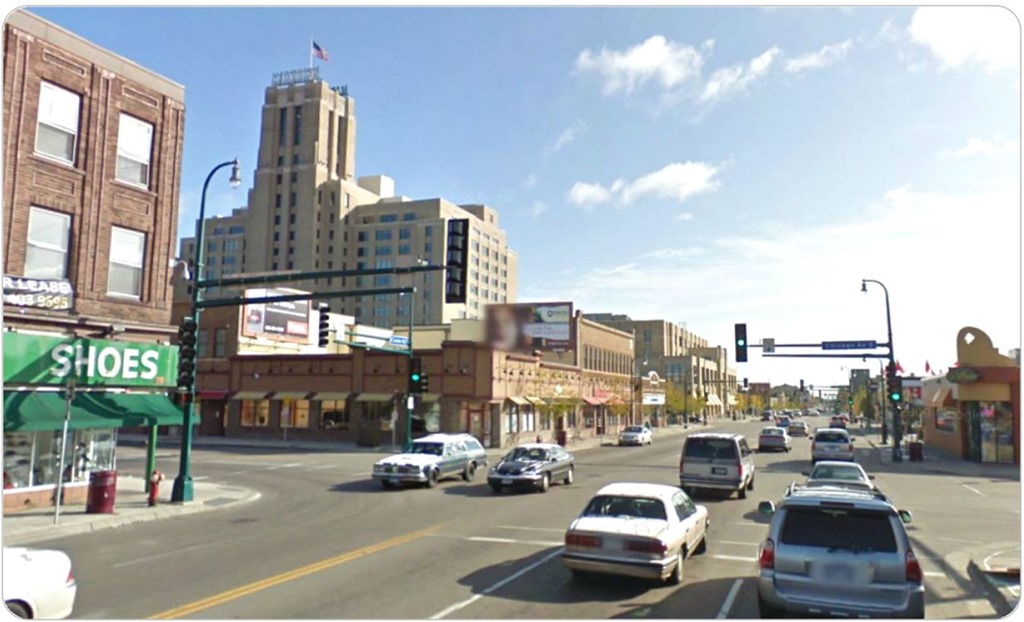
Lake Street

Lake Street in Minneapolis Minnesota. No palm trees, no movie stars.


The audio player below will let you hear the story of “The Lake Street Testament.”

Cold Minneapolis Nights

Eric Burdon and the Animals had a considerable run of hit singles in the 1960s. To the degree that we remember that output today, it’s to recall songs that Burdon’s voice made famous, though they were written by outside writers: “House of the Rising Sun,” “We Gotta Get Out of this Place,” “Don’t Let Me Be Misunderstood.” All great songs, all great performances, but what’s forgotten are the songs Burdon himself wrote.

That’s not an accident. Eric Burdon as a writer was often topical, writing about social and cultural events while they were current, before the ink had dried on things; and he was heart-on-his sleeve sincere, without protective layers of irony that made Jagger/Richards or Ray Davies harder to pin down. These things sometimes make his writing seem dated or naïve, but I think folks don’t value his commitment to immediacy enough. And then there’s Burdon’s steady stance against racism, something he never gets enough credit for.

new animals

No joke. Eric Burdon and the New Animals


Fifty years ago Burdon and the Animals visited San Francisco and he commented favorably on the warm climate and the altruism; and while charmed by the chemically-enhanced visionary culture they found there, Burdon noted issues with police/public interaction and recommended that the American Dream should include Indians too. That bit of reportage was a top-ten hit record in the US and the UK.

To me, a lot of the charm of that record is its spoken word opening, a deadpan “Dragnet” parodying recital of the worth of experiencing San Francisco. Spoken word—sounds like a Parlando Project idea!

So this is my rough parody* of warm summer “San Francisco Nights” written in and for the cold winter city of Minneapolis. It’s 9 degrees F. as I write this, and the temp is dropping overnight. Snuggle someone if you’ve got the chance.

As Blue Oyster Cult once reminded us: “This Ain’t the Summer of Love”. To hear my Minnesota take on snow emergencies, tow trucks, and chilblains click on the play gadget below.


* Yes, I know Drew Carey did another San Francisco Nights parody, using Cleveland in his version. He got Joe Walsh to play guitar on his, so obviously better than my one-take approximation—but he skipped the opening narration, and that’s the best part!

Bonus Emily Dickinson links


Here’s someone that notes that the sublime Randall Munroe of ekcd.com had some fun with Emily Dickinson. Her post also reminds us of the Gilligan’s Island theme connection. I do like that Munroe has fun with the possibility that Emily was a bit of bad-ass, which the poetry says she was.

This video has lots of laughs, particularly for the introverts among us.

And for those who would note that the comic characterization in that video isn’t true to Emily Dickinson, here one that’s true to Dickenson’s power, still has a some jokes, while noting that use of hymn meter. Wish I could talk that fast and coherently.

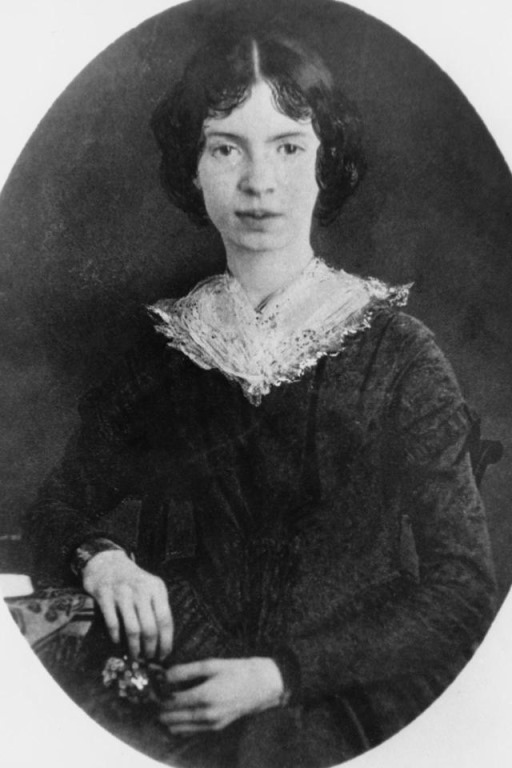
Emily Dickinson

Bad-ass? No, just keep thinking I’m only a dainty lovelorn lady.

No Parlando Project music links on this one, but we’ll be back with more on Winter soon.

Butterly

We’re approaching the halfway point in the Parlando Project’s first year, and my plans for 2017 are to feature more 21st century words, when and if I can get permission from publishers/authors to use them here. Today’s audio piece features words from the first “external” 21st Century author to be used here: Philip Dacey.

Philip Dacey

Philip Dacey


This year has been much commented upon for the death of musician/lyric writers, two great cultural stylists and movers, David Bowie and Prince, foremost among them.  It would be careless to extend the list of 2016’s lost musician/poets for fear of who would drop off the bottom for reasons of length. After all, Merle Haggard or Phife Dog or Greg Lake mean as much or more to some listeners as Prince or Bowie. For me personally, two Fall 2016 musician/poet deaths hit me with specific force: Leonard Cohen and Mose Allison. You might have guessed that, for this is the place “Where Music and Words Meet”—though both are better composers than generally realized, both Cohen and Allison were known for their lyrics.

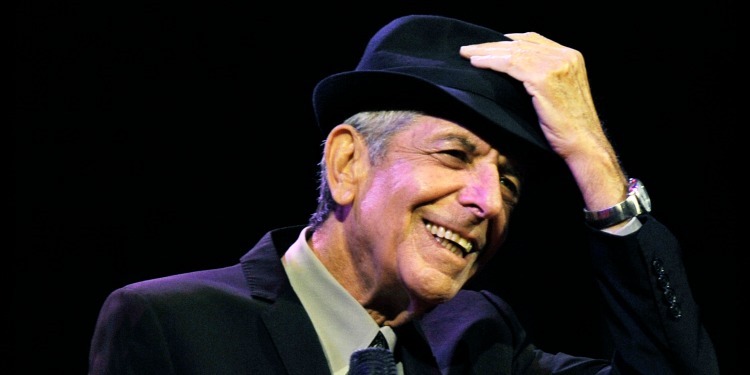
CORRECTION Obit Leonard CohenMose Allison

A Cohen and a Mose

But that’s not exactly why. You see Mose Allison and Leonard Cohen shared a writing sensibility that I particularly prize: they’re funny as hell. “Funny as hell”—not as merely the common idiom— “Funny as hell,” in that both saw clearly the fallen human limitations and made us laugh at it. Laughter can be a good teacher, and as the profoundly comic blues sensibility tries to teach us, even what we can’t learn or think our way out of can be better endured knowing that it’s not right, that it’s incongruous, illogical, unexpected—in other words, that it’s funny.

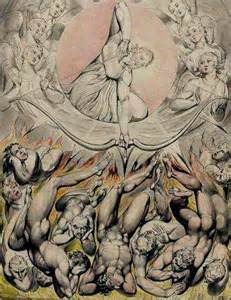
The importance of our musician/poets may be falling in the 21st Century, though the speed of that decent is hard to judge, as we, their human society, are falling too. And if we look below we see the poets of the past: Dickinson, Whitman, Keats, Blake, Frost, Sandburg, Yeats, Eluard and all their heavenly host, and Shakespeare, Sapho, Basho, Homer, Li Bai, and many more that we cannot name and have never heard. We are falling toward all of them.

Blake Fallen Angels

not Phil Dacey


And Philip Dacey falls with us, and he smiles “Look, we are all falling.”

Dacey too is funny as hell. So if you are coming to this podcast from a musician/poet listenership, you could think of Philip Dacey as a Midwestern Leonard Cohen without all the sackcloth and ashes; or that Dacey is Mose Allison without the constantly modulating piano. And there’s another difference: Dacey’s poems find forgiveness more consistently and honestly than Cohen or Allison, or most any other writer.

We are all falling, and Philip Dacey falls with us, and he says “I’ll bet there is an end to this fall, but who knows?”

Butterly: Upon Mistyping Butterfly is a love poem based on simple mistake (as love sometimes is). Phil, like Leonard Cohen—but like Phil—wrote a great many love poems. This one is uncomplicated (as love sometimes is). Mose Allison, wrote far fewer love songs, though I can think of one that is goofy and joyful, like these words of Dacey’s.

It’s not a coincidence that I put my remembrance of Philip Dacey as one of the first Parlando posts, because when I heard that Phil had died I was working on gathering, performing, and producing material for the Parlando Project. I’m grateful for the permission to present the LYL Band performing my reading of this poem of Phil’s. If you like this, you may want to seek out one of Philip Dacey’s books or read more about him online at the philipdacey.com web site. If you’d like a taste of how Phillip Dacey presented his poems, there is a 30-minute video of a late reading by him here.

To hear the LYL Band perform Butterly: Upon Mistyping Butterfly, click on the gadget you’ll see below.

User Agreement for this Poem

Ok, did everyone read those “click here to read” user agreements for their new gift gadgets, software, and computers?  Good, because we’re going to have a little fun with them this time.
 
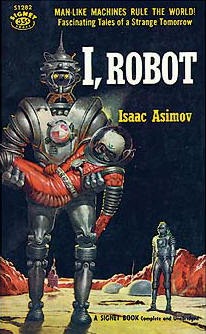
I suppose the purpose those ubiquitous agreements is to disabuse the user of any assumptions they may have about that new thing they now “own”.  Will it work? Can you do with it what you will? Will it be fair and understanding to you? Does the software or device know about Asimov’s laws of robotics—even though those laws won’t be written down for another 41 years? Have I given up my money, privacy and self-respect for the price of a free app? The agreement will let you know that the answer to all but the last question is “no.”

I_Robot_-_Runaround

He didn’t click “Accept”


It occurs to me that poets have been doing the same thing for a long time, intrinsically restricting their subject’s and reader’s rights in various ways, but they don’t even bother with the user agreement. So, let’s fix this right now!

Today’s audio piece, User Agreement for this Poem, spells out those expectations with the LYL Band providing the musical setting. To hear it, you can click on the gadget that will appear below. Please click, but acceptance is optional.

Christ and the Soldier

Tomorrow is called Veterans Day in the United States, but originally it was Armistice Day, celebrated on the day that World War I ended. WWI was a dark dividing line between all that came before and after. Books have been written about only one or two aspects of what changed, but a whole shelf of books could not tell all.

And this year is the hundredth anniversary of one year in that dark dividing line, 1916, when those that thought war was simple, or had to be simple, brought the 20th Century efficiency of the assembly line to killing in the battle of the Somme, where over one million men were killed or wounded.

One of the soldiers in that battle was a poet, Siegfried Sassoon. Last time we took a look at a funny and pious story from World War II, The Deck Of Cards, and had a little irreverent fun with the form of that story in my parody. In this piece, Sassoon’s Christ and the Soldier, the humor is very dark. I’ve heard that it was dark enough that Sassoon did not, or could not, publish it until the war was over.

As usual, I’m largely going to let he piece speak for itself. One thing I like about it is its use of dialog. For some reason, most poems eschew dialog entirely, and I think poetry misses out on a useful device by avoiding it. Musically it’s a mode that the LYL Band visits often, combining organ or piano with electric guitar. I play the guitar part on my Jaguar, a guitar that was once associated with “surf music” but has since had a revival in indie-rock circles. I play it often because its short scale and spring-softened action are friendly to my arthritic fingers.

To hear Christ and the Soldier, click on the gadget that should appear below, but some ways of viewing this blog won’t show it. In those cases, this highlighted hyperlink is another way to play the performance.

The Deck of Cards, or The Old Weird America Part 2

Returning to the other side of that post WWII Tex Ritter record I discussed yesterday, let’s look at The Deck of Cards. I think I probably first heard this as the Wink Martindale version from 1959 which was the third or fourth time a version of The Deck of Cards had charted on some hit parade somewhere, and as the Wikipedia link shows, it would return again and again, which should not surprise us, since the story dates back to the 18th century.

I rather liked the piece when I heard it as a child. First off it was spoken not sung, so it stood out from all the singers on the radio, and the piece’s narrative twist, that the threatened poor and irreverent man would show himself to be learned and pious, is the kind of twist that can keep a piece of folk material current for centuries. As I said in the last post, no one in the mid-20th century folk revival would have ever considered The Deck of Cards an authentic folk song—but like our supposed irreverent soldier—it is, and not what folks presumed it to be.

Did this record specifically influence the Parlando project to mix music and spoken/chanted words? Not at any conscious level. The popular spoken word record with music just was around in my childhood. Yet, as one starts to do concentrated work in some area you may begin to notice all kinds of things that must have taught you some possibilities.

The plot of The Deck of Cards follows the rhythm of a joke: tension, danger, expectation; then unexpected twist, release of tension, pleasure. So, it’s not surprising then that some of the renditions of this old tale passing through the folk process twist it again to parody, and so here’s mine. It’s based loosely on that rough Robyn Hitchcock version, even uses a couple of his lines, but is mostly mine. If you don’t know the 1948 Tex Ritter version, you can hear it first by clicking here. You should listen to Tex, you can’t have irreverence without reverence. Or you can hear T Texas Tyler’s version which predates Tex Ritter’s by a few months here.

Oddly enough, I performed a straight rendition of the 1948 text the same day that the LYL Band recorded this parody, but you won’t hear that here when you click on the gadget that should appear below.