You can be in my dream, if I can be in yours. Bob Dylan said that.
You may have noticed that blog post frequency has fallen off a bit this month. Well besides the usual struggle of an upper Midwest winter, both alternative Parlando Project reader Dave Moore and I have had some extra tasks this month. I’ve been helping transition my mother-in-law to new living arrangements, and Dave has been working on editing a book of his father’s sermons.
Today’s post is a piece that Dave wrote a few years back about his parents, and his father’s experience after Dave’s mother had died. Like many good stories, it seeks to find meaningful connections in the flow of coincidental events.
And speaking of coincidence or archetypes or something, I wrote another piece myself a few years back. Though I did not mention it explicitly, my piece was also engendered by thinking of my father now living alone after my mother had died. Both pieces used the image of a bird trapped in a house.
I’ll not attach any more meaning than that to this. Today’s piece is Dave Moore’s story, read by Dave. Click on the gadget below to hear his story. Tomorrow I’ll post mine.
I often wonder when reading opinions when someone stops or starts thinking.
Opinions generally come from two states. One is intuitive emotion the other is from reason, a thoughtful weighing of something or another. In the case of the former, thought has little to do with it. We know something is wrong, wonderful, disgusting, laudatory, whatever from something we feel innately. The child saved from the burning building, the willful act of unnecessary violence—but we feel intuitively about more complex and controversial things too: the results of an election, the worth of some work of art. In the case of art, many of us are comfortable with expressing that intuitive response, we like it or we don’t, we don’t know why, and don’t really care to know why. However, in politics and public policy, that sort of response can seem irresponsible. Furthermore, mere internalized like or dislike is no good for recruiting others to your side.
The other state, the opinion generated from thought, from some comparison of the options and a reasoned judgment brought forth on the results seems admirable. The problem is that too much thought seems to stop as soon as some conclusion can be reached. There’s no second thought on the thought, no deeper examination of one’s assumptions. There’s a worth to this—speed is a value in decisions not about art after all—and the nature of thought and questions is for them to be never-ending. At some point, one has to stop thinking to ever reach a working conclusion.
I opened this morning’s local paper and saw a man from Crosby Minnesota moved to think about political matters and how they intersect with art. Meryl Streep, a famous movie actor, has expressed political opinions about a TV actor—let me look this up, oh yes—Donald Trump, who has taken up politics and found himself with a prominent new job in the public policy field.
The man from Crosby feels he has found an important thought in this Meryl Streep matter, and his thoughts are expressed as a couple of questions and answers:
“Who wrote those words for her? After all, her whole life has been one of just reading and acting out the words creative thinkers have written for her. She has been good at it, but how can someone who has never had a thought of her own criticize others who have?”
Did he answer his questions too quickly? Did he not expand his inquiry enough?
So, assuming we think about something, when do we stop thinking? We have to stop sometime, but stopping too soon can leave us with meager conclusions and less rewarding art.
For that matter, when do we stop practicing our art? In 2013 a local actor (Kate Eifrig) made a decision to stop acting because she felt that continuing was harmful to her. She gave an interview about her decision, which I felt it was an honorable and insightful one, and this audio piece with the LYL Band performing the music was the result. The first sentence is a quote from her interview, which I then developed into the rest of Acting.
One thing she may not have accounted for in making her decision: while as an actor she would have been allowed to serve in a political office like Helen Gahagan, Arnold Schwarzenegger, Al Franken, Ronald Regan, Fred Grandy, Jesse Ventura, George Murphy, or Fred Thompson; but she would not, by our man from Crosby’s accounting, be qualified to comment on political matters.
I object to this too, but don’t compound it by saying something at the Golden Globes!
In one limited way I agree with the man from Crosby. While thought, sometimes even considerable thought, goes into acting and performing; the performance itself is not a thoughtful process: for it is entering into, embodying, a thought, often someone else’s thought. That is a visceral, not intellectual experience whatever thought went before it.
I would ask one more question, reformulating the man from Crosby’s rhetorical question to a familiar piece of folk wisdom: how can someone who has never lived someone else’s thought criticize others?
To hear the LYL Band perform Acting, use the gadget below.
Names are funny things. I was recently watching an old TV show from 1969 where Janis Joplin sat on the talk-show couch with a young British-accented rock critic named Michael Thomas. A Platonic dialog of sorts broke out on that show. Janis, the more intellectual than she liked to pretend singer, proposed that rock critics fundamentally obfuscated the experience of music. Thomas, self-evidently aware that he was a member of said tribe, tried to counter that all he was doing was presenting in words the same subjective experiences that Joplin said were the essence of music.
He could have said more, said that he was providing meaning and context for those experiences. She could have replied that meaning was beside the point, or at least meaning was beyond the point of the approximate trivialities that he writes. They could have agreed that experience was the greater part of the meaning of art, but that something remains, and can be changed and reflected upon after the experience and in doing so they could come to the conclusion of poet William Wordsworth, that it’s “Emotion reflected in tranquility.”
But they didn’t say that—commercial breaks stopped the dialog just as it was getting interesting, but I wondered about that guy, Michael Thomas. What had he written? Did he evolve a unique understanding of music as he developed as a critic? There he was, young and good looking, a member of the generation that was going to, like most generations, reform and reconstruct our culture. How did his individual story turn out?
I found a couple of magazine articles online he had written by the time of this TV appearance. Elaborate little hip-bourgeois celebrity profiles of no great import—but then most magazine articles are like that. And he was fairly early in writing about “Rock,” that more serious outgrowth of rock’n’roll that was still new in 1968. There as a lot everybody had to learn then. So, what did he learn?
Turns out there’s no way to tell. Wikipedia has over two dozen Michael Thomases listed on its disambiguation landing page, and none of them are him. Rolling Stone’s archives list a few articles by Michael Thomas, the earliest written in 1970 seem to be by the same man, while the last under the byline are about buying stereo equipment at the end of the same decade. After that? More than 35 years of nothing I can find on the web. If I want to catch up on what, for example, Jaan Uhelszki did after writing about music in the Seventies, it’s pretty easy. Michael Thomas—not so much.
Frequent keyboardist and alternate voice here, Dave Moore has his own eponymous issues, but let’s cut to another name issue.
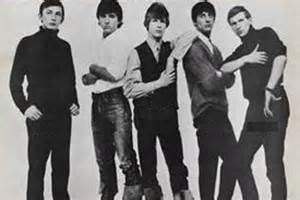
In 1964 a young English guy wanted to get into the performing business as a singer. Lots of folks did in those days. His first recording, a single with his teenage blues band Davie Jones and King Bees came out that year. He kept plugging away at English pop-blues to no great success, until 1967, when he had a problem.
Davie Jones is the teenager in the middle
Well, he had a couple of problems. First, no one was buying any of this records; but secondly, his performing name Davie Jones, the informal diminutive of his given name David Jones, was more-or-less the same name as the performing and birth name of much more successful performer and teen heart-throb: Davy Jones of the Monkees. So, he changed his performing name to David Bowie and remained unsuccessful for a couple more years without being confused with the Monkee or the roughly 100 other David Joneses on the Wikipedia disambiguation page.
Eventually, he got his first hit. Eventually he started changing more than his name. Eventually he helped change our culture, making some dazzling records along the way. There was an immediate experience, and then something remained to be reflected on over time.
A year ago, he died. The official launch post of the Parlando Project here last August was the tribute I choose for Bowie, my setting of Carl Sandburg’s “Stars Songs Faces” that the LYL Band recorded the day after Bowie died. Now for our 41st official Parlando Project post, here’s Dave Moore’s self-written tribute “This One’s for David Jones.” Dave recorded this the same session as we did “Stars Songs Faces.” It’s a rockin’ little number, because it seems like it’s been a bit since we rocked out. If you see it, you can click on the gadget below to hear it, or if there’s no visible gadget, this highlighted hyperlink will work too.
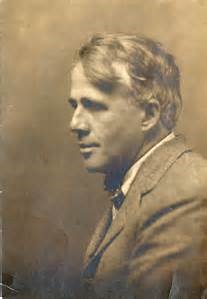
This is the most difficult set of words to read coherently that I’ve presented so far in the Parlando Project. Robert Frost’s “An Old Man’s Winter Night” looks on the page like any other chunk of blank verse (“blank verse:” unrhymed iambic pentameter). Shakespeare wrote whole sections of plays with this rhythm, and the walking one/two with a backbeat of an iamb has a forward propulsion that leads the reader to flow through the words.
The problem is, that even the most iron-lunged and fleet-tongued rapper has to pause for breath sometime. In general, it helps to pause for meaning, where the break for breath adds meaning. However, in the Parlando project I’m seeking to merge the words with music, and the musical cycles also suggest pauses.
I saida hip hop,
The hippie to the hippie
The hip hip a hop, and you don’t stop
“An Old Man’s Winter Night” was tough because I decided on a cycle of chords for the music, rather than basing the harmony around a drone, or simply “through composing” the music to follow the words without a repeating structure. I made that choice unconsciously, but I think I was responding to Frost. The poem seems to repeat itself, and my sense of the syntax was that the sentences seemed to start and begin again, like unto the central incident in the poem of an old person in a room not remembering why he had gone to that room. So the problem was: where to break the cycle of the circular speaking, keeping to cycling verses of chords, while helping the listener understand the meaning.
I got it almost right I think. I was further inspired as I worked by being in the midst of a Midwest below-zero cold snap while recording this.
I normally do not base my readings on others, though it might have helped me to listen to other solutions to my reading problem. Only after committing to the version you’ll now hear, did I listen to Robert Frost’s own reading of his poem and another good reading which does an excellent job of bringing out the meaning. Of those two, Frost aims to bring out the music in his rhythms, but it’s not a perfect reading. Authors have an advantage, in that they likely know the poem’s meaning—but they are also disadvantaged by that—since they know, they cannot always choose what the listener will need to have emphasized. By combining “An Old Man’s Winter Night” with music, I have another advantage over Frost’s own reading: I don’t have to follow the word’s rhythms closely to bring out the music.
“An Old Man’s Winter Night” embodies aged rural loneliness, something that even today’s modern communications can do little to ameliorate. For those of my generation who only remember Robert Frost as an old man, I’d like to point out that Frost first published this when he was 44. Frost beautifully describes being alone, separated, cut off; evoking all the surrounding emotions of that situation—yet he doesn’t once mention loneliness or any of those allied emotions by name. A great trick to pull off, don’t you think?
To hear my reading combined with music, use the gadget that appears below.
Today’s piece recounts a common Midwestern experience, returning on a holiday to the much smaller town where one grew up.
For my post WWII generation, these smaller towns retained in our youth much of the vibrancy they had gathered in the first half of the 20th Century. The American rural world was larger then. Car travel was still not universal. Small farming and small manufacturing and small schools hadn’t been efficiently improved to larger sizes. Mass media, which seemed so large and potentially dangerous then, amounted to radio, newspapers, magazines and eventually a trio of gray and silver TV stations as the little rounded screens hovered into homes like flying saucers. So these little autonomous towns continued, 1950 like 1920.
How many of us, old now, can still, in memory, walk down main streets of their towns and small cities of their youth, seeing the storefronts, and hail silently the adult walkers and lost peers who might be walking there too? As I meet and talk to people near my age whose childhood was in larger cities, I find that they too had similar memories of neighborhoods. These neighborhoods were in effect, villages inside their cities—but this piece is about small Iowa towns in particular.
When we grew up, went to college, or left for adventure, marriage, or other work, we left a town and a time. When we went back to these towns, to visit our parents, our parents and our towns are found changed, not into coral bones and pearls, but into places slowly emptier and less vital. The storefronts empty and the eyes less bright; the houses, faded with dead paint and backs swayed.
Full fathom five thy father lies.
Of his bones are coral made.
Those are pearls that were his eyes.
Nothing of him that doth fade,
But doth suffer a sea-change
Into something rich and strange.
Eventually, it is as if the thread of memory has been unraveled from a large ball of yarn, and now the ball is no more.
In this way, our hometowns disappear, becoming gradually diluted of everything we could return to. Today’s piece “Homeopathic Hometown” is about this. Homeopathy is the theory that you can dilute a medicine until it, like our hometowns, retains nothing—or next to nothing—of the the medicine, and yet the solution will somehow “remember” the medicine and its effects.
That of course is how nostalgia works. We remember our personal version of the hometown, and find there is a hole between the molecules as we revisit our hometown. I suspect those without the specific gravity of our memories live now in a different appreciation for the place. It will take time for their own dilution to complete.
Iowa! What am I doing in Iowa instead of Berlin?
I wanted to see late 20th Century decay, but, hog lots?
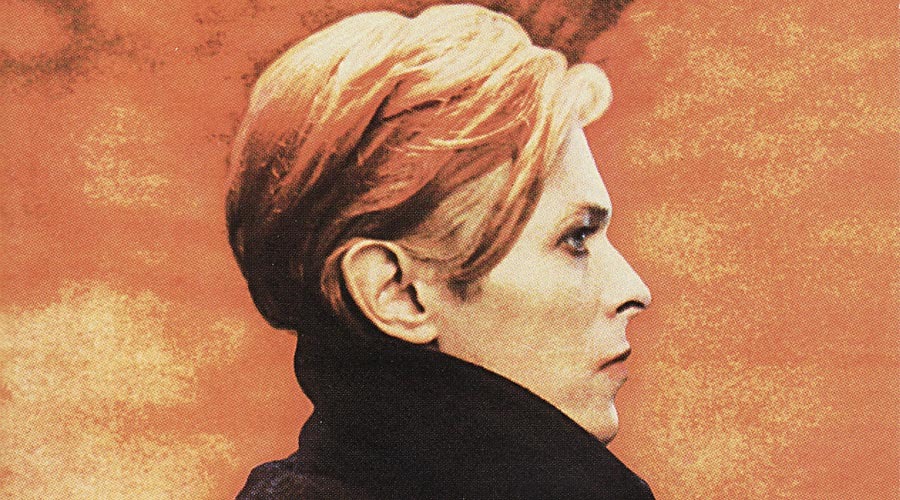
Musically, I was trying to emulate here the sound and feel of the David Bowie/Brian Eno “Berlin Trilogy” when I wrote and recorded this in 2015, about a year before David Bowie would suffer his own sea-change. Much of what sounds like keyboard syths in the mix is instead “normal” guitar filtered and delayed. I think the mix works especially well with headphones or earbuds on this one.
We’re approaching the halfway point in the Parlando Project’s first year, and my plans for 2017 are to feature more 21st century words, when and if I can get permission from publishers/authors to use them here. Today’s audio piece features words from the first “external” 21st Century author to be used here: Philip Dacey.
Philip Dacey
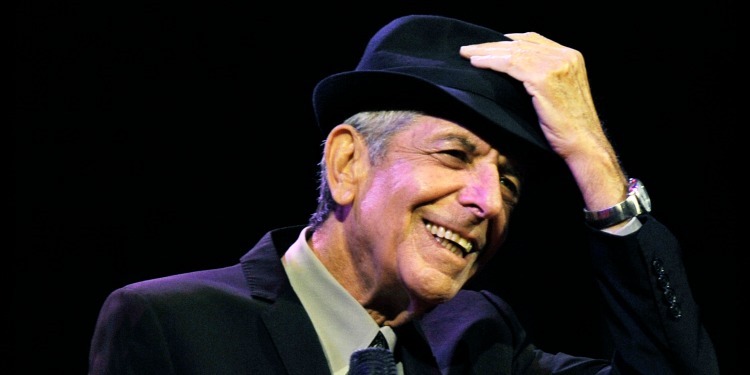
This year has been much commented upon for the death of musician/lyric writers, two great cultural stylists and movers, David Bowie and Prince, foremost among them. It would be careless to extend the list of 2016’s lost musician/poets for fear of who would drop off the bottom for reasons of length. After all, Merle Haggard or Phife Dog or Greg Lake mean as much or more to some listeners as Prince or Bowie. For me personally, two Fall 2016 musician/poet deaths hit me with specific force: Leonard Cohen and Mose Allison. You might have guessed that, for this is the place “Where Music and Words Meet”—though both are better composers than generally realized, both Cohen and Allison were known for their lyrics.
A Cohen and a Mose
But that’s not exactly why. You see Mose Allison and Leonard Cohen shared a writing sensibility that I particularly prize: they’re funny as hell. “Funny as hell”—not as merely the common idiom— “Funny as hell,” in that both saw clearly the fallen human limitations and made us laugh at it. Laughter can be a good teacher, and as the profoundly comic blues sensibility tries to teach us, even what we can’t learn or think our way out of can be better endured knowing that it’s not right, that it’s incongruous, illogical, unexpected—in other words, that it’s funny.
The importance of our musician/poets may be falling in the 21st Century, though the speed of that decent is hard to judge, as we, their human society, are falling too. And if we look below we see the poets of the past: Dickinson, Whitman, Keats, Blake, Frost, Sandburg, Yeats, Eluard and all their heavenly host, and Shakespeare, Sapho, Basho, Homer, Li Bai, and many more that we cannot name and have never heard. We are falling toward all of them.
not Phil Dacey
And Philip Dacey falls with us, and he smiles “Look, we are all falling.”
Dacey too is funny as hell. So if you are coming to this podcast from a musician/poet listenership, you could think of Philip Dacey as a Midwestern Leonard Cohen without all the sackcloth and ashes; or that Dacey is Mose Allison without the constantly modulating piano. And there’s another difference: Dacey’s poems find forgiveness more consistently and honestly than Cohen or Allison, or most any other writer.
We are all falling, and Philip Dacey falls with us, and he says “I’ll bet there is an end to this fall, but who knows?”
Butterly: Upon Mistyping Butterfly is a love poem based on simple mistake (as love sometimes is). Phil, like Leonard Cohen—but like Phil—wrote a great many love poems. This one is uncomplicated (as love sometimes is). Mose Allison, wrote far fewer love songs, though I can think of one that is goofy and joyful, like these words of Dacey’s.
It’s not a coincidence that I put my remembrance of Philip Dacey as one of the first Parlando posts, because when I heard that Phil had died I was working on gathering, performing, and producing material for the Parlando Project. I’m grateful for the permission to present the LYL Band performing my reading of this poem of Phil’s. If you like this, you may want to seek out one of Philip Dacey’s books or read more about him online at the philipdacey.com web site. If you’d like a taste of how Phillip Dacey presented his poems, there is a 30-minute video of a late reading by him here.
To hear the LYL Band perform Butterly: Upon Mistyping Butterfly, click on the gadget you’ll see below.
Ok, did everyone read those “click here to read” user agreements for their new gift gadgets, software, and computers? Good, because we’re going to have a little fun with them this time.
I suppose the purpose those ubiquitous agreements is to disabuse the user of any assumptions they may have about that new thing they now “own”. Will it work? Can you do with it what you will? Will it be fair and understanding to you? Does the software or device know about Asimov’s laws of robotics—even though those laws won’t be written down for another 41 years? Have I given up my money, privacy and self-respect for the price of a free app? The agreement will let you know that the answer to all but the last question is “no.”
He didn’t click “Accept”
It occurs to me that poets have been doing the same thing for a long time, intrinsically restricting their subject’s and reader’s rights in various ways, but they don’t even bother with the user agreement. So, let’s fix this right now!
Today’s audio piece, User Agreement for this Poem, spells out those expectations with the LYL Band providing the musical setting. To hear it, you can click on the gadget that will appear below. Please click, but acceptance is optional.
200 years ago this month a 21 year old surgical resident decided to give up his studies to become a doctor and to instead concentrate on the writing of poetry. An interesting decision. He had already rolled up a considerable education debt, and while it’s possible that poetry’s earnings potential might have been greater in 1816 than today, greater than zero is not a high bar.
So how prudent was our young not-to-be surgeon? He had tried his hand at poetry and had published a couple of poems in magazines before his decision. Hmm. Not a great prospectus you might think. In a rough translation for our time, it’s as if the young student had ditched his studies and loan debt for a shot at touring as an indie-rocker, even though he’s only played in his dorm room and doesn’t have a band.
His friends thought he had promise. In the forthcoming year, and with their help, he would find a publisher for his first volume of poems, but his work was mostly unnoticed, and where noticed, the reviews were at best mixed. One reviewer had rich fun with this impudence:
“The spectacle of an able mind reduced to a state of insanity…. It is a better and easier thing to be a starved apothecary than a starved poet; go back to the shop, Mr. John, back to `plasters, pills and ointment boxes.'”
Another reviewer offered this judgement
“We regret that a young man of vivid imagination and fine talents should have fallen into so bad hands as to have been flattered into the resolution to publish verses, of which a few years hence he will be glad to escape from the remembrance.”
We know how this turns out, more times than not: the young fool will be unable to sustain a long career in the arts—and yes, that was the case here. The young surgeon turned poet was to have a career of less than 5 years—but that was because of his early death at age 25. Yup, he dies two years too young to make the 27 club. Our surgeon turned poet was John Keats.
Besides talent, and desire that was the equivalent of foolishness, Keats worked very hard reading poetry, thinking about it, and writing it in those less than five years, producing some of the best lyric poetry in English.
In my own twenties, this encouraged and discouraged me. On one hand, it said I could write and read fearlessly as a young poet in the first half of my twenties; and on the other, as I measured what I had accomplished, I often admonished myself: John Keats died at 25.
Almost exactly one year after he broke from medicine for poetry, John Keats wrote the words for this piece In the Drear-Nighted December. He wrote it after struggling for much of the year to write his first long piece, Endymion, a neo-classical epic in heroic couplets that he never thought he got right.
This is something many writers experience. You struggle mightily to create something. Something big, something impressive. You bring all your craft to it, but it doesn’t quite work. You finish it, or otherwise set it aside, and in the aftermath out pops another smaller-seeming thing that is much more perfect. It’s like the muse says to you “You don’t control me and direct this, and here’s the proof.”
What has Keats done here? First off, those words cannot be read and not sung. This kind of silent melody is not easy to do in English, yet here is the young Keats doing it brilliantly. His images? I’m deep in a minus 17 degree F. Minnesota afternoon as I write this this. His trees with their “sleety whistle,” those branches glued with ice, once flowing water frozen like mineral crystals—I know these things, but Keats has said them well to remind me that we both know.
John Keats encased in Carbonite by Jabba the Bad Reviews
And then his sublime last verse, so beautiful I could not help but repeat it. In two verses Keats has setup an nice lyric that doesn’t stray far from convention. To paraphrase: “Hey, look at nature in winter. Doesn’t look like it does in spring or summer at all. Even though we conscious beings know (more than dumb water and trees) that these trees will bud and the brook water will flow again, nature doesn’t care.” Now the third verse: “How smart are we compared to non-conscious nature? We will ‘writhe’ in pain as things are taken from us (and though unspoken: since the image has been of a repeating natural cycle, this will happen again and again). This is not a poem that says “Suffering? Don’t worry, spring will come again.” This is poem that says suffering will come again, as surely as winter. “The feel and not to feel it, when there is none to heal it.” What a line: “The feel and not to feel it!”
A good song for winter solstice, so to hear the LYL Band perform In the Drear-Nighted December, click the play button the player gadget that will appear below.
“Hitch your wagon to a star”. We all know what it means, and we’re wrong.
Well, maybe we’re not exactly wrong: it’s human to draw a variety of meanings from what other humans communicate. The Emily Dickinson poem in the last post is perfect example. I don’t know exactly what Dickinson was trying to say in I Felt a Funeral in My Brain, but the strength of the language and music of her saying of it compels anyway. Poems, particularly short poems, often benefit from this kind of ambiguity. They become, in effect, several poems, poems that are experienced differently—even by the same reader—at each reading. In the end those varied readings become a kind of unstable hologram, a poem that the reader can see around corners in. I think that’s one of the benefits of these Parlando project recordings. You can listen to the words without making singular understanding the all-important goal as you enjoy the musical setting, and you can repeat the process of hearing them. A poem is not an important email from your boss that you must understand correctly immediately.
For the moment, I’m going to pass on Emerson’s racialist and sometimes racist views which saturate much of the first half of that essay. If you are an Indigenous American or a Central African, you may be so revolted by this section that anything Emerson says later may be lost on you. TLDNR: despite some nods to North African, Arabian, Buddhist, and Icelandic (Iceland! Was Emerson predicting Sigur Rós, Jóhann Jóhannsson and Björk?) cultures; civilization is kind of white, temperate zone, coastal U.S./European thing. Gee Ralph, checked your white privilege much lately?
In the second half of the essay, Emerson develops another point. He starts by saying “Civilization depends on morality.” What expectations does that sentence give you? Anytime you read that sentence in the last 50 years, you know what comes next: a catalog of received, traditional, probably religious, precepts that the author will no-doubt find are being violated frequently by a fallen mankind who is ignoring this at their peril. You expect him to say “Stop screwing around with traditional morality, or civilization is doomed.” Is this what you get?
Nope. He’s soon launching into a rhapsody about the telegraph, and since he doesn’t mention that great mid-19th century technology by name, you could almost dump it word for word into the last part of the 20th century as praise for the Internet. As he talks about the telegraph’s “invisible pockets” you almost think he must be about to invent TCP/IP protocols more than a hundred years early! Instead of the Moral Majority, you get Emerson the Steam Punk.
And then he moves on to describe a then common Massachusetts technology, a mill that was powered by ocean tides, and at his observation of this, he says:
“Now that is the wisdom of a man, in every instance of his labor, to hitch his wagon to a star, and see his chore done by the gods themselves. That is the way we are strong, by borrowing the might of the elements.”
From there Emerson develops the thought that a natural morality of utility, justice, civil order and freedom is—like the geo-thermal power of tides—an undeniable force for progressive change and improvement.
This section of Emerson’s essay is still a complex and novel approach. Emerson’s fellow Transcendentalist Theodore Parker condensed this thought in a way that Martin Luther King often cited:
“The arc of the moral universe is long, but it bends toward justice.”
Is this not proof of the maxim? Emerson in the middle of the 19th century, suffering from the ignorance and misapprehensions of racialism and racism, yet works for abolition of slavery and his philosophy helps inspire others a hundred years later to bring about long-delayed progress?
So that’s why I say we misunderstand “Hitch your wagon to a star.” Emerson would approve the gist of our misunderstanding: that it’s good to set goals high—but that’s not what he meant. What he meant on striking the coinage was more like “align yourself with the natural moral laws of the universe and your struggle for change gains great power.”
Today’s audio piece, I Heard of Emerson and Wagons recounts my mother telling me to “Hitch your wagon to a star” when I was a child. She, like most of us, meant it in the “dream big” way, and in that busy-parent way “yes, that’s nice. Dream big, but I’m busy right now.” In this piece, the young me is puzzled by just which big dream is the right one—just the thing that Emerson thought he was, in fact, offering guidance on.
To hear the LYL Band perform I Heard of Emerson and Wagons, just click on the gadget that will appear below.
Before leaving our Transcendental Trio of Emerson, Whitman and Dickinson, we should feature another set of words from Emily Dickinson, particularly since today is her birthday.
Besides the poems themselves, Emily Dickinson is a series of cracking good stories. One story is similar to guitar poets Robert Johnson, Nick Drake, or Rodriguez, all artists who never made it during their prime, but who get discovered later and find greater distribution and acclaim. In Dickinson’s case, she wrote most of her work in the middle of the 19th Century. After her death in 1886 over 1700 poems were discovered in her papers, and a selection of her work was published in the 1890s. As fortuitous as this discovery was, the process was fraught with complex family dynamics and a decision by the editors to edit the work to make it more conventional for print. All this was not sorted out until the last 60 years or so when readers could finally read the poems Dickinson wrote as she wrote them. So, there’s one good story—one every little-published author can envy.
Then there’s the legend of Dickinson’s life itself, which was in the forefront as I was introduced to Dickinson as young man: Poor Emily, naïve and unlucky in love with a mystery man in her youth, she secludes herself in an attic and spends the rest of her life cloistered like a nun, the patron saint of introverts everywhere. This turns out, like most myths, to be a misleading account.
I’m not a Dickinson scholar, no more than I’m an expert on Blake, Sandburg, Frost, Whitman, or Emerson. I’m a poet who’s worked at that for 50 years, a musician who’s done what he can for 40 years, and for about 20 years I worked in hospitals, mostly in emergency departments. I’ve got my theories, like those that have spent more time on Dickenson. She’s clearly whip smart and no more naïve than Frank O’Hara or Margaret Atwood. When she presents herself as naïve, she’s role-playing. She’s as stubborn about her own theology and philosophy as William Blake, and she’s just as stubborn and original about her musical tactics as Joni Mitchell. She can be as mordantly funny about the human condition as Leonard Cohen.
On one Dickinson question, I wonder about neurological matters. As an introvert myself, I suspect introversion, perhaps even something “on the spectrum” as they say these days. One thing non-introverts don’t understand is that it takes a whole lot of energy for introverts to do what others think of as little things. Add to that the burden of being an intelligent, free thinking woman with a talent for writing in the 19th Century—well then, choosing to restrict one’s social obligations makes a lot of sense.
A few years back, a Dickinson biography was published that suggested that Dickinson may have been an epileptic. Another theory is that she suffered from migraines. There may be something there, and either could explain her choice in reducing her social interaction. In poems like I Felt a Funeral in My Brain, one can easily see metaphors that could be framed as reports of the pre-event auras that suffers experience, as well as post-ictal, after the event states—but let’s show some respect here. I remember reading as a youth that Monet may have painted his impressionist water lilies because he became near-sighted as he aged, and those ponds just looked blurry to him. Well, I’m nearsighted, and I can’t paint like Monet; and if Monet’s art includes elements of a medical condition, “explaining” it that way is reductionist. Monet would still have to choose to paint those water lilies blending and floating, and if Emily Dickinson had migraine auras and dreadful headache episodes, she’s still have to choose to write so originally and vitally as she does in I Felt a Funeral in My Brain.
Biographical mysteries echo the mystery of the poems, but there are plenty of poets with plain lives and mysterious poems. Dickinson is a master of first lines, as this one has. That first line/title might lead one to expect a Roger Corman directed Edgar Allen Poe pulp movie—and you can enjoy the poem as that. Others see it as a statement of desperation, as a statement of sincere anguish at potential unrealized, “a mind is a terrible thing to waste.” If one wants to take the migraine approach—or for non-suffers, those who’ve had a really bad hangover—you can read it sardonically, “Hey, stop with that clomping around in your boots. You know what kind of night I had!” You can read it as a meditation on a death foretold.
To the degree I had to choose as a reader I somewhat favored that last one, but with a bit dark humor underlying it, “Get the damn obligatory service over will you, I’m ready to contemplate oblivion.” That last stanza may be a change in mood. I was reminded of Roger McGuinn’s fine song 5D as I was reading Dickinson’s poem this time, “And never hit bottom and keep falling through just relaxed and paying attention.”
Musically, I started by aiming for something like John Cale’s arrangements for Nico. I played all the instruments, and the syth part came out something like that. The piano part was an adventure in that I’m not a piano player, and keeping with the John Cale idea, I tried to channel Cale’s part on Nick Drake’s Northern Sky, though the result is something else. Now if I could just dream of translating a bit of Danny Thompson on bass! Well never mind, no one can listen to intentions, but you can hear the results by clicking the gadget that will appear below.





 Frank Hudson