Fenton Johnson’s “Tired” for National Poetry Month

As we continue into the last week of National Poetry Month I’m going to remind casual readers here that poetry is not only beauty or amazement, even if during this month we often emphasize those qualities. Yesterday’s piece by Chicago’s Carl Sandburg was about a lovely evening, about a generalized bonhomie with love, music, and moonlight. Today’s poem is by Sandburg’s Chicago contemporary Fenton Johnson and it’s about abject dejection and bitterness. It’s called “Tired”  and it’s strong stuff, even today more than a hundred years after it was written.*

As you might expect, it was controversial when first published, even among Johnson’s fellow Afro-American writers. Some didn’t care for the poem’s prosey free verse. Some thought it’s despair unseemly or unreflective of the demonstrated willingness of Afro-American’s to struggle and overcome. Here’s how James Weldon Johnson,** a multi-talented Black American who republished “Tired”  in his pioneering anthology The Book of American Negro Poetry,  judged Fenton Johnson:

He disregarded the accepted poetic forms, subjects, and language, adopted free verse, and in that formless form wrote poetry in which he voiced the disillusionment and bitterness of feeling the Negro race was then experiencing. In some of this poetry he went further than protests against wrong or the moral challenges that the wronged can always fling against the wrongdoer; he sounded the note of fatalistic despair. It was his poetry written in this key that brought him recognition. The central idea of this poetry was startling. Doubtless its effect was in some degree due to the fact that it was an idea so foreign to any philosophy of life the Negro in America had ever preached or practiced. Fenton Johnson is the only Negro poet who has ever sounded this precise note.”

There doesn’t seem to be any good summary available to me about what Fenton Johnson himself thought about his poetic methods, or his political beliefs — but after reading a range of his published verse accessible to me I believe “Tired”  to be a “persona poem,” presenting one of a series of characters,***  not the author speaking their own memoir as poetry, not a summary of correct political stances, but one of a variety of examples: some comic, some ironic, and none quite as despairing as the speaker in “Tired.”   My theory: much like Sandburg and other early Midwestern Modernists such as Edgar Lee Masters, Fenton Johnson wanted to show a range of outlooks and modes of expression.

Do James Weldon Johnson, or others who’ve wrapped Fenton Johnson with the label of bitter and despairing, know better? You and I should consider that. Still, even when they speak of Fenton Johnson’s work in mixed terms, that testifies to the shear condensed power of “Tired’s”  expression and how it struck them as it might still strike you today.


Sandburg’s “Back Yard” celebrated immigrants, and Chicago’s Afro-American population in 1919 included a lot of interstate Black immigrants fleeing a Jim Crow South.

.

As National Poetry Month continues, still three ways to hear this piece. There’s a graphical audio player below for many, and this highlighted link if you don’t see that — and our April bonus, a lyric video with more 100-year-old photographs like those in our contrasting-mood Carl Sandburg “Back Yard”  video last time.

.

*As with “Zeppelins”  from earlier this month I thought it best to put warnings on the video description so the casual watcher doesn’t come upon the depiction unawares.

**These two Johnsons aren’t related, but it makes references to the pair in this post more longwinded.

***The “Last Chance Saloon that haunts “Tired”  appears for example as a place of musical conviviality in another character poem of Johnson’s that I’ve performed here The Banjo Player”.  A third Fenton Johnson poem I’ve performed is his masterful recasting of a spiritual sermon “A Dream.”  Feel free to click the hyperlinks for those two to get a wider view of Johnson’s poetry.

Carl Sandburg’s “Back Yard” for National Poetry Month

Here’s a poem written by a second-generation immigrant about immigrants, and about Chicago in 1916, or my present city neighborhood of immigrants, or summer, summer nights — and it’s about love and affection, and about the moon that we’re all immigrants from when we fall in love.

The child of an immigrant who wrote this was Carl Sandburg, a man highly identified with the city of Chicago because he broke-out as a poet there and called his first collection, where this poem appeared, Chicago Poems.  Though Carl got around and had traveled before and after this time in his life, he’s settled here in this poem, happy in the poem that night in summer Chicago hearing the accordion, watching the courting, thinking of a neighbor thinking of cherries growing in their backyard.*

How much is different in my Minneapolis neighborhood now? It’s hard to say. I live a more separated life than Sandburg did then I suspect. Yet, I hear the Mexican music at night drifting down from a block north on summer weekends. A hajib-wearing African-born woman is shuffling her children into a minivan a few doors south as I ride by on my bicycle. A Central American refugee father would wait with me for the school bus to drop off our children when my teenager was in grade-school. The stuffed-muffled boom of car stereos has seemingly had its peak, but I still hear them occasionally. Sitting on my porch reading in the summer, the scattered parade on the sidewalks falls in with families, many accounting with babies in slings and front-packs, or strollers, and then they or their siblings go on to toddling, to walking, to scooting on bikes without pedals.

The moonlight though? Some of our silver lights now are downcast close-in little screens. Oh, we still see the moon — but streetlights and houselights, business lights and car lights, more-or-less wash out the moonlight.

But, but, we cannot wash away the moon.

How do we know love emigrates from the moon? Oh, because it’s above all of us, widely appreciated and sometimes almost touchable, other times slim and sliced and out of reach. Because it waxes and wanes yet is always there, even behind clouds. Because it speaks the language all of us speak when we’re speechless. Every person who falls in love is a new immigrant from the moon.


Even though I think this performance wants to slip away from 1916 Chicago, I couldn’t help but put a lot of period Chicago photos in the video.

.

We’re still in our April National Poetry Month mode, so three ways to listen to my performance and music for Carl Sandburg’s poem “Back Yard:”  a player appears below for some, an alternative highlighted link is here for backup, and we have the new lyric video above. Oh, did Carl write all the words you’ll hear in my performance? Seems like a few others’ words crossed the border to join in the night. If you happen to have some headphones or earbuds handy, this song’s mix will make it worth getting those out.

.

*The poem’s cherry tree in the backyard gives me reason for a thought, not knowing much about immigrant communities in pre-WWI Chicago. I know the tenement neighborhood of New York’s Lower East Side, and there aren’t likely trees or backyards there. Minneapolis might well have had trees in poorer working-class neighborhoods, even if the housing in some areas would be ramshackle. When Sandburg lived in Milwaukee before coming to Chicago, his wife raised urban chickens, and it’s just possible that this poem is a Milwaukee poem bound in a book named for Chicago.

Emily Dickinson’s “Ample make this Bed”

Today’s piece for National Poetry Month is another Emily Dickinson: her gothic aubade “Ample make this Bed.”   Word-music is subjective, but I find this one of the most poignant and lovely of her poems.

As with many Dickinson poems the meaning tantalizes, at once clear on the surface and tangled beneath. The trope it’s using, the aubade, is highly common in love poems. In the aubade, the lovers are faced with the dawn and do not want to leave their night. The poem’s loveliest line “Let no sunrise’ yellow noise” is as good as a line as ever graced this poetic form. Yet, Dickinson’s stance has a twist in that there’s an implication just below the surface* that the “bed” is instead a buried coffin, which the voice of the poem declares will not be occupied for a lover’s single night, but until the Last Judgement at the end of time (as per some Christian doctrine).  Stop though, and consider — which is the metaphor and which the actual moment being portrayed? Is the bed our life, or our time after life?

Here’s today’s lyric video. I found the picture of the note at the end of the video in a post by Martha Ackmann of New England Public Media.

.

I think this is another example of a gestalt drawing as a poem. We’re to behold either and both.

The classic gestalt face/vase drawing asks us to alternate “figure” and “ground.”

.

The paired bedding metaphors of the first two lines of the second stanza may be overlooked on one’s first or second, or even further readings, so audacious is that overall bed/coffin in the grave pairing. So, let’s examine them for a moment. How often have we tossed and turned in a restless night? Nothing is right. The mattress is too firm, or swayed and too soft. The gentle corners of the pillow jab us, and it’s neither high or low enough. The mattress/pillow lines remind us that contentment is like unto the grave.

Can we make the bed of our lives ample — or the sum of our lives totaled at final judgement? Are the lovers ever fully ample when judged at end? Oh but it is beautiful and poignant to think they might be, and honorable to try.

As National Poetry Month continues for this week, we have three ways again to enjoy this re-release of one of my favorite audio pieces from the six-year history of the Parlando Project. There’s our graphic player gadget below in many cases, but I’ve provided this highlighted link as an alternative since some ways you can view this blog won’t show the player. And there’s our poetry month bonus: the lyric video above.’

.

*As usual, pun intended.

H. D.’s “The Pool” for National Poetry Month

Ever wanted to visit an old school flame? Maybe not even for romance, just to catch up on what they’re doing, or to let them know what you’ve been up to? Well, in 1911 24-year-old Hilda Doolittle visited London to meet up with Ezra Pound who she knew from the University of Pennsylvania.

Pound was up to something alright. Along with a small group of men including F. S. Flint and T. E. Hulme, he was planning to tear down and repave English language poetry. No more stentorian Victorian third-generation copies of Romantic verse. No. No extra words. No dusty ornaments. Metaphors as decoration? No. Instead: direct treatment of the thing! Incongruous emotional language in tired verse? No. Strict rhythms and forced rhymes? No.

The group were poets, not just theorists, and they were trying to create yes poems to those no ideals.

Hilda showed Ezra some poems and asked what he thought of them. Pound was cat on mouse with that sort of offer, because there was no larger reserve of literary opinions in London at that time than Pounds’.

He liked them. He said Doolittle was already doing what they were formulating. And then with his characteristic audacity, he took his blue pencil to the bottom of Doolittle’s poems and wrote “HD, Imagiste.”

Branding!

Oh, and Pound was the overseas conduit for new poetry to Harriet Monroe’s Chicago-based Poetry magazine. Off he sent some of Doolittle’s poems with her new pen name applied.

Doolittle never liked her family name anyway. She kept the shortened name but dropped the French addition.

“The Pool”  is one of the most anthologized of H. D.’s early short Imagist poems. One can think of it as a just as short, just as spare, contrast to William Carlos Williams’* “The Red Wheelbarrow.”  “The Red Wheelbarrow”  wants us to clearly see something mundane as meaningful, as beautiful. “The Pool”  wants us to impressionistically see something mysterious obscured by water, never framed sharply. WCW seems comforted by and comfortable with the wheelbarrow and chickens. H.D. seems at least a little taken aback by what she sees in the pool, as does what she sees there (it “trembles.”) That it’s the subject of a poem tells us she’s fascinated by it, but we’re not sure she likes what she’s seeing. WCW’s rainwater on the wheelbarrow seems like magnifying-glass raindrops. H.D.’s pool water applies an obscuring filter.


What’s in the pool? Is it some alien-looking sea creature? See below for another possibility. And here’s a third.

.

Is this poem a riddle to be solved? If you like, it can be. One reading has it that what she sees is her own reflection, and the strings of the net she dips into the reflection make it “banded.” She can’t catch her reflection or fully understand herself, so the ending without naming the thing in the pool “reflects” that.

We’re still celebrating National Poetry Month, so three ways again to hear my musical setting and performance of H. D.’s “The Pool”  today. There’s a graphical player below for some, and a brand-new lyric video above. Just want the audio, but don’t see a player?  This highlighted link will open a new tab with its own audio player.

.

*It just so happens that there was a young medical student at that university too: William Carlos Williams. Yes, they all knew each other in college. And they continued to spar with each other afterward.

Night, and I Traveling for National Poetry Month

A little contrast here in poetic fame from Shakespeare to a poet who’s equally unknown under each of his names: Joseph Campbell/Seosamh MacCathmhaoil. Most of his poetry was published under that first name, not the Gaelic version, and so I’ll use it today, even though I’m always obligated to say “No, not that Power of Myth guy.”  Over the years this project has promoted the idea that Campbell deserves wider recognition. Here’s a brief version of that case.

Belfast born, Campbell was active in the Irish cultural revival at the beginning of the 20th century, and like Yeats, he seems to have crossed paths with the London-based Modernist poets circle of T. E. Hulme, F. S. Flint, and Ezra Pound in the years before WWI. His involvement with the militant wing of Irish revolutionaries also grew during this time.*  After Irish independence he lived in America for more than a decade, while continuing to promote Irish culture; but he seems to have stopped publishing his poetry after the establishment of the Irish Republic. Late in his life he returned to Ireland and died there in 1944 where his ghost continues the task of becoming largely forgotten — at best a footnote, and often not even that.

Well, most poets are forgotten, even in a country like Ireland that does a better job of revering them than most, but here are some things that attracted me to Campbell: he worked effectively in the folk-song part of the Irish cultural revival, collecting, writing, and adapting song lyrics.** And his take on page poetry included both that folk song tradition — and uniquely among his Irish generation — a handful of very early poems in the pioneering English-language Modernist style that would be called Imagism.

In fact, I’ll put today’s piece up against any of the more famous short Imagist poems widely anthologized, I think it’s a masterpiece of the form.


Here’s the lyric video of the performance.

.

I find “Night, and I Traveling”  a hugely affecting example of direct presentation of a thing and a charged moment in time. Like Imagist poetry in general it does expect the reader to pay attention, as the poet did, and to supply from within themselves the emotional charge the presentation represents.

Campbell was a country walker in Ireland, and the door he observes while walking in the night is likely of a small rural dwelling, plausibly little more than a hut. The door is open. Perhaps the peat fire inside has gathered smoke. Perhaps the occupant is expecting someone to return. Let us also remember, this is more-than-a-hundred-year-old rural night. The ambient light he’s sees in the dark has a landscape context of moonlight at best. There’s a gleam of some porcelain dinnerware inside, perhaps the most valued possession in the hut, perhaps a dowry or wedding item. The poet hears the only occupant, a woman, singing, in the ambiguous, but I think rich phrase, “as if to a child.” Note this single simile in the poem. He could have written “to a child.” He did not, leaving the implication that I take: that there is no child — the child is dead or gone. Campbell passes on “into the darkness” and the poem ends.

Seven lines, and this poem slays me. How much is packed in there to an attentive reader: the poverty of the colonized Irish, the depopulation of those who needed to leave to survive, their meager treasure (part of which is song), the closely-held personal losses.

Yes, poetry such as this requires your attention to work. I ask for your attention to this poem and to Joseph Cambell.

There’s three ways to hear my performance of “Night, and I Traveling.”   There’s an audio player below for many of you, and this highlighted hyperlink that will open a new tab with an alternative audio player is provided if you don’t see that. As part of our National Poetry Month observation, there’s a new lyric video above for those who’d like to see the words while the performance plays.

.

*This revolutionary involvement seems to have been the proximate cause of Campbell’s literary career stalling. In the aftermath of Irish Independence, the Irish Civil war broke out between factions of the new Irish state. Campbell ended up on the losing side and was imprisoned for a while. Despite my admiration for Campbell’s poetry, I’m not an expert on his life or the political issues of the Irish Civil war. But these events seemed to traumatize the writer, and it’s not hard to imagine that politics and associations from a sectarian war might have caused him to be written off by some in Ireland.

**Sort of like Eleanor Farjeon from earlier in this April’s National Poetry Month series, Campbell may be “best-known” in the quasi-anonymous role of the lyricist of a song, “My Lagan Love.”   Campbell’s lyrics in this song include a more elaborated variation of a woman’s lonesome singing heard through a doorway with a “bogwood fire” and the singer ending the song “From out the dark of night.”

In a popular post last fall, I also revealed that Campbell likely originated making the subject of the song “Reynardine”   a supernatural creature.

Shakespeare’s Sonnet 18 for National Poetry Month

This Saturday is Shakespeare’s day: the day he died, and by counting roughly from his christening, the best estimate of his birthday — and so as I revisit the early years of the Parlando Project, it’s a good time to re-release my first performance of a work by Shakespeare. It’s one of his most famous sonnets, number 18, “Shall I compare thee to a summer’s day?”

Short poems, and sonnets are short poems, can have a prismatic character: shifting light, new facets. As I wrote when I performed it back in 2017, I then mostly picked up on the boasting nature of it. While it starts off flattering the “fair youth,” all that lovely flash is really about Shakespeare the wordsmith and prolog to the final turn where the poet brags that he’s going to make the youth immortal with his “eternal lines.”

I concluded back then: “It’s not bragging if you can do it.” Immortal is a bit beyond guarantee, but a few centuries is practically close enough to settle that matter.

This morning as I thought again about Sonnet 18, I see another side. Since this is April Poetry Month, I’m perhaps led to think more distinctly about poetry’s evidence for the worth of poetry. Read in that frame, one can take the opening line as more than a rhetorical flourish. It’s asking a real question about the worth of metaphor, a prime component of poetry’s way of experiencing.

If it’s a real question, then it’s all but asking “What’s the worth of a poem?” The fancy language that completes the sonnet’s first 8 lines give some reasons just by being a word-music aria on beauty. Any IRL summer’s day varies, changes — often away from our desired day. It’s been a cold, dark April where I live. I look forward to May or better yet June, when it’s warm, when snow and ice isn’t plausible, when I can go with bare arms and legs into air without it carrying off my body’s warmth. But then comes a week or more of humid highs-in-the-90s weather, and I’ll want a crisp spring or fall day, even with some spitting rain.

The poem says the fair youth it addresses isn’t like those inconsistent days: they’re always temperate and sunny. I call BS. It’s not possible to know if Shakespeare’s sonnets are poetry as memoir, real events from his life captured in verse, or if they are characters and situations created by a wide-ranging dramatist — but here, as in some other “fair youth” sonnets, I see inequalities of class and caste being exhibited. Do newly beloveds seem perfect, always compatible? I’ll grant that. I’ve been in relationships with some pretty good human beings over the years, but as a short speech in verse, this rhetorical portrayal of the perfect fair youth who in power analysis seems to be of a higher social standing than Shakespeare and his family, is (in character or reality) pandering to vanity, and I would consider it a wink and a nod to those who’d share Shakespeare’s aspiring-to-be-middle-class background that “we all know this.”

There’s a visual pun in my “Shall I compare thee to a summer’s day?”  lyric video’s first dissolve.*

.

Have I spoiled this poem for those who have read it, or shared it, as a sincere poem of love? I hope not. But that’s the facet I see today of this famous sonnet — but I said above I was seeing Sonnet 18 as being about poetry’s worth. How’s that? First off, it gives pleasure. If the opening 8 lines flatter too much to make me read them without context, they are  word-music. Sing me silly love songs! I think the poem’s conclusion to the opening question is “Yes! You should  compare. Do make metaphors. Do sing word-music.” Some of these poems will be close-enough to be immortal. Some will be about as short-lived as the shortest relationship; some will have a combined readership of 1.5. Even if those poems are not immortal, the desire to make poetry and the hope of reading poetry with pleasure is immortal as “long as men (editorial comment: and women too you gender-exclusionist-pig Billy) can breathe or eyes can see.”

You can hear my 2017 performance three ways. There’s a new lyric video above, and for some of you an audio player gadget below. Just want to hear the audio of the performance but don’t see the player? This highlighted link will do that. Listening again to that performance recorded from the feeling of the poet bragging on his words, I think it also works to portray my feelings about the poem today.

.

*I value the audience this Project has: people like you who are interested in some pretty odd corners in a variety of poetry and a variety of music are rare. That’s not flattery, just fact. So, I have faith someone out there will laugh. The rest, forgive me the indulgence.

Zalka Peetruza (Who Was Christened Lucy Jane) for National Poetry Month

Here’s a sharp short poem about an alienated performer written by a little-known Afro-American poet who slots in between Paul Laurence Dunbar and Langston Hughes, Raymond G. Dandridge.*   Given that most 20th century Afro-American poets get placed in the “Harlem Renaissance” shelf-section, it’s notable that all three of these Black poets have connections with Ohio. Dandridge lived his life in Cincinnati, Dunbar was from Dayton, and Hughes went to high school and started writing poetry in Cleveland.

Unlike Dunbar and Hughes, Dandridge never left Cincinnati, but “Zalka Peetruza  (Who Was Christened Lucy Jane)”   made it into some anthologies, and that’s where I came upon it in the early years of the Parlando Project. It’s a momentary portrait of a woman who has taken on a foreign sounding name to further her persona as an exotic dancer. Dandridge says she “danced, near nude,” but the poem doesn’t more fully explain the context. Moderns may wonder if this is a tawdry stripper kind of gig, but my ignorance of what Dandridge would have known and possibly seen as a young man in early 20th century Ohio, doesn’t give me enough of a clue.

The 19th and Early 20th century in America did have scandalous but putatively artistic dancing by scantily clad women, often playing exotic roles from myths, legends, or even the Bible. So, I just don’t know. What Dandridge does make plain is that our Zalka Peetruza is doubly alienated. She’s not presenting herself as Lucy Jane, a domestic Afro-American, and there’s no sign that she has agency or enjoyment in the eroticism of her act.**  There are levels upon levels of alienation here: she’s pretending to not be an Afro-American, she’s performing without joy in the performance, without any understanding of her by the audience, and all this is in the situation of America’s racial caste system and overt early 20th century racism.

To illustrate the strange alienation of black dancers  before white audiences, I was able to find some pictures of the Afro-American performers at Harlem’s famous Cotton Club whose audience was “whites only.”

.

Dunbar’s poem “We Wear the Mask”  has become a famous general statement of Afro-American alienation. Dandridge’s poem is more specific and focused, but it gains its own power from that.

But wait, there’s one more level of alienation to deal with here. Raymond Dandridge was paralyzed from polio as a young man. He wrote this poem about a dancer when he himself was bedridden, able only to write after learning to use his left hand. From this stance, this situation, he wrote a poem about all the ways that dancer was alienated from being an authentic artist in America, and the moment of “shame” in that failure.

Raymond Dandridge writing

A newspaper illustration of how Dandridge wrote. Oddly, the illustrator shows him using his right hand.

.

There are three ways to hear my performance of “Zalka Peetruza  (Who Was Christened Lucy Jane)” that  I’ve re-released as part of our observance of National Poetry Month this April. Above is a new lyric video, and then below (for some) is a graphic audio player. If you just want to hear the audio of my performance and musical setting for Dandridge’s poem, and don’t see the player, there’s also this highlighted link.

.

*Silly things I wonder about sometimes. There are two other notable Black Dandridges. One that even comes up in web searches for Raymond G. is Ray E. Dandridge who was a slick fielding and hot hitting Negro Leagues 3rd baseman who was just a bit too old to benefit from the post Jackie Robinson integration of baseball. He did spend time in the high minors past his prime playing years with the Minneapolis Millers, who played a few blocks from where I write this. And then there’s Dorothy Dandridge, who was a mid-20th century Afro-American singer, dancer, and actor. I idly wonder if our poet was related to either. Ray E. was from Virginia, but Dorothy was from Cleveland.

**Nor does the poem’s speaker, who is perhaps Dandridge himself, admit to any positives to Zalka’s dance. The implications may be that he does not have, or that he’s not willing to talk about any erotic charge received from it — but I also suspect that there are elements here of the sexual exploitations of enslavement making the dance situation shame-prone. However, Dandridge is not shaming the dancer, only noting that she feels shame. The poem doesn’t tell us what took Zalka/Lucy Jane to this career, or even who the audience or employer is. I can only speculate.

Her Lips are Copper Wire for National Poetry Month

Even with its most popular and well-known poems, poetry works, works its impact, one reader, one listener, at a time.

Doing this project leads me to read a lot of poems. I’ll go through whole collections, entire anthologies, looking for things that I suspect I can create music for. That sense, “This could work with music” is hard to quantify. I’ve noticed repetition and refrain will often cause a second look. Longer poems will need to presently suggest selections as I’m seeking sub-5-minute pieces. Yes, graceful lines that sing on the page for whatever reason will suggest music. An image or an incident vividly depicted that grabs me will ask me to stop and consider it. Oh, I don’t really know, can’t say for sure, how I select things for this. I’m happy with it being a mystery, and I hope you, reader/listener are too.

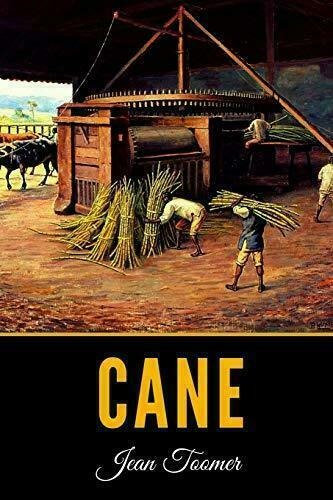
Sometimes that attraction is strong though. The moment I finished my first reading of Jean Toomer’s “Her Lips are Copper Wire”  I knew I had to write music for it and do my best to realize it in performance. Perhaps I can’t say why that is. Little matter. The pull, the attraction, was undeniable.

This Surrealist love poem, like E. E. Cummings poem from last time, was written before the first Surrealist Manifesto, and is proof Americans could use English in this mode early in the Modernist era. Long time readers here will know I sometimes like to mesh in Blues and Jazz flavors with my music,* but Toomer, an early Afro-American Modernist, seemed to have already suggested that with this poem, so that I didn’t have to underline the point. I suppose it just strongly communicated the wonder of desire to me.

Cane cover

This poem was placed into Toomer’s Modernist masterpiece, the book-length mixed-form “Cane.”

.

It’s National Poetry Month, the reason I’m going through early Parlando Project pieces to present a more rapid posting schedule here this April. NPM tries to increase interest in poetry, but it’s hard to get a read on how significantly it achieves that. Arrayed against it is every poem someone didn’t “get” for whatever reason. Every poem that says only “Care about what I’m saying, even though you won’t understand,” poems without the bridge to “Here’s how you connect to this.” Every poem that bores us keeps us from poetry, and we are so easily bored. How many poems does it take to put up a wall against poetry, and will putting a poster on that wall dissolve the wall?

Is this the fault of the poets, their poetry? Is that the fault of us, the readers/listeners? Are there social structures that surpass us in enforcing this distance from the art?  That’s a mystery. I don’t know the answer. But I know that once in awhile I come upon a poem like “Her Lips are Copper Wire,”  and like another Surrealist love poet Paul Éluard I’m left compelled “to speak without having anything to say” — anything to say other than the words of this poem. That limerent pleasure is likely why you’re here, reading this, and listening to the performance of Toomer’s poem. Thanks to that mystery and you.

No lyric video today, but you can hear my performance of Jean Toomer’s poem with a player gadget below. Don’t see that? Well, this highlighted link will also do the job.

.

*I’ll bring that musical influence to any text, breaking out Delta slide for T. S. Eliot, turning German Dada verse and Robert Frost into blues stanzas — and anachronistically seeing Emily Dickinson as a scratchy blues 78 record, or Henry Wadsworth Longfellow at a beatnik Jazz café.

Crepuscule (I Will Wade Out) for National Poetry Month

Today’s re-released Parlando piece from our early years is “Crepuscule”  by American poet E. E. Cummings. This is certainly a passionate, ecstatic poem, isn’t it! Looking back at what I wrote about it in 2018, I was then taking the main meaning of the poem to be a portrayal of falling into a Surrealistic dream state. In the same post I confessed I hadn’t remembered that Björk had performed a version of this poem that seemed filled with erotic desire.

Rereading and reconsidering, I’m more unsure which is metaphor and which is meaning — and I think that’s often a good thing in poetry. We’re in one of those gestalt drawings created with a spell of words. We could be in the transport of desire, and it is like unleashing a spectacular dream: flowers are not just colorful, but burning with color. We will be still in bed, yet leaping with sleep-closed eyes. And so on.*  It’s difficult to not feel the erotic pull of the text. For a dream, the mystery is very much of the flesh. Mouths, thighs, bodily curves, fingers, lips…is it dream as sex or sex as dream?

An argument for the dream is the framing device of the poem reinforced by the title (crepuscule is an archaic word for twilight). Night and the dreamer have swallowed the sun, and the final line has one biting on the voltaic silver of the moon. But then Rimbaud took the arrival of dawn and sexualized it, so why couldn’t Cummings do the same for nightfall?

Here’s the new lyric video.

.

Three ways to hear my performance of E. E. Cummings “Crepuscle:”  there’s a player gadget below for many, and there’s a backup highlighted link for the others. Want some dream images flowing behind the words of a lyric video? That video is above.

.

*The most mysterious line has lovely word-music: “with chasteness of sea-girls.” I’m assuming a reference to nereids, sea nymphs, but I’m unsure if the poet’s speaker is becoming one, or trysting with one, in the rush of their dream. If water spirits, perhaps gender fluidity is a subliminal?

Jade Flower Palace for National Poetry Month

As I selected things to re-release from our early years from this Parlando Project for National Poetry Month, I wanted to include some of my translations. We’ve already done a translation from the French of Dada founder Tristian Tzara this month, but today’s is another of my favorites, written by a master of classical Chinese poetry, Du Fu.*

I work from literal English glosses to translate from Chinese, a language I have even less knowledge of than French. This may seem like a cheat, and yes, ideally a translator would speak the language they’re translating from intimately. Yet, as I mentioned in my post regarding Tzara’s French language poem, there’s something worthwhile in translating anyway. For a poet, translating other poets is a rich experience, and the Parlando Project is about the ways poetry can be experienced. Reading it is one. Reading it with careful attentions more so. Speaking it out-loud is another. Writing music for it, or singing it, yet another deep connection. But translation is still unparalleled.

I think I started doing translations from classical Chinese poets before I read poet Robert Okaji’s, but his work in this area heartened me in my own efforts.

I made no attempt at moving over Du Fu’s word-music to English. I wouldn’t know how to start with that. Most of what I do is to try to absorb and understand the images and then redraw them in modern English. In this case I extended the wordage used to convey the images somewhat. My reasons for that: I felt there were associations and dual meanings in some of them that deserved to be highlighted for the contemporary English speaker. At times in translation I will use phrases or idioms that readers of English language poetry will hear as overtones from our own. For example, the image of rats running across roof tiles in Du Fu’s original I rendered as “Rats are running in the rafters.” My hope is that that gives resonances with the idiom “bats in the belfry,” of something being mentally in disarray.

Similarly, I felt Du Fu’s concluding image was ambiguous as to the roads that lead away from the palace ruins, and I chose the Yogi Berra choice: “When you come to a fork in the road — take it.” I used both the idea that there are choices in roads, but also that “None of them go on forever.” If the listener gets the idea that Robert Frost’s roads are there diverging in these Chinese woods, that’s a good thing I think. And for that matter, I suspect many English speakers will think of Shelly’s “Ozymandias”  as they hear Du Fu’s poem in their language. Of course, Du Fu wrote his first.

Here’s the link to the lyric video.

.

We’re back with three ways to hear The LYL Band perform my translation of Du Fu’s “Jade Flower Palace.”  You can use a graphical audio player below, but then some won’t be able to see that, so this highlighted link is provided. And there’s a lyric video above for the third way.

.

*Du Fu’s name was formerly transferred into the Western alphabet as Tu Fu. It’s the same guy.