The Young Intellectual

I spend an invisible part of the iceberg in this project looking around for material that I think might work combined with music. One thing invariably happens when you look broadly at something: you find connections that you didn’t expect you’d find.

Here’s something I’ve noticed this fall: around 1875 or so, in a small, little-thought-of area of the U.S., a bunch of people were born who went on to leave a mark on our nation’s culture, even if only one of them retains any fame now in the 21st Century (and even that exception is undervalued in my estimation).

Geographically the area I speak of is the region where the Mississippi and Rock rivers meet in the Midwest, which had transitioned from what had been an important point for the Native-American tribes at the beginning of the 19th century and before, to an area that supported settler towns which grew up around river-based commerce and industry. “Transitioned” of course is a passive word for a slow-motion invasion and conquest by the European Immigrant-Americans, which included the short Black Hawk war of 1832 that left a great many Native-American names, but fewer Native-Americans, in the area. Eventually states were created here bearing those native names: Iowa and Illinois.

Who’s in the cohort from this area and time?

My relative*, Susan Glaspell, born in Davenport Iowa in 1876. Glaspell and her husband (George Cram Cooke, also born in Davenport, 1873) eventually midwifed the birth of Modernist American drama in Provincetown Massachusetts and New York City.

Carl Sandburg was born 1878 in Galesburg Illinois. Sandburg was a big noise in the first half of the 20th Century, and I maintain he is now the forgotten Modernist, and a man who strived to weave several important American threads.

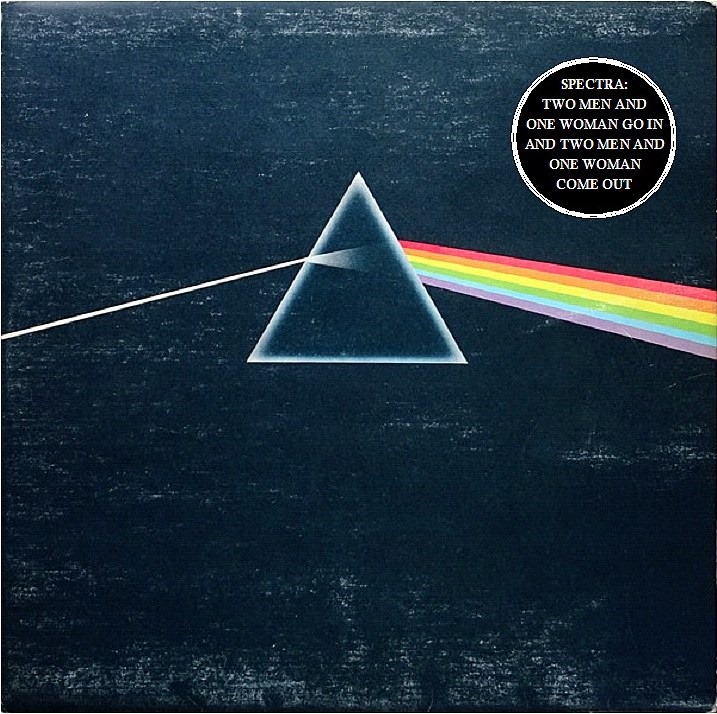
Arthur Davison Ficke (born 1883 in Davenport) a now lesser-known, but fascinating figure that I’ve yet to grapple with. Like Ezra Pound, he was drawn to Japanese art, and like his post WWI hot-crush, Edna St. Vincent Millay, he attempted to utilize older forms such as the sonnet in an increasingly Modernist age. As part of this friction, he and his friends Witter Bynner and Marjorie Allen Seiffert (born 1885 in Moline across the river from Davenport) concocted the Spectrist movement, parodying the -ics and-ists schools that were forming in Modernism. Oddly, the parodist seems to have been captured by his game, and Ficke later reconsidered Modernist poetic tactics.

Muriel Strode born 1875 in rural Bernadotte Township Illinois. I haven’t quite gotten a grip on her yet (though she was sometimes styled as “The Female Walt Whitman”), but she wrote a number of books early in the 20th Century combining a sort-of-Kahlil-Gibran-like popular non-denominational spirituality with Nietzschean self-improvement. She’s the most little-known here by far. So little is known about her that one can’t really use biography to help sort out what she’s getting at.

There was even a younger generation that called Davenport it’s hometown. Floyd Dell (born 1887) the editor of The Masses  which in the early 20th century linked Modernism with left-wing politics until the red scare of 1917 closed it down, and Bix Beiderbecke (born 1903), the live-fast-die-young jazz composer and cornetist.

Folks from where the Mississippi meets the Rock river
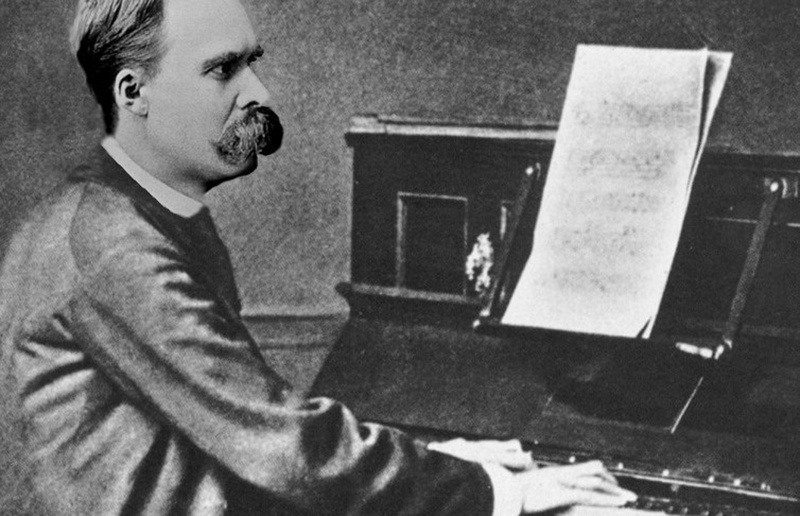
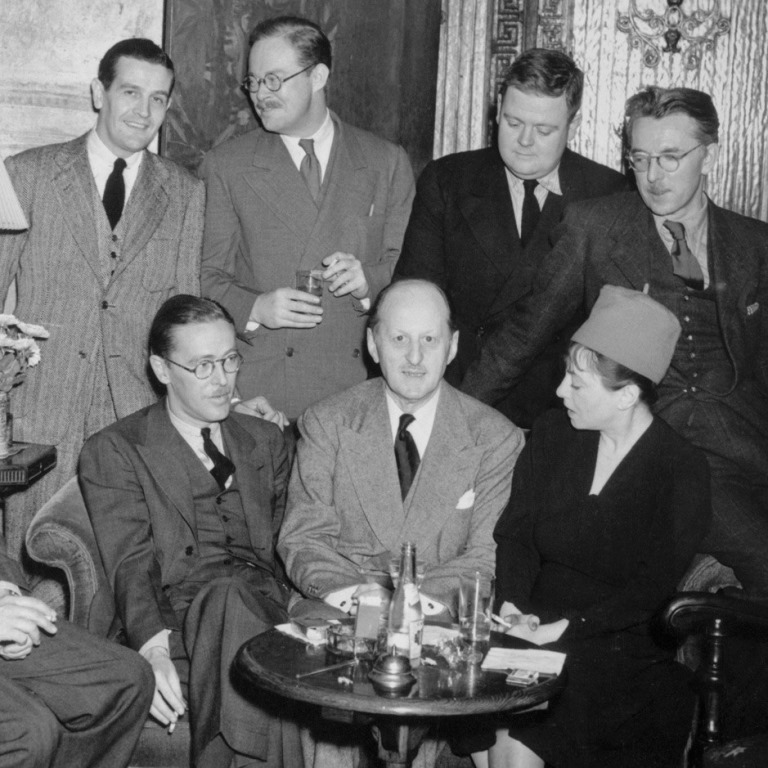
They’d make one hell of a roundtable. From the upper left: Susan Glaspell, Carl Sandburg, Arthur Davison Ficke, Floyd Dell, Muriel Strode, and Bix Beiderbecke.


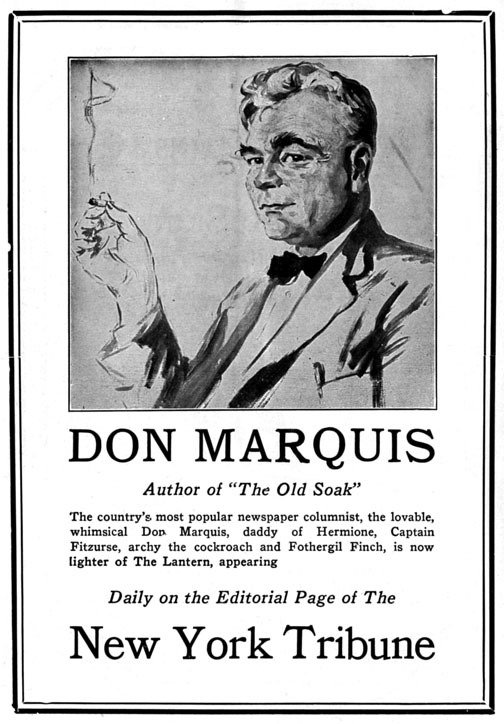
But since we last time touched on Dorothy Parker, let’s present a piece I slightly modified from a poem by Don Marquis, born 1878 in the tiny settlement of Walnut Illinois, but educated in Galesburg. Don Marquis is usually filed (like Parker) as a humorist, but like Parker he worked in various genres including collaboration with the Krazy Kat cartoonist George Herriman. Unlike some of the others here, it appears that Don Marquis’ most consistent connection to Modernism was to satirize it. Today’s audio piece, which I call “The Young Intellectual**”  pricked the romantic presumptions the young Modern of his time might suffer from. I updated part of one verse (the original next to last line was “I’ll start a Pale Brown Magazine”) when I performed it, an update I choose just so we can more easily feel offended or amused by his humor now. The player to hear the LYL Band performing this is below.


*My Great-grandfather lived on the Iowa side of these river-towns and worked in war-industry factories there. My father’s mother and her sister also grew up in the Davenport area. Alas, many of them died before I was old enough to ask questions, and one thing I regret about my youth is that I didn’t query those that were around.

**I’m not sure I qualify as an intellectual, but I’m sure I’m not young—so, Marquis can’t be talking about me now, can he. Like Ficke, Marquis also parodied Modernist verse, rather broadly from the examples I’ve read in his Hermione and Her Little Group of Thinkers  from 1916. Marquis’ greatest success was a series of later newspaper columns that became a series of books about “archy and mehitabel” ostensibly created and typed by a cockroach hopping on the typewriter keys in Marquis’ office. Archy, the cockroach/author, is also something of a free-verse poet, and Archy’s poems are a much subtler expression.

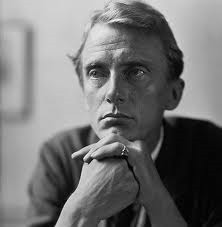
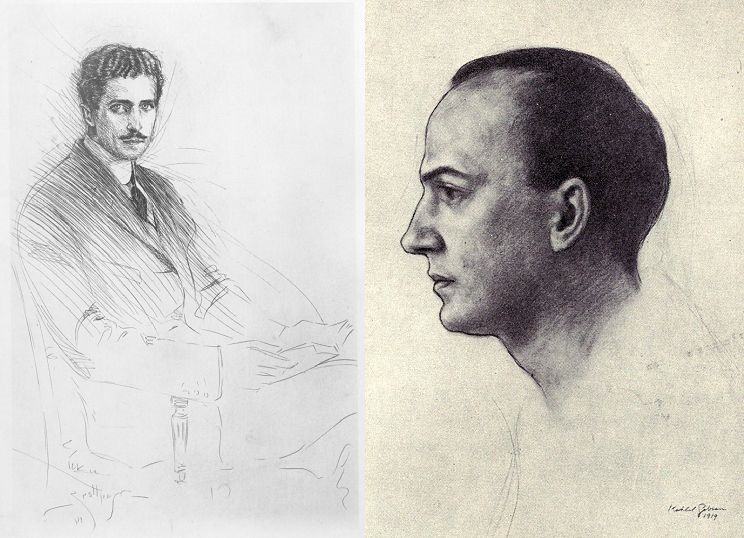
Don Marquis in the Tribune

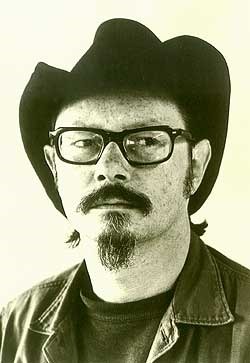
Marq Daddy? He looks like an urban swell here, but the country he comes from they call the Midwest

Looking for a Way to Go

The year 2018 marches on, as we pass onward past Thanksgiving toward December. I’m quite thankful for the opportunity to continue this project. Time-consuming though it is to do these pieces, it also continues to fascinate me and (one hopes) it also continues to surprise and entertain you. For me there’s considerable enjoyment in trying out or finding out something new, thinking about something, or playing something, different.

Another blog that gives me those pleasures is My Year in 1918,  where its author has been immersing herself in the publications of that epochal year. Her recent thankfulness post looked at some 1918-era people she has run into on that nearly year-long project. As Thomas Hardy put it in his poem of this era, it was a time of the breaking of nations, but as Mary Grace McGeehan looks over her year of 1918, she highlights a few that were mending and mitigating.

Though they may no longer be as well-known, some of McGeehan’s list you and I might recognize: W. E. B. Du Bois, Jane Adams. Others, such as women’s suffrage activist Anna Kelton Wiley and bra designer Mary Phelps Jacob were unknown to me. Three writers get a nod, all three wrote poetry: Amy Lowell, William Carlos Williams and Dorothy Parker.

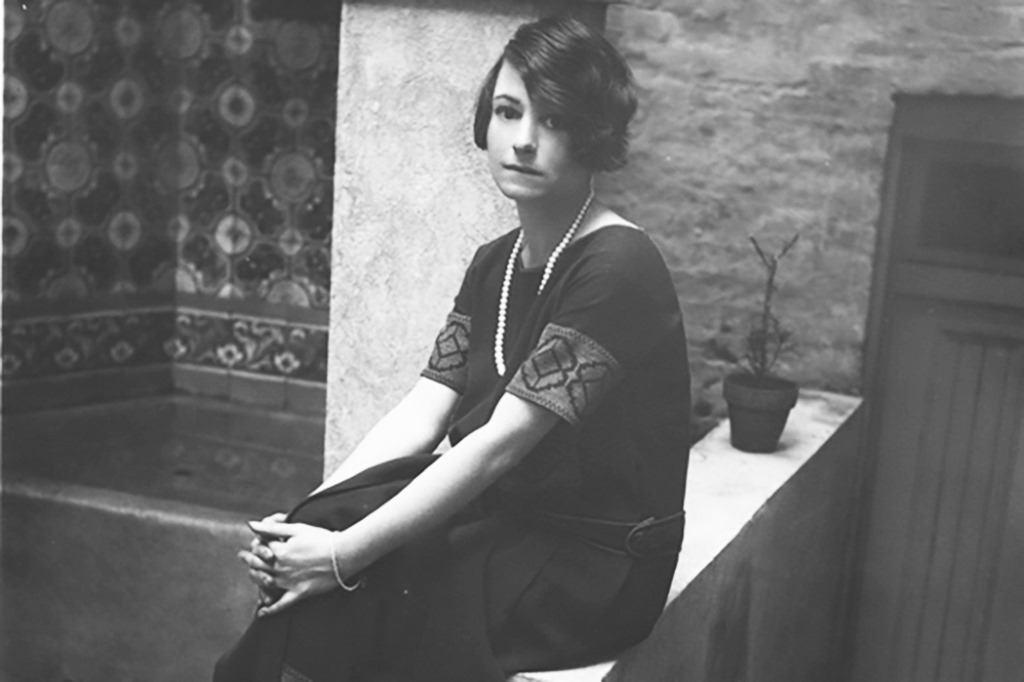
Dorothy Parker 1924

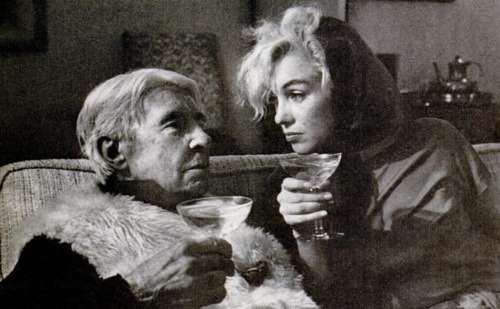
That plant looks like it could use a little water. Dorothy Parker at home in 1924.


Amy Lowell is a literary force I need to address sometime in my own project, though I’ve yet to absorb anything of her poetry. Though I overlooked Williams in my youth, he’s grown on me throughout this project as his public domain, pre-1923, work explores the lyric impulse with eyes whose perspective has been expanded by the Modernist explosion. The third, Parker, is a double surprise. I can see where My Year in 1918’s McGeehan will encounter her, as Parker was writing for magazines (one of My Year in 1918’s chief sources of material), but she’s not some inescapable pantheon writer. And though later in life she became a committed social activist, particularly in regard to African-American civil rights, her WWI self had yet to develop in this regard. But she’s a, a—oh, the never-immortal shame, the art that dare not speak its name—a humorist.

Algonquin Round Table

Parker with the Algonquin Round Table group of wits. We don’t know if they’re having lunch with those drinks, but it’s something of a sausage fest anyway.  I haven’t seen a caption naming those present, proof that humorists don’t make the pantheon. Besides Parker on the lower right, I think it’s Alexander Woollcott 2nd from left in the upper row, but I’m drawing a blank on the rest.


Humorists, whatever their skill and craft, tend to damage their reputations as literary figures. We like our literary titans dour and serious for the most part. They can scatter a little wit around for decoration or as weaponry, but to be celebrated for their merit—even if that’s all we end up really noting about them, their worthy merit—you need to rise above that. The assumption seems to be: if the point is to make you laugh, the point is ephemeral.

We think too little of humorists as agents of social change, or as participants in the Modernist artistic revolution of the early 20th Century. We do this even after Dada, even after Mark Twain’s now-recognized status as another American who broke Modernist ground before the 20th century.

To take Dorothy Parker seriously (not solemnly) you need to start by acknowledging that she’s fighting with two hands tied behind her back: she’s a woman before women were considered capable of human complexity, and she wants you to laugh at our folly. Parker survives at times wielding dark, survivors’ humor, the sensibility that remembers her poem “Resumé,”  a meme in verse about suicide. She might step on a few toes while doing that, and she’ll laugh about it.

Alternate voice here, Dave Moore, has appreciated Dorothy Parker for some time. Several years back the LYL Band covered Alan Moore’sMe and Dorothy Parker,”  and here today is the LYL Band doing a Dave Moore original that expands on Parker’s observations on suicide in his own words.

Parker ended “Resumé”  with the punch-line “You might as well live.” I’d add, you might as well create art. After all, even in the worst-case, you’re only burning part of your life-time while struggling with joy and it’s opposite. If there’s no hope, you might as well hope.

Thanks again for reading and listening. Thanks to spreading the word about the Parlando Project. In the Internet world of millions of likes and shares, we’re a small thing, but I’m grateful for you helping keep this little thing going. The player for the LYL Band’s performance of Dave Moore’s “Looking for a Way to Go”  is below.


I’m Nobody Who Are You?

Last time I talked about how hard it is to be sure how Emily Dickinson meant her poems to be read. Some poems seem gentle, some fierce. She sent some to her more conventional friends enclosed in letters or gifts—but some she never shared, and puzzle even hard-core literary critics to this day. When is she applying a clarifying simplicity to complex or profound subjects and when is she undermining simple statements or homey images with subtle side-glances? She’s a small-town 19th Century person, a stalwart reader of the book of nature—and yet she sometimes reminds me of later 20th century urban wits, like Frank O’Hara or even Dorothy Parker as much as she reminds me of Ralph Waldo Emerson. Am I reading this into Dickinson, or is it already there?

Emily D the T Shirt

Been there, done that, got the T-Shirt.


Well, I take today’s Dickinson piece pretty much as it seems, a humorous conspiracy with someone, perhaps the reader, wherein lack of credentials or claims to the podium/lily pad are brushed aside. This is a good place to begin observation and then art, or the circle back from art to observation of it, perhaps the best place.

So here’s Emily Dickinson’s “I’m Nobody Who Are You?”  as I performed it, available through the player below. And not to shout from the lily pad, but the only reward I get for the time and effort of doing this is you, the audience who listens to these various words from past nobodies who want to talk to us. Thanks for doing so, and if you find something here you like, please let others know about it.


Tell All the Truth but Tell it Slant

What was Emily Dickinson’s personality like? Biographers have tried to line that question out from the available evidence filled in with supposition; but then none of us present exactly the same face, the same sensibility to all people and at all times. And any of us who are writers may also know that what we write and how we live can differ, even if only in expression.

This is partly why we have so many Emily Dickinsons, not just over time since her emergence on the page in 1890, but now in the present days, depending on reader’s framing. Today’s piece, “Tell All the Truth, but Tell it Slant”  can be read as a playful and humorous observation, as a serious artistic credo, as a secret diary of non-conformity, or as a dark observation of human fearfulness. How many Emily Dickinsons had how many intents as she worked out this little poem?

Charles-Temple-Emily-Dickinson-silhouette

Her dark materials. A silhouette of the teenaged Emily Dickinson.


As I often do with Dickinson performances, I leaned a bit more to a serious mode of expression, which doesn’t preclude the thought that Dickinson would be internally chuckling. I tell myself I’m just trying to channel something I feel as I experience the poem, but I may be also trying to overcompensate for the Dickinson widely assessed in my youth as an eccentric dealer in homilies, a naïve artist without the depth of metaphysical thought that mid-20th Century High Modernism adored. It seemed then to have been an unspoken assumption that Emily suffered from “lady brain,” that imagined biologically-stunted inferior organ with sentiment where exploratory thought would be. Sure, her syntax and imagery had some originality, so we’ll allow her into the anthologies with the serious poets.

My model of humanity is more androgynous than most, but let us allow female associated elements in her artistry, just as we should be sure that there are experiences from gender and class roles in her time and place. But let’s not overdetermine what she did, what she can still do, when we read, perform or listen to her poetry.

As I said, “Tell All the Truth but Tell it Slant”  can be read as a light-hearted jape. I even remembered the first line taken for the title on publication as “Tell the truth but tell it slant,” forgetting the “all.” Is that “all” there just for metrical reasons? Because, if that “all” is meant, it changes things doesn’t it. It goes from a reading of “Well, it’s not polite or advisable to go around spouting the whole truth at every occasion” to a more general statement, that the truth is never  told directly. And then the second line and its “lies”—surely one of the most punned-on words in English. It that just an easy rhyme? The next line, “Too bright for our infirm Delight” could have been in a William Blake poem.

The second stanza* starts with some inverted order poetic diction, but it may be forgiven, as we finally get to a physical image: lightning and frightened children. Dickinson appears to be siding with the filters, the myths, the accepted consolations of fibs and filigree we buffer the truth with. And perhaps she is. It may come down to how much or how often Dickinson, or you yourself, look away from the truth, how often the wisdom of your fears can help you survive.

In the end in this performance, I thought it might be key to consider who is charged with—or to—“Tell all the truth but tell it slant.” Is it society, or those who speechify to us as if we’re frightened children, who slant the truth? Or is it us, who should tell all  the truth, even if we need to put it indirectly so that our audience can discover it, as the world gradually discovered further Emily Dickinsons, for ourselves, in our own time?

Musically, I return to my weird folk-rock sound and I choose to make Dickinson’s first line into a refrain to stress its ambiguity and centralness to the poem. Hear it with the player below.


*One joy of the poem comes in the end of this stanza’s third line: “dazzle gradually” where the meter and consonance of the chiming d and l sounds enchants.

In the Time of the Breaking of Nations

As we celebrate the 100th anniversary of the armistice ending World War One, let’s bring in a writer not primarily known as a “war poet,” Thomas Hardy. Hardy is one of those bridge-poets between the era of the romantic and sometimes sentimental Victorian poets and the Modernists. Though I’m told Hardy never felt at ease in London artistic circles (he was country-born, son of a stone-mason and largely educated through apprenticeships as an architect) his poetry was admired by some of the Modernists. Why might that be? While his language can sometimes seem antique to modern ears, it was his language, the language of a rural 19th century working class Englishman. And while he will write about sentimental subjects, he’ll balance that with a cold eye.

In the Time of the Breaking of Clods

The horse-drawn harrowing time of the Breaking of Nations. But what’s that woman doing behind the horse?


Hardy grew up in a rural, farming district, as I did, and it may have been natural for him to relate the violence of the Great War to that setting. And I love how he does it here with three spare quatrains: the boustrophedon horse-drawn disk or rake plow that is literally breaking the earth*, in contrast with the prophetic “Breaking of Nations” warning from Jeremiah used for the title. Then there’s smoke rising, not a razed town after an army has swept through it, “only” the burning of invasive weeds. And finally, a mysterious third stanza with a mysterious word: wight.

It’s an old word, one of those that came to English with the German Saxons centuries ago. Chaucer knew it, used it in The Canterbury Tales,  and as best as I can tell it meant a sort of unimposing person or creature. Sometime later, perhaps after Hardy learned the usage of the word and after this poem was written in 1915**, it’s taken on a supernatural connotation. It’s fairly easy to trace that back to J. R. R. Tolkien’s use of the word in The Fellowship of the Ring  written decades after Hardy’s poem. Tolkien was a scholar of the ancestor languages of modern English. Did he know of other usages of the word, or did he simply take a very old word and choose to use it for an undead-spirit slain in battle?

So, in this last stanza, what does Hardy mean by his whispering maid and “her wight.” A flirting young couple? Are they whispering merely to shield their romantic bantering from others? Or is it something weirder? Is this a young woman whose man is off to battle, or even one of the battle-dead? Or, as part of Hardy’s theme are they both immortal ever-returning spirits, whispering because you only barely sense them in our time-bound world?

I don’t have the detailed historical knowledge to know how depopulated the farming areas of England were by the need for soldiers during WWI. From Edward Thomas’ poem from last month, Gone, Gone Again I get the idea that the absence of farming men was noticeable. And it was at least enough of an issue that England formalized an effort to recruit and train women as replacement farm labor.

Womens Land Army

Not just whispering to her boyfriend. “There’s not enough labour at hand to cultivate sufficient land to keep people from starvation.” Recruitment ads for the Women’s Land Army in England during World War I.


Well, I just like it that this is blurred. Do the final two lines give us any clues? Why does Hardy say that “War’s annals will cloud into night?” In early drafts, Hardy wrote “fade,” and “cloud” seems a more peculiar choice. In the context of the 2nd stanza weed-burning, I’m thinking he’s saying they will disappear in a cloud of smoke. Also in context of the 2nd stanza, this would make such war records in some future as valueless as weeds, but smoke/cloud again reiterates that there’s something unsubstantial about the couple.

“In the Time of the Breaking of Nations”  demonstrates a lot of what I like about short lyric poetry. T. S. Eliot could write a Modernist masterpiece like “The Wasteland”  extending to the farthest lengths of lyric expression, 15,000 words—but a poem like this can touch a lot in its 63 words.

It may not be apparent due to the instrumentation used, but I might have been subconsciously inspired by Bob Dylan’s repeating chord progression used for his masterful three-short-stanza song “All Along the Watchtower,”   which is very much in the same mode as Hardy’s poem.

Here is my performance of Hardy’s poem. Use the player below.


*Note too, Hardy’s pun on “harrowing.” For another discussion of boustrophedon plowing and time, see this earlier post. Near the end of his life, while visiting a farming museum, my father wanted me and his grandson to know that he’d walked behind a horse-drawn plow.

**Though the poem was published in 1916 when Hardy was asked for submissions of poems to support the war effort, one biographer says it may date back to 1870.

Witch Hunt

I’ve spent a lot of words this month talking about the history of poet and songwriter Dave Moore, who’s been the alternate voice here since we kicked things off more than two years ago. Today I’m going to end the history and get back to the present, shut up a bit, and let Dave’s words and performance tell its own story. Here’s a recent Dave Moore piece performed with the LYL Band this fall.

Let me tell you another thing about witches

Little to do with Dave’s song, but I can’t resist including a still from René Clair’s “I Married a Witch”

Is this a Halloween song? A political commentary? An investigation of something that precedes and supersedes civilized politics? An excuse for me to fire up my Mellotron virtual instrument again? I could talk. You could listen. Today let’s choose the later. The player gadget is below.

The Story of Dave Moore and Love Songs

Don’t worry, we’re only taking a break from our regularly scheduled mix of various words (mostly poetry) with original music to tell the history of the Parlando Project’s alternate voice Dave Moore. So far in our story, he’s gone from poet to pioneering Twin Cities indie band lyricist to full-fledged songwriter to singer-songwriter-keyboardist for a two-person band of poets with instruments in about two years. If you’ve been following along, I’m the other poet.

How did this turn out?

Returning to 1980 after the release of the Lose Your Lunch Band’s Driving the Porcelain Bus  recording, the two-man-poet-band thing seemed to be a problem. Around this time a handful of Twin Cities indie rock bands had eked out a local circuit of venues that would book them. This was all very tentative, and only sufficient to give bands the initial toe-hold on a career, and it wasn’t really open to something as sparse and loose as we were. Could we possibly have tried to push that square peg, a “hardly rock band,” into that circuit?

Perhaps. We started looking to fill out the band, with the drummer being the biggest problem. I had started to dabble with electric bass, and Dave’s Farfisa combo organ had left-hand gray keys which could be dedicated to keyboard bass duties in the Ray Manzarek mode. The first third was Jonathan Tesdell, a guitarist who had a set of congas, and who was drafted out of a commune down the street. Jonathan practiced and played with us for a few gigs on electric guitar, but I can’t recall us ever even trying the congas as a replacement for a more rockist drum set live. But after a few months, Jonathan left town, traveling light. I once heard that his Gibson Firebird electric guitar that he sold before packing for travel was bought by The Replacements’ Bob Stinson.

Next up was a very talented guy who I believe was working then in the live comedy and theater scene,* Dean Seal. Dave somehow recruited him**, and Dean played drums and bass. Of course, not at the same time, a limitation we overlooked because he was willing to play with us. Dean could write great songs as idiosyncratic as Dave’s, and he had a good singing voice (later recordings with Mr. Elk and Mr. Seal demonstrate his cabaret-ready performance chops***). Dean later went on to a long and unique career, leading the Minnesota Fringe Festival for several years, and in this century becoming a UCC minister who combined his theater and comedy experience with religion.****

A fully operational LYL Band

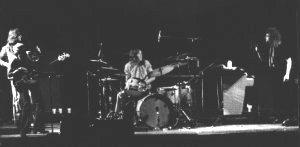
Performing “Magnetized,” the rarely seen, full LYL Band live in the ‘80s. L to R: unknown drummer (see below) Dean Seal, Dave Moore, and Frank Hudson


Alas, Dave and I had sort of lost the fire to play out around the time Dean joined up. I’m not even sure if Dean could have been the singing drummer (harder than it looks) and songwriting voice that could have given Dave a rock-club ready band. With us, Dean played mostly electric bass, and he took a liking to a cheap Japanese copy of a Gibson EB0 bass that I had found in a second-hand store. We traded basses, mine for his similarly low-quality Made In Japan bad-translation-of-a-Fender bass. That instrument sits next to me as I type this, and I still play it often on pieces you hear here. Somewhere in the later ‘80s the LYL Band went, as press-releases still say these days, “on hiatus.”

Why? When I asked Dave today he said he hadn’t thought of that, but as we chewed it over I think it was the matter of both of us, in committed relationships and needing to pay the rent and bills at the lower edges of the economy, gradually converting the concept of the public band to a private joy.

But as that was, almost imperceptibly to us, happening, Dave’s songwriting took one more turn. The goth and gothic Fine Art lyrics and the agitprop and Dada characters of the early LYL songs were joined by unconventional and sincere love songs.

It’s more than 30 years ago, but I can still remember the first time I heard Dave sing this song, as I have heard Dave sing many songs before or since, stone cold fresh. We didn’t often discuss songs before playing them. Unless specifically working out a live set, we didn’t work out arrangements, run through the changes or discuss accompaniment. We just let it happen for fun or failure.

So, there we are in the 1980s. Dave’s standing at the Montgomery Wards electric piano, I’m no doubt sitting with my Cortez 12-string acoustic guitar with a DeArmond soundhole pickup. I’ve programmed a simple three-drum beat on a Mattel Synsonics electronic drums toy. I hit record on the cassette recorder. Dave hammers out some chords and I figure out the key and some kind of pattern as quick as I can. He begins to sing—and I suddenly realize this is, surprisingly, a love song, a damn fine love song, though still uniquely Dave. What do I think next? Well, that I had better not screw this up. Playing lead/melody lines on a 12-string has a catch: the two highest string courses are tuned in unison, but move to the G string and lower, and they jump up to courses tuned an octave apart. Listening to this now, I can still feel how I kept that in mind as I played. If music be the food of love, don’t lose your lunch.

I have some later, better-recorded versions of “(I Think I’ve Lost My) Total Recall.”  The lyrics Dave wrote as a younger 30-something were good then, but when I perform or listen to this song now, thoughts of memory loss mixing with love are real as well as art representing the impact of love. As songs occasionally do, it’s gone from heartfelt to heartbreaking—but this is the moment I first heard it, and so, excuse the archival audio quality and listen.


As a bonus, although also low-fi, here’s what a putative ‘80s LYL Band as a fully realized rock band would sound like. We’d planned this gig at a Native American center with Dean Seal playing drums or bass on alternate numbers. We’d setup and sound-checked ourselves, and then left our instruments sitting on stands at the end of the building’s gym. As we left for the rest of the event before we played, four guys, unknown to us, went over to our instruments, and began to play them. They were pretty good as I recall, sort of blues-rock. We figured there was no reason to stop the better, volunteer musicians. They played a short set, maybe two or three songs or so. Later that night, the drummer asked if he could sit in for our set on Dean’s drums. Trusting in chance, that’s what happened. The song “Magnetized”  is a Dave Moore lyric, another love song, but I think I wrote the music and sang it here. Once more it’s a cassette recording, taken from the vocal PA that night. You can hear me slightly off-mic trying to let the band know when I’m going to the bridge and walking over to let the rhythm section know that it’s time to end the tune.


*Someone should write a book on that circa ‘80s Twin Cities comedy scene, and yet oddly enough no one has. Louie Anderson, Liz Winstead, Joel Hodgson, Kevin Kling, Jeff Cesario—and I could go on—were all starting out in the Twin Cities in this era.

**Dave remembers he was working as a record store clerk for a time at the Wax Museum on Lake Street, and his manager there, knew Dean, and probably introduced them. Dave doesn’t recall knowing anything about Dean’s theater and comedy work then, only that he played bass.

***One story is that when Mr. Elk and Mr. Seal recorded an album at Prince’s Paisley Park they did it so quickly that it was the least expensive recording ever made there. Here’s some of their work.

****Here’s an article that touches on Dean’s 21st century take on Christianity.

The Story of Dave Moore and the Lake Street Review

Did I skip over Dave Moore the poet and writer to get to Dave Moore the words and music guy? Perhaps. Let’s step back away from the 1980s and recap a bit in word-print silence, without any musical noises at the beginning.

I met Dave almost exactly 50 years ago in 1968. And my first encounter found him reading his poetry in a church. He was also publishing what would have been called an “underground newspaper” in those days, an occasional Ditto-machine-printed* dozen pages or so of social, political and cultural comment, which I eventually contributed to. 1968 was a fabled year, like unto 1989 or perhaps some year coming soon in our current folly, full of momentous and contentious events. Odd as it may seem, it felt important to engage with them on paper, even for a small audience.

Dave left for Wisconsin to continue college, I ended up in New York to not. We didn’t see each other for over five years.

When I decided to cover Bob Dylan in reverse, and left New York for Minnesota in 1976, I ended up staying with Dave for a while and helping him work on rehabbing a run-down house he was living in. Dave had hooked up with a group of writers, the Lake Street Writers Group, all of whom lived a few blocks from that central east-west commercial/industrial strip in Minneapolis. As a group it was an unusual mix, including bartenders and low-paid workers, most with some college under their belts, but now in their mid-20s trying to figure out what to do with life that didn’t formally give college credits. These experiences gave the group something of a blue-collar, we’ll earn our cultural worth, not be awarded it, air that I liked. I too joined in the group.

Ditto machine Ad

The Revolution Will Not Be Duplicated…for less than 1/4 cent a copy! Just think, I could run off a few pages of this blog and have them in mailboxes by the morning!

Besides the usual get-together/critique/talk thing that writers’ groups have done forever, the Lake Street Writers Group ran a little magazine, The Lake Street Review. The first two bootstrap issues were printed on Dave’s Ditto machine, the magazine’s post office box was Dave’s too, and Dave was co-editor in the beginning along with the founding spirit of the enterprise, poet Kevin FitzPatrick.**

I asked Dave what poetry he remembered writing or publishing from this era today, and he reminded me that in the mid ‘70s he was concentrating more on stories. “Oh,” he recalled, “There was a song ‘Ballad of Mr. Lake Street vs. Mr. Id’  in the Lake Street Review.” That piece of Dada was attributed to John Lee Svenska in print, but it would have predated his work with Fine Art or the LYL Band by several years.

What would you get if you combined blue-collar with Dada? One answer would be some of the first songs Dave wrote for the LYL Band. Yesterday’s “Evil Man”  would be one example, the man in the title morphing from childhood bully to sociopathic businessman to stickup man. You could see this as a new expression of the notable Woody Guthrie line about “Some will rob you with a six-gun, and some with a fountain pen,” but by having the evil man fade in and out of these equivalented roles from verse to verse, the Dada this-beside-this comparison is made. In today’s piece, Dave’s early ‘80s song “The Night Inspector,”  the Ubu Roi rides a fork-lift in a factory. To give you some relief from the audio quality of the archival recordings from the early ‘80s, this performance is a later one where I sing Dave’s song with acoustic guitar. Go go Night Inspector (player) Gadget…

*I’m reminded that Fugs’ founder Ed Sanders was able to raise his ruckus in the ‘60s Greenwich Village scene at first by being the owner of a similar machine on which he printed his own little magazine and flyers. Ditto machines were better than Mimeograph machines. Mimeo machines printed in purple and their printed pages stank of that can’t-be-healthy-for-you volatile ink that is probably responsible for some of you getting lower mid-century grades than your parents expected on school tests. Ditto machines produced pages that looked more like “real” printed work with dark black text.

**Kevin FitzPatrick has continued to write poetry dealing with this milieu for his entire career, including a great number of poems, too rare in our culture, that deal with the complexity of day to day work as an employee. Here’s a link that will let you read part of his introduction to some selected poems of his, where Kevin talks about the life experience from this Lake Street Review era that helped inform his poems.

The Story of Dave Moore and the LYL Band

The ‘70s outburst of new bands that were called punk, then new wave, and finally indie can be traced to a beginning (or beginnings), and here’s what’s too-little recognized about that: it started with poets and writers.

Some who know that punk didn’t start with Johnny Rotten, say that it all can be traced back to a band that called itself Television who convinced a desperate bar owner that his Bowery bar called CBGB should let them play music there in 1974. Television wasn’t a gigging band, rather it was the idea of two poets, friends since high school who had moved to New York City and started to call themselves by suitably poetic names: Tom Verlaine and Richard Hell.

But even before that, two other NYC writers were combining poetry with rock’n’roll: Lenny Kaye, a guitarist and rock critic with tendencies to musicology, and Patti Smith, a poet who thought that if she wanted rock’n’roll to be a fit subject and context for poetry, maybe the sound of rock should come along explicitly. In 1971, the pair linked up to perform at St. Marks in the Bowery with Kaye on electric guitar, at a long-standing reading series (instigated by Paul Blackburn, who we’ve met here previously). Eventually there would be a band, the Patti Smith Group, but that band started as an idea of two writers, and for awhile it was just Kaye’s guitar and a piano player with Smith’s chanted vocals.

So how far back does that idea go, two poets or two writers, imagining a rock band? Let’s set the New York wayback machine 7 years further back, to 1964. Two poets and well-rounded Greenwich Village bohemians Ed Sanders and Tuli Kupferberg looked at the folk music scene, understood that the term means what it says, that any odd folk were allowed to make music, and so they gathered some handy musicians and imagined a band they called The Fugs. Their first recording was titled on its first pressing on Folkways The Fugs Sing Ballads of Contemporary Protest, Point of Views, and General Dissatisfaction,  and it was produced by Harry Smith, the important folk anthologist, but they eventually became a rock band touring with an irregular accumulation of Village musicians. Besides having the foundational indie spirit of we’re going to make music without asking for permission, The Fugs were also sometimes gleefully obscene—something that bohemian poets had already done, and they brought this with them to music. In today’s world of autotuned rappers, their sexual hijinks may not shock as much now as their naked-to-the-world out of tune vocals.

And what bridges the Fugs to the ‘70s NYC punk-rock poets? Poet Lou Reed, musician John Cale, and eventual English Literature PhD Sterling Morrison formed the Velvet Underground. Like the other poet bands, the idea of forming a group preceded any complete organization into a band. The Velvet’s original drummer famously quit when the band got its first gig, because he thought accepting any gig would be selling out.

Do you notice a rhyme scheme here? None of these situations started with a full band of musicians looking for their chance. These weren’t musicians looking to get poetic, these were poets looking to get musical. Of the seven writers above, I believe only Kaye and Reed had ever played a gig before they dreamed their bands. What musicians were recruited, what musical skills would be developed or obtained, all came after the idea, an idea that was launched in performance before it became a fully-formed rock band.

These weren’t musicians looking to get poetic, these were poets looking to get musical.

I’m not suggesting this is the best way to start a band or establish a career, because this is pretty much the way the LYL Band started. Dave remembers that Fine Art had looked to him for words, and once asked, the words that could be songs started building up in him. I had been writing songs for a year or so before I came to the Twin Cities. I had an acoustic and electric guitar, Dave had an old upright piano in his living room. Sometime a few months after Fine Art got underway, in 1979, we started playing together, a two-person version of the traditional song pull. He’d do a song and I do a song and we’d try to figure out what went with what the other was playing.

Whose idea was it to form a band? I think it was likely Dave’s. Dave’s not entirely sure. The broader gestalt of punk and indie breaking out was part of it, including the example of Fine Art of course. We both shared an appreciation of The Fugs, and that anarchic idea of a band that would perform any idea for a song, even if their musical execution might be imperfect. Hell, their LP title “Ballads of Contemporary Protest, Point of Views, and General Dissatisfaction” could have been our tagline too.

The idea of just an acoustic piano and a single guitar as a band was incomplete and we knew it. Even in the loosest standard in the era, we couldn’t be a rock band. As Dave’s songs built up, we performed at a few open mics acoustically as a duo, and we started to call ourselves “punk-folk.” We played several midday informal gigs at the Modern Times restaurant on Chicago Avenue (I worked nights, which cut into more conventional times) and from this short-lived noon-time schedule we named ourselves The Lose Your Lunch Band.

Dave Moore at LYL keys 1982

Poet to songwriter to performer: Dave Moore at the keyboards during a 1982 LYL Band concert.

Still a duo in 1982 we recorded our only “official” release, the mostly electric (Dave had bought an old Farfisa organ) Driving the Porcelain Bus.  Recorded by Colin Mansfield on what was probably the same 4 track open-reel deck that recorded those Husker Du demos. You can see that we weren’t shy about the emetic band name, but it had nothing to do with the songs we were singing. We sang songs about political subjects, blue-color experiences, and satirized the Me generation.  Driving the Porcelain Bus  was probably the first cassette only release in the Twin Cities indie scene, but it came before there was a regular distribution method for pre-recorded cassettes. Besides the usual direct sales, I reverse-shoplifted the cassettes (each packaged in a folded brown-paper lunch sack with the track list printed on the paper) dropping them into spaces in the LP bins of record stores. I wonder if any clerks remember being asked to ring up a strange recording that wasn’t actually in inventory?

It was the Reagan decade, the rise of the new affabulatory GOP. Dave had lots of song material. We’ll continue the story of Dave’s new-found songwriting in another post, but here’s today’s audio piece: Dave Moore performing his song “Evil Man”  live at the Modern Times sometime in 1981 with the two-person LYL Band. Dave is pounding the house piano within an inch of its life and has a vocal mic. The MT sound system had one more channel which meant that I’m trying to get my little acoustic guitar to be heard over the piano while shouting backing vocals into the mic halfway down my body to where the guitar was. I believe I recorded this on a portable cassette recorder sitting somewhere on one of the restaurant’s side tables. As they say in collector’s circles: archival interest only sound quality.

A Poison Tree

Earlier this month I mused a bit about renowned poets’ “batting averages” when I use their words here, that the hall-of-famers and MVPs don’t always get the most likes and listens, that many of our most popular pieces use words from poets that are much lesser known. Of course, those levels of response may be secondary to the music Dave and I supply and our performances having their own range of attractiveness, or it could be that the subject matter of the popular lesser-known poems resonates in some way with audiences.

Perhaps it’s just random fate at play, but poet and artist William Blake never attracts much of an audience here, though he remains dear to my heart for his stubborn individual persistence and production. Blake is an 18th Century writer who looked backwards to Milton and Dante as much as he predicted the early 19th Century romantics. In America, he’s loved by some outsider poets such as Allen Ginsberg* and Patti Smith, but in England he may be encountered as the lyricist of a national anthem “Jerusalem.”   Compared to our founders of American Modernist verse, he can be in his “prophetic books” more long-winded than Whitman—and yet also as seaming simple and elusive as Emily Dickinson in his short lyrical poems. If you hear Blake as hard to value or difficult to appreciate quickly, you are likely hearing him right.

Take the piece that the LYL Band performs today, “A Poison Tree.”  It’s Dickinson-short, and like some Dickinson, if you give it only cursory attention, it seems like a simple moral tale. It certainly starts off like one. To paraphrase, I was mad at my friend, but we were open about it, and it all blew over; but with my enemy, I kept my anger a secret from him and it didn’t go away. This poem was even once published under an (ironic) title “Christian Forgiveness,”  and that may be what you expect to hear extoled. After its few moments this poem ends, it goes away, and that could be what you think you heard. But it’s stranger than that—unvarnished fairy-tale strange.

Blake A Poison Tree page

One nice thing about William Blake poems: I don’t have to hunt for illustrations

By the third verse the poet/speakers’ hidden, festering anger, has produced an apple, an Adam and Eve apple, a Snow White apple. Sure, magical realism, expected poetic imagery this. How’s the plot going to go on from here? Will he wicked-witch-trick the foe into eating the apple? Will he somehow reconsider his anger and resolve it? Will he somehow eat the apple himself by some misapprehension? Will he patent the apple’s genetic design and make so much money that the foe will be forever jealous?

Two lines into the third verse, it goes somewhere else than any of those easily comprehendible endings. The enemy sees that apple, that property of our poet/speaker. He wants it! He breaks into the speaker’s garden and steals it undercover of the night. Thus, the poison apple kills the foe. And the poems speaker sees this and is “glad.” Roll the credits, and anyone who’s been paying attention should walk out puzzled.

What the fruit!

Could Blake be saying that hidden anger is dangerous material, you need to be careful with it, as stuff could happen? Or is it a more elaborate allegory? Is Blake saying that our enemies will covet our anger, even if we think we are keeping it hidden, and the foe, seeking to seize this anger (perhaps it’s righteous or powerful) will kill themselves? Or, in the context of Blake’s overriding mythos—where the righteous, authoritarian deity, similar to the Old Testament Jehovah, is not simply good, and must be opposed—is Blake demonstrating that our festering anger will turn us into a trickster god who will allow the fall of man from Eden? Or is this a simpler anecdote about passive-aggressive sins, where the story is: well I was mad at him and he was my enemy after all, so why warn him off from my poison apple, he had it coming?

To those attracted to it, “A Poison Tree’s”  power derives from this mystery couched so simply. But if it only confounds you, that’s OK too. The Parlando Project tries to vary things—not to confound you, but because we’re attracted to a diversity of ways this can work or fail.

To hear the LYL Band perform Blake, use the player below.

*Allen Ginsberg sang Blake poems regularly, once issuing an LP of his performances with an eclectic group of accompanying musicians and performing them live. His unguarded and guileless performances of Blake were one influence for what I do here.