I Was Blind with Hunger for Your Love (Summer Morn in New Hampshire)

A lot of the poetry I combine with music here was published around 100 years ago, making it clearly in the public domain for reuse. Given my age, some of the poetry from the Previous Twenties doesn’t seem all that old — after all, many of the poets’ lives overlapped mine — but some poets and poems look back, as I do now from my 2020s, to older styles of poetic expression, ones from an additional 100 years before the 1920s poet. That may be too much for some younger audiences I think.

Since poetry is at least partly about how  something is said, it’s not out of line for style to be substantial when we choose to read or listen to poetry — but, sometimes we might choose to “translate” poetry for performance to make it more immediate.

Here’s an example. I came upon this 1922 poem by Claude McKay while looking for summer poems. I’ve presented McKay a few times already here.  A figure stored away in the Tupperware container labeled The Harlem Renaissance, McKay’s poetry is still preserved and sometimes read — often the portion of his poems that speak eloquently about racism and the double alienation of being a Black Caribbean emigrant to the United States. Since these things are still factors in the 2020s, that supplies relevance to continue to consider them. A poem like his 1919 sonnet “If We Must Die,”   however formal in prosody, presents clear reasons to our current ears.

But McKay is also a passionate love poet.*  Now, to say the least, love is still a contemporary experience, so one might think his love poetry would also get more contemporary exposure. My casual estimate says this hasn’t happened. Yet.

Why not? This poem is significantly old-fashioned, 19th-century-like. Its sentences are poetic in an outdated style, they don’t flow casually in a spoken way. This is a style we might forgive in 19th-century verse if written back then, particularly if the poem is a Hall-of-Fame, “Poetry’s Greatest Hits,” poem — but not so much for a 20th century poet’s less honored selection.

Young Claude McKay

Don’t make the mistake when reading old poetry to think that the poets must be old too. McKay was just 30 when he first published this poem.

.

This poem also makes a mistake writers can fall into. McKay seems to think that leaving a surprise for the ending will strengthen the poem — that when the reader finally sees that surprise they will be happy to have waited for the poem’s context.

There are poems that work that way.**  To me, this one doesn’t. Coming upon it, one may not read through the facile but not necessarily compelling nature poem that makes up more than ¾ of the text. Therefore, in my “translation” for today’s performance, I’ve decided to create a refrain out of the poem’s final line, spoiling the surprise but urging the listener to consider the nature and weather report portions of this poem as reports of human desire and inner weather. You’ll hear how it works in the musical performance you can hear below.

Taking liberties like this is one reason I use public domain work: it’s now free for one to do with it what one wants. If you want to read McKay’s work as he intended it, here’s a link to the 1922 version. That link includes its own link to an even earlier published version by McKay, evidence that the poem’s author himself was trying to improve his poem’s impact.

Writers: if you are ever writing a surprise-ending piece, if you ever are withholding something from your reader or listener because you think it’ll be a grand or witty “Aha!” moment at the end, consider the alternative. The alternative here, the bringing out the key context that the poem’s speaker is viewing his summer night and morning “Blind with hunger for your love,” strengthens listener engagement I think, and it lets the listener see that the speaker/singer is just as attracted to the early rain-storm, sleepless-night portion of the weather, as the “miracle” of the subsequent sunny morning which is so incongruent with their present feelings. I’ve doubled down on that revision by making the newly refrained line the title too. ”Summer Morn in New Hampshire,”  as McKay titled it, is too specific yet generic in my hindsight judgement.

I did my best with the musical performance of this as a song. I enjoyed playing my big, heavy, 20-plus-year-old 12-string Guild guitar and weaving in the rest of a quartet of ringing and raining instruments. It’s not a humble-brag, but a statement of the song’s potential to say that this piece would benefit from a higher-skilled singer than I am. Perhaps my voice’s approximations can be heard as bringing an imperfect human immediacy to the words? You can hear the performance with a graphic audio player below (if you see that). No player?  This is a hyperlink that will open a new tab with its own audio player.

.

*Let me leave this final point to a footnote. Best as can be determined, Claude McKay’s erotic connections seem to have been with men. Given the homophobia of his time — or perhaps from artistic choice — McKay has written this poem, as he has many of his love poems, in an entirely genderless manner.

**This poem isn’t a sonnet, but it is “sonnet-ish,” and the popular English/Shakespearean sonnet conventionally expects a somewhat surprising summation in its final couplet.

Come August, September

The usual remit of this Project is to take words — somebody else’s words, words that were intended as literary poetry — and to combine them with original music in some way. Every so often, I’ll use my own poetry, but the journey there is similar, not like most songwriting where the songwriter will as likely as not begin with a tune, or a set of words that seem to emerge with a tune.

But I have written that way. No one can spend as much time with music as I do without having the music muse show up dancing with the lyric muse sometimes. Today’s piece is an older composition, one that I considered posting for the Parlando Project since its beginning years ago. You haven’t seen it before today because of that difference, because it always was a song.

I recall distinctly how this song began. I was reading an interview with Brandon Flowers, the lead singer of the modern rock band The Killers. In it he wanted to make plain that for all the traveling showmanship and flash of that part of his life, he was a guy who grew up in a small town where one could see a farm tractor driving down a main street as an unremarkable occurrence.

Bang!

As I read that I thought of the small mid-century Iowa town I grew up in. A tractor on main street? Yes, that had never registered as unusual until this other person made a point to remember that. A version of this song came quickly from that moment of coincident remembrance. Taken back to my mid-century small town in my mind, I could see this teenage schoolkid who had a springtime crush on a fellow classmate, but who couldn’t get up the nerve or words to speak to her of his feelings. And then it would be summer vacation. In my town, my school, in my time, most of the kids lived in the surrounding countryside and disappeared from the town outside of the school-year.

And eventually, as I saw this kid in my mind, this time of year, late August, would arrive. He’d have another chance to speak to her. Would he have the courage? He knows half-way at least that he might not. Does he? We never find out.

Good Tractor 5

Another AI generated image. I couldn’t get the AI genie to generate one of the tall, narrow farm tractors I remembered from my youth, so I had to settle for this.

.

A version of the words came out fairly quickly as I inhabited that kid’s mind and the tune was nearly there simultaneously. The somewhat odd phrase that became the refrain and title was there from the beginning. I don’t know why that phrase came to me. Researching, I see there was a 1961 Rock Hudson movie with the title Come September.   Not a small-town setting, more the Italian Riviera. Our little town did have a movie theater then, or that film might have played on our black & white TV as a “movie of the week.”  Bobby Darin was also in the film and wrote music for it, including a title-tune “Come September.”*  That title laying fallow in my unconscious is plausible — but whatever, I like my variation, as the overlap from late August to September seems a distinct “month” on my calendar, and perhaps yours.

Maybe I should have performed this with a full rock-band setting in honor of The Killers, but my mood and logistics brought this voice and acoustic guitar version out instead. You can hear it with the graphic audio player below if you see that. No player? This highlighted link will open a new tab with its own audio player.

.

*I checked this morning, it was an instrumental.

Warm Summer Sun, the 700th Parlando Project piece

This is a modest little piece — a small number of words, a simple musical setting — so it may seem odd to choose it as the 700th audio piece from this Parlando Project. Well, this whole project is odd, isn’t it? You, for reading this and listening to the audio pieces are unusual. I’d say I’m odd too for taking the uncounted hours this Project has taken: looking for available words that strike me as worthwhile for performance, composing the music, performing most of the instruments, recording them, and figuring out what to briefly say about my experience of these words.

I plan to say more about reaching this milestone in a follow-up post, but I will put that off so that we can get to American author Mark Twain’s words without overwhelming them with my particulars.

I came upon this as if it was a poem written by the famous novelist, something I took immediate note of. Poets who publish novels at least once or twice aren’t extraordinarily rare. Established novelists who take to writing poetry may be slightly more unusual, but there are examples. The two arts are unlike enough that the list of those whose expression in both fields remain worth considering exists, but that list isn’t likely to take more than one page. But Twain’s poem was specifically unexpected. If you have followed this Project completely for a while you will have encountered most of what might be considered poetry by the great novelist Twain. One was a little monolog that performs easily.*  That piece is a still-acute skewering of poète maudit literary stances. Twain’s other poem used here was a satire produced by a character in a novel who wrote rafts of terrible elegies, a poetic form that Twain’s era loved more than any other: Tennyson’s book-length, multi-part, In Memoriam  elegy was a Victorian best-seller. Twain’s USP while he worked in the book trade was instead books full of life and absurdity written in garrulous American vernacular. Yet, here’s a poem by Twain that is:

Heartrendingly sincere
An elegy
Short enough to be engraved on a headstone

Where did this come from? It has both a biographical and literary inheritance. The biographic one: the headstone it was engraved on was for Twain’s beloved eldest daughter, a talented young woman who died at age 24. If you’ve got a few minutes, click this link and read her Wikipedia entry, so that you can mourn along with Twain. The literary antecedent, who Twain credited on the headstone as the author, was a contemporary poem written by an Australian expat-to-Scotland named Robert Richardson. Richardson is next to unknown and I’ve only glanced at the collection in which his poem titled“Annette”  appears. He was a newspaper and periodical poet who wrote (as did Twain) for popular audiences — but unlike the Twain we best remember today, he is (at first glance) conventional in his literary diction and full of the usual Victorian sentiments. Richardson’s “Annette”  takes up three pages and many stanzas, and Twain’s adaptation uses only the final stanza. Twain’s poem is 27 words long. Only 20 of those words come from Richardson’s stanza.

Here’s Richardson’s stanza followed by Twain’s poem as it appears on the headstone:

Warm summer sun, shine friendly here;
Warm western wind, blow kindly here;
Green sod above, rest light, rest light,
Good-night, Annette!
Sweetheart, good-night!

Warm Summer Sun Twain headstone

Here’s a link to a page where I found this picture of Olivia Susan Clemens’ headstone in Elmira New York. The link also includes the full text of Richardson’s Annette.

.

What are the alterations, which I’ll presume to be Twain’s, and which I assume are changes, not Twain using a different version than I found in an 1893 Richardson poetry collection?

“Friendly” is dropped from the description of the sun. “Kindly” is moved to the sun in Twain. “Softly,” a more objective adverb is used for the wind by Twain. Imagists (who’ll arrive only a decade after Twain’s poem) would have preferred kindly to be dropped entirely for an objective word, but on balance Twain is just slightly more modern. “Southern wind” not western may be localizing weather patterns between Richardson and Twain’s locales, but making this change shows a careful choice is being made.

Both Richardson and Twain make the choice to move from the above world of the living to the below ground world of the buried in their stanzas. Richardson has the sod “resting,” personifying in Victorian fustian. Twain has the weightier and more objective “lie.” Small difference, but I hold with Twain’s choice.

“Dear heart” for “Annette” removes the inapplicable specific from Richardson. In the final phrase Twain again adds power in my judgement by refraining “good night” rather than using the specific Victorian term “sweetheart.” Although Twain intended his poem as an inscription, the refrain adds to the effect when sung in performance.

Tiny poem, tiny changes, but of course the greatest difference, one made by a novelist (of all trades) was to presume that these spare 27 words from the end of Richardson’s longish poem make an apt summary of the situation: a beloved, talented daughter struck down by illness in her youth. This may have been a practical choice: carving it on a headstone (though larger headstones with longer inscriptions are found in Victorian graveyards). Intent and practicalities aside, I was moved.

You can hear my performance of Twain’s epitaph/elegy with the following audio player. No player? This is a backup link that will open a new tab with it’s own audio player. As I said, simple music today. Just me playing a nylon string “classical” guitar, the kind of instrument that I first played when I started out.

.

* Besides being credited by Hemingway as the progenitor of “All modern American literature,” Twain pioneered what today we’d call standup comedy.

William Carlos Williams’ Summer Song

One of my favorite Indie rock band names is Yo La Tengo. The name comes from a convention that was formulated decades ago as talented non-English speaking players began appearing in North American baseball teams. “Yo la tengo!” means “I’ve got it!” – a useful term as two or more fielders with their eyes fixed skyward tracking a fly ball might otherwise collide. In such a situation, the most confident player needs to call off the others who also think they might have a chance at making the play.

Today’s piece is by William Carlos Williams, who grew up speaking Spanish. It was published in Williams’ 1917 collection Al Que Quiere!   Wikipedia quotes from a later memoir by Williams where he translates that phrase as “to him that wants it,” a cry that he associates with playing football (AKA soccer). I don’t have access to that memoir, but he expands on that definition to make it sound like it’s an in-game cry meaning “I’m open, I’m confident, I have advantage on the defenders, get the ball to me!”*

Odd to think of WCW as a young athlete. I always picture him in his later years, the time that overlapped my lifetime, as an older man.**  But there is another element of his nature in that cry: if not exactly a poetry ball-hog, he seems to have been a poet who was not ashamed to make claims for his artistic validity. He got the Modernism bug early, and went right on to the business of “Making it new” even before this collection was published. Confidence. Or stubbornness.

William Carlos Williams’ poem “Summer Song”  starts out straightforward, with the Moon still visible just after dawn. If you’d like to follow along, here’s a link to the text.***  WCW is right-off attributing personhood to the Moon. If self-aware, the Moon must know it will soon be washed out by the rising sunlight, but Williams says the Moon is indifferent to that, it goes on smiling, for even if it’s a “wanderer” it also seems to understand that it will come to a new place, a new town, a new day, soon enough.

In the final section I’m a bit less clear at how surreal WCW is going. Let’s presume he’s the poem’s speaker, the man observing this moon in the summer morning. I try to picture the image he portrays. He says he might buy a shirt the color of the Moon (white? gray? silver? ruddy?) and accessorize it with a sky-blue tie. I’m puzzled. Wouldn’t the blue of the sky be the field (the shirt) on which the moon would (whatever color) be the tie in the foreground? Is he purposefully reversing foreground object and background field? Perhaps his intent is to say that the wanderer moon is really bigger than the present blue morning sky?

decalcomania by rene magritte

Painter Rene Magritte reversing field.

.

I’m unsure, but his final line is clear — if he too may be overshadowed — he may wander too, even if fading into invisibility, until his time might come. And here we are, some 106 years later, and I’m singing his words in front of a rock quartet today. You can hear that performance with an audio player you’ll see against the field of this web page. Or not? Well, then this highlighted link will tie you to a new tab which will supply its own audio player.

.

*I’m unable to find any confirmation in a quick search that this is some kind of standard on-field player cry. The Wikipedia excerpt from WCW explaining it also goes on to have him say that “I was there willing to pass the ball if anyone did want it.” So, is “al que queire” the cry of the player who wants the ball — or the cry of someone putting up a long kick in hopes one of their teammates will be there to receive it, a soccer equivalent of an American football “Hail Mary pass?
Again, Willians was like that. He was willing to write and to publish, put himself out there, without the level of attention and praise that some of his Modernist contemporaries received during their lifetimes. Anyone know anything more about this Spanish phrase?

**Also like the band Yo La Tengo, Williams was based in New Jersey.

***Here’s a link to an earlier version of this poem as published in 1916 in Poetry  magazine. As I improvised while singing, unaware of the this alternate version, WCW extended and refrained his ending there.

Bed In Summer

Today’s text was written as a children’s poem by Robert Louis Stevenson. What it notices about the enticing longer days and late sunsets of summer is not limited to children however. I suspect many adults too find it harder to wind down when it’s still light and pleasant out.

Bed In Summer

They say I’m supposed to go to bed, but there’s birds out there, and where’s my phone or my Nintendo?

.

Stevenson published this in 1885 when some things of the earlier 19th century were wearing out. The voice of the child in the poem says they were used to arising from bed by candlelight in winter, and now they are going to bed in the still-daylight of a summer evening. How common was candlelight in a child’s room when this poem was first in print? Gas lighting had given its name to that age, and electric light was soon to become common. The adult Stevenson likely knew of such things, as I read his family business was lighthouse engineering. Perhaps Stevenson was recalling his own childhood, when humble candlelight was the norm? The collection that included this poem, A Childs Garden of Verses,  was still in circulation in my mid-20th century childhood. I guess we young readers just translated the lighting technology, figuring that poems were from olden days when open flames in kids’ rooms weren’t problematic.

One thing Stevenson’s poem might have gained by being aimed at children is that it’s delightfully spare and unfussy. The adult verse of 1885 was often not so, but here there are no classical allusions, no high-flown metaphors, just that memory of candlelight, an evening’s sunlight, some active birds, and footsteps on the street. The poem is not idealized at all, instead it’s simply present in the child’s conundrum.

I performed it with a 12-string acoustic guitar, an instrument I always want to keep around in addition to the more common 6 string guitar. My music is simple and unfussy today, as is fitting for Stevenson’s poem. You can hear it with the audio player you should see below. No player? Some ways of viewing this won’t show it, but this backup highlighted link will open a new tab with an audio player then.

.

.

Helen Hunt Jackson’s “July”

I can’t help it — actually I do  try to help it, but sometimes I can’t. I was in a movie with my wife, the polemical Emily Dickinson biopic Wild Nights with Emily,*  and they introduced Thomas W. Higginson as this nincompoop who couldn’t discern the poetic genius of Dickinson compared to the kind of poetry he preferred. For an example of the latter, the filmmakers briefly gave us Helen Hunt Jackson as a prim, forgettable, mediocrity.

I nudged my wife, “Jackson was better than that” I murmured.

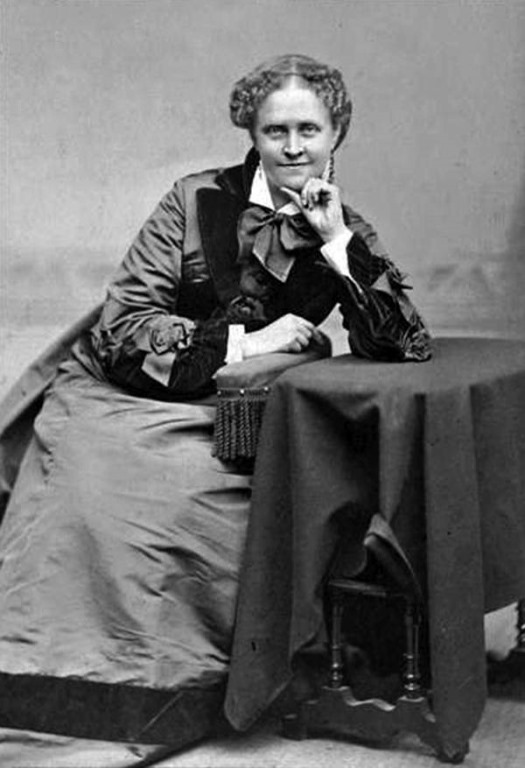
This is what happens when you’re married to someone who likes to look in the odd, unswept-out corners of poetry’s storage shed. Jackson was a childhood classmate of Emily Dickinson. Jackson left for marriage to a brilliant engineer, who Emily then met and sorta-kinda-maybe had a crush on. Jackson’s husband was killed in an explosion working on a secret torpedo weapon during the Civil War, and widow-Jackson went on to a substantial literary career of her own with poems, novels, and early activism for Native American rights.

Helen Hunt Jackson seated

mid-19th century photographs often conceal their subject’s personality, which makes this one of Helen Hunt Jackson a bit special I think.

.

No, she’s not as original as Emily Dickinson, but the congress of poets who could claim that level is small even now. She understood Dickenson’s worth enough to plead with her childhood friend to publish — and though it appeared anonymously, she did include the only Dickinson poem to be published between hard-covers during Emily’s lifetime within an international anthology she produced.

One part of Jackson’s poetry that can be found online is a sonnet series on the months of the year. A couple of years ago I presented her August sonnet, and this summer I’m ready to give you her July sonnet.

Like Dickinson, these poems include a close examination of nature, though I don’t sense here the notes of humor often found in Dickinson’s nature. In Jackson’s July example, the flowers mentioned are in danger from heat and drought, something that seems contemporary in my own midwestern summer. Only the poem’s water lily seems immune from the danger.

You can hear my musical performance of Helen Hunt Jackson’s “July”  with the audio player gadget below. Don’t see the player? This highlighted link will open a new tab with a player for you. Want to see the text of the poem? Here’s a link to that too.

.

*Released between the more scrupulous A Quiet Passion  and the joyously anachronistic Apple TV series Dickinson, Wild Nights with Emily  was the less fully realized, perhaps due to a lower budget. Its broad characterizations were intended in the service of satiric exaggeration. The film’s central point is to portray the often-suspected erotic bond between Dickinson and another childhood friend and confidant, Susan Gilbert.

A poet, Joseph Fasano, has a music recording, and he barely let’s you know about it.

My Project says it’s about where music and words meet, yet I’m still surprised and gratified when I encounter literary poets whose connection to music is significant. Most poets enjoy music — hell, most people  do. And the arts of poetry and music have long been siblings. Who can count how many poems have the word “song” in their titles, or how many poems speak of birds or unfeathered human musicians making music? Yet the number of poets who have publicly taken to composing and performing music is limited.

One might think that songs with words, the music most listeners prefer, would be already halfway accomplished by any good poet. In practice, that’s not always the case. A great deal of literary poetry doesn’t work like a song that captures listeners in real-time once in and through their ears.

What you say: “You do this all the time, you take literary poetry and you combine it with music!”  Yes, but I’m choosing what poetry to use, rejecting much more than I even attempt to compose music for. And while I appreciate the audience this project has developed for your open-mindedness and tolerant ears, by Internet standards my Parlando musical pieces have a small audience. Part of that is my voice, which has its limits, and my reach-exceeds-my-grasp musicianship — part of it too may be that I’m no one’s young, good-looking, begging-to-be-discovered talent.

Last time I said I’d leave a fourth example of someone combining poetry with music that I’ve discovered recently for a future post. That one is poet, novelist, teacher and promoter of poetry* Joseph Fasano. In the midst of his very active social media presence this summer, Fasano let it (rather casually) drop that he had publicly released an album of songs, The Wind That Knows the Way.

Fasano is an effective promoter of his own work on Twitter, and he’s amassed (by PoetryTwitter** standards) a sizeable number, thousands, of followers. “Followers” in the social media world is something of a hollow stat. Many in the count are proforma or “polite” followers mutually responding to follows from others, and then there are bots and insubstantial accounts seeking merely to draw attention to their causes & businesses. But when Fasano posts a poem of his or a series of notices about his latest novel, he gets (by literary standards, or mine, whatever I am) lots of eyeballs, re-tweets, and at least a bit of replies and response. By PoetryTwitter standards, people are paying attention to him.

To my knowledge, he’s not followed up to that single notice about his album of songs. For someone showing such effective and continuous effort to promote the other things he’s doing, that’s odd. Even though getting ear-time from me for musical work is tough — composing, recording, mixing the Parlando Project pieces take away from those opportunities — I listened to the album (available on Apple Music, Spotify, and likely some other current music streaming services) within a few days of the announcement.

It’s good, and a particular surprising adds to that goodness. I guess I expected a typical modern musical production — either pop in pretense or a rougher indie one. When someone tells me they have a recording these days, that’s what I’ll most often hear. Instead, the album’s sonic approach is a remarkable duplication of an early 1960s Folkways, Sing Out, folk-venue-appearing guitarist-singer with original songs record. In arrangements and general vibe, it’s like the early records of Gordon Lightfoot, Tim Buckley, Jackson C. Frank, or Eric Anderson.  For musical particularists, let me add I’m not talking about post 1965 records.  At times Fasano’s voice and musical approach reminds me of a less gruff Tim Hardin, but Hardin’s most popular later ‘60s records used highly skilled bandmates to fill out his sound. The Wind Knows the Way is just Fasano and his acoustic guitar, but like the early ‘60s records I’m referring to, his voice is pleasant and his music appealing, while his lyrics express more emotional complexity and range than the average pop song.

Here’s the title song from Fasano’s album for those that don’t use Apple Music, Spotify, et al.

.

I don’t know who engineered this recording, but the recording is technically well done too. My favorite cuts on the album are “In My Time,” “The Trouble,”  and “The Wind and the Rain.”  I’m an outsider to Fasano’s creative process, but it appears to me that he already has a “song lyric” mode that both borrows from and differs from his page poetry. These songs don’t come at you with a strange torrent of unusual metaphors with hermetic connections between them. Song lyrics forgive, even arguably benefit, from less originality in tropes, from commonly returned to, simple, elemental words. Many literary poets have trained themselves to avoid those things — and so the Parlando Project sometimes asks the listener to allow more weird words and similes that one hears with most songs. Fasano seems to know that as a songwriter he can write differently for song.

I assume he wrote the music, though the modern streaming services and his sparce posting about the record make this only an assumption. His melodies are fine, not showy, catchy and very singable. Harmonically he shows some variety in this set of songs, but he’s not from the Joni Mitchell or Nick Drake school of advanced guitar composition. This isn’t a pioneering, challenging, or world-changing record, but then too our contemporary world doesn’t have many records like this anymore: a voice, a guitar, and tuneful well-written songs that don’t require anything more than that.

In summary if you are a fan of those early ‘60s records (as I am) or if you would like to hear an intelligent record that usefully uses simplicity and a direct unadorned presentation, there’s a good chance you might like Joseph Fasano’s “The Wind That Knows the Way.”

.

*Fasano’s “promoter of poetry” element appeals to me. I’m forming a number of things I’d like to say about his efforts in that area, and if time and fate allow me, there’s maybe yet one more Joseph Fasano post to come this summer.

**Twitter, its faults and its problematic owner, is a current topic that’s launched a thousand takes, which I won’t add to today. I will say that PoetryTwitter is not overly large, but there are interesting people there. Part of what draws me to poetry is that I’m a naturally long-winded, run-on-story kind of person, and poetry’s compression lets me pare that back. The off-the-cuff, short-answer nature of Twitter lets me exercise the same muscle, and it fits my current fate of having few assured blocks of time to compose more complicated music or thoughts.

Four people doing something like what the Parlando Project does

You might know this pedant’s complaint: something can’t be “more unique” — because the word unique means the only, singular. If so, what the Parlando Project does then is quasi-unique. I well know that setting literary poems to music isn’t unprecedented, but the way I do it is  a smaller grouping. For reasons (some practical) I’ve taken to using my rough and not always reliable singing voice more often,* and more pieces have simpler arrangements featuring acoustic guitar. In the past couple of months I’ve become aware of four other people, singers and guitarists not totally unlike myself, who have being doing things related to this presentation of music combined with literary poetry.

I ran into Evan Gordon on a guitar-related online forum this year where he introduced himself as working on combining poems with acoustic guitar-centered music, including his version of a passage from Jack Kerouac that I too admire, and which supplied the name to his collection “The Long Long Skies Over New Jersey,”  a short album released this year. Kerouac’s words are there along with Houseman and Yeats and a couple of covers of well-known songs. I rather like Gordon’s poetry settings, and though there’s only three songs taken from literature, the range of the poetic sources he chose to set echoes what this Project does. So, you might well like this too. My favorite in this collection is his setting of Yeats’ “When You Are Old,”  a poem which I too have done.  I (and some other listeners) like my expression of that poem, but Gordon’s is exquisite. You can find Evan Gordon’s “The Long Long Skies Over New Jersey”  on streaming services such as Spotify or Apple Music.

Andrew Merritt introduced himself to me via a comment here at this blog regarding my versions of the classical Chinese Tang Dynasty poets, telling us he’s looked to them for inspiration too. Merritt has a collection that he calls “Twang Dynasty”  where he combines influences from Tang poems with classic American country music. Does that seem far-fetched to you? Well, I can imagine a translated scroll stroked in traditional Chinese calligraphy of Hank Williams lyrics sitting beside those of the Tang classical masters, so I like Merritt’s imagination. His lead-off cut, “Drinking with the Moon”  is Merritt’s version of a Li Bai poem I performed here.  You can hear his work at this link.

In a recent post on Carl Sandburg I tried to make the case that this somewhat deemphasized Modernist poet’s footpaths can be seen all over music in folk and Americana genres. I wrote that Sandburg blazed a path and model for Woody Guthrie, Pete Seeger, and Bob Dylan; and as an early American folk music revivalist, he personally allowed a connection between folk songs presented in the raw (not as motifs in fuller orchestrations) with progressive/populist politics and high poetic culture. Sandburg did this not only by performing those songs publicly at his free-verse poetry readings (with a voice and level of guitar skills roughly like my own, not as a concert artiste) but by publishing a pioneering general anthology of American folk song purposely mashed together from around our whole immigrant country and its various sub-cultures with his 1927 The American Songbag.

One problem with The American Songbag  as published is that it appears to be aimed at the musically literate owners of parlor pianos more than guitarists, many of whom are allergic to sheet music.**  So it was with great joy that I heard just this month of a project undertaken during the heights of the Covid pandemic by Stephen Griffith. He sought to record the entire Songbag,  all 315 songs, and to present them, as Sandburg might have sung them himself with just simple voice and acoustic guitar. I eagerly went to his web site to thank him last week, only to find that it had fallen off the web. Given his apparent age in the videos, I hope Griffith is well and still with us, that he’s perhaps just engaged with other things. Luckily, his performances are still available on YouTube at this link — and their unadorned presentation is a treasure chest. Some of the songs in Sandburg’s Songbag  became folk music “standards,” but the versions Sandburg and his collaborators collected ending in 1927 sometimes differ, not just in the folk-process of a few floating or varied verses and lines, but occasionally in entire melodies. I’ve listened to a lot of folk revivalist music over the years, but even though I haven’t made it through all of Griffith’s Songbag  versions, some of the songs I’ve heard there, taken from Sanburg’s anthology, seem new to me. Anyone interested in The Old Weird America owes Stephen Griffith a debt of thanks (well, and Sandburg too).

There’s a fourth example I want to draw your attention to: Joseph Fasano, a man who is doing some other things while also being a poetry-aware person wielding an acoustic guitar. Because of that range of things he’s doing, I’m going to leave him for an additional post to follow.

Here’s one of Giffith’s Songbag performances, a variation of a song I discussed here that my great-grandfather liked in this post.

.

*Earlier in the Project I was more likely to use spoken or chanted vocals. I still do this sometimes, depending on the text and what I feel is most effective.

**There are piano lead-sheets for the songs in The American Songbag, but no guitar chords or parts. Many/most folk music associated guitarists and singers learned their repertoire “by ear” from hearing others sing the songs, and those who wanted to notate guitar parts beyond chord sheets were likely to use guitar tablature not treble staff notation. There’s an old joke regarding guitarists as musicians: “Q: How do you make an electric guitarist turn down? A: Put sheet music in front of them.”

While technically possible in a narrow sense, it would have been an impractical task to try to present all 315 American Songbag songs as recordings in 1927. Decades later, after WWII, record collectors created anthology record albums such as the Folkways, Library of Congress, or Harry Smith’s LPs which “taught” old folk songs to new, young players. Sandburg’s existing work helped make this later work interesting — but those recording anthologies relied on dubs from 78 RPM records made a decade or so later than the era Sandburg and his collaborators were working in collecting songs from unrecorded singers.

All These Wild Geese Poems – and how one of my music pieces migrates

The route today’s musical composition took to existence was almost comically round-about. I added a new virtual instrument (VI)* drum set this week, one with a drier, more retro sound. I decided I should try it out. I grabbed an acoustic guitar track I’d recorded weeks ago, but not used for anything, and went to creating a simple drum track using the new kit’s sounds to see how they meshed.

It sounded pretty good, but that track-of-convenience guitar part had bleed from other stuff into the acoustic guitar mic, and so I used a tool I have that extracts a chord progression from an audio file, and then had that extracted progression played with a VI piano.

That cleaned things up enough that I figured I should make a little instrumental piece with this. Why not complete a trio and play some bass? Just over my shoulder in my little bedroom-now-home-office sits a Squier fretless Jazz bass.** I love its sound, but my old fingers need to be in good shape to get a clean sound out of it. Yesterday, my fingers were feeling strong, so that’s what I grabbed. I found a bass motif and played it in my best attempt to fit into the “pocket” of the drum groove.

A great musician or a more meticulous recordist might have perfected this, but something in me accepts a certain looseness and imperfection. Even if I’m recording one track at a time in one-man-band mode I’m often looking to get that spontaneous live-take feel, and my resulting trio had that I thought.

At this point my little house was filled with a half-dozen late-stage teenagers, all looking to have an autonomous time playing video games and watching YouTube. I holed up in my little office to let them be young. Might as well look to add another VI to my trio — if nothing else, to pass the time. The computer I work with virtual instruments on doesn’t have speakers, only headphones. Returning to the world between the cups of the headphones, I wouldn’t be bothering them.

What could be that another instrument? I decided to try cello. What articulation should I choose? My cello VI has a dozen or so articulations to choose from: different bowing techniques, styles for flowing legato or choppy stabs. I auditioned a few, and found two finalists I liked with the existing trio. Two roads diverged within a wood. Which one to take? I decided I’d use both  of the finalists.

I set the cello part to echo the keyboard part, a simple choice. I often enjoy simplicity in music, and my use of orchestra instruments often reflects that. I’ve taken to calling some of my pieces “Punk Orchestral” for this reason. Hey, ho, let’s go!

It was 11 PM by the time I finished the instrumental. The teenagers decided to decamp for a Perkins restaurant*** in a late-night post-modern way. Listening to the rough mix of the trio with the cello section I now thought this is good enough for a Parlando Project piece — I just need to find a poem for the words. I didn’t have much collected for possible imminent use. I had some Emily Dickinsons, but I fear I’m doing too much of Dickinson lately, as much as I like the results. I tried a Robinson Jeffers, but the mood of the poem didn’t match the jauntiness of the music’s groove. Then I tried a short poem I’d drafted in June, inspired by watching waterfowl in my city’s urban parks, lakes, and ponds. That fit!

All These WIld Geese Poems text

The poem that became today’s lyric

.

I revised the music slightly to use with these words. Guided by the instrumental’s chords and using my imperfect voice, I devised an expeditious melody. I tried a couple of takes singing the words, and found that my poem sung better with some mild editing of its text. It was around midnight when I tracked the final vocal take you can hear today before going to bed. It was just after that final tracking that a comic turn happened. The drum track, the new VI sound I started with, that, which had inspired the course of this composition, stopped playing, muted itself. A bug perhaps? But in the early AM hours I decided it sounds better without the drums, as the other instruments now have absorbed the groove conception I started with within themselves.

Today I mixed the resulting piece “All These Wild Geese Poems.”   Mixing involves placing the instruments within the soundfield in stereo width and volume depth, and using other audio processing on their dynamic envelopes and frequency ranges. I then created the final mix using some computer tools to adhere to current streaming services loudness levels, and uploaded it to the service that shares my audio to play here and on the podcast platforms of Google, Apple, etc.

A Goose as Ratso Rizzo 600

You, poet, you’re not much of a goose, or much of a Yeats either, so get out of my way!

.

“All These Wild Geese Poems”  takes off from the many romantic poems about geese, cranes, swans and such large waterfowl. The urban geese I meet in my city nature are instead cantankerous beasts, and I thought our contemporary poems often take a similar stance, no pristine “Wild Swans at Coole”  musings for these birds — more at the famous Dustin Hoffman Midnight Cowboy  “I’m walkin’ here!” self-involved swagger with a limp. You can hear the performance with an audio player below if you see that, or with this alternative link that will open a new tab with an audio player.

.

*Virtual Instruments are precisely recorded sounds of the various notes and timbres of a physical instrument. Either by using compositional scoring, or the computer equivalents of that; or by playing the notes with a MIDI controller equipped keyboard or guitar, one can make reasonably convincing performances of instruments that one cannot play or afford in real life.

**I play interesting but relatively inexpensive guitars. Squier is an entry-level brand devised by Fender to sell low-cost versions of their famous instruments. Back in the 20th century any aspiring player found with a Squier was considered non-serious. “Real musicians” used “pro instruments” — but in the past decade or so the quality of the better Squier instruments has increased substantially.

***Perkins restaurants are like a Denny’s. Big menus with lots of senior-citizen specials and tastes —but open early and late for the time-expanding young person.

Those cattle smaller than a Bee

It’d be possible to do something like this Project using only the poetry of the great American poet Emily Dickinson. While we’re approaching publishing our 700th piece of original music combined with various words (mostly literary poetry) — there are nearly 1800 poems that Dickinson wrote. That’s a lot of material.

The Parlando Project has featured poets all the way from classical antiquity through the first quarter or so of the 20th century,* and I like to vary moods and poetic approaches in the pieces I set to music here — but Dickinson has enough different modes that just her work alone might suffice for variety. Would I miss some of the freshness I find in early poetic Modernism? A woman of the middle of the 19th century, Dickinson was present in an America that is both like and unlike our present country, but like all poetic geniuses she has the power to make time and place fade in importance. As it happens, I was looking for and reading early 20th century poetry when this poem came across my screen, and I found it as immediately fresh and vivid as one of those newer poems. Dickinson’s poem here uses the title of convenience taken from the poem’s first line: “Those cattle smaller than the Bee,” and you can read the text at this link.  Rather than a grand poem about important life points, specific social conditions, intense feelings, existential issues, or majestic nature, this is a poem about a prosaic insect, the fly. Dickinson starts out very much like a Surrealist here, imagining as if the fly was a useful domestic animal, like a cow or the honey-producing bee, but the poem then goes on describing what could be a bothersome number of flies inside the Dickinson Homestead house.

A herd of houseflies 600

“Well Lavina, I’m thinking I’ll go for prize houseflies at the next town fair.” Surrealism manufactured by the AI art program that claims it’s trained on art work that the artists have been paid for.

.

I may be paying too much attention to detail in this playful poem, but I wondered what kinds of flies she’s observing. The season of winter is mentioned, and houseflies generally lay their eggs inside in colder parts of America to hatch during winter. Since Emily cooked for the family, I can imagine that hatching would not make for a pleasant kitchen. Noting Dickinson’s choice of an unusual word “odiouser” in the poem, that may be what that strong language is about.

The final stanza admits that the chapter of the Transcendentalist book of nature describing the worth and meaning of flies is one that Emily hasn’t yet read. Also note: she chose “remand,” a courtroom term, in that final verse — more evidence that Emily picked up some lawyerly ideas from her male family members’ line of business. The Bee mentioned in the first line is something of an Emily Dickinson touchstone, the word and animal appearing often in her poems. In contrast, the fly is quite rare in Dickinson compared to the bee or the butterfly. There is another Dickinson poem that begins “If you were coming in the fall”  that mentions a housewife brushing away a fly — but by far the most famous fly in Dickinson is inside “I heard a fly buzz when I died,”  one of her strangest and most gothic poems.

I tried to keep the music today reasonably light to go with the mode of today’s poem. You can hear my performance of Dickinson’s “Those cattle smaller than a Bee”  with the audio player below. No player to be seen? This highlighted link will open a new tab with a player then.

.

*I rather like the early Modernist era of poetry, but another reason that I generally cut things off at 1927 is that such works clearly in the public domain are free to modify and use however I wish.