The Cats and the Fiddle: a fast grasp of opportunities to be ahead of their time

Time for me to lay out all I know of the story of a 1930s and ‘40s Black American Jazz vocal quartet: The Cats and the Fiddle. Last time in this February series, I reminded moderns that so much in my parent’s and grandparent’s time revolved around neighborhoods. That’s going to continue today as I tell about some kids who shared a location. Previously we’ve seen the Cats and the Fiddle appearing in small-time Hollywood pictures in the Thirties, which might give you the idea that they were a well-established band with hit records and thriving career. That’s not the case. They were young, from out of town — and though they did have a few years of performing under their belts, they were likely around 20 years old. How’d they get there? Where did they go?

The Cats and the Fiddle didn’t start in Southern California. The original quartet were classmates at Wendell Phillips High School, an important school in Chicago’s Black South Side. Last February here we featured Fenton Johnson, an ambitious Black poet who graduated from Phillips decades before the Cats’ founders attended, but some other folks could have passed the band members in the hallways in their day: Nat King Cole and just possibly singer Dinah Washington. Cole was likely the same age — Washington 5-6 years younger but there was a Junior High section at the school.*  Oh, let’s not totally leave off poetry — poet Gwendolyn Brooks was the same age as Cats members, and Phillips High School was one of three Chicago area high schools she attended. The thought that these teenagers, poets, singers, musicians, and songwriters, might have taken inspiration from each other, or some other, lesser known commonalties is intriguing.

While in High School the future Cats were in two different bands, the Harlem Harmony Hounds and another group which was — at least at times — performing as Four Dark Flashes. No, the first band had nothing to do with Harlem, these were Chicago kids. There’s a round-up of Cats and the Fiddle history available online put together by Marv Goldberg. He’s found a reference to the Harlem Harmony Hounds as early as summer of 1932, which says they were appearing on radio station WCFL in Chicago.**

The Four Dark Flashes appeared to have traveled some. In October 1936 they were listed as playing the Casino Theater in Toronto Canada, a 1,200-seater which would have just opened earlier that year. If they were all Barksdale’s age, they’d be 16 or so, and traveling out of the country during the school year. This would indicate that some of the Cats-to-be had dropped out of school early to pursue music. ‘36 was likely the year the Four Dark Flashes group lost a fourth, their lead singer. Harmony Hound Austin Powell singer and guitarist was the handy neighborhood replacement to join Ernie Price (tenor guitar), James Henderson (tipple), and Chuck Barksdale (bass). The whole group sang, and beside Barksdale holding down the upright bass, the fretted stringed instrument combinations of 6-string guitar, tipple, and 4-string tenor guitar might shift from song to song.

In October 1937 we get the first mention of Cats and the Fiddle as an act that Goldberg has found. The famous Chicago Black newspaper The Defender  wrote that “Four Cats and a Fiddle” were booked to play the Dome Club in Bismarck, North Dakota along with a Bessie Mitchell.

OK, who’s asking “What are a bunch of teenage hep-cat Black musicians doing in Bismarck ND in 1937?” I don’t know. I can find nothing about the Dome Club there, but chances are slim that there were enough Afro-Americans in Bismarck in 1937 to support a Black entertainment establishment. Another Afro-American vocal act with guitar accompaniment, the four Mills Brothers from Ohio, had gotten on nationwide radio, and though their hit records are a smoother sweeter sound and have none of the jive talk found in the early Cats’ lyrics, it’s possible that our group of teenagers had a set-list of tunes tailored for white audiences. The Chicago Defender,  when announcing the act’s road gig on its pages says the Cats had “one of the greatest floorshow acts in the game.” Promotional hype supplied by the Cats themselves? Or had they already done some show-stopping appearances in Chicago? Were upper Midwesterners plausibly ready for something like that “Killin’ Jive”  hard-swinging Jazz aimed for Black audiences?

Then on November 20th the Pittsburg Courier (another Black newspaper) says The Cats and the Fiddle, consisting of the quartet of guys and a Bessie Sutton  are playing at the Airplane Club Café in Denver this week. Not sure why anyone is concerned about this in Pittsburg, unless that Bessie is from there. What kind of venue was the Airplane Club Café? The only thing I can find is this picture of a matchbook once offered for sale on eBay.

Airplane Club Cafe Matchbook

The young Jazz guitar & vocal combo was going places. Lenny Kravitz’ grandma not pictured. (just checking to see if you get to the footnotes)

.

That pair of odd Fall ’37 notices bill a Bessie Mitchell and a Bessie Sutton as being with the Cats. It’s unclear if they are one or two different people, and if they are full-fledged members of the band or a separate act that might use the Cats as road show accompanists.***  If neither Bismarck or Denver seem like a common tour stop for a locally-known Chicago Afro-American combo in 1936, swing Jazz had a generalized popularity that was testing racial barriers. It’s also possible that clubs expected the Mills Brothers and got something a bit wilder, or that Bessie or Bessies were the headliners.

Where can we put our Cats on the map next? On January 13th, as 1938 has begun, Goldberg finds them in another Black newspaper, the Los Angeles California Eagle.  The paper names the original four schoolmates and a Willis Rogers as members and they go on to say the group will “go far in pictures.” Once more I provisionally assign PR from the group to that prediction. I wondered if the late ‘36 Bismarck and then Denver gigs were just part of a “play your way to pay your way” tour to get to the American west coast. I’m just enough of a trainspotter type to wonder about passenger train service from Chicago to Bismarck to Denver to LA.

Want to figure their transit route with me? Chicago to Bismarck to the Pacific Northwest coast. Sure, the North Coast Limited. A lower Midwest route from Chicago to Denver with connections to LA? Yes, those are options on the Union Pacific Overland Route. But Bismark to Denver? Your faithful researcher looked. You’d likely have to go back to Minneapolis from Bismarck, and then from Minneapolis to Denver before going on to Southern California from Denver. But what’s the alternative? They could have driven, though I know nothing about their family’s financial resources to buy a car, and there’s the season of that traveling: modern indie band road dogs would dread a late Fall tour itinerary from Chicago to North Dakota then off to Denver before a jaunt to LA, when if LA is your goal from Chicago, a southernly “Route 66” highway beckoned. So, if the three dates Goldberg lists are accurate, I think of these four or five ambitious young Midwestern musicians zig-zagging like water bugs on train routes aiming for Hollywood. Yes, I’m grasping here at details, hoping that like a detective they lead to solutions to greater mysteries. The mysteries remain.

You’ve seen the high points of that movie career in the earlier installments of this series. For Afro-Americans in the mid-1930s that would be low-budget all-Black cast and audience pictures, novelty appearances in B movies, and possible work as extras or as a musician for soundtracks. Seems pretty meager when I list those opportunities, but to look at it another way it wasn’t that far from what bigger Black musicians were getting in the movie industry then. Racism and segregation were still unavoidable, overt issues, but Jazz as a rising popular music was softening some barriers in that decade. And it was the Great Depression. Black unemployment was even higher than the general unemployment rate. Appearing as “native” extras on a studio backlot might be demeaning, but even that level of employment meant a paycheck.

Still, they were all about 20-years-old, and they didn’t even have a record contract— yet. And our intrepid group still seems to be traveling back to Chicago from Hollywood.

Lawrence Cohn, who wrote liner notes for a 1976 reissue of the Cats and the Fiddle recordings, tells that Cats were visiting outstanding guitarist Tampa Red’s apartment in Chicago in the spring of 1939 after their spate of 1938 movie appearances, when Red introduced them to Lester Melrose. Melrose was A&R for Bluebird, RCA Victor’s “race records” label for artists of color. In the 1930’s and ‘40s, Bluebird was making good money on a variety of Blues related vocal records, often featuring small combo accompaniment, catchy rhythms, and double-entendre lyrics. Melrose worked out of Chicago where he collected a lot of Black talent for the label.****

How well did the Cats records do? Middling at best. Their closest approach to a hit was a ballad recorded on their first studio session in the summer of ’39, “I Miss You So” — but as WWII was about to break out in Europe, no one knew yet how big the young Cats could be. Cohn compares them to the Ink Spots, a vocal combo who started having big hits on Columbia Records around this time. He tells us the Cats and the Fiddle were repped by William Morris (the same talent agency as the Ink Spots) who started booking them all around the country to see what kind of career they could have. The subsequent gigs Goldberg tracks are mostly at Black audience theaters, but they include the big ones, the ones the most successful Black stars would play.

In America, WWII was still two years away. Victor records recorded more than two-dozen songs as they toured. That maybe-kinda hit “I Miss You So”  wasn’t issued until 1940, and it wasn’t representative of their typical fast-tempo jive-slang songs.

Then the war came, and the previously stable, self-contained quartet group of high-school-pals started to churn. Henderson (who wrote “I Miss You So”)  died shortly after the record came out. The bass-fiddle guy Barksdale died in ‘47, but was in and out of the lineup from ’41 on. Henderson and Barksdale were replaced by ex-Harmony Hound members Herbie Miles and George Steinback. In the midst of this ’40s churn Tiny Grimes was in the group for a couple of years, even wrote a tune or two for them. Grimes would leave the Cats to play with Art Tatum and Charlie Parker, and along with Charlie Christian, he would help popularize instrumental bebop styles for the guitar. Grimes left our vocal act because by then it wasn’t paying much, and he didn’t think it was going anywhere. A musician’s recording strike and a shellac shortage greatly reduced the issuance of records during the ’40s, and the audience mix for live shows must have changed some due to the overseas war. Amidst all this, Austin Powell, the most prominent singer and songwriter in the Cats was drafted. Hank Hazlett, a guitarist originally from St. Louis, was brought in when Powell went into the armed forces. Hazlett would play with the Cats from ’43 until late 1945. Powell was de-mobbed in Spring ’46, and the somewhat tattered group was still recording and playing, but to smaller and smaller returns. In 1950 the Cats and the Fiddle disintegrated, though surviving individual ex-members continued to be involved in music.

Lawrence Cohn was a highly knowledgeable man about this era, and he worked on a number of important late 20th century reissues of classic Blues and Jazz recordings. When in 1976 RCA collected most of the Cats and the Fiddle’s recordings in a double LP, Cohn wrote the liner notes, yet he only rises to faint praise there. He thinks the songs sound too samey. He says their musicianship was mediocre at best. In the end he’s left with the idea that their humor might be viewed as a corrective to the (in his opinion) too serious and artsy Jazz around when he wrote the notes. This sour summation ends Cohn’s notes:

In general this kind of happy jazz and pop combination disappeared, along with most of the melodic kind of jazz, during the Fifties and Sixties when rock and roll replaced the earlier style of music, and when jazz became politicized. A lot of people stopped going out when this kind of music was not being presented. Perhaps this release may in some small way facilitate its return.”

So besides knocking the Cats, Cohn seems to want to take some shots at the Spiritual and Black Arts Jazz musicians contemporary with his notes. I apparently like those musicians more than he did, and I like the Cats and a Fiddle more too. As to the Cats’ musicianship, I’m of the school that says the essential is that the players did a good job putting their own songs over, and that’s what counts more than an academic skills comparison. Barksdale was good enough for Coleman Hawkins when playing outside of the Cats. Tiny Grimes could trade riffs with Charlie Parker. Austin Powell was still gigging and recording with Louis Jordan and his Tympani 5 until the end of the 1950s, apparently playing not only guitar, but sax and piano.

Decades after Cohn, Australian critic Bruce Elder got the job to write up the Cats and the Fiddle for the current music streaming service Apple Music. Writing there Elder says

If anything, the Cats & the Fiddle were ahead of their time, producing a bolder form of R&B than critics were prepared to accept at the time, such as ‘That’s All I Mean to You,’  which likely would have slotted in perfectly a decade later, but in 1940 just seemed like style-less noise with a swing beat.”

Being slammed as “Style-less noise, with a…beat.” Does that sound like a description of something else that would come around after the Cats broke up post-WWII? Self-contained combos who play their own instruments with guitars mixed to the foreground, brisk tempos, uninhibited stage performances, energetic, youthful, close-harmony singing, witty lyrics that might wink with some “the squares won’t know what we’re talking about” slang?

I’m leading you to say “Rock’n’Roll.” I suspect older readers will be the first to follow that lead with that response, as I find many listeners in middle-age (and younger) think of the later evolution of what gets called Rock — or now, Classic Rock — as a more overdriven electric guitar thing, backbeat drums with less swing laying down the beat, with lead singers often singing alone only with occasional backing vocals. I used to shake my head (and type someone’s-wrong-on-the-Internet posts) in my 20th century Usenet days when the admittedly problematic Rock’n’Roll Hall of Fame would select some (usually Black) harmony vocal group for enshrinement and posters would object that’s Do Wop, or Soul, or something, but not real Rock. I’d try to remind them that Rock’n’Roll originated as a diverse mongrel genre, and that groups who approached music with an outlook, energy, and vocal blend like the Cats, were all over the first decade or so of Rock’n’Roll. These Black high-school students from the South Side of Chicago had an idea and put some audacious energy into propagating it.

About thirty years after the Cats and the Fiddle took their warning-track fly ball swing for the fences, this group of plaid suited white rubes — who looked exactly  like you’d expect to find them at the Dome club in Bismarck North Dakota — got to have their moment in a low budget Hollywood movie. This is how they looked and sounded:

On discovering this band in a rural roadhouse, the film’s hero enthusiastically shouts “It isn’t boogie. It isn’t jive. And it isn’t swing. It’s kind of all of them.”

.

*I’m basing age estimates for the original Cats members on a military draft registration record Marv Goldberg indicates he’s seen for original member bassist Charles Barksdale, documenting that he was born January 11th, 1918. Nat King Cole and the Cats were seen again in Hollywood, as Black extras playing South American natives in the Myrna Loy/Clark Gable romcom Too Hot to Handle.  Dinah Washington was playing in Chicago with the Cats and the Fiddle as her backing band for the gig when the club owner dragged Lionel Hampton to hear her and nationwide fame for that great singer ensued.

**This radio show was said to be weekly, and other references led Goldberg to think the show lasted until January 1935. WCFL’s history is interesting. Nathan Goldfried’s book WCFL, Chicago’s Voice of Labor has it that it’s “the first and longest surviving labor radio station in the nation, beginning in 1926 as a listener-supported station owned and operated by the Chicago Federation of Labor…” and that ““The station emphasized popular entertainment and labor and public affairs programing, seeking during its earlier decades to help organize workers, increase public awareness and support for the union movement, and enhance public awareness and culture.”

***Entering into wild/just plausible territory: Bessie Mitchell was the birth name of actor Roxie Roker’s mother, musician Lenny Kravitz’ grandmother, and actor Zoe Kravitz’ great-grandmother. She would have been in her mid-20s in 1937, but I have no info that she was ever in entertainment at all, or connected with the Chicago scene.

****Bluebird recording artists included Memphis Minnie, Big Bill Broonzy, Jazz Gillum, Memphis Slim, Victoria Spivey, Arthur Crudup, and LeRoy Carr. Melrose reportedly passed on Muddy Waters — Waters said Melrose was looking for a sweeter style of music than he and his post WWII generation played. One thing I wonder regarding Melrose likely having some responsibility for how big a promotional “push” might be given the Cats. Members of the Cats and the Fiddle from the start wrote most of their own material. Melrose often engaged in the pernicious practice of taking co-writer’s credit on records by acts he shepherded, cutting himself in on that element of royalty monies. At least on the Victor reissue LP I have, Melrose is never listed as having a songwriting contribution.

They’re Not the Grateful Dead

Is it time to take a break from our sometimes intense presentations of poetry combined in some way with music? Well, here’s a little ditty about the lighter side of death, or rather the worship of dead rock stars.

My observation is that though there are still the occasional premature music casualties in the current environment, that the worship of “The Greats are Taken from Us Too Soon” variety is reduced among young people today. Perhaps that’s a healthy sign, or it could be secondary to the casualties not having the right mix of fame to burn brighter at the graveside. And in the past, the other half of this project’s concern, poetry, has not been immune to the praise of dead talent, particularly dead, young talent, either.

Sure, it can be a honorable thing to give respect to those who’ve gone, to carry their artistic flag further when they can’t, but there is another side, the romantic admiration for the risks and the access to excess that often precedes the early death of musicians, writers, and other artists. The first duty of an artist is to survive. Society is not generally on the artist’s side until they become successful commercially, and even when it grants them that success, it can withdraw it and their support quickly too. To add to that burden with one’s own self-medication and distractions seems like a compensation to that state, but it doesn’t always work that way.

Poet, songwriter, alternate voice, and frequent keyboard player here Dave Moore wrote a short poem about how an older person might view with a strange kind of envy the tentative fame and unbounded experiences that others in our musical/generational cohort enjoyed. Sex, drugs and Rock’n’Roll once seemed to be jobs on offer in the want ads in our youth, even if it turned out the positions were already filled and the items already sold. I adapted Dave’s words, added a verse of my own, and wrote music for my performance of “They’re Not the Grateful Dead”  some years back and thought you might enjoy it here. Oh, that “Grateful Dead” in the title? Translated folkie Jerry Garcia knew that this was a trad folk song trope where the dead magically and musically express some gratitude.

They're Not the Grateful Dead

Who’s who for any crate digger obsessives: Hopkins, Hendrix, Moon, Jaco, Saxon, and Thaxton are hereby linked.

.

One thing I like about Dave’s lyric is that, outside of Jimi Hendrix he doesn’t pull in the big names, the Boomer rock’n’roll Shelleys and Byrons, the ones that are still featured faces in the rear-view mirrors looking at the music and times. Starting right off with Nicky Hopkins* is a bold move, but then Dave is  a keyboard player.

The song’s conclusion has a little fun with the sentimental “If there’s a rock’n’roll heaven, you know they’ve got a hell of a band” thing. Keats’ unheard music may be sweet, but it’s still hard to hear.

My performance of this has a few flubs, but it’s hard for me to get more recording in right now, so we’ll make do with this older recording as is. The player gadget is below for many of you, but if you don’t see it, this highlighted hyperlink will also play my performance of “They’re Not the Grateful Dead.”

.


*Huh. Who? Those who didn’t ruin their eyesight fantasizing about debauched after-parties but by reading all the liner notes on every LP will know who Nicky Hopkins is.

The Subway

I think I’ve established that I like examining lesser-known Modernists, or even writers who weren’t always considered part of the Modernist movement. Now today I may cause a few literarily knowledgeable readers to throw up their hands and do a spit take. Why? Yes, today’s piece is a sonnet, but we should note that not all Modernists rejected rhyme, and after all this is also a piece of down-beat gritty urban experience. Just look at the opening two lines:

Tired clerks, pale girls, street cleaners, business men
Boys, priests and harlots, drunkards, students, thieves…

A litany that wouldn’t be out of place in the Unreal City a few years later. It could sound like the opening of a piece by Whitman or even Lou Reed as it starts out. As it continues, it doesn’t stint on the darkness literal and figurative. Those subway riders are riders, without agency. With fixed tracks underground they go their “sunless way” with “reluctant feet” as our Modernist Dante tells us. When I first read this* having seen the author’s name before reading, my thought was “Could the writer of this piece be misattributed?”

Go ahead, go to the bottom of the post and listen to the performance I put together using this early 20th century New York City poem about ordinary and agentless people lost in underground darkness. It’s less than 3 minutes long. Hear it first without knowing who wrote it.

Joyce Kilmer in uniform

Is this something of a belated Memorial Day post? Today’s author would die serving overseas in the U.S. Army during WWI.  But stop reading and skip down to the bold-faced section at the end for a chance to hear the audio piece first.

.

OK, now let’s take off the Masked Singer costume: the author of the sonnet that I used as the text for today’s audio piece is Joyce Kilmer. I expect two responses to that information: “Huh?” and“What!”   The former “Huh?” might be from my younger readers, as this is less likely a poet they’ve run into in our present century. That was not always so. Those my age or older will likely associate Kilmer with a single poem which was once so well-known and liked that it became a point of contention with many educated folks. That poem was “Trees,” the one that begins “I think that I shall never see/A poem as lovely as a tree.” My first High School English teacher Terry Brennan explained that he had had a High School teacher who had recited it while bodily enacting the “lifts her leafy arms to pray” part of Kilmer’s “Trees”  poem. I believe he told us this to establish that he was not going to inflict a similar pedology on us (thanks Terry for that, and much more!) A columnist I liked to read in the Des Moines Register as a teenager, Donald Kaul, loved to pillory Kilmer’s “Trees”  as a crime against better culture.**  They had a point. “Trees”  was ripe enough with pleasant sentiments that it likely did its part to help kill off the pathetic fallacy in modern poetry, but let’s start with its first publication: in Poetry  magazine in 1913, in an issue of that important publication for new verse that also included certified Modernists Ford Madox Ford, Ezra Pound, and Skipwith Cannell, the later a favorite of the Others  circle.

And speaking of Others  magazine, Kilmer was in New York as a young poet in the years before WWI, rubbing elbows with those who would be associated with that city’s fearless avant-garde. Orrick Johns mentions him as someone he knew in those days. When Poetry’s editor Harriet Monroe published her anthology The New Poetry  in 1917, Kilmer and his poem “Trees”  is included alphabetically between poems by Orrick Johns and Others’  founder/editor Alfred Kreymborg. Kreymborg in his interesting memoir Troubadour  recounts that Kilmer was one of the few “actual writers” he was acquainted with in his earliest days as a poet. Kilmer read some of Kreymborg’s short free-verse poems and suggested “You ought to divide those lines and make them rhyme—there’s poetry in them” which Kreymborg considered encouragement. Kilmer was working then for Funk and Wagnall’s, the dictionary people, and even gave Kreymborg some assignments for the dictionary which paid the young man $10, his first check for writing anything.

But all that is circumstantial Modernism. Besides “Trees”  the Kilmer verse I’ve found online is almost entirely religious in nature, and it doesn’t come close to threatening Gerard Manley Hopkins’ gravity and vitality in that regard. If there are other poems that Kilmer wrote that are like “The Subway”  I haven’t seen them.

Why did that “Trees”  poem stick? Trees may not be the Internet Cat Pictures of nature poetry, but readers do seem attracted to those stately greenhouse-gas-absorbing plants. And there’s more: unlike Great Britain, Kilmer was just about the only U. S. poet killed in WWI.***  In England a young poet like Rupert Brooke could gain public attention that persisted after the war even if he was only one poet-casualty out of several of his countrymen. In America, the “Trees”  man received the whole pension, and a large East Coast military base was named Camp Kilmer and served as the place where many of the Greatest Generation embarked and returned to America for WWII.

Did you jump down to here in order to listen to the song I made out of this early 20th century American poem about the New York City subway? If so, there’s a player gadget for some of you, and for the rest, this highlighted hyperlink that will open a new tab/window to play the piece. After you listen to the song you can return to the rest of the post to find out what “Modernist” wrote the lyrics.


.


*I first read this poem over at the Fourteen Lines blog, which, as you might guess, likes to present shorter poems in the sonnet range. This link is their post about this poem, and it also includes the much more widely-known “Trees.”

**Even later in his career, satirist Kaul couldn’t help but get one more lick in against Kilmer and his poem “Trees.”   Kaul also didn’t like girl’s basketball, which I and Iowa were in agreement was a mistake on Kaul’s part.

***The other name that comes to mind was Alan Seeger, the “I Have a Rendezvous with Death”  poet who died ahead of the U.S. participation in the war fighting with French forces. His nephew was Pete Seeger, as Pete liked to point out at times.

The Testimony of Harmonica Frank Floyd

I promised a return of Dave Moore earlier this month, and here he is, presenting a story that frames itself three ways. In today’s piece Dave reads a short passage from Greil Marcus’ 1975 book Mystery Train: Images of America in Rock’n’Roll Music,  which in turn includes this story 20th century musician Frank Floyd told about himself. Marcus uses the not-quite-a-footnote career of “Harmonica Frank” to outline a grand story of American music forming itself from disparate sources, and Dave’s selection focuses on something particularly disparate and desperate in Floyd’s story, the diversity of work musical and otherwise that Floyd knitted together into a life. That litany of Floyd’s gigs is the coat of arms on the flag of “The old weird America” that Marcus’ famously invoked.


Beside the trick of playing harmonica like it was some stogie, all the while singing, Floyd would play two at once using both his nostrils and his mouth. Getting attention in those old weird America gigs wasn’t easy.


Way back early in this blog I had some fun with how my reading of Marcus’ conception had me misinterpreting a song my like-named great-grandfather had reportedly liked. And so, let’s not take Floyd’s claim to have invented rock’n’roll too comprehensively—America invented rock’n’roll out of its own needs and resources, which is essentially Marcus’ over-arching thesis in his seminal book.

I’m over half-way in watching Ken Burns’ Country Music  16-hour documentary series. I’ve got a few hours left to go, so please no spoilers, I don’t want to know how it comes out. It has drawn some criticism for being an overview with Burns’ characteristic trope of excerpting some figures to represent the greater points and leaving out or footnoting others. I suppose the later problem is inevitable but will also always be a fertile ground for argument, and the former, the survey course pacing that keeps moving forward with short excerpts of songs and talking heads (and yes, those won’t stay still pictures’), is something I’ve come to accept with anything that tries to tell a more than century-long story.*  We currently live in a world where much of the once rare and physically bound-up resources of our history, our cultural histories told by example, are widely available, constrained only by time and our levels of interest. Overviews, just as pieces about obscure figures, can inspire one to use those resources to find out more.

Decades ago, when the Internet was still young and more text-based, I was enormously frustrated by Burns’ similarly-scoped Jazz.  Some rare film clip or unheard recording would play for 10 or 15 seconds, and then a talking head would be cut to, telling us how important this one was, how we should pay attention to it, while the filmmaker was doing exactly the opposite.

Country Music  does exactly the same thing, but in a great many cases the whole thing is available fairly easily now. And in the middle episodes, where the “Country and Western” era played out for 20 years or so, I hear the music of part of my father’s life, one of the gigs he knitted together to make a living. I hear the songs that would play on his transistor radio sitting on the metal dash of his bread van, racks now empty and rattling after tray after tray of loaves had been carried into small-town grocery stores via his drives over two-lane roads. Over that insistent chorus of bare-rack snare-taps, the steel guitars and keening vocals cut through readily where we never talked.

Burns’ doesn’t have to play the whole song for those. I know it and I don’t know it instantly.

Well, there I go, off onto something else, talking over consideration of Dave’s presentation of Harmonica Frank Floyd and the many gigs Floyd did while trying to do his “something different,” songs and earn his daily bread. I think you’ll find Dave does a nice job of presenting Floyd’s story. The player to hear him tell it is below.


*You can’t win department: the criticism that you didn’t include everybody is the opposite side of you didn’t go deep enough on any one thing. As long as you accept that there’s some value in these survey-course/overviews then you are committed to not delving the depths on a particular issue, style, or person. Of course some get left out, just as the canon of poetry leaves some out—but as we do here with some of our pieces over the years, as Marcus’ did by including the obscure figure of Harmonica Frank, as to some degree Burns did by including another harmonica player: DeFord Bailey in his survey, that should just inspire other, corrective and extending work.

Are Song Lyrics Poetry? Part Three

In the first two parts I’ve tried as briefly as I can to outline two things surrounding this issue. In part one, I surveyed how poetry moved from an ancient form performed with music to a modern form most typically associated with printed text on a page. In part two I looked at the surprising result of a political decision made in the 1930s that led to a rich cultural mix being encouraged to compose music for non-commercial purposes linked to folk music. 25 years after this decision, a singular singer-songwriter linked that idea with many of the discoveries of Modernist poetry and revolutionized what song lyrics could do.

These two things, the move of poetry away from music and performance in general and the move of song lyrics to utilize all the elements pioneered by the Modernist poets naturally bring this question of “Are these lyrics poetry?” to the fore.

I’m going to try (again as briefly as I can) to deal with the issues brought up by this question. Before I do, I’ll spoil the suspense: I believe song lyrics are poetry, even though I agree to some level with the objections to that idea. On one level, a matter of definition, it ought to be simple to agree: the argument isn’t really that song lyrics aren’t poetry (or that various kinds of performed poetry aren’t poetry) it’s an argument that those things aren’t (or aren’t very often) any good as poetry. As I argued here a couple of years back, “not so great poetry” isn’t worthless, and I doubt the arguments that not so great poetry harms those poems we feel are greater or more accomplished.

What are those objections?

Without music or when printed silently on the page many song lyrics, even effective ones, seem much less effective. It may be 20th century comedian Steve Allen who originated the gag where a pop music lyric is intoned as if it’s a deathless ode.  Laughs ensue. Allen liked to remind us that he was a songwriter and the author of serious books, but here, for the bit’s sake he’s showing us his skills as a performer. The unintended air of seriousness is incongruous to the material, he leans hard on the choral repetitions—which are used in poetry, but are used much more often in sung lyrics—and any infelicities in songwriter Gene Vincent’s words that we might ignore in the flow of Vincent’s performance get a raised eyebrow in Allen’s. A performer could do the same to “The Waste Land”  or Emily Dickinson and make it ludicrous. And Bullwinkle J. Moose could present the once worthy Longfellow for laughs too.


“Drink in the simple beauty and the profundity of the sentiment…Skitch…”


Context is important in art. “The Waste Land”  gained part of its launch velocity because of the trauma of WWI and because the Modernist movement was primed for a weighty masterpiece. But context is even more important in performed work, “Be Bop a-Lula”  is designed to be heard sung with music.

Allen was taking a jazz-snob swipe at rock’n’roll. Here he is providing appropriate context for Jack Kerouac. “In Iowa I know by now the children must be crying in the land where they let the children cry.”


That if considered as poetry, using the same criteria a critic would apply to poems, many song lyrics fail to meet those criteria. Well, a great many poems that have never heard a note sounded beside them probably fail those criteria too. There are arguments that complex song lyrics fail because  they are performed which I deal with below, but I ask: how sure are you your criteria are universal? When folks argue that Kendrick Lamar or Bob Dylan are bad poetry they are almost never arguing “Well, they just don’t work for me.” Instead they maintain that those who feel they do work have been duped or lack the intelligence and skills to appreciate something they posit as more worthy. How many Modernist, now cannon-resident poems, met the criteria of 19th century poetry? Did the Modernists forget how to be modernists? What part of “Make it new” did we forget?

The more I look at poetry, the more I’m surprised that a great many ways of “making poetry” seem to work. I’m pleased by that discovery, while I suspect the criteria people coming across the same discovery would be somewhere between puzzled and disappointed.

When folks answer this question by pointing out ways that song lyrics (generalized in some way) are different from poetry (generalized as well), I often wonder just how narrow their generalized view of poetry is. Poetry expresses itself in so many different ways even without leaving the page. The differences between how Du Fu’s “Spring View”  and Eliot’s “The Waste Land”  allow us to feel somewhat similar responses to similar situations are immense, larger than the differences between “The Waste Land”  and Dylan’s “Desolation Row.”

Complex poetry cannot be appreciated in performance, much less with the distraction of music. I’ve dealt with this briefly elsewhere in this series, but we also need to ask: is complex, analytic, response always called for? In every other art-form I can think of, we allow for various levels of involvement with the art. Because complex poetry can reward deep examination, must it always be approached in all times and places by all people in that way? Audiences differ in their need to understand immediately. “Be Bop a-Lula”  is designed to be absorbed with immediacy as expression and as a series of pleasing sounds. Donald Glover’s “This Is America”  isn’t, and indeed it’s designed to make you question your pleasure in a text that works like “Be Bob a-Lula.”  What the Bob Dylan revolution proved (regardless of how you rate Dylan) is that audiences will accept complex and unconventional expression in song lyrics. Not every hit song has complex lyrics, but complex lyrics can be a hit song.

If lyrics were good in the way complex poetry is good, that’s immaterial or it may even detract from the music which is the main thing an audience wants from a song. Yes, audiences come to songs for various reasons. Have you never loved a song for evolving reasons? With page-poetry I have certainly been attracted to a poem because of the way it sounded, and that pleasure indicated I might want to stick with it a bit (or re-experience that sound-pleasure) to see what else it might be expressing.

Sure, the ancients performed poetry with music, but that was a primitive solution. Literacy and mass-distributed printed matter is a better medium for poetry. I’m not sure about this. I agree that printed poetry allows for a different experience of the text. Alternate reader here Dave Moore has reminded me that it’s helpful if I provide access to the text of what is performed here. Good point! But the Parlando Project is in part a big experiment to see what works if various kinds of poetry are performed along with various music in various ways. I expect to fail, and I expect to succeed.

Speaking of success and failure, if you’re still here, I appreciate the time and attention you have given to read this. I’m both apologetic for its length and its brevity. Here’s a short audio piece, my translation (with a slight 21st century American adaptation I couldn’t resist) of that four-stanza poem that Du Fu wrote about the trauma of a broken country in springtime, the “Spring View”  I mentioned above. Here’s a more literal translation of the text. The player for my performance is below.


Summer 2018 Parlando Top Ten, Part Three

I’m going to move on up the countdown of the most liked and listened to pieces during the past summer, but first a short summary about what the Parlando Project does, and an even more compressed explanation of why we do it.

The Parlando Project combines various words, mostly written by others, most often poetry, with original music. I am Frank Hudson. I write, arrange, play, and record most the music here. I don’t do that because I’m a great composer, or even an average musician. I do this because it’s the most cost-effective and time-efficient way to create this much music this quickly.

Other musicians contribute parts, and another voice, Dave Moore, relieves you from hearing my voice every time. Ideally there’d be more pieces with more musicians, and more variety of voice; but such an ideal world would require a great deal of organization, maybe even funding and the organization it takes to seek that. The pieces could be better realized, but when I look at the history of such more professional and polished presentations, it seems likely that there would be many fewer pieces. Take a random walk through the archives on the right here: the Parlando Project is now marching toward 300 pieces combining those various words with music. I’m unaware of any not for profit group who’s made available anything like this many poetry plus original music encounters.

Why do I do this? Because I’m still excited by those encounters. Most often these words have been designated to pages, and in some cases, little-read pages. They are the condensed observations of many human beings, potentially vivified by silent music there in the inky words. How can I wake them up and dress them in those other musical sounds that don’t speak in words? You’re listening here, you know that can be intriguing, and so I will not say more now on this.

Why do I do this? Because I’m still excited by those encounters. Most often these words have been designated to pages, and in some cases, little-read pages. They are the condensed observations of many human beings, potentially vivified by silent music there in the inky words.

Now let’s resume our countdown as we get to some of the pieces you liked and listened to the most these past three months.

4. The Destruction of Sennacherib. For around 100 years students in the English-speaking world usually got a strong dose of the British Romantic poets as part of literature classes: Keats, Coleridge, Shelley, Blake and George Gordon, Lord Byron. Here’s the weird thing about that: not a one of these men seem to be good classroom examples for young scholars. Messy, often foreshortened lives; lots of sex, drugs, and what was rock’n’roll before there were Afro-Americans with electric guitars and re-voiced saxophones.

Take this little piece, sure it’s a Bible story, but a field strewn with corpses isn’t exactly happy Schoolhouse Rock fun-time, regardless of the unstoppable flow of Byron’s verse even without adding the instrumental music.


Shelley Shelley and Byron

Mary Goodwin Shelley thinks of doing something different with her hair.  Hit the riff harmonized in fourths: “We all came out to Cologny, on the Lake Geneva shoreline. To make stories with Lord Byron. We didn’t have much time…”


3. Fire and Sleet and Candlelight. Elinor Wylie was heavily influenced by those British Romantics and lived through events that echoed the scandals of Shelly and Byron in her own foreshortened life. Did this help her compose this tale of a life as a series of troubled trials and tests? One could easily suppose this to be so. Still, this piece’s title and something of the life as a trial by fire narrative strongly references an old and pious English Christian folk-hymn, the “Lyke Wake Dirge.”  Combining frightening with beautiful is not an easy thing to do, so it takes more than merely having the life-experience to create something like this.

This audio piece is an example of why I realize these pieces so often by playing all the parts myself. Actually collecting the equivalent of a chamber orchestra and a place to record them would take more than a full summer’s work alone.


2. Morituri Salutamus. There turned out to be a lot of daylight between the other pieces and the top two this past quarter. And this one is the greatest surprise, as its words are taken from a longer homecoming-speech-as-poem by that now most un-fashionable poet Henry Wadsworth Longfellow.

Still, I could relate to this section, which is the opposite of those romantic “live fast, die young, publish posthumously” proposals of the troubled romantics. “Morituri Salutamus”  is the cry of an aged artist refusing to quit, hampered by unavoidable age instead of youthful self-sought excess.

I have no idea of the age-demographics of listeners here, so I don’t know if that was the hook for “Morituri Salutamus”  this summer. Regardless of the pull of taking in experiences as wildly and widely as possible as a way to more intense artistic expression, I’ll admonish younger readers here that the primary duties of an artist are to survive and to actually do the work that survival allows. Like homecoming and graduation speeches in general, this matter is likely eye-rollingly obvious and simplistic to the bravest young listeners. That’s OK, I’ll be back tomorrow with the piece that was even more popular and modern than Longfellow.

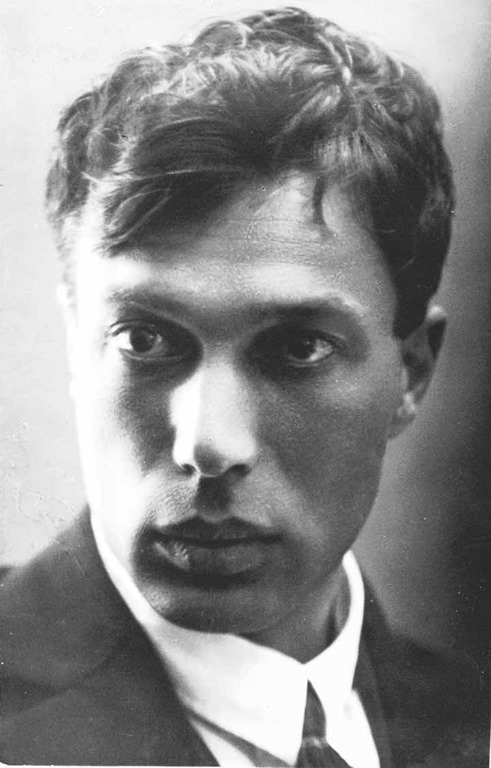
Boris Pasternak’s February

A couple of posts back I mentioned that we’d meet Yeats “rook-delighting heaven” again as we visit some more expressions of the month of February. Well, here’s one, Boris Pasternak’s “February.”

Coincidently, it appears that Pasternak wrote his “February” within a few months one way or another of Yeats’ “A Cold Heaven.” And both poets put ravens in these poems, though Yeats’ crows show up early, and Pasternak’s drop in near the end.  Though Yeats wrote his “A Cold Heaven”  in more temperate Ireland, it resonated with a Northern Midwesterner like me with its burning ice and unwarming sun. Pasternak, presumably familiar with a colder climate more like my own, sets the thermostat on his February to an early spring melt; but this is a muddy, sodden spring. His black spring holds cold rains, mud, and slush—more like a real early spring than a happy-butterflies-and-wildflowers May spring.

Young Boris Pasternak

Bluesman?


I’m not fluent in Russian, but the challenge of translating this lyrical poem from Russian to English has attracted many. As I recall, when I tried to put together the text for this performance, I used several of those as gloss, tempered with Internet translator apps fed the Russian. I know nothing of Russian diction, so I aimed for an informal American diction, and unlike some translators, I didn’t try to keep the original poem’s rhyme scheme in English—after all, I knew I’d be supplying music for this.

I believe the music I choose here, bluesy rock’n’roll, while American, is fitting. I hear Pasternak here singing the Russian Blues: blues like unto our great American music of endurance, and rock’n’roll that cares only to seek the state he speaks of in the last two lines:

The more haphazard, the more true, the poetry that sobs its heart out.

So I’ll be putting this post up, and then I’ll go out in our haphazard too-early spring February myself. I too will head out past the noise of city church bells, past the cars, biking to the edge of my city where I’m going to buy George Saunders sad new novel.

Renee Self Portrait in Mirror cropped

Today’s episode is dedicated Renee Robbins, who once was lost on the edge of Moscow herself, the last passenger remaining at the end of a bus route. She found her way back long enough for us to know her.

To hear the LYL Band perform Boris Pasternak’s “February” use the player that appears below.