Nocturne of Remembered Spring

So, who is Conrad Aiken? I don’t fully know yet, but I came upon one of his poems this spring, and found out that as a critic, anthologist, short-story writer, and poet, that he’s one of those first-part-of-the-20th-century Americans who helped establish American poetry in the Modernist era. He graduated from Harvard University in 1912, and before that decade was out, he’d established his literary footprint. In 1919 he published what he claimed was the first comprehensive anthology of American poetry, explaining in the book’s introduction that previously there was no clear call for such a collection as American poetry was such a small part of world literature. Here’s what I found most interesting about that anthology: he would retain only a smattering of poems by Longfellow and the Fireside poets, though using Poe, Dickinson,* and Whitman to fill out much of the 19th century section – and here’s the boldest part: he would give his early 20th century contemporaries a great deal of space.

In things like this I sense that Aiken is reflecting or creating a canonical moment that lasted well into his 20th century. His choices are similar to the choices I was presented later with the mid-century textbooks of my youth, but I recall being frustrated back then: why were the poets and poetry worth studying ending with Eliot and Frost? While that pair were still living as I began to study literature, their anthologized poems were 30-40 years old then, seemingly ancient to my teenage self. OK, Aiken’s canon may have been much like the one I was later presented, but back then his 1919 book included poems not even 5 years from publication.  Not just a handful, some appendix set aside as a gesture, but around a third of the anthology!

By that year Aiken had published five books of his own poetry, one of which shares its title with its lead-off poem inside: “Nocturne of Remembered Spring.”   The nocturne is a musical form, and references to musical forms and the experience of music abound in the Aiken poetry I’ve read so far. Oddly, I don’t consistently fall under the spell of his word-music off the page. His poems do have some lyrical moments, but they are obscured by a problem I’m having: his long windiness. As I page through Aiken’s early books many poems span a dozen pages or more, and while he did try his hand at sonnets, they don’t seem to be is métier. Perhaps I’m not appreciating the sense of the tune behind the poems. Unlike many of his contemporaries, I rarely hear strains of American folk musics in these early poems. I can’t help but think that his evident attraction to the related art of music is more conceptional or one-abstraction-layer-removed impressionism than simply producing dancing words and prosodical earworms.
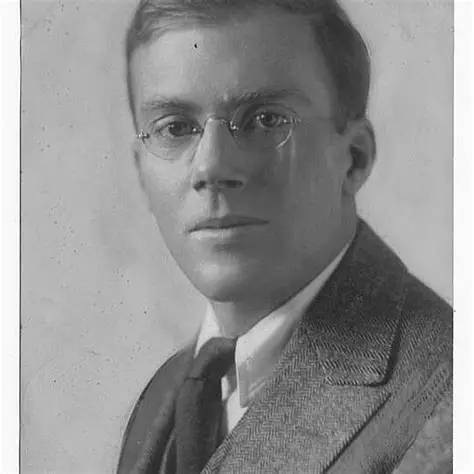
conrad aiken young

Aiken at around the post-graduate age when he was helping form the canon of American poetry.


Luckily for your composer/presenter here, he will often break up his longer poems in shorter, numbered, sections. So, the seven pages of the poem “Nocturne of Remembered Spring”  are split in six sections, each obsessively recalling the same youthful love affair, each going over memories of it. Given the length of the poem I’d have liked to see more contrast in the sections, but for page after page it remains inside the head of the poem’s voice as it goes over memories. This psychological internalism may have been a novel effect in 1916 when the poem is dated, but it tires me. Aiken’s work is new to me, but I can’t help but compare his theme here unfavorably to early work by Mina Loy (her extravagantly expressive “Songs to Johannes”)  or Neruda’s extraordinarily popular “Twenty Love Songs.”**

My choice for a musical setting of Aiken was to select out only the final section, numbered “VI.”   It sufficiently summarizes the poem, and I think it has more chance of listener impact by compressing its expression and it highlights there a musical device by refraining lines about remembrance.*** As so often in this Project’s choice of texts, this was the section with words that “asked” to be sung. I’m a composer who tends to bagatelles due to lack of time and sophisticated skills. The length was right. I wrote a simple cello line, quickly extrapolated a series of chords for nocturnal piano and improvised a second cello top line melody to be played via my MIDI guitar sounding a good cello VI**** which would also help guide my rough-hewn vocal. As I wrote earlier this month, a musical piece like this would seem to be Art Song of a type, but one which classically trained and skilled singers would find outrageous. My hope, aware of my limitations, is that it can still communicate something and help vivify a presence for writers like Aiken who have fallen into the cracks in the canon.

You can hear my performance of part VI. from Conrad Aiken’s “Nocturne of Spring Remembered”  with the audio player gadget below. What no player? I, or rather some ways of reading this blog, haven’t forgotten it, it just won’t show in every kind of reader. I provide this highlighted link that will open a new browser tab with its own audio player so it can still be heard.


*Though Dickinson wrote her remarkable work in the middle of the 19th century, none of it was publicly known until it’s posthumous publication began with three book-length volumes in the final decade of the 1800s. This means that even when including Dickinson in his survey of American poetry in 1919 that Aiken was featuring poems less than 30 years from publication date. In 1924 Aiken published a selected poems of Emily Dickinson, a step in establishing her place in the American poetic canon. Last time, when I presented a Dickinson poem, I almost presented a capsule history of the tangled provenance of Dickinson’s poems, using “A Something in a summer’s Day” as an example. Tight summary: decendents of Susan Gilbert Dickinson (Emily Dickinson’s sister-in-law, neighbor, friend, and presently oft-assumed lover) and of Mabel Todd Loomis (the mistress of Susan’s husband/Emily’s brother) each had a tranche of Dickinson poems and claimed rights to them, and each was publishing them as well as letters and recollections of the poet. Both sources were editing the poems, normalizing their distinctive language and punctuation, and ordering them in chapters of common high-minded themes. Aiken’s Selected Poems of Emily Dickinson issued from his seat as a critic and anthologist offered additional canonical approval to the poet who he judges in his introduction is “among the finest poets in the language.” At the time he was drawing from less than half of the now known poems of Dickinson! And the Dickinson that we know today – all dashes and abrupt leaps of thought – only became available when I was a schoolboy!

**A decade later Aiken’s Selected Poems won a Pulitzer. That book didn’t include any of Nocturne of Remembered Spring. The author himself may have moved on.

***As I enter into the month of August, I’m in my annual period of personal remembrance of the summer now long ago when my late wife was dying. The refrain in section VI. of “Do you remember” coincidentally brought to mind the translation in English of the name of the Twin Cities based indie rock trio Hüsker Dü. I missed my chance by not setting Aiken to reflect that.

****A pun, and with Roman numerals! A “VI” is a “virtual instrument.” These are made when a company records snippets of a real cello playing its range of notes in a variety of performance articulation and puts the result into what is in effect a database of all those sounds which can be played with an otherwise silent device – most often a piano style keyboard, but it can be another instrument control surface such as my MIDI guitar which tells it what to play in notes, timing, and expression, all of which are retrieved in real time.

A Ghost’s Leavetaking. Returning to an odd-ball instrument and a resulting musical sketch

Today’s piece, continuing our series as we consider the variousness of Halloween including the surrounding Days of the Dead and associated horror/fantasy elements, has odd origins. It starts, since it’s useful to mark a starting point, with the death of my late wife decades ago, something that led to an unusual instrument.

Shortly after my wife died, and I was left alone in the house we once shared, I decided I’d take to playing more music in the silence. I went looking for new instruments to inspire me. This intimate death, as it happened, was followed by another kind of ending. To tell you about that, I won’t get too deep into the weeds of the musical instrument business, but one of America’s largest musical instrument makers, Fender, had in the late 1990s quixotically decided to introduce an entirely new guitar brand, DeArmond. In short order they created an entire line of electric guitars and basses, around two dozen models, priced between their budget Squier line that featured inexpensive renditions of traditional Fender instruments and their more expensive American line that the Squier guitars copied – but the DeArmond guitars weren’t copies of the highly popular Fender designs at all. Instead, they were versions of electric guitars and basses once produced by another company, Guild, which had around the same time been absorbed into Fender. I expect few who read this Project will know anything about Guild guitars, and that explains why they ceased to exist as a separate company. But those who do hear the name “Guild” and have a light bulb illuminate, are most likely to think of Guild acoustic guitars.*  Guild produced a successful line of acoustics. The Guild line of 12-string guitars were highly thought of: John Denver, Tim Buckley, and Ralph Towner constantly played jumbo-bodied Guild 12-strings, and other folk artists played acoustic Guild guitars in this era: Richie Havens, Paul Simon, and Bonnie Raitt.

So, this was a strange business idea: create a new brand, but make it closely reference past electric instruments many players had never heard of. So how did this turn out?

To quickly answer, I step back in marketing time and type: “Edsel.”**

OK, where are we getting to Halloween? This started with one death – trust me, we’ll get there – and now there’s the pseudo-death of guitar line. Fender pulled the plug abruptly just as our current century was getting underway. They had lots of unsold DeArmond electric guitar stock. I mean lots.  They gave some away to schools and music programs. They sold the rest at fire-sale prices. Guitars made to be sold for around $600 ($1200 in 2025 dollars) were being blown out at $200. I quickly bought three of their guitars: a large hollow-body archtop, a 12-string electric solid body, and a 6-string electric with a Bigsby vibrato bridge – not at BOGO pricing, but at those BOG2 prices. I’m writing about a lot of things today, but not those – instead, it’s another DeArmond.

One of the weirdest Guild designs that that Fender/DeArmond revived only to kill – indeed one of the oddest guitar designs of all time – was the Ashbory bass. Guitarist readers are now visualizing an electric bass: bodies at least as big as an electric guitar, but with longer necks. Old guys like me that play electric bass also are thinking weight – heavy, too often more than 10 pounds.

Nope. This is my Ashbory bass:

My Ashbory Bass 800-600

White lines, don’t do it. The Ashbory is a fretless instrument, the fretboard lines are just markers. Exact intonation with the thick strings and very short scale is a challenge.

.

Weighs less than a Stephen King novel. Less than half the length of a regular electric bass. Body just a little bigger than a CD case. The original strings, specially designed for it, were translucent rubber bands. The current strings on mine are smooth white opaque nylon, essentially extra thick versions of a modern classical guitar string. Unlike a normal fretless electric bass, which is a beast to play, you need to be almost delicate when playing these extraordinarily low-tension strings.

Other than the tiny size, a goal here was to approximate the plucked sounds of the even more unwieldy upright bass, but neither the original 1980’s Guild Ashbory or the late ‘90s DeArmond copy sold well. I used mine when I wanted upright and fretless bass sounds for a while, but in the last few years I’ve moved over to using other methods to get that sound on Parlando recordings. This week someone mentioned they’d just purchased a used Ashbory, reviving memories of that time and leading me to revisit the instrument musically. In my studio space I got the tiny bass out and plugged it in to record. To get the upright bass sound from it you want to use bare fingers, but for some reason (habit?) I decided to use a thick rubbery pick – which is one way I play regular electric bass. This gave me a slightly more aggressive sound than I recall getting out of it and I then programmed in a drum pattern to match where that result was leading me. Building from the groove, I played some electric guitar and added a piano part, producing a short two-minute piece as my studio time ran out yesterday.

Listening to the result this morning I felt the music had a sense of longing or leaving. That may have leaked from my connection between the DeArmond Ashbory and the time after my wife’s death, which was followed by my mother’s, and then after an interval, my father’s death. Could I find some words to go with this music? Nothing I had in my files of poems for Halloween seemed to fit, so I did a web search for “poem about a ghost leaving or disappearing.” Bam, this lesser-known Sylvia Plath poem came up, right on point!

Plath’s “A Ghost’s Leavetaking”  is an 8-stanza/40-line poem, not all that long, but longer than my just-over-2-minute music could cover. The poem describes a somewhat distressed awaking in a morning where the speaker is mixing dreams and remembrance of the dead with an ongoing adjustment to mundane household tasks.*** Just as in Phil Dacey’s “Frost Warnings”  poem from earlier this month, Plath sets up tired laundry and bed sheets that “signify our origin and end” while they play the role of ghosts of the departed.

A good poem, but now I had two problems: an apt text too long for my music and a poem not in the public domain.**** “A Ghost’s Leavetaking”  was written in the 1950s and has not yet reached PD status in the U.S.*****

I made a quick decision. I would use only some lines from Plath’s poem. Artistically I thought that worked. It made a shorter set of text to fit the music I had finished. I was able to zoom in on the Day of the Dead and ghost elements of the poem, shortening the examination of how we sometime wake still recovering mundane reality from our dreams. If you would like to read the entire poem, as Plath published it, here’s a link. As to the PD situation, my solution is at best mixed. “Fair use” is not a firm concept, and my Project’s entirely non-revenue and educational purposes are no guaranteed Kings X. Using only a few lines would bolster my case, but as I used about a third of the poem, that’s not clearly kosher. Even forgetting laws, if Plath were a living author, she’d be well in her rights, regardless of the law, to take issue with someone cutting her poem up, making it less than she intended it to be.

So, from that decision, we’re left with this musical piece where I quickly sketched out today in my little home office “Studio B” how one might sing some lines from Plath’s poem with the music I finished yesterday. I’m aware of the limitations of my voice, and in an ideal world the melodies could be better worked out and ornamented by a better singer. None-the-less, I found it personally rewarding to inhabit Plath’s words and do the best I can today to convey the emotions and images she put in them, and some listeners may gain something from that performance. You can hear my sketch using lines taken from “A Ghost’s Leavetaking”  with the audio gadget below. Has the audio gadget gone to Plath’s “lost otherworld?” I offer this alternative as a keeper of the “profane grail,” a highlighted link that will open a new tab with its own audio player.

.

*Fender had never been able to make itself a factor in the upper end of the acoustic guitar market, so it was assumed that’s why they snapped up the distressed Guild company: for the well-thought-of acoustic guitars.

** There are car folks who will tell you that the Edsel was a perfectly fine late 1950’s American car, but that doesn’t change what the brand name invokes.

The Guild electrics were pretty good guitars, if not answering what the market wanted back in their day. Some of the DeArmond sort-of copies were arguably better instruments than the originals, but they were just as out of sorts with what the market wanted. In 1998 the electric guitarist customer wanted a Stratocaster or a Les Paul, with a Fender or Gibson name on it, or one of the slightly hot-rodded extensions of those Fender or Gibson models. The sort of funky, oddball looks of the DeArmond guitars would have stood a better chance a decade later after Indie rock stars started to come forward making a point of playing anything but a Les Paul or a Strat.

***I had the vivid experience of my late wife seeming to return to my bedroom in the liminal hours. From things I’ve heard from others, this is not uncommon for those who’ve lost intimates.

****I’m not all that troubled by asking for forgiveness from a ghost, but one of Plath’s children is still alive, and may hold the IP rights to Plath’s work. Her web site lists the Faber and Faber UK offices as the contact for Sylvia Plath rights permissions, but I got no reply early in this project when I asked that very organization about my small-time, non-revenue use of another Faber and Faber author. I would remove this piece on any objection.

*****If I did a little day trip up Highway 61, to say Thunder Bay Ontario, Plath’s poem would be PD there. And thanks readers for following me on this post’s road trip.

I Dream I Am Falling

This August 6th is the 8th anniversary of the Parlando Project — but it’s also the 23rd anniversary of my late wife’s death and Hiroshima Day. This isn’t the first time I’ve linked these three observations with a single post and musical piece.

Given two-thirds of this anniversary, it’s not surprising that “I Dream I Am Falling”  is about grief and remembrance. It is a departure from the Parlando Project’s focus in that this freshly completed song uses a poem I wrote rather than our regular use of others’ words.

I continue to write poetry, though less often as I’ve aged. I think sometimes about prize-winning poet Donald Hall revealing in old age that he’d given up writing poetry. I don’t recall if he knew why he stopped writing poetry, or if he revealed the reasons for stopping if he knew them. For myself, there are elements of regular life interfering, but throughout my life the writing of poetry was the easiest art to interleave with other busyness. I would compose stanzas in my head, trusting memory retention as a good test of their value until they could be transcribed. Or like William Carlos Williams, I might jot down first drafts on prescription pads in slow worknight moments in the Emergency Department of a hospital.

Remembering that, I think writing poetry is unlike musical composition and recording, which for me is constrained by my life’s current contexts. Looking back I recall that as a younger person I was eager to write down observations from life which seemed to me to be important and unique. Now, in my older age, when I see similar things they seem less unique, and my expression of them less apt, for I sense that life I was once observing has all along been watching me too — watching me as the hunter does.

Still, the reason I set the official launch of this Project on my late wife’s death anniversary was to counter that. Life, the actuary, knows something, but I can sing in the meantime. The reason I sing others’ words in my unkempt voice is that the writers here are already dead, and I can stick my thumb in death’s eye by making their words current. Given that death’s eye socket is empty, that there’s no sensitive eyeball there, this does not stop Death — but it feels good to do it anyway.

Partway into this Project’s course I started to include Hiroshima Day, the anniversary of the first use of atomic weapons, in my August 6th observances. Death of one’s specific partner has an intimacy that sears because it’s so personal, but it’s not unique nor fully shareable. The death of thousands in a way that still threatens us by the millions or more — well, shouldn’t we share that?

Let me take then a tiny digression to this presentation of today’s musical piece. This summer I’ve been watching a 10-hour multi-episode documentary on Netflix titled Turning Point: The Bomb and the Cold War. I’m only about ¾ done with it, and maybe there’s something at the end that I should have waited to observe before writing about it, but I’ve found it so good I want to mention it today. For something of this length, its storytelling is compelling, and it often takes the sophisticated choice of leaping out of time’s lockstep to connect things. OK, it is 10 hours, but also roughly equivalent to a graduate-level course on the Cold War and atomic weapons strategy in the breadth of its concerns and detail.

I Dream I Am Falling

This is an American Sonnet, following my longstanding practice of breaking up the 14 lines in different ways.

.

Now, returning to the new song. I hope it speaks for itself. Many of you, my treasured audience, will have their own experience of grief to resonate with what it sings. I was able to compose and realize it without access to a studio space where I could use acoustic instruments and sensitive microphones. Only the vocal, through a less-sensitive microphone* recorded sounds vibrating in the air as I played the block chords appearing in the left-channel that established the song’s harmonic structure on my little plastic MIDI keyboard. You can hear “I Dream I Am Falling”  with the graphical audio player below. No player seen? This highlighted link is an alternative.

.

*ElectroVoice RE-20. Worth considering for anyone needing to record vocals in a space that is not acoustically proper for recording, where low-level unwanted sounds would otherwise end up on the recording. For my budget level, expensive, but it’s been an important tool for me. No, it’s not magic — louder sounds will still intrude — but the sensitive condenser microphones I use to record with acoustic guitar in my studio-space hear everything: HVAC sounds, louder computer fans, outside traffic, even sometimes footsteps on another floor of the building. In my converted bedroom home office where this was recorded, the studio-space condensers would be highly problematic.