The Spring 2017 Top 10

Since this is National Poetry Month in the US I’m hoping that I can exceed the usual 7 to 8 posts a month pace I’ve kept up here since the Parlando project began last August. The next audio piece should be up this weekend. For those who haven’t read the early posts here about what the Parlando project is, I usually summarize it as:

The Parlando Project is words (mostly, but not always poetry) accompanied by music (various kinds).

The Parlando audio pieces have been downloaded by podcast subscribers since launch almost 4,000 times. Given that we are now past the halfway point, I thought it might interesting to let you know what the “Top Ten” downloads have been so far. In Casey Kasem form, we’ll count it down upwards from 10 to 1. There are links in the list if you missed one of these audio pieces and the posts about them.

10. The Spring of Dead Things. One of the 3 pieces in the top 10 where I wrote the words. That’s OK with me, but one of the Parlando Project aims is “Other People’s Stories” which leads me to feature other people’s words more often than not. There’s lots of folks reading their own poetry out there, which is good in itself—but there’s lots of people reading their own poetry, so think there’s an unmet need for reading others work.

9. The Garden of Trust. One of my personal favorites. Weston Noble’s thoughts on the power of music, hard-won thoughts he expressed after a lifetime of work, touched me the moment I first read them, and my feeling only deepened when I found I was able to hear him express those beautiful thoughts in a recording made before his death. My thanks again to Luther College for allowing me to use this recording in my piece. If you want to sample one thing that the Parlando Project represents, and it really doesn’t represent one thing, start here.

8. I Felt A Funeral in My Brain. Writing the Parlando music and considering the words for performance has deepened my appreciation for Emily Dickinson, whose words we’ve featured more than any other writer, and I rather like my music for this one as well.

7. For John Renbourn Dying Alone. I hope some of the listeners to this piece who like acoustic guitar music find this a gateway to Renbourn’s music.

6. Arthur Koestler’s Death Song.  Although we’ve featured Dave Moore reading and singing his own work here, and there will be more of that to come later this year, his Top 10 appearance is for a piece where he wrote the words and music, though I performed it.

5. Eros. I sometimes wonder if this one gets a bonus from those searching for or intrigued by its title. Another one where I’m happy with how the recording and the music turned out. I remind myself that I should learn more about Emerson’s Transcendentalist revolution.

4. 2ebruary. There’s no telling what the “bonus” may be that’s lead more people to this piece. It could be the discussion of the movie “Patterson”  in the notes, or it could be the connection to bicycling. Or perhaps it’s the connection to Frank O’Hara’s “I do this, I do that” poems that I treasure and try to emulate. If you like this, I have another bicycle ride poem coming up later this spring.

3. Boris Pasternak’s February. We’re into the top 3 now.  I was remarking to Dave Moore during a break in our recording session yesterday, that February rather than April should have been picked as National Poetry Month, as the deep dark end of winter engenders more cruel monthly poetry. Pasternak gets to help prove that point here. One regret I have with what we’ve done so far with the Parlando Project is that I have not received permission to post our version of Margaret Atwood’s “February”  here.

2. Hymn To Evening. Speaking of things I treasure, hearing Phillis Wheatley’s story on the Freedom Trail in Boston is another one. Art is this thing that, unlike even persons, no one can own. Colonialism is a system that crosses oceans to take things from other lands for profit. Art is the system that sends out messages that can crisscross time and oceans with the information inside our breasts.
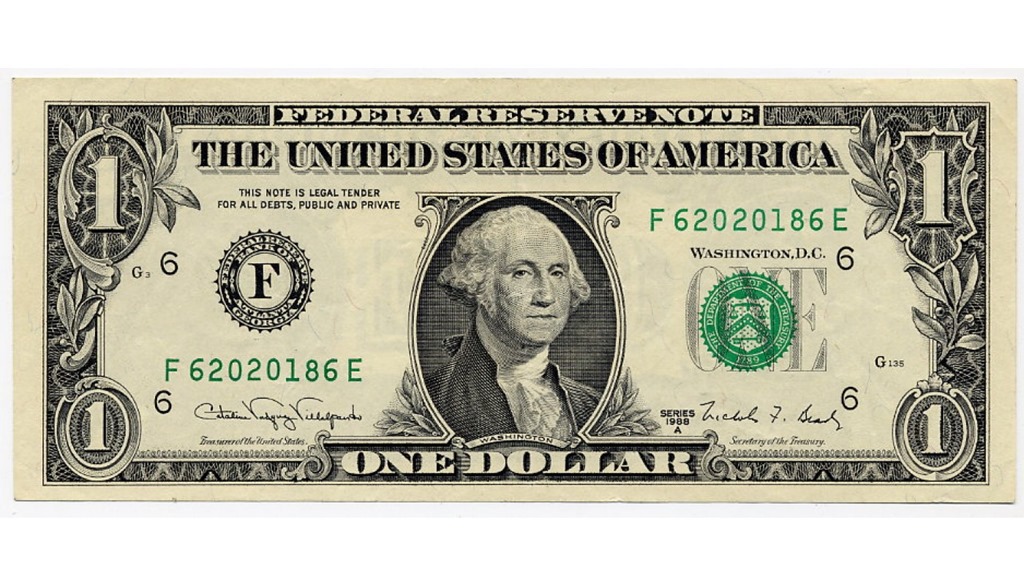
dollar-bill

we’re offering pictures of our #1 Parlando Project author for only one dollar


1. Frances. Interesting that two pieces from the colonial United States are 1 and 2, and that a piece with words by an young amateur poet tops the list. Maybe this is a tribute to the Pixies/Nirvana loud/soft arrangement trick in the music? Or that when it comes to subjects, love conquers all? Or that acrostics are about to become a thing?

Please continue to read and listen this month. I have a lot of planned pieces I’ll think you’ll like coming up here. Remember that the Parlando Project seeks variety in music and words, so you may hear things you like as well as not like as we go along, but stick with us as we want to continue to surprise you. I also want to thank those that have hit the like buttons on their favorite posts, and those who have hit the RSS button to follow this blog.

Song of the Wondering Aengus

William Butler Yeats, when he spoke admiringly about the ubiquity that songwriters like Rabindranath Tagore could achieve, had already made his forays into setting his poems to music. As a sometime playwright, and a founder of the Abbey Theater in Ireland, he was already familiar with the dimensions performers can bring to words. Around the turn to the 20th Century he began to forthrightly seek to combine his poetry with music. Working in collaboration with musicologist and luthier Arnold Dolmetsch and performer Florence Farr he had a psaltery (a stringed instrument like a lyre or small harp) constructed, and Farr (a fascinating figure in her own right) then performed Yeats poems with it.

FarrPsaltry

Farr with the psaltery showing Joanna Newsom how to rock it

Yeats and Farr’s performance style was not a conventional art song setting of the poet’s words sung to a melody. Yeats explicitly rejected that (even though his words have often been set to melodies in the years since). Rather he thought the words were best chanted or intoned in a rhythmic and somewhat elongated speech.  Such performances are controversial then, and I would suppose they would be controversial now as well. George Bernard Shaw called Farr’s chanting “A nerve-destroying crooning,” but Ezra Pound and other early 20th century modernists took note, and they were influenced by these performances to add a more incantatory and musical element to their poetry.

Now let us break in our story for about half a century.

In the late 1950s an actor and folk singer Burl Ives recorded an album of Irish songs, and one of them was “The Wondering of Old Angus”, a Yeats poem sung to melody that Ives claimed he learned from Sara Allgood, another actor who had performed with the Abbey Theater group and would have likely known of the Farr performances. Around the same time, another folk singer, Will Holt began singing the Yeats poem to a very similar melody, using Yeats’ title “The Song of the Wandering Aengus.”  Then in 1962, Judy Collins, having learned the song from Holt, made it the title song of her album “Golden Apples of the Sun,”  which is where I first heard it.

No one seemed to know where the tune Ives, Holt, and Collins used came from. Those knowledgeable in traditional Irish tunes do not recognize it. Some credited Holt for it. However, early in the 21st Century a man named Bill Kennedy writing in the folk-song forum mudcat.org linked the tune to a transcription made by Dolmetsch accompanying a Yeats essay “Speaking to the Psaltery”  re-published in the Saturday Evening Post in 1907. The tune there of course was not meant to be sung, as Yeats discussed in this essay, but it is recognizably the one used by Ives, Holt, and Collins in their singing renditions.

So the tune may well be Yeats’ own, or perhaps it was composed by Farr or even Dolmetsch. Since the words are Yeats’, I’m going to call it, and make him the composer; and if so, that makes Yeats yet another singer-songwriter (along with Tagore and Dylan) to have won the Nobel prize.

But he didn’t sing it, nor did he intend the words to be sung. Since we at the Parlando project are working in something like the same vein, here’s a version, using more or less that tune, but chanted not sung as Yeats suggested. Instead of the psaltery, I used fretless electric bass, some bowed strings and Mellotron to elaborate the tune. To hear it, use the player below, though neither Bernard Shaw nor I will be responsible for any nerve destruction.


NOTE: I just noticed that I miss-typed “The Song of the Wandering Aengus” into “The Song of the Wondering Aengus” here. Oh my. This could be nerve destruction, or my hurry to get ready for a recording session this afternoon. Well, he is wondering after all!

I’ll Tell You How the Sun Rose

After our short trip to Chinese translation, let’s return again to Emily Dickinson, who is observing another morning.

This LYL Band performance of “I’ll Tell You How the Sun Rose”  is a bit imperfect. Alternative Parlando Project reader Dave Moore takes the lead here, but he and I are singing instead of our usual recitative, and we’re caught at the top of our singing range as well. Dave even bobbles a word in the line “The hills untied their bonnets.” So, yes, this leads to some imperfection—but this lyric is so perfect that perhaps it can carry us along anyway.

I suggest you listen to this piece now and then read my discussion of what I see in it afterward. Dickinson, like a good melody, doesn’t require understanding before enjoyment. The player to hear it is at the bottom of this post.

“I’ll Tell You How the Sun Rose”  begins with a homespun 19th century village dawn, and the singer starts right off almost bragging that they can tell us how the sun comes up. As proof, Dickinson unleashes a string of lovely, singing metaphors for sunrise, looking down from the dawn only once to let us see the squirrels running about as if with the news of the day. She concludes this section with finest simplicity: “That must have been the sun!”

Isn’t that a strange way to sum up dawn? It comes up and it’s already past tense, like Meng Haoran’s morning in the last post, and Dickinson comments on this common splendor as if she’s a surprised alien from another planet who has never seen the sun. Her boast that she can tell us “how the sun rose”—something she and all of us should already know, set in nothing more special than a prosaic town—becomes instead a small, whispered, apprehended wonder.

In the second section, Dickinson shifts gears so smoothly that no matter how many times you read or hear this poem you will never notice. There is a little engagement of the gears as she says of sunset “I know not,” unlike our first gear’s “I’ll tell you;” but we’re soon on to a rural scene with the sun rays like children climbing up and then down a stairway over a hedge or fence row (a stile).  At that point, there’s a bustle in your hedgerow as the dusk becomes a grey robed “dominie,” a strange and archaic word perhaps even in Dickinson’s 19th century, and a sure stumper for any modern English speaker.

A dominie is a Latin word meaning the leader of a congregation, a minister, a pastor—and ‘pastor” is derived from the word for shepherd—and that’s just what our grey dusk becomes as it leads the children of the dawn, now dusk, away like a flock, closing the bars, closing the gate, so that they cannot return.

Some readers are so charmed by Dickinson’s first section that they feel it is pedantic to think that this sunset section is describing a passage to death, “The undiscovered country from whose bourn, no traveler returns,” so no wonder that Dickinson moved from “I’ll tell you” to “I know not.”

That dominie seems so removed from the pleasant village of the first section, so foreign. Another subtle word choice contrasts the two sections. There’s only 88 words in this piece, and five of them are colors. “Rose” puns for dawn pink in the first line and then dawn is “amethyst,” a word for both purple and a semi-precious stone. The sunray children are “yellow”, and our strange dominie is dusky “gray.” The stile sunset stairway that the sunray children are climbing is “purple.” So out of our five colors, one of them is roughly the same color. In the first section, it’s semi-precious and wondrous, but in the second it’s just purple—a ruling, royal color perhaps—but those sunset ray children’s steps are ruled over not ruling, not shining like the amethyst steeples of the dawn.

stile sunset

Putting on the stile


Did you listen to the performance of “I’ll Tell You How the Sun Rose”  before reading all this? I feel a bit here as if I’m acting  like that dominie myself, leading you past the plain and beautiful dawn, over the stile, and closing the gate to simply hearing the sound and the manner of expression of Dickinson. Too often we make too much of the meaning of poetry, and particular the deeper meaning of poems. Just as Meng Haoran’s poem from last time can be understood well enough to be enjoyed by children, this poem too can be enjoyed as compressed observation. Perhaps it’s because I am an old man, one who has tried to write and make music for many years, that I care to see what is underneath the sun rays, to look over the stile, and to find what is inside Emily Dickinson’s expression.

To hear the LYL Band perform “I’ll Tell You How the Sun Rose,”  use the player below.