Acting

I often wonder when reading opinions when someone stops or starts thinking.

Opinions generally come from two states. One is intuitive emotion the other is from reason, a thoughtful weighing of something or another. In the case of the former, thought has little to do with it. We know something is wrong, wonderful, disgusting, laudatory, whatever from something we feel innately. The child saved from the burning building, the willful act of unnecessary violence—but we feel intuitively about more complex and controversial things too: the results of an election, the worth of some work of art. In the case of art, many of us are comfortable with expressing that intuitive response, we like it or we don’t, we don’t know why, and don’t really care to know why. However, in politics and public policy, that sort of response can seem irresponsible. Furthermore, mere internalized like or dislike is no good for recruiting others to your side.

The other state, the opinion generated from thought, from some comparison of the options and a reasoned judgment brought forth on the results seems admirable. The problem is that too much thought seems to stop as soon as some conclusion can be reached.  There’s no second thought on the thought, no deeper examination of one’s assumptions. There’s a worth to this—speed is a value in decisions not about art after all—and the nature of thought and questions is for them to be never-ending. At some point, one has to stop thinking to ever reach a working conclusion.

I opened this morning’s local paper and saw a man from Crosby Minnesota moved to think about political matters and how they intersect with art. Meryl Streep, a famous movie actor, has expressed political opinions about a TV actor—let me look this up, oh yes—Donald Trump, who has taken up politics and found himself with a prominent new job in the public policy field.

The man from Crosby feels he has found an important thought in this Meryl Streep matter, and his thoughts are expressed as a couple of questions and answers:

“Who wrote those words for her? After all, her whole life has been one of just reading and acting out the words creative thinkers have written for her. She has been good at it, but how can someone who has never had a thought of her own criticize others who have?”

Did he answer his questions too quickly? Did he not expand his inquiry enough?

So, assuming we think about something, when do we stop thinking? We have to stop sometime, but stopping too soon can leave us with meager conclusions and less rewarding art.
 
For that matter, when do we stop practicing our art? In 2013 a local actor (Kate Eifrig) made a decision to stop acting because she felt that continuing was harmful to her. She gave an interview about her decision, which I felt it was an honorable and insightful one, and this audio piece with the LYL Band performing the music was the result. The first sentence is a quote from her interview, which I then developed into the rest of Acting.
 
One thing she may not have accounted for in making her decision: while as an actor she would have been allowed to serve in a political office like Helen Gahagan, Arnold Schwarzenegger, Al Franken, Ronald Regan, Fred Grandy, Jesse Ventura, George Murphy, or Fred Thompson; but she would not, by our man from Crosby’s accounting, be qualified to comment on political matters.

Lincoln shot

I object to this too, but don’t compound it by saying something at the Golden Globes!

In one limited way I agree with the man from Crosby. While thought, sometimes even considerable thought, goes into acting and performing; the performance itself is not a thoughtful process: for it is entering into, embodying, a thought, often someone else’s thought. That is a visceral, not intellectual experience whatever thought went before it.

I would ask one more question, reformulating the man from Crosby’s rhetorical question to a familiar piece of folk wisdom: how can someone who has never lived someone else’s thought criticize others?

To hear the LYL Band perform Acting, use the gadget below.
An Old Man’s Winter Night

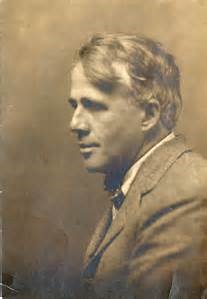
This is the most difficult set of words to read coherently that I’ve presented so far in the Parlando Project. Robert Frost’s “An Old Man’s Winter Night” looks on the page like any other chunk of blank verse (“blank verse:” unrhymed iambic pentameter). Shakespeare wrote whole sections of plays with this rhythm, and the walking one/two with a backbeat of an iamb has a forward propulsion that leads the reader to flow through the words.

The problem is, that even the most iron-lunged and fleet-tongued rapper has to pause for breath sometime. In general, it helps to pause for meaning, where the break for breath adds meaning. However, in the Parlando project I’m seeking to merge the words with music, and the musical cycles also suggest pauses.

Robert Frost larger

I saida hip hop,
The hippie to the hippie
The hip hip a hop, and you don’t stop

“An Old Man’s Winter Night” was tough because I decided on a cycle of chords for the music, rather than basing the harmony around a drone, or simply “through composing” the music to follow the words without a repeating structure. I made that choice unconsciously, but I think I was responding to Frost. The poem seems to repeat itself, and my sense of the syntax was that the sentences seemed to start and begin again, like unto the central incident in the poem of an old person in a room not remembering why he had gone to that room. So the problem was: where to break the cycle of the circular speaking, keeping to cycling verses of chords, while helping the listener understand the meaning.

I got it almost right I think. I was further inspired as I worked by being in the midst of a Midwest below-zero cold snap while recording this.

I normally do not base my readings on others, though it might have helped me to listen to other solutions to my reading problem. Only after committing to the version you’ll now hear, did I listen to Robert Frost’s own reading of his poem and another good reading which does an excellent job of bringing out the meaning. Of those two, Frost aims to bring out the music in his rhythms, but it’s not a perfect reading. Authors have an advantage, in that they likely know the poem’s meaning—but they are also disadvantaged by that—since they know, they cannot always choose what the listener will need to have emphasized. By combining “An Old Man’s Winter Night” with music, I have another advantage over Frost’s own reading: I don’t have to follow the word’s rhythms closely to bring out the music.

“An Old Man’s Winter Night” embodies aged rural loneliness, something that even today’s modern communications can do little to ameliorate. For those of my generation who only remember Robert Frost as an old man, I’d like to point out that Frost first published this when he was 44. Frost beautifully describes being alone, separated, cut off; evoking all the surrounding emotions of that situation—yet he doesn’t once mention loneliness or any of those allied emotions by name. A great trick to pull off, don’t you think?

To hear my reading combined with music, use the gadget that appears below.

Homeopathic Hometown

Today’s piece recounts a common Midwestern experience, returning on a holiday to the much smaller town where one grew up.

For my post WWII generation, these smaller towns retained in our youth much of the vibrancy they had gathered in the first half of the 20th Century. The American rural world was larger then. Car travel was still not universal. Small farming and small manufacturing and small schools hadn’t been efficiently improved to larger sizes. Mass media, which seemed so large and potentially dangerous then, amounted to radio, newspapers, magazines and eventually a trio of gray and silver TV stations as the little rounded screens hovered into homes like flying saucers. So these little autonomous towns continued, 1950 like 1920.

How many of us, old now, can still, in memory, walk down main streets of their towns and small cities of their youth, seeing the storefronts, and hail silently the adult walkers and lost peers who might be walking there too? As I meet and talk to people near my age whose childhood was in larger cities, I find that they too had similar memories of neighborhoods. These neighborhoods were in effect, villages inside their cities—but this piece is about small Iowa towns in particular.

When we grew up, went to college, or left for adventure, marriage, or other work, we left a town and a time. When we went back to these towns, to visit our parents, our parents and our towns are found changed, not into coral bones and pearls, but into places slowly emptier and less vital. The storefronts empty and the eyes less bright; the houses, faded with dead paint and backs swayed.

Full fathom five thy father lies.
Of his bones are coral made.
Those are pearls that were his eyes.
Nothing of him that doth fade,
But doth suffer a sea-change
Into something rich and strange.

Eventually, it is as if the thread of memory has been unraveled from a large ball of yarn, and now the ball is no more.

In this way, our hometowns disappear, becoming gradually diluted of everything we could return to. Today’s piece “Homeopathic Hometown” is about this. Homeopathy is the theory that you can dilute a medicine until it, like our hometowns, retains nothing—or next to nothing—of the the medicine, and yet the solution will somehow “remember” the medicine and its effects.

That of course is how nostalgia works. We remember our personal version of the hometown, and find there is a hole between the molecules as we revisit our hometown. I suspect those without the specific gravity of our memories live now in a different appreciation for the place. It will take time for their own dilution to complete.

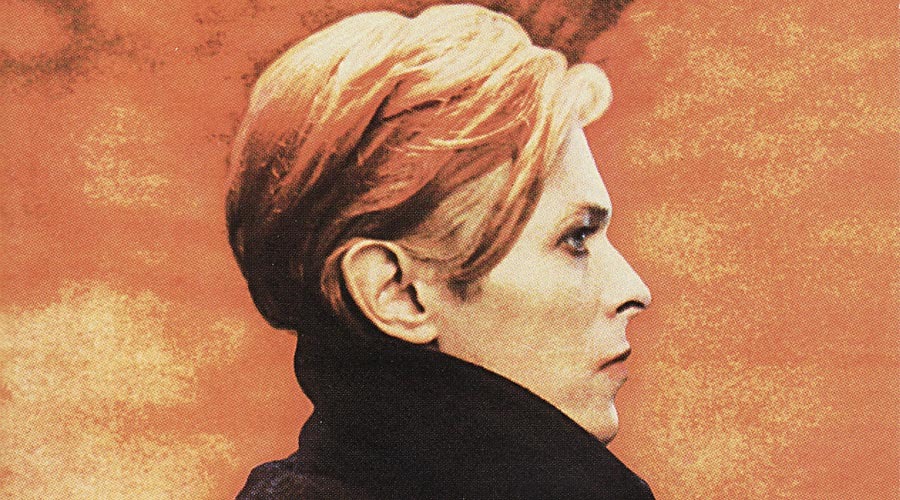
Bowie Low

Iowa! What am I doing in Iowa instead of Berlin?
I wanted to see late 20th Century decay, but, hog lots?


Musically, I was trying to emulate here the sound and feel of the David Bowie/Brian Eno “Berlin Trilogy” when I wrote and recorded this in 2015, about a year before David Bowie would suffer his own sea-change. Much of what sounds like keyboard syths in the mix is instead “normal” guitar filtered and delayed. I think the mix works especially well with headphones or earbuds on this one.

Butterly

We’re approaching the halfway point in the Parlando Project’s first year, and my plans for 2017 are to feature more 21st century words, when and if I can get permission from publishers/authors to use them here. Today’s audio piece features words from the first “external” 21st Century author to be used here: Philip Dacey.

Philip Dacey

Philip Dacey


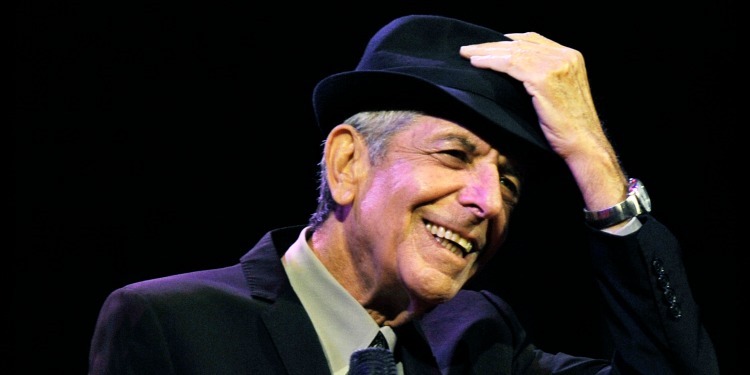
This year has been much commented upon for the death of musician/lyric writers, two great cultural stylists and movers, David Bowie and Prince, foremost among them.  It would be careless to extend the list of 2016’s lost musician/poets for fear of who would drop off the bottom for reasons of length. After all, Merle Haggard or Phife Dog or Greg Lake mean as much or more to some listeners as Prince or Bowie. For me personally, two Fall 2016 musician/poet deaths hit me with specific force: Leonard Cohen and Mose Allison. You might have guessed that, for this is the place “Where Music and Words Meet”—though both are better composers than generally realized, both Cohen and Allison were known for their lyrics.

CORRECTION Obit Leonard CohenMose Allison

A Cohen and a Mose

But that’s not exactly why. You see Mose Allison and Leonard Cohen shared a writing sensibility that I particularly prize: they’re funny as hell. “Funny as hell”—not as merely the common idiom— “Funny as hell,” in that both saw clearly the fallen human limitations and made us laugh at it. Laughter can be a good teacher, and as the profoundly comic blues sensibility tries to teach us, even what we can’t learn or think our way out of can be better endured knowing that it’s not right, that it’s incongruous, illogical, unexpected—in other words, that it’s funny.

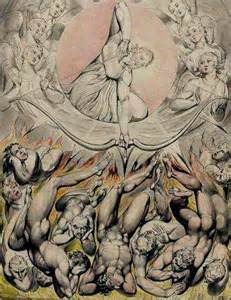
The importance of our musician/poets may be falling in the 21st Century, though the speed of that decent is hard to judge, as we, their human society, are falling too. And if we look below we see the poets of the past: Dickinson, Whitman, Keats, Blake, Frost, Sandburg, Yeats, Eluard and all their heavenly host, and Shakespeare, Sapho, Basho, Homer, Li Bai, and many more that we cannot name and have never heard. We are falling toward all of them.

Blake Fallen Angels

not Phil Dacey


And Philip Dacey falls with us, and he smiles “Look, we are all falling.”

Dacey too is funny as hell. So if you are coming to this podcast from a musician/poet listenership, you could think of Philip Dacey as a Midwestern Leonard Cohen without all the sackcloth and ashes; or that Dacey is Mose Allison without the constantly modulating piano. And there’s another difference: Dacey’s poems find forgiveness more consistently and honestly than Cohen or Allison, or most any other writer.

We are all falling, and Philip Dacey falls with us, and he says “I’ll bet there is an end to this fall, but who knows?”

Butterly: Upon Mistyping Butterfly is a love poem based on simple mistake (as love sometimes is). Phil, like Leonard Cohen—but like Phil—wrote a great many love poems. This one is uncomplicated (as love sometimes is). Mose Allison, wrote far fewer love songs, though I can think of one that is goofy and joyful, like these words of Dacey’s.

It’s not a coincidence that I put my remembrance of Philip Dacey as one of the first Parlando posts, because when I heard that Phil had died I was working on gathering, performing, and producing material for the Parlando Project. I’m grateful for the permission to present the LYL Band performing my reading of this poem of Phil’s. If you like this, you may want to seek out one of Philip Dacey’s books or read more about him online at the philipdacey.com web site. If you’d like a taste of how Phillip Dacey presented his poems, there is a 30-minute video of a late reading by him here.

To hear the LYL Band perform Butterly: Upon Mistyping Butterfly, click on the gadget you’ll see below.

Frank Eli Hudson and Rye Whiskey

It’s election day in the United States, a day of great hope and fear. Yesterday I was on the shore of a great lake and the sunrise was a perfect unbroken horizon of a bright line with pink above that, and then graduations to blue rising up over our heads as high as we wished to look. At our feet, the lake waves came from wherever they come from and broke on the stone ballots cast on the beach.

We are riding a great wave of change sweeping from wherever it comes from to wherever it goes. I feel our country has become both more perceptive and more blind,  in what is too close to equal amounts. I do not know what part of that proportion of blindness is mine or yours. Perhaps until we see, if we ever see, we will not know.
 
We’ve talked about myths here before, our big stories that explain ourselves. When Homer sang his myths he was said to be blind, and myths are often blind. When John Keats read Homer in Chapman’s translation, he wrote about it in a fine sonnet almost exactly 200 years ago, but oops! he put the wrong explorer on that Pacific-viewing peak. So clearly a mistake that a friend pointed it out to Keats immediately, but in the end, it harms the poem in only that simple and clear “wrong guy, Johnny!” way. People who know about these things might note that Chapman’s translation of Homer, published 400 years ago this year, is a bit loose as well. Homer’s music is always very hard to translate, but they say that Chapman added some additional material dear to his own philosophy.

Let’s just leave it at this for now: little or big deviations from the truth make up many, perhaps all, myths, those explanations of ourselves. We grow blind and perceptive at the same time.This piece, Frank Eli Hudson and Rye Whiskey, is as much true as my proportion of blindness and perception can make it now.

My appreciation of what was called “folk music” in the US in the mid 20th Century was founded on an appreciation for “authenticity.” “Authenticity” is a particularly hard to define myth. If I can distill it briefly, “Authenticity” believes that certain emotions and feelings are more perceptive, closer to the truth of things. So, to portray those emotions and to share them through art allows one’s audience to see and share the truth of things. The 20th Century American folk music circles search for authenticity is not much different from hard-core punk later in the century (the two musical movements have many parallels).

I saw the folk song Rye Whiskey though that shared myth of authenticity, just as the piece recounts. On the page, and as performed by many folk-revival singers, Rye Whiskey seems to call on harrowing emotions. However, for a time this year it occurred to me to see what I could find out about my great-grandfather for whom I was named, A decade-old report from an uncle that he liked the song Rye Whiskey was one thing I knew.
 
Around this time a co-worker thought my son, who likes math, would be interested in some sets of numbers relating to a deck of playing cards. I told the co-worker that some of that material was used in a hit song of my youth, The Deck of Cards. Turns out The Deck of Cards was a hit not once, but several times, and that Tex Ritter had been one of the earliest to have a successful cover recording of it.

On the other side of Tex’s A Deck of Cards was Rye Whiskey, a  that song that was part of Tex’s repertoire for a long time, going back at least into the 1930s. I can’t say for sure where Frank Eli Hudson heard Rye Whiskey, but Tex Ritter would be an odds-on favorite.

The Deck of Cards was not “authentic” folk music. Robyn Hitchcock once did a parody of it that is hilarious. And Tex’s version of Rye Whiskey?  Well, listen to the piece as played by the LYL Band to hear what I found about how my great-grandfather, authentically living in that “Old Wierd America” that Greil Marcus writes about, might have experienced this song. The gadget to play Frank Eli Hudson and Rye Whiskey should appear below.


After you’ve heard my tale, here are some versions of Tex Ritter singing this authentic American folk song.

The Day Lou Reed Died

Unlike jokes, you can explain a poem without killing it. Explanations may wound or amputate the poem a bit, but sometimes the dissection reveals things you couldn’t see before. My rule here on the Parlando project is to generally not explain the poem or the music, to let you experience it as it unfolds. But I like to break rules, so today I break this one. If you’d like to hear the The Day Lou Reed Died before the explanation, go ahead and click the gadget you’ll see at the end of this and then come back to this.

I started writing The Day Lou Reed Died on that day, exactly three years ago, but it took me about a month to come up with version you hear here. I did the music shortly after finishing the words, playing all the parts myself.

The poem takes a rhetorical stance of negation. It tells you what it thinks using the dark illumination of telling you what it doesn’t think. The first part parodies Frank O’Hara wonderful poem on Billie Holiday’s death, which is full of details of life in New York City in the high 1950’s. In that same section I remind the listener that Lou Reed was part and not part of that time, a man (like myself) a generation younger than O’Hara. Like O’Hara apparently, it was a surprise and not a surprise for me to hear of Reed’s death while planning for a social occasion. Holiday, like Reed, was known to be sick, but there was no public death watch.

The next section is a list, continuing the rhetorical negation. I start right off with saying I’m not thinking of Andy Warhol, whose connection to Lou Reed’s first band, the Velvet Underground, was something of a platinum-blond albatross around its neck. The assumption was that Warhol was the mastermind behind the Velvet Underground, which slighted the real innovators inside the band (Lou Reed and John Cale), and it allowed folks to contextualize the band, as many of Warhol’s pieces were then, as a put-on, a commercial parody of real art. As the list goes on I use the Warholian tactic of linking to a variety of commercial Andies, humorous in their inapplicableness to Lou Reed. I end the list with two unlike entries: the title of a famous avant-garde film and then “androgyny” to turn the incongruity one more time, as we might well associate Lou Reed with either.

The next section “I put on the indie rock station” starts, like the unexpected death announcement, with an actuality of the day I experienced. I expected them to be playing a lot of Lou Reed songs if not a full-fledged format change to all Lou Reed. Instead there was nothing—but so influential was the Velvet Underground to indie-rock, that as each song began I wondered if this was going to be a Lou Reed song or a cover version of one. No one put it better than Brian Eno did when he said:

The first Velvet Underground record sold only a few thousand copies, but everyone who bought a copy started a band.

This section was my way of saying the same thing, while noting that Lou Reed’s death did not get the public attention that David Bowie or Prince’s deaths a few years later did.

And the social event I was preparing for in the first section? The wedding reception for two women who had married that year after same-sex marriage became legal in my state. I try to recount the great sweep of change in my lifetime in this section. The young Lou Reed helped pioneer portrayal of gay, bi and trans people in his songs. The emergence of that portrayal in Reed’s art is a complex subject I’ll largely skip here, as it would take too long. In short, at least at first, Reed associated his gay characters with the demi-monde he sought to portray in other aspects. Like the term demi-monde I just used, this was something of a 19th century, or early 20th century way of looking at things—but I use it because those of Reed’s age (or mine) grew up in a world in which the culture and still living authority figures were from before WWI or its aftermath.

And at this reception, there were many children, grade school age and younger, and to keep them occupied there was a gymnasium dance floor and, a boombox and some rented lights. Their parents were dancing with these children, and as the swirling lights drifted over these single-digit-age dancers my mind recalled the young adult faces attending the Sixties “Exploding Plastic Inevitable” happening that was the public debut of the Velvet Underground, documented on the back cover of their first record. As much as an old man can while dancing, I figured the actuary tables on these children. Some of them may well live into the 22nd century. From a world where homosexuality was unspoken, to a world in which it was roundly denounced, “treated” and imprisoned, to a world where there is a homey, pot-luck Midwestern wedding reception, to a world I will never see or be able to predict almost 90 years from now. This is the arc of our culture and our experience of and as living artists.

1966

Exploding Plastic Inevitable

2013

Dancers in pin spots

The last section has gotten a rise out of a few people. What I wrote is somewhere between subtle and a mistake I fear. Staying with the negative rhetorical tactics I’ve used throughout the poem. I say:

As artists are inessential to art,
Art is inessential to change.
As beauty and justice pass through us,
Let us stop, and feel this
Beating through our veins.

More than one has heard those lines and missed that it’s a two-part equation. Are artists inessential to art? No, in that obviously living artists are necessary to make art. But also, yes, in that we know that art continues to have impact past the lifespan of the artist. Perhaps in that 22nd century someone will still listen to the work of Lou Reed. The second part says this artist/art comparison is equal (“as”) to art is to change. So, to the same degree that living artists are necessary to art, art also creates change; but in the passage of time in which immortality may allow art to outlive artists, that change will become something that is no longer “change” as it becomes part of everyday life.

As good an ending as “And everyone and I stopped breathing” then? Probably not, but I’m trying. And Frank O’Hara didn’t play no electric guitar.

Blues Summit in Chicago 1974

Let’s continue for a one more episode on the theme of the musician, but since here in the Parlando project we believe music and poetry to be naturally joined, let us go there though a poet.

Decades ago, in a small Midwestern classroom, a teacher wrote on the chalkboard “It is better to read (or study) Homer than to be Homer.” I do not remember the teacher’s name. I do not remember who was the author of this epigram–though I have vague memories that the teacher wrote that down too—and no amount of modern web searches have ever been able to give me the source of it. But except for that one ambiguous word (“read” or “study”) I have never forgotten that line. Perhaps what helped me remember the line is the teacher gave us no context. I simply encountered what they had written on the blackboard.

Though I’m going to violate that impact here in regards to that epigram, I endorse it with the Parlando project’s audio and podcast element, where the audio pieces are meant to stand alone without resume or external authority. None-the less, if any readers here do know where the Homer epigram I remember came from, I’d like to know.

What I took that line to mean is not just that the life of an artist may be difficult or cursed by troubles; but the revelation, emotional resonance, and sensuousness of art when it is experienced, can easily be greater than the costs of its creation. Greater for even one reader. Greater than the author’s own understanding of that which is so close to them that they may not see all its sides and size.

So here’s a meditation on that idea. I wrote it after watching a re-broadcast of the initial episode of PBS television’s Soundstage which shares this piece’s title. I believe the producers of the TV show wanted to reproduce a somewhat similar gathering of older and younger blues musicians that resulted in an excellent LP called Fathers and Sons recorded in 1969. Musically, what they captured wasn’t at that record’s level alas, but it was well-filmed and that alone makes it worth watching, for there are small, moving, privileged moments between the musicians captured on camera. About halfway through watching it myself, I found myself noting that almost every musician on that stage is now dead, and it didn’t matter if they were the younger generation or the old guard. Some of the old guard outlived the young guns.

That’s part of the nature of a working musician’s life: there may not be a full measure of it.

And then I looked at the close-in audience filmed at the same time. Since they were my contemporaries I felt I could see through the period clothes and hair styles and make some rough but fairly accurate estimate of their class membership and likely demographic future.

Let’s just narrow our focus to one musician. If you could step back in time, would you ask Michael Bloomfield if it was worth it? “Hey Mike, I’m from the future and I know you’re going to die at 37. Would you rather have stayed in college now knowing that?”  How complex that question is for just that one instance, and equally complex in different ways for each of the musicians on that stage. I suspect some days they’d say “yes” and some days “no”—and much of the time they’d say (in so many words) that your question was beside the point.
 
Now ask yourself:  would you rather Mike Bloomfield had a longer life or you had recordings like Highway 61 Revisited, Super Session, or East/West to listen to? Assuming you weren’t Mike’s friend or relative, and that you know and have experienced his art, then honestly your answer is likely: you’d take the records.

And those college students in the bleachers? Maybe some of them became doctors, nurses, teachers, faithful and helpful friends. Maybe one day one of them will write something on a chalkboard like that epigram I read decades ago, and I will not be able to remember their name.

So to play The LYL Band performing  my piece “Blues Summit in Chicago 1974” click on the gadget below.

This Is the Darkness

This is a more difficult piece for me to put out for you to hear. Not because of the quality of the performance by the LYL Band, the performance is fine. Nor do I disagree with the performance, as it does what a performance should do: it represents a physical, working version of the feelings in the piece. The problem with it is, that taken in particular, it can be heard as out of balance.

I wrote this at a specific time in my life, for that matter at a specific time of year and even a specific time of day. When it was written and performed, I was exiting my middle ages, and elements of my life were out of balance. And it was written at this time of year, which in my upper Midwest US means that it is now dark when one awakens in the morning. At this time in September, there is no more promising summer sunlight tempting you to arise early, the sunlight that says the day has already started and you should go and catch up with it.

Perhaps you’ve had the thoughts I had on the day. You know you have things to do, many of them things you would not choose to do at that morning moment in time. How should one view this predicament?

Albert Camus wrote of this famously in his essay “The Myth of Sisyphus.” You can read the concluding section of that work here. It is not long, but if read thoughtfully it is arduous. Was I thinking of Camus when I wrote this? No, I was thinking of my own life; but other people’s stories, in effect, other people’s myths to explain this mystery, show that we hold these thoughts in human commonality.

I will not try to explain Camus thoughts on this, he does this better than I could. I have no quibble with his analysis of the situation, but as I’ve mentioned previously here, I currently suspect all myth of understanding more than it knows. Furthermore, the close association of myth and heroism makes me the more skeptical.

And that’s why I found this piece, one I myself wrote and performed, problematic. Inside it I come to the same consolation that Camus did, but Camus’ “Myth of Sisyphus,” and my piece “This Is the Darkness” can both be easily experienced in an unbalanced way: the absurd predicament is so strong an image that the consolation, our revolt and continuance of seeking right action in the face of that predicament, can seem all too vainglorious.

So let me suggest another myth. One plainer and less heroic. There is a plainspoken yet strange hymn associated with Christianity “Work for the Night Is Coming.” You can hear it sung here in this short video. As I said, this is a Christian hymn, still sung in Protestant Christian churches. Does it mention Jesus or any divinity? No. Does it elaborate any moral code? No, not really. Does it offer a sure explanation of any mystery or absurdity? No, not directly. It simply says “Work, because soon enough you will not work anymore”. In the context of Christian myth, this can be taken to mean heaven or the advent of heaven on earth, but this strange hymn decides not to say either.

Not so strange that this was written by a Canadian—the natural brethren of us upper Midwesterners, someone who would know intimately that the darkness beyond summer is long—but strange in that Anna Walker Coghill was 18 years old when she wrote it. I had to be much older to understand her words.

That’s a lot of context for this piece, but to hear “This Is the Darkness” performed by the LYL Band, use the gadget that appears below:

Print the Myth

A few posts back I mentioned that the Parlando project keyboardist and alternative reader, Dave Moore had visited Native American mound sites along the Mississippi river this year. He’s working on a series of pieces*  about the largest of the mounds, Cahokia in Illinois. Here’s one of them.

In that August post about William Cullen Bryant’s “The Prairie” I said that when Bryant wrote a poem about Cahokia he borrowed from “from some 19th century mythologies.” For focus and brevity, I left those myths out then, but I wanted to come back to this, because it’s important. In the 19th Century as US exploration and settlement moved westward from the eastern seaboard and these elaborate earthworks were viewed by folks like Bryant, there was a lot of unexplained mystery about them. And explaining mystery is the work of myth. Sometimes poetry joins in that work.

When poetry joins in that, explains mysteries, it faces great dangers. One danger is simple: their explanations can just be wrong. After all that’s another way we use the word “myth,“ to mean something that has been shown to be untrue. Bryant and a host of 19th century explainers of the North American mounds and their builders almost certainly fall into that trap.

You see, when these worthies saw the mounds they thought that they had to have been constructed by some people who were not Native Americans, or at least not the Native Americans who were soon to suffer occupation and displacement from those Eastern settlers. That’s another problem with explained mysteries. Sometimes the explanations are a little too convenient. You don’t have to think much to see the subtext here:

“Why, we don’t have to worry about displacing or even killing the folks who are already here, they did the same to those disappeared builders of these great earthworks.”

Myth gets complicated. We can see the ignorance, prejudices and racism that helped feed these 19th century settlers, but that doesn’t mean we can see our own current ones more clearly than they could see theirs. I often think of the title of the beautiful and wry Leonard Cohen’s first collection of poems “Now Let Us Compare Mythologies,” the title poem of which includes the line “I have learned my elaborate lie.”

One of the virtues of music is that it cannot explain mysteries, though it can sometimes help you experience them.

Now, back to Dave Moore’s piece “Print the Myth.” Dave wrote the words for “Print the Myth,” and he concisely goes into these issues. Dave is also the voice on this one. It was only my job to supply the electric guitar part. This is a live first take, spontaneously exploring how to present Dave’s words about the explanations for the mounds. As such, there are a number musical mistakes. My tastes allow for that. Dave himself thinks his performance wasn’t up to snuff, and I disagree thinking that the energy of the discovery overcomes the rough edges.

So if you want to hear a couple of poets and musicians constructing a way to tell the story of how the mounds were misinterpreted by Bryant and his contemporaries, click  the gadget below to hear “Print the Myth.”


*Dave published these pieces in a chapbook Rhythmic Stories & Prehistoric Mythteries  later in 2016. This book is not generally available alas. I don’t know if Dave still has copies, but if anyone interested could contact him through this blog.

The School Year Begins

Tomorrow many US schools begin their school year, so here’s an audio piece about a child going through that first week back in school after what seemed to be an infinite summer.

The schools in Iowa, where I grew up, began a week earlier than the “day after Labor Day” start that is more common elsewhere in the US. I’m not sure why. Maybe farms needed kids more in the spring to summer transition weeks than in the summer to fall interval. Maybe it was an advance allowance for the inevitable “snow days” that would cancel school during the winter, days that if made up in the spring would move the end of the school year into June. Maybe it was, in some way, a gesture to say Iowans cared more about getting down to education than slacking neighbor states.

All I know is that as a kid I thought this terribly unfair. A whole week! My cousins in Minnesota got a whole week more of summer! That next week was always going to be the best week of summer, the one that you got to do whatever you hadn’t done, or done enough of, during the rest of the summer vacation.

Now my son goes to school, and the school yard the kids are walking across to get to the first day of school is like my schoolyard was. Maybe all schoolyards are like this. The grass is still a little beaten down from every independent path the kids have taken too and from, still worn from every recess outside last spring.

To hear the spoken word/music piece “The School Year Begins” as performed by the LYL Band, click on the gadget below this.