Soul Selector Blues

Sometime around the end of the 19th Century, a century that had seen accelerating change in technology and social order, new artistic movements began to flower on either side of the Atlantic. In the UK the Arts and Crafts movement and the Pre-Raphaelite Brotherhood looked backwards at things that had disappeared or were nearly gone, and revived them within a the new context of their present day. Interest in neglected folk-cultural traditions of nations began to arise. Others looked to new orders: utopianism and socialism. The seeds of what would be called Futurism began to take shape, a worship of the inherent art in technology.

Here’s a funny thing: all these things mashed-up in the ferment of the times. Some of the artists held to several or even all of these beliefs, participating in more than one of these seemingly different or even opposed movements. Call this brew “Modernism,” for the one thing that united it was a desire for something new, or at least new for the times, to be produced.

As the 20th Century got underway, American artists forged ahead in these movements. The reasons for that are multifold, but one is that they had a head start: Walt Whitman and Emily Dickinson and the Emersonian Transcendentalists had already pioneered distinctly American ways to be modern.

Let’s leave the salons and literary magazines now for a moment. Here’s something else that was happening at the same time, with only spotty distribution beyond its creators. Some African-Americans, presented with nominal freedom, economic serfdom, social repression, and what must honestly be called a sub-human classification by many learned men, continued to come to terms with European instruments and tempered scales, combining them with the already juicy stew of American music and the remembered modes of Africa. They produced their own Modernism, something that eventually got called “The Blues.”

Lyrically, this was an inherently skeptical art. As it percolated through commerce, the Blues got re-defined as a sad song of loss, and loss certainly is part of its subject matter, but the outlook of the original Blues writers was not simply that. A lot of it was satiric comment, and when the Blues dealt with the desire and farce of love and lust, as it often did, it wasn’t just about loss.

I could go on and on about the Blues, but for the moment, I’ll ask you to just absorb this: when William Butler Yeats was having a harp built to chant his poems to, as he believed the Celtic griots of old had done; and when Ezra Pound, Robert Frost, HD, Amy Lowell, William Carlos Williams, Gertrude Stein or T.S. Eliot were inventing their strain of Modernist poetry, often abroad, some other Americans were back in the States retuning guitars and looking for the notes between the keys of the piano with their own poetry that sought to “make it new.”

Emily Dickinson is a special case in so many ways, but one of those ways is that although she wrote much of work during the Civil War in the middle of the 19th Century, she was only published much later in the century. Her poems, so stripped down, so skeptical of received notions, so vivid in fresh images that didn’t map easily to conventional meaning, fit right in with work being written 50 years later by the Modernists.

Emily Dickinson Uncrowned Queen of the Blues 2

Warning: time travel plots often are ridiculous.


Today’s episode “Soul Selector Blues”  takes this time travel one step further. What if Emily Dickinson was a serf on the Dockery Plantation in Mississippi early in the 20th Century? Maybe she’d tune a guitar to “Spanish” and grab a slide to get those in-between notes, and then what would have been “The Soul Selects Her Own Society”  would come out like this.

To hear the LYL Band cover “Delta Amherst” Emily D’s classic 78 r.p.m. side “Soul Selector Blues” use the player below.

 

The First Cuts are the Deepest

Earlier this month I posted the Parlando Project audio pieces that were the most listened to as of the start of this Spring. Turns out it’s a pretty good mix of what Dave and I are trying to do with this combination of music and words. However, in looking at the stats for the Parlando pieces, it looks as if a lot of readers and listeners are coming in partway into the project, starting around the beginning of this year. That’s fine. I think I’m getting a little better as I work intensively on the goal of 100 Parlando Project pieces by August of this year, but I think some of the early pieces are missing the listenership they otherwise might have gotten if I’d posted them later.

Since we’re still in National Poetry Month (#npm17), it stuck me that this might be a good time for some of our audience to catch up. So here are a few of the 2016 Parlando Project “deep cuts” from last year that you might want to check out:

Stars Songs Faces.  I wrote the music for this Carl Sandburg poem as my tribute to David Bowie in January of 2016, and it was the piece I choose to kick-off Parlando. Although I’m not the first to write music for these Sandburg words, I still like what I did, and the LYL Band performance realizes my intention well. This piece also reminds me that it’s been awhile since I posted a Carl Sandburg-based piece here. I’m working on one this week, but the orchestration is not going as well as I’d like it to yet.

The Prairie.  One of things I enjoy most about coming up with material for the Parlando Project is finding things in the public domain poetry cannon that I’d never read or even heard of. This is one of them. William Cullen Bryant was not on my radar until Dave Moore visited the Mississippi river valley mounds last year and began to write about them himself. This audio piece is on the longer side, which may account for the lower number of listens.

The Green Fairy.  Here’s a good piece written and performed by Dave Moore that hasn’t been listened to as much as some other pieces he’s written here. My notes in the accompanying post were written in mystery about the actual intent of Dave’s words. I’ve probably got some other poets’ intent wrong too, but remember that’s one of the points of the Parlando Project: you can appreciate poems when they are accompanied with music just as one appreciates song lyrics (or even music without words at all), as bits and pieces of language that sound good, or as lines or phrases that attach themselves to you with little pieces of meaning without any requirement that you understand the whole thing.

This is the Darkness.  I ascribe the lower listenership on this one to the dark tone. And indeed it might be an odd piece to listen too in the late Spring as days get longer and eventually warmer here in the upper Midwest. None-the-less, living around the 45th Parallel Minnesotans and Canadians should understand this.

Christ and the Soldier.  When I was my son’s age, I was following a day-to-day summary in the newspaper, a series called “100 Years Ago in the Civil War”  which covered the events just out of memory of the living in the American Civil War.  And now, since 2014, I’ve been informally following the centenary of World War I, which has similarly passed out of the memory of the living.  Siegfried Sassoon’s poem is a biting comment on WWI from a veteran of that war’s trenches. You know that old saying “There are no atheists in a foxhole?” Sassoon has a more complex view.

What Is It the Rain Dissolves

Writers often like to compose their written works in their heads while walking, and poets, all the more so. It seems natural—the walking footsteps and the metrical foot compare apace.
 
I too have done this; and with poetry in particular, composing lines while away from any paper or screen may also help winnow out the more memorable flow from forgettable stumbles. But my old joints now rebel more at morning walks, and my later day is filled with daily work on the Parlando Project and the mundane tasks of living.
 
My solution to this is that great 19th Century invention: the bicycle. In wheeled weightlessness, I am able to roll along through nature and the city morning’s opening scenes: the gloved gardeners, the obedient dog owners, the students at their stops, the hopeful sidewalk joggers, the babies held crooked in the left arm as the right sweeps the straps from the child car seat. I do this in all weather, rain and snow included, not wanting to miss one act of the theater of the seasons.

Novara Safari Smaller

Can you fit #npm17 and #30daysofbiking into one post? Sure.

 
It’s April, the National Poetry Month in this country, and I ride in the experience of that Chinese birdsong that Du Fu and Meng Haoran heard once and I hear now, and I know that the birds need no translation.  One Sunday dawn, as rain threatened, the sun shined through the clouds as if they were translucent filters. The steeples of the churches and peaks of houses, illuminated thus, were indeed rose and violet as Emily Dickinson promised to tell us.

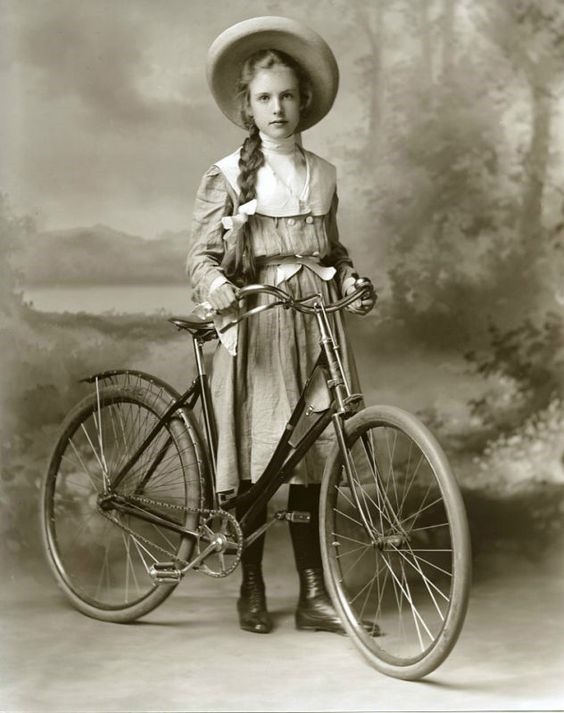
April isn’t just #npm17, it’s also serving up #30daysofbiking, and with the two in the same month I’ve said, “Emily Dickinson should have gotten a bicycle!” She could have maintained her thoughts’ enclosure, pedaled surely between the skeptics and the believers, and served her self-reliance within a somewhat broader world. Alas, she was just a bit too early for the modern bicycle—but it was close. Her mid-life “preceptor” Thomas Wentworth Higginson was a proponent of the bicycle and of women bicycling. Higginson, speaking about one of the early long-distance cyclists said:

“We found that modern mechanical invention, instead of disenchanting the universe, had really afforded the means of exploring its marvels the more surely. Instead of going round the world with a rifle, for the purpose of killing something – or with a bundle of tracts, in order to convert somebody – this bold youth simply went round the globe to see the people who were on it.”

Higginson, although speaking about my chosen ride, the acoustic motorcycle, seemed to be foreshadowing Robert Pirsig there.

19th Century lady and bike

A soul selects her own velocipede


Once more, a long preface to a short piece today. When I started the Parlando Project I thought I’d avoid that. Is another reason that April is National Poetry Month from the nursery rhyme “April showers/Bring May flowers?” Today’s piece “What Is It the Rain Dissolves”  was written on a bicycle on a morning ride in a light rain. I passed two kids trying to master skateboards and later a woman coming the other way on her bicycle, arms bare except for some elaborate tattoos.
 
Emily, is that you?

To hear the LYL Band perform the song “What Is It the Rain Dissolves”  use the player below.

To A Friend Whose Work Has Come To Nothing

Given that poetry contributes the great majority of the words to the half of the  Parlando Project “Where Music and Words Meet,” it’s reasonable to suspect, if you are reading this, that you like poetry. That’s too bad. Even during the National Poetry Month and #npm17 that were are talking about this April.

You see, poetry is often a frustrating thing. That high-flown language may be artful, but it’s an earful too. If you were seeking directions to escape some emergency, would you want your rescuer to choose the most precise and beautiful words, words that say more about what a clever speaker your rescuer is than about which way you must turn and where the dangers are?

Do you love the dense allusions and surprising metaphors of poetry? Do you admire the narrative fracturing and careful examination of the shattered facets that expose the common lie of ordered stories? The next time you are searching for how to work some complex gadget or system, do you want your tutorial or manual to scatter its tale in novel ways?

Speaking of too simple statements, here’s one: that there are people who simply like poetry. No, most people who like poetry sometimes, hate poetry sometimes; just as most people who like music, hate music sometimes. The intensity of the like times does not decrease the intensity of the hate times. I think it’s important that poetry tries to capture the allusiveness of things. I continue to admire some poems I don’t really understand—that’s what the music is for, both the poem’s own music and the external music we apply to the words here at the Parlando Project. But there are times when you just want a poet to come out and say what they’re getting at.

The words to today’s episode, by William Butler Yeats, are clear in their meaning. “To A Friend Whose Work Has Come To Nothing”  is an example of “occasional verse,” a poem written in response to an event. In this case, almost everyone has forgotten the event, but the sentiments of the poem apply broadly anyway. Yeats has such a musical way of expressing himself, he could have flown off on some obscure path and we might have followed him anyway. As it turns out, the things he leaves out here, the particulars of the dispute, probably help the poem survive as a general piece of council.

Still, I’m a curious and literal sort. Who was the “Friend Whose Work Has Come To Nothing,” and what was the work? It was written about and perhaps to a man named Hugh Lane who wanted to donate his substantial modern art collection to a museum he proposed that Ireland should fund. And the man who would lie unashamed to oppose this? A newspaper publisher who opposed the gallery.

Hugh Lane

Yeats gave him good advice, but he didn’t tell him to not get on that boat.

What happened to Hugh Lane, whose work had come to nothing? About a year after Yeats wrote this poem, Lane went down when the Lusitania  was torpedoed during WWI. And his art collection? His will seemed to leave it to the British National Gallery after his proposal to fund the Irish museum failed, but Ireland disputed this will, and later in the 20th Century, after Lane’s and Yeats’ deaths, Lane’s collection was again on display in Dublin Ireland. So eventually, in prosaic history and after the work of some lean solicitors, Lane’s work succeeded.

Dublin City Gallery

The Dublin City Gallery where most of Hugh Lane’s collection ended up

Today’s audio piece is brief, so take a listen to the LYL Band performing “To A Friend Whose Work Has Come To Nothing” by clicking on the player below or with this highlighted hyperlink.

.

Mr Nelson

It often takes a while to know who has died.

When Prince died a year ago, the shock-wave for fans was breath-taking, the air went out of the room, and for each of them there was something that went missing when they got the word: the promise of new music, a memory of concert or a night of dancing, a period of their youth now seemingly past all reliving, and probably a dozen or more other private things.

If it seemed impossible that Prince had died, it was because it was impossible that he had lived. About him it could be said that he could dance like James Brown, sing like Marvin Gaye, play guitar like Jimi Hendrix, write a song like Curtis Mayfield—and arrange it all, and play it all, and record it all for himself or other artists. He was the most astonishingly broad musical artist of our time.

And he did this over and over, for decades, to the point that no one could ever really keep up with all he did. I suspect the longer time we now have will allow us to discover, in his work, things that are still overlooked, ideas that he had that somehow weren’t understood, things we skipped over because we thought Prince should be doing something else.

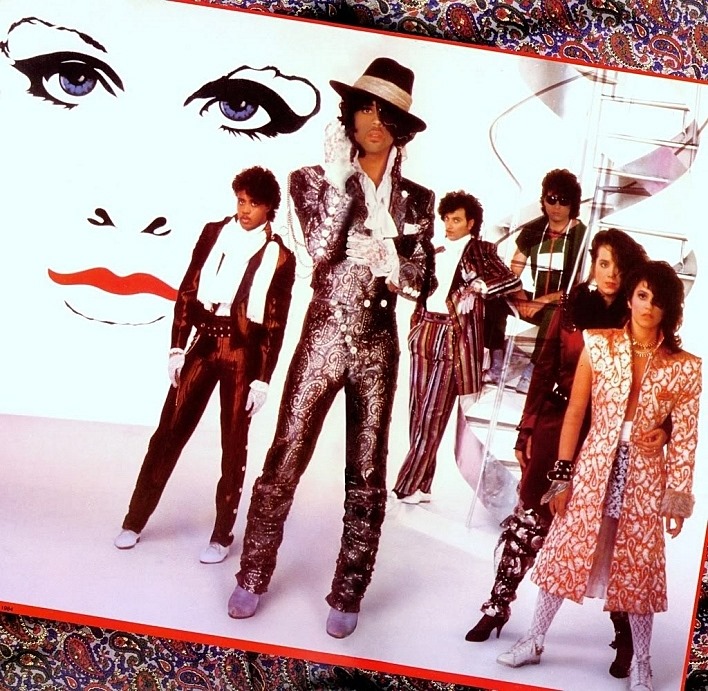
Tonight, as I write this, I’m struck by one other thing: has there been enough recognition that Prince was in the vanguard of bringing women instrumentalists into the context of the rock band? Let’s propose a rock band gender integration variation of the Bechdel Test: name a successful band with two prominent women instrumentalists before The Revolution that wasn’t a “all-girl band.1” Every example that comes to mind (and it’s not like there are hundreds of them) stops the count of women players at one. I can think of only two 2, and neither achieved a modicum of the cultural prominence of Prince’s band.

Prince and the Revolution

It’s a little known fact that Prince was about two feet taller than the rest of the Revolution.


And he did it again performing with his late career power trio, 3rdEyeGirl.

That’s just a part of his career of course—but please, this isn’t some kind of rote identity politics thing, or merely a piece of trivia like “Name a band with two left-handed Canadians?”. This is half the human race!

With the Parlando Project I get to audaciously tackle the work of a lot of great writers. I use their words unashamedly and try to find something I can relate to you about their work. For some reason, perhaps because Prince Rogers Nelson embarrasses me as musician, I’ve been hesitant to post this episode, and to share this modest musical piece The LYL Band wrote and performed about his leaving.

But I’m going to do it anyway. The best parts of this piece “Mr. Nelson”  are the work of Dave Moore: most of the words and the electronic piano part. Footnotes at the end of this post for the obsessives. The audio player for “Mr. Nelson” is right below this. You can dance if you want to.


County Joe MacDonald and his All Star BandJoy of Cooking

Guy in the middle isn’t Prince.                  Joy of Cooking, pioneers.

 
1 I exclude the “all-girl band” not to denigrate the talents of those who performed in them, or because a band somehow needs men to be valid, but because however intended, the result in the 20th Century cultural context was seen largely for its novelty value.

2 The two bands I can think of: Joy of Cooking and the Country Joe MacDonald led “Paris Sessions” era All-Star Band.

Experience

Here’s another piece by Dave Moore. Dave plays almost all of the keyboards on the LYL Band music you hear here on this blog, and without his contributions I’d get tired of hearing my own voice all the time myself. Today’s audio piece “Experience”  started out intended as a poem, as Dave explains:

“My friend Ethna mentioned the Common Good Books poetry contest, which paid cash, on the theme of experience.

Naturally the next word in my mind was prurience, which in this version I ‘eschew.’ although I changed the printed version to ‘avoid.’  Still, I love the roll of ‘eschew prurience.’

I set out to state that every moment is an experience, and most of them are accidents, which constitutes the glory of the show.  But – But seriously…
When I brought this lyric to a LYL session, I draped it around a tune, trying to see how the words spilled over the dam.  Thus edified, I tinkered with it some before submitting to Common Good.

Of course, I lifted ‘life is but a joke’ from Dylan’s ‘All Along the Watchtower,’  but it worked so well in the stanza (is it a chorus?) of philosophy. I chose to leave the ‘do’ and ‘done’ lines as ironic music which states the case.

So, am I experienced?  Conclusively, I can say yes or no.”

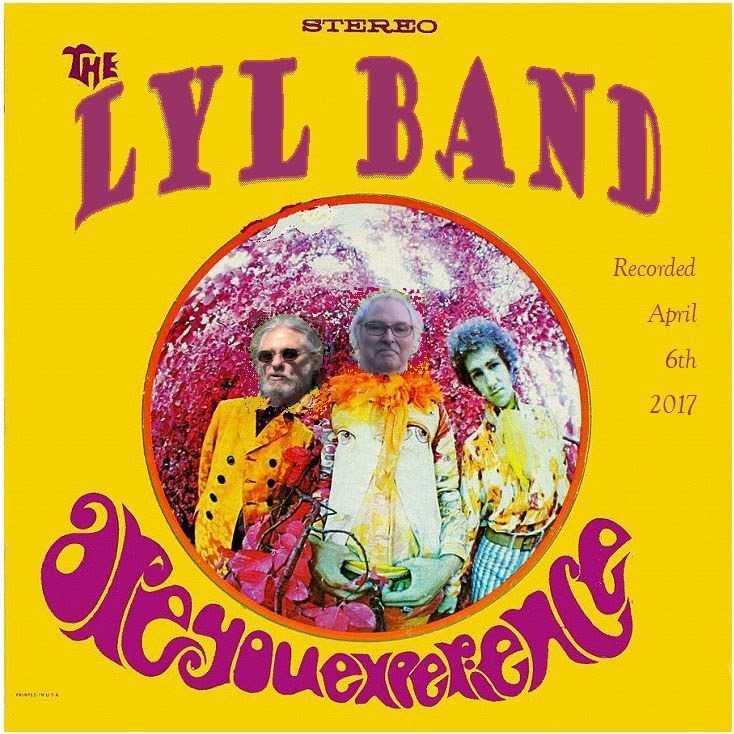
LYL Are You Experience Faces

“For those of another generation, he’s all but to make fun of,
but they do not understand the experience…”  Eric Burdon

Experience is an interesting topic for this book store’s contest. William Blake titled one of his collections of short lyrics “Songs of Experience,”  after which I cannot think of the word without thinking of Blake—but Blake also put much store in the auguries of innocence. Ralph Waldo Emerson toured the country as a speaker, but his contemporary Emily Dickinson famously constricted her travels as she grew up. Emerson’s mind worked best traveling widely, as in his essays. Dickinson mind produced compressed words pinned in a matrix of her famous dashes, and it’s Dickinson’s poetry that we are more likely to turn to today.  “Like a dream, experience is being where you are” Dave says.

Vinyl lovers, don’t be mislead by the cover shown above, The LYL Band’s version of Dave’s “Experience”  doesn’t feature Stratocasters on fire, which is not say that we won’t do that later. Use the player below to listen to “Experience,”  or some innocent instrument might get hurt.

Triad

I find it a wonderful “Parlando – Where Music and Words Meet” coincidence that one of Christina Rossetti’s sonnets and one of David Crosby’s songs share a title, “Triad.”

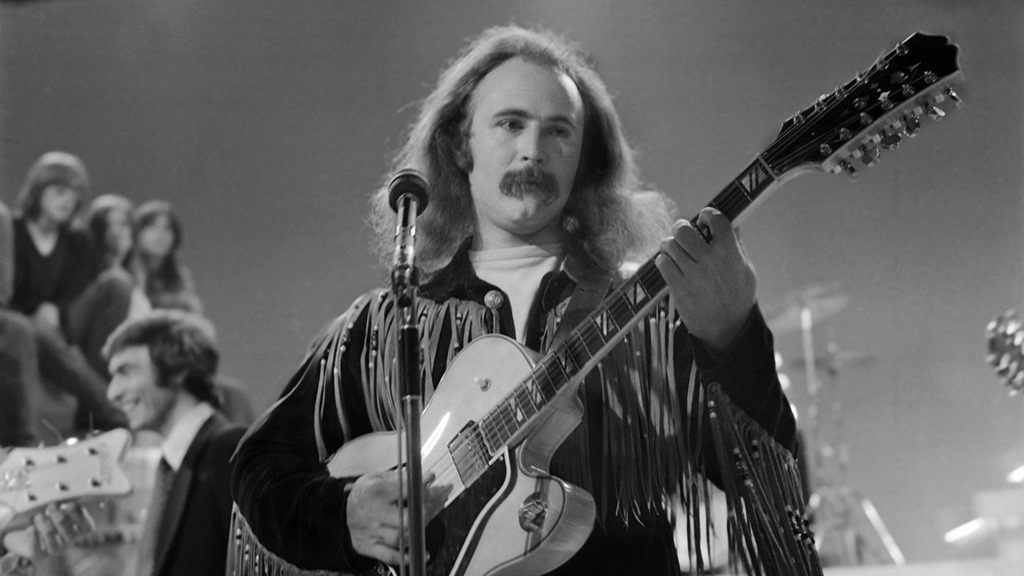
David Crosby is a musician and songwriter who first came to prominence in The Byrds and then as part of another triad, Crosby Stills and Nash. When I first came upon his songwriting many years ago, I was attracted to his distinctive abstract melodic and harmonic sense. Almost no one before, and few since, wrote music for songs that sound like his did then, with the exception of some Joni Mitchell tunes. Lyrically Crosby styled himself as unconventional as well. His “Triad”  is a blissful ode to free love—well at least free love as long as David Crosby is the one explaining how things will be.

David Crosby

David Crosby’s song starts by asking “You want to know how it will be?” and then he mansplains it


Christina Rossetti was a pioneering British 19th century female poet. Her biographical triad was that she had two brothers William Mitchell Rossetti and Dante Gabriel Rossetti, also writers, who went on to form the Pre-Raphaelite Brotherhood. Hmmm, “Brotherhood”—I wonder if girls get to join? Not officially, though she was used a model in some of their paintings.

Girlhood of Mary

Her brother Dante used Cristina Rossetti as the model for the Virgin Mary, far right.


Christina Rossetti’s “Triad”  is a not-so-happy look at romantic love, and the writer is none-so-sure how it should be either. Rossetti draws her portrait of three women who once sang together. One the stereotypical harlot, one the blue spinster, one the smooth compliant wife. Each of them finds the dead end of the limited paths available for passionate women. Conventionality decrees the hot harlot is shamed and the cold virgin dies for love, but Rossetti steps outside conventionality to tell us that the “temperate” spouse grew gross in her compromise until left with the devastating line droning “in sweetness like a fattened bee.” How much has changed since Rossetti’s Victorian England in this regard? Some things, not all things. New Rules are still rules, look at who makes them.

Musically here with our “Triad”,  the LYL Band somewhat refer to the psychedelic vibe of Crosby’s musical style to accompany Rossetti’s sad and lovely words. To hear it, use the player that appears below.

Biking on the Greenway with My Son and Bob Stinson

Minnesota goes wild in spring when it finally gets warm, and so today, which promises to touch 70 degrees, will surely display this. Like the day described in today’s episode, I’ll probably go for a bike ride with my young son, and we’ll ride on The Greenway, a several-mile-long reclaimed railroad cut that runs, as time does, east and west through the middle of Minneapolis.

Raising a child as a musician, writer, and sometime bohemian brings extra questions. Do you want your child to follow the most conventional and unquestioning path? Certainly not. You encourage them to question things, even allowing that this will encourage them to question you. You look at your own life backwards as you look at theirs coming forward, and wish them adventures, but only so much. You know there will be hardships and wrong choices, but you hope only enough to be instructive. As an artist you may worship art, but you’re not sure you’re comfortable with them adopting all the tenants of that religion.

Today’s piece “Biking on the Greenway with My Son and Bob Stinson”  speaks of this from the seat of a bicycle.

Bob Stinson was the animating force in The Replacements, an ‘80s alt-rock band that never tried to split the difference between insouciance and not giving a @#*&. As a guitarist he was an anarchist, and the band accidentally worked like the NY Dolls, the Kinks, or the Rolling Stones, with a great front man who had the lyrical wit and the staggering lead guitarist who embodied the music’s soul.

replacements on the greenway

The Replacements sit and wait for The Greenway bike path to come through. Bob Stinson, middle left.
The guy on the left is an artist. The guy on the right played in Guns and Roses. The guy on the middle right, writes songs.

The Replacements’ front man, Paul Westerberg, was quickly indicted as a fine rock’n’roll songwriter, which damaged the band because songwriting implies loitering with intent to commit James Taylor. The band rebelled by making sure that a regimented presentation of a set of songs was not the aim. On any given night, this could be inspiring or a shambles: Dada or do-do. Being blotto on stage to the point you couldn’t hide it was almost a requirement, and for no member of the Replacements more than for Bob Stinson.

Eventually the dichotomy demanded an ostomy, and Bob Stinson was asked to leave the band he founded. Things did not go well for Bob without his artistic outlet, and chemical dependency played out its run until he died, his body worn out at 35.

Self-destruction aside, you can see that as path of purity. Chasing after success and an ego-driven desire to rise above others can harm too. The addict and the monk believe they have two different gods, but the penitents have the same scourge. Negation and creativity; deny this, so that that can emerge, is part of the religion of art.

Music, Minneapolis, and life are different now 30 years later, and that’s the place my child and I now live in. Somewhere 30 years on from today will be the place they will live in, no longer young, if they survive rebellion and conformity, if they find the balance between the worship of the self and self-destruction.

This is National Poetry Month, so in the spirit of the Replacements, this is a post more about music, and the music in “Biking on the Greenway with My Son and Bob Stinson”  is not all that polished, tossed off by the LYL Band in one take. Still, you might enjoy clicking on the player below and listening to it. If you don’t see a player, this highlighted link will open a new tab with its own audio player.

He Hit Me First

John Renbourn, the English guitarist, and the subject of our last episode, once introduced a song in concert by saying he was now going to play an English song, “It’s a nice little melody—alas, there are just not that many good English ones.” As we said last episode, John’s repertoire was vast, so he had many musical traditions to draw from and could pick and choose. I mention this only in passing today, because when it comes to music, musicians accept no borders.

In the US today we have an odd holiday, St. Patrick’s Day, where we broadly and vaguely celebrate—well, not missionary saints. Instead many engage in an approximate celebration of Irishness, where amongst the dyed green rivers and dyed green beers, the “Kiss me I’m Irish” T-shirts, and the saucy leprechauns on everything, there is some occasional notice given to Celtic culture.

Saint Patrick

Indiana Jones : “Snakes. Why’d it have to be snakes?”

Alas, I have nothing prepared to be dyed green. I expect we’ll revisit Irish writers’ words soon enough though.

Instead I have a piece by the LYL Band’s keyboard player and alternate reader Dave Moore titled “He Hit Me First.” I think his words speak well enough for themselves, so I’m not going to add much here to them. When I asked him if the words were written about a particular incident, he told me that it was inspired by working on a book

Lester Moore

Lester Moore: preacher, Dave’s father

collecting some of his father’s sermons. Looking over a pre-publication proof of that book, and the sermons Dave decided to include there, I don’t see where Dave used any exact words from his father, Lester Moore, in He Hit Me First;  but I do see how Lester Moore’s inclination and approach informed it. Here’s a few words from a sermon Lester Moore delivered in 1981:

Christianity conquered an empire that was more cruel than Hitler’s Auschwitz.  And it was done by Christians who were willing to live the love that God gave them in the model of Jesus.

I sometimes wonder why it is that we still fail to see this. Christians who offer love in today’s world are called ‘soft-headed.’ But what happens when we bluster and threaten in today’s world? Are we nearer peace today because we speak in militant tones?

Psychologists tell us that we get a REACTION equal to the ACTION in the emotional world just as we do in the physical world. When we shake our fist at someone, we get a fist right back. So, who is soft-headed?

Love does not turn its back on evil. It does not pretend that evil does not exist.  Love stands firm and insistent. It is disciplined and ready to sacrifice. It cares about what happens to people, whether it has to do with freedom or hunger or health or hope.”

This is a complex subject, and I’ve only given Lester Moore a few words for his position. Knowing the action/reaction pair he speaks of, I anticipate one response, something I could summarize as “That’s all very nice, but in the real world, you may want those fists, that military, those soldiers to protect your music, poetry, and preachers.”

I will note only that Lester Moore earned a Purple Heart, Bronze Star and Silver Star serving in WWII, before he took up the ministry and eventually gave this sermon.

To hear Dave Moore’s He Hit Me First, use the player gadget below.


Bar Tryst Late Winter

I’ve been on the serious side for the last few episodes, but this time it’s going to just be a late night, late winter jam called “Bar Tryst, Late Winter.” I wrote the words to this one—at least I think I did.
 
Do you know the story of how the song “Me and My Uncle” came to be? It’s a great cowboy song, recorded and sung by many people, including The Grateful Dead. Sometime in 1964 or so a songwriter named John Phillips who had toured to no great acclaim during the American Hootenanny pop-folk era in the early Sixties got a royalty check for writing this song. Seems Judy Collins has recorded it on a live album, and his first thought was to set the record straight. He got in touch with Judy Collins and told her that the writing credit must have been a mistake, that he didn’t know anything about any such song.

Collins then proceeded to tell the surprised Phillips that both of them had both been at an after-concert party in 1963 where a heady mix of intoxicants were present. During this night she had heard him compose this song on the spot. Luckily someone had run a tape recorder during the party, and from that tape she had learned the song.

Judy Collins

Such a good song-finder, she could find songs the songwriter didn’t know about!

 
Well, Judy Collins was not involved in my story, but it’s more or less the same. Sometime early this century I was looking through some old notebooks from the 1970s where I had written some things, and there on a page in my handwriting was this piece. Not only had I had no recollection of writing it, I had no recollection of any night quite like it describes. It’s possible I imagined the scene, using elements of things I had experienced,  It’s even possible that I didn’t write it, but why would I transcribe something of that length in the midst of other things I was writing?

Shortly after rediscovering it, I recorded this live take with the LYL Band and a drum machine. The guitarist I was playing with at that time was Andy Schultz who pulled out a lot of improvement in my playing as we wove lines between the two of us. Like the composition of the words used here, I can’t always tell when I listen to recordings from this time which of us played which guitar line back then.

To hear the LYL Band perform “Bar Tryst, Late Winter,” use the player gadget below.