When You Are Old

A few months back I presented a series of poems about old age that turned out to be written by young poets. Here’s another one written by the great Irish poet William Butler Yeats when he was in his 20s.

“When You Are Old”  is generally considered to be written about Yeats’ love for Maud Gonne, who like Yeats was active in Irish cultural nationalism and their country’s struggle for political independence. Yeats’ largely unrequited love for Gonne has a long and complicated story, the kind I’d often delve into here—but not today. This widely assumed context for “When You Are Old”  makes plain the poem’s historical, denotative meaning. One could paraphrase it like this: “You think I’m just another lovelorn suitor asking for your hand, and possibly other leading bodily parts, now—but someday you’re going to be old, and you’ll realize that the others around you were just after you ‘cause you’re a major hottie who seems to have it going on cultural-politically. I’m not like that. I’m your soul mate, who respects that you’re busy with this, and loves you even though you’re out searching for other things. That’s OK. Just know that someday, like when you’re old, you’re going to miss me. You’ll probably want to google William Butler Yeats some night and see if I’m still alive and what I’m up to….”

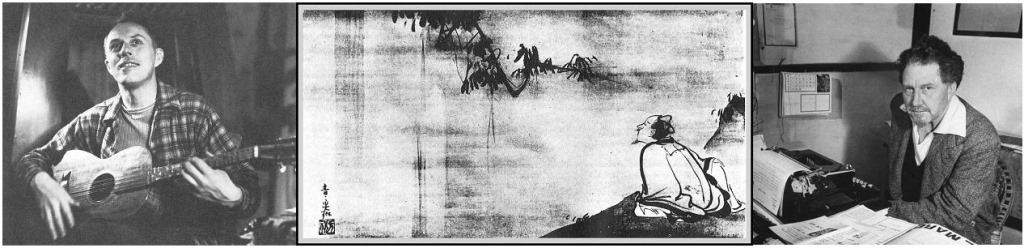
Yeats-Gonne

Yeats and Gonne. Yeats may be taking the bow-tie thing a bit too far. Rather than the musical style (or that paraphrase) I used today, I might have gone with this bare-faced expression of the same angst. You’re gonna miss me baby!


Did I just loose a bunch of readers* with this base summary of a beautiful poem that is sincerely loved by so many people? Don’t understand me too quickly, I’ll get back to what I think when I encounter this poem before I finish.

Indeed, this poem is especially well loved by older people and by a great many women.** If there’s a greatest hits of love poems in English, this poem is there. And I don’t think they’re wrong or missing some unavoidable explication of the poem’s context. I can’t say Yeats’ intent when he wrote it as a young man, or when he published it still being both of those things; but I doubt it was simply to dis an ex that wasn’t exactly an ex. And those that love the poem Yeats made are experiencing it in other contexts close to their own hearts and lives.

I’m close to Yeats’ age when he died, though still younger than Gonne who lived to be 86. The future mood predicted in this poem written by a twenty-something doesn’t ring false to me. I don’t dwell in the past, but it comes to visit me from time to time, and I’ll think of old lovers and not-to-be lovers absent and missing in time and place. For older people, some of those people remembered are dead, and so their present times and places are further obscured by the crowded stars. We often expect our poets today to write of their experience, but it turns out that we aren’t necessarily going to trade Yeats’ skill with a beautiful line for an authentic memoir-poem by an age-group peer.

One could trash this poem on gender role/sexual politics counts. Fine if you do—art is argument to a large part—but I doubt the women who love this poem do so all because they have self-worth issues. And after all, the poem doesn’t predict crushing regret at not bedding W. B. Yeats, or a reader’s personal equivalent. It only asks for a quantity of “a little sadly,” which doesn’t hurt anybody. Patriarchy aside, I suspect every letter in every acronym can accumulate such thoughts over a life-time. And throw out love, sex, and success, and we still cherish memories of any connection where someone saw and bowed to the pilgrim soul inside us. The youth in us seeks it, the old in us remembers it. Even 20-somethings.

So where does this pilgrim soul stand on “When You Are Old?”   That want for connection it speaks of and the word music it’s sung in captures me entirely. It’s good not to trust poetry and poets entirely, but to give oneself over to this song is worthwhile.

I’m sure this poem has been set to music often, but that didn’t stop me. I used an interesting acoustic guitar tuning that someone said had been used by Mary Chapin Carpenter: C G D G B C for this, and then added another of my simple-is-all-I-can-do piano parts. That’s one of the joys of music: sometimes it doesn’t have to be complicated to please us. The player gadget is below to hear my performance. Here’s the text of Yeats’ poem if you’d like to read along. We’ll be back soon with more of our April celebration of National Poetry Month. Spread the word if you can.


*I’m hopeful I didn’t, if only because listener/readers here should already know that I’m going to mix things up. If you think today’s music is what I’ll do next time, you should hear the #NPM2020 piece I’ve been working on—and you probably will be able to in the next few days.

**Here’s a 10 minute video where someone old and someone woman both declare their love for this poem.

The Entire “The Fire Sermon” from T. S. Eliot’s “The Waste Land”

Part of the ongoing adventure of doing this project over the years has been the performance of a section of the English Modernist poetic landmark “The Waste Land”  each April as part of our celebration of National Poetry Month. So far I’ve done three large sections, one each year.

My first preference in this has been to separate these larger “Waste Land”  sections into smaller pieces, lasting 2 to 6 minutes to match the usual length of other audio pieces here, but then each year as a “previously, on ‘The Waste Land”  recap I also present a combined audio file of the whole section that I’d done the previous April.

That means it’s time to present the third and longest section of Eliot’s poem, “The Fire Sermon.”  That’s a sizeable chunk of stuff just from the weighty nature of Eliot’s long poetic threnody on the disillusionment of post-WWI western civilization, his own experience of depression, and search for spiritual and cultural consolation—but I also wanted to fully combine my experience of it with the entire range of musical expression that I’ve used here over the years, which means that I haven’t tried to hurry things along in order to stuff “The Waste Land”  squirming and squealing into a smaller sack.

So, today’s rollup of the whole Fire Sermon section is about the length and experience of an entire vinyl LP record’s side, just a bit less than 21 minutes long. What kind of LP would it be then? Perhaps it’s the second side of a “Progressive Rock” album where the band is going to stretch out in a linked suite. At one time that seemed a fresh thing for the popular music consumer from The Sixties, who had been primed by a few years of short 3-minute singles that were masterpieces of varied kinds of expression. Could one group weave that variety themselves? Could these shorter pop music forms become movements like longer orchestral music made use of?

Lets listen to some LPs

Long ago people playing long playing records. The merman in the lower left mixes expansive rock with Blonde on Blonde and Lenny Bruce’s caustic spoken word take on sex and the culture, which may not be to far off today’s slab of vinyl.


Of course these cycles were, are, cyclical. Less than a decade later the short sharp stab of 3 minutes of squall in a singular mode was back in hip style again. And now? Perhaps we’re progressive suite makers clicking in Spotify or Apple Music, or consumers of Peel-ing playlists in our each streaming perfumed garden of earbuds.

In these we lose this once particular 20-minute-magic. For today’s piece “The Entire Fire Sermon”  was created in one period of time, and not just by one group of musicians, but by one person. I wrote the music, played all the instruments, and recorded it myself to create this. I don’t say this to brag*—it was more a matter of practicality—but to call your attention to an essential part of this, as it’s an essential part of “The Waste Land.”  All the voices, all the modes of expression in that poem are played by T. S. Eliot. The men. The women. Tiresias, the at-least-sometimes narrator who is both genders. Yes, there are elements of memoir as poetry in this; yes, there are places where Eliot’s representing himself, his particular culture, the early 20th century man who went from growing up white upper middle class in St Louis to Harvard to France to London before he was 30. If Tiresias is a prophet, he is also blind and cursed by error. Eliot has all these things in him too, just as you or I do.

“The Waste Land”  is a harrowing work. If Keats hopes art, as his urn, is a “friend to man,” this friend Eliot made is telling you about the parts of life where hope has to struggle to come out. This section, like other parts of “The Waste Land”  has a reputation for misogyny. In my current reading of it, I’m relieved to not have to figure out a way around that, because I don’t share that reading, even if it may be part of the artist. What it is, particularly here and in the previous section, is the complete opposite of sex-positive. There is absolutely no joy or consolation in desire. Sex acts are referenced, but there’s no love made or even pleasure, only bad deals on unequal terms.

Since I’m asking to take up 20 minutes of your time to listen to “The Entire Fire Sermon”  I’m not going to say more about “The Waste Land”  today. If you’ve come here for homework help or because you have a nagging question about “what’s that thing on about” these sites will help with notes on the many, many references in this poem that is in effect sampling and collaging dozens of myths and other works: here, here, here, and here. And last spring, in March and April, I wrote about the individual sections as I presented them anyway.

Another way to experience it is to just let it wash over you as the dirty water of an urban river. Relax between your speakers, put your headphones/ear buds on and let it flow until the side ends. You drop the needle by clicking on the player gadget below. I’ll be back soon with some shorter work by another poet from St. Louis.


*Listening back to it as I made this combined file today, I am reasonably proud of what I did with the music, though I the composer wish I the performer was a more skilled singer.

Sadie and Stephen Hawkings

It’s leap year, and the last time there was one of those, Dave Moore wrote this song about the mysterious cosmologies and quantum physics of love.

We’ve already met Stephen Hawking here, though in a roundabout way, as the universe may be. When Hawking died a couple of years ago, at his public memorial an astronaut read a passage about the cosmos from a Percy Bysshe Shelley poem to eulogize the great cosmologist. Coincidence? Well I looked, and I was surprised to learn that Shelley, that early 19th century romantic poet, could write on the physics of light and calculate the speed of a light-year. Not quite quantum theory, but a better performance than many poets today might do. Romantic wonder and physics may be objects that are closer than they appear.

I suspect Sadie Hawkins is a more obscure star in our firmament these days than Stephen Hawking. Dave would know Sadie first-hand because he’s much more knowledgeable than I am about what once were comics and are now whatever they are fancied as an art form. Back when they were funny papers Sadie was created by cartoonist and satirist Al Capp.

The Montgomery Story comic book

Al Capp ran a comic book company too. In 1957 he published a comic book about the Montgomery Bus Boycott, which helped bring to the fore Martin Luther King. The story in Dave Moore’s family is that his mother typed MLK’s thesis in Boston. Like I said, objects are closer than they appear.


I can’t quite fathom how to condense Capp into a short blog post. I proudly thought I could come up with two or three sentences to sum up Capp’s career—but that’s impossible. His Wikipedia article covers the high points I guess. I will say that by the time I was reading comic strips the Al Capp mythos was probably past its prime and unappealing to me. But that didn’t mean that I didn’t know Sadie Hawkins. Schools still had annual “Sadie Hawkins dances” where young women were licensed to ask men to a date or dance, and all this (along with some legends about Irish Saint Brigid) got melded into a tradition that women could propose to men on Leap Year day.

That’s enough to get you into Dave’s song. As long as you’re willing to entertain a song about a once highly popular cartoon strip and theoretical physics, you’re the audience for this one. I don’t know if that’s enough to fill a Sadie Hawkins Dance floor, but the wallflowers are more interesting there I’d think.

How do quantum forces work? I doubt I know more than Percy Bysshe Shelley. I planned to present this piece for leap year day sometime back, but what did I think two years ago when I heard Shelley’s poem? That he had written of a mazzy  heaven, and that flavorable word brought me to think then of Mazzy Star, an indie rock group that can trace its way back to Minnesota about the time Dave and I started to make music together. Now as I write this post this week, I read that the person whose particle path made that traverse, Mazzy Star principal David Roback, has just died.

The player gadget to hear the LYL Band perform Dave Moore’s “Sadie and Stephen Hawkings”  is below.


The Phones in our Hands (are so Magical)

This week I met with a small group of poets that have been sharing their work with each other for a few decades. At the end of the night one of us said that, despite the date, that love poems had been rare.

I said that I do try to look for love poems to present here as part of this project, but when I do I’m often waylaid by something gloomier—“But then, love poems can be as complicated as any other, and there’s always Lorca where the poem is ‘I love and desire you even while we’re between one foot and our whole body and soul in the grave.”

Did I mention the group is all old poets? Young poets can choose to be poète maudit types, and to mine the tropes of love, separation from all, and death—but past a certain age, us old poets have an organic attachment to that role that we’d have to actively deny to escape.

So, for Valentine’s Day, here’s a free-verse sonnet of mine that speaks about a kind of love that old partners may have. I think some readers could miss that aspect in “These Phones in our Hands (are so Magical),”  working as the poem does to contrast the little glowing palm-shrines that are now common to most of us with other kinds of connection.

These Phone in our Hands

Long time readers here know that we’ll be back soon with performances of poems I didn’t write.

The magical incident it describes, of a phone that can display a picture of a couple seven years in the future is not entirely fantasy. As the poem jokes, there are processes that can age a photo to show how a person might look at an older age. For someone older, the assurance that one might see proof that one will be around for seven more years is magical in a more above and below-ground earthy sense. Young lovers can wonder if their partner will stay partnered with them. Old lovers know  that they will part.

The final couplet may be tricky. The empty hands are not just empty of their magical smart phones.

I almost presented this with just the drums, but in the past week or two I’ve spent composing time blowing on the guitar because my fingers have been up to it, and maybe I can recover a little of the few chops I once had. Yet, in the back of my mind I’ve reminded myself that it’s been awhile since I composed an orchestra piece for this project, and that led to the strings today. The player to hear it should be below. If you’re reading this in the WordPress reader on an iPad or iPhone the player gadget may be missing. Why? I don’t know, as the player shows up fine in Safari—but you can subscribe to the audio pieces by themselves in the Apple Podcast app or many other podcast places as “Parlando – Where Music and Words Meet.”

The Wild Roses

When I started thinking and planning this project, I thought I’d be producing audio pieces around five to eight minutes in length. That was the most common length of the preliminary combinations of various words with music I had experimented with before the Parlando Project was launched.

I made a course correction once the project took off. If you’ve been here recently you’ve seen that the typical audio piece is now between two and four minutes, roughly the length of the classic 45 RPM single record of my youth. How’d this happen?

I found that I am really drawn to the condensation and immediacy of lyric poetry, the kind of thing that lands its impact in 30 lines or less. Like those three-minute singles of my youth, those texts can often cram quite a bit of expressiveness into a similar length of time.

Then part of this is also counterprograming. About half of the listeners here consume these audio pieces as podcasts on Stitcher, Spotify, Apple Podcasts, Player.FM etc.  A great deal of podcasting on offer clusters around longer-form, loosely organized talkfests. I have no long commute, take few long trips, and much of my life is reading, writing, composing or recording and none of that opens opportunity for someone remotely talking at length (however engagingly) about something.*  My thought is that even if someone enjoys that, then mixing in a short dose of poetry or other condensed writing with music from this Project will be a pleasant contrast.

And there’s a more intimate reason. I’m a weak singer who cannot execute complex sung melodies or make simpler ones thrilling over a longer duration. Listeners will note that I don’t sing most pieces here, using instead variations of chant, talk-singing, or declaimed spoken word instead. This leads me to want to make my statement in a shorter format.

What’s all this leading up to? I told my wife that I’m hoping I’ve earned the right to potentially bore my audience today, because I’m going to present an eleven-and-a-half minute, 20-verse ballad. What’s more, I’m the author, so I can’t even cut the thing for length as the writer will complain.

“The Wild Roses”  has an odd inspiration: a TV episode that aired almost exactly sixty years ago on Feb. 6th 1960 as part of the western TV series Have Gun-Will Travel  titled “The Night the Town Died.”  Have Gun-Will Travel  strived to differentiate itself from other TV westerns of its era. It liked the odd-ball script a lot more than most, and the series’ star Richard Boone (who also directed that episode) seemed to favor bold acting performances. And though he rode a horse in the 19th century American west, Boone’s gun-for-hire character Paladin acted more like a noir private detective.

I’ve written here that the then common 25-minute stand-alone story format for dramatic TV shows developed poetic effects. Our modern, linked-episode, multiple-hour seasons develop characters over time in a way that emulates novels on the page. The much shorter format of the ‘50s  and early ‘60s had characters life stories sometimes told in a scene or two.

I’ve often wondered if the teenaged Bob Dylan watched these shows. There are elements of his story-telling in song that sometimes remind me of them. Dylan’s narratives are much more abstract, and Modernist language and tactics are deployed more often than the TV writers were allowed to do, but the sense of quickly sketched and absurd situations could be linked.

Gunfighter’s squint or age-related myopia? Richard Boone as Paladin, Robert Zimmerman as Bob Dylan.


The HG-WT episode “The Night the Town Died”  has some strong moments, but overall it leaves more an impression of its oddness and slightly over-done seriousness than coherence. I took very little from its script:** a single character name, a line of dialog—but largely I relied on a funhouse mirror reflection of its overall plot arc: a man comes to a town to revenge the lynching of his brother,*** but he wants to first determine, Hamlet-like, who his just target is.

I chose to tell my story using a young female Ophelia-like character as the narrator, and I gave the revengeful Hamlet-ish protagonist only a few lines. The former appears in “The Night the Town Died”  to speak about wild roses, the later bears the name I instead gave to the murdered brother. There’s no Deus Ex Machina Paladin gunfighter to serve as judge or referee as in the TV show. In my ballad, the narrator and the revenging traveler characters meet four other characters. If you think some of these encountered characters carry modern or out-of-time undercurrents, yes, that was my intent. And coming in right after a Yeats’ poem last time, I chose the town’s name in my ballad with intent too.

These choices were performance challenges. The writer (me) didn’t give the performer (me) much choice but to try to “play” the characters in voice to line out who was speaking in the immediacy of performance. If someone else was to perform this, having a number of vocalists to play the characters would be better I think. I sing the woman/narrator role, but then speak the lines from the men she meets in hope it helps set them apart. Likewise, my song might gain value from having a woman singing it.

The Wild Roses

There are still a few lines that I don’t think are as good as they need to be in this version. Maybe today’s performance is a bootleg/demo?


Performing this kind of narrative song takes special talents, and I have no more than a small amount of what should be deployed in that task. And as a writer my narrative for this ballad is also unusual. It’s intentions are more like Bobby Gentry’s “Ode to Billy Joe”  or Bob Dylan’s “Isis****”  than the straightforward narratives of “Matty Groves,”  “The Dowie Dens of Yarrow,” or Marty Robbins “El Paso.”*****   Does “The Wild Roses”  succeed or fail? The player is below.


*My wife, whose routine and preferences are different than mine, enjoys conventional podcasts, and audio books as well. I grow more and more impatient with age it seems. I can read and absorb more denotative information in the available time with my eyes than with my ears.

**There are two screenwriters credited. One (also credited with the story) had what seems an unremarkable career: Calvin Clements Sr. The other,  Frank Pierson, had a longer. more successful career.

***Yes, another post-WWII western based on a white-on-white lynching, which consciously or unconsciously may have been a way to deal with the horrors of terrorism directed at Afro-Americans and the responsibilities of citizenship and moral choices.

****More obscurely and perversely, some of the most laconic and least well-remembered Dylan songs like “The Ballad of Frankie Lee and Judas Priest”  and “Clothes Line Saga”  were also an influence here.

*****This Western gunfighter ballad was topping the charts at the same time “The Night the Town Died”  episode aired 60 years ago. Around the same time, Bobby Zimmerman started using the name Bob Dillon (Marshall Matt Dillon was another leading TV western character of the era, though there is a Dillon road in Dylan’s hometown of Hibbing, and there was a successful ‘50s football player that had the name of Bob Dillon)

Poem 1 from Twenty Love Poems

Last post I said that Pablo Neruda’s departed lover was by definition absent by the time we got to the final love poem in his Twenty Love Poems and a Song of Despair.  I’ve now read the entire collection in an English translation, and I’d have to say that the lover is to a large degree absent throughout—not just in the sense that elements of a doomed romance are woven into the whole series, but in the sense that she isn’t really given a living presence.

Still, quiet, and dark are all attributes Neruda sees or applies to her.*  Erotic attention is  given, moments of apparent mutual intimacy are sketched, and most importantly to us as readers (as opposed to actual partners of Neruda) a range of striking imagery is used to represent her and the poem’s apprehension of his experience with her.

This last point may be crucial. Without it, this poetic series would be only another example of the syndrome of “The Male Gaze.” If that sort of thing, and the patriarchal power dynamics associated are a point of pain, this series of poems by the eventually Nobel Prize winning poet may not be for you.

Sexuality and its expressions, its inescapable intertwining with the rest of society’s hierarchies and prejudices, is not a simple thing. Twenty Love Poems’  popularity testifies that not everyone in the past 100 years sees it this way or is equally bothered by that element.

I’m willing to put Neruda on the stand, but only in our moot court, since he is now long dead, and no one now living likely had to try to negotiate an erotic relationship with him. He’s now become his writings, and his youthful lovers too have become the imagery that he preserved them as. Take that in the balance as we weigh the once living beings and their kindnesses, cravings and blindspots against the art that one of them has left.

“Poem 20”  in the series began by launching one last extravagant image about the love affair as it writes that there can be no more, but as I now turn to the opening of the series, the 19 year old Neruda is going to try numerous audacious images to describe his beloved and their relationship. They’re all going to be one-sided. She never speaks. Her emotions can be sometimes made out if one reads the poems in an Imagist manner (where emotional words are not used, but depicted with external description) but they are not the point of the series which is focused on the male speaker’s suffering, confusion, and dissatisfaction.

I’ve mentioned before that I fear that I may ere in my translations because my prime goal is to make vivid the images I discern in a poem. In Neruda’s “Poem 1,”  I differ from other translations I’ve read of it in that I see some images they have muted or made more abstract and “prettified.” I worried about my tendency here so much that I pulled back from some rawer translations I considered. This may be cowardice on my part—but the most noble explanation I can give is that to make a sure judgement on that level of tone I would need to be a fluent speaker of the source language and more familiar with the entirety of Neruda’s work.

Poem 1

Here’s the translation I mined from Neruda. “It’s much cheaper down in the South American towns where the miners work almost for nothing.”

.

Here are some brief notes on my experience of “Poem 1”  in making my fresh translation of it from the original Spanish.

The poem opens with an audacious image: the beloved is portrayed as an immense (if inhuman—not even animal, but mineral!) landscape. My reading is that Neruda is making an extended metaphor that erotically he’s engaged in mining his lover’s body. Are there subtexts here (I assume unintentional, but who knows) to foreign corporate exploitation of Chilean resources?

The first quatrain ends with what I read as a brag that lover-man Neruda is so potent that his lover could only conceive a son from his mining operation. See what I warned about? Either Neruda or I—or both of us—is risking risibility here.

In the second quatrain, Neruda recovers. This is flat-out marvelous and mysterious writing. Perhaps it benefits in that Neruda is no longer trying to describe his beloved, only himself here. In my translation task I worked a bit on what word to use for “túnel.” “Tunnel” is the obvious choice, but I never liked it as word-music when I tried it. I chose “cave” instead, preserving the anima subtext I sensed.

The third stanza, problematic again. It opens well, and as word-music compels. The “de leche ávida y firme” phrase is rendered by all the other translators in whatever their best Surrealistic/poetic manner finds. I’m more base it seems, and was struck by secondary Spanish meanings for “leche.” I could also have chosen the idiomatic meaning of smacking or bumping, even though other translators haven’t. Third line? If she was to speak: “Neruda, my absent eyes are up here!”   Fourth line. “Rosey pubis” is just bad, and I couldn’t justify linguistically my alternative.

OK, you in the back row. Stop snickering. Or otherwise we’ll stop with erotic poetry and go back to Longfellow right now!

Last stanza. How self-aware was Neruda when he wrote this?** As he refrains on woman and body, he goes and drops in the “my woman” formulation with it. Given that in the course of this series of poems or even the rest of this stanza, this isn’t going to be a long-term commitment, I’m not sure how he gets the deed and mineral rights on his beloved’s mortal corpus, but if you like you can just say that I’m 2020 anachronistically considering 1924. The final three lines make plain, even if it’s lovely verse, that, well: a man’s gotta ramble, I can’t be satisfied, and the problems of us little people don’t amount to a hill of beans in this crazy world.

Am I being unfair to Neruda? Even here as a 19-year-old he’s an accomplished poet who found an avid audience that bonded with what they received in his art. When reading his Twenty Love Poems and Song of Despair   I came across as many “wow!” lines as problematic ones, and I wasn’t bored. Not everyone looking for a lover, much less a love poet, is going to ask for the correct dialectic to get them through the night.

A possible defense is that this isn’t poetry as memoir (a common form today) and that the woman in the poem seems soul-less and silent because she is intentionally an abstracted metaphor. As I said when we started—whatever, she is now.

For my performance I chose not to go romantic for this as I did with “Poem 20”  last time. While there is a tender cello present, the main music is carried by pianos playing astringently. I performed it more as if it was a Browning-like dramatic monolog—for monolog it is. Feel free to hiss or sigh with the character of this very young dramatis personae.***  The text in Neruda’s original Spanish alongside another English translation is here. The player gadget to hear my performance is below. If you’re reading this in some blog reading software you may not see the player gadget, but this highlighted hyperlink should alternatively play the the performance.

.

*In “Poem 15”  the poet says to her “I like for you to be still: it is as though you were absent,/distant and full of sorrow as though you had died.” This may be taking a Goth stance a bit too far.

**In “Poem 14”  he shows a moment of sympathy, “How you must have suffered getting accustomed to me.”

***Former REM frontman Michael Stipe had one of those interviews via a standardized questionnaire recently. To the question “To whom would you most like to say sorry, and why?” he answered:

“Anyone I slept with before the age of 27…”

Poem 20 from Twenty Love Poems

This should be embarrassing to admit, but I’m not that familiar with Pablo Neruda’s poetry. This project is a great motivator to fill in such gaps. English translations from Chilean Neruda’s Spanish exist, but there may be no better way to become truly familiar with a poet than to translate them yourself.

As 2020 began, I saw a list of some works that came into public domain status on January 1st. Neruda’s Veinte poemas de amor y una canción desesperada (Twenty Love Poems and a Song of Despair)  was one of those 1924 books that are now free to perform and use.

Published when Neruda was 19, it has reached a large audience for a poetry collection: the Wikipedia article says it’s the “Best selling poetry book in the Spanish language ever” and gives overall sales as 20 million copies. These are poems of erotic love and desire, and that subject no doubt helps its popularity. I think it’s safe to assume that some of the sales would be love-token gifts.

Veinte Poemas Title Page

“If you see her, say hello. She might be in Tangier…” Pablo Neruda’s 1924 “Blood on the Tracks”


I’ve only translated one poem in the series completely: the final love poem. But on a cursory examination this collection of poems is an example of a genre that if presented as a sung recording would be called “a break-up album.” That is, it’s an expression of the author’s experience of a romantic relationship that has come to an end. It’s a common enough trope that many singer-songwriters have one in their catalog, and most of the rest could support a playlist to create one in effect.

A problematic element in the break-up album, sung or printed, is that the hard-end of a relationship tends to leave the writer who gets to document it a number of not always elevated states: self-pity, anger, hopelessness, revenge, grief, confusion, sorrow. By definition, the singer is “working through this.”

The former beloved likely appears, but they often don’t get a very well-rounded portrayal—the author’s pain is the side that gets sung. Sometimes you get Blood on the Tracks, and other times you get “Ballad in Plain D”  from Another Side of Bob Dylan. Where’s Neruda, who was a few months younger than the Dylan of Another Side when Twenty Love Poems was written, in this continuum? The poet’s beloved here is referred to mostly in the sense of her absence in this final poem. Not much is said about who did who wrong and in what ways, and by this it’s a universal poem.

Universal can risk banality. Against this danger Neruda arrays considerable musicality in his poem. It’s not a strict form like a villanelle, but repeating lines and phrases work like that form and remind us of the stuck-ness and the self-mantras at the end of a relationship. From my start at a couple of other poems in the series, the whole collection seems to be full of sensual imagery, but this last poem, so full of loss and lack, challenges this tactic.

Neruda wrestles with that right from the start, saying in one of the refrains that the dissolution has caused him to be able to write “the saddest lines” and he then immediately launches into some of the most elaborate images in this poem:

‘…The night is full of stars
And the dark stars on the horizon are shivering’
The night wind swirls the sky, singing.”


Yet the rest of the poem is not consistently in this voice. Alternating with the more striking images are lines you, I, or the next person might say at the end of a relationship. This may make the poem more inviting to those not ready for a full-on array of Surrealist images.

This also made it easier for me as a translator. I feel my task as a translator of surreal images is to make them vivid for speakers of contemporary English, and that leads me to feel I should understand even the most hermetic image to render it as well as I can. I’ll often spend a long time on just one phrase, one image. What is the poet’s mind, however disassociated from convention, sensing, seeing, in this?

As a performer, my other task was to invest this poem about the end of a passionate state with appropriate emotion. How much to understate? How much to state with extra conviction or extra doubt? What I lack in skills there I can try to shore up with music. The composition’s core is an acoustic guitar part that while it isn’t exactly based on a drone tone, doesn’t have the kind of progression that takes the listener on an irresistible linear route. I let my strings sing with the bass guitar part, an instrument that can portray a heart-sob better than most. Standing in for the stars, the night winds pushing clouds, the distant singer, and the lost beloved is a high melody part off in the right-channel distance.

The player gadget to hear this performance in English is below. If you’d like to hear the poem read in the original Spanish, you can find that here. Normally I’d provide the full text of the poem—in this case, my fresh English translation—but this one is rather long on the page. I’ll post it separately if I get some requests for it.


Thanks as always for reading and listening.

Endless Circle

Here’s another poem by the lesser-known American poet Genevieve Taggard. Taggard was sometimes classed with a group of woman poets of the first part of the 20th century, all of whom suffered from the rise in the 1920s of “High Modernism” that held that longer poems with elevated metaphors referencing prior literature and art were the mark of seriousness in poetry.

Robert Frost* was able to hold out against this to some degree, but most female poets had a harder time of it. Three poets I’ve presented here multiple times: Edna St. Vincent Millay, Sara Teasdale, and Elinor Wylie all suffered from this change in the culture. Before this change in our last century’s Twenties, they were all prize-winning American poets, and all had achieved a reasonable degree of readership and fame. Somewhere nearing 100 years ago, all of these figures started to be classed as writers of unserious work: merely pretty verse. By the second half of the century when I went to school none were taught in my classes. Not part of the canon.

The poet, professor, and blogger I’ve referenced here earlier this year, Lesley Wheeler, recalls the term “The Songbird Poets,” which exclusive of it’s dismissiveness seems apt to me. The whole idea of poetry as song rather than an impressive castle of elaborate and complex images was in retreat—but all of them could write the kind of short poem that sings off the silent page. I can’t resist turning up the volume on them for this project.

Was their gender part of the downward reassessment? No need to make too fine a point about it: yes. To the degree that the critics and canon formers had an objective criteria, it was to see an excess of emotional content in their work, and they wished for a poetry where rote sentimentality was reduced or eliminated entirely and where overt emotional language was replaced by states revealed in those complex and often academic images.

But one can’t take emotional content out of art, whose whole Unique Selling Proposition is to transfer the experience of experience between one mind and another.  Those who’ve followed our yearly April dive into that High Modernist checkpoint T. S. Eliot’s “The Waste Land”  know that it has a harrowing emotional core, so harrowing that Eliot himself seemed embarrassed by it later in his career. By the time I was introduced to it in the second half of the 20th century this aspect of that medley of lyric poems was absent in the syllabus.

I maintain that song, the word-music of a poem, its structure, order, and how it rhymes its observations, can (just as much as some cool classical image formulating an objective correlative) powerfully contain and convey emotion. “The Songbird poets” were vastly underappreciated for the complexity of their examination of emotion and the human condition. Let us judge these means again as we look at Taggard’s poem. We may be able to look at these works and see what the previous generations couldn’t appreciate: The form her verse takes here is integral to the impact of this poem.

Endless Circle Text


This is a poem that holds itself in a mysterious balance, a Mobius loop of a story fulfilling its title. My reading of it is that it’s a love and death poem that portrays neither as final by its spare and graceful text. As I understand it, it opens with lovers under a tree, who by the second stanza have aged and edged into a death, a transition they mark “laughing and leaping” as if rebirth into youth.

The first verse is then repeated, and I’m feeling it ambiguously. Are they a new generation of young lovers under a tree, fated to love and weep, or has the poem’s singer moved on to a new love, a new desire fated to end in weeping—or are our lovers buried under the tree now, their spirits recalling life?

I don’t always know where the musical accompaniment ideas come from for this project. Sometimes I realize after the fact that I’ve been channeling some musical idea subconsciously. After I finished the mix on my performance of Genevieve Taggard’s “Endless Circle”  I suddenly realized that I may be musically recalling The Incredible String Band, a Scottish group from the weirder fringes of “The Sixties.” I admired their asymmetrical and unafraid to wander song structures and their wide-ranging combinations of various instruments, but I’m always hesitant to recommend them to others because their vocals are (like mine often are) more than a little pitchy.

If that part of my music here bothers you, today’s piece will then. This piece called out to be sung, even if mine is the only voice I have available to sing it today. The player to hear “Endless Circle”  is below.


*William Carlos Williams also fought against this, but he seemed to have felt this academic turn hurt his work’s standing. Marianne Moore is a conspicuous example of a woman who was able to buck the trend by writing every bit as cool and hermetic as any of the Modernist men. Frost himself seemed to write fewer of the short lyrics that his early books featured and turned to longer blank-verse narratives. And another Parlando Project favorite, Carl Sandburg, mixed in longer, more Whitmanesque epics, and turned to his Lincoln biography.

Over in the British Isles I don’t think things worked out quite the same. Why this might be is too long a subject for this post, much less a footnote.

**If you want to read a long impression of what it’s like to listen to an Incredible String Band Sixties album with an open mind and an ambiguous conclusion you could click here: “Makes Syd Barrett sound like Neil f’ing Diamond” it says. Or if you’re too young for that writer’s simile to hit home, think of the weirdest chronic-infused hip-hop mix tape you could imagine, only it’s played by two white guys and their girlfriends on a shed-load of acoustic instruments instead of samples and loops, and autotune clearly hasn’t been invented yet. Or if you’re brave, you could take the adventure and listen to one of their records yourself. Yes, an excess of “canyons of your mind” hippie naivete in the lyrics too, something that Taggard’s form and concision here contrasts with, but there may still be some charm in their work since there’s little danger of it taking over the world these days.

The most popular Parlando piece for Fall 2019 is…

We’ve reached the top of our seasonal top 10 covering the pieces you most liked and listened to over the past three months, but before I reveal the top piece, let me cover one other area.

I know from growth in the audience that some of you are new to the Parlando Project. Because of that, every so often I should explain what this project does. We take words, mostly poetry, mostly other peoples’ words, not our own, and combine them with music we write and perform ourselves. Sometimes we sing the words, sometimes we don’t, sometimes we split the difference somehow.

By intent the poetry we use and the music we create for it varies. Most texts are used under public domain rules.*  What kind of music do we use? I try to make it a whole lot of different. I’ve never been able to answer the simple-sounding question “What kind of music do you like?” because the idea of liking one kind of music is just not in me. So be aware that you may run into music here that you don’t care for, either because of our limitations as musicians or your own tastes and expectations—and that may happen right after a piece you liked. The same applies to the words we use. There are over 400 examples of what we do here in our archives, so you can move on and look at another one anytime. If you wonder if we’ve presented a poem or author, search here and see.

OK, so who sits atop our Autumn 2019 hit parade? William Shakespeare that’s who. That’s no surprise considering that it’s his Sonnet 73 which begins “That time of year thou mayest in me behold” (but which I’ve always thought of as “Bare Ruined Choirs”  for its most famous image)—one of the longest-famed “autumn of one’s years” poems in English.

Shakespeare Sonnets1609 edition Title Page

Let England Shake-Speares. The title page of the first printing.


I wrote at some length about my experience of the poem in my original post here, but I’ll reiterate only one point: even though this poem resonates with many older people and older lovers in particular, it was written by a man in his early 30s. Consider all the exegesis of Shakespeare’s sonnets that seek to tweeze out his sexuality, incidents to fill out his biography, or the identity of the fair youth, the dark lady, or “who really wrote Shakespeare,” and consider that they were written after all by an actor and a famously prolific creator of opposite and varied characters. I too want to invest those sonnets with his experience, to believe that this great artist is letting me see his heart. How much is intentionally or unintentionally “real,” and how much is a good illusion? We may never know, but we have the art none-the-less.

Here’s the player to hear my performance of Shakespeare’s Sonnet 73 “Bare Ruined Choirs.”  And a sincere thank you for listening and reading this fall. I hope that some of the pieces we’ve presented have pleased you and illuminated some matter or another.


*This means that the poetry is usually from before 1924. I happen to like (and have grown to like even more via this project) a good deal of early 20th century Modernist poetry, but we’ll jump around to older stuff than that too. While we’ve done many of “Poetry’s Greatest Hits” over the years, I’ll use lesser-known poets and poems when they strike me as interesting.

Do the Dead Know What Time It Is?

Here’s a poem by 20th Century American poet and artist Kenneth Patchen performed with music which manually realizes some ideas often produced by machinery.

Patchen is one of the original poetry accompanied by jazz guys, an idea that is one of the tributaries to the Parlando Project, but the poem of his I use today isn’t one that sings off the page when you first look at it. The speech in it seems casual, as if one is overhearing someone talking.

“Do the Dead Know What Time It Is?”  has a very unusual structure. It’s one part a Robert-Browning-like dramatic monolog and another part seeming snippets of a bar-room conversation. But Patchen doesn’t separate these out into differentiated sections of a multipart poem, rather the two modes seem to be occurring at once, the louder monolog spoken by “the old guy” to the younger man and then the often whispered and interrupted conversation between the younger man and a woman who is trying to pick him up.

Here’s Patchen reading this poem with a jazz combo. I also just discovered that The Blue Aeroplanes did a version of it with a rock band decades ago.


I first thought: oh, what a great thing for a recording! I’ll put one in one stereo channel and the other on the other side—but then I thought better. The claustrophobic nature of these two conversations is part of the effect Patchen has designed.

As barroom stories go, the old guy’s story is a good one, even if the younger man is only half-listening—but the second, whispered one, is all about what isn’t exactly said. I could go on at length about how the two stories connect, what they say to each other in the structure of the poem Patchen made, even though the two conversations in the bar never actually join each other. I found the poem quite moving, but I’ll leave it to you to connect them.

Instead, let me dance about the architecture of the music today. I’ve been on a loud electric guitar kick lately, which may frustrate those of you that prefer the acoustic music, which will return in good time. Music structured like this piece is often constructed by loops stored and manipulated by computer software or by small solid-state devices that can capture a phrase and repeat it. Similarly, the original rappers’ DJs used turntable manipulation to repeat a section of a grooved record, a task that can now also be emulated digitally at the press of a button. There’s nothing wrong with these methods or machines.

Still, I most often try to play the repetitive parts you hear here. It’s not something I’m naturally good at, and I allow some imperfections to occur. Perhaps I do this because I became enamored of the hand-played repetitions that made up the composed music emerging in New York near the time I left for the Midwest—but it’s not Steve Reich or Phillip Glass* that today’s piece sounds most like. The proximal influence is a record album that came out in the early 1970’s called No Pussyfooting  by Eno and Robert Fripp. That record’s guitar textures were produced by mechanical means too, two tape recorders set several feet apart from each other so that the “looping” was really a long loop of tape between them that allowed measures played by the guitar to repeat and get gradually added to in approximately real time. This seemed magical then, but a tidy little box that sits on the floor and costs about $100 can do all that these days.

No Pussyfooting

It was hard to find a barber shop with a fresh tarot deck in the ‘70s


There are two guitars in my music here, but the one that sounds throughout most of the piece I’m playing with loud sustaining notes that I (unconsciously) made sound as if they are a repeating loop with variations even though it’s real-time, straight through playing emulating Robert Fripp’s sound on that record which made such an impression on me at the time. One never knows what ghosts will visit when I plug in a guitar.

You can hear that music combined with Patchen’s words with the player below. The full text of “Do the Dead Know What Time It Is?”  is available here.


*Reich did use tape loops as well as live through-played instruments. Seeing the small ensemble Phillip Glass toured with in the ‘70s: electric combo organs that sounded like “96 Tears”  and “Light My Fire”  along with a handful of wind instruments was amazing in a small space.