Drunkboat, Lenny Kaye, Patti and Cordwainer Smith, Rimbaud

OK, I warned you. It’s summer, this is where I get weird, maybe even self-indulgent, since the poetry audience consistently drops off for some reason during this season. We’re going to travel time and space a bit before we get to poetry – but we’ll get there.

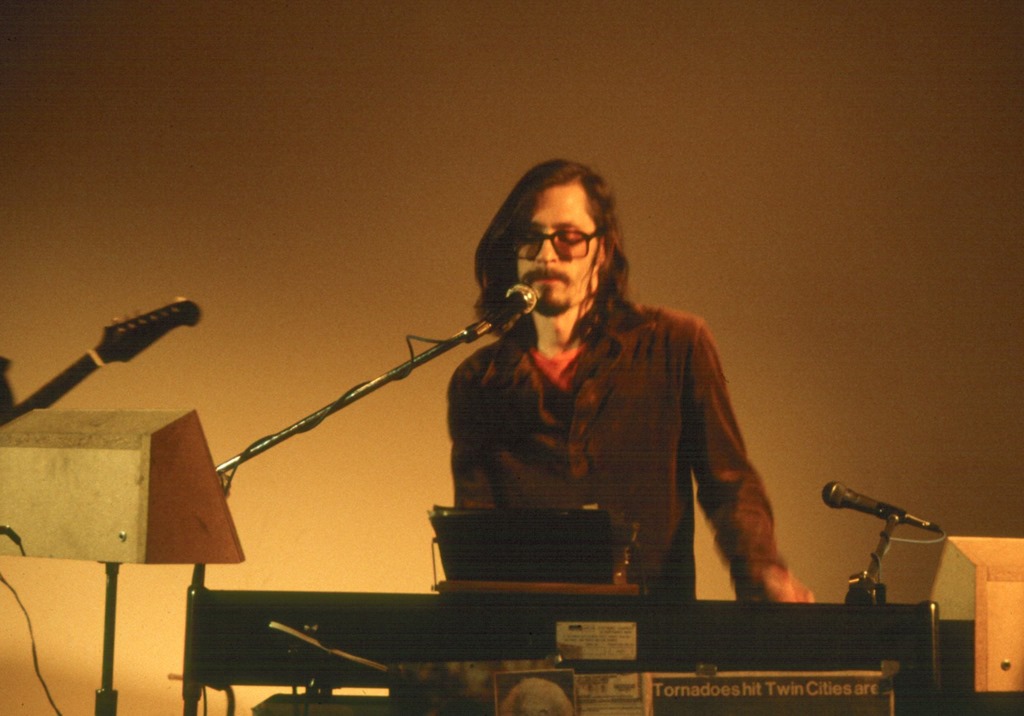
This morning I saw that writer and musician Lenny Kaye was a recent guest on Aquarian Drunkard’s Transmissions podcast.  Kaye has a long career mixing writing about music as well as making it. When writer Patti Smith wanted to inject some rock’n’roll into her poetry back in the early 1970s, it was Rock Critic/Musician Kaye that she recruited. Their earliest performances as a duo were highly improvisational. He describes them as “fields:” where Smith would start off in some direction and he would then respond on guitar, and the interaction would go off wherever it seemed to want to go. The results are one of the inspirations for this Project.*

As a podcast guest, Kaye talked about the things that shaped his life, his approach to the arts. Within this conversation he brings out this historical point: the “Rock Press,” that strange spontaneous birth in the Sixties,™ was significantly an outgrowth of Science Fiction fanzines. Kaye himself started one before he was a Rock Critic, Paul Williams who founded the seminal Crawdaddy  was a SF fanzine veteran. Same for Greg Shaw, who founded Mojo Navigator and then Bomp,  all magazines writing seriously about Rock! These efforts proceeded the founding of Rolling Stone  by about a year.**

OK, a little digression. I promise I’ll keep it short. As a young person I read some SF, liked some of it, but couldn’t call myself a full-fledged fan. I never subscribed to the several monthly midcentury pulps that were publishing SciFi regularly back then. Never attended a Con of any form. Never wrote for an SF fanzine or even sent a letter to an editor. By my late teenage years, poetry and music was my thing. None-the-less, because I liked smart folks with interests, I had friends who were intelligent and committed SF enthusiasts.

I’m not sure of the Transmission interviewer’s SF interest level. The SF feeding into to the critical writers/rock-is-an-art-form case was made and then petered out in the discussion – but as the interviewer redirected, Kaye uttered the name of an SF author, “Cordwainer Smith.” He said nothing more than the name, then the conversation moved on.

Longtime readers here may sense what I thought at that moment: “What does Cordwainer Smith have to do with this Rock/Lenny Kaye connection?” Cordwainer Smith isn’t an obligatory big name, a bust carved into the SF pantheon, but he was a writer in the Midcentury SF scene whose name I recalled. I called up my friend and Parlando contributor Dave Moore (who is much more SF knowledgeable). “I don’t think he wrote all that much,” Dave said. “He wrote stuff about interplanetary diplomacy.”

Summary overviews I’ve now read backup Dave. A couple of novels, a few book-length collections of shorter pieces. Cordwainer Smith was not one of those prolific pot-always-boiling writers who made a living out of pennies-a-word publishing. The distinctive name I could remember was a pen name, and the author who used it closely guarded his identity. That man, Paul Linebarger had a Political Science doctorate from Johns Hopkins, had professorships at the college level, rose to the military rank of colonel in the reserves after serving in WWII, and had continued hard-to trace-ties with US government diplomacy and likely spycraft.

Looking at the list of his works I see this story “Drunkboat. ” Huh? Now we touch the Venn diagram edges of the poetry and music nerd writing this. Could this be connected to “Le Bateau ivre” (The Drunken Boat”) – the wild, visionary poem written by the teenage French poet Arthur Rimbaud? In 1976 I bought my first Rimbaud collection, which included that poem, partly because Patti Smith spoke highly of Rimbaud. Back to our other Smith, Cordwainer, and his SF story: a quick Internet search said there is a connection with the poem. Of course, many a story, SF or otherwise, might just steal a title or a quote from high lit to class-up the joint.

Drunkboat Cover

October 1963. John Kennedy was President, he was welcoming the original Mercury 7 astronauts at the White House to celebrate the wrap up of the first US Earth orbit flights. Bobby Vinton’s “Blue Velvet” was the top record on the pop charts. “Drunkboat” is published and I wonder how many readers of Amazing Stories knew who Arthur Rimbaud was. In the future this will all make sense.

.


This afternoon I found a copy of “Drunkboat.”  As has happened to me before when I read Midcentury pulp magazine SF, I’m a little surprised by how clunkily it’s written. “Drunkboat”  is told in a roughly implemented sort-of-fairytale mode. The dialog, while plentiful, is as awkwardly bad as a midcentury SF B-movie script, and there’s barely any attempt at characterization. The hard-science aspect sometimes seems applied as mere decoration for the genre audience, but it involves a farrago of space-time continuum hand-waving within a medical setting that might be a choice taken by an author with lengthy connections to Johns Hopkins.***

So why am I expending our shared time if this is simply a crappy 1963 pulp story? Be patient, the connection isn’t just casual, it’s integral.

Although the story references a multi-lightyear multi-planetary universe set thousands of years into the future – world-building Cordwainer Smith utilized for many of his SF pieces – one could easily see this story being intended as a prose rhapsody on the themes of Rimbaud’s poem. Given the elevated education and “day job” positions Smith/Linebarger held, I can suspect that he’s making a conscious choice to tell his story the way he does. Is he speaking down to some limited supposition of his pulp magazine audience, academically code-switching so to speak? Or does he like the artifice of telling a fantastic story in a way that subverts any chance of it portraying mundane reality? Was the writer reaching for an Orwell parable? Smith/Linebarger was fluent in German, and in places story elements remind me a little of Bertolt Brecht. The story drops in a number of Dada-level children’s rhymes as asides, and he’s constantly having fun with degraded homonyms. Our story’s hero is “Artyr Rambo.” The Earth location is “Meeya Meefla,” (say that last one aloud). And here’s another thing you might not expect (I can’t even fully explain its effect on me after reading it): the story, despite its flagrantly bad prose and poorly drawn plot, can still work.   There’s a section when a doctor trying to understand our comatose hero orders both of them to be covered with a wire mesh “pain net” that dispenses agony to those beneath it, believing the shared pain will allow them to communicate. It’s not told in vivid prose, but the image is unforgettable.

Finally, at story’s end, our hero, at last given back his ability to speak, has a longish speech in which he extensively paraphrases or quotes Rimbaud’s wild and fantastic poem as if it’s his own spontaneous account. I looked at a couple of English translation of “Le Batteau ivre”  and they aren’t exact matches to the speech in the story, but Smith/Linebarger was multilingual, it’s even possible he did his own translation. The story still accretes at that moment – as a furious and mysterious energy arises, it justifies itself, for it gives a context to Rimbaud’s wild poetry. And there it is: the moment of plausible connection that I hope you stuck around for: Lenny Kaye, the guy that Patti (not Cordwainer) Smith chose for her to weave her “Sea’s the possibility…go Rimbaud!” verse performances with, just said the name “Cordwainer Smith” – and I wondered.

Want some poetry and some music today too? Here’s a performance of a translation I did of Rimbaud’s poem “Eternity” a few years back. The music in this one, in tribute to Lenny Kaye and company, intentionally references the Patti Smith Group kind of vibe. Audio player gadget to hear it below. Has any such player disappeared into Space3? No net of pain required, I supply this highlighted link that will open a new browser tab with its own player.


.


*Patti Smith was also writing some for the Rock press at the time, and I think both were working day jobs in retail in NYC: Smith at the Strand bookstore, Kaye at the Village Oldies record store. On a visit to NYC in the late Seventies I once saw Kaye behind the counter at Village Oldies. I was too starstruck to embarrass myself by saying anything. Besides the Patti Smith connection, the Kaye-curated 1972 compilation LP Nuggets was a formative influence on the Farfisa and fuzz-tone guitar sound of the initial electric version of the LYL Band.

**Williams’ intelligent Rock criticism helped set the format for those that followed. His SF connections never went away, and he became the executor of Phillip K. Dick’s literary estate. Later Shaw also worked in artist management and A&R roles. In the Seventies he was an important force in bringing forward Punk and New Wave aligned acts.

It’s also true that Jazz and folk-music magazines proceeded these Rock publications, and contributed some folks to Rock journalism, but the rise between late 1965 and 1967 of serious consideration of this new “Rock” music that was taking from and supplanting those genres was a new idea.

***”Drunkboat’s”  hospital setting doesn’t seem all that richly observed to me, one who spent many midcentury years working in hospitals – but the discussion and dissention on medical treatments between doctors in this story may be some “inside baseball” that Smith had picked up.

The Story of Dave Moore and the LYL Band

The ‘70s outburst of new bands that were called punk, then new wave, and finally indie can be traced to a beginning (or beginnings), and here’s what’s too-little recognized about that: it started with poets and writers.

Some who know that punk didn’t start with Johnny Rotten, say that it all can be traced back to a band that called itself Television who convinced a desperate bar owner that his Bowery bar called CBGB should let them play music there in 1974. Television wasn’t a gigging band, rather it was the idea of two poets, friends since high school who had moved to New York City and started to call themselves by suitably poetic names: Tom Verlaine and Richard Hell.

But even before that, two other NYC writers were combining poetry with rock’n’roll: Lenny Kaye, a guitarist and rock critic with tendencies to musicology, and Patti Smith, a poet who thought that if she wanted rock’n’roll to be a fit subject and context for poetry, maybe the sound of rock should come along explicitly. In 1971, the pair linked up to perform at St. Marks in the Bowery with Kaye on electric guitar, at a long-standing reading series (instigated by Paul Blackburn, who we’ve met here previously). Eventually there would be a band, the Patti Smith Group, but that band started as an idea of two writers, and for awhile it was just Kaye’s guitar and a piano player with Smith’s chanted vocals.

So how far back does that idea go, two poets or two writers, imagining a rock band? Let’s set the New York wayback machine 7 years further back, to 1964. Two poets and well-rounded Greenwich Village bohemians Ed Sanders and Tuli Kupferberg looked at the folk music scene, understood that the term means what it says, that any odd folk were allowed to make music, and so they gathered some handy musicians and imagined a band they called The Fugs. Their first recording was titled on its first pressing on Folkways The Fugs Sing Ballads of Contemporary Protest, Point of Views, and General Dissatisfaction,  and it was produced by Harry Smith, the important folk anthologist, but they eventually became a rock band touring with an irregular accumulation of Village musicians. Besides having the foundational indie spirit of we’re going to make music without asking for permission, The Fugs were also sometimes gleefully obscene—something that bohemian poets had already done, and they brought this with them to music. In today’s world of autotuned rappers, their sexual hijinks may not shock as much now as their naked-to-the-world out of tune vocals.

And what bridges the Fugs to the ‘70s NYC punk-rock poets? Poet Lou Reed, musician John Cale, and eventual English Literature PhD Sterling Morrison formed the Velvet Underground. Like the other poet bands, the idea of forming a group preceded any complete organization into a band. The Velvet’s original drummer famously quit when the band got its first gig, because he thought accepting any gig would be selling out.

Do you notice a rhyme scheme here? None of these situations started with a full band of musicians looking for their chance. These weren’t musicians looking to get poetic, these were poets looking to get musical. Of the seven writers above, I believe only Kaye and Reed had ever played a gig before they dreamed their bands. What musicians were recruited, what musical skills would be developed or obtained, all came after the idea, an idea that was launched in performance before it became a fully-formed rock band.

These weren’t musicians looking to get poetic, these were poets looking to get musical.

I’m not suggesting this is the best way to start a band or establish a career, because this is pretty much the way the LYL Band started. Dave remembers that Fine Art had looked to him for words, and once asked, the words that could be songs started building up in him. I had been writing songs for a year or so before I came to the Twin Cities. I had an acoustic and electric guitar, Dave had an old upright piano in his living room. Sometime a few months after Fine Art got underway, in 1979, we started playing together, a two-person version of the traditional song pull. He’d do a song and I do a song and we’d try to figure out what went with what the other was playing.

Whose idea was it to form a band? I think it was likely Dave’s. Dave’s not entirely sure. The broader gestalt of punk and indie breaking out was part of it, including the example of Fine Art of course. We both shared an appreciation of The Fugs, and that anarchic idea of a band that would perform any idea for a song, even if their musical execution might be imperfect. Hell, their LP title “Ballads of Contemporary Protest, Point of Views, and General Dissatisfaction” could have been our tagline too.

The idea of just an acoustic piano and a single guitar as a band was incomplete and we knew it. Even in the loosest standard in the era, we couldn’t be a rock band. As Dave’s songs built up, we performed at a few open mics acoustically as a duo, and we started to call ourselves “punk-folk.” We played several midday informal gigs at the Modern Times restaurant on Chicago Avenue (I worked nights, which cut into more conventional times) and from this short-lived noon-time schedule we named ourselves The Lose Your Lunch Band.

Dave Moore at LYL keys 1982

Poet to songwriter to performer: Dave Moore at the keyboards during a 1982 LYL Band concert.

Still a duo in 1982 we recorded our only “official” release, the mostly electric (Dave had bought an old Farfisa organ) Driving the Porcelain Bus.  Recorded by Colin Mansfield on what was probably the same 4 track open-reel deck that recorded those Husker Du demos. You can see that we weren’t shy about the emetic band name, but it had nothing to do with the songs we were singing. We sang songs about political subjects, blue-color experiences, and satirized the Me generation.  Driving the Porcelain Bus  was probably the first cassette only release in the Twin Cities indie scene, but it came before there was a regular distribution method for pre-recorded cassettes. Besides the usual direct sales, I reverse-shoplifted the cassettes (each packaged in a folded brown-paper lunch sack with the track list printed on the paper) dropping them into spaces in the LP bins of record stores. I wonder if any clerks remember being asked to ring up a strange recording that wasn’t actually in inventory?

It was the Reagan decade, the rise of the new affabulatory GOP. Dave had lots of song material. We’ll continue the story of Dave’s new-found songwriting in another post, but here’s today’s audio piece: Dave Moore performing his song “Evil Man”  live at the Modern Times sometime in 1981 with the two-person LYL Band. Dave is pounding the house piano within an inch of its life and has a vocal mic. The MT sound system had one more channel which meant that I’m trying to get my little acoustic guitar to be heard over the piano while shouting backing vocals into the mic halfway down my body to where the guitar was. I believe I recorded this on a portable cassette recorder sitting somewhere on one of the restaurant’s side tables. As they say in collector’s circles: archival interest only sound quality.

There is another sunshine Part 2

As I warned everyone yesterday, I seem to like Daze & Weekes Sunshine Blogger questions a little too much. Longest post ever…

1. What inspired you to start blogging?

The Parlando Project started out as a podcast, which I wanted to be just the short audio pieces combining various words (mostly poetry) with as varied music as Dave and I could produce, presenting just the piece itself, without chit chat. The Parlando Project is available on all the leading podcast sources, it still can be consumed that way, even though it’s not a podcast as the form is now expected to be. In contrast, I loved how pop music radio operated in my youth, when bang bang you’d hear 3 minute records by Aretha Franklin, The Zombies, Slim Harpo, The Beatles, Sam the Sham and the Pharaohs, James Brown and Bob Dylan all jumbled together without any defenses of their value other than the glorious, various, numerous sound that came out of the speaker grill.

But, some folks will want to know something about the pieces, and rather than rambling on mic about them, the “show notes”/ blog entries began to get more elaborate as the project went on. Last summer I started to think of the blog as the main thing instead of the adjunct thing.

2. What is your favourite post on your blog?

My favorite (losing u, and crossing the ocean—which sounds like the germ of a might-be-too-half-clever song)? The blog post is one of my shortest, and the audio piece doesn’t even have my voice, but The Garden of Trust  is the Parlando Project piece that moves me the most. I’d tear up when I was mixing it.

By far the most popular piece has been George Washington’s teenage love poem, “Frances.”  Why? Illuminati web-bots boosting Washington’s hits? Angsty teenagers? Xerxes fans looking for a break from Purim?

3. Who are the top 3 bands/musicians that most inspire and influence you as a musician?

Oh, this is so painful. The list should be more like 300. Even though the blog is about “Where Music and Words Meet,” I must rein back from talking about music on the blog or I’d wear a reader out. Doesn’t everyone understand that the book and movie “High Fidelity”  is a documentary and has no funny parts whatsoever?

Artists—just as important in some regard to me—will be left off! You ask three, so I’ll focus on musicians associated with words that motivated me most generally, and not singer-songwriters.

Frank Zappa. I met him and talked with him for a bit more than an hour in 1970. Reformed me artistically from a romantic to something else in that short of a time. I don’t completely share Zappa’s Dadaist sensibility, which is something like Dave Moore’s, but I need that to buffer my tragicomedy, even when it offends me. Here was a guy who didn’t separate R&B, rock, jazz, and “classical”/serious composed music. There was nobody who did that before him, and there’s nobody that’s done it since, so I try to do it at a lower level.

The Patti Smith Group. I could fill a list somewhere between 50 and 100, of artists who combined music with spoken/chanted word and poetry, therefore influencing the Parlando Project in doing the same; but if I had to pick one, it’d be the PSG. I’d read Patti Smith on the page before the PSG, and so I was already primed, but their first single and LP galvanized me when they came out. Taken together they are predominately spoken/chanted word records with co-equal music that’s not just a background sound bed. Obviously, there’s a sensibility there that comes from Patti Smith, but I’m saying the Patti Smith Group not just Patti Smith. Lenny Kaye from the first poetry readings with just Smith and Kaye on electric guitar had to invent something new with whatever musical chops he had on hand. I still think “What would Lenny Kaye do?” when working with a poet, and the younger Smith’s ecstatic vocal style, along with the other modes she added since then, is something I still aspire to.

John Coltrane. In regard to musical chops on any instrument, I’m not John Coltrane’s left pinky. I even have trouble faking saxophone lines. I like his later free jazz recordings in small doses, and appreciate the concept, but I can’t listen to it for hours, but when I’m most troubled or down on myself, listening to prime era John Coltrane just sets me vibrating with him on a molecular level. If I had to suggest a syllabus for a course on being an artist (any field) I’d suggest a John Coltrane biography or two. To me they’re like reading the life and sermons of the Buddha must be to Buddhists. It’s this, and his uncanny ability to speak wordlessly on his instrument, that makes me include him as a music/words influence.

Apologetically, I’ve just realized that none of these are musicians who are invariably easy to listen to; that they all have more detractors and “does nothing for me” listeners than fans. Two out of the three even offend on purpose when they wish too. That’s not representative of the whole of my musical influences, or how I want art to always work—but these are three who moved me to do work. If you want to stream a musician you haven’t heard of until you read it on a blog, then I suggest Bill Frisell, Steve Tibbetts, or Dean Magraw, all of whom have a breadth and beauty to their work I try to emulate, both as a guitarist and in my use of percussion.
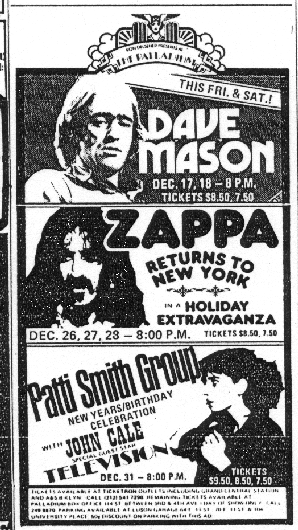
Mason Zappa Cale Patti Smith Television bill
That last show in particular sure looks worth $9.50


4. If you could have a drink with any poet (alive or dead), who would it be?

Once more my love of variety makes for a hard choice. Often if asked, it would be the poet I’m trying to interpret with performance and music on that day! That said, I’ll say Emily Dickinson. I’d so want to tell her “You’re going to win! You and the immoral Mr. Whitman are going to be the founders of American poetry. Every single day, people are going to read and be pleasantly puzzled by your little verses, and esteemed writers will look at what you did and wonder how you could invent such a new way to speak poetically.” I’d want her to answer all the Sunshine Blogger questions and more, and finally, though we’d be challenging bladder capacity by then, I’d want her to dish.

sunshine

Alas, Emily Dickinson has no blog and can’t  be nominated


5. If you could go back in time, when and where would you travel?

Easy first part. I’d target the first two decades of the 20th Century. I’ve always been drawn there for some reason, even though it’s not a period that gets much attention generally. That feeling has only intensified from my need to draw largely on works in the Public Domain (pre-1923) for the Parlando Project. Modernism in a lot of delicious flavors was breaking out all over, and in every art. Politically, a challenging time of vast inequality, but also a time of great hope that change was at hand. So, like time-travelers everywhere I’m going to expect to be reasonably well-off—but where to land?

If New York City, a chance to observe the melting pot at its most brimming. Visit the 1913 Armory Show to watch the onlookers’ new eyes seeing for the first time the paintings by the new eyes? Hobnob with the political, social and artistic radicals, some of them recently emigrated from my own family’s base in south-eastern Iowa like my “cousin” Susan Glaspell. Maybe fake a letter of introduction from my grandparents and ask Susan to show me around the Provincetown Playhouse and Greenwich Village? Meet Edna St. Vincent Millay.

Or Chicago? Meet Carl Sandburg and his young family. Swing by the offices of Poetry magazine and suggest to Harriet Monroe that she should read my blog (grin) for tips on hot new writers. Ride with Fenton Johnson in his electric motor car, and refrain from telling him he isn’t going to win and that there’s nothing I can tell him with my extra century of knowledge that can change the racial ignorance and prejudice of America between his time and now.

Or Paris. Meet Apollinaire, Reverdy, Picasso, Satie, and—oops! my French speaking skills are non-existent. OK, next.

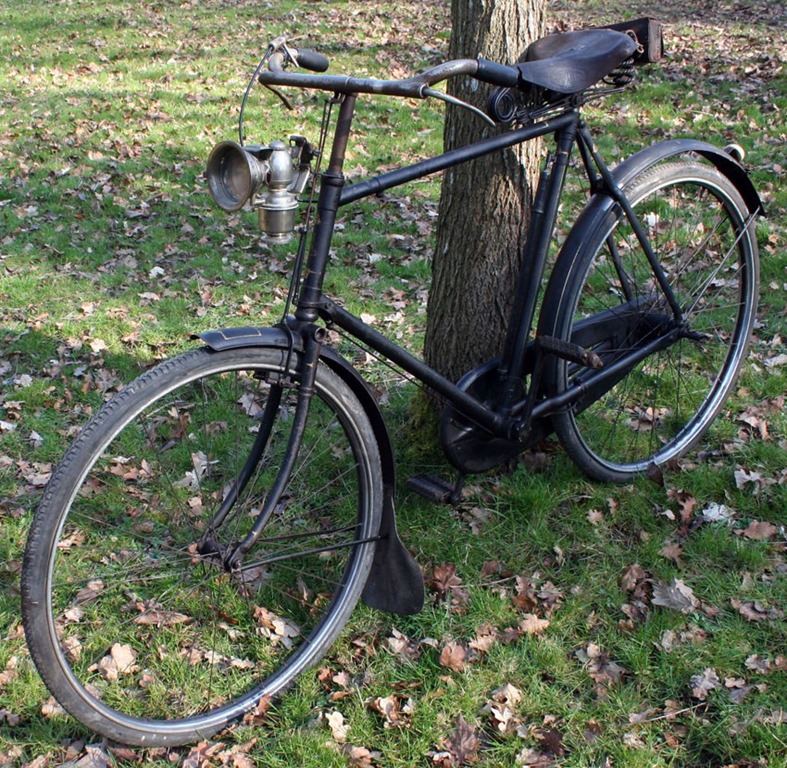
London. That’s it! Frost! Pound! Yeats! HD! Florence Farr! George Bernard Shaw! Crash the Poets Club to meet T. E. Hulme and hope I don’t get on his bad side. Sit close to F. S. Flint as a cover and act like I know him. Ask Flint about Herbert Read. Learn to play the Yeats’ psaltery and find out exactly what the Yeats-desired music “chanted, not sung” style sounded like. Slip Rupert Brooke a can of Deep Woods Off and suggest he look up Pound. Visit with Rabindranath Tagore in Hampstead. And the clincher for London? Buy a Raleigh bicycle with a Sturmey Archer 3 spd hub and a kerosene headlamp and ride around town. Why is that the clincher? I’m an introvert. Sadly, I might never make those social connections, even after traveling through time, but the bike ride would be worth it.

1910_Raleigh
Yeats, Pound, HD, Frost, & Flint…tally ho and toodle pip!

Next up, my Sunshine Blogger questions and nominations.