Morituri Salutamus

I suspect no poet in the past couple of centuries has suffered a greater decline in esteem as Henry Wadsworth Longfellow. This is not due to some scandal in his biography, for as far as I can tell he lived an admirable life, but artistically he’s been indicted for a number of crimes and misdemeanors. Before I go over those, let me briefly summarize the heights from which Longfellow has fallen.

He was the first self-sustaining professional American poet, the first to reach a considerable level of national and international success. By the middle of the 19th Century he was roughly as famous as Tennyson and Dickens, known and generally admired by his contemporary poets, and avidly read by a broad non-academic readership. He sustained this fame for several decades and further, past his death in 1882. His general readership survived into my grandfather’s generation, and then through my father’s, and to a degree, into mine. Somewhere in the middle of the 20th Century, this engine of fame and readership broke down, and by now they’ve torn up the tracks of the Longfellow Line, and ragged grass grows over the railbed.

I grew up reading Longfellow as the next generations might read Dr. Suess or Sandra Boyton in childhood. As I reached the age of ridicule, I could revel in Bullwinkle the moose in his parody poetry corner reciting Longfellow poems that I knew. Now Longfellow is probably not well enough known to satirize.

So, what are Longfellow’s poetic crimes? Meter and rhyme and a certain amount of antique diction—though we are able to somewhat forgive the English romantics of the generation before Longfellow those afflictions. Earnestness and popularity, two things that no ironic 20th Century Modernist would wish to be accused of—but Robert Frost survived the later, while being seen (mistakenly) as expressing the former. Longfellow’s contemporary, Walt Whitman, explicitly sought to commit the earnestness and popularity crimes—though, as the old dis goes, for many years, Whitman couldn’t get arrested for it.

Whitman-Longfellow

The good gray poet Whitman, and his doppelganger the forgotten famous writer Longfellow.

But Longfellow’s capital offense, the crime his reputation has been executed for, is simplicity and conventionality of thought. If I had to be Longfellow’s defense lawyer on this charge, perhaps I’d be reduced to throwing his case on the mercy of the court. Longfellow’s writing is often expressly didactic, and impersonal sentimental themes abound. Over and over again, he counsels perseverance and its seeming opposite, acceptance of impermanence. A more metaphysical poet would show his work and do more with incident to earn his conclusions. A more modern poet would make sure to make his life’s painful particulars his main subject.

Ironically, Longfellow’s life story is full of such material. Today we often think of poetry and art as an extension of memoir, and that writers earn their license to express things from their life stories. Longfellow would have had that license.

Some forms of Modernism believe that the best way to deal with complex emotion or great pain is to put it in the silences, in the blank spaces. These Modernists believed this would be more effective, because they are signaling with this constrained and minimalist expression that the thoughtful audience needs to seek for what is not said.

20th Century Modernists decorated their foreground with images, not antique forms of literary expression, and the complex message is encrypted in those images as if by steganography. Could Longfellow be doing something similar in the blank spaces between the lines of his hypnotic verse?

Today’s piece uses words from a late Longfellow poem “Morituri Salutamus,”  a Latin title taken from the famous gladiator phrase “Those who are about to die salute you.” The bulk of this poem, written for the occasion of his 50th college class reunion when Longfellow was 68, is taken up with matter that might appear in a commencement speech or the granting of an honorary diploma. Its purported mode is lightly elegiac, advice to the young is given; but as it proceeds, Longfellow transitions to a not over-worn thought. He prepares for the poem’s final stanza by cataloging some swan-songsters of literary history: Simonides, Chaucer, Sophocles. For compression, and for my preference for briefer work, this last stanza is what I used for today’s piece.

In that final stanza, with supple verse, Longfellow concisely implores his aging generation (and himself) to continue to labor to create, to create better. That’s not a complex thought. Does it need to be? Is it easier or tougher to do because it’s a simple thought?

To hear my performance of the conclusion to Longfellow’s “Morituri Salutamus,”  use the player below. Some of you will not see the player, but then this highlighted hyperlink can be used instead to play it.

The Poet to Death

Here’s a short piece using a poem by a person who started out as a poet but who spent the greater part of her life working for her country, India’s, independence: Sarojini Naidu.

Sarojini Naidu, like Edna St. Vincent Millay around the same time in the U. S., impressed people as a capable poet while still a teenager. Her talents lead to her being sent abroad to England for college, and eventually she connected with the Rhymer’s Club, the turn of the century London organization that was the last stop in the 19th Century for some of the poets who would launch the poetry of the 20th century.

Today’s piece, “The Poet to Death”  was first published in England as part of Naidu’s initial collection of poetry The Golden Threshold  in 1905. Fluent in several languages, the pieces in The Golden Threshold  are in Naidu’s own English. Some accounts say that the young Sarojini was modest about her poetry at the time, worried that her work was less-substantial because it is lyrical and song-like; and retroactively English-language Modernism did discount that sort of poetic gift. So, while her poetic work is still remembered in her homeland, where Wikipedia says she’s called the “Nightingale of India,” Sarojini Naidu will be a new name to most of our reader/listeners.

During the WWI years Naidu transferred her focus from poetry to working for Indian independence, a cause in which she became a principal, alongside Gandhi and the other independence leaders.

Did the world loose a poet for India to gain its independence? Perhaps. I do not know enough to say. In her English poetry, I can see the influence of the earlier 19th Century English romantics, but her language is less extravagant. She can remind me at times of Christina Rossetti (readers here will know I consider that a good thing), and “The Poet to Death”  is a concise version of a trope Keats used as well.

Sarojini Naidu Real Folk Blues

India gave us chess. Chicago gave us Muddy Waters on Chess records.


Today’s music employs a polyrhythmic blues. Perhaps I was subconsciously moved by the “till I am satisfied” line in Naidu’s poem to think of Muddy Waters and his “I can’t be satisfied,” though what I ended up playing has some elements of Skip James’ guitar style too. At a conscious level, I was working on this while thinking of poet Donald Hall, having read a review of his new collection of essays coming out this month, and then hearing later in the same day that he had died at age 89. In his last couple of decades, Hall has often written of what continues until it ends in the course of aging.

Donald Hall
Donald Hall. His book of essays “A Carnival of Losses: Notes Nearing Ninety” drops in July.


For some reason the version of the text I worked with did not have Naidu’s first stanza, which specifically speaks, as a younger poet, for death to stay his hand. In the remaining two stanzas, the age of the speaker is less determined, and so the situation is joined whether it is a young poet or old. The blossoms are always there a short time, at any age.

To hear my performance of Sarojini Naidu’s “The Poet to Death,”  use the player below.

St. Francis Einstein of the Daffodils

Metaphor, that stuff that helps make the music of thought in poetry, is the linking or liking of things. This is like that. This stands for that. The sensation of this is like the sensation of that. This reminds us of something else. The way I say this recalls the way one says that. Metaphor recombines the stuff of our world even though it’s a combination that only exists in the imagination.

Metaphor can make something clearer to an audience. It’s so useful in that way that one can barely explain anything challenging to an audience, even in the most prosaic day-to-day business world, without falling into metaphor. In poetry however, the bounds of increased clarity can be stretched, broken, and abandoned. Depending on one’s mood as a reader, this can be frustrating or a pleasing play of the mind. With the Parlando Project we perform the poems with music. One hope from this is that you can relax and let the beauty or strangeness of the words carry you over gaps in meaning. Sometimes you can enjoy a poem before you understand it.

William Carlos Williams who wrote the words in today’s piece, gives us Spring weather with Spring flowers and fruit blossoms, gardens and orchards, and all under a title that combines a famous saint with his era’s most famous scientist. He gives us almost no help in combining that title with the poem, other than yoking them together. The linkage of metaphor is much strained here, even when he further explains his title by adding a sub-title: “On the first visit of Professor Einstein to the United States in the spring of 1921.”

How are we to make the connection that will construct the metaphor?

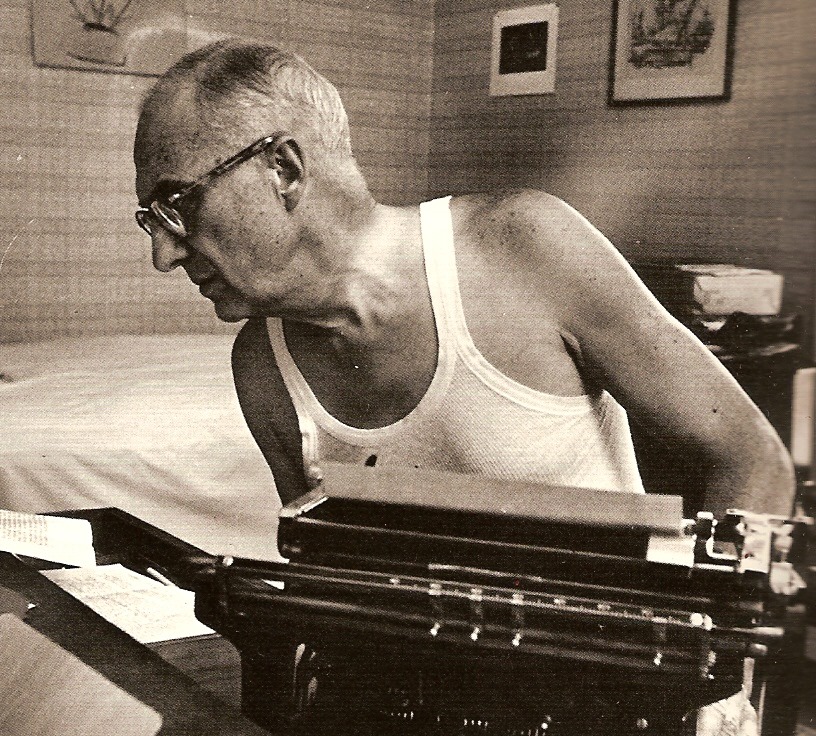
William Carlos Williams with typewriter

Just another hipster with his typewriter. William Carlos Williams throws off his covers.


My best understanding so far is that the connection is wonder and change. Recall our last post, where in his “Queen Mab”  Percy Bysshe Shelley, the Romantic early-19th Century poet, gave us a vision of the wonder of an immense cosmos, which Shelley’s own notes tell us he could also sense through the poetic/mathematical meter of the speed of light. The theoretical scientist and the visionary poet each seek to grasp some new metaphor of the world. Einstein was changing physics in the time that Williams and his fellow Modernists were seeking to change the apparatus of art. Williams elaborates on this theme mostly by vivid descriptions of the change of Spring. In the only mention of Einstein in the body of the poem, Einstein is “tall as a violet.” He is the Spring’s new growth.

There are a couple of obscure literary references in one section, the sort of thing T. S. Eliot or his imitators would have used. Who is “Samos, dead and buried?” I’m not sure, but my guess is that it’s Pythagoras of Samos, the famous classical Greek philosopher for whom science and the arts were one. And Lesbia? Catullus’ Roman poetic beloved, who we’ve met here in Elizabethan guise. It may be enough that they have ancient sounding names, and of such ancient classical modes, Williams, who is in some ways the Anti-T. S. Eliot, says “Sing of it no longer.” He moves right back into a present day of Spring. Pythagoras is dead, Catullus’ Lesbia is dead, and so is a black cat buried in a newly planted garden. Awhile later in the poem we may get one more connection to that cat part of this buried trio. A chicken-raising man who puts out poisoned fish-heads to keep the cats from his chickens. That man becomes like the Modernists, needing to kill the ancients to protect the new flock he’s raising.

As a side note, this poem’s chicken farmer, the white-haired negro, was quite likely the man whose rain-glistened red wheelbarrow sat next to the white chickens in William’s famous poem of admiration.

The poem closes with a sensuous image of Spring change, a night that grows warm as an orchard owner opens his windows and throws off the covers that were needed in the cold. In an earlier version of the poem, Williams had woven Einstein by name in and out of those Spring images explicitly, including this last one where Einstein was named as that man with the blossoming orchard, another grower of renewed things. In this later version, all these stated links to Einstein are removed (save for that one Einstein as a violet).

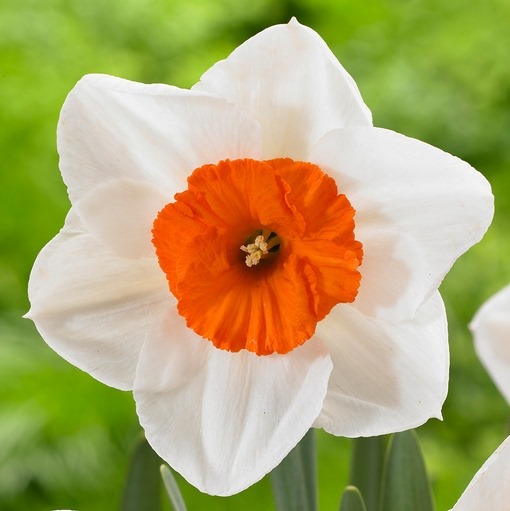
Professor Einstein Narcissus

Not a violet, but the “Professor Einstein Narcissus.” Has “great curb appeal” and “deer won’t eat” says this garden center.


Was that a right choice? The resulting poem is shorter and more mysterious, but it also doesn’t make it easy to see what Williams is getting at. He’s using metaphor, but he’s removed all the connections. I decided to perform the later version. I think it performs slightly better, and perhaps the music makes the obscurities less taunting.

A simple musical arrangement this time, just acoustic guitar and subdued electric bass. To hear my performance of William Carlos Williams’ “St. Francis Einstein of the Daffodils,”  use the player below.


Parlando Spring 2018 Top 10-Part Two

Continuing on with our count-down of the most listened to and liked audio pieces from the Parlando Project during the past quarter, we’ve now come to numbers seven through five.

At number seven this time is an example of how the Spotify listeners differ from the blog listeners. This piece received only a handful of listens on the blog this past spring, which isn’t unusual, as “Sky”  was posted there last summer, and blog users tend to listen to the latest posts unless brought here by a search engine. On Spotify though, “Sky”  has seen steady action, and enough plays there to make it one of the most listened to this spring..

I like the idea and outcome of looking at the Midwestern sky that multimedia artist Laurie Anderson explained in an interview that I quoted to make the words for this piece, but I’m not sure what attracted all the action on Spotify for it. Is it the short, somewhat generic, title perhaps? As we’ll see later this month in the countdown, another of the Parlando pieces with a one word title was very popular on Spotify in the past few months.

Well, no matter blog readers, here’s “Sky” brought to your attention by the listeners on Spotify.


One of the Parlando Project principles is “Other People’s Stories.” There are a good number of Internet locations where people post their own poems, and blogging in particular is often autobiographical. I could do the same, but I have a contrarian streak, and I find responding to other people’s words and figuring out how to perform them interesting.

I don’t dislike autobiographical blogs, I subscribe and happily read a handful of them myself. If prodded, I can go on way too long about myself, just as I have a tendency to do on any subject, and having had my first poem published almost 50 years ago, I’m certainly not against revealing my own poetry. “Other people’s stories” is a choice I find helpful, that’s all.

I will use my own poetry/lyrics in the audio pieces here from time to time, though I like it when they are my words about other people, such as the number six most popular piece last spring, “Anglers.”  This is the story of my father and his youngest brother’s sport fishing, something they spent many pleasant days doing before my father became too old and frail for his beloved outdoors. Those days seemed timeless even as they were occurring decades ago, and those lakes have become mysteriously reflective in memory now. So, in writing of them I added notes about passing between dimensions.

I’m proud of how this came out, and glad so many have taken the time to listen.


These Top Ten lists often include well-known poems by well-remembered poets, but that contrarian streak in me likes to look at those less remembered and see what might be of interest there. Richard Aldington is one such case, a writer who was active in the pre-WW1 London circle that created Modernist poetry in English. Coming in at number five on this spring’s list is this charming poem of his “The Poplar.”

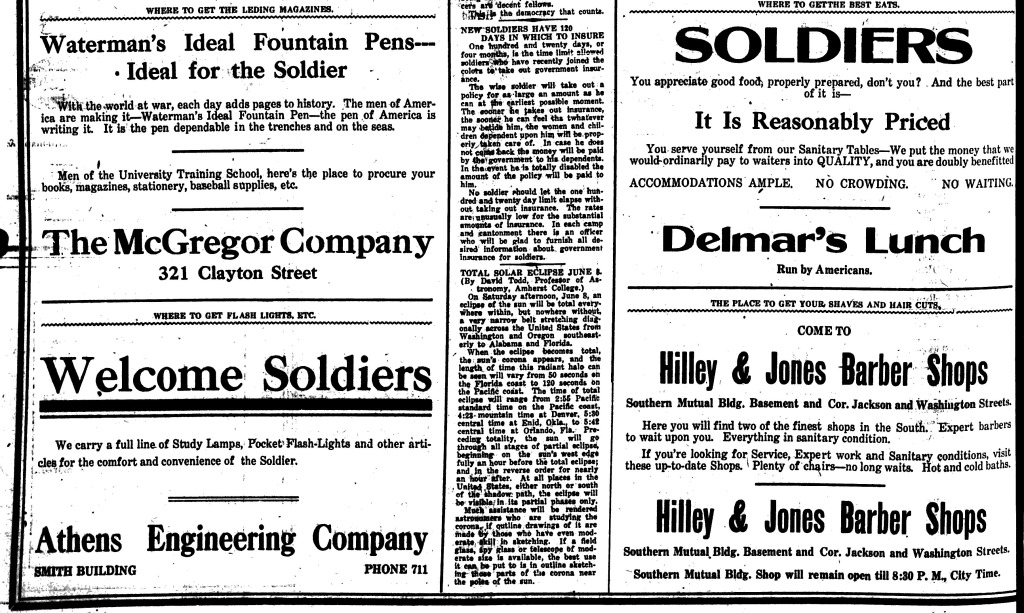
David Todd asks Athen GA artists to sketch eclipse

62 years before REM was formed in that town, astronomer David Todd asks artists in Athens Georgia to sketch the June 8th 1918 total solar eclipse. Note the ads pitching goods to WWI soldiers. “Delmer’s Lunch – Run by Americans”


Since it is easiest for me to use poems here that are in the public domain, the newest ones are often from that Modernist revolution that occurred in the first two decades or so of the 20th Century. There are weeks when I think I must be living 100 years ago more than in 2018, as I look for and read poetry from that era. Do I find this a refuge from 2018? No. The horrors of WWI (which impacted Aldington, who served, significantly), the realities of racial, class and gender attitudes then, mean this was no golden age. But what does surprise me reliving the genesis of English Modernist verse as I read their work now, is how they employed broadly accessible images in their Imagist poetry.

The post-1920 High Modernism that was largely used to represent the Modernist movement when I first encountered it is full of obscure references, exotic words and locations, events so far into the imagination and the special dialects the poet chose to reflect those inward locations, that a reader is confronted by a world they can’t comprehend the landscape of, much less the meaning of what occurs there. There can be beauty and insight in this, but it’s a world that assumes one will come prepared, well-equipped with poetry expedition gear and maps.

But before all this, as Modernism was forming itself, the poems are still in a world much like the one inhabited by the general reader, like this graceful and musical one. Give a listen to Richard Aldington’s “The Poplar”  below.


Other peoples stories. How can I connect sky-watcher and eclipse sketch promoter David Todd to poetry? Todd was a pioneer of “eclipse chasing” as well as a theorist of life on Mars. His wife, who documented his trips to view eclipses was Mabel Loomis Todd. Back in the 1880s Mabel had a scandalous long-running affair with Emily Dickinson’s brother, who lived next door to Emily. After Emily’s death, Mabel Loomis Todd was the person who saw to the publication of Emily Dickinson’s poetry. And when we return soon to continue our count-down, we’ll have a poem from Emily Dickinson.

London between snows

One more post where we slide the Parlando Project and “other people’s stories” to the side and become more like a conventional blog. Last night in London was a blustery snow squall, but as Minnesotans who know that the Theater of the Seasons plays in Repertory, we were up and around throughout the day. Our target was the area around the Strand and Trafalgar Square to hit the National Gallery. We really only struck Trafalgar Square a glancing blow, though it seems an impressive urban plaza. As we approached through the flakes and gusts, I pointed to the back of the column and asked my wife why they had a monument to Captain Crunch here.

Admiral or Captain

Nelson’s Column in Trafalgar Square, and close up of the statue at the top


Faux-naïve humor aside, some of the best parts of the day were the little things. As we passed a small library I saw a poster in the window about Sylvia Pankhurst, the most radical of that suffragette clan. Inside was a small exhibit detailing the middle of her career in anarcho-syndicalist circles which lead her to a steadfast effort to warn against the rise of Italian Fascism in the years between the wars. Some of the exhibit showed the efforts to extend Fascism to Britain through local London groups, which included the information that the library building itself had been formerly the headquarters hall of the Italian Fascist organization.

Shortly after entering the National Gallery we noticed these mock Roman mosaics on the floor leading into the central gallery. At first glance, one assumed they’d be the sort of stolid decoration museums are known for—but wait, is that Bertram Russell? Winston Churchill? Turns out they are a set of witty between-the-wars comments on the modern virtues. “Don’t tread on Gretta Garbo…” sings Ray Davies in my mind.

Lucidity with Bertram Russell

Lucidity on the ground in mosaics


We’d come for a Pre-Raphaelite exhibit which showed how much these original hipsters loved to put mirrors, particularly convex mirrors, in their paintings. At the exhibit I learned that the art Academy the PRB bros rebelled against had been in a wing of the National Gallery building, a museum then full of the lush late Renaissance paintings loved by the 19th Century. As young rebels are wont to do, they instead looked to the earlier painters with their sharp Colorforms palette.

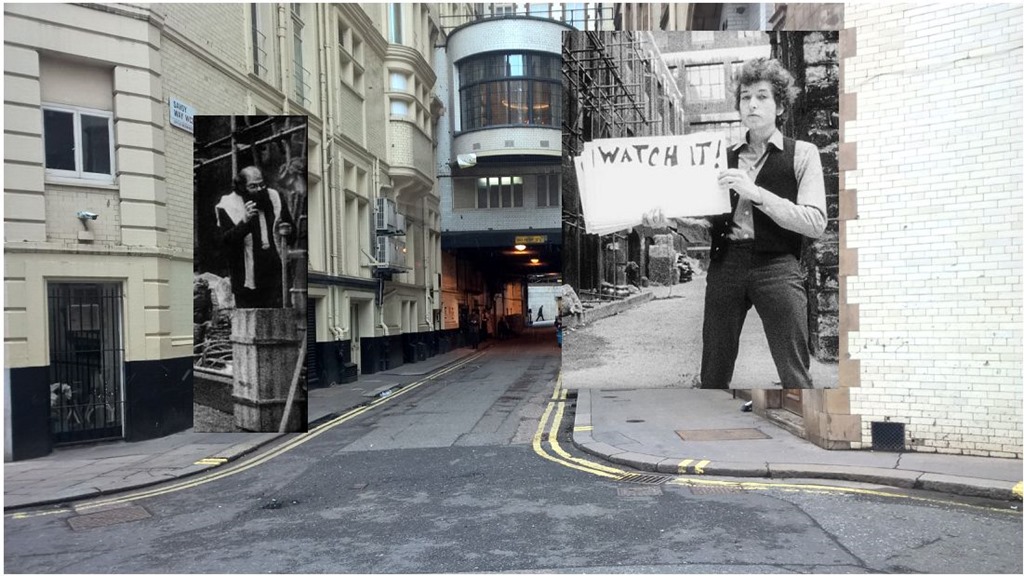
We took a side-trip down the Strand until we came upon the Savoy Theater and then the grand Savoy Hotel. Our bootheels had to do some wandering, but, sure enough, we found the alley where the “Don’t Look Back”-“Subterranean Homesick Blues” was filmed, and where more than a hundred years earlier William Blake had lived and worked on his Dante “Divine Comedy” etchings as he lay dying. We couldn’t see the Thames to confirm if flowed like gold, what with all the buildings the years put there between Blake’s place and the river, but you could still see Dylan and Allen Ginsberg standing in that alley.

The Savoy Alley yesterday and today

Click the link in this caption to learn more about Angels in the Alley by the Savoy Hotel


That evening we went to a mostly Mozart concert at Saint Martins in the Field, which was fine. Now that I actually try to write string parts and play them via virtual instruments, it was nice to see hands play the articulations from a front-row seat. But, before the concert, we ate at “The Crypt” beneath the church, which is not just a goth-sounding marketing name, but the actual crypt, complete with grave markers. My wife wandered about the area, reading the grave markers, noting one for a five-year-old child.

Everything in the past is beneath and beside us. Everything in the future is too, but we cannot see nor feel it yet.

March 2018 Parlando Top 10 Part 2

An artist named Linnea Hadaway made a book earlier this year. It had no words in it. She said it had no words because it was about listening.

Today is International Women’s Day, an arbitrary thing like all special days, months and years. I can hear some grumbling off in the distance as some read this: “Another one of those special-interest things. I go to poetry and music to get away from that faddish nonsense.” There’s consistency in that opinion: if one is upset at “identity politics,” dividing the world in halves is just as deplorable as dividing it into tenths or smaller.

Are there dangers in division? There certainly are. But I don’t see these sorts of things as division, but as requesting attention—and attention is what art, and this Parlando Project is about. You see, life is incarcerated in the ultimate special interest group, the ultimate identity, political and otherwise: our own selves. Breaking the cellular barrier to spill our selves, or enticing us into opening a tiny pore to stare across at the skin holding another self inside another world, the still unexplored world we share, is the whole of art.

There is no apportionment so small as to be smaller than that. There is no way out but the way of art, to pay attention. Our ears cannot see, they can only listen.

No planning in this, but the next three audio pieces in our Top 10 count-down of the most liked and listened to pieces this past winter use words written by women.

Carrington 3

Surrealist Leonora Carrington captures the Parlando Project recording another audio piece


7. We Grow Accustomed to the Dark

I think I’ve used more Emily Dickinson pieces for words here than any other writer. I didn’t plan it that way. I’m not sure that Dickinson planned it that way either. Obviously, she meant what she did, assiduously creating and collating the more than a thousand short and engagingly enigmatic poems that we now see as a cornerstone of American poetry.

But as a careerist she’s a mess. She showed some of her work to friends and family, but like most friends and family they probably saw them as artifacts of the ordinary Emily, that stubborn particular. Perhaps they understood or didn’t understand her poems better than we do; but we, her current readers, believe it’s the later.

She had a lucky break with Thomas Wentworth Higginson, the critic and social activist who answered her letter and saw something there. Even in the intellectual ferment of Transcendentalist New England, how many would have? The posthumous publication he shepherded, made possible the Dickinson we have today. But did he understand her art? We, as posterity, think otherwise.

So, like the woman in “We Grow Accustomed to the Dark”  Dickinson pressed on, walking, almost straight, and like the bravest, aware that the comedy of striding face-first into a tree was possible.


The Emily DIckinson Internal Difference

I was there! What a concert! The music was good too.

6. A Certain Slant of Light

I didn’t think about this while writing the music for and performing “A Certain Slant of Light”  and “We Grow Accustomed to the Dark,”  but these two Emily Dickinson poems are companion pieces. The Dark poem is more clear, even comedic, the Light poem more mysterious.

In my original post I decided to not talk about what I think the poem means. In some ways, I think that’s true to the poem’s “Where the Meanings, are.” I had fun with the mock psychedelic rock poster I created to illustrate it, but I think the core experience of the poem is the same that some were seduced into having by ingesting drugs, the insight that the universe’s meaning may be unknowable and its substitute only available by fiat.

Cure the cod-sitar sounds, and stereotyped sparkle-eyed hippie whooshing “Oh, Wow!” Of course, we must laugh. This is an insight available even to the young that can apparently be induced by mere intoxication.

But it’s true. It may be easier to see the borders of truth if one comes upon it without chemical aids; but even true, it’s an insight that’s hard to integrate into an active life and compassion. Dickinson integrated it with these little packets of poems. “None may teach it,” she says, but I can let you see my experience of it.


5. In the Bleak Midwinter

And one slot higher in the countdown, a woman who isn’t Dickinson, but is roughly her contemporary, English poet Christina Rossetti. Her’s is a Christmas and Christian poem, faith is her fiat; and a shaped and received story is her poems plot.

As this post talks about division, opposites—and how, if one distrusts them, one must cross them, sometimes listening, rather than shouting at them to come down—“In the Bleak Midwinter”  is all about divisions and opposites, and where they fail to hold.

In the moment of Rossetti’s beautiful song, even if earth is iron and water stone, heaven cannot contain God, nor can the earth sustain winter or meagre poverty.

I remember someone asking one of the earnest folk-singers of my generation (alas, I can’t remember who) if a song could change the world. Their reply was something like, “Of course not, but during the time the song is being sung the world is changed.” Perhaps an argument for longer songs, better memories, or us slowly learning how to integrate the experience of art into the rest of our lives.


I plan to return tomorrow with the next three in our Top 10 count-down of the most popular pieces over the past Winter.

The Fox

My son, now a teenager, is aware that I have a blog, and that it deals with poetry somehow. Limited by his parents in his computer time, and pressingly interested in the other things he’s discovered, he doesn’t listen to it.

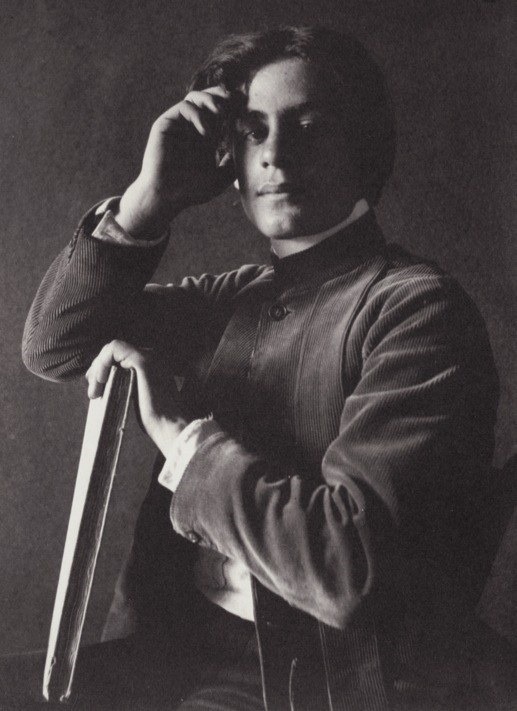
But he does want to be helpful. Earlier this month he suggested by asking: “Have you used any poetry by Kahlil Gibran? Have you heard of him?” One of my son’s teachers is from Lebanon, where Gibran was born, and Gibran has come up as a famous Lebanese-American.

Khalil Gibran by Fred Holland Day

Note the art portfolio, the young Gibran’s aims were as a visual artist


Had I heard of him? Yes, I recall buying a copy of “The Prophet”  as a somewhat older teenager in a bookstore. I think the edition may have included a now disputed quote comparing him to William Blake, and that may have accounted for my purchase then.

Over the decades since it was published in 1923, my decision to purchase “The Prophet”  has been replicated millions of times. It’s an extraordinarily popular book, and not one that achieved its popularity by a burst of sales, but by remaining intriguing to readers for 95 years. Nor am I alone in seeking to combine Gibran with music, as it’s been done more than once already, with everything from a borrowed Gibran line making it into John Lennon’s “Julia”  to the as far as I know unacknowledged connections to Queen’s masterpiece The Prophet’s Song.”

I remember reading that copy of Gibran’s “The Prophet”  in an hour or so later that day. My dorm-roommate read my copy too, but I remember he was puzzled that I had read through it so fast.

Unlike many readers of “The Prophet”  I had some background. As a young person I had substantial interest in various kinds of occult, spiritual and mystic writings. Gibran in “The Prophet”  didn’t impress me as being very good of type. The stilted sort-of King James Version English seemed effected, the matter it tried to convey seemed newspaper horoscope vague, and the typical trope used to express that matter was a litany of everything is it’s opposite.

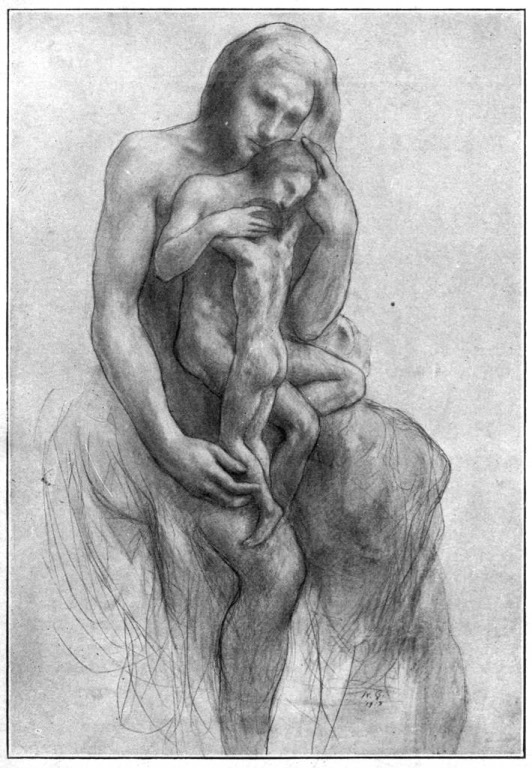
That was my opinion as an 18-year-old. It has changed slightly as I briefly revisited Gibran this month in search of something I might want to use. First, I have a much greater appreciation for the struggles of those that try to bridge the culture and language of their birth to the culture and language of their new homes, and in the sections of Gibran that dial-back the hazy mysticism I can now read some elements of humor and satire that I missed on first encounter. I wonder how Gibran’s works in Arabic read to a native speaker. Did he present a different face and voice there than he did to English speakers in America? And what I’ve seen of his artwork does have a Blakean tinge, a combination of classical line with esoteric and romantic subject matter.

Illustration_from_The_madman by Gibran

One of Gibran’s illustrations for “The Madman”


Today’s audio piece, “The Fox”  comes from Gibran’s first English language collection “The Madman.”  As parables go, it’s quite applicable to the daily grind of creating these pieces. It may not be the camel I set out for, but hopefully it’s a delectable mouse.


Thanks Owing

A holiday for it, so this is due.

yard turkeys

Have you changed out your summer flamingos for autumn yard turkeys yet?

“The Parlando Project,” my 2015 dream to present over a hundred audio pieces combining various words (mostly poetry) with various music, has now reached 155 officially published pieces. For those who’ve taken some of your attention and spent it listening to me present my take on the words of others, primary thanks is due to you. Despite the amount and variety of material I present here, I respect that your attention is precious. Thank you!

Thanks even to the unintended. The strange movements of technology and trade have allowed highly flexible musical instruments to become available at low prices. Most of what I use to make this did not exist one hundred years ago, and in the past few decades, the cost of these instruments, software and recording technology has declined into broad affordability.

Similarly, the Internet, so easy to dismiss for its mundane temptations, has made the availability of artistic materials “ubiquitous everywhere” that tautologies are sold.

Both of these things, the music technology and the Internet, are so enabling of creative work that it seems almost sinful to me to not apply my human imagination to them. But, as with many things, avoiding one sin leads to the commission of others. So, thanks also to my family for the forbearance that has allowed this project to get the amount of time and attention it asks for.

Thanks to Dave Moore, who lets me take a break from presenting my voice uninterrupted , and whose words are presented in some of the most listened-to pieces presented here.

Thanks to the Modernists of  100 to 150 years ago, who showed us fresh ways to use language, and shared their complicated hearts, heart’s beats, and apprehending eyes. Thanks also to their foresight to publish their work before 1924, so that we’re free to demonstrate to the still living what they did. Alas, the leading sadness in this project for me has been the large number of works by no longer living writers whose work you and I cannot speak publicly, because our copyright laws forbid it.

No new audio piece today, instead, here’s one of the first officially released pieces of the Parlando Project, words adapted from Dave Moore. I view it as being about the people left even farther behind than the signed artists of famous paintings. It’s called “Netherlands.”

I’ll let it be a reminder that there is a whole lot of material available here now, so using the Search… box or just click-wandering through the Archives months on the right will allow you to listen to more of the variety that Dave and I do.

Subscribing to the blog either through the “Follow” button near the top, or on the WordPress Reader, will let you know about new posts as they occur, or if you just want an easy way to get the new audio pieces for listening to them off-line, you can do that by subscribing to the “Parlando – Where Music and Words Meet”  podcast on  iTunes, Google Play Music, Player.FM, Stitcher, or wherever you get podcasts. The “Parlando – Where Music and Words Meet”   podcast is free of course. [note: I’d previously mentioned using the little orange RSS buttons to subscribe to the blog, and for those who have an RSS-aware app they will  still work, but the Follow button I’ve just added today makes this easier for most.]

Here’s the player to listen to “Netherlands”

Garden Elegy (for Grant Hart)

Sometimes the things we present here come together quickly. For example, some of the LYL Band pieces heard here are first takes where the musicians are reacting to the words spontaneously the best we can. Other pieces ask to spend a little time underground to think, like seeds think.

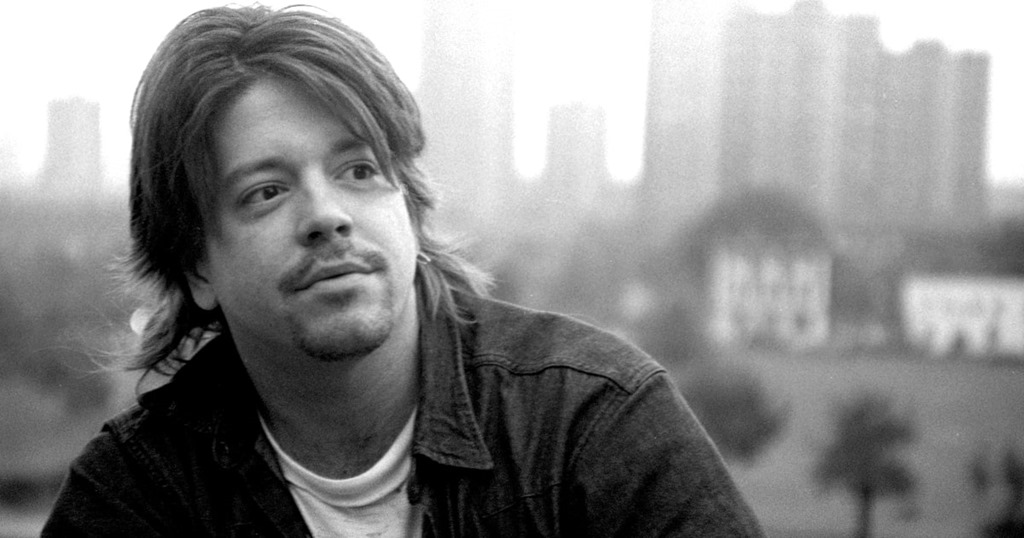
Today’s piece is one of those later ones. Nearly two months ago Grant Hart, a founding member of Hüsker Dü, a Minnesota indie rock group that achieved some fame before breaking up in the late 1980s, died. After Hüsker Dü broke up, Hart had continued working in music and visual art, some of it quite striking, none of it as well-known as it should have been. We are used to stories of a young person whose indie band is on the rise, there is less notice for those artists whose work continues past middle-age. After all, even when there are new levels to the work, there may be no apparent market. While thinking of him, I noticed, strangely, for the first time, that Grant’s name was, in effect, a two-word prayer.

younger Grant Hart

Young musicians, young artists, need will and lot of work to get a chance to succeed.
But at a certain age, they will need even more of that will to continue to make art.

.

Around the same time, I was talking with Dave Moore (who you’ve heard here, vocally, keyboardely, and composerly) about his household’s garden bounty coming to an end.

These two thoughts combined into the words for today’s piece back in September. And early last month I wrote the music—so this piece has existed, on paper, for a month. I performed it on acoustic guitar for a handful of people in a living room in October. It seemed to work. So why haven’t you heard it yet?

I really wanted to get the performance right. And this month I attempted that, getting as close as this recording. I wanted it to be good, but I didn’t want it to be polished either.

Garden Elegy

Here are the words to “Garden Elegy (for Grant Hart)”

.

The LYL Band began roughly the same time as Hüsker Dü. We even shared a producer of our first recordings back in the day (Colin Mansfield). But we were much different. We were a band of poets and artists, closer to the Fugs or Billy Bragg than the Who or the Jam. And I was then, as now, not a consistent and confident performer and a problematic singer. That was my problem as a band-member back then. As passionate as I could be in my writing, I couldn’t find the heart to focus that passion on stage, to the detriment of the band.

So, it didn’t take just the two months the song was in process, it took some decades to get close to what this song requires. When you listen to “Garden Elegy (for Grant Hart)”   you’ll hear me going for it as best I can, trying to focus passion. About halfway through you’ll hear the body of the guitar bang into the amplifier.

And that’s my prayer for artists today, perhaps your prayer too: that we may be granted heart.

Here’s the song:

.

Did you not see a player gadget above? Here’s another way to hear it, with this highlighted hyperlink that will open a player in a new tab window.

At a Window

I was ready to post this new piece, Carl Sandburg’s At A Window,”  early yesterday when I had one of those days that come to challenge artists. Artists less fortunate than I can perhaps point to a single thing that holds them back, but with myself it’s often several smaller things.

I’m a habitual early morning reader of the news, a rhythm that may have started in my earliest teens when I delivered newspapers before school and continued through night-shifts in hospitals where I’d read the papers as they came out in the predawn hours. Nowadays, it’s not the papers I turn to for news, but Internet newsfeeds, and the pre-dawn hour was filled with the reports of another mass shooting profaning music, this time in Las Vegas. These events hurt me because I often spend as spend as much of my day as I can carve out making the music here in combination with the words that I combine with it. One of art’s purposes in my mind is to allow us to set aside momentarily the real consequences and strictures of life. Not necessarily to escape them—in fact, many times art allows us to examine them so that we can treat them as the reality of what they really are, because those strictures, even things we fear most, have their limitations, just as we do. And art can be the “R&D Department” of the soul and the repair of the world.

Thus, the hurt when those borders are crossed. Thus, the feelings of one’s work in an inadequate field.

Of course, my feelings on this matter are a small and abstract hurt, compared to the suffering of those more directly impacted. Small things closer to my heart feel larger than great things farther away. This is one of the limitations of our perception. Then my day continued with another unrelated hurt, closer yet to my heart, and I was reminded again of my limitations and imperfections.

Real hurt seems so large, art seems so small, and I feel like a poor worker in a field of playful trivia.

Which may be so, the limits of my perception may not be able to tell. However, I believe this is a common feeling for artists to have, and so if you create art, you may also have felt this. We try to do so much, and all we can see is so little. This is part of why the Parlando Project principle: “Other People’s Stories” has value. Speaking the words of others helps me by adding what their eyes and hearts have seen.

SONY DSC

“He is an observer with sympathy but without fear”

This morning, it turns out that Carl Sandburg, in the very piece I was working on this previous weekend, “At a Window,”  was speaking to this experience, though in my down-heartedness, I couldn’t hear him for a while. This short poem, appearing first in 1914 in Poetry  magazine alongside his “Chicago, hog butcher for the world…” poem which will overshadow it, waited patiently to speak into my ear. What good could a more than a 100-year-old poem have for me?

Poetry Magazine March 1914

Eight poems of Sandburg’s Chicago Poems debuted in this issue.

“At a Window”  says that even in shame and failure you must hunger for even more of the same. In the context of the sampling of Sandburg’s Chicago poems, which spoke so frankly about the situation of poor and working-class Americans, I think that window in the title means so many things. Yes, it means there is an imperative to look outside oneself as an artist. The dusk and shadows out the window lets one see little, but one must still look.

Will there be any consolation? Sandburg apparently had such consolation in his spouse, who championed his work, who he speaks of in the “Leave me a little love…” section. Perhaps you have such a champion in your life, perhaps you don’t. We are called in “At a Window’s”  conclusion to look out the window anyway. Perhaps the one who comes walking out of the dusk is yourself, to champion someone else?

To hear the performance of Sandburg’s “At a Window”  use the player below, and thank you for listening.