Even with its most popular and well-known poems, poetry works, works its impact, one reader, one listener, at a time.
Doing this project leads me to read a lot of poems. I’ll go through whole collections, entire anthologies, looking for things that I suspect I can create music for. That sense, “This could work with music” is hard to quantify. I’ve noticed repetition and refrain will often cause a second look. Longer poems will need to presently suggest selections as I’m seeking sub-5-minute pieces. Yes, graceful lines that sing on the page for whatever reason will suggest music. An image or an incident vividly depicted that grabs me will ask me to stop and consider it. Oh, I don’t really know, can’t say for sure, how I select things for this. I’m happy with it being a mystery, and I hope you, reader/listener are too.
Sometimes that attraction is strong though. The moment I finished my first reading of Jean Toomer’s “Her Lips are Copper Wire” I knew I had to write music for it and do my best to realize it in performance. Perhaps I can’t say why that is. Little matter. The pull, the attraction, was undeniable.
This Surrealist love poem, like E. E. Cummings poem from last time, was written before the first Surrealist Manifesto, and is proof Americans could use English in this mode early in the Modernist era. Long time readers here will know I sometimes like to mesh in Blues and Jazz flavors with my music,* but Toomer, an early Afro-American Modernist, seemed to have already suggested that with this poem, so that I didn’t have to underline the point. I suppose it just strongly communicated the wonder of desire to me.
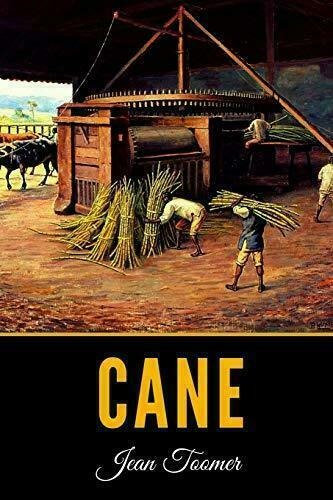
This poem was placed into Toomer’s Modernist masterpiece, the book-length mixed-form “Cane.”
.
It’s National Poetry Month, the reason I’m going through early Parlando Project pieces to present a more rapid posting schedule here this April. NPM tries to increase interest in poetry, but it’s hard to get a read on how significantly it achieves that. Arrayed against it is every poem someone didn’t “get” for whatever reason. Every poem that says only “Care about what I’m saying, even though you won’t understand,” poems without the bridge to “Here’s how you connect to this.” Every poem that bores us keeps us from poetry, and we are so easily bored. How many poems does it take to put up a wall against poetry, and will putting a poster on that wall dissolve the wall?
Is this the fault of the poets, their poetry? Is that the fault of us, the readers/listeners? Are there social structures that surpass us in enforcing this distance from the art? That’s a mystery. I don’t know the answer. But I know that once in awhile I come upon a poem like “Her Lips are Copper Wire,” and like another Surrealist love poet Paul Éluard I’m left compelled “to speak without having anything to say” — anything to say other than the words of this poem. That limerent pleasure is likely why you’re here, reading this, and listening to the performance of Toomer’s poem. Thanks to that mystery and you.
No lyric video today, but you can hear my performance of Jean Toomer’s poem with a player gadget below. Don’t see that? Well, this highlighted link will also do the job.
Today’s re-released Parlando piece from our early years is “Crepuscule” by American poet E. E. Cummings. This is certainly a passionate, ecstatic poem, isn’t it! Looking back at what I wrote about it in 2018, I was then taking the main meaning of the poem to be a portrayal of falling into a Surrealistic dream state. In the same post I confessed I hadn’t remembered that Björk had performed a version of this poem that seemed filled with erotic desire.
Rereading and reconsidering, I’m more unsure which is metaphor and which is meaning — and I think that’s often a good thing in poetry. We’re in one of those gestalt drawings created with a spell of words. We could be in the transport of desire, and it is like unleashing a spectacular dream: flowers are not just colorful, but burning with color. We will be still in bed, yet leaping with sleep-closed eyes. And so on.* It’s difficult to not feel the erotic pull of the text. For a dream, the mystery is very much of the flesh. Mouths, thighs, bodily curves, fingers, lips…is it dream as sex or sex as dream?
Three ways to hear my performance of E. E. Cummings “Crepuscle:” there’s a player gadget below for many, and there’s a backup highlighted link for the others. Want some dream images flowing behind the words of a lyric video? That video is above.
.
*The most mysterious line has lovely word-music: “with chasteness of sea-girls.” I’m assuming a reference to nereids, sea nymphs, but I’m unsure if the poet’s speaker is becoming one, or trysting with one, in the rush of their dream. If water spirits, perhaps gender fluidity is a subliminal?
I work from literal English glosses to translate from Chinese, a language I have even less knowledge of than French. This may seem like a cheat, and yes, ideally a translator would speak the language they’re translating from intimately. Yet, as I mentioned in my post regarding Tzara’s French language poem, there’s something worthwhile in translating anyway. For a poet, translating other poets is a rich experience, and the Parlando Project is about the ways poetry can be experienced. Reading it is one. Reading it with careful attentions more so. Speaking it out-loud is another. Writing music for it, or singing it, yet another deep connection. But translation is still unparalleled.
I think I started doing translations from classical Chinese poets before I read poet Robert Okaji’s, but his work in this area heartened me in my own efforts.
I made no attempt at moving over Du Fu’s word-music to English. I wouldn’t know how to start with that. Most of what I do is to try to absorb and understand the images and then redraw them in modern English. In this case I extended the wordage used to convey the images somewhat. My reasons for that: I felt there were associations and dual meanings in some of them that deserved to be highlighted for the contemporary English speaker. At times in translation I will use phrases or idioms that readers of English language poetry will hear as overtones from our own. For example, the image of rats running across roof tiles in Du Fu’s original I rendered as “Rats are running in the rafters.” My hope is that that gives resonances with the idiom “bats in the belfry,” of something being mentally in disarray.
Similarly, I felt Du Fu’s concluding image was ambiguous as to the roads that lead away from the palace ruins, and I chose the Yogi Berra choice: “When you come to a fork in the road — take it.” I used both the idea that there are choices in roads, but also that “None of them go on forever.” If the listener gets the idea that Robert Frost’s roads are there diverging in these Chinese woods, that’s a good thing I think. And for that matter, I suspect many English speakers will think of Shelly’s “Ozymandias” as they hear Du Fu’s poem in their language. Of course, Du Fu wrote his first.
Here’s the link to the lyric video.
.
We’re back with three ways to hear The LYL Band perform my translation of Du Fu’s “Jade Flower Palace.” You can use a graphical audio player below, but then some won’t be able to see that, so this highlighted link is provided. And there’s a lyric video above for the third way.
.
*Du Fu’s name was formerly transferred into the Western alphabet as Tu Fu. It’s the same guy.
It’s Easter and time to close my short Edward Thomas series for National Poetry Month with a short elegy written by a poet both less and more known than Thomas in the United States.
But before I get to that, let me fill in a few spaces in the Edward Thomas story. I ran into Thomas while researching Robert Frost’s stay in England before WWI. During this time three things happened that are part of our story: Frost published his first poetry collection in London (no one in American publishing was interested in Frost then). Frost was praised by Ezra Pound as an authentic new poetic voice and he finally gains attention in America. A man who made and kept few friends, Frost made one with Edward Thomas. Accounts have it that it was Frost himself who told Thomas that he was a poet who could and should write poetry, starting off the around two-year binge of poetry writing that comprises Thomas’ legacy today.
In the face of World War I, a war the old gods and abstracts seemed to cause and will onward — to the result of turning “young men to dung” as Thomas said last time — all that seemed beside the point. Thomas knew that, and knew that. He was philosophically a pacifist, an internationalist. None-the-less in 1915, in his late 30s and the sole breadwinner for his family,* he enlisted in the Artists Rifles. He had one other offer: Frost had asked Thomas and Thomas’ family to join him in America.
There’s this other famous point in the Frost-Thomas connection: what may be Frost’s most beloved poem, “The Road Not Taken” was written about his friend Thomas and their walks about in England. Frost meant to gently chide his friend’s intense observation and concern for choices on smallest evidence, though many who love the poem today take it as the motto for the importance of life choices. Some misremember Frost poem as “The Road Less Travelled By,” when in the text the poem’s speaker says the two roads were ‘really about the same.” Thomas’ two roads in the matter of the war were not “really about the same.”
Thomas chose to sign up with the Artists Rifles. You may think, “What an odd name? What’s up with that?” Well, it was what it sounds like. It was founded about 50 years earlier by some painters who wanted to start their own volunteer military unit. It saw action in some of the British colonialist battles before WWI, and in-between it was sort of a shooting club, a weekend-warrior kind of thing. Sound like an old-school-tie/old-boys club? I guess it was. Even during WWI it was invitation-only from existing members. So what happened with it during WWI? It produced junior officers, the kind of lieutenants and scouts that would account for the unit having some of the highest casualty rates in the war. So, there you have it: an exclusive club where the winnowing greeter is waving you in to the trenches and a mechanized manure-spreader of a war.
Busts of Mars and Minerva are featured in the unit’s insignia. “Artists Rifles” sounds kin to Sex Pistols or Guns & Roses, doesn’t it?
.
While still in England and in training with his unit, Thomas was able to mix with his circle of friends. He shipped out to France in 1917. He was killed a few weeks later, during what he thought was a lull in the battle. A late shell or sniper got him. He’d written about 100 poems, none of them published at the time of his death. His friends, other poets, wrote elegies. I know of at least three. Here’s a link to a post on another admirable blog, Fourteen Lines, which includes two of those elegies to Thomas.
One of them is by Robert Frost. Re-reading it again I think, Frost must have been so grief stricken that he’d forgotten to be Robert Frost. It’s filled with the kind of fustian crap, romanticism, and poetic diction that Frost the rhyming Modernist was all about throwing off. I tend to forget the poems that don’t give me strong pleasures, so maybe I’m overlooking something, but this elegy may be the worst poem Robert Frost ever wrote. By the time I got to “You went to meet the shell’s embrace of fire” I was through with Frost’s attempt.
Oh, if he could have concentrated on the concrete, the palpable. He may not have known it, but the records of the British military recorded the meagre personal effects found on Thomas’ body: a small notebook/journal, a watch, a compass, a copy of Shakespeare poems…and “Mountain Interval,” one of Frost’s poetry collections now published in an expanding career in the United States.
So, to end the story of Edward Thomas, who found himself as a poet in middle age writing about how England changed as war arrived, only to die in that war, I chose to perform the second one in Fourteen Lines’ post “Easter Monday (In Memoriam E. T.)” by Eleanor Farjeon. Farjeon, like yesterday’s Edna Clarke Hall, was a young woman enamored of Thomas** who like Frost and Hall enjoyed walks with Thomas in the countryside. While few Americans are familiar with any of Thomas’ poems,*** Farjeon wrote the lyrics to the hymn song “Morning Has Broken” which became famous on the back of a Yusef Cat Stevens 1971 performance, and as I write this it may be being sung in an Easter service in my country. So, many Americans know a Farjeon poem, but since Yusef Cat Stevens was known as a songwriter, most probably think he wrote the words.
Farjeon’s elegy for Thomas doesn’t’ make the mistakes Frost made. It begins as particular and offhand as Frank O’Hara’s masterpiece elegy “The Day Lady Died.” I don’t know if it’s intended, but after yesterday’s poem of Thomas’ “Gone, Gone Again” Farjeon picks up with Thomas’ love for apples, speaking of a package of English apples she’d sent to him at the front and of the budding apple trees in the orchard around her. Like “Morning Has Broken,” “Easter Monday” starts in Eden, and where can we go from there?
The oblique grief of her last line? What can I say…
I may or may not do a lyric video for this one, but you can hear my performance of Eleanor Farjeon’s “Easter Monday (In Memoriam E. T.)” two ways now. There’s a graphical player below for some, and for those without the ability to see that, this highlighted link.
.
*It hadn’t occurred to me, but some have pointed out that a steady paycheck, even if soldier’s pay, may have been one of Thomas’ motivations. His freelance writing work was always running to catch up with the bills.
**Thomas’ wife was open to these relationships, and was friends with Hall and Farjeon before and after Edward’s death. As I said last time, Edward Thomas’ emotional and love life would make a fascinating TV series.
***In England, Thomas is better-known. “Adlestrop” often ranks in best-loved poem surveys there.
We continue today our National Poetry Month series where we re-release some of our favorite performances from the early days of this Project in the hopes that more ears will be able to hear them. Today’s piece steps forward a couple of years from yesterday’s, where in “Adlestrop” British poet Edward Thomas had written with beautiful attention about the sweet nothingness of a day of peace while the precipitating event of World War I was only hours away.
Today’s poem, “Gone, Gone Again” (also known as “The Blenheim Oranges,”) was written about the same English landscape, only after the war had broken out. If “Adlestrop” is a poem about present nothingness, then “Gone, Gone Again” is a poem about absences. It starts with the calendar march of time until autumn, but now the boat landings* are unusually quiet and empty. Next Thomas notes the apple harvest** was not looked after. The apples have grubs, no orchardmen are looking after them, and instead of autumn harvest, they are simply falling to the earth to rot.
There’s a stanza that follows that starts by enigmatically referring to “When the lost one was here —” It seems impossible to determine who that is. It could be anyone missing their soldier overseas in the war, but one of Thomas’ biographers thinks it likely a young woman artist Edna Clarke Hall*** who had what was at least an emotional affair with Thomas. I wondered if the “lost one” could be American Poet Robert Frost, a man who never had many friends, but who had struck up a strong friendship with Thomas while Frost was in England before WWI. Frost had planned for Thomas and his family to emigrate to the United States so that they could continue their friendship, but then the war.
I’d guess the reason there isn’t more speculation on a possible particular “lost one” is that the same stanza ends on a couplet so strong that the opening two lines are overlooked. That couplet? “And when the war began/To turn young men to dung.”
The lyric video. There’s a picture there of the Blenheim apples to get citrus out of your mind, and when we get to the lost one, a photo of Edna Clarke Hall and then Frost.
.
The concluding four stanzas develop the theme of an abandoned house, something which rhymes with my own experience of abandoned farm houses in the American Midwest. The concluding stanza mourns the schoolboys who wantonly vandalize these absences, to which Thomas gives full and poetic attention.
I’ve always been happy with the music I composed and realized for this performance, including some parts for muted horns and woodwinds. I did mis-sing a number of Thomas’ words in the recorded take that was otherwise “the keeper.” I hope that won’t detract. On the other hand, one mistake I made I still consider an accidental improvement: “grass growing inside” in place of Thomas’ “grass growing instead” is not only a stronger image, it’s a better rhyme.
Three ways to hear my performance of Thomas’ “Gone, Gone Again:” a player gadget is below for regular browser viewers of this blog, others may need to avail themselves of this highlighted hyperlink — and we’re continuing our special National Poetry Month series extra feature yet once more: there’s a lyric video above.
.
*Quay is an uncommon word in American English. I learned it first from an avid Scrabble player, who probably triple-word-scored with it. A quay can be a seaside dock, but from some knowledge of the landscape Thomas wrote about, it’s likely a river or canal landing he speaks of. With the men overseas in the war, I’d assume the regular canal traffic in the English countryside would be reduced.
**Blenheim Oranges are a British apple type. It’s possible Thomas chose this particular apple not just because it was cultivated in the area of England he knew best, but because it’s named for an estate built for the victorious English leader in a battle fought centuries earlier in Blenheim Germany.
You’ll sometimes find Edward Thomas filed under “War Poets,” but his best-known poem “Adlestrop” is a unique peace poem that emerged from a journal entry written a few days before war broke out in Europe in 1914. In Thomas’ “Adlestrop”, nothing happens — the sweetest nothing.
This poem is lesser-known in America than it is in Britain, but its achievement deserves to be celebrated more generally. Now, I won’t knock the accomplishments of the World War I “War Poets,” but from the time of Homer it’s been assumed that the heightened events and sorrows of war can make powerful poetry. But to write poems about the day before a war, the minutes of mere inconvenience amid beauty so ordinary we will not burnish it on paper, that’s a rarer thing.
And now, with a new war being waged in Europe, the “Adlestrop” moment may have gained fresh power for us.
The new lyric video.
.
Adlestrop is, and was in 1914, a tiny English village in the Cotswolds. Edward Thomas did take a train ride a mere four days before Archduke Ferdinand was assassinated tripping off the first world war. He was journaling at the time, a busman’s holiday for a man who made his living freelance writing at a “bills-to-be-paid” rate.* In his journal he noted the heat and the sleepiness of the train station (which was outside of the town’s edge). An avid naturalist, he made exact notes of the plants there, and the birds. Oh, the birds. Thomas’ writing is always full of bird-song.
Here’s what he wrote on June 24th, 1914, the first draft of what would become the poem:
Then we stopped at Adlestrop, through the willows could be heard a chain of blackbirds songs at 12.45 and one thrush and no man seen, only a hiss of engine letting off steam.
Stopping outside Campden by banks of long grass willowherb and meadowsweet, extraordinary silence between the two periods of travel — looking out on grey dry stones between metals and the shining metals and over it all the elms willows and long grass — one man clears his throat — a greater than rustic silence. No house in view. Stop only for a minute till signal is up.”
The final poem, the one we know and perform below, was then written after the outbreak of the World War. It transforms that entry’s already poetic detail into that masterful poem of nothing, the sweetest nothing. The poem’s final zoom out to “Farther and farther, all the birds/Of Oxfordshire and Gloucestershire” seems an invention, a choral work derived from a smaller bird-song ensemble in the journal entry.
The performance features one of my better examples of melodic bottleneck electric guitar playing. You can hear this performance three ways: a player gadget below for some, this highlighted link for others, and a new lyric video that you’ll see the picture/thumbnail/link for above.
One other note: my own accelerated posting schedule for National Poetry Month 2022 is wearing me down a little this April. I have more pieces like “Adlestrop” that I plan to re-release yet, but it’s possible that I may reduce frequency in the second half of the month.
.
*Thomas wrote around a hundred poems in the just over one year that he worked at writing poetry. His work for hire productivity was prodigious too. One stat that is often noted was that he once reviewed 19 books in one week.
Continuing our National Poetry Month celebration, here’s another poet’s love poem, loved by other poets, William Butler Yeats’ “He Wishes for the Cloths of Heaven.” If Millay’s “Rosemary” portrays a relationship turned cold, “He Wishes for the Cloths of Heaven” is more at the wooing stage.
The speaker in Yeats poem begins by saying that they’d offer their beloved heaven or the heavens — well, to be exact, a luxurious simulation as some kind of cloth — and then not care that the beloved might just use it like a rug and walk all over it. And then they say they don’t have those cloths of heaven, only a dream. Still, the beloved can walk on that, the poet’s dreams; but the poem finishes with a plea that they should walk softly on that treasure, the wooer’s dreams.
In this short eight-line poem, Yeats does some fine things. First — no surprise if it’s Yeats — it sounds beautifully, and he does this almost entirely with meter, supplely alternating two and three foot beats in my scansion of it, though you can force an iambic feel.* Unlike many poets and poems that pour on the consonance seeking musical sounds, he avoids this here other than “dim and dark.” Nor is end rhyme a factor, though there are 2.9 internal rhymes in the entire poem (“night” – “light,” “spread” – “tread,” and “cloths” – “enwrought.) Instead, Yeats leans on repetition of words, even though one can read or hear this poem without noticing just how heavily repetition is used. These words are repeated at least once: “cloths,” “light,” “feet,” “I,” “dreams,” “spread,” “under,” “my,” and “your” along with generally-repeatable articles like “and” and “the,” and with only 61 words in the entire poem, almost half the poem has another half echoing it.
It’s also subtle in it’s meaning. Yes, it has been used in “real life” as a wooing poem by others, but being subtle in a valentine is a risky business. Yeats himself originally published this as a persona poem in the voice of a character as “Adah Wishes for the Cloths of Heaven,” even though many identify this as an expression of his in-real-life love for Maude Gonne. But notice this: the poem’s speaker would be extravagant with something he doesn’t own (and maybe no one could own fabric as rich as heaven) — but he’s asking for some mercy with the actuality of his immaterial dreams.
So, there’s a lot here for other poets to admire, but there’s more: this poem restates the situation of most poets when they are writing too. We plan to create the closest we can with words and their weave to the heavens — and those plans, those wishes, are our dreams. And then — like Maude Gonne, the plausible love interest this poem may have been directed to — people walk, not on them, but around them. Don’t be dismayed, such is life. All Artists Fail. We are the wooers, and then when we read or perform poetry such as this one by Yeats, we become the lovers, the beloved.
Watch here for views of a statue depicting this poem created by Jackie McKenna that I much admire. One thing I just noticed when doing this video: the crouching figure of the wooer looks quietly satisfied viewed straight on, and then in the final profile shot, a little sad or resigned. Intended or trick of the light?
.
Three ways to hear my music and performance of Yeats’ “He Wishes for the Cloths of Heaven:” there’s a player gadget for some, this highlighted link for others to use, and, at least for now, I’m continuing to create new lyric videos for this National Poetry Month series, and that is available above.
.
*That sort of repetition with variations, trod gently, gives a better musical effect in most cases.
It’s my hope that some of you are newer people reading this as a result of my increased posting frequency and other activity during April’s National Poetry Month. If you’ve just found this: welcome! What we do here is combine words (usually poetry) with original music in varied styles, and then write about our encounters with those words and what we discover from performing them.
Since we’ve been doing this for 6 years and over 600 pieces, what we’ve been doing this Poetry Month has been to highlight some of my favorites from the first half of our Project. Since the composition, performing, and recording tasks are already done for these pieces, this has made the daily posts possible, but it has still been a lot of work at a time when life has made other calls on my time and concern. I’ll skip that story, but I want to take a moment to tell those other blog authors that I follow that I’ve been unable to read your posts for the past couple of weeks. I miss that, and I still intend to catch up.
Today’s piece is from a poem of love and respect lost by Edna St. Vincent Millay which is titled “Rosemary.” As a lyric poem it’s somewhat mysterious in terms of time, place, and exact events. The opening verse’s rushes and bergamot have something of a house-cleaning feel to them. Rush stalks were used in place of rugs or other floor covering historically in homes as varied as Native American structures to European castles, and dried bergamot is fragrant and would be a nice way to make a place smell better, as is the herb rosemary, which may be the name of the speaker in the poem, and/or another way to freshen the smell of the house. Housekeeping is continued as a theme in the second verse. The final verse links back to the opening two lines, and I read it as a revelation that those tasks are being done out of duty and with a false-face of faithful servitude. After the final verse, those early fragrant herbs and fresh-straw-on-the-floor mentions now say something has gone off, is spoiled or rotten.
I felt a contemporary link for dismay when I saw this picture of Millay “On a chaise lounge, on a chaise lounge, on a chaise lounge…”
.
Is the poem’s speaker a wife or partner in a cold relationship? Or possibly a servant? The poem’s “gentle sirs” in its next-to-last line indicates more than one master is being acknowledged, but I can’t eliminate the idea that it could be a spurned lover chiding a partner as if she’s now a servant.
I called this poem “mysterious” rather than “vague” largely because I find Millay’s word-music enticing. Another poem with the same matter, but without that extra factor, might merit that second term. In my performance I created a jaunty tune for this enigmatic but essentially sad story. That’s a common tactic in British Isles folk music, where you can have brisk tunes telling stories of unjust and sorrowful fates. The performance ensemble is a small acoustic band: drum set, bass, two acoustic guitars — but I’m a one-man band performing that in overdubs. Listening back on this several years later I admire that I was able to make it sound like a live take by an actual band. My musicianship has remained inconsistent throughout my life, but this one works, and is able to serve the composer (me), though I wish I was a better vocalist here and elsewhere.
The lyric video
.
Three ways to hear it: a player gadget below for some of you, and this backup highlighted link if you don’t see the player. And as I’ve done so far with all these re-releases of early Parlando Project performances, I’ve created a new lyric video that shows the full text of the poem above.
Just suppose that back in the 1920s someone wanted to record a Blues song based on Emily Dickinson’s “A Soul selects her own Society,” and so they waxed a 78 rpm platter at Paramount records “New York Recording Laboratories,” located back then in, well, Wisconsin.*
If they did, it might sound a little like this.
We offer this sort of nonsense as part of our celebration of National Poetry Month. Then again, maybe it’s not nonsense. Dickinson’s poem does fit into “Old Weird America” and its music shockingly well. Why’s that?
As best as can be determined, Dickinson wrote “A Soul selects her own Society” during her highly-productive mid-19th century, but for a variety of reasons, this poem, like almost all the other poems that she wrote, wasn’t published until near the end of that century. Somewhat “regularized,” Dickinson’s poetry was bound then into book-length collections that sold well for poetry by an otherwise unknown author, partly due to the myth of her eccentric later-life used as hype for the verse, and because some of her poetry was disarmingly informal and approachable — at least on the surface.
Literary poetry gradually began to take notice of her. I presented Sandburg’s audacious mention of her in 1914 as an “Imagist” earlier this month, and over the course of the 20th century her work has eventually been judged as important as Whitman’s in presaging 20th century Modernism. Now, I daresay that if one was to survey living poets in 21st century America for what 19th century American poet they read, admire, and use as an influence, Dickinson would beat out Whitman — and those two would leave the rest of the field far arrears.
What else happened around the beginning of the 20th century, but took serious critics and culture a while to notice? Afro-American secular music — Blues and Jazz — which would come to significantly define American music internationally and become the dominant strain of our country’s music ever since. Americans were highly important in English language poetic Modernism.** Afro-Americans had their Modernist revolution to offer too, and a great deal was musical in this era.***
So, in another way, this unlikely pairing of Dickinson and Blues isn’t as odd as it seems.
Three ways to hear this performance of speculative fiction: a graphical player is below for a portion of you, but if your way of reading this blog doesn’t show that, this highlighted link will also do the job.And the new lyric videos we’re doing this month is the third way to hear “Soul Selector Blues.” Oh — it’s not your speakers or computer — it’s supposed to sound like a Paramount 78 RPM record!
.
*Port Washington Wisconsin to be exact. I’m not entirely sure why Paramount Records wanted to make it sound like it was in New York, perhaps for prestige, and despite the name they had no connection with the motion picture company Paramount either. What was a record company doing in Wisconsin anyway? Well, they made furniture (the upper Midwest was a timber source) and that led them to make cabinets for the new entertainment device, the phonograph. And if they made phonographs, why not seek another income stream from the “software,” the disks to be played on them?
If you choose to view today’s lyric video you’ll see a sampling of how they marketed to Black Americans variously (I can hear the meeting: “Who really knows what they like and will buy…”). High culture to gut-bucket, spirituals to sexual rebels (Ma Rainey’s “Prove It On Me” is about exactly what the illustration on its Paramount ad might lead you to think it was about). They had a pitch for your money and ears.
**Curiously, almost exactly 50 years before the “English Invasion” brought British rock’n’roll bands to the U.S., a small but influential group of Americans were over in England evangelizing poetic Modernism. Were The Beatles payback for Ezra Pound and T. S. Eliot?
***Even literary minded Afro-American writers, critics, and poets weren’t necessarily ahead of the curve in seeing Jazz music and Blues lyrics as an authentic Modernist revitalization of tired-out existing tropes at first. Langston Hughes and Carl Sandburg were exceptions a century ago in seeing this.
How has it been this far into National Poetry Month before featuring Emily Dickinson here? Well, no matter, time to get onto that today, as a number of our most popular pieces over the years have been related to Dickinson. Today’s piece is one of my personal favorites, our orchestral setting for her “We Grow Accustomed to the Dark.”
When I did this setting and then its subsequent performance back in 2017 I went intuitively with a contrary reading of this poem. Generally, Dickinson’s poem is read as saying that when we reach a point of uncertainty bordering on no knowledge whatsoever, we may still press ahead, and if we don’t exactly find our way, we may find a way.*
But that message is delivered in a vivid little parable whose details can undercut that “persevere” moral — and those images’ undercurrent, along with some American cultural dread from that time, led me to make it more dismaying. The sense I was communicating in my music and performance was more at that we may become accustomed to the dark, but that’s not a good thing.
The lyric video
.
If we view this as a poem of voyaging mysticism or stoic perseverance — or if we view it as us no longer noticing that we’ve left the comity of friends and turned our back on knowledge — the poems finest choice in imagery is both odd and comic. Emily Dickinson seems to be something of a Transcendentalist, the insurgent “New Thought” movement of her era, and one that held that the universe’s highest knowledge and truth were to be found in the book of nature. Dickinson’s poem does meet nature partway in: a tree. Such reverence for nature eventually birthed an epithet: “Tree Hugger.” Dickinson doesn’t go with that exactly. How then? You can find out three ways. There’s a graphical player below for some, but for those who don’t see it, this highlighted link will open a backup player in a new tab. And as we’ve been doing during this National Poetry Month, we have a lyric video with a thumbnail picture link to view the video above.


 Frank Hudson