Vonnegut and Veteran’s Day, or The Children’s Crusade

Even before I was interested much in literature, I developed a love for history. Today’s Veteran’s Day post will only briefly touch on literature, and instead offer a slice of history. Older readers may think they know all this, or know it better than what I’ll write today. Some younger readers won’t care, but perhaps a few will learn something they didn’t read or hear elsewhere. As with any short piece, I’m going to need to leave out many things. While this post was not written intending to be a puzzle, I noticed that one thing was left out of this Veteran’s Day post. By that I don’t mean some opinion or judgement, or even some biographic item — I mean a particular significant historical Veteran’s Day fact that I expect few will notice is missing. When I reveal it late in the post, I’m also thinking you’ll take that elision as something to consider.

So, a bit over 50 years ago there was a war going on, the Vietnam War. The way it was presented then: our great geo-political rival had invaded another country and we were morally obligated to resist that aggression. This doesn’t seem to have been the case, at least not in any way that could be simplified as such. Another summary would be that Vietnam had invaded Vietnam, as it had been doing since the days of WWII, seeking to become an independent country. In the course of things, they succeeded, and now are one of those more or less unremarkable governments around the world that may be good or bad to their citizens in some mixture that we don’t generally concern ourselves with.

This obligation eventually led to a considerable number of American troops fighting in South-East Asia, but luckily the post WWII Baby Boom had raised a bumper crop of what were considered prime fighting age 20-year-olds. I was one of them. Even though this was a war, there were only so many troops that could be used. The amounts that could be used were filled to a significant degree by draftees, young people conscripted (other words: forced, obligated, duty-bound) to serve in the military, and since there was a war going on, some percentage of those draftees would be asked to kill other people or to be killed themselves.

To a surprising extent, this was not remarkable then. I can imagine how many living adults now find that odd, what with present controversies about wearing cloth masks and getting vaccinations — as not only were these conscripted men plausibly in for the kill/killed experience, they were also vaccinated forthwith and forced to wear entire uniforms. And yes, in certain training situations they were instructed in how to put on masks.

I can say that as a teenager in that crop of draft-age men then, I thought about this, and remarked on it. Others in my cohort did too. But there were whole days when one didn’t think about it, and instead thought about sex, fun, school deadlines, the price of a pizza, the general meaning of life and what that meant for you personally, and so on and so on. Still, it was an issue considered by the young.

But no, in general the adult country was fine with this, and even to observable empirical level it was not the biggest deal for a lot of my immediate cohort. You see, I was in college, a small one in a not very big town in Iowa, and because only a certain number of troops were needed, college students were given “deferments.” They didn’t need to serve while in school, and if this was a political post one could get into why that might be so. I’ll also add that dropping out of school, or failing out, or being short of tuition funds, or just deciding to take a gap year — those things would make the draft imminent for a college student — but for college 20-year-old men it wasn’t a next Thursday kind of worry, though it could be a next year one.

Now I and a few of my friends did think this was a bad thing, the war, the draft — oh, and a lot of other stuff: racism, what recreational drugs were legal, female students having “hours” where they had to be back in dorms by a certain time each night. The “we should do something about this” group was probably around 5% of the student body at my college in 1968.

Then in the spring of 1970 something happened that surprised me. The President made public (as if it was a new decision rather than a more substantial incursion that couldn’t be kept secret) that US troops were going to invade countries next to Vietnam. To those who had been paying less attention, this seemed a sign that this was maybe going to be around a lot longer, like past graduation, with more draftees needed. Opposition to the war on college campuses had been growing for about a year, and this gave it another bump, and on an obscure Ohio campus, Kent State, this boiled over (as it occasionally had elsewhere) into disorder and vandalism which wasn’t enough to cancel classes, but was enough for the National Guard to be sent in.

Something happened, likely a confused Guard squad, and the Guard opened fire, A bunch of students got shot, some were just walking between classes — because again, whatever disorder this was, classes were in session — four died.

Of course, I was appalled, but did that surprise me? Not greatly. Even in my youthful life there had been the drumbeat of the civil rights movement martyrs and assassinations of Presidents and Presidential candidates. In my crowd the fatal Chicago police shooting of Fred Hampton was considered duplicated multiple times against the Black Panthers. And in 1969 there had been a shooting death in the People’s Park confrontations.

Here’s what surprised me more. Not only around the country, but in my little Iowa college, much larger numbers of students thought something had to be done right now about this. One by one colleges and universities suspended normal operations and any number of alternative actions were taken that spring. This was called a strike. Here’s something little remarked on about male students choosing to do this for what was then an unknown duration in 1970: it could’ve led to them becoming subject to the draft.

Veterans Day 2021 2

There are no pictures available of my 1970 memories, so the guy on the left will have to stand in. The statue on the right is a clue to this post’s subsidiary riddle. The Nov. 11th born veteran Vonnegut tried to speak between generations.

.

Ad hoc organization coalesced at my school and as I recall the one concrete action to “really do something” was to try to garner support for a federal bill that would restrict funding or expansion or authorization or some other matter regarding the war in SE Asia. The bill had been co-sponsored, or co-authored, or supported by one of Iowa’s Senators, Harold Hughes.*

Let me stop for a moment and get to a reason I’m writing this on a Veteran’s Day. Sometime, maybe a generation after these events, it became a commonplace that Vietnam war opponents, or college students, or hippies, or leftists, or some Sixties group hated soldiers in general. “In general” is a dodgy term, but I think it’s meaningful in this matter. I spent time with all those supposed soldier-hating groups, in both Iowa and New York (two fairly unlike places), and I never heard anything like that, not once. And it would have seemed so odd to me personally, that if I had heard it, I think I would have remembered it. And it wasn’t reticence or propriety that would have masked those feelings. Expressions against police were so common that I couldn’t count them then, much less now. And fairly soon, as early as 1971, I was running into ex-Vietnam era soldiers who could be put in those loosely defined groups above themselves.**

Back to working with this newly motivated group of Iowa college students who naively thought they had to do something right now about this expanding war. We were going to go door-to-door asking for folks to write letters in support of this bill. Now who takes point walking on a patrol, or even boring days painting what doesn’t move, or for that matter being under a napalm attack — this isn’t on that order (well, maybe the middle one is a little), but for some reason, I have memories of the few days I did this before leaving for New York. I believe now what we were doing was essentially meaningless, if the best we could come up with at the time.

In our door-knocking in town we might run into what was later called “The Greatest Generation.” Most said little to our spiel, but a couple of them, men, wanted to set us straight as to what we didn’t understand. Well, even then I suspected there were things I didn’t know, and now I can drop the suspected and replace it with certainty. The one I remember most vividly responded with a statement that I didn’t know what it was like to watch your buddies die.

I try to replay him saying that through the fog of the years. Although there was anger in it, I think it was a sincere personal statement. I often think since of what did that statement, however incongruous, mean? Did he mean that I should watch my buddies die? That that would be enlightening, educational? I don’t think so, no more than it was his considered opinion that such an experience had been worthwhile or ennobling for him. What he meant, putting my most empathetic interpretation on it, was that a certain sacrifice and commitment added something to one’s opinion on national matters.

More broadly though, his generational experience was why there was not a great deal of concern then, other than a slowly growing one among those of draft age, for the idea that young men could be conscripted to possibly kill or be killed. The Greatest Generation had faced the same sacrifice, and so this was normalized, not even Great yet, unexceptional. In the case of WWII good wasn’t a question, necessary was the question.

In those times, some in my generation eagerly latched onto WWII veteran Kurt Vonnegut’s books (and Joseph Heller’s Catch 22  as well) to portray everything else around the necessary part of WWII. They were our cross-generational allies in seeing and saying that war needed extraordinary necessity. Vonnegut even wanted to connect us 20-year-olds with his Dresden POW book Slaughterhouse Five,  subtitling it “The Children’s Crusade”  which had been a nickname for the 1968 US Presidential campaigning by folks often too young to vote for anti-Vietnam-war candidates, and which he then applied to the 18-20 year old range of his WWII cohort.

OK, what Veteran’s Day historical event did this old man leave out of the above story, dealing as it did with differences and connections between men serving in the Vietnam War era and those who wanted to end that war, and between 20-year-olds and the WWII generation then in middle age? I completed an entire first draft and didn’t notice it myself. And I’m not alone. American Veteran’s Day stories in 1970 and up until now almost always leave it out. It’s the Korean War. As with WWII, few living veterans of that war are left now, but it occurs to me that the fervent man at the door in 1970 could easily have been a Korean War vet. And in historical analysis, that war had as much or more to do with the missteps of the Vietnam War as WWII.

The musical piece today is another song from birthday-boy Kurt Vonnegut’s novel “Cat’s Cradle” in which his trickster guru character Bokonon muses ontologically. You don’t have to look up the word to appreciate this little song. Player gadget below to hear it, and if you don’t see that, you can click this highlighted hyperlink.

.

*I knew all those details then, even if I don’t remember them now. Harold Hughes is a little-remembered figure these days. Capsule description of Hughes: imagine if Johnny Cash had been a governor and then a U. S. senator. As to the general student feeling, I think it was close to how some people felt in the post-George Floyd murder reaction. The watchword was “We’ve got to do something.”

**Some of you may find this striking, The precipitating event of the college strikes of 1970 after all was men in military uniforms shooting and killing students, In this era, various acts were taken against what was considered part of the recruitment and processing of soldiers: draft boards, recruitment offices, ROTC buildings, that sort of place. I can’t know everything, but I never heard any of this characterized as “let’s go get those soldiers” and was more at “let stop more from being conscripted as soldiers.” Given human nature someone somewhere in 1970 may have said or thought that, but speaking of my experience: war-fighting soldiers were what we young men at that point increasingly feared being forced to become. Opinions differ on the nobility of those thoughts then and now, but we might have thought of cops differently if we knew that folks like us, and potentially us ourselves, might be forced to put on a police uniform.
The Great Machine (I Saw a Huge Steamroller)

Celebrating Kurt Vonnegut during this week that will mark the 99th anniversary of his birth allows two things to cross and connect, for he was born in 1922 on what would have been called Armistice Day then and will be called Veteran’s Day tomorrow in the US. Two decades later as a 20-year-old, he enlisted in the Army, served in WWII, and was rather famously a prisoner of war incarcerated in the German city of Dresden when it was subject to a massive firebombing raid from his own side.

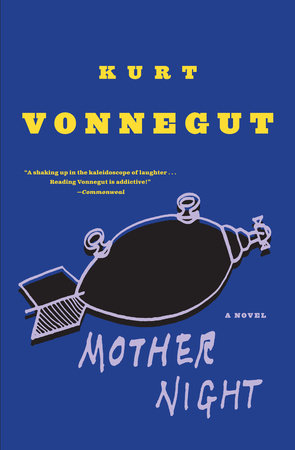
As one might imagine that experience impressed itself mightily on Vonnegut, who as a writer eventually dealt with the matter in his best-known novel Slaughterhouse Five.  But that was not his first novel to deal with WWII. That would be 1962’s Mother Night.

Mother Night, like all of Vonnegut’s novels remains in print. Mother Night does contain satire, but I’m not sure that as the cover blub above advertises that this one will shake up your kaleidoscope of laughter.

.

The short plot summary for Mother Night  is that it concerns the story of an American who was in Nazi Germany during the war, and who tells us that all-the-while working with American undercover efforts he made fulsome fascist propaganda broadcasts. This situation gives us all kinds of resonances: with important American Modernist Ezra Pound for example,*  with America’s own fascists, and with anyone who has ever found themselves working (for whatever reason) with a cause that they themselves feel they are not in alignment with.

The novel’s protagonist wrote “The Great Machine”  in the novel as a poem explaining how he and his beloved German wife had done what they felt was necessary to survive, and once again the novelist while in character allowed Vonnegut license to write poetry.

Abstracted from the novel, and as a stand-alone poem, it mentions nothing of the fascist double-life theme of Mother Night  however. Heard in this way, as the LYL Band performed it during the week of Vonnegut’s death in 2007, “The Great Machine”  speaks instead to refugees trying to escape violent situations by whatever means they can muster. In such events it’s not uncommon for the “you really must understand” class of commentators to mention that the refugees should not be fleeing but should stay and try to counter the violence in their own countries. I don’t know if it’s absolutely required, but such commentators almost never seem to have been in similar situations themselves. In the saddest reportage in Vonnegut’s poem, it says that most people do not, in fact, flee in these situations, but ignorantly or fatalistically accept becoming victims of The Great Machine that is History.

After our first two installments of our Vonnegut series it’s gotten darker here, but you can hear The LYL Band’s performance of this poem found in a novel with the player gadget below, or by clicking this highlighted hyperlink.

.

*Living during the war in Italy, Pound (who had been attracted to outsider political ideas, not just fresh approaches to literature) made propaganda broadcasts for the Italian Fascists. Pound, as with several other Axis broadcasters from Allied countries, was arrested at the war’s end and faced charges of treason, with a possible death sentence. American literary figures helped lobby to have Pound instead declared insane, reducing his culpability. British humorist P. G. Woodhouse was in Germany during the war and made Axis broadcasts, which his literary admirers and defenders characterized as not propagandistic.

It’s easy for us at this remove to forget how close at hand these issues were when Vonnegut was working on his novel. WWII was as close as September 11 2001 and the wars that followed are to us now in 2021Oddly though, American fascism, which had been a considerable issue during the ‘30s and ‘40s and is again now, was considered something of a comic non-entity in the 1962 world of his novel.

Bokonon’s 53rd Calypso (Nice, Nice, Very Nice)

On to Kurt Vonnegut novels I have read and admired, as we continue this week’s Vonnegut series. In 1963’s Cat’s Cradle Vonnegut created one of the most elaborate satires I have ever read or heard of. What’s the target of the satire? I’d start to list them, but how much time do you have? What’s that you say?

“Busy, busy, busy…”

Well, let me talk a bit about Bokononism, a fictional religion created by Vonnegut as a Dadaist philosophical framework for this novel. I thought it a clever satire as a young man, but now as an old man I admire the richness of its contradictions and insights. Bokononism (named for its living, but elusive founder, Bokonon) is rich in meaningful/absurd contrasts. It’s said to have been invented by the West Indian sidekick of an accidental American imperialist* as an opiate of the masses for an impoverished Caribbean island nation. But not far under the cover of its optimistic and panegyric lies are sharp observations of life and how we think we make sense of it.

Instead of the Psalms of David, Bokonon wrote calypso songs. To many readers now calypso is but an obscure genre of Caribbean Afro-American music, but in the years immediately prior to Cat’s Cradle  it had had a fairly significant US commercial visibility. Here’s a complexity in this calypso moment: to the typical US listener at the end of the 50s the music was “read” as carefree and only moderately exotic and absurdist.** But to calypso’s originators on their colonial islands, it was a sly comment on oppressions and troubles.

Creating such a song-writing character was an excuse for Vonnegut to do what many novelists stuck on silent pages would love to do: dress up and pretend to be pop music performers, even if only in a novelist’s imagination. Cut Kurt some slack: that pretending allows us to use Vonnegut’s sensibilities in the short formats the Parlando Project prefers.

Over a decade later, this lyric escaped from the novel, and what was presented as the trickster guru Bokonon’s scriptural “53rd Calypso”  in the book had a  second life as a song lyric under the title “Nice, Nice, Very Nice.”  It made the American hit parade charts with this song by Ambrosia in 1975. Taken that way, it either can seem a simple, pleasing song; or a good reason in 1975 to form a punk band, without delay.


These guys wrote additional lyrics, sing better than I do, and were more concise in explaining Bokonon’s motivation for his religion “I wanted all things to make sense/So we’d be happy instead of tense” Still, I formed a punk band.

.

Simple isn’t without complexities. All we have is one quatrain and a short refrain — “Be Bop A Lula”  is epic poetry compared to this. That one verse is a diverse catalog of the lowly and the high, the brave and the mundane, and the refrain wishes to claim they are part of the same “device” which rhymes with a repeated judgement that this is “nice.”

On one level this is a statement of shared humanity, and our connection. As complicated as the character of Bokonon is, I don’t think his creator Vonnegut would doubt the truth of that sharedness — but the “nice” and then too, the “device” part? There is the complex part of Vonnegut’s world-view.

Vonnegut portrays a world where kindness, love, and altruism are possibilities – no, necessities. Everything that is not those things exists too. We are all in a net of “butterfly effects” — even then in the novel’s 1963, even more so now in 2021. Is the world “nice?” In moments and pin-points it is. Let’s acknowledge that. In totality? “Busy, busy, busy” is said to be what a Bokononist says whenever they try to consider the complexity, the world’s intended and unintended awe of incomprehensibility. The implication: too complex to understand, to control.

At this point, in an earlier draft of this post I then tried to synthesize these things in my conclusion, but I don’t believe the book ever does, and certainly this little song that I present today doesn’t.  So, let’s move on. Busy, busy, busy.

This song, performed in the same live set, back in the week of Vonnegut’s death in 2007 by the LYL Band, is unusual among the several musical settings I’ve since heard for it — I actually aimed for a calypso feel for the melody and groove, while others don’t. These 2007 performances I’ll use this week are each imperfect in some way, but as we approach the 99th anniversary of Vonnegut’s birth, it’s my hope that they still express some of his spirit.

There’s a player gadget for some to hear “Bokonon’s 53rd Calypso”,  but if you don’t see it, tap this highlighted hyperlink.

.

*The very idea of accidental or coincidental imperialism is rich in itself. Even the minor threads in Cat’s Cradle  are often like that.

**Just as I’m not much of an expert on the novel and its expressions, I can’t allow anyone to think of me as some expert on West Indian musical genres and political movements. But I am old enough to recall a bit about how the music was used and understood by white-Eurocentric-American culture circa 1960 — roughly, a darker-skinned Jimmy Buffett kind of thing. Some may recall a signal use in the goth-comedy Beetlejuice  where the uptight urban sophisticates in a New England farmhouse were possessed and cursed to sing “Day-O (the Banana Boat Song),”  which had been a big US hit in the late 50s. It’s an extraordinarily silly scene. I laugh at it. Vonnegut could (should) draw laughs too, but he is using a deeper, darker, slyer take on calypso.

Calypso’s use first by the American pop music industry, and then by white US filmmakers, as well as Vonnegut’s use of it in Cats Cradle  could be viewed as cultural appropriation — I’d guess because it is. How would actual people of Trinidad/Tobago view Vonnegut’s reflection of their adaptation of African songcraft in a new colonialist world? I’d expect the opinions would vary, but I haven’t found anything on a simple web search.

I’ll let them judge Vonnegut in that regard. I’m an American musician, so I will not throw the first Rolling Stone from a country whose music is unique significantly because of kidnapped Afro-Americans. I feel that restricting art and tactics that oppose oppression only to each group who could claim ownership and a first, best understanding of them reduces the powers of resistance.

Hello Babies

Today I’m going to start a short series here celebrating Kurt Vonnegut, a writer generally filed under “novelist” on bookshelves.

Most of the words this project uses started out as poetry, and poetry is a form of literature. So, one might assume that I’ve read a lot of novels. I haven’t. I’ve set no ban against the form, and I’ll read one or two a year, but the ones I read aren’t usually considered great literature. Essays, poetry, poetry collections, biographies (and less commonly memoirs), non-fiction accounts long and short, historical and current — my reading dance-card is full, and at my age I’m not sure I’ll ever rebalance my reading investments.

As he aged, Vonnegut apparently fell out with the conventional ideal of the novel too. Even some of his earlier novels had elements in opposition to long fiction either literary or popular as generally considered, and so his reputation as a “great writer” or as a “best seller” were both constrained.

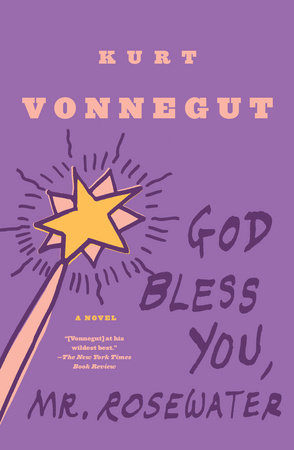
Luckily for this project, which likes to combine words with music in various ways, and prefers short, condensed forms of expression for that, Vonnegut is very quotable. Fictional characters who are quote collections and makers of short speeches are not the stuff of literary esteem, but then the results have other uses. Today’s piece is an infant-baptismal litany that a character in one of Vonnegut’s earlier novels* proposes to give, and it’s become one of Vonnegut’s most remembered and requoted passages.

For all his literary eccentricities and opinions, Vonnegut and his novel does remain in print.

.

The performance here, and probably the rest in the series to follow, was performed live in one-take by the LYL Band on April 15th 2007, the week that Vonnegut died, and these presentations are taking place in the week of the 99th anniversary of his birth. All these performances are imperfect in one way or another, but at least for me I still hear the emotions in-between the notes as Dave Moore and I made note of a departed writer’s spirit. Today’s piece was the first one we preformed that day.

A player gadget for “Hello Babies”  is below for some of you, but not everyone reads this blog in ways that display that, so I offer this highlighted hyperlink which will also play this short performance.

.

*The Vonnegut novel this passage appears in is God Bless You, Mr. Rosewater,  which I must confess I haven’t read. I say that just as a matter of honesty, not as a review or recommendation which I’m obviously not qualified to give. I suspect I’d like it when and if I get around to it. For counterpoint, here’s a review, contemporary with the novel’s publication, from the New York Times were the reviewer proves a maxim that I often repeat here: “All artists fail.”

The Shadow on the Stone

Because they usually deal with brief moments in time, we sometimes think of lyric poetry as making do with simple thoughts, singular emotions felt distinctly. Today’s piece, English poet Thomas Hardy’s “The Shadow on the Stone”  shows us it can be otherwise.

I suppose one can say it’s a poem about grief, or you could say it’s another ghost story. If it’s a ghost story, it’s poised entirely between belief and disbelief in such afterlife visitations. If it’s a grief poem, and it is that I think, it points out that grief doesn’t mean simple, singular, feelings.

Let me summarize a few things that are biographically behind this poem, even though I think some of its ambiguity can be sensed, felt, and to a degree understood without them.

The poem’s author, Hardy, was married in his thirties* to another woman of the same age. There was something of a romance in their courtship story. She was beautiful, looked younger than her suitor, and loved to ride around the English countryside on horseback. She was a doted-on daughter from a well-borne family that had had some financial setbacks. Hardy was from a tradesman’s family and was not established successfully in a trade or as the controversial author of novels he would become. Not long into the marriage, the wife began to think of this as what would have been called then “a misalliance.” He was beneath her standing after all — and Hardy’s eventual emergence as a novelist of note if anything made her more estranged. She considered herself a writer, while others dismissed her work as all the while Hardy’s began to succeed.

Eventually she moved to the attic of their house, and their emotional separation was an open secret among their acquaintances. In 1912, after more than 35 years of marriage, most spent in estrangement from her husband, she died.**  In going through her attic quarters they was found a manuscript she had been writing. Some accounts give its name as Why I Hate My Husband  and others What I Think of My Husband.***

Emma and Thomas Hardy

For Emma, Forever Ago. Thomas Hardy and pre-ghost-wife wife Emma back in the 19th Century.

.

So, what happens in the moment of this poem, after her death, and after that life-history? Here’s a link to the poem’s text if you’d like to follow along. The poem’s speaker (I’ll just say “Hardy,” as Thomas Hardy was forthright about the subject of his grief poems) is working during the autumn in his garden and sees cast across a “Druid stone”**** a shadow shape which he says in his imagination brings to mind the shadow of his dead spouse when she would garden there. While he says this was “imagining” he’s not completely sure. Those aware of Hardy’s marriage history will hear a particular salience in the statement that the ghost of his dead wife is one “I long had learned to lack.” But this phenomenon, of intimates appearing in the imagination of the grieving is commonplace, and I can say in the experience of myself and my dead spouse, it’s not a simple wistful visitation. If one’s world has been turned upside down, you may not want it to spin some more, even backwards.

In the second stanza this “Is she really here, or my imagining” state is interrogated. Hardy speaks to whatever is behind him casting shadows, and says (perhaps just in case it’s a real, and maybe even a vengeful, ghost) “I’m sure you are standing behind me.” As if he’s conjured up a spirit and he’s letting them know he knows who/what they are, knows their name, and can query it.

The spirit doesn’t respond. I love the ambiguous skeptic’s final two lines here: “I would not turn my head to discover/That there was nothing in my belief.” Hardy wants to not face it  if the spirit is real, not an imagining, and we don’t even know if from fear or love.

Continuing in ambivalence, Hardy says next that he wanted to look  and disprove, a statement that he in action doesn’t do.*****   Instead he leaves the garden without seeking to disprove or confront the spirit or imagining he believes is representing his dead wife. Best as I can tell, the idiomatic expression “throwing shade” is of Afro-American origin. This Merriam Webster note says it was popularized on Ru Paul’s Drag Race  circa 2010, though I’m pretty sure I heard and used it before then. In my performance, I speak it in that meaning, even if Hardy didn’t mean it that way in his time. As in life, Hardy seems to say he must endure and miss his spouse, and so this ambivalence with a possible ghost resonates with his grief.

I mentioned performance above. I started composing here thinking about the Afro-American musical influences on the Velvet Underground, both in rhythm guitar figures and in Moe Tucker’s spare drum kit and approach. If I would have written the drums in this as a jazz-influenced piece, the high-hat would have marked the beat, but there’s no high-hat in this piece’s drum kit, though the tambourine playing does stand in for it somewhat. This didn’t turn out to be a Moe Tucker style drum part after all, but that’s where I started.

My original take had things ending on Hardy’s poem’s final word: “fade” — but overnight I decided it needed a reprise after that hung resolution, and while playing that I decided to riff on some other famous lyrical uses of the word “fade” as a trope of death and persistence. A player gadget is below for some to hear my performance, but if not, this highlighted hyperlink is another way to hear it.

.

*This is fairly late for a first marriage in the mid-19th century.

**She and Hardy were 72 in 1912. This is not one of those stories of the stricken young bride who died long before her time.

***We may wonder just what the real deal was with their relationship, who was meaner or more dismissive to who — and well, the patriarchy and all that may have colored within the lines, as most accounts by men and women seem to paint Thomas Hardy as the aggrieved party in the marriage. Interesting matters — but for the purposes of presenting this poem, beside the point. Flip a few gendered words in the poem, and imagine it being written by a widow who thinks of her abusive or belittling husband after his death.

****I wondered about this peculiar detail. Was this a characteristic English garden decoration, like a birdbath or garden gnome statue? No. A large flattened top stone was found during construction which Hardy thought was an actual Druid stone, perhaps used as an ancient altar. More evidence that while Hardy was a skeptic, the realness of a supernatural “apparition” is meant to be in question — and this may also allude to some metaphoric bone and ash sacrifices the marriage brought to their lives.

*****In a short essay on this poem, Jeremy Axelrod sees an allusion to the story of Eurydice and Orpheus in the underworld. Hardy doesn’t usually use classical Greek allusions in the poems I’ve read, but even if unintended, well, “death of the author” and “archetypes.”

In a Disused Graveyard

To complete our Halloween series, here’s a poem by Robert Frost suitable for All-Saint’s and All-Soul’s Day: “In a Disused Graveyard.”

When I was a child and my father was alive, there would be times when my six sisters and I would be corralled up inside a Fifties American car for some long two-lane trip to a grandmother’s house or other destination. Yes it was crowded, and the wave-rolling suspensions of those pastel and chrome cars added another element: the possibility that one of us would vomit or simply rebel against the length of an uncountable trip.

To counter that, liquid Dramamine was administered to the younger kids from paper Dixie cups. This was given to suppress nausea, but the side-effect of sleepiness was welcomed too. Half of us might be drowsy to asleep and the other half just bored.

For that older half, my father introduced a car-ride game to help us endure the drive. It was called Zip, and I suspect it might have been something he learned with his family of mostly brothers back in the Model A era. Zip had simple rules. In the game, a handful of objects that could be spotted beside our rural roads could score points. A white horse would score 1 point. An old man with a white beard riding a bicycle would score 100 points. And cemeteries would score 10 points. The scoring child would need to shout “Zip” before any other and explain what scoring object they had spotted. It was an odd scoring system. White horses would be rare, and any spotting was subject to suits regarding — well spotting. Was that horse completely white? Did it count if it had a small blaze on the forehead? These days I am an old man with a white beard who rides his bicycle often, and I am still reminded that I could win most Zip games by spotting myself (if that is possible).  I can’t recall any of us scoring a come-from-behind miracle win from such in those days though,.

This meant cemeteries were the scoring thing. Any church steeple coming into our vision put us on the edge of our sagging seat-covered seats, tongue leaning on the fence of our teeth ready to “zip!” But the subtle player knew more, knew that some older farmhouses might have a private graveyard, or that there might be one where a church no longer was, its congregation consolidated in the ebb and flow of settlement.

Such would be Robert Frost unconsoled graveyard in his poem, with only past parishioners, homesteaders, and villagers buried there. And now we, as we travel our own roads, are picking out our own personal graveyards: grandparents, parents, aunts, uncles, siblings, friends, spouses. No farmhouse, no church, no village anymore.

Old Tombstone

“Sure of death the marbles rhyme” — also 10 points!

.

In such a graveyard the old stones, now much dated, contrast against our presence, alive, visiting such a place. Can this not seem to say there is a line between the living and the dead, a border, an underline — a place here, and a place there? As Frost reminds us, no, that’s a lie we act as if we believe, mostly, even if it can hardly fool a rock.

There are religious believers who pray for the dead on these first two days in November. And we could be praying for ourselves too once we reach an age of really knowing. Slightly premature ghosts, then we pray for those who’ve come to terms. After all, Yogi Berra was said to have said: “If you don’t go to other people’s funerals, they won’t go to yours.”

A simple acoustic guitar accompanied first-take today, as I’m pressed for time. The player gadget will appear for some, but this highlighted hyperlink is an alternative way to play my audio performance of “In a Disused Graveyard.”    Want to follow along with Frost’s original text? Here’s a link to that as well.

.

Walter De La Mare Tells His Listeners About Jack and Jill

By and large Halloween is a fun holiday, so as we continue our Halloween series here let’s have some fun with a classic poem of intimated horror — or rather a parody of same.

The man supplying our fun is Louis Untermeyer, an American 20th century poet, critic, and anthologist. And his subject? To stitch together a strange parodic monster using the nursery rhyme “Jack and Jill Went Up the Hill”  with De La Mare’s poem “The Listeners.”

If you don’t know De La Mare’s “The Listeners,”  you should. Totally by implication and careful elusion it sets up an ambiguous but still dread-filled situation. Maybe you’d like to hear it performed? Here’s how I did it for last Halloween.

Untermeyer figures that if De La Mare’s tactics can make a man on horseback knocking and getting no answer scary, then it just might work to make a children’s poem a thing of considered horror. Well, unanswered doors, if not things of terror, are a matter of disappointment for trick or treaters, so maybe “The Listeners”  has a built-in advantage as a Halloween piece? Let’s see what Untermeyer can do with his mashup:

Jack and Jill

I made an unusual choice for musical variety: the instrument playing lines in the left channel, including the A# G# F# motif at the start of each verse is a Bass VI, not a conventional electric guitar..

.

I decided to play it straight on my performance of Untermeyer’s parody, as if it’s as bleak a tale as the old murder ballad “Pretty Polly”  — only with a water-pail and a dreadful accident instead of homicide. If I was to have Alfred Hitchcock drolly appear at the end of my performance, as he would in his TV show of my youth,* he would explain that local search and rescue units found Jack and that he’s recovering — but during that event they tested the water in the hilltop well and found it subtly yet dangerously poisoned.

Have a good Halloween valued Parlando listeners and readers! There’s a player gadget below for some, but if you don’t see it this highlighted hyperlink will get you the treat of my performance of Untermeyer’s De La Mare parody too.

.

* Alas, he’s unavailable, so use your grey-scale imagination.

They’re All Dead Now

In the last two posts I’ve mentioned how early 20th century Irish poet Joseph Campbell used the concision of Imagist poetry to present eerie folkloric material. However, today’s piece, written some 70 years later by Dave Moore, shows how the reiterative storytelling methods used in many traditional ballads can still work. Because of the way it tells its story, it’s somewhat longer than usual pieces here, but well worth 8 minutes of your time.

I quite vividly remember the first time I heard this song. I’d known Dave for over a decade then, but there was something new: he told me that he had written some songs and I offered to record them. I setup a cassette recorder in his living room where a patinaed old upright piano sat against a wall next to a set of framed pocket doors that he and I had spent some time stripping a few years before. I had a pair of Radio Shack microphones to hook up to record him. I think one of my mic stands was a second-hand-store gooseneck floor lamp that had given up its socket for a mic clip.

I don’t recall most of what Dave played and I recorded that day. Maybe four or five songs, but the last one was the piece I’ll perform for you today. Dave was a powerful, pounding piano player in those days, and the old upright was ringing out pretty good as he gave forth the lyrics of “They’re All Dead Now”  loudly over the top of that. By the end of its 11 verses, his voice was getting ragged — but the story he was singing was powerful enough that it probably should wear one out. He finished, and his voice was too.

The tape I made is now long lost, though “They’re All Dead Now”  remained recorded in my memory. Also to my recollection, that day was the day that the idea of the LYL Band that you’ve sometimes heard here as part of this Project took hold.

I think we may have tried to play or record it once or twice since, but it’s a difficult piece to bring off. Effective singing of long ballads in this kind of traditional form and length is extraordinarily difficult. While trained singers have built up stamina and technique to do that, this untrained singer will testify that it is as wearing as singing a set of hardcore punk — and since traditional ballad singing often uses sparse accompaniment, you have nowhere to hide and nothing else to bring the fury or shock to the audience other than the song’s story and one’s voice. Which is why, even in folk clubs among aficionados, long ballads are an iffy thing. The emotion too often invoked is boredom. Polite audiences will not throw things at the ballad singer, but they will fall into talk among themselves, and some will drop their eyes to half-mast and tune out to thoughts of more exciting music or leaf raking.

But of course, these songs can work. To build up to doing this performance I listened all morning to June Tabor recordings. Tabor (and Anne Briggs) are two of the best I know at performing this kind of material, and Tabor often uses instrumental backing (Briggs more often sang unaccompanied). I wasn’t ready to expose just my bare voice for this piece.

The piano part you hear is actually two piano tracks. Here I was thinking of the simple repeated motifs that John Cale,* with his association with what was called Minimalist composed music, would sometimes play. I added a synth part, which is more faithful to what Tabor would sometimes use, where the easy to transport and amplify electronic instrument serves almost as some droney acoustic folk instruments might at a traditional ballad sing.

I sang my vocal at my most energized part of the day and managed about four takes, and what you’ll hear is the best of that. I wouldn’t say my vocal timbre is pretty, but then maybe this song can survive that.

Yes, Dave’s song. I still think it’s a great song, same as the first time I heard it. The story it tells is historical,** it happened on the West Coast of Scotland just as the lyric says in 1618. Though it’s heavily refrained and has those 11 verses, it still doesn’t waste much time, dropping you in media res and progressing in presenting a horror that should be more frightening than witches.

Illustrating your 17th century Scottish Facebook feed: political instability, patriarchy, and religious fervor (or excuses).

.

I used to dream of hearing a great singer sing this song, but folk music’s principles say that a song needs singerrather than necessarily waiting for that. June Tabor is my age,*** I’m not sure she still performs. Rhiannon Giddens, the ball is in your court. Contact me.

But the rest of you can hear my best at transforming Dave’s song right now. There’s a player gadget some will see below, and otherwise this highlighted hyperlink will also play it.

.

*Yes, I’m still on a Velvet Underground jag this month.

**You might think 1618 is fairly late in the ugly history of witch prosecutions, but if you go to this account from the town of Irvine in Scotland I link here, you’ll read that “In 1650, a total of 17 women were also executed for witchcraft – 12 in March and 5 in June. Other burnings similarly took place in the town in 1662 and 1682.” So, there was enough of this that the story of Margaret Barclay, John Stewart, and Isobel Crawford is sometimes not included in round ups of the atrocities. Walter Scott did his own investigation in the 19th century, and the Irvine hyperlink above includes some of Scott’s account.

***October –  besides being the occasion for this week’s Halloween series – is also Dave’s birthday month. Happy Birthday Dave! Age has taken some ounces off of Dave’s keyboard pounding, but I still hope to present more of his voice here as part of the Parlando Project.

Reynardine

Are you familiar with the song “Reynardine?”  You might be. It’s been performed by many of the best performers in the modern folk revival: Anne Briggs, Fairport Convention, John Renbourn, June Tabor, Bert Jansch and others.*  Today as I extend our Halloween series, I’m going to introduce you to a version of the song you haven’t heard, a version that I’ll maintain uses more efficient and effective methods to convey an air of mystery. There’s supposition that this version may have been an indirect catalyst in the way the song you may know was presented, but this little-known version’s lyrics are so good that singers should consider using them in contemporary performances.

Where did I find this new version of “Reynardine?”   In the 1909 book of collected poetry by Irish poet Seosamh MacCathmhaoil (AKA Joseph Campbell) titled The Mountainy Singer.

I’ve spent a day or so in hurried research on this, even though long-time readers (or readers of our last post for that matter) will know that Joseph Campbell** has been of interest to me for a couple of years now. Here’s the shortest version of what I know that I can make.

Songs related to “Reynardine”  go back to the early 19th century in the British Isles and the U.S. Wikipedia gives us a representative early (1814) example, and this helpful page gives us a catalog of later 20th century versions. The older versions sometimes vary the name of the title character and contain no supernatural elements. The typical plot is a broadside ballad variation of what is still a staple romance-story trope: a woman meets an erotic stranger who she thinks may be disreputable and possibly stranger/dangerous — but who also may be wealthy or noble (Reynardine claims to have a castle in most versions.)  Over several verses there may be Victorian code-words like “kisses” and “fainting,” and the title man may leave the lady wondering where he’s run off to.

Skip forward to the early 20th century: in 1909 (the same year that Campbell as MacCathmhaoil publishes “The Mountainy Singer”)  a musicologist Herbert Hughes publishes the first volume in a series of successful song collections titled Irish Country Songs.  A great many songs that will be featured in Celtic and general folk-revival recordings, performances, and song anthologies are included in Hughes series of books.*** Hughes’ printed version of “Reynardine”  is shorter than most extant versions, a verse and a once-repeated refrain, and it’s even called a “Fragment of Ulster Ballad.” In a footnote at the bottom there is this note, unsupported by any of this song’s lyrics:

In the locality where I obtained this fragment Reynardine is known as the name of a faery that changes into the shape of a fox. -Ed.”

A century-old song, with many collected versions, and this is the first time that “Reynardine”  is said to have supernatural elements. Where did Hughes get this? I don’t have a direct link, but there is our version of “Reynardine,”  published in the same year by the Ulster-native Campbell who is not credited on Hughes’ score, though Campbell/ MacCathmhaoil is  credited in at least two other songs in Hughes’ Irish Country Songs.  The supposition is that Campbell is either “the locality” — or that Hughes and Campbell shared a traditional source which has left no extant song version that indicated to both of them that Reynardine is a supernatural creature.

Hughes' Irish Country Songs version of Reynardine

Footnotes! Pretty scary boys and girls! Herbert Hughes’ songbook presentation of Reynardine that likely changed how the song was viewed.

.

Did some of the later 20th century folk revival singers know of this footnote? Possibly. One highly influential revivalist A. L. Lloyd sang a version that included at times a remark that Reynardine had notable teeth which shined. In pre-dental-care England this detail may have been enough supernatural evidence. Furthermore, he wrote of the were-fox context in liner notes more than once 50-70 years ago which led other performers to explain the song that way, either as their own subtext or to audiences.

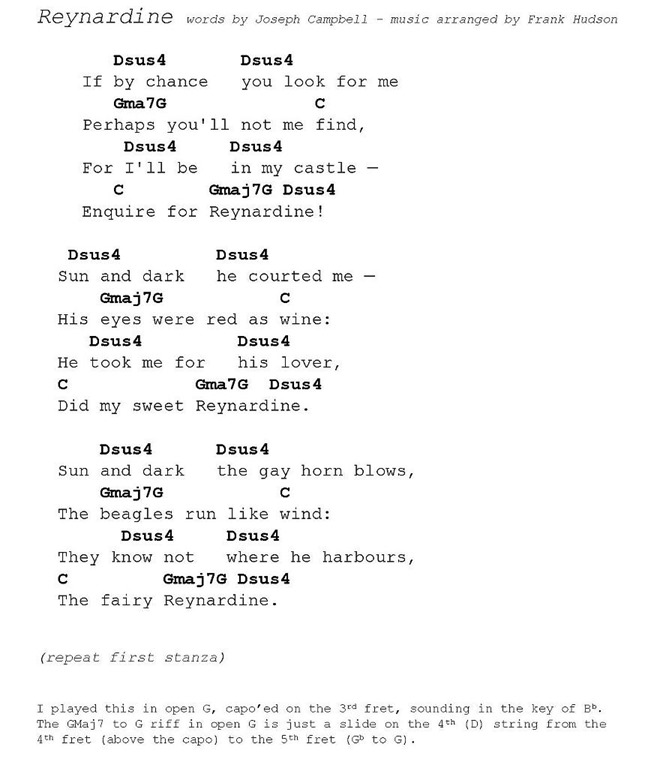
But here’s another mystery — and I’m saying, a useful one — why isn’t Campbell’s version of “Reynardine”  known and sung? Let’s look at it. The chords here are the ones I fingered, though I used Open G tuning and I formed the chords while capoing at the 3rd fret, so it sounds in the key of Bb. But the music “Reynardine” is sung to isn’t harmonically complicated (you could simplify the chords), and a better singer than I could better line out the attractive tune used by myself and most performers. ****

Reynardine Song

I made one change to Campbell’s masterfully compressed 1909 lyric. I use the more instantly recognizable, less antique word “lover” where Campbell had the easy to mishear “leman.”

.

Poets and lyricists: this is a marvel. No need of footnotes or spoken “this song is about…” intros. The supernatural element is subtly but clearly introduced. The refrained first stanza was as published by Hughes, and is commonly sung in modern versions. The second makes the bold move of changing a folk-song readymade where some damsel’s lips are found to be “red as wine” with an animalistic short-sharp-shock of Reynardine’s “eyes were red as wine.” The third stanza lets us know he can be a fox in form, subject to fox hunters with the brief but specific statements of the horn and hounds. Another subtle thing: Campbell repeats the “sun and dark” all-day-and-all-of-the-night lyrical motif to tell us this isn’t an ordinary fox hunt scheduled for seasonable days befitting rich people’s leisure, but a 24-hour emergency. The hunters know this fox isn’t normal. The refrained first verse reminds us that the lover may know that the were-fox can also take a human form, and make use of human defenses, such as castles, which the assiduous hunters do not.

As a page poem this has the vivid compression that Imagism preached. Compare the efficiency of this story-telling to “La Belle Dame sans Merci”  which has its sensuous pleasures, yes, but takes it’s time getting to the point. The two poems convey essentially the same tale, but Campbell can leave us with an equally mysterious effect using so few and aptly chosen words.

There’s a player below for some of you to hear my example of a performance of Joseph Campbell/ Seosamh MacCathmhaoil’s “Reynardine.”   Those who don’t see it can use this highlighted hyperlink instead.

Hopefully, I haven’t put any of you off with my own footnotes about this song’s unusual history and transformation. If you skipped to the end, here once more is my message today:

If you perform this sort of material, consider using Campbell’s lyrics instead of those you may have heard from other singers. They’re that good.”

.

*And more recently in a softly lovely version by Isobel Campbell, formerly of Belle and Sebastian.

**Obligatory statement: no, not the Power of Myth  guy. I suppose it could be worse, Campbell could have been named James Joyce or Sinead O’Connor, and confused us too.

***Besides “Reynardine,”  Vol. 1 includes another popular folk-revival song, erroneously considered to have wholly traditional lyrics: “She Moved Through the Fair”  which Hughes’ correctly credits lyrically to Irish poet Padraic Colum.

****I was somewhat working from a very rough memory of Bert Jansch’s version on his Rosemary Lane  LP. It’s a good thing I was rushing this and didn’t stop to listen to Jansch — his version is an acoustic guitar tour de force. If you’d like one performance to demonstrate why I, and many acoustic guitarists, revere his playing, that would be a good choice.

our Halloween Series starts with: The Good People

In the past month I’ve presented poetry by Robert Frost and Emily Dickinson, two of the most famous and best-loved American poets, and William Butler Yeats, the great Irish poet — but I also like to go beyond Poetry’s Greatest Hits and hunt for overlooked writers to combine with our original music. That’s how I found the work of Joseph Campbell who also wrote under the Gaelic version of his name as Seosamh MacCathmhaoil.

Ireland takes great pride in their poets, rightfully so, but Campbell seems to have slipped out of memory for the most part. I’m not yet sure why. Something about his personality? Political scores? The wealth of other poets to read? The lack of some widely acknowledged great poem that anthologies can’t ignore? It may just be that his limited level of fame and esteem in his most-active years before WWI didn’t reach a high enough point for his glide path to carry him into the 21st century.

When I found Campbell’s work, two things immediately attracted me: it’s lyrical and easily fits into the Parlando Project, and that he is likely the first Irish national to write in the Modernist short free-verse form that became known as Imagism. I don’t know how he came to write excellent examples in this style, but as the 20th century progressed that highly compressed and unpresupposing poetry was compartmentalized into a “you’ve proved your point” passing corrective to 19th century verse, and so Campbell’s fine examples in this style that were not widely anthologized and commented on when fresh carried little weight later.

But there’s another reason that his work fits with our “The Place Where Words and Music Meet” motto. Campbell seems to have collected and worked with traditional British Isles folk music. A few years back, author Greil Marcus came up with a fine phrase for America’s mashed-up folk musics and their contexts: “The Old Weird America” — but the British Isles traditions love ghosts, mysteries, and general strangeness too. In Campbell’s early 20th century books, right next to the free-verse Irish landscape Imagism, we may find poems that look a lot like folk song and which contain elements from traditional sources; but Campbell also shows a talent for vivid condensation (no 30 verse slowly iterating ballads for him) and luckily for our Halloween Series, he retains an emphasis on spooky and occult motifs.

So, let’s kick off a short Halloween series here with one of those poems which I’ve set to music: “The Good People.”

The Good People

What good’s a folk song if folks can’t sing and play it? Here are the accompaniment chords to my setting of “The Good People.”

.

The poem’s opening four lines set the scene, a mill path near a stream at night. Mist is rising off the mill stream, and it’s clear though dark. I was puzzled a bit by the black “lock,” but best as I can figure it may be a waterway-controlling lock. I don’t think it’s a spelling variant of the Scotch Gaelic “loch,” but it’s easy to think so just hearing it sung.

Ducks on a misty pond 1024

One misty morning early… Heidi Randen’s picture of autumn pond mist

.

In this quick-to-the mystery telling, the poem’s narrator lets us know there’s another group in this nighttime in the next quatrain. There’s a somber procession “along the grass.” I visualized small creatures, at least tall-grass short. One of them is apparently a queen of the creatures, and by now we should sense we’re in a fairy story. Two things, one obvious to any reader, and the other obscure to me until I read the poem are disclosed before this stanza ends: the queen is Aoibheall who is a prominent Irish supernatural creature. Besides noble prominence, she’s known for having a magic harp, and any human who hears this harp will soon die. Knowing that detail will set one up for the final two stanza’s concluding lines: the first of those lines we encounter tells us the little people are conveying a corpse.

This is not a victory march, the supernatural creatures are apparently The Good People in the title and they are sad and solemn. As the poem finishes, our narrator brings us to the final stanza-ending line, telling us that the corpse is possibly human.

Many, probably most, versions of traditional folk songs do not work like this, despite the rich folkloric flavor. Instead, British Isles folk songs often work like soap operas or podcast serials with a slow accretion of detail separated by many repeating refrains. At 12 lines and 72 words, Campbell’s lyric is very condensed.

To some who read or hear this, at least an air of strangeness should be conveyed efficiently. It’s also plausible, knowing the tales of Aoibheall and her harp, that a short sharp bolt of terror could occur to the narrator standing in this scene for us to imagine ourselves. The narrator surmises the corpse the fairies are bearing may be human. They (and now you) may know about Aiodheall’s harp. Did Aiodheall’s harp’s music kill the human they’re carrying? Will their dirge, already in progress, come to a harp part?

So, listen to today’s audio piece, if you dare. The player gadget will materialize below for some, but other ways to read this blog are under a powerful spell which forbids displaying it. Therefore, I’ve cast a highlighted hyperlink here to give you another chance to risk your life.

.