Langston Hughes “Summer Night”

All too often there is someone dying that interrupts the summer. In my neighborhood, a musician* named August — even doubling the metaphors, named August Golden — was shot and killed last week. His friends speak highly of his kindness and good heart, and we don’t know exactly why he was killed when someone shot up a house concert in a backyard, wounding several and killing him. The story is the shooter came up, said nothing, fired a bunch of shots, and escaped running down an alley. There’s speculation that the attack might have something to do with the young gay and trans audience at the concert, and so — beyond the don’t-knows — that community has fears that this could be.

I’m thinking of August Golden on the anniversary of the poet Lorca’s killing in the midst of the Spanish Civil War. Revisiting Lorca’s story today to see if there was anything new — for example there have been multiple efforts this century to locate where the celebrated poet’s body was buried — I see that there’s also no agreement on who killed him in 1936 or why. It could have been Lorca’s politics, or because Lorca was gay, or even some personal dispute.

Today’s text is not by Lorca, but by his American contemporary Langston Hughes, a poem he called “Summer Night.”   You can follow along as I discuss my impressions with this link to the poem. Hughes doesn’t say what summer month this night was in, but it feels very much like August to me. In America, and its northern parts, August has endings all over it. Long daylight hours recede. The freedom of summer for the young approaches the beginning of school weeks. Autumn and cooler weather beckons, and I’ve started wearing a jacket on some early morning bike rides.

Langston Hughes in front of graphic

Young Langston Hughes, writer and poet, and one of the early proponents of “Jazz Poetry”

.

Hughes’ poem seems like that August of calendared endings, because he starts out with a litany of “lasts” in his poem. As in another Hughes poem I’ve presented here,“Railroad Avenue,”  what he sees is as much what he hears, and it’s full of music of his turn of the century youth: “last” pianos, a “last” wind-up Victrola record player playing Jazz, and the cries of others — or their absence — with a “last” crying baby ceasing to silence. This section ends with the whispers of a heartbeat.

Hughes’ poem continues with its speaker (for simplicity, let’s assume it’s Hughes) now refraining on the word “empty.” What’s this night empty of?**  Music and the companionship of voices. Hughes could have spent the entire poem describing tossing alone at night, but he doesn’t. He spends almost as much time on those things that depart in the poem. Maybe mechanical pianos don’t play in your neighborhood. Maybe it’s break-beats leaking from cars or punk rock not Victrolas, or the house on my corner that plays Mexican music on the weekend as folks gather under an awning on the front yard. This is what we miss when dying interrupts August. This noise that keeps us up, keeps us living.

For my noise tonight, I wanted to summon remote, leaking, night music. I decided to take a cue from the poem and use piano, but as I worked on the piece with my limited keyboard skills I chose to depend on sound design more than other musical ideas. The piano parts are simple triads, but mixed in the grand piano sound is a subtle melding of electric piano. And for the bass part, which was the musical line I followed when speaking Hughes’ words, I decided to mic my Epiphone Jack Casady hollow-body bass as if it was an acoustic instrument and to mix that with the electric pickup output the bass was designed to use. You can hear the result with the audio player below. No player?  This highlighted link will open a new tab with its own audio player.

.

*The stories told about August Golden make him out as an embodiment of DIY punk, the whole idea that you learn to make what you want to have happen by making it happen. I recently wrote of the same spirit as a large part of what animates this project.

**Expanding on that final section where Hughes also talks of desire and “Needing someone, something.” Hughes sexuality is something of a mystery. There are some who believe he was gay, and others who thought he was largely asexual. This poem was included in his first poetry collection published while Hughes was in his twenties, and we do know that in his Victrola-era youth he yearned to be a writer, while this was strongly discouraged by his father.

700

I released the 700th Parlando Project audio piece earlier this month. I consider this an extraordinary achievement. I’m unaware that anyone has ever done anything like this* at this scale.

Sometime around 2015 I had an idea: that while poetry and music had long been combined, the ways you could do that hadn’t been fully exploited. I thought of the strains of Modernist poetry that were presumed to be obscure and non-musical, and believed that they had musical elements that would allow those poems to seep into one’s consciousness under the decoration and repetition of music. And I thought too of dusty words safe in their paper alabaster chambers — obsolete poetry, or lesser-known poets — could some of them be asked to come out and sing and dance?

If one would combine these words with music, how could the music illuminate or vivify them? I knew there were answers that’d already been given, so I wanted to try some of the other answers and maybe even find new ones. I knew the traditions of Art Song a bit, admired much of that; but I sometimes felt that Art Song settings and performance styles, while beautiful, didn’t always communicate all a poem’s possible environments and emotions. I knew the old-fashioned mid-century traditions of Jazz and Beatnik poetry pretty well, and despite Rap owing something to those things ancestrally, Rap’s insistent flow of words sometimes seemed more demonstrative than denotative to my ear. Indeed those two traditions, Art Song and Rap, poles apart in cultural associations, often suffered from a similar flaw: they needed to demonstrate talent and skill in the singer or rapper to execute tricky stuff, vocal feats. I’m not against that per se, I just thought there could be more than that.

Musically I was more aligned with two movements, also closer than superficialities might lead one to suspect: “folk music” and what was called variously punk rock, alternative, and indie music. These two musical movements could allow virtuosity, but they didn’t require it. They knew that simple could be as effective as complex, that one could be both simple and distinctive, that expensive equipment and recording perfection wasn’t essential.

I originally thought that the Parlando Project could best be done by other people. I even pitched it as an adlib series of collaborations between various musicians, bands and ensembles with words that might not be overly familiar to them. Sensible radio network people listened and wisely chose not to try this. They were wise because such an effort has opportunity costs, and the results could fail embarrassingly. My idea was not a good bet and would take resources from safer bets.

So, I decided to try another route, one most consistent with my alignments: Do It Yourself. Like hootenannies, sing out, kick out the jams, get in the van, DIY is a way to bypass the might-have-been, the we’re-not-ready, we-haven’t-been-given-permission obstacles. My singing voice didn’t suit Art Song, my less than agile speaking voice didn’t suit Rap.**

Who’d write the music? Mostly, I would. Who’d perform the music? I planned to pitch-in on what I could play as things started out, but later it was often myself playing all the instruments. Who’d select the words and present them? I would. Who’d record the music? Me. Who’d promote this and call proper attention to it? Alas, mostly me.

The result? It got done, however imperfectly. Things that hadn’t even been imagined had realizations that now exist, that others could hear. What was beyond my imagination? How many writers work I’d have meaningful encounters with. Those writers are almost always long dead, yet the work of composing, performing, and recording these combinations with music means I have hours of collaboration with them. The poem I start out with is often not the understood poem I’d write about at the end — and frankly, my understanding sometimes changes after I finish presenting the audio piece to you. We understand poems, if we understand them, with our whole lives.

I’ve learned new things musically out of necessity. I’ve become a somewhat better vocalist. As a recordist, I’ve figured out some things that work well enough. Would the pieces be better if someone more talented in each of these fields did these things? In most cases, yes. But that didn’t seem the choice. The choice seemed to be: nothing, silence, possibilities that remained “how about/what if…” thoughts and nothing else.

Then there’s that last part of the DIY bargain, promoting this Project and bringing it to attention, something that was done badly. I’m a lousy self-promoter. Many artists are. When I get up the courage to do it — which I consistently fail to do — I often do it badly with insufficient skill at figuring out the hook that draws interest. It’s also quite possible that the general idea here: a variety of words (not always “poetry’s greatest hits”) combined with a variety of musical styles has a very narrow appeal. That musical eclecticism, a choice that suits me, I suspect reduces appeal. The listener who might like my simple folk music style examples will not care for the electronic pieces will not like the let’s give it a go live small rock combo stuff, will not care for the “Punk Orchestral” pieces, will not care for the weird drone and minimalist stuff, and so on. I fear it may only take one or two examples someone doesn’t like to end their engagement with the Project. Yet, I can’t help myself, all different kinds of music are always in contrasting discussions in my head.

In summary, as I look over the more than seven years I’ve been doing this, I’m left with pride at what I’ve done. The self-questioning and pitying part of my emotions whispers to me “No one else is astonished. Are you the fool for thinking it astonishing, or are they the fool for not?” The sensible me judges those self-whispers. Replies that a few hundred read or listen on the best days to things that would not exist otherwise. I’ve received kind words from some of you, and if I haven’t replied enough to those messages it’s because I’m so grateful for them I can’t think of adequate words to respond. Some readers and listeners have gone even further and re-blogged or re-posted some of the things from the Parlando Project on your own blogs or on social media, something that’s been important in growing the audience for this.

But still the question sits in my mind on my doubting days: literary poetry and approximately realized indie music are both smallish groups. The combination of the two may not be additive as in my initial hopes, but subtractive. It’s possible I’ve done the most substantial job ever toward a goal inherently of not-much-interest. Or that I’m not good enough at it. Sobeit, it’s what my soul wants to do, and if such doubts try to stay me from doing this, I’ll listen to them and try to continue.

Earlier this month, as this post sat in drafts as I wondered how embarrassing, needy, or self-aggrandizing it was, I saw this quote in a column by someone who I never really knew, though she was technically a co-worker.*** In a final column in a local arts and entertainment paper, The Dispatch,  that was itself folding its tents, long-time local radio host Mary Lucia wrote:

“Ultimately the world owes you nothing, but it’s OK to secretly believe it does.”

How can I tell if that’s true or not? I can’t even tell how I could tell. It’s one of those things that might take more than one lifetime to know. I remember that quote and  I remember the trio of things I wrote above examining myself: “embarrassing, needy, self-aggrandizing.” I may not have enough time in my aging lifetime to find out what is most true in the balance — and any younger person reading this, even you may not have enough time for whatever you bill out to the world. Doubt has value, doubt may keep you from doing something foolish, but as of now, doubt doesn’t tell me what else to do. If I’m a fool, I must do what fools do, or nothing.

The 700th Parlando Project Piece bw

I can’t draw for beans, but I’ve had fun generating illustrations this year using Adobe’s new AI technology that claims it doesn’t use uncompensated work of artists.

.

* New here? What’s this?   Words, usually literary poetry from a range of eras, combined with a variety of original music, with posts here discussing my impressions of the poets and poetry as I encountered them in the making of those pieces.

**More than 50 years ago, in my naïve solitude, I imagined a type of music that would use a chorus of rhythmically spoken words to represent music. I even composed a couple of short pieces that I imagined could be performed that way, and eventually a script for a short play that expanded on these ideas. A year or so later, I heard The Last Poets recording and heard something partway like what I had imagined. I looked with admiration at the beginning of Rap, but I honestly have to say that I haven’t kept up with it. Besides my lack of speedy vocal chops, and generational distance from the modern masters of this form, the word-music I hear in my head sounds more like Carl Sandburg and Langston Hughes. I’m just as generationally removed from that latter pair as from today’s rappers, only in another direction. I guess I’m just weird that way.

***She would come to work about the time I was leaving my shift at a radio network, so I knew her more the way ordinary listeners did, as an on-air host.


Warm Summer Sun, the 700th Parlando Project piece

This is a modest little piece — a small number of words, a simple musical setting — so it may seem odd to choose it as the 700th audio piece from this Parlando Project. Well, this whole project is odd, isn’t it? You, for reading this and listening to the audio pieces are unusual. I’d say I’m odd too for taking the uncounted hours this Project has taken: looking for available words that strike me as worthwhile for performance, composing the music, performing most of the instruments, recording them, and figuring out what to briefly say about my experience of these words.

I plan to say more about reaching this milestone in a follow-up post, but I will put that off so that we can get to American author Mark Twain’s words without overwhelming them with my particulars.

I came upon this as if it was a poem written by the famous novelist, something I took immediate note of. Poets who publish novels at least once or twice aren’t extraordinarily rare. Established novelists who take to writing poetry may be slightly more unusual, but there are examples. The two arts are unlike enough that the list of those whose expression in both fields remain worth considering exists, but that list isn’t likely to take more than one page. But Twain’s poem was specifically unexpected. If you have followed this Project completely for a while you will have encountered most of what might be considered poetry by the great novelist Twain. One was a little monolog that performs easily.*  That piece is a still-acute skewering of poète maudit literary stances. Twain’s other poem used here was a satire produced by a character in a novel who wrote rafts of terrible elegies, a poetic form that Twain’s era loved more than any other: Tennyson’s book-length, multi-part, In Memoriam  elegy was a Victorian best-seller. Twain’s USP while he worked in the book trade was instead books full of life and absurdity written in garrulous American vernacular. Yet, here’s a poem by Twain that is:

Heartrendingly sincere
An elegy
Short enough to be engraved on a headstone

Where did this come from? It has both a biographical and literary inheritance. The biographic one: the headstone it was engraved on was for Twain’s beloved eldest daughter, a talented young woman who died at age 24. If you’ve got a few minutes, click this link and read her Wikipedia entry, so that you can mourn along with Twain. The literary antecedent, who Twain credited on the headstone as the author, was a contemporary poem written by an Australian expat-to-Scotland named Robert Richardson. Richardson is next to unknown and I’ve only glanced at the collection in which his poem titled“Annette”  appears. He was a newspaper and periodical poet who wrote (as did Twain) for popular audiences — but unlike the Twain we best remember today, he is (at first glance) conventional in his literary diction and full of the usual Victorian sentiments. Richardson’s “Annette”  takes up three pages and many stanzas, and Twain’s adaptation uses only the final stanza. Twain’s poem is 27 words long. Only 20 of those words come from Richardson’s stanza.

Here’s Richardson’s stanza followed by Twain’s poem as it appears on the headstone:

Warm summer sun, shine friendly here;
Warm western wind, blow kindly here;
Green sod above, rest light, rest light,
Good-night, Annette!
Sweetheart, good-night!

Warm Summer Sun Twain headstone

Here’s a link to a page where I found this picture of Olivia Susan Clemens’ headstone in Elmira New York. The link also includes the full text of Richardson’s Annette.

.

What are the alterations, which I’ll presume to be Twain’s, and which I assume are changes, not Twain using a different version than I found in an 1893 Richardson poetry collection?

“Friendly” is dropped from the description of the sun. “Kindly” is moved to the sun in Twain. “Softly,” a more objective adverb is used for the wind by Twain. Imagists (who’ll arrive only a decade after Twain’s poem) would have preferred kindly to be dropped entirely for an objective word, but on balance Twain is just slightly more modern. “Southern wind” not western may be localizing weather patterns between Richardson and Twain’s locales, but making this change shows a careful choice is being made.

Both Richardson and Twain make the choice to move from the above world of the living to the below ground world of the buried in their stanzas. Richardson has the sod “resting,” personifying in Victorian fustian. Twain has the weightier and more objective “lie.” Small difference, but I hold with Twain’s choice.

“Dear heart” for “Annette” removes the inapplicable specific from Richardson. In the final phrase Twain again adds power in my judgement by refraining “good night” rather than using the specific Victorian term “sweetheart.” Although Twain intended his poem as an inscription, the refrain adds to the effect when sung in performance.

Tiny poem, tiny changes, but of course the greatest difference, one made by a novelist (of all trades) was to presume that these spare 27 words from the end of Richardson’s longish poem make an apt summary of the situation: a beloved, talented daughter struck down by illness in her youth. This may have been a practical choice: carving it on a headstone (though larger headstones with longer inscriptions are found in Victorian graveyards). Intent and practicalities aside, I was moved.

You can hear my performance of Twain’s epitaph/elegy with the following audio player. No player? This is a backup link that will open a new tab with it’s own audio player. As I said, simple music today. Just me playing a nylon string “classical” guitar, the kind of instrument that I first played when I started out.

.

* Besides being credited by Hemingway as the progenitor of “All modern American literature,” Twain pioneered what today we’d call standup comedy.

Lightly, from Aldus Huxley’s novel “Island”

Death is a funny thing, mainly because dying is treated so damn serious. Have you ever asked yourself this: are you afraid of death or are you afraid of dying? If you answer, “Well I’m afraid of death.” I ask you to further question yourself. Non-existence is easy, a gimmie, a non-task. Dying on the other hand? You can fear pain, suffering. You can fear what is left unremedied, unfinished, left undone. One can fear you will not do it well. That you will show too much or not enough emotion. You can fear you will do it too slow and draw out suffering — or have it happen too fast before one can set an agenda for the occasion.

This weekend is the anniversary of the official launch of the Parlando Project in 2016. This weekend is also the anniversary of my late wife’s death decades ago. Last weekend I learned that a poet/blogger who I’ve followed through much of the seven years of working on the Parlando Project has received one of those months-to-live diagnoses.*

In-between those weekends, someone posted the text I’m going to present today by Aldous Huxley. Here’s a link to where I saw it. The poster knew it as if it was a poem titled “Island.”   Instead, it’s a passage from Huxley’s last book, a novel called Island.  In using this as text I decided to call this short excerpt after a repeated invocation in the passage: “Lightly.”

I’m not very well-read when it comes to novels, but as a teenager I read Huxley’s best-known book Brave New World.  I loved the SF world-building of it even if I likely missed good portions of the satire at that young age. After that I tackled Island  as well, promoted on the paperback cover as an updated companion to Brave New World.  I don’t recall much about Island,  certainly not this passage. What could I remember? That Island  had a bunch of ideas to present, but since I read it so long ago and so young, I retained nothing else. Looking at synopsis’s online this week, it appears that Huxley was trying to synthesize a long fascination with Asian spirituality and philosophy and apply that to his contemporary mid-20th century Western world.

Island cover

I think this is the edition I read as a teenager

.

Today I was able to look at a copy of Huxley’s novel, and the passage, presented as I first saw it in broken lines as if it was free verse, is indeed a block of prose within it. I said Island  was Huxley’s last novel. He died of cancer a year after it was published.**   I don’t know if Huxley had received one of those “months left” estimates as he worked on Island,  but the passage spoken by a character in his final book could be the author speaking from, or to, himself —  a reminder of how he felt he should approach dying.

In the book it’s spoken to a woman who is dying, attended by her husband and family. As I read the larger section the excerpt was from, I thought of being beside my late wife as she was dying. Yes, in essence, the teenage me with my youthful experience, could not have read the same book.

I was only able to do that reading for context this afternoon, a day after I had already completed the new audio piece. Maybe that’s of little matter. After all, even shorn of context as I saw it online, it immediately resonated this week with my thoughts for my distant faintly-colleague. Perhaps you will find resonance as you hear it too.***

I made a couple small alterations to the excerpt to generalize it. Then I composed the music for it on acoustic guitar, playing that instrument in a somewhat pianistic style,**** and then combined the two in the performance you can hear using the graphical audio player below. No visible player? This highlighted link will open a new tab with its own audio player.

.

*This poet and blogger, Robert Okaji, has been mentioned elsewhere here in the Parlando Project blog. Besides being a fine poet in general, Okaji helped me by example and brief comment to continue developing my penchant for freely translating classical Chinese poetry, something he also did. Sometimes we would adapt the same poems from the same literal glosses, producing two facets, two impressions, of the Tang Dynasty masters. I never met Okaji, though I’m glad I got to see him read his work online once during the pandemic.

Here’s a link to his graceful announcement of his diagnosis.  Wishing you the best living Robert: lightly.

**A darkly comic touch to Huxley’s death. His fame from Brave New World  was still considerable in the Sixties. After all, in many ways, his book was more relevant to the US/British culture in that era than its quasi-competitor 1984.  Another late work of his, The Doors of Perception about the benefits of psychedelic drugs (also a subplot in Island)  was a pioneering examination of that idea — and the source for a Californian rock band’s name a few years later. But instead of Huxley getting the few days of reassessment that would normally have attended his death, he got bupkis. You see, he died on November 22nd, 1963, the day the American President was assassinated. The world’s news-hole was filled with non-literary matters.

***As it turns out, this excerpt has been shared numerous times that I found when I searched for information about the words this week. Sometimes the passage retains its prose layout, other times it’s presented as if it is a poem. A small point, but most of the online quotes have slight wording differences from what I saw in a 1975 edition of the book I looked at today.

****By using the whole neck of the guitar and alternate tunings, one can expand the pitch and timbral range of the acoustic guitar beyond that of the more folk-song style pieces I present here otherwise.

William Carlos Williams’ Summer Song

One of my favorite Indie rock band names is Yo La Tengo. The name comes from a convention that was formulated decades ago as talented non-English speaking players began appearing in North American baseball teams. “Yo la tengo!” means “I’ve got it!” – a useful term as two or more fielders with their eyes fixed skyward tracking a fly ball might otherwise collide. In such a situation, the most confident player needs to call off the others who also think they might have a chance at making the play.

Today’s piece is by William Carlos Williams, who grew up speaking Spanish. It was published in Williams’ 1917 collection Al Que Quiere!   Wikipedia quotes from a later memoir by Williams where he translates that phrase as “to him that wants it,” a cry that he associates with playing football (AKA soccer). I don’t have access to that memoir, but he expands on that definition to make it sound like it’s an in-game cry meaning “I’m open, I’m confident, I have advantage on the defenders, get the ball to me!”*

Odd to think of WCW as a young athlete. I always picture him in his later years, the time that overlapped my lifetime, as an older man.**  But there is another element of his nature in that cry: if not exactly a poetry ball-hog, he seems to have been a poet who was not ashamed to make claims for his artistic validity. He got the Modernism bug early, and went right on to the business of “Making it new” even before this collection was published. Confidence. Or stubbornness.

William Carlos Williams’ poem “Summer Song”  starts out straightforward, with the Moon still visible just after dawn. If you’d like to follow along, here’s a link to the text.***  WCW is right-off attributing personhood to the Moon. If self-aware, the Moon must know it will soon be washed out by the rising sunlight, but Williams says the Moon is indifferent to that, it goes on smiling, for even if it’s a “wanderer” it also seems to understand that it will come to a new place, a new town, a new day, soon enough.

In the final section I’m a bit less clear at how surreal WCW is going. Let’s presume he’s the poem’s speaker, the man observing this moon in the summer morning. I try to picture the image he portrays. He says he might buy a shirt the color of the Moon (white? gray? silver? ruddy?) and accessorize it with a sky-blue tie. I’m puzzled. Wouldn’t the blue of the sky be the field (the shirt) on which the moon would (whatever color) be the tie in the foreground? Is he purposefully reversing foreground object and background field? Perhaps his intent is to say that the wanderer moon is really bigger than the present blue morning sky?

decalcomania by rene magritte

Painter Rene Magritte reversing field.

.

I’m unsure, but his final line is clear — if he too may be overshadowed — he may wander too, even if fading into invisibility, until his time might come. And here we are, some 106 years later, and I’m singing his words in front of a rock quartet today. You can hear that performance with an audio player you’ll see against the field of this web page. Or not? Well, then this highlighted link will tie you to a new tab which will supply its own audio player.

.

*I’m unable to find any confirmation in a quick search that this is some kind of standard on-field player cry. The Wikipedia excerpt from WCW explaining it also goes on to have him say that “I was there willing to pass the ball if anyone did want it.” So, is “al que queire” the cry of the player who wants the ball — or the cry of someone putting up a long kick in hopes one of their teammates will be there to receive it, a soccer equivalent of an American football “Hail Mary pass?
Again, Willians was like that. He was willing to write and to publish, put himself out there, without the level of attention and praise that some of his Modernist contemporaries received during their lifetimes. Anyone know anything more about this Spanish phrase?

**Also like the band Yo La Tengo, Williams was based in New Jersey.

***Here’s a link to an earlier version of this poem as published in 1916 in Poetry  magazine. As I improvised while singing, unaware of the this alternate version, WCW extended and refrained his ending there.

Sinéad O’Connor has died

Scrolling news and social media is how I misspend a lot of my time now, since the larger blocks when I can really bare down on artistic work are scarcer and less predictable in my life. Every so often someone famous in the 20th century will start to pop up unexpectedly in news article headings and post streams, a dreadful event. What is it this time, the back of mind thinks, nostalgia or death?

So yesterday it was Sinéad O’Connor that trended. One heading said the tense: “…she was….”

I was a little surprised at the building response, but shouldn’t have been. I have been aware, despite her shortish career in popular music, that her performances had a capacity to deeply touch people. There was a pure dialectic in many of those performances: fierceness and vulnerability simultaneously in an unstable state. When those two things exist at once, like flame and water, it’s dark and warm, bright and reflective, quenched and fueled.

When that combination resonates, it resonates deep with the listener. I myself have only the most inconsistent fierceness. There is an element of self-righteousness taken on as an armor that frightens me, no matter how just the cause, because I have seen the same armor worn on evil as often as good. But then, approaching injustice, as I may do with only questions and pain, seems to equivocate.

There was a pure dialectic in many of those performances: fierceness and vulnerability simultaneously in an unstable state.

My own oddest combination? I am something of a spiritual seeker deeply distrustful of every other pilgrim and certain that any mystical explanation obfuscates reality. This part of me may make me like and unlike O’Connor. As a human being I feel foolish and pretentious discussing any of this, though I hold my nose and type on today.

Yet, O’Connor, with her unstable and uncommon combination, should have taught me the insight that many are sharing in the past day: that there’s a human inside the armor. I knew that — but didn’t know  that well enough. Art may be persistent in showing us that deeper knowing.

Getting back to O’Connor’s performances then, here’s a lesser-known one, of a song that has to be one of the most over-done and over-sung Celtic tunes. Even without any additional context, pay attention to the presenter’s introduction. One could write an essay on its undertones. And then she sings.

.

Bed In Summer

Today’s text was written as a children’s poem by Robert Louis Stevenson. What it notices about the enticing longer days and late sunsets of summer is not limited to children however. I suspect many adults too find it harder to wind down when it’s still light and pleasant out.

Bed In Summer

They say I’m supposed to go to bed, but there’s birds out there, and where’s my phone or my Nintendo?

.

Stevenson published this in 1885 when some things of the earlier 19th century were wearing out. The voice of the child in the poem says they were used to arising from bed by candlelight in winter, and now they are going to bed in the still-daylight of a summer evening. How common was candlelight in a child’s room when this poem was first in print? Gas lighting had given its name to that age, and electric light was soon to become common. The adult Stevenson likely knew of such things, as I read his family business was lighthouse engineering. Perhaps Stevenson was recalling his own childhood, when humble candlelight was the norm? The collection that included this poem, A Childs Garden of Verses,  was still in circulation in my mid-20th century childhood. I guess we young readers just translated the lighting technology, figuring that poems were from olden days when open flames in kids’ rooms weren’t problematic.

One thing Stevenson’s poem might have gained by being aimed at children is that it’s delightfully spare and unfussy. The adult verse of 1885 was often not so, but here there are no classical allusions, no high-flown metaphors, just that memory of candlelight, an evening’s sunlight, some active birds, and footsteps on the street. The poem is not idealized at all, instead it’s simply present in the child’s conundrum.

I performed it with a 12-string acoustic guitar, an instrument I always want to keep around in addition to the more common 6 string guitar. My music is simple and unfussy today, as is fitting for Stevenson’s poem. You can hear it with the audio player you should see below. No player? Some ways of viewing this won’t show it, but this backup highlighted link will open a new tab with an audio player then.

.

.

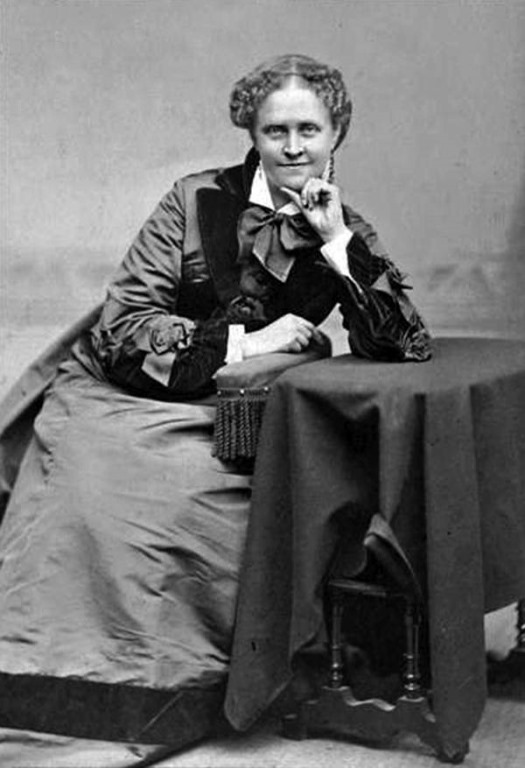
Helen Hunt Jackson’s “July”

I can’t help it — actually I do  try to help it, but sometimes I can’t. I was in a movie with my wife, the polemical Emily Dickinson biopic Wild Nights with Emily,*  and they introduced Thomas W. Higginson as this nincompoop who couldn’t discern the poetic genius of Dickinson compared to the kind of poetry he preferred. For an example of the latter, the filmmakers briefly gave us Helen Hunt Jackson as a prim, forgettable, mediocrity.

I nudged my wife, “Jackson was better than that” I murmured.

This is what happens when you’re married to someone who likes to look in the odd, unswept-out corners of poetry’s storage shed. Jackson was a childhood classmate of Emily Dickinson. Jackson left for marriage to a brilliant engineer, who Emily then met and sorta-kinda-maybe had a crush on. Jackson’s husband was killed in an explosion working on a secret torpedo weapon during the Civil War, and widow-Jackson went on to a substantial literary career of her own with poems, novels, and early activism for Native American rights.

Helen Hunt Jackson seated

mid-19th century photographs often conceal their subject’s personality, which makes this one of Helen Hunt Jackson a bit special I think.

.

No, she’s not as original as Emily Dickinson, but the congress of poets who could claim that level is small even now. She understood Dickenson’s worth enough to plead with her childhood friend to publish — and though it appeared anonymously, she did include the only Dickinson poem to be published between hard-covers during Emily’s lifetime within an international anthology she produced.

One part of Jackson’s poetry that can be found online is a sonnet series on the months of the year. A couple of years ago I presented her August sonnet, and this summer I’m ready to give you her July sonnet.

Like Dickinson, these poems include a close examination of nature, though I don’t sense here the notes of humor often found in Dickinson’s nature. In Jackson’s July example, the flowers mentioned are in danger from heat and drought, something that seems contemporary in my own midwestern summer. Only the poem’s water lily seems immune from the danger.

You can hear my musical performance of Helen Hunt Jackson’s “July”  with the audio player gadget below. Don’t see the player? This highlighted link will open a new tab with a player for you. Want to see the text of the poem? Here’s a link to that too.

.

*Released between the more scrupulous A Quiet Passion  and the joyously anachronistic Apple TV series Dickinson, Wild Nights with Emily  was the less fully realized, perhaps due to a lower budget. Its broad characterizations were intended in the service of satiric exaggeration. The film’s central point is to portray the often-suspected erotic bond between Dickinson and another childhood friend and confidant, Susan Gilbert.

A poet, Joseph Fasano, has a music recording, and he barely let’s you know about it.

My Project says it’s about where music and words meet, yet I’m still surprised and gratified when I encounter literary poets whose connection to music is significant. Most poets enjoy music — hell, most people  do. And the arts of poetry and music have long been siblings. Who can count how many poems have the word “song” in their titles, or how many poems speak of birds or unfeathered human musicians making music? Yet the number of poets who have publicly taken to composing and performing music is limited.

One might think that songs with words, the music most listeners prefer, would be already halfway accomplished by any good poet. In practice, that’s not always the case. A great deal of literary poetry doesn’t work like a song that captures listeners in real-time once in and through their ears.

What you say: “You do this all the time, you take literary poetry and you combine it with music!”  Yes, but I’m choosing what poetry to use, rejecting much more than I even attempt to compose music for. And while I appreciate the audience this project has developed for your open-mindedness and tolerant ears, by Internet standards my Parlando musical pieces have a small audience. Part of that is my voice, which has its limits, and my reach-exceeds-my-grasp musicianship — part of it too may be that I’m no one’s young, good-looking, begging-to-be-discovered talent.

Last time I said I’d leave a fourth example of someone combining poetry with music that I’ve discovered recently for a future post. That one is poet, novelist, teacher and promoter of poetry* Joseph Fasano. In the midst of his very active social media presence this summer, Fasano let it (rather casually) drop that he had publicly released an album of songs, The Wind That Knows the Way.

Fasano is an effective promoter of his own work on Twitter, and he’s amassed (by PoetryTwitter** standards) a sizeable number, thousands, of followers. “Followers” in the social media world is something of a hollow stat. Many in the count are proforma or “polite” followers mutually responding to follows from others, and then there are bots and insubstantial accounts seeking merely to draw attention to their causes & businesses. But when Fasano posts a poem of his or a series of notices about his latest novel, he gets (by literary standards, or mine, whatever I am) lots of eyeballs, re-tweets, and at least a bit of replies and response. By PoetryTwitter standards, people are paying attention to him.

To my knowledge, he’s not followed up to that single notice about his album of songs. For someone showing such effective and continuous effort to promote the other things he’s doing, that’s odd. Even though getting ear-time from me for musical work is tough — composing, recording, mixing the Parlando Project pieces take away from those opportunities — I listened to the album (available on Apple Music, Spotify, and likely some other current music streaming services) within a few days of the announcement.

It’s good, and a particular surprising adds to that goodness. I guess I expected a typical modern musical production — either pop in pretense or a rougher indie one. When someone tells me they have a recording these days, that’s what I’ll most often hear. Instead, the album’s sonic approach is a remarkable duplication of an early 1960s Folkways, Sing Out, folk-venue-appearing guitarist-singer with original songs record. In arrangements and general vibe, it’s like the early records of Gordon Lightfoot, Tim Buckley, Jackson C. Frank, or Eric Anderson.  For musical particularists, let me add I’m not talking about post 1965 records.  At times Fasano’s voice and musical approach reminds me of a less gruff Tim Hardin, but Hardin’s most popular later ‘60s records used highly skilled bandmates to fill out his sound. The Wind Knows the Way is just Fasano and his acoustic guitar, but like the early ‘60s records I’m referring to, his voice is pleasant and his music appealing, while his lyrics express more emotional complexity and range than the average pop song.

Here’s the title song from Fasano’s album for those that don’t use Apple Music, Spotify, et al.

.

I don’t know who engineered this recording, but the recording is technically well done too. My favorite cuts on the album are “In My Time,” “The Trouble,”  and “The Wind and the Rain.”  I’m an outsider to Fasano’s creative process, but it appears to me that he already has a “song lyric” mode that both borrows from and differs from his page poetry. These songs don’t come at you with a strange torrent of unusual metaphors with hermetic connections between them. Song lyrics forgive, even arguably benefit, from less originality in tropes, from commonly returned to, simple, elemental words. Many literary poets have trained themselves to avoid those things — and so the Parlando Project sometimes asks the listener to allow more weird words and similes that one hears with most songs. Fasano seems to know that as a songwriter he can write differently for song.

I assume he wrote the music, though the modern streaming services and his sparce posting about the record make this only an assumption. His melodies are fine, not showy, catchy and very singable. Harmonically he shows some variety in this set of songs, but he’s not from the Joni Mitchell or Nick Drake school of advanced guitar composition. This isn’t a pioneering, challenging, or world-changing record, but then too our contemporary world doesn’t have many records like this anymore: a voice, a guitar, and tuneful well-written songs that don’t require anything more than that.

In summary if you are a fan of those early ‘60s records (as I am) or if you would like to hear an intelligent record that usefully uses simplicity and a direct unadorned presentation, there’s a good chance you might like Joseph Fasano’s “The Wind That Knows the Way.”

.

*Fasano’s “promoter of poetry” element appeals to me. I’m forming a number of things I’d like to say about his efforts in that area, and if time and fate allow me, there’s maybe yet one more Joseph Fasano post to come this summer.

**Twitter, its faults and its problematic owner, is a current topic that’s launched a thousand takes, which I won’t add to today. I will say that PoetryTwitter is not overly large, but there are interesting people there. Part of what draws me to poetry is that I’m a naturally long-winded, run-on-story kind of person, and poetry’s compression lets me pare that back. The off-the-cuff, short-answer nature of Twitter lets me exercise the same muscle, and it fits my current fate of having few assured blocks of time to compose more complicated music or thoughts.

Four people doing something like what the Parlando Project does

You might know this pedant’s complaint: something can’t be “more unique” — because the word unique means the only, singular. If so, what the Parlando Project does then is quasi-unique. I well know that setting literary poems to music isn’t unprecedented, but the way I do it is  a smaller grouping. For reasons (some practical) I’ve taken to using my rough and not always reliable singing voice more often,* and more pieces have simpler arrangements featuring acoustic guitar. In the past couple of months I’ve become aware of four other people, singers and guitarists not totally unlike myself, who have being doing things related to this presentation of music combined with literary poetry.

I ran into Evan Gordon on a guitar-related online forum this year where he introduced himself as working on combining poems with acoustic guitar-centered music, including his version of a passage from Jack Kerouac that I too admire, and which supplied the name to his collection “The Long Long Skies Over New Jersey,”  a short album released this year. Kerouac’s words are there along with Houseman and Yeats and a couple of covers of well-known songs. I rather like Gordon’s poetry settings, and though there’s only three songs taken from literature, the range of the poetic sources he chose to set echoes what this Project does. So, you might well like this too. My favorite in this collection is his setting of Yeats’ “When You Are Old,”  a poem which I too have done.  I (and some other listeners) like my expression of that poem, but Gordon’s is exquisite. You can find Evan Gordon’s “The Long Long Skies Over New Jersey”  on streaming services such as Spotify or Apple Music.

Andrew Merritt introduced himself to me via a comment here at this blog regarding my versions of the classical Chinese Tang Dynasty poets, telling us he’s looked to them for inspiration too. Merritt has a collection that he calls “Twang Dynasty”  where he combines influences from Tang poems with classic American country music. Does that seem far-fetched to you? Well, I can imagine a translated scroll stroked in traditional Chinese calligraphy of Hank Williams lyrics sitting beside those of the Tang classical masters, so I like Merritt’s imagination. His lead-off cut, “Drinking with the Moon”  is Merritt’s version of a Li Bai poem I performed here.  You can hear his work at this link.

In a recent post on Carl Sandburg I tried to make the case that this somewhat deemphasized Modernist poet’s footpaths can be seen all over music in folk and Americana genres. I wrote that Sandburg blazed a path and model for Woody Guthrie, Pete Seeger, and Bob Dylan; and as an early American folk music revivalist, he personally allowed a connection between folk songs presented in the raw (not as motifs in fuller orchestrations) with progressive/populist politics and high poetic culture. Sandburg did this not only by performing those songs publicly at his free-verse poetry readings (with a voice and level of guitar skills roughly like my own, not as a concert artiste) but by publishing a pioneering general anthology of American folk song purposely mashed together from around our whole immigrant country and its various sub-cultures with his 1927 The American Songbag.

One problem with The American Songbag  as published is that it appears to be aimed at the musically literate owners of parlor pianos more than guitarists, many of whom are allergic to sheet music.**  So it was with great joy that I heard just this month of a project undertaken during the heights of the Covid pandemic by Stephen Griffith. He sought to record the entire Songbag,  all 315 songs, and to present them, as Sandburg might have sung them himself with just simple voice and acoustic guitar. I eagerly went to his web site to thank him last week, only to find that it had fallen off the web. Given his apparent age in the videos, I hope Griffith is well and still with us, that he’s perhaps just engaged with other things. Luckily, his performances are still available on YouTube at this link — and their unadorned presentation is a treasure chest. Some of the songs in Sandburg’s Songbag  became folk music “standards,” but the versions Sandburg and his collaborators collected ending in 1927 sometimes differ, not just in the folk-process of a few floating or varied verses and lines, but occasionally in entire melodies. I’ve listened to a lot of folk revivalist music over the years, but even though I haven’t made it through all of Griffith’s Songbag  versions, some of the songs I’ve heard there, taken from Sanburg’s anthology, seem new to me. Anyone interested in The Old Weird America owes Stephen Griffith a debt of thanks (well, and Sandburg too).

There’s a fourth example I want to draw your attention to: Joseph Fasano, a man who is doing some other things while also being a poetry-aware person wielding an acoustic guitar. Because of that range of things he’s doing, I’m going to leave him for an additional post to follow.

Here’s one of Giffith’s Songbag performances, a variation of a song I discussed here that my great-grandfather liked in this post.

.

*Earlier in the Project I was more likely to use spoken or chanted vocals. I still do this sometimes, depending on the text and what I feel is most effective.

**There are piano lead-sheets for the songs in The American Songbag, but no guitar chords or parts. Many/most folk music associated guitarists and singers learned their repertoire “by ear” from hearing others sing the songs, and those who wanted to notate guitar parts beyond chord sheets were likely to use guitar tablature not treble staff notation. There’s an old joke regarding guitarists as musicians: “Q: How do you make an electric guitarist turn down? A: Put sheet music in front of them.”

While technically possible in a narrow sense, it would have been an impractical task to try to present all 315 American Songbag songs as recordings in 1927. Decades later, after WWII, record collectors created anthology record albums such as the Folkways, Library of Congress, or Harry Smith’s LPs which “taught” old folk songs to new, young players. Sandburg’s existing work helped make this later work interesting — but those recording anthologies relied on dubs from 78 RPM records made a decade or so later than the era Sandburg and his collaborators were working in collecting songs from unrecorded singers.