For a cluster of reasons, it’s been increasingly difficult to create new audio pieces for this Project. For one thing, having done over 750 of these pieces during the past 8 years, a lot of musical ideas, poets, and poems have been explored already. For another, my increasing age and high-mileage body have decreased my stores of reliable energy and dexterity. But one other reason is that I no longer have a predictable and luxurious access to times when I can record something that involves a microphone. Oh, I still get such time — but I don’t always know when it’s coming — and so an opportunity may arise, and I’m committed to something else, or it comes about and I’m weary and spend it napping or resting my aching old frame, or it opens up, and I have nothing prepared to record.
This frustrates me even as I realize that what I do have to bring to the Parlando Project in terms of resources and time is something to be grateful for.
Yesterday I had foreknowledge of one of those recording times coming. I collected two things I wanted to do something with: a well-known poem by Emily Dickinson and another musical piece that I wanted to record just for my own personal enjoyment. As I sat down in my studio space to record my musical performance of the better-known Dickinson poem, I noticed on my music stand a chord sheet for a lesser-known Dickinson poem I had done the music for early this spring: “Sexton! My Master’s sleeping here. ” “Sexton!” hadn’t been recorded, even though it was ready — I didn’t have the time in early Spring as I rushed to do all the pieces on the children’s verse theme I had chosen for National Poetry Month.
Dickinson’s “Sexton!” is an early Spring poem, a season that arrives at different times in different climes, but I figured that I needed to record it right away if I was going to keep it at all timely. I grabbed a dreadnaught guitar (a larger, more powerful sounding guitar than my usual instrument) and quickly refreshed myself on how I had intended to perform “Sexton!”
I was so eager to record on this occasion when the restrictions to making a sound had fallen away that I ripped into the piece at a reckless tempo. A choice or a mood? Moot point, I had to get on with it. Thinking about that tempo today I also wondered if my teenager’s hardcore punk listening had seeped into my mental metronome. But then “Sexton!” does start with an exclamation point, and the whole poem is that: an exclamation of Spring.
Of course this is Goth Emily — so even if her poem and performance are as short as a cut by the so-rapid punk bards of San Pedro The Minutemen, there’s context crammed into 90 seconds. Here’s a link to Dickinson’s poem if you want to follow along. What do we find in those words?
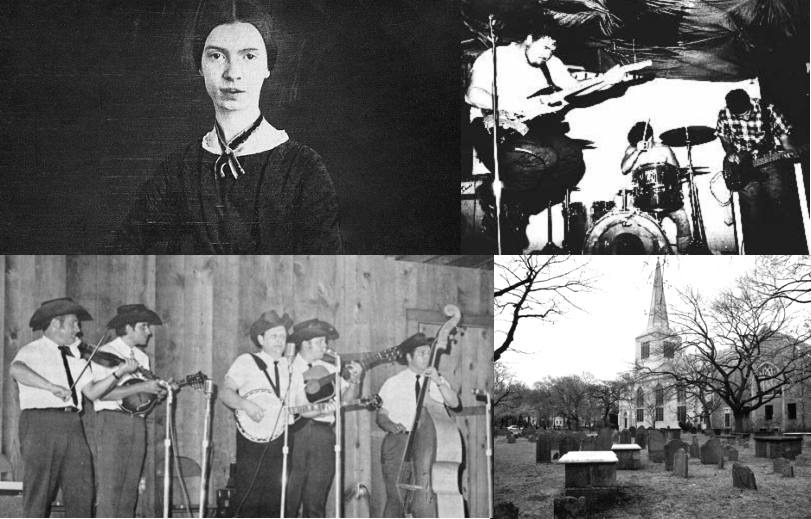
This is what you come to the Parlando Project for: stuff that’s stuck on each other like cockleburs.
.
A sexton* takes care of church grounds, typically including a graveyard. The sleeping Master’s bed chamber is therefore likely a grave. Spring has come with flowers and birds expecting new life.**
Spring isn’t stopping to reflect on this, like the tempo of the song it’s got work to do. Dickinson is in a churchyard, but it’s full of death departed and life arriving, not dogma. What replaces that dogma, sermon, homily? Bird-troubadours, secular Spring-song: its shortness, its insistence. You can hear my performance of Emily Dickinson’s “Sexton!” with the graphical audio gadget you should see below. No gadget? This highlighted link is a backup that will open a new tab with its own audio player.
.
*By anachronistic coincidence, the poem’s sexton made me think of Anne Sexton, a 20th century American poet. Poetry is like a cocklebur: its tropes and metaphors will stick to anything.
**More coincidental connections: in considering Dickinson’s poem in the context of a song I thought of this Earl Sykes song, best-known from a Ralph Stanley bluegrass version, called “A Robin Built a Nest on Daddy’s Grave.” I wonder if Sykes knew Dickinson’s poem, or if there’s some third source that both the poet and the songwriter tapped for this springtime combination. My Dickinson poem-now-song would make a good medley with Sykes’ song —and good bluegrass high vocals and harmony would certainly spruce up my rough-hewn singing performance.
 Frank Hudson
This is really fun. I’m sorry you’re short on time but glad you’re finding brief windows here and there.
LikeLiked by 1 person