Good Night Ladies

While performing and posting about T. S. Eliot’s “The Waste Land”  bit by bit this month, have I mentioned enough how artistically revolutionary it was? For today’s section let me talk first about form and then about subject, and I’ll share a little-known episode in Eliot’s life that may have contributed.

I call today’s part of “The Waste Land” “Goodnight Ladies.”  Formally, even today, nearly a century later, a section of a major poem written like this would be provocative. First off, it’s not “poetic” in its language. While there’s a minimal irregular structure from the interjected closing-time refrain of the bartender’s call, there’s no striking images, meter, rhyme, melodic flow, and certainly no “poetic diction” in it. It’s part in the musical structure of this very musical poem is to present a section with no music in its words. While politically and culturally apart from the Dadaists working at the same time outside of England, Eliot’s structure for “The Waste Land”  is to throw in jarring and unannounced cuts in voice and setting. Even sophisticated, educated readers cannot agree how many voices and scenes are present in the “A Game of Chess,”  which this passage concludes. I made it three pieces, three scenes, others think differently. Eliot has already used plenty of high culture references in the “A Game of Chess”  section of “The Waste Land”  before today’s scene: Shakespeare, Ovid, and obscure Jacobean playwright Middleton—but he’s also thrown-in a pop song parody. Now he concludes “A Game of Chess”  with a bit of working-class pub dialog absent of any literary allusions (until the very end).

The speaker, an unreliable narrator, as well as her subject are working-class women. There is no sentimentality. This isn’t a “salt of the earth” bit of condescending or ennobling praise. The speaker is unkind and perhaps duplicitous (the implication is that she will, or has, put a move on the subject’s husband), and her subject, Lil, is a woman described uncharitably as looking “antique” at age 31, after multiple difficult pregnancies and an induced abortion.

The monolog, if not poetry, feels authentic. The depiction of class and sexual politics, is sharp and unstinting. A poet like Carl Sandburg, the radical and newspaperman, could have heard such dialog—but where the hell did T. S. Eliot, upper middle class raised, prep-schooled, Sorbonne and Harvard (legacy) educated, international banking officer, and furthermore, a man with a reputation as stand-offish and diffident toward women—even those of his class and cultural background—get informed enough to write this passage?

I couldn’t let that question go without some research, and I think I found an answer. It’s one of those “this would make a great movie” moments in literary biography. I knew Eliot had taken a crack at teaching school at a boys-only school in Highgate. That’s the start of the story, he taught French, Latin, math, history, drawing, beside duties coaching baseball (!) and swimming. One of his students: a 9-year-old John Betjeman.

Schoolteachers will know what kind of workload that entails. The bank officer job that followed was a relief to Eliot.

Here’s where it gets interesting. Through some connections, he was introduced to the Workers Educational Association. They were organizing college-level night school classes in Southall. Eliot applied to teach Modern English Literature there, and he continued to do this from 1916 through 1919. Since WWI was on, with many men overseas, the classes were ¾ women.

The weekly classes were a lecture followed by an hour of discussion. Regular papers and reading were required of the students.

What was the experience like for Eliot and his working-class students? Surprisingly rewarding for Eliot, and (as far as we know) for the students. In letters home to America, Eliot praised the minds of his best students, singling out several women. In an account he provided for the Association’s 50th Anniversary in 1959, he could still recall one in particular:

“There was one poor young woman who was one of my best students, but was an elementary schoolmistress with a very large class of little children in the daytime and (she)…died, I am sorry to say, of overwork.”

Was Eliot being polite in both his contemporary letters and his remembrance letter to the Association? Perhaps he did gloss over, or was unaware of, the difficulties one could imagine between himself and his students—but he did this for three years, as a second job that was presumably not his main source of income, and each year, he asked to do one more. Each year, he developed a new syllabus covering additional authors for his literature night-students, some of whom stayed with him for his entire run.

Students-inscription-to-T S Eliot 1919

Inscription on a gift copy of The Oxford Book of English Verse signed by his students on the day of Eliot’s last lecture. The longer article about this is a must read for those interested in this little-known period of Eliot’s life.


Was that worn-out school-teacher, or some other night-school student, a model for Lil in today’s portion of “The Waste Land?”  It seems possible. After reading this, my thoughts went to those students, hungry to learn and experience more about literature in the London night speculating of Zeppelin raids. How I wish we had accounts from the students as well! In “The Waste Land,”  Eliot wasn’t going to give us anything he learned about their joys, or any compensations they found for the travails of their lives, anymore than he gives anyone that. We’re left, in today’s piece, with this mean girl’s account of Lil, unsparing in scorn, revealing Lil’s burdens as more of the weight of the timeless waste land on post-WWI Europe. Eliot doesn’t even give her story, told so meagerly, any ennobling literary references, nor any poetry, does he? Just a story in a bar.

Wait. Her name’s Lil. Lillith? Possible, but I think not. How did this poem begin? “April…breeding lilacs  out of the dead land.” And the last line, the one I use for the title of this performance? It’s no longer the recounter of Lil’s life speaking (she who says it “goonight” not “good night”). The voice has shifted again, without warning in this unpredictable poem. It’s the voice of Ophelia exiting to her death by water in Hamlet.

Ophelia by John Millais

Ophelia by John Millais. Almost nothing to do with Eliot and “The Waste Land,” but it’s been too long since I’ve been able to put a Pre-Raphaelite painting in a post.


The reader in this performance is Heidi Randen, who does a great job with the words and keeps me from having to inflict my voice in too many pieces here. To hear it use the player below.

Poems In Unrhymed Cadence

In 1899, as the 19th Century was leaving in Victorian London, a 13-year-old boy from a large poor family left school and went to work at whatever jobs that could be found. An unremarkable story.

After several years, and some job security as a civil service typist, he could enroll at a workingman’s night school. This story too, unremarkable.

Men and women with stories like this often go on to form families, start small businesses; or slip into slightly better jobs, finding what opportunities are left unguarded or unattended by those who started further up the economic ladder (or wall). Working diligently, they sometimes become the mothers and grandfathers of poets and scholars, preachers and social reformers. That’s not the way this story goes however.

This teenager moved quick, and found out he had a talent for language, not only his own native English, but German, Spanish, Russian, Dutch, and French too—they all came under his control. He accelerated himself beyond the speed of night school, and in a matter of a couple of years, our young man became a poet and a leading proponent in his time for avant-garde French poetry. And then he began meeting with some other poets in the cafes of London.

This man was F. S. Flint. It would be easy to pair him with one of those artists he was making talk and friendship with: T. E. Hulme. Neither had privileged backgrounds, and both are too little known, read, and studied today. In 1909, ten years after this boy had left school at 13, the meetings in these cafes included not only Flint and Hulme, but Ezra Pound, H. D., Florence Farr, William Butler Yeats, and Robert Frost. What they were plotting was a poetic revolution—one that would succeed, and become the dominant strain of English poetry for the rest of their century.

Although all of them had avowed influences, often ancient ones—English and Celtic bards and Latin, classical Chinese and Greek poets—they were resolved to “make it new” in Pound’s famous motto. They all wanted to change the language and the sound of English poetry, and since words and music are what make up poetry, they wanted to change everything about it.

In terms of language, the thoughts centered around removing decades, even centuries, of encrusted dead metaphors that no longer had any meaning. The imagery in the new poems would need to be fresh, different, vital and intrinsic to the poem, not mere decoration. Extensive, romantic effusions of feelings would be replaced with palpable images.

The “School of Images” was coalescing. By some accounts it was Flint who suggested tacking the suffix“-ist”, (in French “-iste”) to “image” to brand the movement.

In terms of poetry’s music, there was less agreement. Yeats and Farr were trying to invent a new kind of chanted poetry to music. Frost and Yeats would write some of the most accomplished metrical poetry ever written in English, but with a naturalness that made it disappear into unfussy verbal music. Pound remained interested in combining music as in the days of the medieval troubadours. Hulme talked of “chords” harmonically struck in the mind when an image was right. Flint, along with Hulme, thought French vers libre, “free verse” without rhyme and strict meter, was the mode to use. Flint called his verbal music “unrhymed cadences.”

And that’s where today’s piece comes in. In these three loosely-linked and lovely London-based poems, Flint demonstrates what he means, and this sort of breath-based line has echoed in much English poetry since.

The three poems or sections that make up Flint’s “Poems in Unrhymed Cadence”  seem connected to me, though the middle (swan) section had been published previously in a much more verbose version a few years before. I’ve only been a London visitor—Flint grew up there—but I personally associated the scenes throughout with Hyde Park/Kensington Gardens, with the silver birch trees, swans, lilies, and other flowers mentioned. However, the third section specifically mentions aspen trees, which I don’t believe are in Hyde Park or Kensington Gardens.

Hyde ParkKensington Gardens

Hyde Park and Kensington Gardens in London—swans didn’t pose for me, no aspen trees in sight.


Following the three Imagist rules (which were first written down by Flint), the images are direct and exactly presented, the words are spare and free of unnecessary elaboration, and the “To compose in the sequence of the musical phrase” rule is something of a restatement of Flint’s “cadence.” Like most imagist poems—and even though these poems unmistakably reflect a mood—there is less spelling out of emotions by their abstract names that would have been customary before. It’s only at the end of the second (swan) section that the first of these, “sorrow,” is spoken, and when the third, final section unleashes “afraid,” “anguish” and “pain,” the images have set this emotional summary in a real physical, sensory place first.

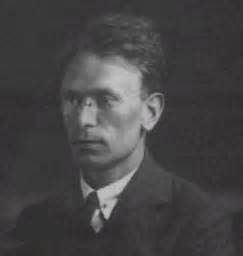
F S Flint

The only picture I can find of F. S. Flint


Musically, once again I don’t know what to call the music I wrote and performed for F. S. Flint’s set of poems. There are several orchestral parts and percussion, but the lead instrument that eventually emerges is a sitar. Since in the 21st Century chicken tikka masala can be said to be the British National dish, my limited skills on this instrument of virtuosos can be forgiven.

To hear it, use the player below.