The Dark Interval Version 1

How faithful should a translation be? I can hear your first answer even over the silence of the Internet: “As faithful as it can be, of course.”

And there are many times when I wish it could be so. One has to accept the translation loses when the devices of one language can’t make it over to the new one. Then, often there is the decay of time and the distances of cultures, and this can make meaning murky and less vibrant—but even between two people, of the same time and culture, native speakers of the same language, misunderstanding and misinterpretations of poetry occurs, as you can see with some pieces here where I perform words written by alternative reader and LYL Band keyboardist Dave Moore, which I didn’t fully grasp.

In the next two episodes of the Parlando Project, I’m going to demonstrate two different paths I’ve taken with the same poem, Rainer Maria Rilke’s “The Dark Interval.”  Today’s version is an attempt at a faithful translation.

rainer-maria-rilke

Looks like kind of the intense sort: Rainer Maria Rilke


Rilke, like Tristan Tzara or Apollinaire is another one of those WWI area European artists who exact nationality is hard to pin down. Is he Czech, Bohemian, Austrian, German, Swiss? It’s doesn’t help that the maps of Europe were being redrawn during his lifetime by the outcome of the WWI.

Nor does it help our translation task that he wrote “The Dark Interval”  in German, the language that one set of my grandparents spoke in their youth, and that even my mother was somewhat fluent in as a child, because I know even less German than French.

And Rilke is philosophically dense. His poems are full of compressed thoughts about the inexplicable, and he has a strong spiritualist bent. The former makes it hard for anyone to marshal his thoughts into another language while impressing on you the need to do so; the later makes it harder for me in particular, as I have come to believe that a philosophical spirituality is (at least for me) an impediment to approaching the mysteries.

It may help that I first encountered Rilke’s “The Dark Interval”  in a way deeply integrated into life. I, along with my friend John, was watching a band, The New Standards, perform in 2006, and during an interval in their show a man (who name I should remember, but can’t) read this poem. He did a good job of it, transmitting something of Rilke and himself in his reading. The translation he read was somewhat like the one I made later, and perform for today’s piece.

Just to give you a flavor of that concert, here’s the first piece they played. They did not pre-announce the song they were covering, leaving us in the audience to recognize it as their very different version unfolded:


I heard the Rilke poem immediately then as a meditation on the hurried mid-lives that John, I, and perhaps many of the audience were living at that time. Perhaps he—or the band performers, largely composed of veterans of locally famous indie rock bands of the 1980s and ‘90s—selected it for just that reason.

That’s not the version I perform here today. I did not change the words of this first translation, which sought to be faithful as I could understand it to be to the original German words, but circumstances changed how I hear it. John died, unexpectedly, way too young, a short time after we attended that concert. I learned later that Rilke composed it as he began to suffer from his final fatal illness. I can now see this not as a work about the busyness of middle age, but a work about the busyness of living nearer to dying. Different poem.

Here’s my performance of Rilke’s “The Dark Interval.” Just use the player that appears below to hear it. Tomorrow, my second translation of the same poem, with a different performance.
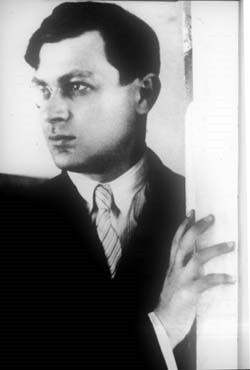
 

The Death of Apollinaire

This is an elegy, not a love poem, but then an elegy is a love poem that replaces the focus masking the complexity of love with the common mystery of death. Even the images and incidents can have an eerie similarity, as an absence may be at the center of either.

The author of today’s piece, Tristian Tzara, is as much as anyone the founder of Dada—if that absurdist movement can structurally support a founder. Like much of the early 20th Century modernist movement, the horrors and changes of WWI accelerated Dada’s development. Proudly anarchistic and rejecting the whole lot of social norms and artistic traditions, Dada was at turns playful and bitter about a European world order that that was itself disordering everything on the continent though modern warfare.

Tristan Tzaratzara_by_picabia

When I look inside the back of my guitar amp,  do I find? Picabia’s portrait of Leo Fender, or a tube socket schematic?

As we’ve learned in earlier posts here, a whole generation was mobilized as part of The Great War. The teenage Tzara, residing in neutral Switzerland, escaped this, but he apparently tried to gain funds from both sides’ propaganda arms to fund Dada activities—which would be just the kind of audacious prank that Dada loved.

The subject of today’s piece, Guillaume Apollinaire, was a slightly older member of that WWI generation who should have gone on to even greater things after the war. As I mentioned last time, he had invented the name for Surrealism, the modernist movement that was a post-war outgrowth of Dada. Before that, he had also invented the term Cubism. In France during this time, Apollinaire seemed to know, and was admired by, everyone: composers, writers, painters, theater artists, the whole lot of this vibrant cultural scene.

Swept up into the military by the war, Apollinaire was seriously wounded at the front and weakened by his wounds, he died during the great flu outbreak of 1918.

Apollinaire with WWI head wound

Apollinaire, his war-wound bandages “pendaient avec leur couronne”

His death then leads to Tzara’s elegy, today’s piece. Given Tzara and Dada’s reputation, I was worried as I started to translate this. Translation, particularly for someone like me who is not a fluent speaker of other languages, is already fraught with issues, but doubly so with writers who can use arbitrary absurdist phrases intentionally. When is something unclear, and when is it meant to be so? That’s a question you ask a lot with these writers. I have a prejudice for vibrancy, and if I feel there’s a good image or English phrase hidden in an unfamiliar language’s idiom, I will generally seek to bring it out, but I also realize that I’m fully capable of misunderstanding the writer’s intent.

With Tzara’s “The Death of Apollinaire”  I grew to believe that this was a sincere elegy for this much-loved artist among artists, and so, translated and performed it as such. Yes, it has its absurd images, but I chose to translate them with clarity in mind. Apollinaire died in November, and so I took the mourning images as a series of late autumn images, and presented them as such. I had the most puzzlement with the line “et les arbres pendaient avec leur couronne” which can be simply left as an unusual combination: a (presumably, shiny metal) crown hanging in a tree-top.  As I looked at “couronne” it appears that it’s used also for a laurel wreath crown, and for a funeral wreath too, and for a while thought “wreath” or “funeral wreath” would be the best translation. And then I considered the botanical meaning of “crown” applied to trees, and the follow-up line “unique pleur” made me think of the last leaves in autumn, a rather conventional image—but a great deal of what makes that conventional in English is the popular song “Autumn Leaves”  written originally in French by Surrealist Jacques Prévert!  My translation: “And the trees, those still with hanging leaves” takes liberties with Tzara’s words, in hopes that I might have divined his image. I’m more confident in how I translated the last line, “un beau long voyage et la vacance illimitée de la chair des structures des os” which I proudly think is superior to other English translations.

Musically, today’s performance is a mix of 12-string guitar in Steve Tibbett’s tuning, with electric guitar and bass. As always, there’s a handy player below so that you can hear it. If you like a piece you hear here, go ahead and hit the like button, but it’s even more important in bringing this work to others attention to share it on your favored social media platform. Thanks for reading and listening, and double thanks for sharing!

Maiden with a Lamp

When it was announced that Bob Dylan had been awarded the Nobel Prize for Literature there was a substantial reaction asking if songs could be literature—no, that’s not right, I’m mischaracterizing much of the reaction I read as if it was an honest inquiry into this question. No, the reaction I read was more of a conclusion that songs could not be literature, and so this Nobel award to Bob Dylan was a break with tradition, a loosening of standards.

This is complex subject, one I’ll probably return to, as I have much to say on this; but missed in the hoopla and questioning was this fact:  Bob Dylan was the second singer/songwriter to win the Nobel Prize for Literature.

In 1913 Rabindranath Tagore was awarded the Nobel Prize, the committee citing:

“Because of his profoundly sensitive, fresh and beautiful verse, by which, with consummate skill, he has made his poetic thought, expressed in his own English words, a part of the literature of the West”.

In 1913 when the prize was given, Tagore had only one such work they could be talking about: “Gitanjali,”  a 1912 collection of his song lyrics that Tagore had translated himself from Bengali into English prose poems.

Gitanjali title page 1912

The title page of the original English edition


Tagore is a fascinating man and artist, with achievements in so many fields that you might think I’m making him up. He wrote every kind of literature, started a university, seriously pursued modern painting, and gave Gandhi the title “Mahatma.” But he was no dabbler at songwriting, having written over 2000 songs. He’s even the only composer to score a hat trick for national anthems, having written the national anthems of India, Bangladesh and Siri Lanka.  His songs are so pervasive in Bengali culture that his thousands of songs have become their own genre.

tagore with Gandhi

“Let me lay it on you Mohandas: it means ‘Great Soul.”  Also, there’s this girl in Detroit who I’m going to call the Queen of Soul.”

Poet William Butler Yeats wrote enviously in his introduction to Tagore’s “Gitanjali”  of the power of songs:

“These verses will not lie in little well-printed books upon ladies’ tables, who turn the pages with indolent hands that they may sigh over a life without meaning, which is yet all they can know of life, or be carried by students at the university to be laid aside when the work of life begins, but, as the generations pass, travelers will hum them on the highway and men rowing upon the rivers.”

This spring as I read Tagore’s “Gitanjali,”  I hoped to find there on the page what is promised in Yeats’ introduction and what would normally be guaranteed by such acclaim. I failed at this. I couldn’t find it. The English of the prose translations seemed so archaic, the expression stilted, the voice vague. From accounts I’ve now read, this seems to be an acknowledged problem; and it appears that, for whatever reasons, Tagore purposely framed his translated work in an incomplete way. In the longer term, I will seek some of the newer translations. In the short term, I stood back and remembered something.

Song. These are songs.

Not only are they missing their music, but songs, like plays, are works for individual voices and talents to embody. Their creators are not claiming the real, complete thing exists on the page, that they are performing them mutely with ink on the white page. No, they expect, demand, that someone step in them, surmise their meaning, fill the blank white space with emotions, and speak them.

All art is like this really. Songs admit it. Songwriters generously say: I need you to fill these things, your humanity is better than any of my approximations.

So, today’s episode is the second of my attempts to bring something to a piece from Tagore’s “Gitanjali”  using his original prose translations, as that’s all I have for now.  With the last post here, “Light,”  I tried to meet Bengali music partway, but this time I’m staying firmly in the Western side, maybe even a bit on the Country and Western side. As I read this piece on the page I heard it as sounding like one of those weird Lee Hazelwood arrangements from a few decades ago, but since I was producing this myself, I had to sing the Nancy Sinatra part as well.
 
If you wonder about the floating light ceremony mentioned in the song I call “Maiden with a Lamp,”  it may be this one.

To hear me perform my vaguely C&W version of “Maiden with a Lamp,” use the player below.


Light

What is lost when poetry is translated? Robert Frost thought it outright: “Poetry  is what is lost in translation.” Those who’ve read my notes here on the Parlando project know that I hold that poetry is words that want to sing. Those sound effects of the flowing sound of words, the call and response of rhyme, the beats of the dancing syllables—all that music can hardly be asked to make it past the visa-check at the translation station on languages’ borders.

In recent posts here I translated two poems from classical Chinese. As a non-Chinese speaker, I could not even hope to convey what musical effects the originals had.  To better see this as English speakers, let us look the other direction, and think about what Emily Dickinson’s “I’ll Tell You How the Sun Rose” (featured in our last post) would lose if we were to translate it to classical Chinese.

Would Dickinson’s poetic music carry over? In English we have the movement of the common meter/ballad meter in her poem, a beat that is ingrained in those who sing common Christian hymns or know secular songs using this meter in the folk and popular music fields.  Since this is a common form in our culture, we are primed to move to this meter, and rich associations may arise from other times we have felt the same beat. All that is most likely lost in translation.

There’s a pun in the first line. The sun “rose” and is pink. Puns won’t likely make it across the border.

Dickinson rhymed her poem. Translators sometimes choose to create rhyming poems in their destination language, but adding this degree of difficulty to the task may cause other defects in translation as the rhyme is sought.

English sometimes has an advantage when one translates to and from it, because it is the language of a much-invaded island, which was then taken up by a polyglot country across the ocean. English as we know it today is full of words with Latin and Germanic origin, echoes of French, Spanish, German, and even more. Occasionally, puns or even rhymes can be saved when the foreign language has these connections. And metric rules for accents and syllables can be somewhat portable across the European range.

But what if we were to translate from English to classical Chinese? I’ll take an audacious shot at Dickinson’s first verse. The English gloss from the ideograms resulting might go like this:

Tell Sun Rise
Ribbon Sequence
Towers Wet Purple-Quartz
Squirrel Messengers
Hills Unpinned Hats
Birdsong Started
Soft Talk Inside
Sun Recognized

Well, there’s something still there isn’t there, even if we as English speakers see the losses. What remains is Dickinson’s attention to an ordinary event with extraordinary details. And there’s some musical structure remaining: parallelism, theme and variation that doesn’t rely on beats or syllables that can still peak through.

Today’s episode is an English translation from the original Bengali by its own author, Rabindranath Tagore. Despite having attended school in England, despite familiarity with English as a resident of a then colonial province of the British Empire, despite some rumored editorial assistance from renowned English language poet William Butler Yeats, and despite Tagore’s well-attested to genius, “Light”  was published in English in 1912 as a prose translation.

tagore-einstein2

Some amateur violin player (left) meets up with Rabindranath Tagore (right)

 
Paradoxically this may be due to the original’s musicality. I’ll have more to say on Tagore next time, but for now just know that Tagore was a composer and songwriter, and that his songs are widely known and appreciated by millions of Bengali speakers.
 
So, to try to restore some of the impact originally present in this piece, I composed and played a rather dense musical accompaniment for Tagore’s translated words. I did this in ignorance of if Tagore had his own melody for this poem in Bengali. Besides animation and illumination of his English prose, I aimed to combine some of my appreciation his native region’s music and Western electric guitar based music. To hear Rabindranath Tagore’s “Light”  with my music and performance, use the player below.

A Spring Morning

Imagine a world where what you thought was poetry was entirely different. A world where short poems could be as celebrated as longer literary works. A world where the most admired poems could be clear as can be about what is happening in the poem (the poem’s plot) with no elaborate obfuscation in the language; and yet the meaning, the thought and feelings the author means to convey, may remain allusive enough that the poem’s meaning seems to change over time as your experience grows. Imagine a world where poems can seem to have no metaphors at all, poems that don’t so much interpret the book of nature, but seem to be a page from that book itself.

That’s what Chinese poetry seems like to me.

It’s a refreshing change from the Western canon. I can see why a grumpy modernist like Ezra Pound, who wanted to sweep away the rot of his culture, would find it influential. Or why the forefathers of the “beat generation” in the western United States looked further west than California for a way to apprehend reality on the page.

I’m no scholar of Chinese poetry. These are the feelings of someone who likes what he reads and finds lessons in translating it.

For today’s post, I’m going to go over how I work on these translations with the aim of stripping away the mystery. I’ll use a short poem by Tang Dynasty poet Meng Haoran “A Spring Morning.”  It seems to be a good first task for Chinese translation, and the original poem is apparently known almost to the level of a nursery rhyme in Chinese.

Meng Haoran

Texas guitarist Billy Gibbons…whoops, no, this is Meng Haoran


I do not read Chinese, however, it’s now possible to find glosses of many poems literally translated from the original ideograms. Here’s what “A Spring Morning”  looks like when each of its lines five characters is translated into an English word :

Spring sleep not wake dawn
Everywhere hear cry bird
Night come wind rain sound
Flower fall know how many

The first problem is there is no punctuation, nor anything like English syntax. Still that’s an interesting way to approach a poem, where in English we are often trying to find the word to fit our flow of thoughts and music, but in working from this gloss we have the words, or at least “a word,” but need to find the flow instead.

I decided to render the first line as: “I slept late this spring morning, awaking just after dawn.” keeping the season (spring) and the more specific time of past the daybreak moment. I added late, which is not in the glosses’ words, because I thought the poem needed some reason why past the dawn was significant when I connect it with the third line.

The second line required less thought: “From everywhere I hear birds calling out.” The main choice here was the word I’d use for the sound of the birds. “Cry” used in the gloss has connotations of sorrow in English (not always, for example “war cry”) and I didn’t want to tip my hand toward sorrow in this line. And in Spring I know these bird calls, they are in fact just that: birds calling out for potential mates, birds setting up their territories, birds that want to say something to other birds.

The third line I write as: “Last night I tossed and turned in the sound of the wind and the rain.” This gives a reason for why the poet slept late, adds a note of drama and, in a particularly personal choice I made, alludes to a traditional English song refrain “Oh no, the wind and the rain.”

Now the final line: “Who knows how many petals have fallen?” Here seeing other people’s English translations helped, as it otherwise might not be clear that this is a question. In a vacuum one might render this as “I know how many flowers fell.” And that ending has validity, essentially saying “(in such a storm as last night) I know for sure how much my lovely spring blooms are going to be damaged.” Others who know more about Chinese idiom have chosen to make this a question, so I’ll trust that, and this makes the concluding thought more like “(I’m worried about the damage of Spring storms. but it was night and I was asleep) and no one can change the way Spring does this, blooming and storming, so it’s a mystery to you and me.”

Overall, notice how this modest four-line poem, suitable for children, encapsulates a sophisticated thought, one that young children wouldn’t need to understand yet.  It shows us Spring, as a sleeper sleeps past the now earlier dawn, through a rain storm that grows and destroys (compare our nursery rhyme “April showers bring may flowers” meaning “you might get wet, but it’s good for flowers” vs. this Chinese storm), alludes subtlety to the love and war of birds, and concludes with a wise line that says our ability to comprehend this cycle of growth and destruction, change and renewal, is limited. To a child, that last line may mean no more than the thrust vectors that allow that “a cow jumped over the moon;” but to an older adult, it reminds us more, that we will never know.

For the music to accompany “A Spring View”,  I used some drums playing an odd rhythmic figure, fretless electric bass, electric guitar, and two soft synthesizer voices: a washed out horn and another which is supposed to suggest a Chinese flute, which unlike Bob Dylan I did not take from a dancing child. Today’s audio piece is very short, and to play it use the gadget below.

Spring View

I’m often attracted to Chinese poetry, and I’m not sure why. Perhaps it’s the deceptive simplicity to the images, that hardly seem like images at all if one expects the showy metaphors used by many western poets. The concision of many of the most admired Chinese poems can be shocking. And to me there seems to be a radically flat broadness to the way some of the poets consider society and politics. Like a lot of my favorite UK folk songs, the tales of royalty and servants, peasants and generals, saints and drunkards seem to treat them all with the same even diction and consideration.

From what I read, Du Fu is highly regarded as poet in Chinese culture. He wrote in the 8th Century, about the time someone in Europe was compiling Beowulf  between long drinks of mead out of cups made from skulls. Du Fu’s time was a chaotic one, with the Chinese kingdom falling into rebellion and civil war. “Spring View”  is his response after his side had lost the battle and he was in disgrace.

Du Fu

Du Fu:  the red trucker cap or the pink pussy hat?


In translating Du Fu’s “Spring View,”  I thought of our own times, particularly here in the United States, three months now into some kind of change. Alas for Du Fu, I became so enamored of seeing our own current events in his lament that halfway through I started to get more “free” with my translation, until by the time I reached the final line, I chose to conclude on a different thought altogether from the original. Consider it a theme and variation composition.

I do not read Chinese, but here is Du Fu’s “Spring View”  as written:

春望

国破山河在
城春草木深
感时花溅泪
恨别鸟惊心
烽火连三月
家书抵万金
白头搔更短
浑欲不胜簪

Musically this piece uses 12 string acoustic guitar, an instrument I love to struggle with. The overtones and extra harmonics of the 12 strings are the attraction, and the danger too, as they can clash a bit. Some musicians work very hard to try to even out the intonation of those notes to minimize this, leading to one of my favorite music jokes. Question: how long does it take to tune a 12 string guitar? Answer: Nobody knows.

JF30-12

“Every politician should be issued a 12 string, because you never really tune it, you just negotiate with it.”


My approximate ear has come to embrace the somewhat woozy sound of the 12 string for much the same reason that loud electric musicians may choose to welcome feedback or that electronic musicians select the detuned effects of things like ring modulators.

To hear Spring View (after Du Fu)  use the player below.


Boris Pasternak’s February

A couple of posts back I mentioned that we’d meet Yeats “rook-delighting heaven” again as we visit some more expressions of the month of February. Well, here’s one, Boris Pasternak’s “February.”

Coincidently, it appears that Pasternak wrote his “February” within a few months one way or another of Yeats’ “A Cold Heaven.” And both poets put ravens in these poems, though Yeats’ crows show up early, and Pasternak’s drop in near the end.  Though Yeats wrote his “A Cold Heaven”  in more temperate Ireland, it resonated with a Northern Midwesterner like me with its burning ice and unwarming sun. Pasternak, presumably familiar with a colder climate more like my own, sets the thermostat on his February to an early spring melt; but this is a muddy, sodden spring. His black spring holds cold rains, mud, and slush—more like a real early spring than a happy-butterflies-and-wildflowers May spring.

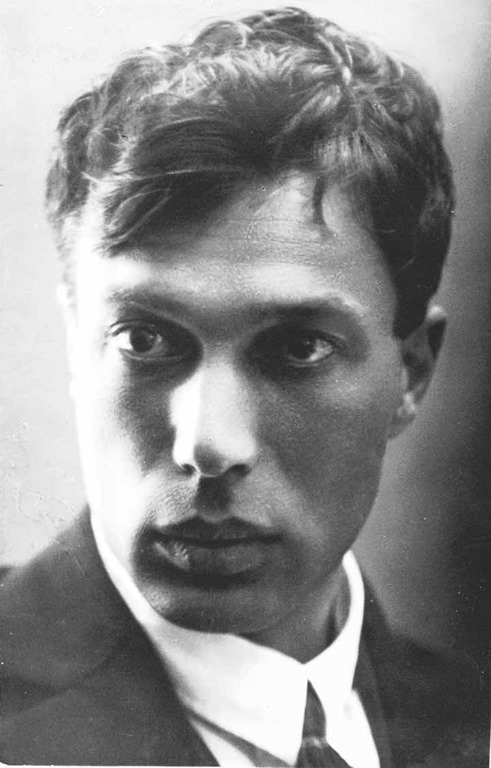
Young Boris Pasternak

Bluesman?


I’m not fluent in Russian, but the challenge of translating this lyrical poem from Russian to English has attracted many. As I recall, when I tried to put together the text for this performance, I used several of those as gloss, tempered with Internet translator apps fed the Russian. I know nothing of Russian diction, so I aimed for an informal American diction, and unlike some translators, I didn’t try to keep the original poem’s rhyme scheme in English—after all, I knew I’d be supplying music for this.

I believe the music I choose here, bluesy rock’n’roll, while American, is fitting. I hear Pasternak here singing the Russian Blues: blues like unto our great American music of endurance, and rock’n’roll that cares only to seek the state he speaks of in the last two lines:

The more haphazard, the more true, the poetry that sobs its heart out.

So I’ll be putting this post up, and then I’ll go out in our haphazard too-early spring February myself. I too will head out past the noise of city church bells, past the cars, biking to the edge of my city where I’m going to buy George Saunders sad new novel.

Renee Self Portrait in Mirror cropped

Today’s episode is dedicated Renee Robbins, who once was lost on the edge of Moscow herself, the last passenger remaining at the end of a bus route. She found her way back long enough for us to know her.

To hear the LYL Band perform Boris Pasternak’s “February” use the player that appears below.